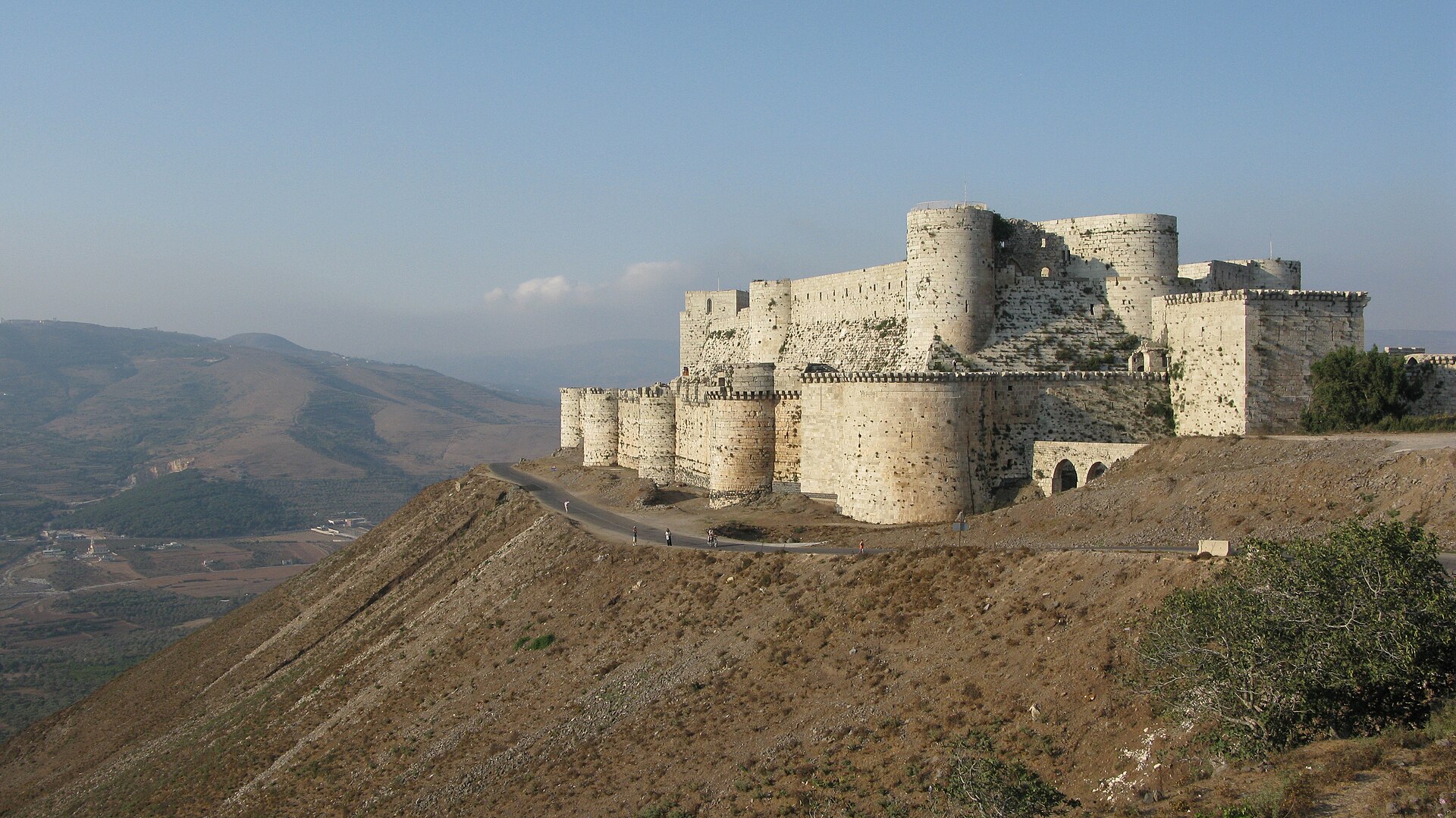
On a great hill in the west of Syria, commanding the land for miles around, stands what is widely regarded as the finest and most famous castle ever built by the Crusaders. Krak des Chevaliers is the supreme example of the fortresses raised by the Christian knights in the Holy Land during the great age of the Crusades, a masterpiece of military architecture so perfect and so well preserved that it was called, by the young T. E. Lawrence, perhaps the best preserved and most wholly admirable castle in the world. To behold it is to understand at once why it has earned such praise.
For well over a century, this mighty fortress was one of the most important strongholds of the Christian states in the East, held by the famous warrior monks of the Knights Hospitaller and defying the might of the greatest Muslim commanders of the age, even the great Saladin himself. A masterpiece of concentric defence, built to hold a garrison of thousands and to withstand the longest of sieges, it fell at last only to a clever ruse. Its story is the story of the Crusades themselves. In this article you will explore the whole of it, from its origins as the Castle of the Kurds to its fame as a wonder of the world. Come and discover the greatest of the Crusader castles.
In This Article
- The Greatest of the Crusader Castles
- A Fortress at the Homs Gap
- The Castle of the Kurds
- The Knights of Saint John
- A Masterpiece of Concentric Defence
- Walls Within Walls
- A Garrison of Thousands
- The Gothic Courtyard and Hall
- The Chapel and the Coming of the Mosque
- Water, Stores, and Endurance
- Defying Saladin
- The Fall to Baybars
- The Finest Castle in the World
- Castles Nearby
- The Greatest of the Crusader Castles
The Greatest of the Crusader Castles
On a great hill in the west of Syria, commanding the land for miles around, stands what is widely regarded as the finest and most famous castle ever built by the Crusaders. Krak des Chevaliers is the supreme example of the fortresses raised by the Christian knights in the Holy Land during the great age of the Crusades, a masterpiece of military architecture so perfect and so well preserved that it has been called, by no less an authority than Lawrence of Arabia, perhaps the best preserved and most admirable castle in the world. To behold it is to understand at once why it has earned such praise.
Krak des Chevaliers is far more than a beautiful ruin, for it is a monument to one of the most dramatic episodes in all of history, the long struggle between the Crusaders and the Muslim powers for control of the Holy Land. For well over a century, this great fortress was one of the most important strongholds of the Christian states in the East, held by a famous order of warrior monks and defying the might of the greatest Muslim commanders of the age. Its story is the story of the Crusades themselves, of faith, war, and the meeting of civilisations. In this article you will explore the whole of it. This is the tale of the greatest of the Crusader castles.
When you stand before Krak des Chevaliers for the first time, it is the sheer scale of the thing that takes your breath away. The castle crowns its hill like a natural extension of the rock, its pale limestone walls climbing in tier upon tier until they seem to touch the sky. There is nothing apologetic about it, nothing tentative. This was a building meant to declare, in the plainest possible language of stone and height, that those who held it intended to stay. For more than a century it did exactly that, and even now, centuries after the last knight rode out of its gates, it still dominates the landscape with an authority that few buildings anywhere can match. You feel small beneath it, and you are meant to.
A Fortress at the Homs Gap
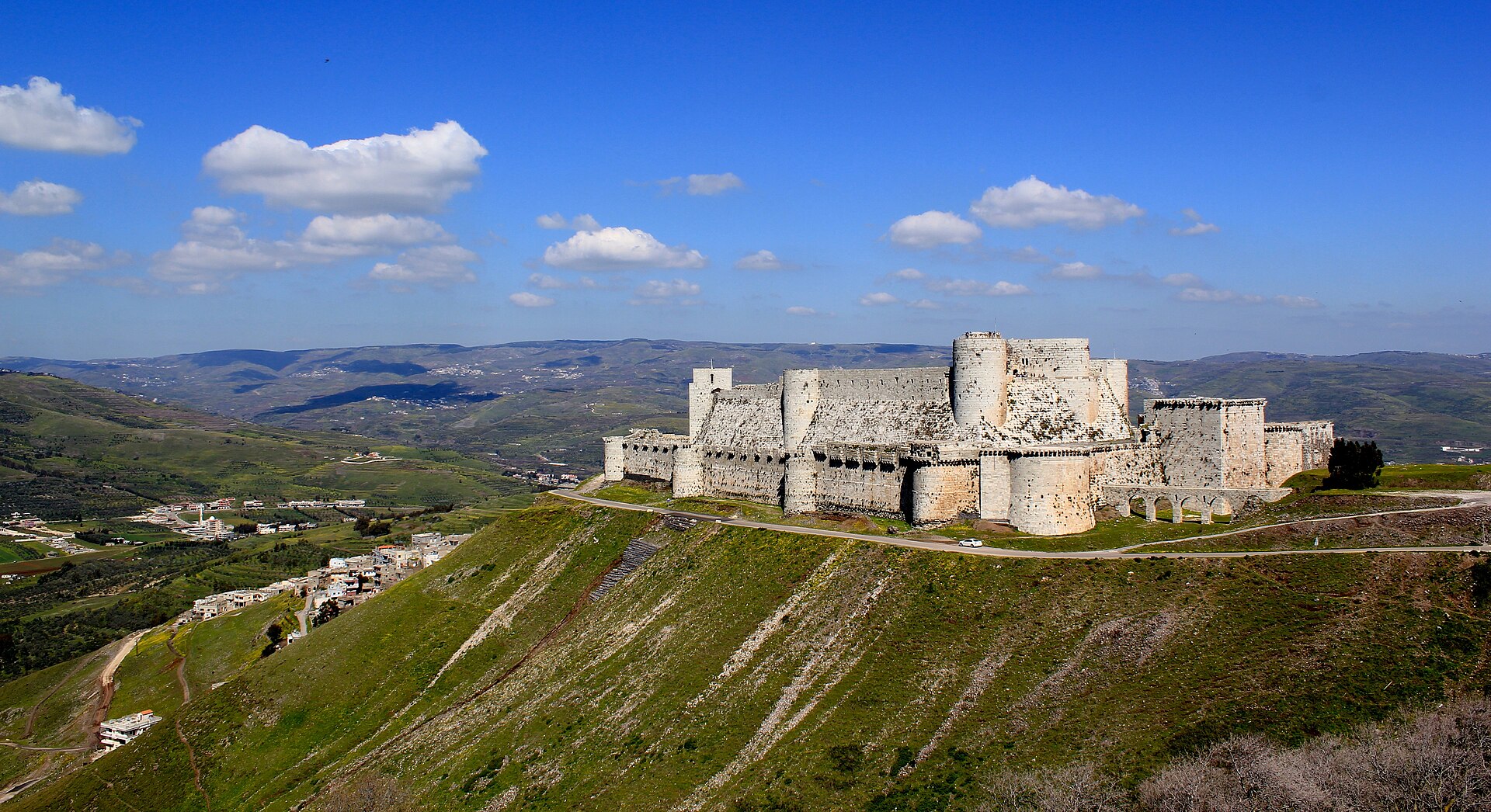
The immense strategic importance of Krak des Chevaliers came from its command of one of the most vital routes in all of the region, the gap in the mountains that linked the Mediterranean coast with the interior of Syria. Through this pass ran the great road between the coastal lands held by the Crusaders and the rich cities of the Syrian interior held by their Muslim adversaries, and whoever controlled the gap controlled the movement of trade and armies between the two worlds. It was to command this crucial passage that the great fortress was built and held.
From its commanding hill, Krak des Chevaliers watched over the pass and the roads that crossed it, a mighty sentinel guarding the frontier of the Crusader states. Its position gave it enormous value, both as a defensive bulwark protecting the Christian lands from attack out of the interior and as a base from which the knights could raid and control the surrounding country. This strategic role, guarding the vital gap in the mountains, was the reason for the castle’s existence and the source of its great importance, and it made Krak des Chevaliers one of the keys to the whole struggle for the Holy Land.
The genius of the site lay in its position at the Homs Gap, the one great natural corridor linking the Syrian coast with the interior. Whoever controlled this gap controlled the movement of armies, caravans, and supplies between the Mediterranean and the great inland cities. The Crusaders understood this perfectly, and Krak was built to be the cork in the bottle. From its towers a garrison could watch every road below and sally out to fall upon any force that dared to pass. The castle did not merely defend itself; it projected power across a whole region, and its shadow fell over territory far beyond the range of any arrow shot from its walls. Geography and architecture worked together here as nowhere else in the Latin East.
The Castle of the Kurds
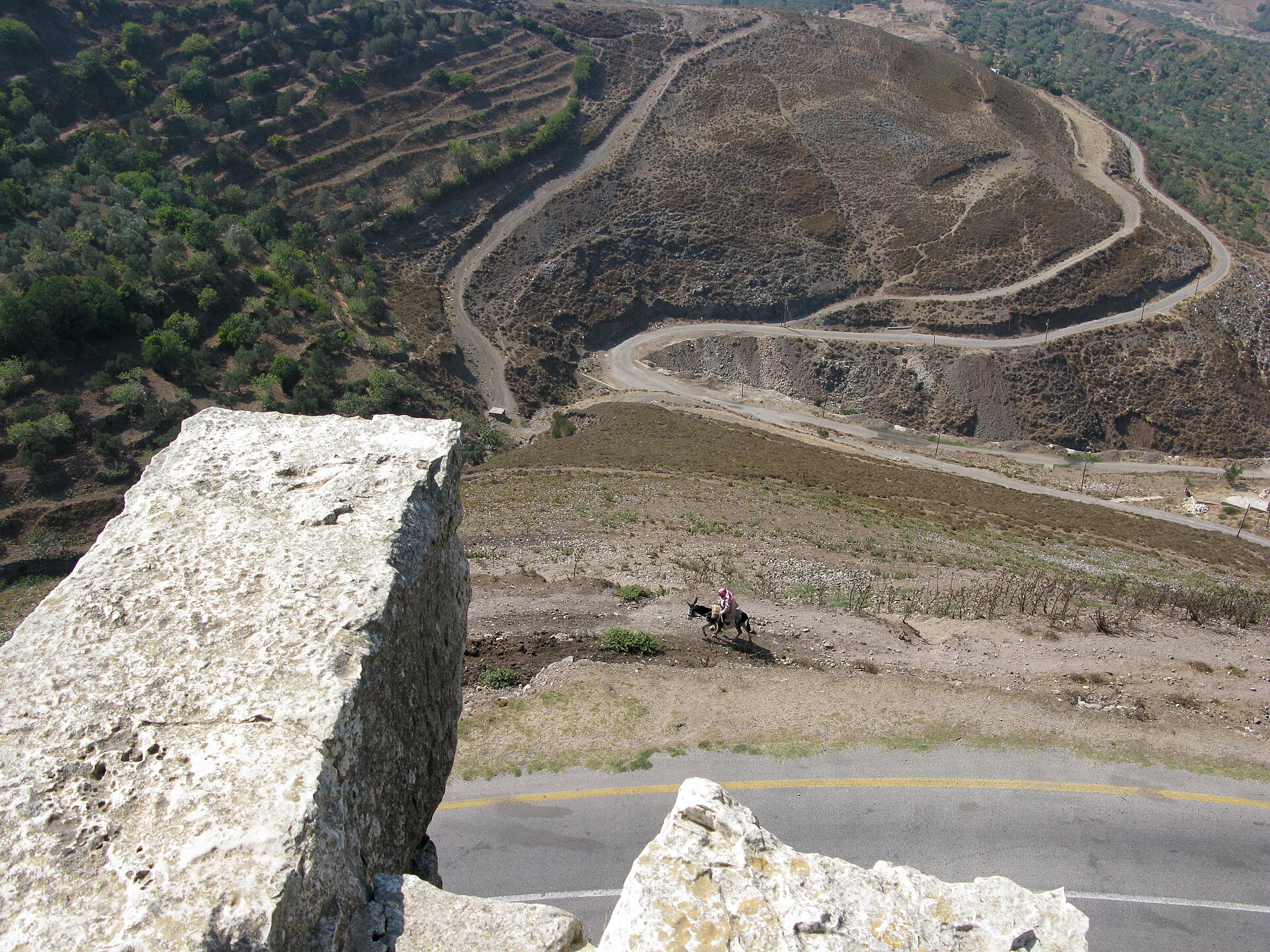
Before it became the great Crusader fortress we know today, the hill of Krak des Chevaliers was already crowned by a stronghold, an earlier castle held by a garrison of Kurdish soldiers, from which the site took an old name meaning the Castle of the Kurds. This earlier fortress recognised the same strategic value of the position that the Crusaders would later exploit, and it formed the nucleus around which the great castle would grow. The very name Krak is thought to derive from this older word for the fortress on the hill.
When the Crusaders came to the region and established their states in the Holy Land, they seized this strategic stronghold and set about transforming it into something far greater. The modest earlier castle was the seed from which the mighty fortress developed, and the Crusaders built upon and around it on a scale that utterly transformed the site. The old Castle of the Kurds thus stands at the very beginning of the story of Krak des Chevaliers, the humble origin from which one of the greatest castles in the history of the world would eventually rise on the commanding hill above the pass.
The name itself carries the memory of an earlier garrison. Long before the knights arrived, the hill was held by a body of Kurdish troops, and the Arabic name Hisn al-Akrad, the Castle of the Kurds, preserved their presence for centuries afterward. The Crusaders corrupted the word into Crat and then Krak, and so a fragment of the site’s older history survives fossilized in the name we still use today. It is a small reminder that Krak was never built on empty ground. This hill had been fought over and fortified long before the first Frankish mason set his chisel to the rock, and the great castle we admire was only the grandest chapter in a much longer story of a strategic place that men had always known was worth holding.
The Knights of Saint John
The great fortress of Krak des Chevaliers is above all associated with one of the most famous of all the military orders of the Crusades, the Knights Hospitaller, the Order of Saint John, who took possession of the castle in the twelfth century and made it their mightiest stronghold. These warrior monks, sworn to fight for the Christian cause in the Holy Land, were among the most formidable soldiers of the age, and Krak des Chevaliers became the greatest of their many castles, a symbol of their power and a bastion of the Crusader states.
Under the Knights Hospitaller, Krak des Chevaliers was rebuilt and expanded into the magnificent fortress that survives today. The order poured great resources into the castle, employing the finest military architecture of the age to make it all but impregnable, and it served as their headquarters and stronghold in the region for well over a century. The association with these famous warrior monks gives Krak des Chevaliers much of its fame and romance, for it was here that the knights of Saint John lived, prayed, and fought, holding the frontier of Christendom against the might of the Muslim world.
The Knights Hospitaller who held Krak were no ordinary soldiers. They were members of a religious order, monks who had taken vows of poverty, chastity, and obedience, and who had bound themselves to the twin tasks of caring for the sick and waging holy war. This strange fusion of the cloister and the battlefield gave them a discipline and a permanence that ordinary feudal lords could never match. A baron might die and leave a squabbling heir, but the Order endured, generation after generation, its wealth pooled, its purpose fixed, its knights trained to a single end. It was this institutional strength, as much as the thickness of any wall, that made Krak so formidable. The stones could be raised by anyone with money; only an order like the Hospital could hold them for a hundred years.
A Masterpiece of Concentric Defence
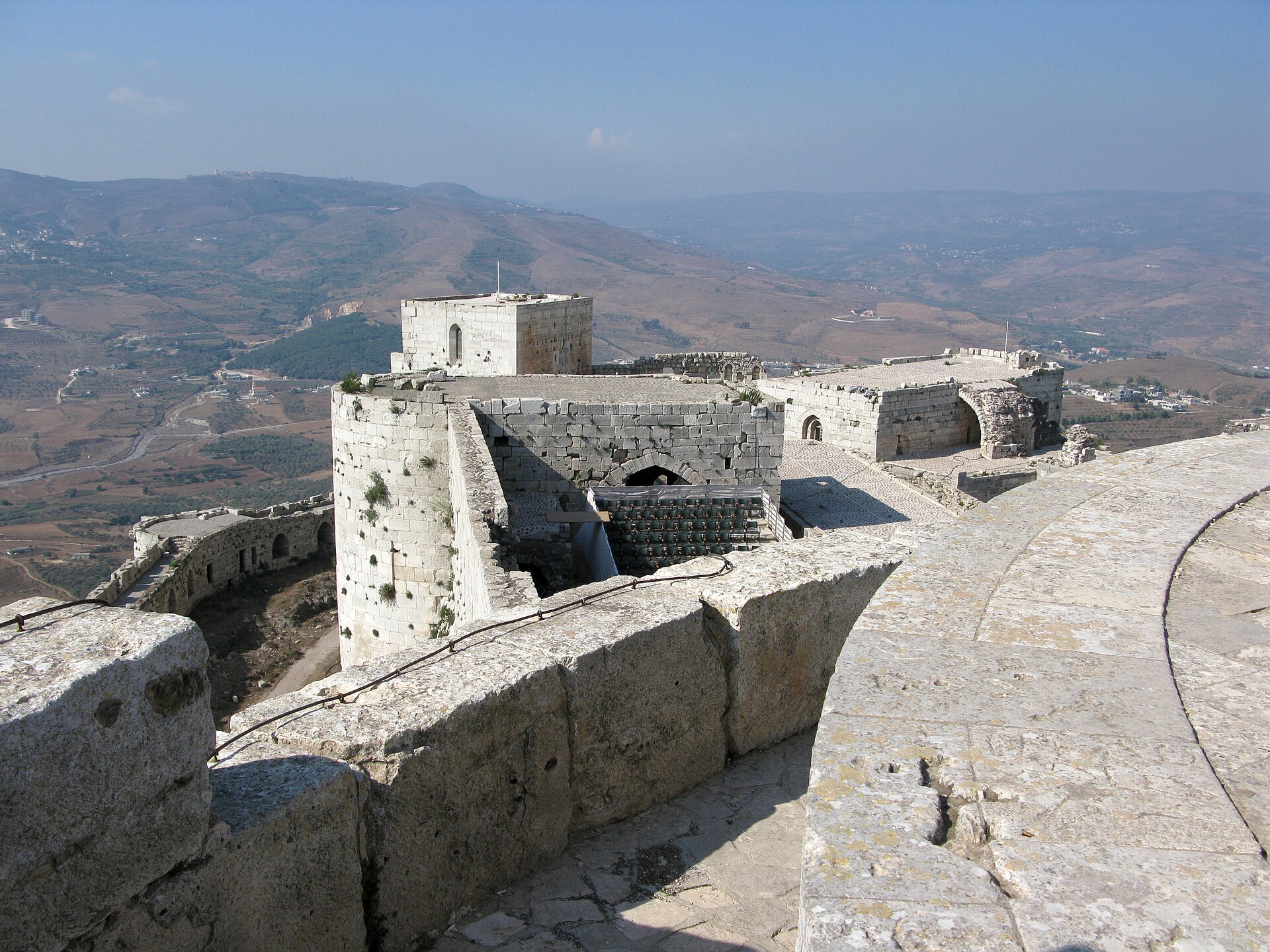
What makes Krak des Chevaliers so remarkable, and what has earned it such fame among students of military architecture, is that it is a supreme example of the concentric castle, the most advanced form of fortress design of its age. Rather than relying on a single line of walls, the concentric castle surrounds its inner stronghold with a second, outer ring of walls, so that an attacker who breaks through the outer defences finds himself trapped between the two lines, exposed to fire from the higher inner walls above. It was a design of great sophistication and strength.
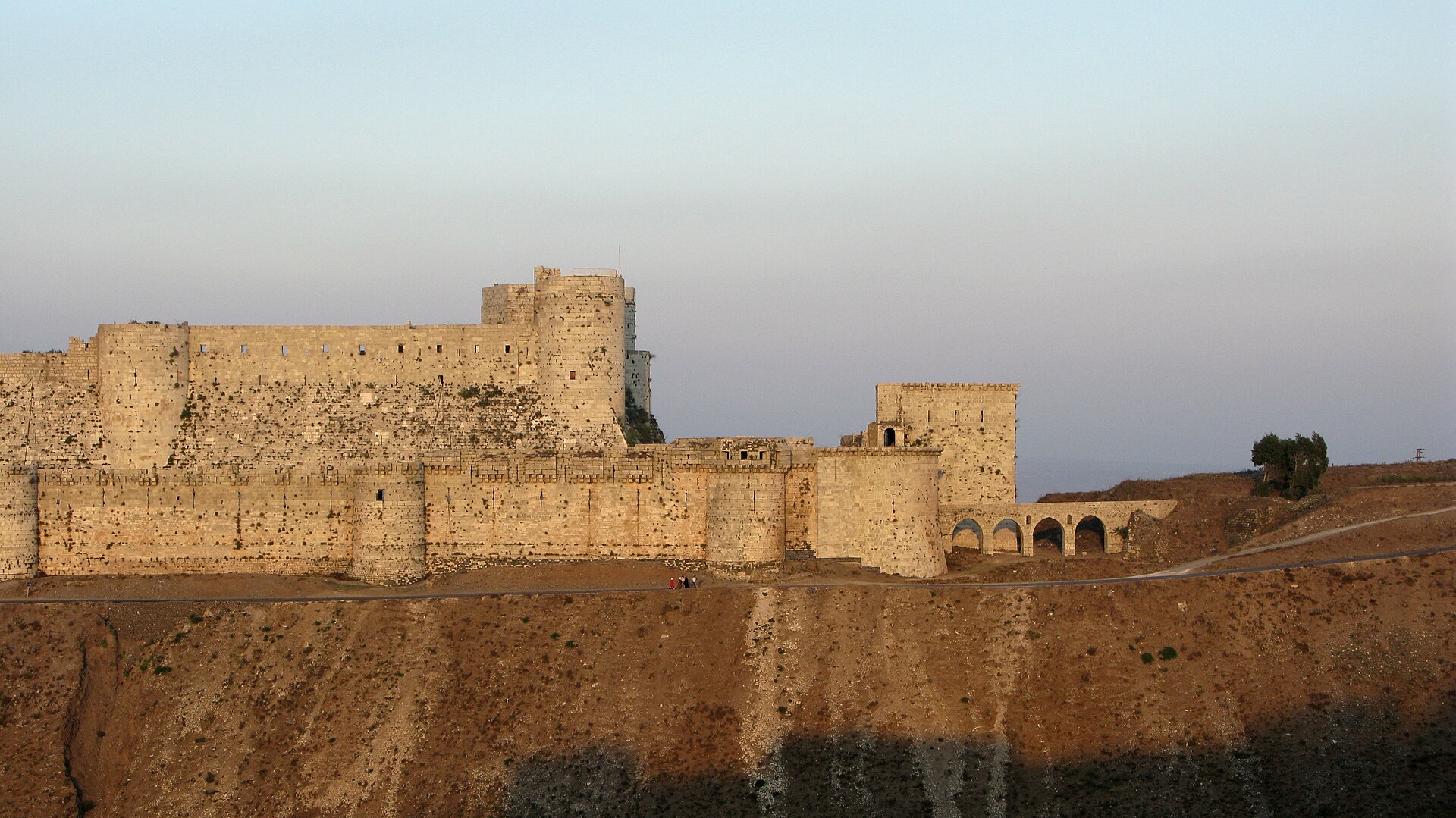
At Krak des Chevaliers, this concentric principle was carried to perfection. The inner castle, set on the higher ground at the heart of the fortress, was surrounded by a powerful outer wall studded with towers, and the space between the two lines of defence became a deadly trap for any attacker. The whole design was a masterpiece of the military engineer’s art, combining the natural strength of the hilltop position with the most advanced fortification techniques of the age. It is this brilliant concentric design, more than anything else, that has made Krak des Chevaliers the most admired of all the Crusader castles.
What makes Krak a masterpiece rather than merely a strong castle is the principle of concentric defence that governs its whole design. Instead of trusting everything to a single mighty wall, the builders wrapped one complete circuit of defences inside another, so that an attacker who fought his way through the outer ring found himself trapped in a narrow killing ground, overlooked at every point by the higher inner wall behind him. Nothing was left to chance and nothing stood alone. Every tower supported its neighbors, every wall was covered by another, and the whole formed a single interlocking system of defence in depth. It was a way of building that the Crusaders had learned in part from the Byzantines, but at Krak they carried it to a perfection that has rarely, if ever, been surpassed.
Walls Within Walls
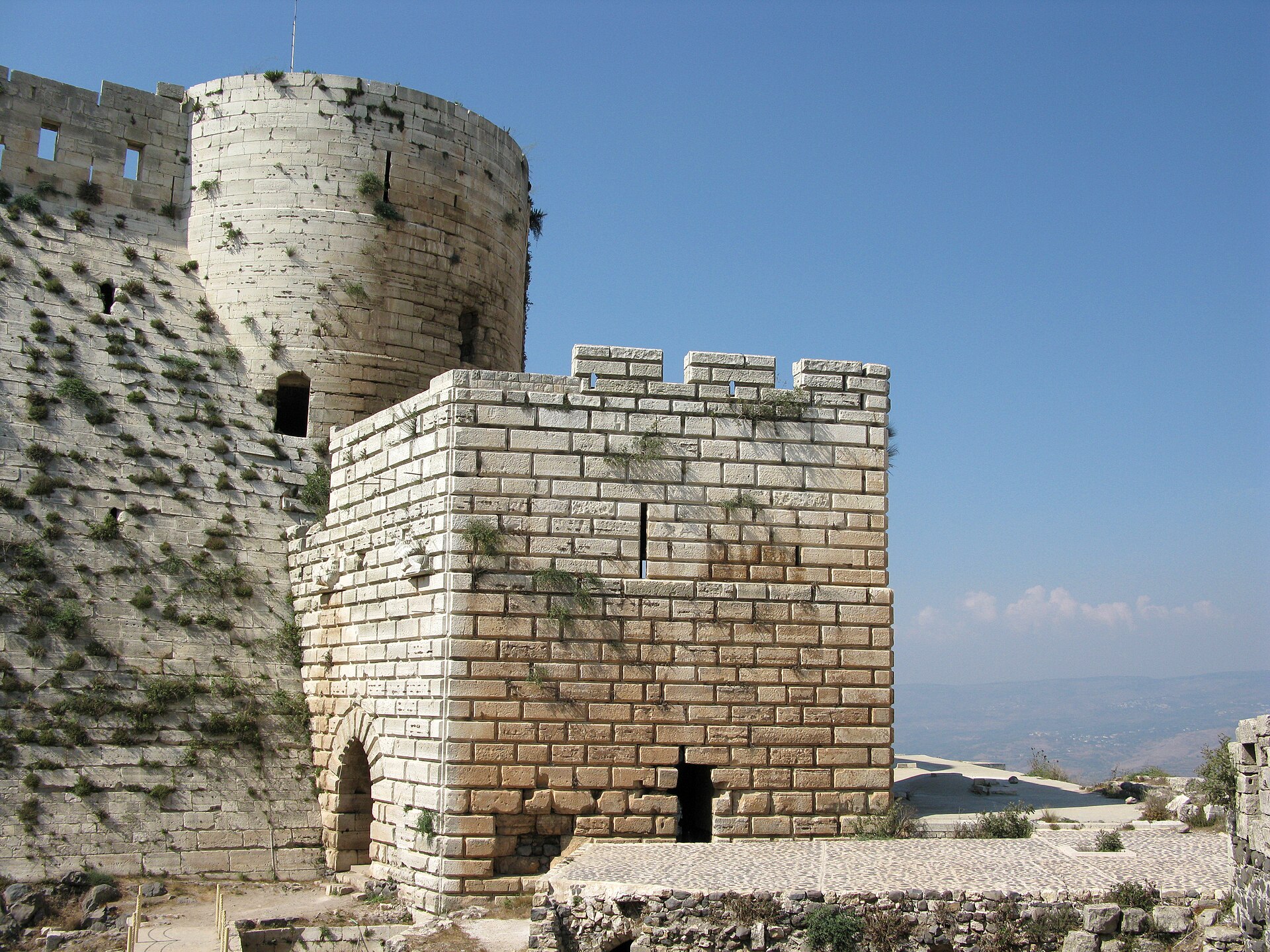
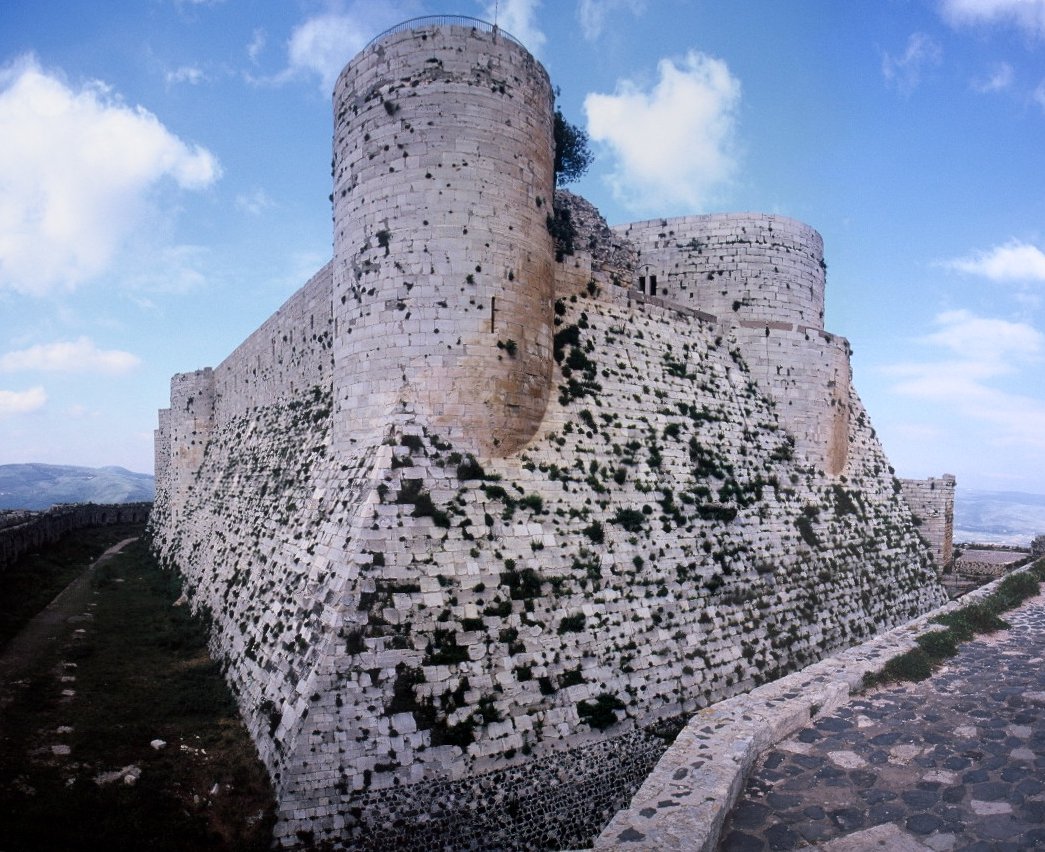
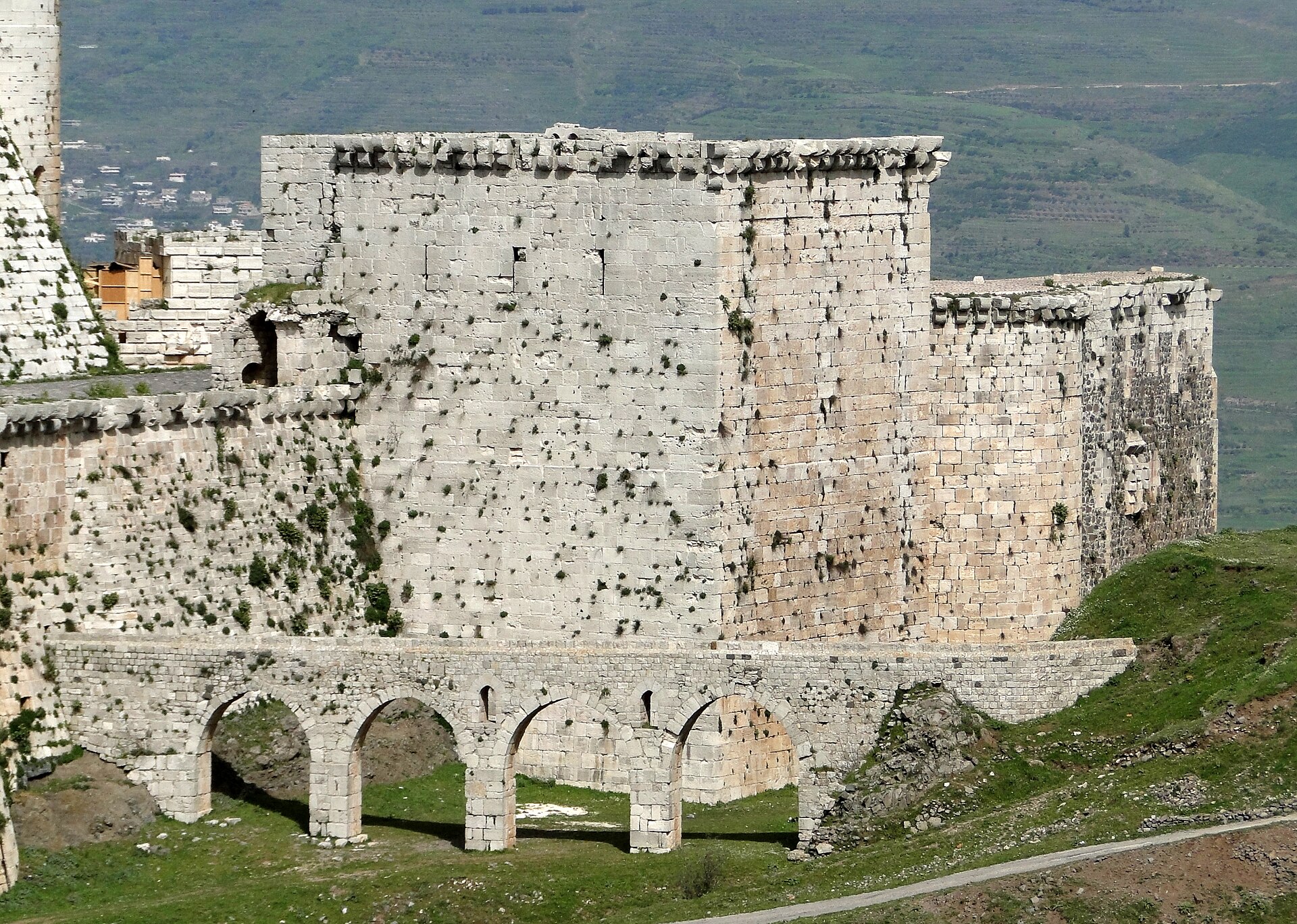
The concentric defences of Krak des Chevaliers were made even more formidable by the massive scale and clever design of the walls themselves. The great inner walls were strengthened at their base by an enormous sloping stone glacis, a vast smooth talus of masonry that made the walls immensely thick and strong at their foot, defeating attempts to undermine them and providing a defence against earthquakes as well as against attack. This great sloping base is one of the most striking features of the castle, and it added enormously to its strength.
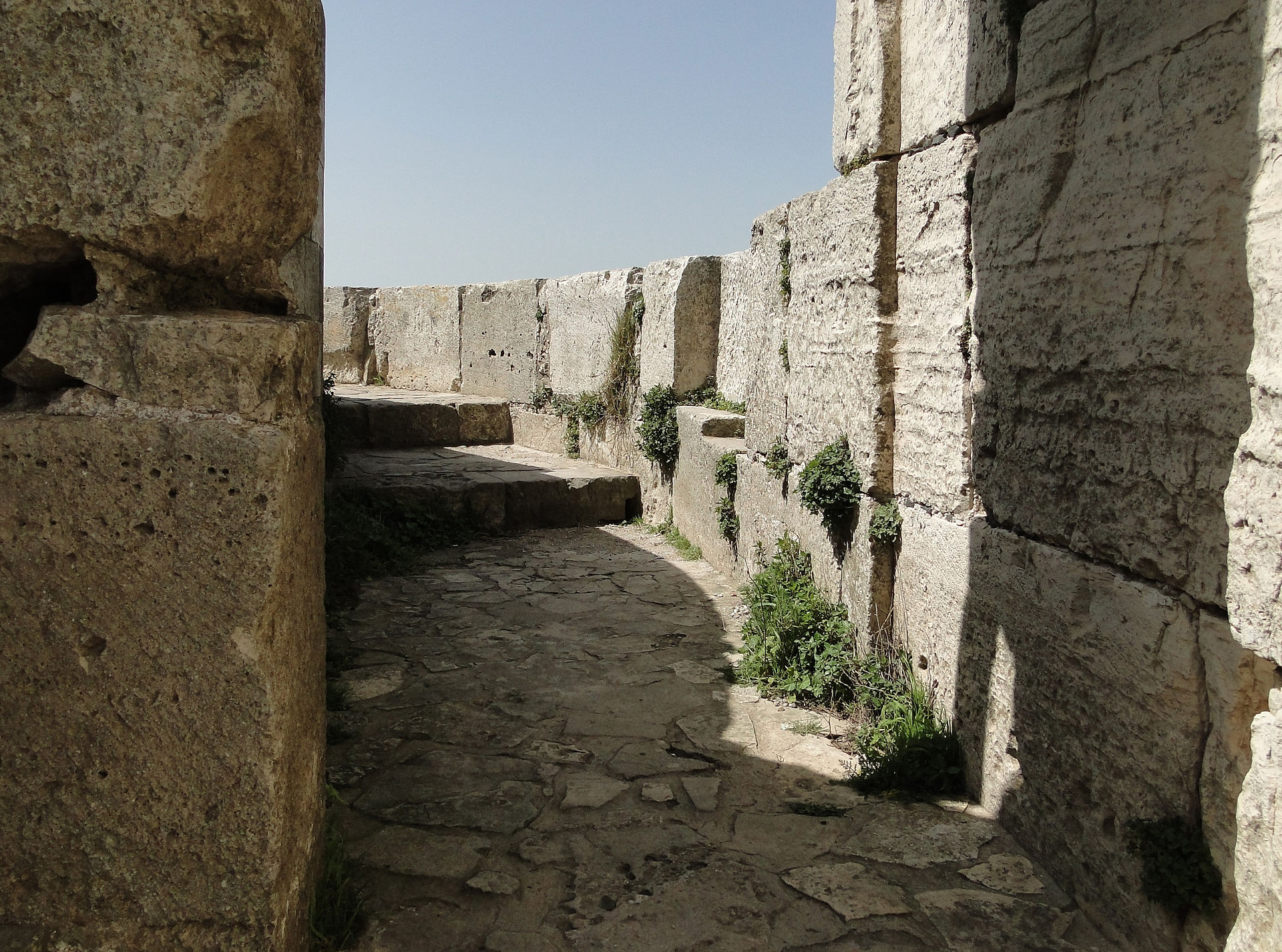
Between and along the walls ran covered passages, galleries, and walkways from which the defenders could move and fight in safety, and the towers projected outward to allow fire along the face of the walls. Every element of the design was calculated to make the fortress as strong as possible, and the result was a castle that could be defended by a relatively small force against a much larger army. Walking the walls of Krak des Chevaliers today, moving between the mighty lines of defence, one can appreciate the genius of the design and understand why the fortress proved so difficult for its enemies to take.
Between the outer and inner walls ran the space that made the concentric plan so deadly. It was no wide and comfortable courtyard but a cramped corridor, deliberately kept narrow so that any enemy who breached the outer defences would be penned into a confined trap. From the towering inner rampart above, defenders could pour down arrows, stones, and boiling liquids upon the attackers below, who had no room to maneuver and nowhere to hide. To take Krak, an army would have to storm not one wall but two, and to do so under a rain of missiles from every side. Few commanders were willing even to attempt it. The design turned the very act of attacking into a form of suicide, and the reputation of the castle as impregnable rested on these unforgiving spaces as much as on the height of its towers.
A Garrison of Thousands
Krak des Chevaliers was built on a scale to match its importance, and the great fortress could hold a large garrison, said to number as many as two thousand men, together with all the supplies and provisions needed to sustain them through a long siege. This ability to house and support so large a force was one of the keys to the castle’s strength, for a well-manned and well-provisioned fortress could hold out almost indefinitely against an attacker, and Krak was designed to do exactly that.
To sustain such a garrison, the castle contained vast storerooms, halls, stables, and all the facilities of a self-contained community, so that the knights and soldiers within could live and fight in the fortress for long periods without outside help. The great castle was, in effect, a fortified town, capable of holding out on its own against whatever forces might be sent against it. This capacity for endurance, the ability to shelter and supply a great garrison behind its mighty walls, made Krak des Chevaliers one of the most formidable strongholds in the entire Holy Land.
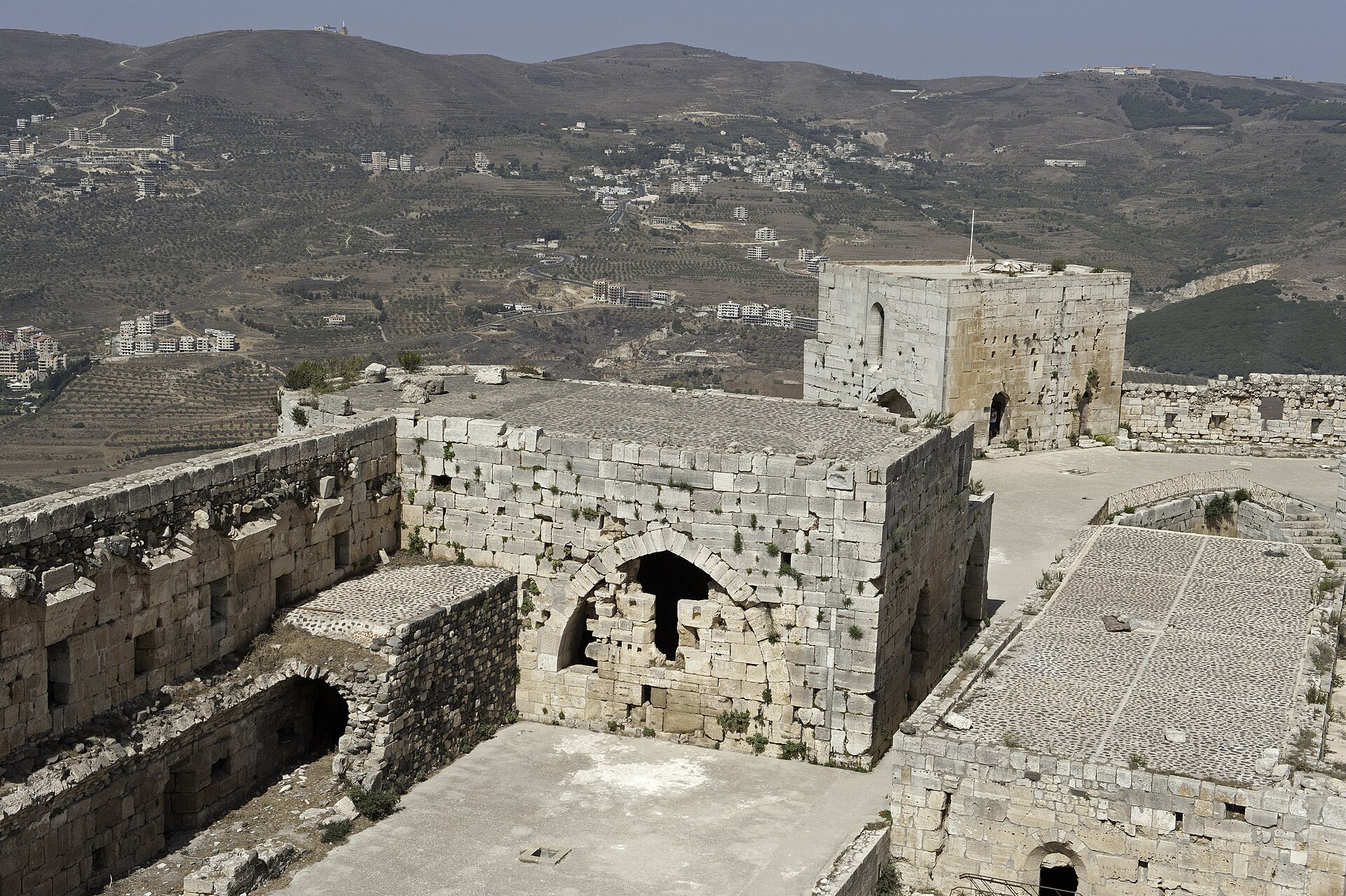
To hold a fortress of this size required a small army in permanent residence. At the height of its power Krak sheltered a garrison numbered in the thousands, together with the horses, servants, craftsmen, and stores needed to keep such a body of men fighting for months on end. This was not a lonely watchtower manned by a handful of sentries but a fortified town in miniature, a self-contained community capable of holding out through the longest siege. The scale of the place reflected the scale of the task, for the knights were surrounded by hostile territory and could expect no quick relief. Everything they might need had to be gathered within the walls in advance, and the castle was designed from the outset to be a world unto itself, able to endure in isolation for as long as its enemies had the patience to wait.
The Gothic Courtyard and Hall
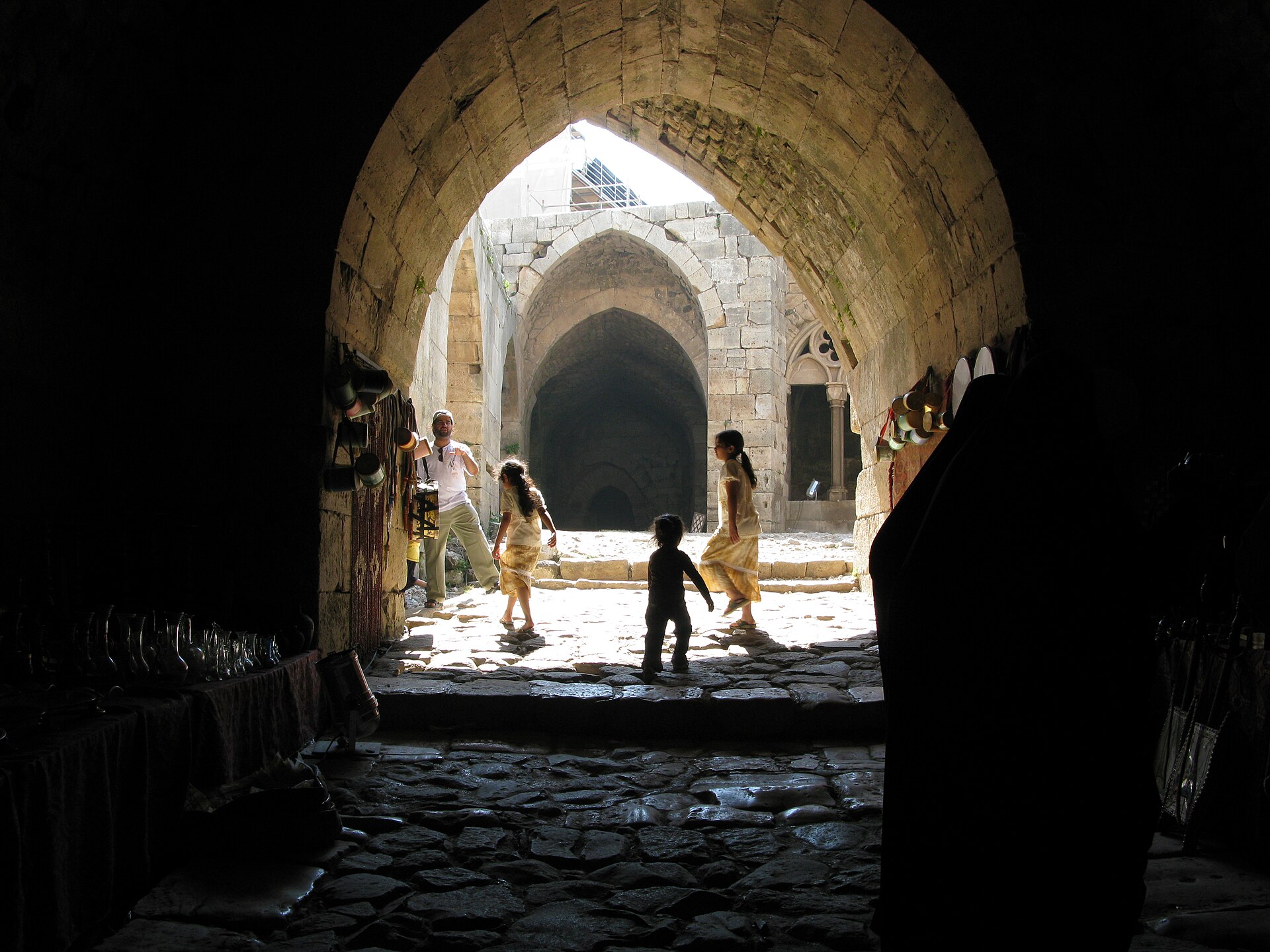
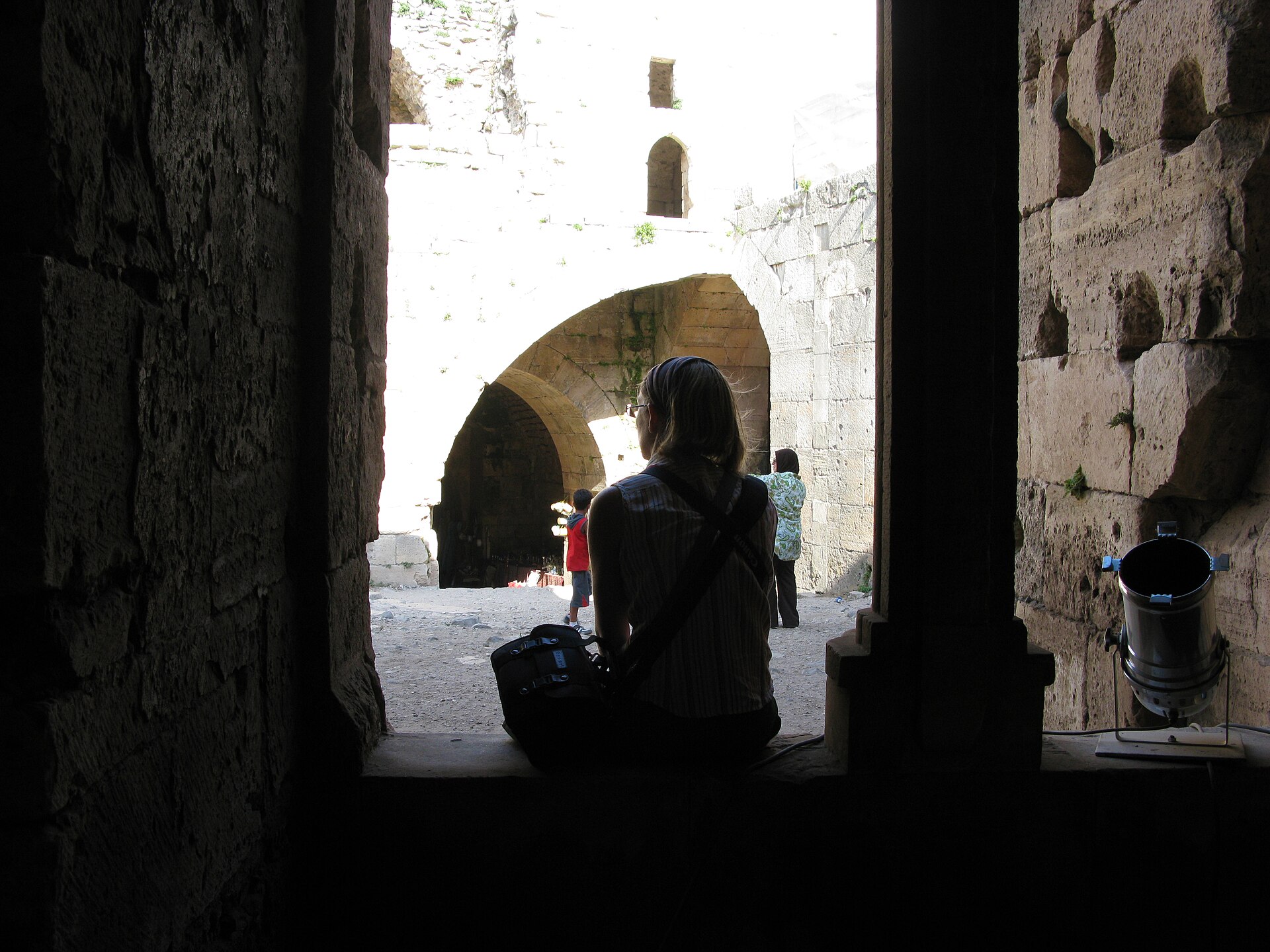
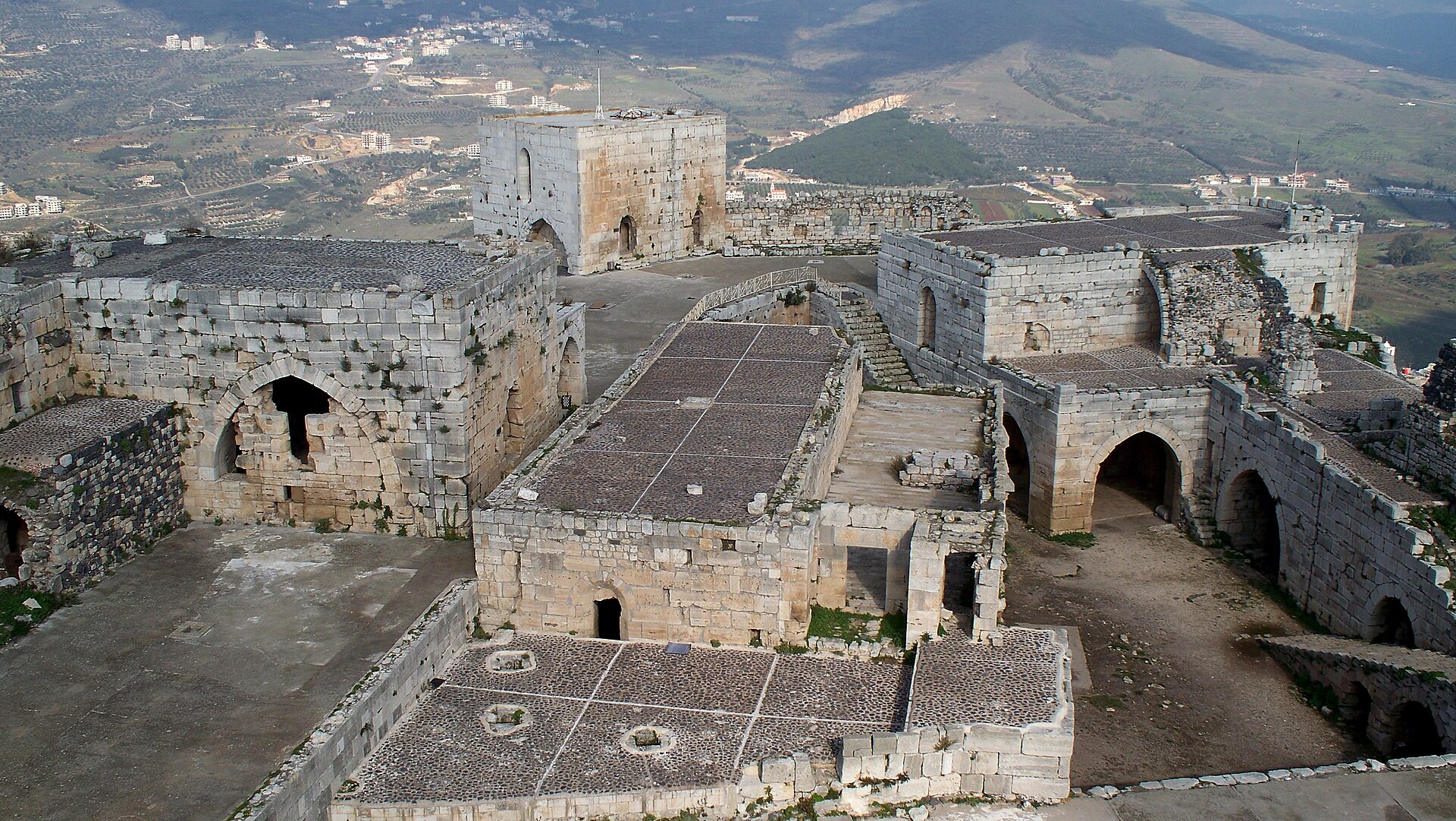
For all its stern military purpose, Krak des Chevaliers contains within its walls buildings of real beauty and refinement, for the Knights Hospitaller were not only soldiers but monks, and their castle was a home and a religious house as well as a fortress. Within the inner castle stand elegant Gothic structures, including a fine hall and a courtyard adorned with delicate architectural detail, that reflect the European origins of the knights and the culture they brought with them to the East. These graceful buildings provide a striking contrast to the massive military architecture around them.
The Gothic hall and the courtyard are among the most beautiful spaces in the castle, their fine stonework and elegant proportions speaking of the sophisticated world from which the Crusaders came. Here the knights would have gathered for meals, meetings, and the business of the order, in surroundings that combined the strength of a fortress with the refinement of a great European building. These interiors give a vivid sense of the life of the warrior monks who held Krak des Chevaliers, and they remind us that this mighty fortress was also a home to the men who defended it for so long.
Within the inner ward the knights created spaces of surprising grace. The Gothic loggia that opens onto the courtyard, with its delicately carved tracery and pointed arches, would not look out of place in a cathedral in France, and it reminds us that these were not merely warriors but men of a sophisticated European culture transplanted to the Syrian hills. The great hall beyond served as the setting for the daily business of the Order, for meals taken in common, for the reception of guests, and for the councils at which the knights debated and decided. Here the harsh functionality of the outer defences gave way to something more refined, a glimpse of the ordered monastic life that lay at the heart of everything the Hospitallers did. Beauty and war stood side by side within these walls, and neither seemed out of place.
The Chapel and the Coming of the Mosque
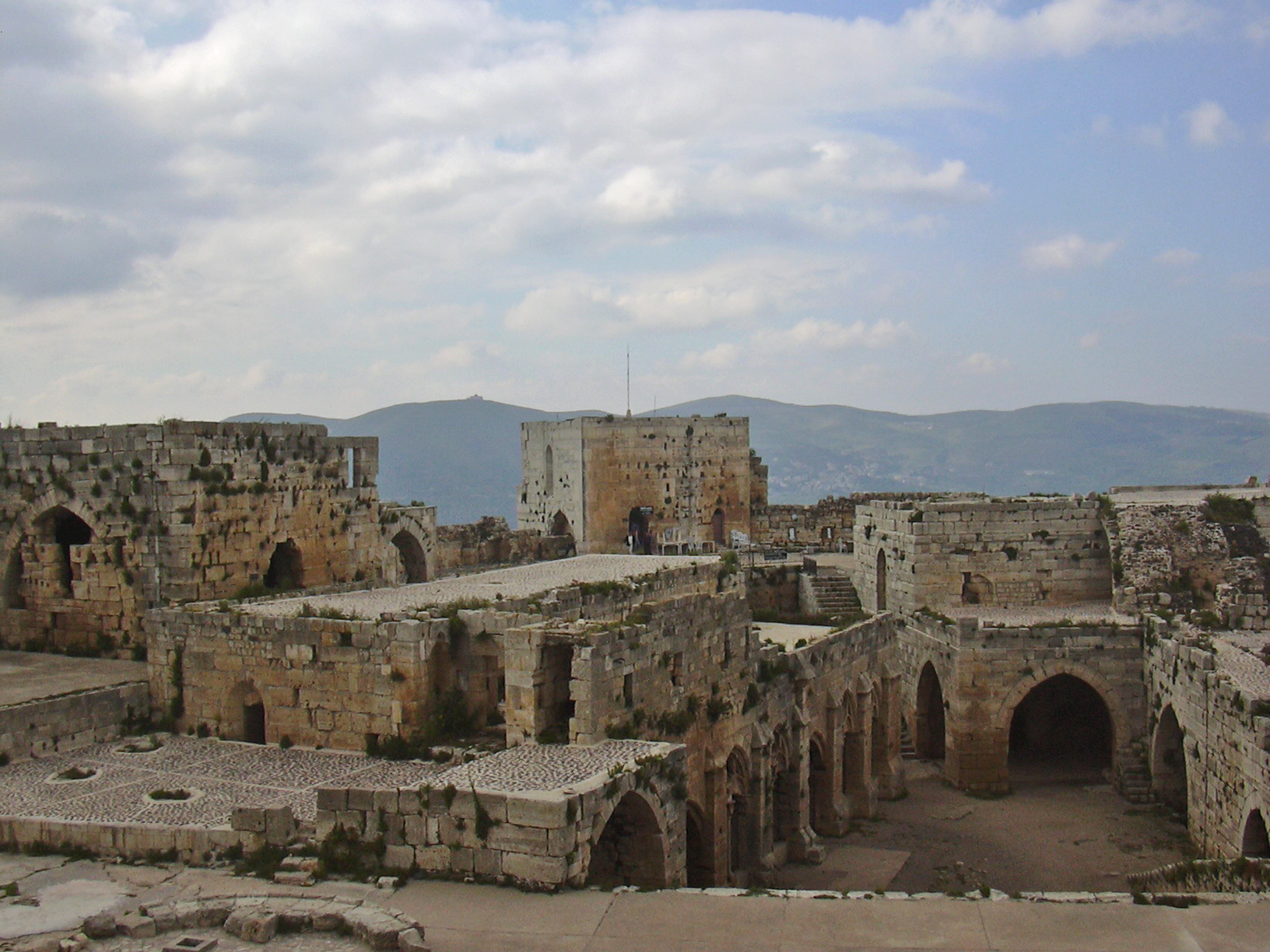
At the heart of Krak des Chevaliers stands its chapel, the religious centre of the fortress, where the Knights Hospitaller worshipped in the years of their long occupation. As warrior monks bound by religious vows, the knights placed their faith at the very centre of their lives and their castle, and the chapel was one of the most important spaces within the walls. Its presence is a reminder that Krak des Chevaliers was not merely a military stronghold but a religious house, a place of prayer as well as of war.
After the castle finally passed from Christian into Muslim hands, the chapel was converted into a mosque, and the marks of this change can still be seen within it, a tangible sign of the great shift in the fortunes of the fortress. The transformation of the chapel into a mosque symbolises the whole change that overtook Krak des Chevaliers when it was lost to the Crusaders, and it adds a further layer to the rich history of the building. That a single space should have served the worship of both faiths across the centuries is a powerful reminder of the meeting of civilisations that the castle witnessed.
At the spiritual center of the castle stood its chapel, for the Hospitallers were monks first and soldiers second, and the rhythm of their days was set by prayer as much as by the watch. The chapel was a plain and dignified space, its very simplicity an expression of the austere devotion that bound the Order together. When the castle finally passed into Muslim hands, the conquerors turned the chapel into a mosque, adding a mihrab to mark the direction of prayer toward Mecca, and so the same walls that had echoed with Christian hymns came to ring with the call of the muezzin. That transformation, still visible today, is a poignant emblem of the whole history of the place, a building that changed hands and changed faiths yet went on serving, in one form or another, the worship of God.
Water, Stores, and Endurance
One of the secrets of the strength of Krak des Chevaliers, and of its ability to withstand long sieges, lay in its careful provision for water and supplies. The castle was served by an aqueduct that brought water to the fortress, and within the walls were great cisterns to store it, along with vast storerooms for grain and other provisions. A fortress could only hold out for as long as its garrison had water and food, and the excellent arrangements at Krak des Chevaliers ensured that the castle could endure even the longest of sieges.
This careful attention to the practical necessities of endurance was as important to the strength of the castle as its mighty walls, for the finest fortifications in the world were useless if the defenders could be starved or driven out by thirst. The great cisterns and storerooms of Krak des Chevaliers meant that the garrison could hold out for long periods, secure behind their walls, while an attacking army wore itself out before the fortress. This capacity for endurance was one of the reasons the castle proved so formidable, and it lay at the heart of its long record of successful defence.
No castle, however strong its walls, can survive without water and food, and here too Krak was built to endure. An aqueduct carried a supply of fresh water into the fortress, filling great reservoirs and cisterns hewn into the rock, while beneath the buildings lay vast storerooms capable of holding grain, oil, and wine enough to feed the garrison for years. The knights understood that most sieges were won not by storming the walls but by starving the defenders out, and they answered that threat by turning the castle into a granary as well as a fortress. It was said that Krak could withstand a siege of five years without want, and while such figures may be exaggerated, the surviving storerooms make plain that the defenders had thought long and carefully about the unglamorous but decisive problem of supply.
Defying Saladin
Across the long years of its occupation by the Knights Hospitaller, Krak des Chevaliers faced the might of the greatest Muslim commanders of the age, and it held firm against them all. Most famously, the fortress defied the armies of the great Saladin, the celebrated leader who united the Muslim world and won back so much of the Holy Land from the Crusaders. Even Saladin, who captured so many Christian strongholds, judged Krak des Chevaliers too formidable to attack in earnest, and the great castle remained in Christian hands while so much else was lost.
The ability of Krak des Chevaliers to withstand even the mightiest of its enemies is a testament to the genius of its design and the courage of its defenders. Time and again, Muslim armies came against the fortress, and time and again the great castle held, its concentric walls and its well-provisioned garrison proving equal to every threat. This long record of successful defence, including the defiance of Saladin himself, earned Krak des Chevaliers a reputation as an impregnable stronghold, one of the last and greatest bastions of the Crusader cause in the East.
The measure of Krak’s strength is written in the list of those who tried to take it and failed. The great Saladin himself, the conqueror who swept the Crusaders from Jerusalem and humbled them at Hattin, marched against Krak and looked upon its walls, and then thought better of the assault and turned away. If the mightiest of all the Muslim leaders judged the castle too hard a nut to crack, lesser commanders were hardly likely to succeed where he had declined even to try. For decade after decade the fortress stood untaken while the tide of the Crusades ebbed around it, a lonely island of Christian power holding firm long after the cause it served had begun its slow decline. Its very survival became a legend, and its name a byword for the impregnable.
The Fall to Baybars
After more than a century of defiance, the great fortress of Krak des Chevaliers at last fell in the year 1271, taken not by the mighty Saladin but by a later Muslim ruler, the formidable Mamluk sultan Baybars, one of the greatest soldiers of his age. By this time the fortunes of the Crusaders had declined greatly, their states shrunken and their strength ebbing, and the once-great garrison of Krak des Chevaliers had dwindled. Baybars brought a powerful army against the fortress and laid siege to it, determined to take this last great Christian stronghold.
According to the famous tradition, the castle did not fall to a direct assault but to a clever ruse, for it is said that Baybars had a forged letter delivered to the defenders, apparently from their own commander, ordering them to surrender. Whether or not the tale is true, the exhausted and outnumbered garrison did at last give up the fortress, and after well over a century, Krak des Chevaliers passed out of Christian hands. The fall of the great castle was a heavy blow to the Crusader cause, and it marked the beginning of the end for the Christian presence in the Holy Land.
In the end Krak fell not to force alone but to guile. In the spring of the year 1271 the Mamluk sultan Baybars, the most formidable of all the enemies the Crusaders ever faced, laid siege to the castle and battered his way through the outer defences. But the inner fortress still held, and the small garrison that remained might have resisted far longer had they not received a letter, apparently from the Grand Master of the Order, ordering them to surrender. The letter was almost certainly a forgery, a trick devised by Baybars to win by deception what he could not easily take by storm, yet it served its purpose. The knights laid down their arms and were allowed to march away, and so the greatest of the Crusader castles passed into Muslim hands, betrayed at the last not by any weakness in its walls but by a single sheet of paper.
The Finest Castle in the World
In the modern age, Krak des Chevaliers has been recognised as one of the great treasures of the whole world, a monument of the very highest importance. It was famously studied and praised by the young T. E. Lawrence, later known as Lawrence of Arabia, who called it perhaps the best preserved and most wholly admirable castle in the world, and generations of scholars and travellers have echoed his admiration. In recognition of its outstanding importance, the castle has been honoured as a UNESCO World Heritage Site, one of the great fortresses of human history.
Krak des Chevaliers stands in the west of Syria, near the historic city of Homs, crowning its hill above the ancient pass, a magnificent survivor of the great age of the Crusades. Despite the troubles that have afflicted the region in recent times, the great castle endures, a monument to one of the most dramatic chapters in the history of the world. For anyone who cares about castles, about the Crusades, or about the meeting of civilisations, it is one of the supreme places on earth. Here are the exact coordinates so you can find your way to the greatest of the Crusader castles.
Today Krak des Chevaliers stands as one of the best preserved medieval castles anywhere in the world, and in the year 2006 it was inscribed upon the list of World Heritage Sites, a recognition of its outstanding importance to the whole of humanity. Visitors who make the journey to its hilltop can still walk the fighting galleries, climb the great towers, and stand in the vaulted halls where the knights once lived and prayed and died. To wander through it is to step directly into the Middle Ages, into a world of faith and violence, of high ideals and hard stone, that has otherwise almost entirely vanished. The castle has survived war, earthquake, and the slow erosion of the centuries, and it remains what it has always been, the finest castle in the world, a wonder that no photograph can quite prepare you for.
View on Google Maps: 34.7567, 36.2947
Castles Nearby
If the story of Krak des Chevaliers has stirred your imagination, you may enjoy exploring these other great fortresses of the warrior-monks and the medieval frontier:
- Malbork Castle: The World’s Largest Brick Fortress of Warrior-Monks
- Belgrade Fortress: The Kalemegdan Stronghold at the Confluence
The Greatest of the Crusader Castles
Few castles anywhere can rival the fame and the grandeur of Krak des Chevaliers. The supreme masterpiece of Crusader military architecture, a perfect example of the concentric castle crowning its hill above the vital pass, it was for well over a century one of the greatest strongholds of the Christian East, held by the warrior monks of Saint John and defying the mightiest armies of the Muslim world. In its walls the whole drama of the Crusades is gathered together, the meeting and the clash of two great civilisations in the struggle for the Holy Land.
That is what makes Krak des Chevaliers so extraordinary. You are not just looking at a magnificent fortress but at one of the supreme monuments of a great and dramatic age, a castle so perfect that it has been called the finest in the world. To behold its mighty concentric walls, its great sloping glacis, and its elegant Gothic halls is to be carried back to the age of the Crusades, to the warrior monks who held the frontier of their world against all comers. Krak des Chevaliers is the greatest of the Crusader castles, and it remains one of the true wonders of the human past.
If you ever have the chance to make the journey to this remarkable place, take it, for no description and no photograph can substitute for the experience of standing in its shadow. Krak des Chevaliers is one of those rare buildings that lives up entirely to its reputation, a fortress that has outlasted the empires that fought over it and the faith that raised it, and that still speaks, across all the intervening centuries, of the ambition and the artistry of the people who built it.
You May Like
Margat: The Black Fortress of the Knights Hospitaller