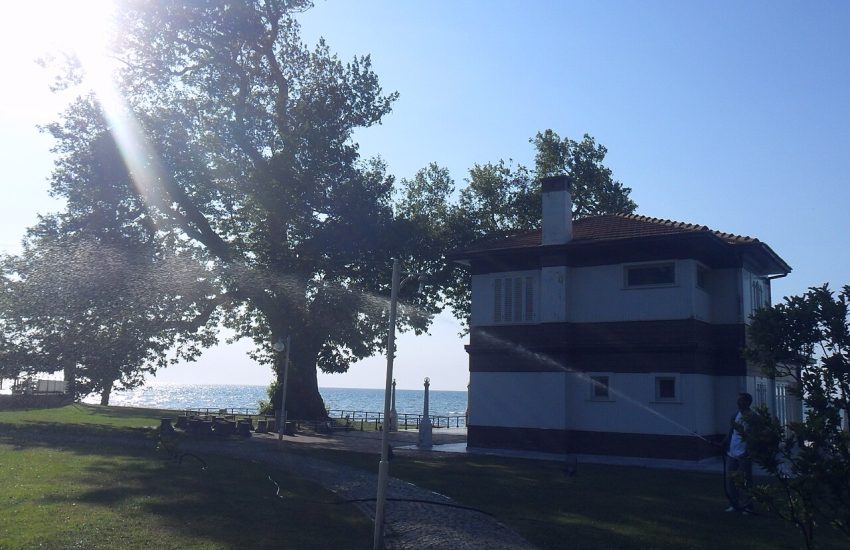
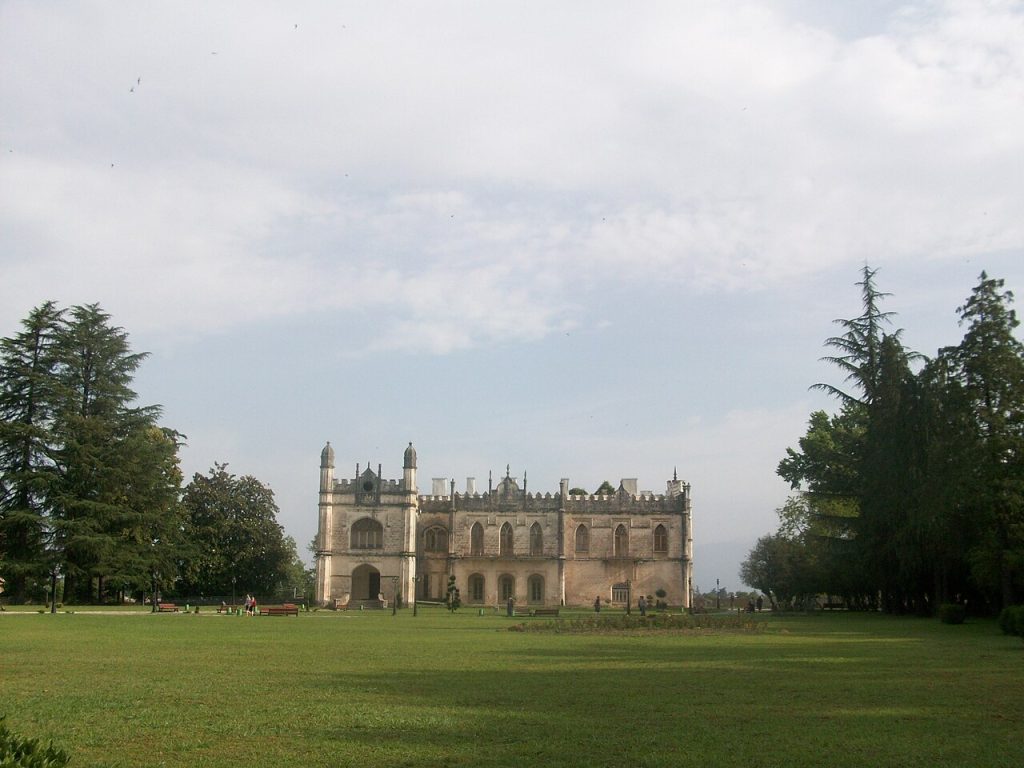
Now, stop on the lawn in front of the towers and consider what is inside. In a case in this provincial Georgian palace lies one of the three original bronze death masks of Napoleon Bonaparte, cast from the mould taken on St Helena.
How a Bonaparte relic reached a valley in western Georgia is the story of the Dadiani family: princes of Mingrelia, rulers of a small Black Sea principality, who married into Napoleon’s family and collected like European royalty.
The palace at Zugdidi is Georgia’s most important surviving princely residence, and its museum is one of the oldest in the Caucasus.
- Mingrelia and Its Princes
- The House of Dadiani
- Between Ottomans and Russians
- Ekaterine Chavchavadze
- Building the Palace
- Gothic Revival in the Caucasus
- Salome Dadiani and Achille Murat
- The Death Mask
- The Collections
- The Botanical Garden
- The End of the Principality’s Heirs
- The Museum Today
- Visiting Zugdidi
Mingrelia and Its Princes
Mingrelia, Samegrelo in Georgian, is the lowland region of western Georgia between the Black Sea and the mountains, with its own language closely related to Georgian and a long history as a separate principality.
After the medieval Georgian kingdom fragmented, Mingrelia was ruled by its own princes under nominal Ottoman and then Russian suzerainty, with the Dadiani family at its head from the sixteenth century.
Zugdidi was their seat, and the region’s identity remains strong today.
The House of Dadiani
The Dadiani ruled as sovereign princes, waging wars, signing treaties and maintaining a court, while balancing between the Ottoman Empire on the coast and the growing power of Russia.
In 1803 Mingrelia accepted Russian protection while keeping internal autonomy, one of the sequence of such agreements by which the Caucasus entered the empire.
The family kept ruling under Russian oversight until the 1860s, longer than almost any other Caucasian dynasty.
Between Ottomans and Russians
The Crimean War reached Mingrelia in 1855 when Ottoman forces invaded, and the princess regent Ekaterine led the resistance, a role that made her famous across the empire.
After the war Russia moved to absorb the principality fully. The last prince, Niko, was taken to St Petersburg for education, and in 1867 the principality was formally abolished with compensation to the family.
The palace remained theirs as private property.
Ekaterine Chavchavadze
Ekaterine Chavchavadze, who married Prince David Dadiani in 1838, was the daughter of the poet Alexander Chavchavadze and sister of Nino, the wife of the Russian writer Griboyedov.
Widowed in 1853, she ruled as regent for her son, led Mingrelia during the Crimean War, and later lived between Paris and Zugdidi, moving in the highest European circles.
She is the central figure in the palace’s story and the reason its collections are what they are.
Building the Palace
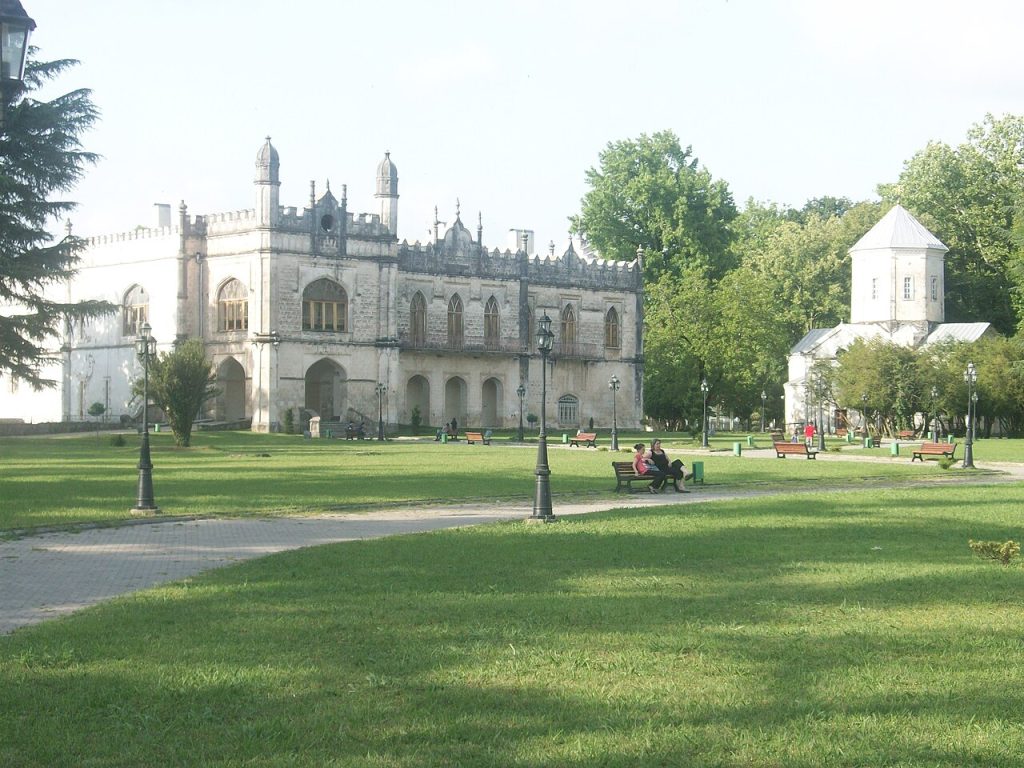
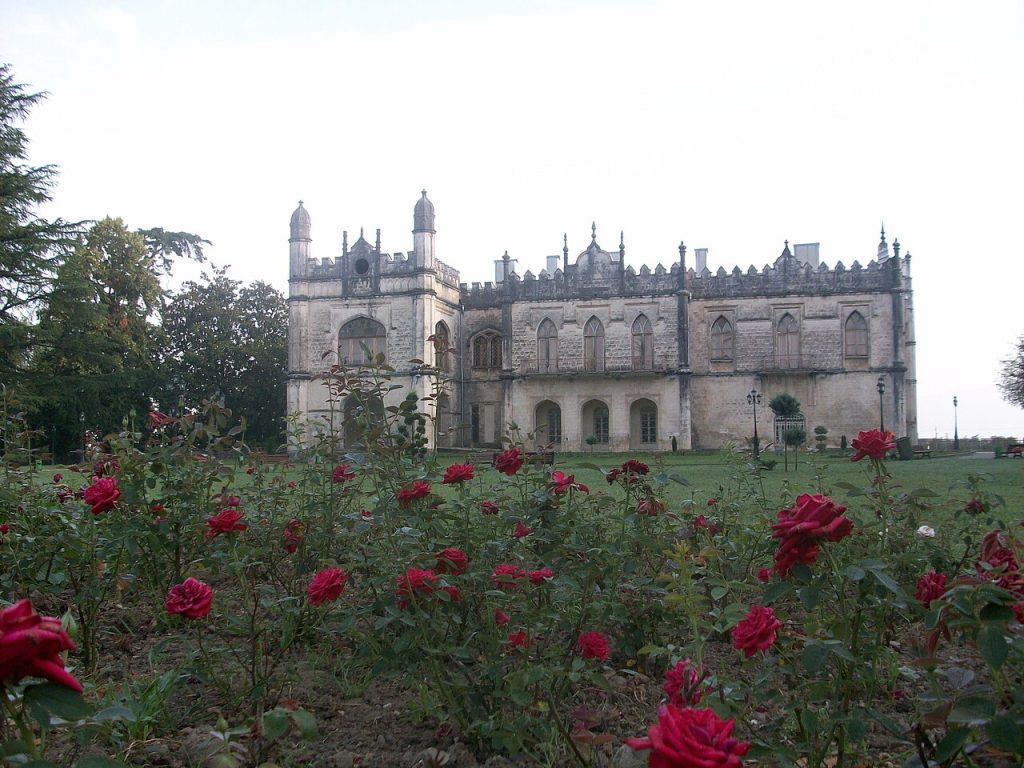
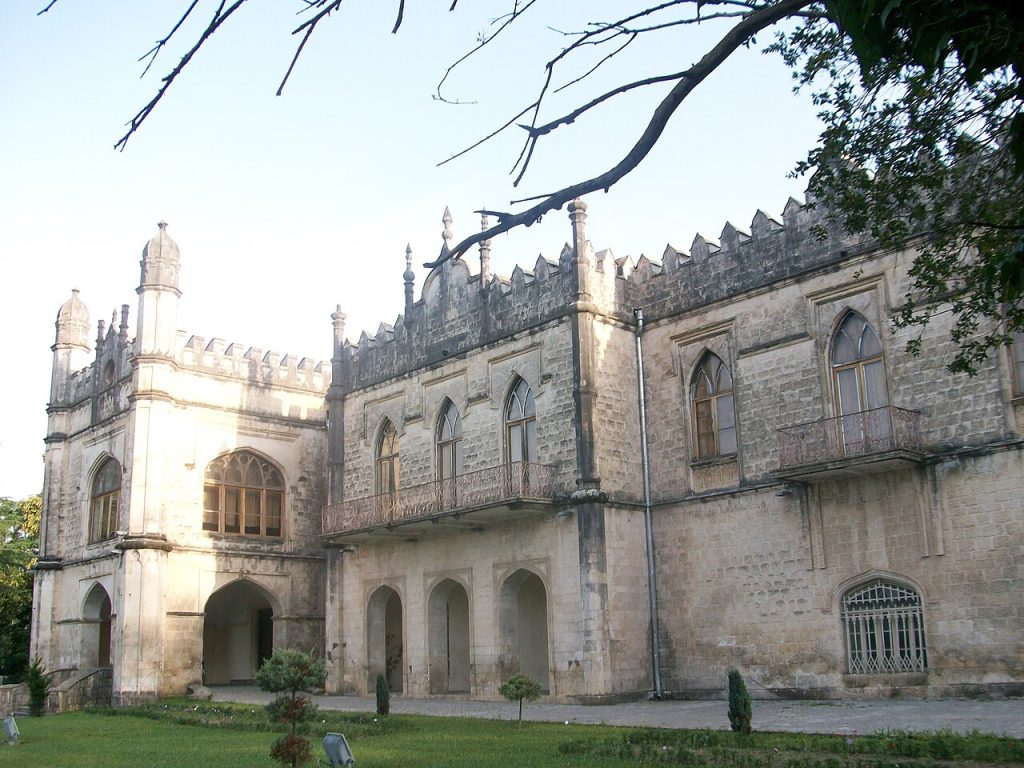
The present main palace was built in the 1870s and 1880s for Ekaterine and her children, replacing earlier residences, with the Russian architect Leonid Vasilyev and others involved.
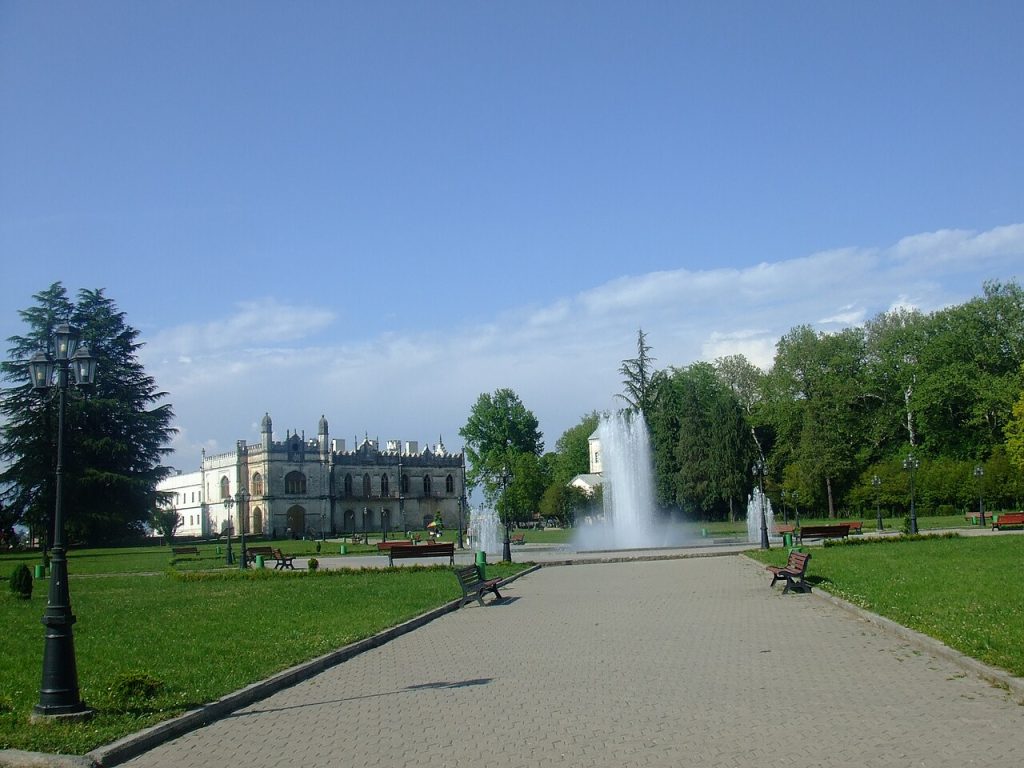
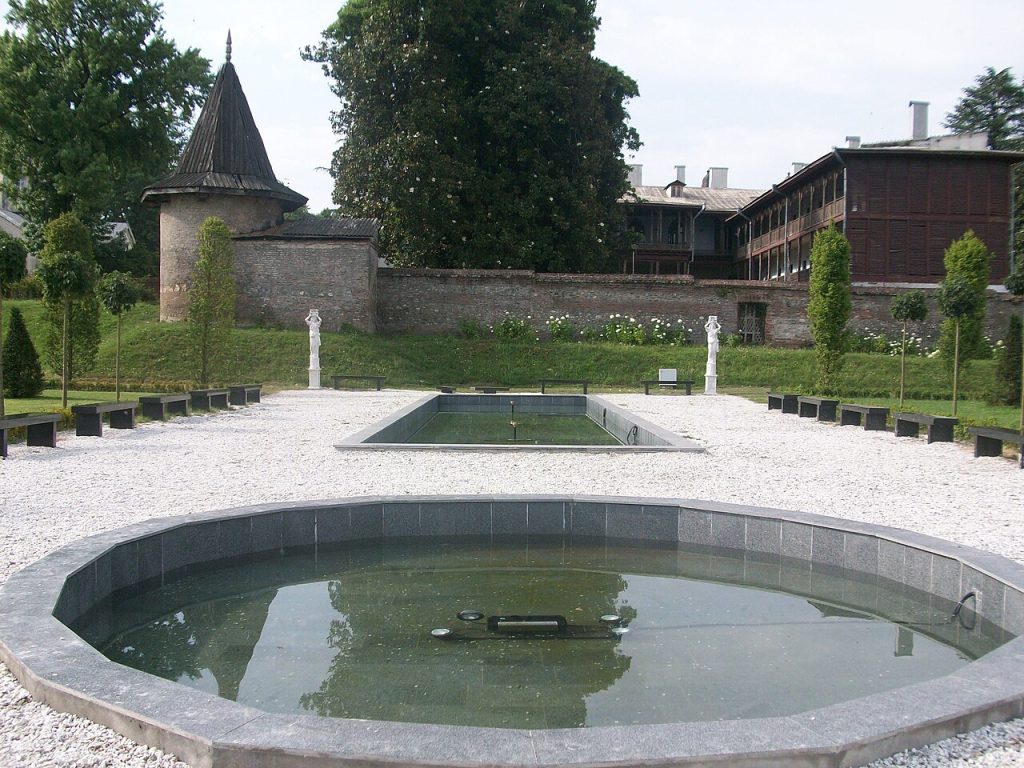
A second palace for her son Niko and a court chapel stand in the same park, forming a small ensemble.
The family’s older fortified residences survive elsewhere in the region, but Zugdidi was the show seat.
Gothic Revival in the Caucasus
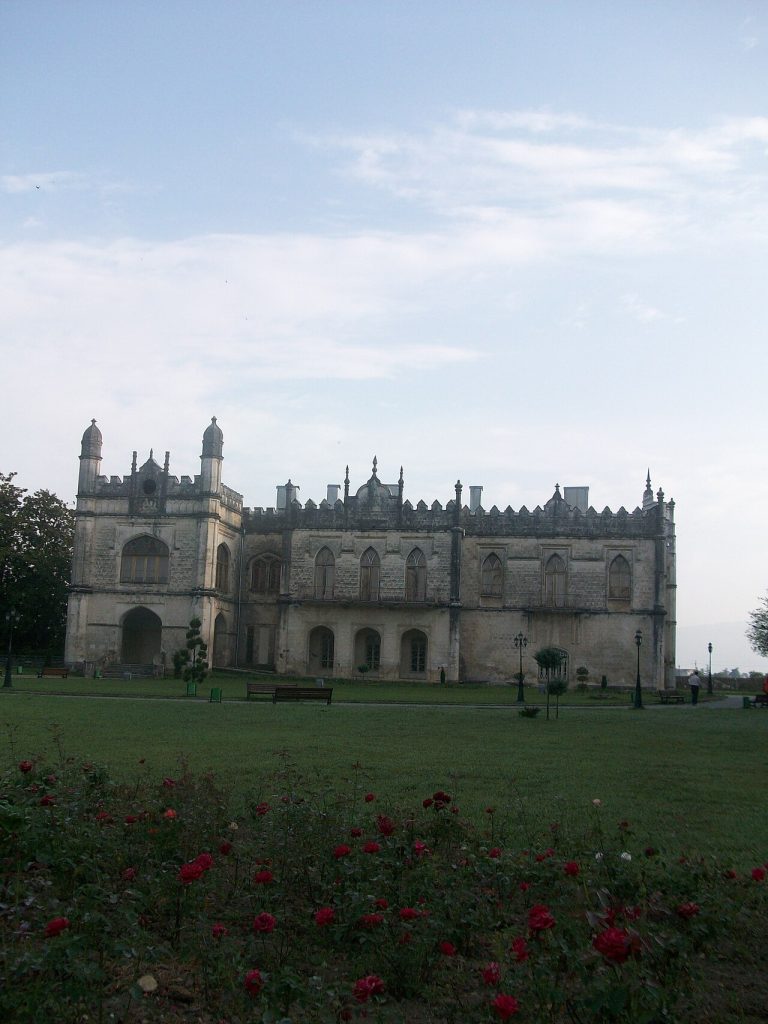
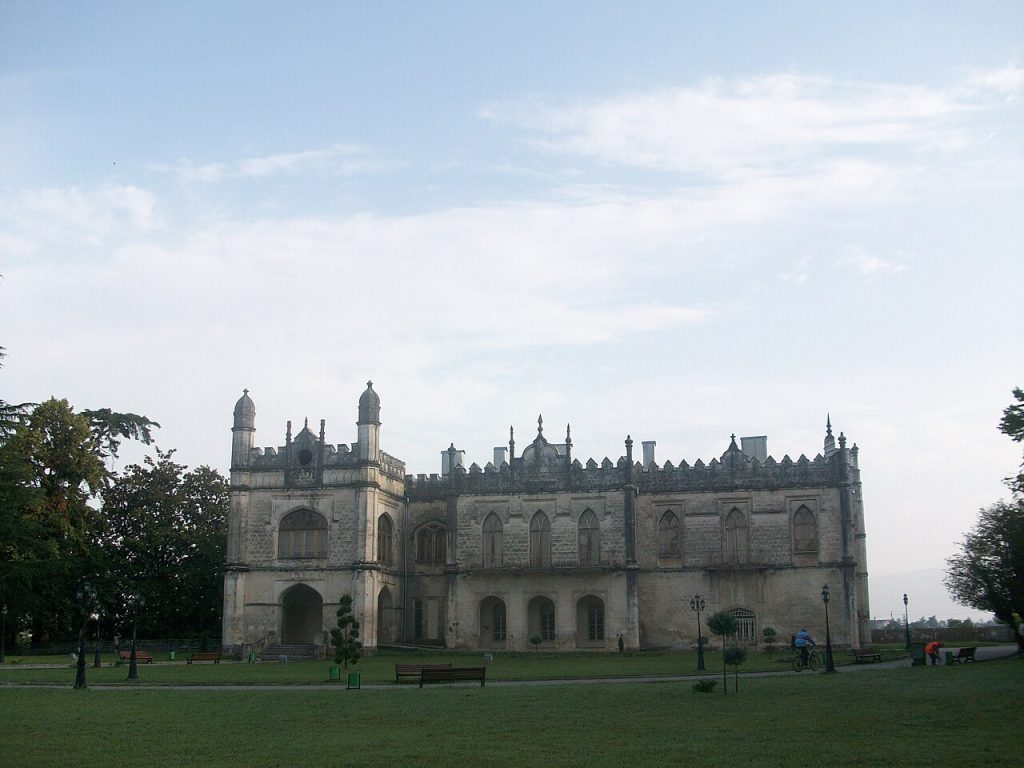
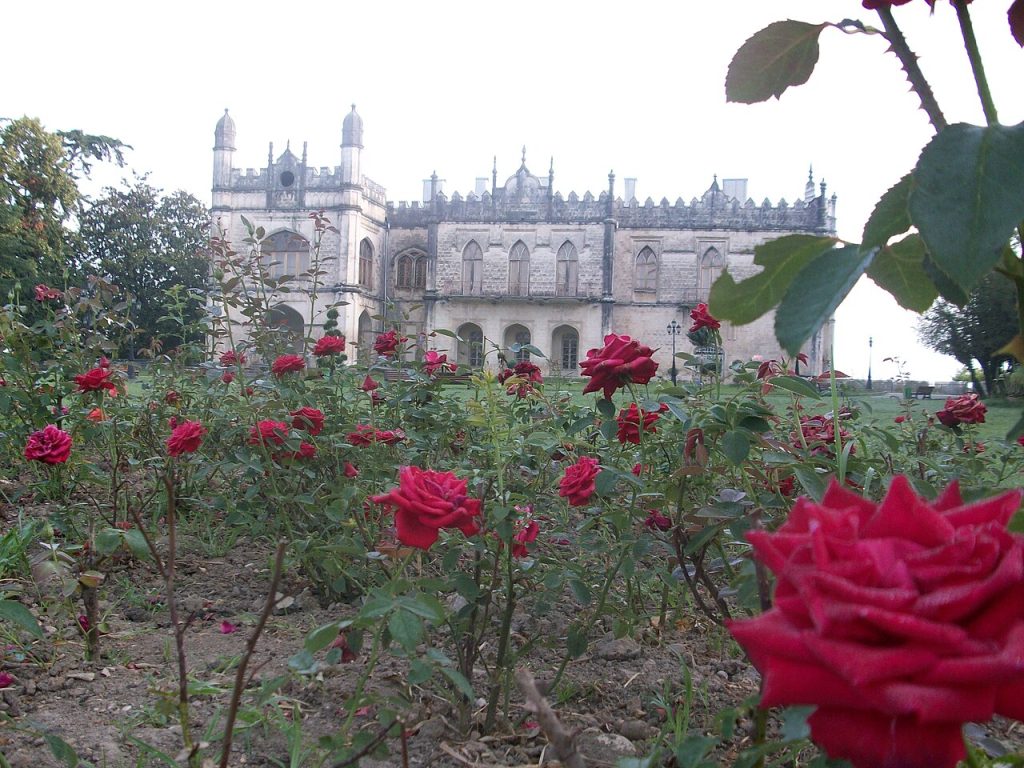
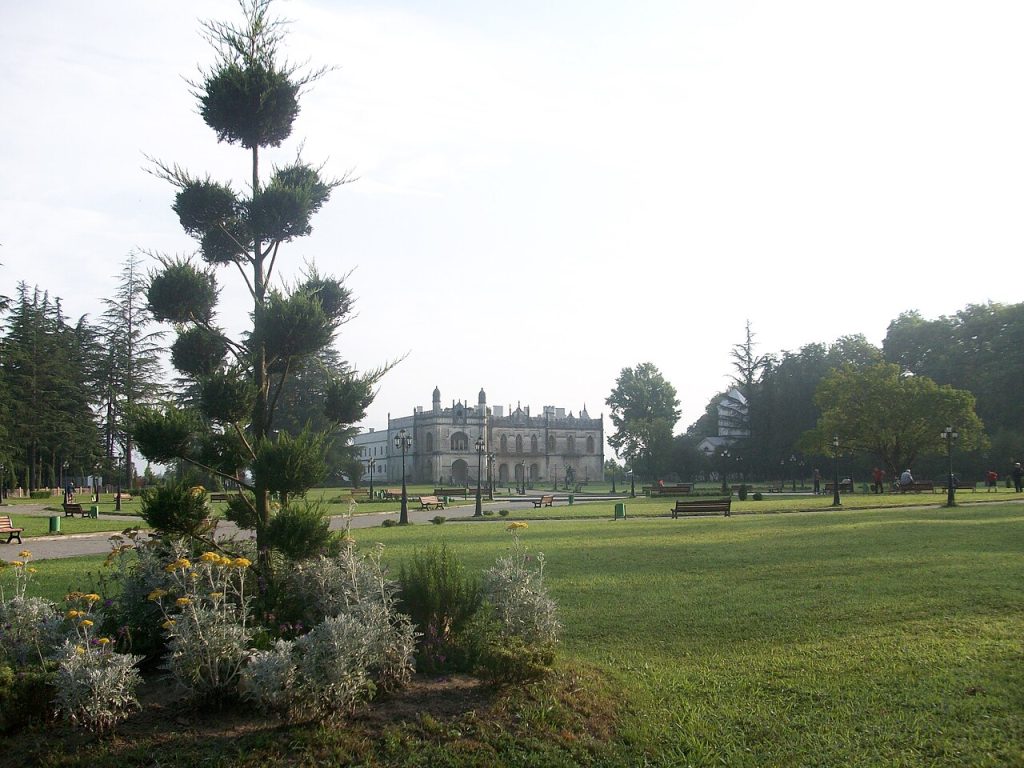
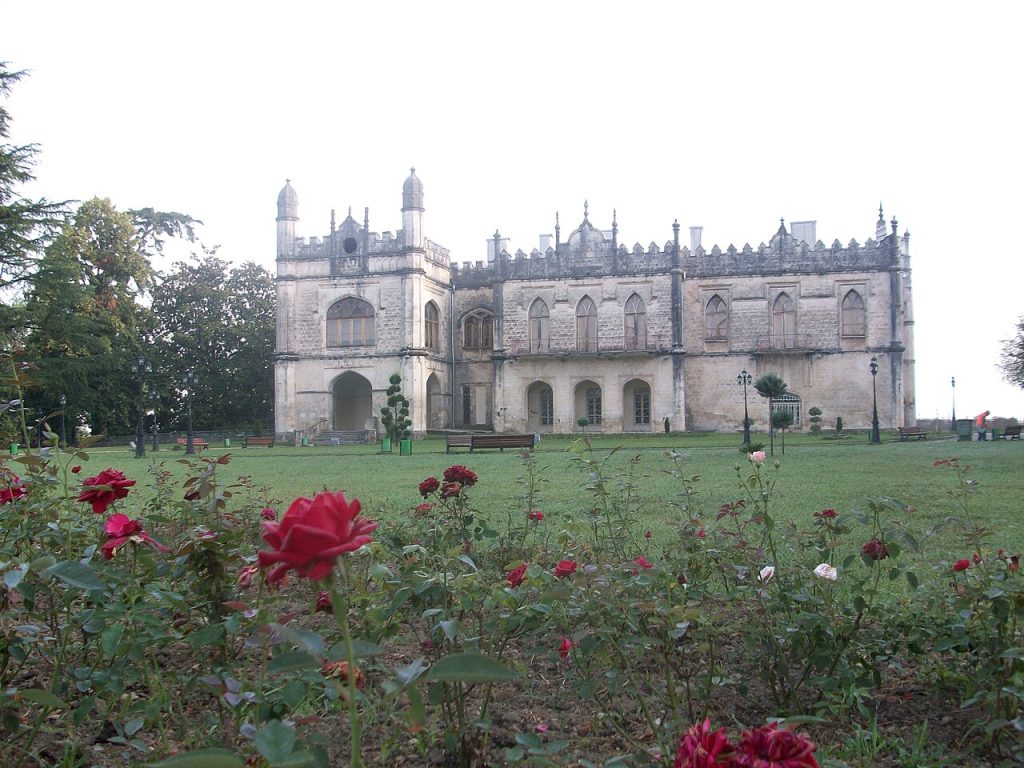
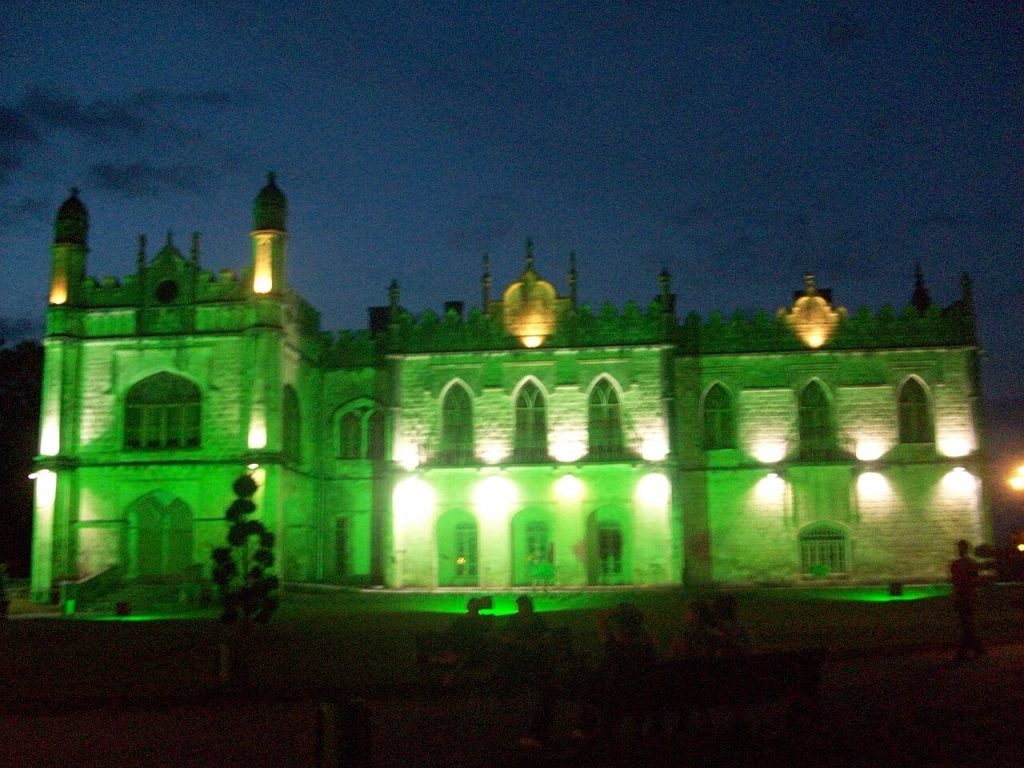
The architecture is Gothic revival with Venetian touches: pointed windows, battlements, towers, arcaded galleries, rendered in local stone and brick.
The style was fashionable in Russia at the time, and for a princely family it carried the same message as everywhere else in Europe: ancient lineage, chivalric ancestry, legitimacy.
In the subtropical Mingrelian landscape, with palms in the park, the effect is pleasantly improbable.
Salome Dadiani and Achille Murat
Ekaterine’s daughter Salome married Achille Murat, grandson of Joachim Murat, Napoleon’s marshal and king of Naples, and of Caroline Bonaparte, Napoleon’s sister.
The marriage, in Paris in 1868, connected the Dadiani directly to the Bonaparte family, and Achille moved to Zugdidi, where he introduced French viticulture to the estate.
Their descendants carried both names, and the Bonaparte relics came to Georgia through this line.
The Death Mask
The bronze death mask of Napoleon, one of three originals cast under the supervision of the doctor Antommarchi from the St Helena mould, came to Zugdidi with the Murat inheritance.
It is displayed in the palace museum with other Napoleonic objects, including items associated with the emperor’s household.
Seeing it here, a day’s drive from the Black Sea beaches, is one of the stranger museum experiences in the Caucasus.
The Collections
The museum holds around fifty thousand objects: medieval Georgian icons and manuscripts, church treasures from Mingrelian monasteries, weapons, European furniture, porcelain and the family’s library.
Among the most revered items is a relic identified as the shroud of the Virgin, brought to Mingrelia centuries ago and kept in the palace chapel tradition.
The mixture of Orthodox relics and Napoleonic bronzes in one building summarises the family exactly.
The Botanical Garden
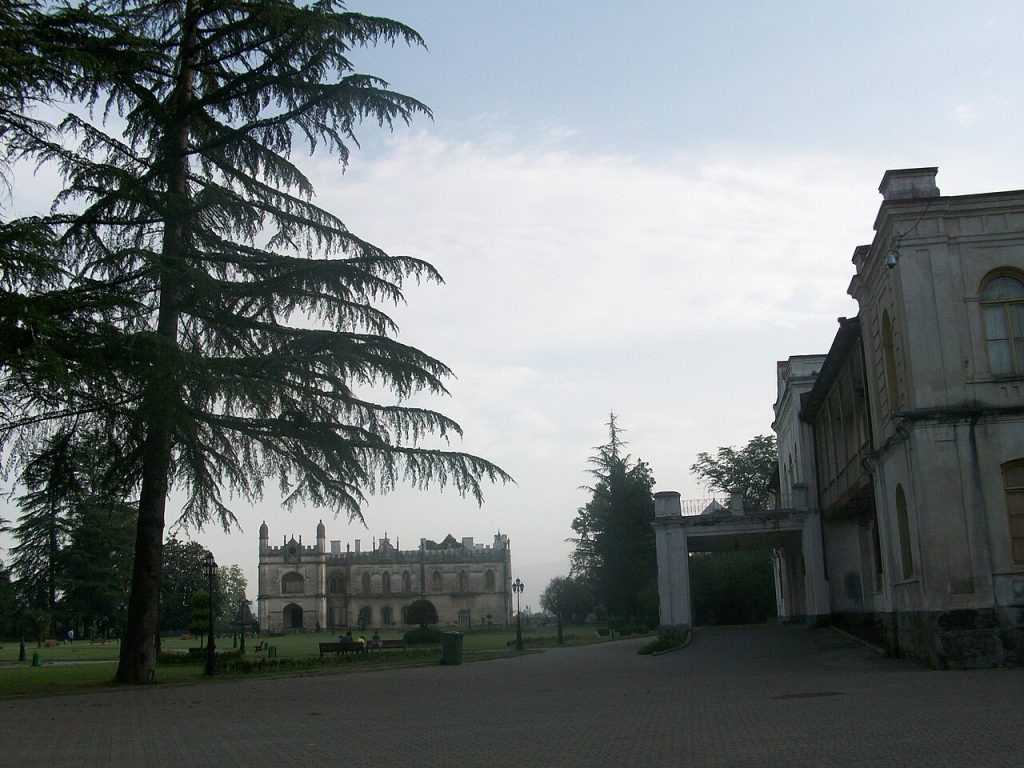
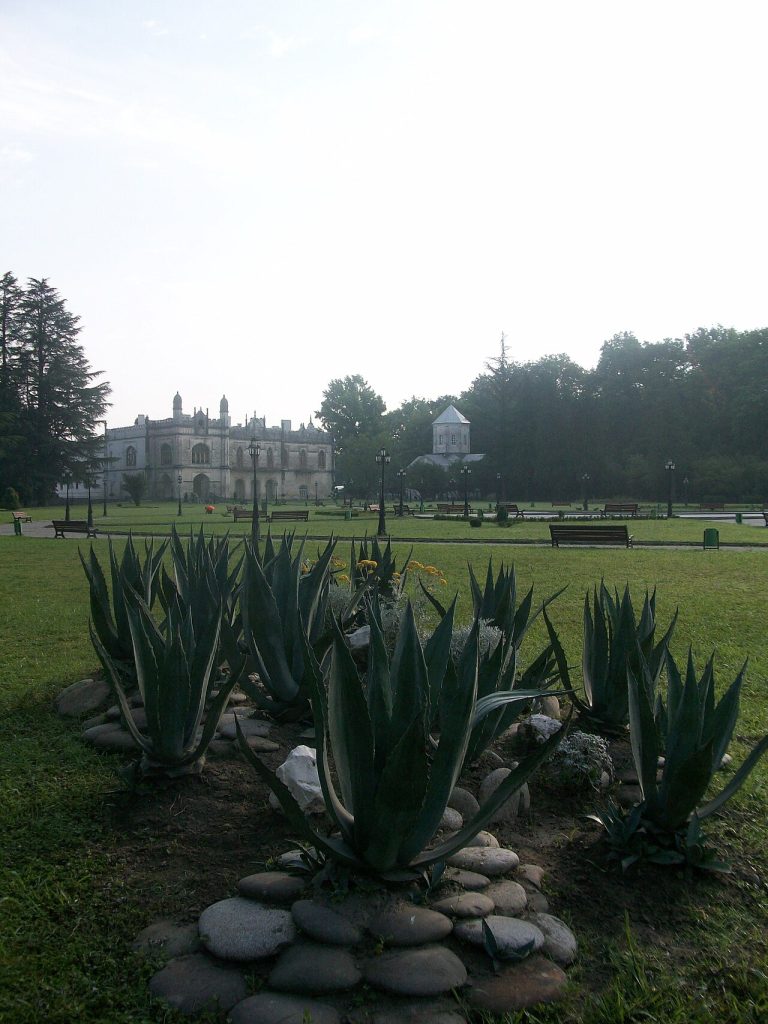
The palace park, laid out in the nineteenth century with the help of European gardeners, became one of the first botanical gardens in the Caucasus, with imported species thriving in the humid subtropical climate.
Magnolias, palms, sequoias and camellias grow to sizes that visitors from drier climates find hard to believe.
The garden is open to the public and is the town’s main green space.
The End of the Principality’s Heirs
After the Russian revolution and the Soviet takeover of Georgia in 1921, the family’s remaining property was nationalised. The palace had already become a museum in 1921, which protected the collections.
Family members dispersed across Europe; the Murat-Dadiani line continued in France.
The museum survived Soviet decades, war in the 1990s in nearby Abkhazia, and the hard years after independence, with its core collections intact.
The Museum Today
The Dadiani Palace History and Architectural Museum operates year-round, with the main palace, Niko’s palace and the chapel in the ensemble, and restoration work has continued in recent years.
Labels are in Georgian and English, and local guides are enthusiastic.
Zugdidi itself is the gateway to Svaneti, and most foreign visitors pass through on the way to the mountains; the palace deserves the stop.
Visiting Zugdidi
Zugdidi is about five and a half hours from Tbilisi by train or car, and the night train is the practical option. The palace stands in the town centre.
Combine it with the Svaneti road north to Mestia, or with the Black Sea coast at Anaklia half an hour west.
Stand in front of the mask for a moment and think about the distance it travelled: Paris to Naples to St Helena to Paris to a valley under the Caucasus.
Watch the Palace on Film
Visiting the Dadiani Palace Today
The Dadiani Palace stands in the centre of Zugdidi in western Georgia, reachable by train from Tbilisi in about five and a half hours, including a night service, or by marshrutka and car.
The museum opens daily except Mondays with ticketed entry; the botanical garden is open and free. English labelling is partial, and guided tours are available.
Allow two hours for palace and garden, and combine the trip with Svaneti or the coast. Find it here: https://www.google.com/maps?q=42.5088,41.8709
Palaces Nearby
You May Like
The Tomsk Mansions and the Wooden Palaces of Siberia