On the green and rolling hills of the southeastern coast of Africa, between the Drakensberg mountains and the warm Indian Ocean, lives one of the most famous peoples of the continent. They are the Zulu, the great Nguni nation of what is now KwaZulu-Natal, whose kingdom, forged in a single generation by the warrior-king Shaka, became a byword for military power and whose name is known around the world. Numerous, proud, and deeply attached to their traditions, the Zulu are the largest people of South Africa and one of the great nations of the south.
This is the story of the Zulu and the kingdom of the heavens they built. It is a story of Shaka and the age-regiments and the short stabbing spear that revolutionised African warfare, of the cattle byre at the sacred heart of the homestead, of the creator Unkulunkulu and the ever-present ancestors and the diviners who serve them, of the dazzling beadwork and the stamping indlamu dance and the great reed dance of the maidens, and of maize porridge and sour milk. It is also a story of a stunning victory over a British army, of conquest and apartheid endured, told by the largest people of modern South Africa.
Contents
- The People of the Heavens
- Zulu, amaZulu, and the Speakers of isiZulu
- IsiZulu, the Great Language of the South
- The Green Hills of KwaZulu-Natal
- Shaka, the Regiments, and the Zulu Kingdom
- The Homestead, the Clan, and the Cattle
- Unkulunkulu, the Ancestors, and the Diviners
- The Beads, the Shield, and the Dances of the Zulu
- Beadworkers, Carvers, and the Smiths of the Kingdom
- Maize, the Beast, and the Table of the Zulu
- The Reed Dance, the First Fruits, and the Feasts
- From Shaka to the Fall and Survival of the Kingdom
- The Zulu in Modern South Africa
The People of the Heavens
On the green and rolling hills of the southeastern coast of Africa, between the Drakensberg mountains and the warm Indian Ocean, lives one of the most famous peoples of the continent. They are the Zulu, the great Nguni nation of what is now the South African province of KwaZulu-Natal, whose kingdom, forged in the early nineteenth century by the warrior-king Shaka, became a byword for military power and whose name is known around the world. Numerous, proud, and deeply attached to their traditions, the Zulu are the largest ethnic group in South Africa and one of the great peoples of the south.
The Zulu are a Bantu people of the Nguni branch, part of the vast family whose ancestors spread across much of Africa, and they are close kin to the other Nguni peoples of the southeast, the Xhosa, the Swazi, and the Ndebele, with whom they share much of their language and culture. Their name, amaZulu, means the people of the heavens or of the sky, and it belonged first to a small clan that, under Shaka, gave its name and its kingship to a great nation forged from many peoples.
Their story is one of a small chiefdom raised in a single generation into a mighty kingdom, of a military revolution that reshaped the whole region, of heroic resistance to British invasion, and of the endurance of a proud identity through conquest and the long ordeal of apartheid into the freedom of the modern nation. To understand the Zulu is to understand a people whose kingdom and whose name became legendary, at the heart of the history of southern Africa.

Zulu, amaZulu, and the Speakers of isiZulu
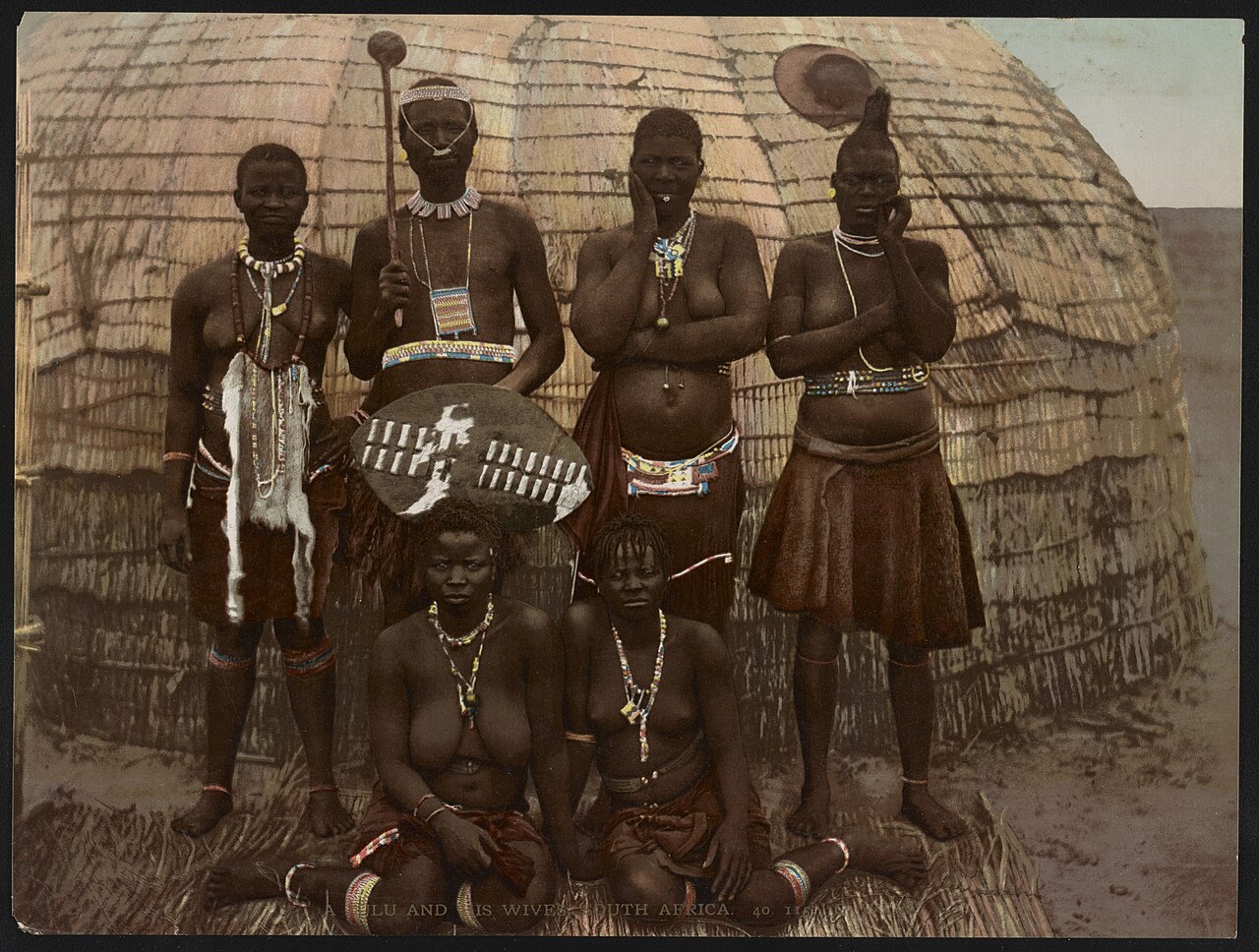
The people call themselves the amaZulu, the people of Zulu, a single person being an umZulu, and their language isiZulu, all built with the prefixes of the Nguni tongue on the name Zulu, which means the heavens or the sky. The name belonged first to the ancestor and the clan from whom the royal house descended, a small group among the many Nguni chiefdoms of the southeast, until in the early nineteenth century the conqueror Shaka welded a great nation from many peoples and gave them all the name of his own clan, so that to be Zulu came to mean belonging to the kingdom he had built.
The Zulu are the largest of the Nguni peoples and the largest ethnic group in South Africa, and they are close kin to the other Nguni, above all the Xhosa to the south, the Swazi to the north, and the Ndebele, with whom they share the deep bonds of a common language family and a common culture, so that the Nguni tongues shade into one another and their speakers can often understand each other. Beneath the shared Zulu name lie many clans, each with its own name and praise-poetry and its own place in the nation.
The name amaZulu carries the fame of the kingdom of Shaka and his successors, of the warriors who defeated a British army and of a proud nation that survived conquest and apartheid, and it marks the Zulu as one of the great and best-known peoples of the continent. In the name amaZulu, the people of the heavens, the many clans of the southeast recognise their belonging to the nation that Shaka forged.
IsiZulu, the Great Language of the South
The Zulu speak isiZulu, a Bantu language of the Nguni group of the Niger-Congo family, and it is the most widely spoken home language in South Africa, the mother tongue of many millions and understood by many more, one of the eleven official languages of the country and a language of great importance across the south. As an Nguni tongue it is closely related to Xhosa, Swazi, and Ndebele, and one of its most striking features is the set of click consonants, borrowed in ancient times from the Khoisan peoples of the region, which give the language its distinctive sound.
IsiZulu carries a rich oral heritage, above all the tradition of praise-poetry, the izibongo, the sonorous praises composed and recited for chiefs, kings, and notable people, cataloguing their deeds and their descent in a soaring poetic style that is one of the glories of Zulu culture, performed by the praise-singer, the imbongi, at every great occasion. The proverbs, the folktales, and the songs of the people fill out a deep and living oral literature.
With the coming of the missionaries the language was reduced to writing, and isiZulu developed an early written literature and a place in schooling, the churches, and the press, and today it flourishes in print, in a vibrant popular music, in film, radio, and television, and in the daily life of millions. In its clicks, its praise-poetry, and its wide reach, isiZulu is one of the great languages of Africa and a proud vehicle of the Zulu nation.

The Green Hills of KwaZulu-Natal
The Zulu homeland is the region of KwaZulu-Natal, on the southeastern coast of South Africa, a beautiful country of green, rolling hills, deep river valleys, and grassy uplands that rises from the warm shores of the Indian Ocean inland to the great wall of the Drakensberg mountains. It is a well-watered and fertile land of summer rains, of sweet grasslands ideal for cattle and of valleys suited to the growing of grain, and its beauty and its richness made it a country worth fighting for and a homeland deeply loved by its people.
The land ranges from the humid, subtropical coastal belt, where sugar cane now grows and the great port of Durban stands, up through the rolling hills of the midlands to the high grasslands and at last to the towering escarpment of the Drakensberg, the Barrier of Spears, whose peaks and cliffs mark the western edge of the Zulu world. The rivers run down from these heights through the hills to the sea, and the grassy country between them was the setting of the homesteads, the cattle, and the fields of the people.
This was above all a country for cattle, for the sweet grasslands of the hills supported the great herds that were the wealth, the pride, and the very foundation of Zulu life, and it was rich enough in grazing and grain to support a dense population. The green hills dotted with the round homesteads and the grazing herds, rising toward the blue wall of the Drakensberg, are the classic landscape of the Zulu, and on this fertile and beautiful country the Zulu built their nation.

Shaka, the Regiments, and the Zulu Kingdom
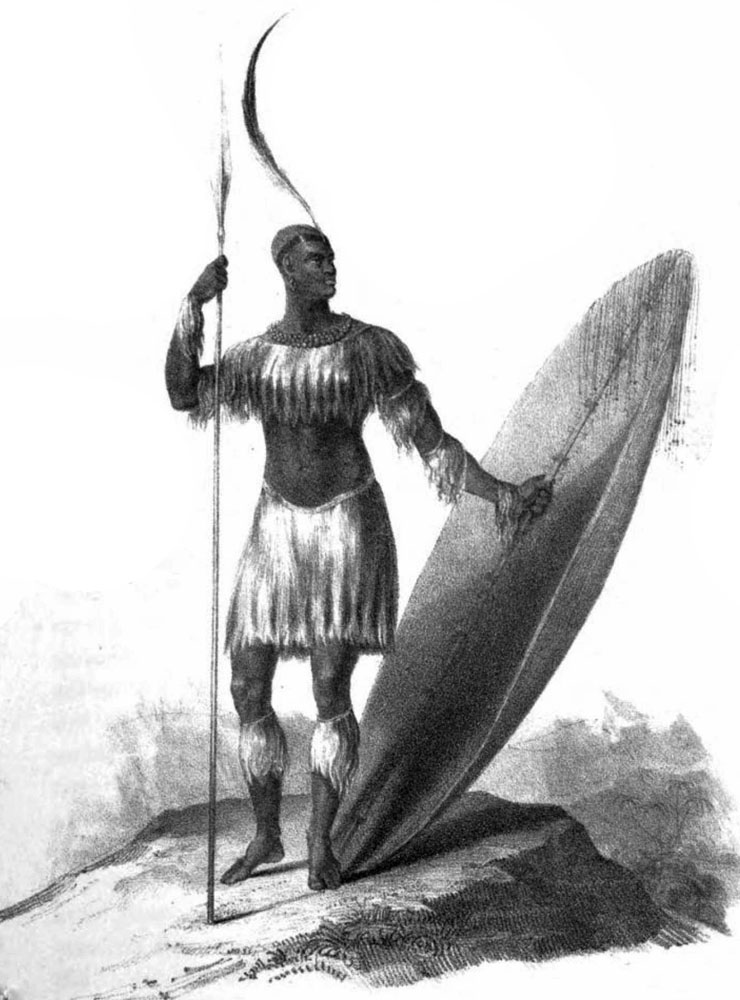
The old Zulu world was forged into a kingdom by the genius and the ruthlessness of one man, Shaka, who in the early nineteenth century transformed a small chiefdom into a great and centralised state through a revolution in war and society. Shaka reorganised the young men of the nation into age-regiments, the amabutho, disciplined standing forces quartered at royal barracks and owing their loyalty to the king, and he is credited with revolutionising the weapons and tactics of war, replacing the throwing spear with the short stabbing assegai and the close-quarters charge that made his armies terrible.
Through this military and social revolution the Zulu kingdom conquered and absorbed its neighbours and rose to dominate a great region, and the king stood at the summit of a centralised state, his authority absolute, his person sacred, and his court and his regiments the instruments of his power. The age-regiments were not only an army but a way of organising the whole society, binding the men of each generation to the king, controlling their marriage, and providing the labour and the force of the kingdom, a system of remarkable power and discipline.
Beneath the king and his regiments lay the chiefs, the homesteads, and the clans of the nation, the ordinary Zulu living by their cattle and their fields and bound to the king through the chiefs and the regiments. The wealth of the kingdom was counted in cattle, which flowed to the king and circulated as bride-wealth and tribute, and the whole society was ordered around the herd, the regiment, and the sacred person of the king. In Shaka, the regiments, and the centralised kingship, the old Zulu world was built.

The Homestead, the Clan, and the Cattle
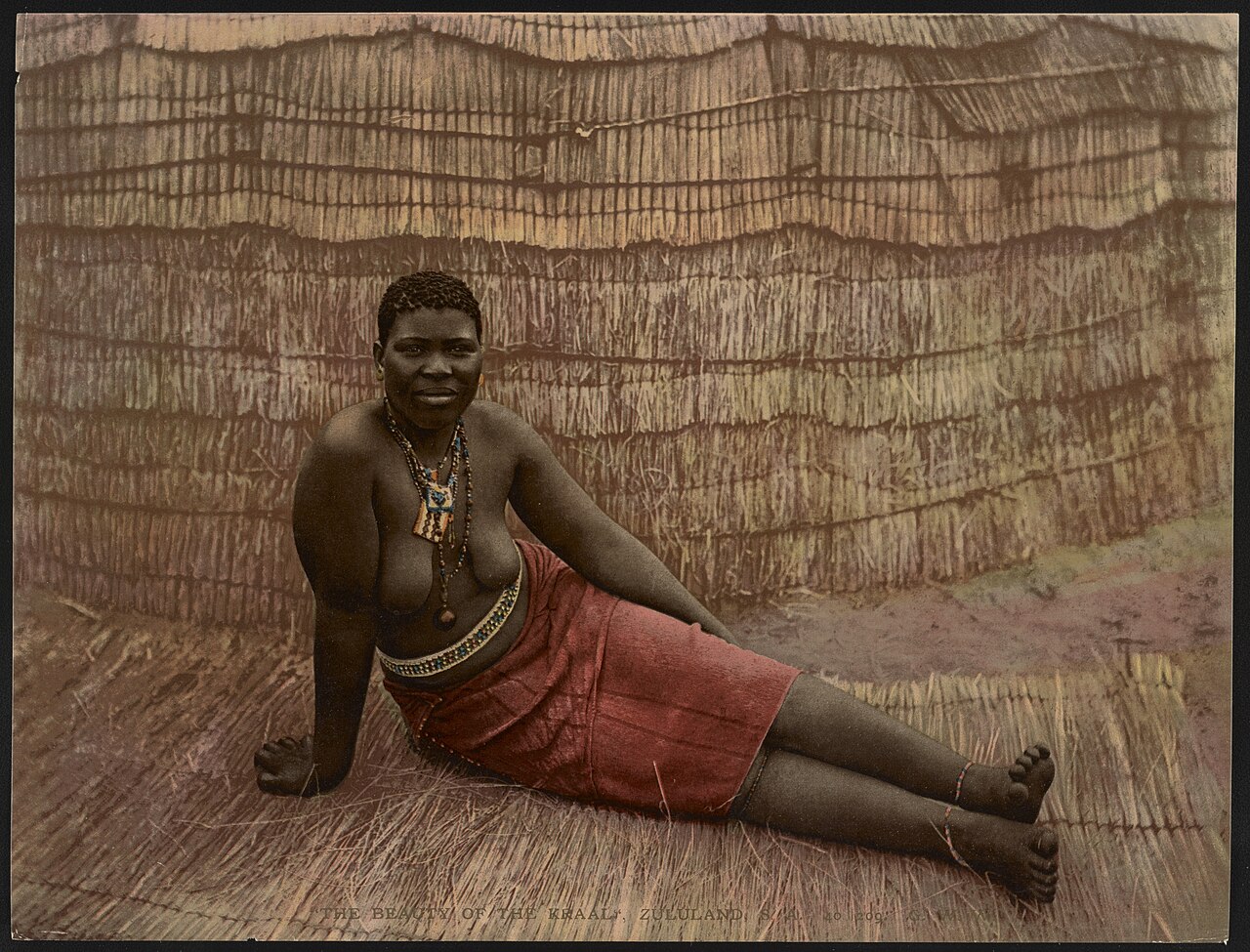
Zulu society was built on the homestead, the umuzi, the circular settlement of a man, his wives, and their children and dependants, its beehive-shaped grass houses arranged in a ring around the central cattle enclosure, the very heart of the home. The cattle byre was the sacred centre of the homestead, the place of the ancestors, the store of the familys wealth, and the focus of its life, for cattle were the measure of standing, the currency of bride-wealth, and the link between the living and the dead, and no institution was more central to Zulu life than the herd.
Descent was reckoned through the father, in the patrilineal fashion, and every Zulu belonged to a clan tracing descent from a common ancestor and marked by its own praises, and marriage, sealed by the transfer of cattle as bride-wealth, the lobola, from the family of the groom to that of the bride, joined lineages and was the foundation of the family. A man of many cattle could take many wives, and a great homestead of many houses around a full cattle byre was the mark of a prosperous and honoured man.
The society was ordered too by the age-regiments, which bound the men and women of each generation into groups that served the king and marked the stages of life, and by the authority of the chiefs, the elders, and above all the king. Respect for the ancestors, for the elders, and for the king, the honouring of the cattle and the homestead, and the elaborate courtesies of a ceremonious people ordered daily life. In the homestead, the cattle, the clan, and the regiment, the Zulu wove a strong and ordered society.
Unkulunkulu, the Ancestors, and the Diviners
The traditional religion of the Zulu centred on a supreme creator, Unkulunkulu, the great-great-one, the first being and the maker of humankind, a distant and originating power, and above all on the ancestors, the amadlozi, the spirits of the departed dead of the family and the lineage, who remained an ever-present and intimate power in the life of the living. The ancestors watched over their descendants, blessed them with health, children, and cattle, and could bring misfortune if neglected, and the bond with them, focused on the cattle byre and expressed in sacrifice and ritual, was the very heart of Zulu religion.
The living communicated with the ancestors through sacrifice, above all the sacrifice of cattle, and through the specialists who mediated with the unseen world, the diviners and the healers. The diviner, the sangoma, most often a woman, was called to her vocation by the ancestors themselves through illness and dream, and after a long and arduous training she could divine the causes of misfortune, speak the will of the ancestors, and guide the afflicted, while the herbalist, the inyanga, commanded the vast knowledge of the medicines of root and herb.
Belief in the power of the ancestors, in the danger of witchcraft and its detection, and in the forces of the unseen ran deep, and the whole of life was hedged about with the rituals that kept the living in right relation with the dead. With the coming of the missionaries many Zulu became Christians, often in vigorous independent churches that wove the new faith together with the old, yet the reverence for the ancestors and the arts of the diviner have never faded, and the two worlds live side by side in Zulu life.
The Beads, the Shield, and the Dances of the Zulu
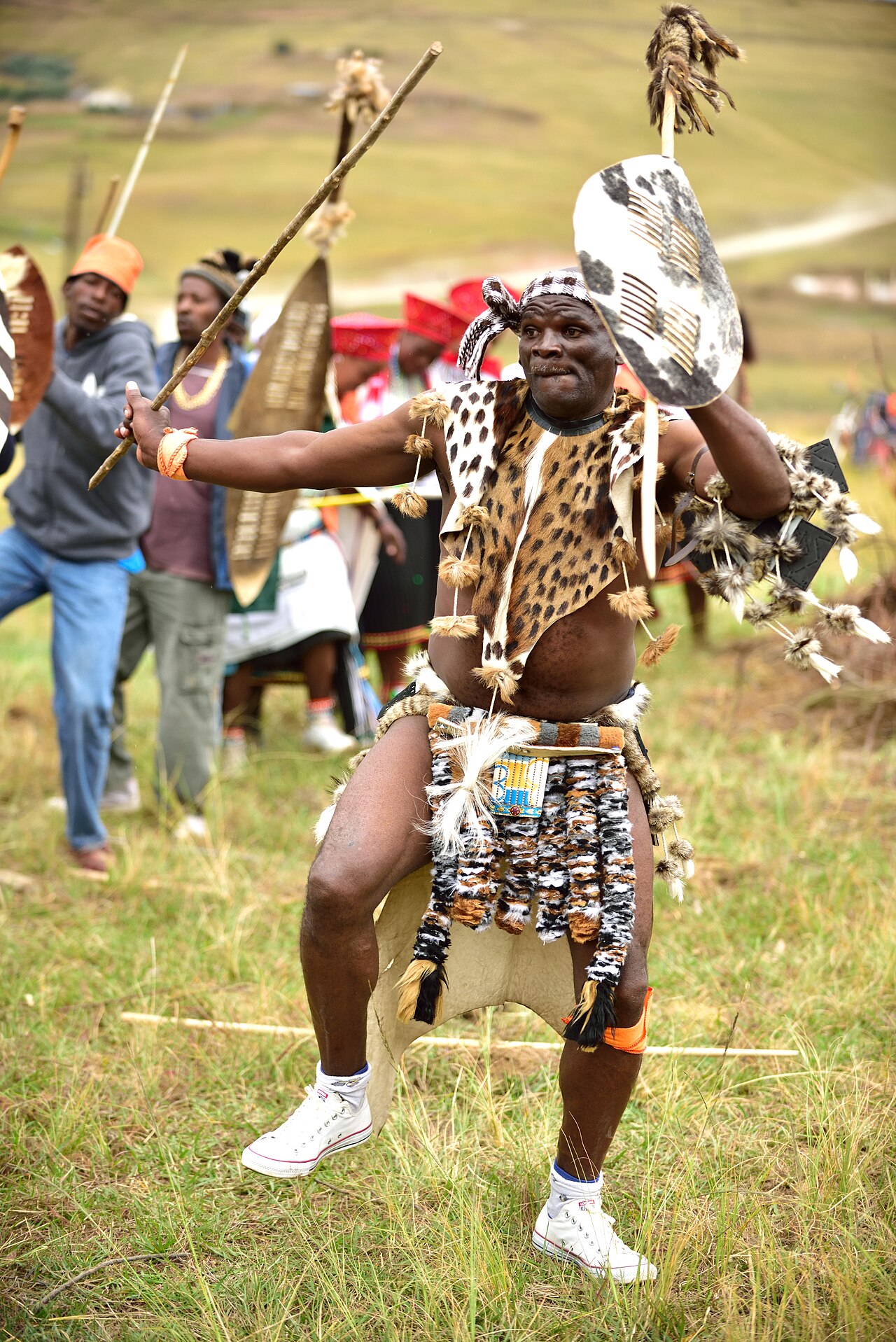
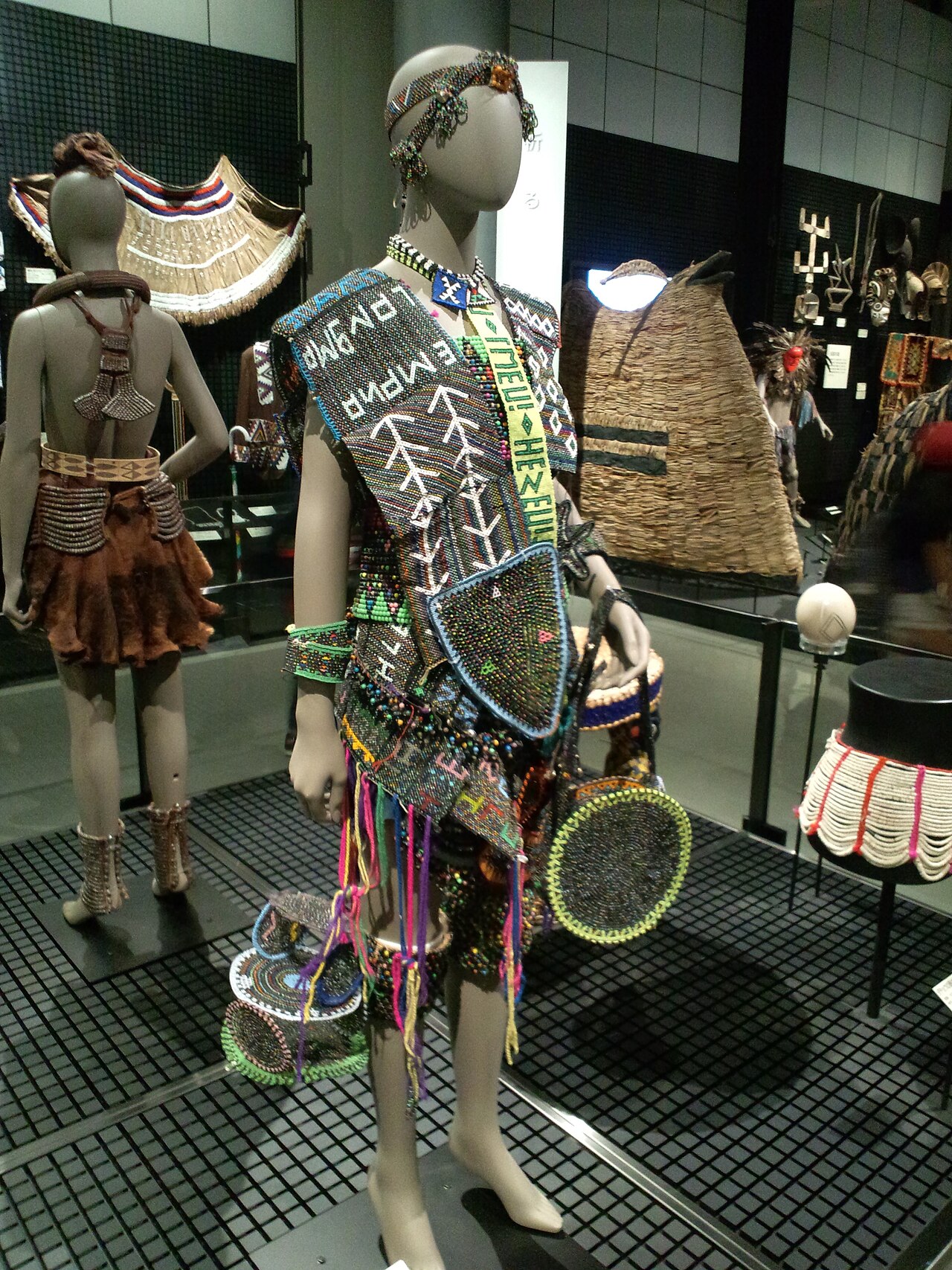
The traditions of the Zulu are among the most vivid and famous in Africa, and none more so than their beadwork, the intricate ornaments of tiny coloured beads worked into necklaces, aprons, headbands, and panels whose colours and patterns carry meaning, so that a beaded love-letter, the ucu, could send a message of the heart in the language of colour. The dress of the Zulu, the beaded finery of the maidens, the leopard-skin and feathers of the king and the great, and the leather aprons and ornaments of the people, made every ceremony a display of colour and meaning.
The shield and the spear are emblems of the Zulu as famous as their beads, for the great oval cowhide shield and the short stabbing assegai of Shakas warriors became the very image of the nation, and the martial traditions of the regiments, their war-dances, their praises, and their discipline, remain a proud heritage. The vigorous dances of the Zulu, above all the high-kicking indlamu danced by lines of men to the beat of the drum and the stamping of feet, are performed with a power and precision that are famous the world over.
Music, song, and the art of the praise-poem fill the ceremonial life of the people, and the izibongo, the soaring praises of chiefs and kings recited by the imbongi, are among the glories of Zulu tradition. The rituals of the homestead, the courtesies of a ceremonious people, and the marking of every passage of life with its proper custom carried the values of the nation. In the beadwork, the shield, and the stamping dance, the Zulu keep the vivid traditions of their kingdom.
Beadworkers, Carvers, and the Smiths of the Kingdom
The crafts of the Zulu are famous across the world, and the most celebrated is beadwork, the art in which the women work tiny glass beads, obtained through trade, into ornaments of dazzling colour and intricate pattern, the necklaces, aprons, headbands, and love-tokens whose colours carry a language of meaning. This beadwork is at once a craft, an art, and a means of communication, and it remains one of the most admired of all African decorative traditions, sought by collectors far beyond the Zulu country.
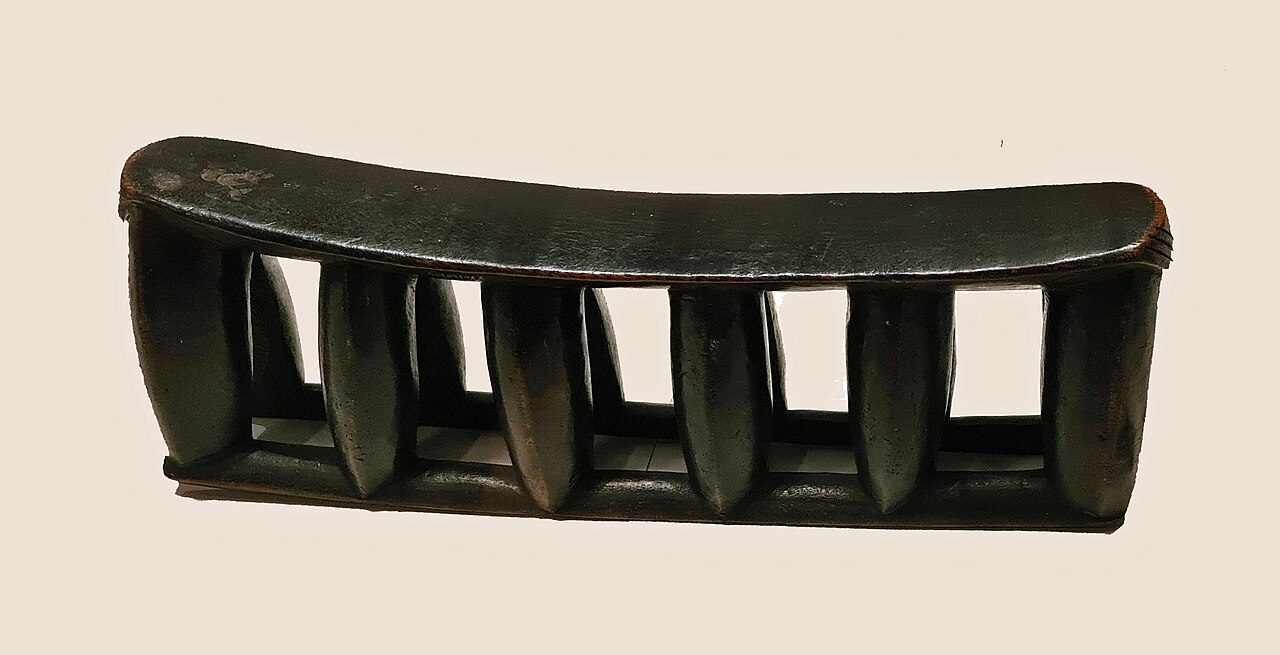
The Zulu are also renowned for their basketry and their pottery, for the women coil and weave grasses and palm into baskets of such fine and tight construction that some can hold liquid, patterned in the natural colours of the fibres, and shape the rounded clay pots, the black burnished vessels in which the beer of the ancestors is brewed and served. The carving of wood gave the milk-pails, the meat-platters, the spoons, the staffs, and above all the beautifully carved headrests on which the sleeper laid his head and through which, it was said, the ancestors might speak in dreams.
The men worked hides into the great war-shields and the shields of the herd, tanned and cut and pegged, and the smiths forged the blades of the spears, the hoes, and the ornaments of iron and brass that the people wore, their working of metal an honoured skill. Many of these crafts belonged to particular skills and families, and the finest served the king and the great. In beadwork, basket, carved headrest, and forged blade, the crafts of the Zulu adorned and equipped a great nation.
Maize, the Beast, and the Table of the Zulu
The food of the Zulu is the food of a people of the cattle and the grain field, and its foundation is maize, the grain that became the staple of the whole region, ground and boiled into the stiff porridge, the pap or phutu, that is the daily bread of the people, eaten with sauces, with vegetables, and with the sour milk that is so beloved. Before maize became dominant the older grains, sorghum and millet, filled the same place, and they remain important above all for the brewing of the traditional beer.
Cattle stood at the centre of Zulu life, but they were wealth and sacred substance far more than everyday food, and the beast was slaughtered chiefly for ceremony, for the honouring of the ancestors, and for the great feasts, when the meat was shared according to careful rule. In daily life it was the products of the herd, above all the thick sour milk, the amasi, curdled in the gourd and poured over the porridge, that gave the cattle their place at the table, a food so central that it was hedged about with custom and taboo.
Around the maize and the milk the Zulu grew pumpkins, beans, sweet potatoes, and the green leaves that are cooked as a relish, and they gathered the wild plants and fruits of the veld. The traditional sorghum beer, thick, mildly alcoholic, and nourishing, was brewed by the women and drunk at every gathering and offered to the ancestors, a food and a sacrament in one. In maize porridge, sour milk, the ceremonial beast, and the sorghum beer, the food of the Zulu is the taste of the cattle country of the hills.

The Reed Dance, the First Fruits, and the Feasts
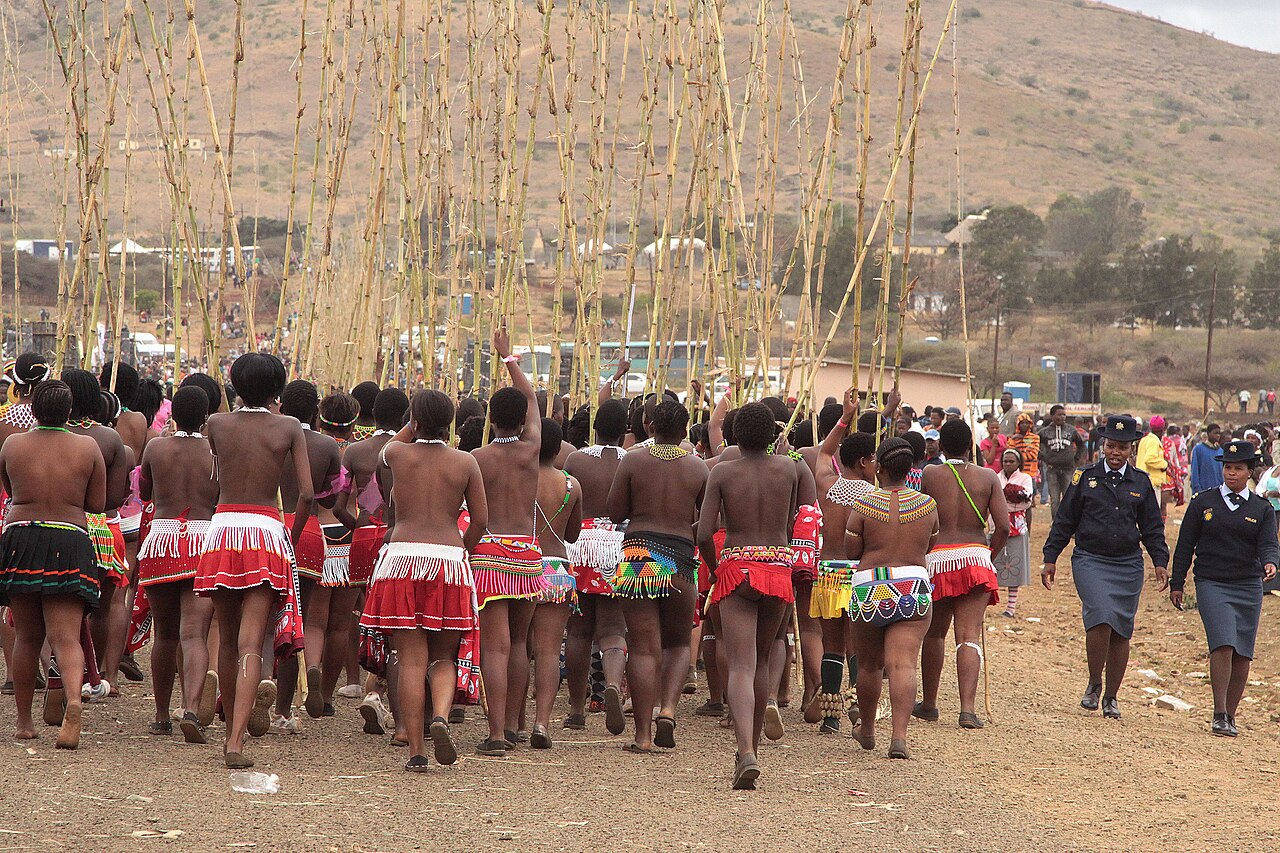
The most famous of Zulu ceremonies today is the reed dance, the umkhosi womhlanga, the great gathering at which thousands of young unmarried women, carrying reeds and dressed in their beaded finery, come together to dance before the king in celebration of maidenhood, chastity, and the vigour of the nation, a spectacle of colour and pride that draws crowds from across the land and beyond. Revived and grown into a great national festival, the reed dance has become one of the most vivid public expressions of Zulu identity.
The old kingdom kept the great ceremony of the first fruits, the umkhosi wokweshwama, the festival at which the king, through solemn ritual, tasted the new harvest and so opened it to the whole nation, renewing the sacred bond between the king, the land, and the ancestors, and gathering the regiments in a grand display of the power and unity of the kingdom. This first-fruits festival was the central rite of the Zulu year, binding the fertility of the land to the person of the king.
The passages of family life, birth, the coming of age, marriage, and death, were marked by their own rituals of the homestead, with the sacrifice of cattle to the ancestors, feasting, beer, song, and dance, and the wedding in particular was a great occasion of the joining of lineages and the flowing of cattle. With the coming of Christianity the Zulu added the feasts of the church. Through the reed dance, the first fruits, and the rites of the homestead, the Zulu mark the passages of life and the unity of the nation.
From Shaka to the Fall and Survival of the Kingdom
The history of the Zulu nation begins in the early nineteenth century, when the small Zulu chiefdom, under the extraordinary leadership of Shaka, rose in a single generation to dominate the southeast in a period of upheaval and war remembered as the Mfecane, the crushing, that convulsed the whole region and scattered peoples far and wide. Shaka forged the age-regiments, revolutionised the weapons and tactics of war, and welded many chiefdoms into a single powerful kingdom before he was assassinated by his half-brothers in 1828.
Through the following decades the kingdom endured under Shakas successors, clashing with the Boer settlers who pressed into the interior and at last with the British empire. In 1879 the British invaded Zululand, and the Zulu army, armed chiefly with the spear and the shield, inflicted upon them at Isandlwana one of the most stunning defeats a European army ever suffered at African hands, before the weight of British arms told and the kingdom was conquered, its king exiled, and its land broken up. The heroic resistance of the Zulu made their name famous around the world.
Under colonial rule and then the harsh decades of apartheid, the Zulu, like all black South Africans, suffered dispossession, poverty, and oppression, confined to reserves and drawn as migrant labourers to the mines and the cities, yet they held to their identity, their language, and the memory of their kingdom, and the Zulu royal house survived as a symbol of the nation. With the coming of democracy in 1994 the Zulu entered the new South Africa as its largest people. From Shaka to freedom, they have carried a proud and storied history.
The Zulu in Modern South Africa
Today the Zulu are the largest ethnic group in South Africa, numbering many millions and concentrated in their historic homeland of KwaZulu-Natal, though found in great numbers in the cities of the whole country, above all in Johannesburg and the industrial heartland, where they came as workers over the generations. The isiZulu language is the most widely spoken in the country, Zulu music and culture are celebrated across South Africa and the world, and the Zulu royal house endures, its king a revered figure and a symbol of the nation and its traditions.
The modern history of the Zulu has been bound up with the great struggles of South Africa, the long fight against apartheid and the coming of democracy in 1994, and the Zulu have played a central part in the political life of the new nation, sometimes amid tension and rivalry, but always as one of its major peoples. The pressures of the modern economy, of urban life, and of poverty and inequality bear upon the people, yet their vigour, their pride, and their attachment to their heritage carry them forward.
Through all the changes of the modern age the culture of the Zulu flourishes with remarkable vitality. The isiZulu language thrives, the reed dance gathers its thousands, the beadwork is still worked and worn, the praises are still recited, the diviners still serve the ancestors, and the memory of Shaka and the kingdom remains a deep source of pride. Heirs to one of the most famous kingdoms in African history, the Zulu carry their proud identity into the heart of the modern South African nation.

Related Peoples of the Region
- Xhosa of the Eastern Cape and Their Clicking Tongue and Rite of Manhood
- Basotho of the Mountain Kingdom and the Nation Moshoeshoe Forged
- Shona of the Zimbabwe Plateau and Their Cities of Stone
- Ndebele of the Highveld and Their Painted Homes
- Tswana of the Kalahari Plateau and the Kgotla
- Swazi of Eswatini and the Kingdom of the Two Rulers
More Peoples of the World
You May Like
The Zaza, a Mountain People of Eastern Anatolia


27 thoughts on “Zulu of the Green Hills and Their Kingdom Forged by Shaka”