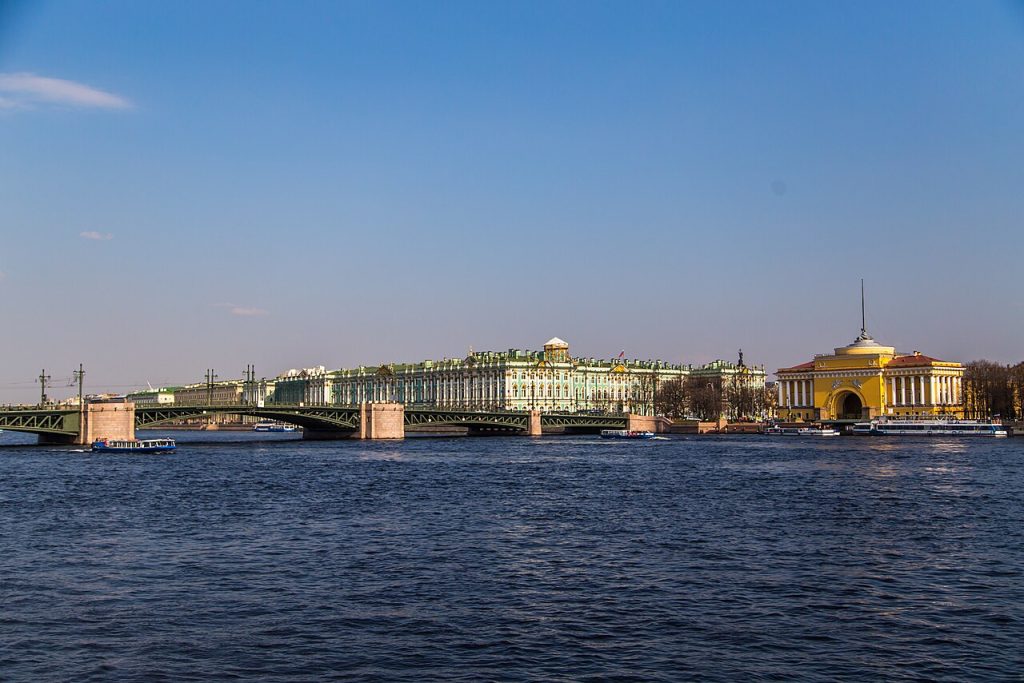
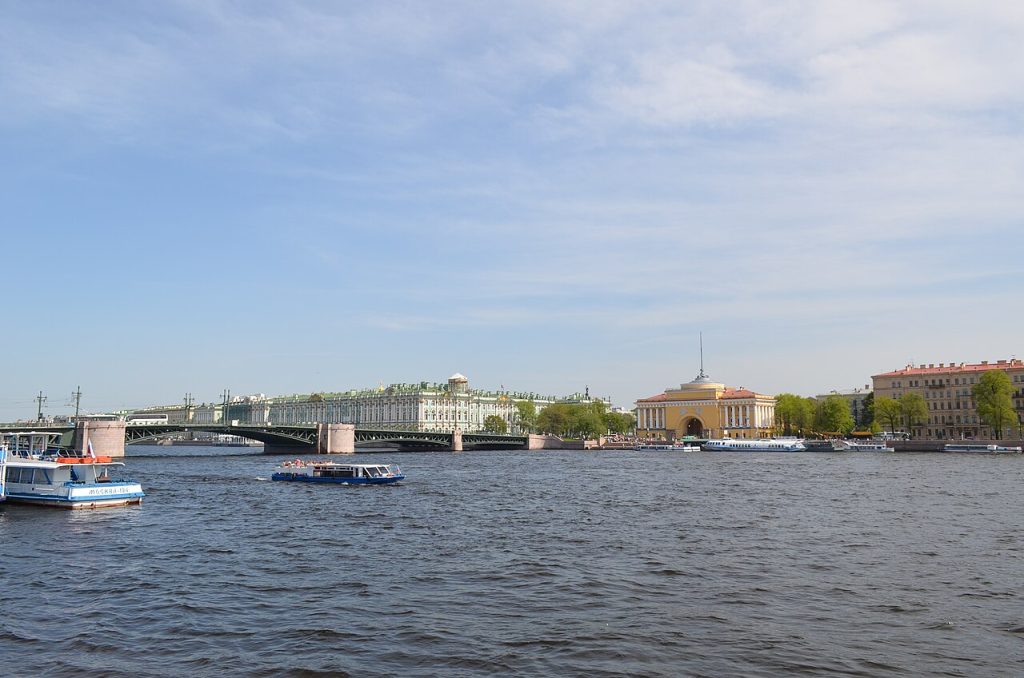
Now, stop in the middle of Palace Square and turn slowly. The green, white and gold facade in front of you runs two hundred metres, the General Staff arc curves behind you, and the Alexander Column stands between them. This is the largest and most theatrical palace square in Europe.
The Winter Palace was the official residence of the Russian emperors for a century and a half, the stage of coronations, assassination attempts, balls for three thousand guests and, in October 1917, the event that changed the twentieth century.
Today it is the core of the State Hermitage, one of the greatest museums on earth, and a visit mixes palace rooms and world art in a way no other building in this series can match.
- Four Winter Palaces
- Rastrelli’s Masterwork
- Finished for a Dead Empress
- Catherine and the First Hermitage
- The Fire of 1837
- Rebuilt in a Year
- The State Rooms
- A Court of Thousands
- Bloody Sunday
- October 1917
- The Hermitage Century
- The Siege Years
- Visiting the Winter Palace
Four Winter Palaces
Peter the Great founded St Petersburg in 1703 on conquered Swedish marshland, and the first winter residences were modest Dutch-style houses by the Neva.
Three successive winter palaces rose and were replaced within forty years as the city and the monarchy’s ambitions grew.
The fourth, the present building, was begun in 1754 for Empress Elizabeth, Peter’s daughter, who wanted a palace to outshine Versailles.
Rastrelli’s Masterwork
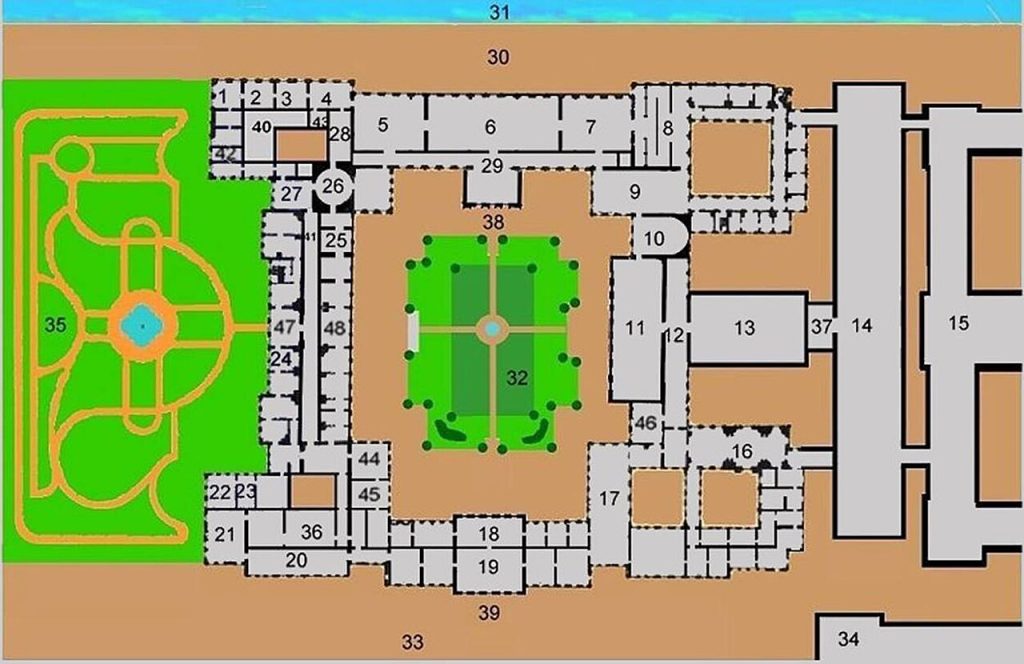
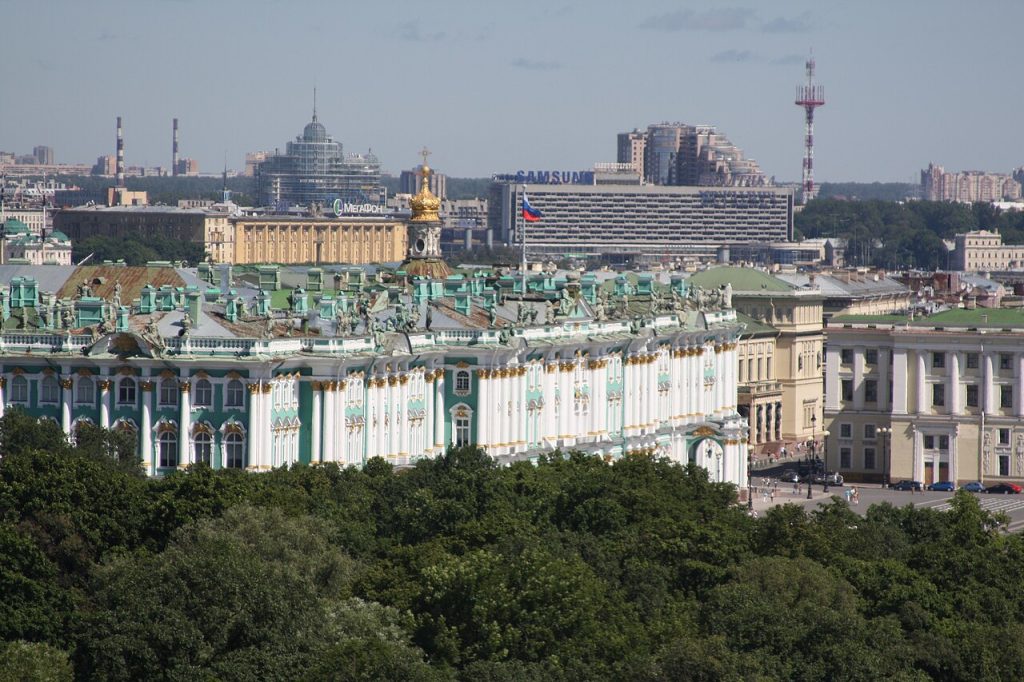
The architect was Bartolomeo Rastrelli, whom this series has already met at Jelgava in Latvia. The Winter Palace is his largest and most complete statement: 1,500 rooms, 117 staircases, nearly two thousand windows.
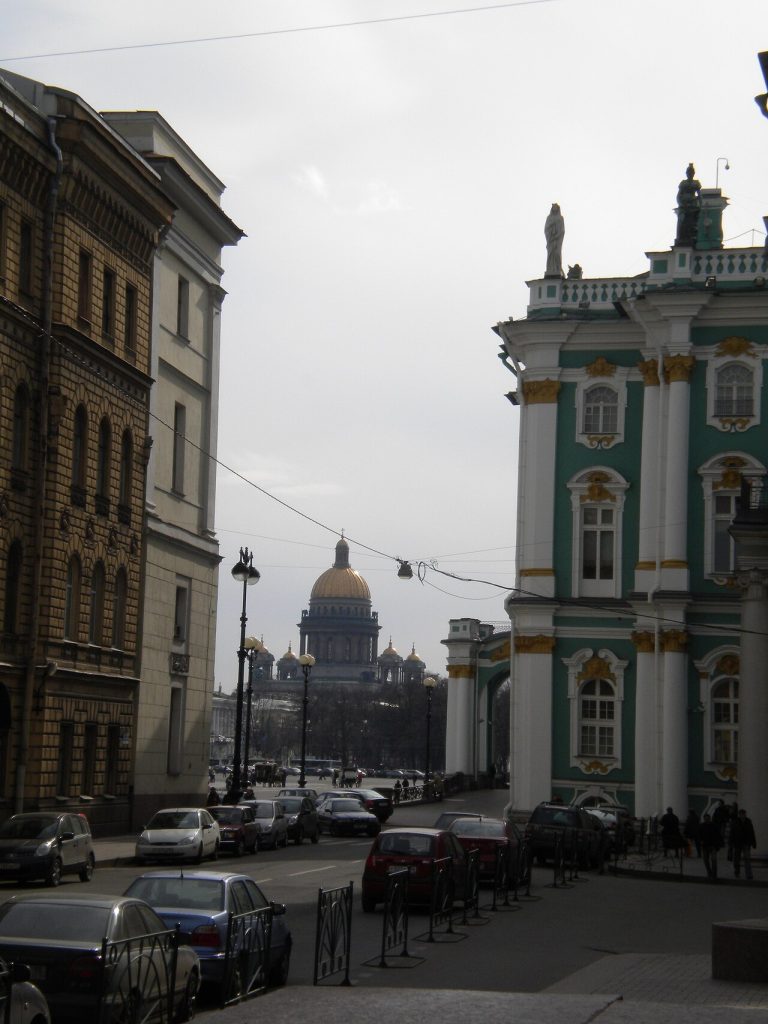
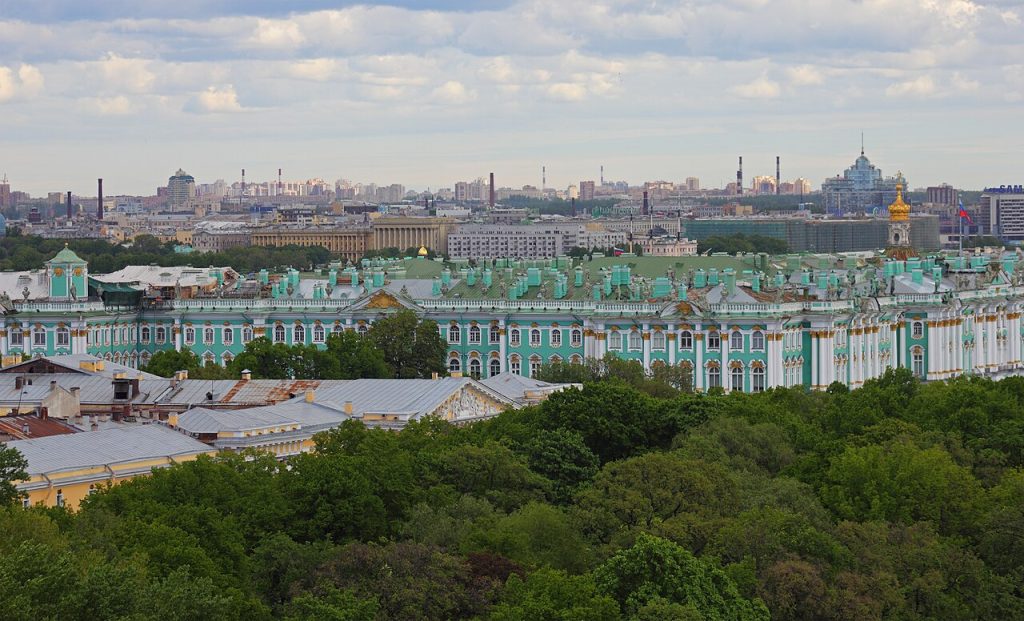
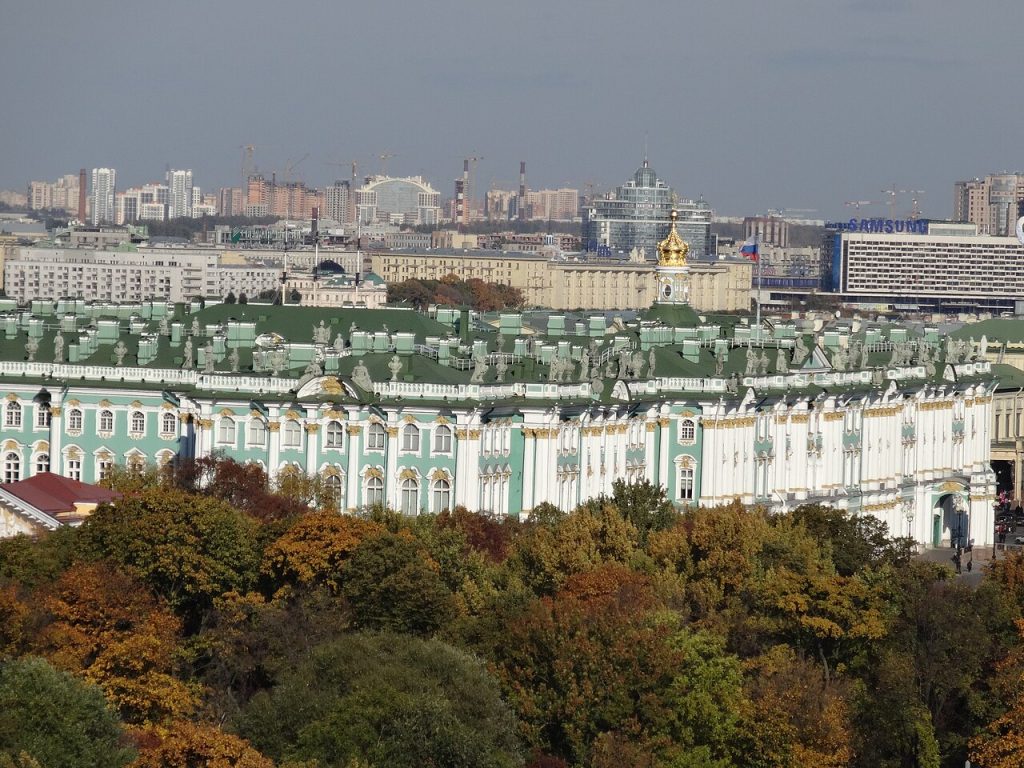
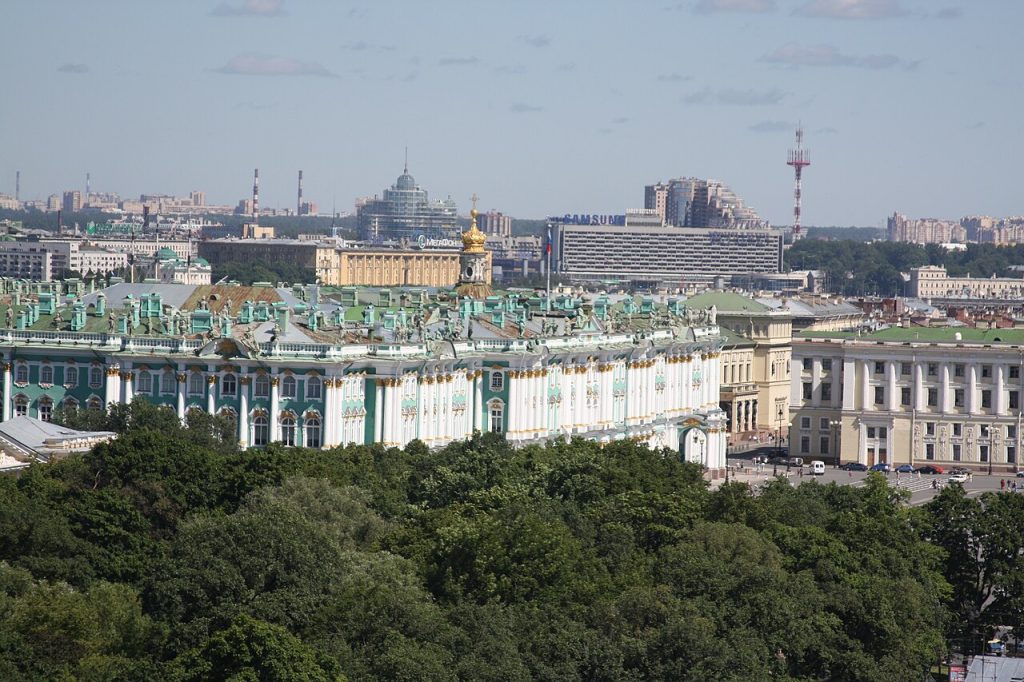
The style is Elizabethan baroque: colossal columns in two tiers, sculpture along the roofline, and colour used architecturally.
Rastrelli’s facades handle their enormous length by constant rhythm changes, which is why the building never feels monotonous from the square.
Finished for a Dead Empress
Elizabeth died in December 1761 with the palace still unfinished. Her successor Peter III moved in months later, and was deposed within a year by his wife, who became Catherine the Great.
Rastrelli, the voice of the old reign’s taste, was pensioned off as classicism replaced baroque, and he finished his career, as we saw, back in Courland.
The palace’s first decade thus contained two deaths, a coup and a change of style, which set the tone for its history.
Catherine and the First Hermitage
Catherine the Great bought art on an industrial scale: entire collections from Berlin, Paris and London, thousands of paintings, gems, drawings and books.
To house them she added the Small Hermitage beside the palace, then the Large Hermitage, then a theatre, creating the museum complex that still carries the name she gave her retreat.
By her death in 1796 the imperial collection was already among the greatest in Europe, and almost none of it was on public view.
The Fire of 1837
In December 1837 fire broke out in a heating flue and burned for three days, gutting the palace completely. The guards and staff carried furniture, paintings and chandeliers out onto the snow of the square.
Contemporary accounts describe mountains of rescued objects standing in the frost while the building burned behind them.
The Hermitage wing was saved by demolishing the passages that connected it.
Rebuilt in a Year
Nicholas I ordered the palace rebuilt within a year, and it was: thousands of workers labored in shifts through the winter, drying new plaster with huge stoves, at a cost in workers’ lives that the official record did not dwell on.
The architects Stasov and Bryullov restored Rastrelli’s state rooms where records allowed and redesigned the rest in the styles of the 1830s.
What you walk through today is therefore largely a nineteenth-century palace inside an eighteenth-century shell.
The State Rooms
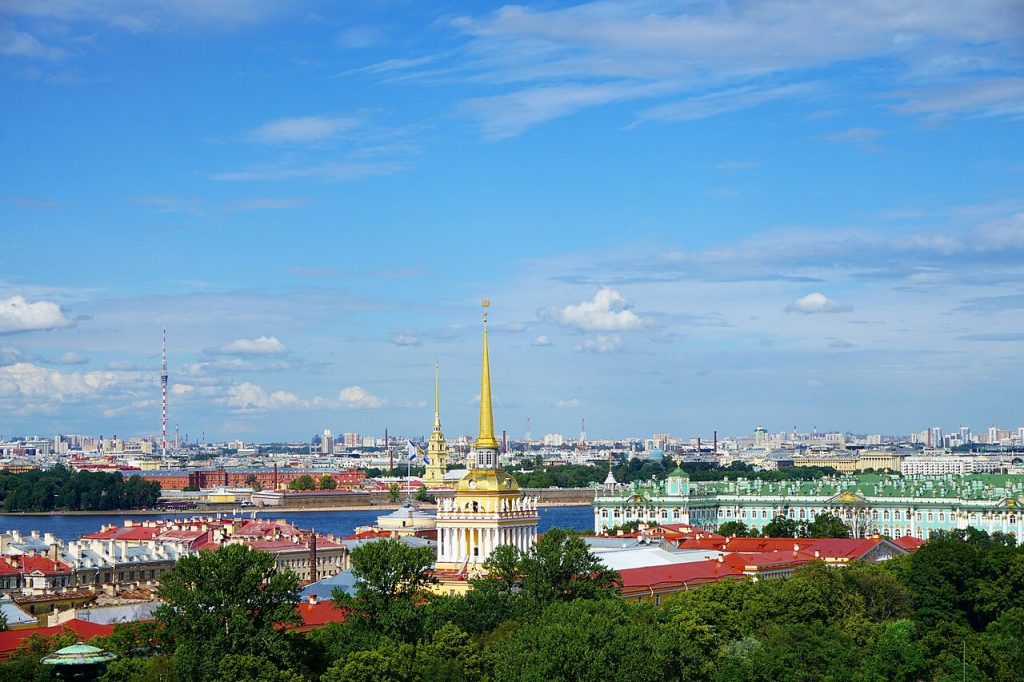
The ceremonial route runs up the Jordan Staircase, white and gold under painted skies, through the field marshals’ hall and the armorial hall to the great throne room of St George.
The Malachite Room, with columns of the green stone from the Urals, served the empresses; the 1812 gallery holds portraits of the generals who fought Napoleon.
These rooms carried the court’s ceremonies for eighty years and now carry several million visitors annually.
A Court of Thousands
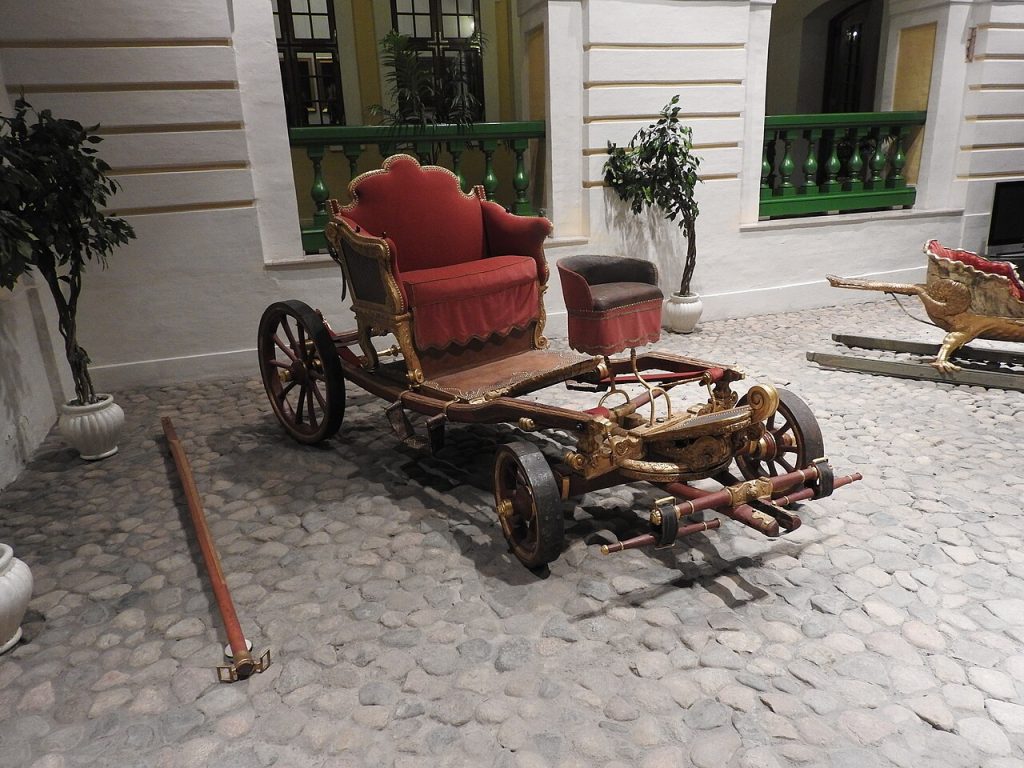
The palace housed not only the imperial family but thousands of servants, guards, officials and their families, in a vertical city of corridors and back stairs.
The great balls of the nineteenth century brought three thousand guests dancing under candlelight, with suppers served on services of gold.
After 1905 the family lived mostly outside the capital, and the palace became more stage than home.
Bloody Sunday
On 9 January 1905 a peaceful procession of workers led by Father Gapon marched toward the palace to present a petition to the tsar, who was not in residence. Troops fired on the crowds across the city, killing hundreds.
Bloody Sunday broke the popular image of the tsar as father of his people and opened the 1905 revolution, which forced the October Manifesto and the first Duma.
The empty palace was the symbol at the centre of it: the petitioners came to a building whose owner had already withdrawn from his capital.
October 1917
By late 1917 the palace housed the Provisional Government, which had taken power after the February revolution ended the monarchy. On the night of 25 to 26 October, Bolshevik forces took the building and arrested the ministers in the small dining room.
The storming was later restaged for cinema as a heroic mass assault; the event itself was more confused and far smaller.
The clock in the small dining room is stopped at the minute of the arrest, a quieter counterpart to Dolmabahce’s 9.05.
The Hermitage Century
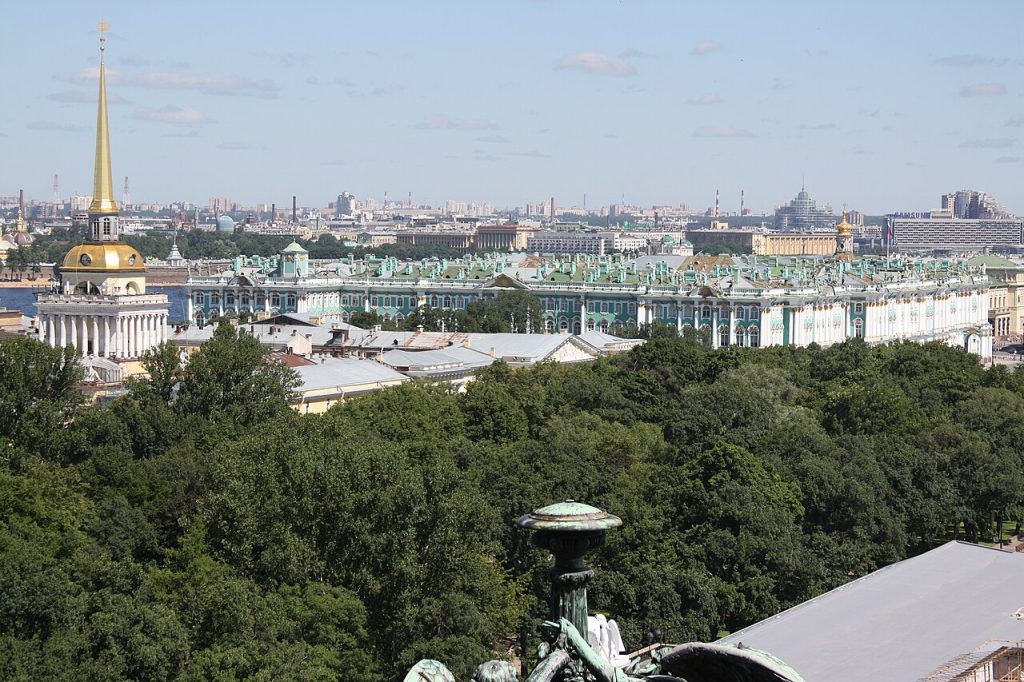
The Soviet state declared the palace and collections a state museum, merged them, and opened the rooms to the public the empire had kept out.
Nationalised private collections brought in Matisse and Picasso alongside the Rembrandts; sales abroad in the early 1930s cost the museum masterpieces that now hang in Washington.
Today the Hermitage holds some three million objects, and the Winter Palace is its principal building.
The Siege Years
During the siege of Leningrad from 1941 to 1944 the collections were evacuated to the Urals in two trainloads, and the staff who remained lived in the cellars, protecting the building through bombardment, cold and famine.
Guides famously led tours of the empty frames, describing the absent paintings from memory.
The museum reopened in 1945, and the empty-frame tours remain the most moving story the building owns.
Visiting the Winter Palace
Book tickets online and come at opening; the Jordan Staircase route fills by mid-morning. Decide beforehand whether your day is palace rooms, old masters or both, because the building defeats improvisation.
Check your own government’s travel advice for Russia before planning any trip, as conditions have changed substantially in recent years.
And cross the square once at night, when the facade is lit and the column throws its shadow: the most theatrical space in this series earns the description.
Watch the Palace on Film
Visiting the Winter Palace Today
The Winter Palace stands on Palace Square in central St Petersburg, a short walk from Nevsky Prospekt and the Admiralteyskaya metro station.
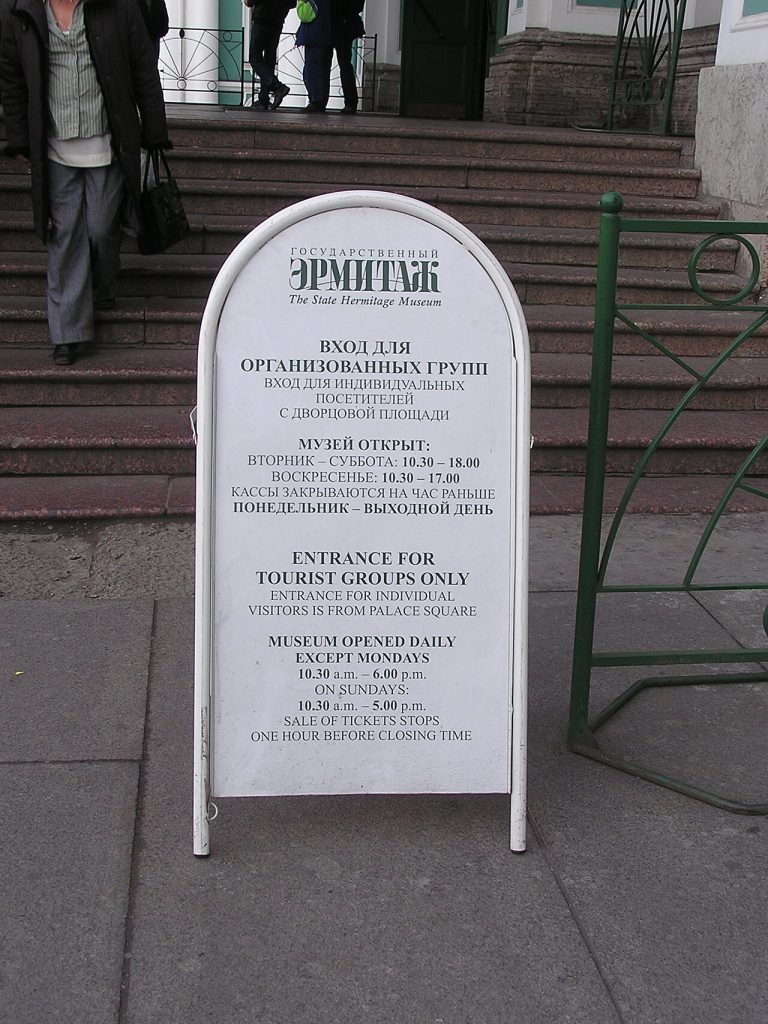
It opens as part of the State Hermitage, closed on Mondays, with timed online tickets strongly advised; allow at least half a day and expect queues in season. Check current international travel guidance for Russia before planning.
Find it here: https://www.google.com/maps?q=59.9398,30.3146
Palaces Nearby
You May Like
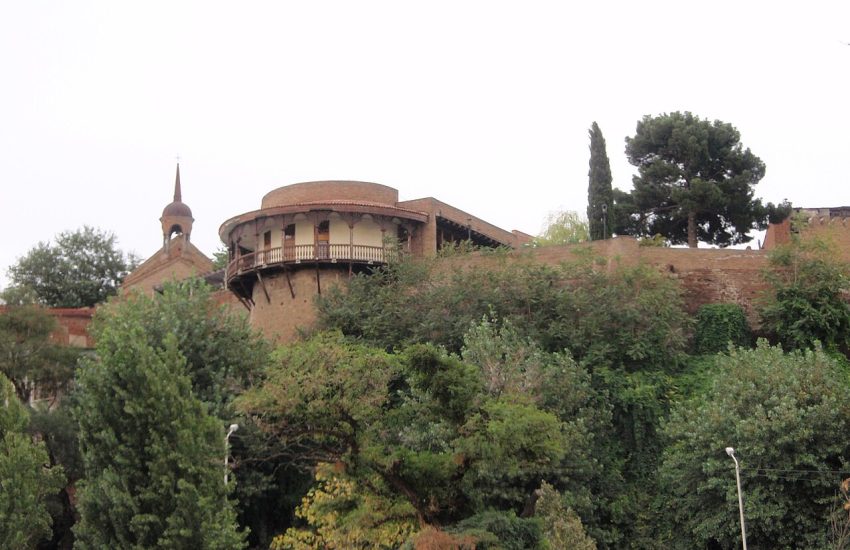
Queen Darejan’s Palace and the Balcony Above Tbilisi