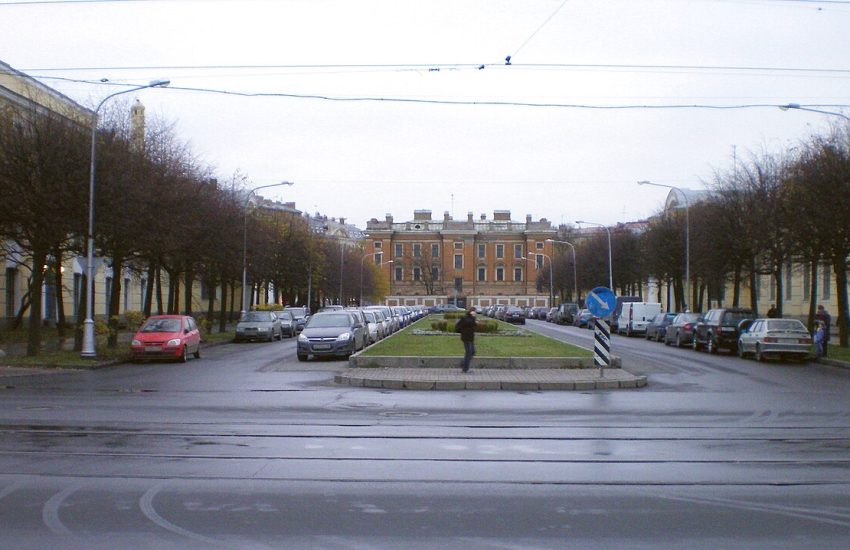
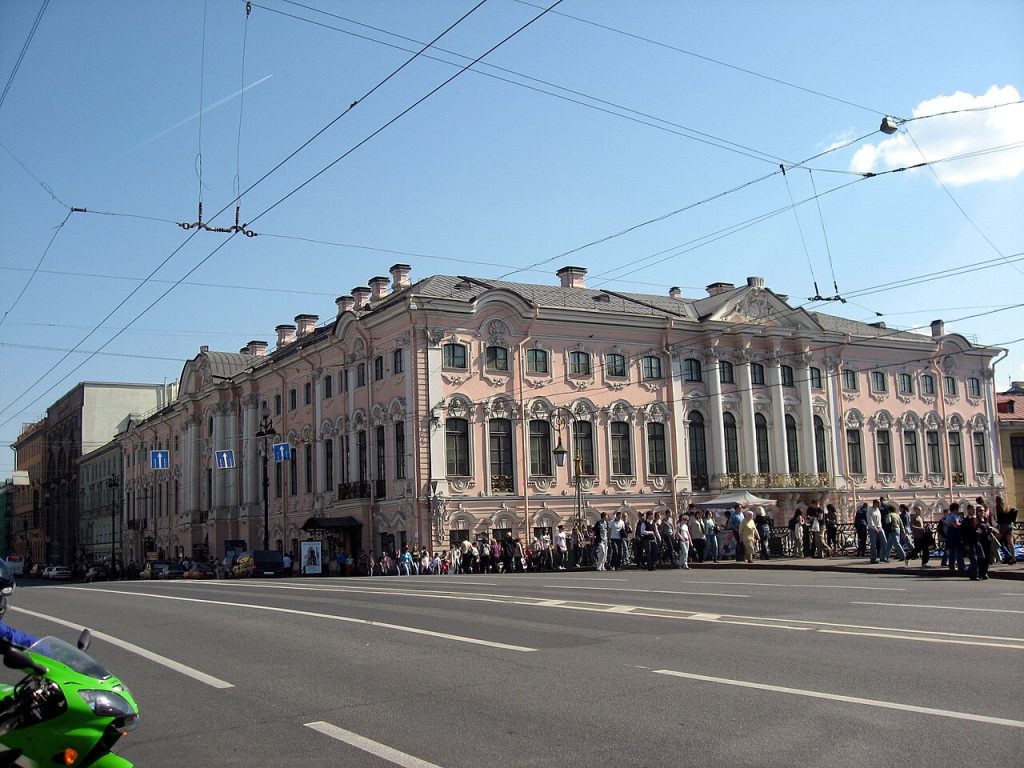
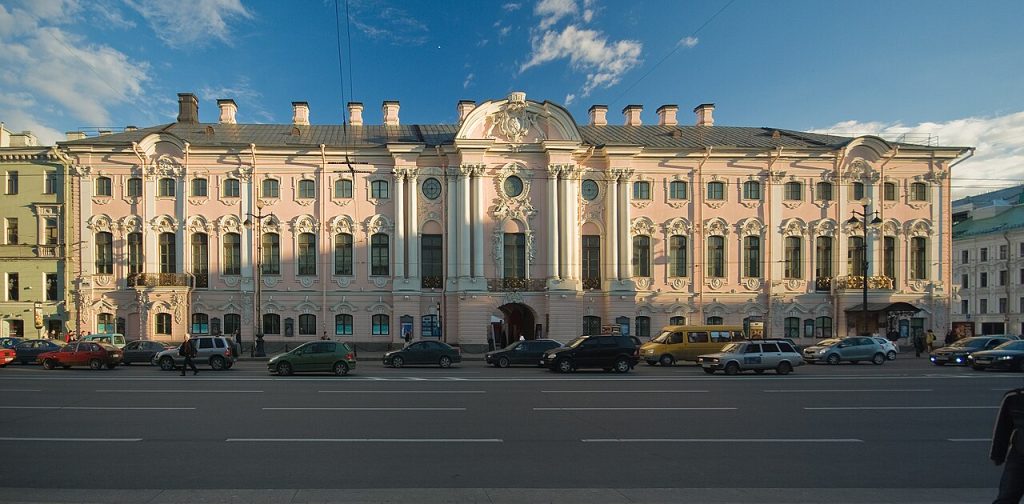
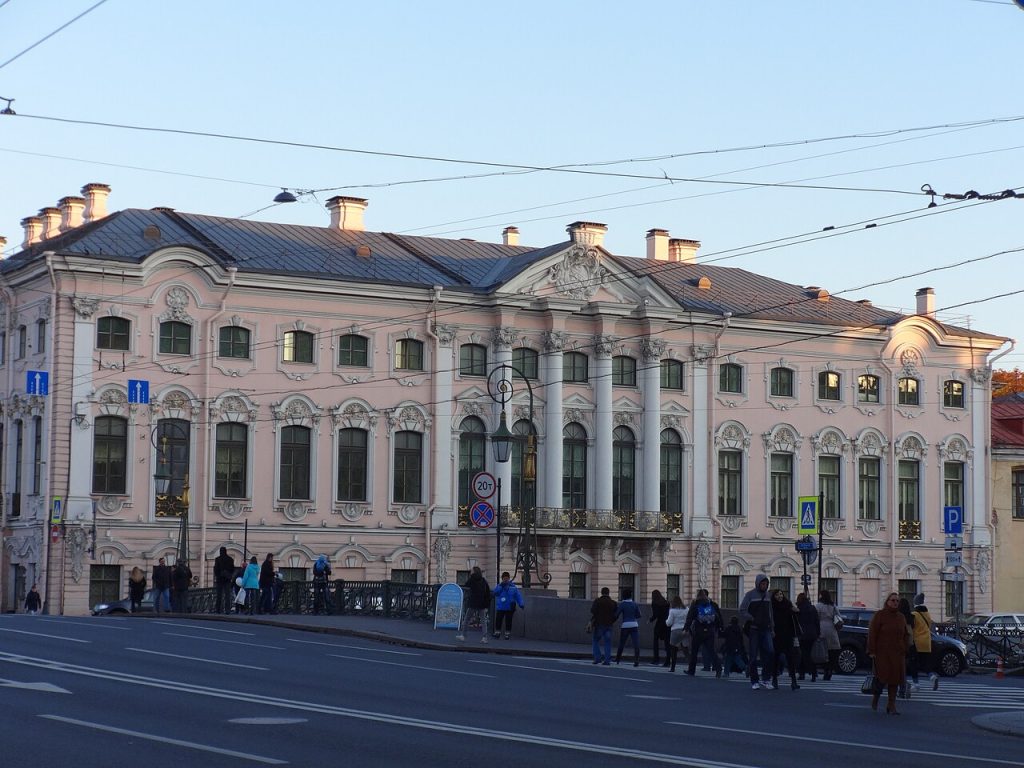
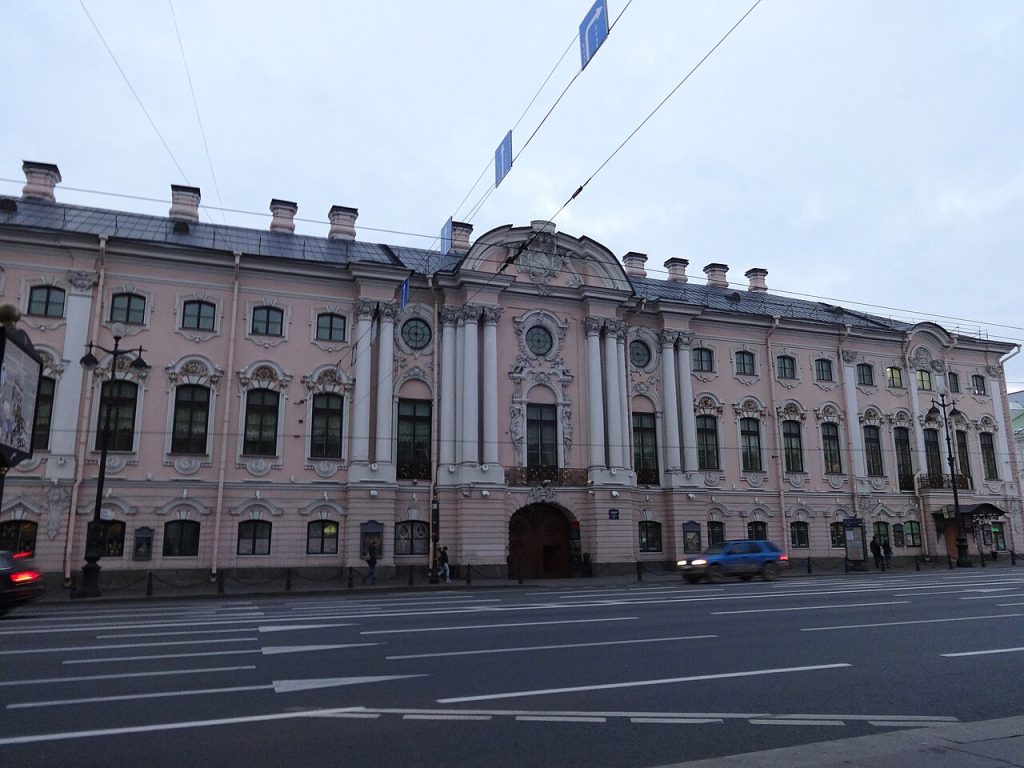
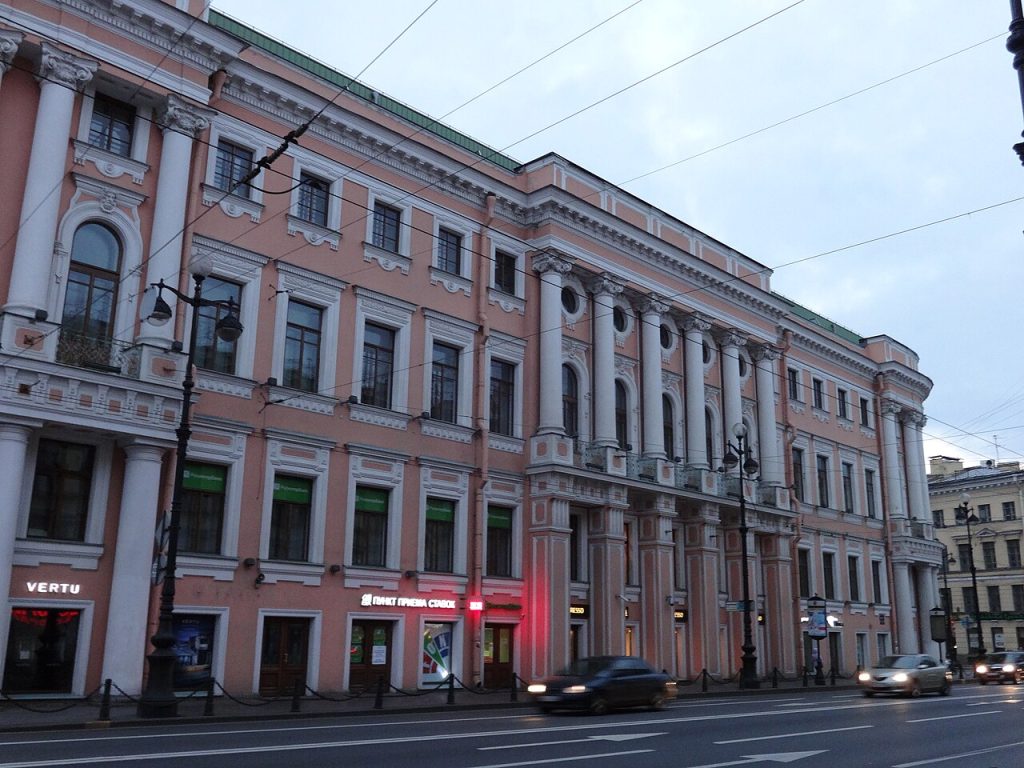
Now, stop on the Nevsky side of the Moika bridge and look at the pink and white palace on the corner. It is the only Rastrelli building on the city’s main street, and the only great baroque palace in St Petersburg that a private family built and kept to the end.
The Stroganovs made their first fortune in salt in the fifteen hundreds, financed the conquest of Siberia, and were still commissioning art when the revolution came.
And yes: the beef dish carries their name, from the family’s kitchens by way of a nineteenth-century cookbook, which means this is the one palace in the series people have tasted.
- Salt, Furs and Siberia
- Merchants Who Became Barons
- Rastrelli on Nevsky
- The Corner Facade
- Voronikhin, the Serf Architect
- The Great Hall and the Gallery
- The Collection
- The Kazan Cathedral Connection
- The Dish
- The Last Stroganov
- Dispersal and Museum
- Restoration
- Visiting the Palace
Salt, Furs and Siberia
The Stroganovs rose in the Urals on salt works, then furs, then land grants from Ivan the Terrible that made them masters of territories larger than European kingdoms.
In the 1580s they financed the Cossack Yermak’s expedition across the Urals, the push that began Russia’s conquest of Siberia.
Few families anywhere turned trade into empire so directly.
Merchants Who Became Barons
Peter the Great made them barons, later counts; they became patrons, collectors, ministers and governors-general across two more centuries.
A Stroganov school of icon painting carries the name from the seventeenth century; a Moscow art school they endowed carries it still.
Their motto of wealth obliging service was unusually close to the record.
Rastrelli on Nevsky
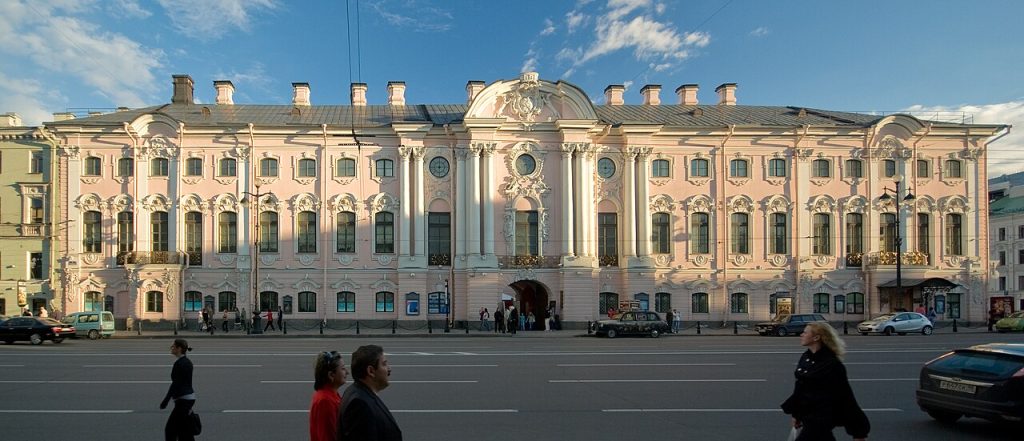
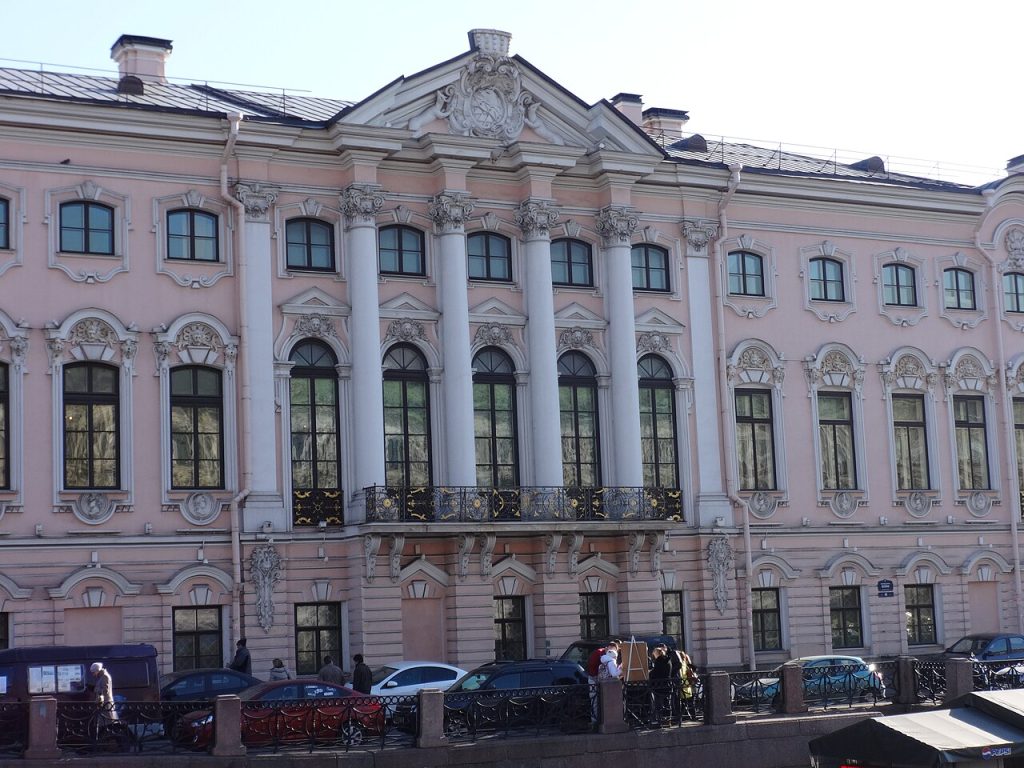
Baron Sergei Stroganov hired Rastrelli, the court architect at the height of his Winter Palace fame, and the house went up in record time in 1753 and 1754 after a fire cleared the site.
A private commission from the imperial architect was itself a statement of rank.
The plan wraps around a courtyard, with the great hall on the Nevsky front.
The Corner Facade
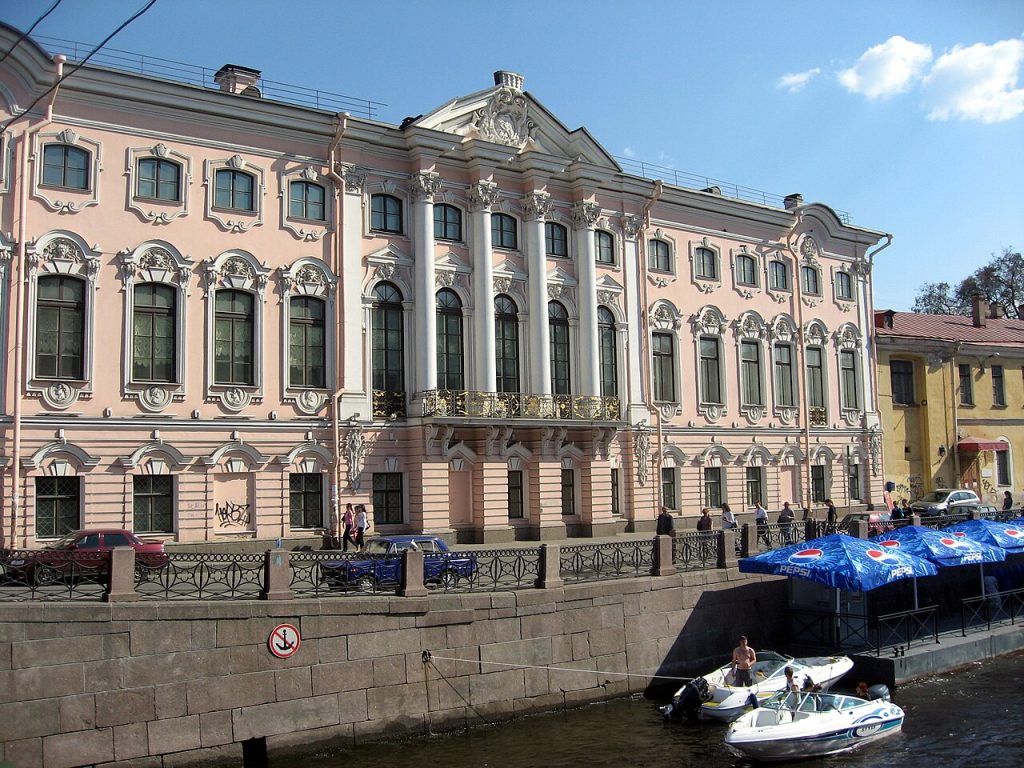
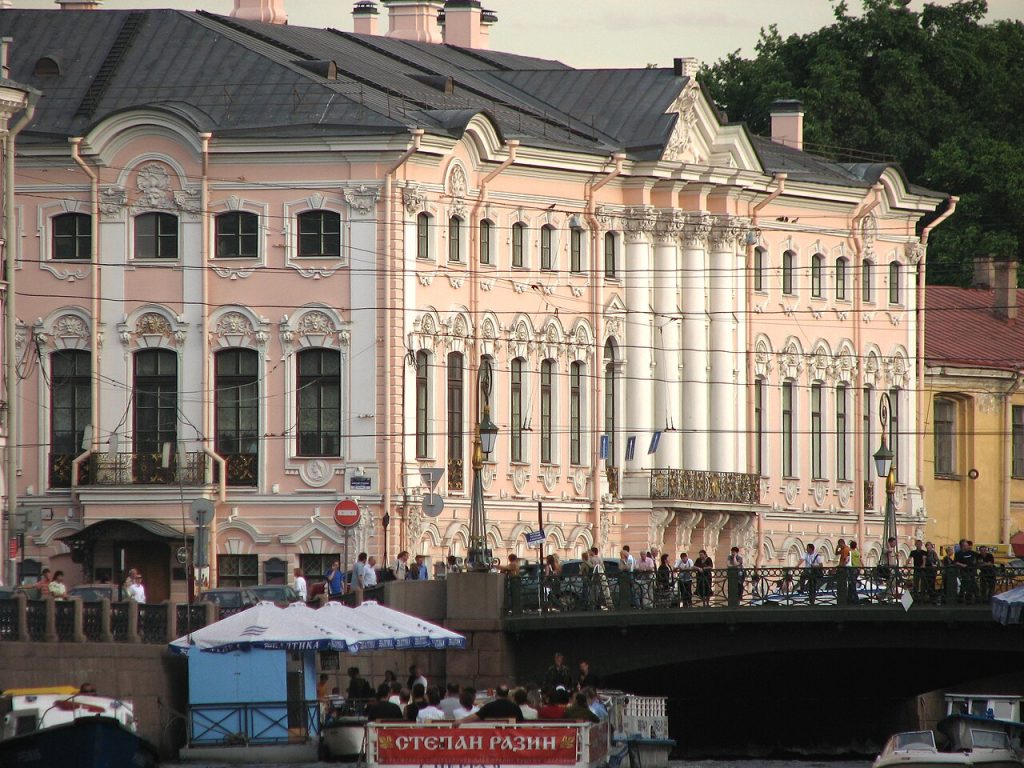
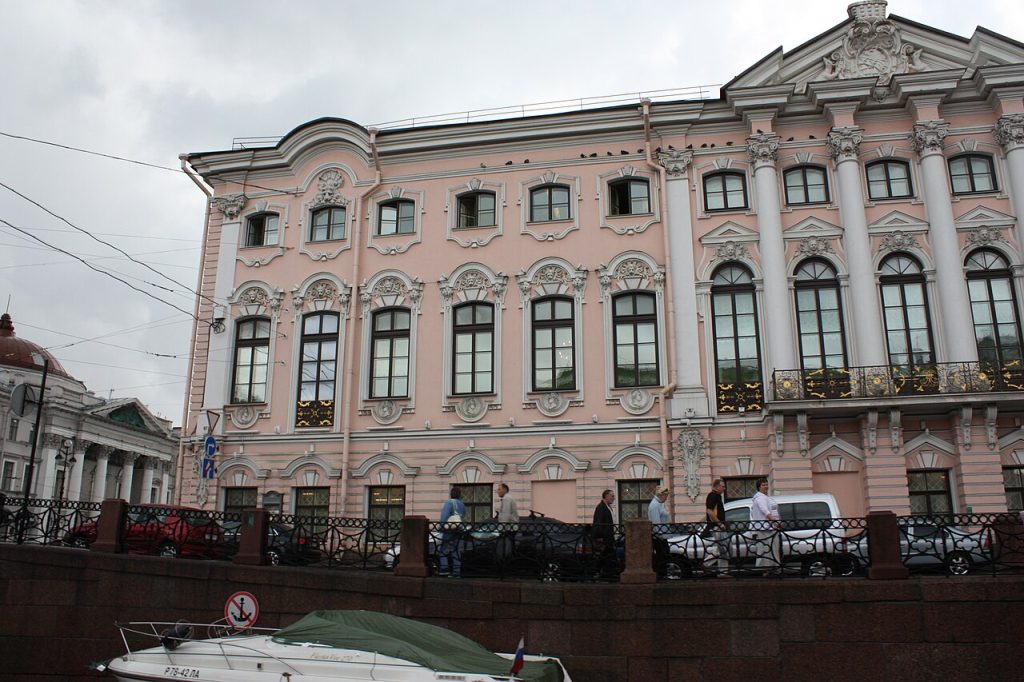
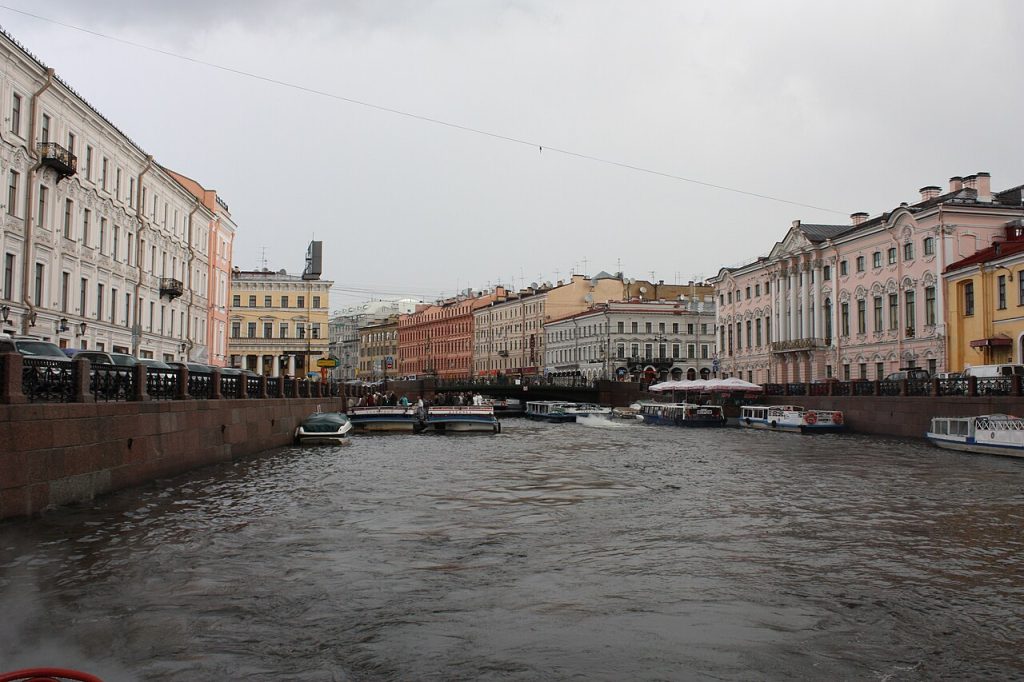
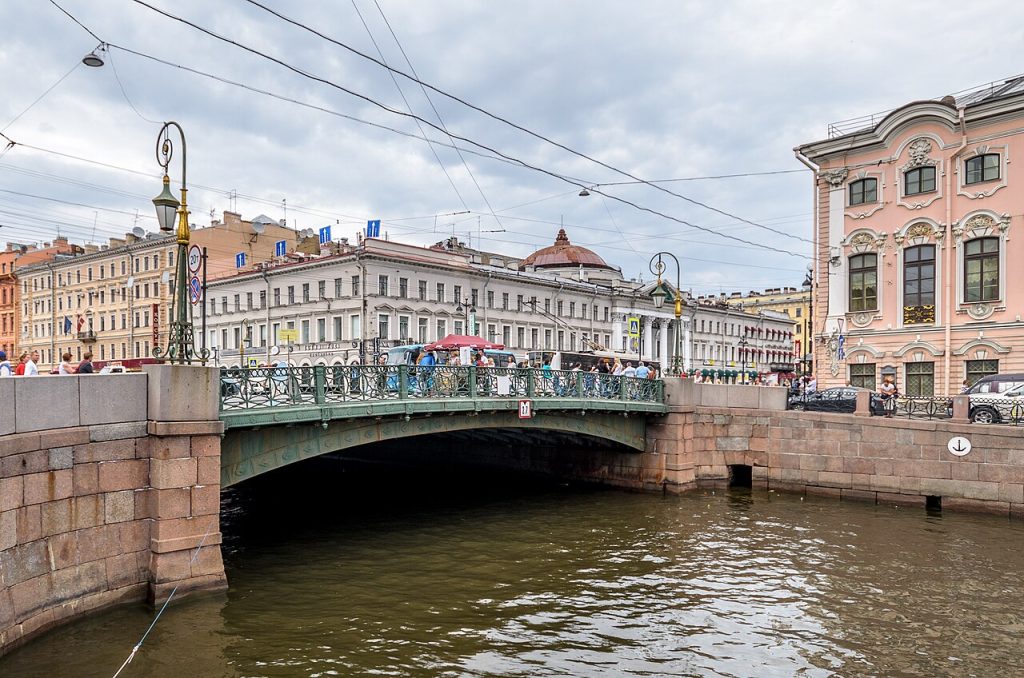
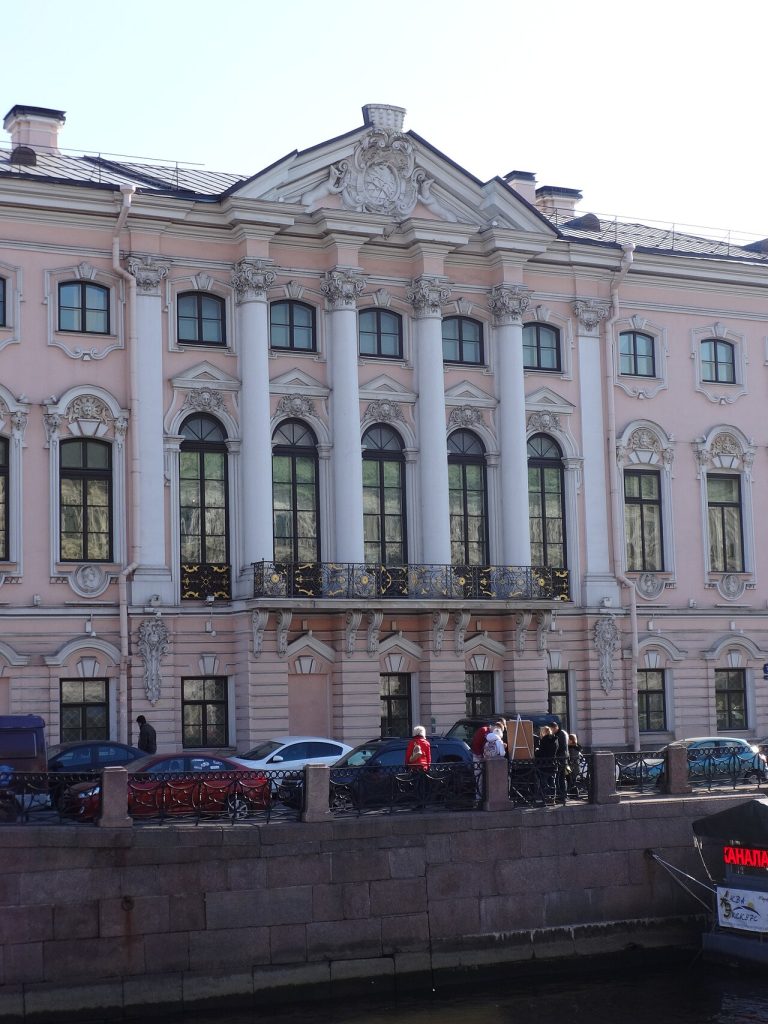
The palace turns the corner of Nevsky and the Moika with two matched baroque facades, pink walls, white columns and the family arms in the pediments.
On a street later rebuilt in every style, the building keeps the scale and colour of the 1750s city.
The best view is from the bridge at dusk, when the floodlights come on and the Moika doubles the facade.
Voronikhin, the Serf Architect
Andrei Voronikhin was born a Stroganov serf in the Urals, educated at the family’s expense, freed, and became one of Russia’s great architects.
He rebuilt the palace interiors after a fire in the 1790s, giving the galleries and corner study their classical form.
Persistent rumour made him a natural son of the house; the documents say only that the family treated his talent as their investment, and it paid.
The Great Hall and the Gallery
The great hall on Nevsky keeps Rastrelli’s double-height space with a vast ceiling painting by Valeriani, the only Rastrelli interior in the city surviving in place.
Voronikhin’s picture gallery, mineral study and arabesque rooms carry the classical sequel.
The rooms are small by Winter Palace standards and all the more legible for it.
The Collection
The family collected for two hundred and fifty years: old masters, antiquities, coins, minerals and a library, displayed in the gallery and published in catalogues.
Count Alexander Stroganov, Catherine’s friend and president of the Academy of Arts, opened the gallery to artists and students, a private museum before Russia had public ones.
The icons of the Stroganov school remained a family speciality.
The Kazan Cathedral Connection
As president of the Academy, Alexander Stroganov championed Voronikhin for the Kazan Cathedral commission, and the serf’s son built the colonnade that faces the family palace down Nevsky.
The count died in 1811, weeks after the consecration, having seen the project through.
Palace and cathedral, patron and architect, face each other along three hundred metres of the avenue.
The Dish
Beef Stroganov enters print in Elena Molokhovets’ classic Russian cookbook in 1871, sauteed beef finished with mustard and sour cream, and tradition ties it to the household of a nineteenth-century Count Stroganov, with the family’s French cooks the likely refiners.
The dish conquered the world’s hotel menus after the revolution, carried by emigres, and returned home as an international classic.
No palace in this series has a more successful export.
The Last Stroganov
Count Sergei, the last of the line in Russia, left in 1918; the palace was nationalised with its contents and briefly shown as a museum of aristocratic life.
In 1929 the house-museum closed and the collections were dispersed to the Hermitage and the Russian Museum, with some pieces sold abroad in the export drives.
A granddaughter, Helene de Ludinghausen, later led the foundation that helped revive the building.
Dispersal and Museum
Soviet decades filled the palace with institutes and offices, partition walls and paint over gilding, while the structure held.
In 1988 the building passed to the Russian Museum as its baroque branch.
What offices had hidden, restorers found largely intact underneath.
Restoration
Restoration from the 1990s, part-funded by the Stroganov Foundation, recovered the great hall, the gallery and the Voronikhin rooms, and returned the facades to their pink.
The palace now shows the Russian Museum’s exhibitions and a permanent display on the family.
A wax-figure dinner in the dining room divides visitors, as wax figures do.
Visiting the Palace
Enter from Nevsky through the courtyard; the great hall justifies the ticket by itself, and the whole route takes ninety minutes.
Finish with the bridge view and, if the day demands it, beef Stroganov somewhere on the avenue; the city’s menus oblige.
Check current travel guidance for Russia before planning any trip.
Watch the Palace on Film
Visiting the Stroganov Palace Today
The Stroganov Palace stands at Nevsky Prospekt 17 at the Moika bridge, five minutes from the Admiralty and ten from Palace Square.
It opens as a branch of the Russian Museum, closed on Tuesdays, with ticketed entry to the state rooms and exhibitions. Check current travel guidance for Russia before planning.
Allow ninety minutes, and combine it with Kazan Cathedral opposite. Find it here: https://www.google.com/maps?q=59.9357,30.3203
Palaces Nearby
You May Like
The Marble Palace and the Favourite Who Never Lived There