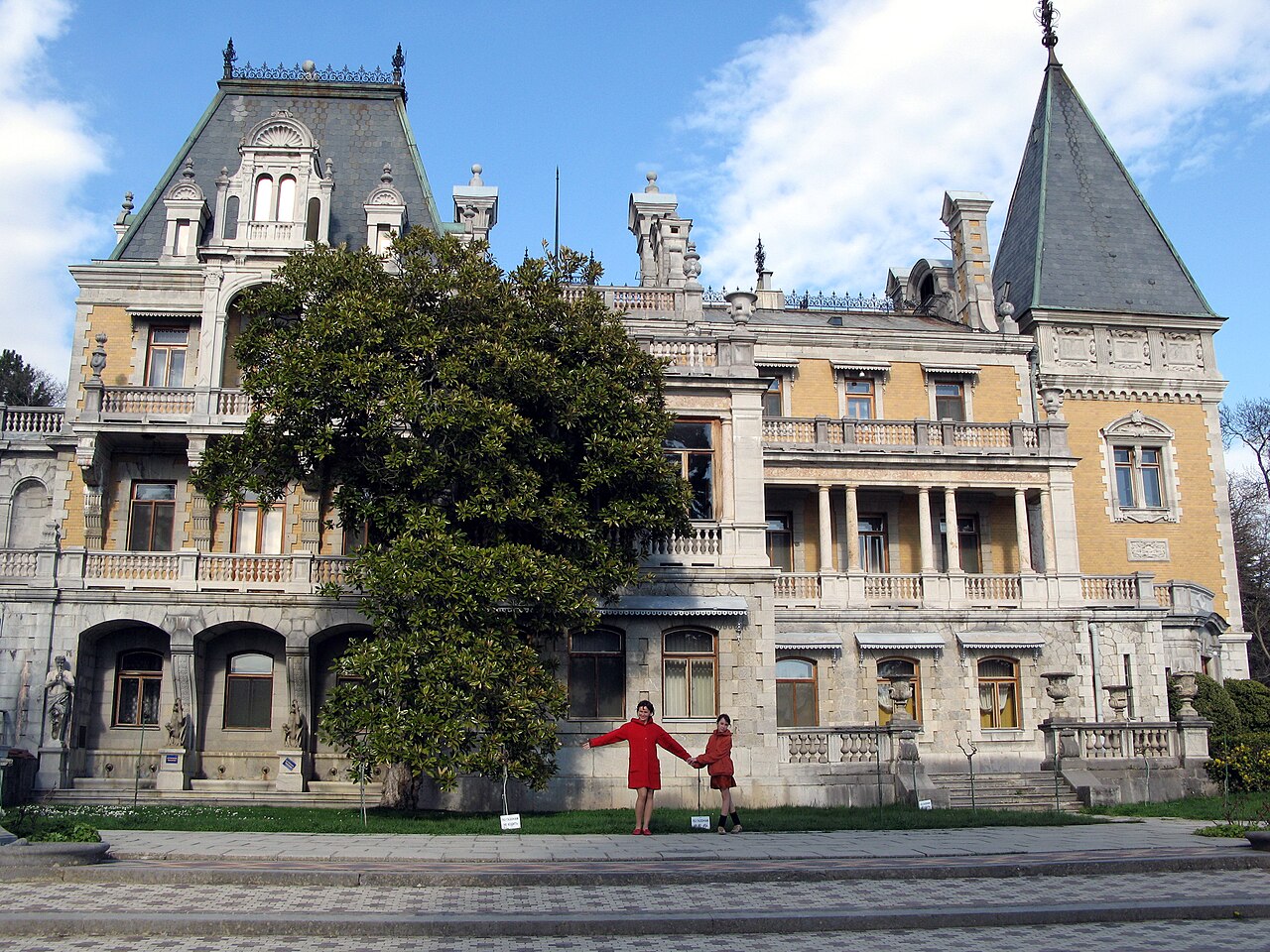
High on a forested slope above Yalta, where the Crimean mountains fall toward the sea through vineyards and pine, stands a castle that seems to have wandered out of the Loire valley: gray stone towers with steep slate roofs, spiral staircases climbing the outside walls, chimeras and sphinxes guarding terraced gardens. Massandra Palace is the most fairy-tale building in Crimea, and its history is a chain of ironies: built for a prince who died before living in it, finished for an emperor who died before sleeping in it, kept for a tsar who used it only for picnics, and finally inhabited, in deepest secrecy, by Stalin.
The palace crowns the estate of Massandra, a name wine lovers know: the celebrated winery founded here for the imperial court in the 1890s still operates below the palace, its cellars holding one of the world’s great collections of vintage wines. Palace and winery together made Massandra the service heart of the tsars’ Crimean paradise, the workshop of the southern coast’s pleasures, with a castle on top for beauty’s sake.
This guide tells the whole improbable story: the Vorontsov beginnings and the French architect’s castle, Alexander III’s rebuilding and his bear-like presence over the estate, the knight’s-tale interiors of carved wood, the palace’s decades as a closed state dacha where Stalin’s guests drank the cellar’s treasures, and its late liberation into one of Crimea’s most loved museums, with every practical detail for the visit.
- The Slope Above Yalta
- The Vorontsovs and the First Castle
- A French Castle for a Russian Prince
- Alexander III Takes the Estate
- Mesmakher’s Rebuilding
- The Emperor Under the Oaks
- Interiors of the Knight’s Tale
- Nicholas II’s Picnic Palace
- The Winery of the Tsars
- Revolution and the Closed Years
- Stalin’s Secret Dacha
- The Palace Becomes a Museum
- Park, Vineyards and Views
- Watch Massandra Palace on Film
- Visiting Massandra Palace Today
- Palaces Nearby
The Slope Above Yalta
Massandra’s slope was prized before any castle stood on it. The southern coast of Crimea, a narrow amphitheater between the Yaila mountains and the sea, enjoys a Mediterranean climate unique in the Russian world, and the amphitheater’s central tiers above Yalta, watered by mountain springs and shaded by ancient oak and pine, were its choicest ground. Greek and Genoese settlements had worked these terraces; the name Massandra itself is probably Greek, one more layer in the coast’s deep palimpsest.
After Crimea’s annexation in 1783, the southern coast became the empire’s riviera-in-waiting. Potemkin dreamed of gardens here; the real transformation came in the 1820s and 1830s under Count Mikhail Vorontsov, governor-general of New Russia, who built the coast road, planted vineyards, and raised his own Moorish-Gothic palace at Alupka while acquiring Massandra as a working estate.
The estate’s destiny split early into its two callings: wine below, where Vorontsov’s plantings proved the slope could rival Europe’s vineyards, and retreat above, where the forest park with its waterfalls and crag views invited something castle-like. The spot where the palace now stands, by a spring in the upper woods, held first a small church and then the count’s hunting lodge, the seed of everything after.
The Vorontsovs and the First Castle
The palace’s true begetter was the count’s son, Prince Semyon Vorontsov, who inherited the Crimean estates in 1856. The Vorontsovs were the empire’s most Anglophile grandees, raised between London and Odessa, collectors of everything European; for Massandra’s upper park the prince wanted a residence in the French taste of the moment, the revived castle style of the Loire, to complement his father’s Alupka below.
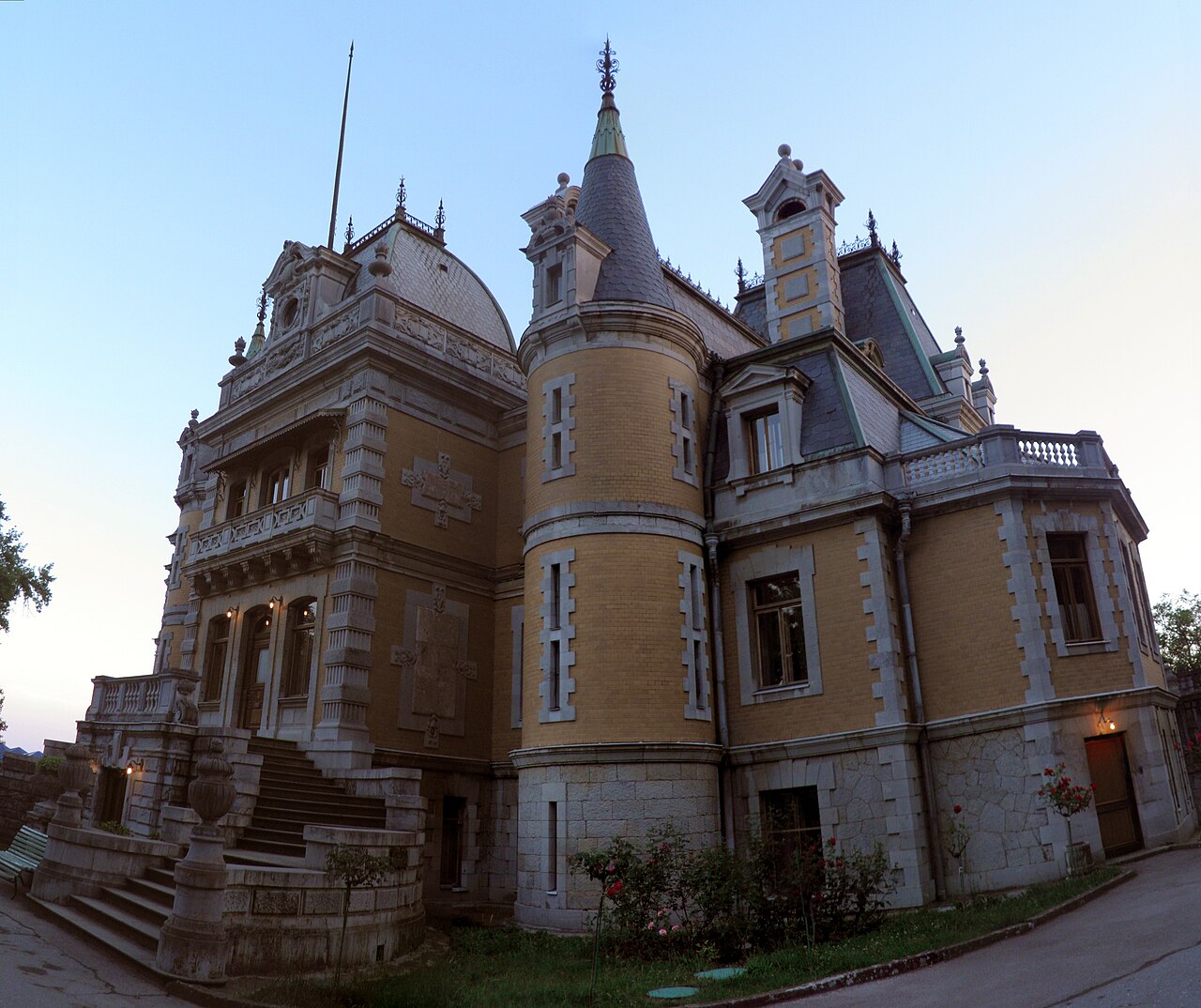
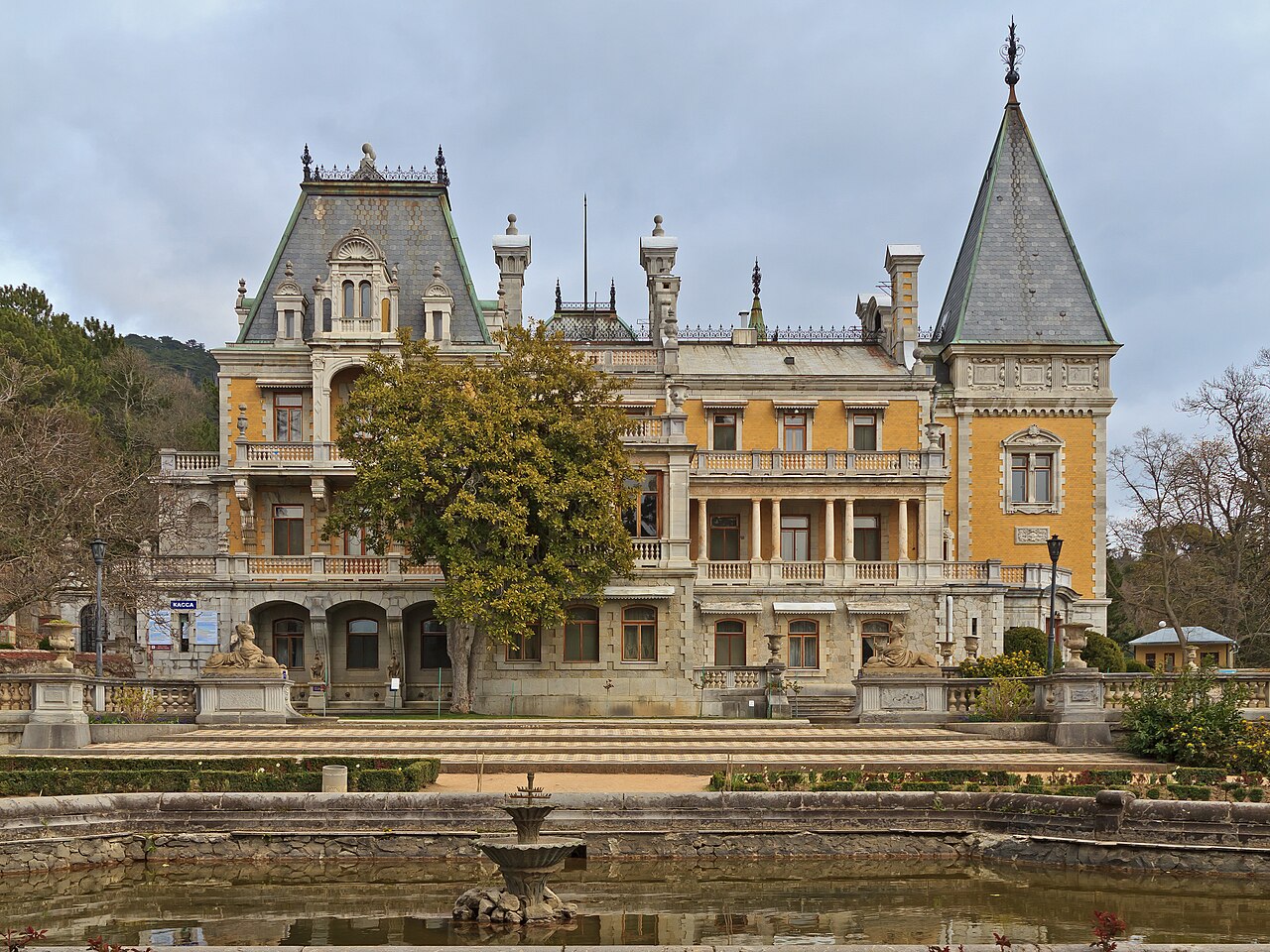
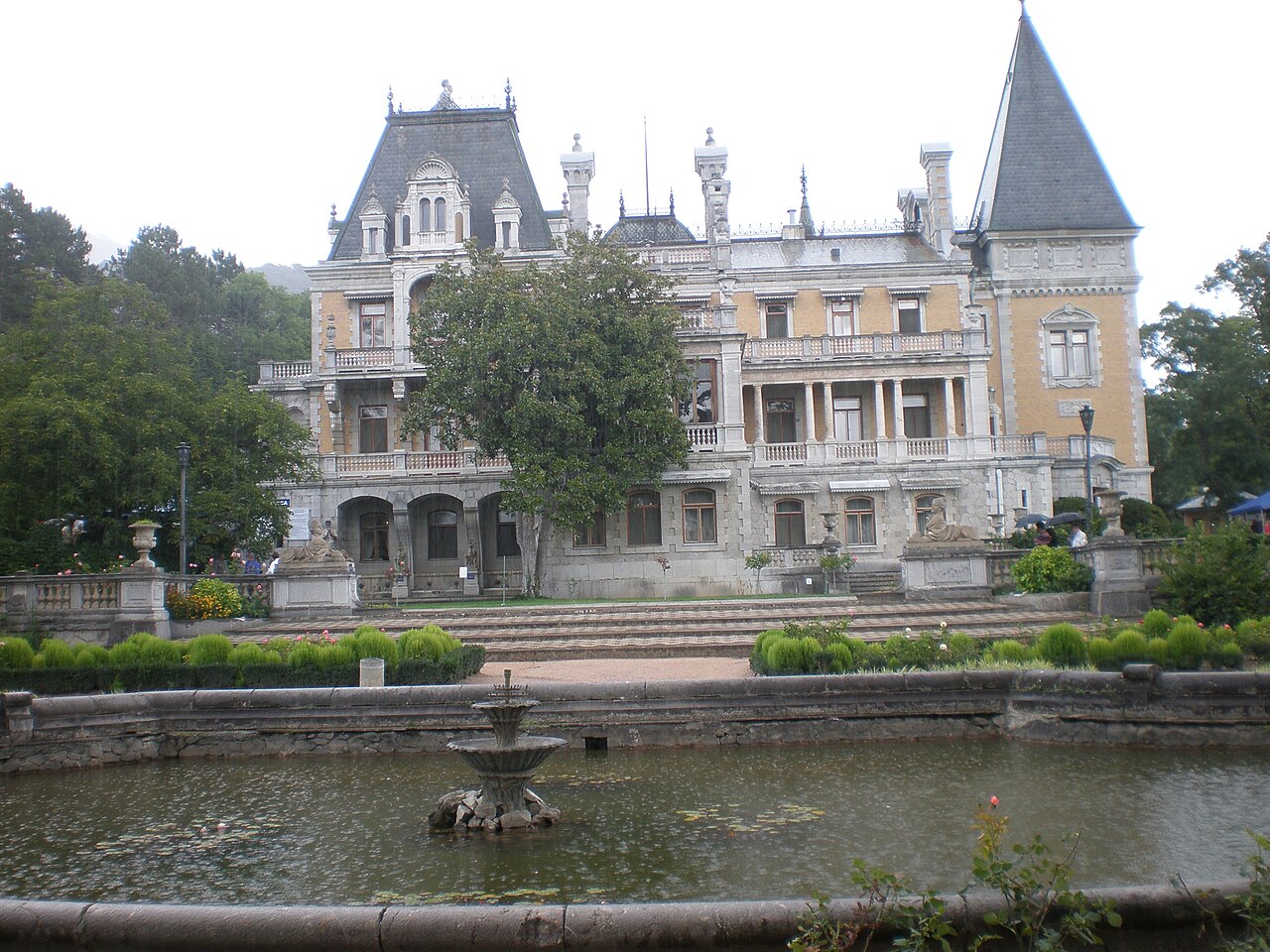
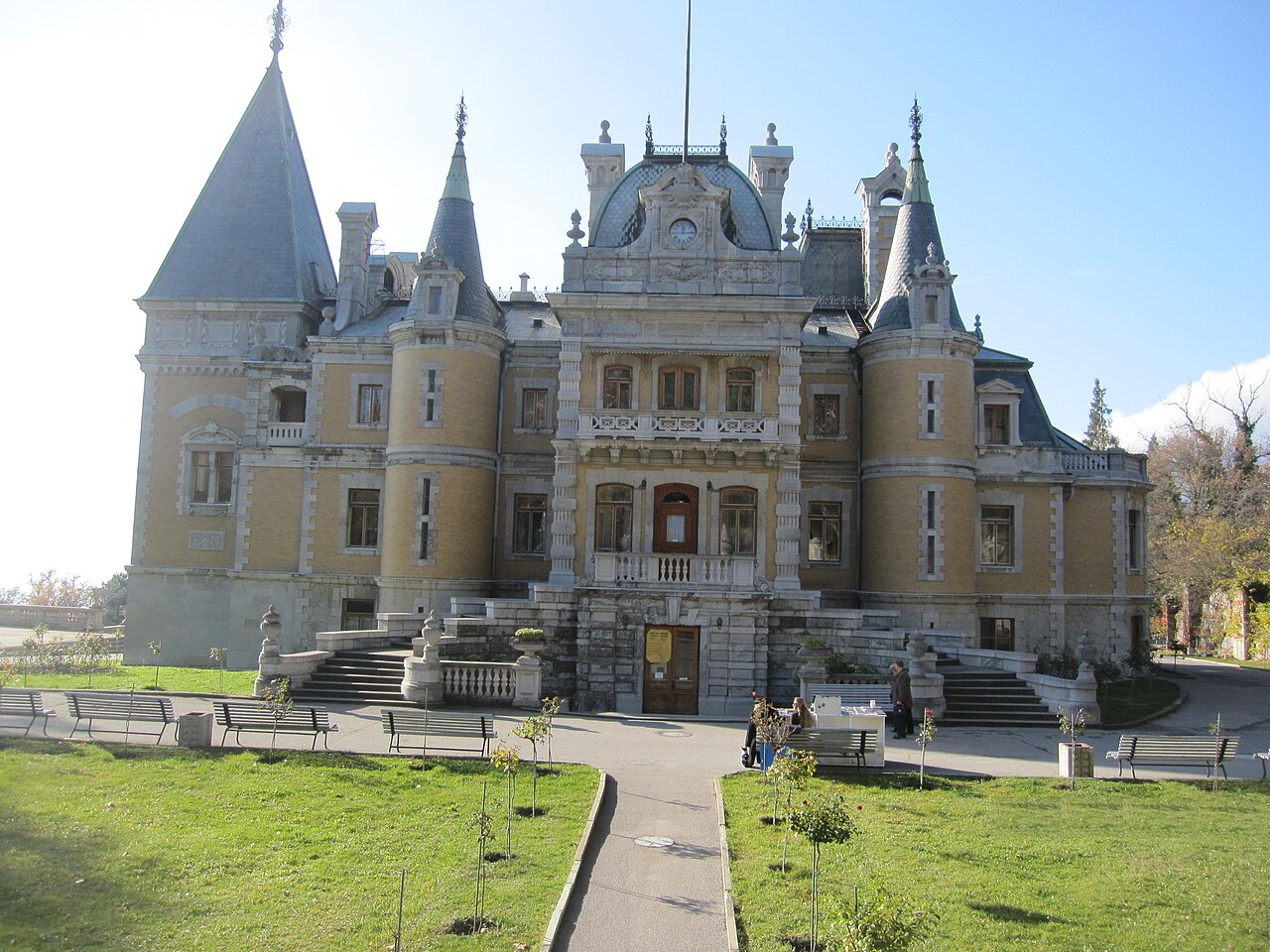
In 1879 he engaged the French architect Etienne Bouchard, and construction began in 1881 on a compact, vertical castle: three stories under steep mansard roofs, round corner towers, external spiral stairs, the silhouette of Chambord compressed for a mountain terrace. Local gray limestone gave the walls their somber elegance; the forest was shaped into a park around the rising towers.
Then the ironies began. Bouchard died in 1884 with the castle a roofed shell; Prince Semyon died in 1882 before him, leaving no direct heir with means or appetite for the project. The unfinished castle stood silent in its woods for nearly a decade, shutters blind, staircases ending in air, a romantic ruin before it had ever been a house, while the estate’s managers kept the vineyards and waited for a buyer equal to the folly.
A French Castle for a Russian Prince
Bouchard’s design deserves its own appreciation, because the later rebuilding kept its soul. The architect played the castle game knowingly: the asymmetric towers, the steep slated cones and dormers, the carved stone dressings around tall windows, all quote the French sixteenth century, while the plan inside is a sensible modern villa, compact suites stacked three floors, service rooms below, no vast halls, a residence for family weeks rather than court seasons.
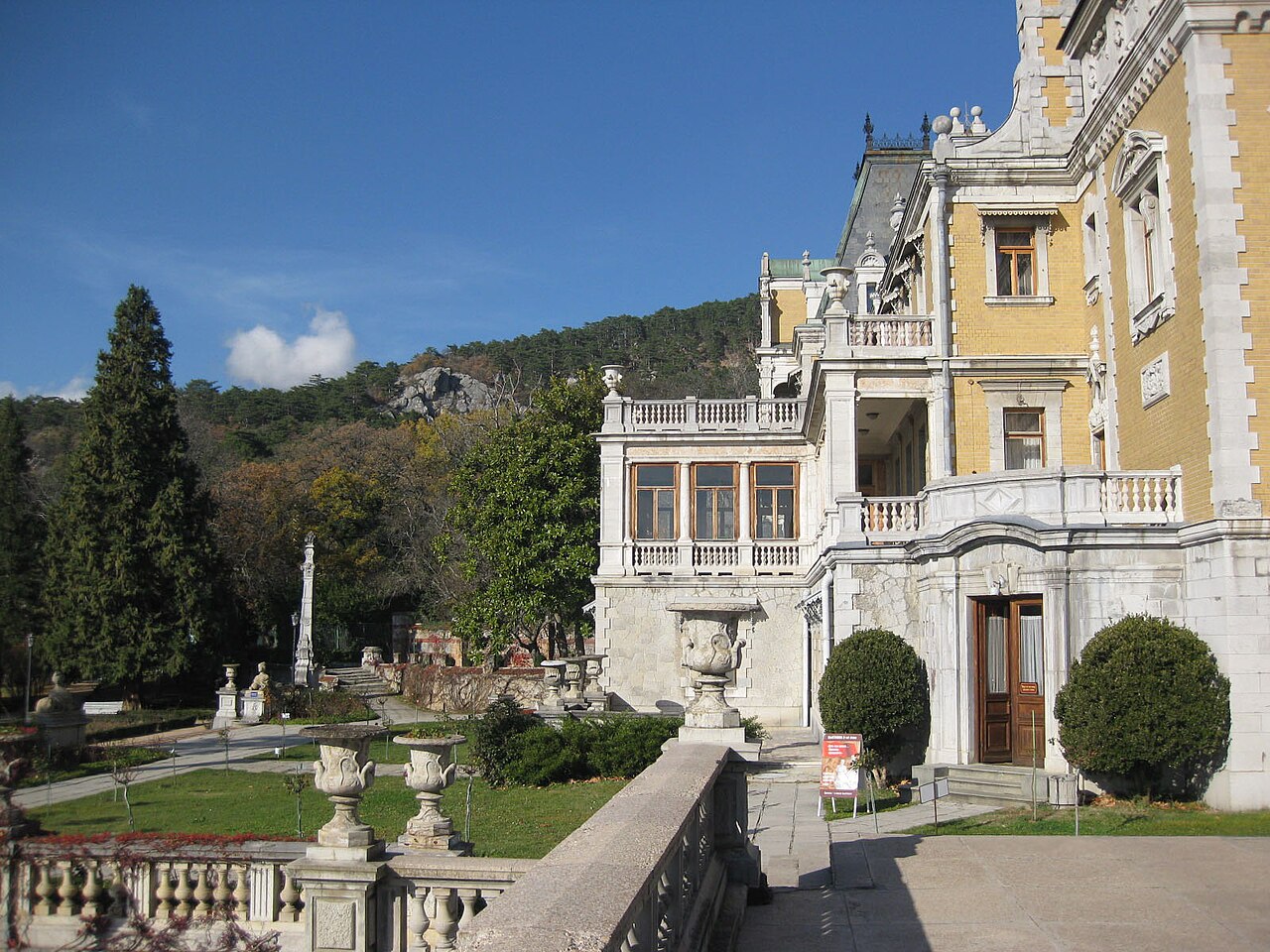
The mountain site drove the drama. The castle stands on a narrow terrace against the forest wall, so Bouchard built upward and outward: balconies and loggias on every face, the famous open spiral stairs winding up the towers, terraces stepping down to the spring and its pond. From the sea side the palace appears and disappears among the pines, a deliberate effect, the castle as apparition.
Ornament waited for the second campaign, but the Frenchman set its key: the sphinxes and chimeras on the terrace balustrades, half heraldry, half fairy tale, began with his drawings. Massandra’s peculiar charm, grave stone wearing a smile, is Bouchard’s bequest, and the reason the palace reads so differently from the coast’s other imperial houses: it was conceived not to impress a court but to delight a family.
Alexander III Takes the Estate
In 1889 the imperial appanage department bought Massandra, unfinished castle, park, and precious vineyards together, for the use of Alexander III, and the purchase fit the emperor like his famous uniforms. The giant tsar, who ruled Russia as a stern paterfamilias and distrusted palaces on principle, loved Crimea’s Livadia for family summers; Massandra’s forest castle, a short ride uphill, offered what he prized most, privacy, shade, and no ceremony whatever.
The emperor’s relationship with the estate became Crimean folklore. He rode up with his children for woodland lunches, inspected the vineyards whose wines were being reborn under his patronage, and rested under a particular group of oaks by the castle terrace; the spot, marked today, was reportedly his favorite on the whole southern coast. Plans were drawn to finish the castle as his personal retreat, pointedly modest in room count for an autocrat of all the Russias.
Fate kept the pattern: Alexander III never slept in his castle either. His health broke in 1894; brought to Livadia that autumn, he died there in October at forty-nine, the colossus of the dynasty gone before his fiftieth year. The Massandra works, nearly complete, paused for mourning, and the palace acquired its second ghost-owner, with the oaks by the terrace renamed, by the family itself, in the dead emperor’s memory.
Mesmakher’s Rebuilding
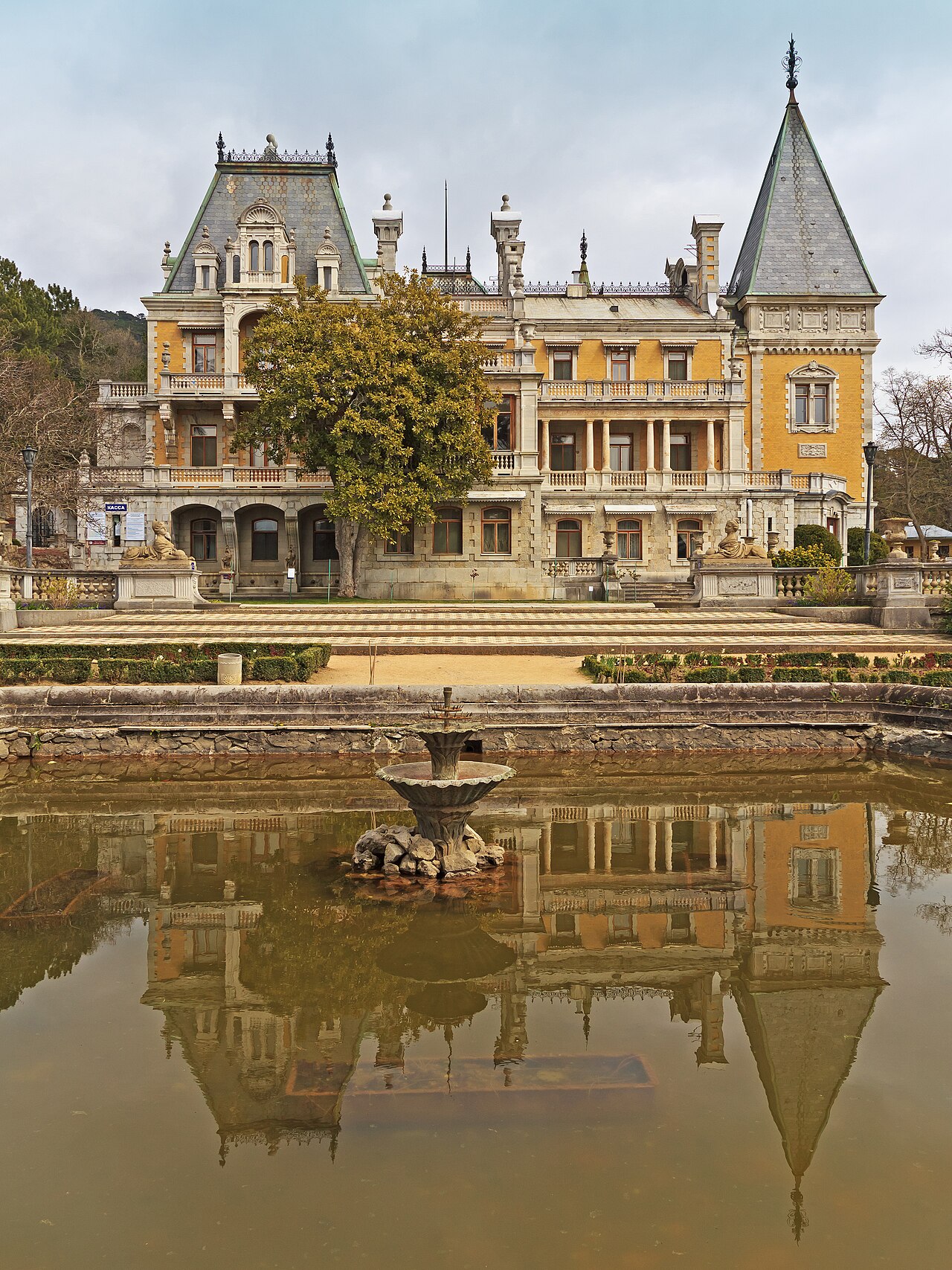
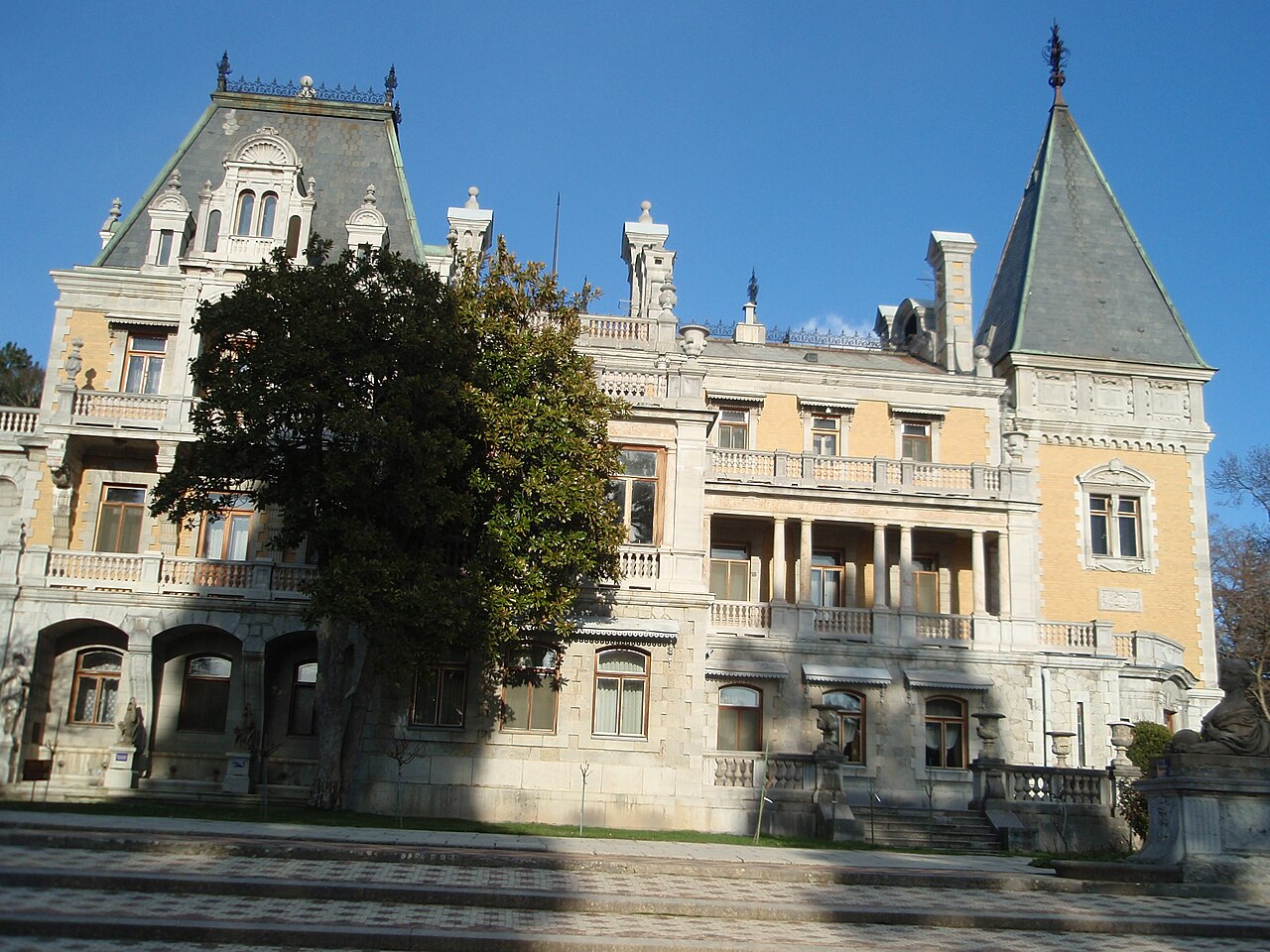
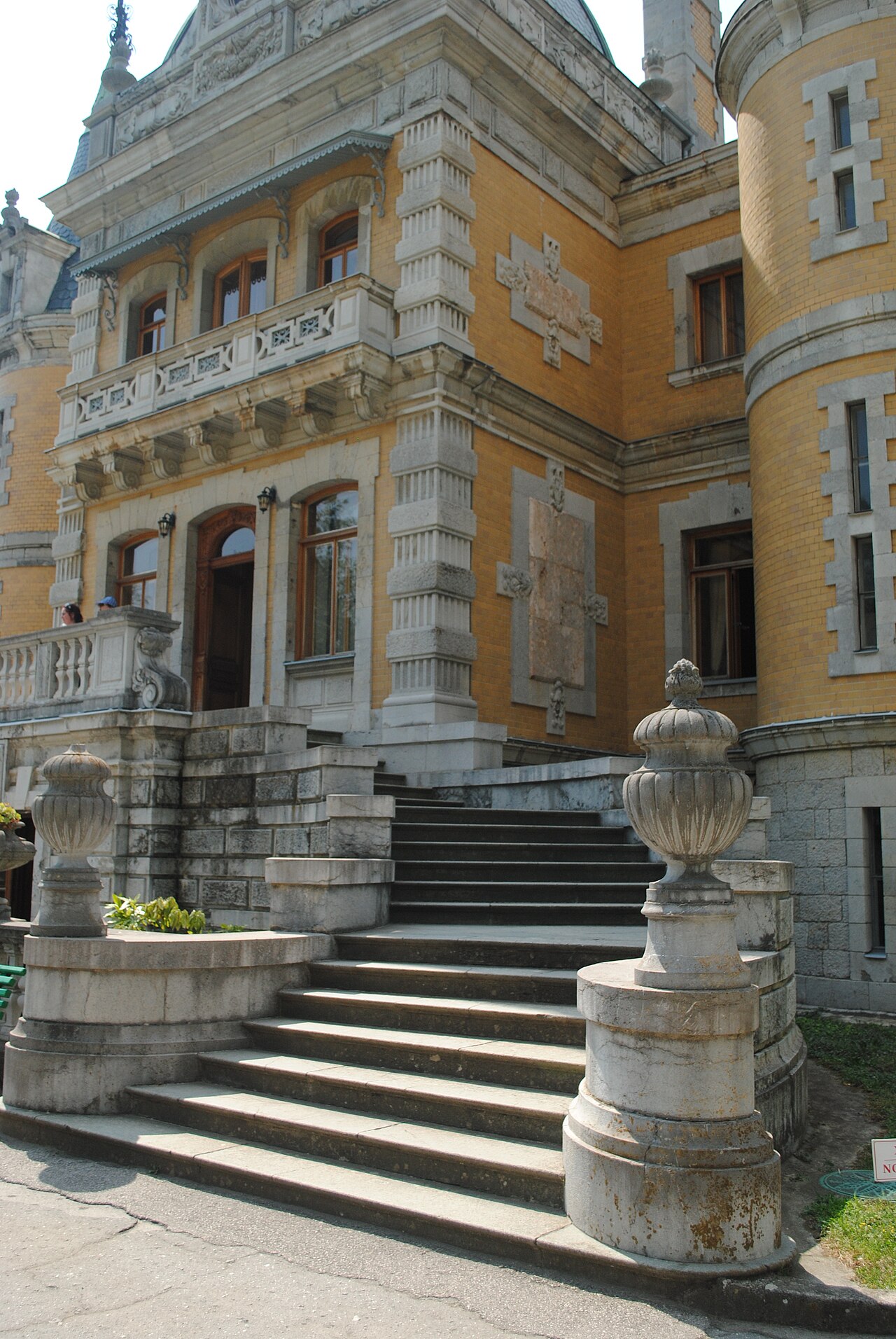
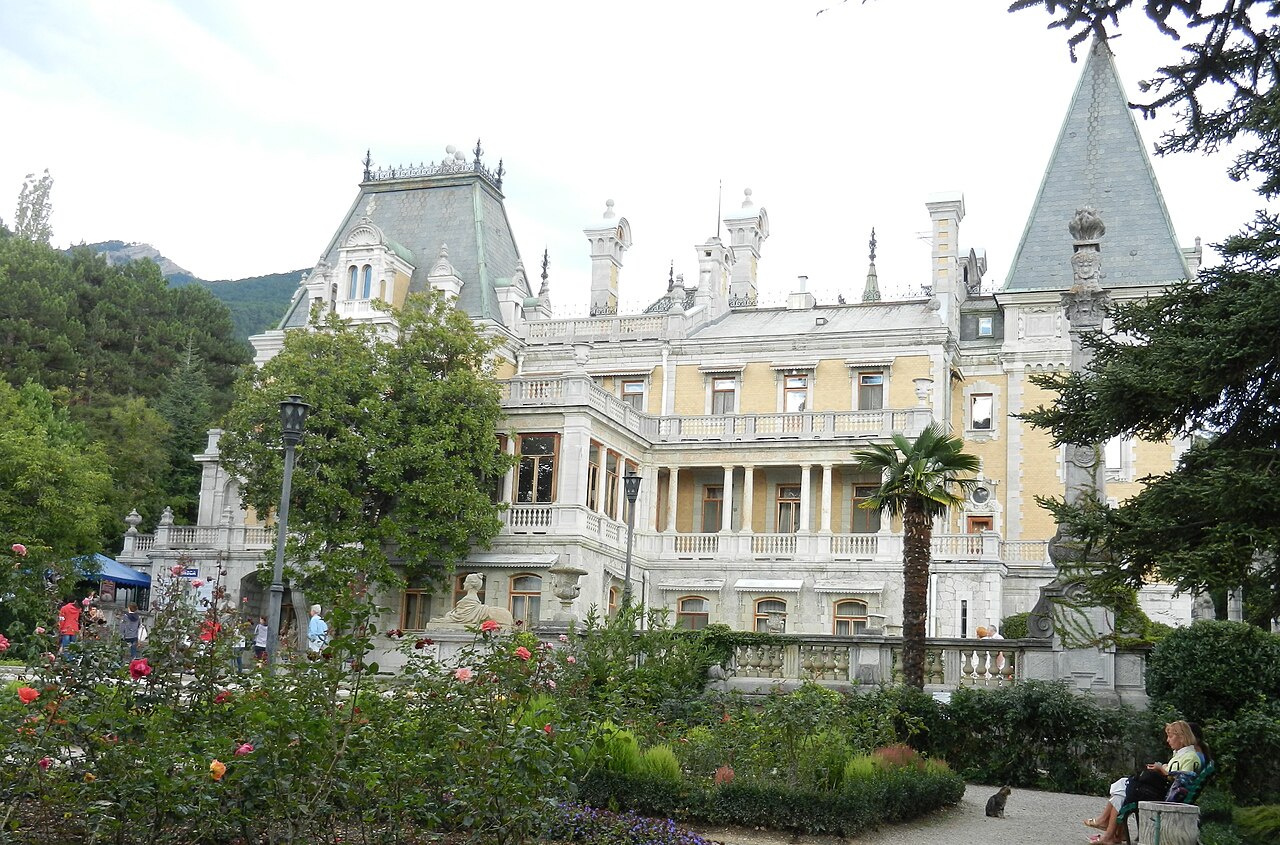
The completion, from 1892 to 1900, belonged to Maximilian Mesmakher, the Petersburg master of eclectic design, and he transformed Bouchard’s shell without betraying it. Mesmakher kept the French silhouette and dressed it richer: yellow metlakh tile panels warming the gray stone, wrought balconies, carved galleries, the roofline’s play of finials, and the terraces’ full population of sphinxes, satyrs, and dragons, the castle’s grave smile widened.
Inside, Mesmakher built for the family life the emperor had wanted: no throne or ballroom, but a stacked sequence of intimate rooms, each in its own historical costume, Romanesque for the emperor’s study, rocaille for the empress’s salon, carved oak everywhere, with fireplaces of Crimean marble and ceilings coffered like manuscript covers. Modern comforts threaded invisibly through the medievalism: water closets, electricity provisions, a lift shaft.
The architect’s craftsmen were the capital’s best, and the woodwork is the palace’s treasure: doors, panels, and built-in buffets carved with a cabinetmaker’s wit, every room’s hardware designed to its theme. Mesmakher finished in 1900 a perfect small masterpiece with no master: the new emperor, Nicholas II, had Livadia below and sentiment only for his father’s oaks above, and the exquisite rooms began their long wait for an inhabitant.
The Emperor Under the Oaks
Alexander III’s shade suits Massandra, and the museum leans into it, because the emperor’s Crimean legend is the palace’s human core. Witnesses’ memoirs collect the scenes: the tsar hauling his children up the forest paths, hosting vineyard workers’ tables, receiving the great chemist of the cellars with more interest than he showed ambassadors; the famous reply attributed to him, that Europe could wait while the Russian emperor was fishing, belongs to this coast’s mythology.
The estate also framed the dynasty’s turning point. It was at Livadia-Massandra in October 1894 that the dying emperor blessed the marriage of his heir to Alix of Hesse, the future Empress Alexandra, she arrived to the deathbed, and the reign that would end at Yekaterinburg began in Crimean autumn light, within sight of Massandra’s towers. The coast’s palaces hold the Romanov story’s bookends, and Massandra stands at the hinge.
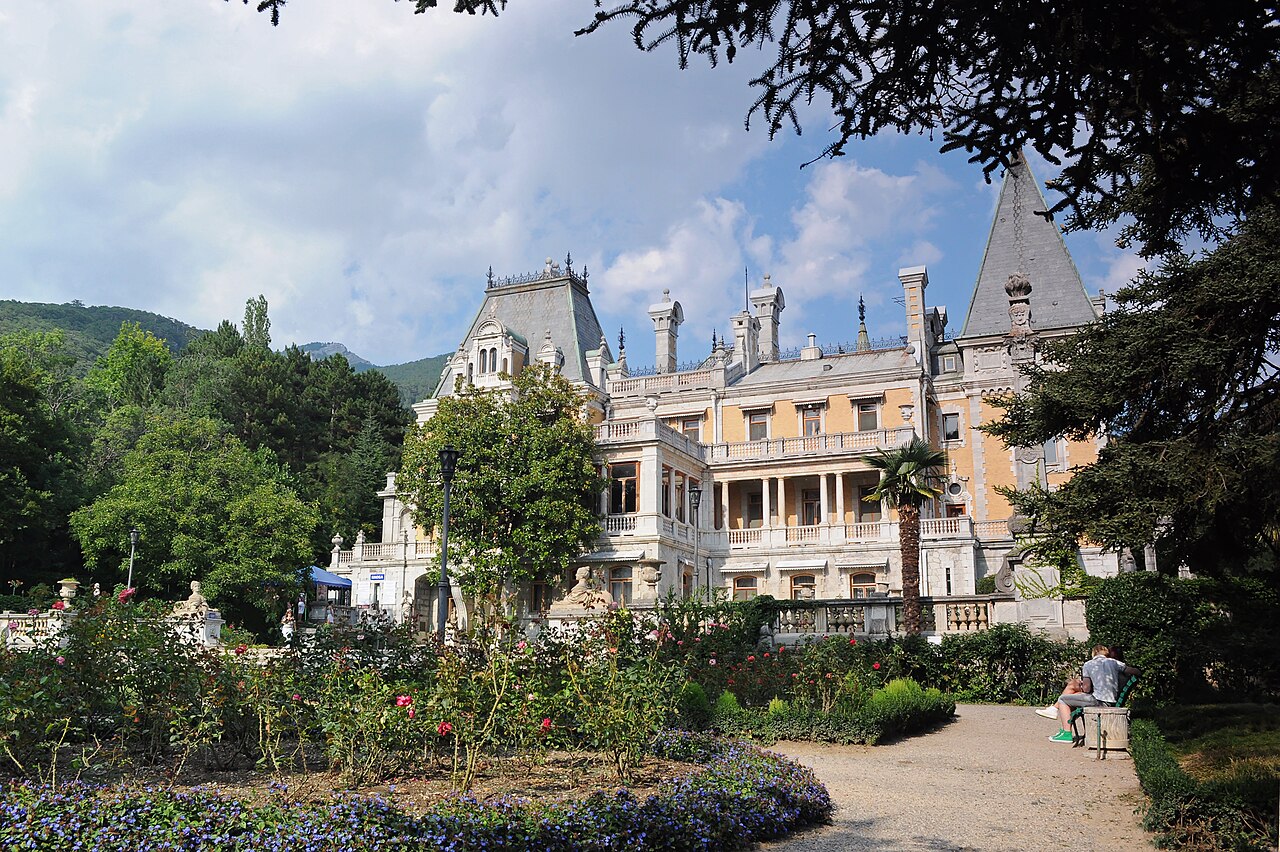
The oaks themselves became the memorial: the family preserved the emperor’s resting spot, and a statue of Alexander III sits today on the terrace below the palace, bear-broad on his bench, gazing at the towers his death left empty. Visitors photograph the statue against the castle, completing, a century late, the portrait of owner and house that history refused to sit for.
Interiors of the Knight’s Tale
The museum route today climbs the castle’s three floors through Mesmakher’s intact decade of craft. The ground floor holds the dining room with its massive carved buffet and marble fireplace; the first floor, the imperial suite that waited, the emperor’s Romanesque study and bathroom, the empress’s salon with its rocaille plaster and silk, bedrooms under coffered ceilings; the second, planned for the heir’s family, shows the estate’s history and the architects’ drawings.
The rooms’ scale astonishes visitors raised on Winter Palace expectations: this is an imperial residence where the grandest chamber would fit in a Petersburg anteroom, luxury measured in craftsmanship per square meter rather than in distance to the door. Original fireplaces, parquets, tiles, and much of the woodwork survive, among the best-preserved 1890s interiors in the former empire precisely because almost nobody ever lived on them.
Curators have furnished the suites to their intended use with period pieces and items from the coast’s imperial collections, and the effect is uncanny in the best way: a home perpetually the day before moving-in, beds never slept in, desks never inked, the knight’s tale waiting for its knight. Children, the staff note, adore the palace beyond all its grander neighbors; fairy tales know their audience.
Nicholas II’s Picnic Palace
Nicholas II kept Massandra exactly as his father had used it, as the family’s woodland destination. The court diaries and the emperor’s own journal record the pattern across two decades: rides and motor excursions up from Livadia, tea on the terraces, mushroom hunts in the park, the children racing the spiral stairs, and not one overnight stay. The palace was staffed, heated, and polished for a family that always went home by evening.
The last imperial years gave the estate its gentlest pictures: the famous Livadia springs of 1911 to 1914, the new white palace below filled with the grand duchesses’ youth, and Massandra above as the picnic castle, photographed by the tsar’s own camera, the girls on the balustrades among Mesmakher’s chimeras. The coast seemed, in those seasons, the dynasty’s one unclouded possession.
The family saw Massandra last in the spring of 1914; war that summer ended the Crimean idylls forever. In the civil war’s aftermath the surviving Romanovs of the coast, the dowager empress among them, sailed from these shores into exile, and the picnic palace above Yalta passed, with everything else, to the new power, which would find for the empty castle its strangest use yet.
The Winery of the Tsars
Below the castle, the estate’s other half made history of its own. In 1894 the appanage department began at Massandra the main cellar of the imperial Crimean wineries, seven tunnels driven into the mountain by Novorossiysk engineers, and placed the enterprise under Prince Lev Golitsyn, the eccentric genius of Russian winemaking, whose standard was simple: Crimean wines would cease imitating Europe and become themselves.
Golitsyn’s cellars succeeded beyond the empire’s end. Massandra’s fortified and dessert wines, the muscats and madeiras of the sun-baked coast, won world medals, and the collection begun under the tsars grew into the planet’s largest wine library, around a million bottles, including a legendary Jerez de la Frontera of 1775; Sotheby’s auctions of Massandra rarities in the 1990s made headlines and funded the cellars’ survival.
Palace and winery share more than a name: they are one estate’s two faces, and the visit pairs naturally, castle rooms above, tasting halls and tunnel tours below. The winery’s survival through revolution, war, and Gorbachev’s anti-alcohol campaign, its collection defended each time by its keepers with genuine heroism, including the wartime evacuation of the library’s heart, is a Crimean epic in itself, told best in the cellars with a glass of the evidence.
Revolution and the Closed Years
After 1917 Massandra’s castle briefly followed the coast’s other palaces into public service, a sanatorium for tuberculosis patients in the 1920s, the institute of winemaking’s quarters, while the nationalized winery worked on; the German occupation of 1941 to 1944 stripped what it could carry, though the palace’s built-in treasures, its carved rooms, survived war better than portable splendor ever does.
In 1948 the castle vanished from public existence: designated a state dacha, it entered the closed archipelago of the Soviet elite’s southern residences, unmarked on maps, invisible in guidebooks, its park patrolled, for over forty years. Yalta’s citizens grew up below a fairy-tale castle officially absent from the world, the coast’s open secret behind its pines.
The closed years preserved while they hid: state dachas are maintained to the highest standard, and Mesmakher’s interiors emerged from them intact, re-roofed, re-wired, and unphotographed. The era’s archive remains thin by design, which has left the palace’s mid-century history to memoirs and local testimony, a documentary twilight that suits, if nothing else, the castle’s lifelong habit of standing slightly outside its own story.
Stalin’s Secret Dacha
The closed era’s principal ghost is its first: Stalin used Massandra among his Crimean residences, and the palace’s lore preserves the visits in precise, unverifiable detail, the leader’s preference for the modest corner rooms over the imperial suite, work through the southern nights, and the cellar’s treasures sent up the hill for the table. Churchill, local tradition adds, tasted the estate’s muscats during the Yalta Conference days of February 1945, when the coast’s palaces housed the allied delegations.
Khrushchev and Brezhnev continued the custom, the castle serving as retreat and guesthouse for the Soviet summit class; the palace’s guides today show the billiard room and screening arrangements of the era with the same relish as the tsarist floors, two aristocracies, one house. The deepest irony pleases every visitor who hears it: the residence no Romanov ever inhabited became, at last, a lived-in palace under the dynasty’s destroyers.
History added its bookend nearby: it was at the coast’s dacha belt that the Soviet era itself closed, with Gorbachev’s 1991 confinement at Foros an hour west along the shore. The castle above Yalta, having outwaited khans’ heirs, emperors, and general secretaries, re-entered the public world intact, the only constant in a century that changed everything around it.
The Palace Becomes a Museum
In 1992 the castle opened its doors to the public for the first time in its hundred-and-ten-year existence, joining the Alupka palace museum’s administration, and the event had a quality of unveiling: Yalta met rooms its grandparents had only guessed at. The museum’s founding generation documented, furnished, and interpreted the house, establishing the three-floor route and the estate-history displays that structure visits today.
The palace quickly became what it remains, Crimea’s best-loved small museum: manageable in an afternoon, dense with craft, photogenic beyond reason, and blessedly intimate after the coast’s grander itineraries. Exhibitions rotate through the upper floor, the imperial anniversaries have brought loan treasures, and the terrace with the emperor’s statue hosts the coast’s most popular wedding photographs, the fairy tale earning its keep.
Restoration campaigns since the 2010s have renewed roofs, tiles, and the park’s historic plantings, with the castle’s maintenance, like everything Crimean since 2014, proceeding amid disputed jurisdiction; the house itself, serenely practiced at outlasting its owners’ politics, meanwhile keeps receiving visitors. Its keepers’ standing joke doubles as curatorial philosophy: Massandra’s owner is the queue at the door, the first in its history to actually move in.
Park, Vineyards and Views
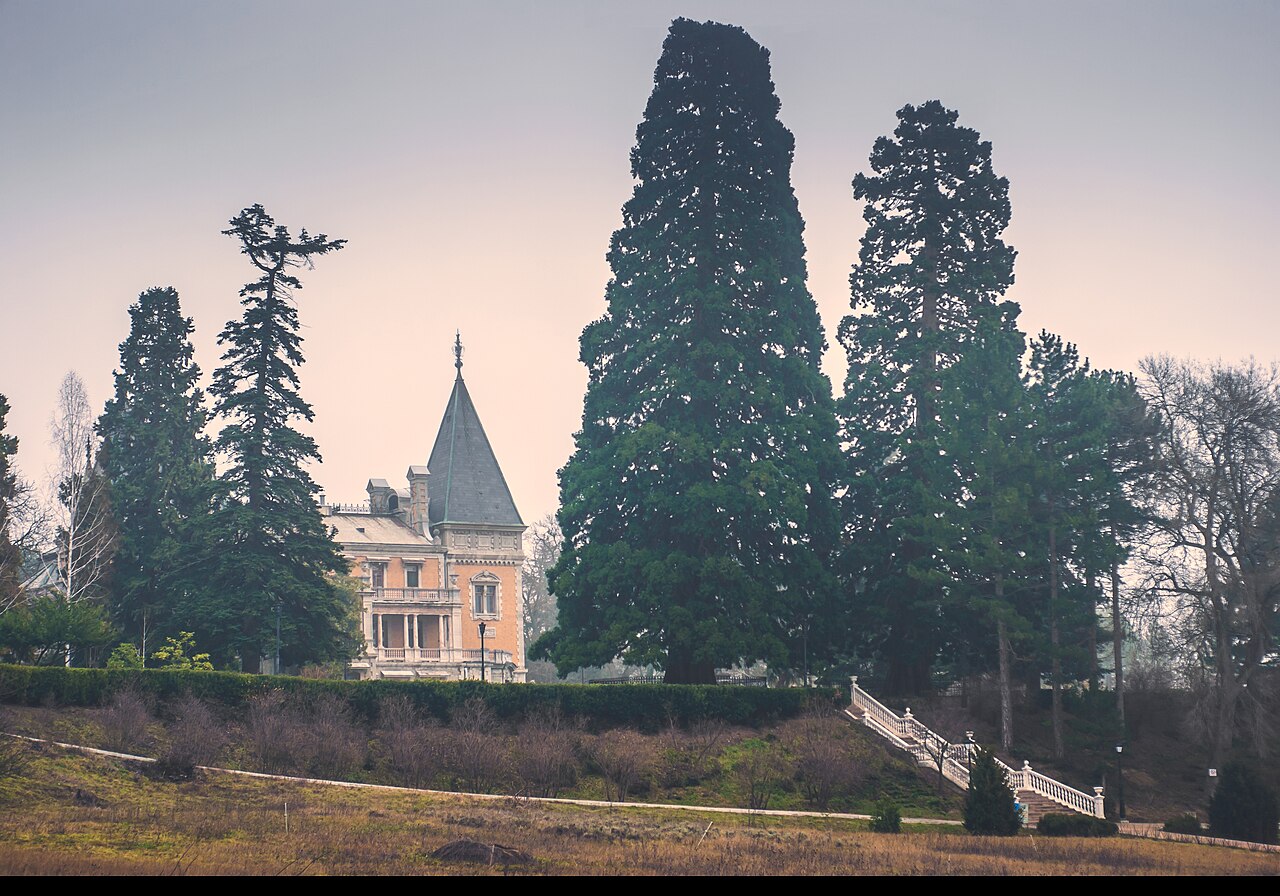
The palace’s setting completes it. The surrounding park, laid over the old forest by the Vorontsovs’ gardeners, mixes native oak, pine, and beech with the coast’s exotic plantings, sequoias, cedars, bamboo stands, threaded by paths to the spring pond, the rose parterres, and the viewpoints where the towers align with the sea far below. Above, the Yaila’s cliffs; below, the vine terraces descending toward Yalta’s amphitheater.
Walkers can continue beyond the museum circuit: trails lead up into the Crimean reserve’s forests and down through Massandra’s vineyards toward the winery and the shore, with the coast road’s trolleybus, the world’s longest trolleybus line, Simferopol to Yalta, passing the estate’s foot. The palace thus anchors a full Crimean day of castle, cellar, forest, and sea on foot.
The views made the estate and still justify it: from the upper terraces the eye takes in Yalta’s bay, Ayu-Dag’s bear-shaped headland eastward, and the sea’s horizon southward to where, on clear winter days, the light stands like a wall. Every builder on this slope, Greek, Genoese, Vorontsov, Romanov, chose the same thing first; the castle is, finally, a frame for it.
Watch Massandra Palace on Film
Visiting Massandra Palace Today
Massandra Palace stands in the upper park of Massandra township, just northeast of Yalta: city buses and the coastal trolleybus stop at the Massandra turn, with a signed walk or local taxi climbing to the palace, and drivers find parking below the terraces. The museum opens daily in season, typically with one closed day in winter, selling tickets for the main floors and temporary exhibitions; the park is free. Pair the visit with the Massandra winery’s cellar tours and tastings down the slope, book ahead in high season, and with Livadia Palace twenty minutes away for the full imperial-coast story. Late afternoon gives the towers their best light and the terraces their emptiest hour. You can find the palace on the map here: Massandra Palace on Google Maps.
Palaces Nearby
You May Like
The Khan’s Palace of Bakhchisaray and the Fountain of Tears