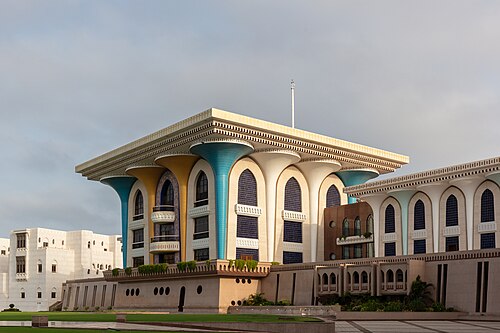
In the old city of Muscat, the capital of Oman, set between the sea and the mountains and flanked by two ancient Portuguese forts, stands the ceremonial palace of the Sultan, the Al Alam Palace, a striking modern building of gold and blue whose colonnaded facade is one of the symbols of the country. The palace, the ceremonial seat of the Sultan of Oman, with its distinctive columns and its dramatic setting, is the jewel of Old Muscat, Al Alam the palace of the Sultan, the ceremonial heart of the Omani state.
The Al Alam Palace is the ceremonial palace of Oman. Rebuilt in its present form in the early 1970s under Sultan Qaboos, the palace is the ceremonial seat of the Sultan, the setting for the receptions of state and the visits of the heads of state, its gold and blue colonnade a distinctive and modern symbol of Oman, Al Alam the ceremonial palace, the seat of the Sultan, the jewel of the capital of Muscat.
This article continues the Omani palace series, turning to the coast and the Al Alam Palace of Muscat, the ceremonial palace of the Sultan, the striking building of gold and blue in the old city between the forts, Al Alam the ceremonial seat of the Omani state, the symbol of the country, the jewel of Old Muscat on the coast of Oman.
- The Capital of Muscat
- The Royal Palace
- The Ceremonial Palace
- Sultan Qaboos
- The Flat-Roofed Facade
- The Gold and Blue Columns
- The Harbor Setting
- The Old Muscat
- The Al Said Dynasty
- The State Receptions
- The Modern Oman
- A Symbol of Oman
- The Al Alam Palace Today
- Watch on Film
- Visiting Today
- Palaces Nearby
The Capital of Muscat
Muscat is the capital of Oman. The city of Muscat, on the coast of the Gulf of Oman, set in a dramatic landscape of rocky mountains meeting the sea, is the capital of the Sultanate of Oman, a city of deep history and a great port, Muscat the capital, the setting of the Al Alam Palace, the historic city of the Omani coast between the mountains and the sea.
The city is set between mountains and sea: Muscat, in its setting of the rocky mountains rising straight from the sea, a city of dramatic landscape, the old city in a cove among the peaks, the town the capital in the mountains and the sea, Muscat the dramatic city, the capital set between the rocks and the water on the coast of Oman.
The city is an ancient port: Muscat, with its sheltered harbor, an ancient port of the trade of the Indian Ocean and the Gulf, the city the great harbor of Oman, the port the gateway of the country, Muscat the ancient port, the capital whose harbor made it the gateway of Oman, the city of the Al Alam Palace on the coast.
The Royal Palace
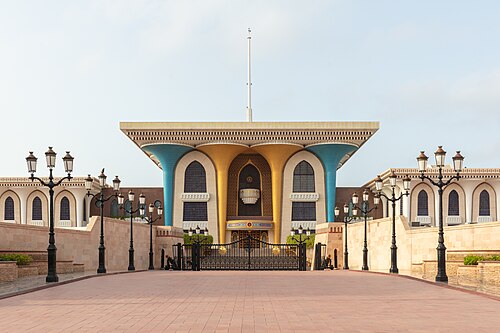
The Al Alam Palace is the royal palace of Muscat. The palace, in the old city between the forts, is the chief royal palace of the Sultan in the capital, the seat of the ceremony and the receptions of state, the palace the royal seat, Al Alam the royal palace of Muscat, the residence of the ceremony, the seat of the Sultan in the old city of the capital of Oman.
The palace is in the old city: the Al Alam Palace standing in the heart of Old Muscat, the historic walled city, between the sea and the mountains, flanked by the two forts, the palace the jewel of the old city, Al Alam the royal palace of Old Muscat, the seat set in the historic heart of the capital of Oman.
The palace is the chief royal seat of the capital: the Al Alam Palace the chief and the ceremonial royal palace of the Sultan in Muscat, the palace the seat of the state ceremony, the residence the setting of the official life, Al Alam the royal palace, the seat of the Sultan in the capital, the ceremonial heart of the Omani state in Old Muscat.
The Ceremonial Palace
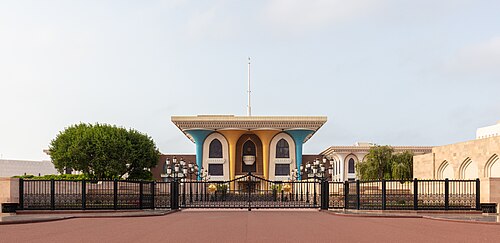
The Al Alam Palace is the ceremonial palace of the Sultan. The palace is used above all for the ceremony of the state, the receptions of the heads of state, the visits of the dignitaries, and the official functions, rather than as the Sultan’s private residence, the palace the ceremonial seat, Al Alam the palace of the state ceremony, the setting of the official life of the Sultan of Oman in Muscat.
The palace is the setting of the state receptions: the Al Alam Palace the place where the Sultan receives the visiting heads of state and the dignitaries, the palace the setting of the ceremony of the state, the residence the stage of the official welcome, Al Alam the palace of the receptions, the ceremonial seat where the Sultan of Oman receives the world in Muscat.
The palace is the official face of the state: the Al Alam Palace the official and the ceremonial face of the Omani state, the palace the setting of the formal life, the building the symbol of the government, Al Alam the ceremonial palace, the official face of the Sultanate, the seat where the state of Oman presents itself to the world in the capital of Muscat.
Sultan Qaboos
The Al Alam Palace was rebuilt under Sultan Qaboos. The present palace was built in 1972, early in the reign of Sultan Qaboos bin Said, the ruler who transformed Oman into a modern state, the palace the building of the age of Qaboos, the Sultan the maker of modern Oman, Al Alam the palace of the reign of Qaboos, the ceremonial seat of the ruler who renewed the country.
Sultan Qaboos transformed Oman: Qaboos bin Said, who came to the throne in 1970, transforming Oman from an isolated and undeveloped country into a modern and prosperous state, the Sultan the maker of the renaissance of Oman, Qaboos the ruler of the transformation, the Sultan whose reign renewed the country and whose ceremonial palace is the Al Alam of Muscat.
The palace embodies the renaissance: the Al Alam Palace, built in the age of Qaboos, embodying the renaissance of Oman, the modern building the symbol of the renewal, the palace the expression of the new age, Al Alam the ceremonial seat of the renaissance, the palace of the reign of Sultan Qaboos, the symbol of the modern Oman in Muscat.
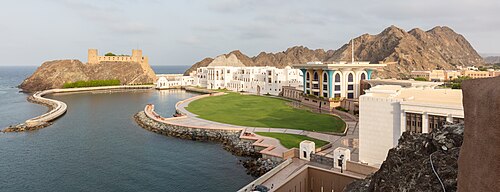
The Flat-Roofed Facade
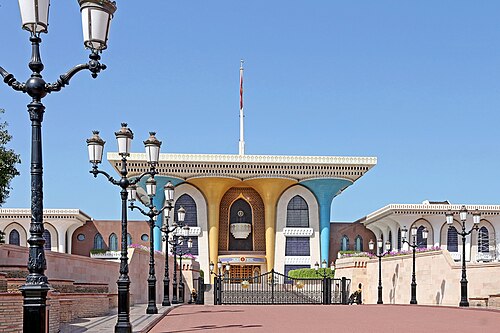
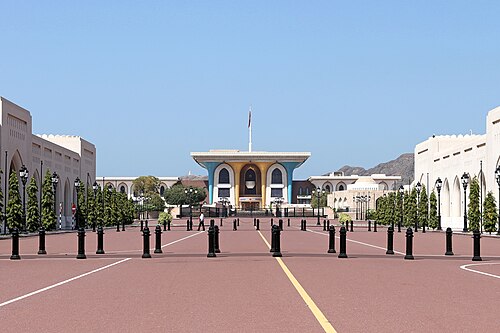
The Al Alam Palace has a striking flat-roofed facade. The palace presents a distinctive modern facade, a flat-roofed building with a colonnade of columns flaring outward at the top, the facade the signature of the palace, the flat roof and the columns the modern style of Al Alam, the facade the striking and the memorable face of the ceremonial palace of the Sultan in Muscat.
The facade is modern and distinctive: the facade of the Al Alam Palace, with its flat roof, its colonnade, and its bold colors, a distinctive and modern design unlike the historic forts beside it, the facade the modern face of the palace, the design the signature of Al Alam, the facade the striking modern face of the ceremonial palace of Oman.
The facade is the symbol of the palace: the distinctive facade of the Al Alam Palace, with its flaring columns of gold and blue, the symbol and the signature of the building, the facade the recognized face of the palace, the colonnade the mark of Al Alam, the facade the symbol of the ceremonial palace of the Sultan in Old Muscat.
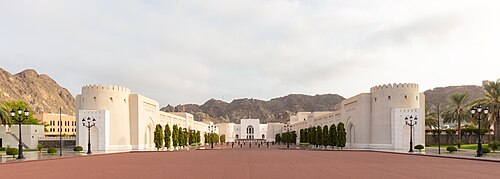
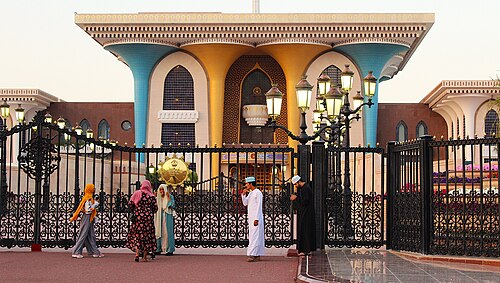
The Gold and Blue Columns
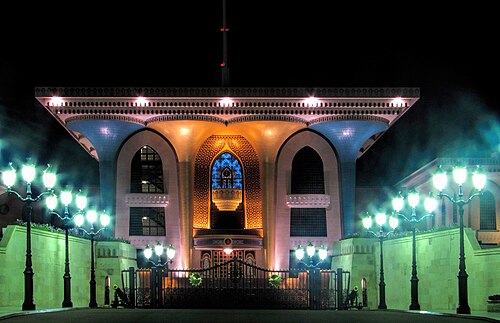
The Al Alam Palace is famous for its gold and blue columns. The facade of the palace is marked by its colonnade of columns painted and decorated in brilliant gold and blue, the colors flaring at the capitals, the gold and blue colonnade the signature and the glory of Al Alam, the columns the famous feature of the palace, the gold and blue the symbol of the ceremonial palace of the Sultan in Muscat.
The columns flare in gold and blue: the columns of the Al Alam Palace flaring outward at the top in the brilliant gold and blue, the colors the glory of the facade, the colonnade the jewel of the palace, the gold and blue columns the striking feature, the colonnade the signature of Al Alam, the gold and blue the famous and the beautiful face of the ceremonial palace of Oman.
The colors are the symbol of the palace: the gold and blue of the columns the recognized symbol and signature of the Al Alam Palace, the colors the mark of the building, the colonnade the famous face, the gold and blue the symbol of the palace, the columns the jewel of the facade, the gold and blue colonnade the symbol of the ceremonial palace of the Sultan in Old Muscat.
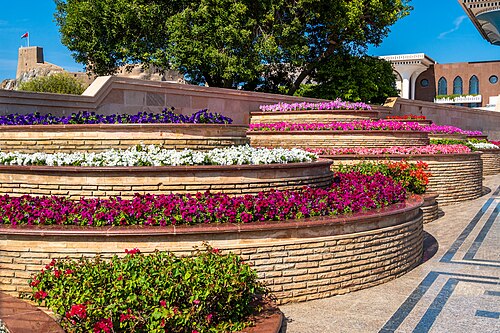
The Harbor Setting
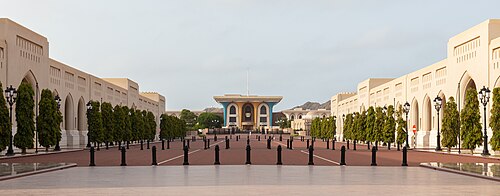
The Al Alam Palace has a dramatic harbor setting. The palace stands at the head of the harbor of Old Muscat, the sea before it and the rocky mountains and the two forts rising around it, the setting the drama of the palace, the harbor the frame of Al Alam, the dramatic landscape the glory of the setting, the harbor and the forts the magnificent frame of the ceremonial palace of the Sultan in Muscat.
The palace faces the sea: the Al Alam Palace standing at the head of the harbor, facing the sea with a ceremonial approach, the palace the jewel at the water’s edge, the harbor the setting before the palace, the sea the frame of Al Alam, the harbor the dramatic foreground of the ceremonial palace of Oman in Old Muscat.
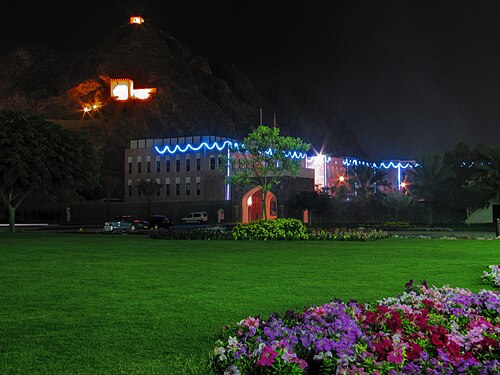
The forts flank the palace: the Al Alam Palace flanked by the two ancient Portuguese forts, Mirani and Jalali, rising on the rocks on either side of the harbor, the forts the dramatic flanks of the palace, the strongholds the frame of Al Alam, the forts the historic guardians beside the modern palace, the setting the magnificent frame of the ceremonial palace of the Sultan in Muscat.
The Old Muscat
The Al Alam Palace is the heart of Old Muscat. The palace stands in the heart of Old Muscat, the historic walled city in its cove among the mountains, the old town of the forts, the mosques, and the historic buildings, the palace the jewel of the old city, Al Alam the heart of Old Muscat, the ceremonial palace in the historic heart of the capital of Oman.
Old Muscat is the historic walled city: Old Muscat, the historic heart of the capital, a walled city in its cove among the rocky mountains, the old town of the forts, the gates, and the historic buildings, the old city the historic heart, Old Muscat the walled town, the historic city whose heart is the Al Alam Palace of the Sultan.
The palace crowns the old city: the Al Alam Palace, in the heart of Old Muscat, the crowning building of the historic city, the palace the jewel of the old town, the ceremonial seat the heart of the old city, Al Alam the crown of Old Muscat, the palace the jewel of the historic heart of the capital of Oman between the mountains and the sea.
The Al Said Dynasty
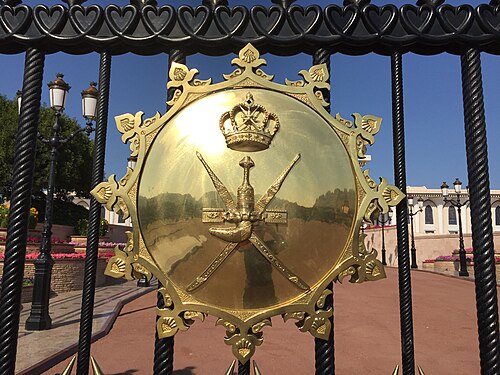
The Al Alam Palace is the seat of the Al Said dynasty. The palace is the ceremonial seat of the Al Said, the dynasty that has ruled Oman since the eighteenth century, the family of the Sultans of Oman, the Al Said the ruling house, the palace the seat of the dynasty, Al Alam the ceremonial palace of the Al Said, the seat of the Sultans of Oman in Muscat.
The Al Said have ruled Oman since the eighteenth century: the Al Said dynasty ruling Oman from the mid-eighteenth century to the present, the family the Sultans of the country, the dynasty the builders of the modern Omani state, the Al Said the ruling house, the dynasty whose ceremonial palace is the Al Alam of Muscat, the seat of the Sultans of Oman.
The dynasty built the modern Oman: the Al Said, and above all Sultan Qaboos, building the modern state of Oman, the dynasty the makers of the country, the family the rulers of the renaissance, the Al Said the builders of the modern Oman, the dynasty whose ceremonial seat is the Al Alam Palace, the symbol of the Sultanate in Muscat.
The State Receptions
The Al Alam Palace is the setting of the state receptions. The palace is used for the great ceremonies and receptions of the Omani state, the welcome of the visiting heads of state and monarchs, the official functions, and the ceremonial life of the Sultanate, the palace the setting of the ceremony, Al Alam the stage of the state receptions, the ceremonial heart of the official life of Oman in Muscat.
The palace welcomes the heads of state: the Al Alam Palace the place where the Sultan welcomes the visiting kings, presidents, and dignitaries, the palace the setting of the official welcome, the ceremonial approach and the gold and blue facade the backdrop of the receptions, Al Alam the stage of the state welcome, the palace where Oman receives the world in Muscat.
The ceremonies display the Omani state: the receptions and the ceremonies at the Al Alam Palace displaying the dignity and the hospitality of the Omani state, the palace the stage of the official life, the ceremony the expression of the Sultanate, Al Alam the setting of the state display, the ceremonial palace where the dignity of Oman is shown to the world in Muscat.
The Modern Oman
The Al Alam Palace is a symbol of the modern Oman. The palace, built in the age of Sultan Qaboos, is a symbol of the modern and renewed Oman, the modern building expressing the renaissance of the country, the palace the face of the new Oman, Al Alam the symbol of the modern state, the ceremonial seat of the renewed and prosperous Sultanate in Muscat.
The palace expresses the renaissance: the Al Alam Palace, in its modern design and its ceremonial role, expressing the renaissance of Oman under Sultan Qaboos, the palace the symbol of the renewal, the building the face of the new age, Al Alam the expression of the renaissance, the ceremonial seat of the modern Oman built in the reign of Qaboos.
The palace joins the modern and the historic: the Al Alam Palace, a modern building set among the ancient forts and the old city, joining the modern and the historic Oman, the palace the meeting of the new and the old, the building the modern jewel among the historic monuments, Al Alam the union of the modern state and the historic heart of Muscat.
A Symbol of Oman
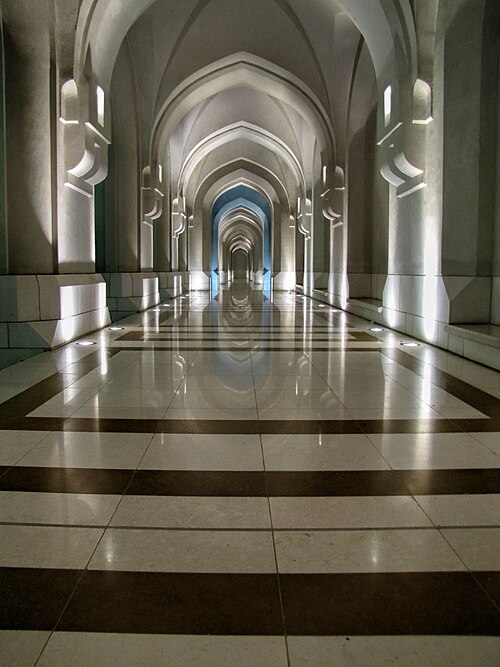
The Al Alam Palace is a symbol of Oman. The palace, with its distinctive gold and blue facade and its dramatic setting, has become one of the symbols and the images of Oman, the palace the face of the country, Al Alam the symbol of the Sultanate, the ceremonial seat the image of Oman, the palace the recognized symbol of the country in the capital of Muscat.
The palace is an image of the country: the Al Alam Palace, with its gold and blue columns, one of the recognized images of Oman, the palace the face that represents the country, the facade the symbol of the Sultanate, Al Alam the image of Oman, the ceremonial seat the symbol that represents the country to the world in Muscat.
The palace embodies the Omani state: the Al Alam Palace embodying the dignity, the hospitality, and the modernity of the Omani state, the palace the symbol of the country, the building the face of the Sultanate, Al Alam the embodiment of the state, the ceremonial seat the symbol of Oman, the palace that represents the country in the capital of Muscat.
The Al Alam Palace Today
The Al Alam Palace today stands as the ceremonial seat of the Sultan of Oman, the striking building of gold and blue in the heart of Old Muscat, the palace of the state receptions, the symbol of the modern Oman, the jewel between the sea and the ancient forts, Al Alam the ceremonial palace, the symbol of the country, the enduring seat of the Omani state in the capital of Muscat.
The palace endures as the symbol of the state: the Al Alam Palace, the ceremonial seat of the Sultan, standing as the symbol and the face of the Omani state, the palace the jewel of Old Muscat, the building the image of the country, Al Alam the enduring ceremonial palace, the symbol of Oman, the seat of the state in the capital between the mountains and the sea.
The Al Alam Palace continues the Omani palace series, the ceremonial seat of the Sultan, the striking building of gold and blue in the heart of Old Muscat, the palace of the state receptions and the symbol of the modern Oman, Al Alam the jewel between the sea and the forts, the ceremonial palace of the Al Said, the enduring seat of the Omani state in the capital of Muscat.
Watch the Al Alam Palace on Film
Visiting the Al Alam Palace Today
The Al Alam Palace stands in the heart of Old Muscat, the historic walled city of the capital of Oman, at the head of the harbor between the two ancient forts of Mirani and Jalali; the ceremonial palace, a working seat of the Sultan not open inside to visitors, is admired from the ceremonial approach and the forecourt for its gold and blue colonnade and its dramatic setting among the mountains and the sea. Travel in Oman is generally safe and accessible, and Old Muscat with the palace and the forts is a chief sight of the capital; current conditions should still be checked before any visit. You can find the palace on the map here: Al Alam Palace on Google Maps.


