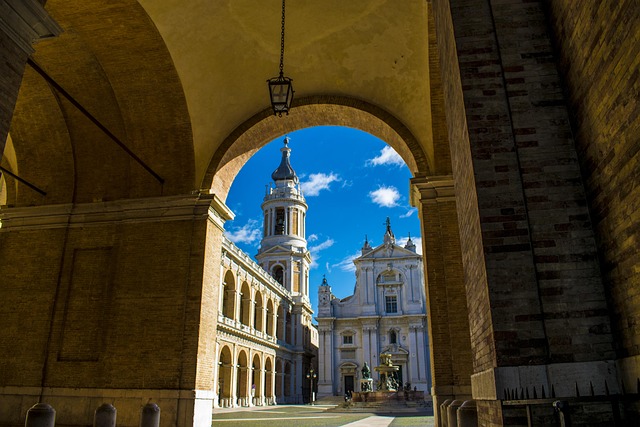
In the hill town of Loreto, in Italy’s Marche region near the Adriatic coast, stands one of the most important Marian shrines in the Catholic world. The Basilica of the Holy House shelters a small stone dwelling that pilgrims have venerated for centuries as the home of the Virgin Mary. For its devotional significance and its rich art, Loreto has drawn the faithful from across Europe since the late Middle Ages.
The Holy House
At the heart of the basilica lies the Santa Casa, the “Holy House,” a modest structure that tradition holds to be the dwelling where Mary lived and received the announcement of the birth of Jesus. According to a celebrated legend, the house was carried from Nazareth to its present hill in the late thirteenth century. The Church venerates the shrine as a place of prayer without requiring belief in every detail of the story.
A Masterpiece of Renaissance Art
The plain stone house is enclosed within a magnificent marble screen carved by leading Renaissance sculptors, a striking contrast between humble interior and ornate exterior. The basilica that rises around it, begun in the fifteenth century, blends Gothic and Renaissance styles, with a great dome and works by noted artists. The result is a sanctuary that rewards both pilgrims and lovers of art.
The Piazza and the Town
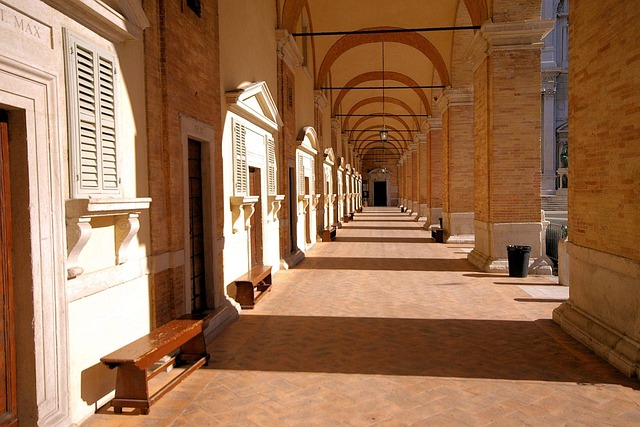
The basilica opens onto a graceful piazza framed by an arcaded palace and a fountain. The small town that grew up around the shrine retains its old walls and quiet streets, with shops selling devotional items and local crafts. From the edge of town there are views across the countryside toward the sea.
Visiting the Shrine
The basilica is open to visitors throughout the year, with the Holy House at its centre. As a place of active devotion, it asks for modest dress and quiet behaviour, particularly inside the shrine where pilgrims pray. Loreto is also recognised as a patronal site for aviators and travellers, adding another layer to its long tradition.


One thought on “The Basilica of the Holy House in Loreto”