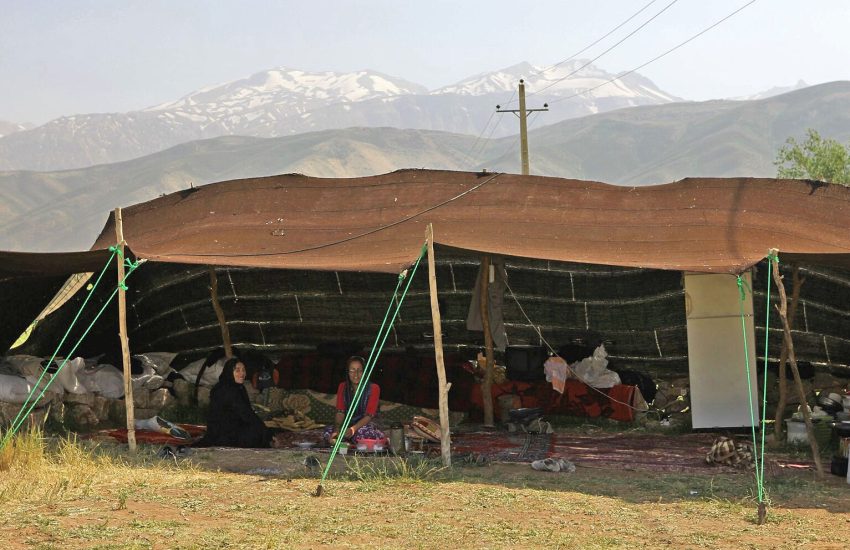
In the high mountains of Central Asia, among the snow peaks and alpine pastures of the Tian Shan, live the Kyrgyz, a Turkic people whose nomadic culture is bound to the mountains as closely as that of the Kazakhs is bound to the steppe. Herders of horse and sheep, masters of the high pasture, and keepers of one of the longest epic poems in the world, the Kyrgyz built a civilisation in the roof of Central Asia.
Closely related to the Kazakhs in language and way of life, the Kyrgyz are nonetheless a distinct people with their own history, their own homeland in the mountains, and their own treasures of culture, above all the vast oral epic of Manas. Their story reaches back, by tradition, to ancient roots far to the north before their long association with the Tian Shan.
This profile follows the Kyrgyz along the lines of the series: their ancient origins and the forty tribes, the Turkic language, the high mountain homeland, the nomadic life and the yurt, Islam and the older beliefs, the horse and the eagle, the great epic of Manas, the music of the komuz, the food and dress, and the history that shaped the Kyrgyz today.
- Origins, from the Yenisei to the Tian Shan
- The Name and the Forty Tribes
- Language, a Turkic Tongue of the Mountains
- The Homeland in the High Mountains
- The Nomadic Life of the Highlands
- The Yurt and the Crafts of Felt
- Religion, Islam and the Spirits of the Mountain
- Horses, Games and the Hunting Eagle
- The Epic of Manas
- Music, the Komuz and the Manaschi
- Food and Dress of the Highlands
- History and the Kyrgyz Today
Origins, from the Yenisei to the Tian Shan
The origins of the Kyrgyz reach deep into the history of the Eurasian steppe and, by tradition, far to the north of their present home. Ancient sources record a people called the Kyrgyz living in the region of the upper Yenisei in southern Siberia more than a thousand years ago, and the modern Kyrgyz trace a connection to these ancient roots.
Over the centuries, through the long history of the Turkic and Mongol empires of the steppe, the ancestors of the Kyrgyz migrated southward and westward, eventually settling in the high mountains of the Tian Shan where the people took its modern shape. This long migration from the northern forests to the southern mountains is central to Kyrgyz tradition.
The Kyrgyz, like the Kazakhs, are heirs to the nomadic horse cultures of the steppe and mountains, their ancestry blending the many Turkic and Mongol peoples who ranged across Central Asia. They carried the ancient way of mobile herding into the high pastures of their mountain home.
What defined the Kyrgyz as a people was a shared Turkic language, a nomadic way of life adapted to the high mountains, and a powerful sense of common identity expressed above all in the genealogy of the tribes and in the great epic of Manas.
The journey of the Kyrgyz from the upper Yenisei of southern Siberia to the high Tian Shan is one of the great migrations of the Turkic world, a movement across thousands of kilometres and many centuries that links the modern mountain people to an ancient northern homeland. That memory of a distant origin, preserved in tradition and chronicle, gives the Kyrgyz a sense of deep antiquity matched by few peoples of Central Asia.
The Name and the Forty Tribes
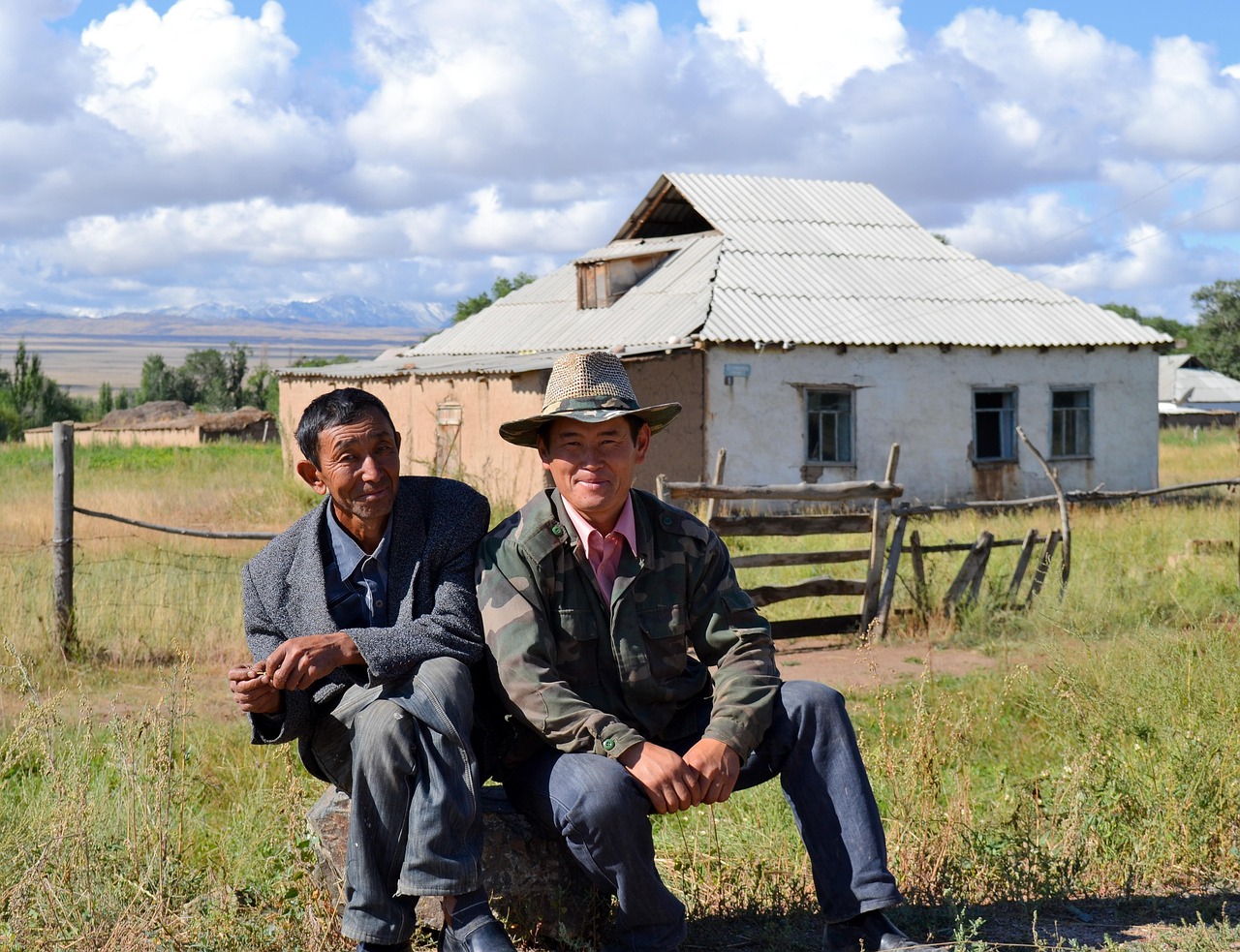
The name Kyrgyz is ancient, recorded among the peoples of the steppe over a millennium ago, and various traditions explain it, including a popular folk etymology linking it to the idea of forty, connected with the forty tribes of the Kyrgyz and the forty companions of the hero Manas.
The Kyrgyz were traditionally organised into tribes grouped into larger divisions or wings, a structure of clan and tribe reckoned through genealogy that ordered alliance, pasture, and identity. The image of the forty tribes is woven into the national symbolism of the Kyrgyz.
This tribal and clan structure, with its careful reckoning of descent, gave the scattered nomadic communities a framework of unity and a shared sense of belonging to a single people, even across the vast and broken terrain of the mountains.
The genealogical consciousness of the Kyrgyz, the knowledge of one’s tribe and ancestry, remained a powerful element of identity and social organisation, surviving the upheavals of empire and the Soviet century into modern times.
The recurring number forty, in the forty tribes and the forty companions of Manas, runs through Kyrgyz symbolism like a thread, and the rays of the sun on the national flag are said to recall it. This fusion of genealogy, epic, and emblem shows how completely the Kyrgyz sense of nationhood is bound up with the reckoning of descent and the deeds of the legendary hero.
Language, a Turkic Tongue of the Mountains

The Kyrgyz language belongs to the Turkic family, within the Kipchak branch to which Kazakh also belongs, and the two languages are closely related, reflecting the shared steppe and mountain heritage of the two peoples. Kyrgyz is the language of the mountain nomads.
Like other Turkic languages, Kyrgyz connects its speakers to the wide family stretching across Eurasia, descended from the speech of the ancient Turkic empires. It carries a vast oral literature, above all the immense epic of Manas, one of the longest in the world.
The language has been written in several scripts over the past century, in Arabic script in earlier times and then in Latin and Cyrillic under Soviet rule, with the Cyrillic script remaining in use in modern Kyrgyzstan. Debates over script reflect the wider currents of Central Asian politics.
Kyrgyz remains central to the identity of the people, the medium of the epic tradition and of everyday life, its status reasserted strongly after the long dominance of Russian, even as the country remains bilingual in practice.
Because Kyrgyz and Kazakh share the same Kipchak branch of Turkic, speakers of the two languages can understand a great deal of each other’s speech, a reminder of how closely the histories of the steppe and the mountain peoples are intertwined. Yet each language carries its own distinct literature and identity, and for the Kyrgyz it is the boundless epic of Manas that most sets their tongue apart.
The Homeland in the High Mountains

The Kyrgyz homeland is a land of high mountains, the great ranges of the Tian Shan and the Pamir-Alai that cover most of modern Kyrgyzstan, a country among the most mountainous on earth. Snow peaks, glaciers, alpine meadows, and high lakes define the landscape.
The jewel of this homeland is Lake Issyk-Kul, a vast high-altitude lake ringed by mountains, around which much of Kyrgyz life and legend revolves. The high summer pastures, the jailoo, drew the herds and their people up into the mountains each year.
Beyond the borders of modern Kyrgyzstan, Kyrgyz communities live in neighbouring mountain regions, the legacy of a people whose pastures and migrations crossed the high ranges. The mountains are the heart of the Kyrgyz world.
This high, vertical homeland shaped Kyrgyz life as profoundly as the open steppe shaped the Kazakhs, setting the rhythm of seasonal migration between valley and high pasture and forging a people perfectly adapted to life among the peaks.
With most of its territory lying above a great height and its lowlands few and narrow, Kyrgyzstan is a land defined utterly by its mountains, and the Kyrgyz are among the most thoroughly mountain-dwelling of all the Turkic peoples. The high jailoo pastures, green and flower-strewn in the brief summer, were the stage on which the whole drama of nomadic life was played out each year.
The Nomadic Life of the Highlands

For most of their history the Kyrgyz were pastoral nomads of the mountains, moving with their herds of horses, sheep, goats, and yaks between the sheltered valleys of winter and the rich high pastures of summer. This vertical transhumance was the essence of Kyrgyz life.
The seasonal move up to the jailoo, the high summer pasture, was the great event of the year, when families raised their yurts in the alpine meadows amid the herds. Wealth was measured in livestock, and the whole of life was organised around the animals and the pasture.
This mountain nomadism shaped the yurt dwelling, the diet of meat and milk, the centrality of the horse, the social structure of clan and pasture, and the values of hospitality, endurance, and freedom prized in the high country.
Forced settlement under Soviet rule transformed the nomadic life, but herding endures in the Kyrgyz mountains, and the seasonal use of the high pastures and the raising of yurts in summer remain living traditions and powerful symbols of identity.
The annual ascent to the high summer pasture, when whole communities moved up with their herds to raise their yurts among the alpine flowers, was the emotional and economic centre of the Kyrgyz year. Even today, when many Kyrgyz live settled lives, the summer return to the jailoo retains a deep hold on the imagination as the truest expression of who the Kyrgyz are.
The Yurt and the Crafts of Felt

The dwelling of the Kyrgyz nomad is the yurt, the round felt tent on a collapsible wooden frame, perfectly adapted to the mobile life of the mountains. The Kyrgyz yurt is famous for its beauty, and its crown, the circular opening at the top, is the very emblem on the national flag.
Inside, the yurt was a complete domestic world, hung with felt carpets and woven textiles and centred on the hearth. The making of felt rugs, the shyrdak and ala-kiyiz, decorated with bold patterns, is among the most celebrated of Kyrgyz crafts.
The yurt and its felt arts remain powerful symbols of Kyrgyz identity and the nomadic heritage, raised at festivals, in the summer pastures, and as marks of tradition and hospitality, their patterns carrying the symbolism of the mountains.
Around the yurt revolved the crafts of the nomad—felt-making, weaving, leatherwork, and the decorative arts that turned the practical goods of herding life into objects of beauty bearing the distinctive ornament of the Kyrgyz.
That the crown of the yurt, the tunduk through which smoke escaped and light entered, was chosen as the central emblem of the national flag shows how completely the felt tent stands for the Kyrgyz nation itself. The bold geometric patterns of the shyrdak felt carpets, each with its own meaning, turned the interior of the humble tent into a gallery of inherited art.
Religion, Islam and the Spirits of the Mountain
The Kyrgyz are predominantly Sunni Muslims, Islam having spread among them over many centuries, though it came relatively late and gradually to the mountain nomads and blended with their older beliefs rather than wholly replacing them.
Beneath and alongside Islam survive elements of the older religion of the steppe and mountains, including reverence for nature, the sky, and the spirits of place, the veneration of ancestors, and practices linked to the pre-Islamic shamanism and Tengrism of the Turkic world.
The mobile life of the mountain nomad, far from the mosques and scholars of the settled lowlands, meant that Islam among the Kyrgyz was long practised in a form woven together with custom, ancestor reverence, and the spiritual world of the high country.
Under Soviet rule religion was suppressed, but Islam and the older traditions survived, and since independence there has been a revival of religious practice alongside the wider reassertion of Kyrgyz culture and identity.
The relatively late and gentle arrival of Islam among the mountain Kyrgyz left ample room for the survival of older reverence for the sky, the mountains, and the spirits of nature, and for the veneration of sacred springs, trees, and places that continues to this day. The result is a faith in which mosque and mountain shrine, Quran and ancestral custom, exist comfortably side by side.
Horses, Games and the Hunting Eagle

The horse stands at the centre of Kyrgyz life as the foundation of nomadic mobility, wealth, and culture, and the Kyrgyz are among the great horse peoples, their skills of riding and horsemanship celebrated in a host of equestrian games and sports played in the mountains.
Among the most famous of these is the rough and spectacular horseback game in which riders compete to carry a goat carcass to a goal, a contest of strength, skill, and daring that is a highlight of Kyrgyz festivals and a powerful expression of the horse culture.
Like the Kazakhs, the Kyrgyz also practised hunting with trained golden eagles and birds of prey across the mountains, an ancient art demanding a deep bond between hunter and bird, kept alive as a treasured tradition.
The horse provided transport, meat, milk, and the fermented mare’s milk that is a national drink, and the equestrian traditions remain central to Kyrgyz identity, celebrated in games, festival, and the great gatherings of nomadic sport.
The dramatic horseback contest for the goat carcass, played by teams of riders wrestling over the prize at full gallop, is perhaps the most vivid surviving expression of the old warrior horsemanship of the steppe and mountain. Together with eagle hunting and the many forms of racing, it keeps alive in festival and competition the equestrian skills on which the whole nomadic civilisation once depended.
The Epic of Manas

The supreme treasure of Kyrgyz culture is the Epic of Manas, an immense oral poem recounting the deeds of the hero Manas and his descendants, the unity of the forty tribes, and the struggles of the Kyrgyz people. It is among the longest epic poems in the world, dwarfing the epics of many other traditions.
The Manas is far more than a story; it is the cultural charter of the Kyrgyz, a vast repository of history, genealogy, custom, belief, and the values of the people, binding the forty tribes into a single nation through the figure of the hero and his companions.
The epic was preserved and performed by special reciters, the manaschi, who held the immense poem in memory and performed it in a powerful, often trance-like chant. To be a great manaschi was, and remains, among the highest of cultural callings.
The Manas stands at the very heart of Kyrgyz identity, celebrated as the national epic, taught and performed and honoured, a living link to the deep past and the foundation of the people’s sense of themselves as a nation.
The colossal length of the Manas, far exceeding the combined size of the great epics of ancient Greece and India, is itself a measure of the central place the poem holds in Kyrgyz life, for it gathers into a single narrative the history, faith, and self-understanding of the nation. To recite even a portion of it is to summon the whole inheritance of the Kyrgyz people.
Music, the Komuz and the Manaschi
Kyrgyz culture is rich in music, above all in the playing of the komuz, a three-stringed long-necked lute that is the national instrument and the soul of Kyrgyz music. The komuz accompanies song, instrumental pieces, and the rich traditions of the mountains.
Above all there is the art of the manaschi, the reciter of the epic of Manas, whose performance is among the great expressions of Kyrgyz oral culture. The improvising poet-singers and the love of the spoken and sung word are deeply prized.
Instrumental pieces and song traditions carry the history, values, and feeling of the people, evoking the mountains, the herds, the heroes of legend, and the life of the nomad, and they form a celebrated part of the cultural heritage.
Music, poetry, and the epic are vehicles of memory and identity for the Kyrgyz, carrying the deeds of Manas and the ancestors, the beauty of the mountains, and the values of the nomad across the generations into the national culture today.
The art of the manaschi, who must hold in memory and perform a poem of staggering length in a charged, declamatory chant, ranks among the most demanding feats of oral culture anywhere in the world. Alongside this towering tradition, the gentler music of the komuz fills the everyday life of the Kyrgyz, its three strings sounding the moods of the mountains and the herds.
Food and Dress of the Highlands

The Kyrgyz table reflects the nomadic, pastoral life of the mountains, built on meat and milk from the herds. Mutton and horse meat are central, and dishes of boiled meat and noodles, shared at gatherings and feasts, feature in the cuisine alongside the products of the dairy.
Fermented mare’s milk, kymyz, is a prized traditional drink, and various fermented and dried dairy foods preserved the bounty of the herd through the seasons. Hospitality is a sacred value, and the offering of food and drink to guests follows deep traditions.
Traditional dress suits the mountain climate, with felt and wool prominent, and the distinctive tall white felt hat of the men, the kalpak, is among the most recognisable emblems of Kyrgyz identity, worn with pride as a national symbol.
The cuisine and dress reflect directly the pastoral economy of the herd and the conditions of mountain life, a culture of meat, milk, felt, and wool adapted to a mobile people in a land of high peaks and harsh winters.
The kalpak, the tall white felt hat with its dark trim worn by Kyrgyz men, is so closely identified with the people that it has become almost a badge of nationhood, donned with pride at every festival and ceremony. Like the fermented mare’s milk offered to guests and the boiled mutton shared at feasts, it ties the everyday culture of the Kyrgyz directly to the pastoral life of the mountains.
History and the Kyrgyz Today

The Kyrgyz lands came under Russian imperial and then Soviet rule, which transformed the nomadic world through forced settlement, collectivisation, and modernisation, bringing both upheaval and education, and preserving a Kyrgyz republic that became the basis for later independence. With the Soviet collapse, Kyrgyzstan became an independent state.
Today the Kyrgyz are the titular people of Kyrgyzstan, a mountainous Central Asian republic, with communities also in neighbouring mountain regions. The country has experienced turbulent politics since independence while reasserting Kyrgyz language, culture, and identity.
Cultural revival has been vigorous, with the celebration of the epic of Manas, the komuz, the equestrian games, the felt arts, and the symbols of the nomadic heritage, alongside the reassertion of the Kyrgyz language and the traditions of the mountains. Like the Kazakhs, the Kyrgyz balance their nomadic past with a modern present.
In the chant of the manaschi, the music of the komuz, the raising of the yurt in the high pastures, and the white kalpak of the mountain herder, the Kyrgyz continue to tell a story as high as the Tian Shan itself—the story of a free people of the horse and the mountain, bound together by the forty tribes and the deeds of Manas.
The turbulent politics of independent Kyrgyzstan, marked by repeated upheavals, has unfolded alongside a determined effort to reclaim and celebrate the nomadic heritage, from grand festivals of the epic of Manas to revivals of the equestrian games and the felt arts. The Kyrgyz story today is thus one of a small mountain nation holding fast to a powerful cultural inheritance amid the pressures and opportunities of the modern world.
You May Like
The Zaza, a Mountain People of Eastern Anatolia