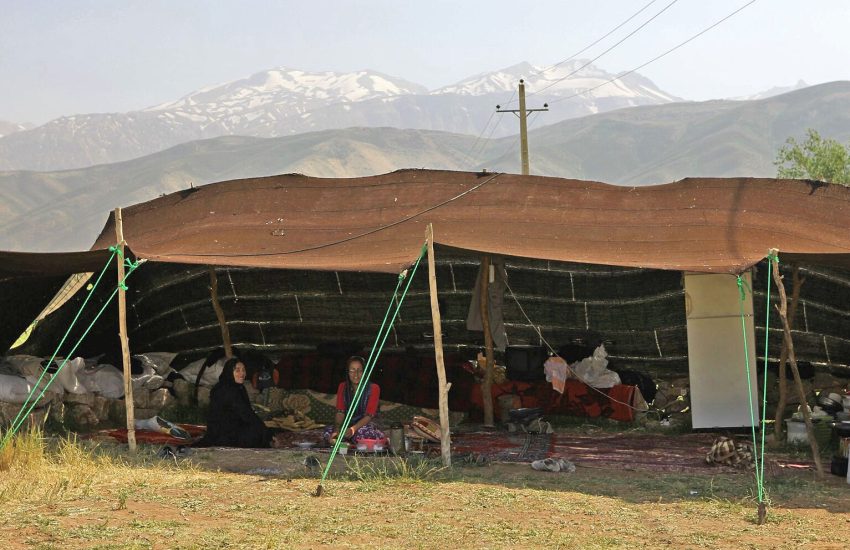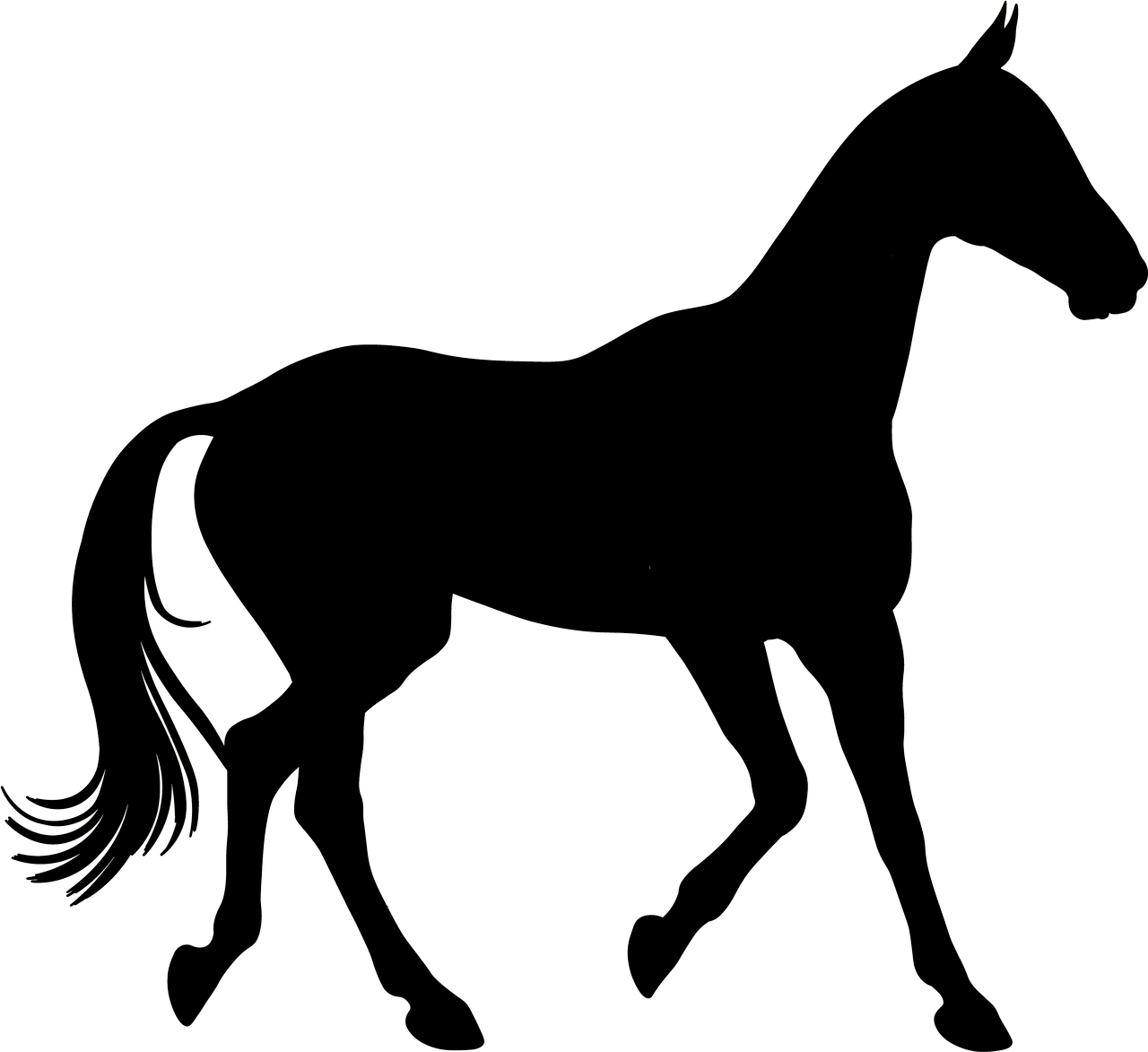
In the deserts and oases east of the Caspian Sea, in the vast sands of the Karakum, live the Turkmen, a Turkic people of the Oghuz branch whose culture is woven into two of the most beautiful things in Central Asia: the deep-red knotted carpet and the golden Akhal-Teke horse. A people of the desert, the tribe, and the herd, the Turkmen kept their fierce independence and their tribal way of life into modern times.
Unlike the settled Uzbeks of the oasis cities, the Turkmen were long a nomadic and tribal people of the desert margins, and unlike the Kipchak-speaking Kazakhs, they belong to the Oghuz branch of the Turkic family, the same branch as the Turks of Anatolia and the Azerbaijanis, making them western Turks of the eastern deserts.
This profile follows the Turkmen along the lines of the series: their Oghuz origins, the name and the tribes, the Oghuz Turkic language, the homeland of the Karakum, the tribal society, the famous carpet and the Akhal-Teke horse, Islam and the holy men, the music of the dutar, the food and dress, and the history that shaped the Turkmen today.
- Origins, the Oghuz Turks of the Desert
- The Name and the Tribes
- Language, an Oghuz Turkic Tongue
- The Homeland of the Karakum
- The Tribal Society
- The Turkmen Carpet
- The Akhal-Teke Horse
- Religion, Islam and the Holy Men
- Music, the Dutar and the Bagshy
- Food and Dress of the Desert
- History, the Russian Conquest and the Soviet Century
- The Turkmen Today
Origins, the Oghuz Turks of the Desert
The Turkmen are descended from the Oghuz Turks, the great western branch of the Turkic peoples who moved out of the steppes of Central Asia in the medieval period. From the Oghuz came not only the Turkmen but also the Seljuk and Ottoman Turks who carried Turkic speech westward into Persia, Anatolia, and beyond.
Those Oghuz who remained in the lands east of the Caspian, in the deserts and oases of the region, gradually became the Turkmen, mingling with earlier populations and adopting the tribal, nomadic life of the desert margins. The Turkmen thus represent the eastern Oghuz, kin to the Turks of the west.
Their early history is bound up with the great movements of the Oghuz and the rise of the Seljuk empire, in which Turkmen tribes played a central role before the main currents of Turkic migration flowed on toward Anatolia, leaving the Turkmen in their desert homeland.
What defined the Turkmen as a people was a shared Oghuz Turkic language, a tribal social structure, and a nomadic and semi-nomadic way of life adapted to the harsh deserts and oases east of the Caspian Sea.
That the Turkmen share their Oghuz ancestry with the Turks of Anatolia and the Azerbaijanis gives them a special place among the peoples of Central Asia, for they are in a sense the eastern remnant of the great migration that carried Turkic speech all the way to the Mediterranean. While their Oghuz kin built empires in the west, the Turkmen stayed in the ancestral desert lands, preserving an older, tribal way of life that the western Turks largely left behind.
The Name and the Tribes
The name Turkmen is ancient, applied to Oghuz and other Turkic groups in the medieval period, and various explanations of it have been offered, including the sense of being Turkic or resembling the Turks. It came to denote specifically the Oghuz peoples of the eastern deserts.
The Turkmen were organised into a number of great tribes—such as the Teke, Yomut, Ersari, Salor, Saryk, and others—each with its own territory, its own character, and often its own distinctive carpet designs. Tribal identity was, and to some extent remains, fundamental to the Turkmen.
These tribes were largely independent, sometimes rivals, and there was no single Turkmen state in the pre-modern period; the people were united by language, culture, and a sense of common Oghuz descent rather than by political unity.
The tribal divisions shaped Turkmen history, society, and art profoundly, and the modern sense of a single Turkmen nation was forged only later, above all under Soviet rule with the creation of the Turkmen republic.
The absence of any single Turkmen state before modern times meant that the people were held together not by a king or capital but by a shared language, a common descent from the Oghuz, and the dense web of tribal genealogy. This made the Turkmen a nation in culture long before they became one in politics, and it lent their later national awakening a strongly tribal and genealogical character.
Language, an Oghuz Turkic Tongue
The Turkmen language belongs to the Oghuz branch of the Turkic family, the same branch as Turkish and Azerbaijani, and is distinct from the Kipchak languages of the Kazakhs and Kyrgyz and the Karluk language of the Uzbeks. This places the Turkmen, linguistically, among the western Turks.
As an Oghuz language, Turkmen shares much with Turkish and Azerbaijani, a reflection of the common Oghuz origin of these peoples, though centuries of separate development and the influence of neighbouring languages have given Turkmen its own distinct character.
The language carries a rich oral and literary tradition, above all the poetry of Magtymguly, the great eighteenth-century poet honoured as the father of Turkmen literature and a symbol of Turkmen national identity and aspiration.
The language has been written in several scripts over the past century, in Arabic script in earlier times and then in Latin and Cyrillic under Soviet rule, with a return toward the Latin script in independent Turkmenistan.
The poet Magtymguly occupies a place in Turkmen culture far beyond that of a mere writer, for in an age of tribal division he gave voice to the longing for Turkmen unity and dignity, and his verses became a kind of scripture of national feeling. To quote Magtymguly is, for many Turkmen, to touch the very heart of what it means to belong to the people.
The Homeland of the Karakum

The Turkmen homeland is the land east of the Caspian Sea, dominated by the vast Karakum desert, the black sands that cover most of modern Turkmenistan. Around and within this desert lie the oases, river valleys, and mountain foothills where the Turkmen lived and grazed their herds.
The Amu Darya river along the eastern edge, the Murghab and Tejen rivers and their oases, the foothills of the Kopet Dag mountains along the southern border, and the Caspian shore to the west frame the desert heartland of the Turkmen world.
Beyond modern Turkmenistan, large Turkmen populations live in neighbouring regions, including northern Iran and Afghanistan, the legacy of a tribal people whose grazing lands and migrations crossed the modern borders of the region.
This desert and oasis homeland shaped the Turkmen as a people of the herd, the oasis farm, and the caravan, adapted to one of the harshest environments in Central Asia, where water and pasture were precious and hard-won.
The Karakum, the black sand desert that fills the heart of the homeland, is one of the great deserts of Asia, and life in the Turkmen lands clung to its margins, to the thread of the rivers and the green of the oases. This was an environment that demanded toughness and mobility, and it shaped a people accustomed to scarcity, distance, and the hard disciplines of the desert.
The Tribal Society
Turkmen society was organised around the great tribes and their subdivisions, a structure of clan and tribe reckoned through genealogy that ordered territory, alliance, marriage, and identity. Each major tribe held its own lands and maintained its own traditions.
The tribes were largely self-governing, led by their elders and chiefs, and the bonds of kinship and tribe were the framework of social and political life in the absence of any central Turkmen state. Loyalty to the tribe was a powerful force.
This tribal structure was reflected in many aspects of Turkmen culture, most famously in the carpet, where each tribe had its own characteristic motifs and designs, so that a carpet could often be identified with a particular tribe.
The strength of tribal identity gave the Turkmen a fierce independence and a reputation as formidable warriors, and the legacy of tribal affiliation persisted through the upheavals of conquest and the Soviet century into modern times.
So deeply did tribal identity run among the Turkmen that even today a person’s tribe carries meaning, and the great divisions of Teke, Yomut, Ersari, and the rest remain part of the social map of the nation. The reckoning of descent, the loyalty to kin, and the memory of tribal lands form a substratum of Turkmen identity beneath the modern nation built upon it.
The Turkmen Carpet
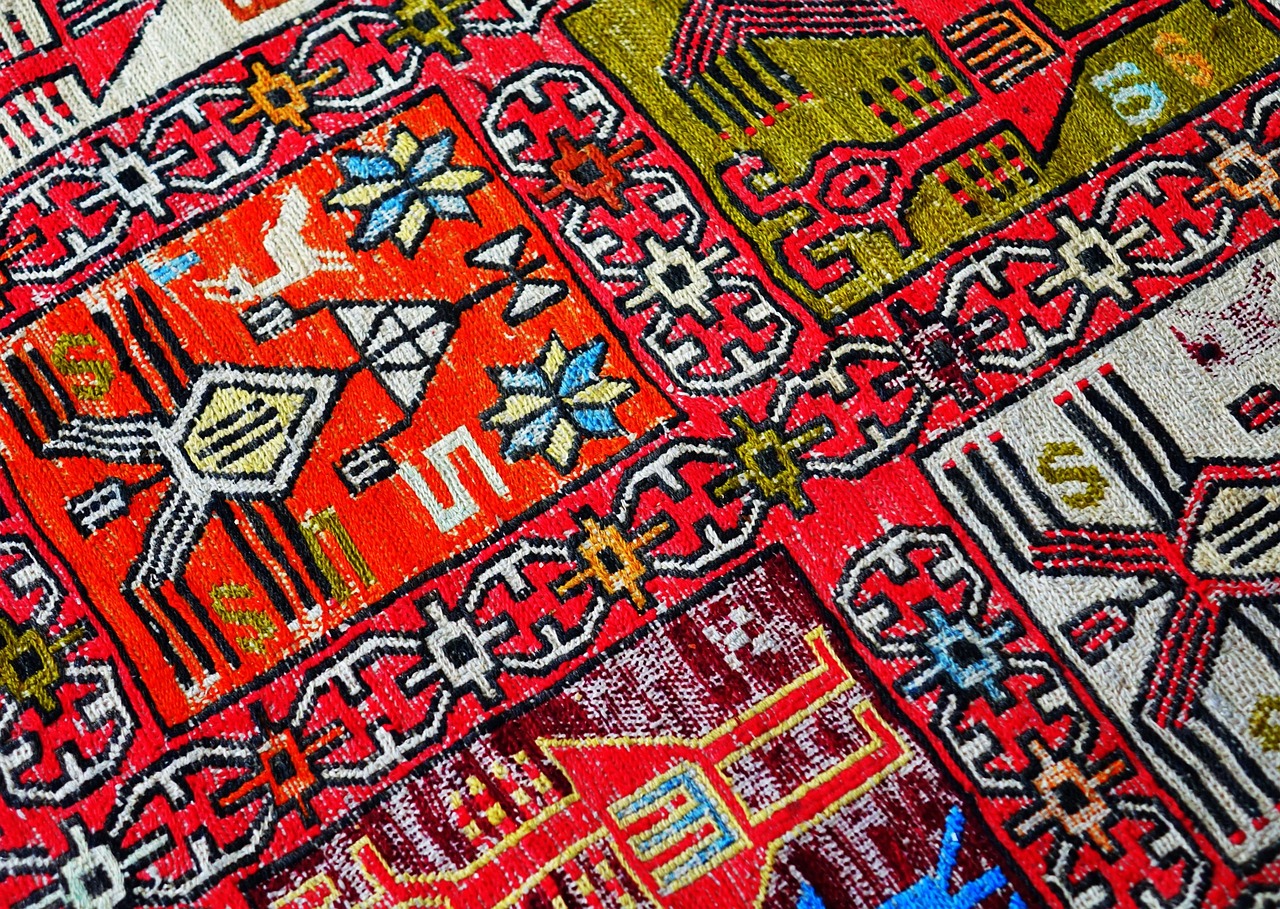
The Turkmen are world-famous for their carpets, among the most beautiful and prized in the world, knotted by the women of the tribes in deep, rich reds and intricate geometric designs. The Turkmen carpet is the supreme expression of the people’s art.
Each tribe had its own characteristic motif, the gul, a medallion or emblem repeated across the field of the carpet, so that the designs served almost as the heraldry of the tribes. The carpets were both practical furnishings of the tent and treasured works of art and wealth.
Carpet weaving was the art of the Turkmen women, a skill passed down through generations and central to the domestic economy and culture, producing not only floor carpets but bags, tent bands, and trappings for animals, all richly woven.
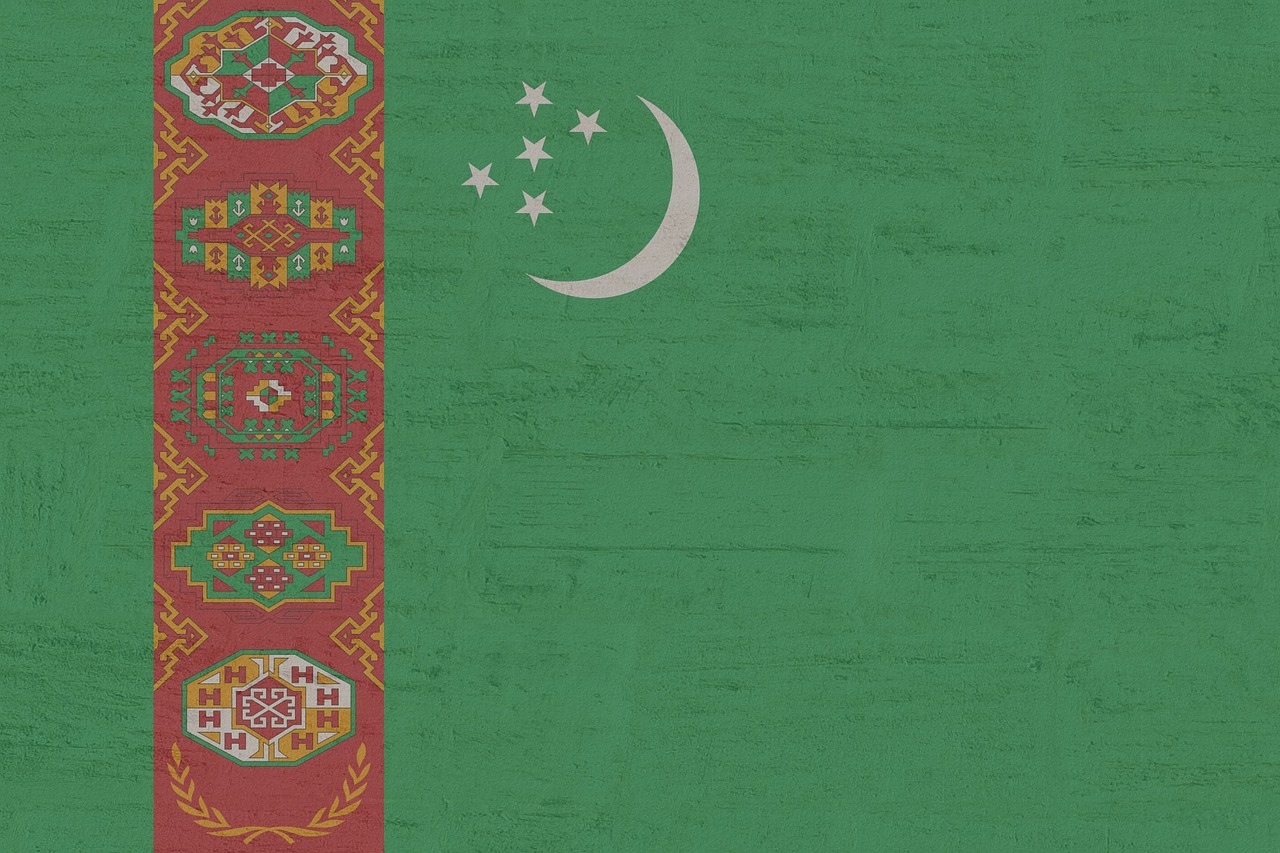
The Turkmen carpet, with its deep red ground and its tribal guls, is so emblematic of the people that the gul motif appears on the national flag of Turkmenistan, a unique honour for a craft and a powerful symbol of identity.
The honour of placing a carpet motif at the centre of a national flag, unique to Turkmenistan, captures how completely the knotted carpet stands for the Turkmen people. Each tribal gul is a kind of signature woven in wool, and the great carpets, knotted over months by the women of the tents, were at once the wealth, the art, and the identity of the tribe made tangible.
The Akhal-Teke Horse
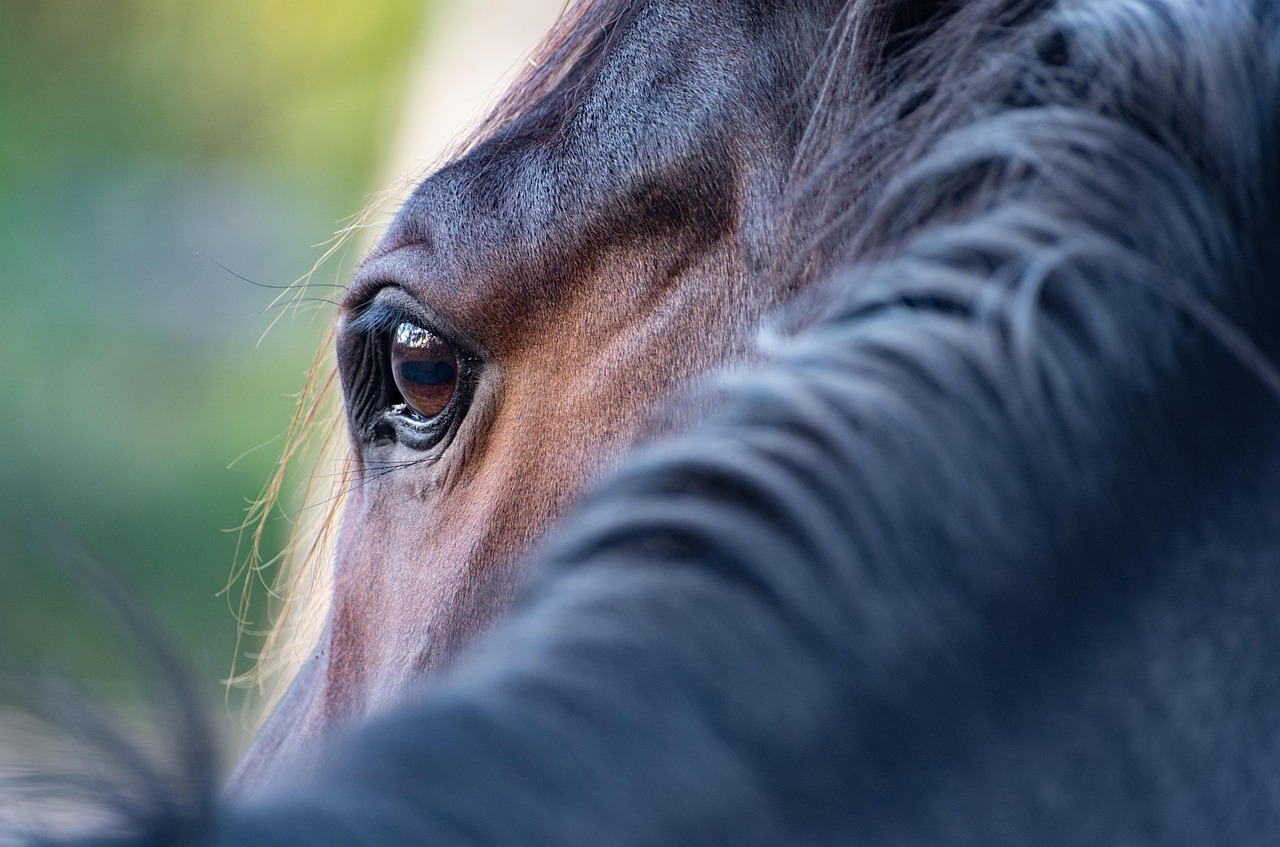
If the carpet is the art of the Turkmen women, the Akhal-Teke horse is the pride of the Turkmen men, one of the oldest and most beautiful horse breeds in the world. Famed for its speed, endurance, and the extraordinary metallic, golden sheen of its coat, the Akhal-Teke is a living treasure.
Bred by the Teke tribe and others over many centuries in the harsh desert environment, the Akhal-Teke was prized as a warhorse and a racer, renowned for its ability to endure heat, thirst, and long distances. The bond between the Turkmen and their horses was deep.
The horse was central to the tribal, often warlike life of the Turkmen, used in raiding, warfare, and the prestige of the tribe, and the finest horses were cherished and celebrated, their bloodlines carefully kept.
The Akhal-Teke is today a national symbol of Turkmenistan, celebrated and honoured, appearing on the national emblem and the subject of great pride, a living link to the desert heritage of the Turkmen people.
The Akhal-Teke, with its slender build, its remarkable endurance in heat and thirst, and the unearthly metallic shimmer of its coat, is counted among the most ancient and distinctive horse breeds on earth. Bred for war, raid, and racing in the unforgiving desert, it embodied the prestige and the freedom of the Turkmen, and the bond between horse and herder was the stuff of legend and pride.
Religion, Islam and the Holy Men
The Turkmen are predominantly Sunni Muslims, Islam having spread among the Oghuz and the Turkmen over many centuries. Among the tribal, nomadic Turkmen, Islam blended with older customs and the strong tribal traditions of the desert.
Among the Turkmen a special role was played by certain holy lineages and tribes regarded as descended from saints or the early figures of Islam, who provided religious guidance, mediation between feuding tribes, and spiritual authority across tribal lines.
The veneration of saints and their shrines, pilgrimage to holy places, and the practices of Sufism and folk Islam were woven into Turkmen religious life, alongside the formal observances of Sunni Islam.
Under Soviet rule religion was suppressed, but Islam survived rooted in Turkmen culture and identity, and since independence there has been a revival of religious practice alongside the reassertion of Turkmen national heritage.
The special holy lineages among the Turkmen, regarded as descended from saints and the early figures of the faith, performed a vital social as well as religious role, for their standing above the ordinary tribes allowed them to mediate the feuds and rivalries that tribal life inevitably bred. In this way religion and the maintenance of peace were woven together in the fabric of Turkmen society.
Music, the Dutar and the Bagshy
Turkmen culture is rich in music, centred on the dutar, a two-stringed long-necked lute that is the national instrument and the heart of Turkmen music. The dutar accompanies song and instrumental pieces and is inseparable from the cultural life of the people.
The central figure of Turkmen musical culture is the bagshy, the bard or minstrel who sings the epics, legends, and poems of the people to the accompaniment of the dutar, often in a powerful, distinctive vocal style. The bagshy was the keeper of the oral tradition.
The poetry of Magtymguly and the great body of Turkmen verse, epic, and legend were carried by the bagshy and the dutar, preserving the history, values, and feeling of the people across the generations of a largely non-literate tribal society.
Music and poetry are vehicles of memory and identity for the Turkmen, the dutar and the bagshy honoured as national treasures, carrying the words of Magtymguly and the legends of the tribes into the national culture today.
The bagshy, singing the verses of Magtymguly and the legends of the tribes in a charged, declamatory voice to the ringing of the dutar, was the living memory and conscience of a largely unlettered people. Through this art the history, poetry, and values of the Turkmen were carried across the desert and down the generations far more durably than any written page.
Food and Dress of the Desert
The Turkmen table reflects the desert and pastoral life, built on meat from the herds, above all mutton, on dairy, and on bread and the produce of the oases. Hearty dishes of meat and rice and grilled meat feature in the cuisine, served with bread and tea.
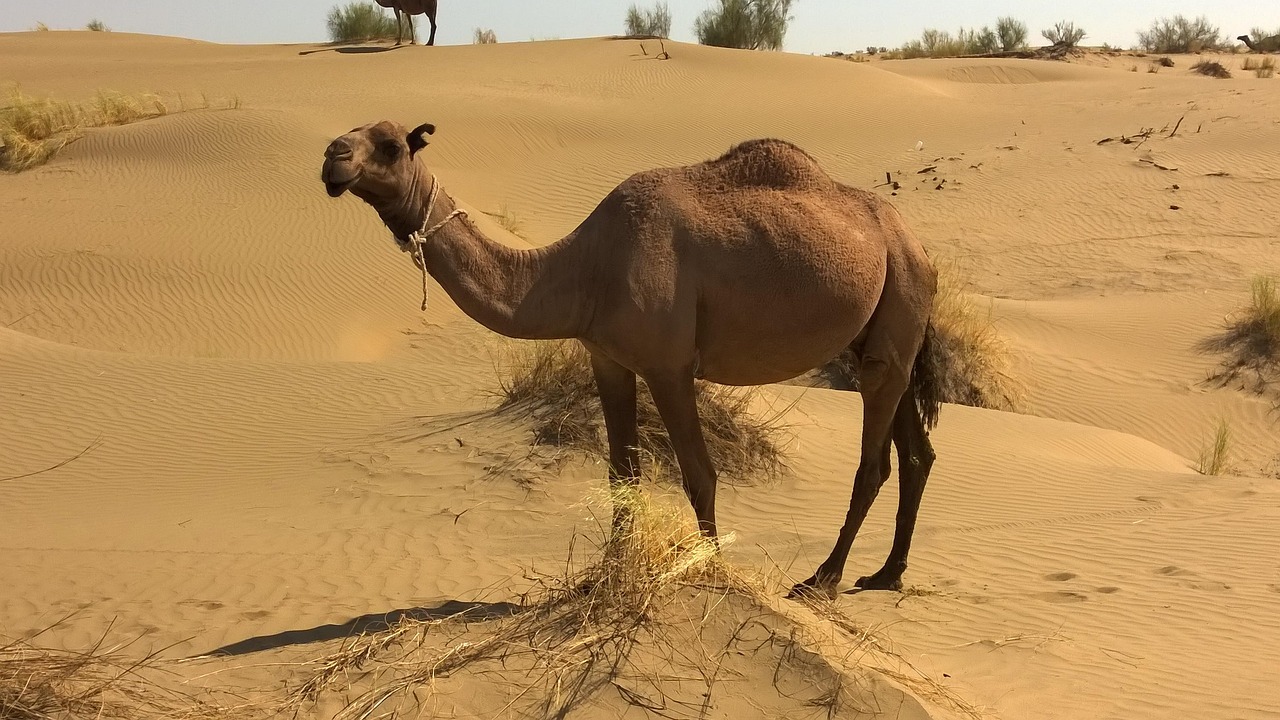
Tea, especially green tea, is central to Turkmen hospitality, and dairy foods, including those from camels and sheep, preserved the bounty of the herd. The cuisine reflects the scarcity and the bounty of the desert and oasis environment.
Traditional dress is among the most striking in Central Asia, with the men’s tall shaggy sheepskin hats and the women’s richly embroidered red garments and heavy silver jewellery, ornamented with carnelian and elaborate designs.
The silver jewellery of the Turkmen women, worn in profusion and often of great size and intricacy, is a celebrated art in itself, marking status, wealth, and tribe, and forming part of the rich material culture of the people.
The dress of the Turkmen is among the most spectacular in Central Asia, the men crowned with great shaggy sheepskin hats and the women robed in deep red and laden with massive silver ornaments set with carnelian. This profusion of silver, worn as wealth, protection, and beauty, formed a portable treasury and a visual language of tribe and status as eloquent as the carpets themselves.
History, the Russian Conquest and the Soviet Century
For centuries the Turkmen tribes lived in fierce independence on the desert margins, owing no allegiance to a central state, raiding the settled lands and caravans, and resisting the powers around them. Their independence and their reputation as warriors were legendary.
In the nineteenth century the Russian Empire conquered Central Asia, and the Turkmen resisted fiercely, their resistance culminating in a famous and bloody battle at the fortress of Gokdepe, where the Teke made a last stand against the Russian advance before the conquest was completed.
Russian and then Soviet rule transformed the Turkmen world, ending the independent tribal life through forced settlement and collectivisation, and creating the national republic of Turkmenistan that gave the modern Turkmen nation, language, and borders their form.
The Soviet century brought education, irrigation, and the cotton economy along with repression and the environmental costs of diverting water from the rivers. With the Soviet collapse, Turkmenistan became an independent state, and the Turkmen reasserted their language, culture, and identity.
The fierce resistance of the Turkmen tribes to the Russian advance, culminating in the bloody fall of the Gokdepe fortress, became a foundational memory of Turkmen nationhood, a tale of defiance and sacrifice in defence of freedom. Its commemoration in independent Turkmenistan shows how the long tribal struggle for independence was woven into the modern nation’s sense of itself.
The Turkmen Today

Today the Turkmen are the titular people of Turkmenistan, a desert country east of the Caspian rich in natural gas, with large Turkmen communities also in northern Iran and Afghanistan. The country has followed an unusually isolated path since independence.
Cultural revival has centred on the symbols of the Turkmen heritage—the carpet, whose gul appears on the national flag, the Akhal-Teke horse, honoured as a national treasure, the poetry of Magtymguly, the music of the dutar and the bagshy, and the traditions of the tribes.
The challenges ahead are those of a nation balancing its tribal and desert heritage with a modern present, managing great natural wealth, the legacy of the Soviet century, and the environmental wounds of water diversion while keeping alive its language and traditions. Like the Uzbeks and the other peoples of the region, the Turkmen reclaim their distinct identity.
In the deep red of the knotted carpet, the golden sheen of the Akhal-Teke horse, the song of the bagshy to the dutar, and the verses of Magtymguly, the Turkmen continue to tell a story as old as the Oghuz—the story of a fierce desert people of the western Turks, who kept their tribes, their horses, and their art through the long centuries of the Karakum.
The unusually closed and isolated path taken by independent Turkmenistan has set it apart even from its Central Asian neighbours, a nation rich in gas yet little known to the outside world. Within it, the symbols of the Turkmen heritage, the carpet, the horse, and the verses of Magtymguly, have been elevated into emblems of the state, binding the ancient tribal culture to the identity of the modern republic.
You May Like
The Zaza, a Mountain People of Eastern Anatolia