If you want to feel small in the best possible way, sit for a moment with this fact: people have been living in the same spot in Jericho for around eleven thousand years, more or less without a break. Empires came and went. Languages were born and died. Whole religions rose and faded. And through all of it, generation after generation, someone was always there, drawing water from the same spring, farming the same warm valley. Jericho is often called the oldest continuously inhabited city on Earth, and standing on its ancient mound you can practically feel the weight of all those lives stacked beneath your feet.
In this article:
Where and what is it?
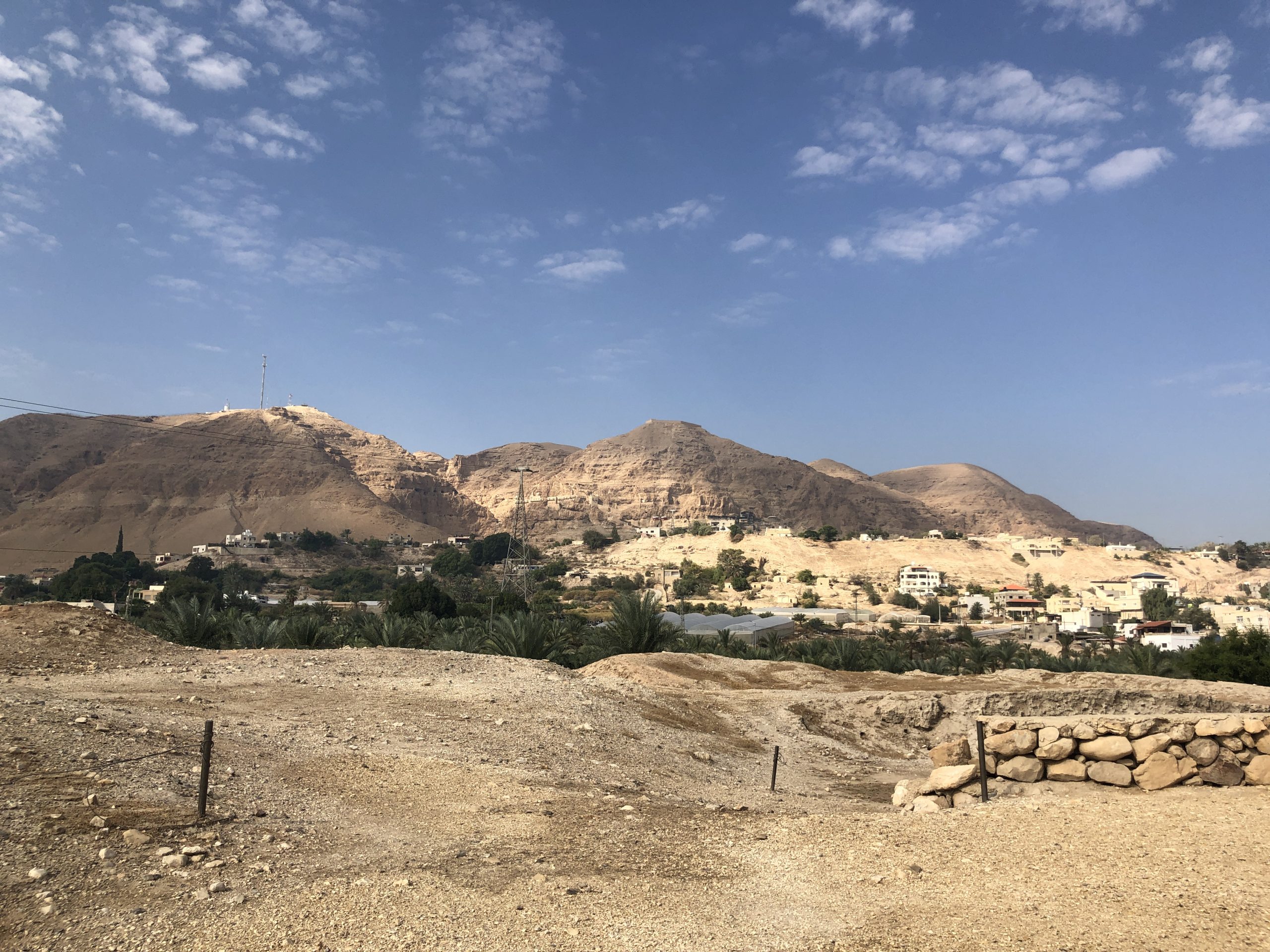
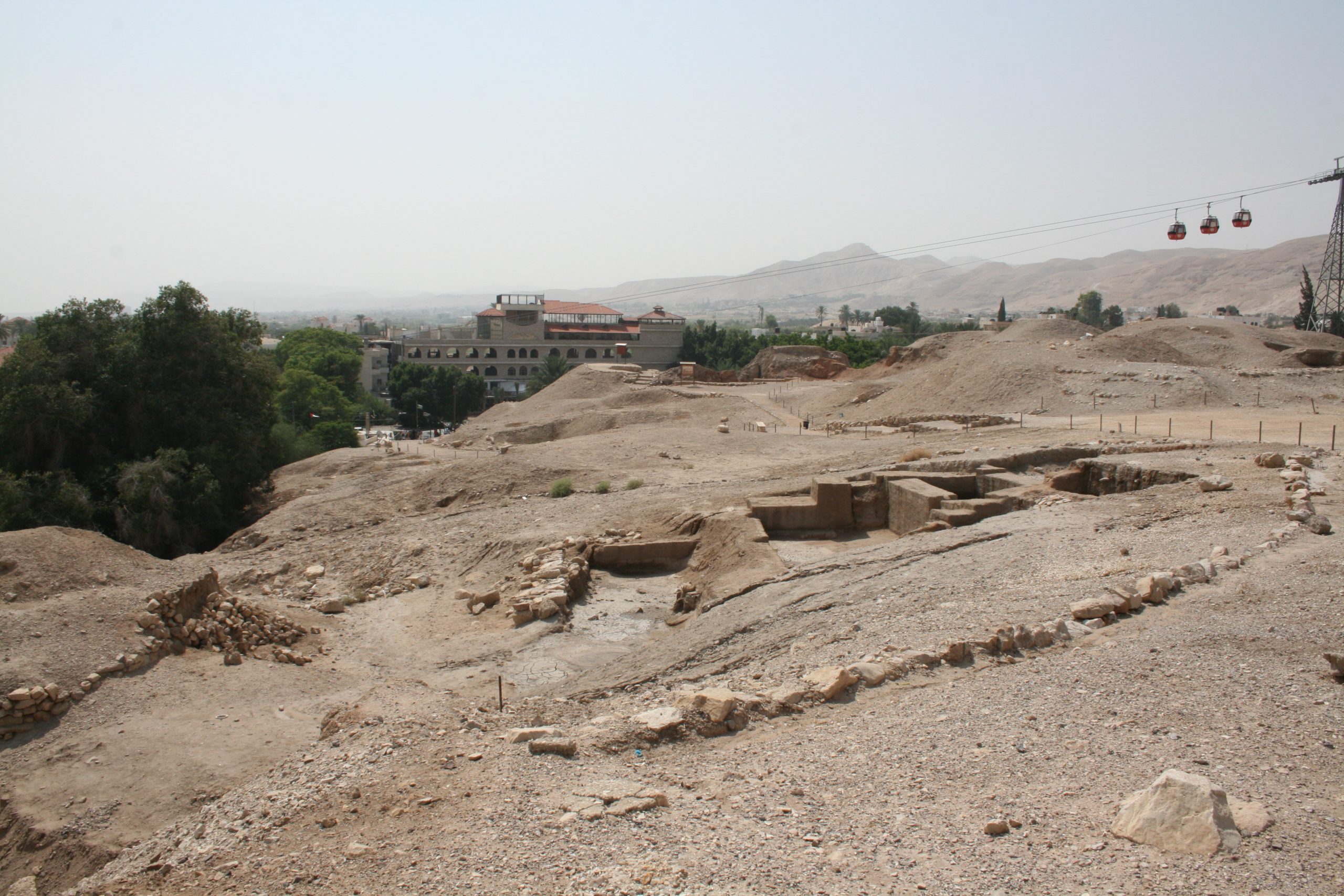
The Jericho we’re talking about is an archaeological mound called Tell es-Sultan, just outside the modern city of Jericho in the Jordan Valley, near the West Bank. It sits in a deep rift in the landscape, well below sea level, in a spot that looks like it shouldn’t support a city at all. But there’s a secret here, and it’s the whole reason Jericho exists: a generous freshwater spring, the Ain es-Sultan, bubbling up out of the ground in the middle of an otherwise dry region. Reliable water in a thirsty land. That spring is the magnet that has held people here for eleven millennia.
A “tell,” by the way, is a hill made by people. When a settlement is built, lived in, knocked down, and rebuilt on the same spot over and over for thousands of years, all those layers pile up into an artificial mound. Jericho’s tell is a towering layer cake of human history, and archaeologists digging down through it are essentially reading the chapters of our story in reverse.
The oldest town wall in the world
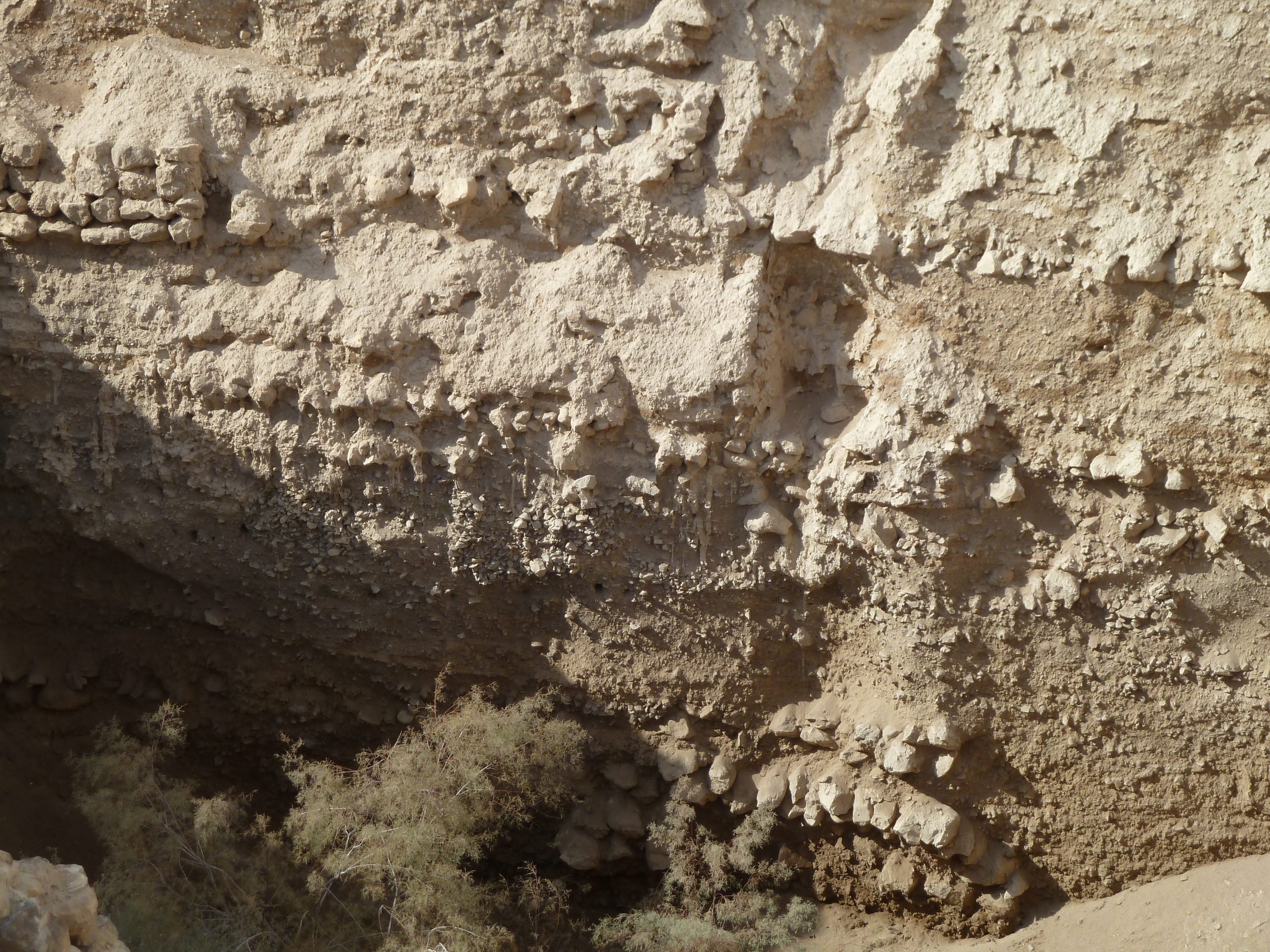
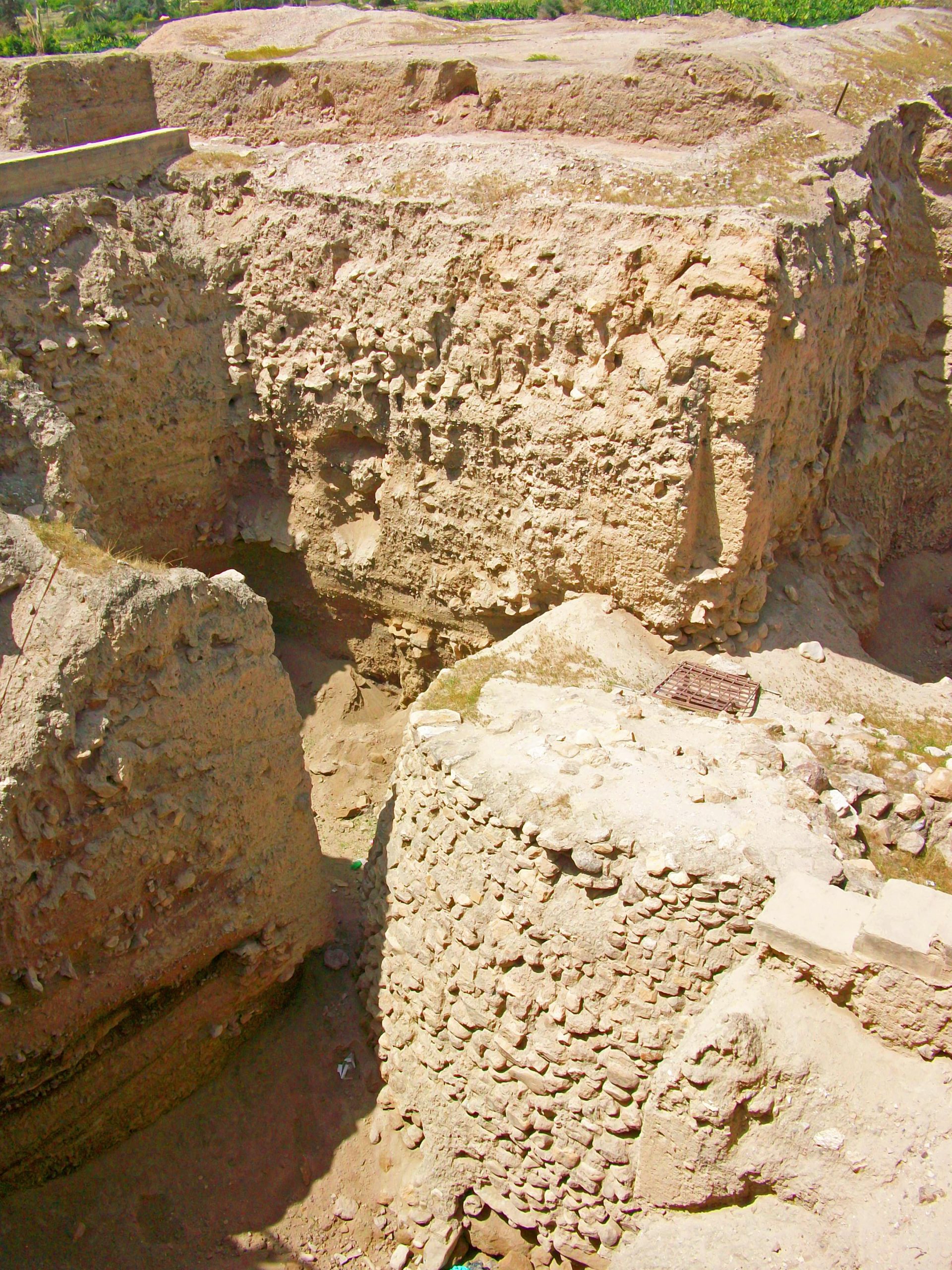
Here’s where Jericho stops being merely old and becomes genuinely astonishing. Around 8000 BC, in the Pre-Pottery Neolithic period, the people of Jericho did something nobody, as far as we know, had ever done before. They built a massive stone wall around their settlement, along with a huge circular stone tower attached to it. We’re talking about a structure roughly ten thousand years old, built by people who didn’t even have pottery yet, let alone metal or writing.
The tower alone is breathtaking. It stood around eight meters high, built of stacked stone, with an internal staircase winding up through its core. Picture that for a second: a Stone Age community organizing itself to quarry, haul, and stack thousands of tons of rock into a tower taller than a two-story house, complete with a built-in staircase, ten thousand years ago. Whatever its purpose, whether defense, flood protection, a ceremonial landmark, or a symbol of communal power, it represents an enormous leap in human cooperation and ambition.
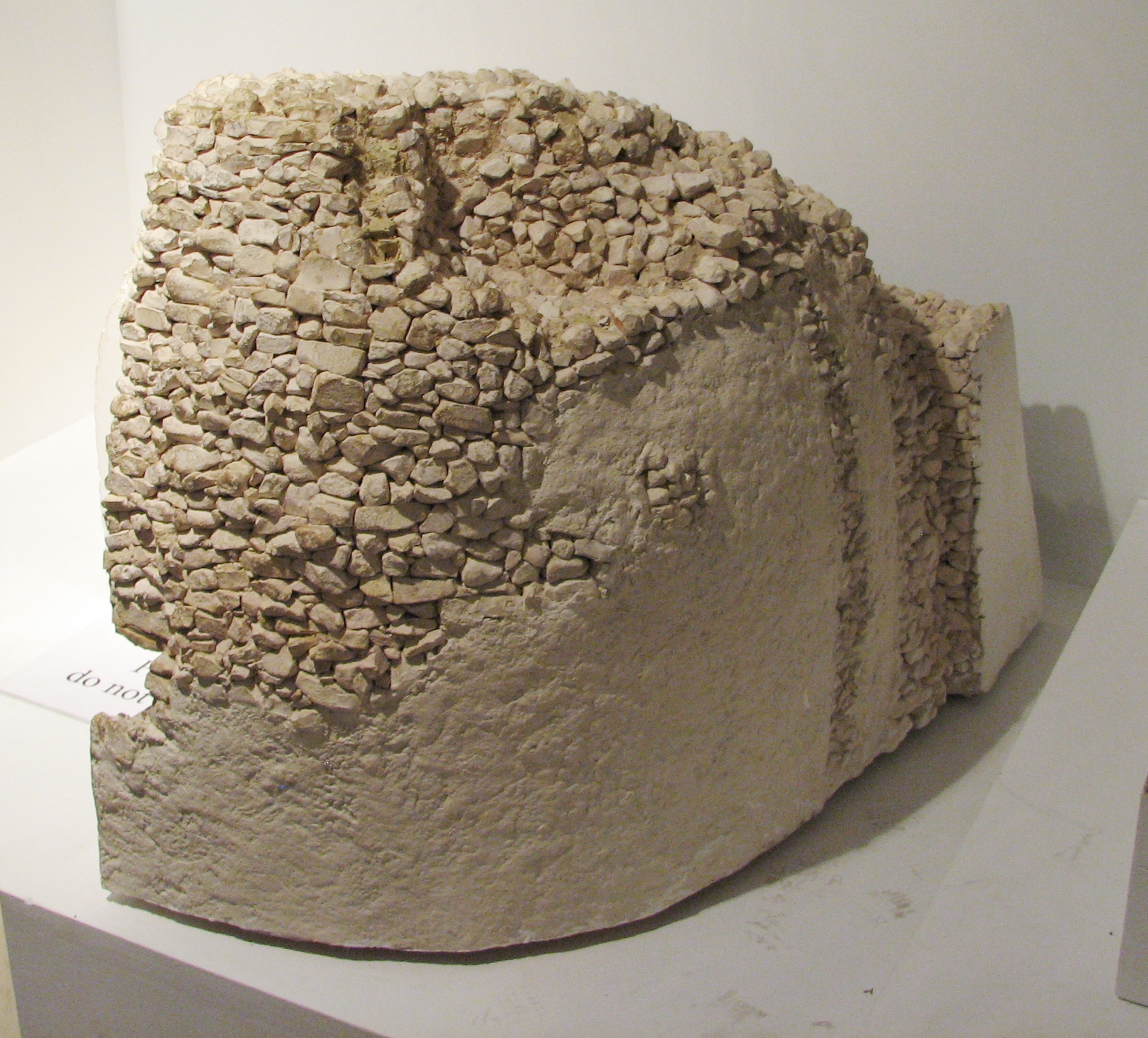
This is part of why Jericho matters so much to archaeologists. It shows people taking the very first steps from scattered villages toward something that looks like organized, communal, urban life. The wall and tower aren’t just impressive engineering. They’re evidence of a community thinking and acting as one, planning for the long term, and reshaping their world on a scale never seen before.
The haunting plastered skulls
Some of the most powerful objects ever found at Jericho are also among the strangest and most moving. The Neolithic people here had a remarkable custom for honoring their dead. They would take the skull of a deceased relative, cover it in plaster, and carefully model the person’s face back onto the bone, sculpting cheeks, a nose, and a mouth. For the eyes, they often pressed in shells, giving the faces a quiet, watchful gaze.
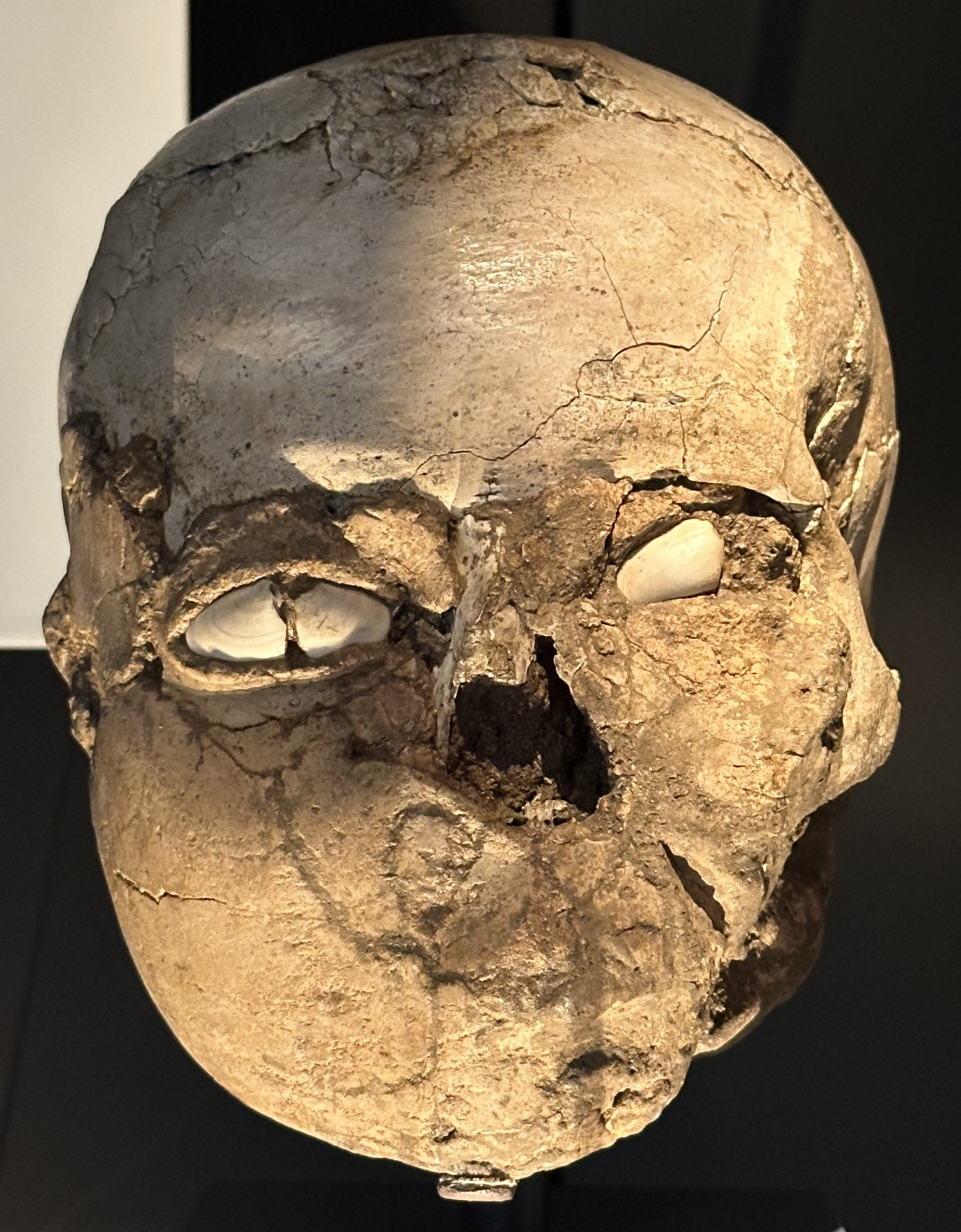
These plastered skulls are roughly nine thousand years old, and they are some of the earliest portraits in human history. Think about what they reveal. These were people who loved their families, who refused to let go of them entirely at death, who wanted to keep their ancestors close, present, and recognizable. The skulls were often kept in homes rather than buried away. When you look into those shell eyes, across ninety centuries, you’re meeting grief and love and memory that feel utterly familiar. That, to me, is the real time machine. Not the stones, but the feelings.
What about the famous walls and the trumpet story?
For a lot of people, Jericho means one thing: the Biblical story of the walls coming tumbling down at the sound of trumpets. It’s a vivid, unforgettable tale. So what does the archaeology actually say? This is where we have to be careful and honest, because it’s a genuinely debated topic.
Jericho really did have impressive walls at various points in its history, and excavations have found collapsed and burnt layers from different eras. But pinning the dramatic Biblical event to a specific archaeological layer has proven difficult and contentious. The famous excavator Kathleen Kenyon, who dug here in the 1950s, concluded that the city was largely unoccupied or in ruins during the period many associate with that story, which doesn’t line up neatly with the account. Other researchers read the evidence differently. The respectful, accurate thing to say is this: Jericho is a very real and very ancient walled city, its history is rich and complicated, and exactly how the famous story relates to the physical ruins remains an open and much-argued question. The truth, as so often, is more tangled and more interesting than the legend.
A city built on itself, again and again
What I find almost dizzying about Jericho is its sheer endurance. This wasn’t one city. It was dozens of cities, each rising on the rubble of the last, on the very same spot, for thousands upon thousands of years. Neolithic farmers, Bronze Age townsfolk, later peoples through antiquity and beyond, all of them drank from the same spring and added their own layer to the mound.
When you grasp that continuity, the place transforms in your mind. It stops being a ruin and becomes something closer to a living record of the entire human journey from village to city. Few places on Earth let you stand on a single hill and know that humans have been making homes, raising children, burying their dead, and rebuilding right there, in an unbroken thread, since the dawn of farming itself.
The spring that made it all possible
It’s worth lingering on that spring, because it really is the hidden hero of the whole story. In a hot, dry valley well below sea level, a steady source of fresh water is the difference between a thriving town and bare desert. The Ain es-Sultan spring gave Jericho something almost no other early settlement had: a guaranteed, year-round water supply that didn’t depend on unreliable rain. That single gift of geography is what allowed people to stop wandering and commit to one place, century after century.
And that’s a pattern you see again and again at the dawn of civilization. The earliest great settlements cluster around dependable water, in river valleys and beside springs, because water is what lets a community grow food, stay put, and grow large enough to start building walls and towers and shared customs. Jericho is almost a textbook example of how a quirk of the landscape can quietly steer the entire course of human history. Take away that one spring, and there is no oldest city, no oldest wall, no plastered skulls. Just an empty stretch of valley. Sometimes the grandest human achievements rest on the simplest natural luck.
Why Jericho stays with you
Jericho doesn’t dazzle the way a towering pyramid or a giant stone circle does. There’s no single jaw-dropping silhouette on the horizon. Its power is quieter and, in a way, deeper. It’s the power of continuity, of a place where the human story simply never stopped. The oldest wall in the world is here. The oldest tower. Some of the oldest portraits ever made. And underneath it all, that patient spring, still flowing, still drawing life to the same green patch of valley it always has.
Stand on that mound and you’re standing at one of the true starting points of civilization, a place where our ancestors first figured out how to gather in large numbers, build for the future, and hold onto the people they loved even after death. Eleven thousand years later, we’re still doing all of those same things. Jericho is the long, unbroken proof that, at heart, we haven’t changed nearly as much as we think.
Related reading on this site: This article is part of a series on the world’s oldest sites. You might also enjoy Çatalhöyük, the 9,000-year-old town with no streets, Göbekli Tepe, the world’s oldest temple, Stonehenge, and Newgrange. Don’t miss the megalithic temples of Malta, older than the pyramids. See also Skara Brae, the Scottish Pompeii. And discover Uruk and Sumer, the first cities and the birth of writing. Also explore Karahan Tepe, the sister of Göbekli Tepe. Browse more under Ancient History and Archaeology.
See also: Mohenjo-daro: The 4,500-Year-Old City That Was Centuries Ahead of Its Time.
See also: Liangzhu: The 5,000-Year-Old Water City That Rewrote China’s History.
And on the far side of the world, you can meet Caral, the oldest city in the Americas, which rose in the Peruvian desert at the very same time as the pyramids of Egypt.
And on the island of Crete you can explore Knossos, the Minoan palace behind the myth of the Minotaur, the labyrinthine home of Europe’s first great civilization.
And out in the salt deserts of India, you can discover Dholavira, the Indus city that beat the desert with water engineering.
And nothing quite prepares you for Nan Madol, a megalithic city floated into place on a Micronesian reef. And nothing quite prepares you for Chavin de Huantar, where architecture itself was engineered to overwhelm. And few places rival Cucuteni-Trypillia, where thousands lived together apparently without kings. And few sites unsettle like Cerro Sechin, an early Andean temple faced with hundreds of carved stones. And few sites surprise like Poverty Point, built by North American foragers over 3,000 years ago. The same urge to build, trade, and connect turns up thousands of miles away at Sarazm in the Zravshan valley. If origins fascinate you, take a detour to Mehrgarh, a 9,000-year-old farming village near the Bolan Pass. If early cities fascinate you, take a detour to Tell Brak, a rival to Uruk in the Mesopotamian north. It is well worth visiting Aşıklı Höyük, the Anatolian village that pioneered a whole way of life, too. It is well worth visiting Jiahu, the Neolithic Chinese village of flutes, rice and mysterious symbols, too. It is well worth visiting Chankillo, the ancient Peruvian calendar written in stone and sunlight, too. See also Kalibangan, the Rajasthan mound that farmed a river, survived a quake, and left the oldest ploughed field on Earth. See also the Cairn of Barnenez, whose eleven stone chambers predate Egypt’s pyramids by millennia. See also Vinča, one of the most advanced cultures of Neolithic Europe. See also Gavrinis, whose walls of engraved stone are unlike anything else in the Neolithic world. The deep past continues at Los Millares, a fortified Copper Age town at the edge of Europe. The same reaching-for-permanence runs through Bougon, a cluster of ancient French burial mounds well worth meeting. It sits well beside the story of Almendres, a Portuguese stone circle built eight thousand years ago. It pairs beautifully with the story of Ġgantija, a temple older than the pyramids themselves. It pairs beautifully with the story of Knowth, a five-thousand-year-old tomb in the heart of Ireland. It pairs beautifully with the story of Tarxien, Malta’s most elaborate temple, carved over five thousand years ago. It pairs beautifully with the story of Mnajdra, a coastal temple older than the pyramids and aligned with the sun. The clifftop sanctuary of Ħaġar Qim offers yet another window onto the world of the first builders. The brooding tomb of Dowth offers yet another window onto the world of the first builders. The great stone rows of Carnac offer yet another window onto the world of the first builders. The remote ring of Callanish offers yet another window onto the world of the first builders. The stone warriors of Filitosa offer yet another window onto the world of the first builders. The clifftop stone ship of Ale’s Stones offers yet another window onto the monuments of the deep past.
You May Like
The Bardo, a Palace of the Beys Filled With Roman Mosaics


8 thoughts on “Jericho: The World’s Oldest City and Its 10,000-Year-Old Wall”