Once a year, on the shortest day of winter, something quietly magical happens inside a grassy mound in the Irish countryside. As the sun creeps over the horizon at dawn, a thin blade of golden light slips through a small opening above the doorway, travels down a long stone passage, and slowly fills a pitch-black chamber that has sat in darkness all year. For about seventeen minutes, the heart of the tomb glows. Then the light withdraws, and the dark returns for another twelve months. The astonishing part? The people who built this to catch the solstice sunrise did it more than five thousand years ago. This is Newgrange, and it is older than the Egyptian pyramids and older than Stonehenge.
In this article:
What exactly is Newgrange?
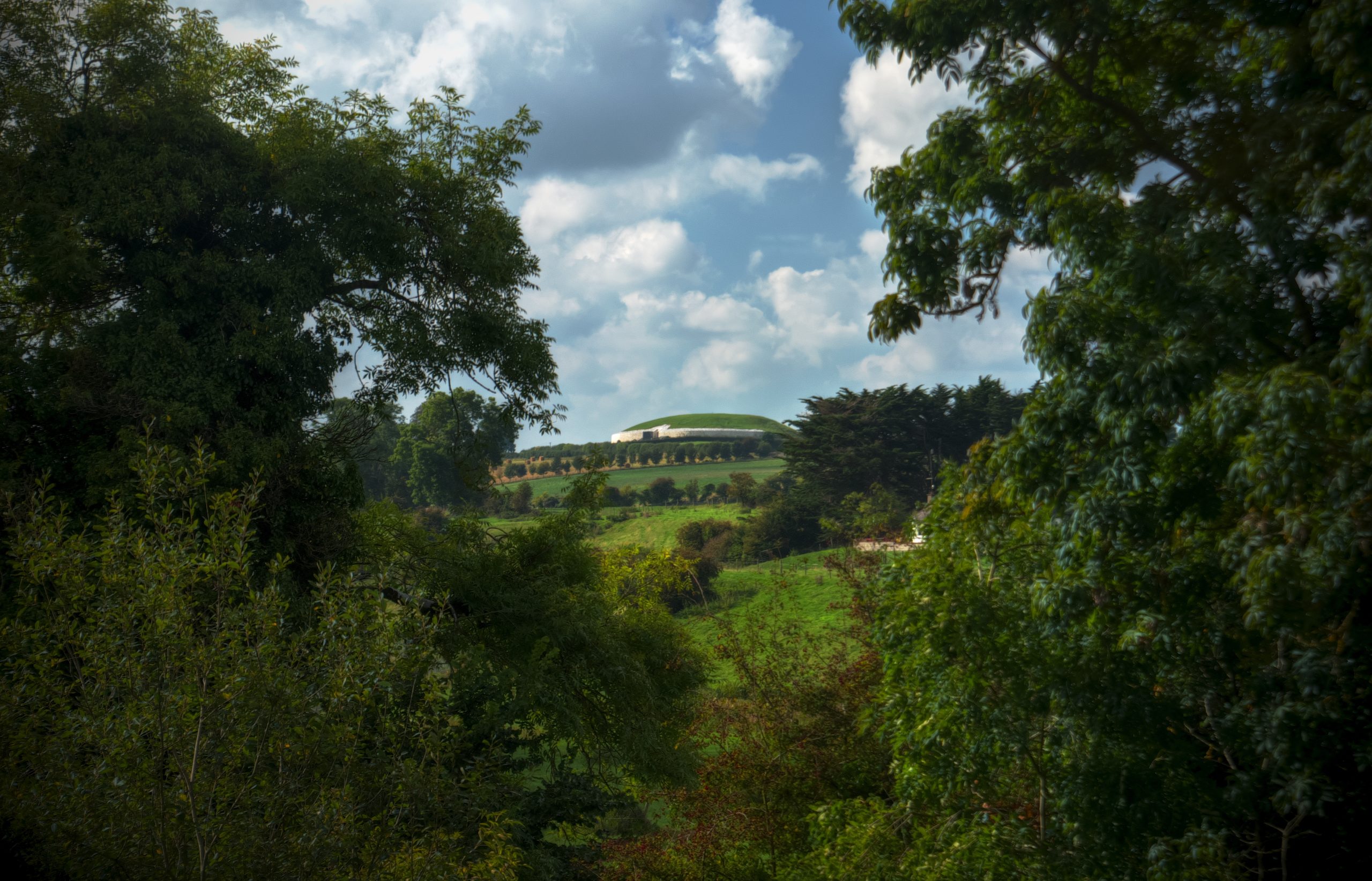
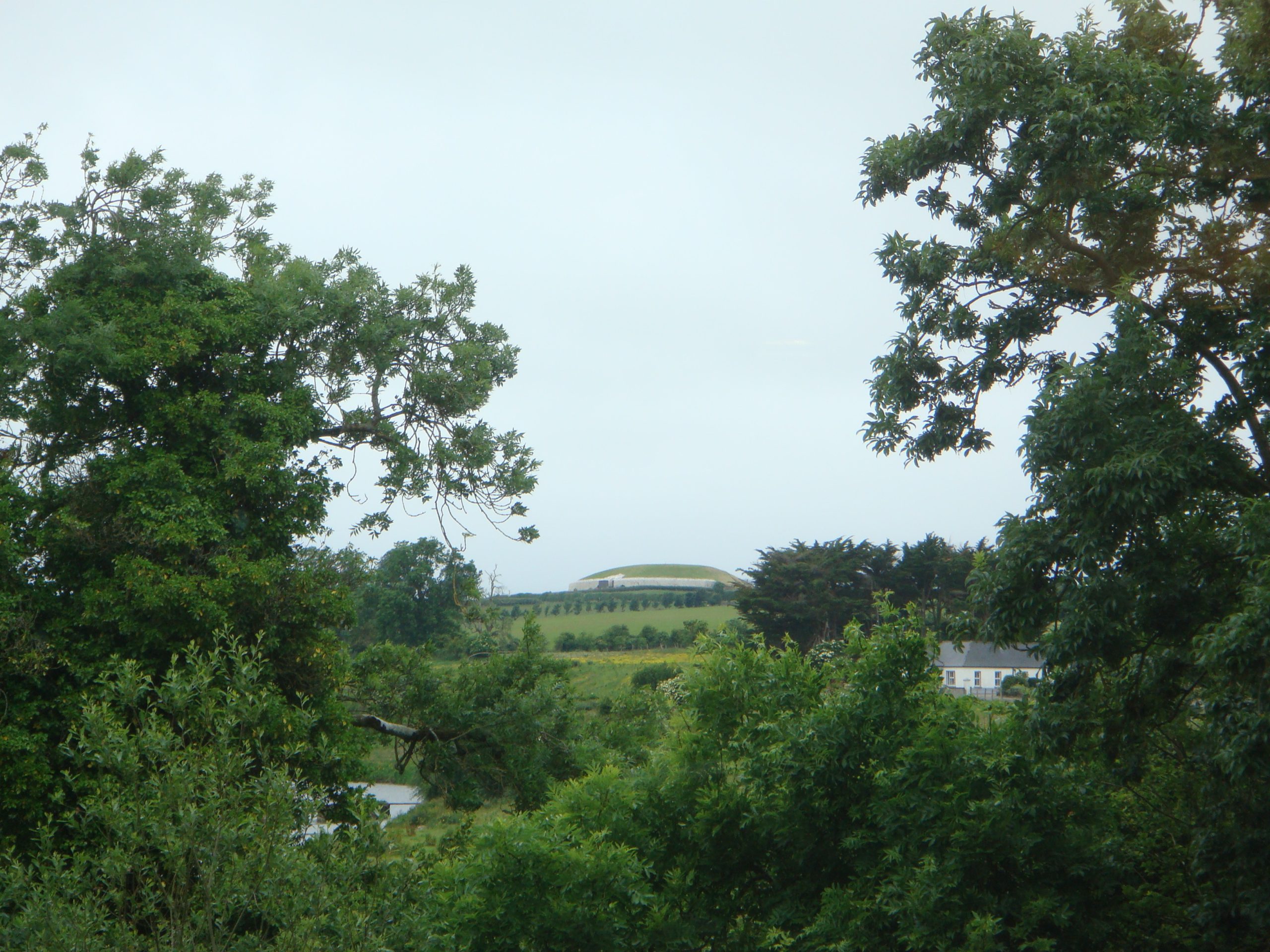
Newgrange is a vast prehistoric monument in the Boyne Valley, in County Meath, Ireland. Archaeologists call it a “passage tomb,” and it was built around 3200 BC, in the Neolithic period, the late Stone Age. Picture a great circular mound of earth and stone, roughly eighty-five meters across and around thirteen meters high, ringed at its base by enormous kerbstones, many of them carved with swirling designs. Set into one side is a single low entrance leading into a narrow stone passage that runs deep into the mound and opens into a cross-shaped chamber.
The whole thing covers about an acre. The bright white wall of quartz you see at the entrance today is a modern reconstruction, and not everyone agrees it looked exactly that way, but it gives a sense of how dramatic and deliberately eye-catching the monument was meant to be. Whatever its precise original appearance, this was a colossal undertaking, built by a farming society without metal tools, wheels, or writing.
The winter solstice miracle
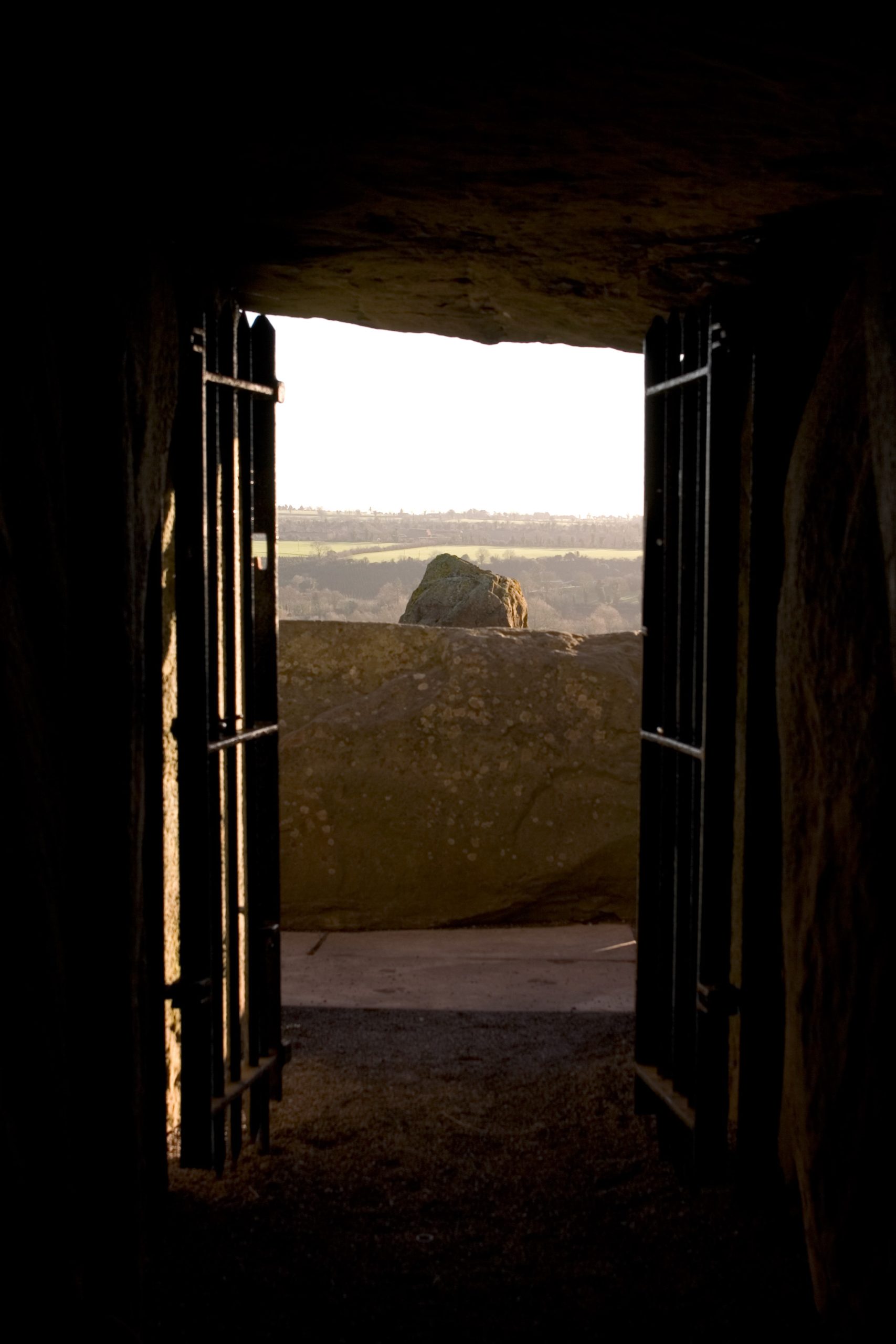
The feature that makes Newgrange world-famous is its alignment with the rising sun on the winter solstice, around December 21st. Above the main entrance there’s a deliberately built opening, often called the “roof-box.” For a few mornings around midwinter, if the sky is clear, the rising sun shines straight through that little box, down the nineteen-meter passage, and lights up the inner chamber.
Think about what that required. To capture the sun at exactly the right moment of the year, the builders needed a working understanding of the sun’s yearly cycle, the patience to track it across seasons, and the engineering skill to align a heavy stone passage with that single fleeting event, then build a mound on top without losing the alignment. They got it right five thousand years ago, and it still works today. That is not luck. That is knowledge, carefully gathered and carefully built into stone.
For our ancestors, the winter solstice was a moment of real weight. It was the darkest point of the year, the turning of the season, the promise that the light, and life, would return. A monument built to literally capture that returning light feels like one of the most beautiful ideas humans have ever had. It’s a five-thousand-year-old message about hope at the depth of winter, written in stone and sunlight.
The mysterious carvings
Newgrange is covered in some of the finest Neolithic rock art in all of Europe. The most famous is the great entrance stone, a massive slab lying across the doorway, carved with bold spirals, diamonds, and zigzags. The standout image is a triple spiral, three coils interlocked, a design so striking that it has become almost a symbol of ancient Ireland itself.
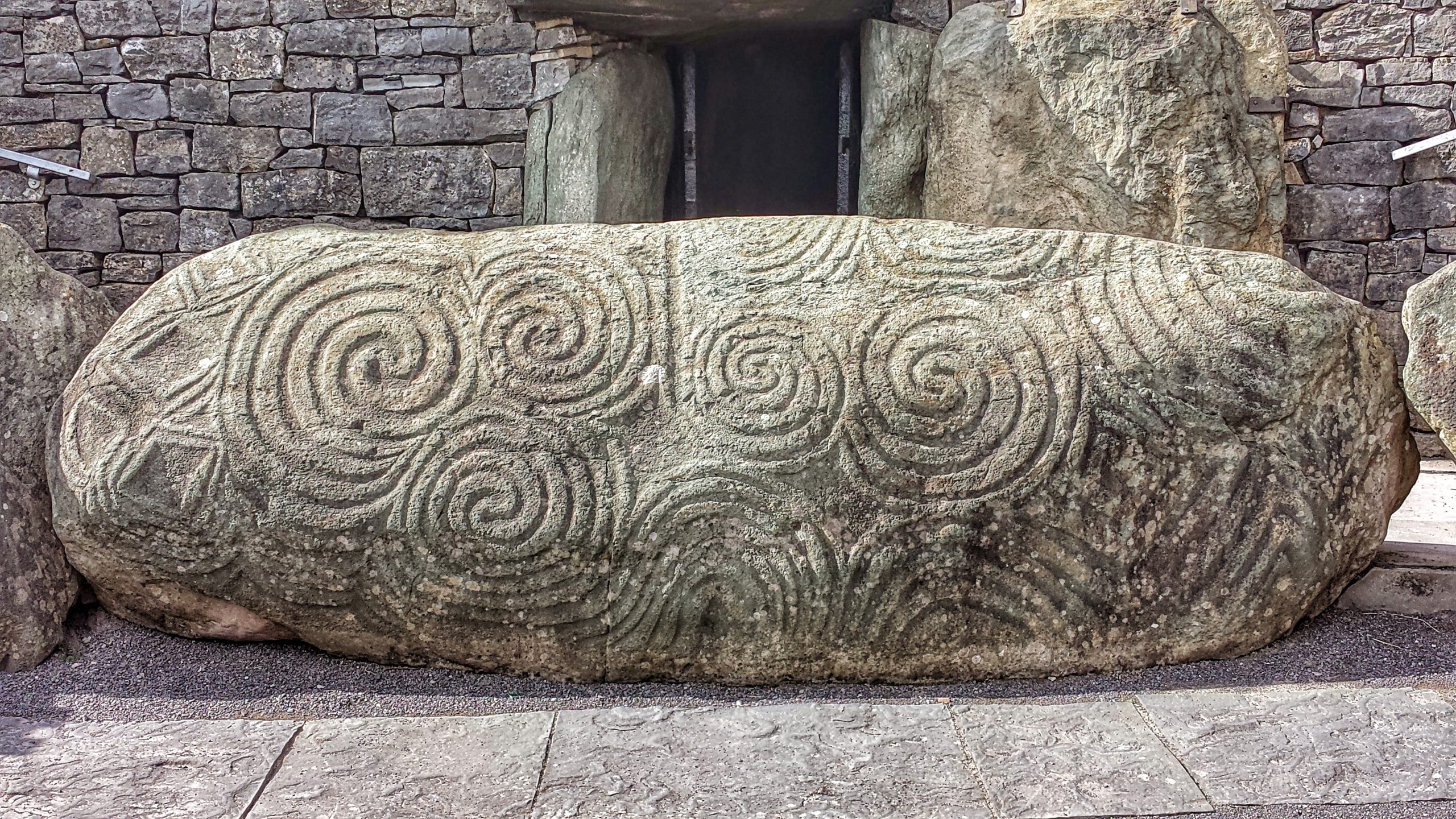
What do the carvings mean? Honestly, we don’t know. They might represent the cycles of the sun and moon, the journey of the soul, the seasons, water, or ideas we simply can’t recover. Some appear only on hidden surfaces that no one would normally see, which deepens the mystery. It’s tempting to invent confident explanations, but the truth is more humbling and, I think, more wonderful. People five thousand years ago had a rich symbolic language we can admire but not fully read. We’re looking at their deepest thoughts and can only guess at the words.
Inside the chamber
At the end of the passage, the chamber opens into three recesses arranged in a cross shape. Above it rises a corbelled roof, built by laying stones in overlapping rings that gradually close inward to form a dome, without any mortar holding them together. It has kept the inner chamber bone dry for over five thousand years, an extraordinary feat of waterproof engineering using nothing but carefully placed stone.
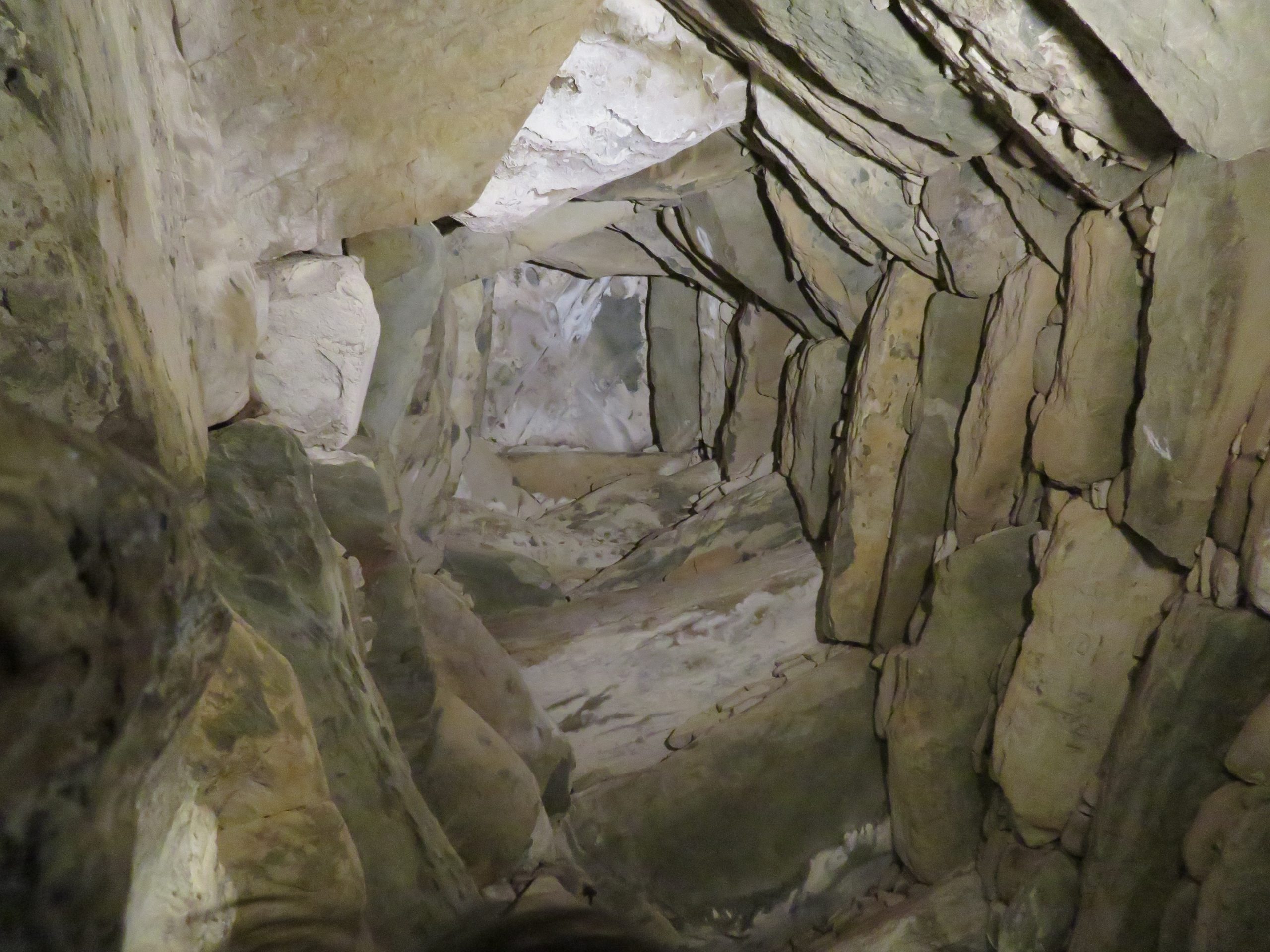
Inside the recesses sat large stone basins, and excavations found the cremated and unburnt remains of a number of people, along with beads, pendants, and other objects. So Newgrange was, among other things, a place for the dead. But calling it merely a “tomb” probably undersells it. With its solar alignment and lavish carvings, it was surely also a temple, a ceremonial center, a place where the living gathered to connect with their ancestors and with the great cycles of the cosmos.
Part of a bigger sacred landscape
Newgrange doesn’t stand alone. It’s the most famous of a cluster of monuments in the Boyne Valley known together as Brú na Bóinne, which includes two other huge passage tombs, Knowth and Dowth, plus many smaller sites. Knowth alone holds an incredible collection of carved stones, perhaps the largest concentration of megalithic art in Europe. Together these monuments turned a loop of the River Boyne into one of the great ceremonial centers of the ancient world, a place people clearly returned to for generations.
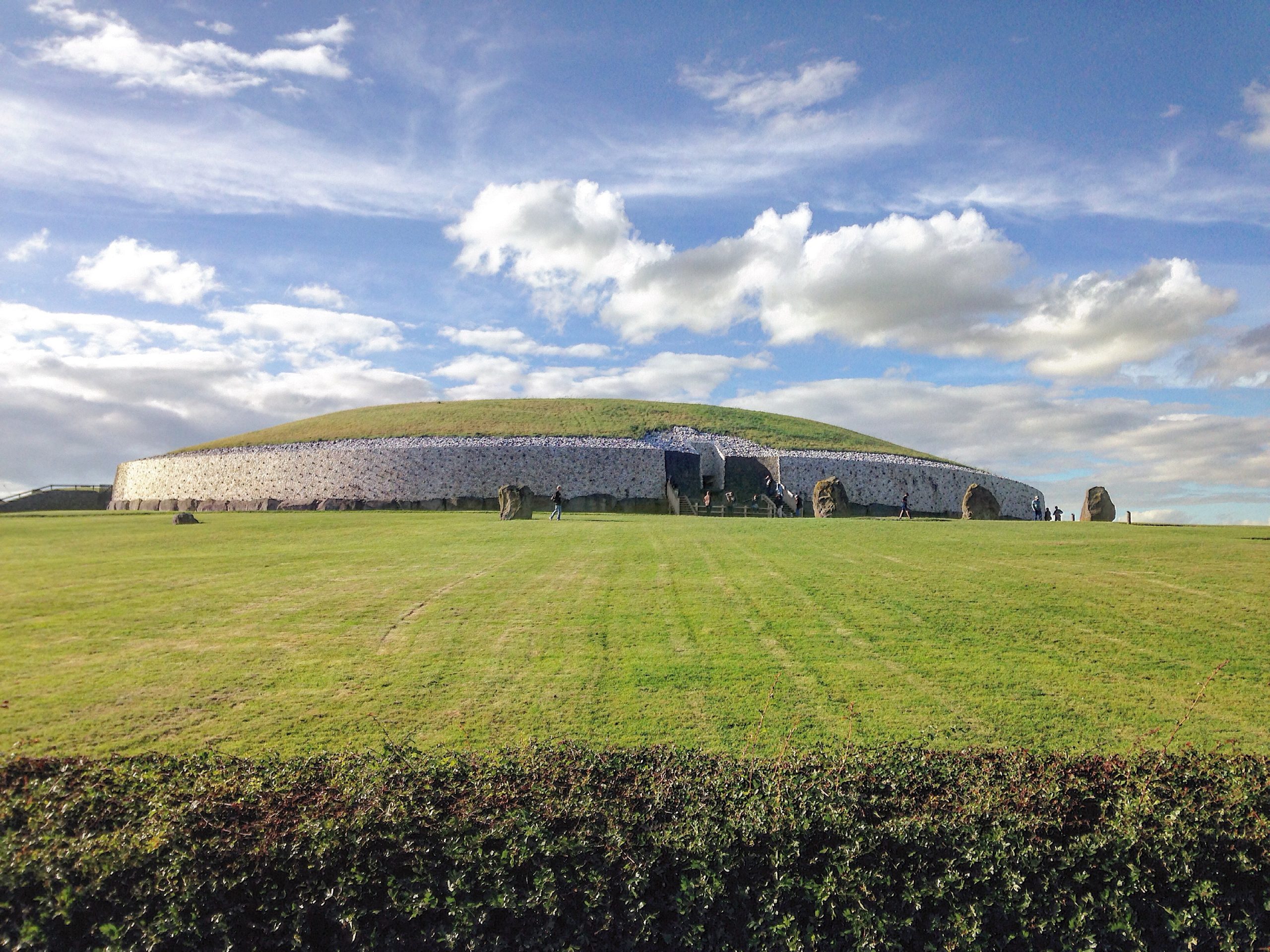
The whole Brú na Bóinne complex became a UNESCO World Heritage Site in 1993. Today you can visit through a dedicated center, and there’s even an annual lottery for the lucky few who get to stand inside the chamber at the winter solstice and watch the sunrise creep down the passage, just as people did five thousand years ago.
Lost, rediscovered, and almost misunderstood
Like many ancient wonders, Newgrange spent long centuries half-forgotten. Over thousands of years the mound slumped and grassed over until it looked like little more than a natural hill with some big stones around it. In local folklore it became tangled up with Irish myth, imagined as a home of the old gods and the legendary Tuatha Dé Danann, which is a lovely afterlife for a monument whose real purpose had been forgotten.
It was rediscovered in 1699 when a landowner, quarrying for stone, stumbled onto the entrance and the passage within. For a long time afterwards people had all sorts of mistaken ideas about who built it, often crediting later cultures and refusing to believe that prehistoric Irish farmers could have achieved something so sophisticated. Serious excavation and study in the twentieth century, especially the work led by archaeologist Michael O’Kelly in the 1960s and 70s, finally set the record straight. It was O’Kelly who, in 1967, became the first person in perhaps thousands of years to stand in the chamber and watch the winter solstice sun come down the passage. Imagine being the one to confirm that the alignment was real, that the builders had meant it all along. What a moment that must have been.
It’s worth pausing on the sheer scale of the effort, too. Estimates suggest building Newgrange would have taken a large workforce many years, and the materials came from far and wide. The water-rolled quartz and granite cobbles at the front were carried from distant parts of the Irish coast and mountains, the big structural stones dragged from quarries miles away. This wasn’t a quick project by a handful of people. It was a multi-generational commitment by a whole society, an investment of labor on a staggering scale for a community of early farmers. They believed in this place enough to give it years of their lives. That kind of devotion, aimed at the sky and the dead, tells you these were people with deep convictions about the world and their place in it.
Why Newgrange takes my breath away
It’s easy to think of Stone Age people as simple. Newgrange dismantles that idea completely. These were folk who understood the heavens well enough to pin a monument to a single sunrise, who could quarry and move stones weighing many tons, who built a waterproof stone roof that still holds, and who poured profound meaning into spirals we’re still puzzling over. They did all of it with stone tools, rope, timber, and astonishing collective will, centuries before the pharaohs raised a single pyramid.
And at the center of it all is that simple, deeply human gesture: building something to catch the returning light on the darkest morning of the year. Across fifty centuries, through the rise and fall of empires they could never have imagined, that beam of midwinter sun still slides down the passage and lights up the dark. There are very few things humans have made that have kept their promise for so long. Newgrange is one of them, and I find that almost unbearably moving.
Related reading on this site: This article is part of a series on the world’s oldest sites. You might also enjoy Stonehenge: how and why it was really built, Göbekli Tepe, the world’s oldest temple, and Çatalhöyük, the 9,000-year-old town with no streets. You might also like Jericho, the world’s oldest city and the world’s oldest cave paintings. Don’t miss the megalithic temples of Malta, older than the pyramids. See also Skara Brae, the Scottish Pompeii. And discover Uruk and Sumer, the first cities and the birth of writing. Also explore Karahan Tepe, the sister of Göbekli Tepe. Browse more under Ancient History and Archaeology.
See also: Mohenjo-daro: The 4,500-Year-Old City That Was Centuries Ahead of Its Time.
See also: Liangzhu: The 5,000-Year-Old Water City That Rewrote China’s History.
And on the far side of the world, you can meet Caral, the oldest city in the Americas, which rose in the Peruvian desert at the very same time as the pyramids of Egypt.
And on the island of Crete you can explore Knossos, the Minoan palace behind the myth of the Minotaur, the labyrinthine home of Europe’s first great civilization.
And out in the salt deserts of India, you can discover Dholavira, the Indus city that beat the desert with water engineering.
It pairs well with Nan Madol, the astonishing reef-built city of the western Pacific. For something stranger still, meet Chavin de Huantar and its fanged god carved in stone. For a very different kind of early town, meet Cucuteni-Trypillia and its wheel-shaped cities. For something starker still, meet Cerro Sechin and its wall of carved warriors. For a monument that rewrites the rules, meet Poverty Point and its concentric earthen ridges. If unexpected places intrigue you, do not miss Sarazm, the ancient proto-city on a river plain in Tajikistan. The roots of settled life reach right back to Mehrgarh, the ancient village that seeded the Indus civilization. The question of where urban life truly began leads straight to Tell Brak, ancient Nagar. If early farming fascinates you, take a detour to Aşıklı Höyük, one of Anatolia’s oldest villages. If early creativity fascinates you, take a detour to Jiahu, home of the world’s oldest playable instruments. If you love monuments to the heavens, take a detour to Chankillo, the oldest solar observatory in the Americas. The story continues at Kalibangan, an Indus town rebuilt after what may be history’s earliest recorded earthquake. The story continues at the Cairn of Barnenez, a 75-metre Neolithic cairn on the Breton coast. The story reaches the Danube at Vinča, home to thousands of enigmatic clay figurines. The story reaches Brittany again at Gavrinis, sometimes called the Sistine Chapel of megalithic art. See also Los Millares, whose walls, bastions, and vast necropolis rose over five thousand years ago. You might also wander over to Bougon, one of the oldest surviving pieces of architecture anywhere on Earth. If standing stones speak to you, wander over to Almendres, a hillside of ancient granite near Évora. If giant stones fascinate you, step into Ġgantija, Malta’s colossal Neolithic temple complex. If carved stones fascinate you, step into Knowth, home to Europe’s richest megalithic art. If prehistoric art fascinates you, step into Tarxien, the richest of Malta’s Neolithic temple complexes. If ancient astronomy fascinates you, step into Mnajdra, Malta’s solar temple by the Mediterranean. You might also wander to Ħaġar Qim, where Neolithic builders raised twenty-tonne stones above the sea. You might also wander to Dowth, where a five-thousand-year-old mound still guards its dark chambers. You might also explore Carnac, where Neolithic farmers raised more than three thousand menhirs across the fields. You might also wander to Callanish, where thirteen ancient stones ring a towering monolith. You might also wander to Filitosa, whose carved menhirs bear faces, swords, and daggers. You might also sail your imagination to Ale’s Stones, a 67-metre ship of stone above the Baltic.
You May Like
Norse Explorers Reached Canada 500 Years Before Columbus


8 thoughts on “Newgrange: The 5,000-Year-Old Tomb Built to Catch the Solstice Sun”