Corsica is famous for its mountains, its beaches, and its fierce sense of independence. What far fewer people know is that tucked into a quiet valley in the island’s south lies one of the strangest and most haunting prehistoric sites in the Mediterranean: Filitosa. Here, among olive trees and granite outcrops, stand carved stone figures with faces, weapons, and an air of watchful menace, raised thousands of years ago by a people we barely understand.
I find Filitosa uniquely unsettling in the best way. Most megalithic sites give you abstract stones — circles, rows, mounds. Filitosa gives you something closer to portraits: statue-menhirs, upright stones carved with human features and, on some, the clear outlines of swords and daggers. These are not just markers. They feel like presences, and standing among them is an experience I have never quite shaken.
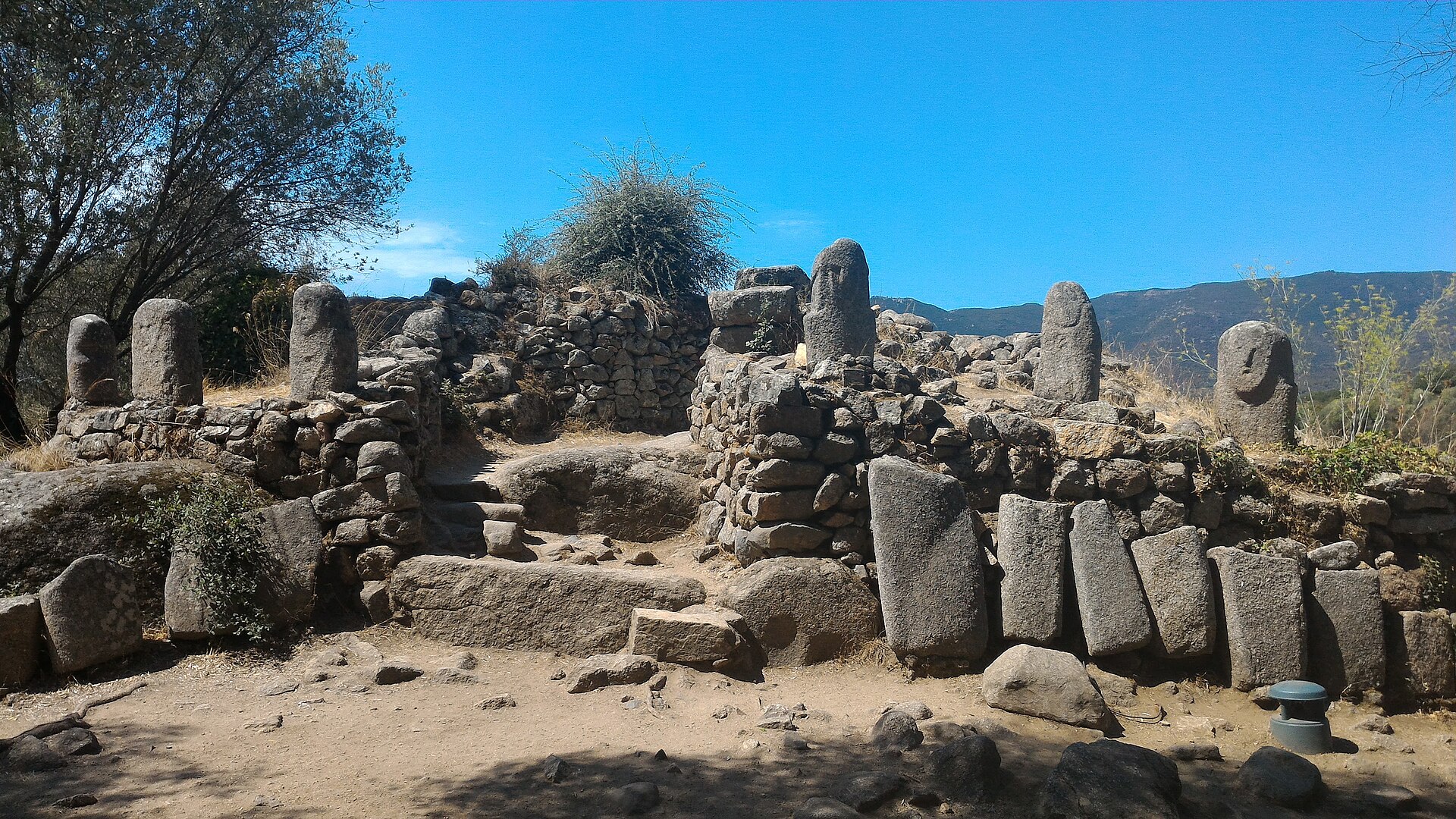
- A site hidden in the Corsican hills
- The statue-menhirs
- Faces, swords, and warriors in stone
- The central monument and its puzzle
- Who carved them?
- Lost and found again
- A timeline in stone
- The Torrean builders
- A wider tradition of carved figures
- What did they mean?
- The Taravo valley setting
- Weapons as a window on the age
- Preserving a private treasure
- The name and the island
- Filitosa in Corsica’s story
- Visiting Filitosa today
- Why Filitosa is unlike anywhere else
A site hidden in the Corsican hills
Filitosa sits in the valley of the Taravo, in the Sartenais region of southern Corsica, a landscape of rolling hills, cork oaks, and weathered granite. The site occupies a low rocky spur, easily defended and quietly commanding, the kind of place people have returned to again and again across the ages because it simply feels right to settle there.
And return they did. Filitosa was occupied, on and off, for thousands of years, from the Neolithic through the Bronze Age and beyond. Its story is not a single chapter but a whole stack of them, layered one on top of another, which is part of what makes the site so complex and so rewarding to unravel.
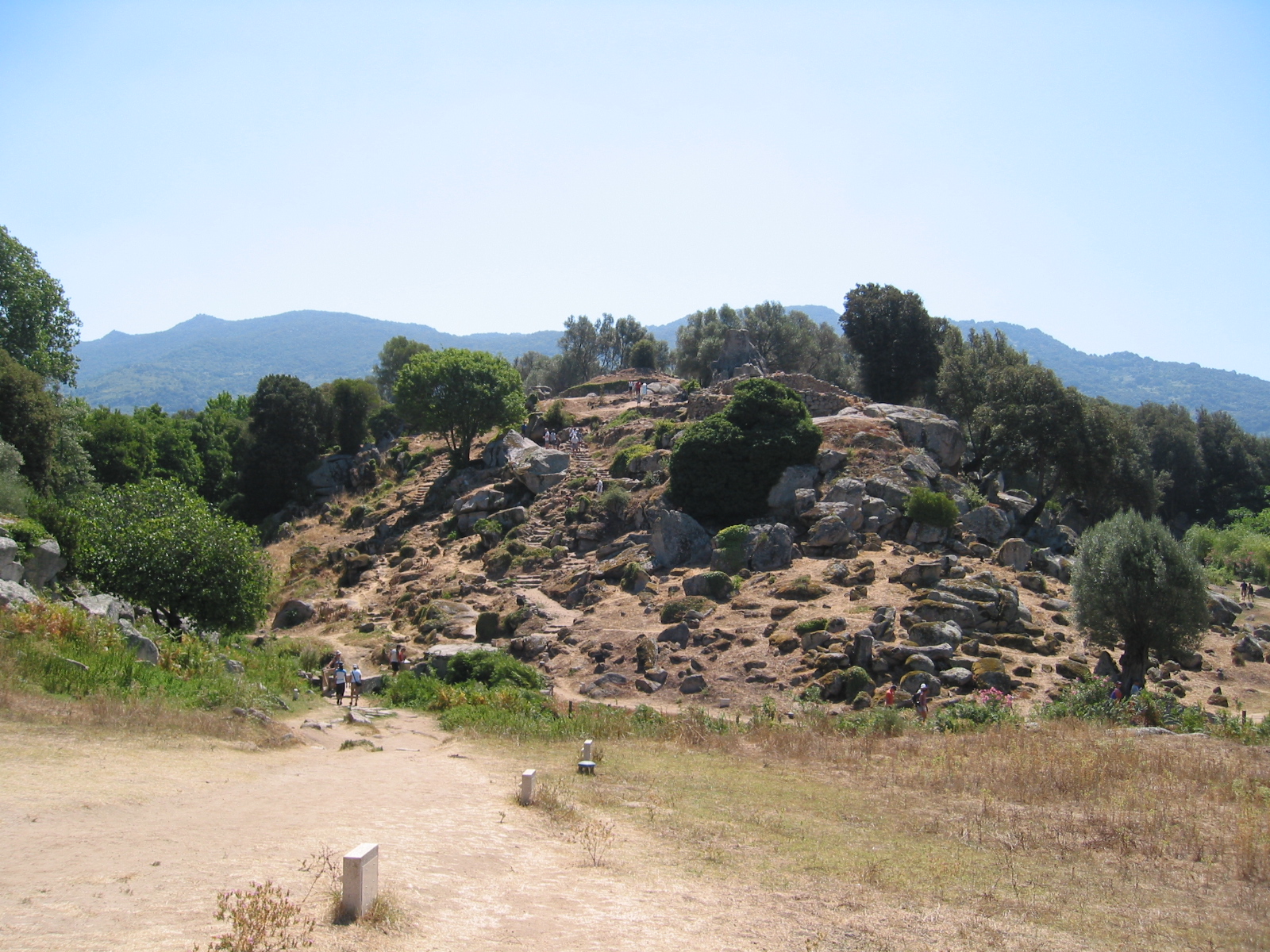
The setting still works its magic. Come in the soft light of morning or evening, with the olive trees casting long shadows and the granite glowing warm, and it is easy to see why this valley drew people for so long. Filitosa does not shout. It broods, quietly, among the hills.
The statue-menhirs
The glory of Filitosa is its statue-menhirs. A menhir is simply a standing stone; a statue-menhir is one carved to represent a human figure. Corsica, along with parts of southern France and Sardinia, produced some of the most remarkable of these anywhere, and Filitosa is their greatest showcase.
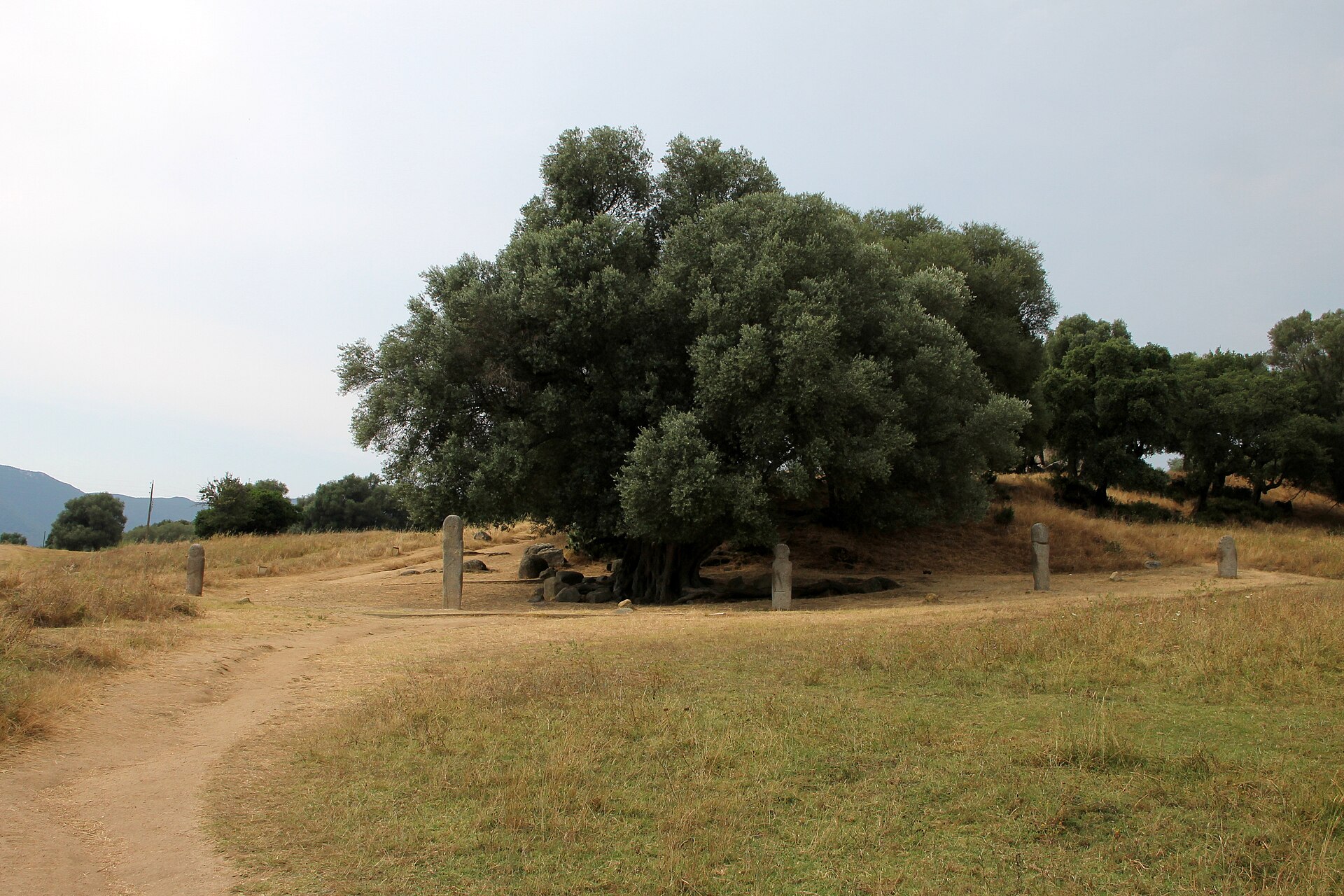
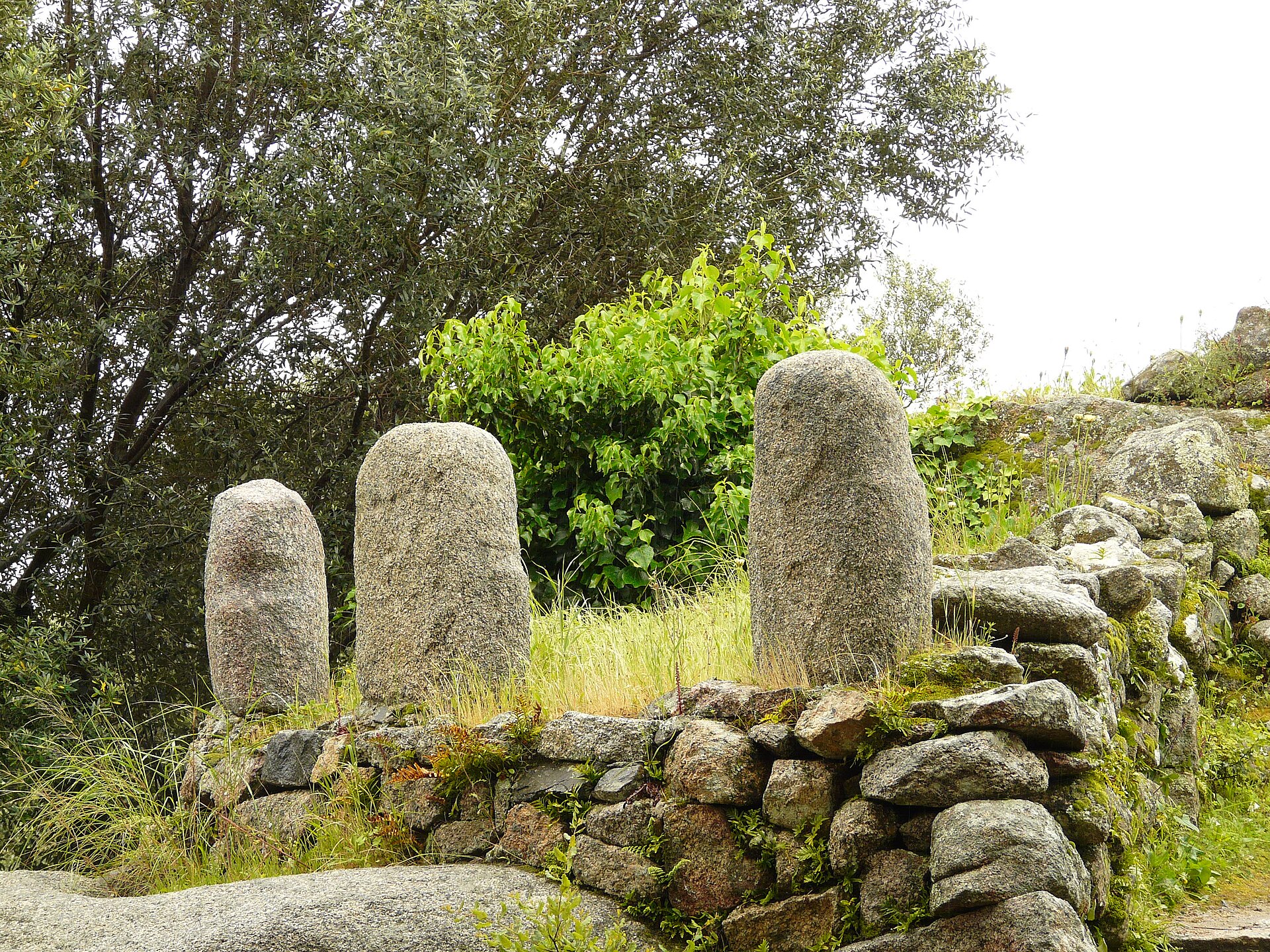
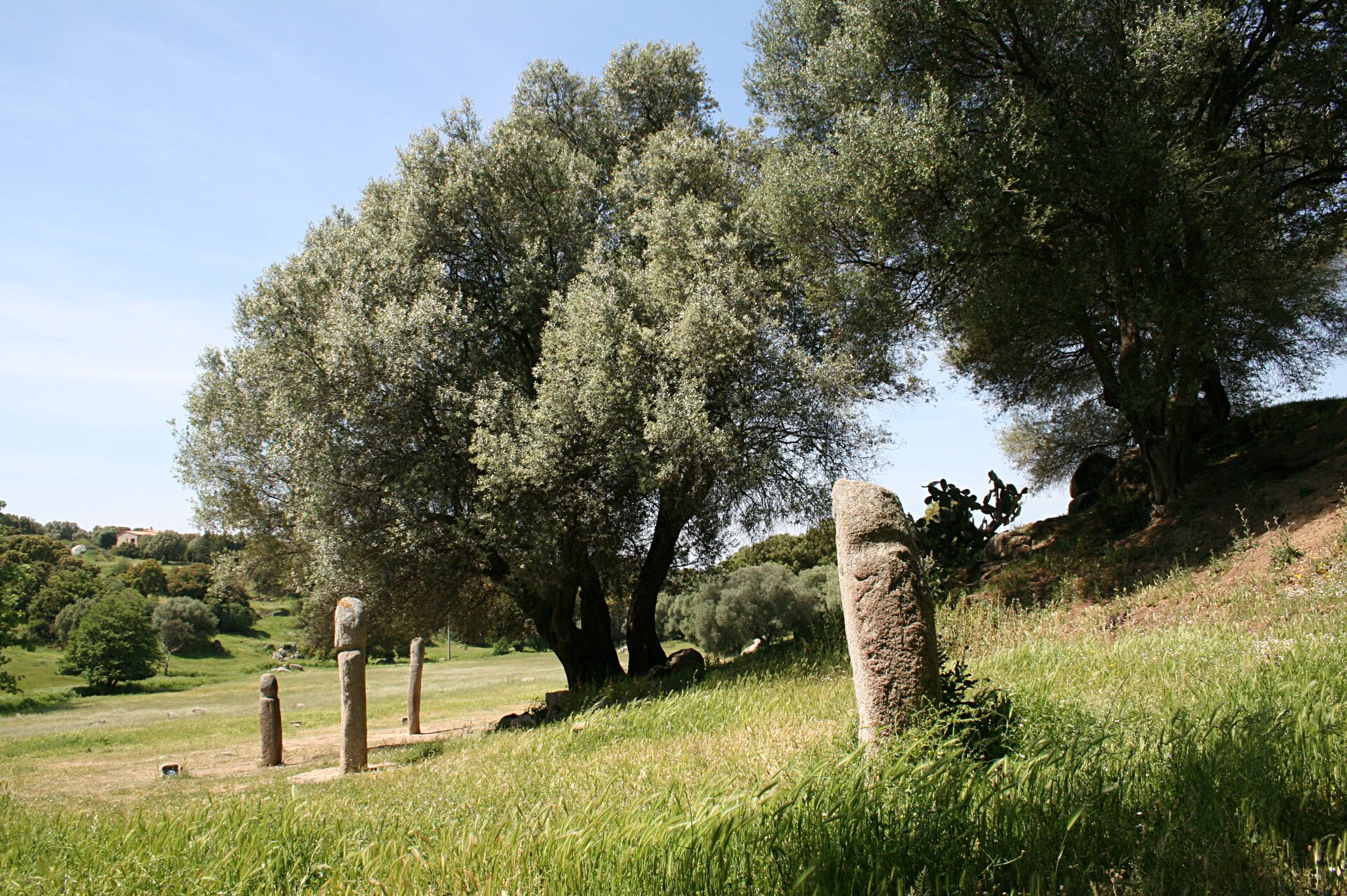
Several of the finest stand in a line beneath an ancient olive tree, a group that has become the emblem of the site. Others are set around the spur or gathered for study. They range from simple stones with a hint of a face to detailed figures with clearly rendered heads, features, and bodies. To walk among them is to feel watched by the deep past.
What sets the Filitosa figures apart is their individuality. These are not identical idols stamped from a template. Each has its own character, its own carving, its own presence, as if the makers intended them to be distinct persons rather than generic symbols.
Faces, swords, and warriors in stone
Some of the Filitosa statue-menhirs carry weapons. On the most famous, you can make out the outline of a sword hanging at the figure’s side and a dagger across its chest, carved in low relief into the granite. These armed figures have led many to interpret them as warriors, chieftains, or perhaps defeated enemies rendered in stone.
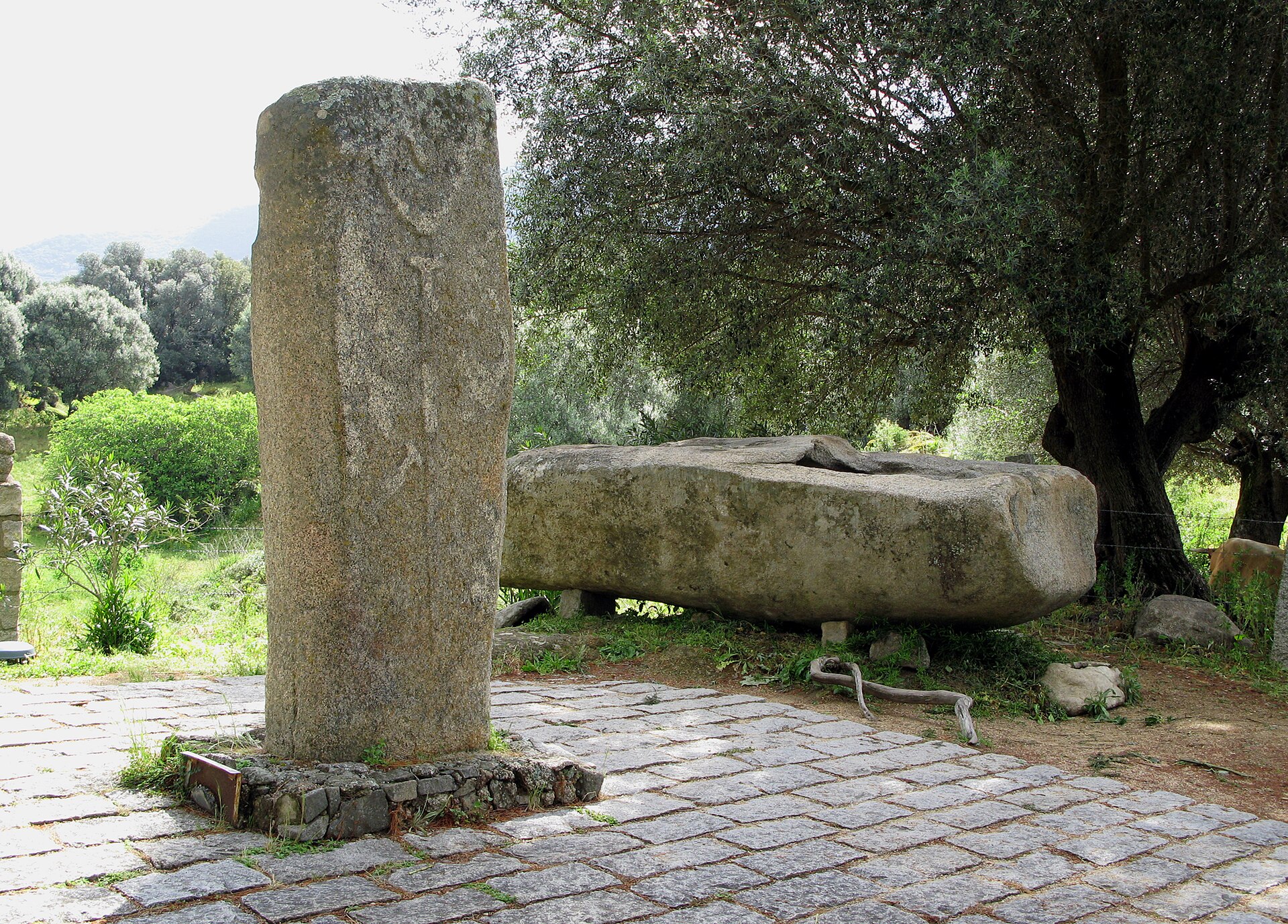
The weapons are more than decoration; they are clues. Their style can be compared with real Bronze Age weapons, helping archaeologists date the figures and connect them to the wider Mediterranean world of the second millennium BC. The stones, in other words, may be portraits of a warrior culture, carved by people who knew such weapons well.
There is a real tension in these figures, a sense of power and threat, that few prehistoric carvings match. Whether they honoured the dead, warded off enemies, or commemorated great warriors, they were clearly made by a society for whom conflict and status mattered a great deal.
The central monument and its puzzle
Here the story takes a strange turn. At the heart of Filitosa stands a later structure, a stone monument built in the Bronze Age — and its builders used broken statue-menhirs as raw material, incorporating fragments of the older carved figures into their walls.
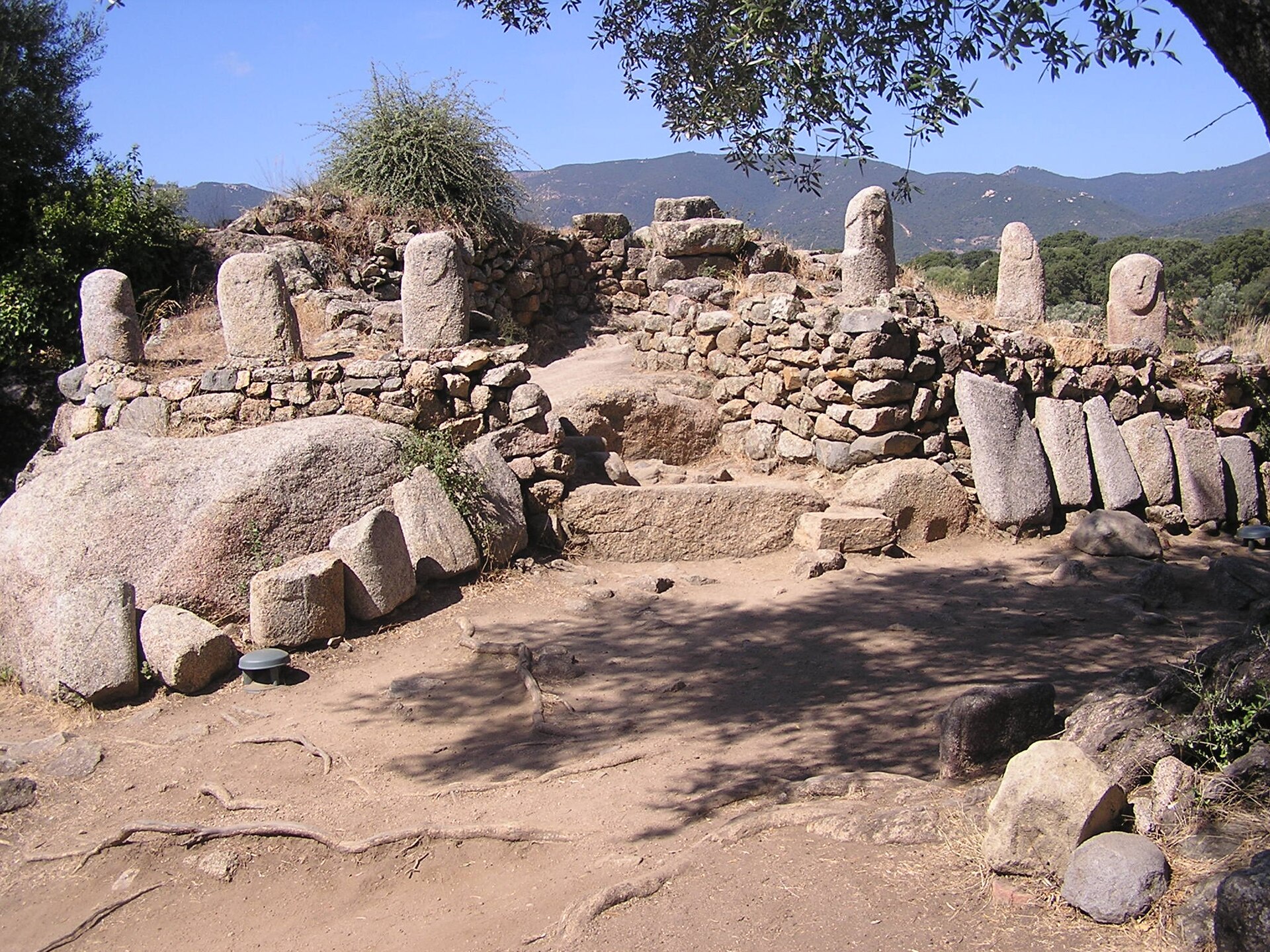
Think about what that means. A later people took the sacred figures of an earlier one, smashed them, and built them into a new structure. Was it conquest, the deliberate erasure of an enemy’s gods? Was it simple practicality, reusing good stone? Or a ritual act of transformation, folding the old power into the new? We do not know, and the ambiguity is tantalising.
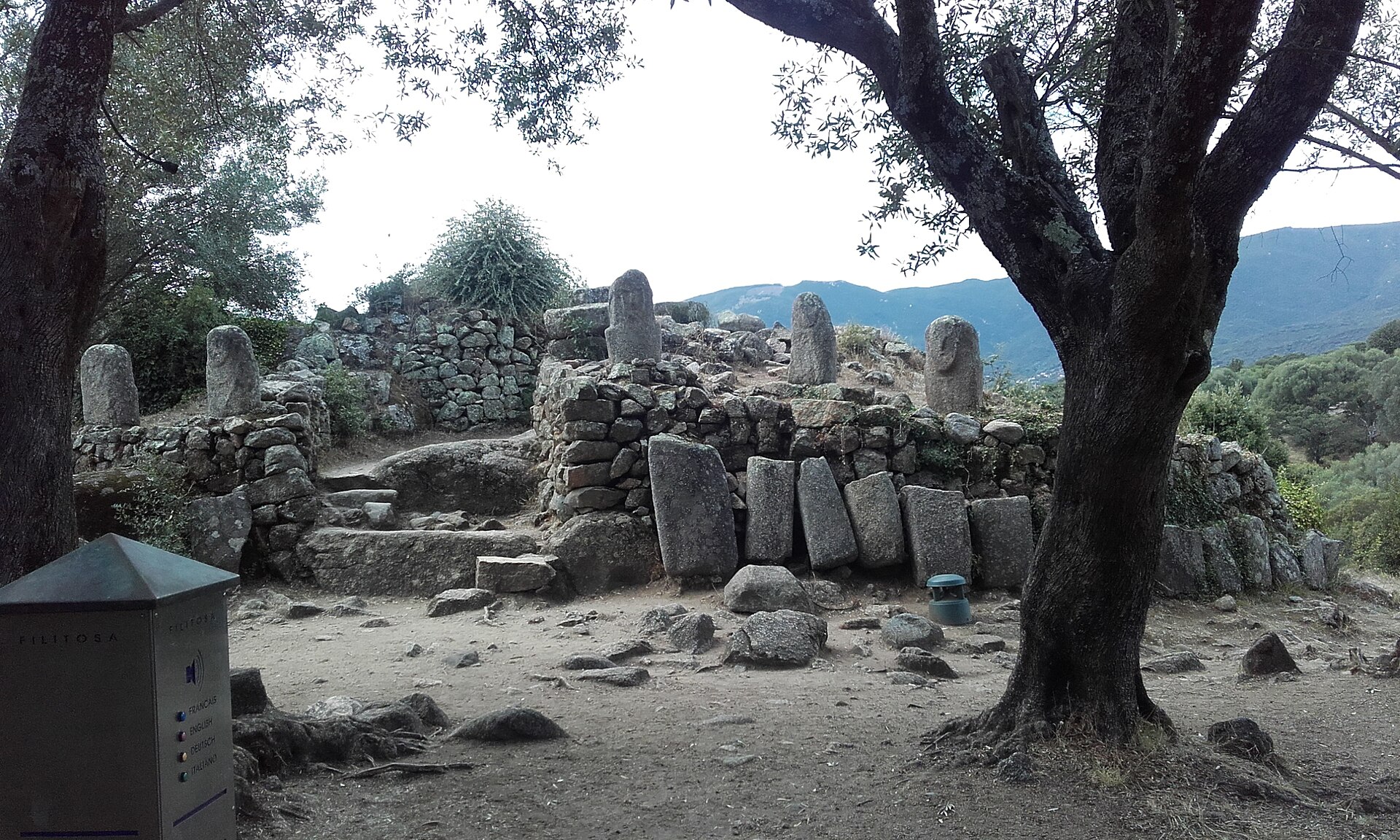
Whatever the reason, this reuse is a vivid reminder that prehistory was not static. Cultures rose and fell here, sometimes violently, and the stones bear the marks of those upheavals. Filitosa is a palimpsest, written and overwritten across millennia.
Who carved them?
The people responsible for Filitosa’s statue-menhirs belonged to Corsica’s prehistoric communities of the later Neolithic and Bronze Age. They farmed, herded, and built, and at some point they developed this remarkable tradition of carving human figures into standing stones — a practice that seems to have carried deep meaning for them.
Later, the valley saw the arrival or rise of the culture archaeologists associate with the Torrean structures of Bronze Age Corsica, the builders of the central monument. Whether newcomers or locals, they represent a distinct phase, and the clash or overlap between them and the statue-menhir makers is one of Filitosa’s central dramas.
Without writing, we can only read this story through the stones and the excavated layers. But even that partial reading reveals a place of real depth — successive peoples, shifting beliefs, and the enduring human urge to give the sacred a face.
Lost and found again
For long centuries Filitosa was just another patch of Corsican farmland, its ancient figures half-buried, unrecognised for what they were. Serious attention came only in the mid-twentieth century, when the site was properly identified and excavated, revealing the statue-menhirs and the layered history beneath the soil.
That relatively recent rediscovery means Filitosa has been studied with reasonably modern methods, and it quickly became recognised as one of the most important prehistoric sites in the western Mediterranean. Today it is privately cared for and open to visitors, with a small museum housing some of the finds.
There is something poignant in imagining those carved faces lying forgotten in a field for so long, then emerging once more into the light. The figures had waited, patient as only stone can be, for someone to recognise them again.
Why Filitosa is unlike anywhere else
Filitosa matters because it gives the deep past a face — literally. Where most megalithic sites deal in abstraction, Filitosa carved the human form into stone and armed it, leaving us figures that feel startlingly personal across the gulf of millennia. That, combined with the drama of one culture building over another, makes it genuinely unique.
Stand among the five menhirs beneath the olive tree, with the Corsican hills all around and those ancient carved faces gazing back, and you feel the strangeness and the closeness of prehistory at once. These were people who wanted to be remembered, who made images meant to endure. In that, at least, they succeeded beyond anything they could have imagined.
A timeline in stone
Filitosa is not the product of a single moment but of a very long occupation. The earliest traces of human presence on the spur reach back into the Neolithic, well before 3000 BC. Over the following centuries and millennia the site was used, abandoned, and reused, accumulating the layered history that modern excavation has slowly untangled.
The statue-menhirs themselves belong largely to the later Neolithic and the Bronze Age, with the armed figures generally seen as later, their carved weapons echoing the real bronze arms of the second millennium BC. The great central monument is later still, built by the culture that reused the broken figures.
Reading this timeline is like reading rings in a tree. Each phase left its mark, and the site as we see it today is the sum of all of them — a single place holding thousands of years of Corsican prehistory in one compact, extraordinary spot.
The Torrean builders
The people associated with the central monument at Filitosa belong to what archaeologists call the Torrean culture, named for the distinctive tower-like stone structures, the torri, they built across southern Corsica in the Bronze Age. These monuments, often interpreted as having a ritual or communal purpose, are a hallmark of the island’s later prehistory.
Whether the Torreans arrived from outside Corsica or developed locally is debated, but their appearance marks a real change. The reuse of the older statue-menhirs in their monument at Filitosa has often been read as a sign of that change — one cultural world giving way, sometimes forcibly, to another.
This layering of Torrean over statue-menhir culture is exactly what makes Filitosa so valuable to archaeologists. It captures, in one place, the meeting and succession of prehistoric peoples, a drama usually spread across many sites compressed here into a single spur of granite.
A wider tradition of carved figures
Filitosa’s statue-menhirs do not stand alone in the Mediterranean. Corsica and neighbouring Sardinia, along with parts of southern France and beyond, share a broad tradition of carving human figures into standing stones during the Neolithic and Bronze Age. The Filitosa figures are among the finest expressions of this widespread impulse.
Comparing them across regions reveals both shared ideas and local flavours. The urge to give a stone a face, to make it a person, recurs again and again, yet each area developed its own style. Filitosa’s armed warriors have a character all their own, distinct from the figures of Sardinia or the mainland.
Seen in this light, Filitosa is a local masterpiece within a Mediterranean-wide movement — proof that the peoples of these islands were part of a connected world, exchanging ideas across the sea even in the depths of prehistory.
What did they mean?
The great unanswered question, of course, is what the statue-menhirs meant to the people who made them. Were they gods? Ancestors? Portraits of chieftains or heroes? Memorials to the dead, or effigies of defeated foes? Every one of these ideas has been proposed, and the truth may combine several — or be something we have not imagined.
The armed figures, with their swords and daggers, tilt many interpretations toward the world of warriors and status. But even that is uncertain. Weapons can mark a warrior, a protector, a ruler, or a threat. The stones give us the image but withhold the caption.
I have made my peace with not knowing. What comes through, whatever the specifics, is intention and reverence — the conviction that these figures mattered enough to carve, to raise, and, in one dramatic case, to destroy and rebuild. That much the stones say clearly.
Visiting Filitosa today
Filitosa is privately owned and open to the public, with a modest entrance, a small museum, and a walking route around the spur that takes you past the central monument, the scattered menhirs, and the famous group beneath the olive tree. It is not a vast, crowded attraction; it has the intimate feel of a place still half-wild.
Take your time. The site rewards slow looking — noticing how each figure differs, spotting the faint weapons on the armed menhirs, imagining the successive peoples who lived and worshipped on this rocky rise. A guidebook or the museum displays help make sense of the layered history.
Go early or late if you can, when the light is kind and the crowds thin, and let the strangeness of the place settle over you. Filitosa is one of those sites that lingers in the memory long after you have driven back down the valley.
The Taravo valley setting
Part of what makes Filitosa special is that its landscape survives largely intact. The Taravo valley is still a place of cork oaks, olive groves, and granite outcrops, much as it must have appeared to the people who carved the statue-menhirs. There is no modern city crowding the site, no motorway roaring past.
That continuity matters. It lets you experience Filitosa in something close to its original context, reading the figures against the same hills and skies the builders knew. Few prehistoric sites offer that; so many are marooned in altered, urbanised surroundings that break the spell.
The granite of the valley is also the raw material of the menhirs themselves, so the figures are quite literally of this place, carved from the bones of the land they stand on. That rootedness gives Filitosa a powerful sense of belonging exactly where it is.
Weapons as a window on the age
The carved weapons on the Filitosa figures are more than dramatic details; they are among the most useful clues the site offers. Because the styles of swords and daggers changed over time, and because real examples survive from Bronze Age contexts, scholars can compare the carved arms with known weapon types to help date the figures.
These comparisons tie Filitosa into the broader Bronze Age Mediterranean, a world of trade, warfare, and shifting powers. The weapons suggest the makers were part of that world, aware of its arms and perhaps its conflicts, not an isolated island backwater but a connected community with its own place in the age of bronze.
It is a neat example of how much a single carved detail can reveal. A sword outlined in granite becomes a thread linking a Corsican hillside to the wider currents of prehistory sweeping across the sea.
Preserving a private treasure
Filitosa has an unusual status among great prehistoric sites: it has long been in private hands, cared for by the family associated with its rediscovery, rather than run as a state monument. A small museum on site displays some of the finds and helps interpret the figures for visitors.
This private stewardship has its own character — more personal, more low-key than a major national attraction. It has kept Filitosa accessible while preserving something of its intimate, slightly wild atmosphere, though it also means the burden of care falls on relatively modest shoulders.
However it is managed, the goal is the same as at any ancient site: to protect these irreplaceable figures for the future while letting people encounter them today. After thousands of years in the ground, the statue-menhirs deserve nothing less than careful, respectful keeping.
The name and the island
Corsica has always sat at a crossroads of the western Mediterranean, fought over and settled by many peoples across its long history. Its prehistoric monuments, Filitosa foremost among them, are a reminder that this strategic island had a rich and distinctive culture long before the Romans, the Genoese, or any of the later powers who left their mark.
The statue-menhirs speak of an islander identity rooted in the deep past, of communities who carved their beliefs into the granite of their own hills. In a place famous for its fierce independence, there is something fitting about these ancient stone figures standing their ground through every wave of history that followed.
To visit Filitosa is to touch that deepest layer of the Corsican story, older than every conquest and every flag, carved by people whose names we will never know but whose faces, in a sense, we can still see.
Filitosa in Corsica’s story
Today Filitosa is rightly regarded as one of the treasures of Corsican heritage and a key site for understanding the prehistory of the western Mediterranean as a whole. It draws visitors from around the world, yet retains the quiet, off-the-beaten-track feel that makes discovering it so rewarding.
For the island, the site is a source of pride and identity, a tangible link to the earliest chapters of Corsican life. For the wider world, it is a rare window onto a vanished culture of stone-carvers who gave the human form to the standing stone in a way few others managed.
Either way, Filitosa endures as it has for millennia — a spur of granite in a quiet valley, crowned with carved figures that have outlasted the people who made them and every people who came after. Long may they keep their watch.
Every time I think about Filitosa, I come back to those carved faces. We tend to imagine prehistoric people as anonymous, faceless, lost to time. And then a place like this hands you actual figures, made by human hands to represent human beings, and the anonymity dissolves. Suddenly the deep past is looking right back at you.
Maybe that is the deepest gift of Filitosa. Not a solved mystery, but a meeting — across four thousand years and more — with people who wanted, as we do, to make images that would outlast them. Standing among their stone figures, you realise they got their wish.
If Filitosa has drawn you into the world of standing stones and the first builders, there is a whole trail to follow. Its fellow French and island megaliths — The Cairn of Barnenez: Europe’s Colossal Stone Monument Older Than the Pyramids, Gavrinis: The 6,000-Year-Old Carved Passage They Sealed in the Dark, Los Millares: The 5,000-Year-Old Fortified Town at the Edge of Europe, Carnac: The 6,000-Year-Old Field of a Thousand Standing Stones — share its spirit, while Britain and Ireland answer with Stonehenge: How and Why This Ancient Stone Circle Was Really Built, Newgrange: The 5,000-Year-Old Tomb Built to Catch the Solstice Sun, Skara Brae: The 5,000-Year-Old Village Known as the Scottish Pompeii, Vinča: The Danube Culture That May Have Written Before Anyone Else, Knowth: Europe’s Greatest Collection of Neolithic Art, Hidden Beside Newgrange, Dowth: The Forgotten Third Mound of Ireland’s Boyne Valley and Callanish: Scotland’s 5,000-Year-Old Stone Circle at the Edge of the Sea. The great Maltese temples The Megalithic Temples of Malta: Older Than the Pyramids, Tarxien: Malta’s Most Elaborate Prehistoric Temple, Carved 5,000 Years Ago, Mnajdra: The 5,000-Year-Old Maltese Temple That Tracks the Sun and Ħaġar Qim: Malta’s Cliff-Top Temple Older Than the Pyramids push the same instinct in another direction. For where it all began, few places rival Göbekli Tepe: The World’s Oldest Temple and How It Rewrote History and Karahan Tepe: The Astonishing Sister of Göbekli Tepe in Anatolia, or the walled town of Jericho: The World’s Oldest City and Its 10,000-Year-Old Wall. And the wider human story unfolds through Çatalhöyük: The 9,000-Year-Old Town With No Streets, The World’s Oldest Art: Inside the Painted Caves of Lascaux and Chauvet, Uruk and Sumer: The First Cities and the Birth of Writing, Mohenjo-daro: The 4,500-Year-Old City That Was Centuries Ahead of Its Time, Liangzhu: The 5,000-Year-Old Water City That Rewrote China’s History, Caral: The 5,000-Year-Old City That Rose As the Pyramids Were Built, Knossos: The 4,000-Year-Old Palace Behind the Myth of the Minotaur, Dholavira: The 4,500-Year-Old City That Beat the Desert With Water Engineering, Nan Madol: The Ancient City Built on a Coral Reef in the Middle of the Pacific, Chavin de Huantar: The 3,000-Year-Old Andean Temple Built to Overwhelm the Senses, Cucuteni-Trypillia: Europe’s 6,000-Year-Old Mega-Settlements That Might Be the First Cities, Cerro Sechin: The 3,600-Year-Old Peruvian Temple Carved With Warriors and Their Victims, Poverty Point: The 3,700-Year-Old Earthworks Built by Hunter-Gatherers, Not Farmers, Sarazm: The 5,500-Year-Old Town in Tajikistan That Rewrites Central Asia’s Past, Mehrgarh: The 9,000-Year-Old Village Where South Asia Learned to Farm, Tell Brak: The Syrian Mound That May Rewrite Where Cities Began, Aşıklı Höyük: The 10,000-Year-Old Village That Came Before Çatalhöyük, Jiahu: The 9,000-Year-Old Chinese Village Whose Flutes Still Play, Chankillo: The 2,300-Year-Old Peruvian Towers That Are the Americas’ Oldest Solar Observatory, Kalibangan: The Indus Town With the World’s Oldest Ploughed Field, Bougon: The 7,000-Year-Old Burial Mounds Older Than the Pyramids, Almendres Cromlech: Europe’s Oldest Stone Circle, 2,000 Years Before Stonehenge and Ġgantija: The Giant Temples of Gozo, Older Than the Pyramids. Each one adds another line to the same long story. If this drew you in, the stone ship of Ale’s Stones in southern Sweden is well worth seeking out.
You May Like
The Bardo, a Palace of the Beys Filled With Roman Mosaics


One thought on “Filitosa: Corsica’s Ancient Stone Warriors Carved with Faces and Swords”