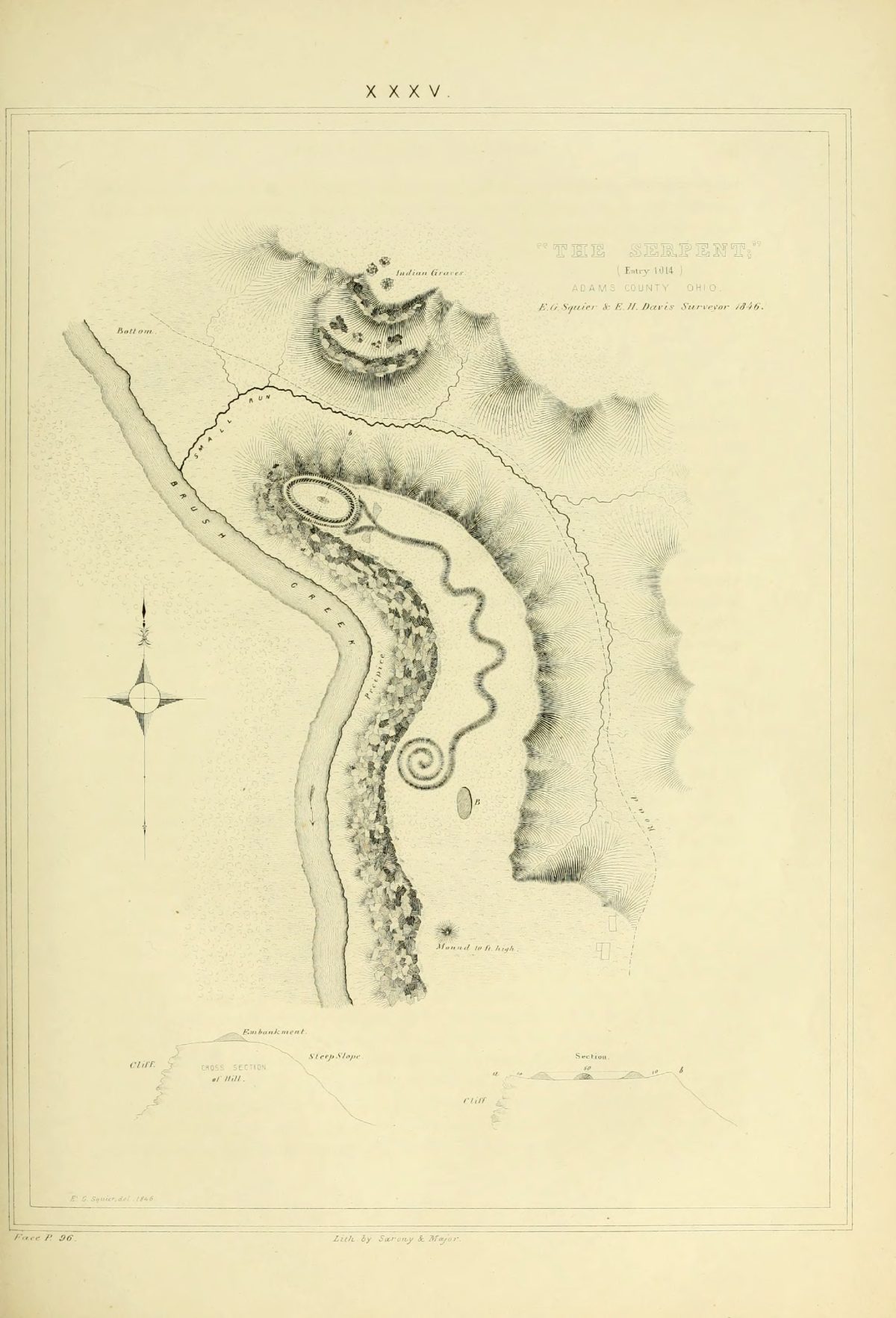
In the hill country of southern Ohio, a low earthen ridge winds across a plateau in the unmistakable shape of a serpent, its body coiling through seven distinct curves before ending in a tightly wound spiral tail. At its head, the effigy opens into a wide, gaping shape that some researchers interpret as jaws swallowing an egg-like oval, while others read it as an eye or a separate symbolic feature entirely.
Stretching roughly 411 meters from head to tail, the Great Serpent Mound is the largest known surviving serpent-shaped effigy earthwork in the world. And despite more than a century of study, archaeologists still cannot agree with full confidence on exactly who built it, when, or precisely why.
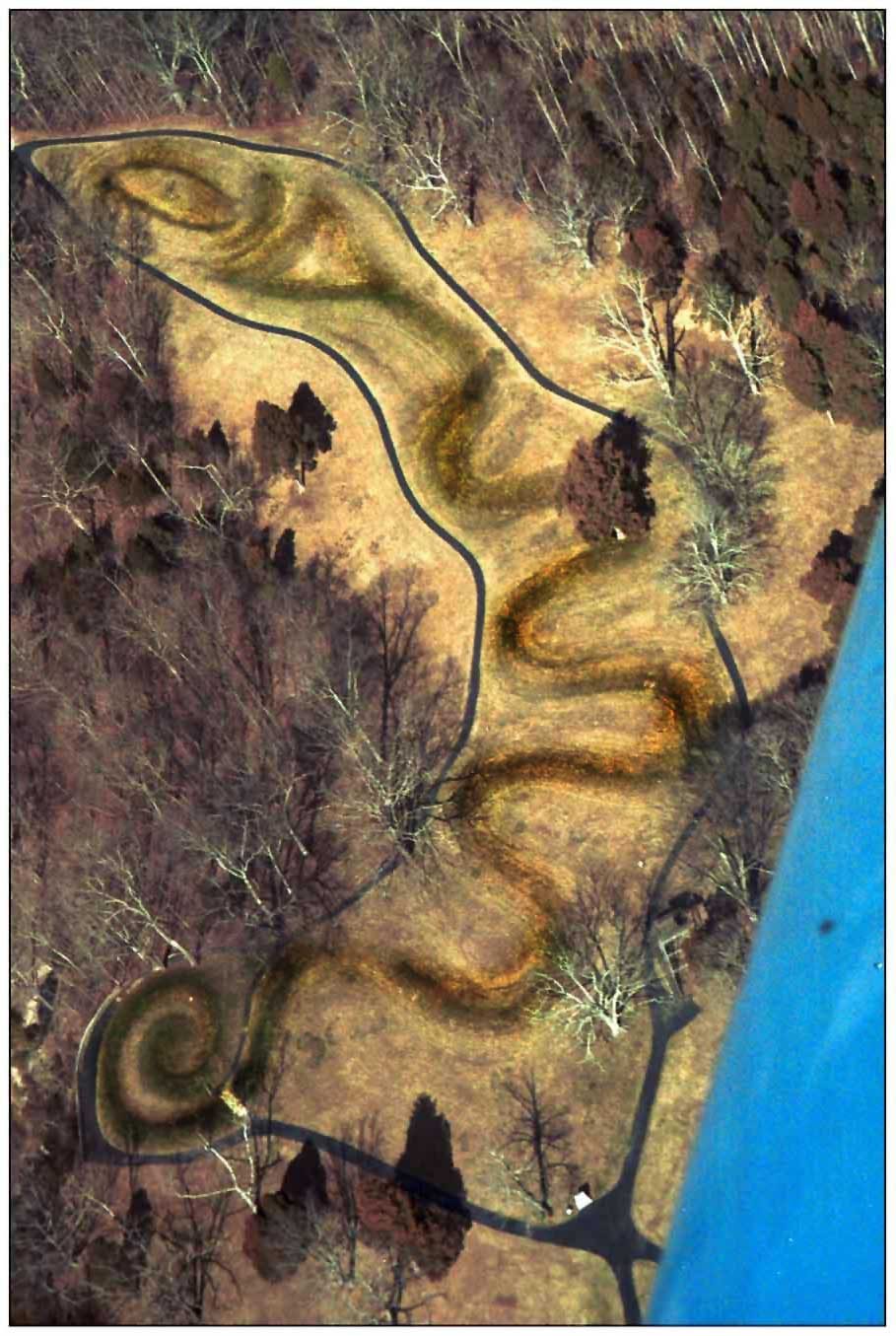
Table of Contents
- A Quarter-Mile Serpent With No Known Purpose
- Adena or Fort Ancient: A Century-Long Dating Dispute
- The Astronomy Hidden in a Snake’s Curves
- Who Were the Adena and Fort Ancient Peoples
- A Meteor Crater Beneath a Sacred Effigy
- Serpent and Snake Symbolism Across Ancient America
- Frederic Ward Putnam and the Fight to Save the Mound
- Effigy Mounds Beyond Ohio
- Excavation Damage and What It Cost Researchers
- Visiting Serpent Mound Today
- Nearby Places
A Quarter-Mile Serpent With No Known Purpose
Unlike burial mounds or platform mounds found elsewhere in the eastern United States, Serpent Mound contains no burials, no significant artifact deposits within its body, and no clear evidence of residential use. It exists purely as a shaped earthen effigy, built low to the ground, rising in most places to less than a meter in height, but stretching an enormous distance across the landscape.
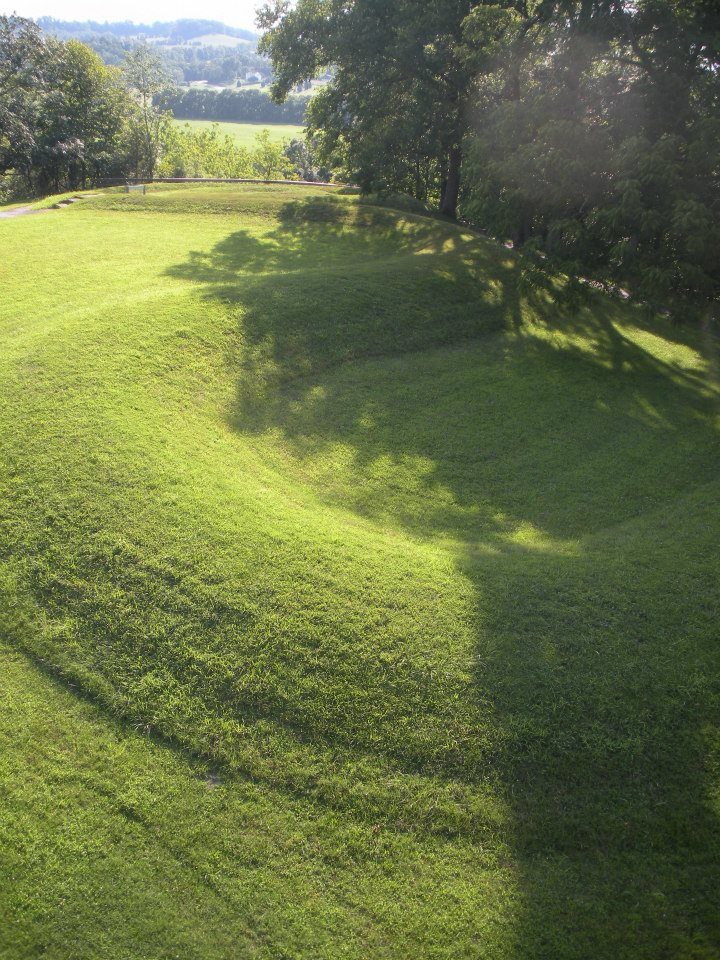
This absence of burials or everyday occupation debris sets Serpent Mound apart from most other Native American mound sites in the region, and it has fueled decades of speculation about the effigy’s purpose, ranging from astronomical marker to religious shrine to a purely symbolic representation of a culturally significant animal or spirit figure.
The effigy sits atop a narrow plateau overlooking Brush Creek, a position that would have made the serpent’s full shape difficult, if not impossible, for its builders to fully appreciate from ground level, a puzzle echoing similar questions raised by the Nazca Lines half a world away and thousands of years removed in time.
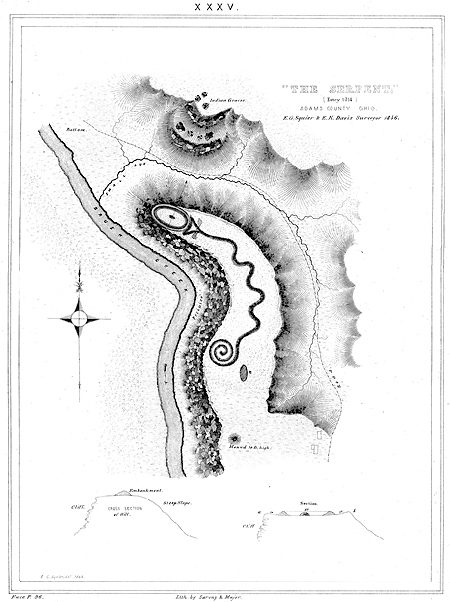
The plateau’s elevated position above Brush Creek would have offered commanding views of the surrounding valley, and some researchers suggest this visibility, combined with the site’s unusual underlying geology, may have marked the location as spiritually significant long before any earthwork construction began there.
Modern conservation efforts have carefully maintained the mowed grass covering the effigy’s surface, a maintenance practice that has become essential to keeping the serpent’s shape clearly visible and distinguishable from the surrounding grassland, particularly for visitors viewing it from the site’s observation tower rather than from directly overhead.
Adena or Fort Ancient: A Century-Long Dating Dispute
For much of the 20th century, archaeologists generally attributed Serpent Mound to the Adena culture, which flourished in the Ohio Valley from roughly 1000 BCE to 200 CE and was known for building conical burial mounds throughout the region. This attribution was based partly on the presence of nearby Adena burial mounds and artifacts recovered during early excavations.
Radiocarbon dating conducted in the 1990s on charcoal samples recovered from within the mound’s structure produced dates suggesting a much later construction period, around 1070 CE, placing its likely builders within the Fort Ancient culture instead, a different society that inhabited the region roughly a thousand years after the Adena had already declined.
More recent excavations and additional radiocarbon testing have complicated this picture further, with some samples supporting the earlier Adena-era dating and others supporting the later Fort Ancient period, leading many archaeologists to now consider it possible that the mound was built, and possibly rebuilt or modified, across more than one distinct period of construction.
Some archaeologists have proposed a compromise interpretation, suggesting the effigy may have originally been constructed by the Adena and later reshaped, expanded, or ceremonially renewed by the Fort Ancient culture centuries afterward, a pattern of continued use and modification observed at various other prehistoric monuments where multiple generations of builders returned to significant sites long after their original construction.
This ongoing dating uncertainty has made Serpent Mound something of a case study in the challenges facing archaeologists working with earthwork sites that contain little in the way of stratified, datable material directly tied to their construction, unlike stone monuments or sites with clear buried artifact layers.
The Astronomy Hidden in a Snake’s Curves
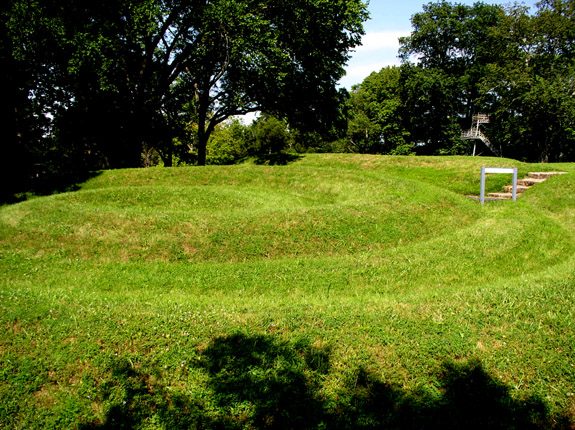
Several researchers have proposed that specific curves and the head of the serpent align with significant solar and lunar events, including the summer solstice sunset, which some studies suggest aligns with the effigy’s head, and other curves that may correspond to the rising or setting positions of the moon at points in its 18.6-year cycle.
These astronomical alignment claims remain genuinely debated among archaeoastronomers, with some researchers finding the proposed alignments compelling and statistically significant, while others argue that a shape as long and winding as the serpent’s body will inevitably intersect with some celestial alignment purely by chance, cautioning against over-interpreting the effigy’s astronomical significance without stronger corroborating evidence.
Regardless of how the debate is ultimately resolved, the serpent’s careful, deliberate curves and its consistent orientation across the plateau strongly suggest its builders worked from a detailed plan rather than shaping the earthwork randomly, whatever the underlying purpose behind that plan may have been.
Some of the earliest astronomical alignment claims regarding Serpent Mound date back to the late 19th and early 20th centuries, well before more rigorous statistical methods for evaluating archaeoastronomical claims had been developed, meaning some of the original proposed alignments have since been reassessed with considerably more scientific caution than when they were first proposed.
Who Were the Adena and Fort Ancient Peoples
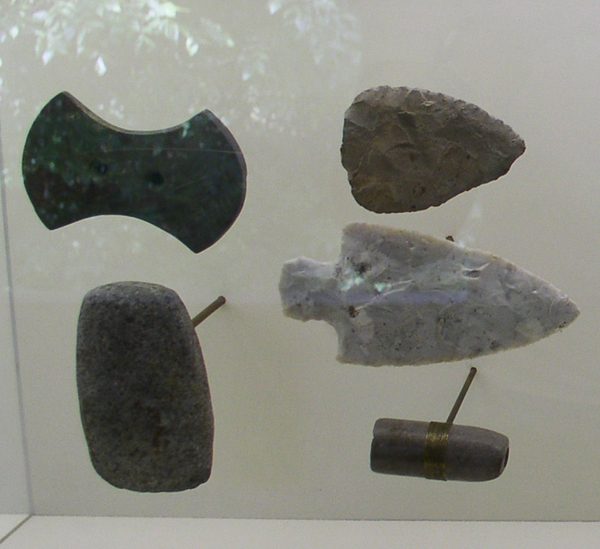
The Adena culture, one of the candidate builders of Serpent Mound, is best known for constructing conical burial mounds throughout the middle Ohio Valley, often containing log-lined tombs and grave goods including finely crafted stone pipes, gorgets, and copper ornaments, reflecting a society with well-developed craft specialization and long-distance trade connections.
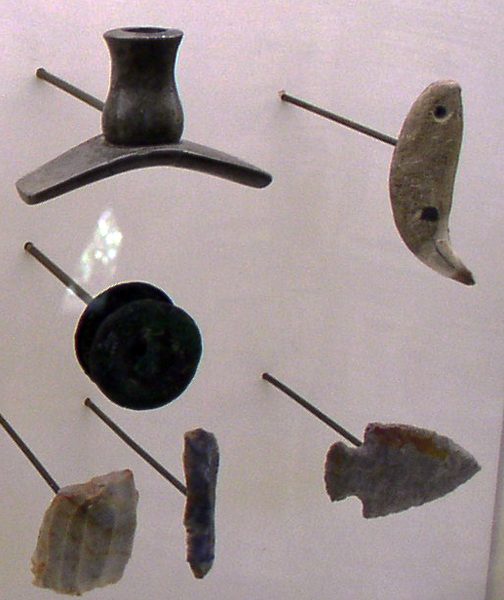
The Fort Ancient culture, the alternative candidate supported by some of the more recent radiocarbon evidence, was an agricultural society that emerged later in the Ohio Valley, cultivating maize, beans, and squash, and building fortified hilltop enclosures as well as smaller mound complexes, representing a notably different way of life from the Adena centuries earlier.
Neither culture left behind any confirmed written records, and, as with so many pre-Columbian societies in this series, no securely identified living linguistic descendant connects modern researchers directly to the language once spoken by either the Adena or Fort Ancient peoples, leaving much of their religious and symbolic worldview to be inferred from material remains alone.
Fort Ancient settlements, unlike the more dispersed Adena burial mound tradition, often included substantial villages with defensive earthwork enclosures, reflecting a society organized somewhat differently around agricultural production and, in some cases, apparent concerns about conflict or defense that are less evident in the earlier Adena archaeological record.
A Meteor Crater Beneath a Sacred Effigy
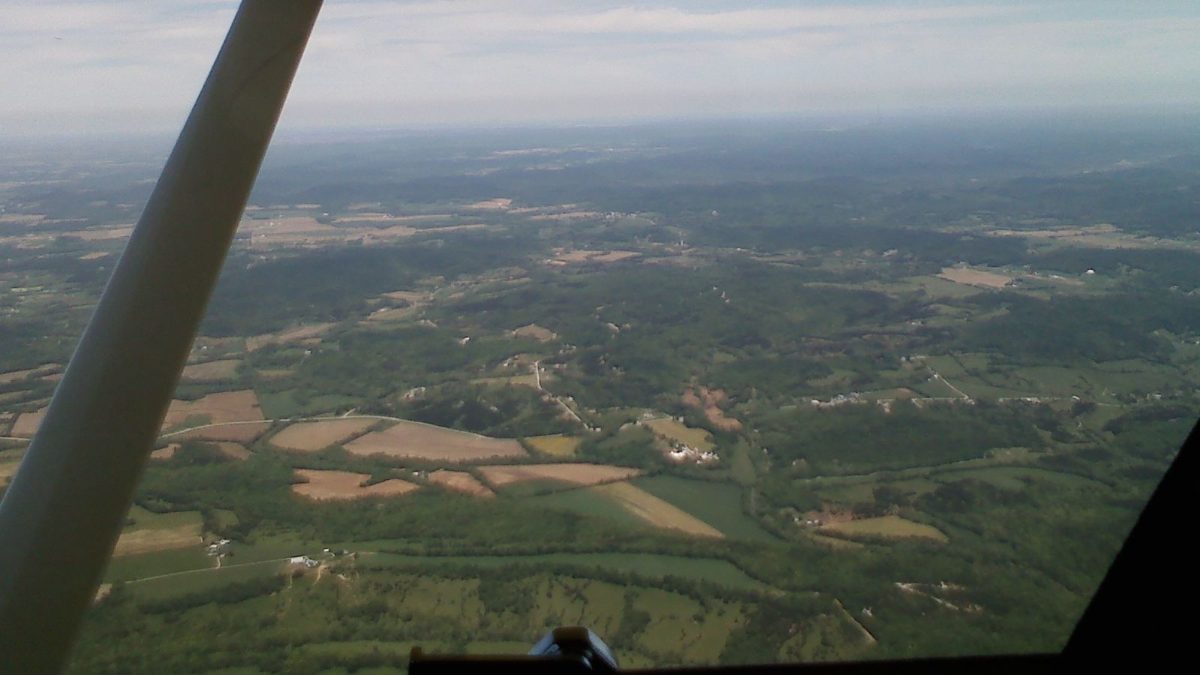
In a remarkable geological coincidence, Serpent Mound sits directly atop the site of an ancient impact crater, formed an estimated 250 to 300 million years ago, long before humans existed anywhere on Earth, when either a meteorite or, according to some more recent geological interpretations, a possible internal volcanic or collapse-related process created a distinctive, disrupted rock formation beneath the plateau.
This unusual and highly localized geological feature, sometimes called a cryptoexplosion structure, may well have influenced why the effigy’s builders chose this specific location. Distinctive, geologically anomalous terrain frequently held special spiritual significance across many Native American traditions, and the effigy’s builders may have recognized, whether through direct observation of the unusual local topography or through inherited oral tradition, that this particular plateau was unlike the surrounding landscape.
Whether the crater’s presence was a coincidence or a deliberate consideration in siting the effigy remains unresolved, but the overlap between one of North America’s most studied prehistoric earthworks and one of its more unusual geological formations continues to attract interest from both archaeologists and geologists alike.
Geologists studying the crater structure have used it as a valuable natural laboratory for understanding impact geology in a humid, heavily eroded environment, since most well-preserved impact craters studied elsewhere in the world tend to be located in far drier, less vegetated landscapes where erosion has had less opportunity to obscure the original structure.
The debate over whether the underlying structure resulted from a meteorite impact or an internal geological process, such as a cryptovolcanic explosion, has continued for decades, with meteorite impact remaining the more widely supported explanation among most geologists studying the site today, based on the mineral and structural evidence recovered from core samples taken at the location.
Serpent and Snake Symbolism Across Ancient America
Serpent and snake imagery carried deep symbolic significance across many ancient cultures of the Americas, far beyond Ohio. The feathered serpent deity honored at Teotihuacan and later at Chichen Itza, known respectively in various forms and eventually as Quetzalcoatl and Kukulkan, represented one of Mesoamerica’s most important religious figures, illustrating how widespread and enduring serpent symbolism was across the pre-Columbian Americas.
Among many Native American groups of the eastern woodlands, snakes were often associated with the underworld, water, fertility, and transformation, sometimes viewed as intermediaries between the earthly and spiritual realms. This general symbolic framework has informed many interpretations of Serpent Mound’s religious meaning, even without a directly documented account from its original builders.
Some researchers have specifically proposed that Serpent Mound may relate to a broader Mississippian-era mythological figure sometimes called the Great Serpent, a powerful and somewhat dangerous underworld being appearing in the oral traditions and artwork of several later Native American cultures across the eastern United States, though any direct connection to the specific builders of the Ohio effigy remains speculative given the time gap involved.
This recurring emphasis on serpent imagery across cultures separated by thousands of kilometers and, in some cases, thousands of years, does not necessarily indicate direct cultural contact or shared origin, but rather suggests that snakes held a kind of universal symbolic resonance across many early agricultural and hunter-gatherer societies throughout the Americas, tied to their genuinely mysterious biology and their association with the ground, water, and the unseen.
Frederic Ward Putnam and the Fight to Save the Mound
By the late 19th century, Serpent Mound had suffered significant damage from agricultural plowing on the land surrounding it, prompting concern among a small but growing community of American archaeologists about the potential permanent loss of one of the country’s most important prehistoric monuments.
Frederic Ward Putnam, an archaeologist affiliated with Harvard University’s Peabody Museum, led a fundraising and preservation campaign in the 1880s that successfully purchased the land containing the effigy, protecting it from further agricultural damage and initiating some of the earliest systematic excavation and restoration work at the site.
Putnam’s preservation effort is often credited as one of the first successful private archaeological conservation campaigns in American history, establishing a model for site protection that predated most formal government-led historic preservation programs in the United States by several decades.
Putnam’s preservation campaign relied heavily on private donations and public appeals, reflecting the limited role government institutions played in archaeological preservation during this period of American history, when many significant sites across the country remained vulnerable to agricultural development, looting, or outright destruction.
Effigy Mounds Beyond Ohio
Serpent Mound is the most famous, but not the only, effigy mound built in the eastern woodlands of North America. Effigy Mounds National Monument in Iowa preserves dozens of bird, bear, and other animal-shaped mounds built by later Woodland-period cultures, illustrating that shaping earthworks into recognizable animal forms was a broader regional tradition rather than an isolated Ohio phenomenon.
These other effigy sites, generally built somewhat later than the most commonly cited dating for Serpent Mound, share the same basic technique of shaping raised earth into a recognizable animal silhouette, though few, if any, approach Serpent Mound’s scale or the intricate, winding complexity of its design.
Taken together, these effigy earthworks suggest a widespread tradition across the pre-Columbian eastern woodlands in which specific animal forms held deep enough symbolic or spiritual meaning to justify the substantial communal labor required to render them permanently into the landscape.
The broader distribution of effigy mound traditions across the Upper Midwest and Ohio Valley suggests these societies shared, to varying degrees, overlapping religious frameworks in which specific animals held totemic or clan-related significance, though the exact relationships between different regional effigy mound traditions remain an active area of ongoing archaeological research and debate.
Excavation Damage and What It Cost Researchers
Early excavation techniques at Serpent Mound, conducted well before the development of modern archaeological standards, caused some irreversible damage to the effigy’s structure, complicating later efforts to precisely date and interpret the earthwork using more advanced scientific methods developed decades afterward.
Putnam’s late 19th-century restoration work, while crucial to the mound’s physical survival, also involved some reconstruction and reshaping of the effigy’s contours, meaning the precise original shape visible to visitors today may not perfectly match its exact appearance at the time of original construction, a complication archaeologists must account for when interpreting the site’s astronomical alignment claims.
These historical complications underscore a broader challenge common to many ancient sites studied before the development of rigorous modern excavation protocols: even well-intentioned preservation efforts sometimes altered the very evidence later researchers would need to more precisely understand a site’s original construction and purpose.
Contemporary archaeologists working at the site today rely heavily on non-invasive survey techniques, including ground-penetrating radar and careful soil sampling, specifically to avoid repeating the kind of structural disturbance that complicated earlier generations of research at the mound.
Visiting Serpent Mound Today
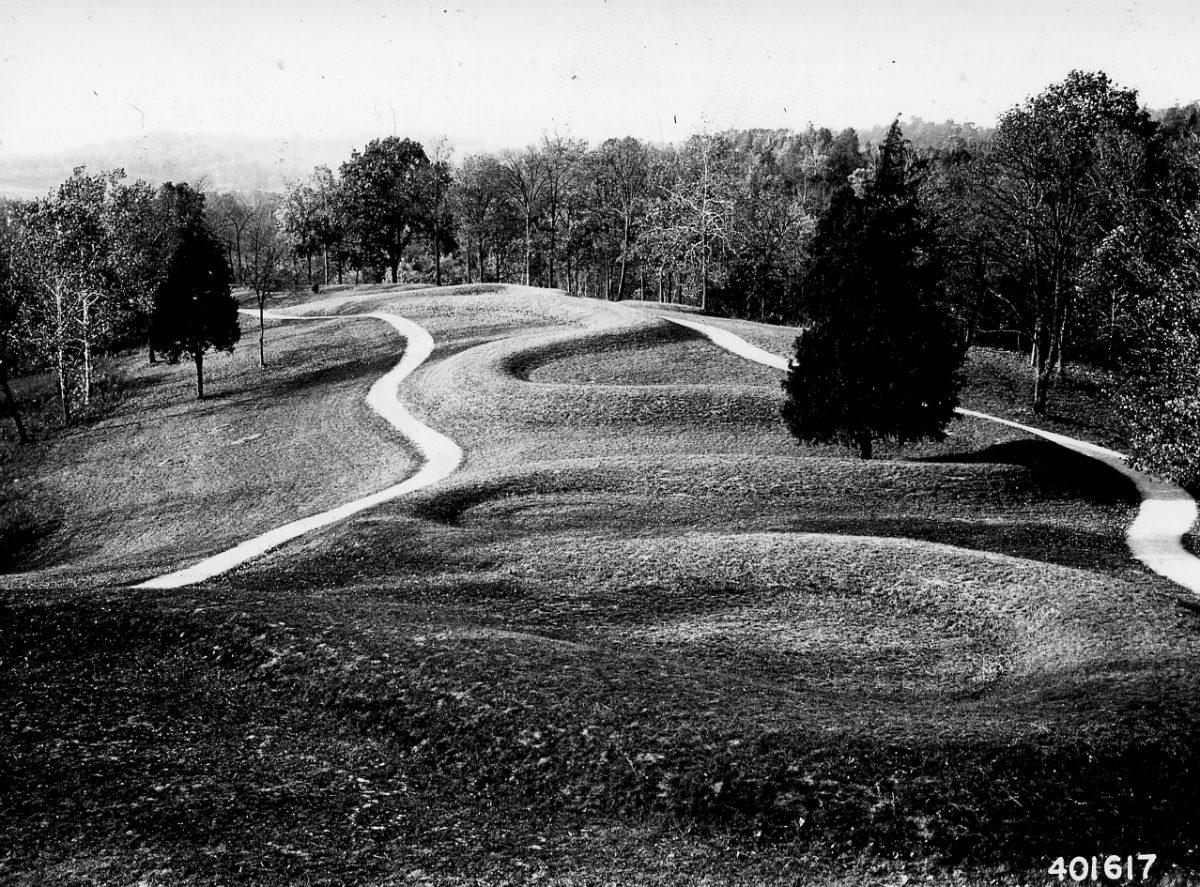
Serpent Mound is preserved today within Serpent Mound State Memorial, managed by the Ohio History Connection, which maintains a visitor museum, walking trails around the effigy, and an observation tower that allows visitors to view the serpent’s full winding shape from an elevated vantage point, addressing the same challenge of ground-level visibility that likely also faced its original builders.
The site was added to the World Heritage Tentative List by the United States in 2008 as part of a broader nomination covering multiple Hopewell-era ceremonial earthworks in Ohio, and Serpent Mound continues to draw both academic researchers and visitors interested in one of North America’s most visually striking and enduringly mysterious ancient monuments.
Ongoing scientific research, including continued radiocarbon dating refinement and geological study of the underlying crater structure, means our understanding of Serpent Mound’s age, builders, and purpose may still meaningfully change in the years ahead, more than 150 years after Putnam’s preservation campaign first secured its survival.
Nearby Places
Serpent Mound connects to a broader tradition of monumental earthwork construction that spans thousands of years of North American history.
- Poverty Point, the far older Louisiana earthworks built by hunter-gatherers more than 2,000 years before Serpent Mound
- Cahokia, the great Mississippian city whose mound-building tradition overlapped with Fort Ancient culture in the wider Ohio Valley
- Etowah, the Mississippian mound city of Georgia built by cultures that shared many of the same religious and symbolic traditions
Closing Thoughts
More than a century of dedicated archaeology has answered many questions about who might have built Serpent Mound and roughly when, yet its central mystery remains stubbornly intact. Why anyone would dedicate the labor to shape a quarter-mile of earth into a serpent’s winding body, on a plateau where the full effigy can barely be seen from the ground, says something important about how differently its builders understood the relationship between landscape, meaning, and monument than we may ever fully grasp today.
You May Like

Mafra, the Palace a King Built From a Vow



One thought on “Nobody Agrees Who Built Ohio’s Great Serpent Mound”