At the end of a long avenue of chestnut trees in Bonn stands a baroque palace with an unusual secret: a perfectly round arcaded courtyard at its heart. Poppelsdorf Palace was built in the early eighteenth century for the archbishop electors of Cologne, who called it Clemensruhe, and today it belongs to the University of Bonn, with one of the oldest botanical gardens in Germany behind it.
Linked to the Electoral Palace in the city centre by the elegant Poppelsdorfer Allee, the palace was part of a grand baroque plan that shaped the character of Bonn. Today students, scientists and visitors share its courtyards and gardens, making it a lively place where history and learning meet.
In this article we will explore Poppelsdorf Palace from the elector who built it to its architecture, its avenue, its botanical garden and its role in the university, and we will finish with practical tips for your visit.
In This Article
- A Baroque Palace at the End of an Avenue
- Elector Joseph Clemens and Clemensruhe
- Robert de Cotte and the Design
- The Palace in the Evening
- The Poppelsdorfer Allee
- The Round Courtyard
- The Botanical Garden
- Greenhouses and Rare Plants
- Home of the University
- The Mineralogical Museum
- War Damage and Restoration
- Poppelsdorf Palace on Video
- Visiting Poppelsdorf Palace Today
A Baroque Palace at the End of an Avenue

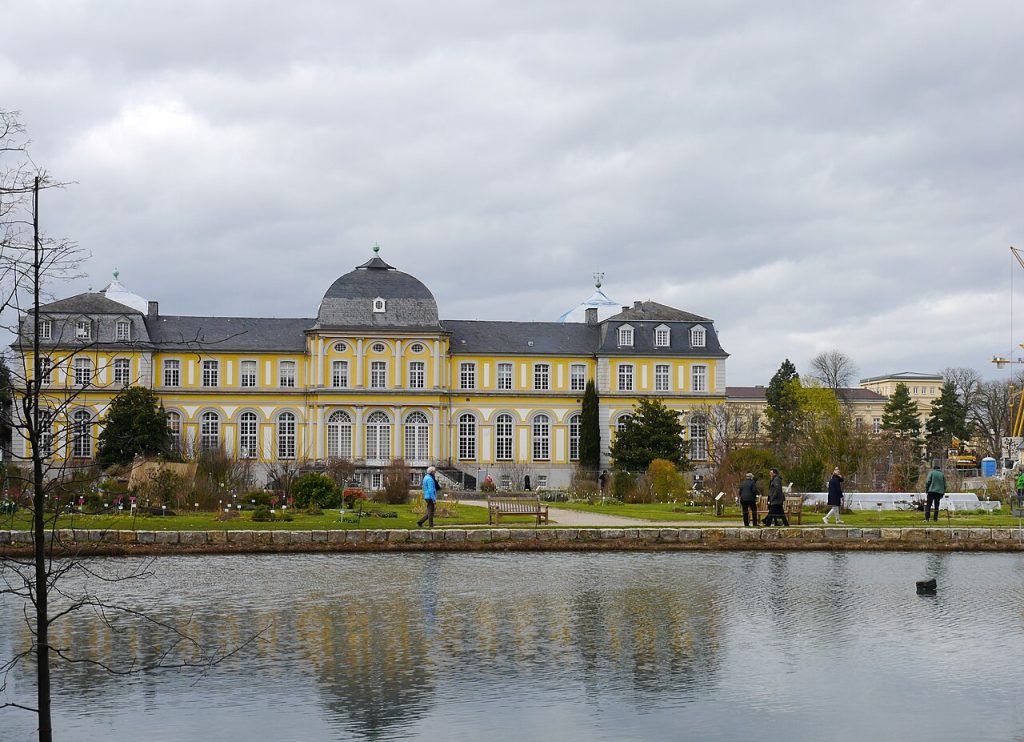
Walking south from the centre of Bonn along the Poppelsdorfer Allee, a broad avenue lined with chestnut trees and elegant nineteenth century houses, you see Poppelsdorf Palace rising ahead, its pale facades framed by trees.
The palace is a long, low building with corner pavilions, set in gardens and surrounded by the buildings of the university. Its calm, balanced architecture gives it an air of dignity.
Behind the palace stretches the Botanical Garden, with greenhouses, flower beds and rare plants, one of the most beautiful green spaces in Bonn.
What makes Poppelsdorf special is its combination of baroque architecture, a unique round courtyard and its continuing role as a place of science and learning.
In spring, when the chestnut trees along the avenue are in bloom, the approach to the palace is particularly beautiful.
The palace is surrounded by student life, with cafes and bookshops nearby, giving the area a youthful and lively atmosphere.
Bonn, the former capital of West Germany and the birthplace of Beethoven, is a city rich in history, and Poppelsdorf Palace is one of its most charming sights.
Elector Joseph Clemens and Clemensruhe

The palace was begun in 1715 for Joseph Clemens of Bavaria, archbishop elector of Cologne, who resided in Bonn. He wanted a pleasure palace outside the city, linked to his main residence by a grand avenue.
He named the palace Clemensruhe, meaning Clemens’s rest, reflecting its purpose as a place of relaxation and retreat.
Joseph Clemens had spent years in exile in France during the War of the Spanish Succession, and he brought back a love of French architecture and art, which influenced his building projects in Bonn.
After his death, his successor Clemens August completed the palace, adding decoration and furnishings in the fashionable style of the time.
Clemens August was one of the great builders of the eighteenth century, also responsible for Augustusburg Palace at Bruhl.
The electors of Cologne were members of the Bavarian house of Wittelsbach, and their court in Bonn was one of the most splendid in the Rhineland.
The construction of the palace was part of a broader programme of building that transformed Bonn into an elegant residence city in the eighteenth century.
Joseph Clemens was also a lover of music and theatre, and his court in Bonn hosted performances that foreshadowed the city’s later musical fame.
Robert de Cotte and the Design

The design of Poppelsdorf Palace was provided by Robert de Cotte, the first architect of the French king Louis XIV, who also worked on the Electoral Palace in Bonn.
De Cotte created a square building with four wings around a round courtyard, an unusual and elegant plan that sets Poppelsdorf apart from other palaces.
The facades are restrained and well proportioned, with corner pavilions and a central projection on the garden side.
The palace reflects the influence of French classicism on German architecture in the early eighteenth century.
The palace’s restrained elegance contrasts with the exuberant rococo of Augustusburg, showing the different phases of electoral building in the Rhineland.
Although de Cotte never visited Bonn himself, he sent detailed plans from Paris, which local builders carried out under the supervision of the elector’s officials.
The Palace in the Evening

In the evening, when the facades are illuminated, Poppelsdorf Palace takes on a romantic appearance, glowing softly against the dark sky.
The avenue leading to the palace is also lit, creating a magical approach for evening walkers.
Concerts and events are sometimes held in the palace and its courtyard, adding life to the historic setting after dark.
An evening stroll from the city centre to the palace is one of the pleasures of a visit to Bonn.
Students often gather near the palace in the evening, adding a cheerful atmosphere to the historic surroundings.
The Poppelsdorfer Allee

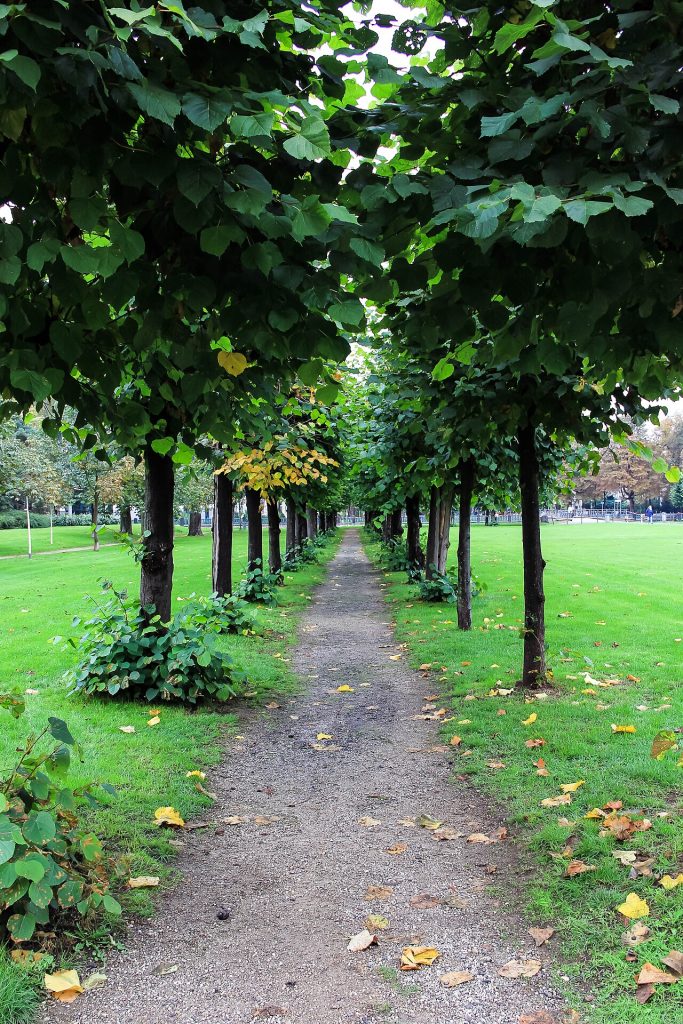
The Poppelsdorfer Allee is a broad avenue about one kilometre long that links the Electoral Palace in the centre of Bonn with Poppelsdorf Palace. It was laid out in the eighteenth century as part of the grand baroque plan of the electors.
Lined with chestnut trees and later with elegant villas, the avenue is one of the most beautiful streets in Bonn and a favourite place for walks.
The axis created by the avenue connects the two palaces visually, a typical feature of baroque urban planning.
Walking along the avenue, you follow in the footsteps of the electors, who travelled between their palaces in grand processions.
In early summer, the avenue is especially lovely, with the trees in full leaf creating a green tunnel leading to the palace.
The avenue also connects two worlds: the bustling city centre and the quieter, green district of Poppelsdorf with its gardens and university buildings.
The Round Courtyard
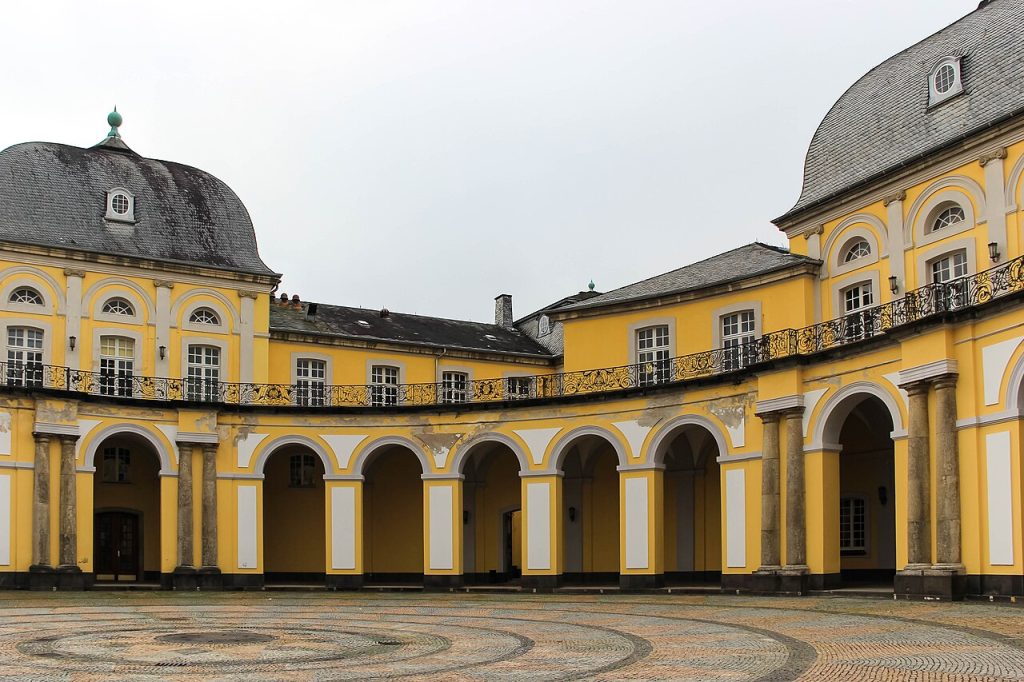
The most remarkable feature of Poppelsdorf Palace is its round inner courtyard, surrounded by arcades. This circular space within a square building is unique among German palaces.
The arcades create a sheltered walkway around the courtyard, and their rhythm of arches gives the space a sense of harmony and calm.
In the days of the electors, the courtyard was used for festivities and gatherings, and today it is a peaceful place for students and visitors.
Standing in the middle of the courtyard and turning slowly, you can appreciate the perfect symmetry of the design.
The courtyard’s acoustics make it a pleasant setting for small concerts and readings in summer.
The arcades provide shade in summer and shelter in rain, making the courtyard a pleasant place at any time of year.
The Botanical Garden

Behind the palace lies the Botanical Garden of the University of Bonn, one of the oldest botanical gardens in Germany. It was established in the early nineteenth century on the site of the electors’ palace garden.
The garden contains thousands of plant species from around the world, arranged in outdoor beds and in a series of greenhouses.
Among its most famous plants is the titan arum, a giant tropical flower that has bloomed here several times, attracting crowds of visitors to see and smell its remarkable blossom.
The garden is open to the public and offers a peaceful and educational experience for visitors of all ages.
Walking through the garden, you can see the rear facade of the palace framed by trees and flowers.
The garden’s seasonal displays change throughout the year, so every visit offers something new to discover.
Greenhouses and Rare Plants

The greenhouses of the Botanical Garden shelter plants from tropical and subtropical regions, including palms, orchids, cacti and carnivorous plants.
Some of the greenhouses are historic structures, while others are modern, designed to recreate the climates of different parts of the world.
Scientists from the university use the garden for research, and its collections play an important role in the study of plant diversity.
For visitors, the greenhouses offer a chance to travel the world in a single afternoon, from desert landscapes to rainforests.
Special exhibitions and guided tours explain the importance of plant conservation and the role of botanical gardens in protecting endangered species.
Home of the University
In 1818, when the University of Bonn was founded by the Prussian king, Poppelsdorf Palace was given to the university and became home to its natural science departments.
Over the following two centuries, the palace housed institutes of botany, zoology and mineralogy, and many important scientists worked here.
Today the palace still belongs to the university and houses the Mineralogical Museum, with an impressive collection of minerals, gemstones and meteorites.
The combination of baroque architecture and scientific research gives Poppelsdorf a unique character among German palaces.
Famous scientists associated with the university’s natural science institutes include botanists and geologists whose work helped shape modern science.
The presence of the university keeps the palace alive and busy, a very different experience from palaces that have become quiet museums.
The Mineralogical Museum
The Mineralogical Museum in the palace displays a fascinating collection of minerals, crystals and gemstones from around the world, as well as meteorites and rocks.
The collection was built up by scientists of the university over two centuries and is one of the most important of its kind in Germany.
Exhibits are presented in historic rooms of the palace, combining the beauty of the minerals with the elegance of the architecture.
The museum is a favourite with families and students, and it offers a fascinating glimpse into the hidden treasures of the earth.
Among the highlights are large crystals and rare meteorites, some of which fell in the Rhineland and were collected by university researchers.
War Damage and Restoration

During the Second World War, Poppelsdorf Palace was badly damaged by bombing, and much of its interior was lost.
After the war, the palace was rebuilt, with the facades restored to their historic appearance and the interior adapted for university use.
The round courtyard and the arcades were carefully reconstructed, preserving the most distinctive feature of the palace.
Today the palace stands once again as a proud landmark of Bonn, combining its baroque heritage with its role as a centre of learning.
Photographs from the postwar period show the damaged palace, and comparing them with its appearance today highlights the success of the restoration.
Poppelsdorf Palace on Video

For a look at the palace and its surroundings, the video below presents Poppelsdorf Palace in Bonn.
Watch for the facades, the avenue and the gardens.
The video also shows the Botanical Garden, which is an essential part of a visit to Poppelsdorf.
If the video inspires you, read on for practical tips.
Visiting Poppelsdorf Palace Today

The exterior, the courtyard and the Botanical Garden of Poppelsdorf Palace are open to the public, while the Mineralogical Museum has its own opening hours.
The palace lies in the Poppelsdorf district of Bonn, about one kilometre from the city centre, and can be reached on foot along the Poppelsdorfer Allee or by bus.
Plan a few hours to see the palace, the courtyard, the garden and the museum, and combine your visit with the Electoral Palace in the city centre, now the main building of the university.
Poppelsdorf pairs well with Augustusburg Palace at Bruhl and Benrath Palace in Dusseldorf, which together showcase the palaces of the Rhineland electors.
Whenever you visit, Poppelsdorf Palace offers a delightful combination of baroque architecture, scientific heritage and natural beauty.
View the location on Google Maps
Palaces Nearby
If you have enjoyed this palace, the Rhineland holds more remarkable residences. Here are two more well worth adding to your journey:
- Benrath Palace – the pink pleasure palace of Elector Carl Theodor in Dusseldorf.
- Augustusburg Palace – the rococo masterpiece of the elector of Cologne at Bruhl.
You May Like

Benrath Palace and the Pink Pleasure House of Elector Carl Theodor


