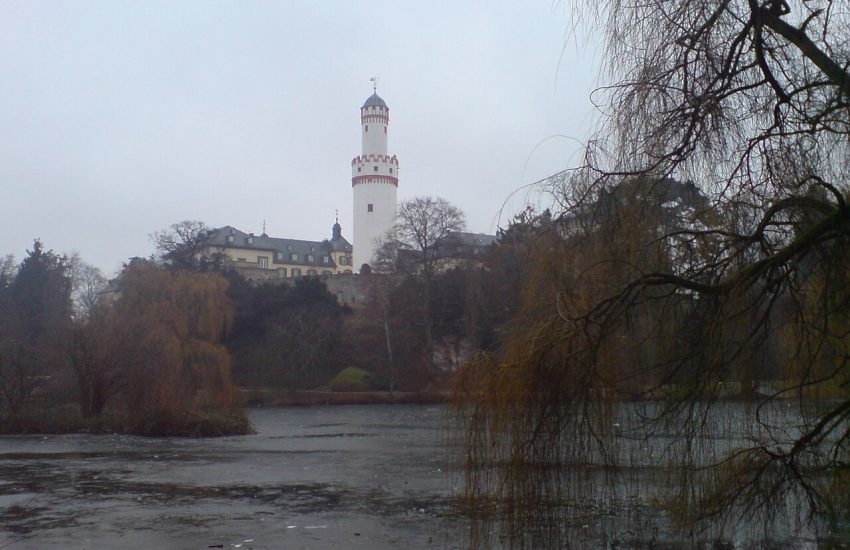
On the banks of the Rhine in Mainz, a long red sandstone palace with richly carved windows and gables recalls the days when this city was the seat of one of the most powerful princes of the Holy Roman Empire. The Electoral Palace was the residence of the archbishop electors of Mainz, who crowned kings, chaired the imperial elections and ruled a wealthy territory along the Rhine and Main.
Built over more than a century in a distinctive late Renaissance and baroque style, the palace survived sieges, fires and war, and today it is one of the most recognisable landmarks of Mainz, famous across Germany as the venue of the city’s celebrated carnival broadcasts.
In this article we will explore the Electoral Palace from the archbishops who built it to its architecture, its destruction and rebirth, and its life today, and we will finish with practical tips for your visit.
In This Article
- A Red Sandstone Palace on the Rhine
- The Archbishop Electors of Mainz
- More Than a Century of Building
- The Gate and the Approach
- Balconies, Windows and Ornament
- Corners and Gables
- The Inner Courtyard
- Sieges, Fire and Revolution
- Destruction and Reconstruction
- Carnival and the Palace
- The Palace and the Rhine
- The Electoral Palace on Video
- Visiting the Electoral Palace Today
A Red Sandstone Palace on the Rhine
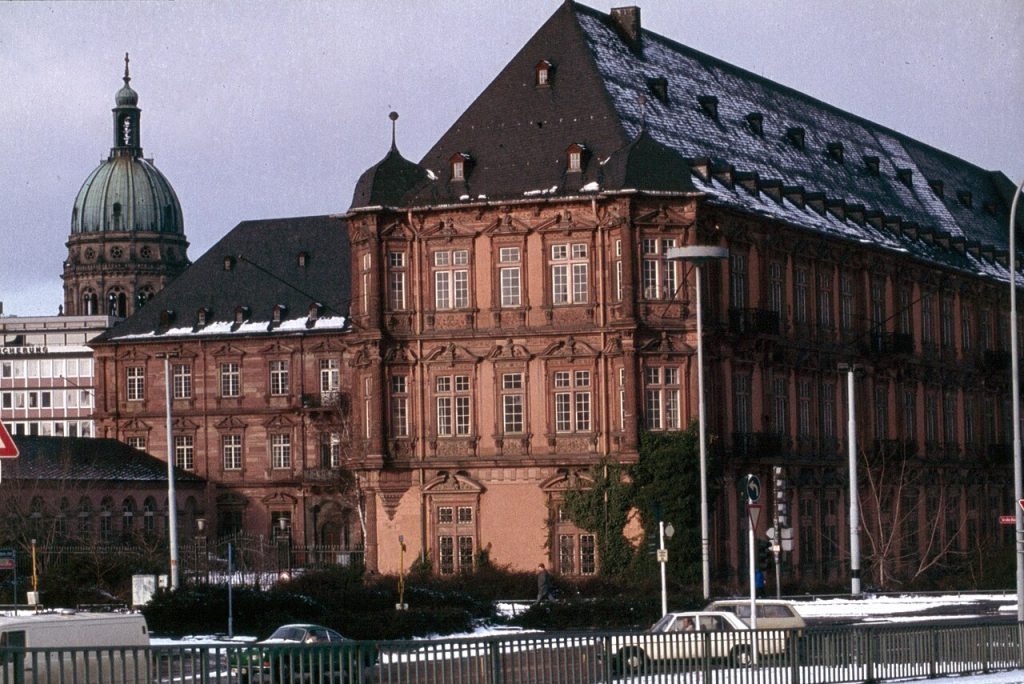
Approaching the Electoral Palace from the Rhine promenade, you see a long, imposing building of warm red sandstone, its facades covered with carved window frames, pilasters and ornamental gables.
The palace stands at the northern edge of the old town, close to the river, and its size and colour make it one of the most striking buildings on the Mainz waterfront.
Its style, sometimes called German Renaissance, combines rich ornament with a strong sense of order, and it is unlike the pale baroque palaces found elsewhere in the region.
What makes the Electoral Palace special is its role in German history as the seat of the archbishop electors, among the most important figures of the old empire.
Mainz itself is a lively city with a long history, famous as the home of Johannes Gutenberg, the inventor of printing with movable type, and for its magnificent cathedral.
The palace’s colour comes from the red sandstone of the Main region, the same stone used for Mainz Cathedral and many other historic buildings in the city.
The palace is best seen from a distance first, perhaps from the riverbank or one of the Rhine bridges, to appreciate its full length before exploring its details up close.
At night, when the facades are illuminated, the red sandstone takes on a warm glow that makes the palace even more impressive.
The Archbishop Electors of Mainz
For centuries, the archbishops of Mainz were among the seven electors who chose the king of the Romans, the future emperor. As archchancellors of the empire, they presided over the imperial elections and played a central role in politics.
The archbishops ruled a territory known as the Electorate of Mainz, which stretched along the Rhine and Main and included cities such as Aschaffenburg and Erfurt.
Their wealth and power required a residence that reflected their status, and the Electoral Palace was built to fulfil this role.
The archbishops held their court here, received envoys and princes, and administered their lands from the palace.
The Electorate came to an end during the Napoleonic wars, when Mainz was occupied by France and the ecclesiastical states of the empire were dissolved.
The archbishops of Mainz also crowned German kings and held immense influence in the church, making their city one of the most important in the empire.
One of the most famous archbishops, Albrecht of Brandenburg, played a role in the events that sparked the Reformation, when indulgence sales in his territory provoked Martin Luther’s protest.
More Than a Century of Building
Construction of the palace began in 1627 under Archbishop Georg Friedrich von Greiffenclau, but it was interrupted by the Thirty Years War and continued in stages for more than a century.
The north wing, facing the Rhine, was completed first, and the palace was finally finished around 1752, more than a hundred years after the first stones were laid.
Despite the long building period, the architects and builders maintained a consistent style, creating a unified appearance with rich sandstone ornament throughout.
The palace was designed with wings around a courtyard, combining the functions of residence, administration and representation.
Several archbishops contributed to the palace over the decades, each adding wings, decorations or improvements according to their means and taste.
The long construction period meant that architects had to work with earlier plans and adapt them to new tastes, yet the palace retains a remarkable unity of style.
The sandstone used for the facades was quarried in the region and transported by river, a reminder of the importance of the Rhine and Main for the city’s economy.
The Gate and the Approach

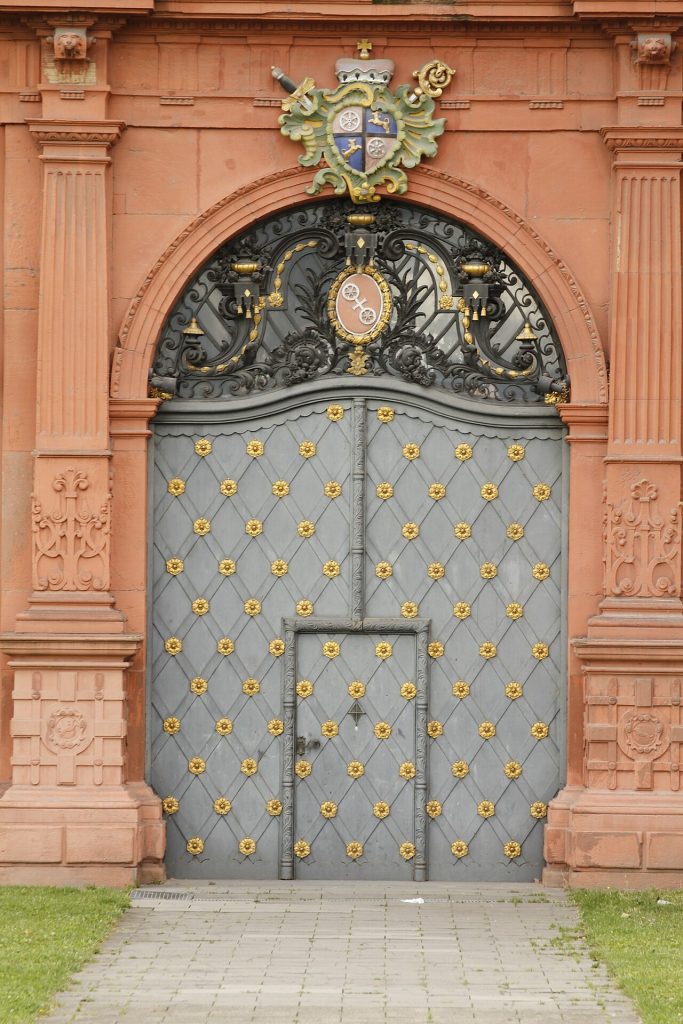
The main gate of the palace is decorated with carved stone ornament and the coat of arms of the archbishops, announcing the importance of the residence.
Passing through the gate, visitors entered the inner courtyard, from which the various wings and staircases were reached.
The gate’s details, from columns to carved figures, show the skill of the stonemasons who worked on the palace.
Today the gate is still the main entrance to the palace and a popular spot for photographs.
The coats of arms above the gate record the archbishops who built the palace, a heraldic history carved in stone.
From the gate, you can look along the facades and see how the carved details repeat and vary, creating a rich texture across the whole building.
Balconies, Windows and Ornament
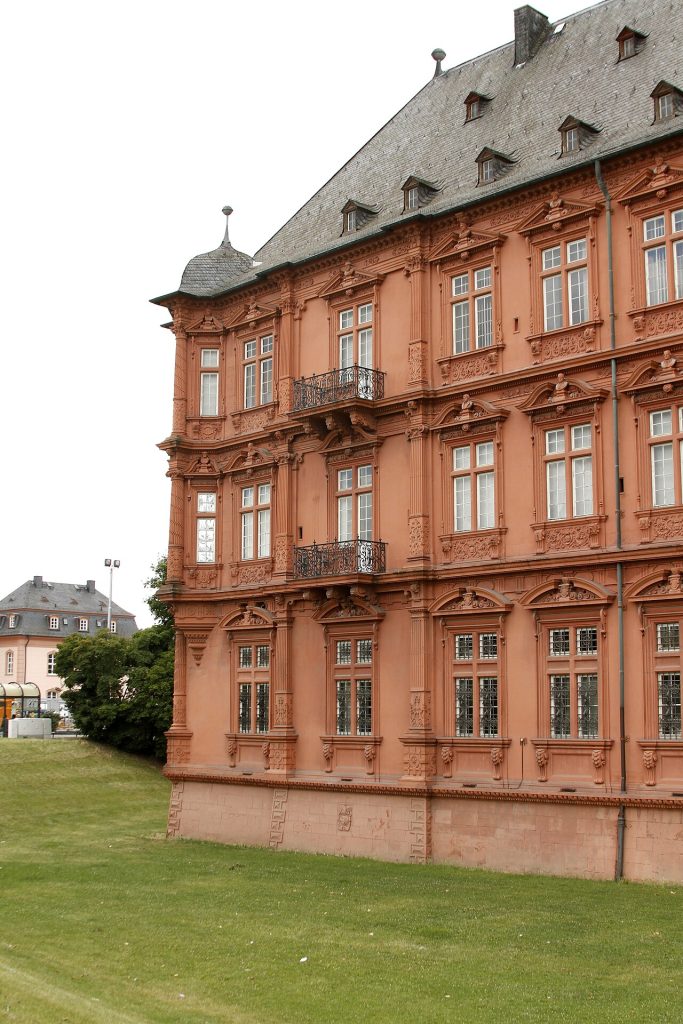
One of the most attractive features of the palace is the richness of its window decoration. Each window is framed by carved sandstone, with pediments, scrolls and ornamental details.
Balconies project from the facades, adding depth and shadow to the walls and offering views over the river and the city.
The repetition of these elements along the long facades creates a powerful rhythm that gives the palace its distinctive character.
Close up, you can see the craftsmanship of the stonemasons, who carved each detail by hand in the soft red sandstone of the region.
Some windows are crowned with carved heads and masks, small details that reward careful observation.
Corners and Gables

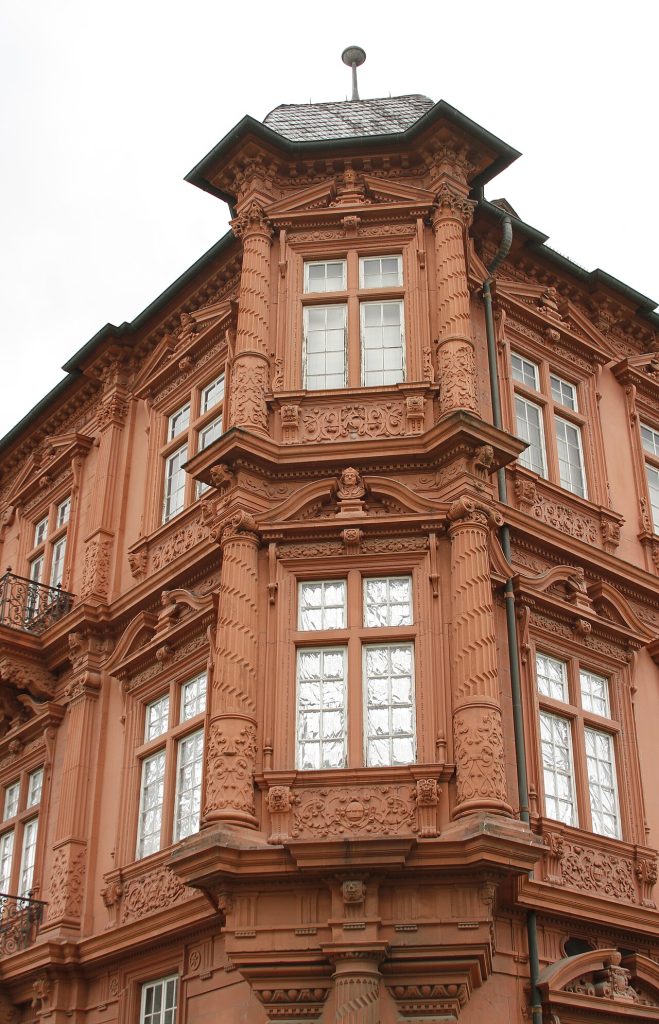
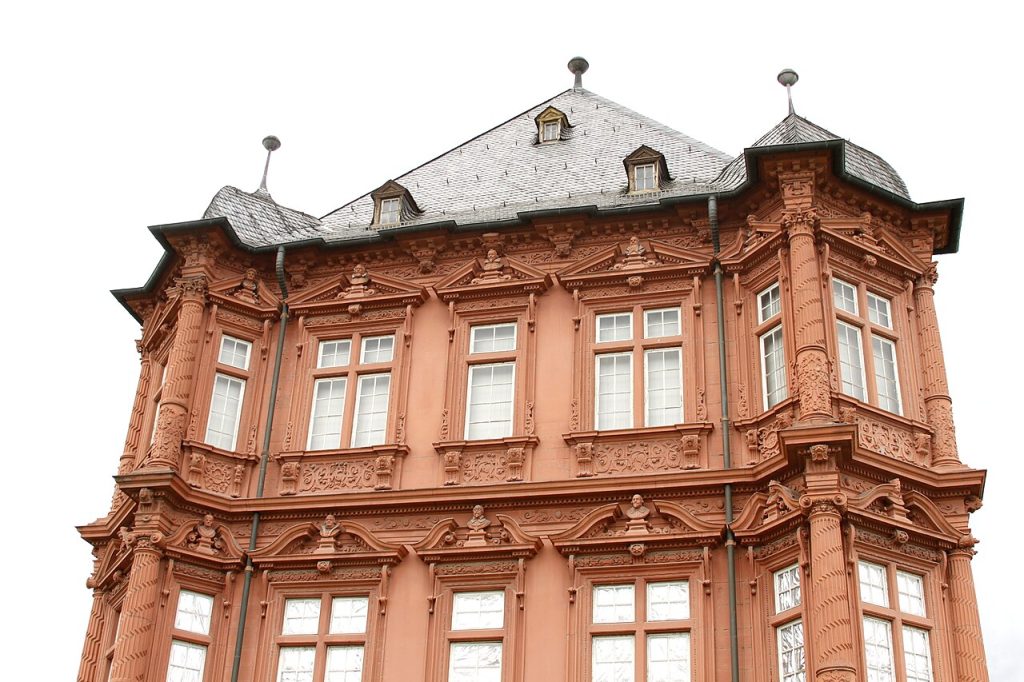
The corners of the palace are marked by projecting sections and ornamental gables, which break up the long facades and give the building a picturesque silhouette.
These gables, with their curves and scrolls, reflect the influence of Renaissance architecture from the Netherlands and Germany.
From the riverside, the corners and gables create a lively roofline that stands out against the sky.
The combination of strong horizontal lines and decorative gables is one of the hallmarks of the palace’s style.
Seen from the river, the corner towers and gables help to break up the length of the palace, making it more picturesque.
The Inner Courtyard

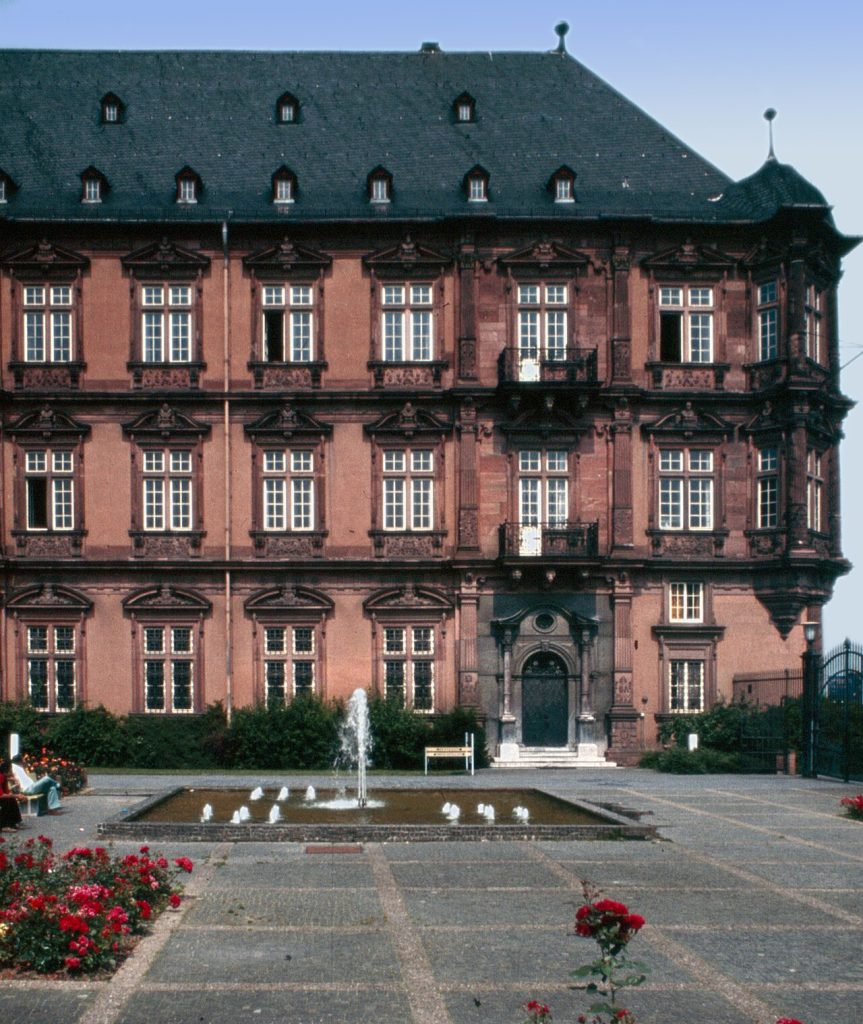
The inner courtyard of the palace is enclosed by the wings and decorated with the same rich sandstone ornament as the outer facades. It is a quieter space, away from the bustle of the riverside.
In the days of the archbishops, the courtyard was the centre of daily life at the palace, with officials, servants and visitors coming and going.
Today it is used for events and as an approach to the halls inside, and its enclosed space gives a sense of the palace’s scale.
Standing in the courtyard, you can appreciate the harmony of the design, despite the long period over which it was built.
Concerts and open air events are sometimes held in the courtyard in summer, bringing new life to this historic space.
Sieges, Fire and Revolution

Mainz was a fortress city, and its palace witnessed many dramatic events. During the French Revolutionary Wars, the city was occupied by French troops, and in 1793 it was besieged by Prussian and Austrian forces.
During the siege, the palace was badly damaged by fire, and the archbishops never returned to live there.
Under French rule and later as part of Hesse, the palace was used for various purposes, including as a customs house and later as a museum.
In the twentieth century it housed the Roman Germanic Central Museum, one of the most important archaeological museums in Germany.
The siege of 1793 was a turning point in the city’s history, and its destruction marked the end of the electoral court in Mainz.
Destruction and Reconstruction
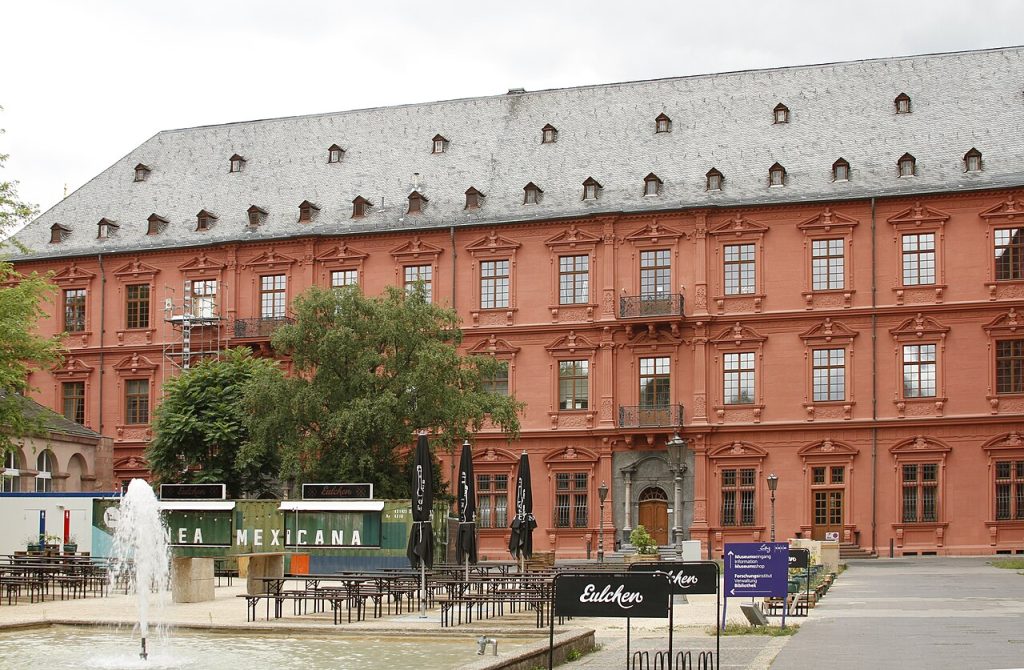
During the Second World War, Mainz was heavily bombed, and in 1942 and 1945 the Electoral Palace was largely destroyed, leaving only the outer walls standing.
After the war, the palace was rebuilt, with the facades restored to their historic appearance and the interior adapted for new uses.
The reconstruction preserved the palace as a symbol of Mainz and its history, and it remains one of the most important historic buildings in the city.
Today the building is used as a venue for conferences, concerts and events, and its great halls host some of the most important occasions in the city’s calendar.
The reconstruction was carried out with great care, using traditional techniques and local sandstone to restore the facades.
Carnival and the Palace

Mainz is one of the capitals of German carnival, and the Electoral Palace plays a central role in the celebrations. For decades, the famous television broadcast of the Mainz carnival session has been filmed in the palace’s great hall.
Every year, millions of viewers across Germany watch the jokes, songs and costumes from the palace, making it one of the best known buildings in the country.
The carnival season brings the city to life with parades, parties and traditions that reach back centuries, and the palace is at the heart of the festivities.
If you visit Mainz during carnival, you will experience the city at its most joyful and colourful.
The motto of the Mainz carnival, often heard in the palace, celebrates humour, satire and a sense of community that has defined the city’s spirit for generations.
The Palace and the Rhine
The Electoral Palace stands close to the Rhine, and its long facade faces the river promenade. In the days of the archbishops, the river was the main route for trade and travel, and the palace was designed to impress those arriving by water.
Today the promenade is a favourite place for walks, and from here you can enjoy views of the palace and the river, with Wiesbaden and Biebrich on the opposite bank.
Passenger ships depart from nearby landing stages for trips along the Rhine, including to the romantic Middle Rhine valley with its castles and vineyards.
At sunset, the red sandstone of the palace glows warmly, and the river reflects the colours of the evening sky.
The Theodor Heuss bridge, just upstream from the palace, offers a fine view of the waterfront and the palace’s long facade.
The Electoral Palace on Video
For a look at the palace and its history, the video below presents the Electoral Palace in Mainz.
Watch for the red sandstone facades and the setting on the Rhine.
The video also shows the palace’s surroundings, giving a sense of its place in the city.
If the video inspires you, read on for practical tips.
Visiting the Electoral Palace Today

The Electoral Palace is used for events and is not regularly open as a museum, but its exterior and courtyard can be admired at any time, and the halls can be seen during events and occasional tours.
The palace lies on the Rhine promenade in the centre of Mainz, within walking distance of the cathedral, the Gutenberg Museum and the old town.
Plan to combine your visit with a walk through the old town, a visit to the cathedral and the Gutenberg Museum, and a stroll along the river.
Mainz pairs well with Biebrich Palace across the river in Wiesbaden and with other palaces of the Rhine and Main region.
Mainz has excellent wine bars and restaurants, especially in the old town, where you can sample the wines of Rheinhessen, one of Germany’s largest wine regions.
Whenever you visit, the Electoral Palace offers a powerful reminder of the importance of Mainz in German history, and a beautiful example of Rhine Renaissance architecture.
View the location on Google Maps
Palaces Nearby
If you have enjoyed this palace, the Rhine and Main region holds more remarkable residences. Here are two more well worth adding to your journey:
- Biebrich Palace – the baroque Rhine residence of the dukes of Nassau in Wiesbaden.
- Bad Homburg Palace – the residence of the landgraves of Hesse Homburg and summer home of the German emperors.
You May Like

The Electoral Palace of Koblenz and the Last Elector of Trier