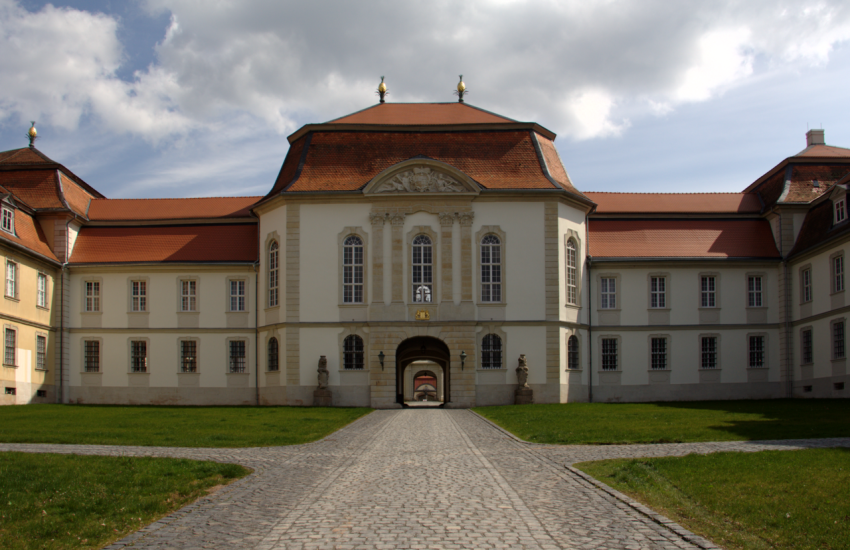
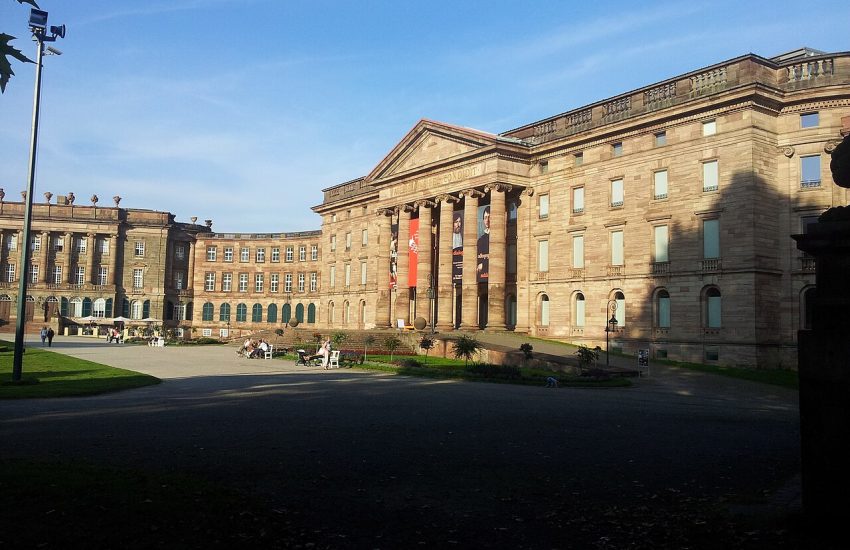
In the heart of Fulda, one of the most beautiful baroque towns in Germany, stands the residence of the prince abbots and prince bishops who ruled this ancient ecclesiastical state for centuries. The City Palace of Fulda, rebuilt in the early eighteenth century by Johann Dientzenhofer, is today the town hall, but its historic rooms, from the Imperial Hall to the Mirror Cabinet, are open to visitors and reveal the splendour of the baroque court.
Behind the palace stretches a formal garden with an elegant orangery and the famous Flora vase, while across the square rises the great cathedral where Saint Boniface, the apostle of the Germans, lies buried. Together they form one of the finest baroque ensembles north of the Alps.
In this article we will explore the City Palace from the prince abbots who built it to its historic rooms, its garden and orangery, and we will finish with practical tips for your visit.
In This Article
- A Baroque Residence in the Heart of Fulda
- The Prince Abbots of Fulda
- Johann Dientzenhofer and the Rebuilding
- The Palace Garden
- The Festive Hall
- The Green Salon and Private Rooms
- The Palace Chapel
- The Imperial Hall
- The Marble Hall
- The Mirror Cabinet and Fulda Porcelain
- The Orangery and the Flora Vase
- Fulda on Video
- Visiting the City Palace Today
A Baroque Residence in the Heart of Fulda
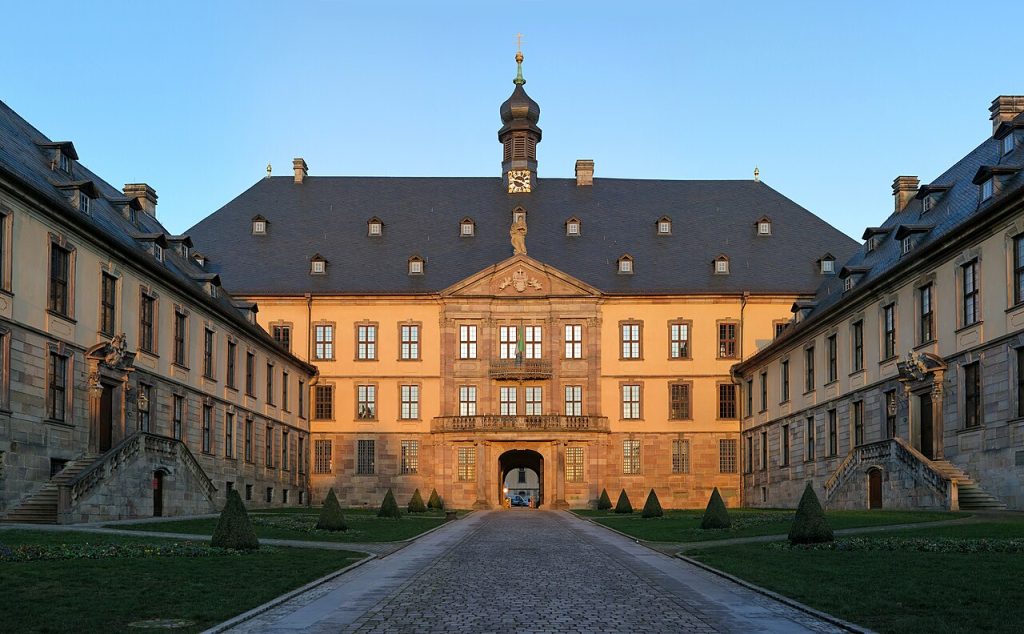
Walking through the baroque quarter of Fulda, you come upon the City Palace, a long, dignified building with wings embracing a courtyard. Its pale facades and red roofs dominate the centre of the town, close to the cathedral and the church of Saint Michael.
The palace is part of a remarkable baroque district that was largely created in the eighteenth century, when the prince abbots rebuilt their capital in grand style.
Today the palace serves as the town hall of Fulda, but its historic rooms are preserved as a museum, so visitors can experience the world of the prince abbots.
What makes the City Palace special is the combination of its baroque architecture, its richly decorated rooms and its setting among some of the finest buildings in Germany.
Fulda is easy to explore on foot, and the palace is the natural starting point for a walk through the old town.
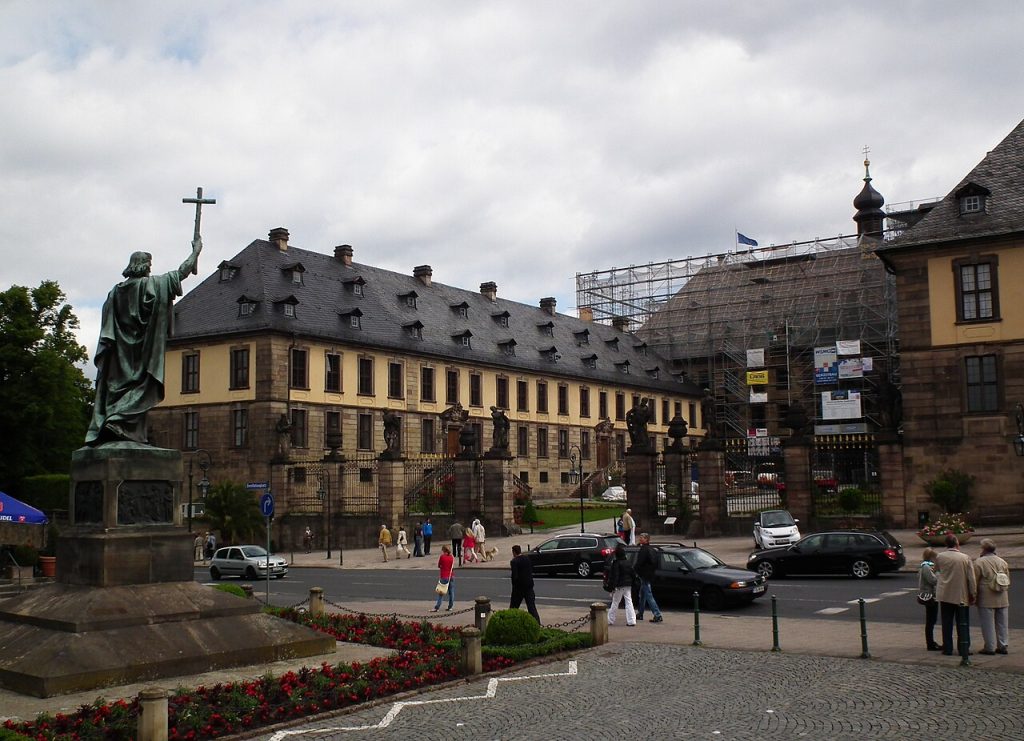
The square in front of the palace is a lively meeting place, with cafes and benches from which you can admire the facades and the statue of Saint Boniface.
In the evening, when the palace and cathedral are illuminated, the baroque quarter takes on a magical atmosphere that makes a stroll especially rewarding.
The Prince Abbots of Fulda
Fulda was founded in 744 as a monastery by Sturmius, a disciple of Saint Boniface, the English missionary who converted much of Germany to Christianity. After Boniface’s martyrdom in 754, his body was brought to Fulda, and the abbey became one of the most important religious centres in Europe.
Over the centuries, the abbots of Fulda became powerful territorial rulers within the Holy Roman Empire, governing lands, collecting taxes and maintaining a court.
In 1752 the abbey was raised to a bishopric, and the abbots became prince bishops, adding spiritual prestige to their worldly power.
The principality was secularised in 1803, and Fulda later became part of Hesse Kassel, then Prussia, and finally the modern state of Hesse.
The memory of the prince abbots lives on in the baroque buildings they left behind, above all the City Palace and the cathedral.
Fulda’s library and scriptorium were famous in the Middle Ages, and the monastery was a centre of learning whose influence reached across the whole of Germany.
Johann Dientzenhofer and the Rebuilding
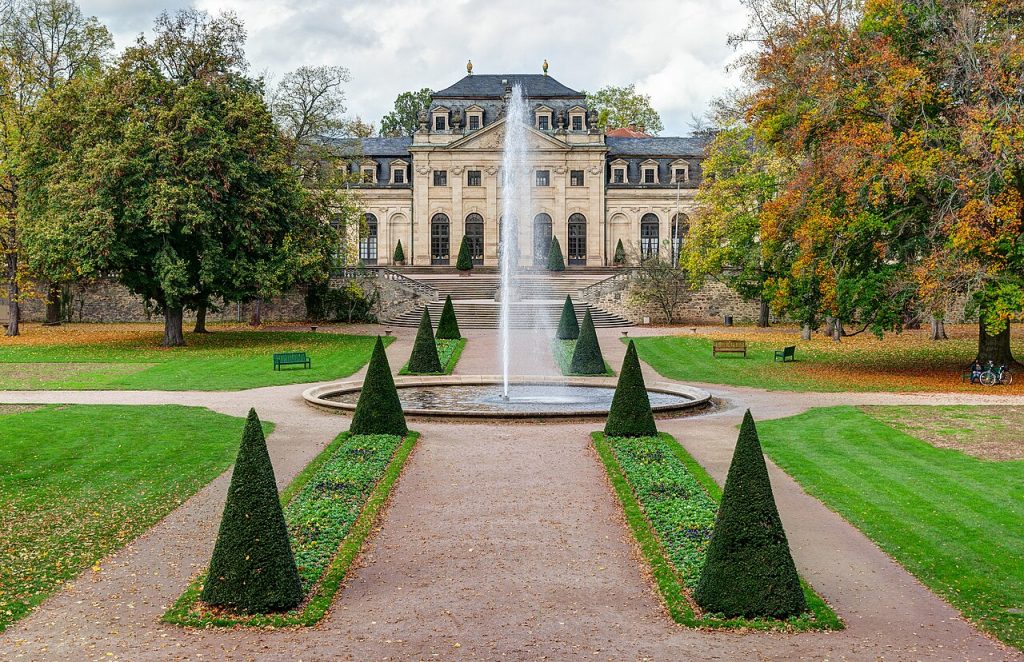
The City Palace grew out of an older Renaissance residence, which was transformed in the early eighteenth century by Prince Abbot Adalbert von Schleifras. Between 1706 and 1714, the architect Johann Dientzenhofer rebuilt the palace in the baroque style.
Dientzenhofer, a member of the famous family of architects, also designed Fulda Cathedral, and his work gave the town its distinctive baroque character.
The palace was arranged around a courtyard, with grand staircases and state rooms on the upper floors, and its facades were decorated with elegant details.
Later prince abbots and bishops continued to embellish the interiors, adding rococo decoration and new rooms in the following decades.
The statue of Saint Boniface in front of the palace recalls the saint whose tomb made Fulda a place of pilgrimage for more than a thousand years.
Dientzenhofer’s buildings in Fulda gave the town a unified baroque character that still defines its appearance today.
The Palace Garden
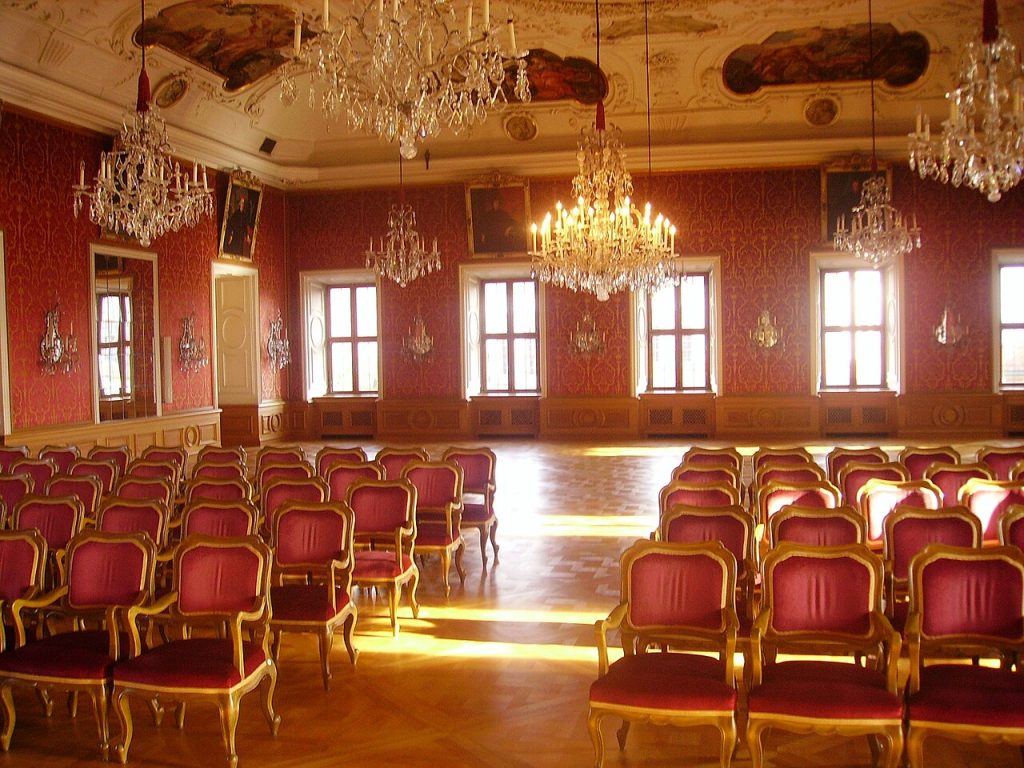
Behind the palace lies the Schlossgarten, a formal garden laid out in the baroque style with lawns, flower beds, avenues and fountains. It is one of the most beautiful public gardens in Hesse.
The garden was designed to extend the architecture of the palace into the landscape, creating a harmonious setting for promenades and festivities.
Today it is a favourite place for residents and visitors to relax, stroll and enjoy the views of the palace and the orangery.
In summer, the flower beds are planted with colourful displays, and the garden hosts concerts and events.
Paths lead through the garden to the Orangery terrace, where you can enjoy the view back toward the palace across the lawns and flower beds.
Old trees along the edges provide shade, and benches invite you to sit and enjoy the peaceful atmosphere in the heart of the town.
The Festive Hall
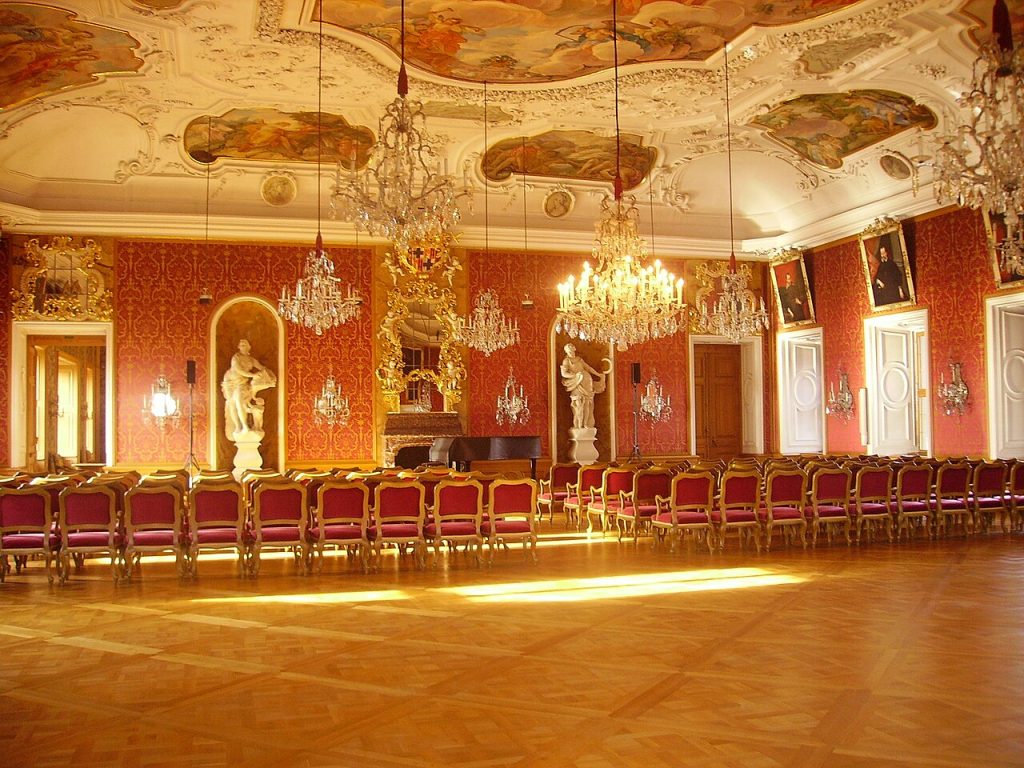
Among the historic rooms of the palace, the Festive Hall is one of the most impressive. Its walls and ceiling are decorated with stucco, paintings and gilding, creating an atmosphere of festive splendour.
The hall was used for receptions, banquets and ceremonies, and it remains a venue for concerts and official events today.
Large windows fill the room with light, and chandeliers add sparkle in the evening.
Standing in the hall, you can imagine the prince bishop receiving his guests in a setting designed to impress.
The court of Fulda enjoyed music, theatre and festivities, and the Festive Hall was the stage for many of these events. Musicians played for dances and banquets, and guests from across the region attended.
The decoration of the hall, with its allegorical paintings and stucco ornaments, celebrated the virtues of the prince bishops and the glory of their state.
Even today, concerts in the hall bring the spirit of the baroque court back to life.
The acoustics and elegant proportions make it one of the most sought after venues in Fulda.
Look closely at the ceiling, where painted allegories celebrate wisdom, justice and faith, the virtues expected of a prince who was also a churchman.
The Green Salon and Private Rooms
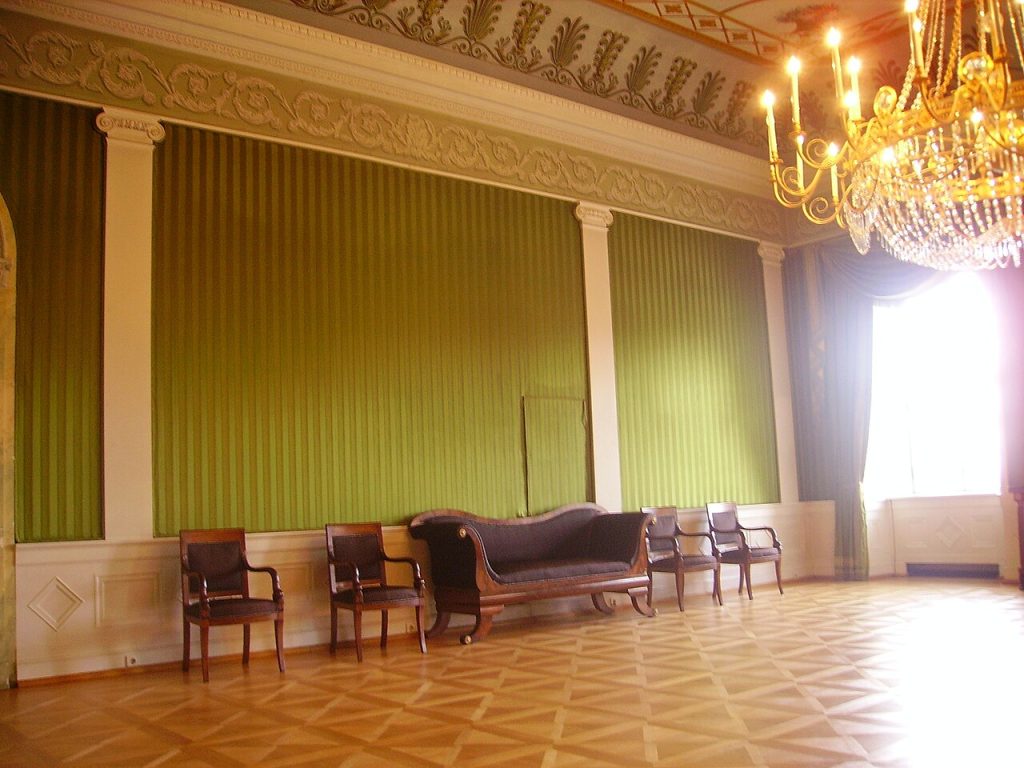
The Green Salon is one of the most charming rooms in the palace, its walls covered in green silk and its furniture arranged for conversation and relaxation.
Other private rooms reveal the more intimate side of court life, with writing desks, cabinets and family portraits.
The decoration combines rococo elegance with comfort, reflecting the taste of the prince bishops in the eighteenth century.
These rooms give visitors a sense of how the rulers of Fulda lived when they were not engaged in official duties.
Fine furniture, clocks and porcelain add to the elegance of the rooms, many of them pieces made for the court of Fulda.
The Palace Chapel
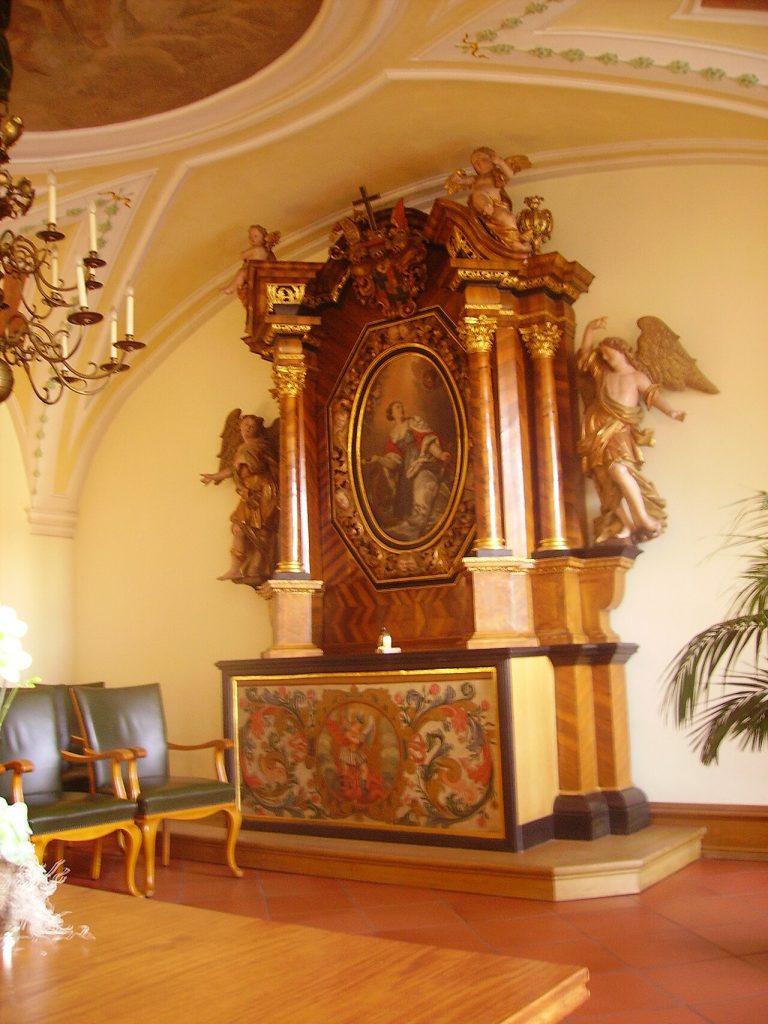
As befits the residence of churchmen, the City Palace includes a richly decorated chapel where the prince abbots and bishops celebrated private masses.
The chapel is adorned with stucco, paintings and gilding, creating a devotional space of great beauty within the palace.
It reflects the dual role of the rulers of Fulda as spiritual leaders and secular princes, combining faith and splendour.
Visitors can see the chapel as part of the historic rooms tour.
The chapel’s altar and decoration reflect the deep Catholic faith of the prince abbots, who saw their role as both spiritual and secular rulers.
The Imperial Hall
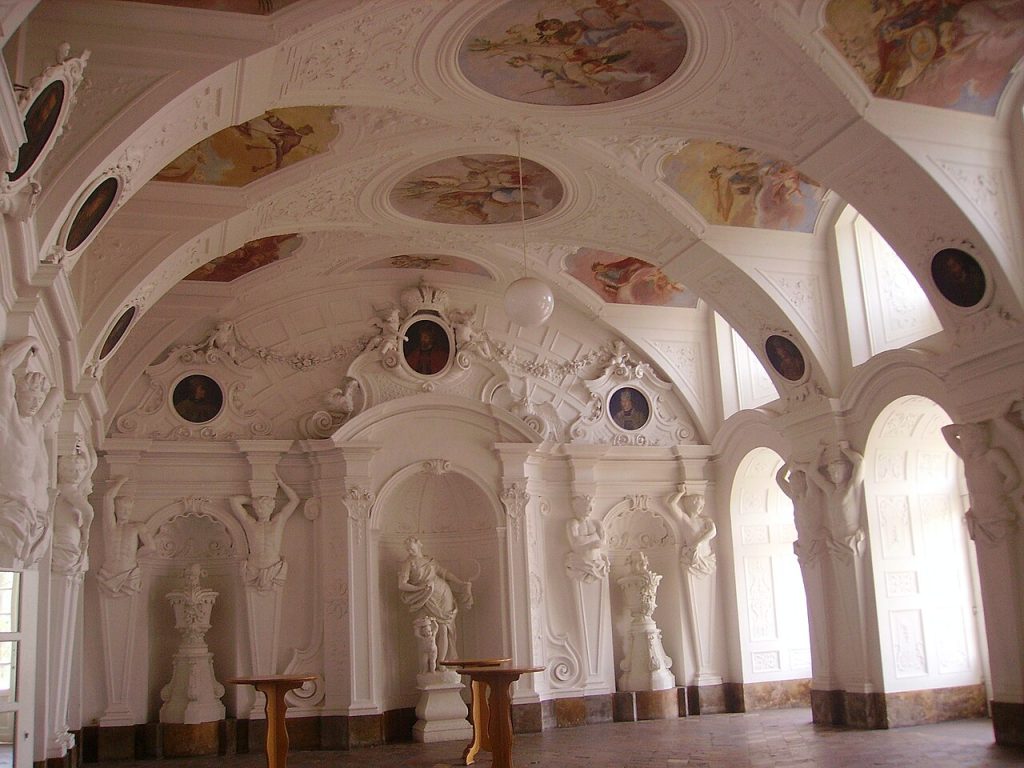
The Imperial Hall is one of the grandest rooms in the palace, decorated with portraits of emperors of the Holy Roman Empire. It expressed the close ties between the prince abbots of Fulda and the emperor.
The abbots of Fulda held the title of archchancellor of the empress, a prestigious honour that gave them a special role at imperial coronations.
The hall’s decoration, with its painted ceiling and stucco, celebrates this imperial connection and the dignity of the prince abbots.
Standing beneath the portraits of the emperors, you can sense the political importance of Fulda in the old empire.
The hall is also used today for official receptions of the town of Fulda, continuing its role as a place of ceremony.
The Marble Hall
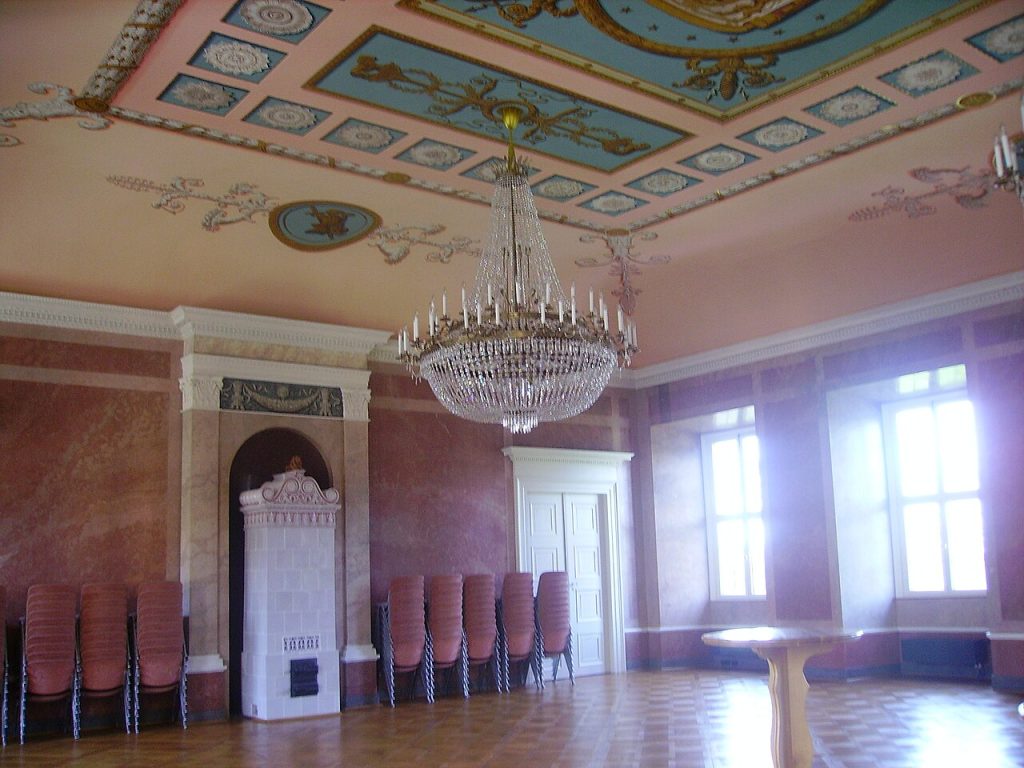
The Marble Hall is another highlight of the historic rooms, its walls clad in imitation marble and decorated with stucco and paintings.
The hall was used for important receptions and ceremonies, and its elegant decoration reflects the refined taste of the court.
Light from the windows brings out the colours of the marble and the gilded details, creating a luminous atmosphere.
The hall is often used for concerts and events, and its beauty makes it one of the most admired rooms in Fulda.
The careful restoration of the hall has preserved its original decoration, allowing visitors to experience it much as the prince bishops did.
The Mirror Cabinet and Fulda Porcelain
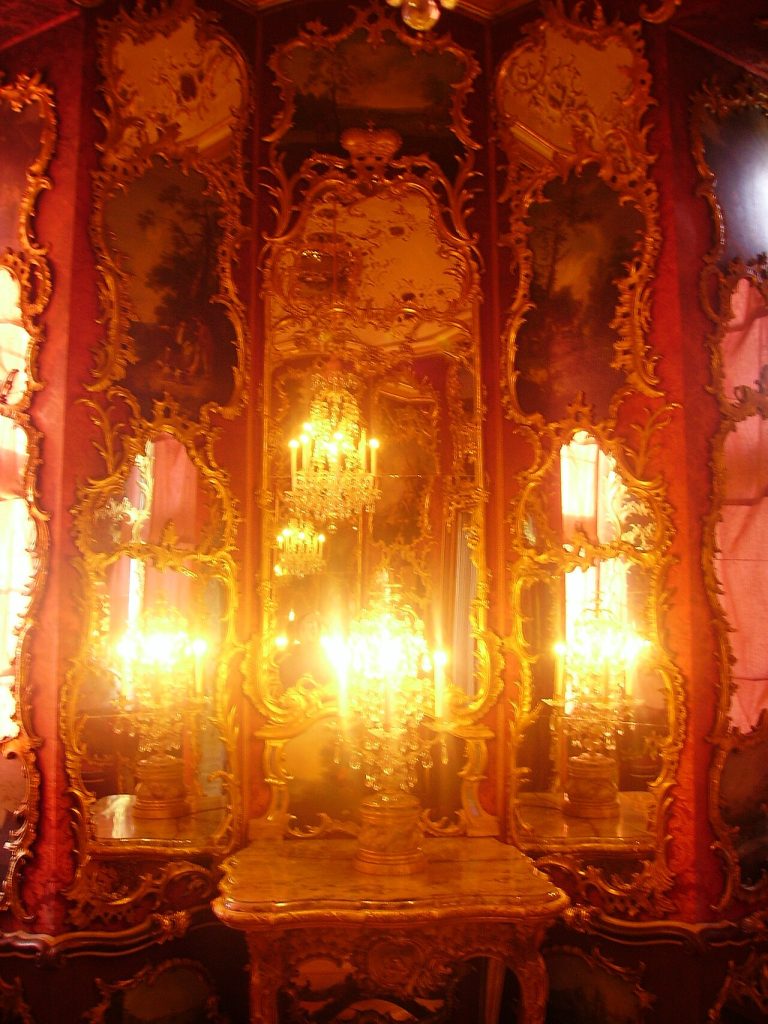
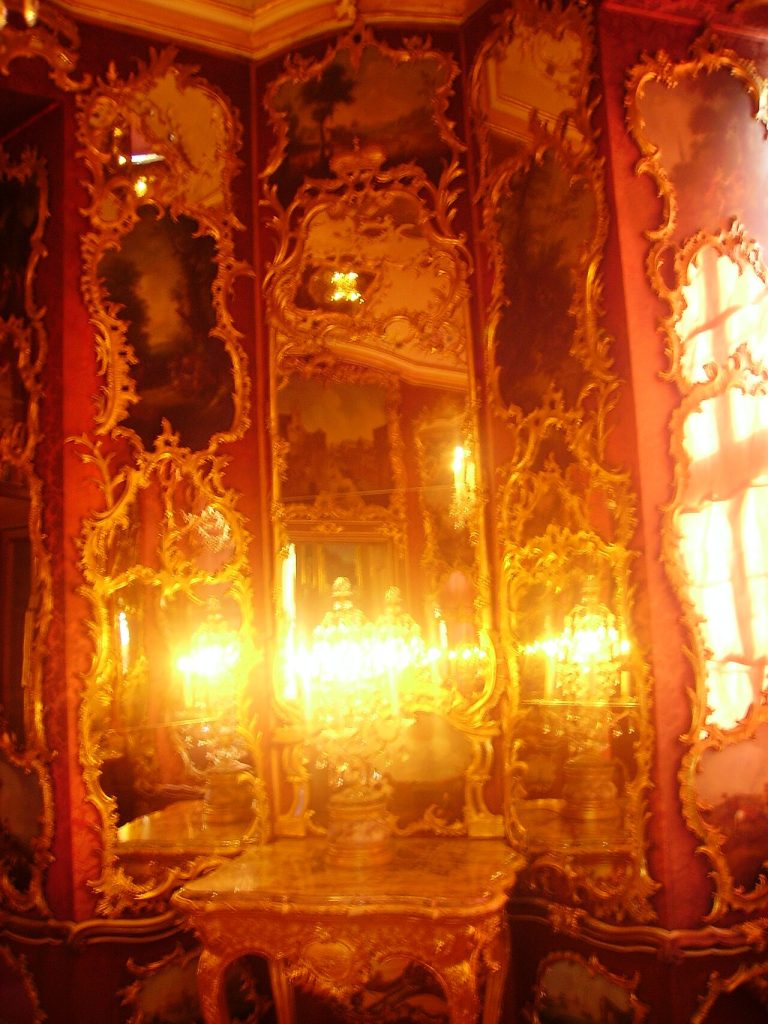
The Mirror Cabinet is the jewel of the City Palace. Its walls are covered with mirrors framed in gilded wood and decorated with porcelain, creating a dazzling play of reflections.
The porcelain includes pieces from the Fulda manufactory, which operated in the eighteenth century under the patronage of the prince bishops and produced figures and tableware of great refinement.
Fulda porcelain is rare and highly prized, and the Mirror Cabinet offers one of the best opportunities to see it in its original setting.
The cabinet is small, but its effect is unforgettable, a perfect example of rococo taste.
The Fulda porcelain manufactory was founded in 1764 and closed in 1790, so its production was small and its pieces are rare, which makes the collection all the more precious.
Figures of shepherds, musicians and courtiers, painted in delicate colours, are among the most charming products of the manufactory.
The Orangery and the Flora Vase
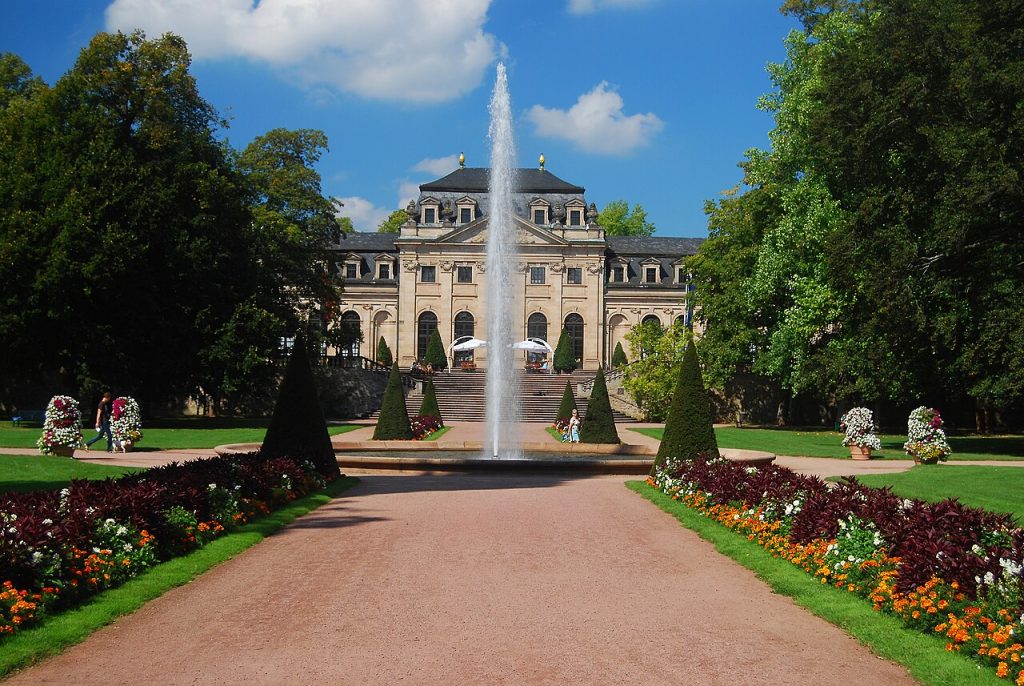
At the end of the palace garden stands the Orangery, built between 1722 and 1730 by Maximilian von Welsch. It is one of the finest baroque orangeries in Germany, with a long facade and an elegant central pavilion.
In winter, citrus trees and other exotic plants were kept inside, while in summer they were placed in the garden. Today the Orangery is used for events and houses a hotel and restaurant.
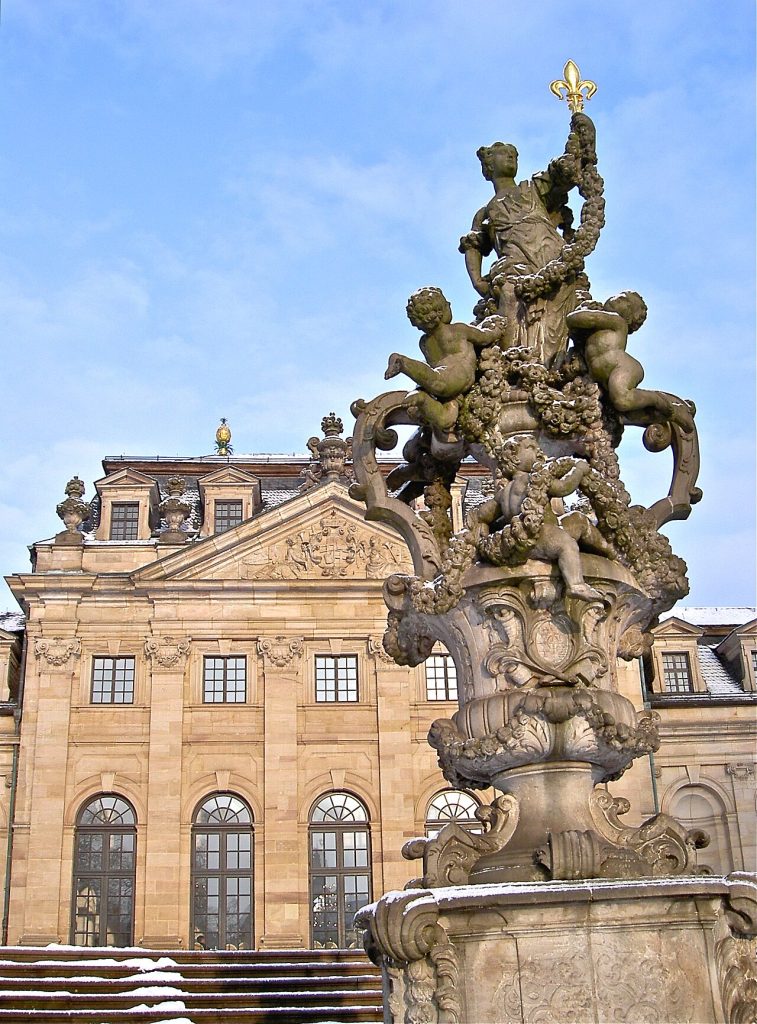
In front of the Orangery stands the Flora vase, a magnificent sculpture created in 1728 by Johann Friedrich von Humbach, considered one of the most beautiful baroque garden sculptures in Germany.
The view from the Orangery terrace across the garden toward the palace is one of the loveliest in Fulda.
The Orangery’s central hall, with its stucco and paintings, is a beautiful setting for concerts and receptions, and its terrace is a lovely spot for a coffee in summer.
Fulda on Video
For a look at the baroque quarter of Fulda and its palace, the video below presents the highlights of the town.
Watch for the palace, the garden and the cathedral.
The video also shows the wider baroque quarter, giving a sense of how the palace fits into the town.
If the video inspires you, read on for practical tips.
Visiting the City Palace Today
The historic rooms of the City Palace are open to visitors throughout the year, with guided tours and individual visits possible. The garden and the Orangery terrace are freely accessible.
Fulda is easy to reach by high speed train, and the palace is a short walk from the station through the town centre.
Plan at least half a day to see the palace, the garden, the cathedral and the church of Saint Michael, and consider a trip to Fasanerie Palace just outside the town.
The cathedral museum and the tomb of Saint Boniface in the cathedral crypt are also well worth a visit.
Fulda has many good restaurants and cafes, and its pedestrian streets make it a pleasant town to explore at a leisurely pace.
Whenever you visit, the City Palace offers a vivid glimpse into the splendid world of the prince abbots, in one of the most beautiful baroque towns of Germany.
View the location on Google Maps
Palaces Nearby
If the City Palace has fascinated you, Hesse holds more remarkable palaces. Here are two more well worth adding to your journey:
- Fasanerie Palace – the baroque summer palace of the prince abbots of Fulda, rich in porcelain and antiquities.
- Wilhelmshoehe Palace – the classical palace of the landgraves of Hesse beneath the Hercules monument in Kassel.
You May Like