Every list of “the world’s firsts” eventually leads back to one stretch of hot, flat land between two rivers. The first cities. The first writing. The first laws, the first epic poem, the first wheel put to serious use, the first schools, the first bureaucrats grumbling about paperwork. It all seems to bubble up, around five thousand years ago, from the land the Greeks later called Mesopotamia, “the land between the rivers,” in what is now southern Iraq. And at the beating heart of that explosion was a single, astonishing city: Uruk. If anywhere deserves to be called the birthplace of civilization as we know it, it’s here.
In this article:
The land between the rivers
Mesopotamia sits in the valley of the Tigris and Euphrates rivers. On the face of it, southern Iraq looks like an unlikely cradle for civilization: hot, dry, short on rain, with few stones and almost no timber. But those two great rivers changed everything. They flooded and left behind rich, fertile silt, and crucially, their water could be channelled. The people who settled here, the Sumerians, became masters of irrigation, digging canals to carry river water out across the dry plains.
And irrigation is the quiet hero of this whole story. Once you can reliably water the land, you can grow far more grain than you need to eat. That surplus is the seed of everything else. With extra food, not everyone has to farm. Some people can become potters, weavers, priests, soldiers, scribes, kings. Society can specialize, stratify, and swell. The simple act of moving water in the right direction set off a chain reaction that would, within a few centuries, produce the first true cities on Earth.
Uruk: the first real city
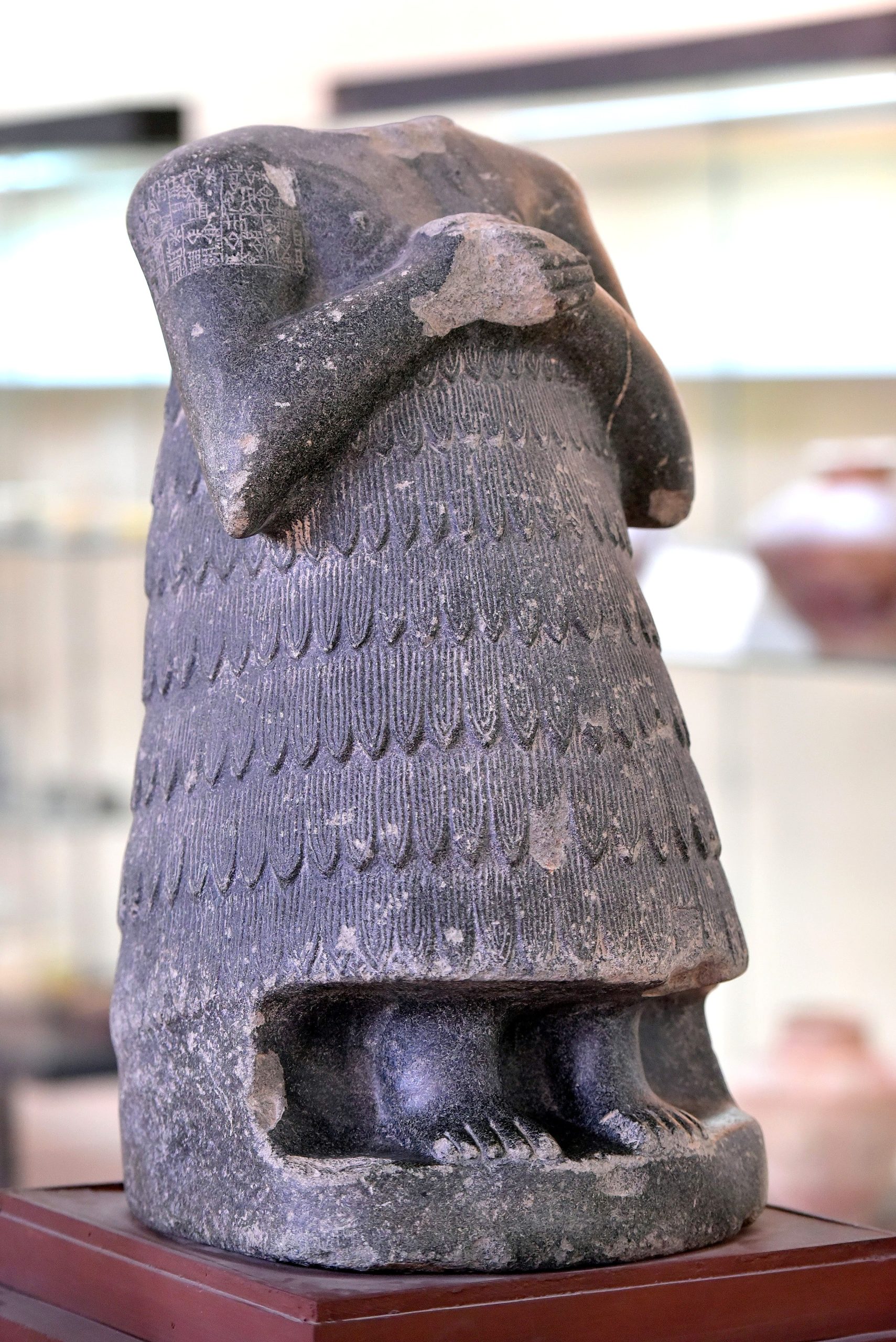
Around 4000 to 3000 BC, one settlement on the Euphrates grew to a size the world had never seen. Uruk, known in the Bible as Erech and giving its name, many think, to the country of Iraq itself, may have held tens of thousands of people at its height, perhaps fifty thousand or more. It was ringed by a great defensive wall said in legend to have been built by its most famous king, and packed with monumental temples, workshops, markets, and crowded neighbourhoods.
This was something genuinely new under the sun. Earlier places like Çatalhöyük or Jericho were large for their time, but Uruk was a city in the full sense: dense, diverse, organized, and dominated by huge public buildings. At its centre rose vast temple complexes dedicated to its gods, especially Inanna, the goddess of love and war, and An, the sky god. These temples weren’t just places of worship. They were the economic engines of the city, owning land, storing grain, employing workers, and managing the surplus that kept everyone fed. In Uruk you can watch, archaeologically, the very moment humanity figured out how to live in a metropolis.
The invention that changed everything: writing
Of all the firsts that came out of Mesopotamia, one towers above the rest. This is where writing was invented, and it’s hard to overstate what a turning point that is in the human story. Writing is, in a real sense, the line between prehistory and history. Before it, we can only guess at people’s thoughts from the objects they left. After it, they can finally speak to us in their own words.
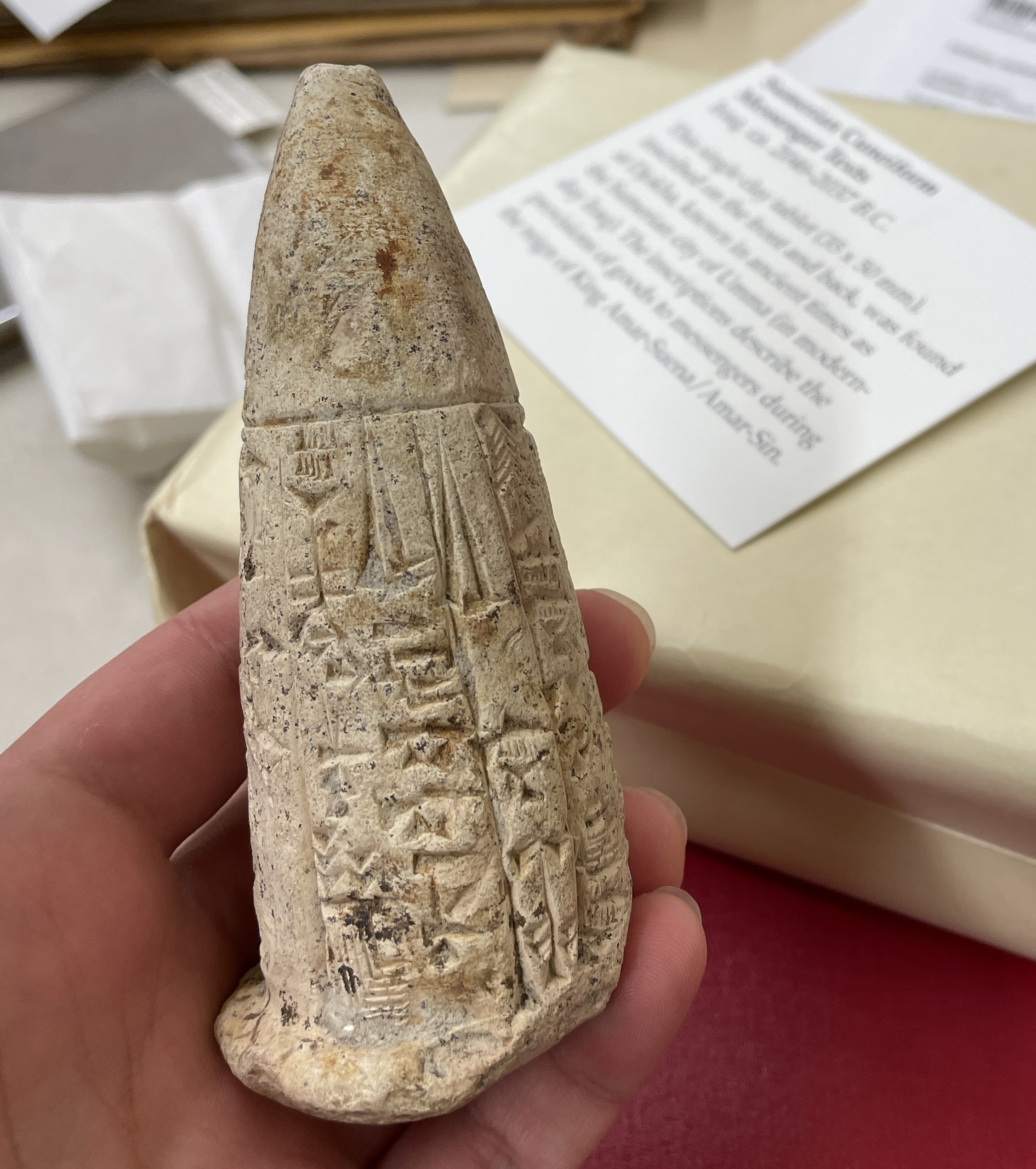
And here’s the wonderfully human part: writing wasn’t invented to record poetry or prayers or grand declarations. It was invented for accounting. As temple and city economies grew more complex, officials needed to keep track of who owed what, how much grain went into the storehouse, how many sheep changed hands. They began pressing marks into wet clay tablets with a reed stylus to record these transactions. The wedge-shaped marks give the script its name, cuneiform, from the Latin for “wedge.” The earliest writing in the world is, essentially, a stack of receipts and inventories.
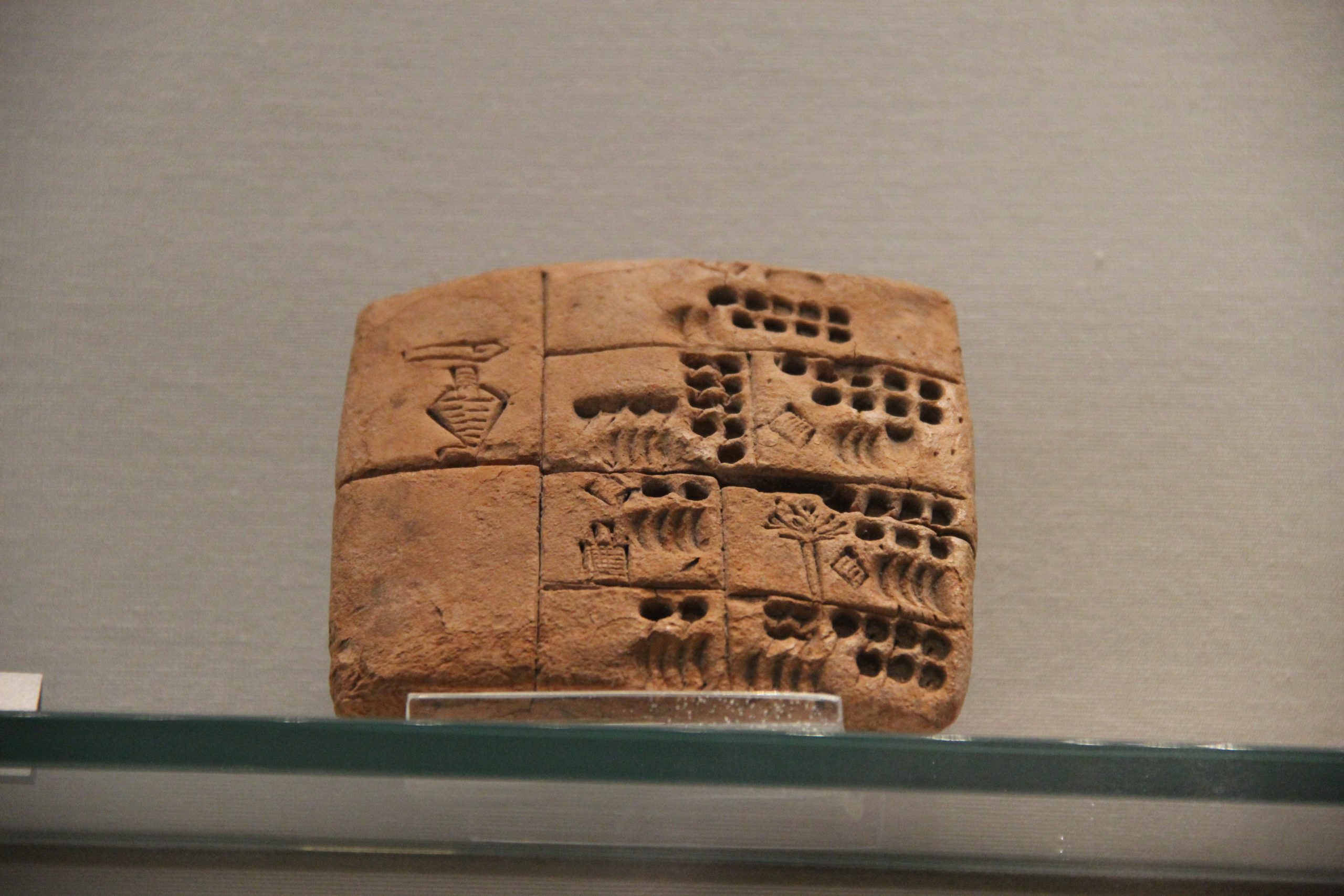
Over centuries this humble bookkeeping system blossomed into something extraordinary. The same script that started by tallying barley grew capable of recording laws, letters, contracts, school lessons, medicine, astronomy, myths, and literature. Because clay tablets, once baked or dried, survive for thousands of years, we have hundreds of thousands of them. We can read the homework of Sumerian schoolboys, the complaints of merchants, the prayers of kings. A four-thousand-year-old voice grumbling about a bad copper delivery survives to this day, which never fails to delight me. Writing didn’t just record civilization. It made the deep accumulation of knowledge, and therefore civilization itself, possible.
The world’s oldest story
Once people could write, they eventually wrote down their stories, and from Mesopotamia comes the oldest great work of literature we know: the Epic of Gilgamesh. Gilgamesh was a legendary king of Uruk, and his epic is a sweeping tale of friendship, adventure, grief, and the desperate human search for immortality. After his beloved friend Enkidu dies, Gilgamesh, terrified of his own mortality, sets off on a quest to escape death itself, only to learn, in the end, that it cannot be cheated.
It is a story written thousands of years ago, and yet its themes are utterly timeless. The fear of dying, the pain of losing someone we love, the longing to leave a mark that outlasts us. The epic even contains a great flood narrative strikingly similar to the later story of Noah, hinting at how these tales travelled and echoed across cultures. Reading Gilgamesh, you realize that the oldest literature in the world is asking the very same questions we still ask. The technology changed. The human heart did not.
A civilization of firsts
The Sumerians were astonishingly inventive, and the list of their innovations reads like a foundation stone of the modern world. They gave us the first cities and the first writing, but also so much more. They developed advanced mathematics built on a base-60 system, which is exactly why we still divide an hour into sixty minutes and a circle into three hundred and sixty degrees. They produced sophisticated astronomy, early law codes, monumental architecture, and large-scale organized religion.
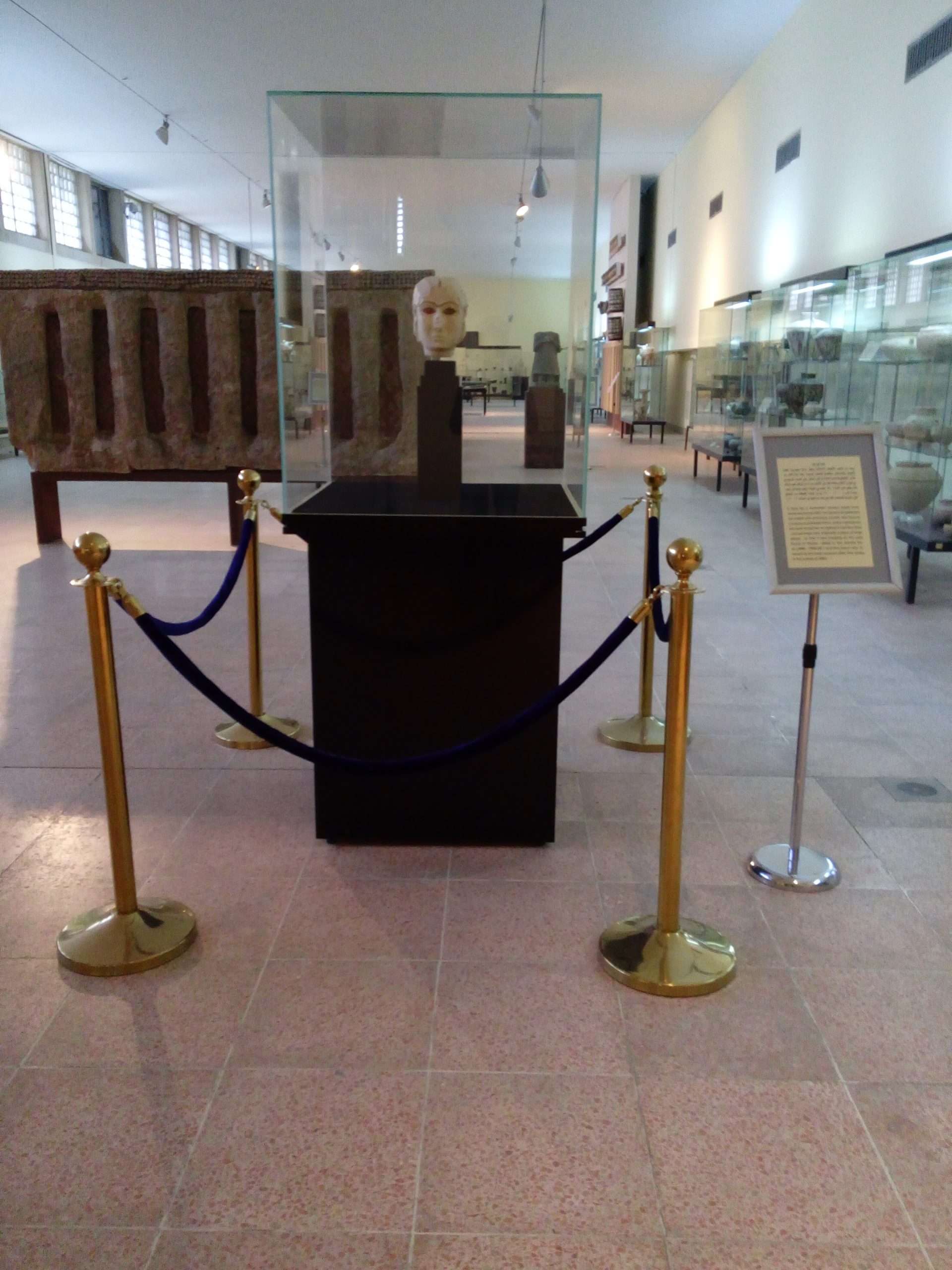
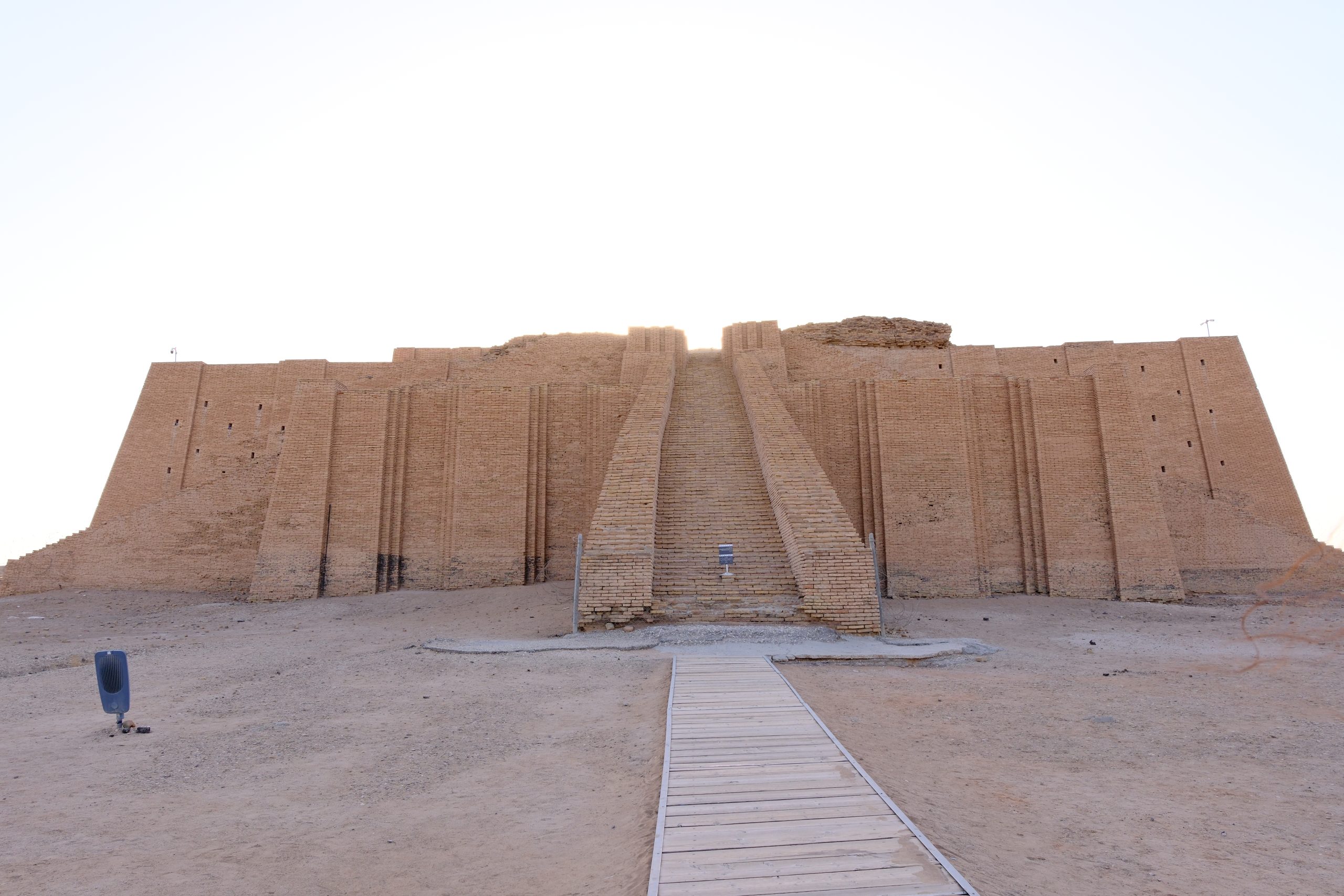
They built towering stepped temples called ziggurats, artificial sacred mountains of mud-brick that loomed over their cities as a bridge between earth and the heavens. They organized labour on a huge scale, kept detailed records, ran schools to train scribes, and developed the wheel into a practical tool for transport and pottery. Standing back from the long sweep of history, it’s remarkable how much of the basic operating system of human civilization, the city, the written word, the law, the calendar, was first booted up right here on the Mesopotamian plain.
Everyday life in a Sumerian city
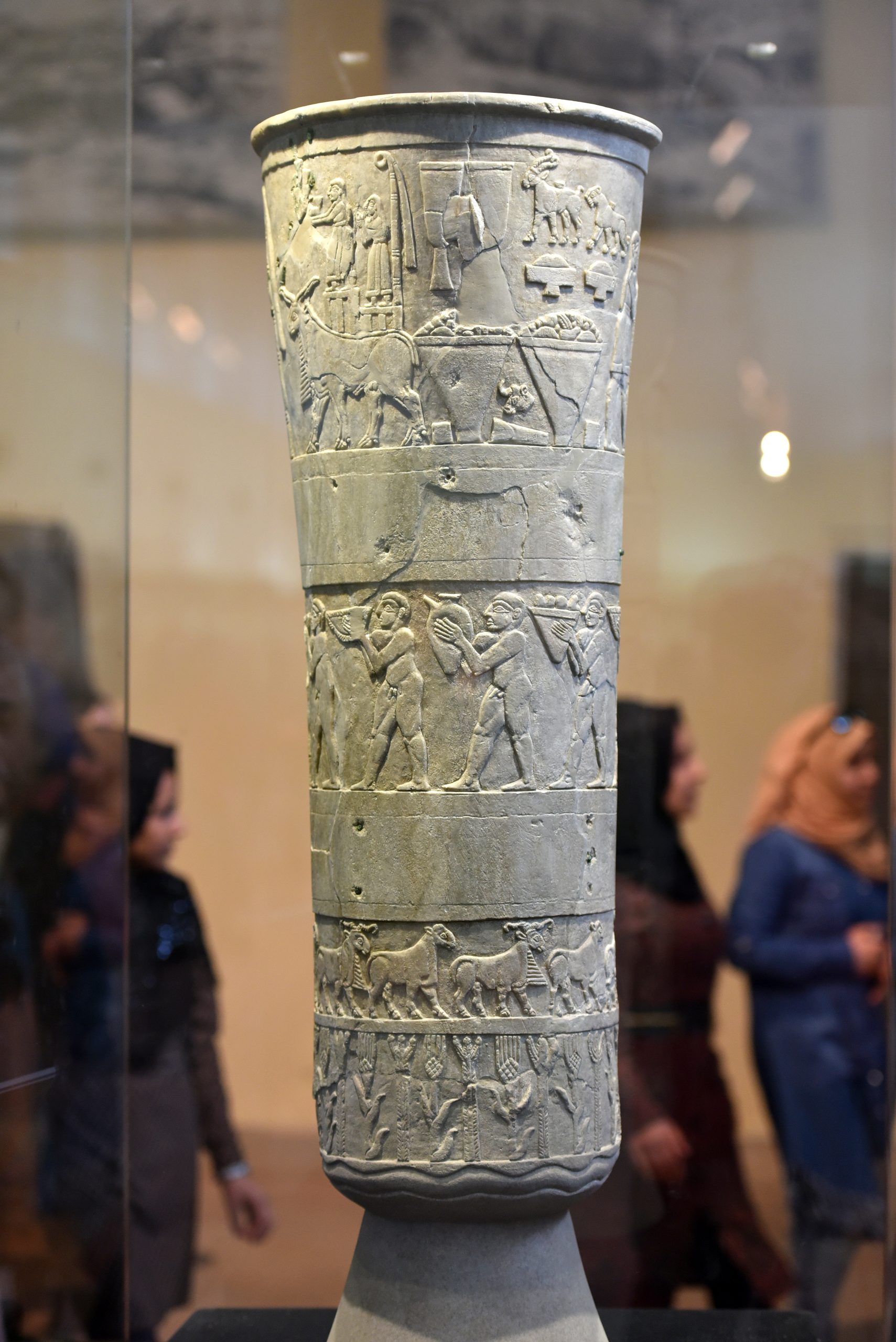
It’s easy to talk about Sumer in terms of grand firsts and lose sight of the ordinary people who actually filled these streets. So picture it for a moment. A Sumerian city was a noisy, crowded, sun-baked place of narrow lanes winding between flat-roofed mud-brick houses, with the great temple rising above it all. Merchants haggled in markets. Potters spun clay on wheels. Fishermen brought in catches from the river and the marshes. Farmers came in from the irrigated fields with grain, dates, onions, and barley that was brewed into a thick, nourishing beer drunk through straws to avoid the floating husks.
We know a surprising amount about how they lived because they wrote so much of it down. There were schools, called “tablet houses,” where boys, mostly the sons of the well-off, learned the difficult art of cuneiform by copying texts over and over. Some of their practice tablets survive, complete with a teacher’s corrections, and even a wonderfully grumpy student essay about a bad day at school. There were contracts for loans, marriage agreements, court cases, and inventories of temple property. There were doctors with lists of remedies, and astronomers tracking the planets for omens. People worshipped a crowded family of gods, feared demons, consulted the stars, and worried about debt and harvest and family, much as people always have.
What comes through, across all those clay tablets, is how recognizably human these first city-dwellers were. They could be petty, pious, ambitious, loving, and exasperated. They threw festivals, mourned their dead, cheated on their taxes, and told stories around the fire. Strip away five thousand years and the distance between us and them shrinks to almost nothing. That, perhaps, is the real gift of being the civilization that learned to write: they didn’t just leave us monuments, they left us themselves.
What happened to them, and what they left us
Sumer was never a single unified empire so much as a collection of rival city-states, places like Uruk, Ur, Lagash, and Eridu, that competed, traded, and warred with one another. Over time they were absorbed into larger powers, the Akkadians, the Babylonians, the Assyrians, who inherited and built upon Sumerian culture even after the Sumerian language itself faded from daily speech. The cities eventually declined, partly as rivers shifted course and as centuries of irrigation left the soil salty and less fertile, a sobering early lesson in how even a brilliant civilization can undermine its own foundations.
But what the Sumerians began never really ended. Their inventions were passed down, reworked, and carried across the ancient world, woven so deeply into later cultures that we use their legacy every single day without thinking about it. When you check the time on a sixty-minute clock, sign a contract, read a book, or live in a city, you are, in a quiet way, an heir of Uruk.
Why Uruk and Sumer matter so much
Most of the sites in this series move us because they show us the deep human past, the urge to build, to bury, to mark the seasons, to make art. Uruk is different in a crucial way. It’s the place where that past becomes a story we can actually read, in the words of the people who lived it. With writing, history stops being a silent collection of ruins and starts speaking. The lights, in a sense, come on.
That’s why standing among the mud-brick ruins of Mesopotamia, or even just holding a photograph of a little clay tablet covered in wedges, feels so profound. You’re looking at the moment our species learned to record itself, to pass knowledge across generations not by memory alone but in a durable, shareable form. Everything that followed, every library, every law, every poem and equation and love letter, traces back to a Sumerian official pressing a reed into clay to count the barley. The land between the rivers didn’t just give us cities. It gave us the means to remember who we are. And that, more than any wall or temple, may be the greatest invention of all.
Related reading on this site: This article is part of a series on the world’s oldest sites and discoveries. You might also enjoy Jericho, the world’s oldest city, Çatalhöyük, Göbekli Tepe, Skara Brae, the temples of Malta, Stonehenge, Newgrange, and the world’s oldest cave paintings. Also explore Karahan Tepe, the sister of Göbekli Tepe. Browse more under Ancient History and Archaeology.
See also: Mohenjo-daro: The 4,500-Year-Old City That Was Centuries Ahead of Its Time.
See also: Liangzhu: The 5,000-Year-Old Water City That Rewrote China’s History.
And on the far side of the world, you can meet Caral, the oldest city in the Americas, which rose in the Peruvian desert at the very same time as the pyramids of Egypt.
And on the island of Crete you can explore Knossos, the Minoan palace behind the myth of the Minotaur, the labyrinthine home of Europe’s first great civilization.
And out in the salt deserts of India, you can discover Dholavira, the Indus city that beat the desert with water engineering.
It pairs well with Nan Madol, the astonishing reef-built city of the western Pacific. For something stranger still, meet Chavin de Huantar and its fanged god carved in stone. For a very different kind of early town, meet Cucuteni-Trypillia and its wheel-shaped cities. For something starker still, meet Cerro Sechin and its wall of carved warriors. For a monument that rewrites the rules, meet Poverty Point and its concentric earthen ridges. If unexpected places intrigue you, do not miss Sarazm, the ancient proto-city on a river plain in Tajikistan. The roots of settled life reach right back to Mehrgarh, the ancient village that seeded the Indus civilization. The question of where urban life truly began leads straight to Tell Brak, ancient Nagar. If early farming fascinates you, take a detour to Aşıklı Höyük, one of Anatolia’s oldest villages. If early creativity fascinates you, take a detour to Jiahu, home of the world’s oldest playable instruments. If you love monuments to the heavens, take a detour to Chankillo, the oldest solar observatory in the Americas. The story continues at Kalibangan, an Indus town rebuilt after what may be history’s earliest recorded earthquake. The story continues at the Cairn of Barnenez, a 75-metre Neolithic cairn on the Breton coast. The story reaches the Danube at Vinča, home to thousands of enigmatic clay figurines. The story reaches Brittany again at Gavrinis, sometimes called the Sistine Chapel of megalithic art. See also Los Millares, whose walls, bastions, and vast necropolis rose over five thousand years ago. You might also wander over to Bougon, one of the oldest surviving pieces of architecture anywhere on Earth. If standing stones speak to you, wander over to Almendres, a hillside of ancient granite near Évora. If giant stones fascinate you, step into Ġgantija, Malta’s colossal Neolithic temple complex. If carved stones fascinate you, step into Knowth, home to Europe’s richest megalithic art. If prehistoric art fascinates you, step into Tarxien, the richest of Malta’s Neolithic temple complexes. If ancient astronomy fascinates you, step into Mnajdra, Malta’s solar temple by the Mediterranean. You might also wander to Ħaġar Qim, where Neolithic builders raised twenty-tonne stones above the sea. You might also wander to Dowth, where a five-thousand-year-old mound still guards its dark chambers. You might also explore Carnac, where Neolithic farmers raised more than three thousand menhirs across the fields. You might also wander to Callanish, where thirteen ancient stones ring a towering monolith. You might also wander to Filitosa, whose carved menhirs bear faces, swords, and daggers. You might also sail your imagination to Ale’s Stones, a 67-metre ship of stone above the Baltic.
You May Like
Norse Explorers Reached Canada 500 Years Before Columbus


7 thoughts on “Uruk and Sumer: The First Cities and the Birth of Writing”