Just downstream from Belgrade, on the right bank of the Danube, there is a great mound of earth that does not look like much until you learn what it is. Cut into its side, exposed by the river and by generations of excavators, is a layer cake of human occupation more than nine metres deep. This is Vinča-Belo Brdo, the “White Hill,” and the culture named after it was one of the most advanced societies in Neolithic Europe, flourishing along the Danube from around 5700 BCE.
What draws me to Vinča is that it quietly breaks so many of our assumptions about “primitive” prehistoric Europe. These were people living in large, organized villages of solid houses, producing some of the finest pottery of their age, smelting the first copper in Europe, and marking their objects with mysterious signs that some researchers argue may be the oldest system of symbols on the continent. If that is not enough to make a river mound interesting, I don’t know what is.
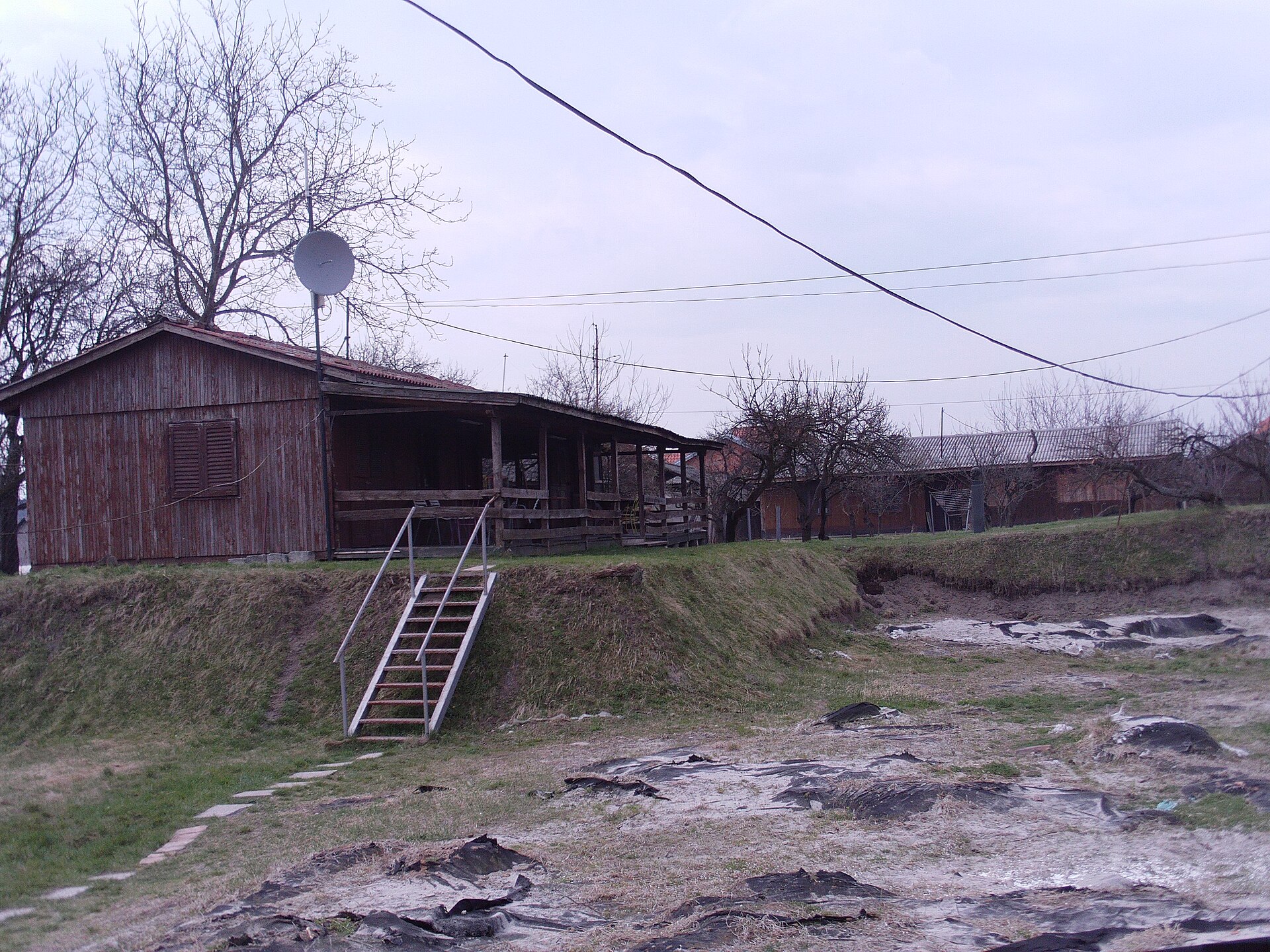
- A tell on the Danube
- Who were the Vinča people?
- Reading the nine-metre mound
- Villages of real houses
- The art of the potters
- The enigmatic figurines
- Signs before writing?
- Europe’s first metalworkers
- How the culture faded
- Why Vinča matters
- At the White Hill today
- A hub in a connected world
- A day in a Vinča village
- How we date the White Hill
- Why the figurines still fascinate
- The lesson of the White Hill
- Vinča in the sweep of prehistory
A tell on the Danube
The heart of the Vinča story is a type of site called a tell, a mound that builds up over centuries as people live, demolish, and rebuild on the same spot again and again. Each generation flattens the old mudbrick houses and raises new ones on top, and slowly the ground rises. Vinča-Belo Brdo is a classic example, its layers accumulating to a remarkable depth over roughly a thousand years of near-continuous occupation.
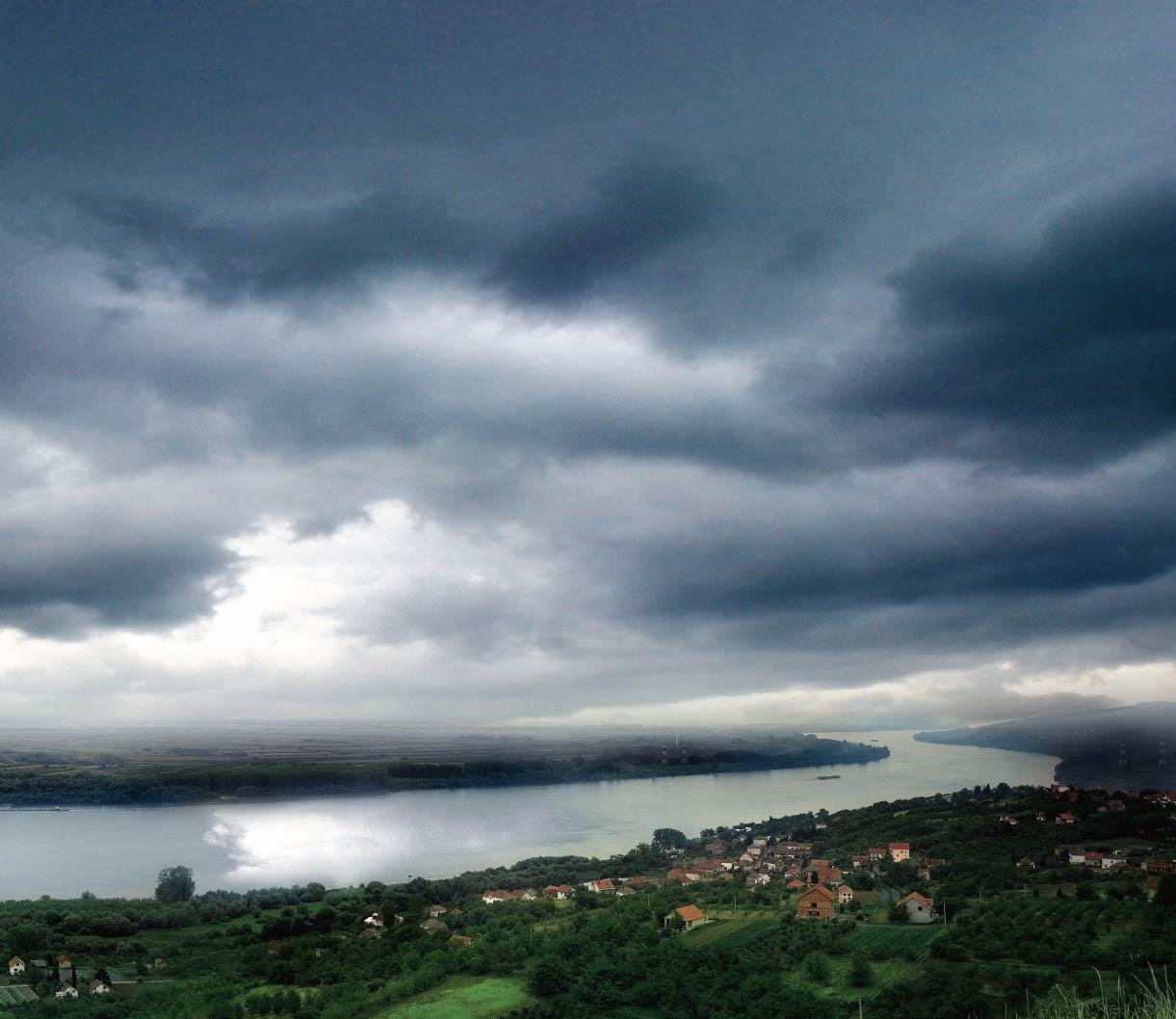
The location was carefully chosen. The Danube was a highway and a larder, offering fish, water, and easy movement of people and goods, while the fertile land nearby supported farming. Sitting on this great river, the Vinča communities were plugged into a network that stretched across the Balkans and beyond, which helps explain how their distinctive style of pottery and figurines spread so widely across the region.
To me, the tell itself is the first wonder of Vinča. It is a monument made not of deliberate architecture but of accumulated daily life, layer upon layer of ordinary years pressed into the earth. Standing before that exposed profile, you are looking at a thousand years of a community’s existence stacked vertically, like the pages of a book you can read from bottom to top.
Who were the Vinča people?
The Vinča culture was a broad Neolithic society that spread across much of the central Balkans, in what is now Serbia and neighbouring countries, from around 5700 to 4500 BCE. They were farmers who grew cereals and kept animals, but they were also so much more than that word usually implies: skilled potters, builders, craftworkers, and traders, living in some of the largest settlements in Europe at the time.
What sets them apart is the sophistication of their material culture. This was not a scattering of simple huts. Vinča settlements could be substantial, densely built villages, sometimes home to large populations, with a level of craft and organization that rivals or exceeds anything in contemporary Europe. In many ways the Vinča world represents a peak of the European Neolithic, a high point of what farming societies could achieve before the rise of metals and cities elsewhere.
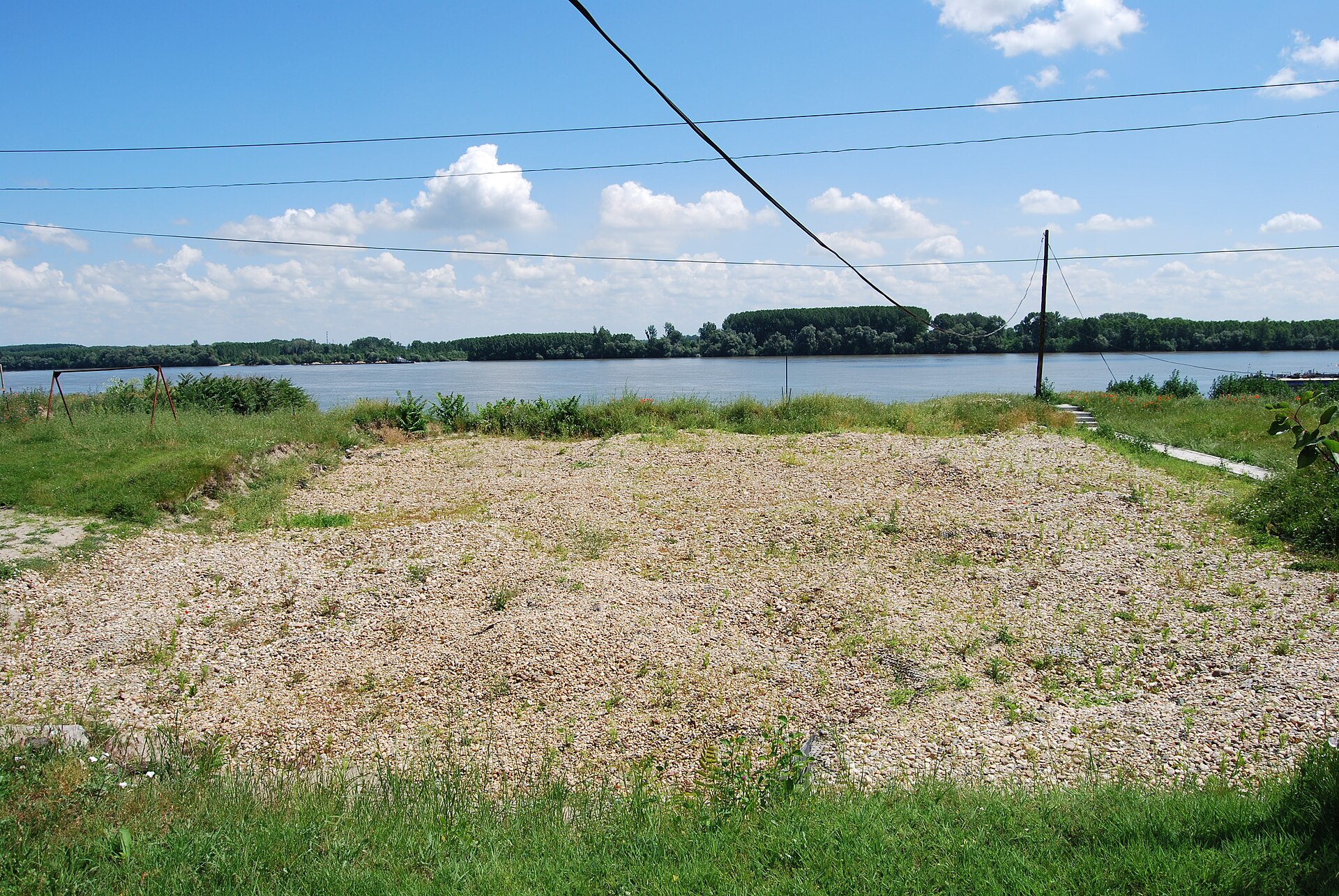
I think it is worth pausing on that, because we so often treat “Neolithic” as a synonym for basic. Vinča refuses that lazy assumption. These were clever, capable people with a rich culture, and the more you learn about them, the more the label of a simple farming folk falls away. They deserve to be far better known than they are.
Reading the nine-metre mound
The great profile cut into the White Hill is one of the most important documents in European prehistory, because it lets archaeologists read time directly. As you go down through the layers, you travel back through the centuries, and the changing styles of pottery and building at each level allow the whole sequence to be dated and ordered.
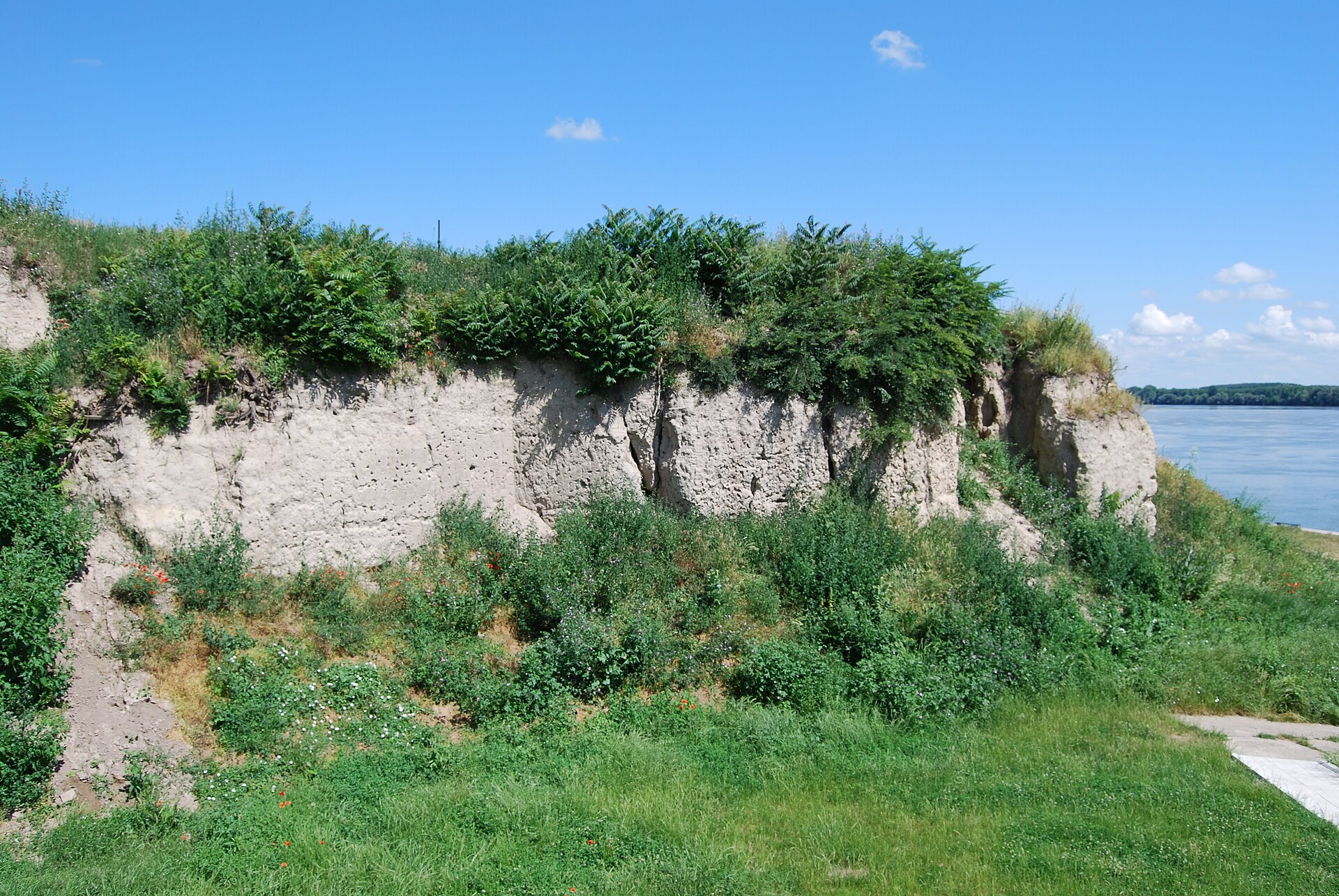
It was excavations here, especially the major campaigns of the early twentieth century led by the archaeologist Miloje Vasić, that first revealed the depth and richness of the site and gave the culture its name. Layer by layer, the digging exposed successive villages stacked on top of one another, each with its houses, hearths, pottery, and discarded objects, a continuous record of life on the Danube across a millennium.
There is something almost dizzying about that vertical archive. Most sites give you a slice of one period; Vinča gives you the whole film, frame by frame. To stand at the base of the profile and look up is to see a thousand years of a single community’s existence rising above your head, and few places on Earth let you feel the passage of deep time quite so physically.
Villages of real houses
Forget any image of prehistoric people huddling in flimsy shelters. The Vinča built proper houses: rectangular structures with timber frames, walls of wattle plastered with clay, and floors and hearths, sometimes with more than one room. These homes were solid, planned, and often arranged in rows or clusters, forming genuine villages with a sense of layout and order.
Inside, the houses were equipped for a full domestic life. Excavators have found ovens and hearths for cooking, storage vessels for grain, grinding stones, and the tools of everyday work. Some houses contain evidence of specialized activities, hinting that not everyone did exactly the same job, an early sign of the division of labour that would become so important in later societies.
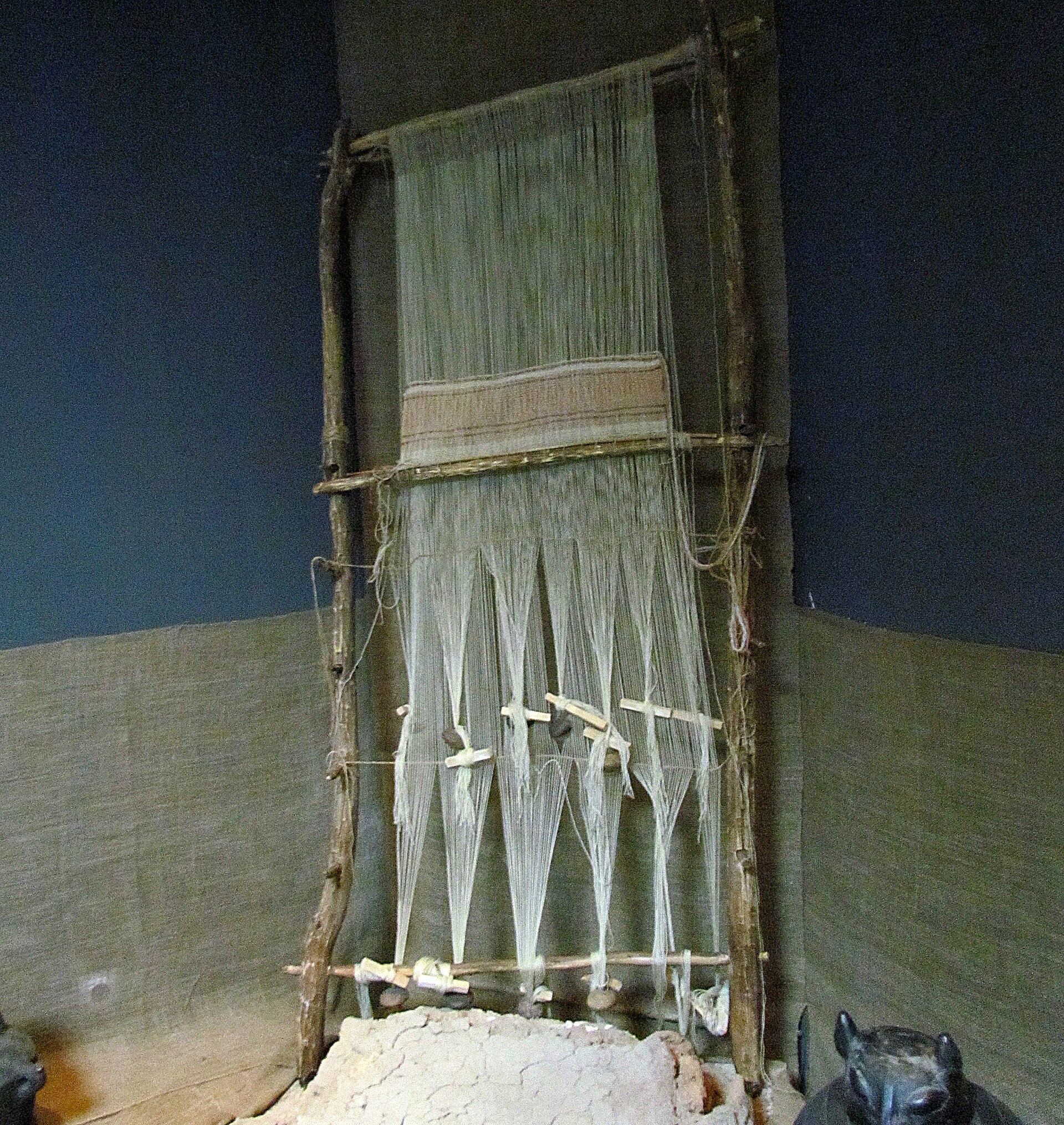
One of the most evocative finds is evidence of weaving. Reconstructions of the warp-weighted loom, based on the clay loom-weights found across Vinča sites, show that these households were producing textiles, spinning and weaving cloth as part of ordinary life. When I picture a Vinča village, I try to include that detail: not just pots and hearths, but the quiet, endless work of making thread and cloth, one of the most human activities there is.
The art of the potters
If the Vinča are famous for anything, it is their pottery, and rightly so. They produced ceramics of real beauty: dark, highly burnished vessels with a lustrous surface, often decorated with incised geometric patterns, channels, and fluting. The quality of the fabric and the confidence of the decoration put Vinča pottery among the finest of the entire European Neolithic.
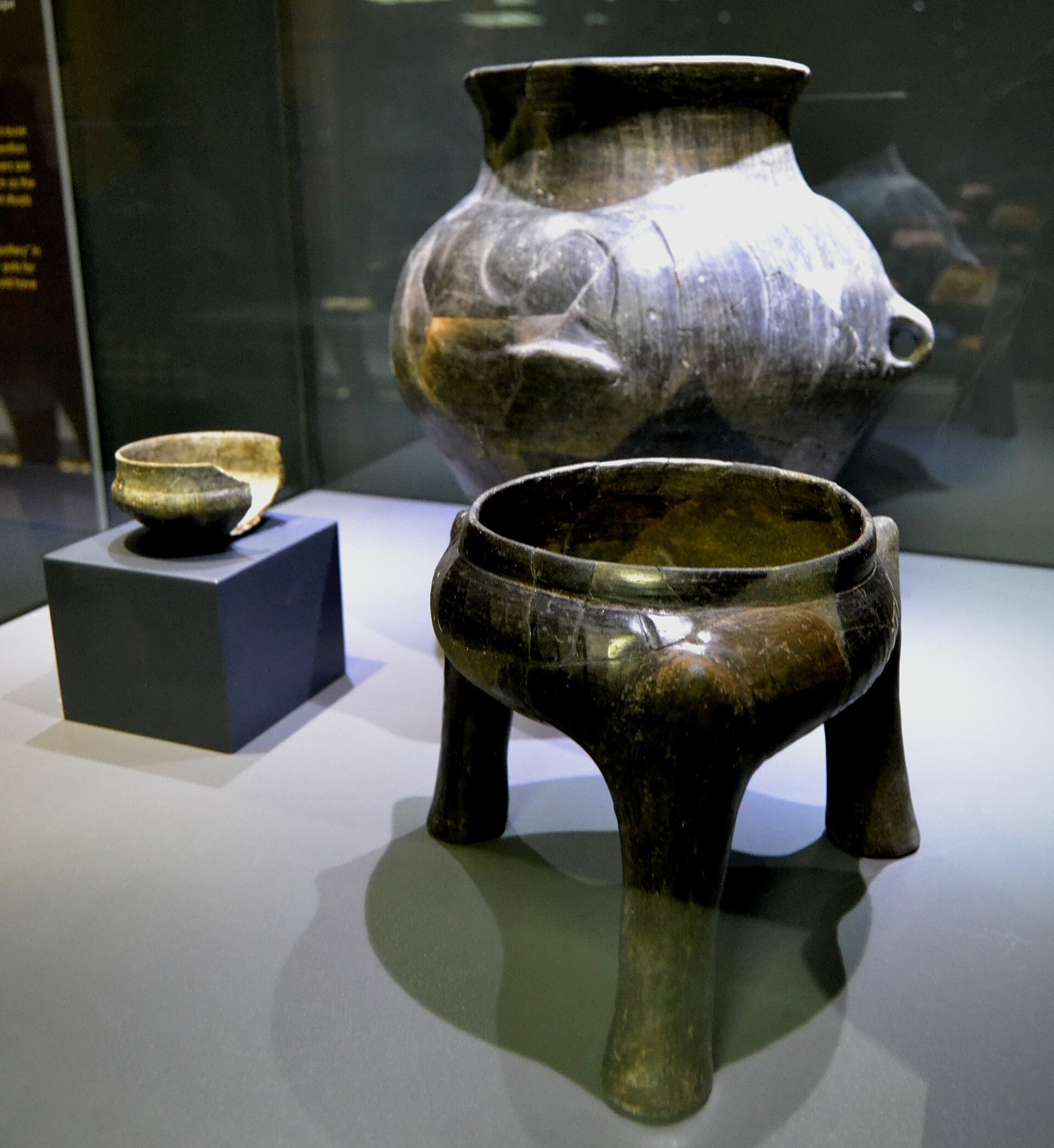
This was not just functional ware. The care lavished on shape and surface, the consistent styles that spread across the whole culture, and the sheer skill of manufacture all point to pottery as a genuine art form and a marker of identity. To make a vessel this fine, a potter needed deep experience, control of the firing, and an eye for form. These were specialists at the top of their craft.
I find the pottery moving precisely because it is so accomplished and so anonymous. We will never know the names of the potters who shaped and burnished these vessels seven thousand years ago, but their skill speaks directly across the millennia. Hold the idea of one of these gleaming dark bowls in your mind and you are in contact with a master craftsperson from the dawn of European farming.
The enigmatic figurines
Alongside the pottery, the Vinča produced thousands of small clay figurines, and these are among the most haunting objects in all of Neolithic Europe. Many are human figures, often highly stylized, with angular faces frequently described as mask-like, incised details suggesting clothing or ornament, and postures that range from standing to seated.
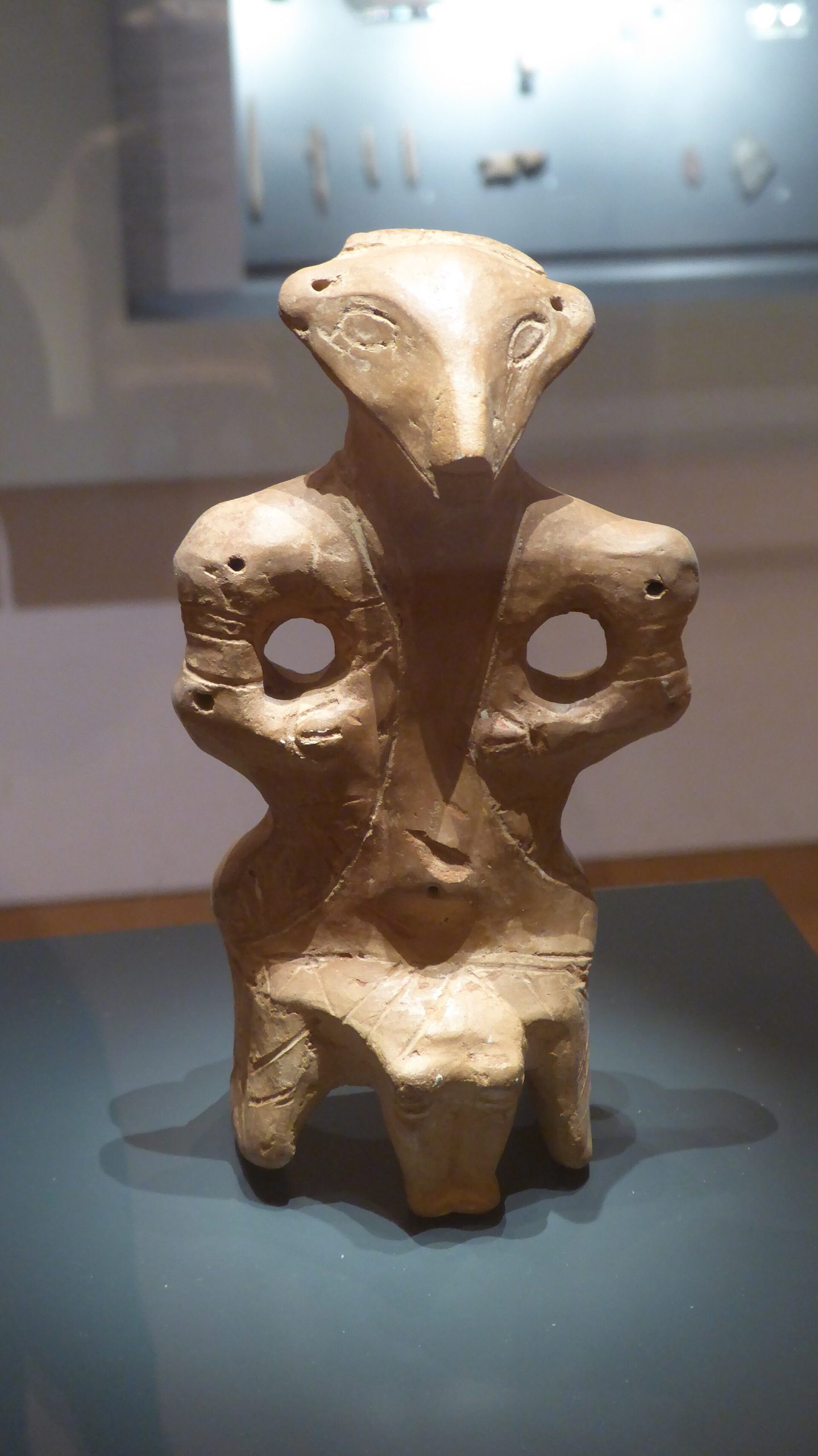
What did they mean? That is one of the great open questions. Some may represent deities or spirits, some ancestors, some perhaps ordinary people or even toys or teaching aids. The famous seated figures, sometimes interpreted as deities or important individuals on thrones, have a presence and dignity that is hard to ignore. The truth is that we simply do not know, and the mystery is part of their power.
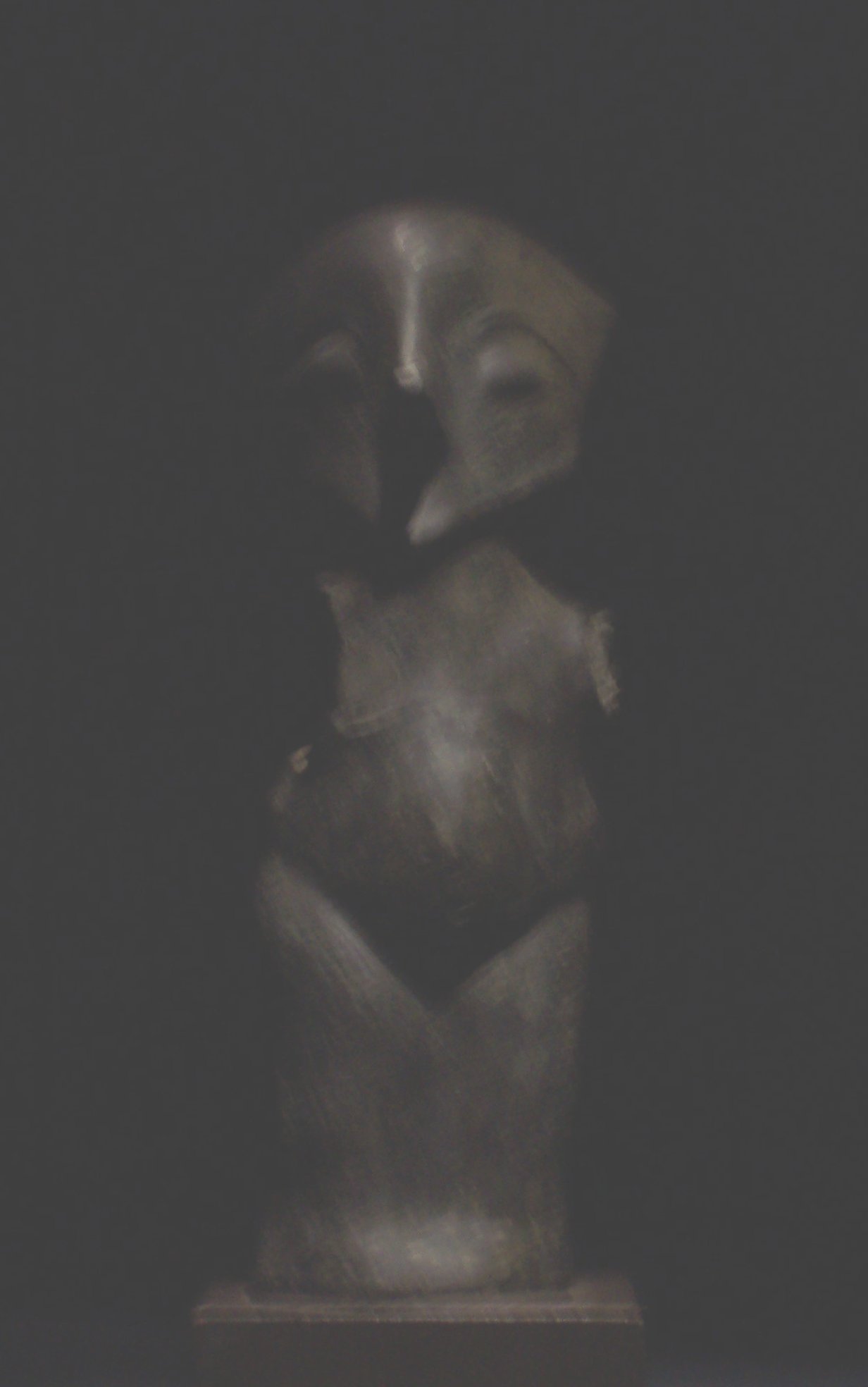
I am wary of confidently decoding them, because it is so easy to pour our own ideas into their blank mask faces. But whatever they meant, the sheer number of figurines tells us that they mattered deeply to Vinča life. These little clay people populated homes and rituals across the culture, and through them we glimpse a rich symbolic world we can sense but never fully enter.
Signs before writing?
Here is where Vinča becomes genuinely controversial and thrilling. On some of their pottery, figurines, and other objects, the Vinča incised signs: repeated marks, symbols, and abstract shapes that appear again and again across different sites. Collectively these are known as the Vinča signs or the Danube script, and they have provoked one of the liveliest debates in prehistory.
The big question is whether these signs are true writing. Some researchers have argued that they represent the earliest system of symbolic notation in Europe, possibly predating the famous early writing of Mesopotamia. Others are more cautious, seeing them as marks of ownership, identity, or decoration, or as symbols that carried meaning without forming a full writing system that recorded language.
Where the truth lies, I honestly cannot say, and I don’t think anyone can with certainty yet. But even the more cautious reading is remarkable: a Neolithic society using a shared repertoire of abstract signs, consistently, across a wide region, thousands of years ago. Whether or not we call it writing, it is clear evidence of a people reaching toward the recording of meaning, and that is extraordinary in itself.
Europe’s first metalworkers
The Vinča also have a strong claim to a genuine world first: some of the earliest evidence for copper metallurgy in Europe. At Vinča-related sites, archaeologists have found evidence of copper mining and the working of copper into objects, placing these communities right at the transition from a purely stone-based technology toward the age of metals.
This matters enormously. The mastery of metal would eventually transform human society everywhere, and here, on the Danube, farming communities were already taking those first tentative steps, extracting copper from the earth and shaping it. It is another example of Vinča being ahead of the curve, experimenting with a technology whose full consequences would not unfold for thousands of years.
I love that this innovation sits alongside the fine pottery and the mysterious signs, because together they paint a picture of a genuinely inventive society. The Vinča were not standing still. They were pushing at the edges of what was possible, in craft, in symbol, and in technology, and in doing so they helped lay the groundwork for the metal ages to come.
How the culture faded
Like every culture, Vinča eventually came to an end, gradually fading over the centuries after around 4500 BCE. There is no single dramatic cause on record. Instead, a combination of factors probably played their part: shifts in climate and environment, changes in society and economy, movements of people, and the slow transformation of the whole region as new ways of life emerged.
The great tells were eventually left, the distinctive pottery and figurines stopped being made, and the particular world of the Vinča dissolved into the broader currents of European prehistory. It is a quiet ending rather than a violent collapse, the kind of slow fade that is in some ways harder to grasp than a sudden catastrophe, but no less final.
Yet nothing truly vanishes. The people did not disappear; their descendants carried elements of Vinča life forward, and the region continued to develop. What ended was a particular cultural configuration, a way of being that had flourished spectacularly for a thousand years. Standing at the White Hill, you are standing at the record of that flourishing, preserved in the deep layers of the mound.
Why Vinča matters
Vinča matters because it shatters the caricature of Neolithic Europe as a backwater. Here was a society with large planned villages, superb pottery, an enormous repertoire of symbolic figurines, the first copper metallurgy on the continent, and a shared system of signs that may reach toward writing. That is an astonishing list for a culture most people have never heard of.
It also matters because it challenges the idea that all the great firsts of human civilization happened in a handful of famous places in the Near East. The Vinča story reminds us that innovation was bubbling up in many parts of the ancient world at once, and that Neolithic Europe was a scene of genuine sophistication and experiment, not a passive recipient of ideas from elsewhere.
And it matters as a human story. Behind the archaeology are real people who built solid homes, wove cloth, shaped exquisite pots, made thousands of little clay figures, and scratched signs whose meaning we still argue over. To recover their world from a mound on the Danube is to give them back a measure of the recognition they earned. That, to me, is reason enough to care.
At the White Hill today
Today Vinča-Belo Brdo is a protected archaeological site not far from Belgrade, with the great profile of the mound on display and finds from the excavations exhibited nearby. It is a modest destination compared with the world’s famous ruins, but for anyone who cares about deep European prehistory, standing before that nine-metre wall of layered time is unforgettable.
What stays with you is the depth. Layer below layer below layer, a thousand years of houses, hearths, and lives pressed into the riverbank, with the Danube still sliding past as it did when the first Vinča villagers settled here. The pots and figurines in their cases feel like messages from those people, sent up through the strata to us.
For me, Vinča is a lesson in humility and wonder. It teaches you not to underestimate the people of the deep past, and it rewards attention with a world far richer than you expected. Sometimes the greatest stories are hidden in the least assuming places, in a mound of earth by a river, waiting for anyone curious enough to read them.
A hub in a connected world
One thing that becomes clear the more you study Vinča is that these communities were not isolated. Sitting on the Danube, they were part of a wide web of contact and exchange that ran across the Balkans and into central Europe. The remarkable consistency of Vinča pottery and figurines across a large area is itself proof of how ideas and styles travelled between settlements.
Materials moved too. Fine stone for tools, shells, and other prized goods were traded across long distances, and the copper metallurgy of the region depended on knowing where to find and how to work the ore. All of this implies routes, relationships, and a degree of shared culture binding scattered villages into something larger than any one of them.
I find that picture of connection genuinely exciting. It means Vinča was not a dead end but a node, a place where people, goods, and ideas came together and spread outward. The society that built the White Hill was part of a living, humming network, and its achievements were both local triumphs and shared regional developments.
A day in a Vinča village
Let me try to bring it to life. Imagine walking into a Vinča village around 5000 BCE. Rows of solid clay-walled houses stand along roughly defined lanes, smoke rising from hearths, the smell of baking bread and firing pottery in the air. Children play between the houses; adults come and go from the fields and the riverbank.
Inside one house, a woman works at a warp-weighted loom, the clay weights swinging as she passes the thread. Next door, a potter burnishes the surface of a dark bowl until it shines, while nearby someone grinds grain and another tends the oven. On a shelf sit a few small clay figurines with their strange mask faces, and a pot incised with the signs whose meaning we still debate. This was ordinary life, and it was rich.
None of this was extraordinary to the people living it. It was simply their world, as familiar to them as ours is to us. And that is exactly why I find it so affecting. The archaeology recovers not just objects but a whole texture of everyday existence, seven thousand years deep, and reminds us that these were people not so unlike ourselves.
How we date the White Hill
It is fair to ask how we know the dates I keep quoting. At Vinča the answer combines two great tools. The first is the stratigraphy itself: because the tell built up layer by layer, the sequence of occupation is preserved in order, with the oldest at the bottom and the youngest at the top.
The second is radiocarbon dating, which measures the decay of a radioactive form of carbon in organic remains like charcoal and bone to estimate their age. Cross-referencing radiocarbon dates from different layers with the changing styles of pottery and building produces a detailed and reliable chronology for the whole thousand-year span of the site.
What I appreciate is how grounded this makes the story. The great age of Vinča is not a guess but a construction built from physical evidence, measured carefully and checked against itself. When we say the White Hill records a thousand years of life beginning around 5700 BCE, we are standing on solid scientific ground.
Why the figurines still fascinate
I want to return to the figurines for a moment, because they are, for me, the emotional centre of Vinča. Thousands of them survive, and their sheer abundance is telling. Whatever they were for, they were made and used on a huge scale, woven into the fabric of Vinča life in a way that few other prehistoric objects can match.
Their style is instantly recognizable: those angular, mask-like faces, the incised lines that may show clothing or tattoos or ornament, the seated and standing postures. Some are plain, some elaborate; some are tiny, some substantial. The famous seated figures in particular carry a strange authority, as if they were meant to represent someone or something of real importance.
And yet they keep their secret. We can describe them in exhaustive detail and still not know what they meant to the people who made them. That combination of intimacy and mystery is exactly why they hold us. Looking into a Vinča figurine’s blank face, you feel the presence of a whole vanished symbolic world, close enough to sense but forever just out of reach.
The lesson of the White Hill
If Vinča teaches one thing above all, it is not to underestimate the deep past. Every element of the story, the fine pottery, the planned villages, the weaving, the copper, the signs, the figurines, pushes against the idea that Neolithic people were somehow lesser versions of us. They were fully human, fully capable, and fully creative.
It also teaches that the story of human achievement is far wider than the handful of famous names we all learn. For every Uruk or Giza there are places like Vinča, less celebrated but no less remarkable, quietly rewriting what we thought we knew. The map of early human brilliance is dotted with such sites, and most of them we are still only beginning to appreciate.
That is why I keep coming back to the White Hill in my mind. It is a reminder that wonder is not confined to the obvious wonders, that a mound of earth by a river can hold a thousand years of ingenuity, and that the people of the deep past have far more to tell us than we usually give them credit for.
Vinča in the sweep of prehistory
It helps to place Vinča in the larger timeline. When the White Hill was flourishing, the great cities of Mesopotamia had not yet risen, the Egyptian pyramids lay two thousand years in the future, and Stonehenge would not be built for millennia. Vinča belongs to that pivotal age when farming had taken firm hold and human societies were growing in size, skill, and ambition across the world.
Seen this way, Vinča is part of a global surge of Neolithic creativity that was unfolding more or less simultaneously in many regions, each in its own way. While the Danube communities perfected their pottery and experimented with copper, farming villages elsewhere were building their own monuments, towns, and traditions. The human story at this moment is not one thread but many, braided together.
That is what makes a series like this one so rewarding. Set Vinča beside the other great sites of the age and you start to see the shape of the whole, a species everywhere reaching for permanence, beauty, meaning, and technical mastery at roughly the same deep moment. Vinča is one bright strand in that shared human achievement, and a strand well worth following.
The Vinča signs alone could fill a book of speculation, and scholars have argued about them for decades without full agreement. That ongoing debate is a sign of how genuinely important, and genuinely puzzling, this culture remains. Few Neolithic societies have generated so much serious discussion from so little certainty.
Every ancient place has a way of expanding your sense of what people are capable of, and Vinča does it more than most, precisely because so few expect greatness from a quiet Danube mound. That surprise is part of its gift, and it is a surprise I hope more people get to feel.
All of it, from the burnished bowls to the mask-faced figurines, adds up to a single powerful impression: a people of real depth and skill, whose story deserves to be told and retold. The White Hill keeps that story safe, and every visitor who reads its layers helps carry it forward.
Vinča is one thread in a much larger tapestry of humanity’s deep past, and each site in this series illuminates the others. If the sophistication of these Neolithic farmers intrigues you, compare it with the streetless town of Çatalhöyük, its older forerunner Aşıklı Höyük, the farming village of Mehrgarh, and the musical settlement of Jiahu. For the vast mega-settlements that Vinča’s eastern neighbours built, don’t miss Cucuteni-Trypillia. If it is the megalithic and monumental world that draws you, see the great cairn of Barnenez, the temple hill of Göbekli Tepe and its sister Karahan Tepe, the walled town of Jericho, the painted caves of Lascaux and Chauvet, the circle at Stonehenge, the tomb of Newgrange, the temples of Malta, and the stone village of Skara Brae. For the first cities and river civilizations that followed, explore Uruk and Sumer, Mohenjo-daro, Dholavira, Kalibangan, Liangzhu, Sarazm and Tell Brak. And across the wider ancient world await the palace of Knossos, the reef city of Nan Madol, the pyramids of Caral, the temple of Chavín de Huántar, the carved warriors of Cerro Sechín, the earthworks of Poverty Point, and the solar towers of Chankillo. Together they tell one continuous story: ours. The story reaches Brittany again at Gavrinis, sometimes called the Sistine Chapel of megalithic art. See also Los Millares, whose walls, bastions, and vast necropolis rose over five thousand years ago. You might also wander over to Bougon, one of the oldest surviving pieces of architecture anywhere on Earth. If standing stones speak to you, wander over to Almendres, a hillside of ancient granite near Évora. If giant stones fascinate you, step into Ġgantija, Malta’s colossal Neolithic temple complex. If carved stones fascinate you, step into Knowth, home to Europe’s richest megalithic art. If prehistoric art fascinates you, step into Tarxien, the richest of Malta’s Neolithic temple complexes. If ancient astronomy fascinates you, step into Mnajdra, Malta’s solar temple by the Mediterranean. You might also wander to Ħaġar Qim, where Neolithic builders raised twenty-tonne stones above the sea. You might also wander to Dowth, where a five-thousand-year-old mound still guards its dark chambers. You might also explore Carnac, where Neolithic farmers raised more than three thousand menhirs across the fields. You might also wander to Callanish, where thirteen ancient stones ring a towering monolith. You might also wander to Filitosa, whose carved menhirs bear faces, swords, and daggers. You might also sail your imagination to Ale’s Stones, a 67-metre ship of stone above the Baltic.
You May Like
The Bardo, a Palace of the Beys Filled With Roman Mosaics


4 thoughts on “Vinča: The Danube Culture That May Have Written Before Anyone Else”