Long before the great cities of the Indus Valley raised their brick walls, before Mohenjo-daro or Harappa existed even as ideas, there was a village on a dusty plain in what is now Pakistan where people quietly did something revolutionary. They stopped chasing their food and started growing it. They built houses of mud, buried their dead with care, learned to shape clay and, astonishingly, drilled holes in each other’s teeth. The village is called Mehrgarh, and it is one of the oldest farming settlements anywhere in South Asia, a place where the whole story of Indian and Pakistani civilization arguably begins.
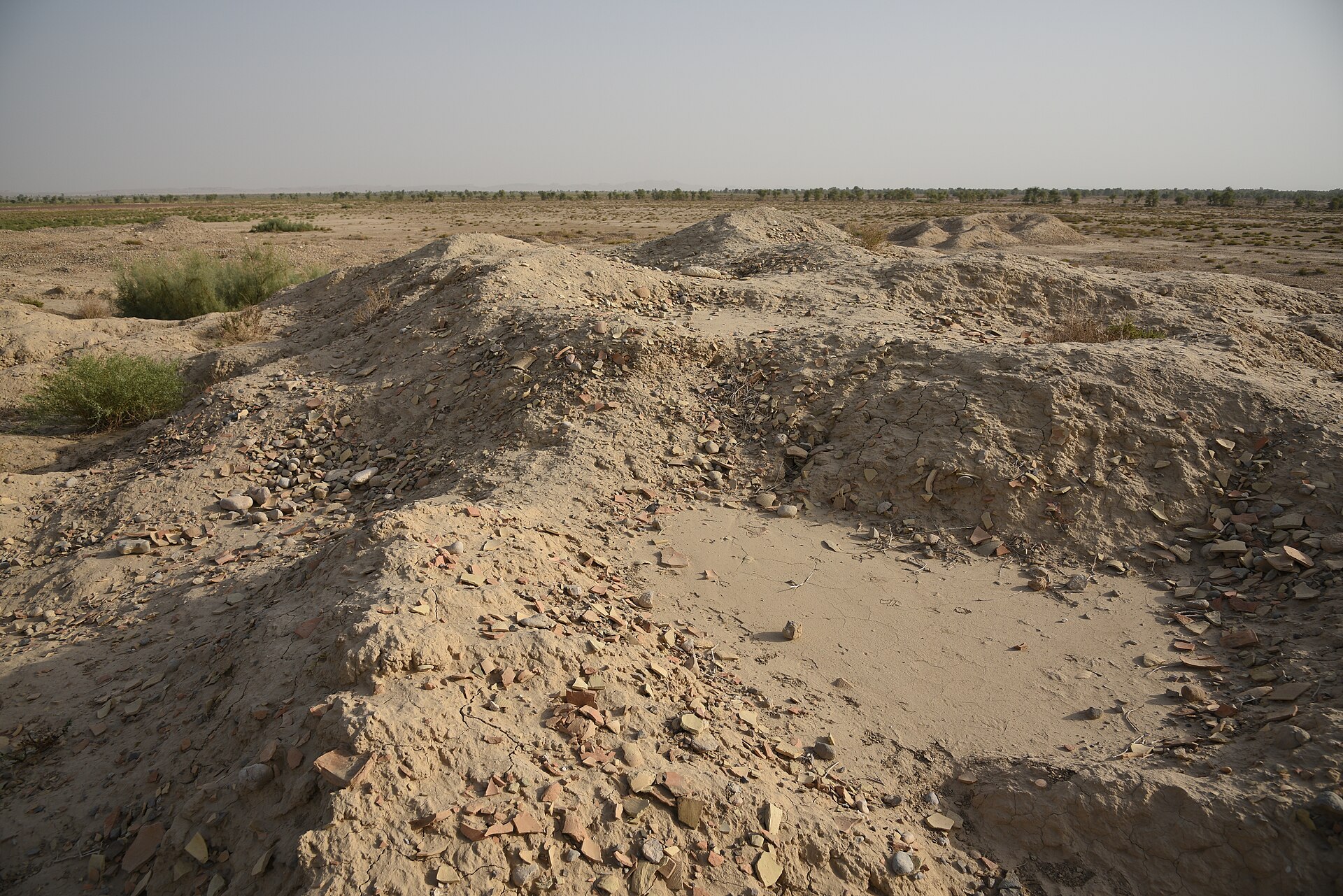
I have a real soft spot for Mehrgarh because it is the sort of site that never makes the tourist brochures yet completely reshapes how you understand the past. There are no towering ruins here, no carved gateways to photograph. What there is instead is depth, thousands of years of continuous human life stacked layer upon layer, showing us in slow motion how people went from hunting and gathering to farming, from wandering to settling, from stone to metal. If you want to watch civilization being invented, this quiet mound in Balochistan is one of the best places on earth to look.
Where is Mehrgarh?
Mehrgarh sits on the Kacchi plain in Balochistan, in the southwest of modern Pakistan, near the Bolan Pass that funnels traffic between the highlands of Afghanistan and the lowlands of the Indus. It is a hot, dry place today, a flat expanse of dust and scrub with mountains rising on the horizon. But that location was no accident. The Bolan Pass has been one of the great natural doorways of Asia for as long as people have walked, a route between the uplands and the river plains, and Mehrgarh was parked right beside it.
That position mattered enormously. It put the early inhabitants in contact with the wider world of the Iranian plateau and Central Asia to the west and north, while the fertile plain gave them land to farm and the nearby river gave them water. Mehrgarh, in other words, enjoyed the twin blessings of good farmland and good connections, the same combination that would later make the Indus cities great. It was a hinge between worlds long before anyone thought of it that way.
How the site was found
Mehrgarh came to light through the work of a French archaeological team led by Jean-François Jarrige, who began excavating here in the mid-1970s. What they uncovered gradually took the breath away. Beneath the surface lay not one settlement but a whole sequence of them, generation piled on generation, going back far earlier than anyone had expected for this part of the world. The team dug through layer after layer, each one representing centuries of life, and the deeper they went the older and simpler the world became.
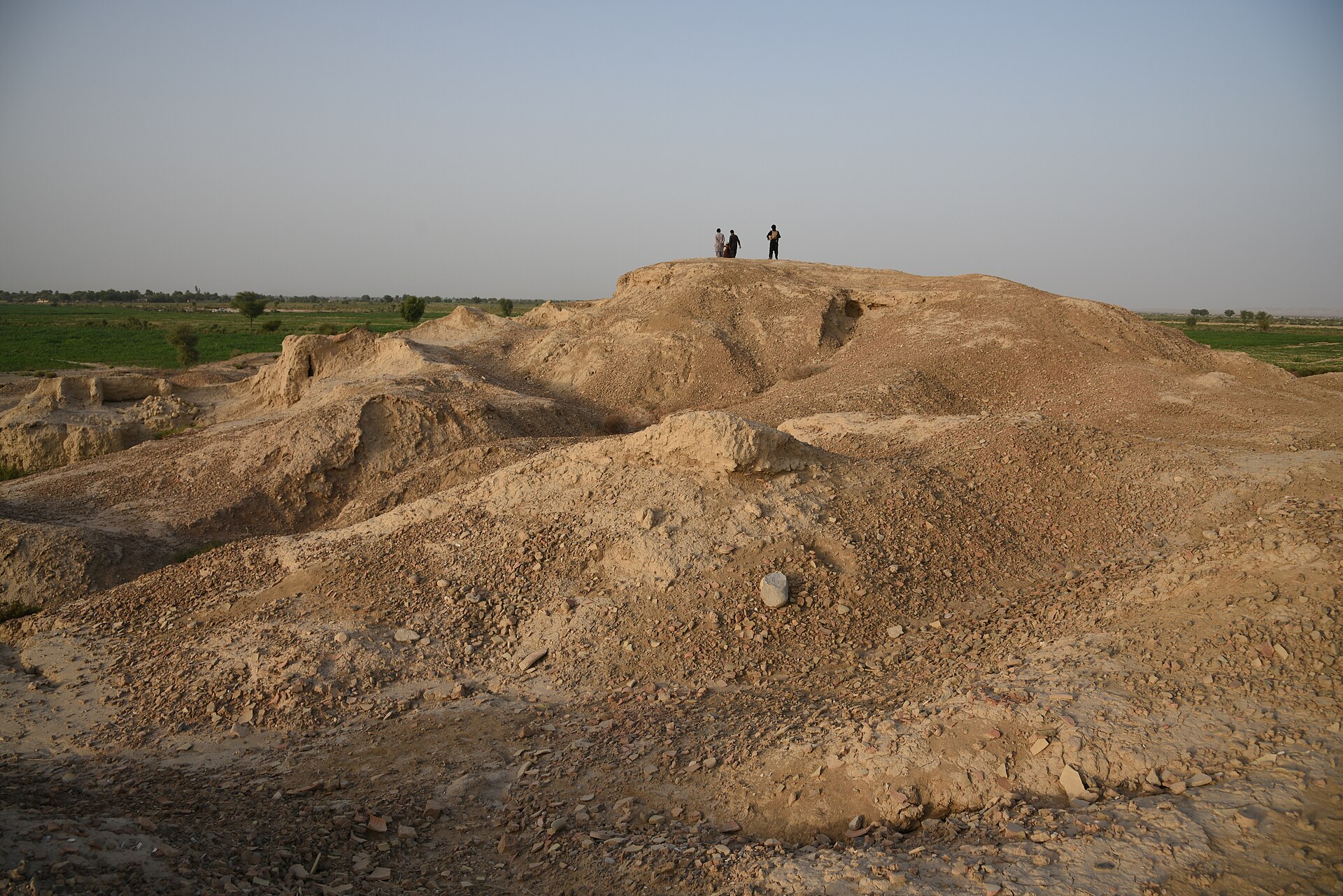
One of the reasons Mehrgarh is so valuable is exactly this unbroken sequence. Many ancient sites give us a snapshot, a single moment frozen in time. Mehrgarh gives us a film. Because people lived here more or less continuously for thousands of years, and because the settlement gradually shifted position over time, leaving older areas undisturbed, archaeologists could trace the slow evolution of farming, crafts, architecture, and burial customs across an enormous span. Few places on the planet offer that kind of continuous record of the birth of settled life.
Just how old is it?
Here is the number that stops people in their tracks. The earliest occupation at Mehrgarh dates back to around 7000 BCE, and possibly a little earlier, which makes it roughly nine thousand years old. That is deep time. It means people were farming and building here thousands of years before the pyramids, thousands of years before Stonehenge, and several thousand years before the famous Indus cities that Mehrgarh would eventually help give rise to.
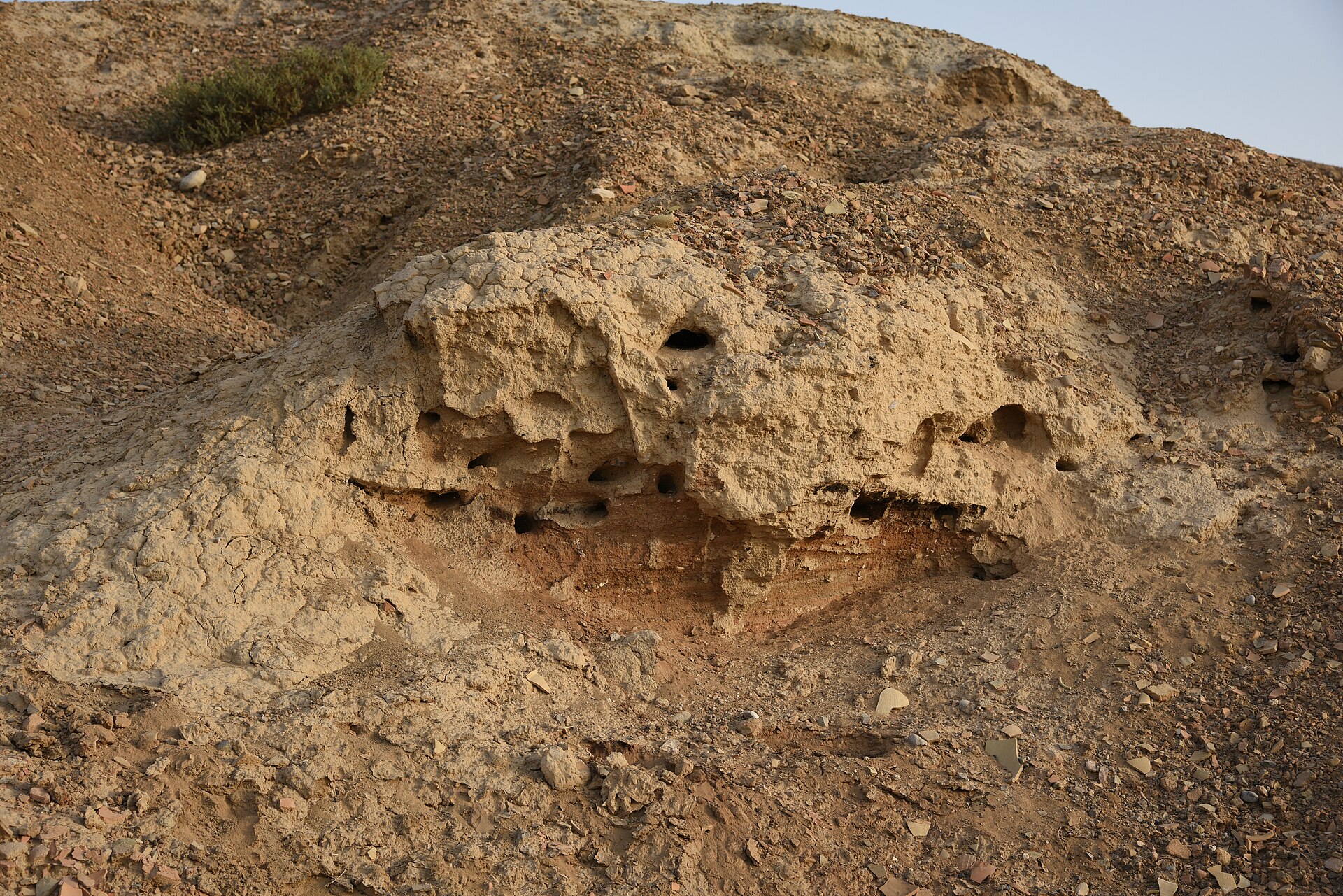
The very earliest phase, which archaeologists call the aceramic Neolithic because the people had not yet started making pottery, shows a community already committed to farming and herding. Over the following millennia the settlement grew, developed pottery, expanded its crafts, and built ever more elaborate structures, right up until it was gradually abandoned around 2600 BCE, just as the great Indus cities were beginning to rise nearby. Put those dates together and Mehrgarh spans well over four thousand years of continuous human life, an almost unimaginable stretch of time for a single place.
The first farmers of South Asia
The heart of the Mehrgarh story is the invention of farming in this part of the world. The people here grew wheat and barley, the classic founder crops, and they kept animals. In the earliest layers the bones are mostly of wild animals and hunted game, but as the centuries pass something remarkable happens: the bones shift toward domesticated cattle, sheep, and goats. You can actually watch, layer by layer, as a community of hunters and gatherers turns itself into a community of farmers and herders.
What makes this especially exciting is the strong evidence that much of this was happening locally rather than being simply imported wholesale from the Middle East. The domestication of cattle in particular seems to have deep roots here, suggesting that South Asia was not just borrowing the farming revolution from elsewhere but was one of the places where it independently took hold. That reframes the whole story. The Neolithic revolution, the single most important change in human history, was not a one-off event in one corner of the Near East. It bubbled up in several places, and Mehrgarh is proof that this region was one of them.
Think about what that shift meant for the people living it. Once you farm, you stay put. Once you stay put, you can store food, own more than you can carry, build permanent homes, and support people who do things other than find food. Farming is the seed from which villages, towns, crafts, trade, and eventually cities all grow. At Mehrgarh you are watching that seed being planted.
Mudbrick houses and daily life
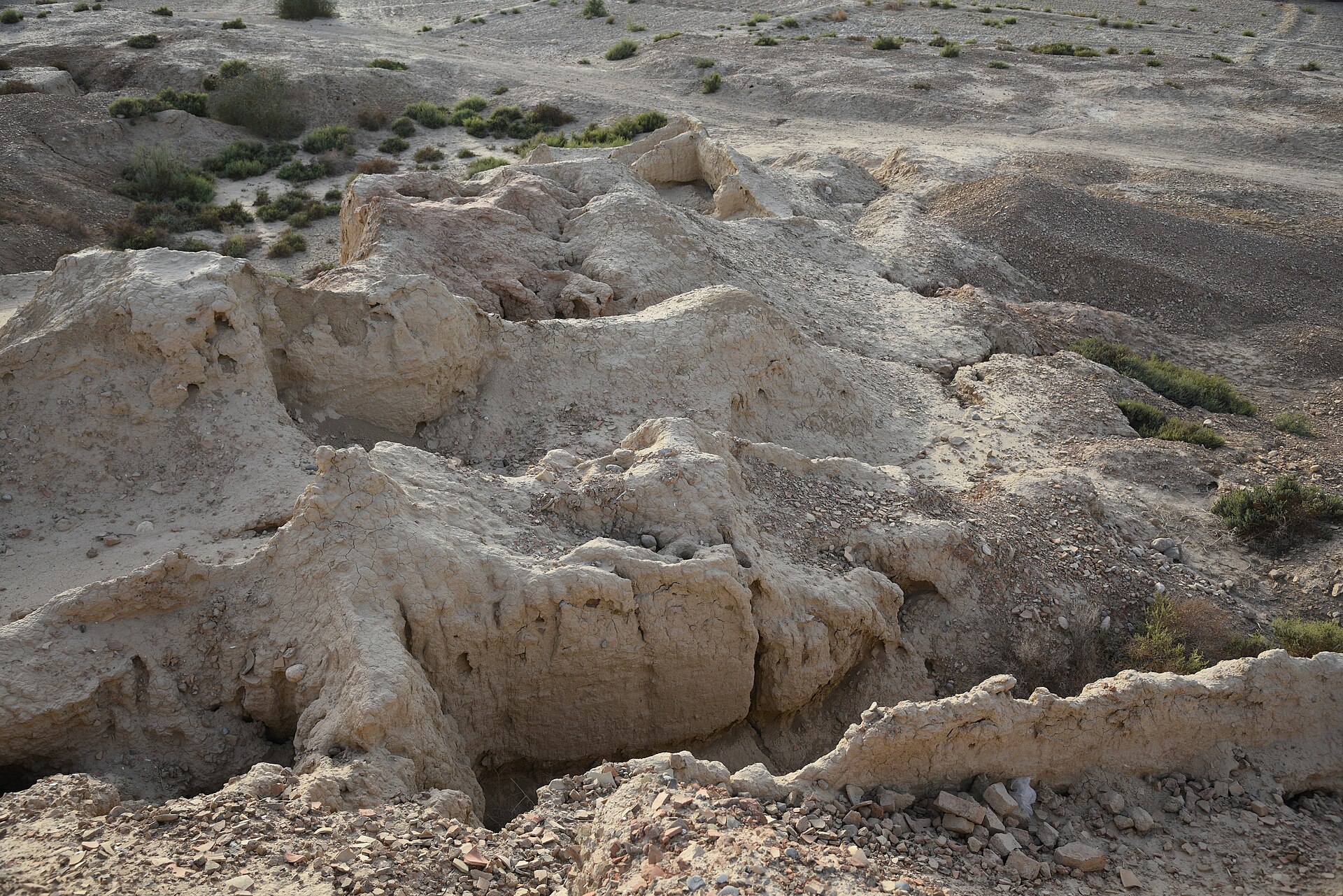
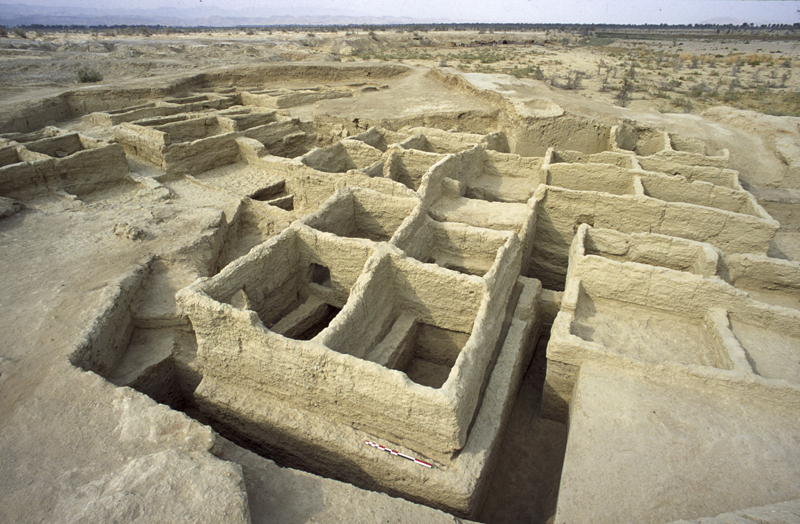
The people of Mehrgarh built their homes and storerooms out of mudbrick, the reliable building material of the ancient world across this whole belt of Asia. Excavators uncovered rectangular buildings divided into small compartments, many of which seem to have been used for storage rather than living. Those storage rooms are quietly telling. They mean surplus. They mean these people were growing more than they needed to eat right away and squirreling it away for later, a hallmark of a settled, planning-ahead society.
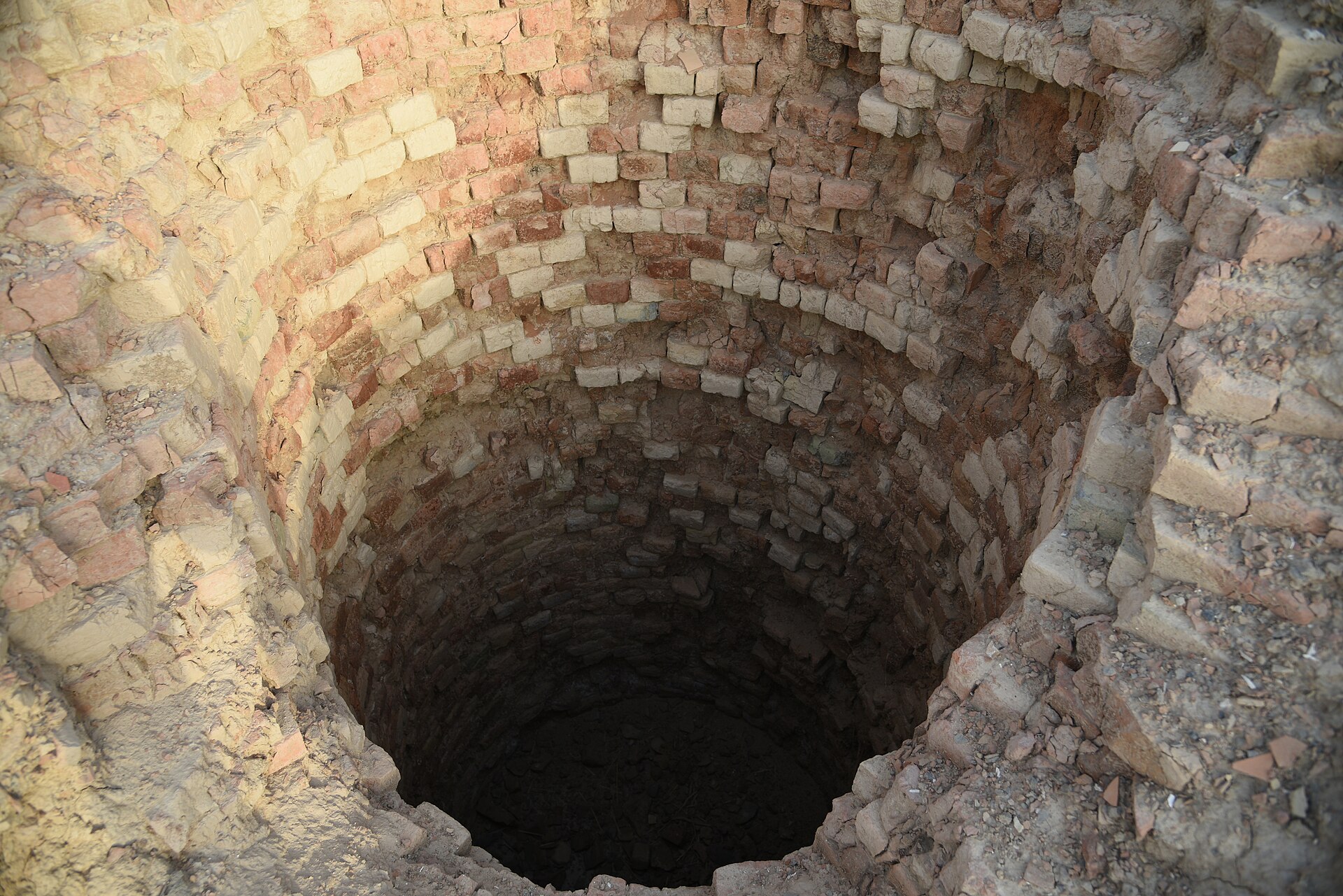
Water, of course, was everything on this dry plain, and the inhabitants dug wells to reach it, a reminder that these were resourceful, practical people solving the same problems we would. Around the homes and storerooms, daily life unfolded much as it would in any farming village: grinding grain, tending animals, making tools, shaping clay, raising children. It was not glamorous, but it was stable, and that stability is precisely what allowed the community to accumulate skills and knowledge over the generations.
As the centuries rolled on, the settlement grew larger and more complex. New neighborhoods appeared, craft production intensified, and the material culture became richer and more varied. Mehrgarh was not static; it was a living community steadily inventing new ways of doing things, and the archaeological layers capture that momentum beautifully.
The world’s oldest dentistry
If Mehrgarh is famous for one jaw-dropping detail, it is this: the people here practiced dentistry, around nine thousand years ago. Among the human remains, researchers found teeth with tiny, remarkably neat holes drilled into them, holes made deliberately with some kind of fine flint drill. These are not decorative; they are located on the chewing surfaces of back teeth, exactly where you would drill to treat decay or pain.
Let that sink in. Nine thousand years ago, in a farming village on the edge of the Iranian plateau, someone sat down with a patient and drilled into a living person’s tooth, presumably to relieve suffering. It is the earliest known evidence of dentistry anywhere in the world, and it completely upends the lazy assumption that ancient people were primitive. These were skilled, inventive human beings who applied their toolmaking know-how to the very intimate problem of a toothache. Every time I think about it I am floored by how clever and how caring it is at the same time.
That single discovery captures why Mehrgarh matters so much. It is not a place of grand monuments but of intimate human achievements, the kind that reveal what people were actually capable of. Farming, storage, craft, medicine, all of it emerging in one long-lived community on a dusty plain, thousands of years before the famous civilizations we usually credit with such firsts.
Pottery, beads and early metal
As Mehrgarh developed, its people became accomplished craftspeople. In the earliest aceramic phase they had no pottery at all, but over time they mastered the potter’s craft, producing wheel-made ceramics decorated with painted designs, including rows of animals and geometric patterns. The evolution of their pottery, from none at all to elaborate painted wares, is one of the clearest craft sequences anywhere and lets archaeologists track the community’s growing sophistication almost like tree rings.
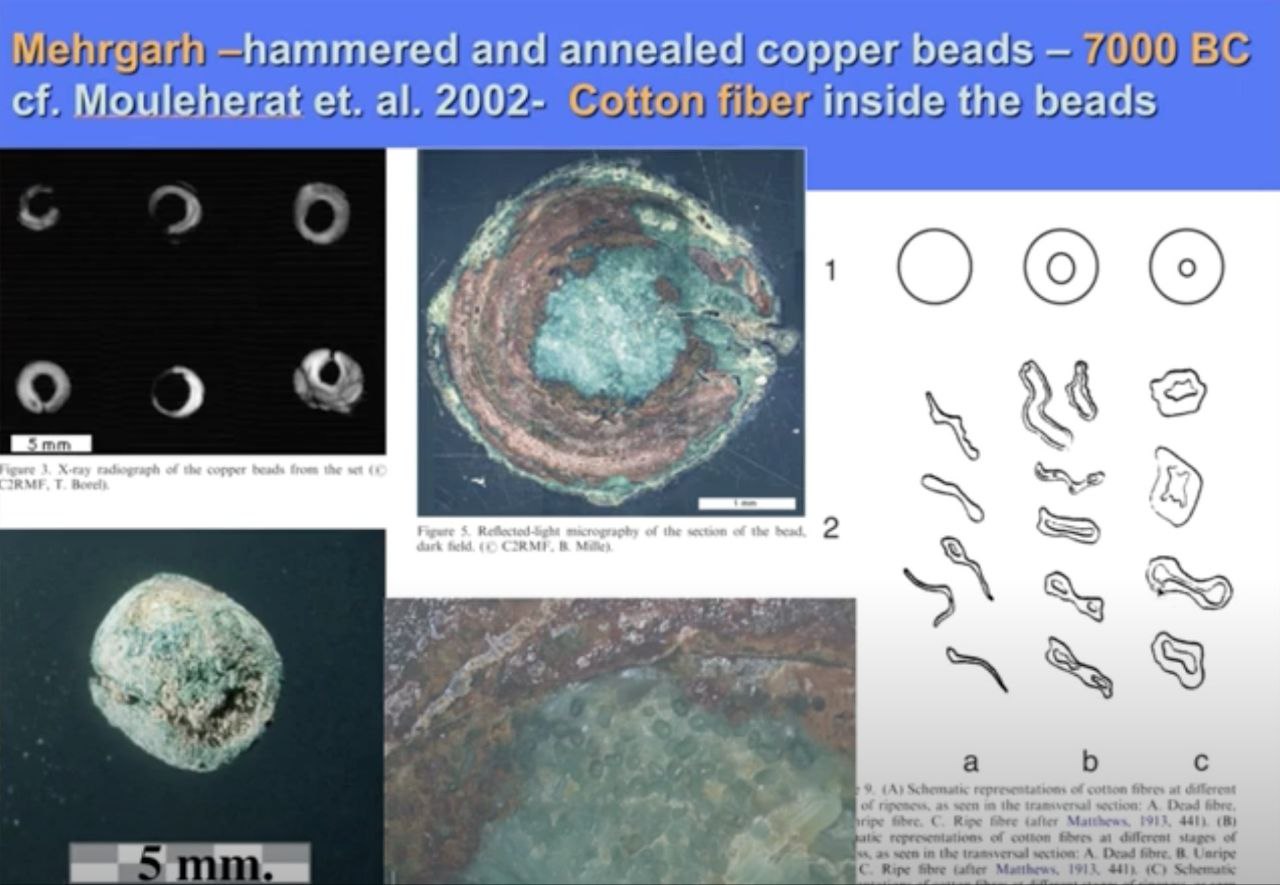
They were also extraordinary bead-makers. Mehrgarh produced ornaments from a whole palette of materials, including seashells brought from the distant coast, turquoise, lapis lazuli, and carnelian. Those exotic stones tell the same story we saw with the site’s location: Mehrgarh was connected, drawing in precious materials from far away and turning them into beautiful things. The lapis, in particular, would have come from the mountains of Afghanistan, meaning these villagers were tapped into long-distance exchange networks thousands of years ago.
Perhaps most striking of all, Mehrgarh gives us some of the earliest evidence of metalworking in the region. A tiny copper amulet found here, made using an advanced casting technique, has been dated to roughly six thousand years ago and is among the oldest known examples of its kind anywhere. From flint drills to cast copper, the people of this village were technological pioneers, quietly working out the skills that would underpin everything that came after.
How they treated their dead
Some of the most moving finds at Mehrgarh come from its graves. The people here buried their dead within the settlement, often in a flexed position, and frequently included grave goods: tools, ornaments, beads, and sometimes even young animals. The care taken over these burials speaks to beliefs about death and perhaps an afterlife, and to the emotional bonds that held these communities together. These were not faceless ancients; they were people who mourned and remembered.
The grave goods also quietly reveal social patterns. Some burials are richer than others, hinting at differences in status or wealth within the community, an early sign of the social complexity that would eventually flower in the stratified Indus cities. And the sheer quantity of beads and ornaments in the graves confirms just how important personal adornment and craft were to these people. They cared about beauty, about identity, about honoring their dead. In these small, careful graves you can feel the humanity of a village nine thousand years gone.
The road to the Indus cities
Here is where Mehrgarh’s importance really crystallizes. This village is widely seen as a crucial forerunner of the Indus Valley Civilization, the great Bronze Age culture of cities like Mohenjo-daro and Harappa. The farming, the mudbrick architecture, the craft traditions, the trade networks, the styles of pottery and ornament, so many of the threads that would later be woven into the fabric of the Indus cities can be traced back to their beginnings at Mehrgarh.
In other words, the Indus Civilization did not appear out of nowhere. It grew, over thousands of years, out of communities like Mehrgarh. The transition from small farming village to sprawling brick city was a long, gradual, homegrown process with deep local roots, and Mehrgarh is where we can see those roots most clearly. When you walk the great avenues of Mohenjo-daro in your imagination, remember that the story really began here, on a dusty plain by the Bolan Pass, thousands of years earlier.
That continuity is one of the most satisfying things in all of archaeology. It is rare to be able to trace such a clear line from the very first farmers of a region all the way to its first great cities, but Mehrgarh lets us do exactly that. It is the prologue to one of the world’s great civilizations, written in mudbrick and bone.
Why Mehrgarh was abandoned
Around 2600 BCE, Mehrgarh was gradually left behind. This was not a sudden catastrophe so much as a shift. As the settlement wound down, a nearby site called Nausharo rose to take its place, and more broadly the center of gravity of the whole region was moving toward the great cities of the Indus that were just then emerging. In a sense Mehrgarh did not so much die as pass the torch.
Environmental factors may well have played a role too. Rivers shift, land dries out, and after four thousand years of continuous occupation the local landscape had no doubt changed considerably. But the deeper story is one of success rather than failure. The way of life pioneered at Mehrgarh had grown so productive and so widespread that it outgrew the village itself, flowing outward and upward into the towns and cities that would define the next chapter of South Asian history. Mehrgarh ended not with a whimper but with a graduation.
Why Mehrgarh matters
So why should Mehrgarh, a place most people have never heard of, hold such a firm grip on the imagination of archaeologists? Because it is, quite simply, one of the best windows we have onto the birth of settled human life. In its stacked layers we can watch hunters become farmers, wanderers become villagers, and a simple community grow into the seedbed of a great civilization. It is the story of the Neolithic revolution playing out in slow motion, right before our eyes.
It also corrects a persistent bias. For too long the invention of farming, pottery, and settled life was told as a Middle Eastern story that everyone else supposedly copied. Mehrgarh, with its independent roots in cattle domestication and its ancient dentistry, metallurgy, and craft, insists that South Asia was a pioneer in its own right. The revolution had many homes, and this dusty mound in Balochistan was one of them.
When I picture Mehrgarh now, I do not see a barren plain of dust. I see fields of early wheat, herds of the first domesticated cattle, potters bent over their wheels, bead-makers drilling turquoise, and a healer easing a neighbor’s toothache nine thousand years ago. For a place with no grand monuments, Mehrgarh may just tell us more about who we became than almost anywhere else on earth.
What the name tells us, and the land around it
The name Mehrgarh comes from the local landscape rather than from anything the ancient inhabitants would have called it; the site takes its label from the nearby area in Balochistan where it lies. That is worth remembering, because it underlines just how much of Mehrgarh’s identity we have had to reconstruct from scratch. The people who lived here left no writing, no inscriptions, nothing that speaks to us in words. Everything we know about them we have coaxed out of the ground.
The setting itself shaped their lives at every turn. The Kacchi plain is watered by seasonal rivers flowing down from the surrounding highlands, and it was that water, unreliable but present, that made farming possible in an otherwise harsh environment. The mountains hemming the plain were not just scenery; they were the source of stone, of routes to distant valleys, and of the passes through which trade and new ideas arrived. To understand Mehrgarh you have to understand that it was a village living in careful conversation with a demanding landscape, taking what it could and adapting constantly.
That adaptability is, I think, the quiet genius of the place. Over four thousand years the climate shifted, the rivers wandered, and the community had to keep reinventing how it fed and housed itself. The fact that people managed to stay here, generation after generation, through all those changes, is a testament to how deeply they understood their world.
Reading a village with no writing
One of the things I find most impressive about our knowledge of Mehrgarh is how much has been squeezed from evidence that, at first glance, seems almost mute. There are no royal archives here, no king lists, no myths carved in stone. There are bones, seeds, potsherds, beads, mudbrick walls, and graves. And yet from those humble materials archaeologists have reconstructed an astonishingly detailed portrait of how these people lived, ate, worked, healed, and died.
The shift from wild to domesticated animals shows up in the changing proportions of bones across the layers. The birth of agriculture is written in charred grains of wheat and barley. Trade appears in the form of seashells and lapis lazuli that could only have come from far away. Medical care survives in the drilled teeth of the dead. Social differences peek out from the varying richness of graves. Piece by patient piece, a silent village has been made to speak, and what it says is remarkably eloquent.
This is a good reminder that the drama of the human past is not only found in golden treasures and towering temples. Sometimes the most profound stories are told by a handful of old seeds, a drilled molar, and the careful arrangement of a grave. Mehrgarh rewards close, humble attention, and it pays that attention back with some of the deepest insights we have into how our settled way of life began.
Figurines, fashion and the people behind the finds
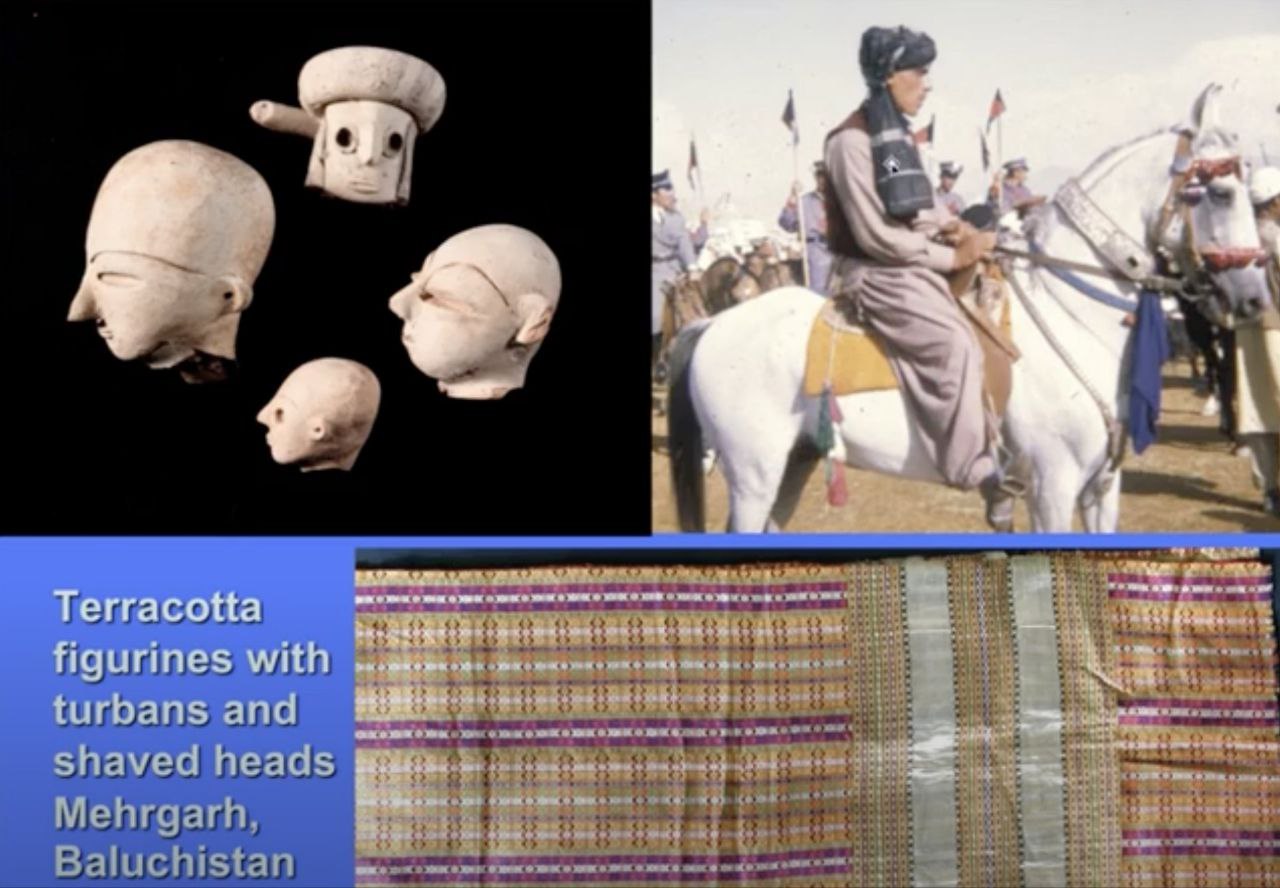
Among the most charming discoveries at Mehrgarh are its terracotta figurines, small clay figures shaped by human hands thousands of years ago. Over time these became more detailed and expressive, some showing elaborate hairstyles and ornaments, and they give us a rare, intimate glimpse of how the people here saw themselves and perhaps their gods. There is something deeply affecting about holding, even in the imagination, a little clay figure that someone modeled by firelight nine or ten times as long ago as the fall of Rome.
Those figurines, together with the mountains of beads and ornaments from the graves, tell us that appearance and adornment mattered enormously to these early villagers. They arranged their hair, strung necklaces of turquoise and shell, and shaped images of the human form. This was not a grim, purely practical existence scraping for survival. It was a life with room for beauty, symbolism, and self-expression, the same impulses that animate us today.
It is easy, staring at a plan of excavated walls, to forget that Mehrgarh was full of individuals: children learning to knap flint, potters proud of a new design, a mother mourning a lost child, a healer trusted to drill an aching tooth. The finds are not just data points. They are the fingerprints of real people who laughed, worried, created, and cared, and who, without ever knowing it, laid the foundations for the civilizations that followed. That, in the end, is what makes standing in the presence of Mehrgarh so quietly overwhelming.
Mehrgarh today and the fragility of the past
Visiting Mehrgarh today is a humbling and slightly melancholy experience. Unlike the well-guarded ruins of the famous Indus cities, the site is remote, exposed, and vulnerable. Wind and water steadily erode the ancient mudbrick, and the pressures of modern life, farming, development, and the sheer difficulty of protecting so vast and fragile a place, all take their toll. Much of what makes Mehrgarh precious is invisible to the casual eye anyway, buried in layers that only careful excavation can read.
That fragility is worth dwelling on, because it applies to so much of our deep past. Sites like Mehrgarh are irreplaceable archives of who we are and how we got here, yet they survive only as long as we choose to care for them. Once a layer is eroded or dug away carelessly, the information it held is gone forever, and with it a piece of the human story. The dentistry, the domesticated cattle, the copper amulet, all of it came within a hair of never being known at all.
Perhaps that is the final lesson of this quiet mound in Balochistan. The most important places are not always the most spectacular ones. Mehrgarh has no soaring walls to draw a crowd, yet it may hold more of the truth about our origins than a dozen grander ruins. It asks us to look closer, to value the humble and the ancient, and to remember that the whole vast edifice of civilization rests, ultimately, on the patient work of villagers who first decided to plant a seed and stay.
There is one more thing I keep coming back to. Mehrgarh reminds us that progress is rarely a single dramatic leap; it is the accumulation of countless small, patient improvements made by ordinary people over enormous spans of time. No one at Mehrgarh woke up one morning and invented civilization. Instead, generation after generation nudged things forward a little, a better crop here, a new pot there, a cleverer tool, a kinder way to ease a neighbor’s pain. Stacked up over four thousand years, those small steps carried humanity from the campfire to the city. That, to me, is the most hopeful message the ancient world has to offer.
Mehrgarh is really the opening scene of a much bigger story, so if it has whetted your appetite there is a whole world of ancient places to explore next. You can follow the farming revolution forward to the crowded rooms of Çatalhöyük and the ancient wall of Jericho, or leap ahead to the great cities this village helped inspire at Mohenjo-daro and Dholavira. For the moment writing and cities were born, visit Uruk in Sumer, and for their eastern cousins try Liangzhu in China and the recently uncovered town of Sarazm in Tajikistan. If temples are your thing, nothing beats the deep antiquity of Göbekli Tepe and Karahan Tepe, while Stonehenge, Newgrange and the temples of Malta show the same monumental urge in Europe. Round it off with the snug village of Skara Brae, the labyrinthine palace of Knossos, the desert city of Caral, the painted caves of Lascaux and Chauvet, the reef city of Nan Madol, the dramatic temple of Chavín de Huántar, the vast settlements of Cucuteni-Trypillia, the carved stones of Cerro Sechín, and the earthworks of Poverty Point. Each is a different doorway into the same endlessly human story of how we learned to settle down and build a world. For a fresh twist on the birth of the city, don’t miss Tell Brak in northern Mesopotamia and its haunting eye idols. For an even earlier chapter of settled life, don’t miss Aşıklı Höyük in Cappadocia. For a different kind of ancient wonder, don’t miss Jiahu in China and its playable Neolithic flutes. For ancient sky-watching at its finest, don’t miss Chankillo in Peru and its thirteen solar towers. For another quiet Indus settlement with an outsized story, wander over to Kalibangan and its record-breaking ploughed field. For a monument raised by farmers without kings or writing, visit the Cairn of Barnenez in Brittany. For a Neolithic society with fine pottery, copper, and mysterious signs, visit Vinča on the Danube. For one of prehistory’s greatest artworks, step into Gavrinis, whose engraved passage was sealed in the dark for millennia. For an early walled town with copper workshops and sun-facing tombs, visit Los Millares in Spain. For a monument even the pyramids came late to, take a look at the tumuli of Bougon in western France. You might also love Almendres, Iberia’s greatest ring of standing stones and thousands of years older than Stonehenge. You might also love Ġgantija, among the oldest freestanding buildings anywhere on Earth. You might also love Knowth, an Irish mound covered in mysterious ancient spirals and lozenges. You might also love Tarxien, a five-thousand-year-old temple on Malta covered in spirals and animal reliefs. You might also love Mnajdra, a five-thousand-year-old Maltese temple perched above the sea and tuned to the rising sun. If this drew you in, the Maltese temple of Ħaġar Qim, older than the pyramids, is well worth your time. If this drew you in, the forgotten passage tomb of Dowth is well worth seeking out. If this drew you in, the vast alignments of Carnac, older than the pyramids, are well worth your time. If this drew you in, the ancient stone circle of Callanish on the Isle of Lewis is well worth seeking out. If this drew you in, the statue-menhirs of Filitosa in Corsica are well worth seeking out. If this drew you in, the stone ship of Ale’s Stones in southern Sweden is well worth seeking out.
You May Like
The Bardo, a Palace of the Beys Filled With Roman Mosaics


3 thoughts on “Mehrgarh: The 9,000-Year-Old Village Where South Asia Learned to Farm”