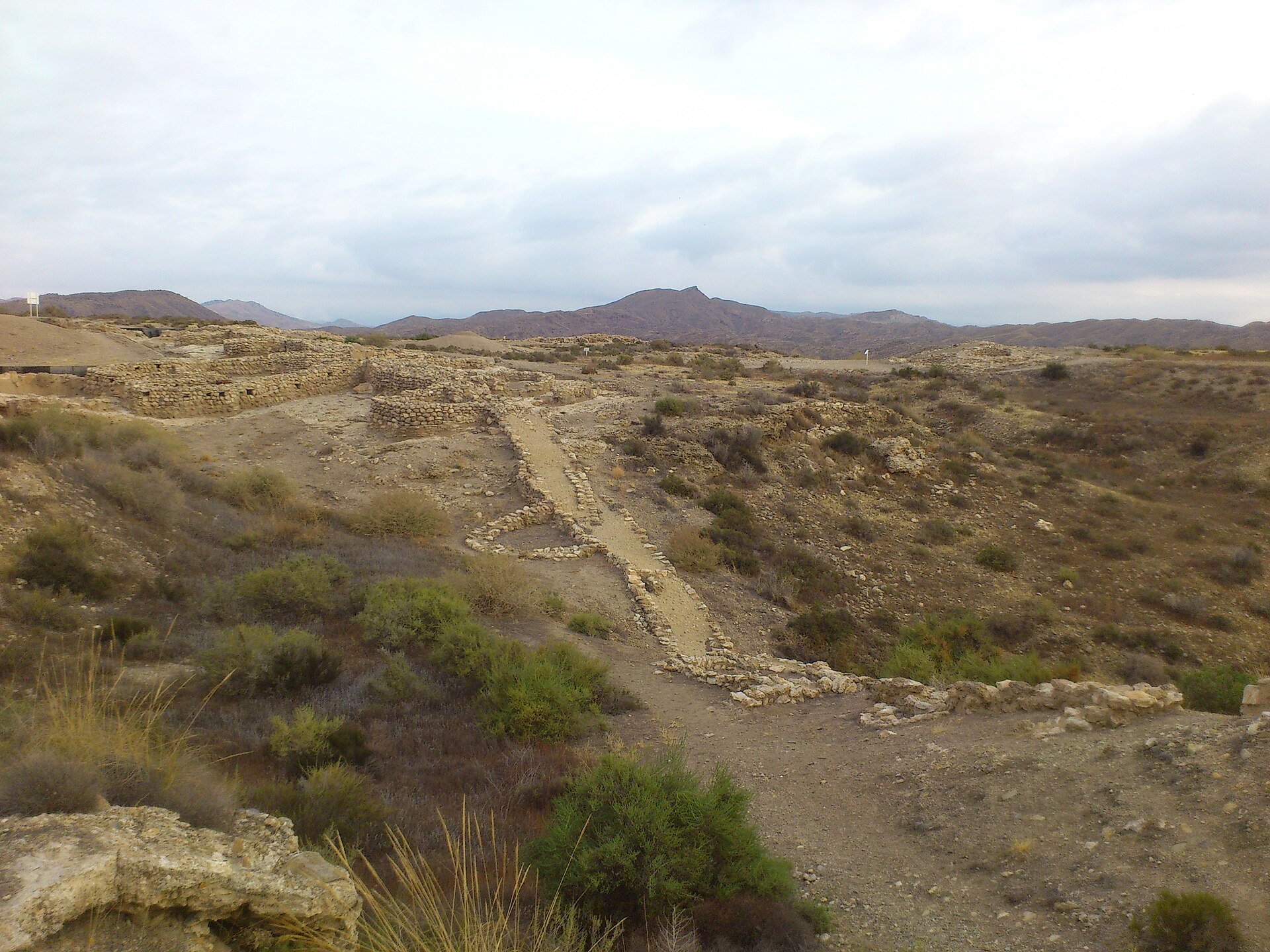
In the dry, sun-hammered hills of Almería, in the far southeast of Spain, a bluff above a river valley holds the ruins of a place that has a serious claim to being one of the first towns in western Europe. Around 3200 BCE, long before Rome, before the Greeks, before even the great phase of Stonehenge, people here built a fortified settlement ringed with stone walls, buried their dead in dozens of great domed tombs, and smelted copper in what may be one of Europe’s earliest metalworking communities. This is Los Millares.
What I love about Los Millares is how thoroughly it complicates the neat story we tell about the rise of complex society. We tend to imagine that fortified towns, social hierarchy, and metalworking arrived in Europe late, imported from the older civilizations of the east. Yet here, on the edge of Iberia, a genuinely sophisticated society was doing all of these things more than five thousand years ago, in a landscape most people would call a backwater. The place forces you to widen your map of where the human future was being invented.
- A town on a bluff
- Walls, bastions, and a barbican
- Inside the settlement
- The smell of copper
- A city of the dead
- Tombs that face the sunrise
- What kind of society was this?
- Collapse and what came after
- Why Los Millares matters
- Walking the site today
- Engineering water in a dry land
- Connected to a wider world
- How we date the site
- A day inside the walls
- Where Los Millares sits in time
- Why fortify at all?
- The town at the edge of the map
A town on a bluff
Los Millares sits on a promontory where two watercourses meet, a naturally defensible spur of land raised above the surrounding valley. The choice of location tells you a great deal straight away. This was not a casual campsite but a deliberately positioned stronghold, taking advantage of steep slopes on several sides and controlling the land and water routes below.
The setting is harsh: hot, dry, and today rather barren, though in the Copper Age the environment may have been somewhat kinder, with more vegetation and workable land. The community here farmed, herded animals, and exploited the resources of the region, including, crucially, the copper ores that would help make them prosperous. Water, defensible ground, farmland, and metal, all within reach, made this an ideal spot to build something ambitious.
Standing on that bluff, you understand the logic of the place instantly. It commands its landscape. Whoever held Los Millares held the valley, and the scale of what they built here, the walls, the town, the vast cemetery, shows they intended to hold it for a very long time. This was a statement of permanence and control written across the land.
Walls, bastions, and a barbican
The most striking feature of Los Millares is its defences, and they are genuinely elaborate. The settlement was protected by a series of concentric stone walls cutting across the promontory, studded with semicircular bastions or towers from which defenders could cover the approaches. This is real military architecture, planned and substantial, thousands of years before castles as we usually picture them.
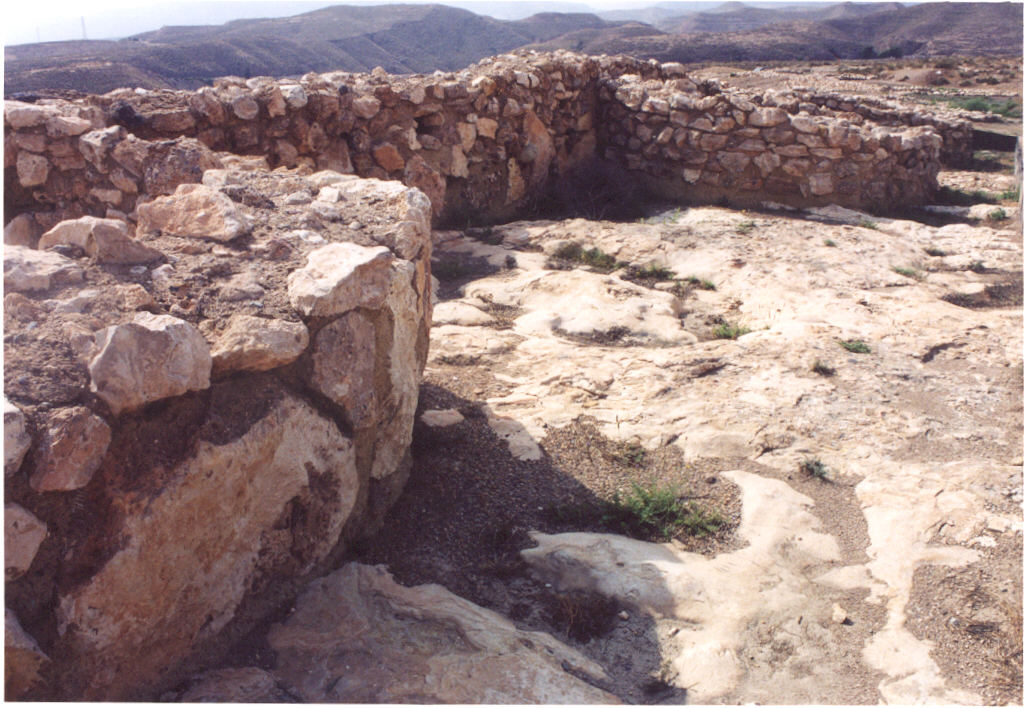
The main gate was especially sophisticated. Excavation and reconstruction have revealed an entrance system with an outer defensive work, a barbican, designed to funnel and control anyone approaching, exactly the kind of clever gatehouse arrangement you find in far later fortifications. To pass into the town, you had to move through a carefully managed, easily defended threshold.
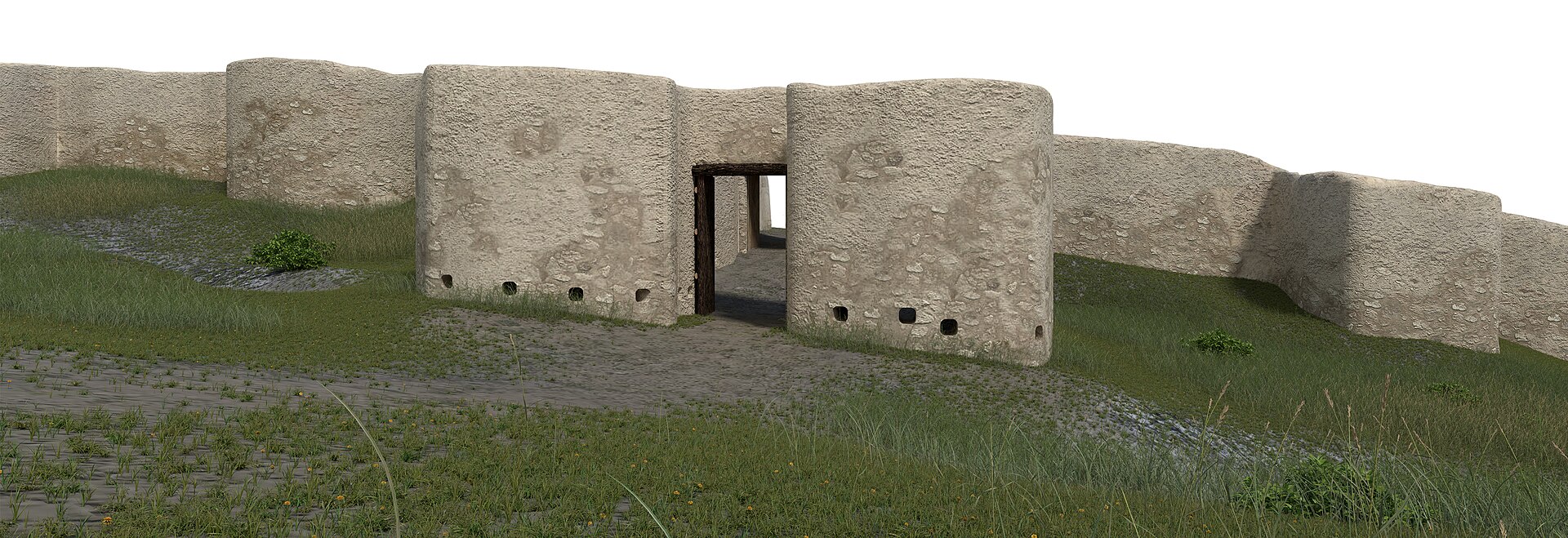
Why so much defence? You do not build multiple walls, bastions, and a barbican unless you feel genuinely threatened, or unless you have something worth protecting. The fortifications of Los Millares imply a world with real conflict, with raiding or warfare, and a community wealthy enough to be worth attacking. Peaceful prehistoric idylls do not build barbicans.
Inside the settlement
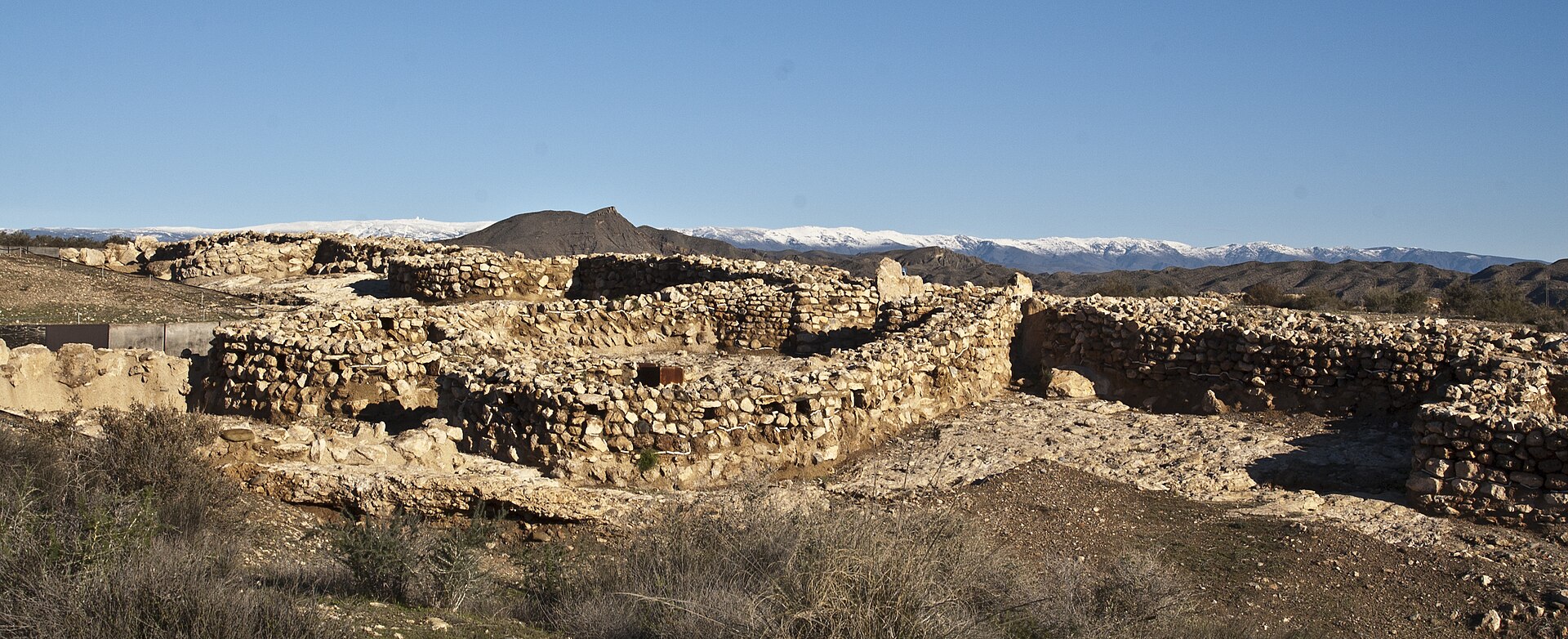
Within the walls lay the town itself, a settlement of circular huts and workspaces where the community lived and worked. Excavation has uncovered the foundations of these round houses, along with hearths, storage areas, and the debris of daily life, painting a picture of a busy, organized community rather than a scatter of shelters.
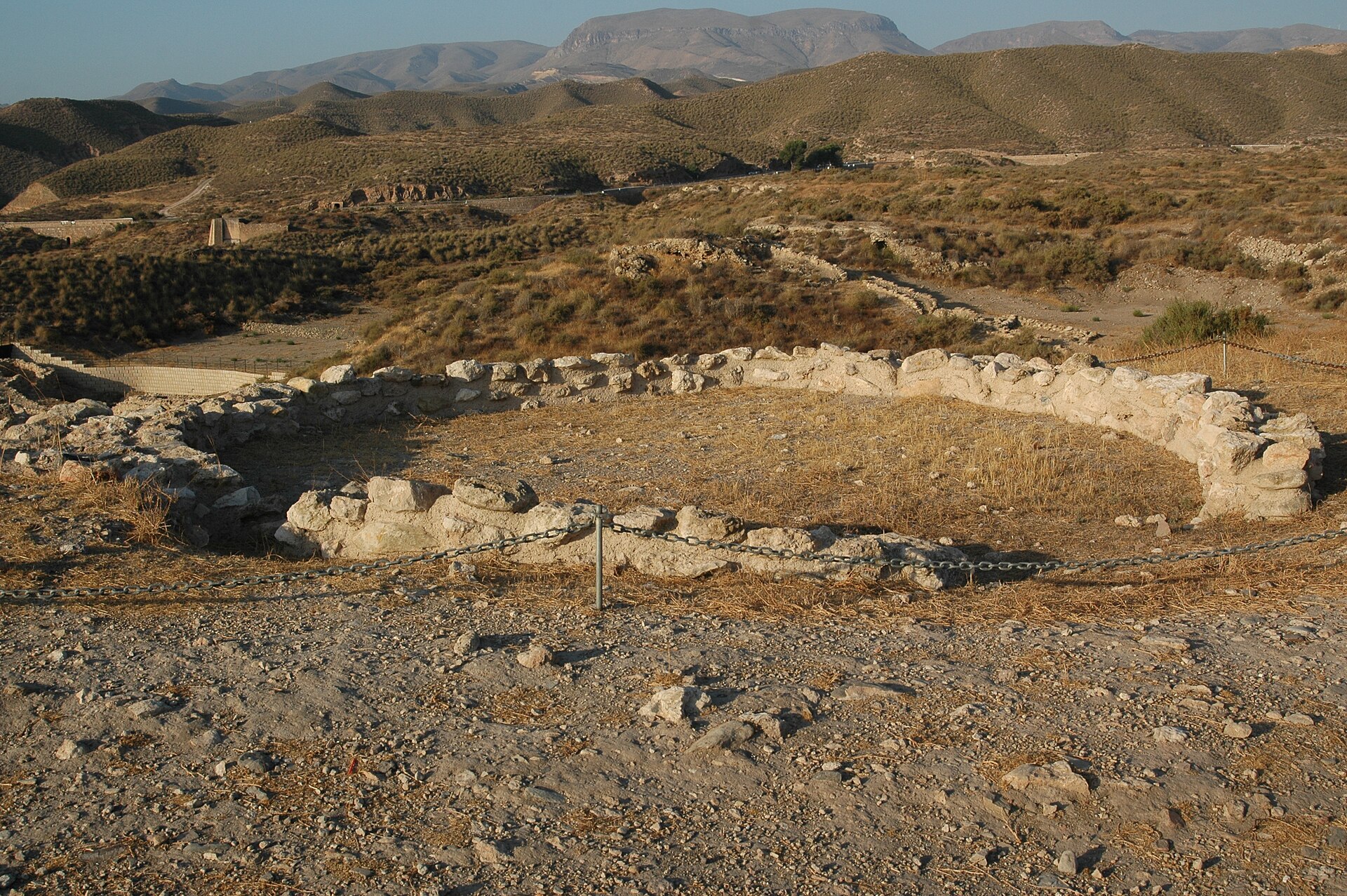
The internal organization matters. There is evidence of specialized zones, including areas devoted to craft and industry, which points to a division of labour, some people doing different work from others. Combined with the fortifications and the elaborate cemetery, this suggests a society with structure and complexity, not a simple egalitarian village but something closer to a small proto-urban centre.
I find it easy, standing among these circular foundations, to populate them in my imagination: families in their round huts, potters and smiths at their work, herders bringing animals in past the great gate at dusk, the whole community tucked behind its walls. It was a real town, with all the ordinary human life that implies, five thousand years ago on a Spanish bluff.
The smell of copper
One of the things that made Los Millares special, and probably wealthy, was metal. This was a Copper Age, or Chalcolithic, community, and the working of copper was central to its identity. Evidence of metallurgy, including the remains of smelting and the tools of the trade, shows that people here were extracting copper from ore and shaping it into objects.
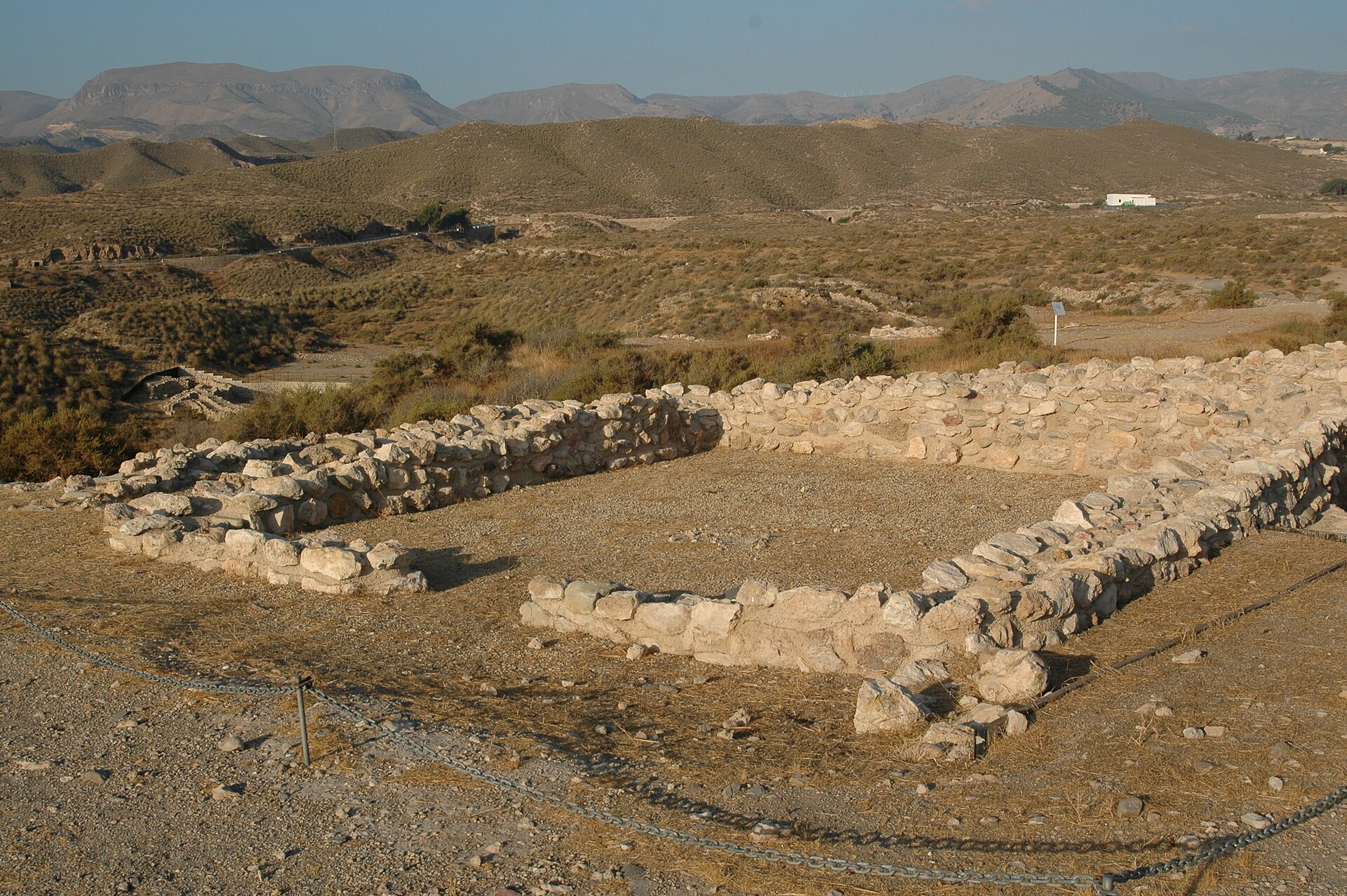
This was cutting-edge technology for its time. Learning to win metal from stone, to control fire hot enough to smelt ore, and to cast and shape the results, was a transformative skill that gave communities who mastered it a real advantage. Copper tools, weapons, and ornaments were valuable, and the ability to produce them would have brought wealth, status, and connections through trade.
The presence of metalworking at Los Millares helps explain everything else about it: the wealth to build great walls and tombs, the trade links that connected it to the wider world, and perhaps the very conflict its fortifications guard against. Metal was power, and Los Millares was, in its own early way, a metal town, its prosperity forged in the heat of the smelting fire.
A city of the dead
If the fortified town is impressive, the cemetery is astonishing. Spread across the slopes below and around the settlement was a vast necropolis of monumental tombs, dozens of them, forming a genuine city of the dead to match the city of the living. These were not simple graves but substantial built structures, each a communal tomb used over long periods.
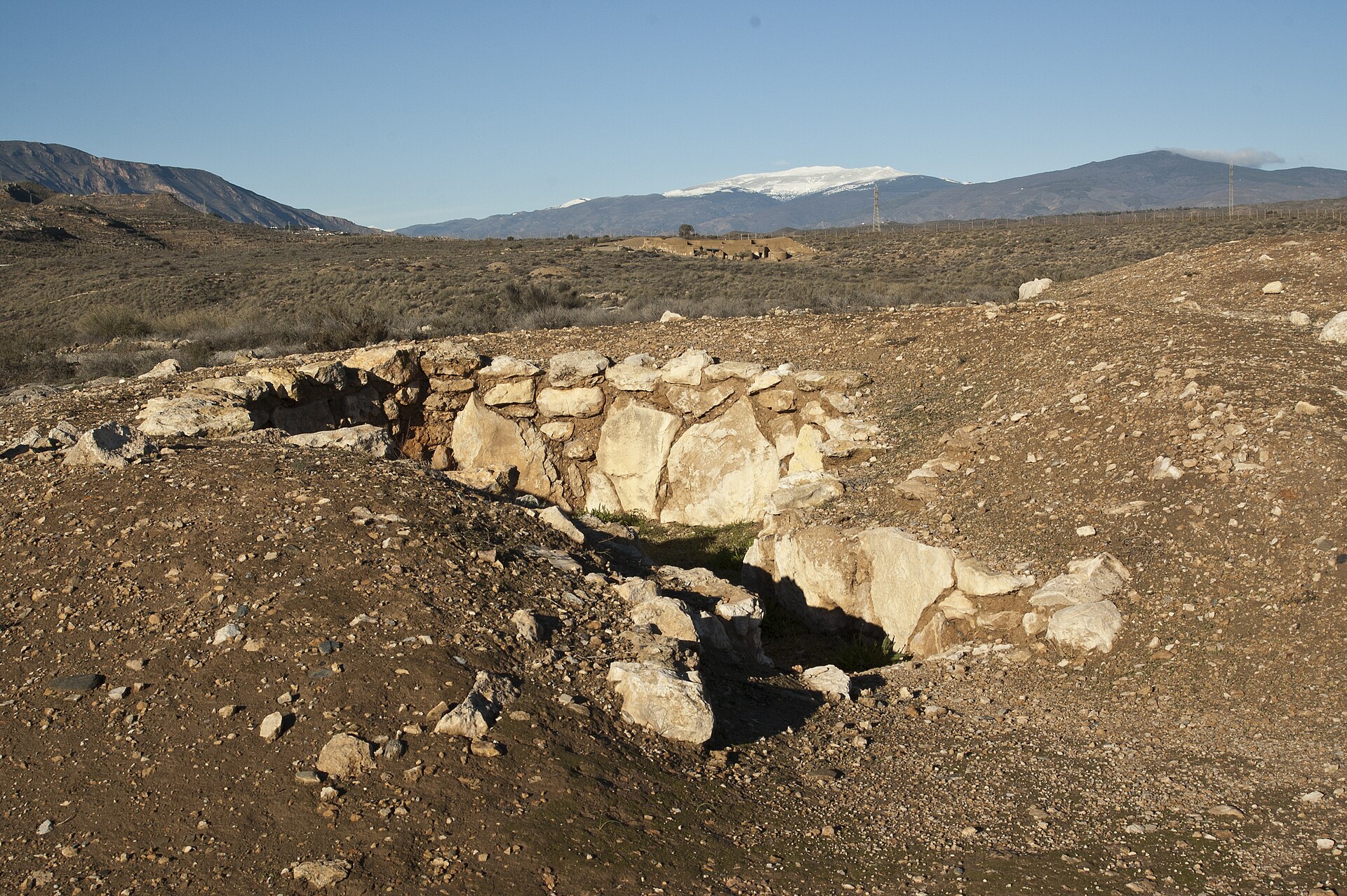
The characteristic tomb type here is the tholos: a round burial chamber, often approached by a passage, roofed with a corbelled or false dome of stone, and covered by a mound. Inside, the community placed their dead together, along with grave goods, over generations. The effort involved in building so many of these monuments, alongside the town walls, speaks of a society with both organization and a deep concern for its ancestors.
The scale of the necropolis is what stays with me. This community did not just bury its dead; it built them an entire landscape of monuments, a permanent parallel town of tombs facing the settlement across the valley. The living and the dead shared this place, each with their own architecture, and the boundary between them must have felt close and important.
Tombs that face the sunrise
There is a further, beautiful detail to the tombs of Los Millares. Many of them are oriented so that their entrances and passages face toward the rising sun, catching the light of dawn. Standing inside one of these chambers as the sun comes up, you can watch daylight reach in along the passage, a deliberate dialogue between the tomb and the sky.
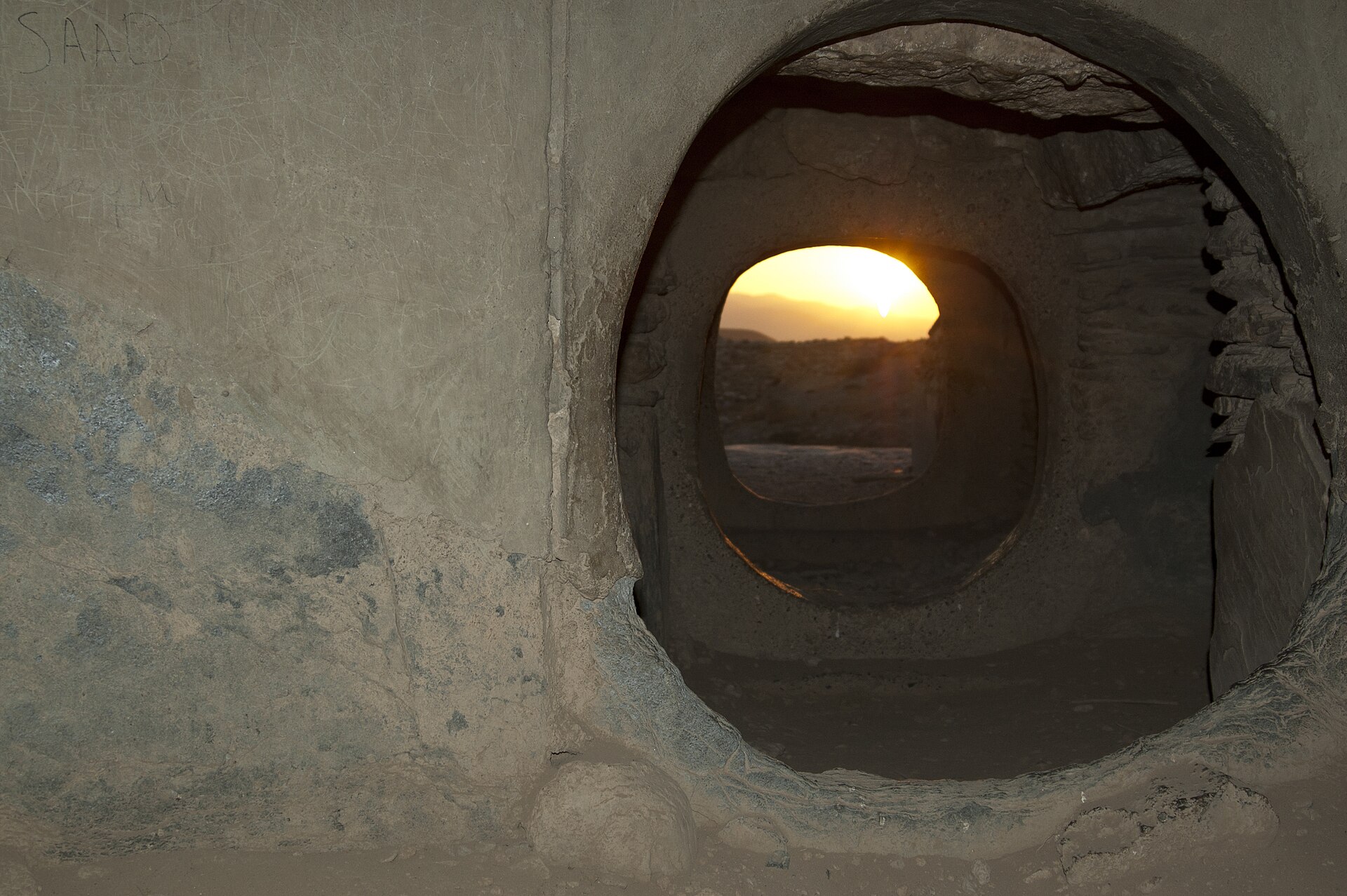
This kind of solar orientation appears again and again in the monumental tombs of prehistoric Europe, and it clearly meant something. Whether it was about rebirth, about the daily return of the sun echoing hopes for the dead, or about aligning the community’s most sacred structures with the great rhythms of the cosmos, the intention seems unmistakable. These tombs were tied to the sun.
I find these alignments genuinely moving. They tell us that the builders were watching the sky closely, thinking about time, death, and renewal, and encoding those thoughts into the very architecture of their tombs. The people of Los Millares were not only farmers and smiths and warriors; they were also, in their way, astronomers and philosophers, reaching for meaning in the movements of the sun.
What kind of society was this?
Put all the evidence together, and a picture emerges of a surprisingly complex society. The fortifications imply conflict and the need for collective defence. The metallurgy implies specialized craft and wealth. The monumental tombs imply organization, communal effort, and social distinctions, since not everyone may have been buried with the same honour or grave goods.
Many researchers see in Los Millares the signs of an emerging social hierarchy, a society moving beyond simple equality toward one with leaders, specialists, and differences in status and wealth. The control of metal and trade, the ability to mobilize labour for walls and tombs, and the management of defence all point toward some form of concentrated authority, however we choose to define it.
Whether we call it a chiefdom, a proto-state, or something else, Los Millares represents a crucial step in the human story: the emergence, in western Europe, of the kind of structured, hierarchical, defended, craft-based society that would eventually lead to cities and states. It is a glimpse of the future being assembled, piece by piece, on a Spanish hilltop.
Collapse and what came after
Like every society, Los Millares came to an end. After flourishing for several centuries, the settlement was eventually abandoned, and the reasons are debated. Environmental pressures in this fragile, arid landscape may have played a part, along with social change, conflict, and the broader transformations sweeping the region as the Copper Age gave way to the Bronze Age.
In the same corner of Spain, a somewhat later Bronze Age culture, known from the site of El Argar, rose to prominence, with its own distinctive settlements and burial customs. Whether Los Millares fell and was replaced, or slowly transformed into what came next, its particular world eventually dissolved into the ongoing currents of Iberian prehistory.
The abandonment feels, as so often, quieter and sadder than a dramatic destruction. The walls were left, the town emptied, the great cemetery fell silent, and the dry hills reclaimed the place. But for several centuries, this bluff had been home to one of the most advanced communities in western Europe, and that achievement did not simply vanish; it fed into everything that followed.
Why Los Millares matters
Los Millares matters because it shifts the map of early complexity. It shows that fortified, hierarchical, metalworking societies were emerging in western Europe remarkably early, not merely as pale imitations of eastern civilizations but as genuine local developments. The story of the rise of complex society is wider and more polycentric than the old textbooks suggested, and Los Millares is a key piece of that revised picture.
It matters, too, as a bundle of firsts and near-firsts: among the earliest fortified towns in the region, one of the earliest major centres of copper metallurgy in Europe, and the type-site for a whole Copper Age culture. To understand the Iberian Chalcolithic, and the broader emergence of European complexity, you have to start here.
And it matters as a human drama. Behind the walls and tombs are people who feared their neighbours enough to build barbicans, who mastered fire and metal, who buried their dead in domed tombs facing the dawn, and who created a real town in a hard land. Their ambition, ingenuity, and beliefs are written into the ruins, waiting for us to read them.
Walking the site today
Today Los Millares is an archaeological park in the province of Almería, with reconstructed sections of the walls and gate, consolidated tombs, and interpretive areas that help visitors make sense of what they are seeing. Walking the promontory, you can trace the lines of the defences, peer into the tholos tombs, and take in the commanding view over the valley that made this spot so desirable.
It is not a crowded, world-famous destination, which is part of its appeal. You can wander the walls and the cemetery in relative quiet, with the dry Almerían hills stretching away on every side, and feel the presence of the vanished town. The reconstructions help, but it is the setting and the scale, the walls, the many tombs, that really convey what once stood here.
For me, Los Millares is a lesson in looking beyond the obvious centres of the ancient world. Here, on the edge of Europe, in a landscape easy to dismiss, people built something genuinely remarkable five thousand years ago. Stand on the bluff, look out over the valley and the city of the dead, and you feel the deep, surprising reach of human ambition, far from the famous names and yet fully their equal in spirit.
Engineering water in a dry land
One detail of Los Millares that is easy to overlook, but genuinely impressive, concerns water. In an environment as arid as this, a substantial town needed a reliable supply, and the inhabitants seem to have managed it with real ingenuity. Evidence points to systems for bringing and storing water within the fortified area, so that the settlement could withstand not just attack but drought and siege.
This matters because water management is one of the classic markers of a sophisticated society. Coordinating the supply of water for a whole community requires planning, cooperation, and collective infrastructure, the same organizational muscle that raised the walls and the tombs. It is another sign that Los Millares was a genuinely engineered place, not a haphazard cluster of homes.
Set against the harshness of the Almerían landscape, this makes the achievement all the more striking. These were people wringing a thriving town out of a difficult, dry environment through skill and organization. The more you learn about the practical challenges they overcame, the more the settlement’s scale and endurance come to seem like a real triumph over the land.
Connected to a wider world
Los Millares was not an isolated outpost. Its metalworking depended on knowing where to find copper ore, and its prosperity was tied to exchange. Objects and materials found at the site show connections reaching well beyond the immediate valley, linking this Almerían community into wider networks of trade and contact across Iberia and, through them, the broader Mediterranean world.
Prestigious materials and finely made objects moved along these networks, and ideas surely travelled with them. The very concept of the tholos tomb, the techniques of metallurgy, and the styles of pottery and ornament all connect Los Millares to a shared cultural sphere. No thriving community of this kind exists in a vacuum; it is always a node in a web of relationships.
Seeing Los Millares as connected rather than isolated changes how we read it. Its wealth, its technology, and its ambition were both local achievements and the products of contact with a wider world. The town on the bluff was plugged into currents of exchange that spanned the region, and its story is part of a much larger Copper Age tapestry.
How we date the site
Los Millares is generally placed in the third and later fourth millennium BCE, with its main floruit around 3200 to 2300 BCE. As always, it is worth asking how such dates are established for a prehistoric site with no written records.
The answer is the familiar combination of radiocarbon dating and careful stratigraphy. Organic remains from the settlement and tombs can be dated scientifically by measuring the decay of radioactive carbon, while the layering of deposits and the changing styles of pottery, tools, and metalwork allow archaeologists to order the phases of occupation and cross-check the chronology.
Together these methods give a reliable framework for the life of the site, from its rise as a fortified centre through its long occupation to its eventual abandonment. The great age of Los Millares, like its sophistication, is not romantic speculation but a conclusion built from physical evidence, which is exactly why it can be trusted.
Why fortify at all?
I keep returning to the walls, because they say something important about the age. For a long time it was tempting to imagine early farming societies as broadly peaceful, and warfare as a later invention that came with states and armies. The elaborate defences of Los Millares, multiple walls, bastions, a barbican, quietly demolish that comforting idea.
You simply do not invest that much labour in fortification unless the threat is real. The people of Los Millares clearly expected to be attacked, and prepared accordingly. Their world included conflict, whether raiding for cattle, metal, and other wealth, competition between communities, or something more organized. The walls are a frank admission that the Copper Age could be dangerous.
That does not make these people uniquely violent; it makes them human, living in a world of both cooperation and competition. But it does add an important shadow to the picture. Alongside the beautiful tombs and the ingenious metalwork stands the hard fact of the barbican, a reminder that ambition and prosperity have always attracted danger, and that people have always had to defend what they built.
The town at the edge of the map
If Los Millares teaches one lesson above all, it is to distrust the idea of the backwater. On any map of the ancient world drawn around the famous centres, Almería looks peripheral, a dry corner far from the action. And yet here, in that supposed periphery, was one of the earliest complex societies in western Europe, doing things that would not become widespread for a very long time.
This should make us humble about how we judge the past. Innovation and complexity did not radiate neatly outward from a few privileged hearths; they bubbled up in many places, including ones we might overlook. The story of humanity is not a single line but a branching, many-centred thing, and sites like Los Millares are where we catch the story being written in unexpected places.
That, to me, is the deep pleasure of a place like this. It rewards the willingness to look beyond the obvious, and it repays that curiosity with genuine astonishment. A dry bluff in Almería turns out to hold a fortified town, a city of the dead, and the smell of the earliest copper, all five thousand years old. The edge of the map, it turns out, was never really the edge at all.
A day inside the walls
Let me try to bring the town to life. Imagine a morning at Los Millares around 3000 BCE. The sun climbs over the dry hills, light reaching along the passages of the tombs across the valley. Inside the walls, smoke rises from hearths in the round huts, and the day’s work begins: grinding grain, tending animals brought in through the great gate, shaping pots, and, in the craft quarters, the heat and smell of the smelting fire.
Down at the metalworkers’ area, someone tends a furnace, coaxing copper from crushed ore, while others hammer and cast the precious metal into tools and ornaments. Guards keep an eye on the approaches from the bastions along the wall. Beyond the defences, families visit the tombs of their ancestors, tending the city of the dead that faces the city of the living across the valley.
None of this was remarkable to the people living it; it was simply their world, as ordinary to them as our routines are to us. And that is exactly why I find it so affecting. The archaeology recovers not just walls and tombs but a whole texture of daily existence, five thousand years deep, and reminds us that these were people not so different from ourselves, making their lives in a hard and beautiful place.
Where Los Millares sits in time
To appreciate Los Millares fully, it helps to place it against the wider timeline. When this fortified town was at its height, the great pyramids of Egypt were only just beginning to be built, the cities of Mesopotamia were still developing, and Stonehenge had not yet reached its famous stone phase. Los Millares belongs to that pivotal stretch when complex societies were emerging in many parts of the world at once.
Seen this way, the Almerían town is not a latecomer trailing behind older civilizations but a participant in a broad, roughly simultaneous surge of human complexity. While Egypt and Mesopotamia followed their own paths toward states and monuments, western Europe was producing its own fortified, metalworking, tomb-building societies, of which Los Millares is among the earliest and clearest examples.
That is the reward of setting these sites side by side, as this series does. Line up Los Millares with the other great places of its age and you begin to see the shape of the whole: a species everywhere, at roughly the same deep moment, reaching for permanence, technology, defence, and meaning. Los Millares is one bright thread in that shared human story, and a thread well worth following to its end.
Few sites pack so much into so little fame. A fortified town, an early metal industry, and a vast necropolis of sun-facing tombs, all on one Almerían bluff, add up to a place that genuinely deserves to be far better known than it is. Los Millares repays every hour you give it.
There is a particular thrill in realizing that castle-like defences, industrial metalworking, and monumental cemeteries all coexisted here long before the civilizations we usually credit with such things. Los Millares quietly insists that the deep past was far more advanced, and far more surprising, than our tidy stories allow.
Every visitor who walks these walls and peers into these sun-facing tombs helps keep that story alive, carrying the memory of the town on the bluff forward into another generation. That, in the end, is what these ancient places ask of us: to look, to wonder, and to remember.
Los Millares is one more room in the vast house of humanity’s deep past, and every site in this series connects to it. For other early experiments in defended, complex settlement and the first cities, see Jericho and its ancient wall, Uruk and Sumer, Mohenjo-daro, Dholavira, Kalibangan, Liangzhu, Sarazm, Tell Brak, and the mega-settlements of Cucuteni-Trypillia. For the megalithic and monumental tomb tradition that Los Millares’ tholoi belong to, visit the cairns of Barnenez and Gavrinis, the tomb of Newgrange, the circle at Stonehenge, the temples of Malta, and the stone village of Skara Brae. To meet the farming villages and symbol-makers of the Neolithic, explore Çatalhöyük, Aşıklı Höyük, Mehrgarh, Jiahu, Vinča, the temple hills of Göbekli Tepe and Karahan Tepe, and the painted caves of Lascaux and Chauvet. And across the wider ancient world await the palace of Knossos, the reef city of Nan Madol, the pyramids of Caral, the temple of Chavín de Huántar, the carved warriors of Cerro Sechín, the earthworks of Poverty Point, and the solar towers of Chankillo. Together they trace the long, shared adventure of our species. And if you want to see how early this whole impulse began, the burial mounds of Bougon, raised around 4800 BC, are older than almost anything else in this series. For a stone circle that predates almost everything else, don’t miss the Almendres Cromlech in Portugal, raised around 6000 BC. For temples so old they were once thought built by giants, visit Ġgantija on the Maltese island of Gozo. And for the greatest hoard of Neolithic art in Europe, visit Knowth, the carved passage tomb hidden beside Newgrange. For the most exquisitely carved of all the ancient Maltese temples, explore Tarxien, a masterpiece of prehistoric art. For a temple that turns sunlight into a calendar, visit Mnajdra, aligned with the equinox and solstice sun on Malta’s coast. On the cliffs of Malta, the temple of Ħaġar Qim tells a strikingly similar story of stone and devotion. In Ireland’s Boyne Valley, the quiet mound of Dowth tells a strikingly similar tale of stone and the setting sun. In Brittany, the thousand standing stones of Carnac tell a strikingly similar story of stone and devotion. Far out in the Hebrides, the ring of Callanish tells a strikingly similar story of stone and sky. In a quiet Corsican valley, the carved stone warriors of Filitosa tell a strikingly different chapter of the same deep past. On a Swedish clifftop, the great stone ship of Ale’s Stones carries the same ancient impulse out toward the sea.
You May Like
The Bardo, a Palace of the Beys Filled With Roman Mosaics


One thought on “Los Millares: The 5,000-Year-Old Fortified Town at the Edge of Europe”