On the southern coast of Malta, perched on a low bluff with the Mediterranean stretching out below, stand the temples of Mnajdra. Of all the island’s prehistoric monuments, this is perhaps the most magical to visit, partly for its setting, gazing out over the sea, and partly for a remarkable secret built into its stones: one of its temples is aligned so precisely with the sun that it turns the whole structure into a giant calendar.
Mnajdra is more than five thousand years old, older than the Egyptian pyramids and Stonehenge, and it belongs to the same extraordinary Maltese temple culture that produced Ġgantija and Tarxien. But Mnajdra has a character all its own, quiet, coastal, and tuned to the rhythm of the rising sun. Let me take you through it.
- What Mnajdra actually is
- How old the temples are
- The extraordinary setting
- The temple that tracks the sun
- Inside the temples
- The people who built it
- What it was all for
- Why Mnajdra still matters
- A calendar carved in stone
- Mnajdra and Ħaġar Qim
- The engineering of the temples
- The rise and fall of a temple culture
- A people who watched the heavens
- How Mnajdra came to light
- Mnajdra among the Maltese temples
- Mnajdra and the Neolithic world
- Visiting Mnajdra today
- Protecting a fragile treasure
- What the sun may have meant
- The enduring legacy of Mnajdra
What Mnajdra actually is
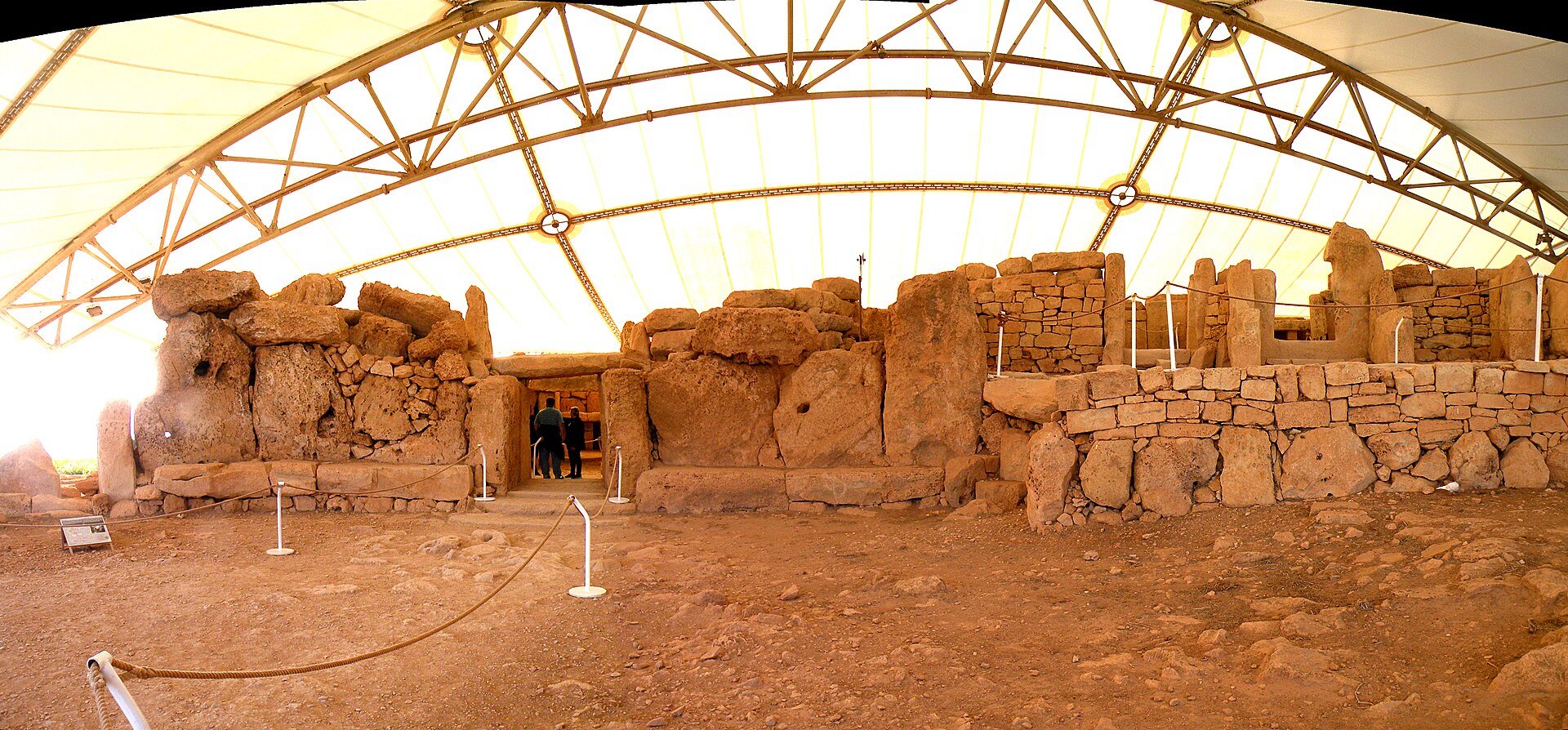
Mnajdra is a complex of three temples, built close together and sharing the same stretch of coast. Each follows the familiar Maltese plan, rounded chambers, or apses, opening off a central corridor, but the three differ in date and detail, having been built and modified over a long span of time.
It belongs to the Maltese Temple Period, the remarkable era when the small population of these islands raised a whole family of monumental temples. Mnajdra sits not far from another great temple, Ħaġar Qim, on the same coastline, making this corner of Malta one of the richest concentrations of prehistoric sacred architecture anywhere.
How old the temples are
The temples at Mnajdra were built and elaborated across a long period, with the main phases dating to roughly 3600 to 2500 BC. That places their origins more than five thousand years ago, comfortably older than the pyramids of Egypt and the great stone circle at Stonehenge.
As with the other Maltese temples, Mnajdra represents a tradition that flourished for centuries and then, mysteriously, faded. Standing among these stones, you are witnessing the work of a confident, sophisticated society at the height of its powers, one whose beliefs and achievements we are still piecing together today.
The extraordinary setting
Part of what makes Mnajdra unforgettable is where it sits. Unlike temples now hemmed in by modern towns, Mnajdra stands in open country on a coastal slope, looking out over the sea toward a small islet on the horizon. The sense of space and the sound of the wind and waves give the site a genuinely sacred atmosphere.
It is easy to imagine why the builders chose this spot. A temple facing the open sea and the rising sun, set apart from daily life, would have felt like a threshold between worlds. The landscape itself seems to have been part of the sacred design, and even today the setting does much of the work of moving you.
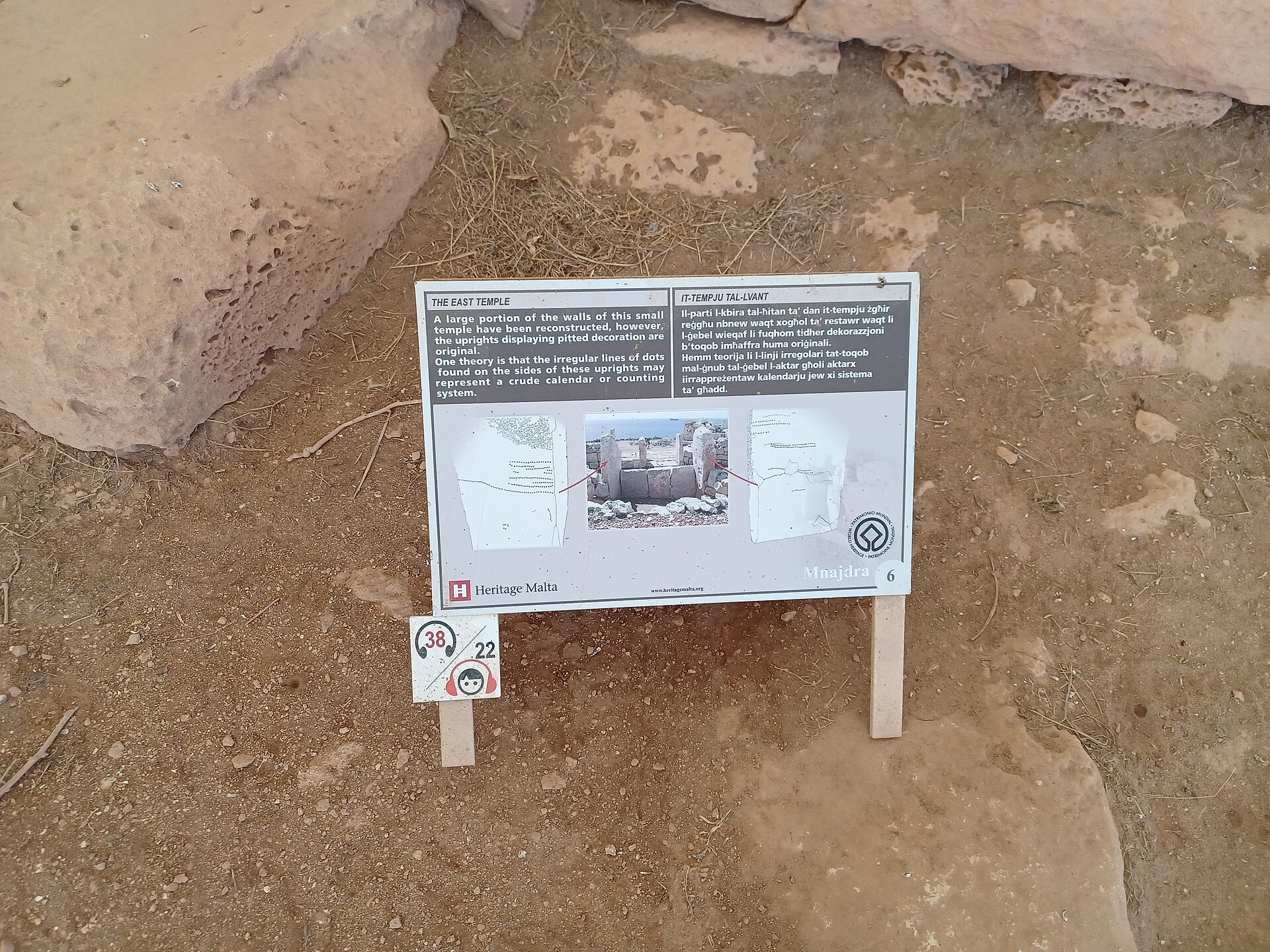
The temple that tracks the sun
Here is Mnajdra’s most famous feature. The lowest of its three temples is aligned so that, at the equinoxes, the rising sun shines straight down the central corridor, while at the summer and winter solstices the first light strikes the edges of particular stones. In effect, the temple marks the key turning points of the solar year.
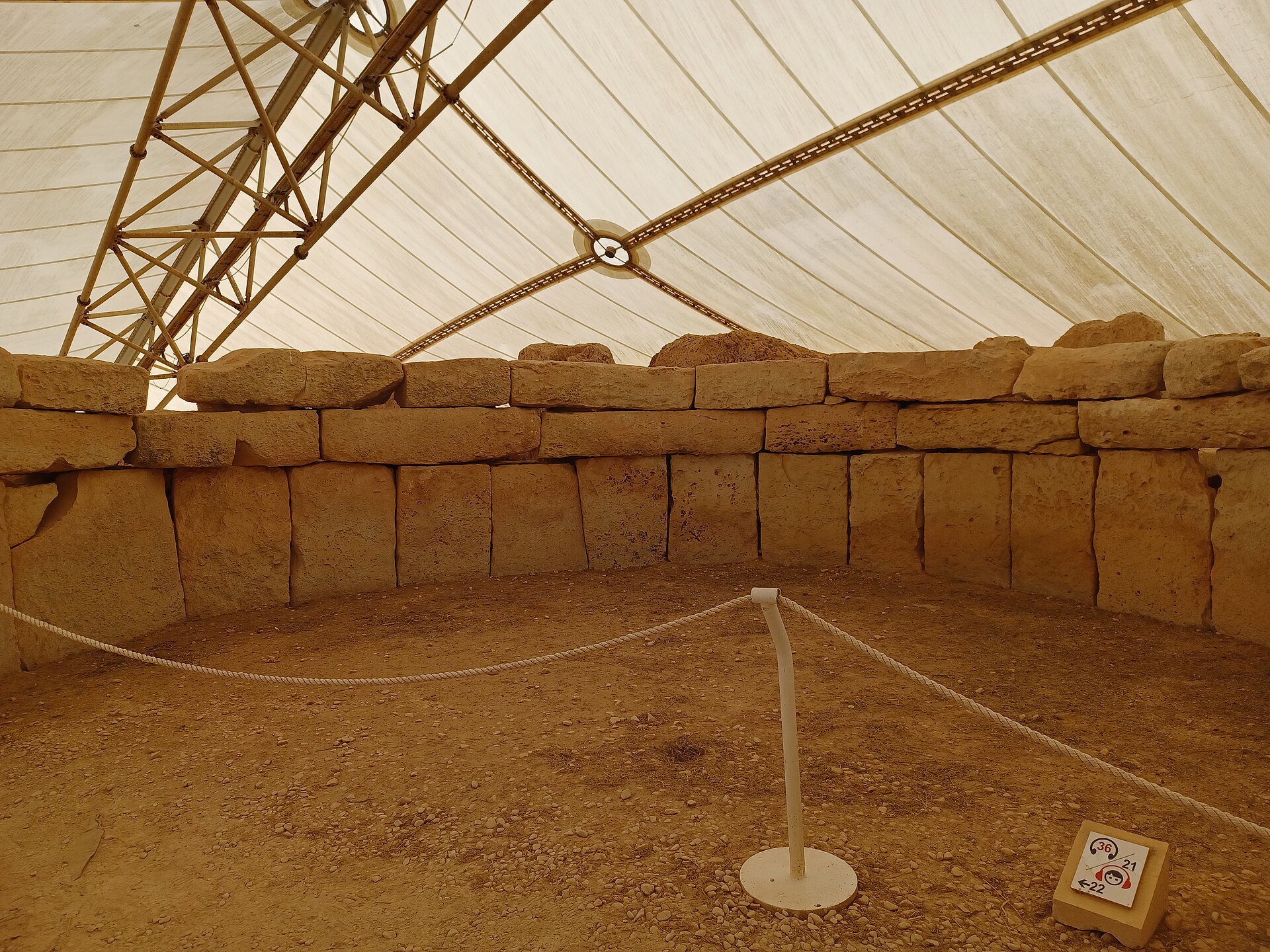
Think about what that means. More than five thousand years ago, people observed the sun’s movements so carefully that they could build a stone structure to capture them, a monument that doubles as a calendar. For a farming society, knowing the turning of the seasons was vital, and here that knowledge is written into architecture with astonishing precision.
Inside the temples
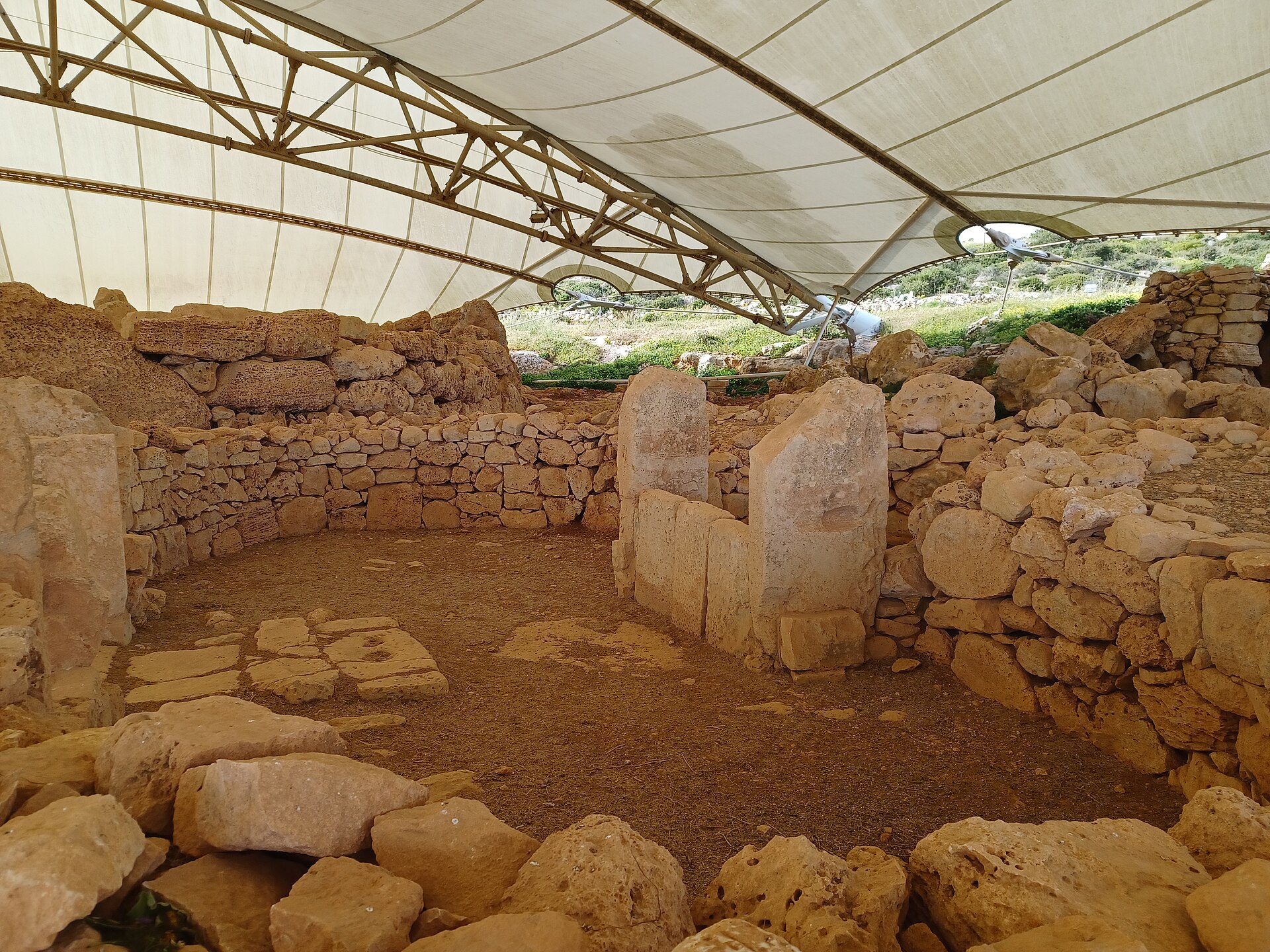
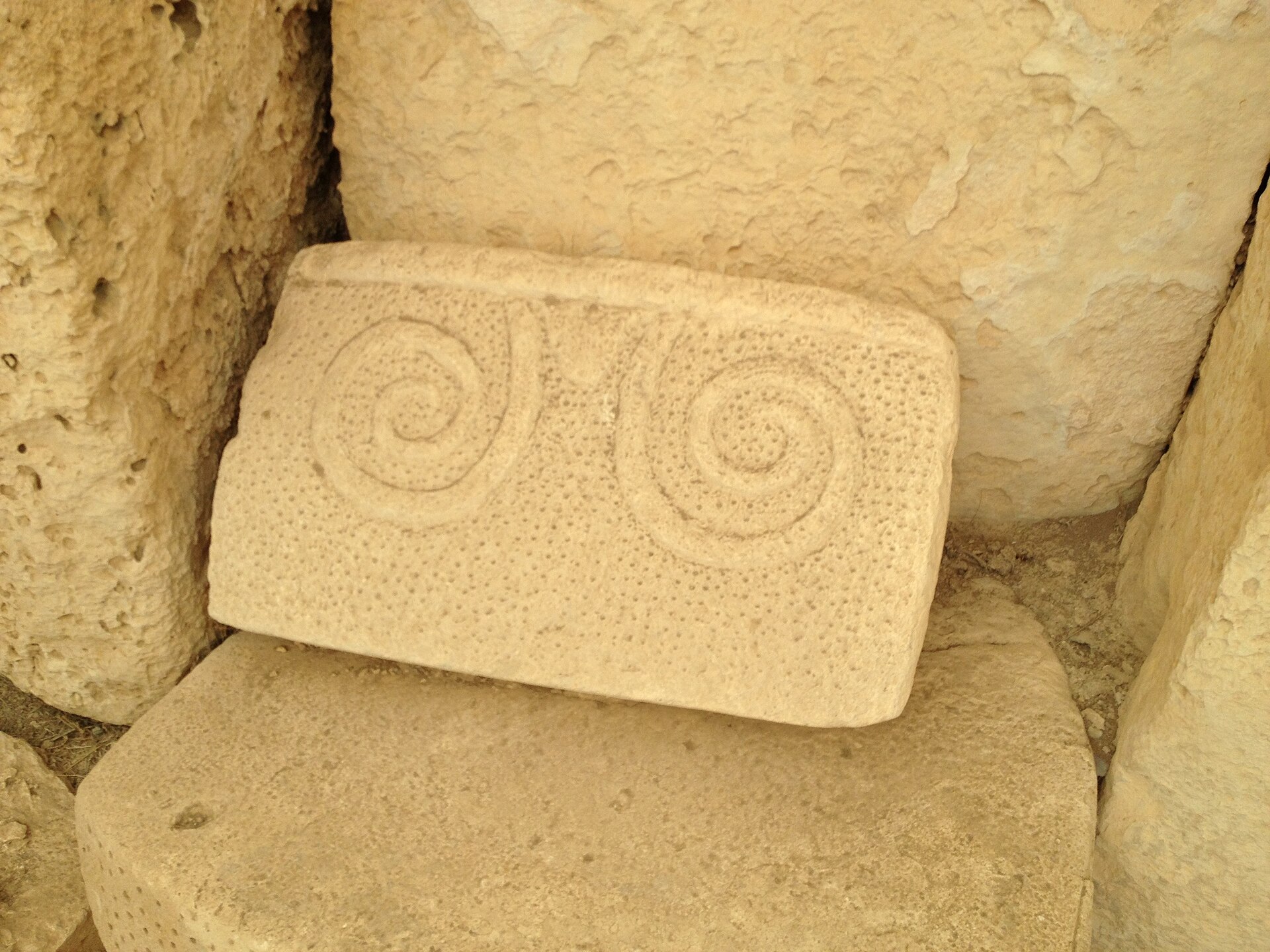
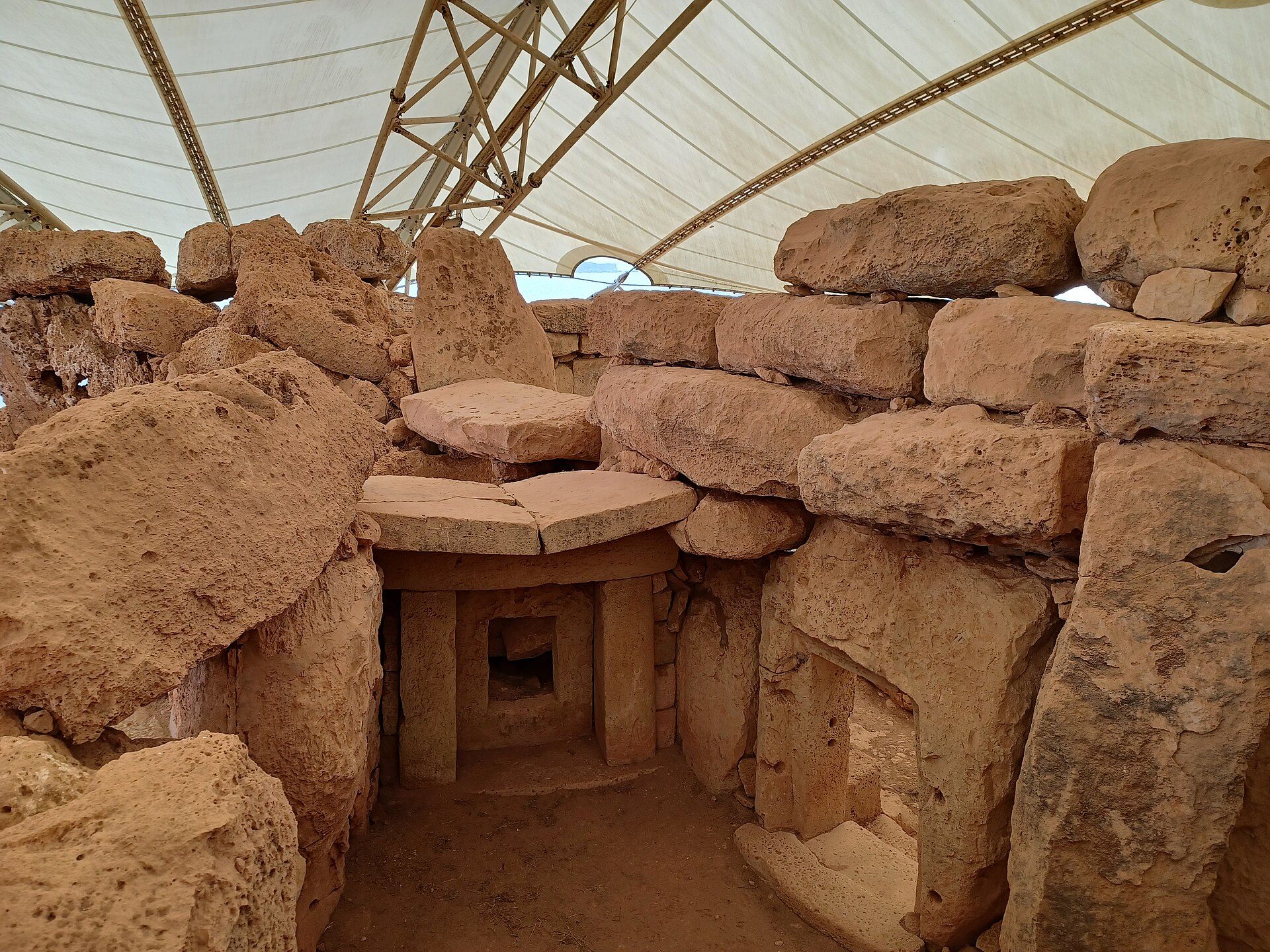
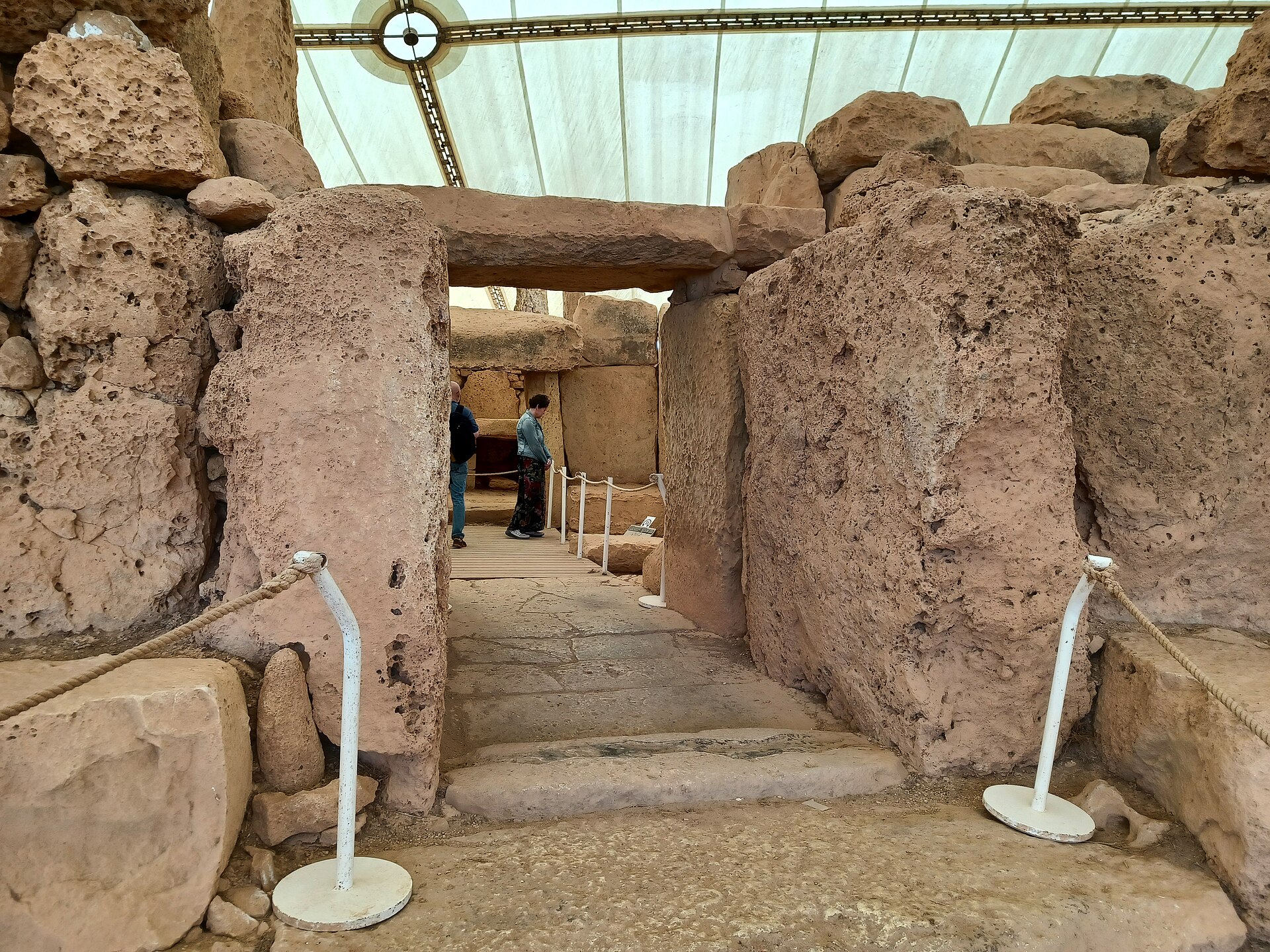
Stepping into Mnajdra, you move through the rounded apses and along the central corridors, past great upright stones and carefully fitted slabs. The temples combine massive structural megaliths with finer detail, including stones decorated with the spiral and pitted patterns typical of Maltese temple art.
Traces survive of altars, thresholds, and worked stones that once framed rituals we can only partly reconstruct. As at the other temples, the layout seems designed to guide worshippers from outer, public spaces toward inner, more sacred ones, staging a journey deeper into the heart of the monument.
The people who built it
The builders of Mnajdra were, like all the Maltese temple builders, farming communities on small Mediterranean islands. That makes their achievement all the more striking. A modest island population not only raised monumental temples but did so with an understanding of astronomy precise enough to align a building with the sun.
To build Mnajdra required organised labour, skilled craftsmanship, careful observation of the heavens, and a shared spiritual vision sustained across generations. The temple is a portrait of that society: devout, observant, cooperative, and capable of turning both stone and sunlight into instruments of their faith.
What it was all for
Mnajdra was clearly a place of ritual and worship, and its solar alignment suggests that the movements of the sun, and the seasons they marked, were central to its meaning. Ceremonies here may have been tied to key moments in the year, the equinoxes and solstices, when the temple caught the light in its special way.
Like the other Maltese temples, Mnajdra probably also served as a focus for the community, a place to gather, mark the turning of the year, and reaffirm shared beliefs. It wove together sky, sea, land, and the sacred in a single coastal monument, aligning human ritual with the great cycles of the cosmos.
Why Mnajdra still matters
Mnajdra matters because it reveals the astronomical sophistication of Malta’s temple builders. To align a building so precisely with the sun, more than five thousand years ago, required patient observation and real understanding. It shatters any assumption that early farmers were unsophisticated, and shows a people deeply attuned to the heavens.
It also matters because it survived in such a moving setting, where you can still stand among the stones, look out to sea, and, at the right moment, watch the sun do exactly what the builders intended. Few places connect you so directly to the deep past. At Mnajdra, an ancient people’s knowledge of the sky is still keeping its appointment.
A calendar carved in stone
The solar alignment at Mnajdra is worth lingering on, because it is such an extraordinary achievement. At the spring and autumn equinoxes, the rising sun sends a beam of light straight down the main axis of the lower temple. At the solstices, midsummer and midwinter, the first light instead illuminates the edges of specific stones flanking the entrance.
Taken together, these effects mark the four great turning points of the solar year. In other words, the temple functions as a device for tracking time, telling its builders when the seasons changed. For a farming people whose survival depended on planting and harvesting at the right moments, this was knowledge of the highest importance.
What moves me is the patience behind it. To align a building this precisely, the builders must have watched the sun rise, day after day, year after year, noting exactly where it appeared on the horizon through the changing seasons. Then they encoded that hard-won knowledge into stone, where it still works today. That is science and sacred art fused into one.
Mnajdra and Ħaġar Qim
Mnajdra does not stand alone. A short walk uphill lies another great temple, Ħaġar Qim, and the two are usually visited together as a pair. Both perch on the same stretch of southern coast, and both belong to the same remarkable temple-building tradition, though each has its own character.
Seeing them together deepens the impression of a whole sacred landscape. This was not one isolated temple but a cluster of monuments, set in dramatic coastal country, where the community’s spiritual life was concentrated. The effort represented by these neighbouring temples, raised by a small island population, is genuinely staggering.
Together, Mnajdra and Ħaġar Qim form one of the highlights of prehistoric Malta. Where Ħaġar Qim is known for its massive stones and elaborate plan, Mnajdra is celebrated for its solar alignment and its breathtaking seaside setting. As a pair, they showcase the range and ambition of Malta’s temple builders.
The engineering of the temples
Building Mnajdra was a considerable feat. The builders had to quarry, transport, shape, and raise enormous megaliths, some weighing many tonnes, and set them precisely enough to achieve those delicate solar alignments. All of this was done without metal tools or wheeled transport as we would recognise it.
Stone spheres found at Maltese temple sites suggest how the great blocks may have been moved, rolled beneath heavy stones like primitive bearings. Levers, ramps, and coordinated human effort did the rest. The precision required to align a whole temple with the sun makes the achievement all the more impressive.
None of this happened by accident. Behind Mnajdra lay careful planning, astronomical observation, and skilled, organised labour sustained across generations. The people who built it were engineers and sky-watchers at once, and their surviving temple is the proof of a sophisticated tradition passed down by hand and example rather than by writing.
The rise and fall of a temple culture
Mnajdra belongs to one of the most remarkable episodes in prehistory: the Maltese Temple Period, when the small population of these islands raised a whole constellation of monumental temples over many centuries. It was a flowering of creativity, devotion, and astronomical skill with few parallels anywhere.
And then, mysteriously, it ended. The vibrant temple culture that produced Mnajdra, Ġgantija, and Tarxien faded, for reasons still debated, environmental strain, social change, or some combination lost to time. The temples fell silent, their rituals abandoned, their meaning gradually forgotten.
That rise and fall gives Mnajdra a wistful quality. It captures a society at the height of its powers, tuned to the very movements of the heavens, just before its world came to an end. Standing among its stones, watching the sea, you feel both the brilliance of what these people achieved and the poignancy of how completely their culture vanished.
A people who watched the heavens
Everything about Mnajdra points to a community that watched the sky with deep attention. Its solar temple is the clearest evidence, but the very act of building it reveals a worldview in which the movements of the sun were sacred, powerful, and worth encoding in stone. For these people, astronomy and religion were inseparable.
This makes perfect sense for a farming society. The calendar governed everything, when to plant, when to harvest, when the days would lengthen or shorten. A temple that marked the turning of the year tied the community to the rhythm of the cosmos and gave the passage of time a sacred shape.
I find it genuinely moving that people five thousand years ago, without writing or instruments as we know them, could read the heavens so precisely and build a monument to capture them. They turned the horizon into a clock and the sunrise into a ritual. That fusion of knowledge and wonder is one of the most human things imaginable.
How Mnajdra came to light
Like the other Maltese temples, Mnajdra lay largely forgotten for long ages before being properly recognised and studied. Nineteenth and twentieth century investigations gradually revealed the three temples, their layout, and, most excitingly, their alignment with the sun, transforming Mnajdra into one of the most celebrated prehistoric sites in the Mediterranean.
The discovery of the solar alignment was especially thrilling. Watching the equinox sun pour down the temple’s central axis, exactly as the builders intended, offered a direct, almost living link to the minds of a vanished people. It is one thing to read about ancient astronomy; it is another to see it work before your eyes.
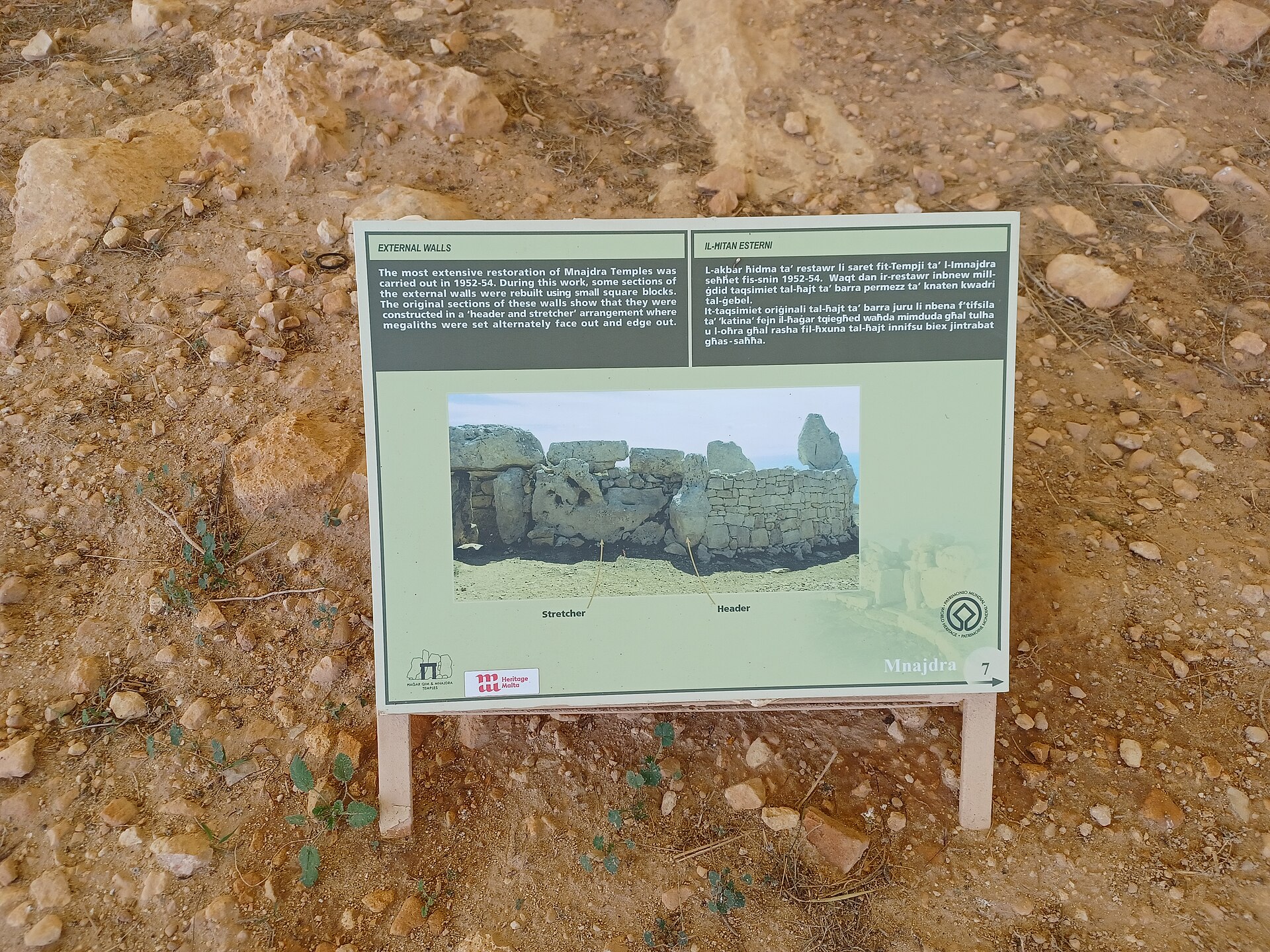
Since then, careful conservation has helped protect the fragile stones. To shield the temples from the weather, protective coverings have been used over the most vulnerable areas, a modern effort to ensure that a monument five thousand years old, and its remarkable relationship with the sun, survives for generations still to come.
Mnajdra among the Maltese temples
It helps to see Mnajdra alongside its siblings. Ġgantija on Gozo is the oldest and most massive. Tarxien is the most elaborately carved. Mnajdra’s distinction is its solar alignment and its incomparable coastal setting, making it perhaps the most atmospheric of all the temples to visit.
Comparing them is not about ranking but about appreciating the range of a single remarkable culture. Across these small islands, communities built temple after temple, each with its own character, together forming one of the greatest concentrations of prehistoric monumental architecture anywhere in the world.
Placed in that company, Mnajdra holds a special place as the temple of the sun and the sea. If Ġgantija shows the raw scale of the temple builders and Tarxien their artistry, Mnajdra reveals their astronomy and their eye for a sacred landscape. Together, these temples paint the portrait of a civilisation of astonishing depth.
Mnajdra and the Neolithic world
To place Mnajdra in context, remember the broader revolution it belongs to. Across the Neolithic world, people had taken up farming, settled into permanent communities, and begun to think in new ways about time, the sacred, and the cycles of nature. From that settled life came the surplus, the observation, and the motivation to build on a grand scale.
The Maltese temples are among the most spectacular expressions of that revolution, and Mnajdra adds a special dimension: the marriage of architecture and astronomy. It shows that even a small island society could achieve remarkable precision in tracking the heavens, tying its sacred buildings directly to the movements of the sun.
Seen this way, Mnajdra is more than a Maltese wonder. It is a vivid chapter in the global story of how settled farming communities everywhere began to watch the sky, mark the seasons, and build monuments that bound together the land, the heavens, and the divine. It is one of the most beautiful expressions of that universal human impulse.
Visiting Mnajdra today
A visit to Mnajdra is one of the great experiences of prehistoric Malta. After a walk down the coastal slope, the three temples come into view against the backdrop of the sea, and the setting alone makes the trip worthwhile. Walkways guide you around the site, and displays explain its history and its famous solar alignment.
If you can time a visit to an equinox or solstice, and many people make the effort, you may witness the sunrise effect for which Mnajdra is renowned, the light sliding down the ancient temple exactly as its builders intended. Even on an ordinary day, though, the atmosphere is extraordinary, quiet, open, and charged with age.
What stays with most visitors is a feeling more than a fact, a deep sense of standing at a threshold between the human and the cosmic, where an ancient people aligned their worship with the sun and the sea. Mnajdra turns abstract prehistory into something you can stand within and almost feel, and that is exactly what makes it unforgettable.
Protecting a fragile treasure
Mnajdra is irreplaceable, and its survival is not guaranteed. Stones that have stood for five thousand years remain vulnerable to weather, erosion, and the pressure of many visitors, and the site has even suffered acts of vandalism in the past. That is why so much care now goes into protecting the temples and managing access to them.
Every effort to conserve the site, and every respectful visitor who treats it gently, helps ensure that Mnajdra endures. These temples belong not just to us but to everyone who comes after, and preserving them, along with their remarkable relationship with the sun, is a way of keeping faith with both the ancient builders and the future.
In a very real sense, we have become the current guardians of one of humanity’s great prehistoric achievements. Whether Mnajdra still stands, still catching the equinox sun, in another thousand years depends on choices made now. That thought turns a simple visit into something meaningful, a small act of care passed forward through time.
What the sun may have meant
Why would a people go to such lengths to align a temple with the sun? For a farming society, the answer runs deep. The sun governed the growing year, the warmth of the fields, the length of the days. To track its movements was to hold power over the calendar, and perhaps to feel closer to whatever forces they believed steered the world.
The equinox and solstice moments the temple marks were likely charged with meaning, times of gathering, ritual, and renewal. Imagine the community assembling to watch the sunrise pour down the ancient corridor, a shared moment of wonder that reaffirmed the order of the cosmos and their place within it.
We cannot recover the exact beliefs behind these rituals, but the care lavished on the alignment tells us they mattered profoundly. The sun was not merely observed; it was woven into the sacred fabric of the temple. In aligning stone with sunlight, the builders bound their spiritual world to the great, dependable rhythms of the heavens.
The enduring legacy of Mnajdra
What does Mnajdra leave us, beyond its stones and its solar alignment? For me, its greatest legacy is a kind of proof: evidence that people five thousand years ago were every bit as observant, thoughtful, and spiritually rich as we imagine ourselves to be. They watched the sky, understood its rhythms, and built accordingly.
Mnajdra also leaves us a living connection to the deep past. Because its builders aligned it with the sun, we can still witness their astronomy at work, watching the light behave exactly as they intended, millennia after they vanished. Few monuments offer such a direct, almost tangible link to the minds of their creators.
That is the quiet power of Mnajdra. It carries meaning across an almost unthinkable gulf of time, one careful sunrise at a time. We have become the latest custodians of a monument older than history itself, still keeping its appointment with the sun, and how long it endures depends, in part, on whether we keep believing it matters.
There is one final image I carry from Mnajdra: the temples on their coastal bluff at dawn, the sea silver in the early light, and the first rays of the equinox sun sliding down the ancient corridor exactly as they have for five thousand years. Whoever these builders were, they aligned their faith with the heavens, and that alignment still holds. Standing there, you realise the sun is keeping an appointment made before history began.
Since Malta’s temple culture built more than one wonder, the natural companions to Mnajdra are Ġgantija: The Giant Temples of Gozo, Older Than the Pyramids and Tarxien: Malta’s Most Elaborate Prehistoric Temple, Carved 5,000 Years Ago, along with the temples of The Megalithic Temples of Malta: Older Than the Pyramids. From there, follow the megalith trail to Stonehenge: How and Why This Ancient Stone Circle Was Really Built, Newgrange: The 5,000-Year-Old Tomb Built to Catch the Solstice Sun, Gavrinis: The 6,000-Year-Old Carved Passage They Sealed in the Dark, Bougon: The 7,000-Year-Old Burial Mounds Older Than the Pyramids, Almendres Cromlech: Europe’s Oldest Stone Circle, 2,000 Years Before Stonehenge, and the carved tomb of Knowth: Europe’s Greatest Collection of Neolithic Art, Hidden Beside Newgrange. Reach back to the beginning with Göbekli Tepe: The World’s Oldest Temple and How It Rewrote History and Karahan Tepe: The Astonishing Sister of Göbekli Tepe, and trace the first towns through Çatalhöyük: The 9,000-Year-Old Town With No Streets, Jericho: The World’s Oldest City and Its 10,000-Year-Old Wall, Skara Brae: The 5,000-Year-Old Village Known as the Scottish Pompeii, and Aşıklı Höyük: The 10,000-Year-Old Village That Came Before Çatalhöyük. The great river and valley civilisations unfold at Uruk and Sumer: The First Cities and the Birth of Writing, Mohenjo-daro: The 4,500-Year-Old City That Was Centuries Ahead of Its Time, Liangzhu: The 5,000-Year-Old Water City That Rewrote China’s History, Dholavira: The 4,500-Year-Old City That Beat the Desert With Water Engineering, Tell Brak: The Syrian Mound That May Rewrite Where Cities Began, and The Cairn of Barnenez: Europe’s Colossal Stone Monument Older Than the Pyramids, while across the seas you’ll meet Caral: The 5,000-Year-Old City That Rose As the Pyramids Were Built, Chavin de Huantar: The 3,000-Year-Old Andean Temple Built to Overwhelm the Senses, Cerro Sechin: The 3,600-Year-Old Peruvian Temple Carved With Warriors and Their Victims, Poverty Point: The 3,700-Year-Old Earthworks Built by Hunter-Gatherers, Not Farmers, Chankillo: The 2,300-Year-Old Peruvian Towers That Are the Americas’ Oldest Solar Observatory, and the remarkable Nan Madol: The Ancient City Built on a Coral Reef in the Middle of the Pacific. For still more deep history, wander through The World’s Oldest Art: Inside the Painted Caves of Lascaux and Chauvet, Knossos: The 4,000-Year-Old Palace Behind the Myth of the Minotaur, Cucuteni-Trypillia: Europe’s 6,000-Year-Old Mega-Settlements That Might Be the First Cities, Sarazm: The 5,500-Year-Old Town in Tajikistan That Rewrites Central Asia’s Past, Mehrgarh: The 9,000-Year-Old Village Where South Asia Learned to Farm, Jiahu: The 9,000-Year-Old Chinese Village Whose Flutes Still Play, Kalibangan: The Indus Town With the World’s Oldest Ploughed Field, Vinča: The Danube Culture That May Have Written Before Anyone Else, and Los Millares: The 5,000-Year-Old Fortified Town at the Edge of Europe. Every one is another chapter in the same astonishing human story. If this drew you in, the Maltese temple of Ħaġar Qim, older than the pyramids, is well worth your time. If this drew you in, the forgotten passage tomb of Dowth is well worth seeking out. If this drew you in, the vast alignments of Carnac, older than the pyramids, are well worth your time. If this drew you in, the ancient stone circle of Callanish on the Isle of Lewis is well worth seeking out. If this drew you in, the statue-menhirs of Filitosa in Corsica are well worth seeking out. If this drew you in, the stone ship of Ale’s Stones in southern Sweden is well worth seeking out.
You May Like
The Bardo, a Palace of the Beys Filled With Roman Mosaics