Everyone knows Newgrange. It is the poster child of ancient Ireland, the mound where the winter solstice sun creeps down a stone passage to light a chamber that has waited five thousand years for that exact moment. Its neighbour Knowth gets its share of attention too, famous for its extraordinary carved stones. And then there is Dowth — the quiet one, the third great mound of the Boyne Valley, the one most visitors drive right past without stopping.
I have a soft spot for the overlooked, and Dowth is exactly that. It is just as old as its celebrated siblings, just as enormous, just as rich in carved art and buried mystery. But it has never been fully excavated, it is not neatly packaged for tour buses, and a Victorian dig left an ugly crater in its top that has never quite healed. All of which, oddly, makes it more haunting, not less.
- The third mound of the Boyne
- A hill that is not a hill
- Two passages and a dark chamber
- The Stone of the Seven Suns
- Aligned to the setting sun
- The scars of old excavations
- The people who built it
- A landscape of the dead
- How we date the Boyne tombs
- What still lies buried
- Darkness and the legend of Dowth
- Reading megalithic art
- How it compares to its neighbours
- The later souterrains
- Protecting a fragile giant
- Visiting the quiet mound
- Why Dowth deserves your attention
The third mound of the Boyne
The bend of the River Boyne in County Meath holds one of the richest prehistoric landscapes in Europe, known today as Brú na Bóinne. Three great passage tombs dominate it — Newgrange, Knowth, and Dowth — each a vast mound raised more than five thousand years ago, around 3200 BC, by farming communities with stone tools and immense determination.
Dowth sits at the eastern end of this trio. Its Irish name, Dubhadh, is often linked to the idea of darkness or darkening, and old legends tie the place to a story of a king trying to build a tower to heaven, a day turned to night, and a curse. Myth, of course, but a fitting one for a mound that seems to swallow light.
What makes the Boyne complex so extraordinary is that these are not isolated monuments. They talk to each other across the landscape, aligned and arranged with an intent we can feel even if we cannot fully decode it. Dowth is one third of that conversation, and no account of the valley is complete without it.
A hill that is not a hill
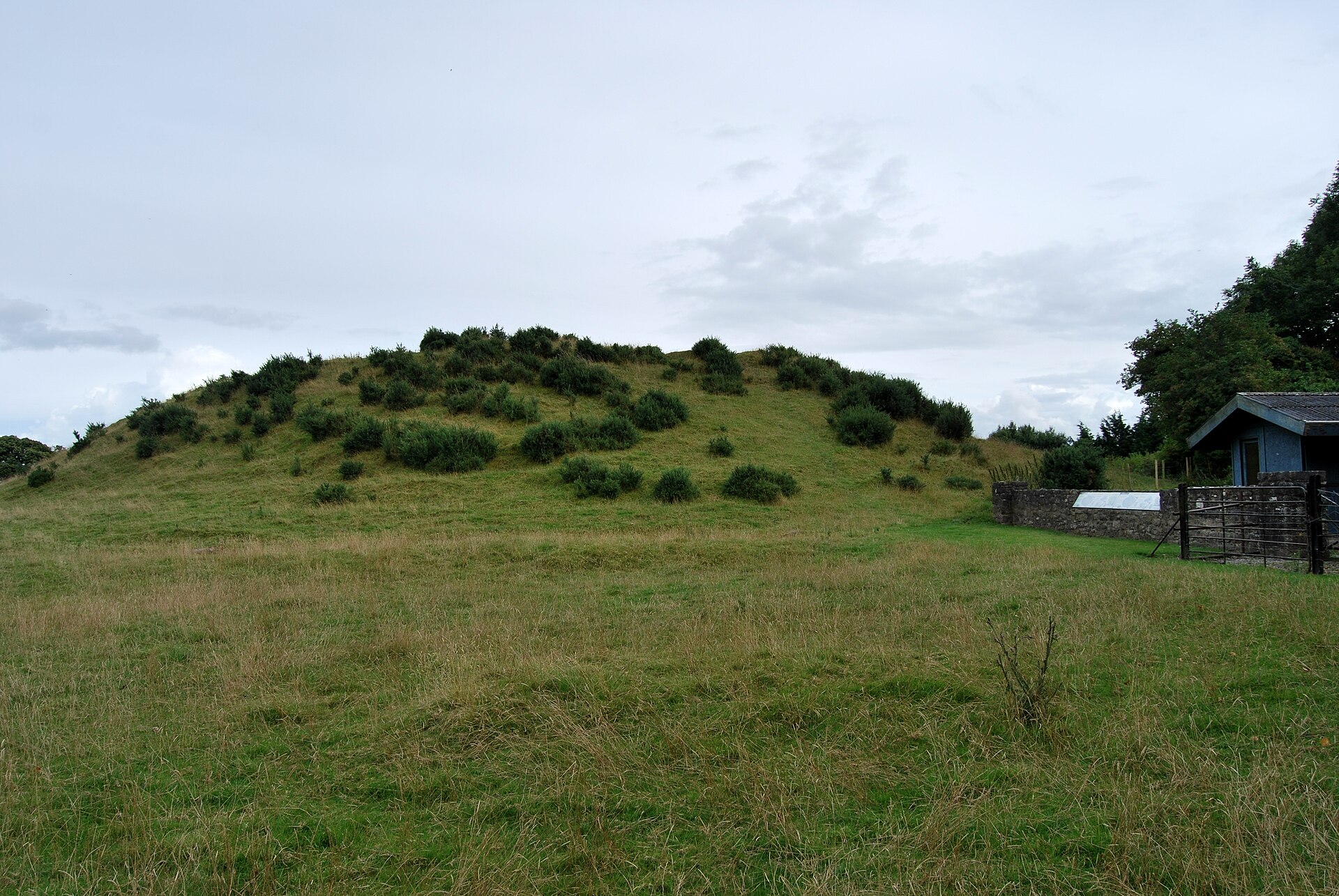
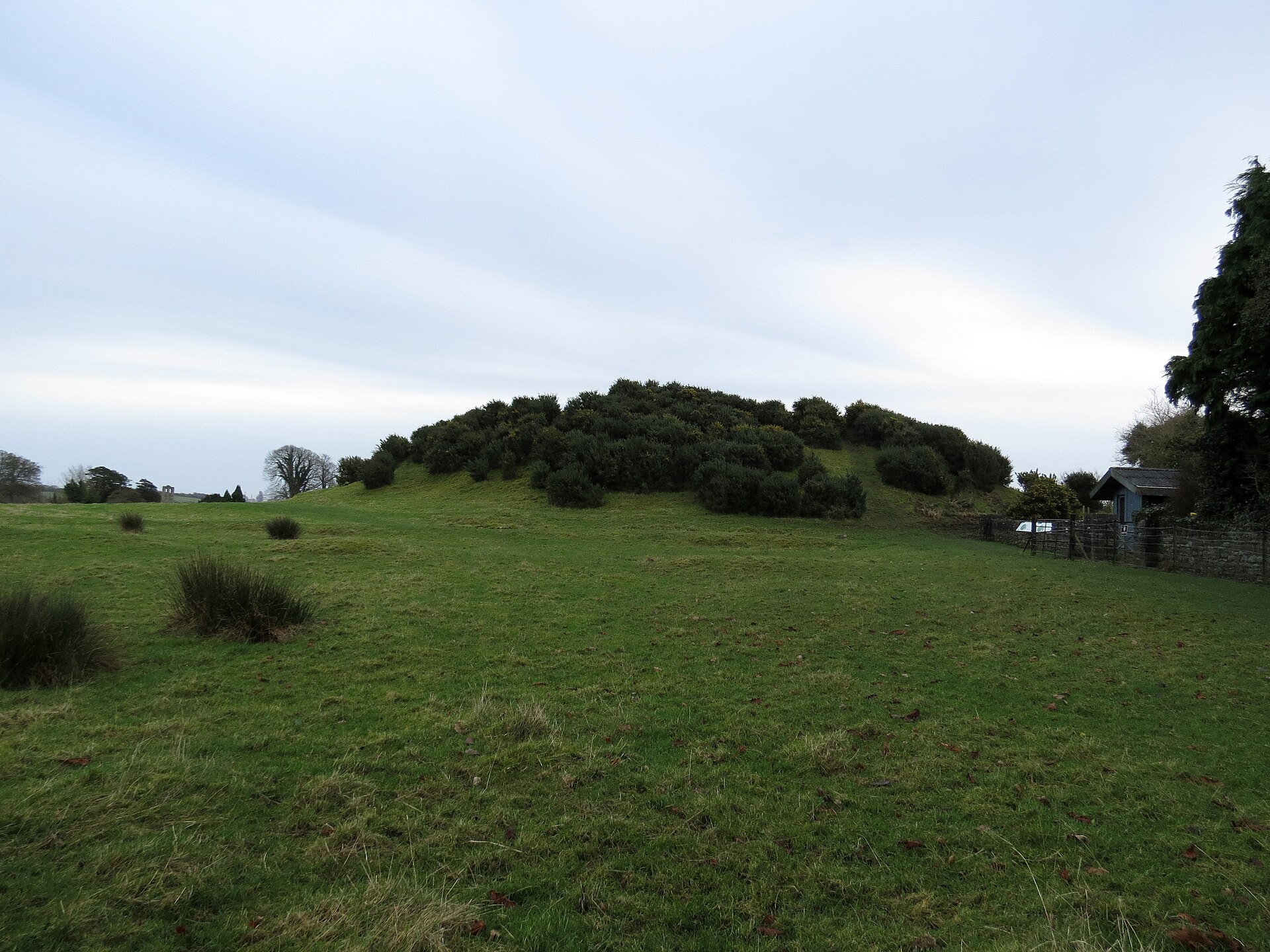
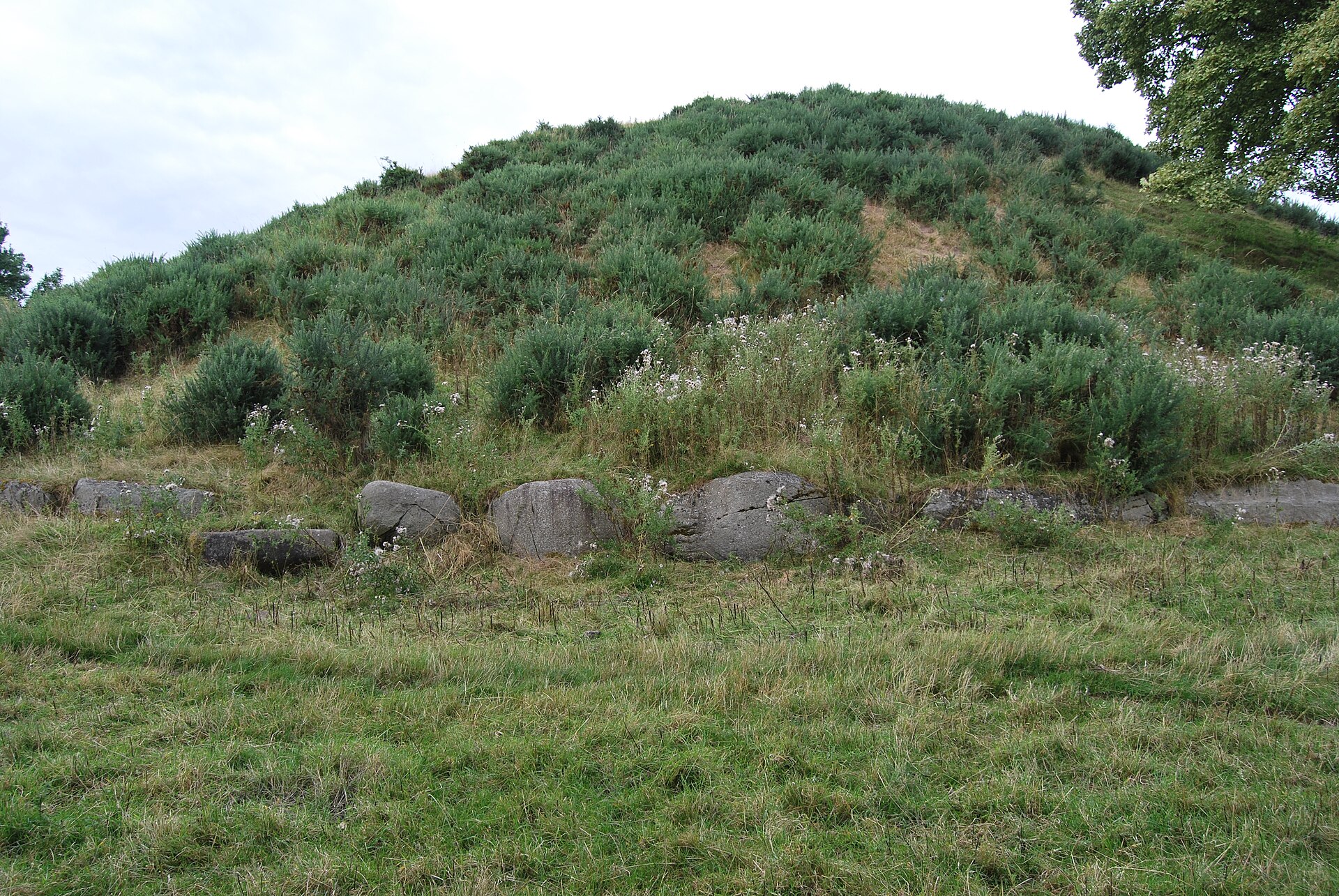
From a distance Dowth looks like a natural rise in the fields, a broad green hillock ringed by grazing cattle. Get closer and the illusion breaks. The whole thing is artificial, a mound roughly eighty-five metres across and fifteen metres high, built up from countless tonnes of stone and earth and then capped with turf.
Around its base runs a kerb of large stones, some of them carved, marking the edge of the monument the way a frame marks a picture. To raise this by hand, hauling material from the surrounding land and the riverbanks, would have taken a large community working for a very long time. It is a staggering act of collective will.
Standing at the foot of it, I always find myself thinking about the organisation this required. Someone had to feed the workers, plan the structure, quarry and move the stones, and hold the whole project together across years. This was not a spontaneous heap. It was engineering, in the truest sense.
Two passages and a dark chamber
Unlike Newgrange with its single famous passage, Dowth has two, both opening from the western side of the mound. The northern passage leads to a cruciform chamber — a cross-shaped space with recesses off a central room — that once held the cremated remains and offerings of the people who built it. The southern passage is shorter, ending in a smaller circular chamber.
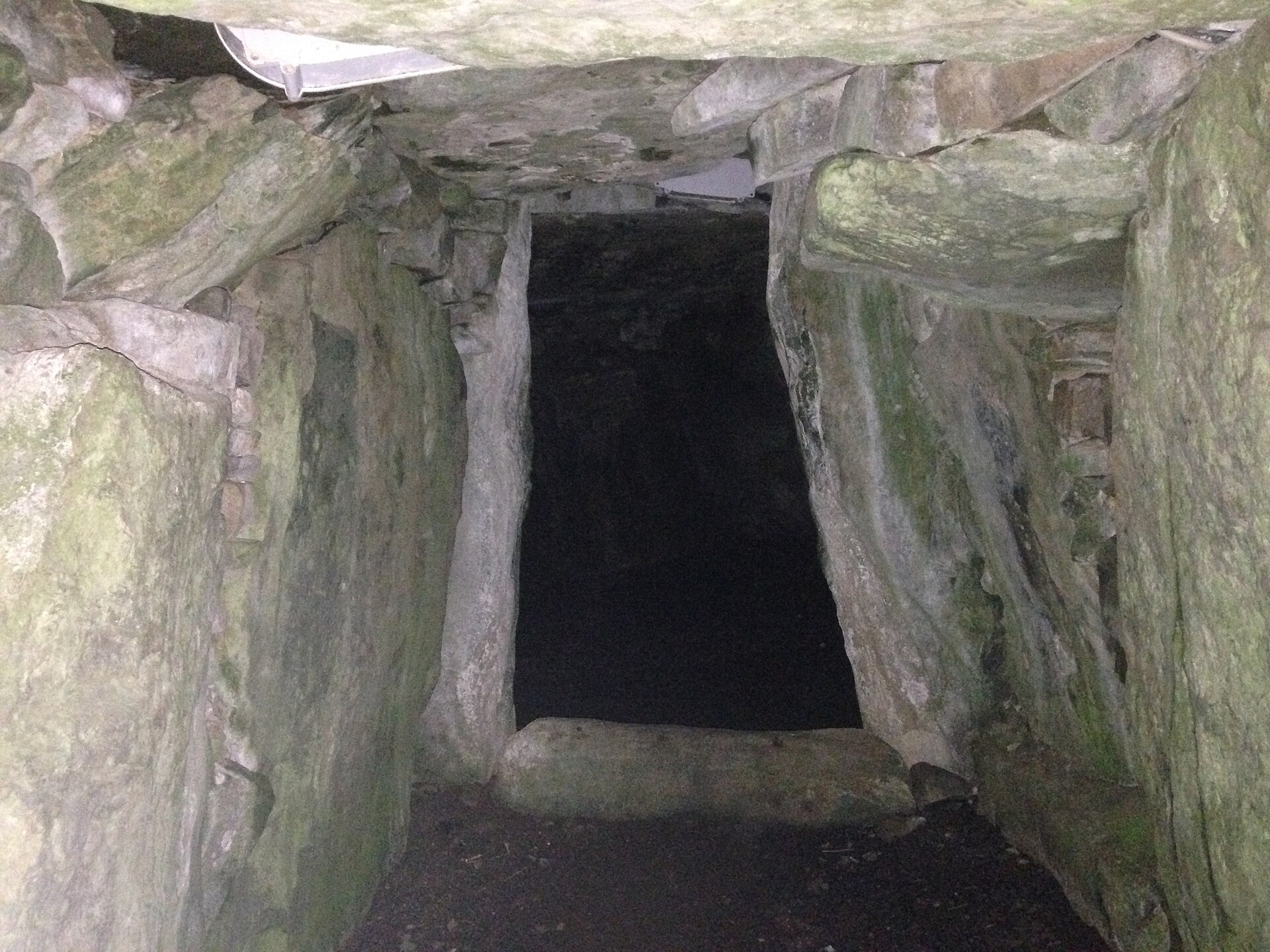
Inside, the passages are lined with upright slabs, some of them decorated with the swirling, geometric art that is the signature of Boyne Valley tombs. The air is cool and still, and the stone presses close. It is not hard to understand why people once believed these places belonged to the dead and the otherworld.
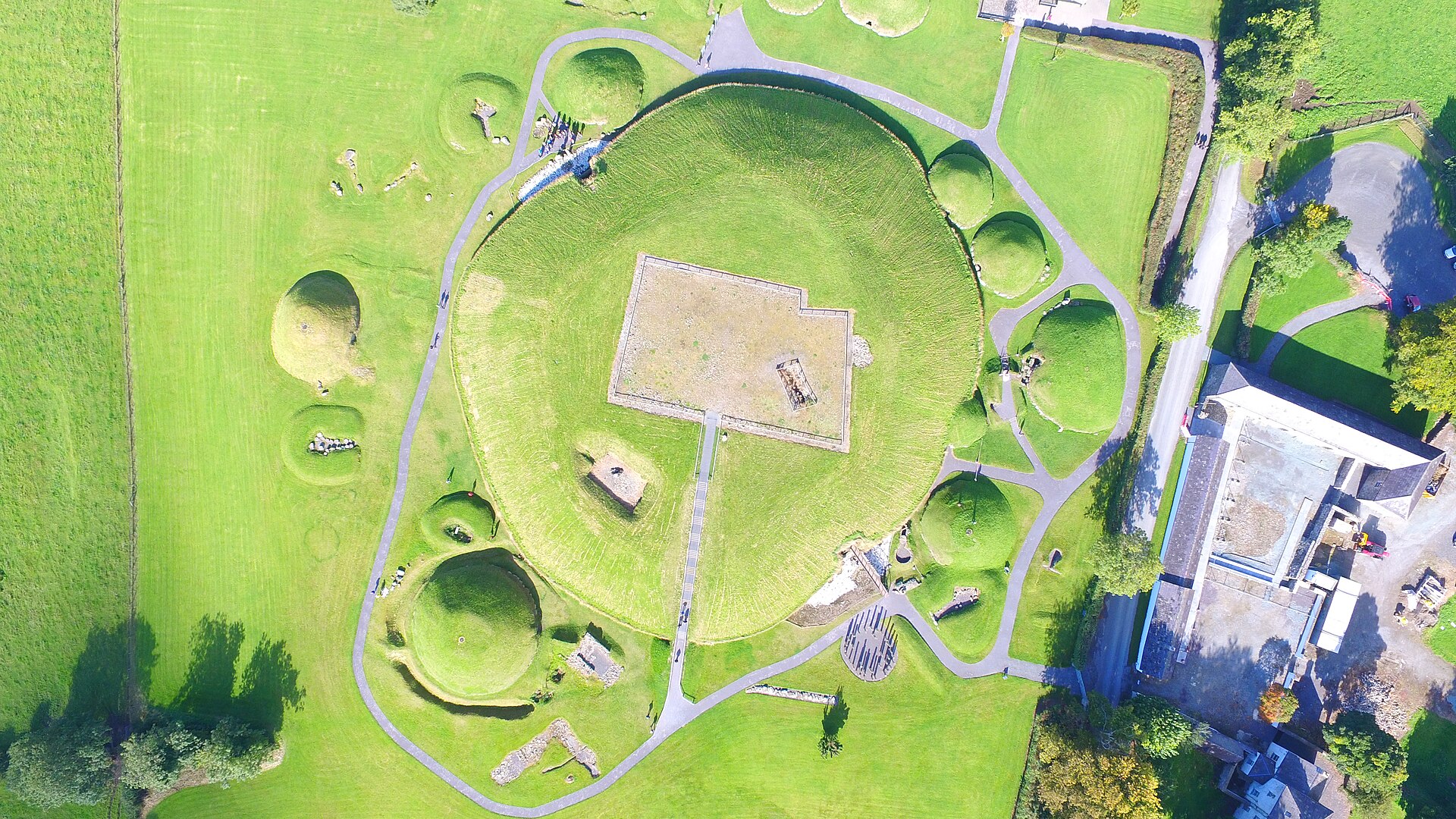
Access to the chambers is limited today, both to protect them and because the monument has never been fully consolidated. That inaccessibility is part of Dowth’s character. It keeps its secrets more closely than its polished neighbours.
The Stone of the Seven Suns
Among Dowth’s treasures is one of the most striking pieces of megalithic art anywhere in Ireland: a kerbstone carved with a cluster of radiating, sun-like symbols. It has been nicknamed the Stone of the Seven Suns, and once you have seen it the name sticks.
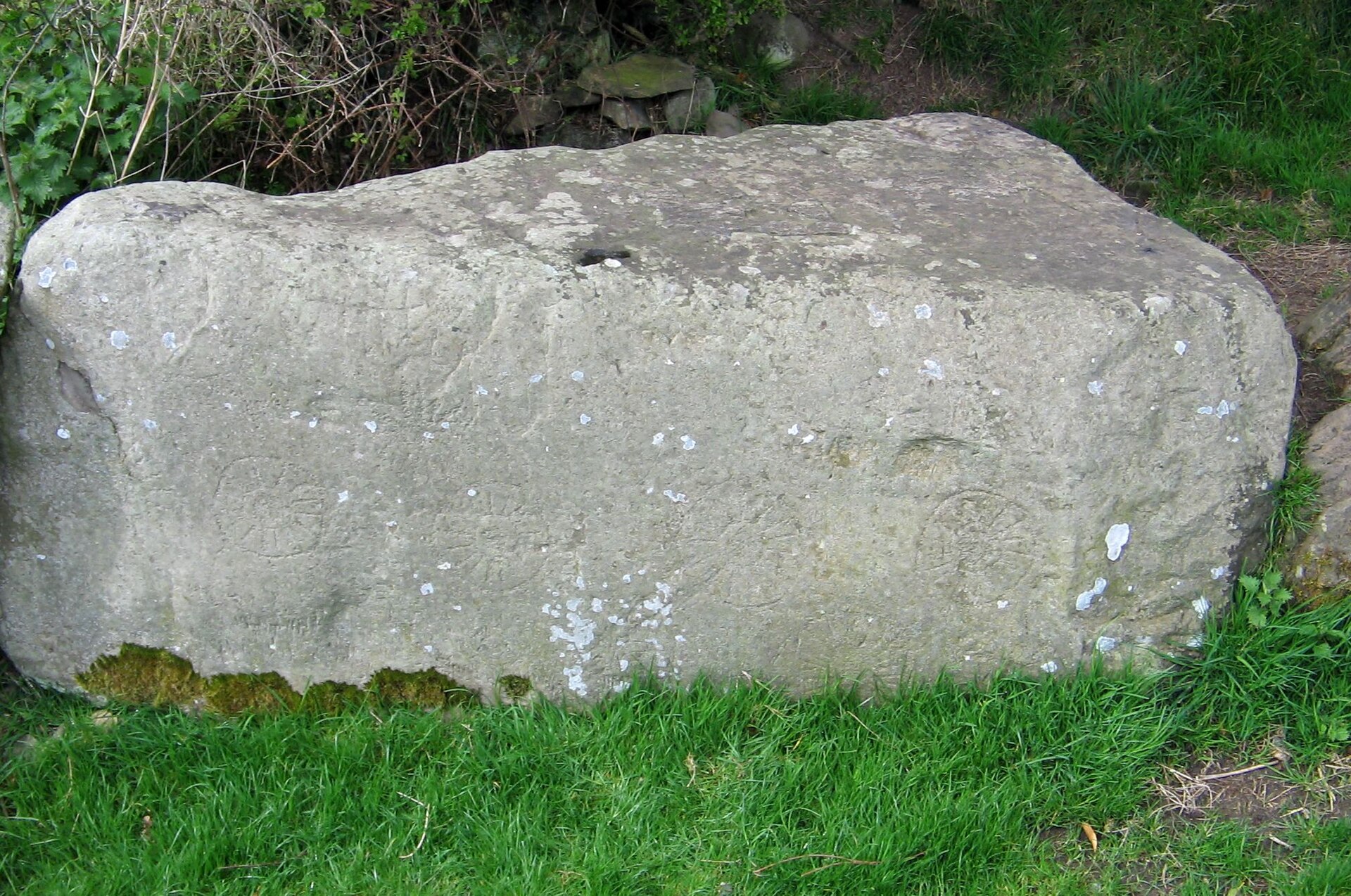
What did these carvings mean? We genuinely do not know. They might be suns, or stars, or purely symbolic patterns whose significance died with their makers. The recurrence of circular, radiating forms across the Boyne tombs suggests they mattered a great deal, but the meaning is locked away as firmly as the chambers themselves.
I find that honesty freeing rather than frustrating. Not everything ancient has to be solved. Sometimes it is enough to stand in front of a five-thousand-year-old carving and simply acknowledge that a human hand made it, with care, for reasons that mattered to them.
Aligned to the setting sun
Newgrange famously catches the winter solstice sunrise. Dowth answers with the sunset. Its southern chamber is arranged so that around the winter solstice, the light of the setting sun reaches down the passage and illuminates the stones within, a mirror image of its neighbour’s dawn.
Think about what that means. Along a short stretch of the Boyne, Neolithic builders created monuments tuned to both the first and last light of the year’s shortest days. This was a landscape choreographed to the sun, a sacred geography of light and dark, birth and death, dawn and dusk.
That the alignments still work, that you could in principle stand in the chamber today and watch the same light the builders watched, collapses the distance between then and now. The sun has not changed its habits. Only we have.
The scars of old excavations
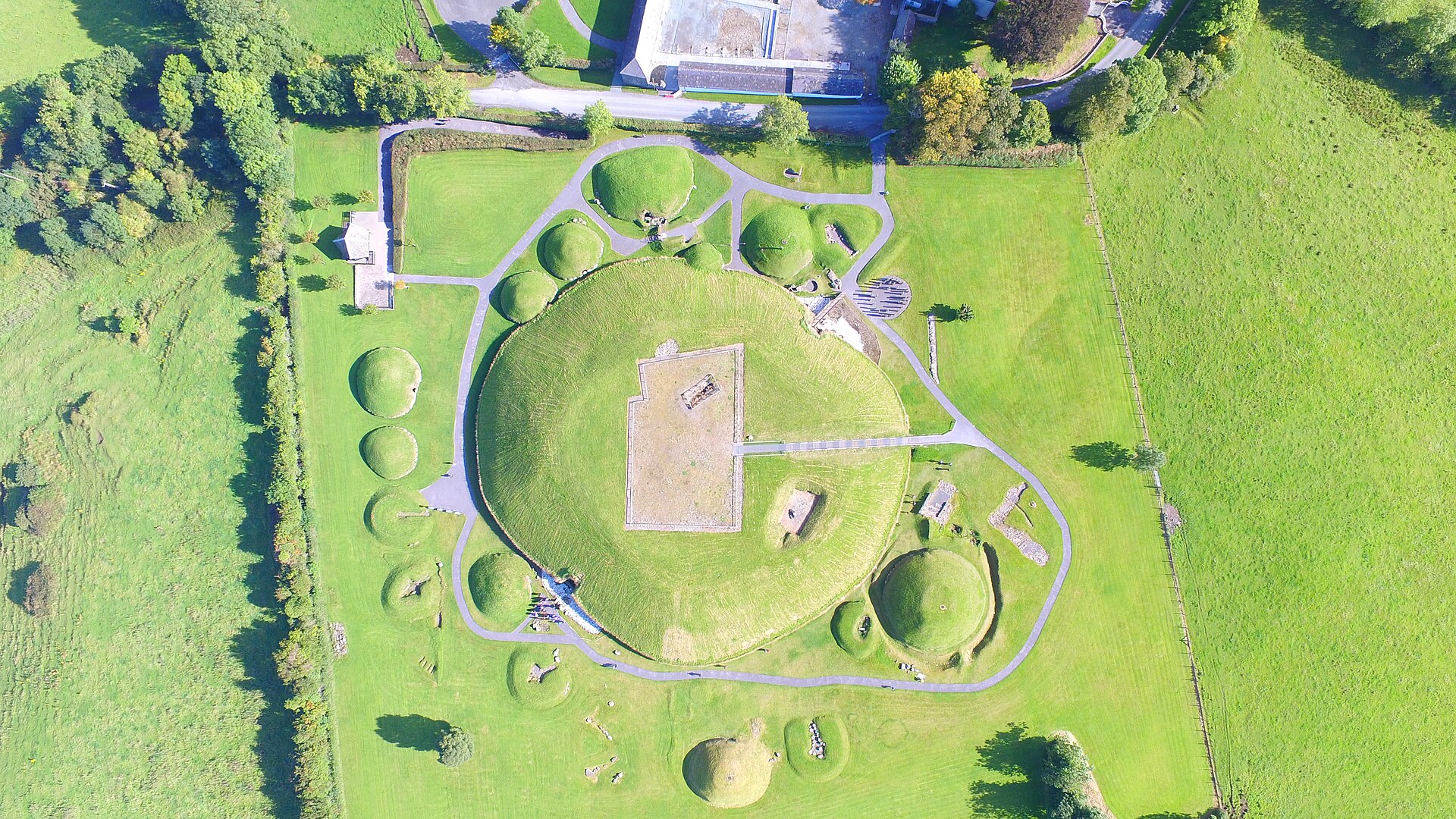
Dowth carries wounds. In the 1840s, antiquarians dug into the top of the mound in a crude search for chambers and treasure, leaving a large crater that scarred the monument and, some argue, destabilised it. A ruined later structure and a souterrain complicate the picture further.
By modern standards that Victorian dig was a small catastrophe, careless and destructive. But it is also part of the history of the place now, a reminder of how attitudes to the past have changed, from plunder toward preservation. We look at these monuments very differently than our great-great-grandparents did.
Because Dowth has never been comprehensively excavated with modern methods, it remains a monument full of unanswered questions. In an age when so much has been dug, catalogued, and displayed, there is something valuable about a great tomb that still holds back.
Why Dowth deserves your attention
It would be easy to treat Dowth as a footnote to Newgrange, the also-ran of the Boyne. I would push back on that hard. Dowth is every bit as ancient and ambitious, and its rougher, less-manicured state actually brings you closer to the raw reality of these monuments than the polished visitor experience next door.
Here you can stand in a quiet field, mostly alone, in front of a five-thousand-year-old mound that still guards its chambers and its meaning. No queue, no reconstructed façade, just the thing itself and the weight of all that time. For me, that is worth more than any guided tour.
The people who built it
The builders of Dowth were Neolithic farmers, part of the first wave of people to bring agriculture to Ireland. They cleared woodland, planted grain, kept cattle and sheep, and lived in timber houses that have long since rotted away. What survives is their monuments to the dead, built to endure in a way their homes never were.
These were not simple people scratching a living. To conceive of a mound like Dowth, to organise its construction, to carve its stones and align its passages to the sun, took planning, skill, and a shared belief system strong enough to bind a community to a project spanning years. We should never mistake the absence of writing for an absence of sophistication.
What they believed, exactly, we can only sketch. The care given to the dead, the alignment to the solstice sun, the recurring circular art — all point to a worldview in which the cycle of the seasons and the fate of the dead were deeply intertwined. Dowth was their statement about that world, written in stone.
A landscape of the dead
It is worth remembering that Dowth was never meant to stand alone. The Boyne Valley was, in a sense, a vast ceremonial landscape, dotted not just with the three great mounds but with dozens of smaller tombs, standing stones, and enclosures. The living farmed the fertile river land; the dead were given the high, visible places.
Walking the valley, you sense this layering of purpose. The river feeds the fields; the fields feed the people; the mounds hold the ancestors who watch over both. It is a landscape organised around a relationship between the living and the dead that we, in our very different culture, can only partly imagine.
Dowth’s position at the eastern edge, associated in name and legend with darkness, may have given it a particular role in that scheme. Perhaps it marked an ending where Newgrange marked a beginning. We are guessing, but the guess feels earned.
How we date the Boyne tombs
How can we be so confident these mounds are around five thousand years old? Radiocarbon dating is the backbone. Organic material recovered from the tombs and the surrounding sites gives dates clustering around 3200 to 3000 BC for the main passage-tomb phase, placing them firmly in the later Neolithic.
Beyond radiocarbon, the style of the tombs, the pottery, the flint and stone tools, and the distinctive art all fit a well-understood cultural horizon shared across the Irish Sea region. Dowth belongs to that horizon, part of a tradition of passage-tomb building that stretched from Ireland to Brittany and beyond.
The result is a picture that is detailed and cross-checked rather than speculative. These are not vaguely “ancient” mounds. They are monuments we can place, with real confidence, in a specific and remarkable moment of the human past.
What still lies buried
Perhaps the most tantalising thing about Dowth is how much of it remains unstudied. Modern survey techniques — geophysics, laser scanning, careful re-examination of old records — keep turning up hints of features not yet fully understood. The mound has not given up all its secrets, and it may hold surprises still.
There is a real argument for leaving some of it alone. Excavation is destruction, however careful, and future archaeologists will have tools we cannot yet imagine. A monument left partly unopened is a gift to them, a sealed archive waiting for better questions and gentler methods.
So Dowth sits there, patient, only partly revealed. In a world hungry to know everything at once, its reticence feels almost like wisdom.
Visiting the quiet mound
Unlike Newgrange and Knowth, which are reached through a managed visitor centre with timed tours, Dowth can be visited more freely, standing as it does in open countryside. You cannot generally enter the chambers, but you can walk right up to the mound, trace its kerbstones, and stand where the builders stood.
That freedom changes the experience. There is no queue, no schedule, no crowd shuffling past. On a grey Irish afternoon you might have the whole monument to yourself, with only the wind and the cattle for company. For anyone who finds the packaged version of heritage a little airless, Dowth is a breath of cold, honest air.
Go at the edge of the day if you can, when the light is low and the mound throws a long shadow across the fields. That is when it feels most like what it is: an ancient, deliberate thing, still keeping its long watch over the Boyne.
Darkness and the legend of Dowth
Irish tradition wrapped Dowth in a story that suits its brooding character. In one telling, a king commanded his people to build a tower to reach the heavens, working through a single magical day his sister had lengthened by holding the sun in place. When a taboo was broken, the spell collapsed, darkness fell, and the work was abandoned — leaving the mound and the name Dubhadh, the darkening.
It is a myth, of course, recorded long after the mound was built by people who no longer knew its true origins. But myths like this are their own kind of evidence. They show that later generations looked at Dowth, sensed its antiquity and strangeness, and reached for a story big enough to explain it.
I love that the legend leans into darkness rather than light. Where Newgrange gets the triumphant solstice dawn, Dowth gets the tale of a day undone, a heaven-tower fallen. Even in folklore, it remained the shadowed sibling.
Reading megalithic art
The carvings at Dowth belong to a wider tradition of Irish megalithic art, that vocabulary of spirals, lozenges, zigzags, circles and radiating lines pecked into stone with harder rock. It is abstract, geometric, and almost entirely without figures — no clear people, no obvious animals, just pattern and symbol.
Scholars have argued for decades about what it means. Some see maps of the sky or the landscape, some see records of ritual, some see the visual echoes of altered states of consciousness. Others caution that we may be imposing meaning where the makers intended something we simply cannot access.
Whatever the answer, the art was not casual. Pecking these designs into hard stone with stone tools was slow, deliberate labour. Someone decided these particular marks belonged on these particular stones, in these particular sacred places. That decision, repeated across the Boyne, is a message even if we cannot read the words.
How it compares to its neighbours
It is natural to line the three great Boyne mounds up side by side. Newgrange is the showpiece, reconstructed with its glittering quartz façade and its perfectly staged solstice beam. Knowth is the art gallery, ringed by more decorated kerbstones than anywhere else in western Europe and topped by a scatter of satellite tombs.
Dowth, by contrast, is the raw one. Less reconstructed, less accessible, marked by that old excavation scar, it shows you a passage tomb closer to how the centuries actually left it. Where Newgrange dazzles and Knowth astonishes, Dowth broods — and for certain moods, that brooding is exactly what you want.
Seen together, the three make a kind of triptych: dawn and dusk, spectacle and silence, the polished and the unopened. You cannot really understand any one of them without the other two, which is why skipping Dowth, as so many do, leaves the story of the Boyne half told.
The later souterrains
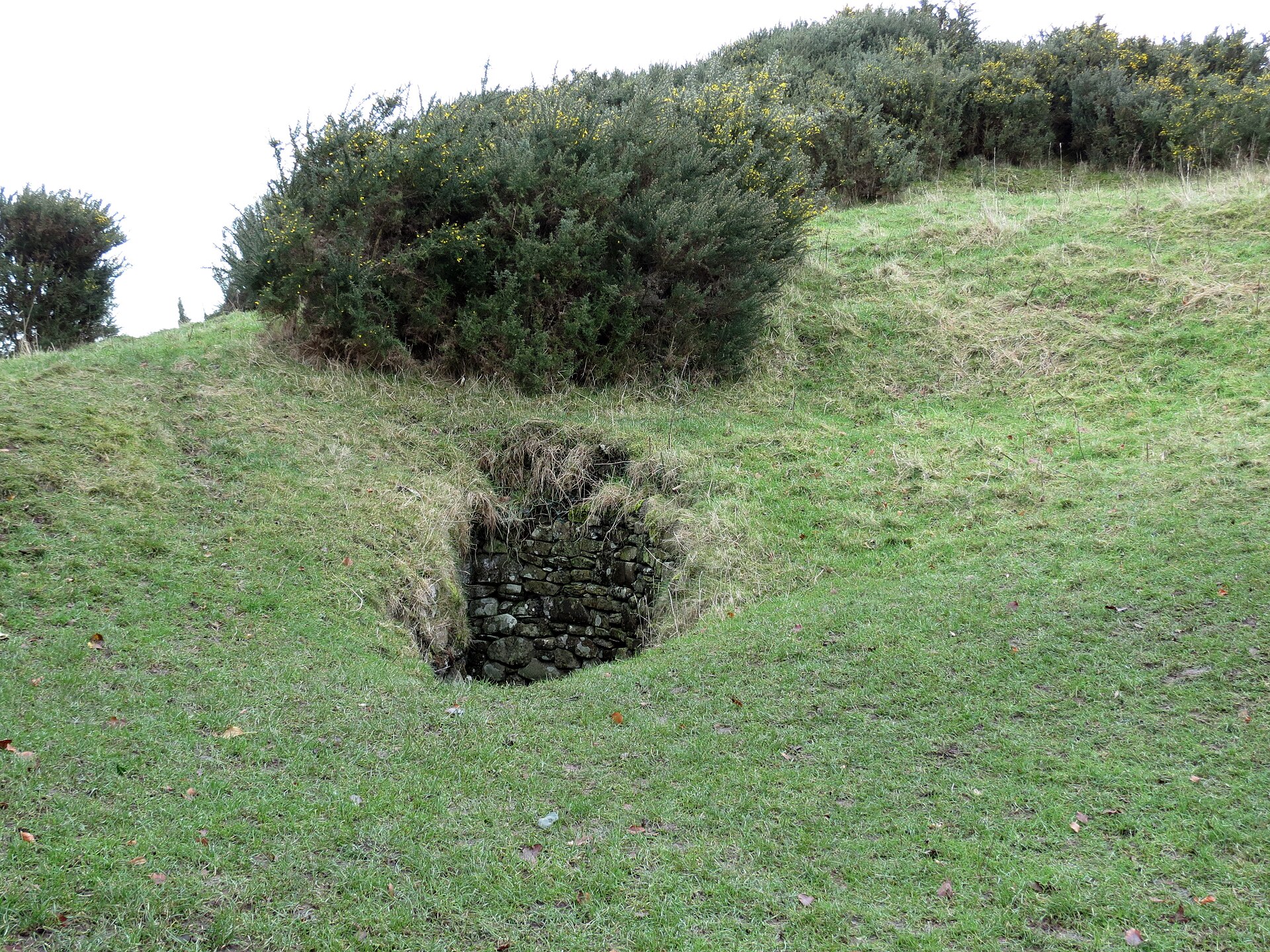
Dowth’s long life did not end with the Neolithic. Cut into the mound are souterrains — underground stone-lined passages of a much later date, most likely early medieval. These served as storage, refuge, or hiding places in a very different Ireland, thousands of years after the tomb was first raised.
I find these later additions oddly touching. Generation after generation, people kept returning to the mound and putting it to use, reinterpreting it, weaving it into their own lives. The tomb built for Neolithic dead became, in time, a medieval bolt-hole. The monument refused to be a mere relic.
This layering of eras is common at great prehistoric sites, and it complicates any simple story. Dowth is not a single moment frozen in time but a palimpsest, written and overwritten across five thousand years of human need.
Protecting a fragile giant
For all its bulk, Dowth is fragile. The nineteenth-century dig left it structurally compromised in places, and centuries of weather, burrowing animals, and root growth all take their toll. Managing such a monument is a delicate balance between allowing access and preventing further harm.
As part of the Brú na Bóinne complex, Dowth enjoys protection as a UNESCO World Heritage Site, and Irish heritage bodies monitor its condition. Recent decades have seen renewed archaeological interest in the wider Dowth landscape, with survey work revealing that the area around the mound is even richer than long assumed.
The goal now is stewardship rather than spectacle: to hold the monument steady, learn from it carefully, and pass it on intact. After fifty centuries, that feels like the least we owe it.
Every time I leave a place like this I carry away the same feeling — a mix of humility and connection. These were people with lives as full and complicated as ours, and they poured a portion of those lives into raising something meant to outlast them by millennia. It worked. Here we still are, looking.
Dowth will probably never be as famous as its neighbour, and honestly, I hope it stays that way. Some things are better encountered quietly, on their own terms, in a field where the past has not yet been fully tidied up.
If Dowth has drawn you into the Boyne Valley and the wider world of the first builders, there is plenty more to explore. Its famous siblings, Newgrange: The 5,000-Year-Old Tomb Built to Catch the Solstice Sun and Knowth: Europe’s Greatest Collection of Neolithic Art, Hidden Beside Newgrange, sit just along the river, while Vinča: The Danube Culture That May Have Written Before Anyone Else and Gavrinis: The 6,000-Year-Old Carved Passage They Sealed in the Dark carry the same story into France and beyond. The megalithic thread runs through Stonehenge: How and Why This Ancient Stone Circle Was Really Built, Skara Brae: The 5,000-Year-Old Village Known as the Scottish Pompeii, The Cairn of Barnenez: Europe’s Colossal Stone Monument Older Than the Pyramids, Los Millares: The 5,000-Year-Old Fortified Town at the Edge of Europe, Bougon: The 7,000-Year-Old Burial Mounds Older Than the Pyramids, Almendres Cromlech: Europe’s Oldest Stone Circle, 2,000 Years Before Stonehenge, Ġgantija: The Giant Temples of Gozo, Older Than the Pyramids, Ħaġar Qim: Malta’s Cliff-Top Temple Older Than the Pyramids and the great Maltese temples The Megalithic Temples of Malta: Older Than the Pyramids, Tarxien: Malta’s Most Elaborate Prehistoric Temple, Carved 5,000 Years Ago and Mnajdra: The 5,000-Year-Old Maltese Temple That Tracks the Sun. For where it all began, few sites rival Göbekli Tepe: The World’s Oldest Temple and How It Rewrote History and Karahan Tepe: The Astonishing Sister of Göbekli Tepe in Anatolia, or Jericho: The World’s Oldest City and Its 10,000-Year-Old Wall, while the deeper human record unfolds through Çatalhöyük: The 9,000-Year-Old Town With No Streets, The World’s Oldest Art: Inside the Painted Caves of Lascaux and Chauvet, Uruk and Sumer: The First Cities and the Birth of Writing, Mohenjo-daro: The 4,500-Year-Old City That Was Centuries Ahead of Its Time, Liangzhu: The 5,000-Year-Old Water City That Rewrote China’s History, Caral: The 5,000-Year-Old City That Rose As the Pyramids Were Built, Knossos: The 4,000-Year-Old Palace Behind the Myth of the Minotaur, Dholavira: The 4,500-Year-Old City That Beat the Desert With Water Engineering, Nan Madol: The Ancient City Built on a Coral Reef in the Middle of the Pacific, Chavin de Huantar: The 3,000-Year-Old Andean Temple Built to Overwhelm the Senses, Cucuteni-Trypillia: Europe’s 6,000-Year-Old Mega-Settlements That Might Be the First Cities, Cerro Sechin: The 3,600-Year-Old Peruvian Temple Carved With Warriors and Their Victims, Poverty Point: The 3,700-Year-Old Earthworks Built by Hunter-Gatherers, Not Farmers, Sarazm: The 5,500-Year-Old Town in Tajikistan That Rewrites Central Asia’s Past, Mehrgarh: The 9,000-Year-Old Village Where South Asia Learned to Farm, Tell Brak: The Syrian Mound That May Rewrite Where Cities Began, Aşıklı Höyük: The 10,000-Year-Old Village That Came Before Çatalhöyük, Jiahu: The 9,000-Year-Old Chinese Village Whose Flutes Still Play, Chankillo: The 2,300-Year-Old Peruvian Towers That Are the Americas’ Oldest Solar Observatory and Kalibangan: The Indus Town With the World’s Oldest Ploughed Field. Each one adds another line to the same long story. You might also explore Carnac, where Neolithic farmers raised more than three thousand menhirs across the fields. You might also wander to Callanish, where thirteen ancient stones ring a towering monolith. You might also wander to Filitosa, whose carved menhirs bear faces, swords, and daggers. You might also sail your imagination to Ale’s Stones, a 67-metre ship of stone above the Baltic.
You May Like
The Bardo, a Palace of the Beys Filled With Roman Mosaics