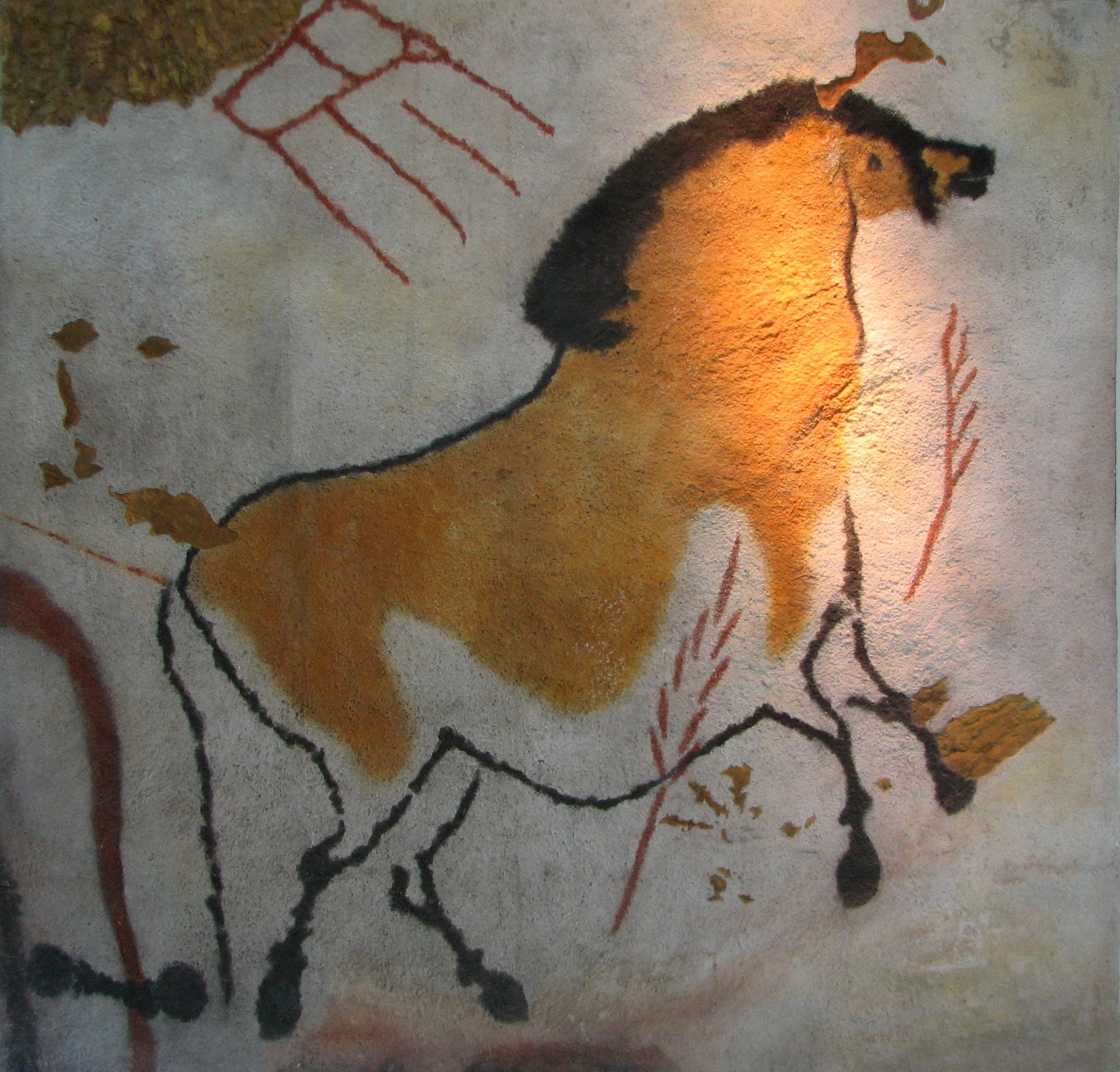
Somewhere deep in the dark of a French cave, by the flicker of a small stone lamp, an artist reached up and painted a horse onto the rock. Then another. Then a herd of them, galloping across the stone, layered with bulls and deer and great curving bison. There was no audience waiting, no gallery, no marketplace. Just a person, a flame, and the overwhelming urge to make a picture. That moment happened roughly seventeen thousand years ago at Lascaux, and far older still at other caves. These paintings are some of the earliest art humanity ever made, and the astonishing thing is how alive, how confident, how good they are.
In this article:
The painted caves
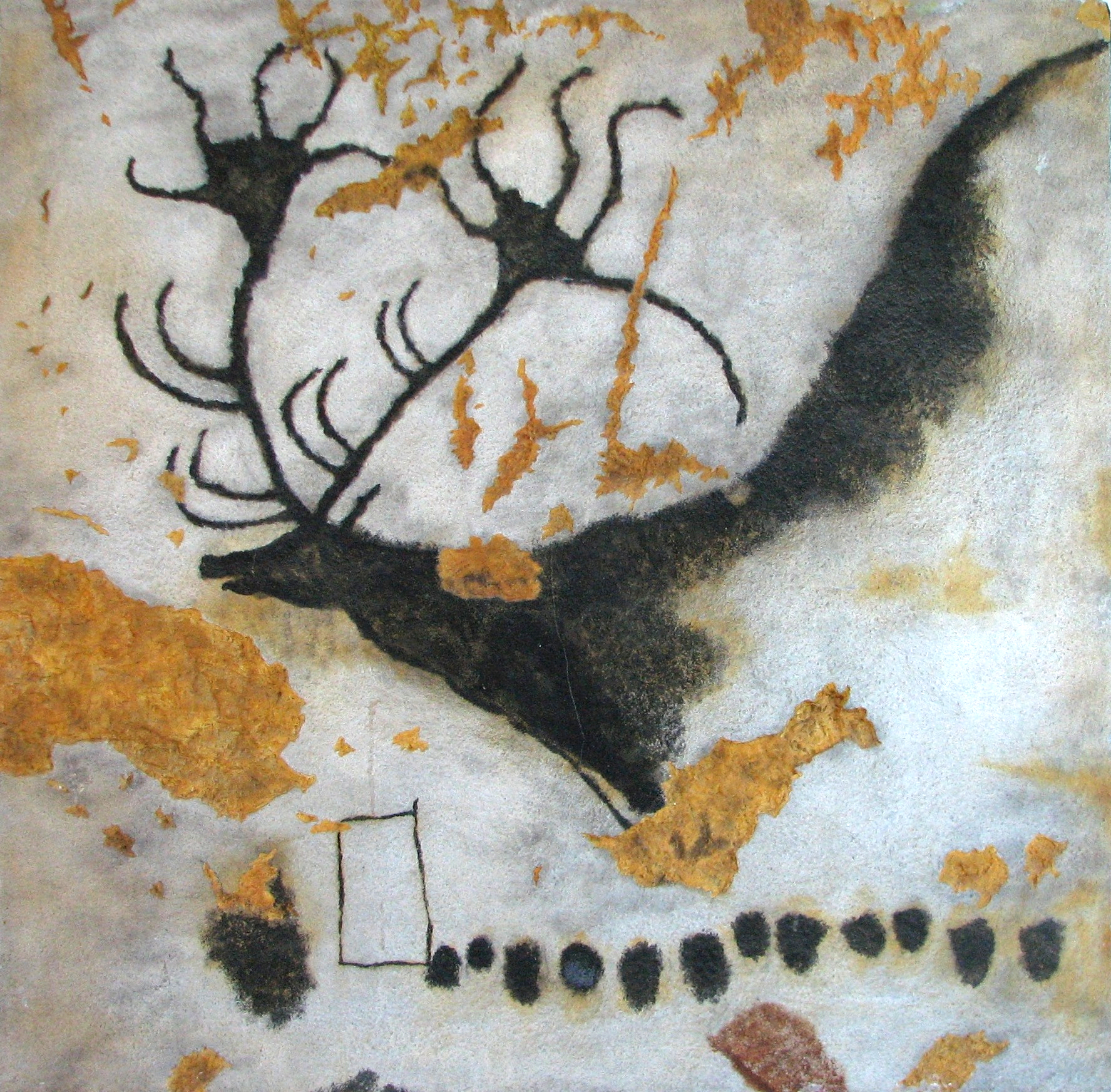
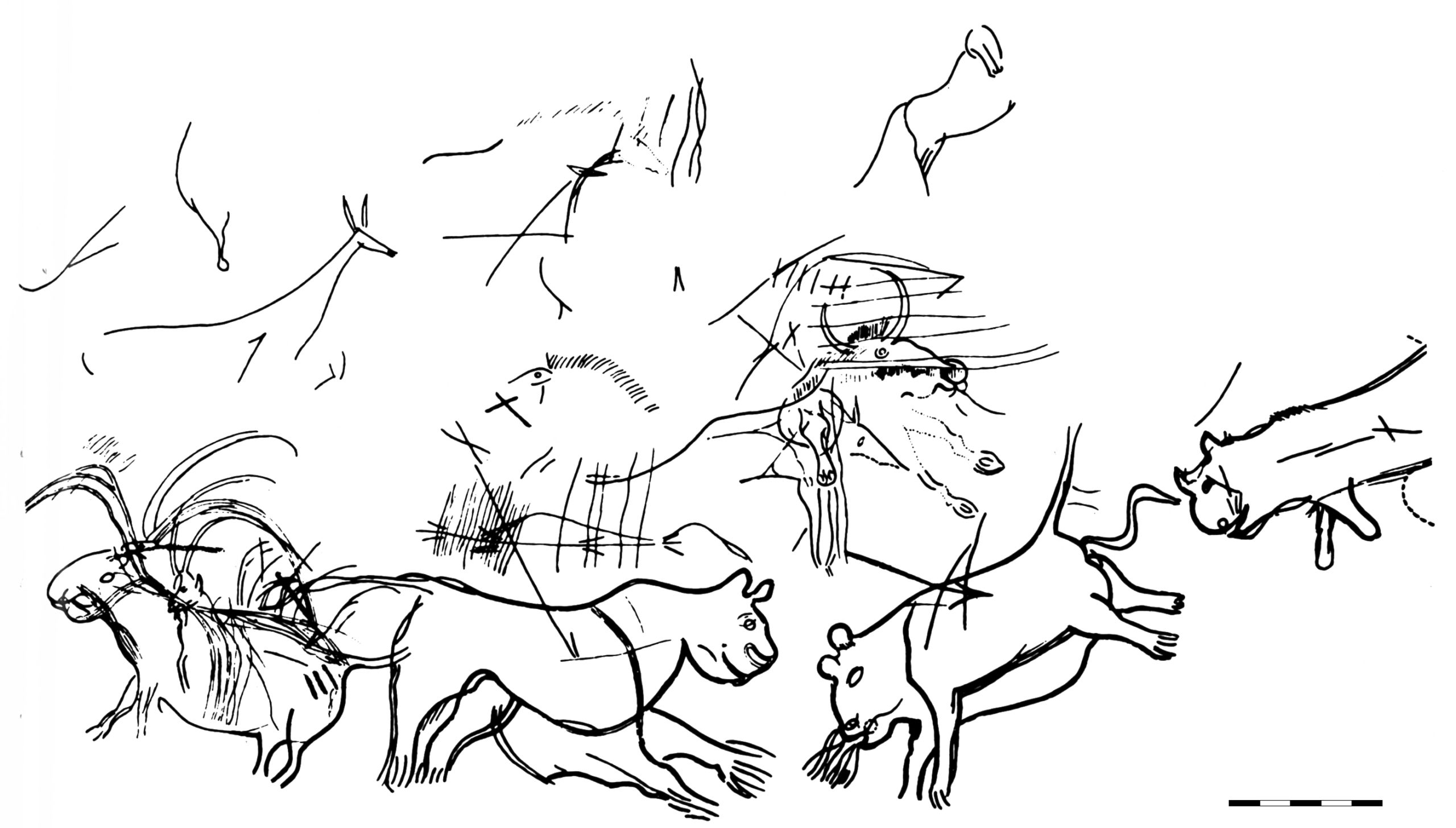
When we talk about prehistoric cave art, a few names come up again and again. Lascaux, in the Dordogne region of France, is the most famous, with its breathtaking “Hall of the Bulls” where enormous aurochs, horses, and stags stream across the walls and ceiling. The paintings there are around seventeen thousand years old. Then there’s Altamira in northern Spain, with its ceiling of curled-up bison so lifelike that when they were first revealed, many experts flatly refused to believe Stone Age people could have made them.
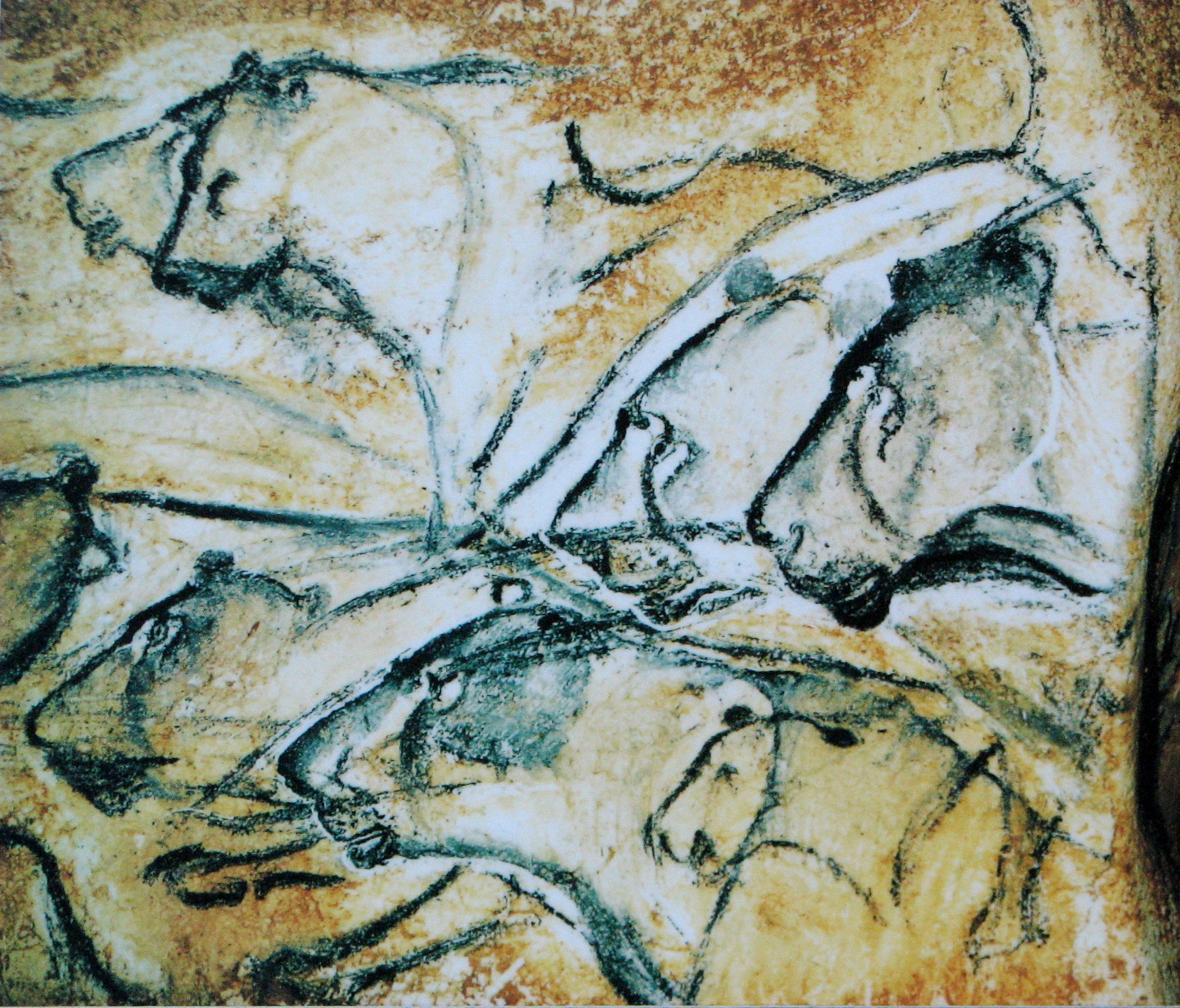
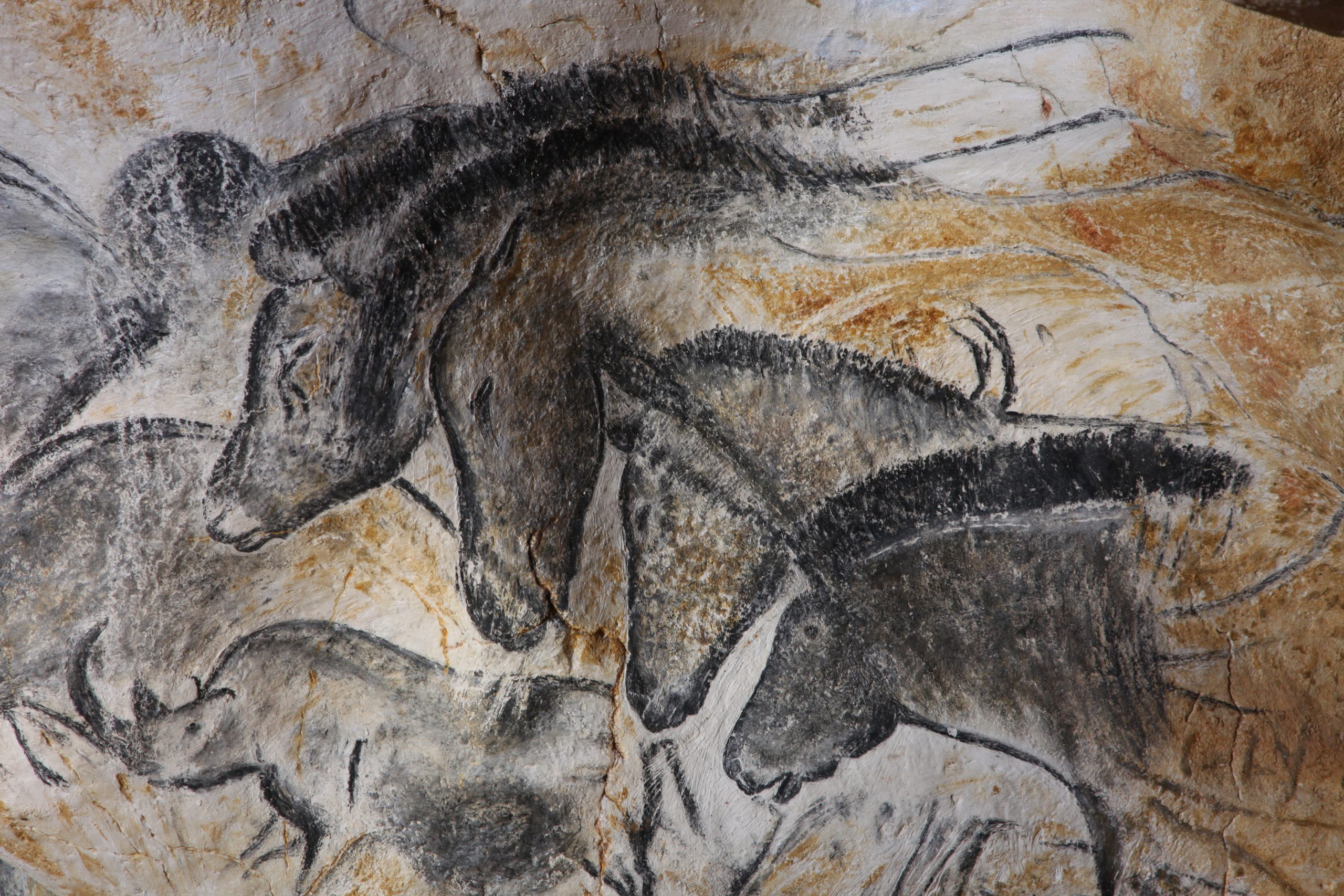
And older than both, by a staggering margin, is Chauvet Cave in southern France. Its paintings of lions, rhinos, bears, and horses date back something like thirty-six thousand years. Sit with that number for a moment. These images were already more ancient to the painters of Lascaux than Lascaux is to us. The span of time involved is almost impossible to hold in your head. Cave art wasn’t a brief flash. It was a tradition humans returned to, across tens of thousands of years.
How did they paint in total darkness?
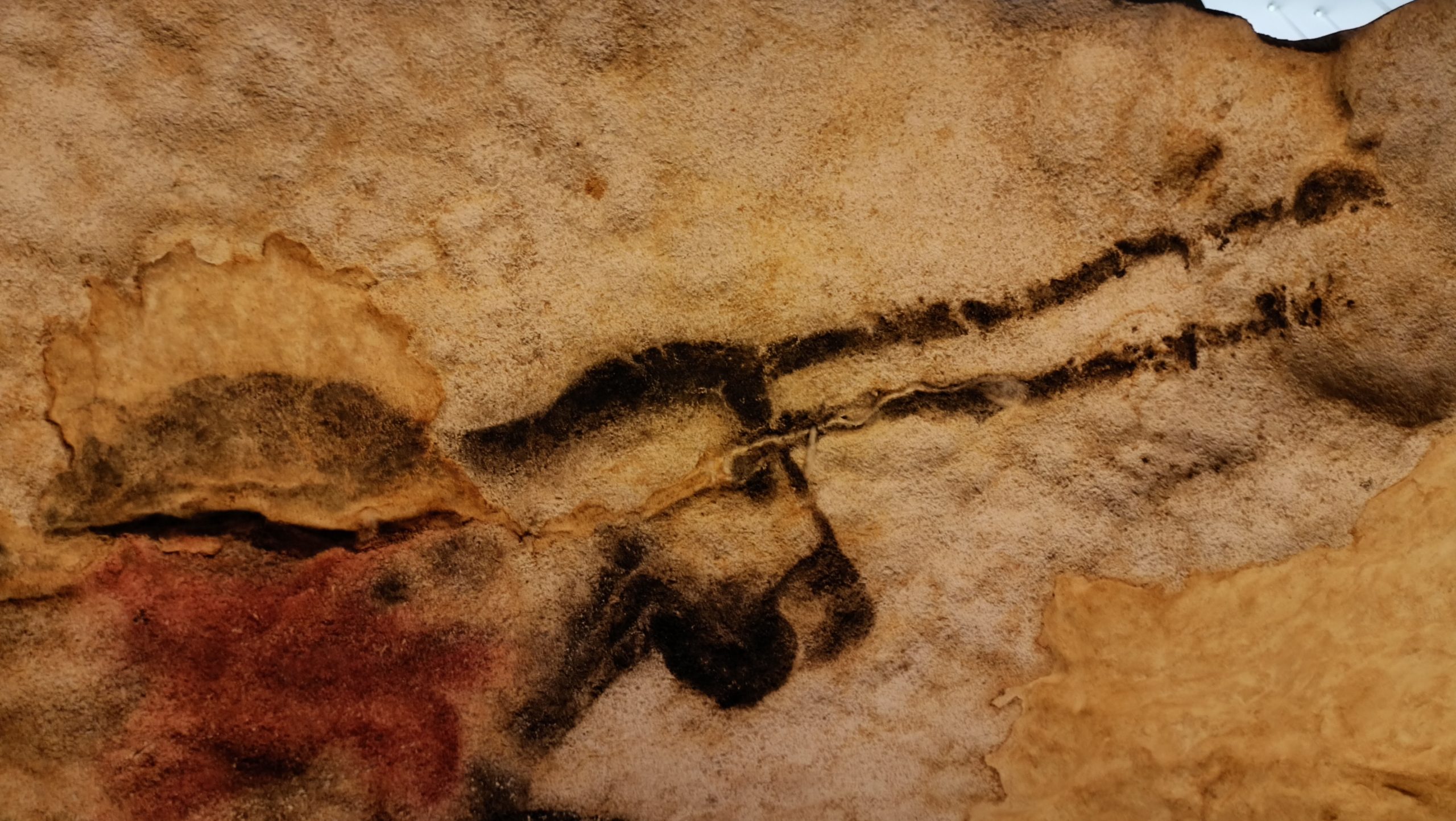
These caves are not lit. Deep inside, the darkness is absolute. So the first thing to marvel at is simply how the artists worked at all. They carried fire with them, burning stone lamps filled with animal fat, and torches, leaving soot on the walls that scientists can still study today. By that small, dancing light they mixed their paints from natural earth pigments, ochre for reds and yellows, charcoal and manganese for blacks, and applied them with fingers, pads of moss or fur, and brushes made of plant fibre or hair.
They also blew paint. By spraying pigment from their mouths or through hollow bones, they created soft, airbrushed effects and, most hauntingly, hand stencils, pressing a hand to the wall and blowing colour around it to leave its outline. Those handprints are scattered through caves across the world, and they stop you cold. A real hand, a real person, reaching out of the dark across tens of thousands of years to say, simply, I was here.
Real artists, not crude scribblers
The biggest misconception about cave art is that it’s primitive, in the sense of clumsy. It absolutely is not. These artists understood movement, proportion, and perspective. They used the natural bulges and hollows of the rock to give their animals three-dimensional bulk, so a swelling in the stone becomes the shoulder of a bison. They drew animals with multiple legs to suggest galloping, an effect a bit like early animation. They layered, shaded, and composed.
Pablo Picasso is famously said to have visited a painted cave and remarked that we had invented nothing new since. Whether or not he really said those exact words, the sentiment rings true. Standing in front of these works, you don’t feel like you’re looking at the fumbling start of art. You feel like you’re looking at art, full stop, made by people with the same eye, the same hand, and the same creative fire as any artist since.
Why did they do it?
Here’s the honest answer to the question everyone asks: we don’t fully know. And anyone who tells you they’ve solved it is overreaching. But there are some thoughtful ideas, and they’re fascinating to weigh up.
One long-standing theory is hunting magic, the idea that depicting animals was a kind of ritual to ensure a successful hunt, a way of gaining power over the creatures the community depended on. Another points to shamanism, suggesting the deep caves were places of trance and spiritual journey, and the paintings were visions glimpsed in altered states. Some researchers see the caves as sacred spaces or sites of initiation, where knowledge and stories were passed between generations in the flickering dark. And it’s worth remembering the images might simply have meant different things in different places and times. Tens of thousands of years is a vast canvas for the human imagination.
What’s curious is what the paintings mostly leave out. They’re full of animals, yet humans are rare, and everyday scenes of camp life are largely absent. That selectiveness suggests the art wasn’t casual decoration. It was about something that mattered deeply, something tied to the animals that filled these people’s world, their food, their danger, their awe. Whatever the exact meaning, you can feel that these images carried real weight.
How do we know how old they are?
It’s a fair question. How can anyone possibly say a painting is thirty-six thousand years old? The main tool is radiocarbon dating. Because many of the black pigments were made from charcoal, which is once-living wood burned to carbon, scientists can measure the radioactive carbon left in tiny samples and work out roughly when that wood was burned. Layers of mineral crust that formed over some paintings can be dated too, giving a minimum age for the art beneath.
The results have repeatedly pushed the story of art further back in time than anyone expected. And it’s not only Europe. Painted caves and rock art of comparable or even greater age have been found in places like Indonesia, where hunting scenes and hand stencils rival the oldest European work. That global spread matters. It tells us this wasn’t a one-off spark in one corner of the world. The impulse to paint, to symbolize, to tell stories on stone, seems to have travelled with our species wherever we went. It’s part of the basic human toolkit, as fundamental as language itself.
Saving the caves by copying them
There’s a bittersweet twist to the story of these caves. Many of them are now closed to the public, and for a heartbreaking reason. When crowds of visitors poured into Lascaux after its discovery in 1940, the warmth, breath, and humidity of all those bodies, plus artificial light, triggered mould and damage that began to destroy paintings that had survived perfectly for seventeen thousand years. We nearly loved them to death in a matter of decades.
So the original Lascaux was sealed, and instead, extraordinary full-size replicas were built nearby, recreating the paintings with painstaking accuracy so people can experience them without harming the real thing. Chauvet has a replica too. It’s a strange, moving solution: to protect the most ancient art on Earth, we copy it. Many of the photographs people see today, including some accompanying this article, are of these faithful recreations, which carry the same images forward for new generations to stand before in wonder.
What the caves tell us about ourselves
For me, the painted caves are among the most emotional places in the whole human story. They’re proof that the urge to create, to make beauty and meaning, to leave a mark, isn’t some late luxury that arrived with cities and comfort. It was there at the very beginning, burning in people who lived through Ice Ages, who hunted with stone-tipped spears, who knew cold and fear and loss we can barely imagine. And still, in the deep dark, by a tiny flame, they made art.
When you look at that galloping horse or that pride of lions, you’re not just seeing animals. You’re seeing a mind exactly like yours reaching out to say something across an unfathomable gulf of time. The same species, the same spark. We have built rockets and symphonies and skyscrapers since, but we have never stopped doing the thing those cave painters did first: looking at the world, feeling moved by it, and needing to make a picture. That, more than any tool or weapon, might be the truest signature of what it means to be human.
Related reading on this site: This article is part of a series on the world’s oldest sites and discoveries. You might also enjoy Göbekli Tepe, the world’s oldest temple, Jericho, the world’s oldest city, Çatalhöyük, Stonehenge, and Newgrange. Don’t miss the megalithic temples of Malta, older than the pyramids. See also Skara Brae, the Scottish Pompeii. And discover Uruk and Sumer, the first cities and the birth of writing. Also explore Karahan Tepe, the sister of Göbekli Tepe. Browse more under Ancient History and Archaeology.
See also: Mohenjo-daro: The 4,500-Year-Old City That Was Centuries Ahead of Its Time.
See also: Liangzhu: The 5,000-Year-Old Water City That Rewrote China’s History.
And on the far side of the world, you can meet Caral, the oldest city in the Americas, which rose in the Peruvian desert at the very same time as the pyramids of Egypt.
And on the island of Crete you can explore Knossos, the Minoan palace behind the myth of the Minotaur, the labyrinthine home of Europe’s first great civilization.
And out in the salt deserts of India, you can discover Dholavira, the Indus city that beat the desert with water engineering.
And if you want to see how far that impulse to build could travel, look at Nan Madol, a stone city raised on a Pacific reef. And for a temple built to overwhelm the senses, don’t miss Chavin de Huantar, high in the Peruvian Andes. And for cities that may predate cities, don’t miss Cucuteni-Trypillia, Europe’s giant Neolithic mega-settlements. And for one of the oldest and grimmest monuments in the Americas, see Cerro Sechin, a Peruvian temple carved with warriors and their victims. And for monuments raised by foragers rather than farmers, see Poverty Point, the giant earthworks of ancient Louisiana. While you are exploring the ancient world, it is well worth wandering east to Sarazm, a five-thousand-year-old town in Tajikistan that was smelting copper and trading lapis lazuli across a continent. While you are here, it is well worth stepping even further back in time to Mehrgarh, the 9,000-year-old village in Pakistan where South Asia learned to farm. It is also worth heading north to Tell Brak, the Syrian mound that may rewrite where cities began. You might also step back a few centuries to Aşıklı Höyük, the 10,000-year-old village that came before Çatalhöyük. You might also love the story of Jiahu, the 9,000-year-old Chinese village whose bone flutes still play. You might also love the story of Chankillo, the 2,300-year-old Peruvian towers that form the Americas’ oldest solar observatory. You can follow the same deep-time trail to Kalibangan, the Indus town that preserves the world’s oldest ploughed field. The same deep past reaches Brittany at the Cairn of Barnenez, a colossal stone tomb older than the pyramids. Deep-time Europe continues at Vinča, the Danube culture whose signs may be the continent’s oldest writing. The megalithic wonders continue at Gavrinis, a Breton passage tomb carved almost entirely with swirling stone art. The story reaches Iberia at Los Millares, one of western Europe’s first fortified towns. And if you want to see how early this whole impulse began, the burial mounds of Bougon, raised around 4800 BC, are older than almost anything else in this series. For a stone circle that predates almost everything else, don’t miss the Almendres Cromlech in Portugal, raised around 6000 BC. For temples so old they were once thought built by giants, visit Ġgantija on the Maltese island of Gozo. And for the greatest hoard of Neolithic art in Europe, visit Knowth, the carved passage tomb hidden beside Newgrange. For the most exquisitely carved of all the ancient Maltese temples, explore Tarxien, a masterpiece of prehistoric art. For a temple that turns sunlight into a calendar, visit Mnajdra, aligned with the equinox and solstice sun on Malta’s coast. On the cliffs of Malta, the temple of Ħaġar Qim tells a strikingly similar story of stone and devotion. In Ireland’s Boyne Valley, the quiet mound of Dowth tells a strikingly similar tale of stone and the setting sun. In Brittany, the thousand standing stones of Carnac tell a strikingly similar story of stone and devotion. Far out in the Hebrides, the ring of Callanish tells a strikingly similar story of stone and sky. In a quiet Corsican valley, the carved stone warriors of Filitosa tell a strikingly different chapter of the same deep past. On a Swedish clifftop, the great stone ship of Ale’s Stones carries the same ancient impulse out toward the sea.
You May Like
Norse Explorers Reached Canada 500 Years Before Columbus


4 thoughts on “The World’s Oldest Art: Inside the Painted Caves of Lascaux and Chauvet”