Four kilometres beyond Sintra’s old town, on the serra’s cooler, greener Atlantic flank, a pink-white palace of three domed towers stands above a sweep of lawn that falls away into a valley of tree ferns, camellias and hundred-metre eucalyptus. Arches of carved alabaster lace its verandas, a Mughal dome of red copper ribs crowns its centre, and the whole building seems less constructed than conjured, which is appropriate, for Monserrate is Sintra’s palace of pure imagination: no king built it and no government needed it; it is the dream, twice dreamt, of two rich Englishmen, the scandalous William Beckford, who rented and romanticised its ruined predecessor, and Sir Francis Cook, the textile millionaire who from 1858 raised the present pleasure dome and the most celebrated exotic garden in Portugal.
Monserrate’s story is the romantic nineteenth century in one property. A farm of the Mello e Castro family carried a Gothic-ruin villa built by an English merchant; Beckford, the richest and most disgraced man in England, author of the oriental novel Vathek, kept house here in the 1790s with a flock of sheep imported to perfect the view; Byron came in 1809, found the ruin and mourned it in Childe Harold, making Monserrate a required stop for every romantic traveller; and Cook, created Viscount of Monserrate by the Portuguese king, answered the poem with a palace, commissioning James Knowles’s Indo-Gothic confection and a garden where his gardeners naturalised the plants of four continents into Sintra’s mists. It is the sixth stop of the Iberian chapter and the quiet middle sister of the three Sintra palaces.
Walk with me down the lawn from the gate, around the verandas and under the music room’s dome, then into the fern valley, the rose garden and the Mexican terraces, with a novelist, a poet and a merchant prince in order. The contents are below.
In This Article
- The Cool Side of the Serra
- The Farm, the Chapel and De Visme’s Ruin
- William Beckford, the Exile of Fonthill
- 1809: Byron and the Fairest Scene
- Sir Francis Cook, the Merchant Viscount
- Knowles’s Indo-Gothic Palace
- The Hall and the Alabaster Corridor
- The Music Room Under the Dome
- Burt and the Making of the Garden
- The Fern Valley and the Lawn
- Mexico, Australia and the Rose Garden
- Sales, Neglect and the State’s Rescue
- Monserrate Today
- Monserrate on Video
- Visiting Monserrate Today
- Palaces Nearby
The Cool Side of the Serra
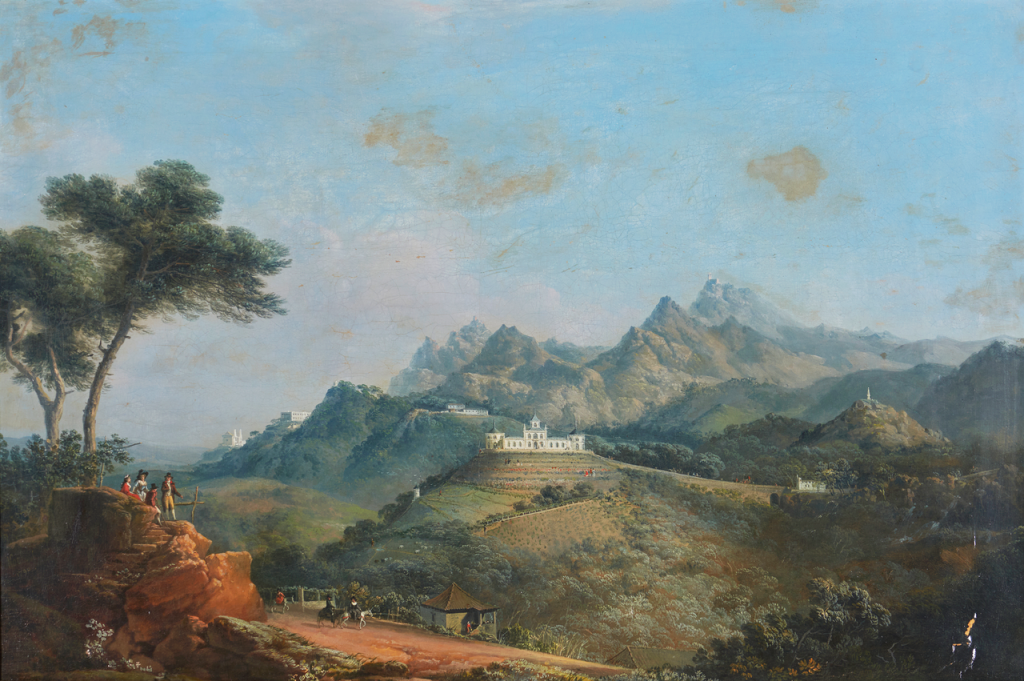
The road from Sintra to Colares runs along the serra’s north-western flank past the gates of the great romantic quintas, Regaleira, Seteais, Penha Verde, and Monserrate is the last and lushest of them, thirty-three hectares of park dropping westward where the Atlantic mists hang longest and springs seep from the granite year-round; the micro-climate is the garden’s secret engine, frost-free, humid and mild, able to grow Himalayan rhododendrons beside Mexican agaves and New Zealand tree ferns that elsewhere in Europe need glass. The name comes from a hilltop chapel of Our Lady of Monserrate, dedicated in 1540 in homage to the Catalan mountain shrine.
Now, stop here at the top of the lawn by the palace and look down the valley: lawn, palms, fern gorge, eucalyptus crowns and the Atlantic haze beyond, a composed picture a kilometre deep, and every element of it was chosen and planted by hand.
The Farm, the Chapel and De Visme’s Ruin
The estate belonged from the seventeenth century to the Mello e Castro family, farmers of its terraces and patrons of its chapel, and in 1790 their tenant Gérard de Visme, an English merchant grown rich on the Brazil trade, replaced the chapel’s hilltop with a castellated neo-Gothic villa, among the first Gothic revival houses outside England; abandoned within a decade as leases turned, it decayed through the Peninsular War into the roofless ruin that the romantics found so irresistible. The old chapel itself survives in the lower garden as a managed ruin, its nave split by a giant banyan-like ficus whose roots pour through the windows, half architecture and half tree.
De Visme’s ruin stood where the palace stands; Cook’s architect would keep its footprint and even its cellars, so the dream house of the 1860s rose literally on the bones of the 1790s one.
William Beckford, the Exile of Fonthill

William Beckford inherited at ten, in 1770, England’s greatest fortune, a million pounds and the sugar of Jamaica, wrote at twenty-one the gothic-oriental novel Vathek in a single fevered burst of French, and at twenty-four was driven from England by scandal over his affair with the young William Courtenay; his exile wanderings brought him twice to Portugal, and in 1793 he took the lease of Monserrate, patching De Visme’s villa, laying out walks and cascades in the valley, and keeping a famous establishment with his musicians, his dwarf and a flock of sheep shipped from England because the view, he said, wanted animation. He later built in England the maddest house of the age, Fonthill Abbey, whose tower fell down.
Beckford’s few years fixed Monserrate in the itinerary of sensibility: the ruined villa of the wicked, brilliant author of Vathek became a site of literary pilgrimage before the paint of his repairs had peeled.
1809: Byron and the Fairest Scene
In July 1809 the twenty-one-year-old Lord Byron, beginning the grand tour that would make his name, rode out from Sintra to the abandoned quinta, and when Childe Harold’s Pilgrimage appeared in 1812 it carried Sintra to all Europe as glorious Eden, with Monserrate’s ruin and its vanished tenant woven into the first canto: the poem remembers Vathek’s England-born author, the paradise he dwelt in and the desolation left behind, ruin and moralising picturesque in perfect period taste. The stanzas did for Sintra what no guidebook could; for the rest of the century no northern traveller of feeling missed the detour, and the visitors’ books of Lawrence’s hotel filled with pilgrims asking the way to Beckford’s ruin.
Now, stop here on the veranda and give the poet his due: Monserrate was rebuilt, in a real sense, because a poem kept its memory expensive; Cook bought a stanza as much as a farm.
Sir Francis Cook, the Merchant Viscount
Francis Cook, born 1817, headed Cook, Son and Co. of St Paul’s Churchyard, the largest textile wholesaler in Britain, and ranked among England’s richest commoners; he summered at Sintra from the 1840s for his Portuguese wife’s health and his own delight, leased Monserrate in 1856, bought it in 1863, and poured a merchant dynasty’s resources into palace and garden for forty years, while in England he assembled at Doughty House, Richmond, one of the great private picture collections, Van Eyck, Velázquez and Rembrandt deep. King Luís created him Visconde de Monserrate in 1870, a Portuguese title for an English draper, and Queen Amélia and King Carlos came to his garden parties; he died in 1901, the year of his queen, Victoria.
Cook was the anti-Beckford: methodical, married, chapel-going and constructive, and Monserrate is the rare romantic fantasy delivered on time, on budget and lived in happily by its dreamer.
Knowles’s Indo-Gothic Palace
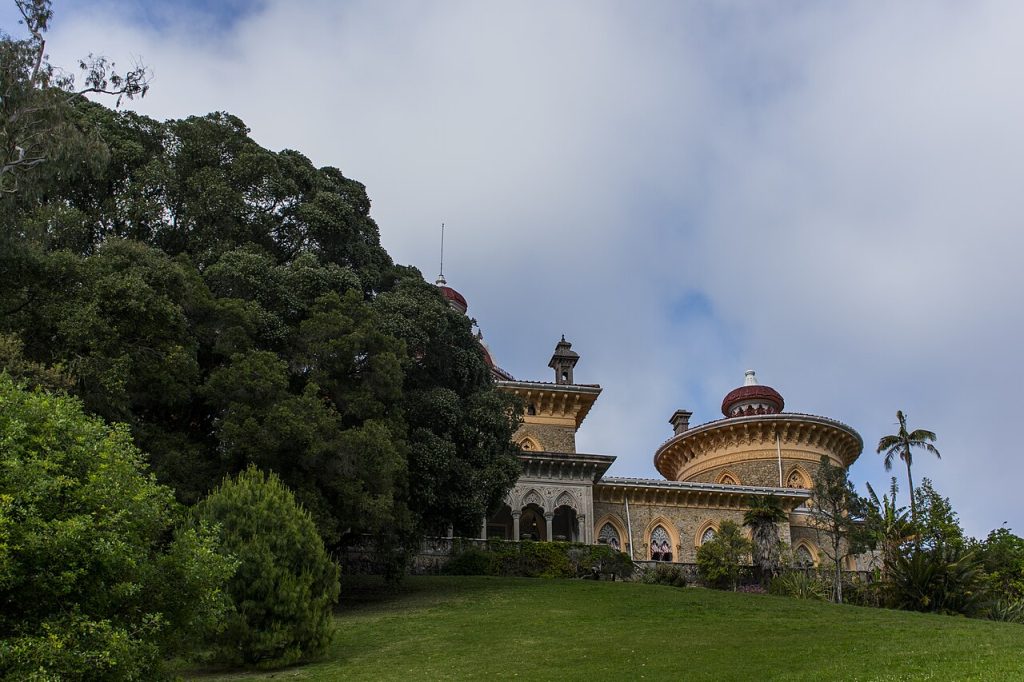
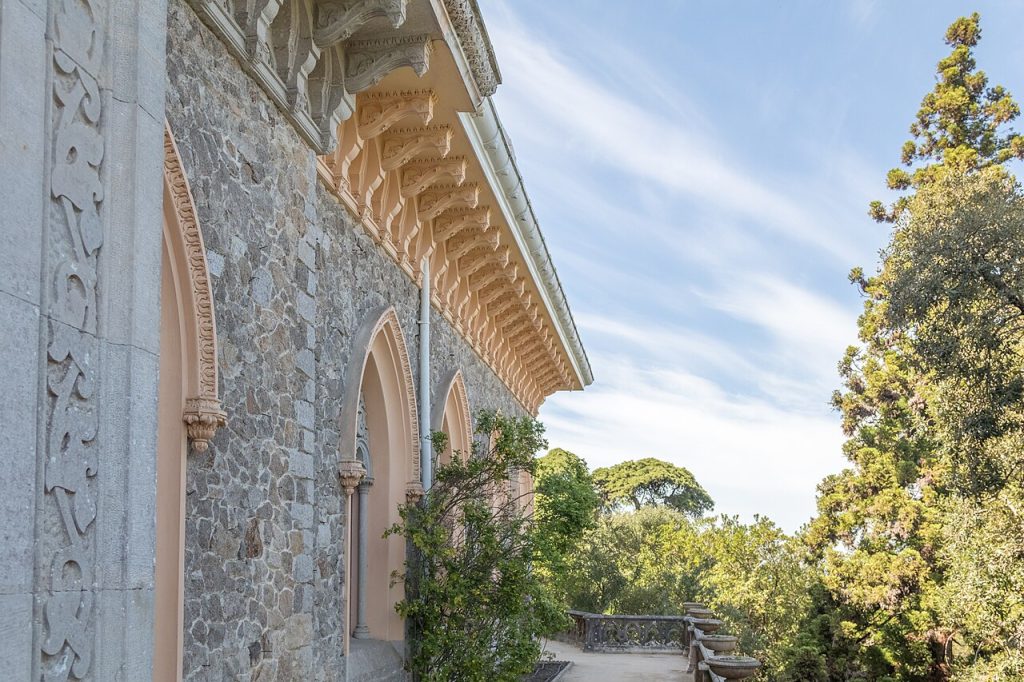
Cook’s architect was James Knowles junior, later founder of the journal The Nineteenth Century, who from 1858 rebuilt on De Visme’s footprint a palace in the style the age called Indo-Gothic or Moorish: three octagonal pavilions, each under a dome, the central one a tall lantern ribbed in red copper, joined by low arcaded galleries, with horseshoe and ogee arches, pierced stone parapets and pinnacles that quote the Alhambra, Mughal tombs and Venice in one breath, over a structure up-to-date with iron and plate glass. Local legend adds that the ornamental carving was perfected by craftsmen under an Italian master, and the plasterwork inside was partly stamped by machine, a textile man’s trick, pattern by the yard.
The building is small, a villa in palace’s clothing, and that is its charm: it is exactly the size of one family’s happiness, with no throne room and no chapel of state, only drawing rooms, music and views.
The Hall and the Alabaster Corridor
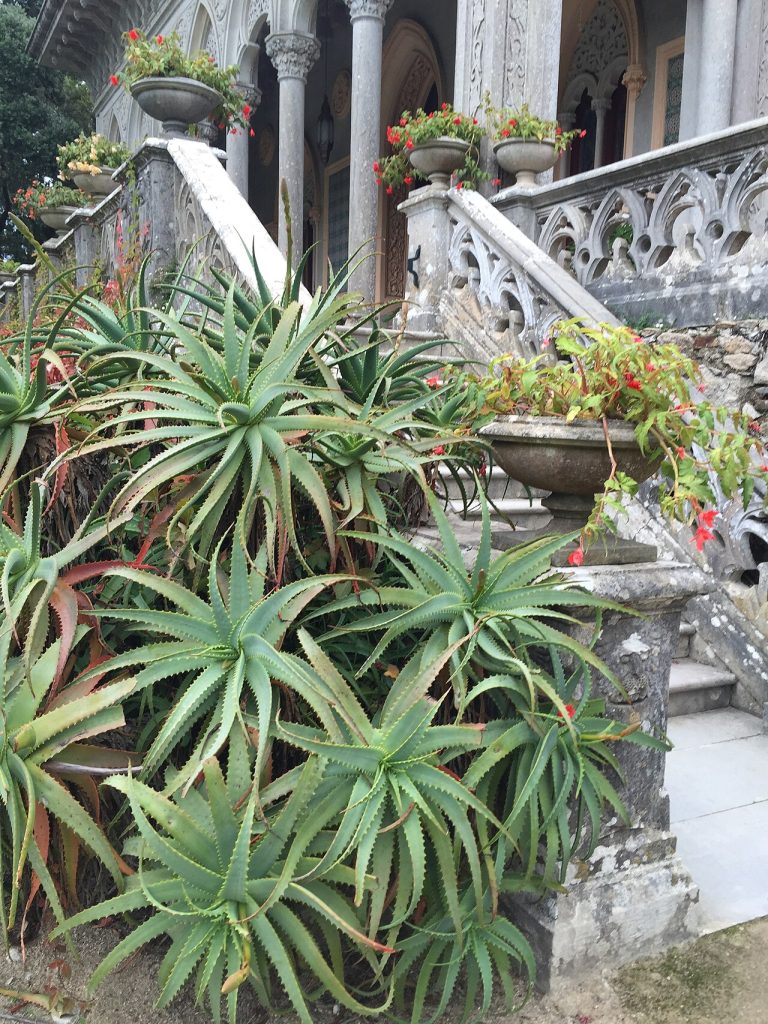
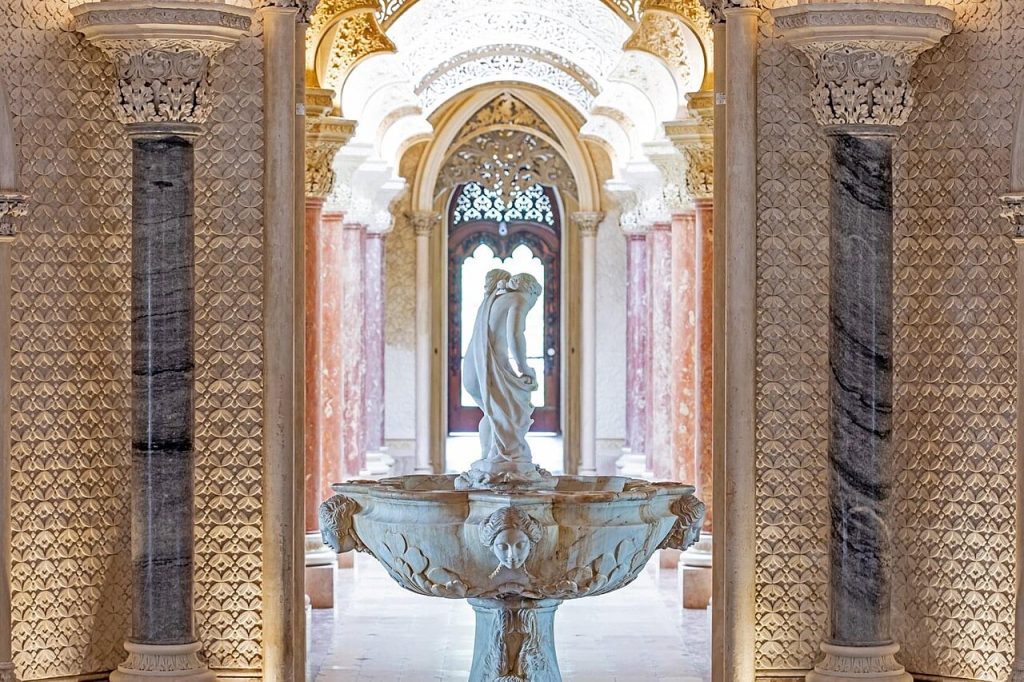
The front door opens into the central hall beneath the lantern dome, where light falls three storeys onto an Italian marble fountain whose basin scents the house with water-sound, Moorish courtyard manners translated to an English hall; from it the great corridor runs the full length of the palace, an avenue of slender pink Carrara columns under arches carved with vine and acanthus so fine the stone reads as lace, leading one way to the library and dining room, whose walls of carved walnut survive, and the other to the drawing rooms with their views down the lawn. Upstairs were the family bedrooms, with bathrooms, piped water and comforts decades ahead of royal Portugal’s.
Now, stop here mid-corridor and sight down the columns to the fountain’s glitter: it is the best interior vista in Sintra, and it was built for after-dinner walks when the mist shut the real garden out.
The Music Room Under the Dome
The south pavilion holds the music room, a perfect circle under its dome, ringed by arches on paired columns with a carved frieze of garlands and instruments, lit by tall windows onto the tree ferns; here the Cooks, a musical dynasty, held the concerts that were the height of Sintra’s season, with artists brought from Lisbon and London playing to an audience of kings, ambassadors and neighbouring quintas, and the room’s acoustics, round, domed and wood-floored, still astonish performers. Parques de Sintra uses it today for its chamber series, and on summer evenings the dome fills again with Chopin, whose Portuguese connections the serra, via Valldemossa’s rival claim, likes to debate.
If a concert coincides with your visit, take it: music in this room with the garden dimming through the glass is the entire romantic nineteenth century, admission price included.
Burt and the Making of the Garden
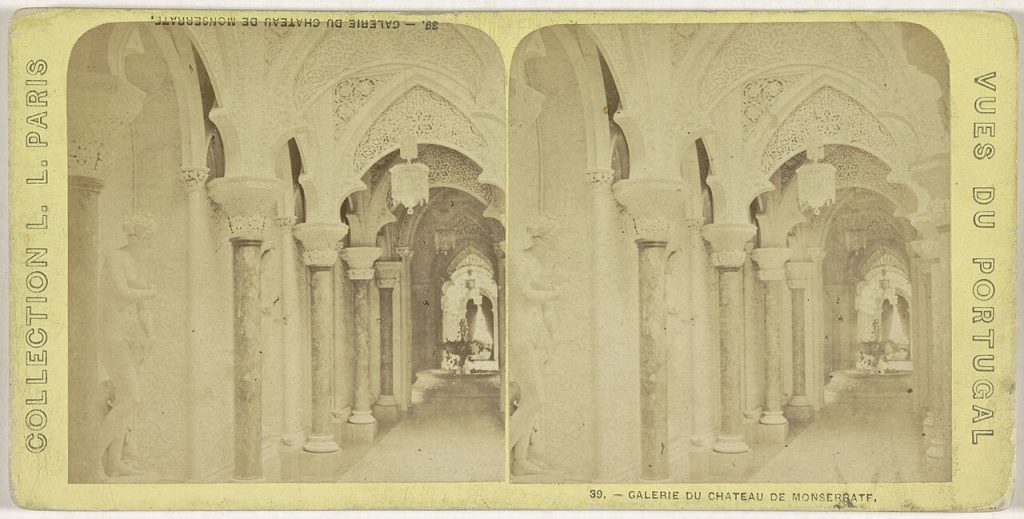
The garden was the project’s true extravagance: Cook sent the Kew-trained gardener Francis Burt to Sintra, took counsel from the painter-plantsman William Stockdale and from Kew itself, then shipping-lines delivered the world, Himalayan rhododendrons and deodars, Australian tree ferns and araucarias, Mexican agaves, yuccas and cycads, Chinese camellias, Japanese cryptomerias, palms by the score, until thousands of species grew where the Mello e Castros had farmed; paths, cascades, lakes and a ruin-chapel folly were composed so that each valley turn changes continent. The plantings naturalised so happily in the serra’s mists that the garden now holds champion trees of Portugal by the dozen.
Botanists rank Monserrate with the great acclimatisation gardens of the Riviera; gardeners simply rank it, and the Royal Horticultural Society’s medal hangs, in spirit, on every tree fern.
The Fern Valley and the Lawn
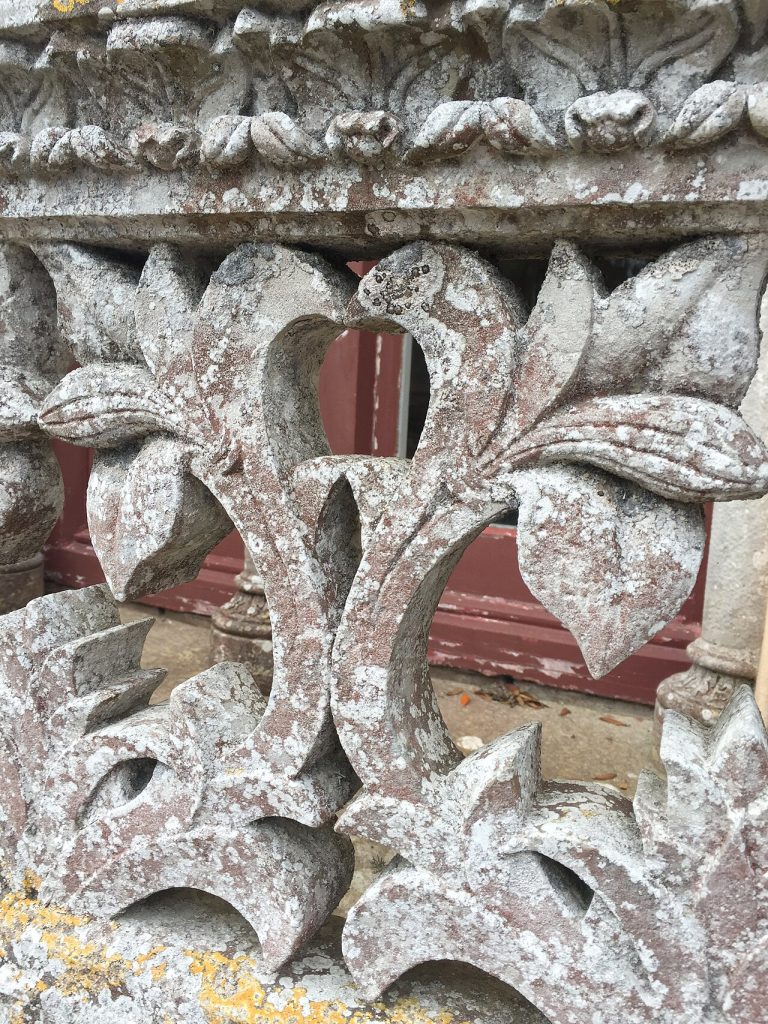
Two set pieces anchor the park. The lawn, falling from the palace in an unbroken green sheet, was by tradition the first proper English lawn in Portugal, sown with imported seed and watered by hidden channels, and kept, then as now, to a standard that makes Portuguese groundsmen sigh; croquet and the Cooks’ garden parties lived on it. Below it the path drops into the fern valley, a shaded gorge where tree ferns from Australia and New Zealand stand five metres tall over black pools and mossed boulders, the serra’s mist dripping from their crowns, as convincing a piece of Gondwana as exists north of the equator.
Now, stop here at the valley’s floor and look back up: ferns, lawn’s edge, lace verandas, copper dome, the whole composition in one glance, and this is the postcard the nineteenth century invented the word picturesque for.
Mexico, Australia and the Rose Garden
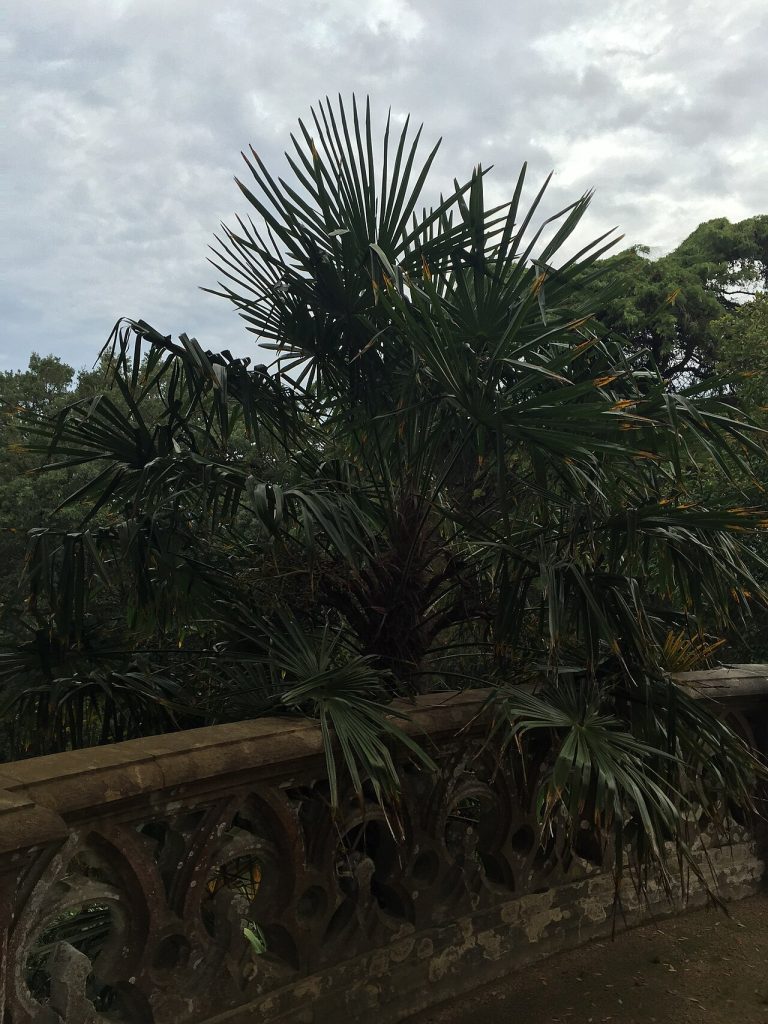
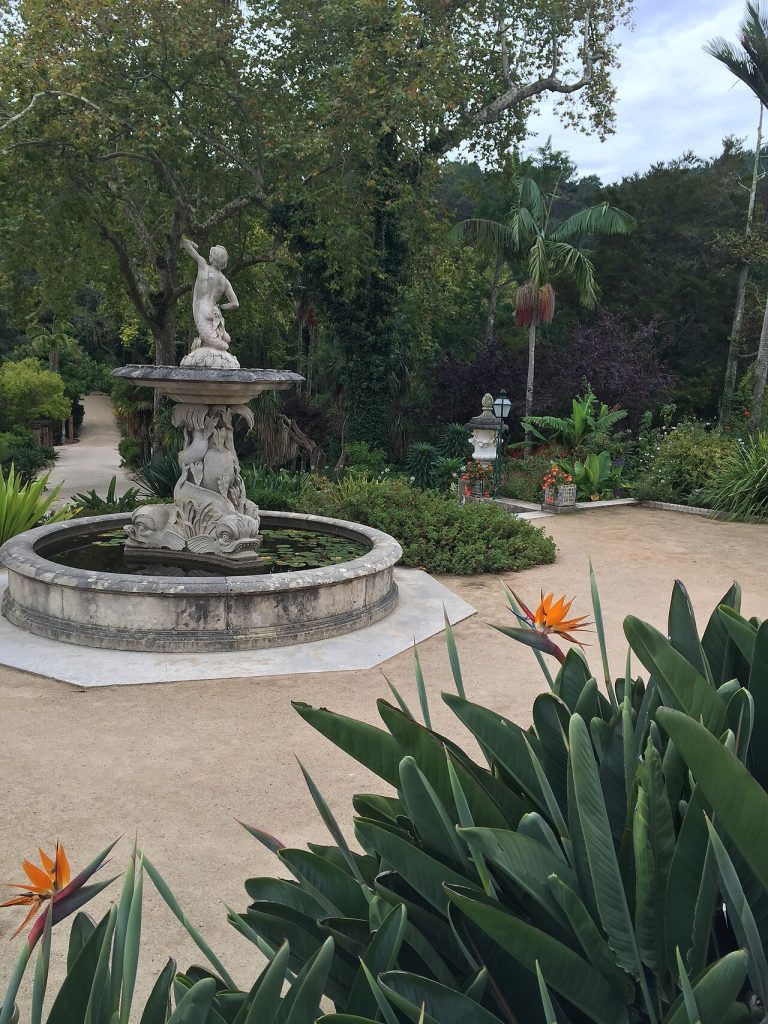
Beyond the valley the park keeps its geography lesson: the Mexican garden on a sun-struck terrace, replanted in the 2010s with agaves, yuccas, dasylirions and palms around a tiled pavilion; the perfumed cypress and camellia walks; the eucalyptus grove whose giants top ninety metres of trunk among the tallest trees in Europe; the lake and cascade of the romantic circuit; and the rose garden, recreated in 2015 inside its original beds, where old roses bred before 1900 bloom in May against the ruin-chapel’s ficus. Thirty-three hectares take a comfortable two hours; the garden map’s continents are honest, and the birdsong is Portuguese throughout.
Spring brings the camellias and rhododendrons, high summer the agaves’ candles, autumn the first storms off the Atlantic combing the tree ferns; there is no wrong month, only wetter and drier ones.
Sales, Neglect and the State’s Rescue
The third baronet’s death duties and the family firm’s decline forced the Cooks to strip and sell: the contents went under the hammer in the 1940s, the estate to the Portuguese state in 1949, and then came the long sleep, the palace emptied and leaking, the lantern’s glass gone, gardens logged of specimens and smothered in acacia, with only the lawn, kept by tradition and a skeleton staff, holding the design together; films and the occasional concert used the shell, and guidebooks called it the melancholy sister. Classification, slow repairs and finally the creation of Parques de Sintra in 2000 turned the tide: palace restoration culminated in the reopened state rooms of 2010, the gardens’ renewal continues bed by bed, and in 2013 Monserrate’s park took the European Garden Award.
The restoration chose honesty over refurnishing: the rooms stand mostly empty, surfaces perfect, so the architecture itself is the exhibit, and the house feels paused rather than embalmed.
Monserrate Today
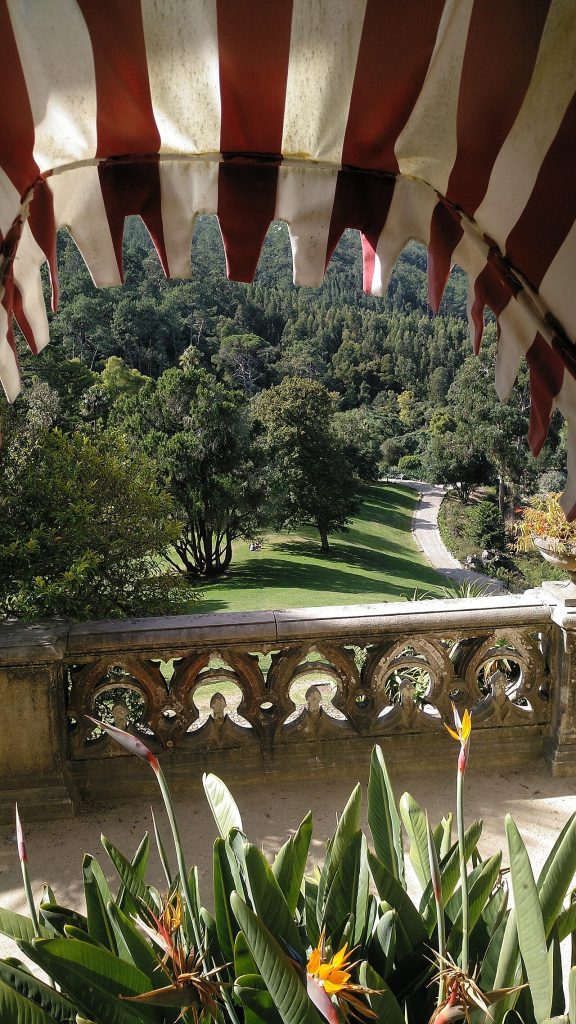
Monserrate today is Sintra’s connoisseur’s choice: a fraction of Pena’s crowds comes the extra four kilometres, so even in August the lawn holds more shadows than selfie sticks, and the gardens absorb their visitors whole; Parques de Sintra runs the estate with its working nursery, its concerts and its slow, visible craft of renewal, and the palace’s café terrace under the arches may be the pleasantest coffee stop in the municipality. Byron’s stanza is posted at the gate, Beckford’s cascade is signposted in the valley, and the Cooks’ descendants still visit the viscountcy’s namesake as ordinary ticket-holders.
Now, stop here a last time on the lawn as the Atlantic light goes long and the dome’s copper catches fire. Two Englishmen dreamed on this terrace, a poet mourned it, a draper perfected it, a state nearly lost it and then learned to keep it; of all Sintra’s palaces this is the one built purely for delight, and delight, properly maintained, turns out to be durable.
Monserrate on Video
Visiting Monserrate Today
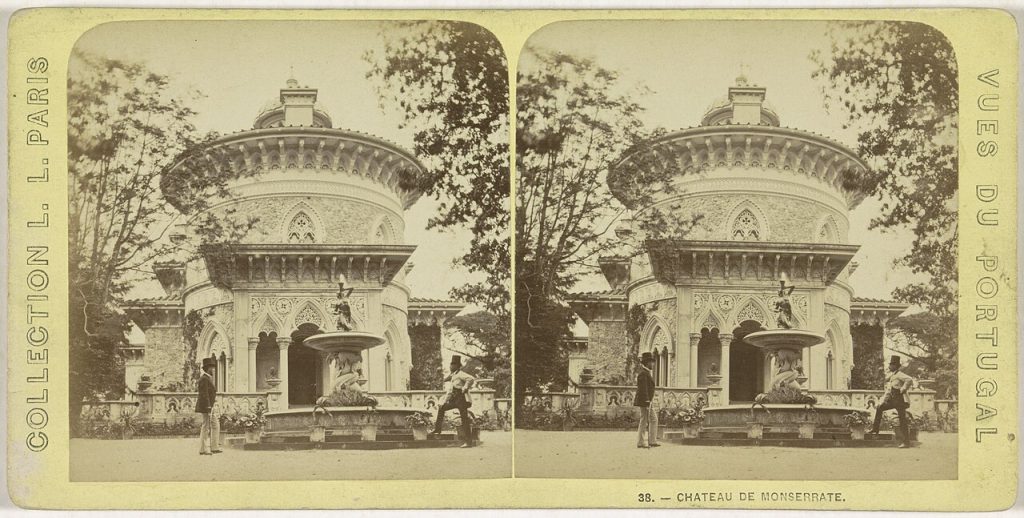
The Palace and Park of Monserrate are open daily, with timed tickets online from Parques de Sintra; allow an hour for the palace’s hall, corridor, music room and family rooms, and two more for the garden circuit of lawn, fern valley, Mexican garden, rose garden and chapel ruin, wearing shoes for wet paths, for the garden’s charm is its damp. The café serves lunch on the arcaded terrace, concerts run in the music room through summer, and the light is best after four, when the day-trippers have gone back up the hill.
Monserrate lies 4 kilometres west of Sintra’s old town on the Colares road: bus 435 from the station serves it with Regaleira and Seteais, taxis and tuk-tuks abound, and the walk out along the old road past the quintas’ walls takes an hour of shaded, uphill-downhill pleasure; drivers find a small car park at the gate, fullest at midday. Here is the exact spot: Monserrate Palace on Google Maps.
Palaces Nearby
You May Like
Bussaco Palace and the Hunting Lodge That Became a Hotel