Here is a fact that ought to be far more famous than it is. Around 6,000 years ago, on the fertile plains of what is now Ukraine, Moldova, and Romania, people were living together in settlements so large that some archaeologists call them the first cities on Earth, older than the famous cities of Mesopotamia. These places sprawled across hundreds of hectares and may have housed ten or twenty thousand people, perhaps more. And then, every few generations, the inhabitants appear to have deliberately burned their entire town to the ground, and started again. This is the world of the Cucuteni-Trypillia culture, and once you learn about it, it is very hard to forget.
Most histories of the first cities point you toward Uruk and the other great centres of Sumer, and rightly so. But out on the European steppe edge, a different and stranger experiment in living together was unfolding at roughly the same time, and in some respects earlier. The people of Cucuteni-Trypillia built enormous planned settlements, made some of the most beautiful painted pottery of the ancient world, and seem to have organised themselves without the kings, palaces, and glaring inequality we usually associate with early urban life. They are one of prehistory’s great puzzles, and one of its most quietly astonishing achievements.
The name is a bit of a mouthful, and it reflects a quirk of history. The same culture was discovered separately on either side of a modern border. In Romania it was named after the village of Cucuteni; in Ukraine and the former Soviet world it was named Trypillia (or Tripolye), after a village near Kyiv. For a long time these were treated as two things. We now understand them as one great cultural world, spanning a huge territory and lasting for well over two thousand years, and so we bolt the two names together: Cucuteni-Trypillia.
- Who were they?
- The mega-settlements: cities before cities?
- A town built like a wheel
- Inside a Trypillian house
- The great mystery: why burn it all down?
- The pottery that stops you in your tracks
- The figurines and the goddess question
- A society without kings?
- How we found them
- A year in a Trypillian town
- The long fade
- Why they matter
Who were they?
The Cucuteni-Trypillia culture flourished from roughly 5500 to 2750 BCE, a span of nearly three thousand years, across a broad arc of southeastern Europe. At its greatest extent it covered a huge area, stretching over parts of modern Romania, Moldova, and Ukraine, taking in the rich black-earth soils between the Carpathian mountains and the Dnieper river. This was some of the best farmland in the world, and it was the foundation of everything these people achieved.
They were farmers, first and foremost. They grew wheat, barley, peas, and other crops, kept cattle, pigs, sheep, and goats, and supplemented their diet with hunting and gathering. What made them remarkable was not the food they grew but the scale on which they chose to live together. Most Neolithic farming communities were small: a hamlet, a cluster of families. The Cucuteni-Trypillia people, at least in certain places and certain periods, gathered into settlements of a size that had never been seen before anywhere on the planet.
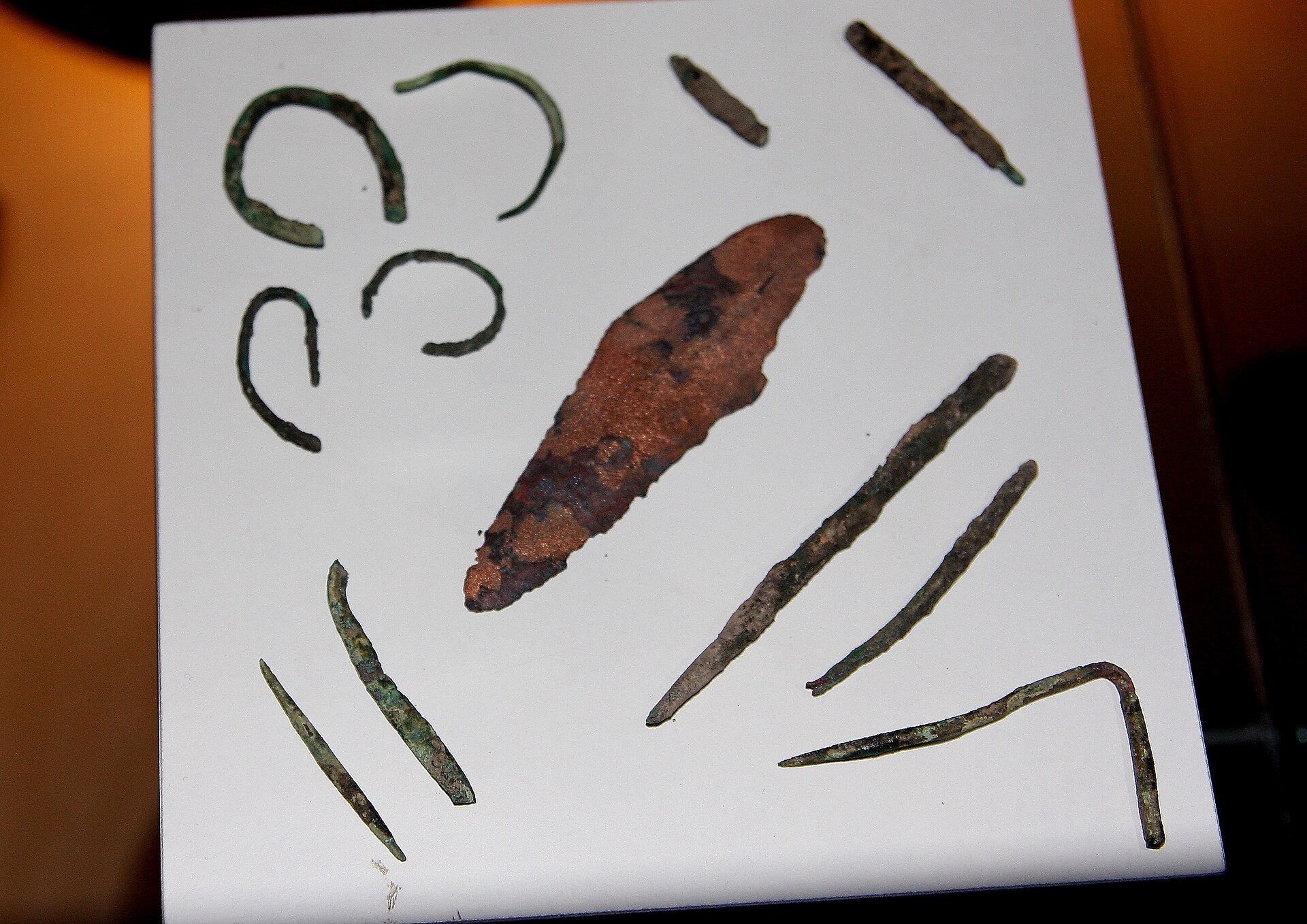
They worked copper, making them part of the early transition out of the pure Stone Age and into the age of metals, though stone and bone tools remained central to daily life. They wove, they built, they farmed, and above all they made pottery of extraordinary beauty. And they did all of this in a world with no writing, so everything we know about them comes from the ground: the traces of their houses, their broken pots, their little clay figures, and the vast burned footprints of their towns.
The mega-settlements: cities before cities?
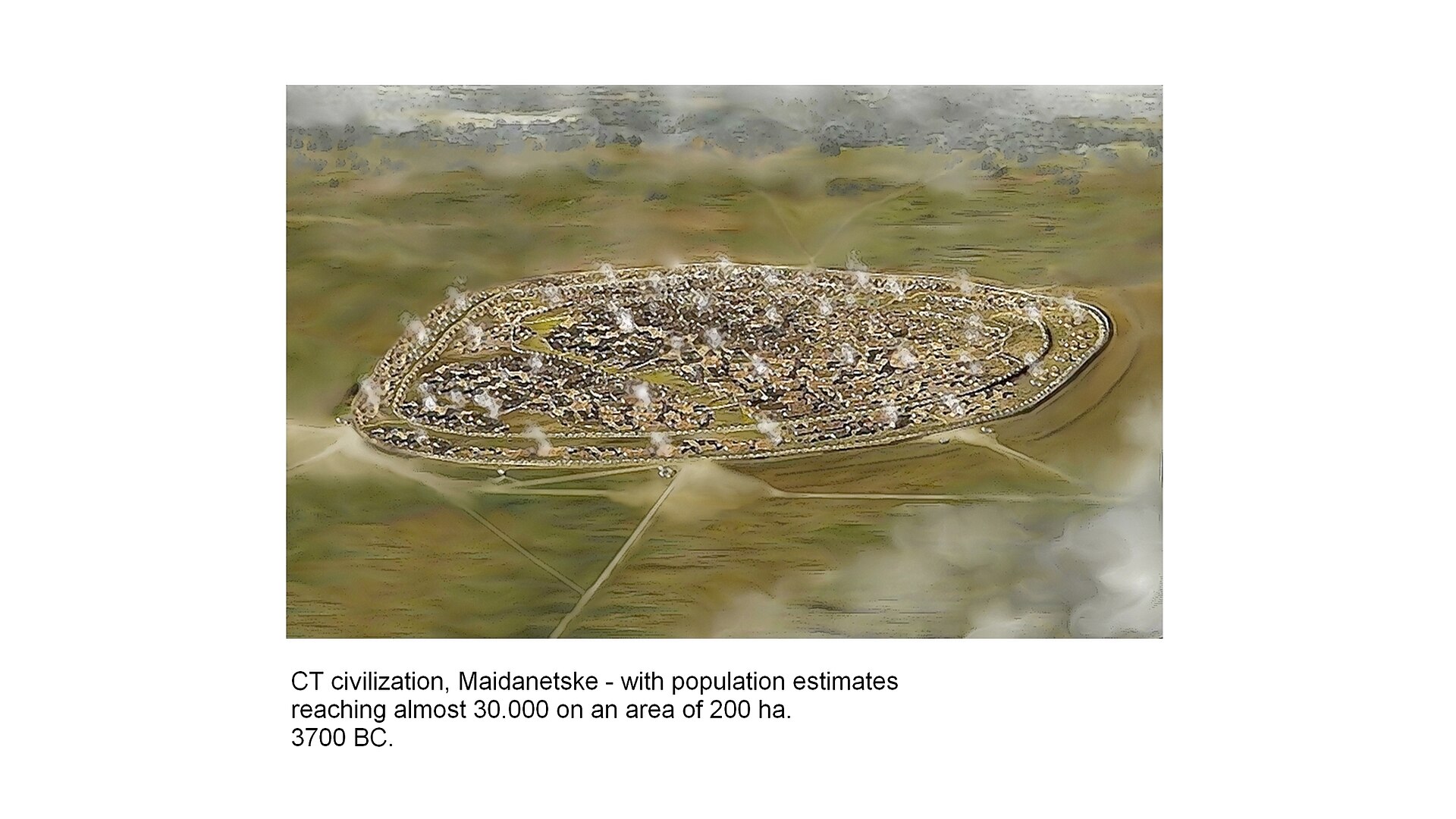
The headline achievement, the thing that has made archaeologists sit up and argue for decades, is the mega-settlements. In the later phases of the culture, especially in the Ukrainian heartland, some Cucuteni-Trypillia settlements grew to truly enormous sizes. Sites like Talianki, Maidanetske, and Nebelivka covered hundreds of hectares, with Talianki spreading across an area of around 320 hectares. That is larger, in sheer footprint, than the contemporary cities of Mesopotamia.
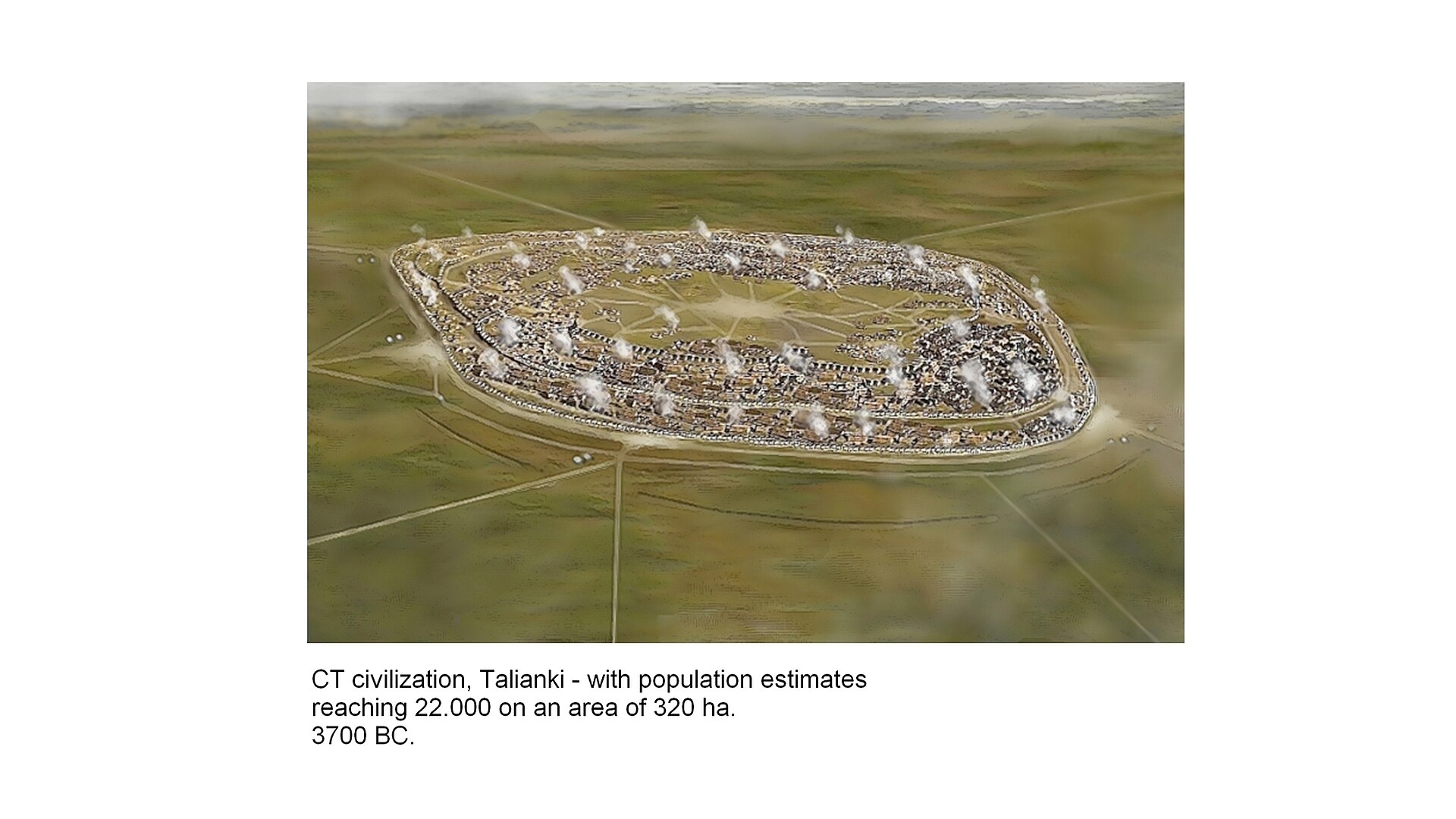
Estimating how many people lived in these places is difficult and contested, but the figures researchers propose are staggering. Depending on the site and the assumptions, populations of several thousand up to perhaps 15,000, and in the boldest estimates for the very largest sites even higher, have been suggested. Whatever the exact number, we are talking about concentrations of people that were extraordinary for their time, rivalling or exceeding the earliest Mesopotamian cities that usually get the credit for being humanity’s first.
This is why some scholars are comfortable calling these places cities, or at least proto-cities, and why the Cucuteni-Trypillia mega-settlements have become a hot topic in the study of how urban life began. If a “city” is fundamentally about large numbers of people living together in a planned, permanent settlement, then these towns on the Ukrainian plains have a strong claim to be among the first. And they got there by a route very different from the one taken in the Near East.
A town built like a wheel
What really sets the mega-settlements apart is that they were not chaotic sprawls that grew by accident. They were planned. Thanks to modern techniques like geophysical survey, which lets archaeologists map buried structures without digging, we now have detailed plans of these towns, and the layouts are astonishing. The houses were arranged in great concentric rings, circle within circle, sometimes with radial pathways cutting across them like the spokes of a wheel.
At the centre of many of these settlements was a large open space, an inner plaza kept clear of houses. Ringing it were the dwellings, packed into their curving rows, and beyond the outer ring the settlement often had larger community buildings that may have served as assembly halls or ritual centres. The whole design suggests a shared vision, a communal decision about how the town should be shaped, rather than the piecemeal growth of a settlement where everyone just builds wherever they like.
Think about what that planning implies. To lay out a town of thousands of houses in neat concentric circles, you need some form of coordination, agreement, perhaps a shared cosmology that made the circular form meaningful. These were not random villages. They were deliberate creations, expressions of a community that could think and act at a very large scale. And they did it, as far as we can tell, without a palace at the centre issuing orders, which makes the coordination even more intriguing.
Inside a Trypillian house
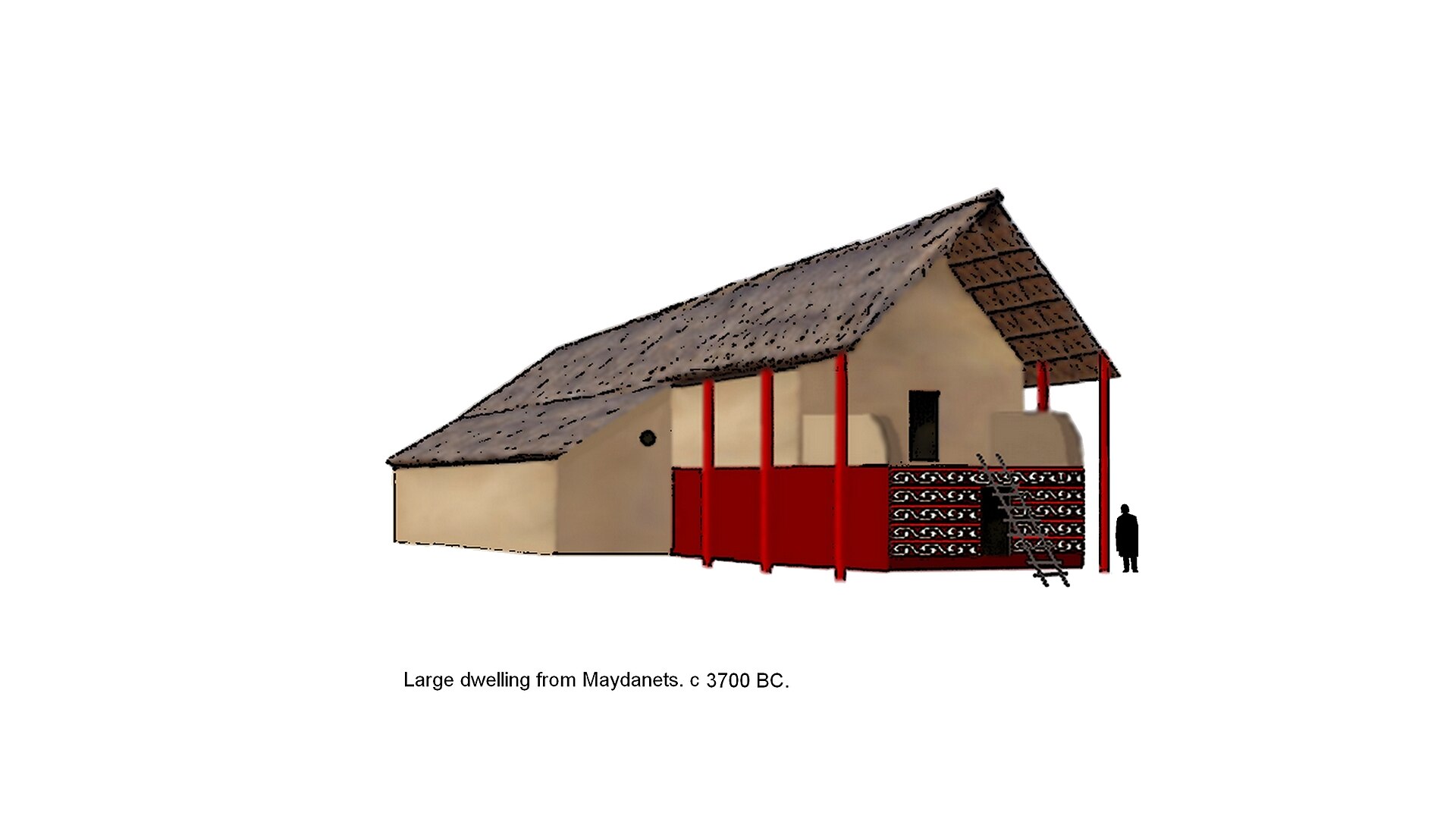
The individual houses were substantial and carefully built. A typical Cucuteni-Trypillia dwelling had a framework of timber posts, with walls made of wattle, woven branches, thickly plastered with clay. The floors were often made of clay laid over a wooden base and then hardened, sometimes by fire. Many houses seem to have had two storeys, which is remarkable for the period, giving families real living space above and perhaps storage or work areas below.
Inside, excavations and the culture’s own clay models reveal a domestic world we can partly reconstruct. There were ovens and hearths for cooking and warmth, raised platforms and benches, storage vessels for grain, and areas for grinding flour and making the famous pottery. Some houses contained what look like small domestic shrines or altars, with figurines and special vessels, suggesting that religious life was woven right into the fabric of the home rather than confined to separate temples.
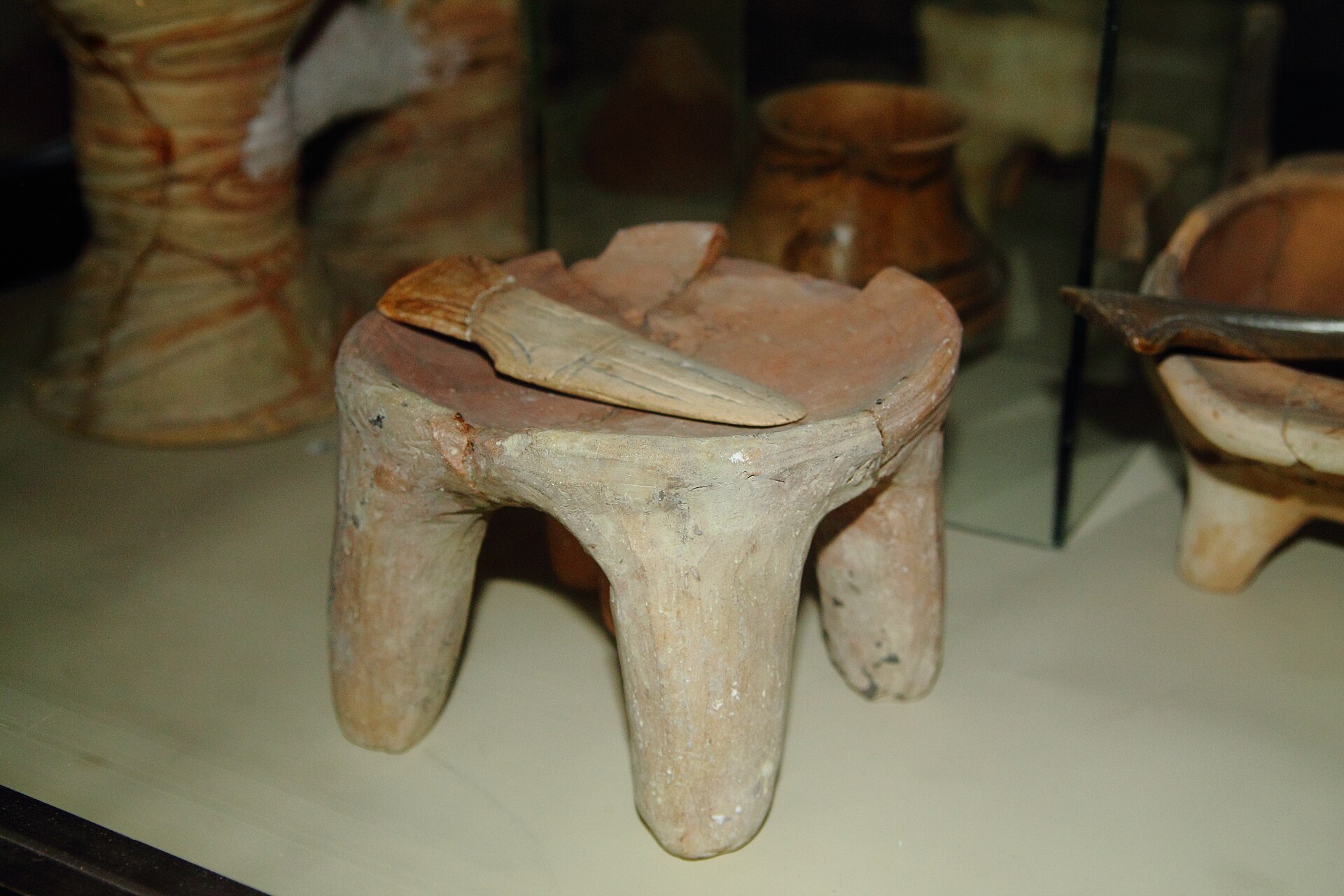
One of the most charming and useful things these people left us are their house models: little clay replicas of their own buildings, complete with details of walls, roofs, and interior features. Whether these were toys, ritual objects, or something else, they give archaeologists an invaluable window into what the real houses looked like, filling in details that rarely survive in the burned remains. It is as if the Trypillians left behind their own miniature architectural record.
The great mystery: why burn it all down?
Now we come to the strangest and most debated feature of the whole culture. When archaeologists excavate Cucuteni-Trypillia houses, they very often find that the buildings were burned, and not by accident. The fires were so intense, and so consistent across whole settlements, that many researchers are convinced the inhabitants deliberately set their own houses alight, sometimes it seems the entire town, on a regular cycle of roughly sixty to eighty years.
Let that sink in. Every couple of generations, a community that had built an enormous, carefully planned town, with substantial two-storey houses, apparently torched the whole thing on purpose and then, in many cases, rebuilt on the same spot or nearby. The heat of these fires was tremendous, hot enough to turn the clay of the walls and floors into a hard, ceramic-like material, which is actually why so much of the structure survives for us to study. The burning, in a sense, fired the houses like giant pots.
Why would anyone do this? Nobody knows for certain, and this is one of the liveliest debates in European prehistory. Some think the burning was practical, a way of clearing out old, pest-ridden, or structurally tired buildings and sanitising the ground. Others see it as deeply ritual: perhaps a house had a life cycle mirroring that of its inhabitants, and when a generation passed or a household ended, the house was ceremonially “killed” by fire. Some suggest the burning marked cycles of renewal, tied to belief, to the death of elders, or to a cosmology of endings and new beginnings.
There are other ideas too, from accidental fires that got out of hand to conflict, but the sheer regularity and completeness of the burning at so many sites points away from accident and toward intention. Whatever the reason, the practice tells us something profound: for these people, a settlement was not simply a permanent possession to be held onto forever. It was something that could be given up, consumed, and remade. That is a very different relationship with “home” than the one we take for granted, and it may be one of the keys to understanding their whole way of life.
The pottery that stops you in your tracks
If the mega-settlements are the intellectual headline of Cucuteni-Trypillia, the pottery is its heart. These people made some of the most beautiful ceramics of the entire Neolithic world, anywhere. Their finest vessels are elegant in form and covered in swirling, spiralling painted designs in red, black, and white, patterns that feel astonishingly sophisticated and alive even to a modern eye.
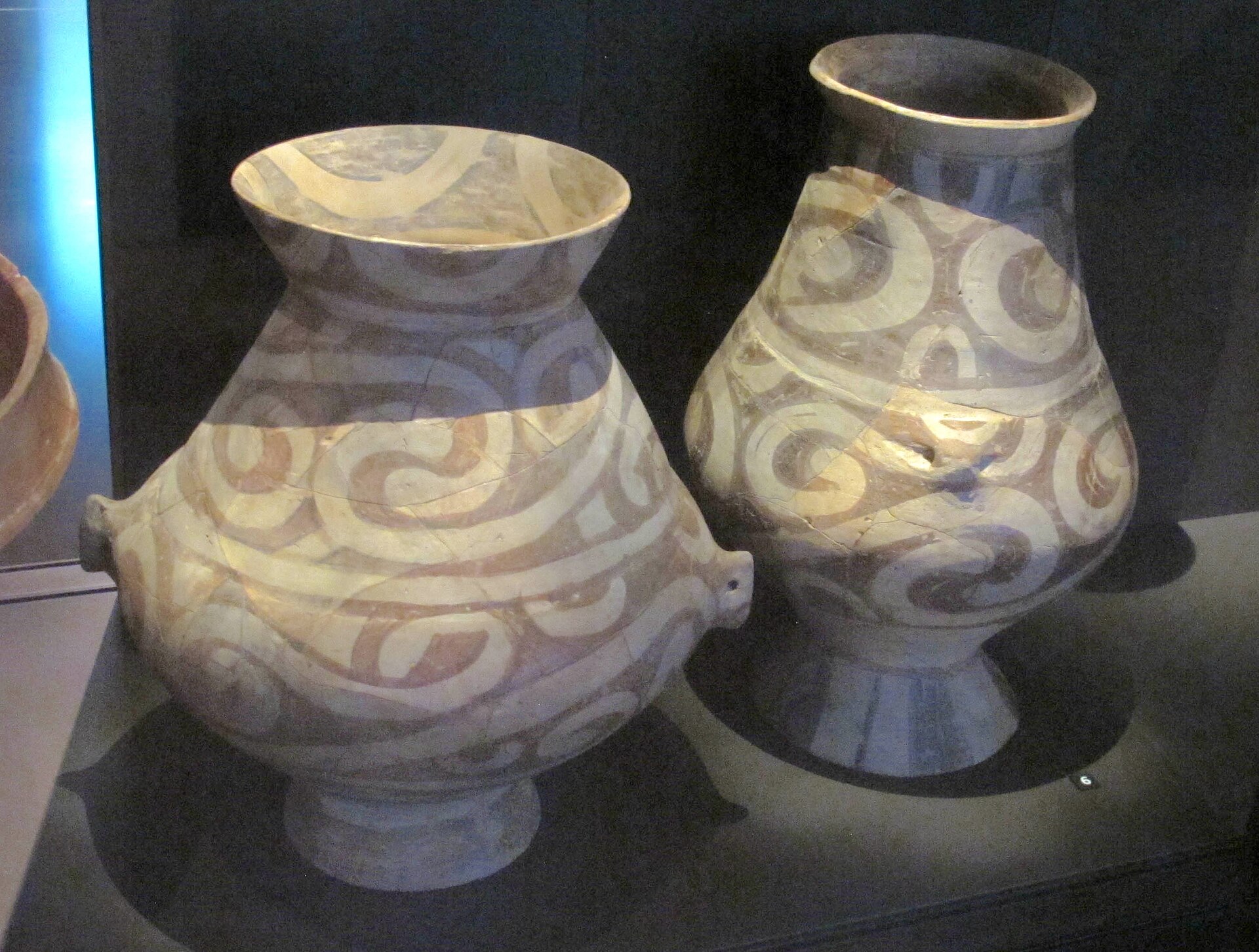
The decoration is dominated by spirals and flowing, curving lines, sometimes covering the entire surface of a pot in continuous, hypnotic motion. There are also bands, meanders, and stylised images that may represent animals, plants, water, or celestial ideas. Scholars have spent lifetimes trying to decode the symbolism, and while we cannot read it like writing, the sheer care and consistency of the designs suggest they carried real meaning, not just decoration for its own sake.
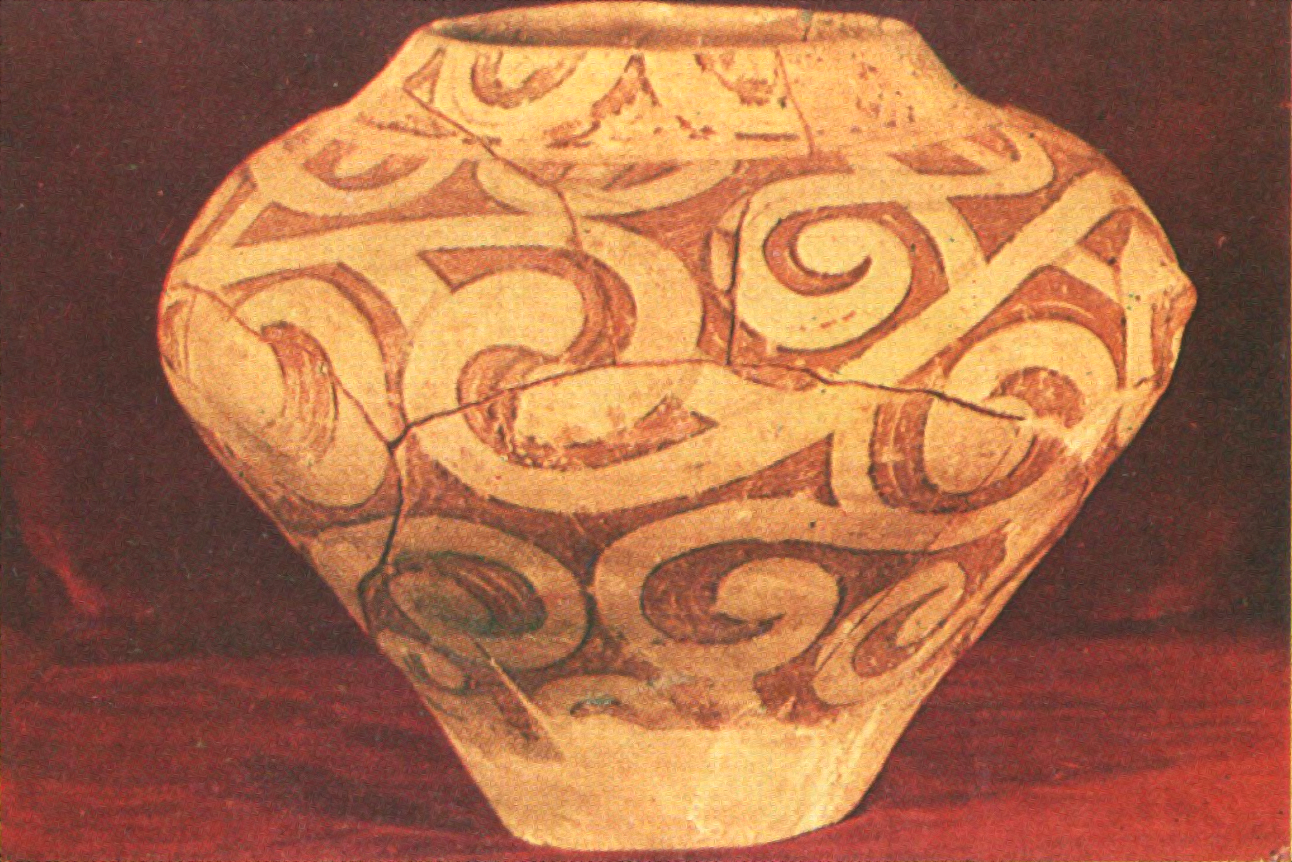
What makes this pottery even more impressive is the technical skill behind it. Producing these vessels required well-built kilns capable of reaching high temperatures, careful preparation of clays and pigments, and a great deal of practised artistry. The consistency of quality across such a vast territory and long time span implies established traditions, passed carefully from one generation of potters to the next. When you look at a fine Cucuteni pot, you are looking at the product of a mature, confident artistic culture that had been refining its craft for many centuries.
The figurines and the goddess question
Alongside the pottery, the Cucuteni-Trypillia people left behind vast numbers of small clay figurines, and these have generated almost as much debate as the burning of the houses. Many of the figures are anthropomorphic, that is, human-shaped, and a great many of them appear to be female, often depicted with emphasised hips and stylised bodies, marked with incised or painted patterns.
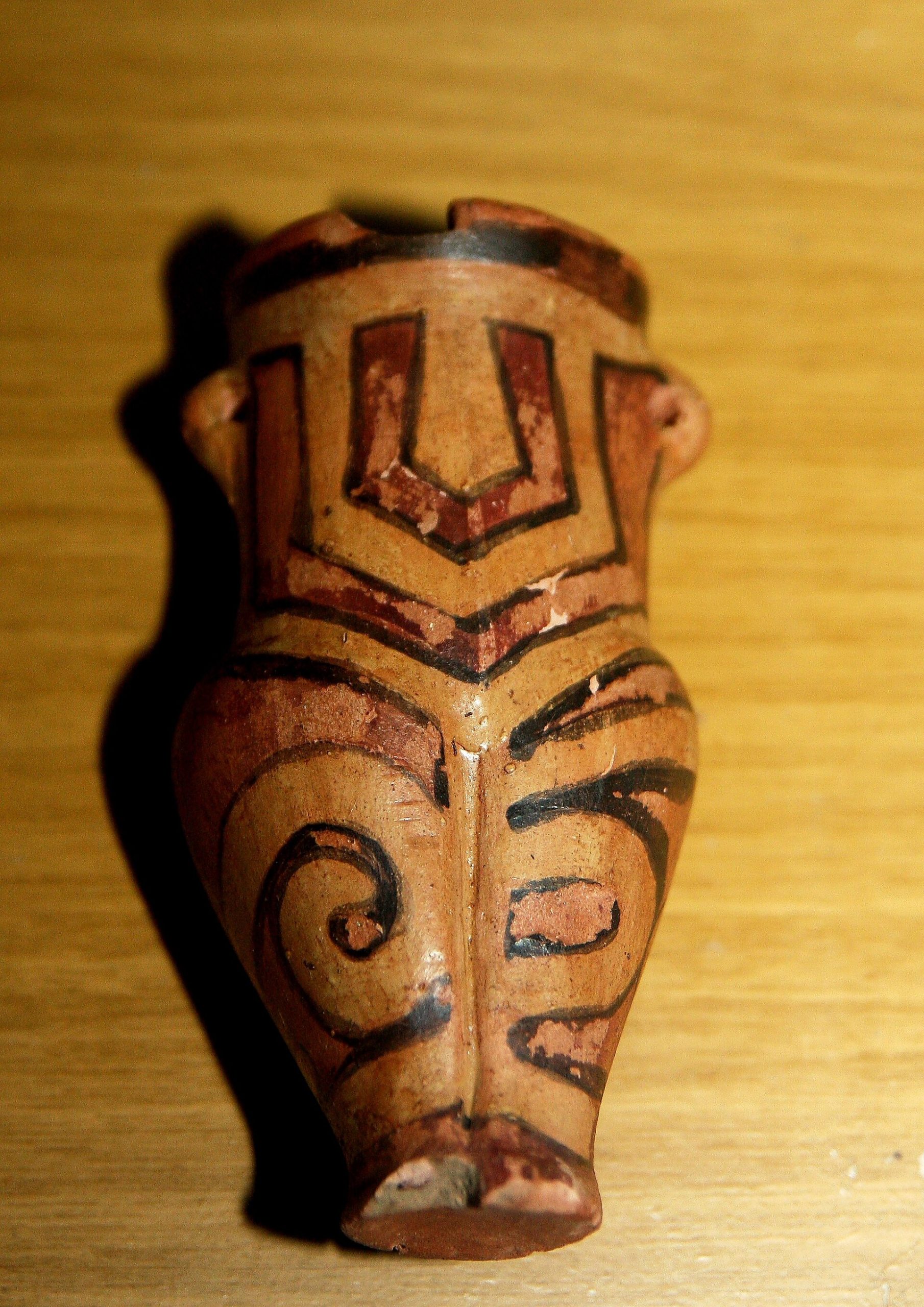
For much of the twentieth century, figurines like these, found across Neolithic Europe, were swept up into a popular theory about a universal prehistoric “Mother Goddess” cult, a belief that early European farmers worshipped a great female deity of fertility and the earth. It is a romantic and appealing idea, and the Cucuteni-Trypillia figurines were often cited as prime evidence for it.
Modern archaeologists tend to be much more cautious. The truth is we do not know exactly what these figures meant to the people who made them. Some may indeed have had religious or fertility significance. Others might have been used in household rituals, as teaching tools, as representations of ancestors, as toys, or for purposes we cannot now recover. The figurines are found in homes, in ordinary contexts, in large numbers, which argues against them all being sacred cult idols. Rather than a single grand goddess religion, they probably reflect a rich, varied world of domestic belief and practice that we can only glimpse. The honest position is that they are wonderfully evocative and genuinely mysterious.
A society without kings?
Here is perhaps the most thought-provoking aspect of the whole culture. When we imagine the first large towns and cities, we usually assume they must have come with the trappings of hierarchy: a ruling class, a palace or a temple towering over everyone else, obvious differences between rich and poor, and centralised power to keep such a mass of people in order. That is broadly the story of early Mesopotamia. But the Cucuteni-Trypillia mega-settlements do not obviously fit that pattern.
Across these enormous sites, the houses are strikingly similar to one another. Archaeologists have not found a single dominant palace complex, no obvious royal residence lording it over the rest, no dramatically richer district set apart from ordinary homes. The large community buildings that do exist seem to have been shared, public spaces rather than the mansions of an elite. Burials that would clearly mark out a wealthy ruling class are largely absent. In other words, these may have been remarkably egalitarian towns, large numbers of people living together in rough equality, coordinating their affairs without concentrating power in the hands of kings.
If that reading is right, and it is debated, then Cucuteni-Trypillia is enormously important, because it suggests that large-scale settled life did not have to mean domination by a ruling elite. It hints that early people experimented with different ways of organising themselves, and that at least one of those experiments involved thousands of people cooperating on a grand scale, in planned towns, apparently governing themselves through shared decisions rather than top-down authority. That is a genuinely radical idea, and it upends the tidy assumption that cities and inequality must always go hand in hand.
How we found them
It is worth pausing on how this whole lost world came back into view, because the story says a lot about how prehistory gets pieced together. The culture was first identified in the late nineteenth century. In Ukraine, an archaeologist named Vikentiy Khvoyka uncovered painted pottery and traces of settlement near the village of Trypillia, close to Kyiv, and recognised he had found something ancient and distinctive. Around the same time, related discoveries at Cucuteni in Romania revealed the same striking ceramics. Only later did researchers realise these were two faces of a single vast culture.
For a long time, though, the true scale of the mega-settlements went unappreciated. You can dig a trench through a site and find houses, but you cannot easily grasp that those houses form part of a planned town stretching across hundreds of hectares. The breakthrough came with aerial photography and, above all, with geophysical survey, especially magnetometry, which detects the faint magnetic traces left by burned structures beneath the soil. Because the Trypillians burned their houses, and burning alters the magnetic signature of clay, their vanished towns show up on these surveys with eerie clarity, whole settlements mapped out as rings of ghostly rectangles.
Suddenly, archaeologists could see the plans of these places without excavating every square metre. The concentric layouts, the radial streets, the central plazas, the outer rings of larger buildings, all emerged from the data. It was these surveys, more than anything, that transformed Cucuteni-Trypillia from an interesting pottery culture into a serious candidate for the site of some of the earliest urbanism on Earth. The technology let us finally see the forest, not just the trees.
A year in a Trypillian town
It helps to try to imagine daily life in one of these places, to move from plans and pottery to people. The rhythm of the year would have been set by farming. In spring, families went out to the fields surrounding the town to sow their wheat, barley, and legumes in the rich black soil. Through summer they tended the crops and their herds of cattle, pigs, sheep, and goats, which grazed the land around the settlement. Autumn brought the harvest, the crucial gathering-in of the grain that would carry the community through winter, stored in large ceramic vessels inside the houses.
Within the town, life would have been busy and social. In a settlement of thousands, there were potters shaping and painting their vessels and tending the kilns, people grinding grain into flour, others weaving cloth, working copper, building and repairing the timber-and-clay houses. The little domestic shrines suggest that ritual was a constant, everyday presence, not something reserved for special occasions. Figurines were handled, special pots were used, and the household was itself a small sacred space.
And looming over the ordinary rhythm of the years was that extraordinary longer cycle, the knowledge that at some point, perhaps within a lifetime, the whole town would be given to the flames and remade. Whatever it meant to them, it must have shaped how people felt about their homes and their community, lending an unusual sense of impermanence and renewal to the most solid-seeming things. It is a way of living in the world quite unlike our own, and imagining it is one of the great pleasures of thinking about these people.
The long fade
Like every culture, Cucuteni-Trypillia eventually came to an end, and by around 2750 BCE its distinctive world had dissolved. The great mega-settlements were abandoned, the tradition of magnificent painted pottery declined, and the way of life that had persisted for millennia gave way to something new. As with so many prehistoric endings, there is no single dramatic cause we can point to, but rather a tangle of pressures that together proved too much.
Climate change is one likely factor. Shifts toward drier or less stable conditions may have undermined the intensive farming that fed the huge settlements. Living in such large concentrations also carries risks: the strain on local soils, forests, and resources around a town of thousands would have been immense, and there may have been limits to how long such places could be sustained. The very success of the mega-settlements might have contained the seeds of their difficulty.
Then there is the wider world these people lived in. During the later centuries of the culture, new populations associated with more mobile, pastoralist ways of life were expanding across the steppe to the east, part of the great movements that reshaped the genetic and cultural map of Europe in this era. Increased contact, mixing, and perhaps competition with these groups may have transformed or absorbed the Cucuteni-Trypillia world. The result was not necessarily a violent extinction so much as a gradual merging and fading, as the old towns emptied and the old traditions blended into new ones.
Why they matter
The Cucuteni-Trypillia culture deserves to be far better known than it is, and not just as a regional curiosity. It matters because it genuinely challenges the standard story of how human beings first came to live in large, complex communities. Here, on the plains of southeastern Europe, at the same time as or even before the celebrated first cities of the Near East, people built some of the largest settlements in the world, planned them with striking sophistication, and seem to have done so without kings or obvious hierarchy.
It matters, too, because of what it reveals about the sheer variety of human experiments in living. The regular burning of entire towns, the concentric planning, the extraordinary pottery, the thousands of enigmatic figurines, the apparent equality, all of it paints a picture of a people who did things their own way, following a logic that was clearly coherent to them even where it remains mysterious to us. They remind us that there was never one single path to complex society, but many, and that some of the roads not taken were remarkable.
Standing today on the black earth of Ukraine, where the great rings of houses once stood and burned and rose again, it is worth remembering what happened there. Six thousand years ago, without writing, without kings, without any of the usual apparatus we associate with civilisation, thousands of people chose to live together, to plan their towns as vast wheels of houses, to make objects of real beauty, and to renew their world by fire. The Cucuteni-Trypillia culture is one of prehistory’s greatest and most humbling surprises, and its story is still being pieced together, pot by painted pot.
There is one more thing worth holding onto about these towns, and it is a matter of perspective. We tend to measure the achievements of the ancient world by the monuments that survive: pyramids, stone temples, great walls. The Cucuteni-Trypillia people left almost nothing that towers over a landscape. Their genius was horizontal, not vertical, expressed not in a single soaring building but in the astonishing feat of getting thousands of people to live together, peacefully and by design, in beautifully planned communities. It is a quieter kind of greatness, easy to overlook precisely because it did not shout. But arranging a society of that size and complexity, apparently without coercion, is arguably harder and more remarkable than piling up any pyramid.
If the idea of cities before cities has hooked you, there’s a whole family of places that will scramble your sense of the deep past. For the birth of urban life elsewhere, visit Uruk and Sumer in Mesopotamia and Jericho in the Jordan Valley, or the beautifully water-planned streets of Mohenjo-daro and Dholavira in the Indus Valley. If it’s astonishing age you’re chasing, few things rival Göbekli Tepe and Karahan Tepe, the carved sanctuaries of southeastern Turkey that predate farming, or the painted caves that hold The World’s Oldest Art. For settled Neolithic life much like the Trypillians’ own, there’s the tightly packed town of Çatalhöyük in Anatolia and the stone houses of Skara Brae in Orkney. And for monuments and lost worlds further afield, wander to Stonehenge on Salisbury Plain, the tomb of Newgrange in Ireland, the The Megalithic Temples of Malta, the jade-carvers of Liangzhu, the palace of Knossos on Crete, the desert pyramids of Caral in Peru, the eerie Andean temple of Chavin de Huantar, and Nan Madol, a city raised on a Pacific reef. Each one, like Cucuteni-Trypillia, is proof of how inventive early people really were.
It pairs well with Cerro Sechin, a 3,600-year-old temple of stone reliefs on the Peruvian coast. It pairs well with Poverty Point, a 3,700-year-old earthwork complex in the American South. You might also enjoy the story of Sarazm in Tajikistan, an early metalworking hub that traded precious stones across vast distances. You might also enjoy the deep prehistory of Mehrgarh in Balochistan, where people practiced dentistry and worked copper thousands of years ago. You might also enjoy the story of Tell Brak, one of the world’s earliest cities, hidden in the plains of Syria. The story of the first villages leads straight to Aşıklı Höyük, where people entered their homes through the roof. The deep roots of music lead straight to Jiahu, where crane-bone flutes still make melodies after nine thousand years. The deep roots of astronomy lead straight to Chankillo, where a row of desert towers still tracks the sun. If early farming towns fascinate you, don’t miss Kalibangan, where a five-thousand-year-old field still shows its furrows. Don’t miss the Cairn of Barnenez, one of Europe’s oldest and largest stone monuments. Don’t miss Vinča, whose nine-metre mound holds a thousand years of European prehistory. Don’t miss Gavrinis, the 6,000-year-old carved passage tomb on a drowned Breton island. Don’t miss Los Millares, the 5,000-year-old Copper Age stronghold of Almería. It pairs beautifully with the story of Bougon, where farming communities built stone tombs nearly seven thousand years ago. The same ancient impulse echoes at the Almendres Cromlech, one of the oldest megalithic monuments in all of Europe. The same ancient ambition rises at the Ġgantija temples, raised on Gozo around 3600 BC. The same deep past unfolds at Knowth, a great Boyne Valley tomb with two passages and a ring of smaller mounds. The same ancient devotion shines at the Tarxien temples, home to a colossal statue and remarkable carvings. The same ancient sky-watching shines at Mnajdra, whose stones catch the sun at the turning points of the year. For another chapter in the same deep past, visit Ħaġar Qim, Malta’s great cliff-top temple. For another chapter in the same ancient story, visit Dowth, the overlooked third mound of the Boyne. For another chapter in the same deep past, wander the endless rows of Carnac in western France. For another chapter in the same deep past, visit Callanish, Scotland’s great circle at the edge of the sea. For another face of prehistory, visit Filitosa, where ancient stone figures still watch over the hills. For another face of the ancient world, visit Ale’s Stones, Scandinavia’s great ship traced in standing boulders.
You May Like
The Bardo, a Palace of the Beys Filled With Roman Mosaics


4 thoughts on “Cucuteni-Trypillia: Europe’s 6,000-Year-Old Mega-Settlements That Might Be the First Cities”