Across the northern savanna of Nigeria and Niger rose one of Africa’s great urban civilizations: a chain of walled city-states, workshops and warehouses of the trans-Saharan trade, whose language became the market tongue of half a continent. The Hausa are the merchants, artisans, and townsmen of West Africa’s north, builders of Kano and Katsina, dyers of the famous indigo cloth, and, with their Fulani rulers, the dominant people of the Sahel’s eastern reach.
This portrait follows the Hausa of Kasar Hausa: the seven city-states of the Bayajidda legend, Hausa the Chadic trade language and its Kannywood media empire, the walled cities and their guild wards, the emirs and their durbar cavalry, Islam over the older bori spirits, the indigo pits and leather of the markets, suya and tuwo, and the largest people of West Africa’s savanna north carrying a thousand-year urban tradition into a troubled present.
Contents
- City-States Born of the Savanna Trade
- The Seven Hausa and the Land of Kasar Hausa
- Hausa, the Trade Tongue of West Africa
- The Walled Cities of the Northern Savanna
- Walls, Wards, and the Great Markets
- Emirs, Guilds, and the Order of the Compound
- Islam, the Bori Spirits, and the Scholars of Kano
- Durbar Cavalry, Dye Pits, and the Praise Singers
- Indigo, Leather, and the Metalwork of the Cities
- Tuwo, Suya, and the Grain of the Savanna
- The Sallah Durbar and the Calendar of the Emirs
- Kingdoms, the Caliphate, and Colonial Overrule
- The Largest People of West Africa’s North
City-States Born of the Savanna Trade
The Hausa are one of Africa’s great trading and city-building peoples, and their homeland grew out of the savanna south of the Sahara, where farmers of grain and cotton clustered around markets that swelled into walled towns and then into city-states. By the early second millennium a chain of these cities dotted the plains of what is now northern Nigeria and southern Niger.
Tradition tells the origin in a legend: the hero Bayajidda, a wandering prince, came to Daura, killed the sacred snake that guarded the town’s well, married its queen, and fathered the founders of the cities; the seven true Hausa states, the Hausa Bakwai, trace themselves to his line, a charter myth binding the cities into one people.
The reality behind the legend is trade and iron: the Hausa mastered the savanna’s crops, worked its iron, and, above all, sat astride the trans-Saharan routes where the caravans of the desert met the forest’s gold and kola, turning their towns into the workshops and warehouses of West Africa.
By the fifteenth century the Hausa cities were famous across the Sahel for their crafts, their markets, and their scholars, and the Hausa had become what they remain: the merchants, artisans, and townsmen of the northern savanna, a people defined less by a single kingdom than by a network of trading cities speaking one tongue.
The Bayajidda legend does the work a founding charter does everywhere: it links the rival cities into a single kinship, explains their precedence, and grants the Hausa Bakwai their legitimacy, and versions of it are still recited to assert a city’s rank; historians read behind it the slow coalescence of farming and trading communities into states, but the legend remains the way the Hausa themselves tell their beginning.

The Seven Hausa and the Land of Kasar Hausa
The name Hausa refers first to the language and then to those who speak it as their own: to be Hausa is, in the old understanding, to speak Hausa and live the life of the Hausa cities, an identity of culture and speech more than of common descent, and one that has absorbed newcomers for a thousand years.
The people speak of Kasar Hausa, the Hausa land, the belt of city-states across the northern savanna, and of the Hausa Bakwai, the seven legitimate states of the Bayajidda legend, Kano, Katsina, Zazzau, Gobir, Daura, Rano, and Biram, against the Banza Bakwai, the seven bastard states that spoke Hausa without the royal descent.
Their neighbors’ names for them vary, but Hausa has prevailed, carried by the traders themselves across half the continent until it became a name known from Lagos to Khartoum, attached to the merchants who turned up in every market of the Sahel.
The Fulani conquest of the nineteenth century added a layer: the ruling class became Fulani, but the language and culture stayed Hausa, so that the fused society is often called Hausa-Fulani, the emirs of Fulani blood presiding over a thoroughly Hausa world.

Hausa, the Trade Tongue of West Africa
Hausa is the most widely spoken language of West Africa’s savanna and one of the great trade languages of the continent, a first language for tens of millions and a second language for tens of millions more, understood in markets from Ghana to Sudan. It belongs to the Chadic branch of the Afro-Asiatic family, a distant cousin of Arabic and the ancient Egyptian tongue.
Its spread followed the traders: wherever Hausa merchants set up their quarters, the zango caravan camps of distant cities, the language took root as the medium of business, until Hausa became the lingua franca of a commercial diaspora stretching across a dozen countries.
It has been written for centuries in ajami, the Arabic script adapted to Hausa, in which scholars composed poetry, chronicles, and religious works, and today in a Latin orthography, boko, used in schools and the vast Hausa-language press, radio, and film industry.
That media world is a power in itself: Hausa-language radio reaches across the Sahel, and Kannywood, the Hausa film industry of Kano, turns out hundreds of movies a year, making Hausa not just a market tongue but the language of one of Africa’s largest popular cultures.
Hausa’s Chadic pedigree links it, across five thousand years, to the ancient languages of the Nile and the deserts, and its long career as a trade tongue has made it a great borrower and lender of words, carrying Arabic, Kanuri, and English terms into its vocabulary and spreading Hausa words into the markets of every neighbor; a trader can cross a dozen ethnic borders and still bargain in Hausa.

The Walled Cities of the Northern Savanna
The Hausa homeland is the northern savanna of Nigeria and southern Niger, a land of open grassland and farmland dotted with the great cities, Kano, Katsina, Zaria, Sokoto, Maradi, Zinder, that grew from the medieval city-states and remain the metropolises of the region.
It is a farmed and worked landscape: fields of millet, sorghum, cotton, and groundnuts worked in the rains, and in the dry season the fadama, the low riverine land, irrigated for onions, vegetables, and the crops that fed the cities through the year.
The city is the homeland’s true form: the old Hausa town was a walled world of mud-brick compounds around a central market and the emir’s palace, its walls sometimes twenty kilometers around, enclosing farms as well as houses so the city could withstand a siege, and Kano’s ancient walls and dye pits survive as monuments to that urban civilization.
Beyond the cities the Hausa spread as a trading diaspora, their merchant quarters a fixture of towns across West Africa, so that the Hausa homeland is at once a specific savanna and a network of market wards scattered across half a continent.
The dry-season fadama farming turned the Hausa cities into year-round economies: while the rains grew the grain, the irrigated riverine plots grew the onions, tomatoes, and vegetables that fed the towns and supplied a trade of their own, so that the Hausa savanna, far from a hungry frontier, was one of the more intensively worked and densely peopled parts of pre-colonial Africa.

Walls, Wards, and the Great Markets
The old Hausa world was built of walls, wards, and markets. The birni, the walled city, was the unit of civilization: ringed by mud ramparts and a moat, entered by gated roads, centered on the emir’s palace and the great mosque, and organized into wards each dominated by a trade or a lineage.
Its heart was the market. The Kurmi market of Kano, founded in the fifteenth century, was one of the largest in Africa, a labyrinth of sections for cloth, leather, grain, livestock, kola, and slaves, its dealers linked by credit and correspondence to markets across the Sahara and the Sudan.
Craft was organized in wards and guilds: whole quarters of dyers, weavers, tanners, smiths, and builders, each craft hereditary, each with its guild head, its apprentices, and its patron spirits, an industrial organization that made the Hausa cities the workshops of West Africa.
Around the cities lay the farms and the estates, worked by free peasants and, before its abolition, by the enslaved, and the whole was taxed and administered by a bureaucracy of titled officials under the emir, a state machinery of remarkable sophistication running on ink, custom, and the market’s wealth.
The Kano dye pits and city walls, some sections a thousand years old, are among West Africa’s greatest surviving monuments of indigenous urbanism, and the fact that the pits still dye and the market still trades makes them living heritage rather than ruins, the medieval Hausa city breathing on inside the modern one.
Emirs, Guilds, and the Order of the Compound
Hausa society is layered and titled. At its apex sits the emir, the sarki, in his palace, surrounded by a court of title-holders, the great officers of state whose ranks, hakimai, dagatai, and the rest, form an aristocracy of office as much as of birth, and whose durbar cavalry once formed the state’s army.
Beneath the court the city runs on trade and craft: the merchant class, attajirai, some of them men of continental fortune, the craft guilds in their wards, and the scholars and clerics, the malamai, whose learning gave the cities their fame and whose schools trained the officials and judges.
The compound, the gida, is the social atom: a walled family cluster of related households around a shared courtyard, its women often in seclusion, kulle, running businesses from within through children and intermediaries, the female trade in cooked food, cloth, and craft a hidden economy of great scale.
Patron and client bind the layers: the barantaka relationship of loyalty and protection ties lesser men to greater, running from the emir’s court down to the market stall, and generosity, the lavish giving that builds a big man’s following, remains the currency of Hausa status.
The institution of kulle, the seclusion of married women, coexists with a female economy of remarkable reach: secluded women run trades in cooked food, cloth, spun thread, and craft through networks of children and clients, accumulating property and even the capital for their own pilgrimages, a hidden commercial world that the walls of the compound conceal rather than close.

Islam, the Bori Spirits, and the Scholars of Kano
The Hausa are overwhelmingly Muslim, and Islam has shaped their cities for the better part of a thousand years. The faith arrived with the trans-Saharan traders and was adopted by the courts from the fourteenth century, and Kano and Katsina became famous centers of scholarship, their libraries and teachers drawing students from across the Sahel.
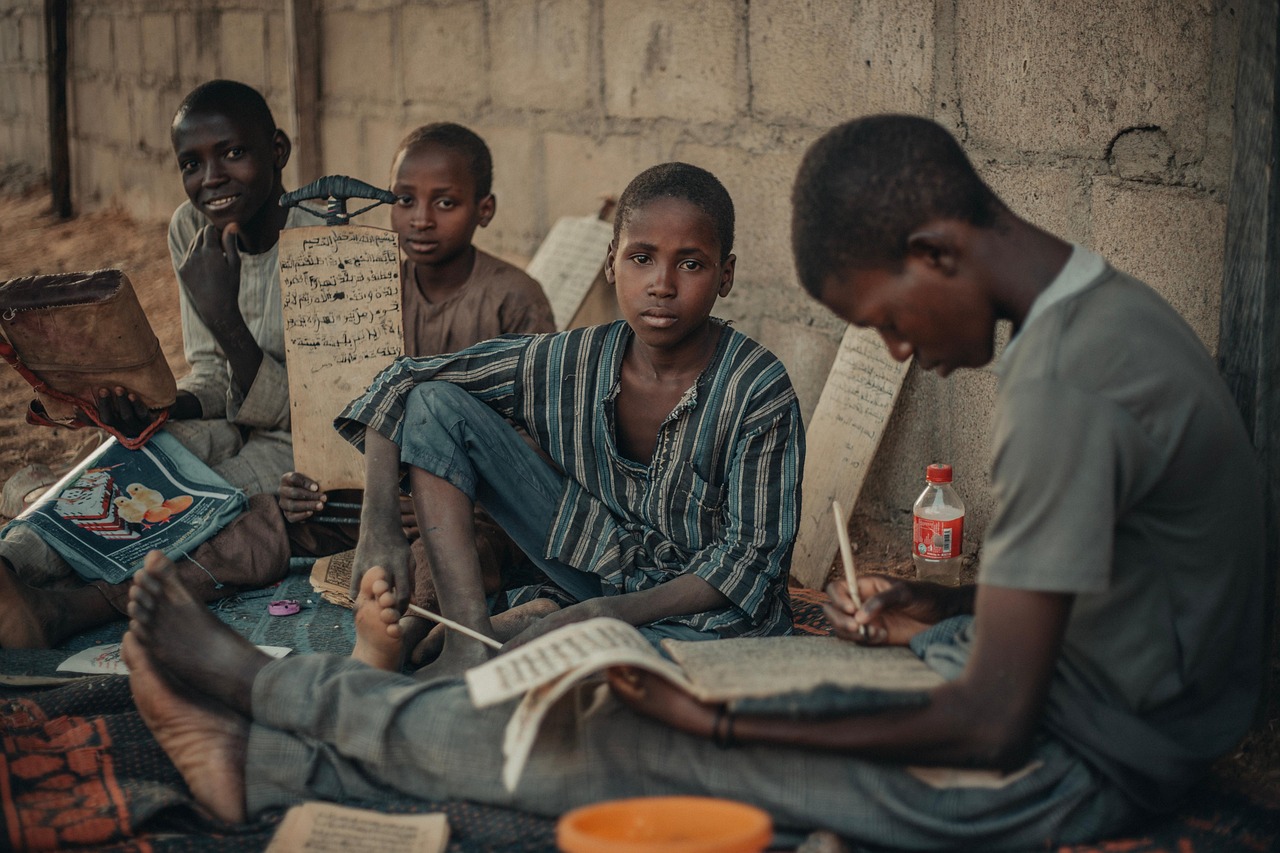
The scholarly tradition is deep: generations of malamai teaching the Quran, law, and Sufi devotion in the Qadiriyya and Tijaniyya brotherhoods, the ajami poetry of religious reformers, and the almajiri system of Quranic pupils sent to study under a distant teacher, a practice both revered and, in its modern strained form, controversial.
The Sokoto jihad of 1804 remade Hausa Islam: Usman dan Fodio’s reform movement swept away the old Hausa dynasties in the name of purifying the faith, and the emirates that replaced them fused religious and political authority, so that the emir remains a religious as well as a temporal figure.
Beneath the orthodox surface persists the older world of the bori, the spirit-possession cult whose mediums, mostly women, are ridden by named spirits in drumming ceremonies to heal, divine, and address troubles the mosque does not; officially frowned upon, bori survives at the margins, the pre-Islamic religion breathing on in the cities’ back streets.
The tension between the scholars’ Islam and the bori spirits runs through Hausa history: the Sokoto reformers waged their jihad partly against exactly the syncretism that bori represents, yet centuries later the spirit cult persists, especially among women and at the social margins, evidence of how much older religious ground the Hausa city was built on.
Durbar Cavalry, Dye Pits, and the Praise Singers
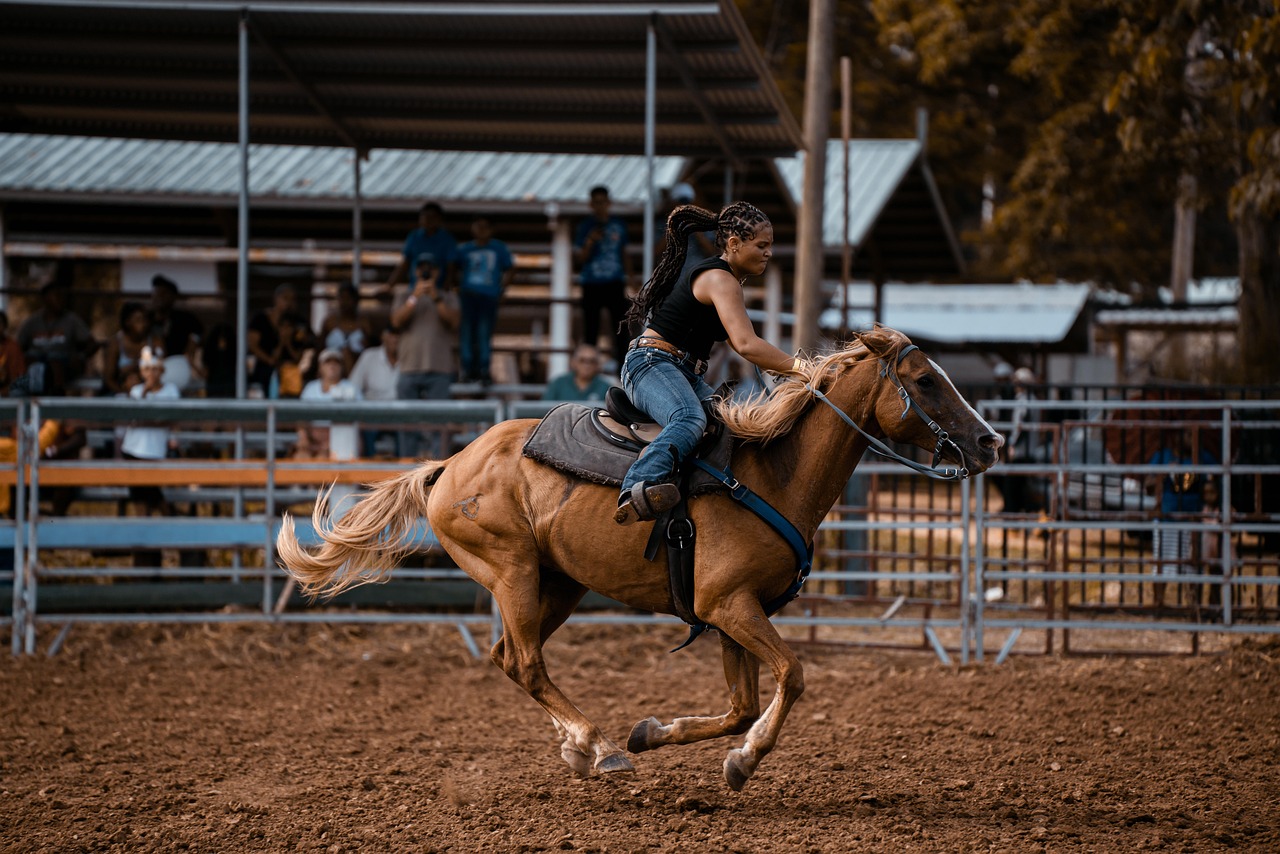
The grandest Hausa tradition is the durbar, the cavalry parade of the emirates: at the great festivals the emir rides out in state, and before him gallop the massed horsemen of the nobility, richly caparisoned, charging in salute to the throne in a thunder of hooves that reenacts the military glory of the old states.
Music and praise thread through Hausa life: the maroka, praise singers and drummers, sing the honor and genealogy of patrons, the long kakaki trumpets announce the emir, and the goge fiddle and talking drums carry both courtly and popular music, now feeding the vast output of Kannywood’s musical films.
The dye pits are a craft turned tradition: the centuries-old indigo pits of Kano, where cloth is dipped and beaten to the deep blue-black the Hausa and their neighbors prize, remain in use, a living industrial heritage worked as it was in the Middle Ages.
Life passages keep their forms: the naming ceremony a week after birth, the elaborate wedding negotiations and gifts, and the courtesies of greeting, the long ritual exchange of blessings that opens every encounter, a code of manners as developed as any court’s.
Kannywood has carried the durbar, the praise song, and the dye pit into a new medium: the Kano film industry, singing and moralizing in Hausa for a vast Muslim audience across the Sahel, is both a modern popular culture and a vehicle for old forms, and its stars are famous from Sokoto to Sudan.
Indigo, Leather, and the Metalwork of the Cities
Hausa craft made the cities rich. The indigo dyeing of Kano was famous across the Sahara: cloth dipped in the sunken clay pits, dyed to a deep lustrous blue and beaten with mallets until it shone, sold to the Tuareg and the desert peoples who prized the Kano cloth above all others.
Leather was the second great industry: the tanners’ and workers’ wards turned cattle and goat hide into the dyed and tooled goods, cushions, bags, sandals, saddlery, and bookbindings, that traveled north across the Sahara and were sold in Europe, confusingly, as Moroccan leather, though much of it was Hausa work.
Weaving, embroidery, and tailoring clothed the region: the narrow-strip looms producing cloth sewn into the great embroidered robes, the babban riga gowns whose spiraling embroidery marked a man’s status, the finest of them months of a master’s work.
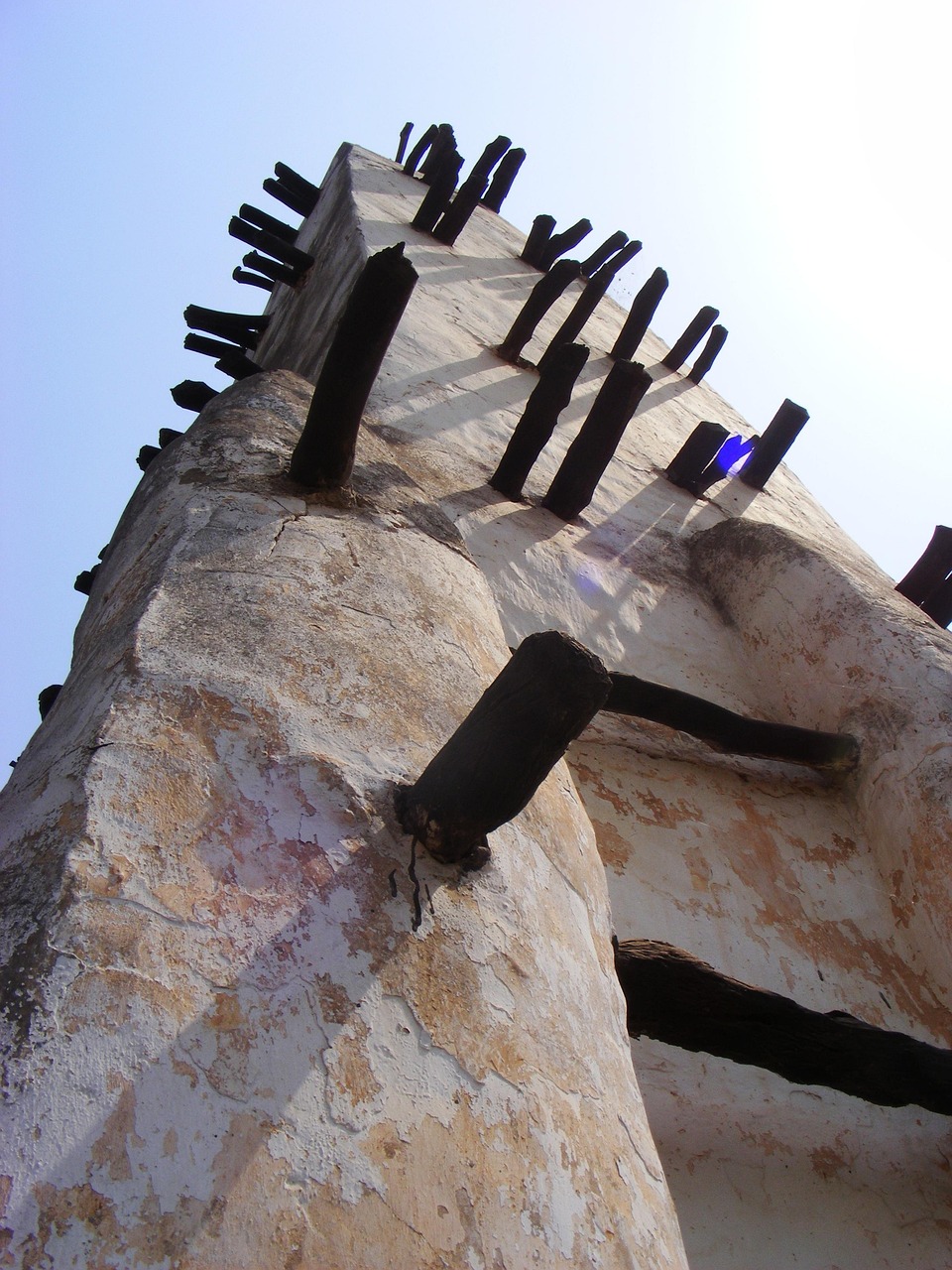
Metal and building complete the register: the smiths forging tools and weapons, the brass and silver workers, and the master builders whose mud architecture raised the palaces and mosques with their fluted walls and pinnacled facades, the tubali mud-brick tradition that gave the Hausa city its unmistakable skyline.
The confusion of Hausa leather with Moroccan is a monument to the trade’s reach: goods tanned and tooled in the wards of Kano and Sokoto traveled by caravan to the Mediterranean and thence to Europe under the name of their last port of sale, so that for centuries European gentlemen carried Hausa craftsmanship believing it North African.

Tuwo, Suya, and the Grain of the Savanna
The Hausa table is built on the savanna’s grain. Tuwo, a stiff porridge of millet, sorghum, or maize, is the staple, eaten with a soup or stew, miya, of vegetables, meat, and the ground leaves, baobab, sorrel, and the fermented locust bean, daddawa, that gives the sauces their depth.
The Hausa gave the world one of Africa’s great street foods: suya, skewered beef rubbed with a spice mix of ground groundnut, pepper, and seasonings and grilled over coals, sold at the roadside stalls of the north and carried by Hausa traders into every Nigerian city.
Groundnut and grain run through the cuisine: kosai bean cakes, waina rice cakes, kilishi the dried spiced meat, and the ubiquitous fura da nono, balls of pounded millet mixed with soured Fulani milk, the herder’s and the townsman’s shared refreshment.
Hospitality centers on the shared bowl and the kola nut, the goro offered to guests and exchanged at every important occasion, its bitter stimulant the social lubricant of the Hausa world and a major article of the old trade, carried north from the forest by the caravans.
Suya’s spread mirrors the Hausa diaspora: the spiced grilled meat travelled with the northern traders into every Nigerian city and beyond, its mai suya grill-master a fixture of southern nights, so that one of Nigeria’s most national foods is, in origin, an emblem of the Hausa merchant’s long reach.

The Sallah Durbar and the Calendar of the Emirs
The Hausa festival year is crowned by the two Sallah celebrations, the Muslim Eids, kept in the emirates with the durbar: after the Eid prayer the emir processes to his palace and receives the homage of his district heads and the charging salute of the massed cavalry, the Kano and Katsina durbars drawing crowds and cameras from around the world.
The durbar, hawan Sallah, is a pageant of the old state: regiments of horsemen in the colors of their districts, the emir beneath his great umbrella, the trumpets and drums and the final gallop of homage, a living theater of the nineteenth-century emirate performed twice a year.
Weddings and naming ceremonies fill the social calendar with their gifts, feasts, and music, and the market days structure the rhythm of town and country, the periodic markets drawing the surrounding villages into the city’s orbit.
Islamic observances pace the year, Ramadan and its nightly gatherings, the mawlid celebrations of the Prophet’s birth with their processions and recitations, and the pilgrimage season when the returning hajjis are honored, the faith’s calendar overlaying the older rhythms of harvest and trade.
The Kano and Katsina Sallah durbars have become international spectacles, drawing photographers and tourists to a pageant that has changed remarkably little in two centuries, and the sight of a thousand horsemen charging in salute beneath the emir’s umbrella remains one of the enduring images of Muslim West Africa.

Kingdoms, the Caliphate, and Colonial Overrule
Hausa history is the history of the cities. From the eleventh century the walled city-states rose on the savanna, trading, warring, and competing, never united into one empire but bound by language and the Bayajidda legend; Kano and Katsina grew into commercial and scholarly powers, Zazzau into a military one, Gobir into the northern frontier’s shield against the desert.
They lived among giants: tributary at times to the empires of Songhai to the west and Bornu to the east, absorbing Islam, trade, and ideas from both, and growing rich as the middlemen of the central Sudan, their independence preserved by their walls and their usefulness as much as by their arms.
The great rupture came in 1804, when Usman dan Fodio’s Fulani jihad overthrew the Hausa kings and folded their states into the Sokoto Caliphate; the Hausa language and culture survived, but the thrones passed to Fulani emirs, and the fused Hausa-Fulani aristocracy has ruled the north ever since.
The British conquered the caliphate between 1900 and 1903 and ruled through its emirs by indirect rule, preserving the emirates as instruments of colonial administration, so that the Sokoto system passed nearly intact into modern Nigeria, its emirs still crowned, still honored, still seated in their palaces.
The survival of the Sokoto emirates through colonial and independent Nigeria is one of Africa’s most striking political continuities: the same dynasties, the same titles, the same palaces that dan Fodio’s jihad installed still function, honored by the state and consulted by its politicians, a nineteenth-century Islamic order embedded within a modern federal republic.

The Largest People of West Africa’s North
The Hausa, counted with their Fulani partners, are among the largest peoples in Africa, well over eighty million strong across northern Nigeria, southern Niger, and a diaspora spread through Ghana, Chad, Sudan, Cameroon, and beyond, the dominant people of West Africa’s savanna north and a decisive force in Nigeria’s politics.
Their cultural weight is enormous: Hausa is a language of continental reach, the Hausa services of the world’s broadcasters reach tens of millions, Kannywood rivals Nigeria’s southern film industry, and Hausa music, literature, and media shape the taste of the whole Sahel.
Kano and the northern cities remain great commercial hubs, their markets and merchants still moving goods across West Africa as they have for centuries, and the emirs still preside, their durbars filling the festival calendar and their moral authority a factor in the region’s affairs.
But the north carries heavy burdens: poverty, the strained almajiri system, the Boko Haram insurgency that has ravaged the northeast, and the wider Sahel’s crises of climate, banditry, and conflict press hard on the Hausa homeland. Through it all the cities endure as they always have, trading, teaching, and building, the merchants and townsmen of the savanna holding to a civilization a thousand years old.
The Hausa-Fulani north’s weight in Nigerian politics has made it central to the nation’s fortunes and its tensions alike, and the region’s struggles, with poverty, education, insurgency, and the friction between north and south, are in large part the struggles of the Hausa world, whose scale means that as the Hausa north goes, so in great measure goes Nigeria.