Twelve kilometres north of King’s Lynn, where the flat farmland of west Norfolk rolls into sandy heath and the tidal marshes of the Wash, a long house of warm brown carstone and red brick stands behind iron gates at the centre of an estate of some eight thousand hectares. It is Sandringham, and although it has never been a palace in any legal sense, it has been the private country home of four generations of British monarchs, the place the family goes for Christmas, the estate where two kings died, and the house from which the words that open every royal Christmas broadcast were first spoken into a microphone in 1932.
Sandringham is the royal family’s own invention rather than an inheritance. The nineteen-year-old Prince of Wales, the future Edward VII, bought it in 1862 with money saved from his Duchy of Cornwall revenues, on his father’s advice that a rackety heir needed a country estate far from London’s temptations, which turned out to be the single least successful piece of parental planning of the nineteenth century: the prince promptly made Sandringham the headquarters of the fastest set in England, rebuilt the house twice over, planted the coverts that made it the finest pheasant shoot in the world, and kept its clocks half an hour fast so that there would be more daylight for shooting. His descendants turned the same estate into something quieter, a working farm, a stud, a fruit business, a country parish and the one address where the monarchy is simply a family at home. It is the second stop of this British chapter.
Walk with me through the Norwich Gates and the gardens to the saloon and the ballroom, out past York Cottage and the church with its silver altar to the stud and the woods, with a wayward prince, a stamp-collecting king, two royal deaths and a Christmas tradition in order. The contents are below.
In This Article
- Eight Thousand Hectares of Norfolk
- 1862: A House for a Wayward Prince
- Humbert’s House and the Ballroom
- Edward and Alexandra’s Set
- The Greatest Shoot in England
- Sandringham Time
- York Cottage and the Making of George V
- The Stamp King and the Estate Farmer
- 1932: The First Christmas Broadcast
- The Deaths of Two Kings
- Saint Mary Magdalene and the Silver Altar
- The Stud, the Gardens and the Museum
- Christmas at Sandringham Today
- Sandringham on Video
- Visiting Sandringham Today
- Palaces Nearby
Eight Thousand Hectares of Norfolk
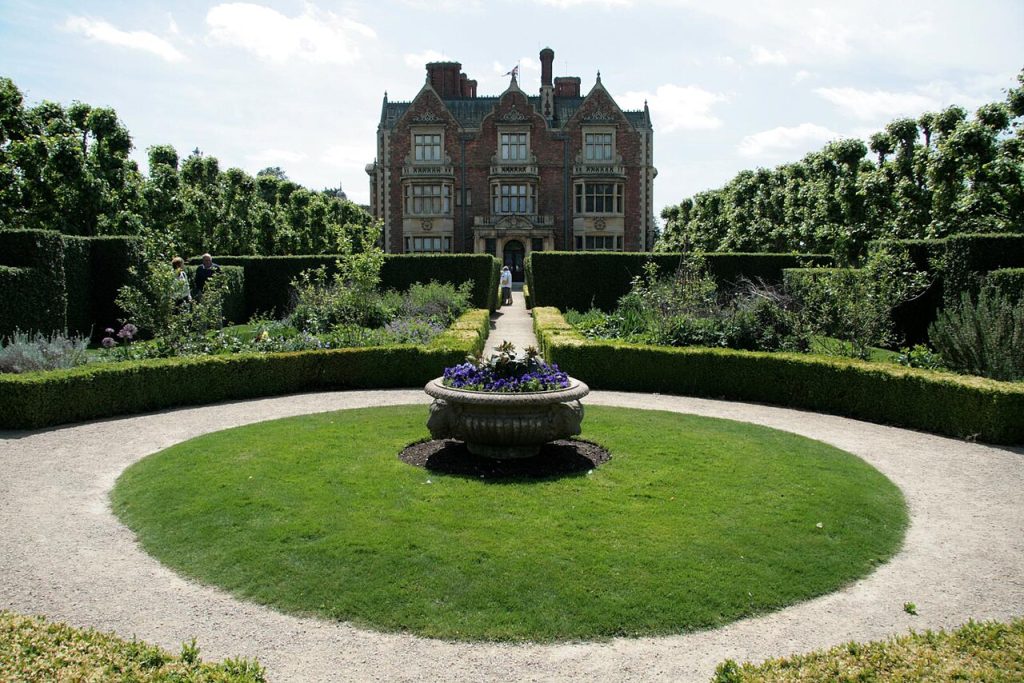
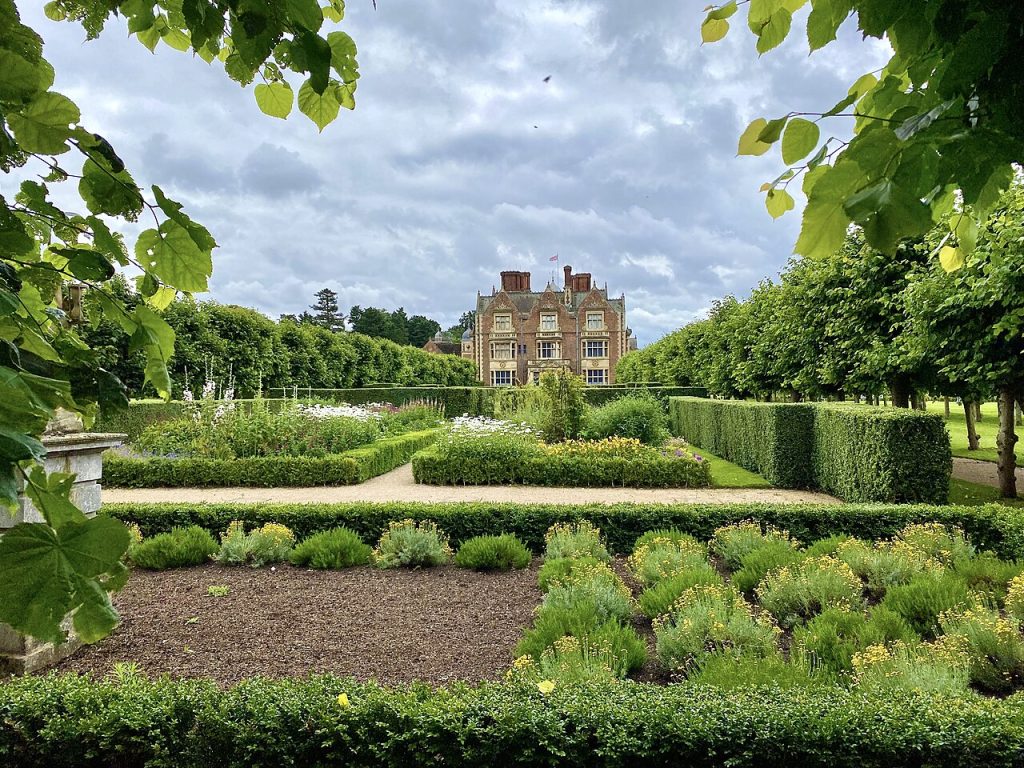
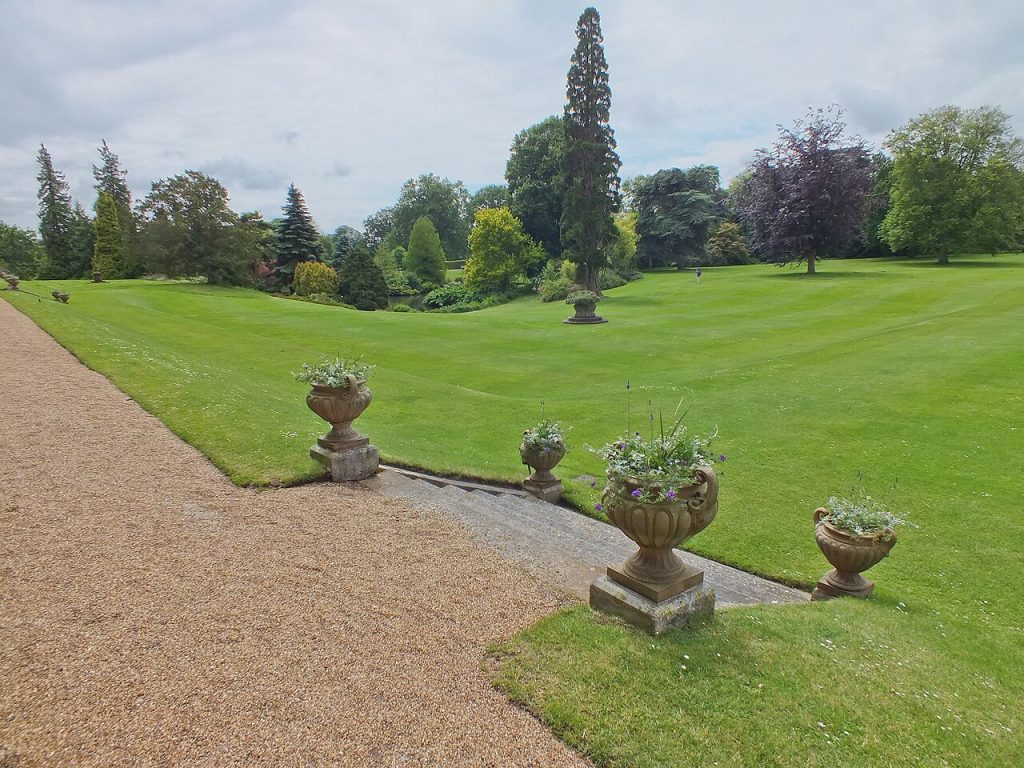
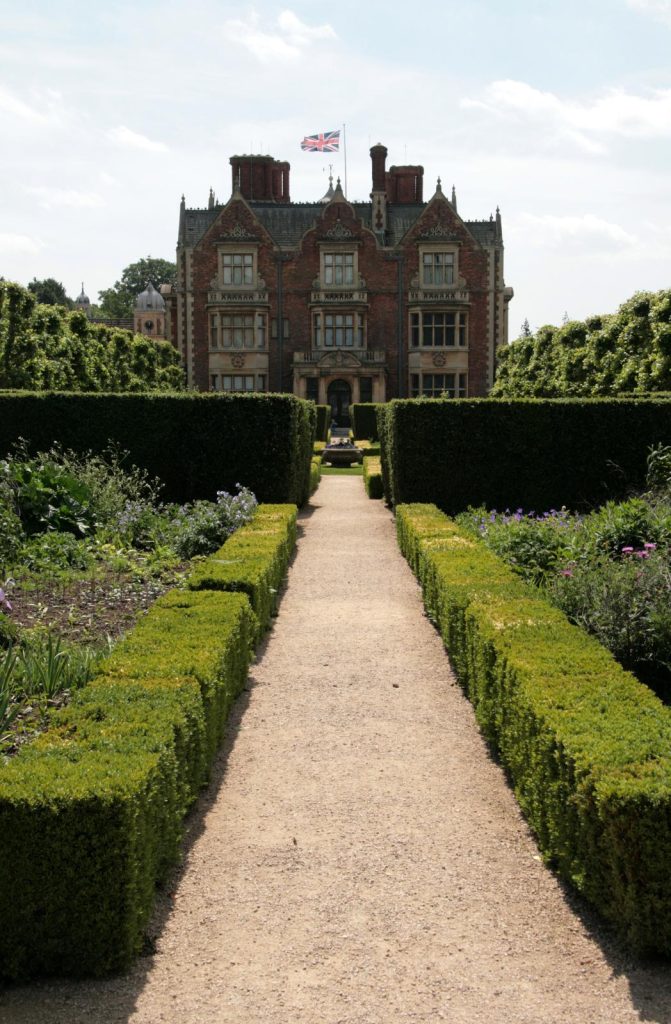
The Sandringham estate is a landscape as much as a house: arable farms growing wheat, barley, sugar beet and blackcurrants, plantations of Scots pine and oak laid out for game, open heath of bracken and birch, the royal stud at Wolferton, six villages with estate cottages in the same carstone as the house, and, to the west, the coastal marshes where the geese come in off the Wash in their tens of thousands on a December evening. The house stands on slightly rising ground facing west across lawns, lakes and rock gardens, built of the local brown carstone with red-brick dressings in the style the Victorians called Jacobethan, long, gabled, mullioned and comfortable rather than grand.
Now, stop here on the west lawn and look at the facade. There is no state architecture here at all: no colonnade, no dome, no axis running to a horizon. Sandringham was built to be lived in by people who liked shooting, and it looks exactly like what it is.
1862: A House for a Wayward Prince
In 1861 Prince Albert, worried about his eldest son’s escapades with an actress in Ireland, concluded that the young man needed land, responsibility and distance from London, and a search began for a country estate. The property chosen was Sandringham, bought in 1862 for about two hundred and twenty thousand pounds from the Honourable Charles Spencer Cowper, stepson of Lord Palmerston, with a plain Georgian house and some three thousand hectares; Albert was already dead by the time the purchase completed, and his widow pressed it on her son as the last wish of his father. The prince married Alexandra of Denmark in 1863 and brought her to Norfolk, where she loved the place at once and he began, within five years, planning to pull the house down.
The estate has been bought into and extended by every reign since, and it remains the private property of the monarch rather than a Crown residence, which is why it is the one great royal house whose contents belong to the family personally.
Humbert’s House and the Ballroom
The old house came down and between 1870 and 1871 A. J. Humbert, who had worked on the Albert Memorial Chapel at Windsor, built the present one: a rambling, gabled, bay-windowed country house with a long entrance front, carstone below and brick above, designed around the social machinery of a shooting party, gun room, billiard room, bowling alley, acres of bedrooms for guests and their servants. A conservatory was turned into the great Ballroom in 1883 for the prince’s silver wedding, its walls hung with Indian weapons and tiger skins from the 1875 tour; a serious fire on the princess’s birthday in 1891 gutted the upper floors and gave the chance to add another storey and more guest rooms. Later reigns subtracted rather than added: George VI’s widow pulled down the upper floors of one wing in the 1970s, and parts of the house are now flats for estate staff.
The rooms shown to visitors, saloon, drawing room, dining room, ballroom and the corridor of Edwardian photographs, are the ones used for entertaining, which is to say the ones the house was built for.
Edward and Alexandra’s Set
For forty years Sandringham was the private theatre of the Marlborough House set: financiers like the Rothschilds and Ernest Cassel, sporting peers, Americans with money, actresses and the prince’s successive mistresses, Lillie Langtry, Daisy Warwick, Alice Keppel, arriving by special train to Wolferton station, which was fitted out with royal retiring rooms for the purpose. The house ran on practical jokes, enormous meals, bezique and baccarat, and the social cruelty of a group whose members all knew exactly where they stood. Alexandra, beautiful, deaf, perpetually late and adored by the estate, kept her own counsel, her dogs, her children and her Danish family about her, and planted the gardens.
Now, stop here in the ballroom and imagine it in 1890: electric light, the band, the prince in a smoking suit and a parish full of tenants invited in for the Christmas party, which was never cancelled in forty years.
The Greatest Shoot in England
Sandringham’s purpose, for its first owner, was game. The woods were planted, the fields farmed and the keepers employed to produce driven pheasants and partridges in numbers that now read as obscene, with daily bags in the thousands and a December week’s total that could pass ten thousand birds; the prince shot with a team of the best guns in Europe, including Lord Walsingham and the young George, and the estate’s keepering, feeding and driving set the standard the whole of Britain copied. Later monarchs shot more modestly but kept the shoot going, George V as one of the finest shots of his generation, George VI as the quiet expert who wrote a memorandum on the correct management of the coverts.
The shooting also fixed the estate’s rhythm: the family comes at Christmas because the birds are in the woods in December, which is why the royal Christmas happens in Norfolk at all.
Sandringham Time
The estate’s most famous eccentricity was its own time zone. Some time around the turn of the century the Prince of Wales ordered every clock at Sandringham, and at Windsor and Balmoral too, to be kept half an hour fast, so that the short winter afternoons gave more light for shooting and, the gossip added, so that his habitually late wife might arrive at dinner on time. Sandringham Time survived his reign and his son’s, with guests, servants and stationmasters adjusting their watches at the gates for thirty-five years, until Edward VIII, on the night of his father’s death in January 1936, ordered the clocks put right as his first act as king, which the household read, correctly, as a signal about everything else to come.
The clockmaker’s half-hour has become one of the standing jokes of the monarchy; the clocks are still wound weekly, and now they tell the truth.
York Cottage and the Making of George V
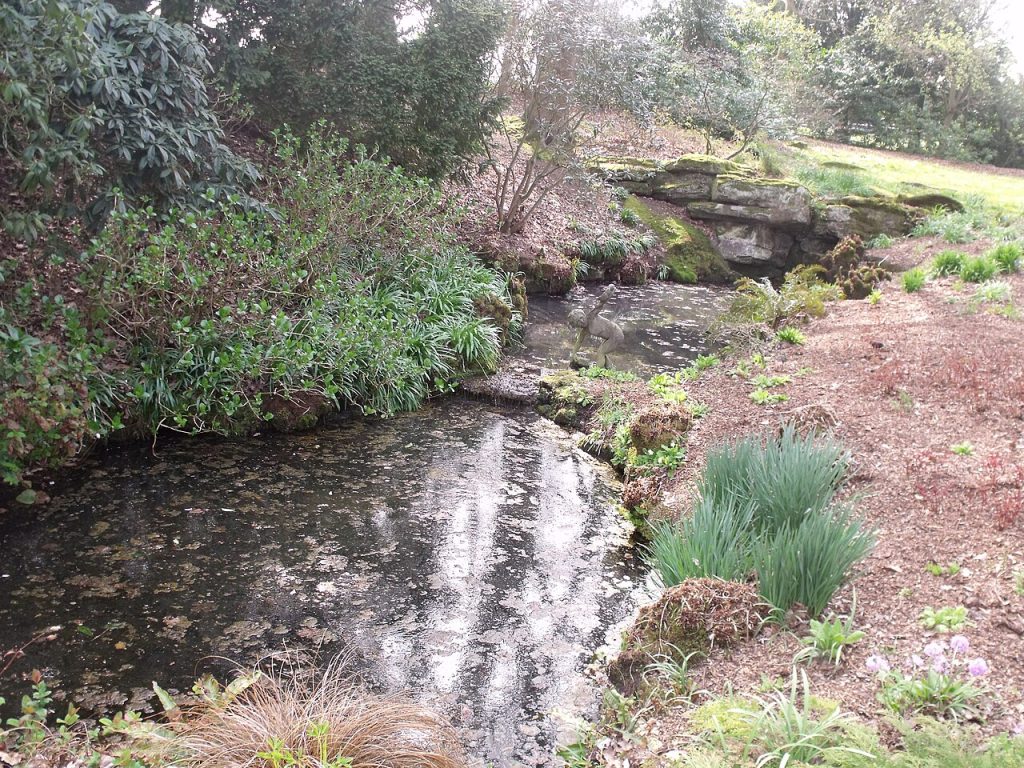
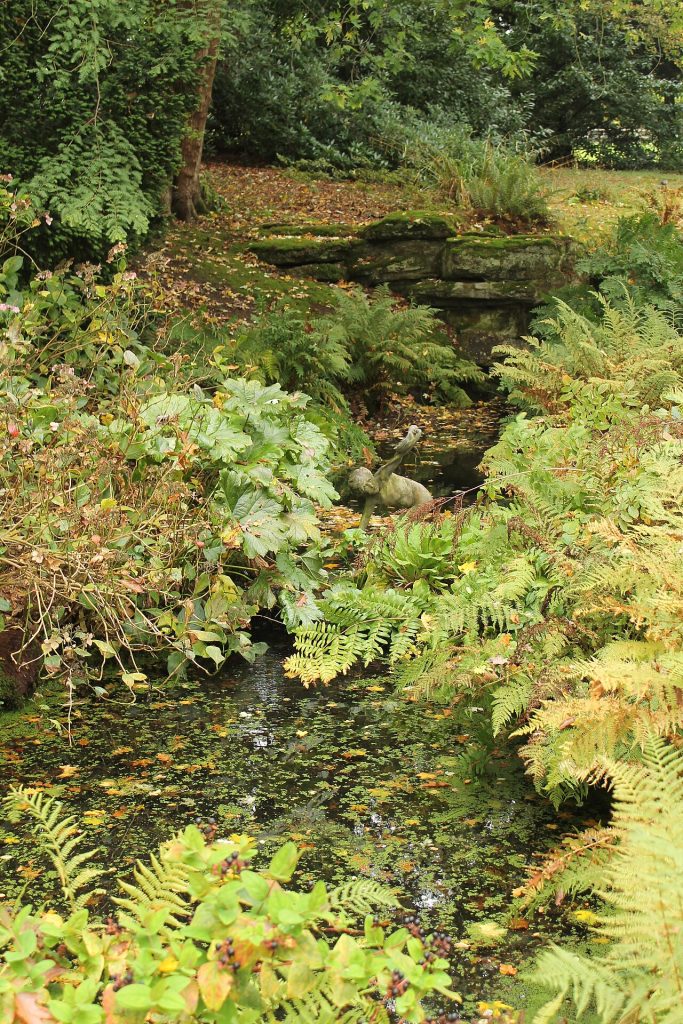
A few hundred metres from the big house stands York Cottage, originally the Bachelors’ Cottage built for overflow guests, a dark, cramped, gabled villa with a stream in front, and this was the home of the Duke and Duchess of York, later George V and Queen Mary, from their marriage in 1893 until 1926, thirty-three years in a house whose principal rooms were the size of a provincial doctor’s. Four of their six children were born there, including the future George VI; the duke’s study was so small that he and his secretary worked knee to knee, and Queen Mary, who had taste, suffered the wallpaper in silence. Harold Nicolson, writing the official life, said the couple’s years there were those of a respectable naval officer rather than a prince.
The cottage explains George V more than any palace does: a man of small rooms, routine, punctuality and stamps, who became the model of a modern constitutional king because he genuinely preferred Norfolk to London.
The Stamp King and the Estate Farmer
George V inherited Sandringham in 1910 and made it his real home, spending five months of each year there. He assembled the Royal Philatelic Collection into one of the greatest in the world, buying the famous Mauritius two-penny blue and answering, when a courtier mentioned that some fool had paid fourteen hundred pounds for a stamp, that the fool was himself; he ran the farms attentively, bred shorthorns and Southdowns, improved the cottages, and knew the names and families of his tenants. Queen Mary catalogued and rearranged the collections in the big house with the thoroughness of a museum curator, labelling the Fabergé animals, the Chinese jades and the Indian weapons that still fill the saloon’s cases.
Now, stop here in the saloon before the Fabergé cases. The animals were modelled from the estate’s own livestock in 1907, commissioned by Edward VII, and they are the one unambiguous masterpiece in the house.
1932: The First Christmas Broadcast
On Christmas Day 1932 the king, persuaded by John Reith of the BBC and supplied with words by Rudyard Kipling, sat at a desk in a small room at Sandringham, under a microphone draped in cloth, and spoke to twenty million listeners across the empire, beginning the tradition that has continued, with one or two gaps, ever since. His voice, deep and unexpectedly moving, reached shepherds in Australia and clerks in Calcutta simultaneously, and the broadcast did more for the monarchy’s popularity than any ceremonial of the reign. His granddaughter would keep the habit for seventy years, mostly recorded elsewhere but always carrying the Sandringham association, and the room used in 1932 is pointed out to visitors.
The broadcast is the moment a private Norfolk house became the monarchy’s domestic voice, and the moment the family’s Christmas stopped being private at all.
The Deaths of Two Kings
Sandringham has seen the end of two reigns. George V, worn out and bronchitic, died in his bedroom on the evening of 20 January 1936, his last coherent words a question about the empire and his doctor’s famous bulletin, that the king’s life was moving peacefully towards its close, written on a menu card and timed for the morning papers; his son Edward VIII succeeded and stopped the clocks’ half-hour. Sixteen years later, on the morning of 6 February 1952, a valet found George VI dead in his bed of a coronary thrombosis after a day’s shooting of hares on the estate, and his daughter, twenty-five years old and in Kenya, became queen without knowing it for several hours. Both kings lay in the little church before the journey to Windsor.
Elizabeth II, who had been at Sandringham for Christmas every year of her life, chose in her own last years to keep coming; she made her final Christmas broadcast from Windsor but her family’s gathering here went on.
Saint Mary Magdalene and the Silver Altar
In the park, a few minutes from the house, stands the parish church of Saint Mary Magdalene, a carstone building largely of the sixteenth century, restored in the nineteenth and fitted with an interior of extraordinary richness: an altar, reredos and pulpit of solid silver given in the 1910s by the American Rodman Wanamaker in memory of Queen Alexandra and King Edward, a jewelled bible, a nine-hundred-year-old font, memorials to royal children and to the estate’s dead of two wars, and in the churchyard the graves of courtiers and tenants. The royal family walks to the eleven o’clock service here on Christmas Day, which is the one moment each year when the public sees them as a family rather than an institution.
Come on a weekday in summer and the church is empty and silver-lit; come on 25 December and you will be standing behind a rope with several thousand other people, and the family will still shake some hands at the gate.
The Stud, the Gardens and the Museum
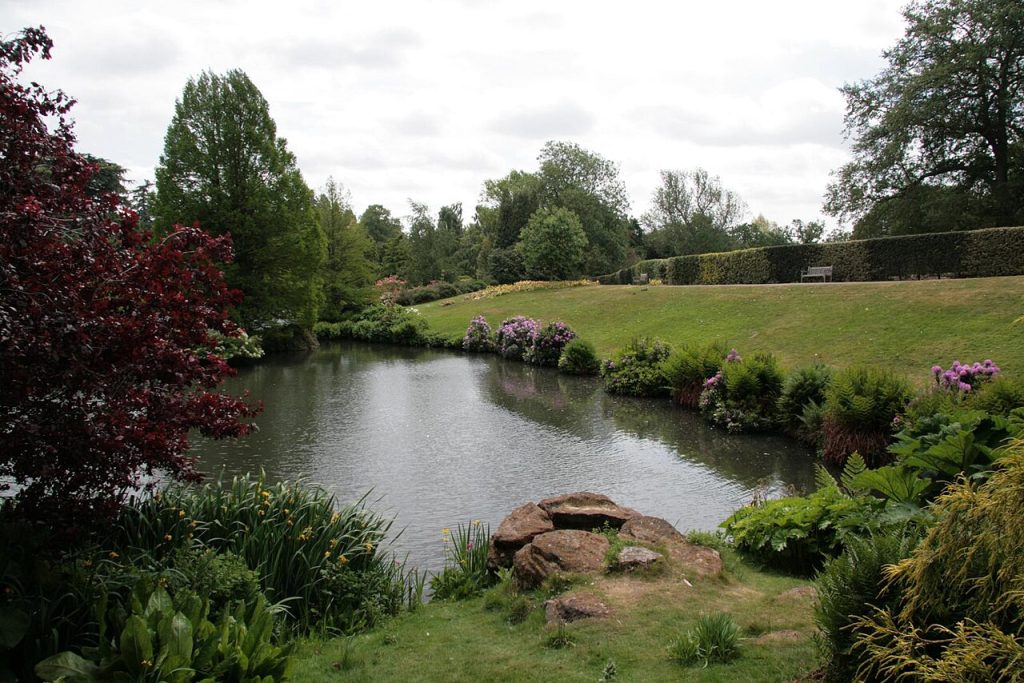
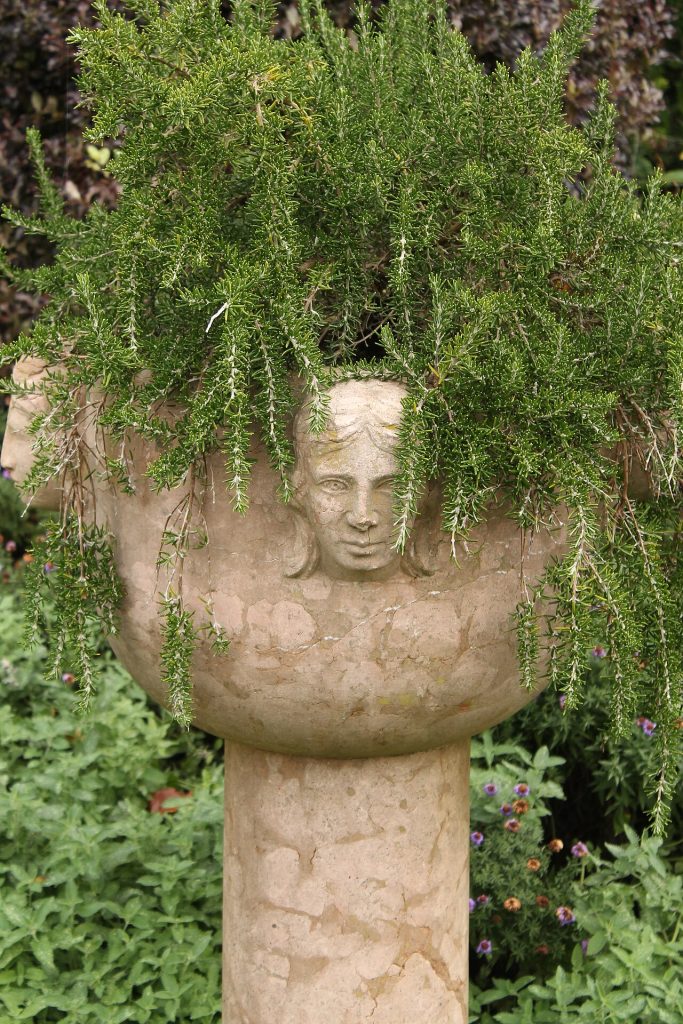
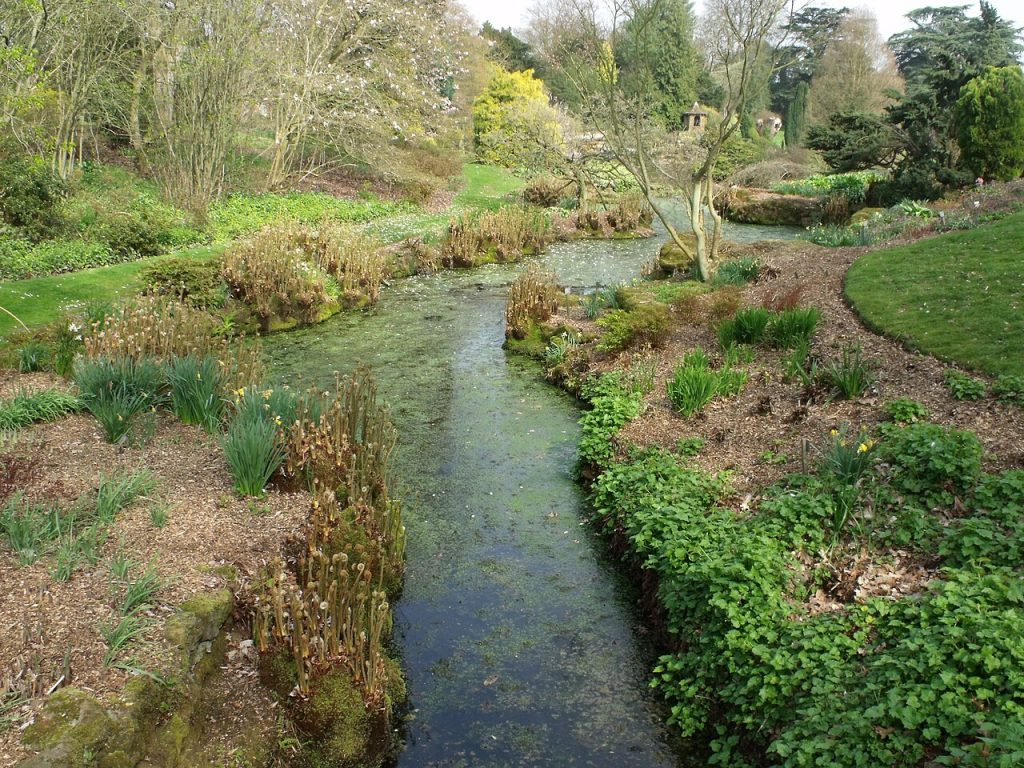
Edward VII founded the royal stud at Sandringham in 1886 and it promptly produced Persimmon, Diamond Jubilee and Minoru, winners of Derbys and a Triple Crown, which did as much for the prince’s popularity as anything in his career; the stud still stands stallions and the estate’s horses are shown in the museum. The gardens, remade in successive reigns, include Queen Alexandra’s rock garden and dairy, the lakes with their boathouse, the Norwich Gates given as a wedding present in 1863, and a long avenue of limes; the museum in the old coach houses and stables holds royal motor cars from a 1900 Daimler onward, big-game trophies, the estate’s fire engine and the children’s toys.
The gardens are the quiet pleasure of a Sandringham visit, two hundred species of tree in sixty acres, and in rhododendron season the walk to the lake is as good as anything in East Anglia.
Christmas at Sandringham Today
The modern estate is a business: arable and fruit farming, a timber operation, a commercial shoot, holiday cottages, a visitor centre, a country park open free all year, and since 2017 an organic conversion of the farms begun at the then Prince of Wales’s urging. The family’s Christmas gathering, moved here permanently in 1988 from Windsor, remains the fixed point of the royal year, with the whole dynasty in residence from a few days before Christmas into the new year and the walk to church on Christmas morning drawing crowds and cameras from around the world. The house closes to visitors in the winter for exactly that reason.
Now, stop here at the Norwich Gates on a December afternoon with the geese going over toward the Wash. A prince bought this place to keep himself out of trouble, failed entirely, and accidentally gave his family the one house where being a family is the point; six monarchs later, they still come for Christmas.
Sandringham on Video
Visiting Sandringham Today
Sandringham House, gardens and museum are open from about April to October, with timed tickets and guided or self-guided tours of the ground-floor rooms used by the family, the church open most days and the museum in the stables; the house closes when the family is in residence, so check the estate’s website before travelling. Allow three hours for house, church and gardens, more if you add the country park’s walking and cycling trails, which are free and open all year, and the visitor centre’s restaurant and estate shop with the farm’s own produce.
Sandringham lies 12 kilometres north of King’s Lynn off the A149: trains from London King’s Cross reach King’s Lynn in under two hours, with a bus or taxi onward, and drivers find large free car parks at the visitor centre. Osborne is a long day’s journey south, Chatsworth three hours north-west by road. Here is the exact spot: Sandringham House on Google Maps.
Palaces Nearby
You May Like
Pena Palace and the Romantic Hill of Ferdinand II