On the Mediterranean coast of Catalonia, where a curve of golden sand meets a plain rising gently toward low hills, lie the ruins of a place that is unique in the ancient world. Empúries, known to the Greeks as Emporion, was the great gateway through which Greek civilization first entered the Iberian Peninsula, and later the very spot where a Roman army landed to begin the conquest of Spain. It is the only archaeological site in Iberia where a Greek city and a Roman city stand side by side, their remains preserved together, telling in a single landscape the story of how the classical Mediterranean reached and reshaped the far western edge of Europe.
The name says everything about what the place was. Emporion is simply the Greek word for a trading station or market, and that is exactly what the city began as: a commercial foothold established by Greek merchants on a distant coast, a place to exchange the goods of the Mediterranean for the products of Iberia. From that trading post grew a Greek town, and beside it, centuries later, a Roman city, and the meeting of Greek, Iberian, and Roman at this one point on the Catalan shore makes Empúries one of the most historically resonant sites in Spain. To walk its ruins is to trace the arrival of the classical world on Iberian soil.
Contents
- The Door Through Which Greece Reached Iberia
- Merchants from Phocaea and Massalia
- A Greek Town Beside a Native One
- Walking the Greek Neapolis
- The Healing God of Empúries
- A Crossroads of Peoples and Goods
- Where Rome Landed to Conquer Spain
- The Roman City on the Hill
- Decline and the Shift to the Coast
- Rediscovery and Excavation
- Empúries Today
- Nearby Places
- Final Word
The Door Through Which Greece Reached Iberia
The Iberian Peninsula, the far western corner of the Mediterranean world, was long a land apart, home to the peoples the Greeks and Romans called Iberians and Celts, with their own cultures, languages, and ways of life. The classical civilizations of the eastern Mediterranean knew of Iberia chiefly as a distant source of metals, its rich mines of silver, copper, and tin drawing traders from afar. The Phoenicians came first, founding coastal settlements in the south, and the Greeks followed, seeking the same trade in the same distant markets. Empúries was the northernmost and one of the most important of the Greek footholds on this coast.
What makes Empúries so significant is that it was the principal point of Greek contact with the northeastern part of the peninsula, the region that would become Catalonia. Through it, Greek goods, coins, art, and ideas flowed into Iberia, and Iberian products flowed out to the wider Mediterranean. The Greek presence here influenced the native Iberian peoples of the region, contributing to the development of their own culture, coinage, and art, and Empúries became a channel through which the Iberians encountered the classical world. It was, in the most literal sense, a gateway, the place where two worlds met and exchanged.
And when Rome, in its turn, set out to bring the Iberian Peninsula under its control, it was at Empúries that the process began. The city that had been the doorway for Greek trade became the doorway for Roman conquest, the landing point from which Roman power spread across Spain. Few places anywhere embody so completely the theme of contact between civilizations: first Greek and Iberian, then Roman and Iberian, all played out at this single coastal site over the course of centuries. The whole encounter of the classical Mediterranean with Iberia is written into the ruins of Empúries.
Merchants from Phocaea and Massalia
The story of Empúries begins with one of the most enterprising of all Greek peoples, the Phocaeans. Phocaea was a Greek city on the coast of Anatolia whose sailors were famous for their long voyages of exploration and trade far into the western Mediterranean, reaching coasts that other Greeks rarely visited. It was the Phocaeans who founded the great city of Massalia, modern Marseille, on the coast of southern Gaul, and from Massalia and their other western ventures they extended a network of trading settlements down the coast toward Iberia. Empúries was one of these Phocaean and Massaliot foundations, established around the sixth century BC.
According to the pattern the archaeology reveals, the Greeks first established a small settlement on what was then an offshore island or promontory, a defensible spot right by the sea, ideal for a trading post that needed access to ships and security from the mainland. This earliest settlement is known as the Palaiapolis, the old city. As trade grew and the settlement prospered, the Greeks founded a larger town on the adjacent mainland shore, the Neapolis, or new city, and it was this mainland Greek town that became the true city of Emporion, the bustling port whose ruins are the heart of the site today.
From these beginnings Emporion grew into a flourishing independent Greek city, minting its own coins, worshipping Greek gods in Greek temples, and living the life of a Greek polis on the Iberian shore. It maintained close ties with its mother city Massalia and with the wider Greek world, while trading intensively with the Iberian peoples of the interior. For centuries it prospered as the great emporium of the northeastern coast, a genuinely Greek city planted at the edge of a very different world, and one of the westernmost outposts of Greek civilization anywhere.
A Greek Town Beside a Native One
One of the most intriguing aspects of Empúries is that the Greek city did not stand alone. Ancient sources and archaeology indicate that beside the Greek Neapolis there existed a separate Iberian settlement, so that Greeks and Iberians lived side by side in adjoining communities, divided, according to the tradition, by a common wall. The Greek geographer Strabo described this arrangement, in which the two peoples occupied neighboring towns, at first kept apart and later gradually blending into a single community. It is a rare and vivid picture of how a Greek colony and a native population could coexist at close quarters.
This coexistence was not always easy, and the sources hint at initial wariness between the two communities, each guarding its own quarter. But over time trade, intermarriage, and shared interest drew them together, and the Greek and Iberian populations eventually merged. The result was a genuinely mixed community, Greek and Iberian together, exactly the kind of cultural fusion that colonial contact so often produced. Empúries thus preserves not just the story of Greeks in Iberia but the story of how Greeks and Iberians came to live as one, a small laboratory of ancient multiculturalism on the Catalan coast.
The influence flowed powerfully in both directions, but its effect on the Iberians was especially profound. Through their long contact with the Greeks at Empúries, the Iberian peoples of the region absorbed Greek techniques, artistic styles, and ideas, adapting them to their own culture. Greek coinage inspired Iberian coinage; Greek art influenced Iberian art; and the very alphabet and other cultural forms of the region bore the mark of this Greek contact. Empúries was, in this sense, a seedbed from which Greek influence spread into the Iberian interior, helping to shape the development of native Iberian civilization itself.
Walking the Greek Neapolis
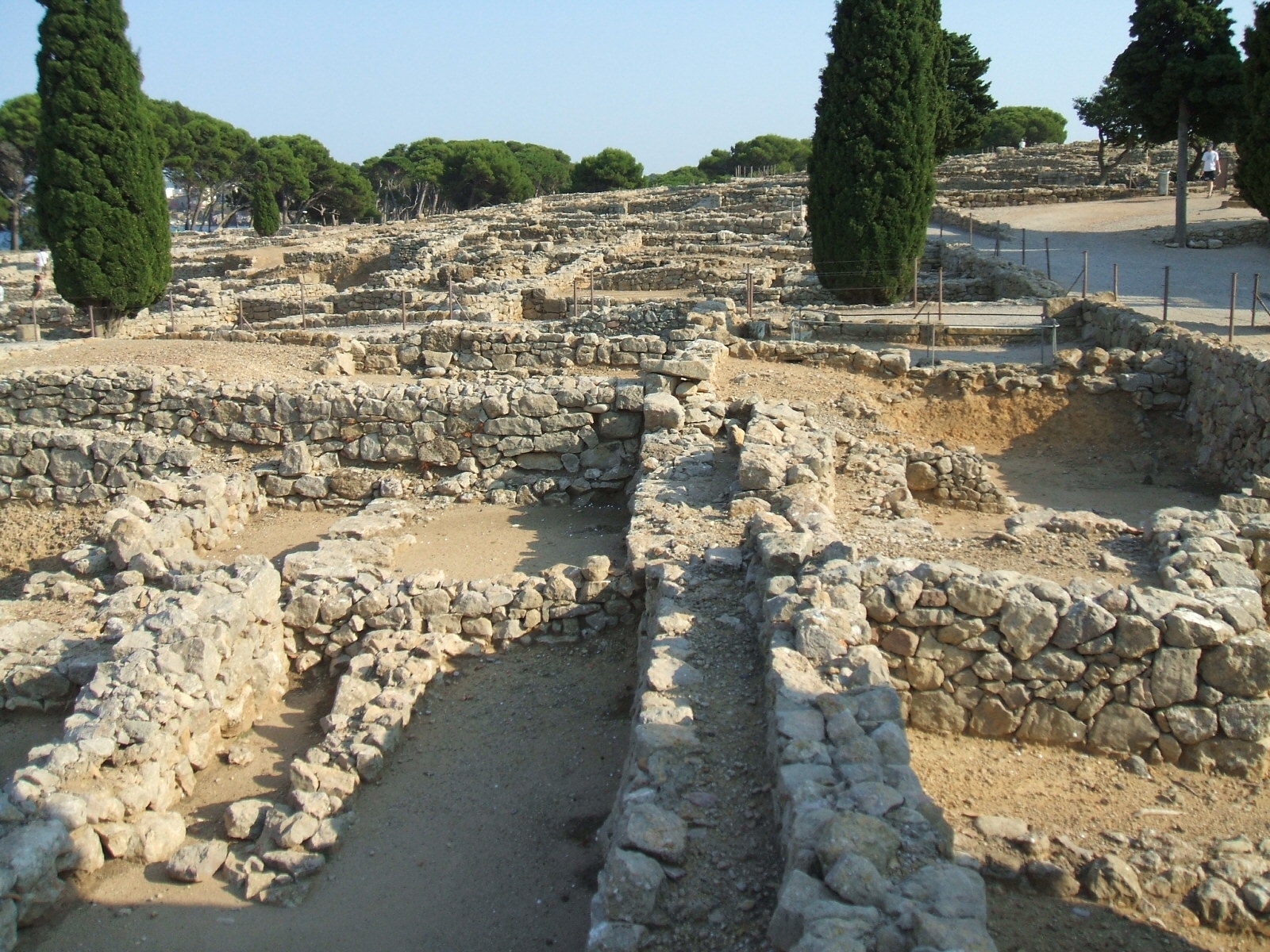
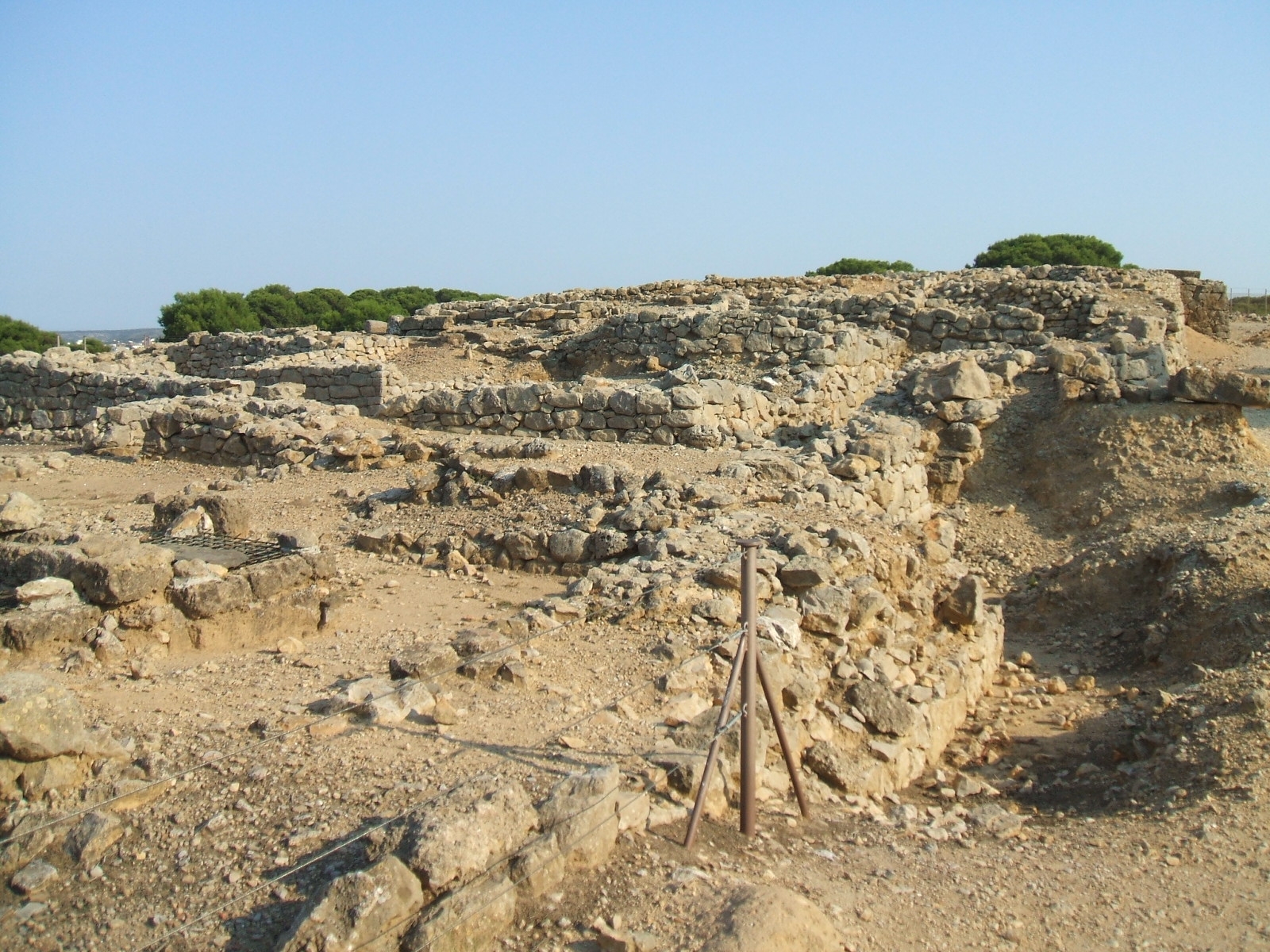
The Greek Neapolis is the oldest and in many ways the most atmospheric part of the site, a compact town laid out beside the sea whose streets, houses, temples, and public spaces can still be traced among the ruins. Walking through it, the visitor moves along the ancient streets past the foundations of Greek houses, some of them once decorated with mosaic floors, and through the public heart of the town. Because the Neapolis was a real, organically grown Greek city rather than a planned grid, its layout is irregular and intimate, winding and adapting to the terrain and the shoreline in a way that gives it a strong sense of lived reality.
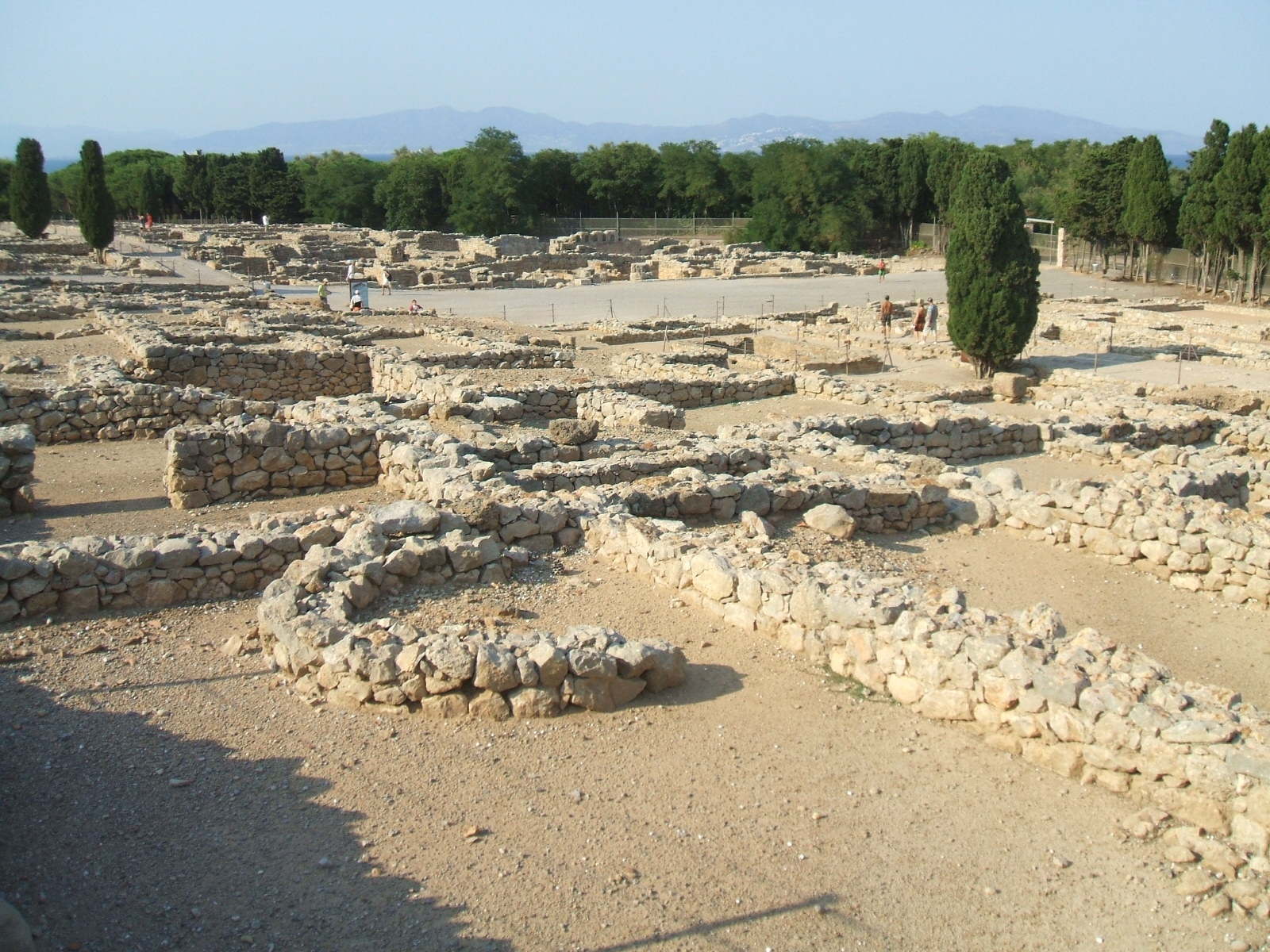
At the center of the town lay the agora, the public square that was the focus of civic and commercial life in every Greek city, surrounded by public buildings and the stoa, a colonnaded hall that provided sheltered space for business and gatherings. Around and near the agora stood the sanctuaries of the town’s gods, for religion was woven through the life of a Greek city, and the sacred and civic areas of the Neapolis were closely intertwined. The remains of these public spaces, though reduced to foundations, allow the plan of a working Greek town to be read on the ground.
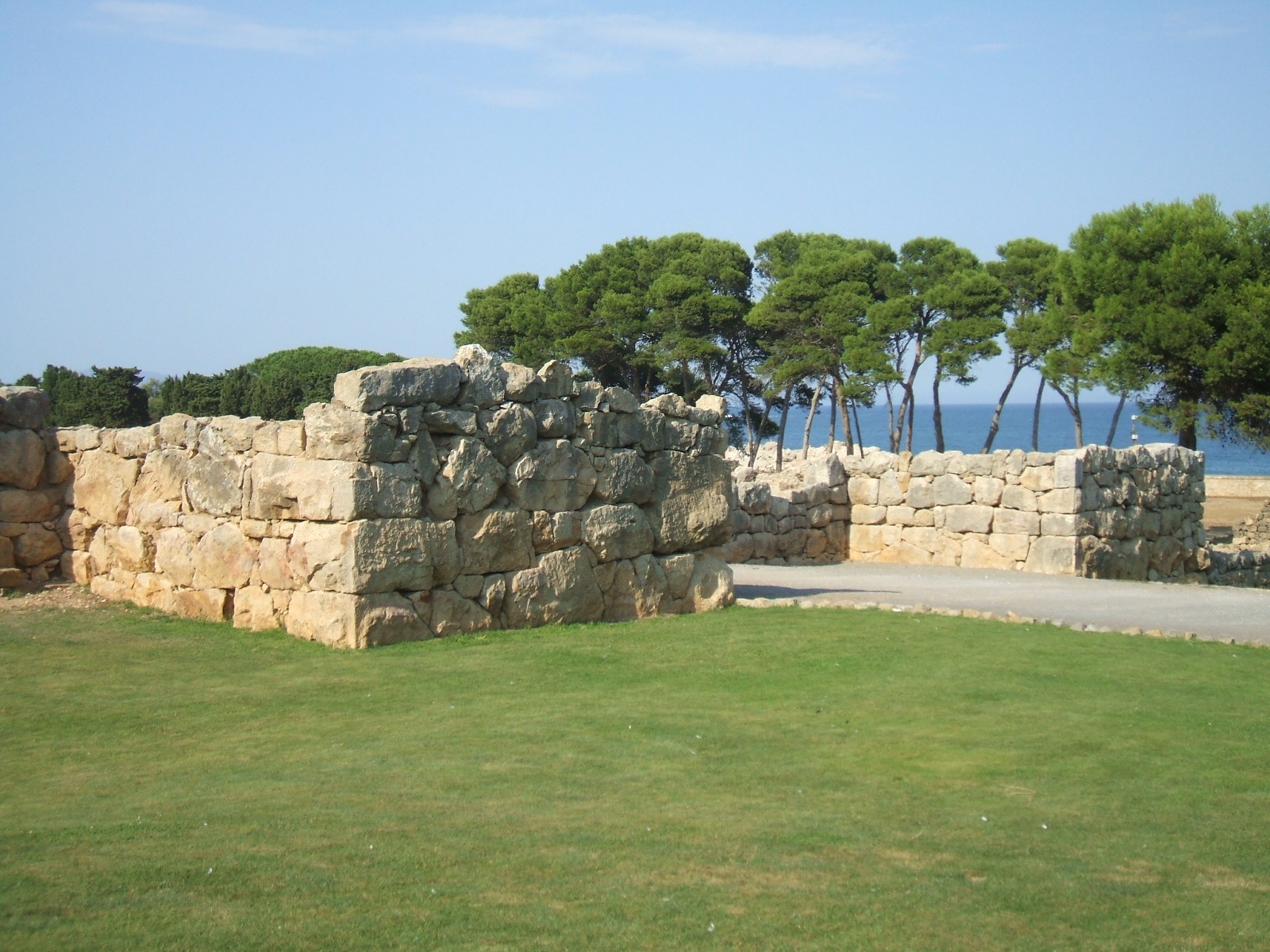
The Neapolis also preserves the marks of the town’s defenses and its relationship to the sea. Stretches of the city wall survive, including gates through which the inhabitants passed, and the town’s position right on the shore, with its harbor facilities, made clear its dependence on maritime trade. Everywhere the remains speak of a Greek city living by the sea and by commerce, its buildings, streets, and sanctuaries arranged around the twin poles of trade and religion that sustained it. For anyone wishing to understand what a modest working Greek city was actually like, the Neapolis of Empúries is an exceptional and evocative place.
The Healing God of Empúries
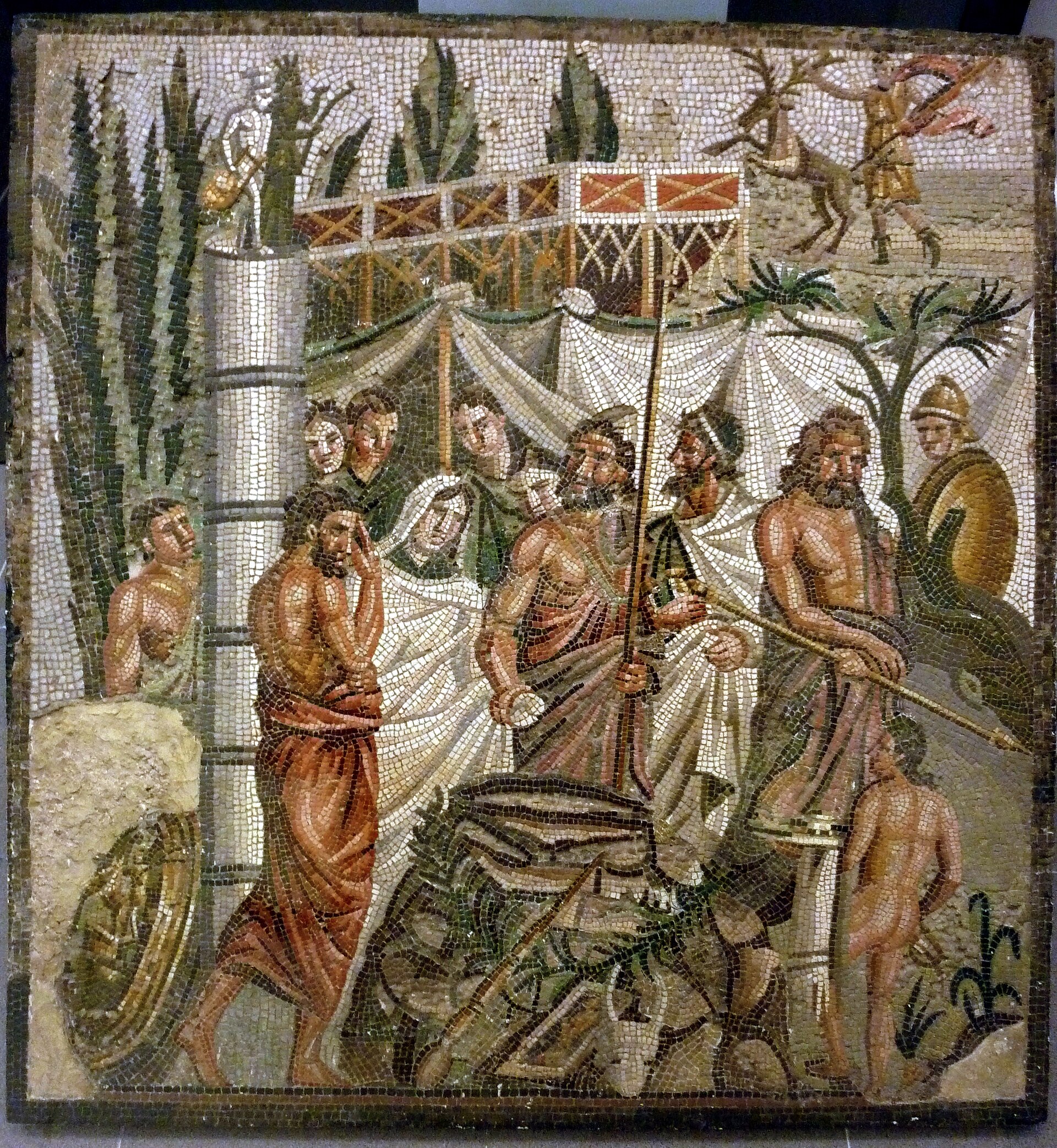
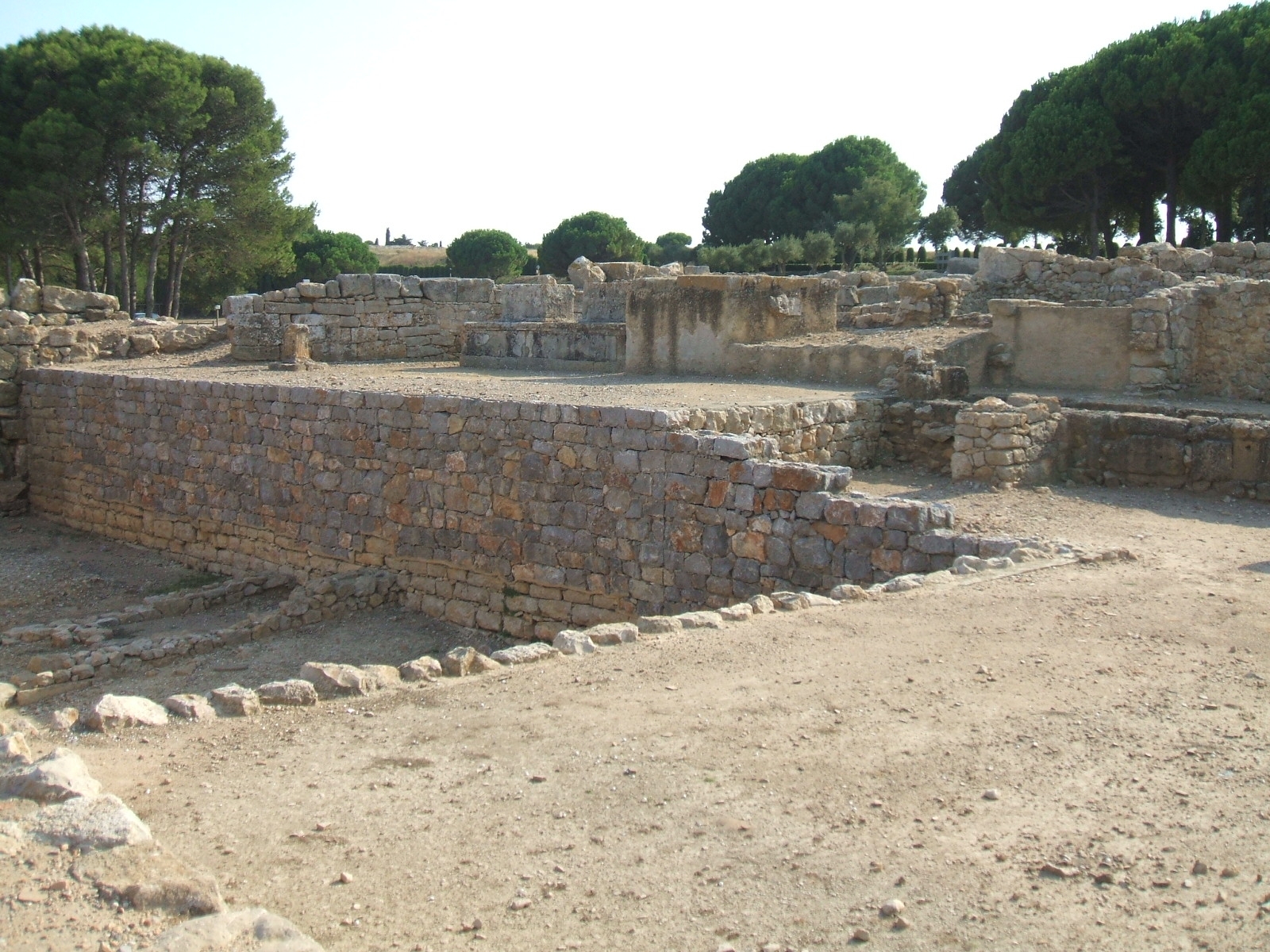
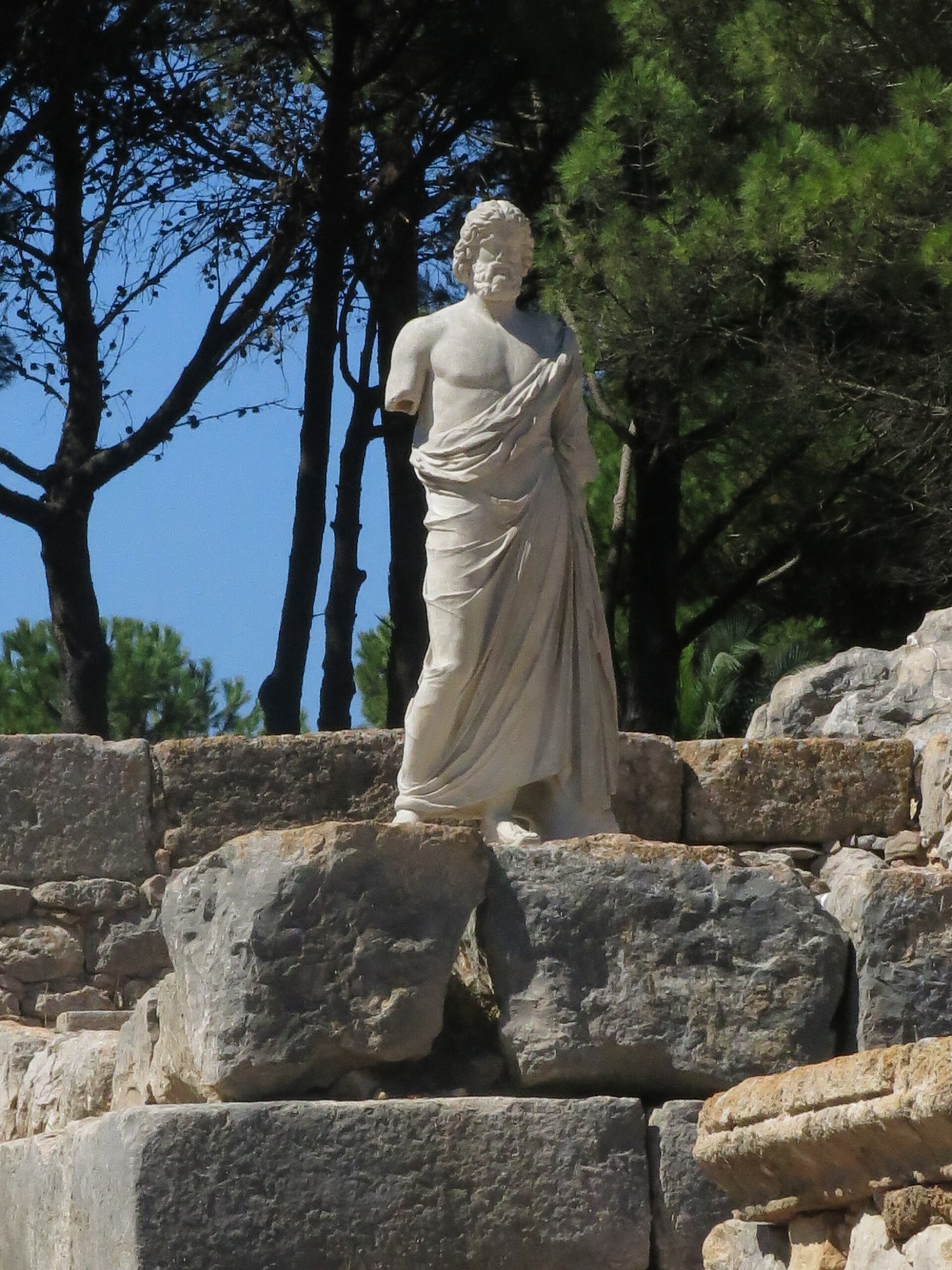
Among the sanctuaries of the Greek town, one stands out both for its importance and for the extraordinary find associated with it: the sanctuary of Asklepios, the Greek god of healing and medicine. Asklepios was worshipped across the Greek world at sanctuaries where the sick came seeking cures, and the presence of his cult at Empúries shows how fully the religious life of the Greek homeland was transplanted to this far western colony. The sanctuary occupied a prominent place in the town, and its remains can be seen today, marked by the statue that has become one of the emblems of the site.
That statue is the great treasure of Empúries. In the sanctuary was found a large marble statue of a standing male figure, long identified as Asklepios himself, a fine work of Greek sculpture that had somehow survived the centuries. It is one of the most important pieces of Greek sculpture found in Spain, a striking testament to the artistic sophistication of the Greek city and to the reach of Greek high culture into Iberia. The identification of the figure has been debated, some scholars suggesting it might represent another deity, but its traditional association with Asklepios and his healing sanctuary has made it the symbol of Empúries.
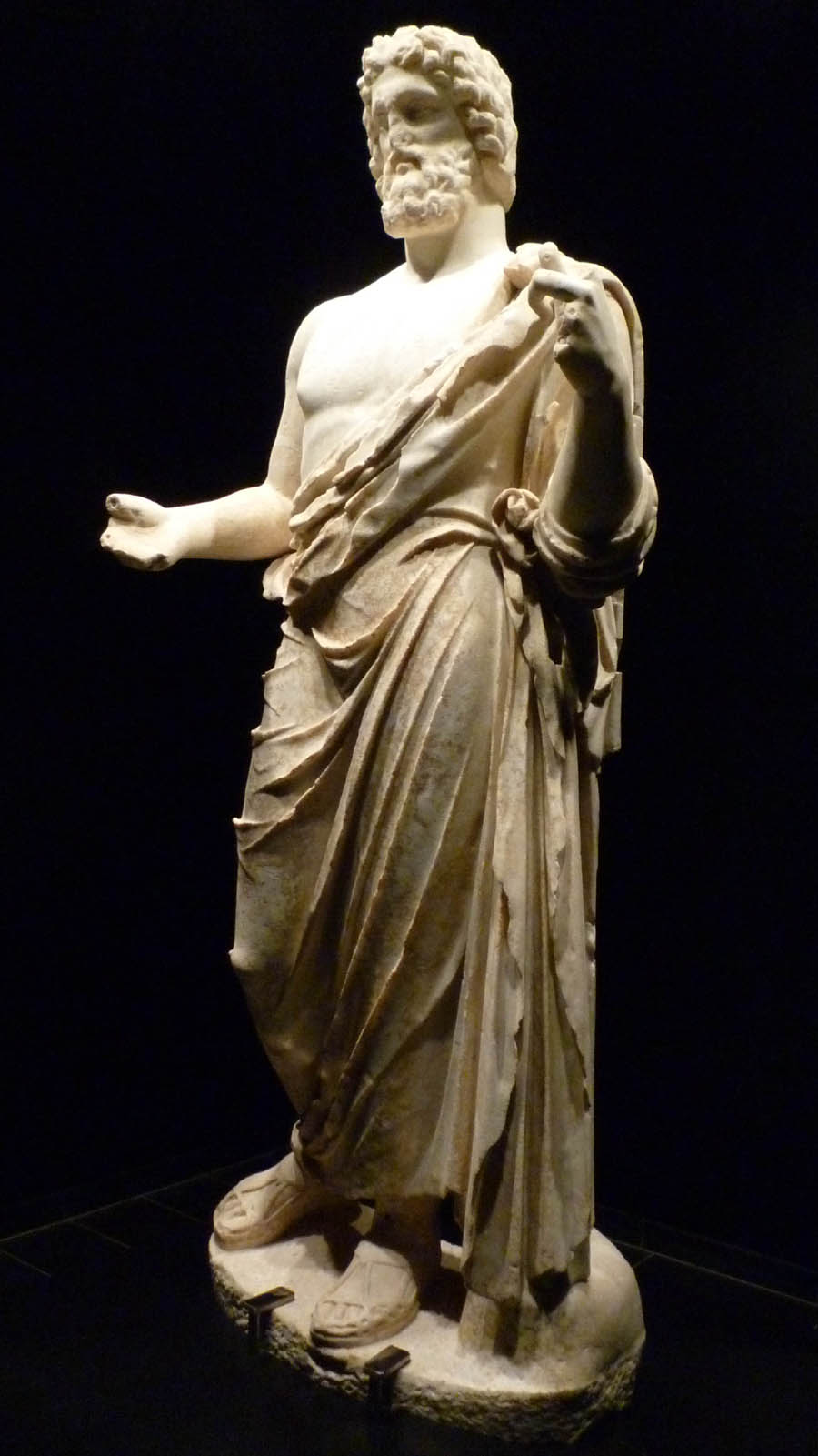
To protect the original, the statue now displayed standing in the sanctuary is a replica, while the ancient sculpture is preserved in a museum. But the effect of seeing even the copy in its setting, rising within the ruins of the sanctuary where the sick once came to seek the god’s help, is powerful. It brings the religious life of the Greek town vividly to mind and stands as a reminder that Empúries was not merely a commercial venture but a full Greek city, with its gods, its temples, its art, and its faith, complete on the Iberian shore.
A Crossroads of Peoples and Goods
The whole reason Empúries existed was trade, and for centuries it thrived as one of the great commercial hubs of the western Mediterranean. Greek ships brought fine pottery, wine, oil, and manufactured goods from the Greek world and its colonies, and carried away the products of Iberia, above all the metals for which the peninsula was renowned, along with grain, salt, and other raw materials. The town functioned as an intermediary, gathering the products of the Iberian interior and channeling them into the Mediterranean trade networks, while distributing Mediterranean goods among the native peoples in return.
The coinage of Empúries is one of the clearest signs of its commercial importance. The city minted its own silver coins, which circulated widely and became a model for the coinage of the Iberian peoples, who imitated its designs. This numismatic influence is a vivid illustration of how Empúries shaped the economic life of the region, spreading not just goods but the very idea and forms of money among the Iberians. The abundance and reach of Emporitan coinage marks the city as a genuine economic center whose influence extended far beyond its walls.
Through this trade, Empúries became a true crossroads, a place where Greeks, Iberians, and later Romans, along with goods and influences from across the Mediterranean, all came together. The mingling of peoples and products at the site is reflected in the variety of its archaeological finds, which include objects and influences from many different cultures. It was precisely this role as a meeting point of civilizations that gave Empúries its historical importance and that makes its ruins so valuable today, for in them the encounter of the ancient Mediterranean world with Iberia is preserved in concrete, legible form.
Where Rome Landed to Conquer Spain
Empúries occupies a pivotal place in the history of Rome’s expansion, for it was here, in 218 BC, that a Roman army first landed on the Iberian Peninsula, at the very start of the long process by which Rome would conquer all of Spain. The occasion was the Second Punic War, the titanic struggle between Rome and Carthage, during which Carthage held extensive territory in Iberia. To strike at Carthaginian power in the peninsula and cut off Hannibal’s base of support, the Romans sent forces to Iberia, and they chose the friendly Greek city of Empúries, long connected to Rome’s ally Massalia, as their landing point.
From this foothold at Empúries, Roman armies campaigned across the peninsula over the following years, ultimately expelling the Carthaginians from Iberia and beginning the transformation of Spain into a Roman province. The conquest was not quick, taking generations of hard fighting against both the Carthaginians and the fiercely independent native peoples, but it began at Empúries. The Greek trading city that had been the gateway for Greek commerce thus became the gateway for Roman conquest, the bridgehead from which one of the most important provinces of the Roman Empire was born.
The Romans recognized the strategic value of the site and established a military presence there, which in time grew into a proper Roman city built on the higher ground just beside and above the old Greek town. And so, in one of the most remarkable juxtapositions in ancient archaeology, a Roman city rose directly alongside the Greek one, the two settlements standing side by side, the old Greek Neapolis by the shore and the new Roman city on the hill above. This pairing, unique in Iberia, is what gives Empúries its extraordinary character as a site where Greek and Roman worlds are preserved together.
The Roman City on the Hill
The Roman city of Empúries, built on the higher ground above the old Greek town, was a very different kind of settlement from its Greek neighbor. Where the Greek Neapolis had grown organically, cramped and irregular by the sea, the Roman city was laid out on a regular grid plan in the orderly Roman fashion, with straight streets crossing at right angles, a forum at its center, and the full range of Roman public buildings. It was larger and more spacious than the Greek town, reflecting the confidence and resources of the Roman power that built it, and its remains give a fine picture of a provincial Roman city.
Among the most impressive remains of the Roman city are its grand private houses, the domus of the wealthy, which were built around courtyards and decorated with mosaic floors and painted walls in the standard Roman manner. Several of these houses have been excavated and their mosaics preserved, giving a sense of the comfort and taste of the Roman elite of the town. There are also the remains of the forum, the public square at the heart of Roman civic life, along with streets, walls, and other structures that together map out the plan of the Roman settlement.
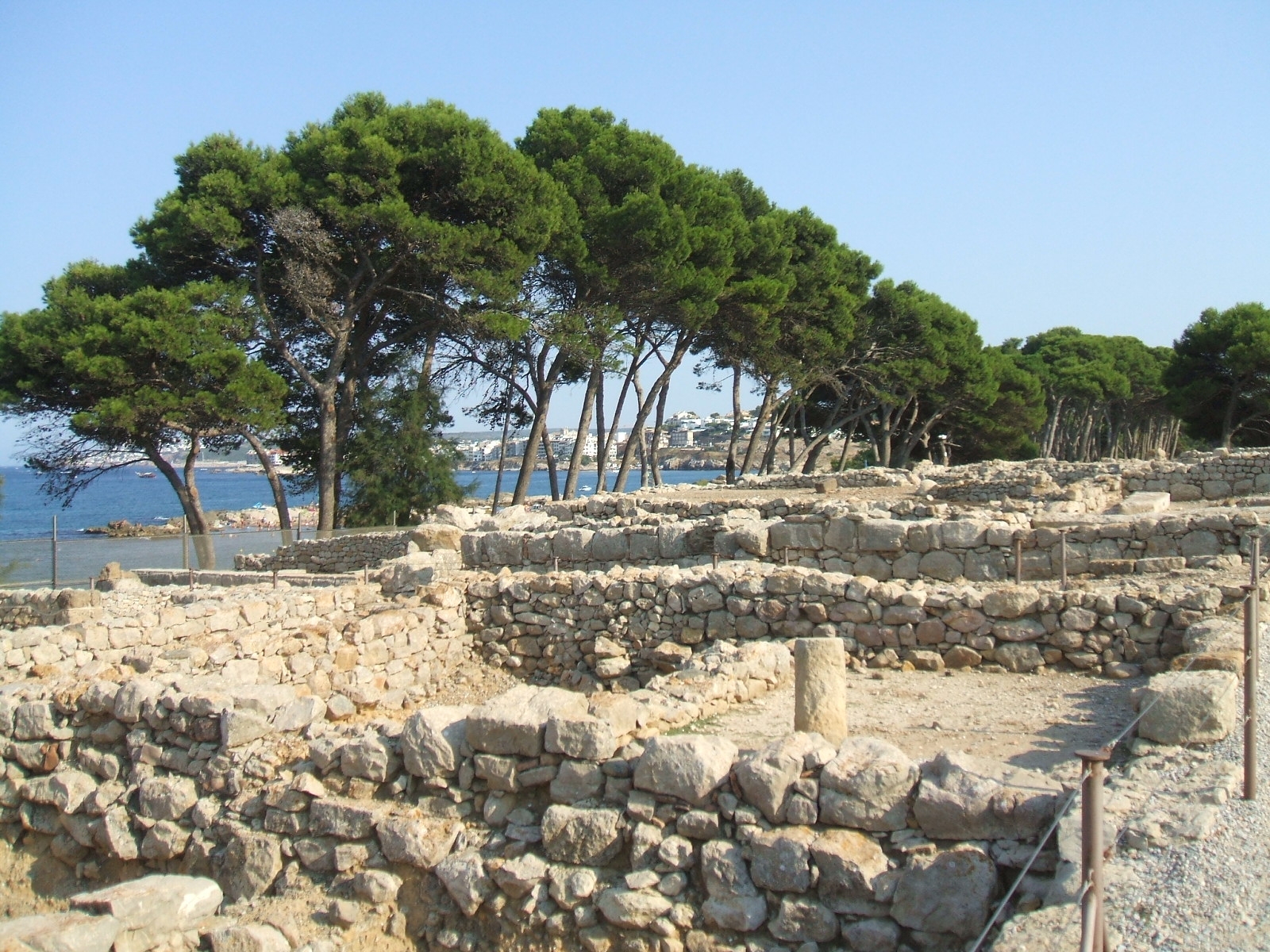
The two cities of Empúries, Greek and Roman, thus present a fascinating contrast in urban form, the irregular, seaside, organically grown Greek town set against the planned, grid-based, hilltop Roman city. Over time the Greek town declined as the Roman city flourished, and the center of gravity of the settlement shifted upward and inland. Eventually the two were, in effect, united under Roman rule, and Empúries became a single Roman municipality. But the physical distinction between the two cities remains visible on the ground to this day, a rare and instructive juxtaposition of Greek and Roman urbanism in a single archaeological landscape.
Decline and the Shift to the Coast
Empúries flourished as a Roman city for a time, but its long-term fortunes waned as the Roman world changed. The rise of other cities in the region, notably the growth of Tarraco, modern Tarragona, as the great Roman capital of the province, drew importance and activity away from Empúries. Trade routes and administrative centers shifted, and the city that had been the gateway to Iberia found itself gradually eclipsed by newer and larger centers. By the later imperial period the Roman city of Empúries was in decline, its population shrinking and its grand buildings falling into disuse.
As the Roman city declined, settlement contracted and shifted. Activity moved back toward the coast, near the site of the original Greek foundation, where a small settlement persisted through late antiquity and into the medieval period. An early Christian presence is attested at the site, with the remains of Christian basilicas and burials showing that Empúries, though much diminished, remained inhabited and retained a religious significance even as its days as a major city ended. The grand Roman city on the hill, however, was largely abandoned and left to decay.
In the medieval period the focus of settlement moved definitively to the coastal area, where the small town that preserved a version of the ancient name, and a medieval church, carried the memory of the old city forward. The great Greek and Roman cities themselves lay abandoned, their ruins gradually covered over and their stones scattered or reused, though never entirely forgotten, for the tradition of the ancient Emporion lived on in the name of the place. For centuries the site slumbered, a field of buried ruins by the Catalan shore, awaiting the archaeologists who would eventually bring its remarkable double city back to light.
Rediscovery and Excavation
The systematic excavation of Empúries began in the early twentieth century, in 1908, and it holds a special place in the history of Catalan and Spanish archaeology. The digging of Empúries became a major national and cultural project, tied to the revival of Catalan identity and pride in the region’s ancient past, and it has continued, with various phases and approaches, for more than a century. Over that long span, archaeologists have uncovered the Greek Neapolis, the Roman city, the sanctuaries, the houses with their mosaics, the walls and gates, and the cemeteries, revealing the full extent and richness of the double city.
The excavations transformed Empúries from a field of buried ruins into one of the most important and extensively explored archaeological sites in Spain. The finds recovered over the decades, from the great statue of Asklepios to mosaics, sculptures, coins, pottery, and countless everyday objects, illuminate every aspect of life in the Greek and Roman cities and their relations with the Iberian world. Many of these are displayed in the site museum and in major museums in Barcelona, forming a key collection for understanding the ancient history of the region.
Excavation and study continue to this day, and Empúries remains an active site of research where new discoveries are still made and old interpretations refined. Much of the ancient city, particularly parts of the Roman town, remains unexcavated, held in reserve for future archaeologists with better methods. The long, ongoing history of investigation at Empúries reflects both the exceptional importance of the site and the care taken to explore and preserve it, ensuring that this unique window onto the meeting of Greek, Iberian, and Roman worlds is studied responsibly and kept for the future.
Empúries Today
Today Empúries is one of the most beautiful and rewarding archaeological sites in Spain, set in a stunning location where the ruins meet a curve of Mediterranean coastline of great natural beauty. Visitors can walk through both the Greek Neapolis by the sea and the Roman city on the hill above, tracing streets, entering houses, standing in the agora and the forum, and visiting the sanctuary of Asklepios with its emblematic statue. The site museum displays the finest finds and helps make sense of the layered history of the place, from Greek trading post to Roman city.
The setting adds enormously to the experience. The Greek town lies right on the shore, and the combination of ancient ruins, golden beach, and blue sea gives Empúries an atmosphere unlike that of most inland archaeological sites. It is possible to stand among the stones of a two-and-a-half-thousand-year-old Greek city with the Mediterranean lapping nearby, exactly as the ancient inhabitants did, and to feel the maritime character that defined the town throughout its history. Few ancient sites so directly convey their relationship with the sea that gave them life.
For the visitor interested in the ancient Mediterranean, Empúries offers something available nowhere else in Iberia: the chance to see a Greek and a Roman city together, and to grasp in a single place the arrival of both civilizations on the Iberian shore. It is the gateway through which Greece reached Spain and the bridgehead from which Rome conquered it, preserved as a double city by the sea. To walk its ruins is to stand at the very point where the classical world first touched Iberia, and to trace, in stone, one of the great meetings of civilizations in European history.
Nearby Places
- Los Millares: The 5,000-Year-Old Fortified Town at the Edge of Europe
- Almendres Cromlech: Europe’s Oldest Stone Circle
- Filitosa: Corsica’s Ancient Stone Warriors
Final Word
Empúries is the place where the classical world entered Iberia. Founded by Phocaean and Massaliot Greeks as a trading post, it grew into a genuine Greek city on the Catalan coast, living beside and eventually merging with a native Iberian town, and channeling Greek goods, coins, art, and ideas into the peninsula. Centuries later it became the landing point from which Rome began the conquest of Spain, and a Roman city rose beside the Greek one, leaving Empúries as the only site in Iberia where the two stand together. Declined, abandoned, and then extensively excavated over more than a century, it survives today as a double city by the sea, the gateway through which both Greece and Rome reached the far western edge of the ancient Mediterranean, and one of the most historically eloquent ruins in all of Spain.
You May Like
Mafra, the Palace a King Built From a Vow