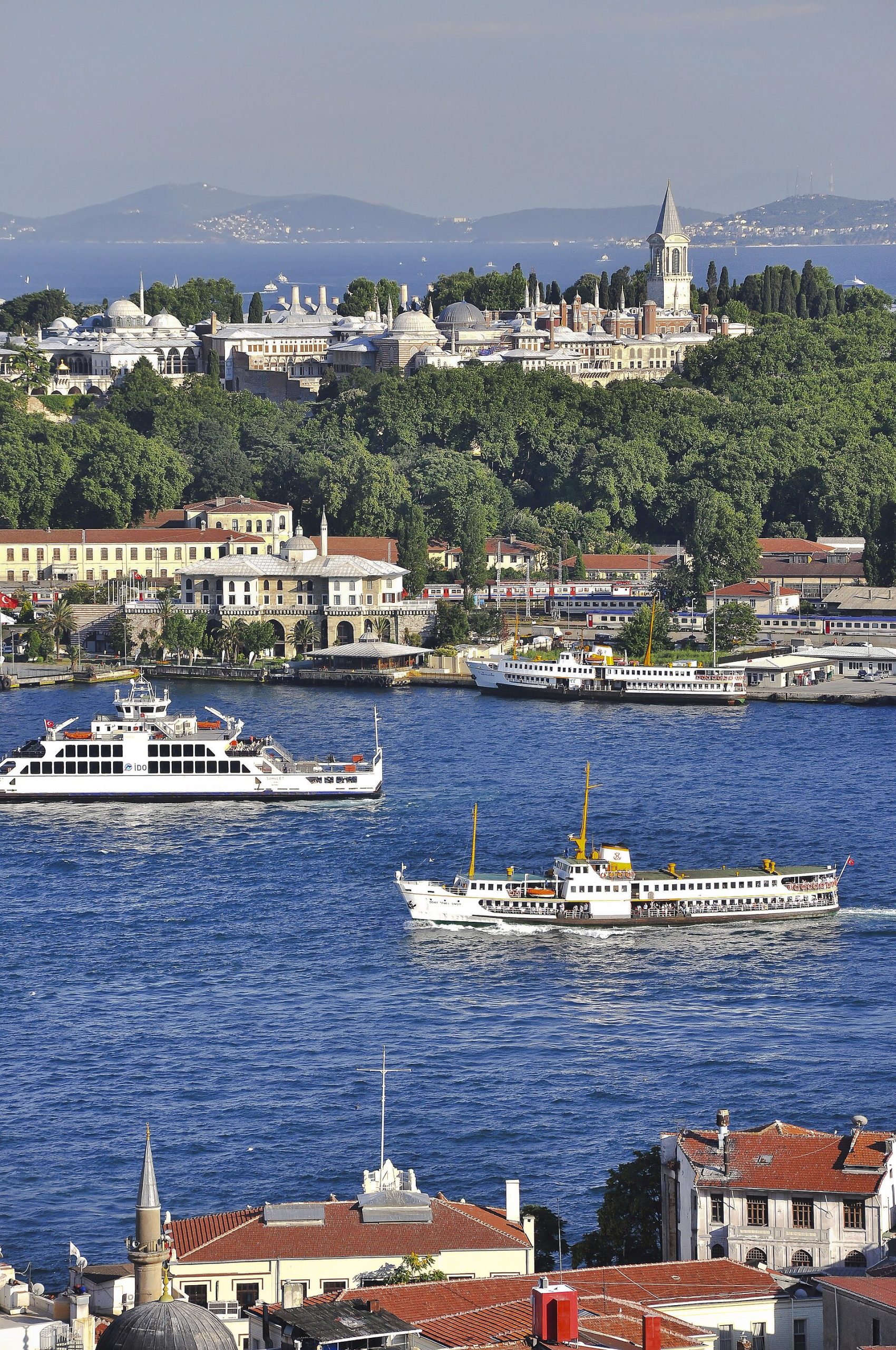
Stand on a hill above the meeting point of the Bosphorus and the Golden Horn, where Europe and Asia gaze at each other across the water, and you find yourself among the walls of Topkapi Palace. For nearly four hundred years this was the heart of the Ottoman Empire, the place from which sultans ruled over three continents. It is not a single grand building in the European sense but a sprawling city within a city, a series of courtyards, pavilions, gardens, and gates that unfold one after another, each more private and more sacred than the last.
Topkapi was never meant to overwhelm you with a single towering facade. Its power lay in secrecy and layering. The further you penetrated, the closer you came to the person of the sultan, and the fewer people were permitted to follow. Ordinary subjects might enter the first courtyard; only the most trusted servants of the state reached the third. This choreography of access was the architecture of Ottoman power itself, and to walk the palace today is to move inward through those vanished rules.
Within these walls lived not only the sultan but an entire government and household, sometimes numbering in the thousands. Here were the imperial council that ran the empire, the treasury that held its wealth, the kitchens that fed its servants, the harem where the royal family lived, and the chambers that guarded relics held sacred across the Islamic world. It was palace, capital, and shrine all at once, a self-contained universe governed by elaborate ceremony and silence.
In this article you will explore Topkapi from its founding by the conqueror of Constantinople through its centuries as the seat of empire to its later abandonment and rebirth as a museum. You will pass through its gates and courtyards, glimpse the harem and the treasury, and stand before the sacred relics that still draw pilgrims. By the end you will understand why this quiet complex of pavilions above the Bosphorus was once one of the most powerful addresses on earth.
In This Article
- A City Within a City
- Mehmed the Conqueror and the Founding
- The Four Courtyards
- The Great Gates
- The Imperial Council and the Machinery of State
- The Harem
- The Audience Chamber and the Sultan in Ceremony
- The Pavilions of the Fourth Courtyard
- The Sacred Relics
- The Imperial Treasury
- Tiles, Color, and Ottoman Craft
- Abandonment and the End of an Era
- Visiting Topkapi Today
A City Within a City
Topkapi Palace occupies a commanding position on Seraglio Point, the tip of the peninsula where the old city of Istanbul meets the sea. From here the sultans could look out over the Bosphorus, the Sea of Marmara, and the Golden Horn, controlling the waterways that made their capital one of the richest trading cities in the world. The setting was chosen with care, both for its beauty and for the sense of dominion it conferred.

Rather than a compact palace, Topkapi is best understood as an enormous walled compound, covering a vast area and organized around a sequence of courtyards. Scattered across its grounds are pavilions, mosques, kitchens, barracks, libraries, and gardens, built and rebuilt over the centuries by successive sultans. The result is not a unified design but an accumulation, a palace that grew organically as the empire it served expanded and changed.
This sprawling, low-rise character can surprise visitors expecting a single monumental structure like the palaces of Europe. Topkapi does not rise into the sky; it spreads across the land, hidden behind walls, revealing itself slowly. Its grandeur is horizontal and intimate rather than vertical and imposing, a reflection of a very different idea of how a ruler should live and be seen.
Understanding the palace means understanding its logic of concentric privacy. Each courtyard was more restricted than the one before, and passing from one to the next meant crossing a threshold of trust and status. The buildings mattered, but so did the empty spaces between them, the courtyards where ceremony unfolded and where the whole theater of Ottoman power was staged.
It is worth pausing, too, over the name. Topkapi means cannon gate, a reference to a gate that once stood nearby, and the homely, practical ring of it says something about the Ottoman court’s relationship to display. This was a palace that hid its magnificence behind walls rather than flaunting it, and even its name resists the grandeur we might expect from the seat of so vast an empire.
Mehmed the Conqueror and the Founding
The palace owes its existence to Mehmed II, the sultan who captured Constantinople in 1453 and ended the thousand-year Byzantine Empire. Having taken the great city, Mehmed set about making it his capital, and within a couple of decades he began building a new palace on Seraglio Point to serve as the seat of his government and household. That palace became Topkapi, and it would remain the center of Ottoman rule for centuries.
Mehmed was a conqueror but also a builder and a patron of learning, fascinated by the cultures he had absorbed. His new palace reflected this complexity, drawing on Islamic, Byzantine, and other traditions to create something distinctly Ottoman. He laid out the basic pattern of courtyards and pavilions that later sultans would elaborate, establishing the framework within which the palace would grow for generations.
The choice to build here was deeply symbolic. By raising his palace on the acropolis of the old Byzantine city, Mehmed announced that a new empire now ruled from the same commanding ground. The continuity of place underlined the transfer of power, casting the Ottoman sultan as heir to the imperial tradition of the city he had conquered.
From these beginnings, Topkapi steadily expanded. Each sultan added, altered, and embellished, responding to changing needs and tastes, so that the palace became a living record of Ottoman history written in stone, tile, and timber. Yet the essential vision remained Mehmed’s: a secluded imperial world, layered and inward-looking, set above the waters at the crossroads of continents.
It is remarkable to think that the framework Mehmed established proved so durable. Empires rose and fell, tastes changed, the borders of the Ottoman world expanded and contracted, yet for four centuries the sultans continued to rule from the courtyards he had laid out. Few founding visions in the history of architecture have been honored so faithfully, or for so long, by those who came after.
The Four Courtyards
The organizing principle of Topkapi is its sequence of four main courtyards, each one deeper into the palace and more restricted than the last. Passing through them was a journey from the public world toward the private person of the sultan, and the rules governing who could go how far were strict and elaborate. To understand the palace is to understand this progression inward.
The first courtyard was the most public, a large open space that ordinary people and officials could enter. Here stood service buildings and one of the city’s great churches turned to imperial use. It functioned almost as a grand forecourt, a transition between the bustling city outside and the ordered world of the palace within.
The second courtyard was the realm of government. Around it stood the imperial council chamber and the vast palace kitchens, and it was here that the business of running the empire was carried out. Beyond it lay the third courtyard, an inner sanctum entered through the Gate of Felicity, reserved for the sultan’s household and the elite pages who served him directly.
The fourth courtyard, the most intimate of all, was a series of gardens and pavilions where the sultan could relax in private, looking out over the sea. Moving through these four spaces, a visitor passed from the noise of the city to the silence of the sultan’s private retreat, and each threshold marked a rise in exclusivity that everyone in the palace understood.
The genius of this arrangement was that it turned movement itself into meaning. To advance through Topkapi was to be measured and sorted, granted or denied further passage according to who you were. The architecture did not simply house the hierarchy of the Ottoman state; it enacted it, so that every visitor experienced the empire’s order of rank in the soles of their feet as they walked.
The Great Gates
If the courtyards structured the palace, the gates that joined them gave that structure meaning. Each gate was more than a doorway; it was a ceremonial threshold, a point where status was checked and ritual observed. The gates of Topkapi are among its most striking features, and they encoded the whole system of access that ran the palace.

The Imperial Gate opened from the city into the first courtyard, the grand public entrance to the palace complex. Deeper in, the Gate of Salutation marked the boundary of the second courtyard, a point beyond which even high officials had to dismount and proceed on foot, for only the sultan could ride further. Its towers gave it the look of a fortress, a reminder that this was a threshold of real consequence.
Most significant of all was the Gate of Felicity, leading into the third courtyard and the sultan’s private domain. Before this gate the most important ceremonies of the state took place, including the accession of a new sultan, who would receive the homage of his officials seated before it. To cross this gate uninvited was unthinkable; it was the boundary between the world and the sacred person of the ruler.
These gates were not merely functional but heavily symbolic and richly decorated, their very names, salutation and felicity, evoking the ceremony and reverence that surrounded them. Passing through them, one moved deeper into a world governed by protocol, where every step forward had to be earned by rank, trust, or the sultan’s own command.
The ceremony at the Gate of Felicity captured the whole logic of the palace in a single image. A new sultan, seated before it to receive the homage of his officials, sat quite literally at the threshold between the public empire and his own sacred person, with the gate at his back like a curtain drawn across the mystery of power. Nowhere is the symbolism of Topkapi’s architecture more concentrated than in that scene.
The Imperial Council and the Machinery of State
Around the second courtyard clustered the institutions that actually governed the empire. Chief among them was the imperial council, known as the Divan, which met in a chamber where the empire’s most senior ministers debated matters of war, justice, and administration. From this modest-looking hall, decisions rippled out across an empire that stretched over three continents.
The Divan chamber had a famous and telling feature: a grilled window set high in the wall, behind which the sultan could sit unseen and listen to the deliberations of his ministers. No one could be sure whether the ruler was watching or not, and that uncertainty kept the council honest and attentive. It was a piece of architecture designed to project the sultan’s authority even in his absence.
Nearby stood the palace kitchens, an enormous complex that fed the thousands who lived and worked within the walls. The scale of the kitchens gives a sense of the size of the royal household, a small city of servants, guards, cooks, scribes, and craftsmen all supported by the palace. Feeding this multitude was itself a major administrative feat.
Together, the council chamber and the surrounding offices made the second courtyard the beating administrative heart of the empire. Here the abstract power of the sultan was translated into the day-to-day work of governing, in the drafting of decrees, the hearing of petitions, and the endless business of holding a vast and diverse realm together.
The hidden window above the council was more than a clever device; it was a philosophy of rule made concrete. Ottoman authority depended on the sense that the sultan was everywhere and nowhere, present even when absent, watchful even in silence. A single grille of latticework did the work of a hundred spies, reminding every minister that the eyes of the ruler might be upon him at any moment.
The Harem
Perhaps no part of Topkapi has fascinated outsiders more than the harem, the private quarters where the sultan’s family lived. The word itself means forbidden or private, and for centuries the harem was closed to all but a select few, its inner life the subject of endless speculation and fantasy in the world beyond. The reality was more complex and more interesting than the legends.
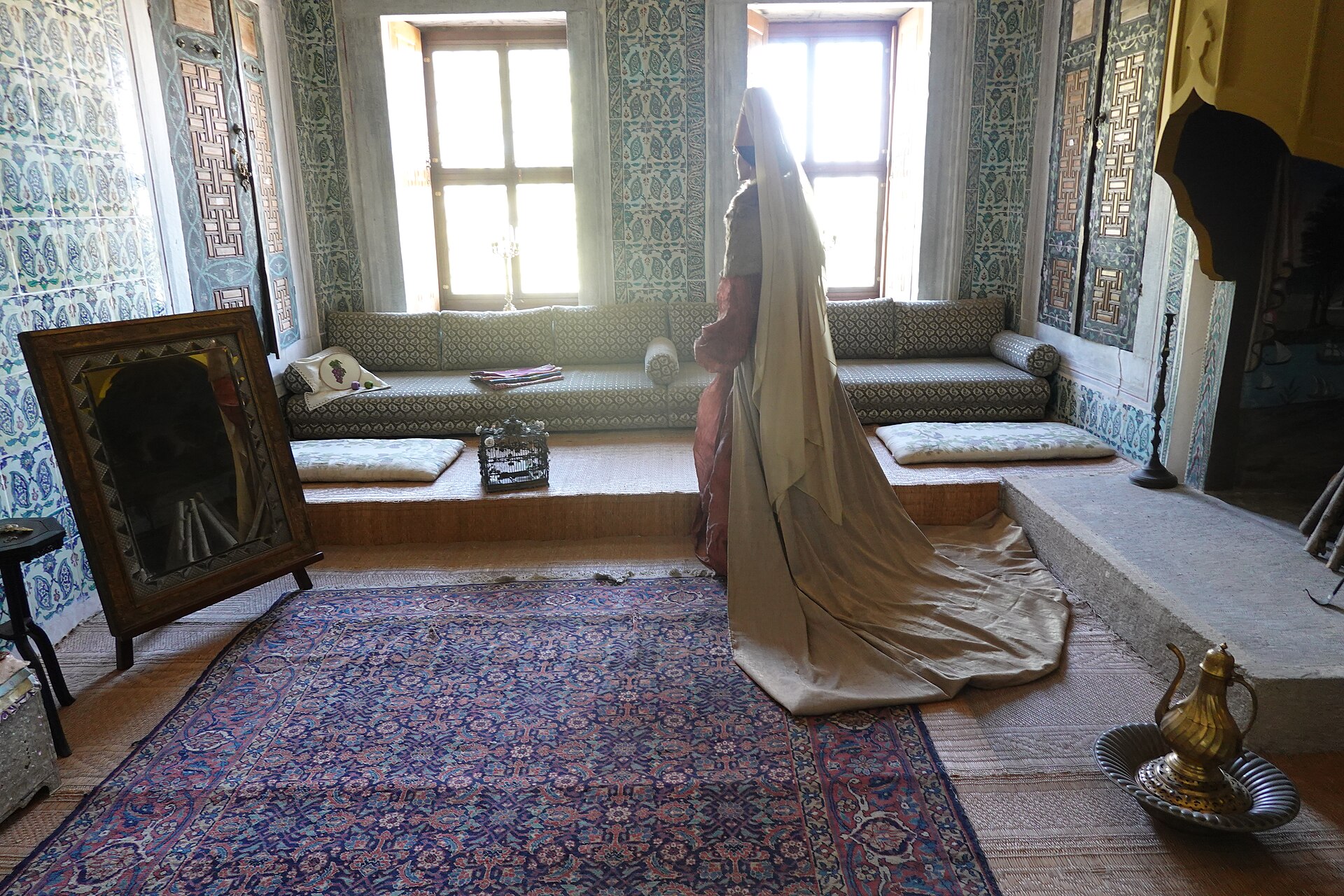
The harem was a large and intricate complex of rooms, courtyards, and passages, home not only to the sultan’s consorts but to a whole hierarchy of women, children, servants, and eunuchs who guarded it. At its head stood the sultan’s mother, the powerful figure known as the queen mother, whose apartments were among the finest in the palace and who often wielded enormous political influence.
Life in the harem was governed by strict hierarchy and elaborate custom. Far from being merely a place of seclusion, it was a center of education, intrigue, and power, where careers were made and dynastic futures decided. Several periods of Ottoman history saw royal women exercise such influence from within these walls that historians have described it as an era shaped by them.
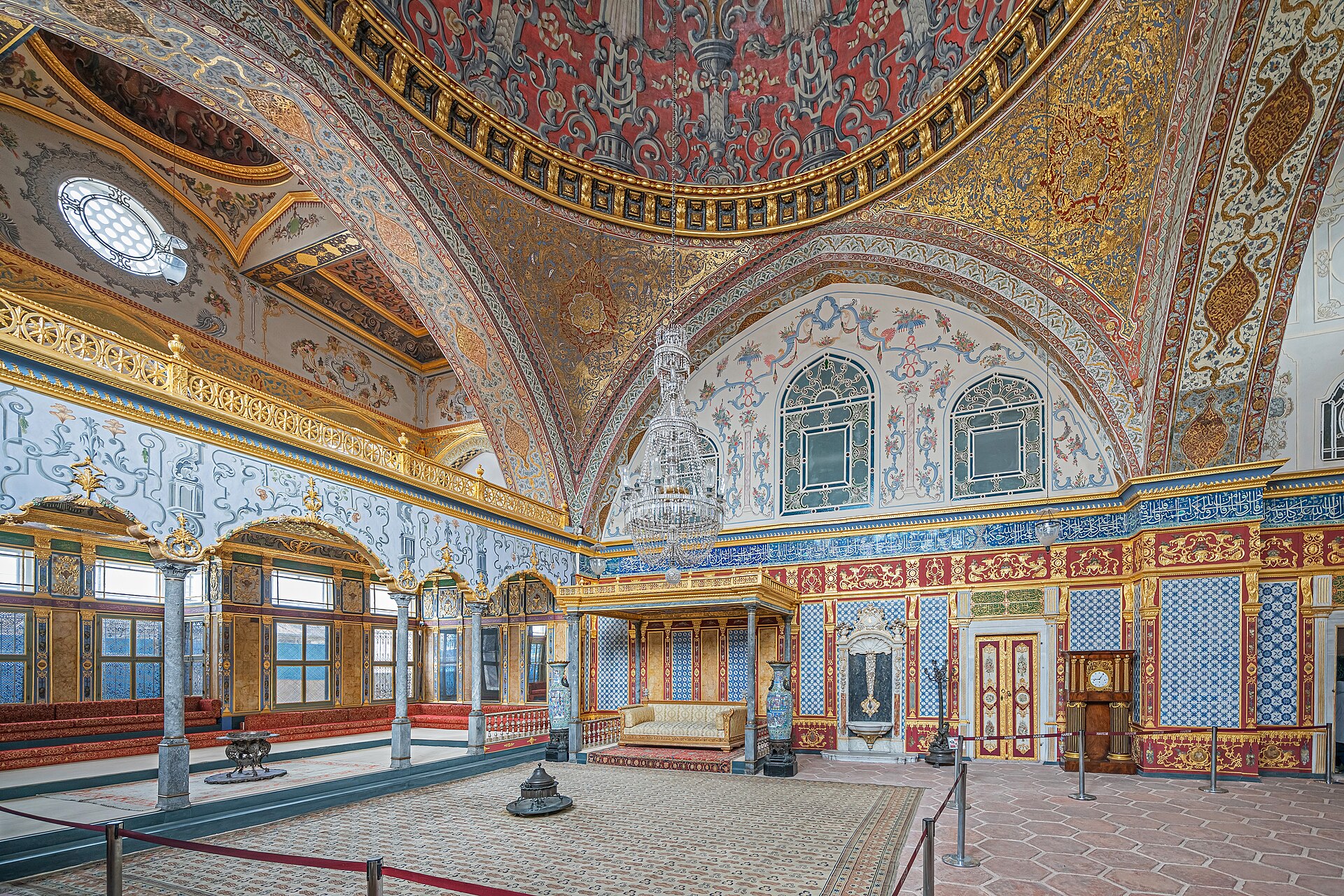
Architecturally, the harem is a maze of exquisitely decorated rooms, many sheathed in brilliant tiles, with fountains and painted ceilings and intimate courtyards. Wandering through it today, you sense both the beauty and the confinement of the lives lived here, a gilded world that was at once a home, a school, a prison, and a stage for some of the empire’s most consequential dramas.
Outsiders in Europe spun elaborate fantasies about the harem, imagining it as a place of pure sensual indulgence. The truth was that it was, above all, a household and a dynasty in miniature, concerned with succession, education, and the careful management of power. The gap between the European fantasy and the Ottoman reality tells us more about the imaginations of outsiders than about the lives actually led within these walls.
The Audience Chamber and the Sultan in Ceremony
At the threshold of the third courtyard stood the Audience Chamber, where the sultan received ambassadors, officials, and dignitaries in carefully staged ceremony. Seated on a richly ornamented throne, surrounded by silence and splendor, the ruler appeared to visitors as a remote and almost sacred figure, the still center of the empire’s power.
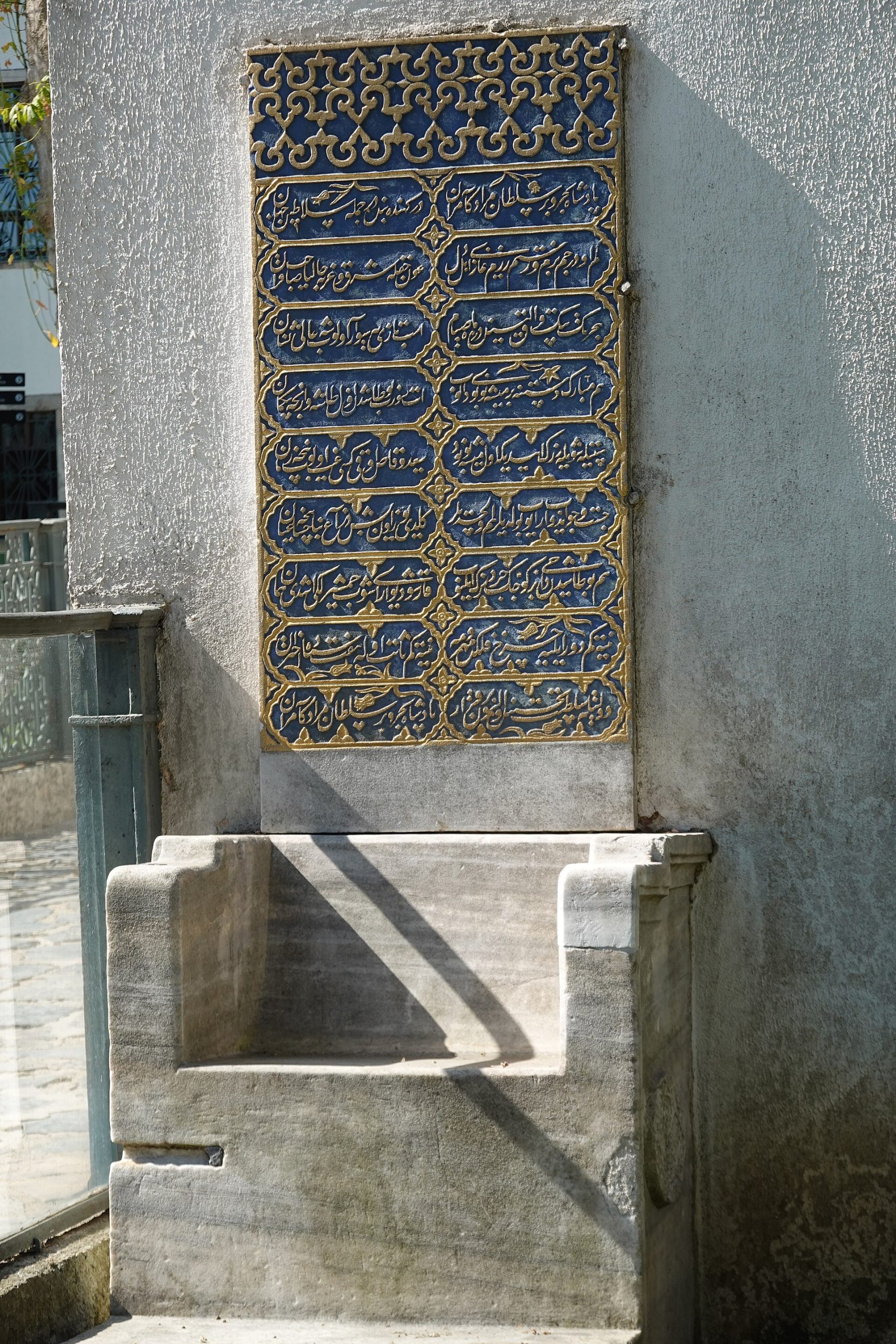
These audiences were governed by rigid protocol designed to impress and to intimidate. Foreign envoys were led through the courtyards, made to wait, and finally brought before a sultan who might barely acknowledge them, his very impassivity a demonstration of superiority. Every element, from the gifts presented to the words permitted, was regulated by centuries of custom.
The chamber and its setting were meant to convey that the person before the visitor was no ordinary monarch but the shadow of God on earth, as the Ottoman formula had it. The magnificence of the surroundings, the hush, the ceremony, all worked to elevate the sultan far above those who came to petition or negotiate with him.
Behind this theater of remoteness lay a practical purpose. In a diverse empire held together as much by prestige as by force, the aura of the sultan mattered enormously. The Audience Chamber was where that aura was manufactured and displayed, turning the abstract idea of imperial authority into an overwhelming personal encounter that visitors would never forget.
For the envoys who endured it, the ordeal could be strange and unsettling. Some left accounts of being gripped by the arms and led before a motionless sultan, of gifts received without a word, of an audience over almost before it began. What they experienced as coldness was in fact the point: a performance of superiority so complete that it needed no gesture of warmth to make its meaning clear.
The Pavilions of the Fourth Courtyard
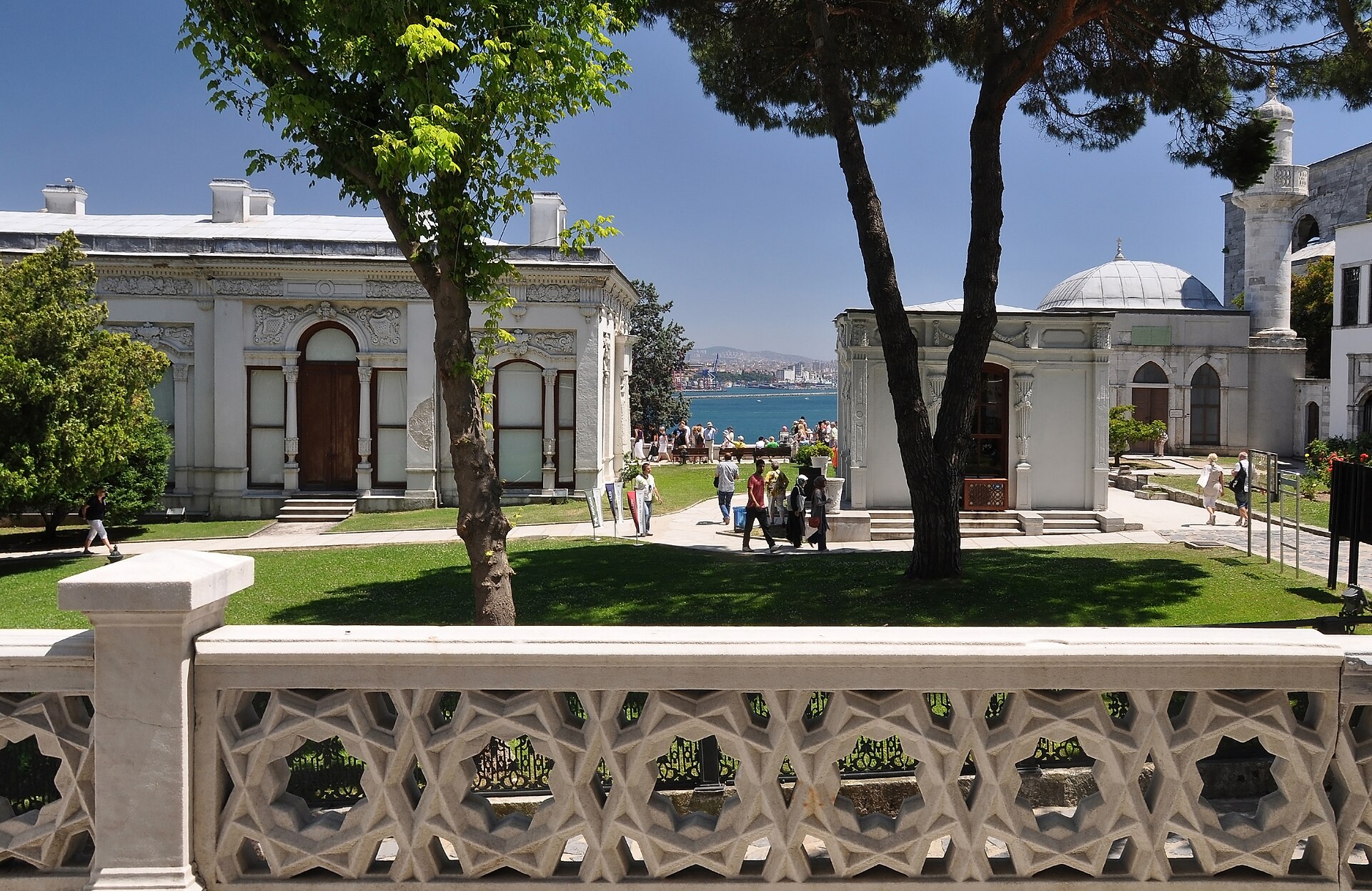
The innermost fourth courtyard was the sultan’s private garden, and here stand some of the most beautiful pavilions in the whole palace. Small, jewel-like structures set among terraces and pools, they were places of leisure and contemplation, built to enjoy the views over the water and the gardens rather than to conduct the business of state.
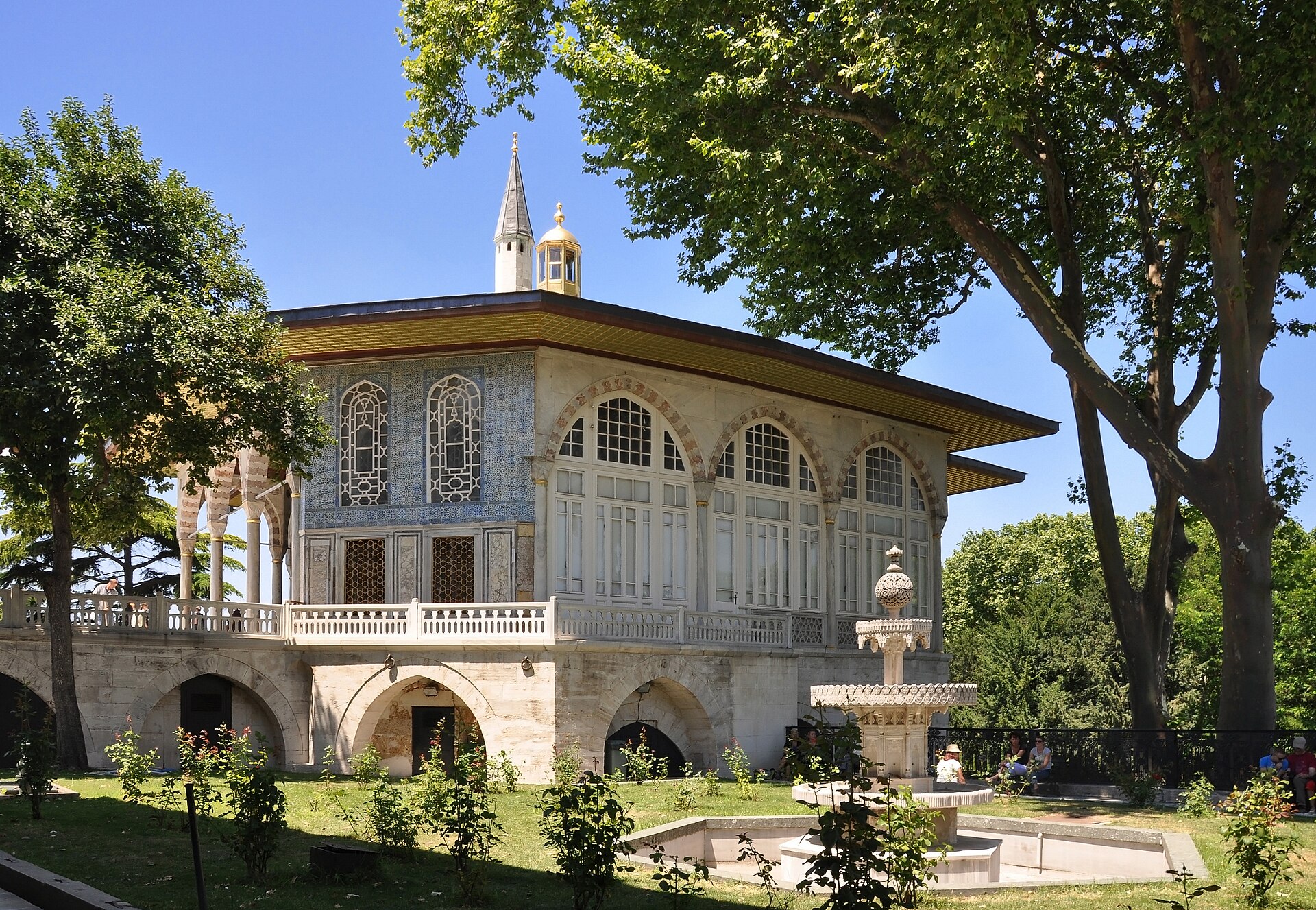
Among the most celebrated is the Baghdad Kiosk, raised to commemorate an Ottoman military campaign and considered a masterpiece of classical Ottoman design. Its interior glows with brilliant tiles, its dome soars above inlaid woodwork, and its windows frame carefully composed views. Nearby stands another pavilion built to mark a different campaign, its decoration equally exquisite.
These kiosks show a different side of Ottoman architecture from the ceremonial gates and council chambers. Here the aim was delight rather than intimidation, an intimate perfection of proportion, color, and craftsmanship meant for the pleasure of the ruler and his closest circle. They represent the palace at its most refined and personal.
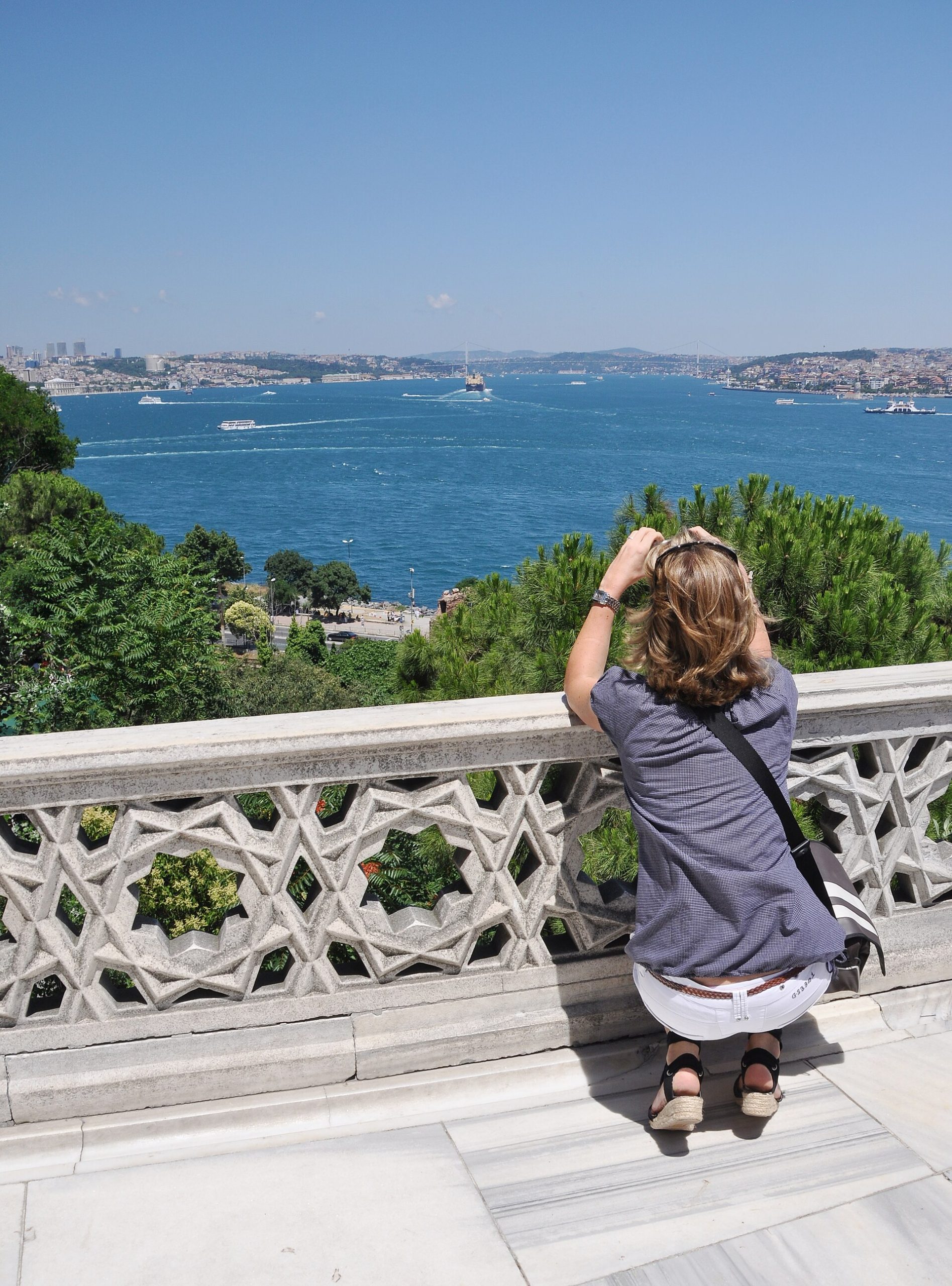
From the terraces around these pavilions, the sultan could look out over one of the greatest views in the world, the meeting of seas and continents spread beneath him. It is easy, standing here, to imagine a ruler stepping away from the weight of empire to sit in the shade, listen to a fountain, and watch the ships pass far below.
The Sacred Relics
Topkapi was not only a palace but a shrine, for it housed some of the most venerated relics in the Islamic world. Kept in the Chamber of the Holy Mantle and its surrounding rooms, these objects associated with the Prophet Muhammad and other sacred figures gave the palace a religious significance that extended far beyond the boundaries of the empire.
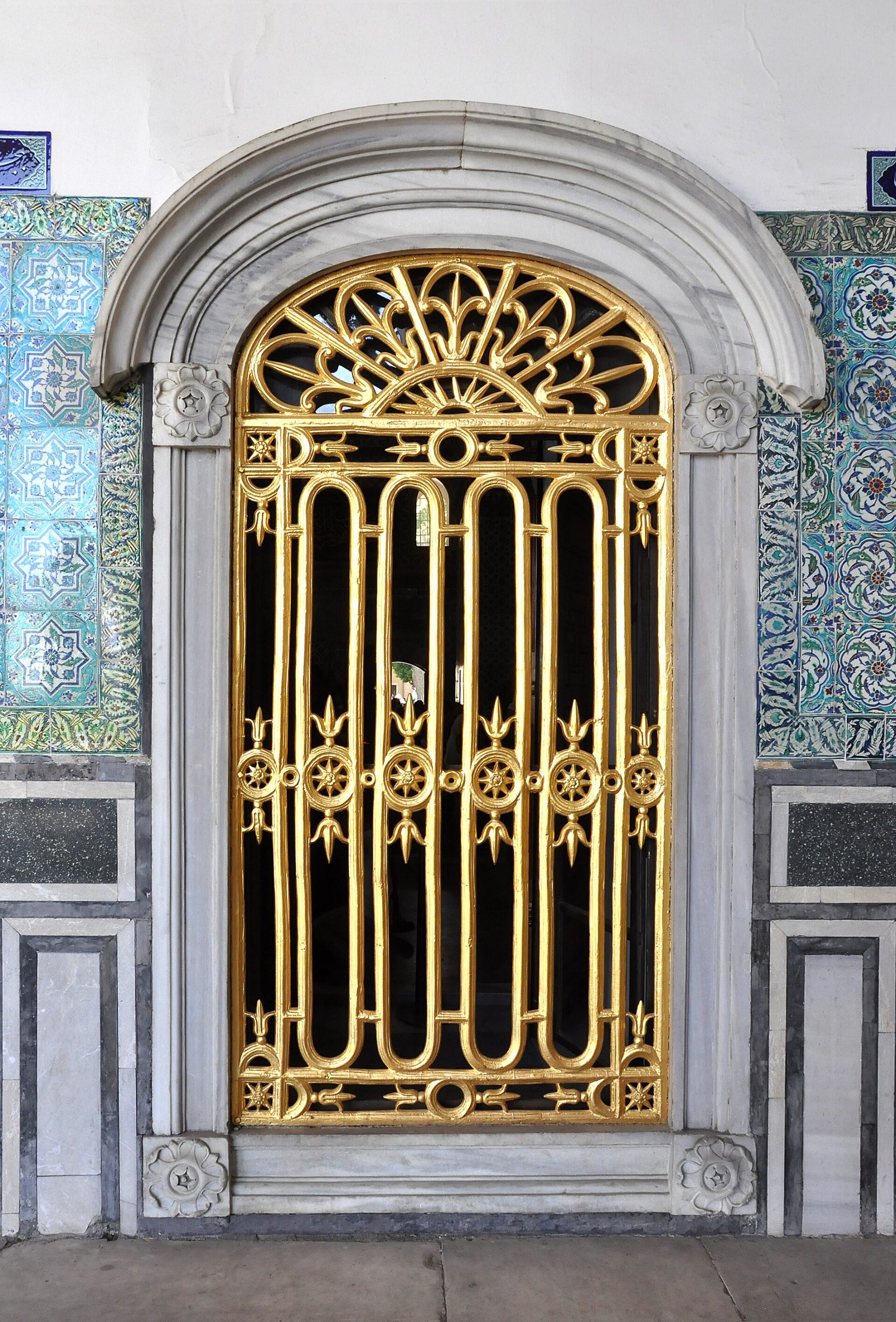
The relics came to the Ottomans as the sultans took on the role of guardians of the holy cities of Islam, a position that carried immense prestige across the Muslim world. Housing these treasures at Topkapi underscored the sultan’s claim to religious as well as political leadership, casting him as protector of the faith and its most precious objects.
For centuries the relics were guarded with great reverence, and continuous recitation of the Quran was maintained in their presence. Access was highly restricted, and the rooms that held them were among the most sacred spaces in the palace, treated with a devotion quite distinct from the ceremonial grandeur of the audience halls.
Today the relics remain on display, and for many visitors they are among the most moving parts of the palace, drawing pilgrims as well as tourists. Their presence transforms Topkapi from a historical monument into a living site of faith, a reminder that the sultans who lived here saw themselves not merely as rulers but as servants and guardians of a sacred trust.
The role of guardian shaped Ottoman identity in lasting ways. By keeping these relics and protecting the holy cities, the sultans wove together their political and religious authority into a single claim, one that outlasted individual reigns and gave the dynasty a legitimacy rooted in faith. The quiet rooms that held the relics were, in their way, as important to the empire as the council chamber or the treasury.
The Imperial Treasury
The wealth of the Ottoman Empire was legendary, and much of its most spectacular expression was gathered in the Imperial Treasury at Topkapi. Here were kept jewels, thrones, arms, and objects of gold and precious stones accumulated over centuries through conquest, tribute, trade, and gift. The treasury was both a storehouse of value and a display of the empire’s dazzling reach.
Among its most famous objects is a magnificent jeweled dagger and an enormous diamond of extraordinary size and history, treasures whose fame has spread far beyond the palace walls. Alongside them are ceremonial thrones, bejeweled arms and armor, and countless smaller objects of exquisite craftsmanship, a concentration of splendor difficult to take in all at once.
These objects were not merely decorative. In an age when the wealth of a ruler was a measure of his power, the treasury was a political instrument, its contents brought out on ceremonial occasions to awe visitors and to remind them of the resources at the sultan’s command. Splendor was a language of statecraft, and Topkapi spoke it fluently.
Walking through the treasury today, past cases glittering with gold and gems, you feel the scale of an empire that once stretched from the gates of Vienna to the deserts of Arabia. Every object tells a story of conquest or diplomacy, and together they form a portrait of a state that gathered the riches of three continents into a few guarded rooms above the Bosphorus.
The objects also traveled. On campaign, at ceremonies, and in the reception of foreign envoys, pieces from the treasury were brought out to make the empire’s wealth visible at the decisive moment. A jeweled aigrette on a turban or a gem-encrusted sword worn at an audience turned abstract riches into a personal, dazzling fact, impossible for a visitor to forget or to match.
Tiles, Color, and Ottoman Craft
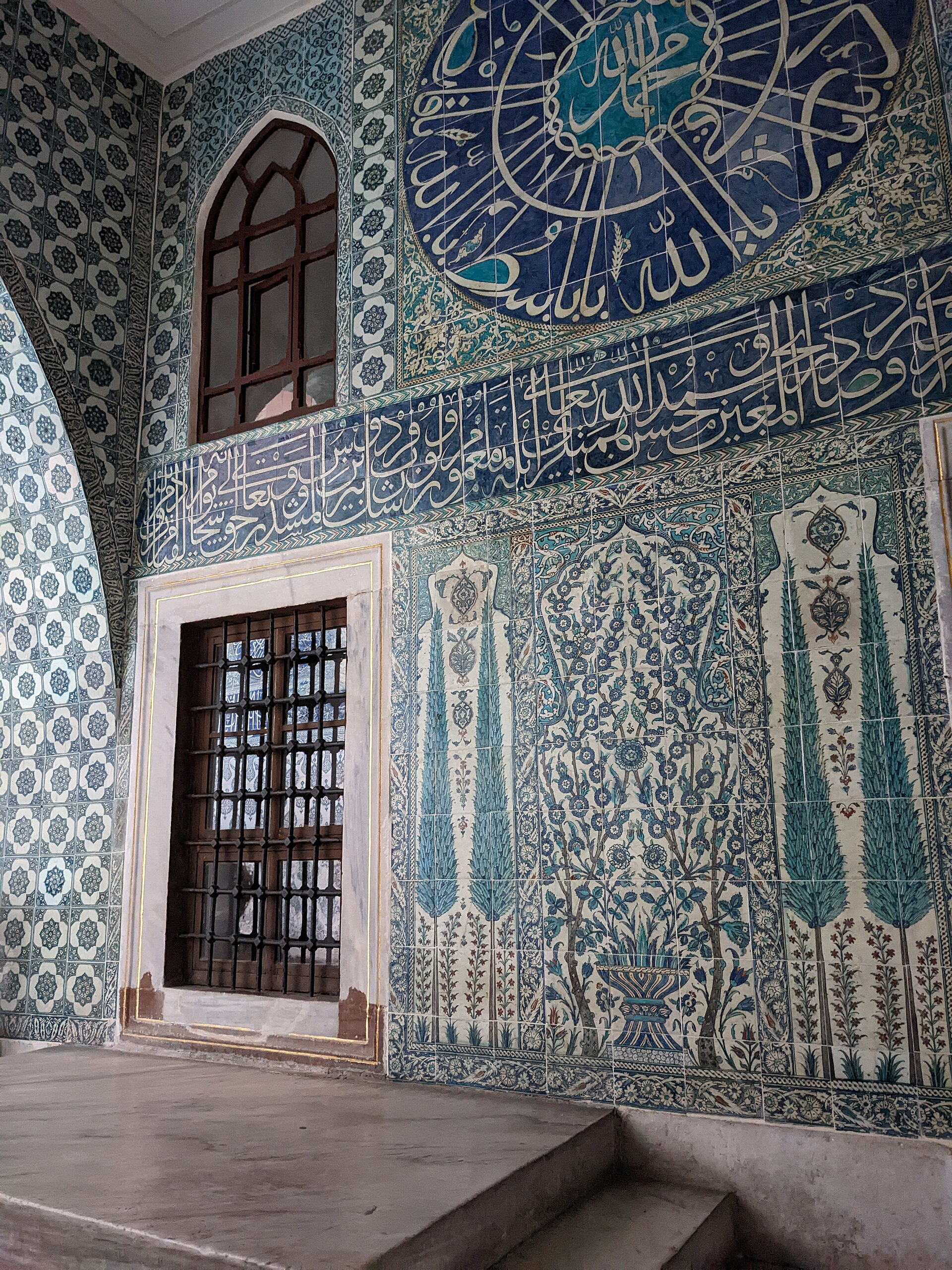
One of the great pleasures of Topkapi is its decoration, and above all its tiles. Throughout the palace, walls glow with brilliant ceramic tiles in blues, greens, reds, and whites, arranged in intricate floral and geometric patterns. This tilework, at its finest, represents one of the supreme achievements of Ottoman art.
The most celebrated tiles came from the kilns of a famous ceramic center whose craftsmen perfected a palette and a technique that have never been surpassed. Their designs, full of stylized tulips, carnations, and vines, turned interior walls into gardens of color, cool and luminous, transforming the experience of the rooms they lined.
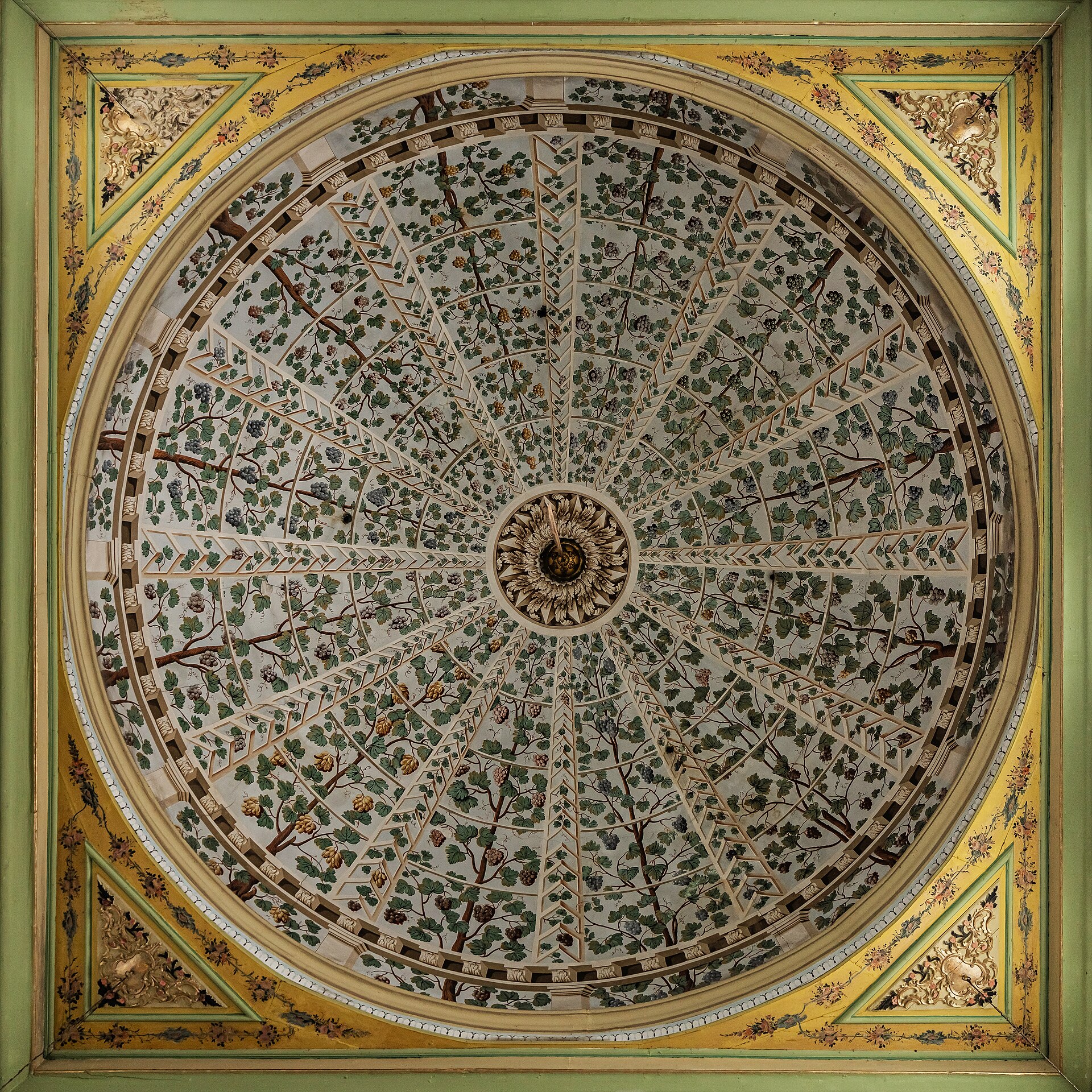
Tile was not the only medium of Ottoman decoration. The palace is rich in painted ceilings, carved and inlaid woodwork, marble fountains, stained glass, and elegant calligraphy, all combining to create interiors of great subtlety and beauty. The Ottoman aesthetic favored surface, pattern, and color over monumental sculpture, and Topkapi is one of its greatest showcases.
Together these decorative arts give the palace its distinctive atmosphere, at once opulent and serene. The effect is not the heavy grandeur of European baroque but something lighter and more contemplative, a beauty built from pattern and repetition, from the play of light on glazed surfaces, and from the endless invention of craftsmen working within a rich and disciplined tradition.
There is a philosophy embedded in this decoration. Rather than depicting the human figure, Ottoman artists poured their genius into pattern, color, and the endless variation of natural forms, creating spaces that feel alive without ever picturing a living person. The result is an art of atmosphere rather than narrative, one that surrounds you and calms you rather than telling you a story from a wall.
Abandonment and the End of an Era
For nearly four hundred years Topkapi remained the principal residence of the Ottoman sultans, but in the nineteenth century that long era came to an end. As the empire sought to modernize and to present a more European face to the world, the sultans moved their court to a new palace on the shores of the Bosphorus, and Topkapi was gradually left behind.

The new palace reflected changing tastes and ambitions, with its grand European-style halls and its position at the water’s edge. Beside it, the old palace on Seraglio Point came to seem antiquated, a relic of an earlier age of Ottoman power. The move marked a symbolic as well as a physical shift, a turning away from the inward, layered world that Topkapi embodied.
Yet Topkapi was never entirely abandoned. The sacred relics remained, and parts of the palace kept ceremonial and religious functions even after the sultans had gone. It stood as a monument to the dynasty’s origins and to the centuries when this had been the undisputed heart of the empire, a place too significant to be simply discarded.
When the empire itself finally fell in the early twentieth century and a new republic was founded, the fate of Topkapi took a new turn. Rather than being lost or repurposed beyond recognition, the palace was preserved and opened to the public, beginning a new chapter as one of the world’s great museums and a window onto a vanished imperial world.
Visiting Topkapi Today
Today Topkapi Palace is one of Istanbul’s most visited sites, drawing millions of people each year to walk its courtyards and explore its pavilions, treasury, and harem. Set in the historic heart of the old city, close to other great monuments, it forms part of an extraordinary concentration of history that few cities in the world can match.

View the exact location on Google Maps
Visiting Topkapi rewards time and patience. The complex is large, and to appreciate it you need to move slowly through its courtyards, letting the logic of the palace reveal itself as you go deeper. The harem usually requires a separate ticket, and the treasury and relics can draw crowds, so planning your route and arriving early can greatly improve the experience.
Beyond the individual rooms and objects, part of the pleasure is simply the setting. From the terraces of the inner courtyards you look out over the Bosphorus and the Golden Horn, the same view that sultans enjoyed for centuries. On a clear day, with the water glittering and the ships passing, it is easy to understand why this spot was chosen as the seat of an empire.
Whether you come for the history, the art, the sacred relics, or the views, Topkapi offers a journey into a world that shaped centuries of history across three continents. To walk inward through its gates and courtyards is to trace the very structure of Ottoman power, and to step back out into the modern city is to carry with you the memory of one of the most remarkable palaces ever built.
A practical tip: wear comfortable shoes and give yourself at least half a day, ideally more. Topkapi is not a place to be hurried through in an hour, and the visitors who enjoy it most are those who treat it as a slow walk through a vanished world rather than a checklist of highlights to be photographed and left behind.
Palaces Nearby
Topkapi is the first and oldest of the great imperial residences of Istanbul. Once you have explored its courtyards, the later palaces along the Bosphorus make a natural continuation of the story.
You May Like



One thought on “Topkapi Palace: The Secret City of the Ottoman Sultans Above the Bosphorus”