Imagine a palace that turns its back on centuries of tradition and stares boldly across the water toward Europe. That is Dolmabahce, the great nineteenth-century residence of the Ottoman sultans, stretched along the western shore of the Bosphorus in the heart of Istanbul. Where the old palace of Topkapi hid its magnificence behind walls and courtyards, Dolmabahce puts everything on display, presenting a long, gleaming European facade directly to the passing ships and the world beyond.
Dolmabahce was born of a desire to modernize. By the middle of the nineteenth century, the Ottoman Empire was under enormous pressure, and its rulers were determined to prove that they belonged among the great powers of Europe. A sultan who wished to be seen as a modern monarch could hardly go on living in a medieval compound of pavilions and gardens. He needed a palace that could stand comparison with Versailles or the great residences of Vienna and Saint Petersburg, and Dolmabahce was his answer.
The result is a building of astonishing opulence. Behind that long marble facade lie halls of breathtaking scale, staircases of crystal, and a ceremonial hall crowned by one of the largest chandeliers in the world. Gold leaf covers the ceilings, European paintings hang on the walls, and the whole interior glitters with a wealth that was meant to dazzle foreign visitors and to announce that the Ottoman dynasty was as splendid and as European as any court on the continent.
In this article you will explore Dolmabahce from the vision that created it to the artists who built it, through its dazzling interiors and its most famous treasures, to the poignant role it played at the very end of an era. For this was where the last chapter of the empire was written, and where, in a room whose clocks were stopped at the moment of his death, the founder of modern Turkey passed away. Few palaces hold so much beauty and so much history within a single set of walls.
In This Article
- A Palace on the Water
- Sultan Abdulmecid and the Vision of Modernity
- The Balian Architects
- The Marble Facade
- Gates, Towers, and the Approach
- The Crystal Staircase
- The Ceremonial Hall and the Great Chandelier
- The Selamlik and the Public Palace
- The Harem and Private Life
- Chandeliers, Clocks, and Carpets
- The End of an Era
- The Bosphorus Setting
- Visiting Dolmabahce Today
A Palace on the Water
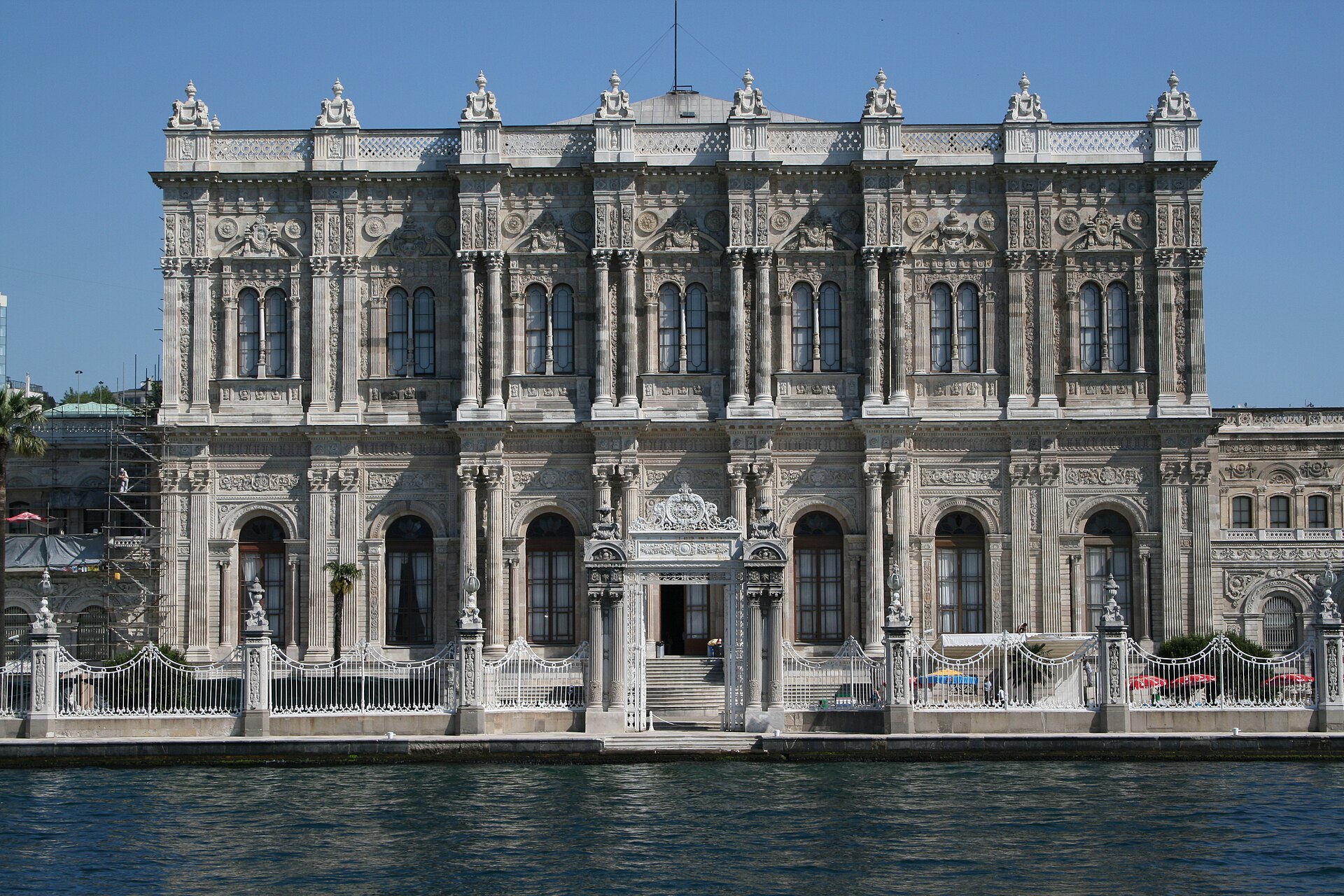
Dolmabahce stretches for hundreds of meters along the Bosphorus, its long marble facade rising directly from the water’s edge. The name itself means filled garden, a reference to the fact that the site was once a bay that was gradually filled in to create the ground on which the palace stands. From the very beginning, then, this was a place built by imposing human will on the landscape, reshaping the shoreline to make room for imperial ambition.
The decision to build here, on the open water rather than the sheltered hilltop of the old city, was itself a statement. Dolmabahce faces outward, toward Europe and the world, its grand front meant to be seen and admired from the busy waterway. This was a palace designed for visibility, a deliberate contrast to the inward, secretive world of Topkapi that it was built to replace.
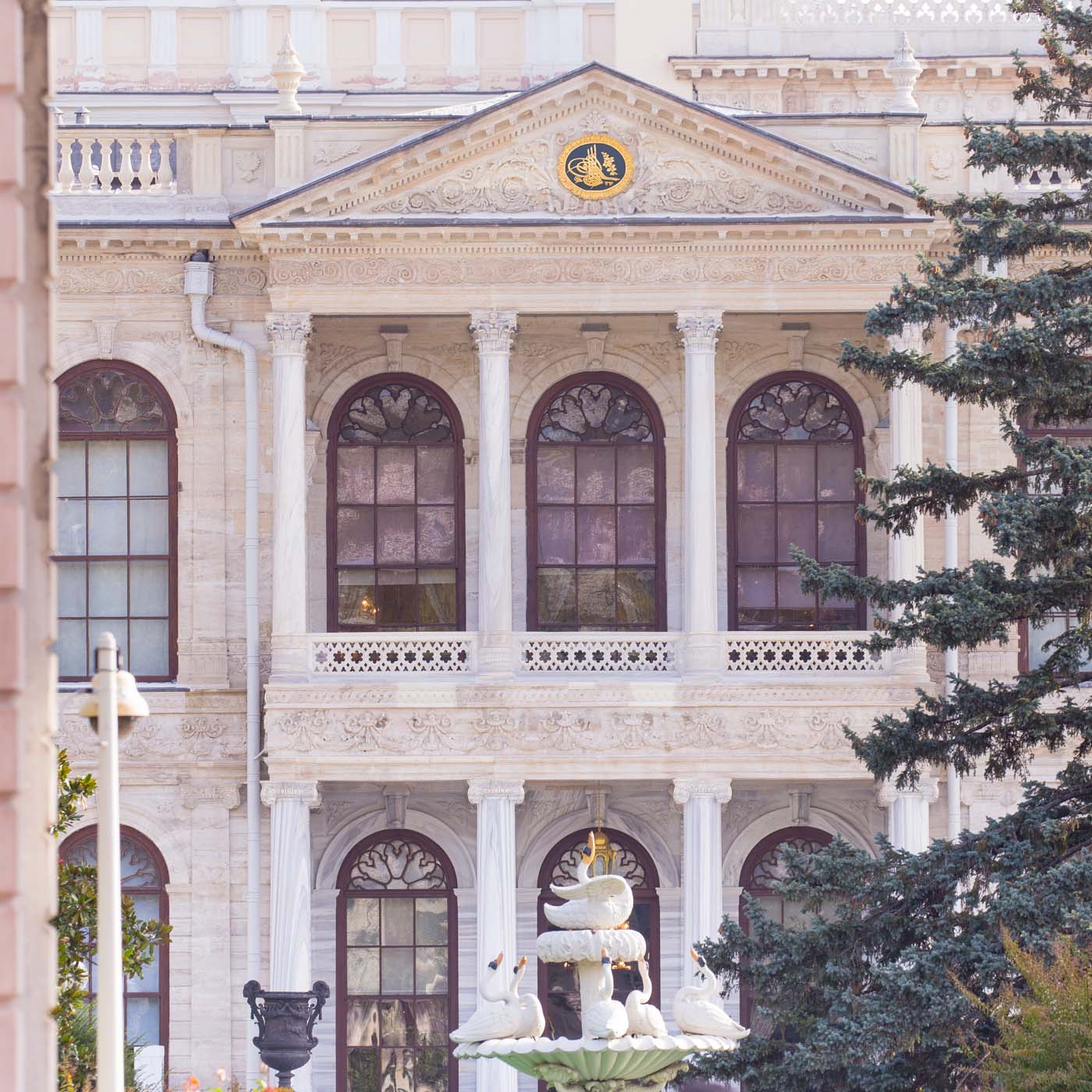
Architecturally, Dolmabahce is a lavish blend of European styles, mixing baroque, rococo, and neoclassical elements into a richly ornamented whole. Ottoman architects and craftsmen took the vocabulary of European palace design and applied it on a grand scale, producing a building that is unmistakably influenced by the West yet still distinctly the product of Ottoman wealth and ambition.
The overall impression is one of overwhelming richness. Marble, gold, and crystal are deployed with a lavishness that can feel almost excessive, and that was precisely the point. Dolmabahce was built to impress, even to intimidate, to leave every visitor in no doubt that the empire which raised it was rich, powerful, and fully the equal of any monarchy in Europe.
There is something almost audacious about the whole conception. To fill in a bay and raise upon it a palace longer than almost any in Europe, at the very moment the empire was struggling to pay its bills, took a confidence bordering on defiance. Dolmabahce is, in that sense, a portrait of its age: dazzling, ambitious, and shadowed from the start by the question of whether such splendor could really be sustained.
Sultan Abdulmecid and the Vision of Modernity
The palace was the creation of Sultan Abdulmecid I, who came to the throne in the mid-nineteenth century determined to lead his empire into a new age. He presided over a sweeping program of reforms aimed at modernizing the state along European lines, and Dolmabahce was in many ways the architectural expression of that program, a physical embodiment of his vision of a modern, westward-looking empire.
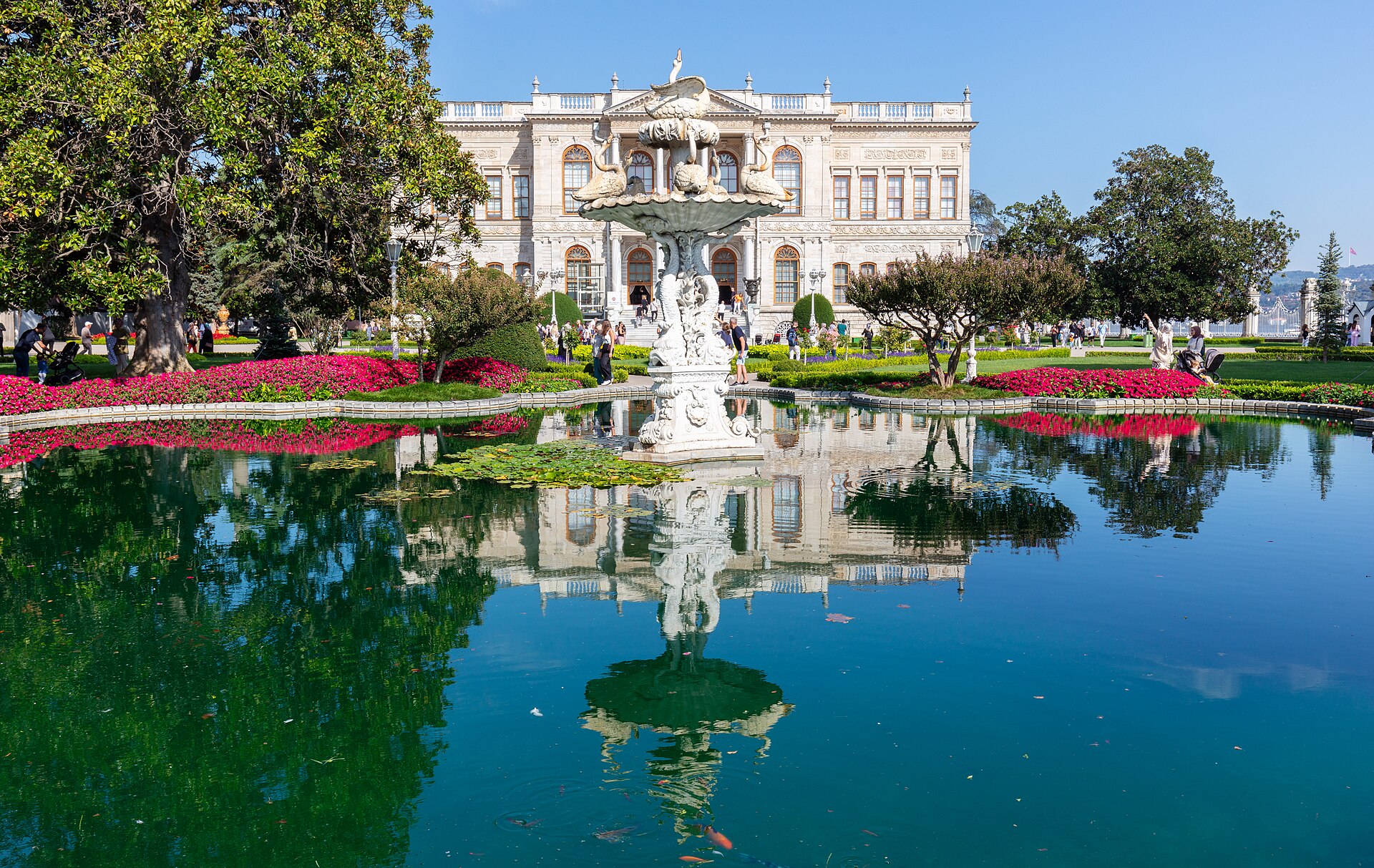
For Abdulmecid, the contrast with the old palace was deliberate and meaningful. Topkapi, with its courtyards and its ancient ceremonies, belonged to a world he was trying to move beyond. By building a European-style palace and moving his court there, he signaled a decisive break with the past and an embrace of the future, at least as he imagined it.
The cost of this ambition was staggering. Building Dolmabahce consumed an enormous portion of the state’s resources at a time when the empire’s finances were already under severe strain. The palace’s magnificence was thus double-edged, a glorious achievement that also contributed to the mounting debts that would burden the empire in its final decades.
Yet as a statement, Dolmabahce succeeded brilliantly. It announced to the world that the Ottoman sultan intended to be counted among the modern monarchs of Europe, living in a palace that could match theirs for splendor. Whether the empire could afford such a gesture was another question, but the message it sent was unmistakable and, for a time, convincing.
Abdulmecid himself was young, cultured, and genuinely drawn to European art and music, and the palace reflects his personal tastes as much as his political calculations. In its European paintings, its grand pianos, and its imported furnishings, one senses not only a strategy of statecraft but the enthusiasms of a sultan who loved the culture he was importing and wished to live surrounded by it.
The Balian Architects
The design of Dolmabahce was largely the work of members of the Balian family, a remarkable dynasty of Ottoman Armenian architects who served the sultans for generations. These architects were masters of the European styles then in fashion, and they brought to Dolmabahce both technical skill and a sophisticated understanding of how to translate the grandeur of Western palaces into an Ottoman context.

The Balians were responsible for many of the most important buildings of the late Ottoman period, and Dolmabahce stands among their greatest achievements. Working with a vast budget and the finest materials, they orchestrated a building of enormous complexity, coordinating the work of countless craftsmen and artists to produce interiors of extraordinary richness and coherence.
Their achievement was not simply to copy European models but to synthesize them. Baroque exuberance, rococo delicacy, and neoclassical order all appear at Dolmabahce, blended with Ottoman sensibilities into something new. The palace is a testament to the cosmopolitan character of the empire at its height, drawing on the talents of its diverse peoples to create a monument of international ambition.
The involvement of the Balian family also reflects the broader reality of the nineteenth-century Ottoman world, in which Armenian, Greek, and other communities played central roles in the empire’s cultural and economic life. The beauty of Dolmabahce is, among other things, a monument to that diversity, and to the extraordinary craftsmanship it made possible.
That a family of Armenian architects shaped the defining palace of the late Ottoman state says a great deal about the empire at this moment. It was still a world in which talent from any of its many communities could rise to the very summit of imperial patronage, and the Balians’ mastery of European design made them indispensable to sultans who wished to build in the modern manner.
The Marble Facade
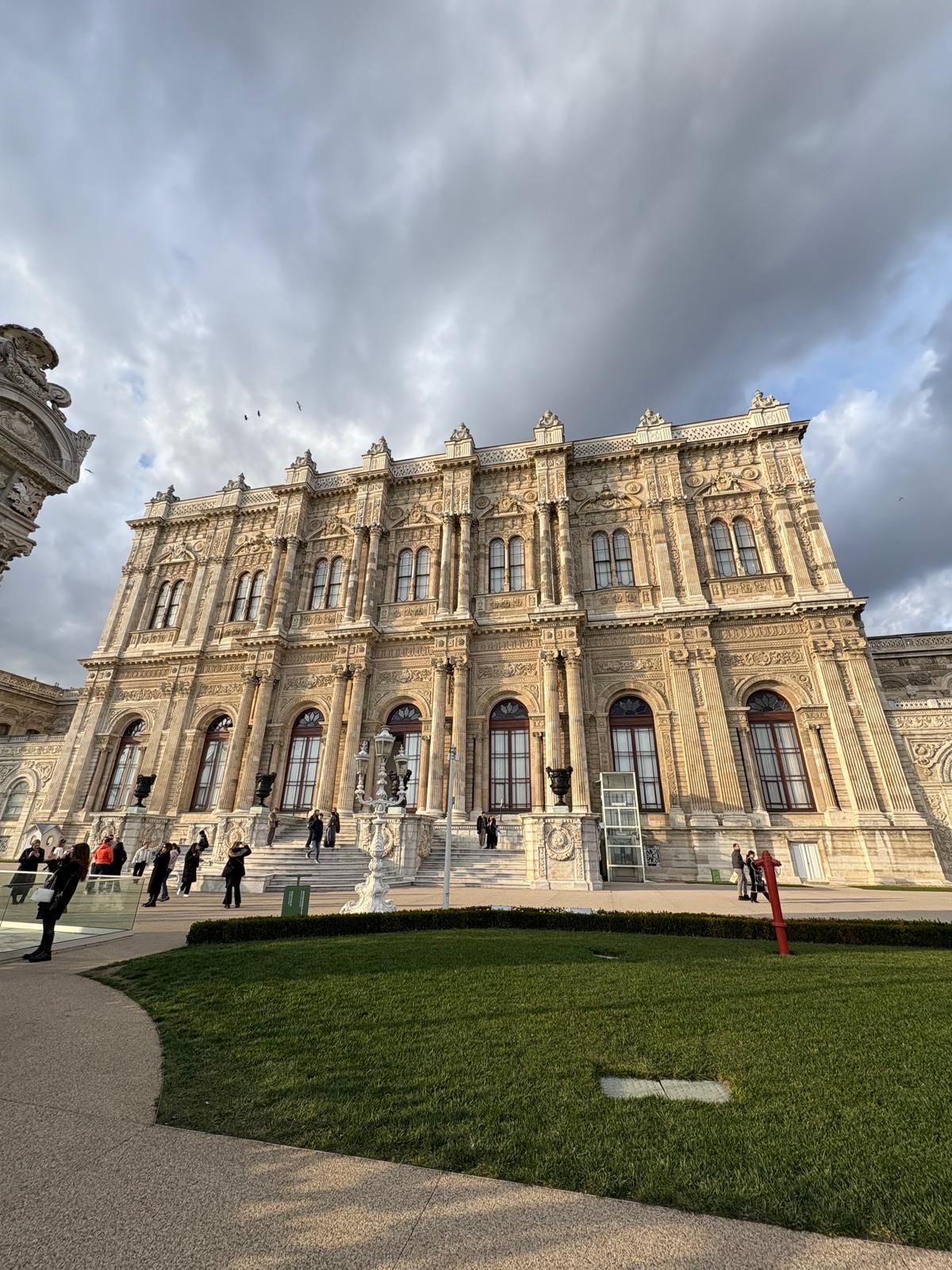
Approaching Dolmabahce from the water, you are struck first by its long, luminous facade of white marble, richly carved and ornamented, running for hundreds of meters along the shore. Rows of columns, elaborate window surrounds, and abundant sculptural detail give the front a rhythm of light and shadow, and the whole composition seems to float between the water and the sky.

The facade was designed to be seen from the Bosphorus, and it presents its most magnificent face to the passing ships. Ornate gates open onto the water, allowing arrivals by boat to enter the palace in appropriate style, while the marble terraces and balustrades along the shore create a threshold between the palace and the sea that is itself a work of art.
Every surface of the exterior is worked with care. The carving is intricate and profuse, covering the facade in a wealth of decorative detail that rewards close attention. This is architecture that does not know restraint, piling ornament upon ornament in a display of craftsmanship and wealth that was meant to overwhelm the eye and proclaim the resources of the empire.
Set against the blue of the Bosphorus and the green of the surrounding hills, the white marble of Dolmabahce makes an unforgettable picture. In changing light, at dawn, at dusk, under summer sun or winter cloud, the facade takes on different moods, but it never loses its air of confident, almost defiant magnificence, a palace determined to be admired.
The marble itself was chosen and worked with obsessive care, and the sheer quantity of carved stone is difficult to take in. Standing close to the facade, you realize that what reads from a distance as a smooth white front is in fact a dense thicket of columns, cornices, and ornament, every meter of it demanding the labor of skilled hands over many years.
Gates, Towers, and the Approach
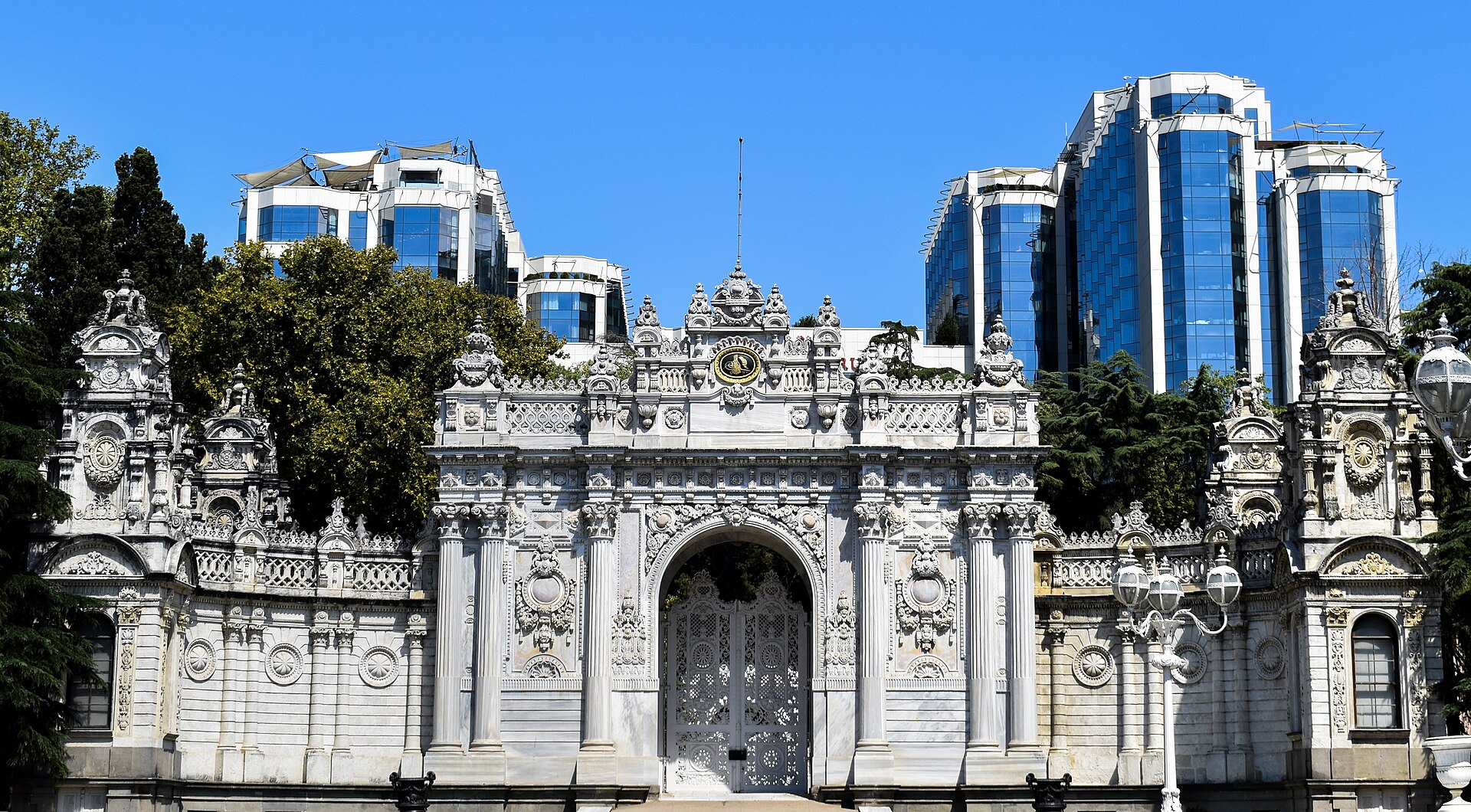
Dolmabahce is entered through a series of monumental gates, elaborately carved and richly ornamented, that set the tone for the splendor within. The great land gates, with their profuse decoration, function almost as triumphal arches, while the sea gates open the palace to the Bosphorus, reflecting the dual character of a residence that faced both the city and the water.
Near the palace rises a tall clock tower, added somewhat later, which has become one of the landmarks of the shoreline. Combining European architectural fashion with Ottoman sensibility, the tower marks the entrance to the palace grounds and served the practical and symbolic function of displaying the modern, regulated time that the reforming sultans wished to associate with their rule.
The gates and their surroundings were designed to manage the experience of arrival. Whether a visitor came by land through the ornate portals or by sea to the marble terraces, the approach was carefully staged to build a sense of anticipation and to impress upon the newcomer the grandeur of the place they were entering.
Together, the gates, the clock tower, and the terraces form a kind of overture to the palace, preparing the visitor for the opulence within. They also embody the palace’s central theme, the fusion of European form with Ottoman purpose, a modern face on an ancient throne, presented with confidence to a watching world.
The clock tower deserves a second look, for it embodies one of the deepest themes of the reforming era. To measure and display time in the European manner was, in its own quiet way, a revolutionary act, aligning the rhythms of the Ottoman capital with those of the industrial West. A tower that simply told the time thus carried a whole philosophy of modernization within it.
The Crystal Staircase
Among the most celebrated features of Dolmabahce is its Crystal Staircase, a sweeping double stair whose balusters are made of crystal. Rising beneath a great chandelier, glittering with light, it is one of the most dazzling architectural set pieces in the palace, and it perfectly captures the extravagant spirit of the whole building.
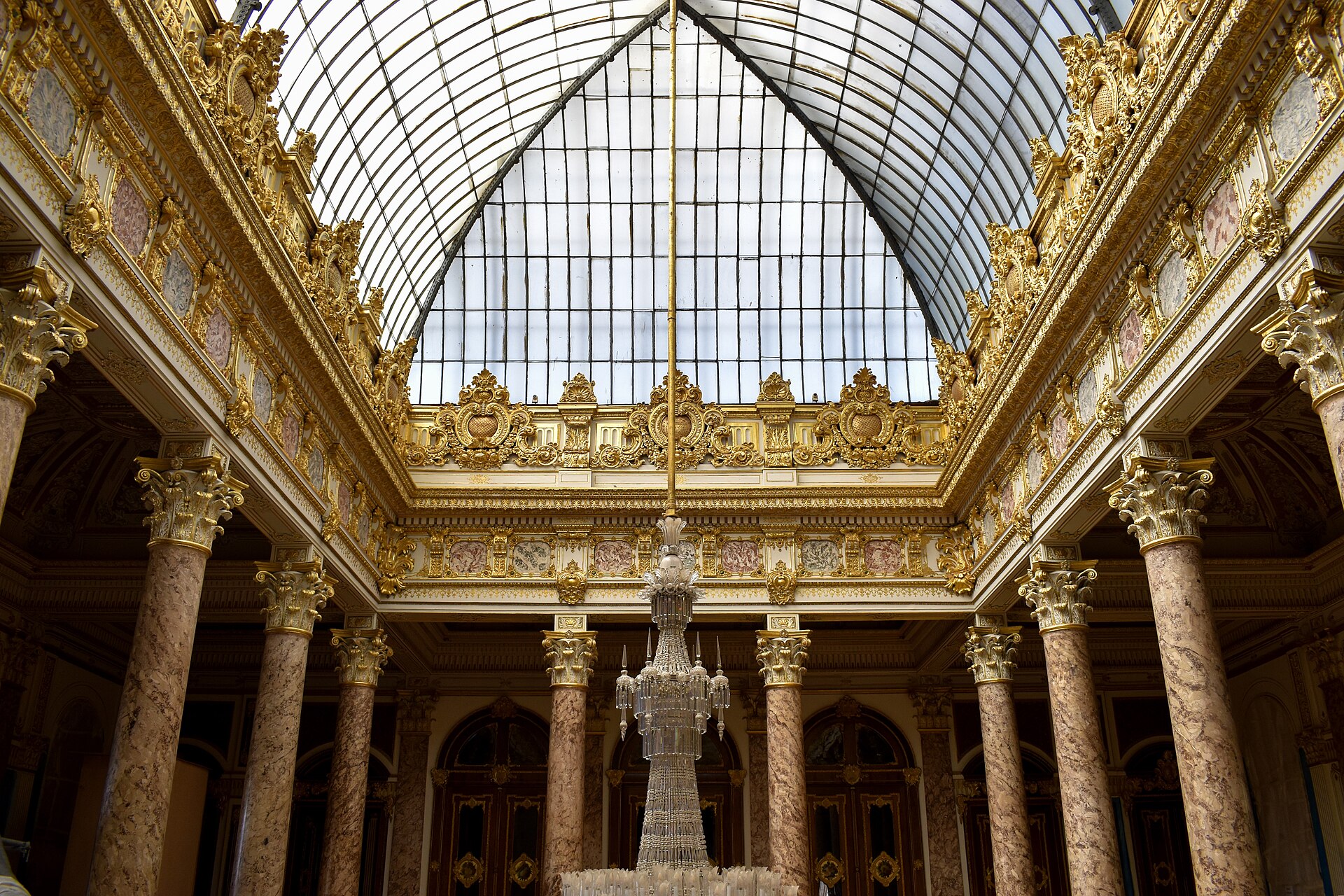
The use of crystal for the balustrade is a wonderful example of the palace’s love of luxury for its own sake. Where another palace might use marble or gilded iron, Dolmabahce uses crystal, turning a functional element into a shimmering display of wealth and craftsmanship. Ascending the stair, a visitor is quite literally surrounded by light and glitter.
The staircase is set in a grand hall that connects the more public parts of the palace, and it was designed as a ceremonial space where the ascent itself became a kind of performance. Guests climbing to the state rooms above would experience the crystal, the light, and the scale as a prelude to the even greater splendors that awaited them.
Like so much at Dolmabahce, the Crystal Staircase is both beautiful and slightly overwhelming, a demonstration of what unlimited ambition and a vast budget could achieve. It remains one of the highlights of any visit, a moment where the palace’s determination to astonish reaches one of its many peaks.
It is worth pausing to consider the engineering as much as the beauty. Casting and working crystal into a structural balustrade that could bear the weight and traffic of a great palace was no small feat, and the staircase is a reminder that Dolmabahce’s luxury rested on genuine technical mastery, not merely on the lavish spending of money.
The Ceremonial Hall and the Great Chandelier
The heart of Dolmabahce is its vast Ceremonial Hall, an enormous domed space designed for the grandest occasions of state. Rising through the full height of the palace, crowned by a soaring dome and ringed by columns, it is a room of overwhelming scale, meant to accommodate great gatherings and to leave every visitor awestruck by its sheer size and richness.
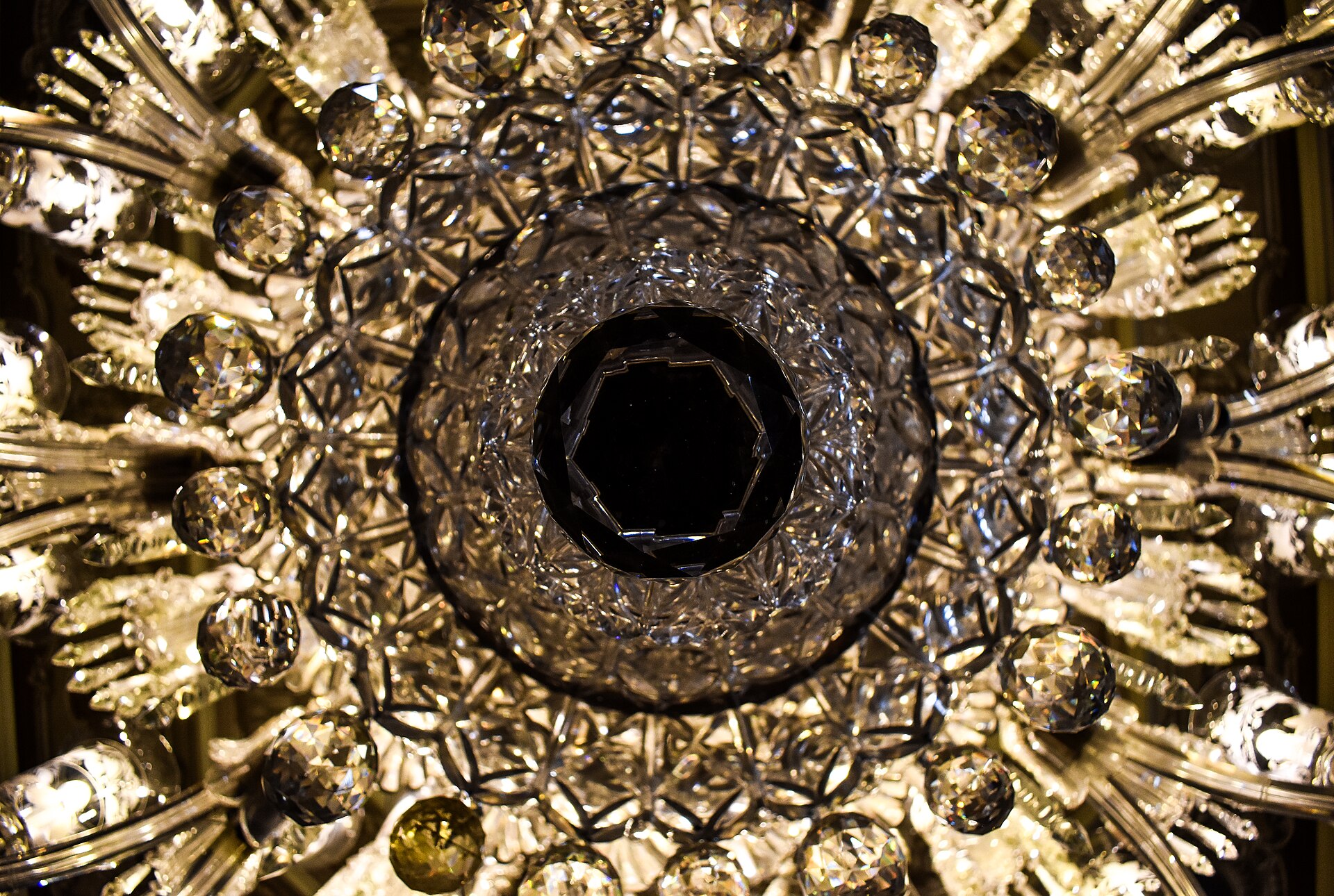
Hanging from the center of the dome is one of the largest chandeliers in the world, an immense construction of crystal holding hundreds of lights. A gift that came to the palace from abroad, it weighs several tons and dominates the hall beneath it, a glittering centerpiece that concentrates the extravagance of the whole building into a single breathtaking object.
The Ceremonial Hall was used for the most important events of the court, from receptions to celebrations, occasions when the full theater of imperial power was on display. Its scale allowed the sultan to gather large numbers of guests in a setting of overwhelming grandeur, reinforcing the message of wealth and modernity that the whole palace was designed to convey.
Standing beneath the great chandelier, looking up into the dome, a visitor feels the full ambition of Dolmabahce. This was a room built to rival the greatest halls of Europe, and in its scale and splendor it succeeds. It remains the climax of the palace, the point toward which the whole magnificent building seems to build.
The dome overhead is painted to heighten the sense of soaring space, and the acoustics of the hall were considered so that music and ceremony could fill it. On great occasions, with the chandelier ablaze and the vast room crowded with guests in their finery, the effect must have been overwhelming, a deliberate assault on the senses designed to leave no doubt about the majesty of the throne.
The Selamlik and the Public Palace
Like earlier Ottoman residences, Dolmabahce was divided into distinct realms, and the more public, official part of the palace was known as the Selamlik. This was the domain of ceremony and government, where the sultan received guests, conducted the business of state, and displayed the grandeur of his court to the outside world.
The rooms of the Selamlik are among the most opulent in the palace, richly decorated with gold, fine furniture, European paintings, and luxurious textiles. Each was designed to impress, whether as a setting for official receptions or as a backdrop for the daily ceremonies that surrounded the person of the sultan even in this modernizing age.
This division of the palace into public and private realms preserved an old Ottoman principle even within a thoroughly European building. The forms had changed, the styles were now Western, but the underlying logic of separating the ceremonial from the domestic, the outward-facing from the intimate, remained recognizably part of the tradition Dolmabahce inherited.
Walking through the Selamlik, a visitor sees the face that the palace presented to the world, the image of a rich and modern monarchy. It is a sequence of dazzling rooms, each more splendid than the last, all working together to project the confidence and magnificence that the reforming sultans so badly wished to display.
Many of the paintings that hang in these rooms were the work of European and Ottoman artists alike, including seascapes and views that echoed the palace’s own relationship with the water. The art was not incidental but part of the message, situating the Ottoman court within the cultural world of nineteenth-century Europe to which it so eagerly wished to belong.
The Harem and Private Life
Beyond the public splendor of the Selamlik lay the Harem, the private quarters of the sultan and his family. Here the character of the palace shifts, from the grand ceremonial spaces meant for display to the more intimate rooms where the royal household actually lived, though intimate is a relative term in a palace of such scale.
The Harem at Dolmabahce is still richly decorated, but its atmosphere is somewhat more domestic than that of the state rooms. This was where the private life of the dynasty unfolded, where the sultan’s family lived and where the ordinary rhythms of a household, however grand, played out behind the magnificent public face of the palace.
As at Topkapi, the Harem was a world governed by hierarchy and custom, home to the women of the imperial family and the many servants who attended them. But the setting was now thoroughly modern, with European furniture and fittings replacing the tiled pavilions of the older palace, another sign of the sweeping changes the dynasty was embracing.
The presence of both Selamlik and Harem under one roof shows how Dolmabahce balanced continuity and change. It was a European palace in its forms and a modern statement in its ambitions, yet it still organized itself around the age-old division between the public and the private, the ceremonial and the domestic, that had always shaped Ottoman court life.
The shift from the tiled pavilions of Topkapi to the European interiors of the Dolmabahce harem is one of the most telling contrasts in Ottoman history. In a single lifetime, the private world of the dynasty had been transformed, its old visual language set aside in favor of a new one imported from abroad, a change as profound in its way as any political reform.
Chandeliers, Clocks, and Carpets
Dolmabahce is filled with an extraordinary collection of decorative treasures, gathered from across the empire and beyond. Chandeliers of crystal hang in room after room, clocks of great beauty and precision mark the hours, and the floors are covered with magnificent carpets woven at the empire’s finest workshops. Together they create interiors of almost bewildering richness.

The chandeliers are a particular glory of the palace. Beyond the famous giant in the Ceremonial Hall, countless others, many of European manufacture, fill the rooms with light and sparkle. In an age before electric lighting, these vast constructions of crystal and candle were both practical necessities and dazzling works of art, and Dolmabahce assembled them in staggering numbers.
The palace is also famous for its clocks, reflecting the reforming era’s fascination with modern, regulated time. Fine timepieces from the best makers appear throughout the rooms, symbols of a court that wished to align itself with the precise, ordered rhythms of the modern European world it so admired.
Underfoot lie some of the finest carpets ever woven, products of the empire’s celebrated looms. These carpets, along with the silk hangings and fine furniture that fill the palace, complete the picture of a residence in which no surface was left plain and no opportunity for display was missed, a total environment of luxury from floor to ceiling.
Taken together, this vast accumulation of objects turns the palace into something like a museum of nineteenth-century luxury. Each chandelier, clock, and carpet was a considered acquisition, and the collection as a whole reflects a court that saw the gathering of beautiful things as an essential part of its dignity and a further proof of its place among the great powers.
The End of an Era
Dolmabahce witnessed the final chapters of the Ottoman story. It served as the residence of the last sultans, and after the empire fell and the Turkish Republic was founded, the palace took on a new role in the life of the modern nation. Its most poignant association, however, is with the death of Mustafa Kemal Ataturk, the founder of that republic.

Ataturk used Dolmabahce during his visits to Istanbul, and it was here, in a modest bedroom within the vast palace, that he died. In memory of that moment, the clocks in the palace were traditionally stopped at the time of his passing, a quiet and moving gesture that turned the great imperial residence into a place of national mourning and remembrance.
There is a deep irony in this. A palace built to proclaim the modern ambitions of the Ottoman sultans became the place where the man who replaced their empire with a modern republic breathed his last. The building that was meant to secure the future of one order instead presided over its end and the birth of another.
For visitors today, the room where Ataturk died is among the most visited and most solemn parts of the palace. Amid the crystal and gold, it offers a moment of stillness and reflection, a reminder that Dolmabahce is not only a monument to imperial splendor but also a witness to the profound transformations that reshaped the nation in the twentieth century.
The stopped clocks have become one of the most quietly powerful images in modern Turkish memory. In a palace obsessed with displaying modern, precise time, the deliberate halting of the clocks at a single moment transforms the machinery of the building into an instrument of mourning, freezing the palace forever at the instant its most famous guest passed away.
The Bosphorus Setting
Part of what makes Dolmabahce so memorable is its setting on the Bosphorus, the great strait that divides Europe from Asia and connects the seas. The palace’s long facade rises directly from the water, and its terraces and gardens open onto one of the most beautiful and storied waterways in the world, alive with the constant passage of ships.

Beside the palace stands a graceful mosque, and around it spread gardens that once formed part of the imperial grounds. Together with the clock tower and the marble terraces, they create an ensemble that stretches along the shore, a whole landscape of imperial architecture set against the shifting waters of the strait.
The Bosphorus location was central to the palace’s meaning. This was a residence that faced the world, positioned on the great highway of trade and empire, visible to all who passed. Its magnificence was not hidden but proclaimed, spread out along the water for the admiration of a watching international audience.
To see Dolmabahce from the water, as it was meant to be seen, is to understand it fully. The long white facade, the marble gates opening to the sea, the mosque and the tower rising beside it, all set against the traffic of the Bosphorus, compose one of the great urban scenes of the world, a fitting stage for the drama of an empire’s final act.
The Bosphorus has always been more than a backdrop; it is a living presence in the life of the palace. Ferries, tankers, and fishing boats pass ceaselessly before the marble facade, and the light off the water fills the seaward rooms. To live at Dolmabahce was to live with the constant movement of the strait, the pulse of a city built where two seas and two continents meet.
Visiting Dolmabahce Today
Today Dolmabahce Palace is one of Istanbul’s most popular attractions, drawing large numbers of visitors who come to marvel at its opulent interiors and its beautiful setting on the Bosphorus. It is easily reached from the center of the city and makes a fascinating contrast to the older palace of Topkapi, showing how dramatically Ottoman taste and ambition changed over the centuries.

View the exact location on Google Maps
Visits to the palace are usually guided, leading through the sequence of state rooms, the Crystal Staircase, and the great Ceremonial Hall, as well as the private quarters and the room associated with Ataturk. Because the palace is so popular, it can be busy, and arriving early or booking ahead can make for a more comfortable and rewarding experience.
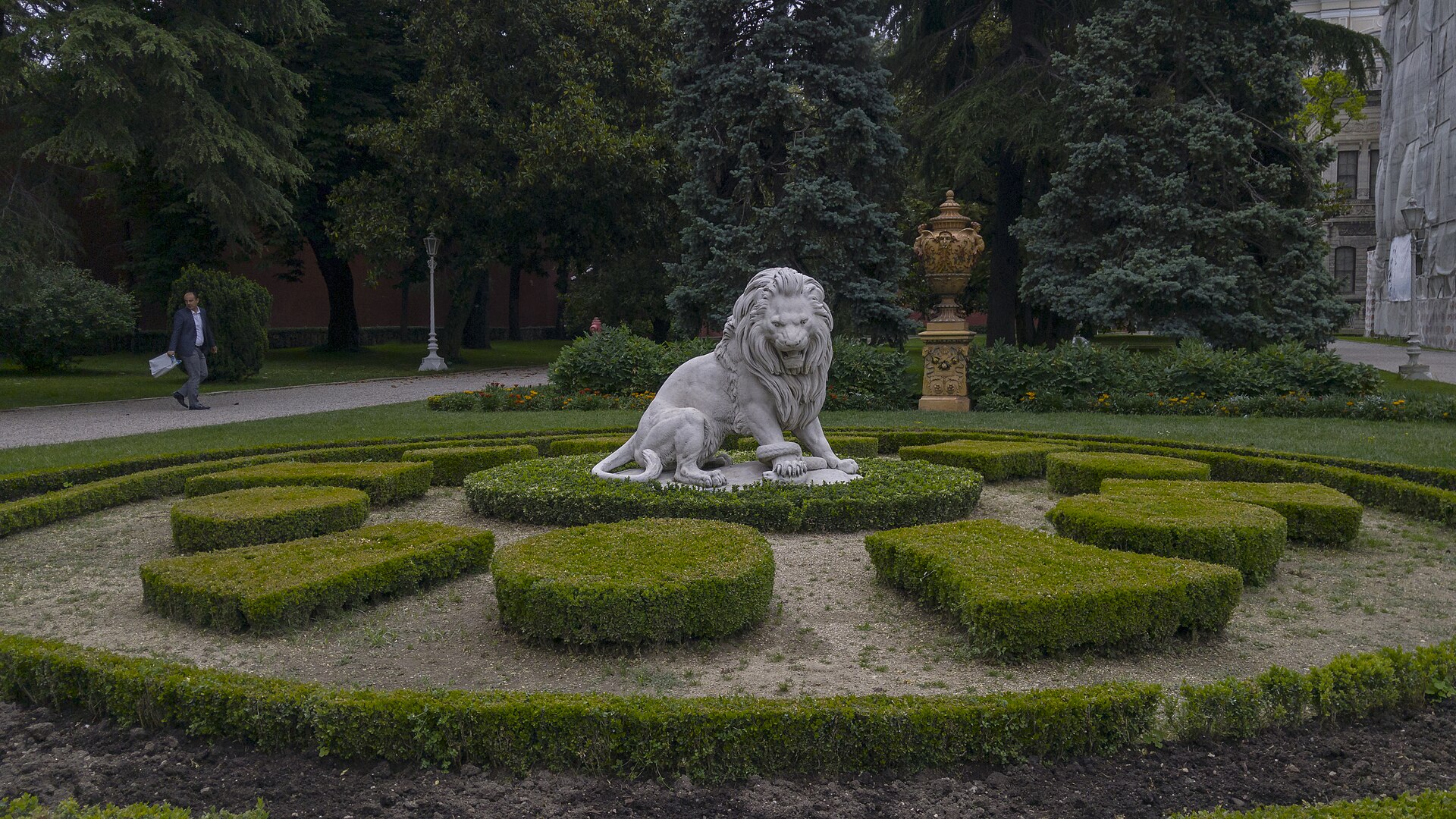
The grounds and the waterside setting are highlights in their own right. Taking time to walk along the terraces, to see the mosque and the clock tower, and to look out over the Bosphorus rewards the visitor with some of the finest views in the city, and helps to explain why this spot was chosen for so grand a palace.
Whether you come for the dazzling interiors, the historical associations, or simply the beauty of the setting, Dolmabahce offers an unforgettable glimpse into the twilight of the Ottoman Empire. It is a palace of superlatives, of the largest chandelier and the most lavish halls, and also a place of quiet historical resonance, where an empire ended and a nation mourned its founder.
If you can, approach or leave the palace by boat at least once, for that is how it was always meant to be experienced. Seen from the deck of a passing ferry, the long white front sliding by against the hills, Dolmabahce reveals itself as its builders intended, a proud face turned toward the water and the world beyond.
Palaces Nearby
Dolmabahce is one of several great imperial residences along the Bosphorus. To see how Ottoman palace-building changed over the centuries, these nearby palaces make natural companions to a visit here.
You May Like



2 thoughts on “Dolmabahce Palace: The Ottoman Empire’s Glittering Answer to Versailles”