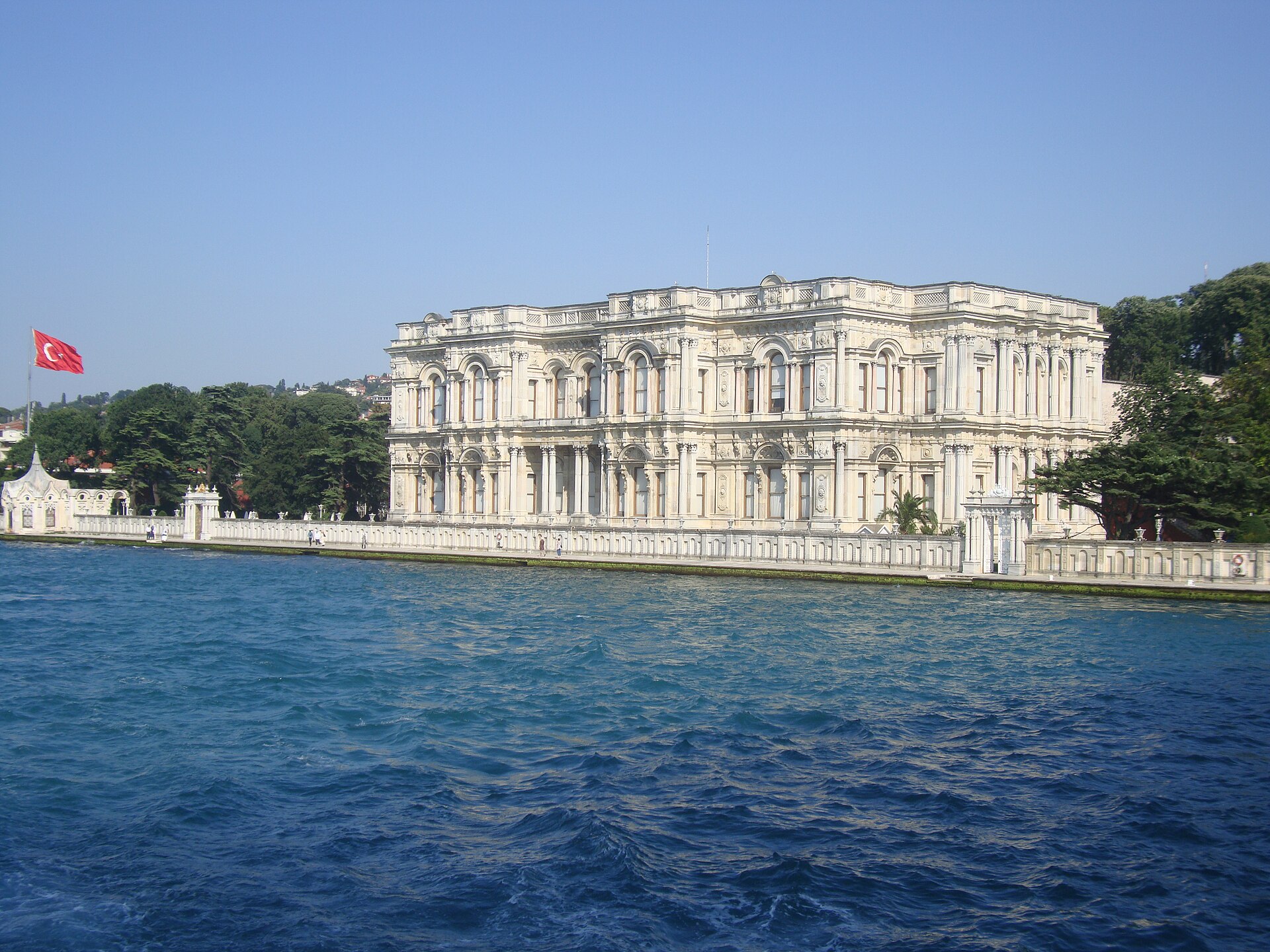
On the Asian shore of the Bosphorus, just beneath the great suspension bridge that now links two continents, stands a palace of gleaming white marble that seems to rise straight out of the water. This is Beylerbeyi, the elegant summer residence of the Ottoman sultans, a place built not for the heavy business of empire but for pleasure, for escape, and for the entertainment of the most distinguished guests the empire could attract. Smaller and more intimate than the vast palaces across the water, it is for many visitors the most charming of all the imperial residences of Istanbul.
Beylerbeyi was built in the second half of the nineteenth century as a summer palace and, above all, as a guesthouse for visiting royalty. Where Dolmabahce was designed to overwhelm with sheer scale, Beylerbeyi was meant to delight, a jewel box set in gardens on the water, perfectly suited to a season of leisure and to impressing foreign monarchs with the refinement of the Ottoman court. Its rooms are grand but not exhausting, its scale human enough that you can imagine actually living in it.
The palace belongs to the same modernizing, westward-looking moment that produced Dolmabahce, and it shares that era’s love of European style, crystal chandeliers, and lavish decoration. Yet at Beylerbeyi these are tempered by a lightness and a closeness to nature that make the palace feel less like a monument and more like a retreat. The sound of water is never far away, gardens climb the hillside behind, and the whole place seems designed for pleasant days rather than solemn ceremony.
In this article you will explore Beylerbeyi from the sultan who built it to the architects who shaped it, through its sparkling interiors and its beautiful gardens, to the famous guests it hosted and the melancholy role it played at the very end of the empire. For this graceful summer palace on the water saw both the height of Ottoman hospitality and the final, sad confinement of one of its last sultans, and its beauty carries within it the whole arc of an empire’s closing century.
In This Article
- A Jewel on the Asian Shore
- Sultan Abdulaziz and the Building of the Palace
- The Architect and the Design
- A Summer Palace and Guesthouse
- The Marble Facade on the Water
- The Sea Kiosks and Pavilions
- Crystal, Carpets, and Painted Ceilings
- A Sultan and the Sea
- Terraced Gardens and Hidden Pools
- Royal Guests and Ottoman Hospitality
- The Palace and the End of an Era
- Under the Bridge, Between Two Continents
- Visiting Beylerbeyi Today
A Jewel on the Asian Shore
Beylerbeyi sits on the Asian side of the Bosphorus, directly on the water, its white marble facade reflected in the strait below. The setting is spectacular, with the palace framed by gardens rising up the hillside behind it and the busy waterway spread out in front. Today the great bridge that crosses the Bosphorus passes almost directly overhead, an unexpected juxtaposition of nineteenth-century elegance and modern engineering.

Compared with the enormous palaces on the European shore, Beylerbeyi is modest in size, and that is part of its appeal. It was never meant to house the whole apparatus of government or a vast court, but rather to serve as a summer residence and a place to receive guests. This more limited purpose gives the palace a coherence and an intimacy that its larger cousins sometimes lack.
The palace is nonetheless richly decorated and thoroughly luxurious, sharing the taste for European styles and lavish ornament that marked the late Ottoman period. Crystal, gold, fine carpets, and painted ceilings fill its rooms, but they are deployed in a setting whose scale keeps them from becoming overwhelming, so that the effect is one of elegance rather than sheer excess.
Above all, Beylerbeyi is defined by its relationship to the water and the gardens. Everything about the palace, from the sea kiosks at the shore to the terraced gardens behind, is designed to make the most of its beautiful setting. It is a place that seems to breathe with the rhythm of the Bosphorus, a summer palace in the truest sense, built for warm days spent between the water and the trees.
There is a reason so many visitors leave Beylerbeyi calling it their favorite. The grand palaces can awe you into a kind of exhaustion, but this one invites you to linger, to sit in a sea kiosk and simply watch the water. Its scale flatters the human body rather than dwarfing it, and that alone sets it apart from almost every other imperial residence in the city.
Sultan Abdulaziz and the Building of the Palace
Beylerbeyi was built in the mid-1860s for Sultan Abdulaziz, who came to the throne determined, like his predecessors, to project the image of a modern and cultivated monarch. A lover of the sea and of grand building projects, Abdulaziz wanted a summer palace on the Bosphorus that could serve both as a personal retreat and as a stage for entertaining the foreign royalty whose respect the empire increasingly sought.

The site had long been associated with imperial residences, and earlier structures had stood there before. Abdulaziz swept these away and commissioned a new palace of marble, more magnificent than anything that had occupied the spot before. The result was a building that captured the ambitions of his reign, elegant, European in flavor, and designed to make a strong impression on distinguished visitors.
Abdulaziz was a sultan of expensive tastes, and Beylerbeyi was one of several costly projects he pursued. Like Dolmabahce before it, the palace reflected a desire to keep pace with the courts of Europe, whatever the strain on the empire’s finances. Beauty and prestige were treated as necessities of state, worth the enormous sums they consumed.
The sultan took a personal interest in the palace and used it as a favored summer residence and a place to receive important guests. In its combination of comfort, beauty, and a superb setting, Beylerbeyi suited him perfectly, and it remains closely associated with his reign, a graceful monument to a ruler who loved the water and the pleasures of a well-appointed summer palace.
Abdulaziz was also, by the standards of his line, a great traveler, and he had seen the palaces of Europe with his own eyes. That firsthand acquaintance shows in Beylerbeyi, which feels less like an imitation of a European palace than the confident work of a patron who knew exactly what effect he wanted and had the means to command it.
The Architect and the Design
Like Dolmabahce, Beylerbeyi was designed by a member of the celebrated Balian family, the dynasty of Ottoman Armenian architects who shaped so much of the late imperial capital. Their mastery of European architectural styles, combined with a deep understanding of Ottoman needs and sensibilities, made them the natural choice for a palace intended to impress a westernizing court and its foreign guests.
The design of Beylerbeyi shows the same blend of influences that marks the other palaces of the period, drawing on European models while adapting them to its particular purpose as a summer residence. The architect had to balance grandeur with intimacy, creating rooms magnificent enough to receive kings and queens yet suited to a palace of relatively modest size and a season of leisure.
The solution was a building of great elegance, its spaces carefully arranged to make the most of the site and the views. Rather than overwhelming scale, the design emphasizes proportion, light, and the relationship between the palace and its gardens and water, producing an ensemble that feels harmonious and complete.
The involvement of the Balian family links Beylerbeyi to the broader story of late Ottoman architecture and to the diverse talents that made it possible. As at Dolmabahce, the beauty of this palace is a testament to the cosmopolitan character of the empire in its final century, and to the extraordinary craftsmanship that its wealth and ambition could still command.
A Summer Palace and Guesthouse
The essential purpose of Beylerbeyi was to serve as a summer palace and a guesthouse, and this shaped everything about it. The sultans would come here to escape the heat and formality of their main residences, to enjoy the cooler air and the beauty of the Bosphorus during the warm months. It was a place of relative relaxation, insofar as any imperial residence could be relaxed.

Even more important was its role in receiving distinguished guests. As the empire sought to strengthen its ties with the great powers of Europe, the entertainment of visiting royalty became an important instrument of diplomacy, and Beylerbeyi was designed to serve as a magnificent setting for such visits. Foreign monarchs lodged here would carry home an impression of Ottoman wealth and refinement.
This dual function as retreat and guesthouse gave the palace its particular character. It needed to be comfortable and beautiful enough for the sultan’s own enjoyment, yet grand enough to honor visiting kings and queens. The balance it struck between intimacy and splendor is one of the things that makes Beylerbeyi so appealing to visitors today.
In this respect Beylerbeyi complemented the larger palaces rather than competing with them. Where the great residences on the European shore handled the ceremony and administration of empire, Beylerbeyi offered a more human-scaled elegance, a place for pleasure and for the personal diplomacy of royal hospitality that played its own quiet part in the affairs of state.
The seasonal rhythm of court life gave the palace its purpose. For a few warm months each year it would come alive, filling with the household and, on special occasions, with the glittering entourages of visiting royalty, before falling quiet again as the court returned to its winter residences. Beylerbeyi was built for those bright interludes, and it still carries their air of holiday and welcome.
The Marble Facade on the Water
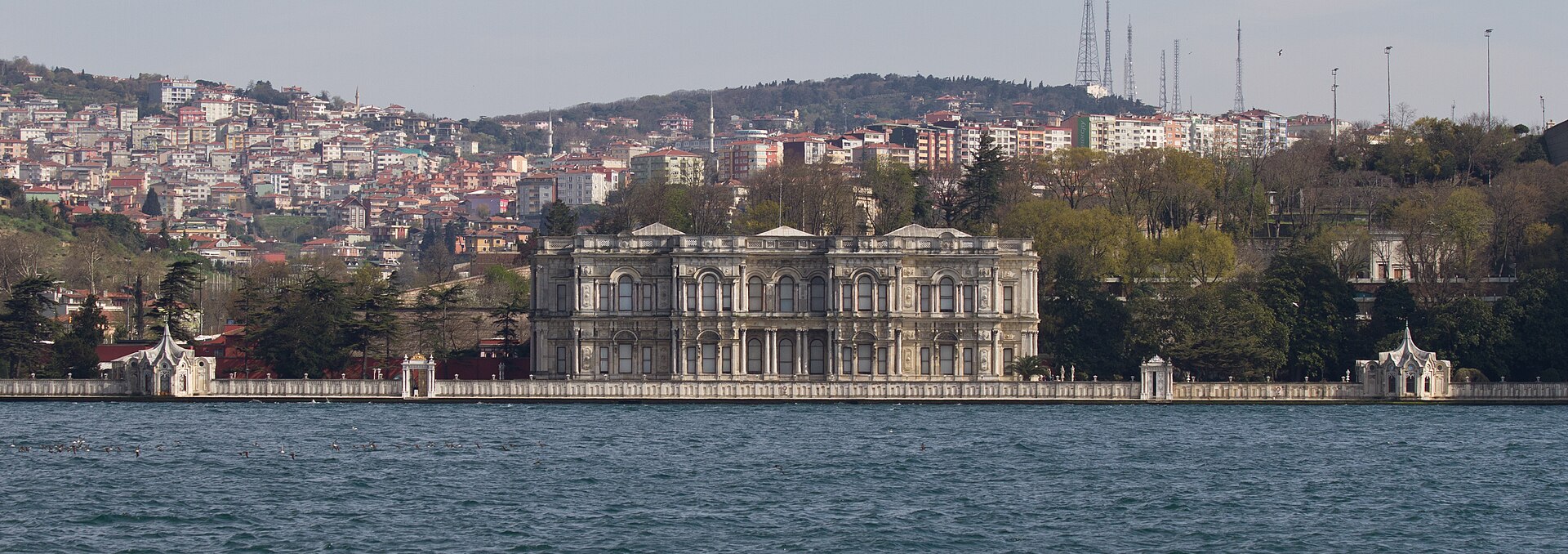
The exterior of Beylerbeyi is a study in graceful proportion. Built of white marble, the palace presents an elegant facade to the Bosphorus, richly but not excessively ornamented, its lines clean and its scale pleasing. Rising directly from the water’s edge, it seems to belong as much to the strait as to the shore, a building conceived in harmony with its setting.
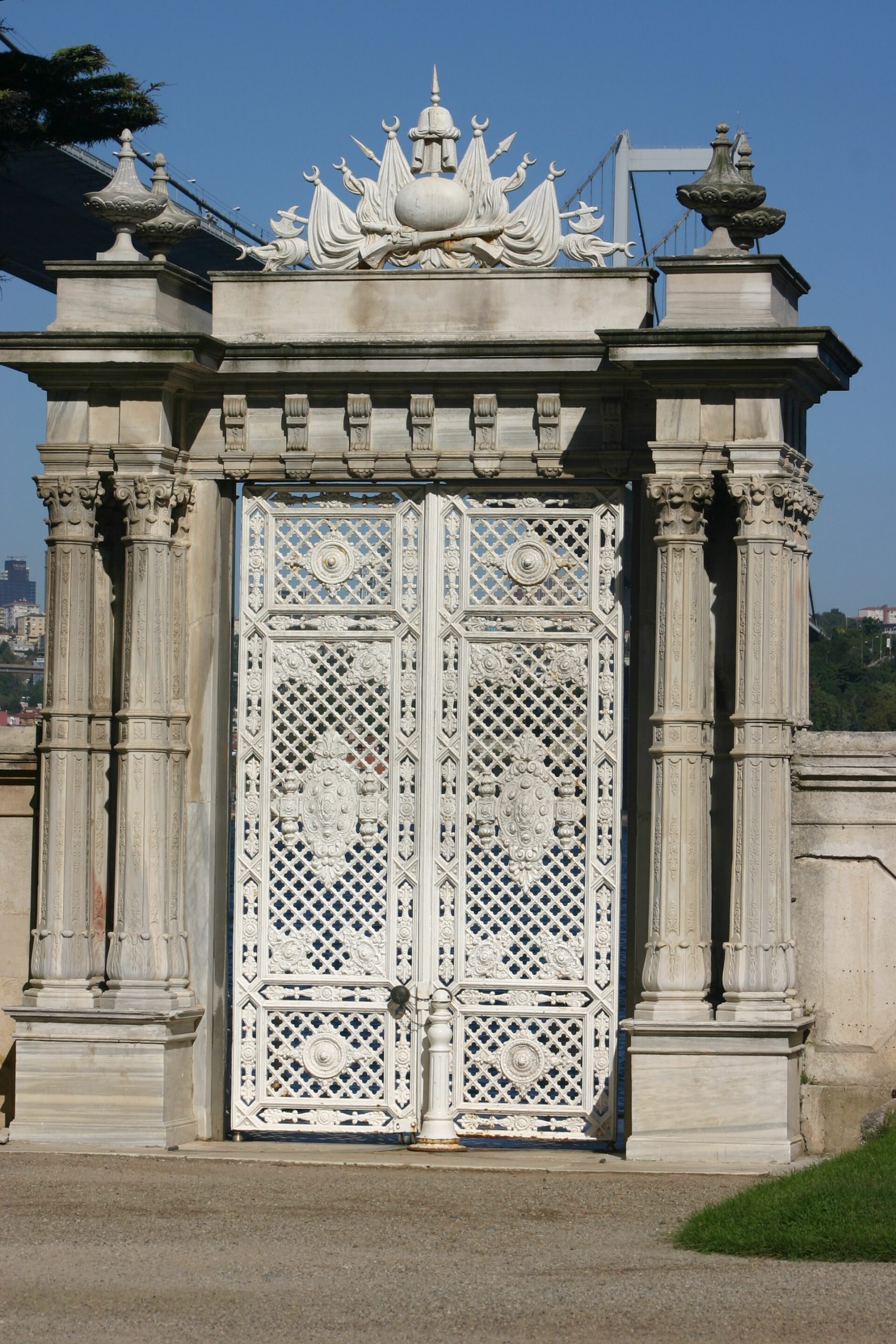
The seaward front was designed to be admired from the water, like the other palaces of the Bosphorus, and it presents its finest face to the passing ships. Marble terraces and landing stages connect the palace to the strait, allowing arrivals by boat and creating a threshold between the building and the water that is itself beautifully composed.
The decoration of the facade is refined and restrained compared with the sometimes overwhelming ornament of larger palaces. Carved detail enriches the marble without smothering it, and the overall effect is of elegance and lightness rather than heavy magnificence, entirely in keeping with the palace’s purpose as a summer retreat.
Set against the blue of the Bosphorus, with green hills rising behind and, today, the great bridge soaring overhead, the white marble of Beylerbeyi makes a picture of remarkable beauty. It is a facade that rewards viewing from many angles, whether from the water, the gardens, or the opposite shore, always graceful, always in perfect accord with its surroundings.
The marble was worked with a lightness of touch that suits the palace’s purpose. Rather than the dense, almost overwhelming carving of the largest residences, the ornament here knows when to stop, letting the pale stone and the clean lines of the building speak for themselves. It is a facade that trusts its proportions, and it is the better for that restraint.
The Sea Kiosks and Pavilions
Among the most charming features of Beylerbeyi are its sea kiosks, small pavilions set right at the water’s edge. These little structures, one at each end of the seaward front, were places to sit and enjoy the Bosphorus, to catch the breeze and watch the ships pass, and they perfectly express the pleasure-loving spirit of the summer palace.
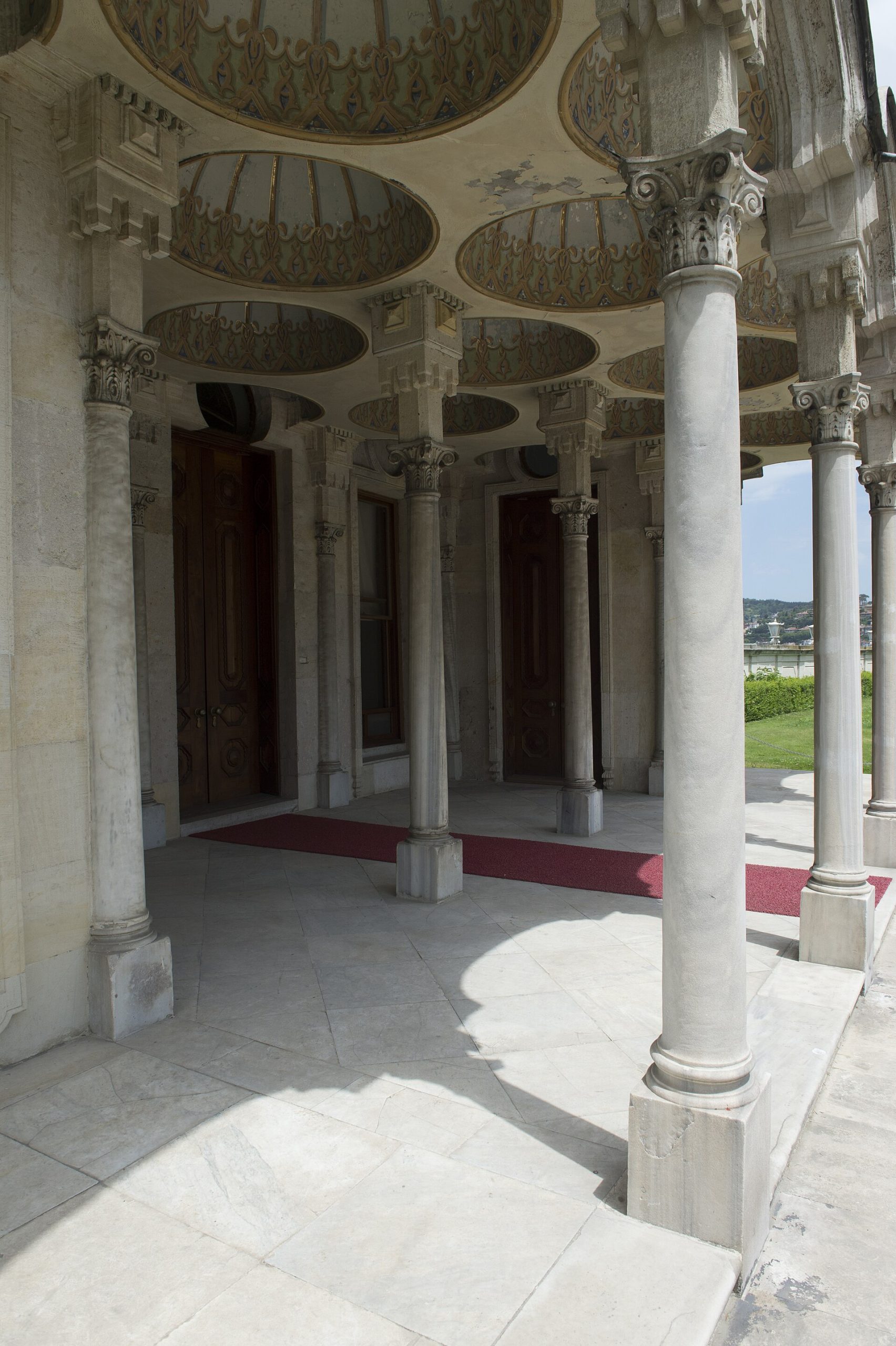
The kiosks are delicately designed, their forms light and elegant, and they blur the line between architecture and landscape, between the palace and the water. Sitting within one, a visitor is almost surrounded by the Bosphorus, close enough to touch the water, immersed in the sound and movement of the strait. They are among the most delightful spaces in any of the imperial palaces.
Beyond the sea kiosks, the grounds of Beylerbeyi hold other pavilions and structures, including elegant marble kiosks set among the gardens. These smaller buildings extended the pleasures of the palace into the landscape, providing shaded places to rest and enjoy the views, and adding to the sense of Beylerbeyi as a whole environment designed for leisure.
Together these pavilions give the palace much of its character. They speak of a way of life oriented toward the enjoyment of nature and the setting, of long summer days spent moving between the palace, the gardens, and the water. In their delicacy and their intimacy with the Bosphorus, they capture the essence of what makes Beylerbeyi so special.
To sit in one of these sea kiosks on a summer evening, with the light fading over the water and the ships sliding past just beyond the marble rail, must have been one of the great pleasures available to anyone on earth. The kiosks turn the simple act of watching the Bosphorus into something close to a work of art, and they remain the emotional heart of the palace.
Crystal, Carpets, and Painted Ceilings
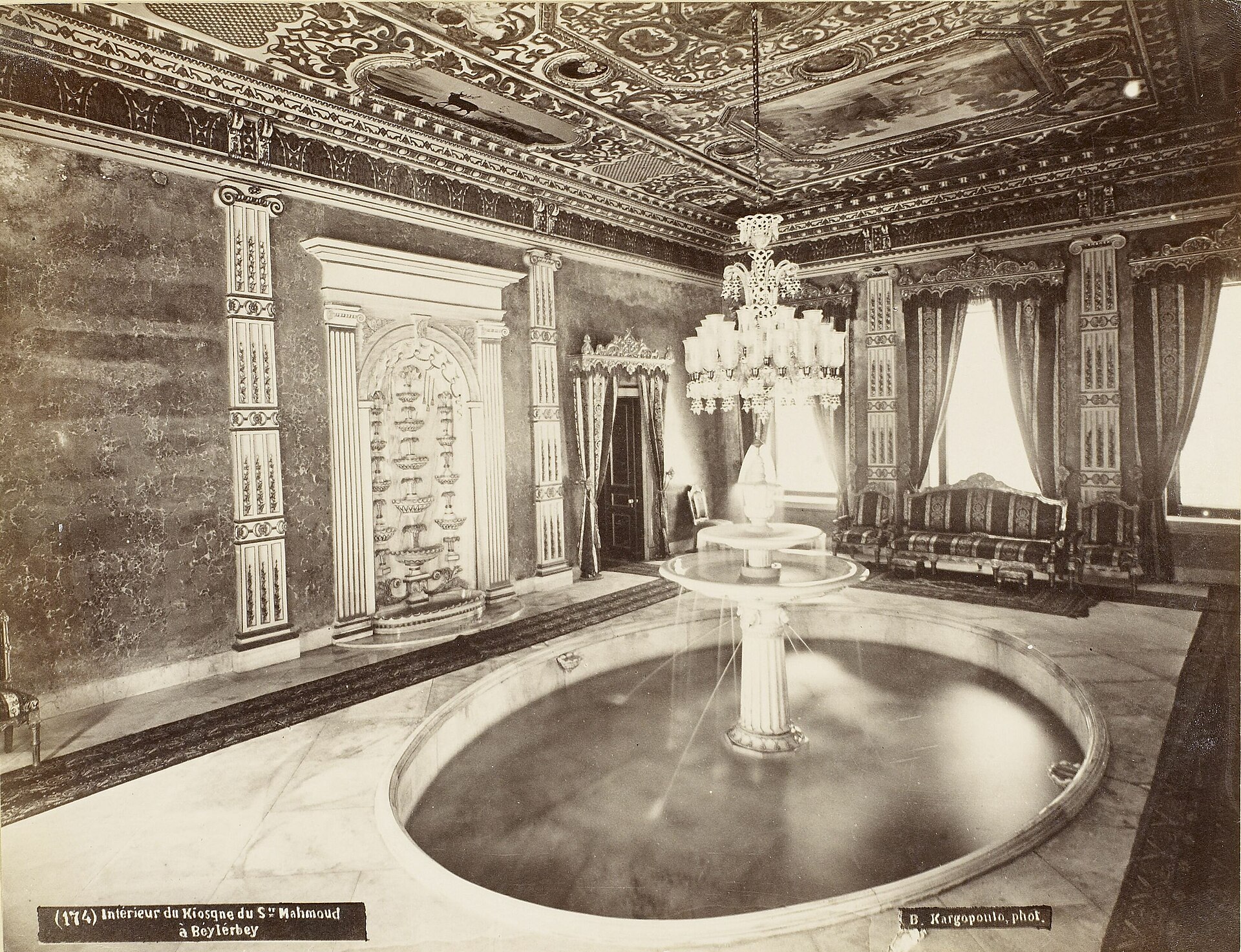
Inside, Beylerbeyi is as luxurious as its exterior is elegant. The rooms are decorated in the rich style of the late Ottoman court, with crystal chandeliers, fine carpets, luxurious textiles, and ceilings adorned with paintings. Though smaller than the halls of Dolmabahce, the interiors are no less refined, and their more intimate scale makes their beauty all the more enjoyable.
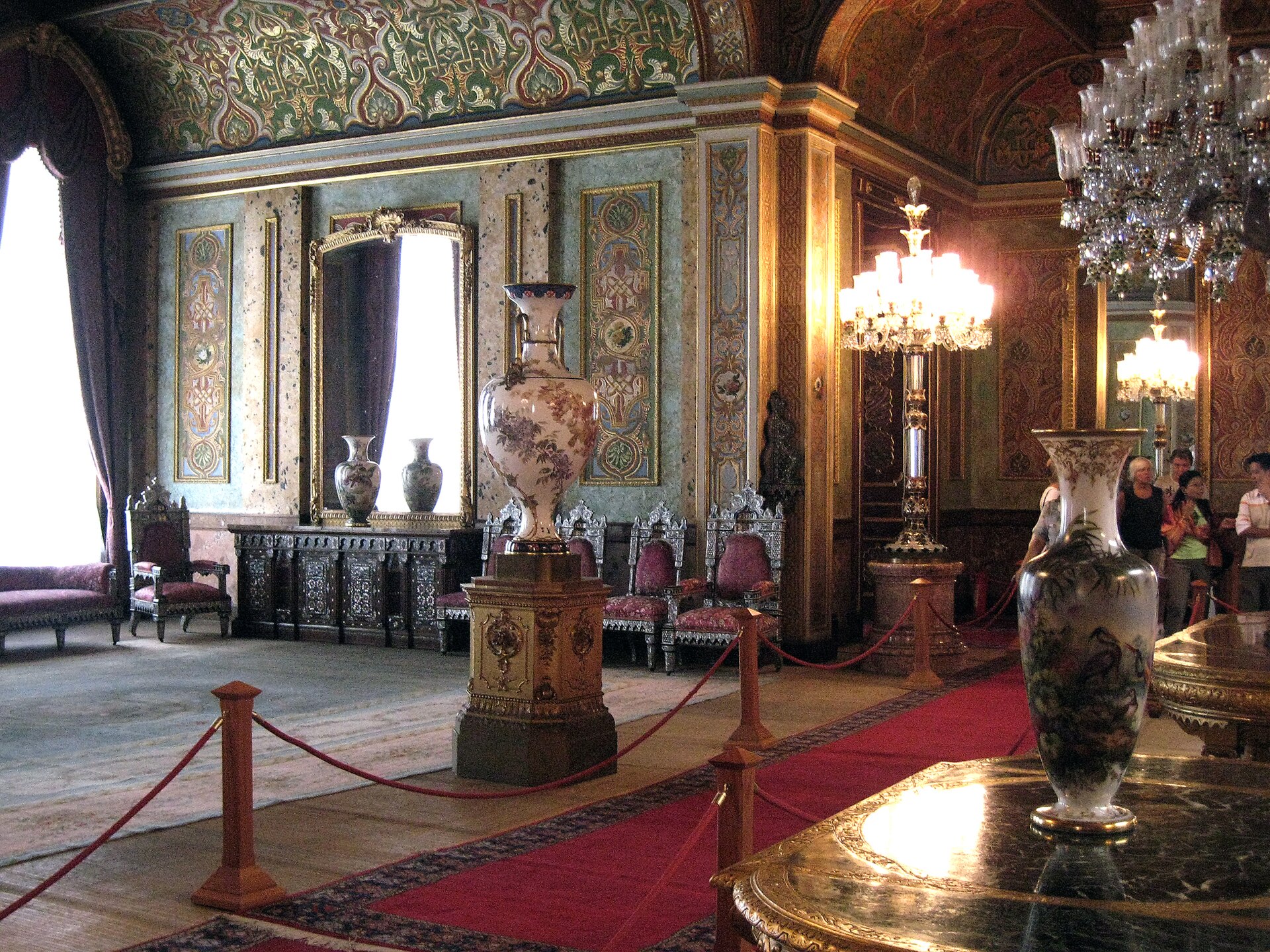
The palace is famous for its magnificent carpets, woven at the empire’s celebrated looms, which cover the floors of its principal rooms. These carpets, along with the crystal and the fine furnishings, create interiors of great warmth and richness, a fitting setting for a sultan’s leisure and for the reception of royal guests.
The painted ceilings are a particular delight, often featuring maritime and naval themes that reflect the setting on the water and the interests of the sultan who built the palace. These decorative touches give the interiors a distinctive character, tying the rooms to the Bosphorus beyond the windows and to the seafaring spirit that runs through the whole palace.
Throughout, the decoration balances grandeur with a certain lightness. The rooms are lavish, but their scale keeps them from feeling oppressive, and the constant presence of the water and gardens beyond the windows fills them with light and life. To move through the interiors of Beylerbeyi is to experience luxury on a human scale, opulent yet welcoming.
The furnishings gathered here came from across the world, with fine European clocks and chandeliers set beside carpets and textiles from the empire’s own workshops. This mingling of imported luxury and local craft was characteristic of the age, and it gives the interiors a cosmopolitan richness that mirrors the palace’s role as a meeting place for the courts of East and West.
A Sultan and the Sea
Beylerbeyi is steeped in the theme of the sea, reflecting both its setting and the passions of the sultan who built it. Abdulaziz was deeply interested in naval matters and in the maritime power of his empire, and this fascination left its mark on the palace in its decoration, its imagery, and its whole orientation toward the water.
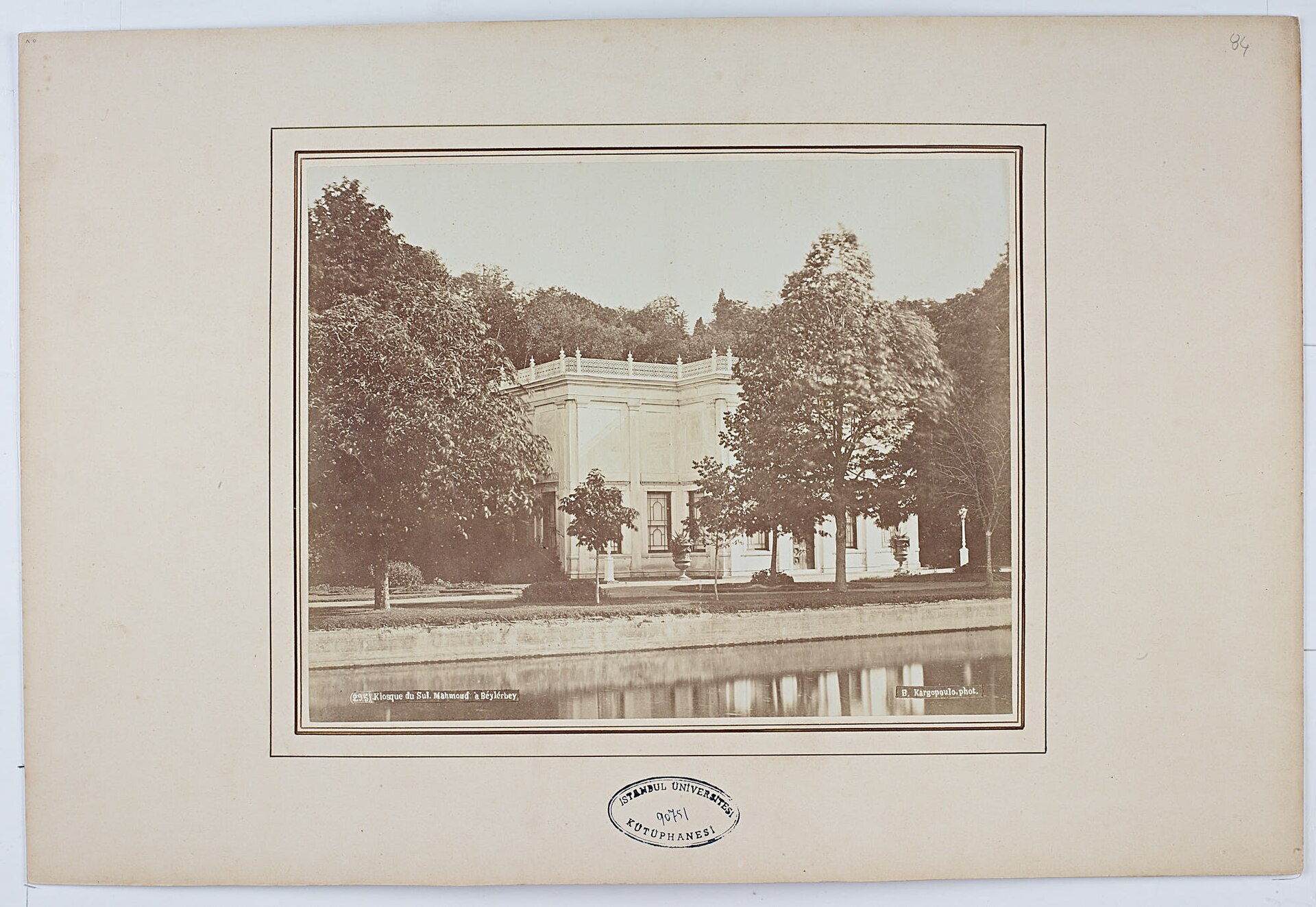
The naval themes that appear in the painted ceilings and decoration are no accident. They express the sultan’s pride in his fleet and his sense of the empire as a maritime power, and they tie the palace to the great waterway on which it stands. At Beylerbeyi, the sea is not merely a view but a presence woven into the fabric of the building.
This maritime spirit fits perfectly with the palace’s setting and purpose. A summer residence on the Bosphorus, given over to the pleasures of the water, naturally took the sea as one of its central themes. The result is a palace whose identity is inseparable from the strait it overlooks, celebrating the water in its art as well as its architecture.
For the sultan, the sea meant both pleasure and power, and Beylerbeyi allowed him to enjoy both. Here he could indulge his love of the water in a setting of great beauty while surrounding himself with images of the naval strength on which he pinned so many hopes. The palace remains a monument to that union of leisure and ambition, of a ruler who looked to the sea for both delight and dominion.
It is fitting that a palace so devoted to the sea should stand where it does, on the very waterway that carried the empire’s ships between its European and Asian shores. At Beylerbeyi the sultan could watch his fleet’s world pass beneath his windows, and the naval imagery indoors simply completed a connection that the setting had already made for him.
Terraced Gardens and Hidden Pools
Behind and around the palace rise beautiful gardens, climbing the steep hillside above the Bosphorus in a series of terraces. These gardens were an essential part of the summer palace, providing shaded walks, cool retreats, and magnificent views, and extending the pleasures of Beylerbeyi far beyond the walls of the building itself.
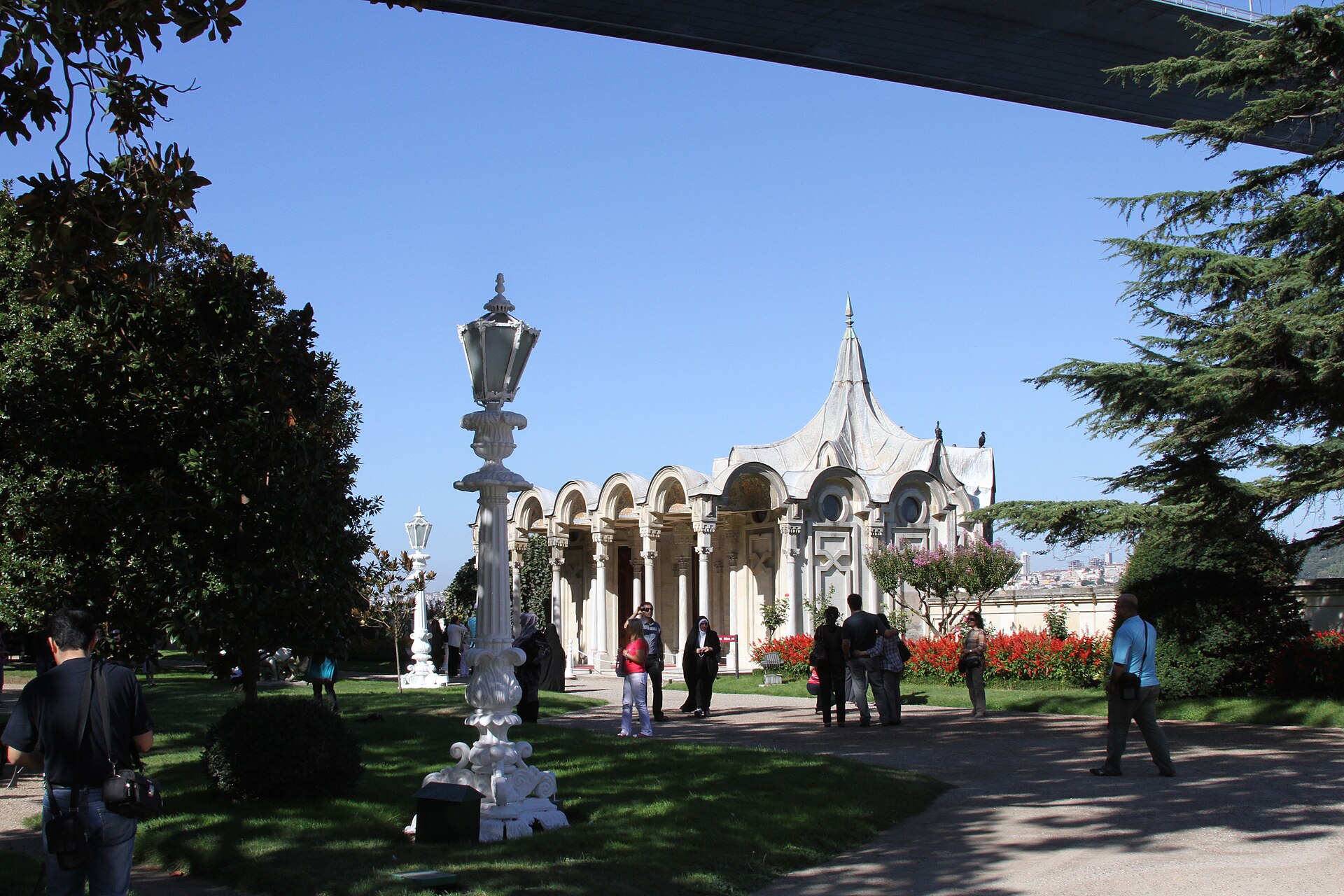
The gardens are dotted with pavilions, pools, and decorative features, and they were designed as places to stroll, rest, and enjoy the setting. Exotic and beautiful plantings, terraces linked by paths and stairs, and the ever-present views over the water combined to create a landscape of great charm, a green counterpart to the marble elegance of the palace.
The steep site posed challenges that the designers turned to advantage, using the slope to create dramatic terraces and to frame views of the palace and the Bosphorus from unexpected angles. Features such as pools and a curious tunnel carved into the hillside added interest and surprise, making a walk through the grounds an adventure of discovery.
For those who lived at or visited Beylerbeyi, the gardens were as important as the palace. They offered escape from the heat, space for leisurely walks, and endless beautiful prospects over the water. Today they remain one of the great pleasures of a visit, a place to wander and to appreciate the setting that made this spot so beloved of the sultans.
Among the more surprising features is a tunnel cut through the hillside, part of the ingenious way the designers tamed the steep site. Details like this reward the curious visitor and lend the gardens an air of discovery, so that a walk through them becomes a series of small revelations rather than a single grand vista.
Royal Guests and Ottoman Hospitality
One of the most important roles of Beylerbeyi was to host distinguished foreign guests, and over the years the palace welcomed a remarkable procession of royalty and dignitaries. As a guesthouse for visiting monarchs, it became a stage on which the empire displayed its wealth, its refinement, and its hospitality to the most important visitors of the age.
Among the most famous guests was the French empress Eugenie, wife of Napoleon III, who stayed at Beylerbeyi during a visit to Istanbul and is said to have been enchanted by its beauty. Such visits were carefully orchestrated occasions, opportunities to strengthen ties with the great powers and to impress upon them the sophistication of the Ottoman court.
The hosting of royal guests was a serious matter of diplomacy as much as hospitality. In an age when personal relationships between rulers still mattered greatly in international affairs, the impression made on a visiting monarch could have real consequences, and Beylerbeyi was designed and used to make that impression as favorable as possible.
The stream of illustrious visitors gave the palace a cosmopolitan glamour and tied it to the wider currents of nineteenth-century diplomacy. In its beautiful rooms and gardens, the Ottoman court entertained the crowned heads of Europe, using the charm of this summer palace on the water as an instrument of statecraft as well as a source of pleasure.
The care lavished on these visits reflected how much the empire had come to depend on the goodwill of the European powers. Every comfort, every beautiful room and shaded garden walk, was part of a considered effort to win sympathy and respect, turning the pleasures of the summer palace into quiet instruments of a hard-pressed foreign policy.
The Palace and the End of an Era
Beylerbeyi’s history has a melancholy side, for the graceful summer palace also witnessed the closing of the imperial age. In its final chapter as an imperial residence, it became the place where the deposed sultan Abdulhamid II spent his last years in confinement, a poignant contrast to the palace’s original role as a setting for pleasure and hospitality.

Abdulhamid, one of the last powerful sultans, was removed from the throne in the early twentieth century, and after a period elsewhere he was held at Beylerbeyi until his death. The beautiful palace that had once welcomed foreign kings became, in effect, a gilded prison for a fallen ruler, its charm shadowed by the sadness of his situation.
There is a deep irony in this turn of events. A palace built to celebrate the confidence and ambition of the empire at its height became a place of confinement for a sultan as that empire entered its final decline. The story of Abdulhamid’s last years at Beylerbeyi mirrors the larger story of the Ottoman state, moving from splendor toward its end.
This darker history gives the palace an added depth of meaning. Beyond its beauty and its associations with royal pleasure, Beylerbeyi is a witness to the fall of a dynasty, a place where the private drama of a deposed sultan played out against the same lovely backdrop of marble and water that had once hosted the celebrations of the court.
To walk today through the same lovely rooms knowing this history is a strangely moving experience. The beauty is undimmed, but it carries a shadow, and the palace becomes a place where the private sorrow of a fallen ruler and the public tragedy of a declining empire seem to meet within the cool marble walls.
Under the Bridge, Between Two Continents
Part of what makes Beylerbeyi so striking today is its extraordinary setting on the Asian shore of the Bosphorus, at the very point where one of the great bridges linking Europe and Asia crosses the strait. The juxtaposition of the delicate nineteenth-century palace and the soaring modern bridge above it creates one of the most memorable images in all of Istanbul.

The location on the Asian side gives Beylerbeyi a slightly different character from the palaces across the water. It looks back toward the European shore and the historic heart of the city, and it sits within a landscape of hills and waterside neighborhoods that has its own distinct atmosphere, a little removed from the bustle of the main tourist districts.
The Bosphorus setting was, as with the other palaces, central to Beylerbeyi’s meaning and appeal. Built on the great waterway that joins seas and divides continents, the palace enjoys a position of natural drama, surrounded by the constant movement of ships and the ever-changing light off the water.
To see Beylerbeyi in its setting is to understand why the sultans loved this stretch of shore. Between the water and the hills, at the meeting point of continents, the palace occupies a spot of rare beauty, and the addition of the modern bridge, far from spoiling the scene, only heightens the sense of a place where different ages and different worlds come together.
The neighborhood around the palace, with its old waterside houses and quiet streets, preserves something of the atmosphere of the Bosphorus villages as they once were. Reaching Beylerbeyi means crossing to the Asian side and leaving the busiest tourist routes behind, and that small journey is itself part of the pleasure, a passage into a calmer, more local Istanbul.
Visiting Beylerbeyi Today
Today Beylerbeyi Palace is open to the public as a museum, and it offers visitors a chance to experience one of the most charming of all the imperial residences of Istanbul. Somewhat less crowded than the great palaces on the European shore, it rewards those who make the trip across the water with beautiful interiors, lovely gardens, and a superb setting.
View the exact location on Google Maps
Visits typically lead through the principal rooms of the palace, with their crystal, carpets, and painted ceilings, giving a vivid sense of the luxury of the late Ottoman court. The more intimate scale of Beylerbeyi makes it especially enjoyable to tour, as the beauty of the rooms can be appreciated without the sense of endless procession that the largest palaces sometimes produce.
The gardens and the waterside setting are highlights not to be missed. Taking time to walk the terraces, to see the sea kiosks and pavilions, and to look out over the Bosphorus, with the great bridge overhead, is one of the great pleasures of a visit, and helps to explain why the sultans so loved this summer palace on the water.
Whether you come for the elegant interiors, the beautiful gardens, or simply the joy of the setting, Beylerbeyi offers a delightful and slightly quieter alternative to the busier palaces of the city. It is a place that captures the charm of the late Ottoman world at its most graceful, a marble jewel on the Asian shore that still enchants everyone who visits.
A good way to appreciate the palace fully is to combine a visit with a walk along the shore or a trip on the water, so that you see Beylerbeyi from the Bosphorus as well as from within. Approached from the strait, with the bridge above and the marble front glowing at the water’s edge, it reveals the full charm that made it a favorite of sultans and their guests alike.
Palaces Nearby
Beylerbeyi is one of a family of imperial residences along the Bosphorus. To trace how the Ottoman court lived and built across the centuries, these nearby palaces make natural companions to a visit here.
You May Like
The Bahia Palace of Marrakech: A Vizier’s Dream of Moroccan Splendor