In the heart of modern Seoul, surrounded by glass towers and the roar of one of Asia’s great cities, lies a vast and tranquil world of wooden halls, painted eaves, and quiet courtyards. This is Gyeongbokgung, the grandest of Korea’s royal palaces and the symbolic heart of the nation for more than five hundred years. To pass through its great gate is to step out of the twenty-first century and into the world of the Joseon dynasty, whose kings ruled Korea from these halls for much of its history.
Gyeongbokgung was the first and most important palace of the Joseon dynasty, founded at the very beginning of that long era as the seat of a new kingdom. Its name, often translated as the palace greatly blessed by heaven, expressed the hopes invested in it, and for centuries it was the ceremonial and political center of Korea, the place where kings held court, conducted the rites of state, and governed the land.
Yet the history of Gyeongbokgung is also a story of destruction and rebirth. Burned during a devastating invasion, left in ruins for centuries, rebuilt in a great effort of national restoration, then largely torn down during a period of foreign occupation, the palace has suffered and recovered again and again. What you see today is the fruit of a long and continuing project to restore this symbol of Korean identity to its former glory.
In this article you will explore Gyeongbokgung from its founding at the dawn of the Joseon dynasty to its magnificent throne hall and pavilions, through the wars and occupations that shaped its fate, to its life today as a beloved symbol of Korea. Along the way you will discover the distinctive beauty of Korean palace architecture and understand why this serene complex in the heart of Seoul holds so deep a place in the nation’s heart.
In This Article
- The Grandest of Korea’s Palaces
- The Founding of a Dynasty
- Blessed by Heaven
- The Throne Hall
- The Pavilion on the Water
- The Hexagonal Pavilion and Its Pond
- Color, Wood, and the Korean Style
- The Great Gate and the Guardians
- Fire and Ruin
- The Great Reconstruction
- Occupation and Recovery
- A Living Symbol
- Visiting Gyeongbokgung Today
The Grandest of Korea’s Palaces
Gyeongbokgung is the largest and most important of the several royal palaces built in Seoul during the Joseon dynasty. Set against a backdrop of mountains at the northern end of the old city, it occupies a vast walled enclosure filled with halls, gates, pavilions, and courtyards, a whole royal city laid out according to ancient principles of design.
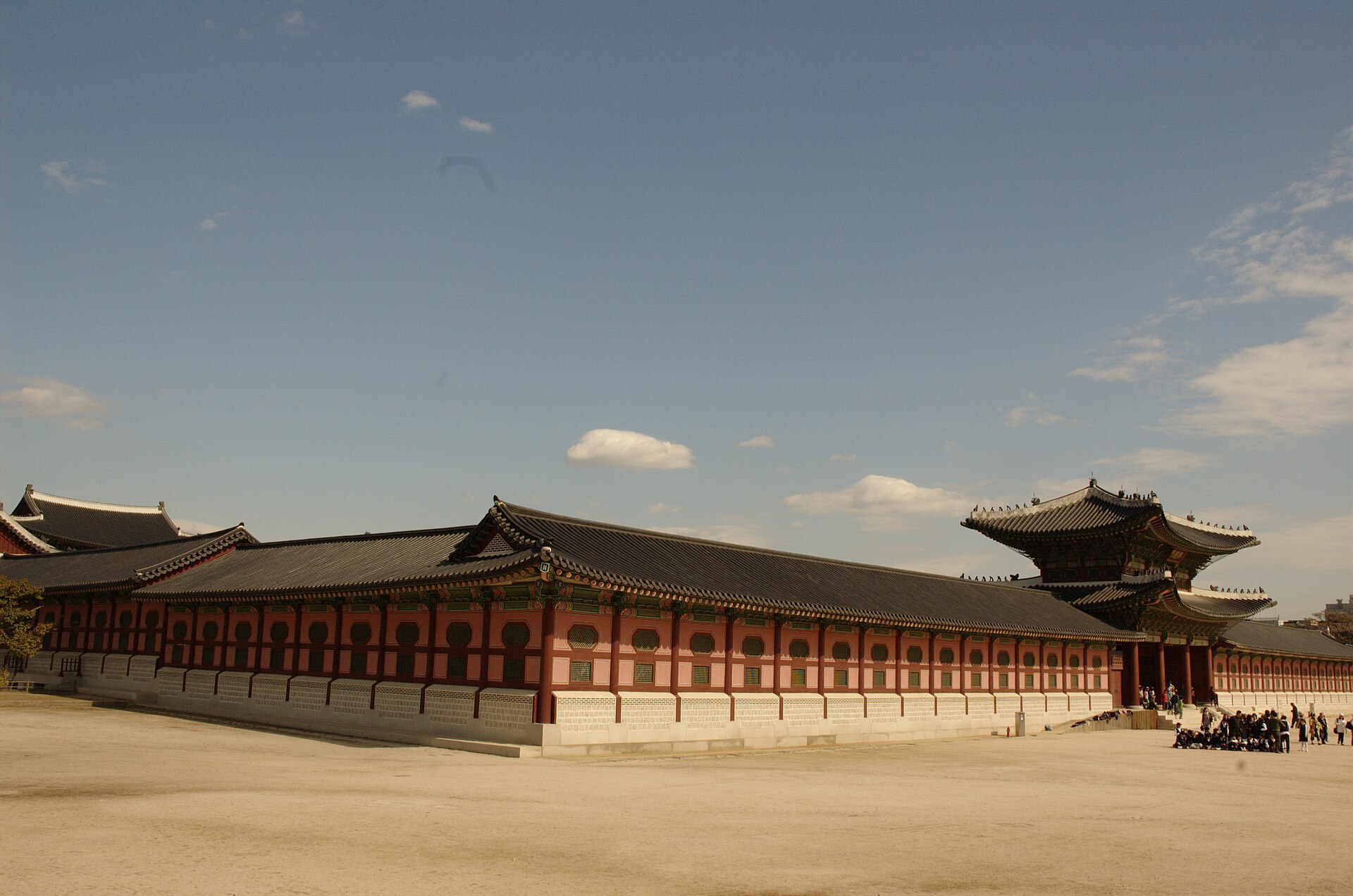
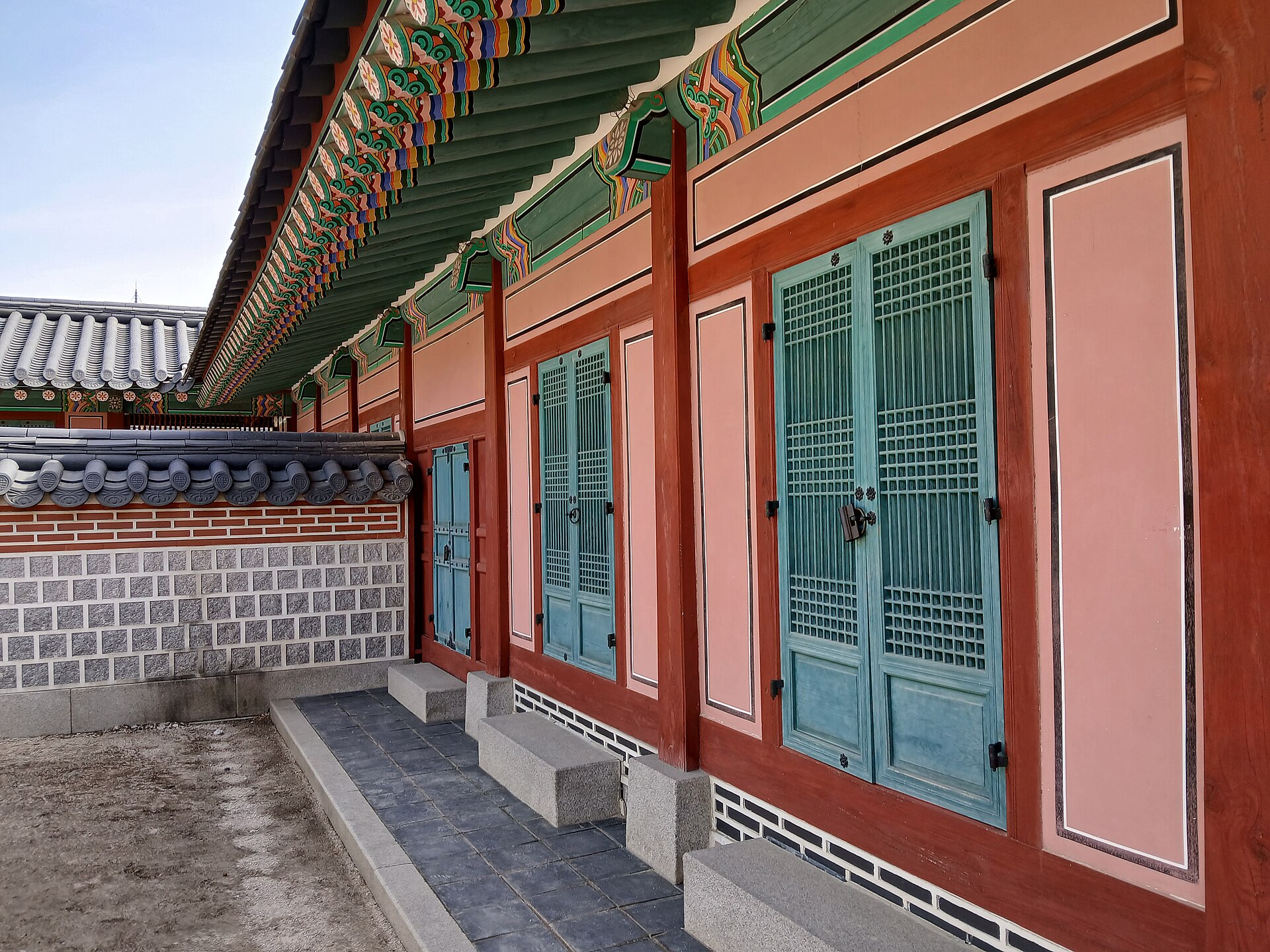
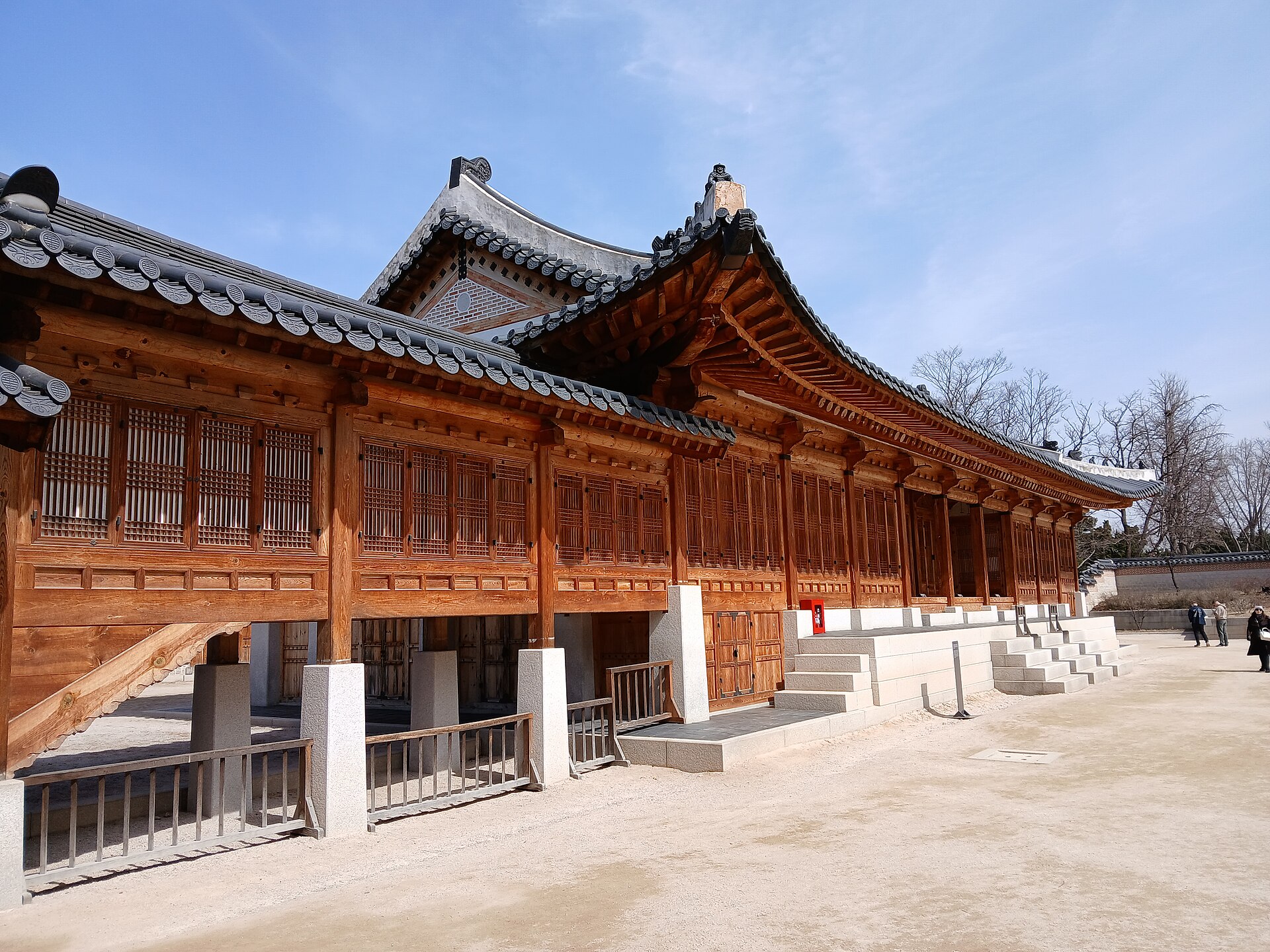
Unlike the great stone palaces of Europe, Gyeongbokgung is built largely of wood, its halls raised on stone platforms and crowned with gracefully curving tiled roofs. The eaves are painted in the intricate and colorful patterns known as dancheong, and the whole complex expresses a distinctly Korean aesthetic, at once dignified and harmonious, grand yet closely attuned to its natural setting.
The layout of the palace follows a clear order, with the most important ceremonial buildings arranged along a central axis and other structures spreading out around them. This ordered plan reflected the Confucian principles that guided the Joseon state, in which everything, including the arrangement of the royal palace, was meant to embody harmony, propriety, and the proper order of things.
For all its grandeur, Gyeongbokgung is also a place of great serenity. Its courtyards and gardens, its ponds and pavilions, create an atmosphere of calm quite different from the bustle of the surrounding city. To walk through the palace is to experience the ideals of the Joseon dynasty made visible, a vision of order, beauty, and harmony between the works of humanity and the natural world.
The contrast with the city outside is part of the experience. Step through the gate and the sound of traffic falls away, replaced by the crunch of gravel underfoot and the sweep of tiled roofs against the mountains. That sudden shift from the modern metropolis to the ordered calm of the Joseon world is one of the quiet pleasures of a visit, and it never quite loses its power.
The mountains behind the palace are not an accident of geography but a chosen part of the design. In the Korean tradition, a great building was meant to sit in the embrace of the land, sheltered by hills and open to the south, and Gyeongbokgung was placed precisely so. The peaks that rise behind its roofs are, in a sense, part of the architecture itself.
The Founding of a Dynasty
Gyeongbokgung was founded at the very beginning of the Joseon dynasty, which came to power in Korea at the end of the fourteenth century. The founder of the dynasty established a new capital and set about building a great palace to serve as its heart, a symbol of the new order and the seat from which his line would rule.
The building of the palace was closely bound up with the founding of the new capital, the city that would become Seoul. The site was chosen with great care, and the palace was laid out as the central element of a capital designed according to careful principles, with the palace, the ancestral shrines, and the altars of state arranged in their proper relationships.
For the new dynasty, the palace was more than a residence; it was a statement of legitimacy and permanence. By raising so grand a complex, the founders proclaimed that their rule was established and blessed, and that Korea had entered a new age. The palace thus stood from the beginning as a symbol of the dynasty and of the nation it governed.
The Joseon dynasty would go on to rule Korea for more than five centuries, one of the longest-lived dynasties in the world, and throughout much of that time Gyeongbokgung remained its principal palace. The story of the palace is thus inseparable from the story of Joseon Korea itself, a history of which these halls and courtyards were the enduring center.
The move to a new capital and the building of this palace marked a deliberate break with the past. The founders of Joseon wished to distinguish their rule from the dynasty they had replaced, and a new city with a new palace announced that a fresh chapter in Korean history had begun, one guided by the Confucian ideals the dynasty embraced.
Blessed by Heaven
The name Gyeongbokgung is rich with meaning, often rendered as the palace greatly blessed by heaven or the palace of shining happiness. This auspicious name expressed the hopes of the new dynasty for prosperity and good fortune, invoking the blessing of heaven upon the royal house and the kingdom it ruled from these halls.
The choice of the palace site reflected the principles of geomancy, the traditional art of situating buildings in harmony with the landscape and the flow of natural energies. The palace was placed with mountains behind and open ground before it, in accordance with ideals that were believed to ensure good fortune and to protect the dynasty that dwelt there.
These beliefs were taken seriously in the founding of both the palace and the capital. The relationship of the palace to the surrounding mountains and waters was carefully considered, for it was thought that a properly sited palace would bring blessing and stability, while a poorly chosen site could invite misfortune. The location of Gyeongbokgung was chosen to be as auspicious as possible.
In its name and its siting, then, Gyeongbokgung embodied the hopes and beliefs of the dynasty that built it. It was meant to be a place blessed by heaven, in harmony with the land, a fortunate seat for a new royal house. That the palace endured so many trials and always rose again seems, in retrospect, to have fulfilled the promise held in its auspicious name.
It is striking how much thought went into a single name. In the world of Joseon Korea, names were not chosen lightly but were believed to carry real power, shaping the fortunes of what they named. To call the palace one greatly blessed by heaven was to make a kind of prayer in stone and timber, an expression of hope for the dynasty woven into its very foundation.
The Throne Hall
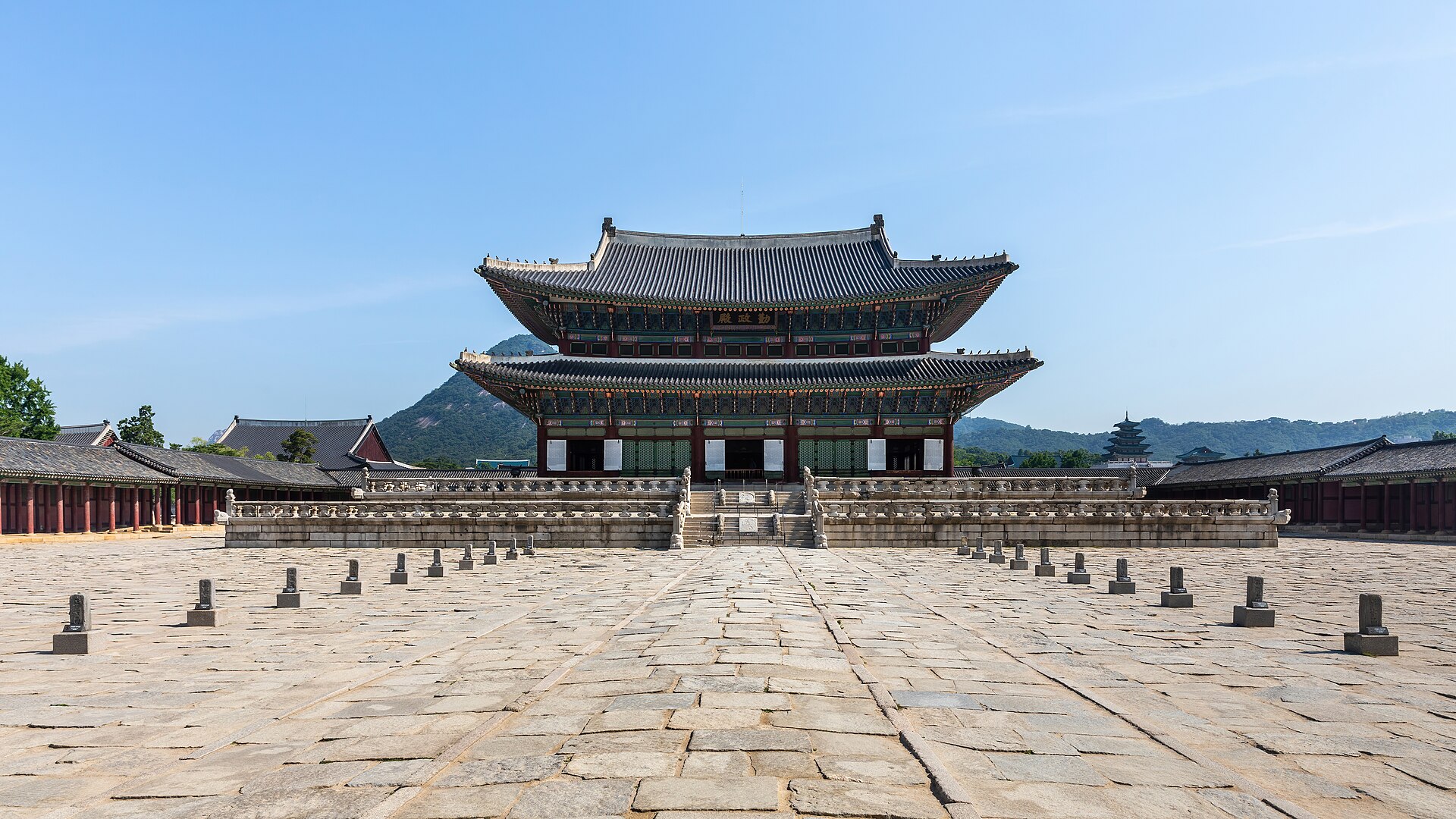
At the ceremonial heart of Gyeongbokgung stands its great throne hall, the most important building in the palace and one of the finest examples of Korean royal architecture. Here the kings of Joseon held their most solemn ceremonies, received officials and foreign envoys, and conducted the great rites of state that bound together the kingdom.
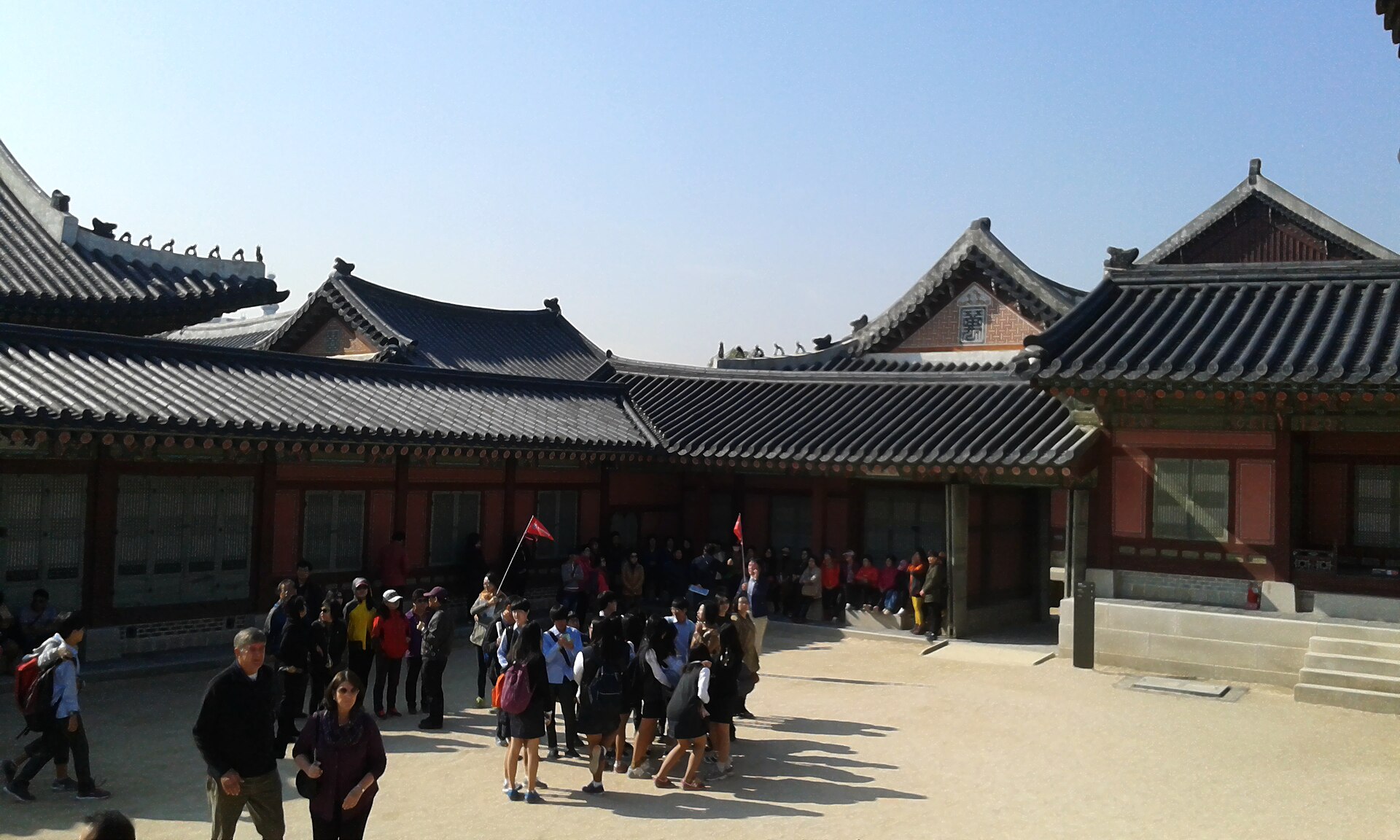
The throne hall rises on a broad stone terrace, approached across a wide courtyard paved with stone and lined with markers indicating the ranks of the officials who would assemble there. The building itself, with its towering roof and richly painted eaves, dominates the courtyard, a majestic expression of royal authority and the dignity of the throne.
Inside, the throne of the king stood beneath an elaborate canopy, backed by a painted screen depicting the sun, the moon, and mountains, a powerful symbol of the king’s role as the axis between heaven and earth. The hall was the setting for coronations, royal audiences, and the most important ceremonies of the Joseon court, a space charged with meaning and majesty.
The throne hall embodies the ideals of the Joseon monarchy, its grandeur restrained by a sense of proportion and harmony, its authority expressed through order and ceremony rather than sheer overwhelming scale. It remains the centerpiece of the palace, the focus toward which the whole complex is oriented, and one of the great monuments of Korean architecture.
The stone markers in the courtyard repay a closer look, for they reveal the strict hierarchy of the Joseon court. Each marker showed where officials of a particular rank were to stand during ceremonies, so that the entire courtyard became a diagram of the social order, every person in their appointed place before the king. Order was not merely valued but physically inscribed upon the ground.
The Pavilion on the Water
Among the most beautiful structures in Gyeongbokgung is its great banquet pavilion, a magnificent hall raised on stone pillars above the waters of a large rectangular pond. Here the kings of Joseon held state banquets and entertained important guests, in a setting of extraordinary elegance that ranks among the treasures of Korean architecture.
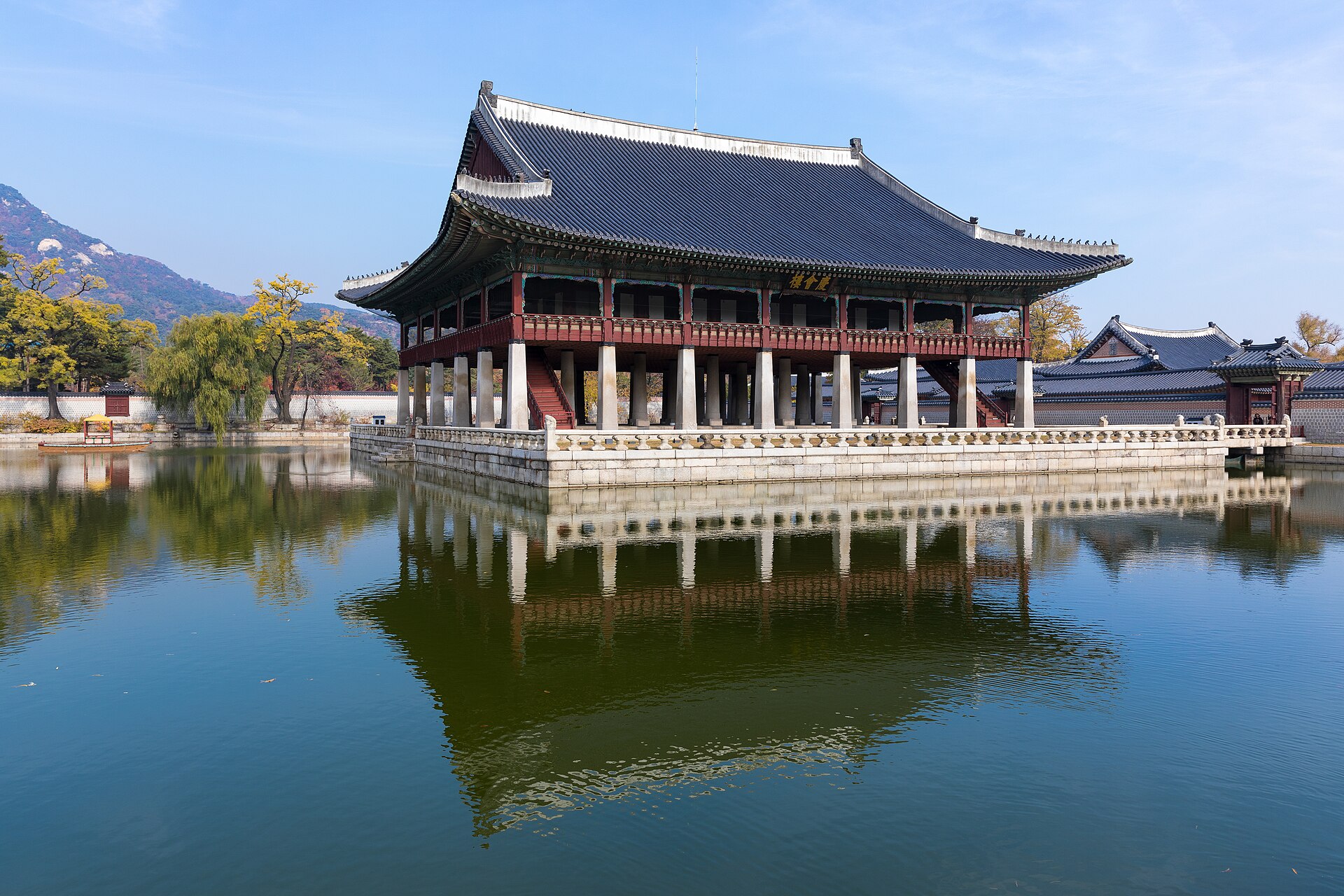
The pavilion is a masterpiece of design, its wooden hall seeming to float above the pond, reflected in the still water below. Supported by rows of stone columns, open to the air and the views, it was perfectly suited to grand entertainments, offering a cool and beautiful setting where the court could gather amid the reflections of water and sky.
The setting of the pavilion above its pond reflects the deep Korean love of harmony between architecture and nature. The still water, the surrounding landscape, and the graceful hall together create a scene of great serenity and beauty, a place designed for pleasure and contemplation as much as for ceremony.
To see the banquet pavilion reflected in its pond, especially in the soft light of evening, is one of the great experiences the palace offers. It captures the essence of Korean royal architecture, in which grandeur is always tempered by grace, and in which the works of human hands are set in gentle harmony with the beauty of the natural world.
The pavilion was more than a place for feasting; it was a stage for diplomacy and statecraft. Here foreign envoys were received and important occasions marked, the beauty of the setting lending dignity and grace to the business of the court. In its union of political function and serene beauty, the pavilion perfectly expresses the Joseon ideal of governance conducted amid harmony and refinement.
The Hexagonal Pavilion and Its Pond
In a quieter part of the palace grounds stands another exquisite pavilion, a small hexagonal structure set on an island in the middle of a round pond, reached by a delicate bridge. This pavilion, more intimate than the great banquet hall, is one of the most beloved and photographed sights in the whole palace.

The pavilion was built as a place of retreat and repose within the palace, a spot where the royal family could enjoy the beauty of the garden and the pond. Its graceful form, reflected in the water and surrounded by trees, embodies the Korean ideal of a garden pavilion, a small architectural jewel set in a carefully composed natural scene.
The relationship between the pavilion, the island, the pond, and the surrounding garden was designed with great sensitivity. Every element contributes to a scene of perfect harmony, a miniature world of water and wood and stone that offered the royal family a place of beauty and calm within the larger world of the palace.
Through the changing seasons, the hexagonal pavilion takes on different moods, framed by spring blossoms, summer greenery, autumn colors, or winter snow, always reflected in the still waters of its pond. It remains one of the most enchanting spots in Gyeongbokgung, a perfect expression of the Korean art of setting architecture within nature.
Small as it is, the hexagonal pavilion embodies a whole philosophy of design. Rather than dominating its surroundings, it completes them, the final touch that turns a pond and a garden into a composed and perfect scene. This ideal, of architecture that serves and enhances nature rather than overpowering it, lies at the heart of the Korean garden tradition.
Color, Wood, and the Korean Style
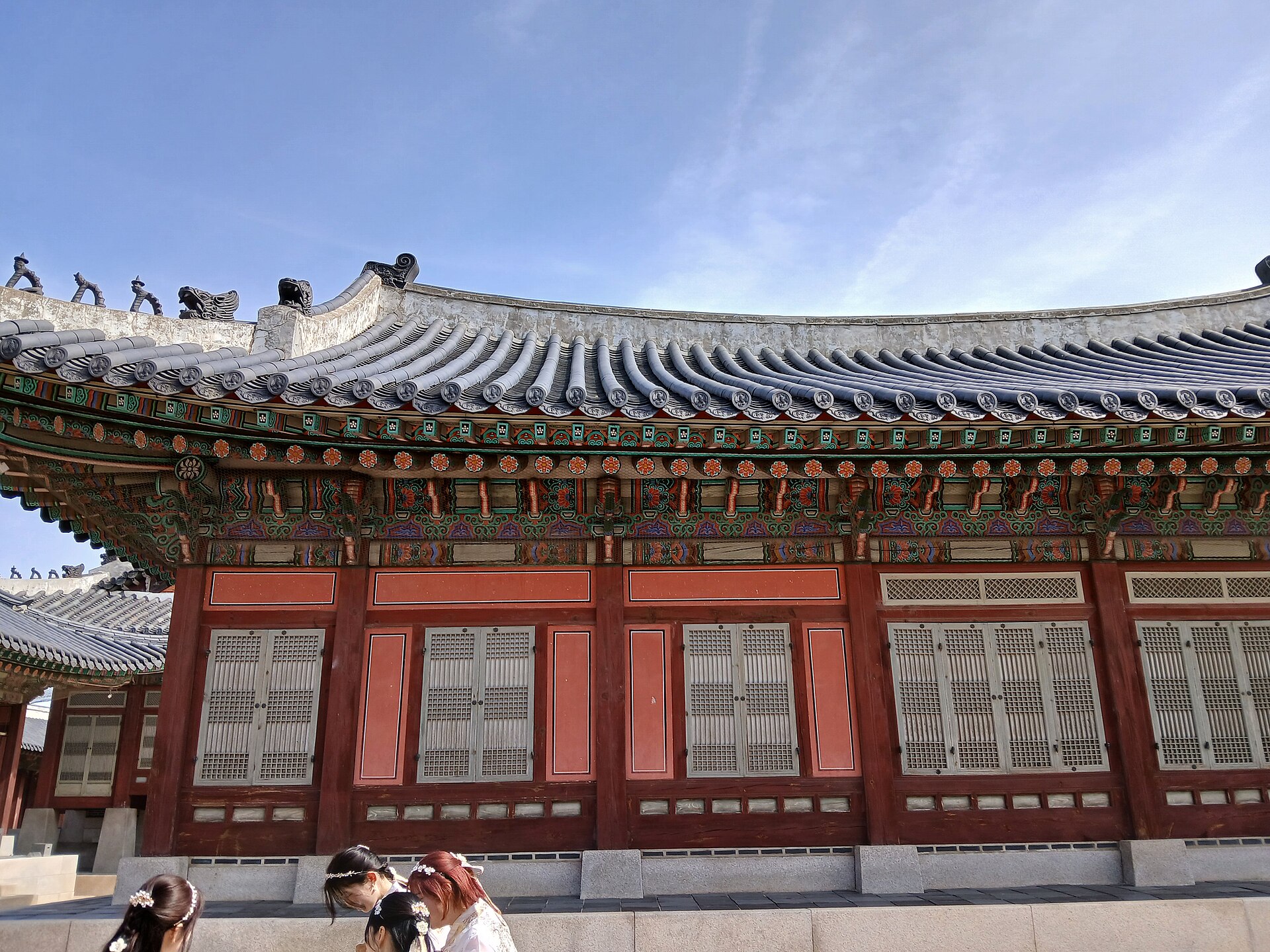
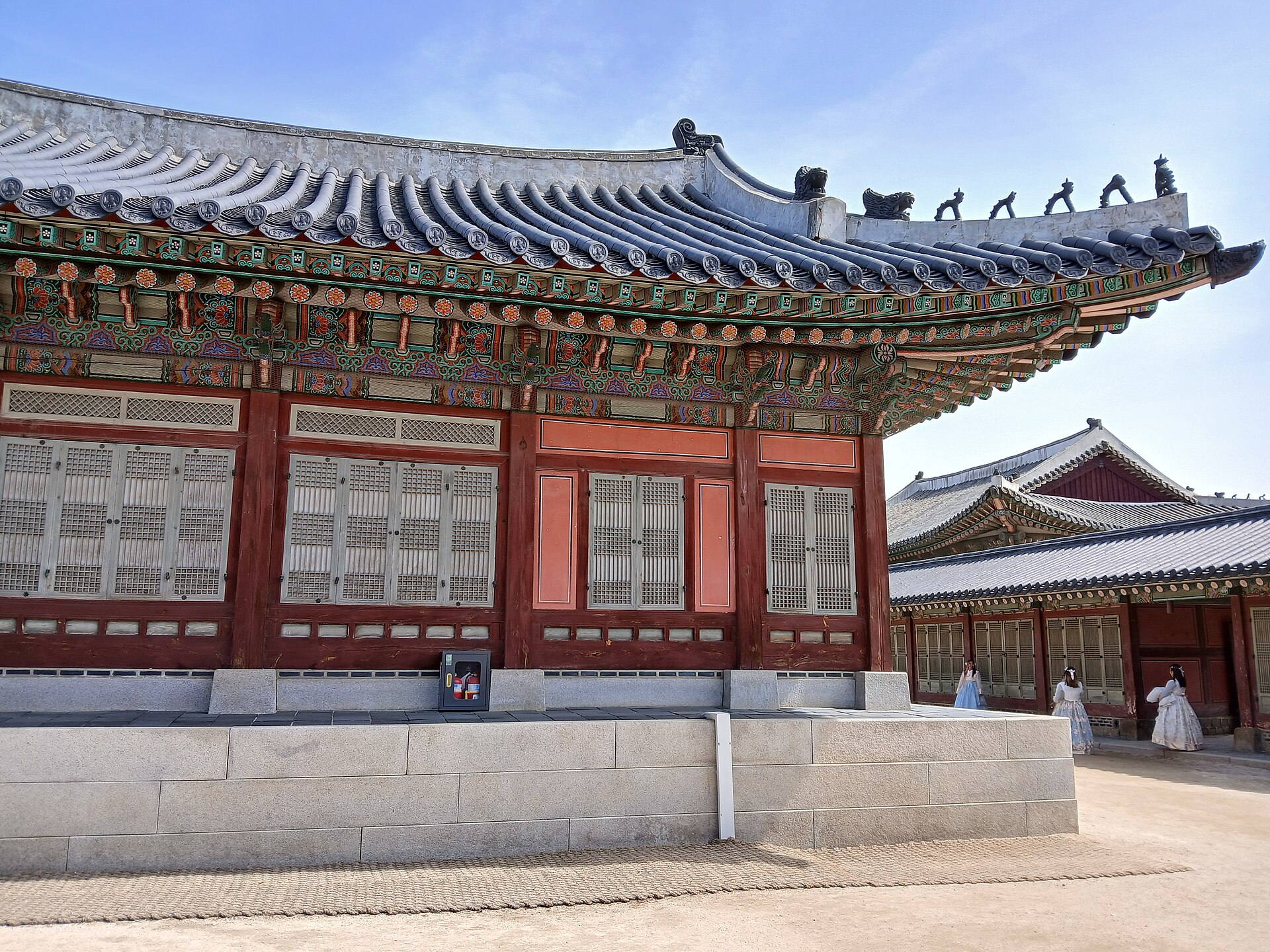
The architecture of Gyeongbokgung is a superb expression of the Korean royal style, distinct from the palace traditions of neighboring China and Japan. Built of wood on stone foundations, its halls are crowned with gracefully curving tiled roofs, their deep eaves supported by intricate wooden brackets and painted with colorful patterns.

The painted decoration known as dancheong is one of the glories of Korean architecture. Applied to the eaves, beams, and brackets of the buildings, these intricate patterns in blues, greens, reds, and other colors serve both to beautify and to protect the wood, and they give the palace its distinctive richness and vitality.
Korean palace architecture is marked by a sense of restraint and harmony. The buildings are grand but not overwhelming, their proportions carefully judged, their relationship to the surrounding space and landscape always considered. This reflects the Confucian values of the Joseon state, which prized order, propriety, and moderation over sheer display.
The result is an architecture of great beauty and dignity, at once colorful and serene. The curving roofs, the painted eaves, the wooden halls set amid courtyards and gardens, all combine to create a distinctly Korean vision of what a palace should be, and Gyeongbokgung stands as the supreme example of that vision, the masterpiece of the Joseon royal style.
The wooden construction, so different from the stone palaces of the West, also shaped the fate of the palace, for wood burns and decays in ways that stone does not. The very material that gives Korean architecture its warmth and grace also made it vulnerable, and the repeated destruction and rebuilding of Gyeongbokgung is in part the story of a palace built from living, perishable material.
Notice, too, the absence of nails in the traditional joinery. Korean master carpenters fitted the great wooden members together with interlocking joints of remarkable ingenuity, so that the halls stand through the precision of their construction rather than through iron fastenings. This craft tradition is itself a treasure, passed down through generations and revived in each careful restoration.
The Great Gate and the Guardians
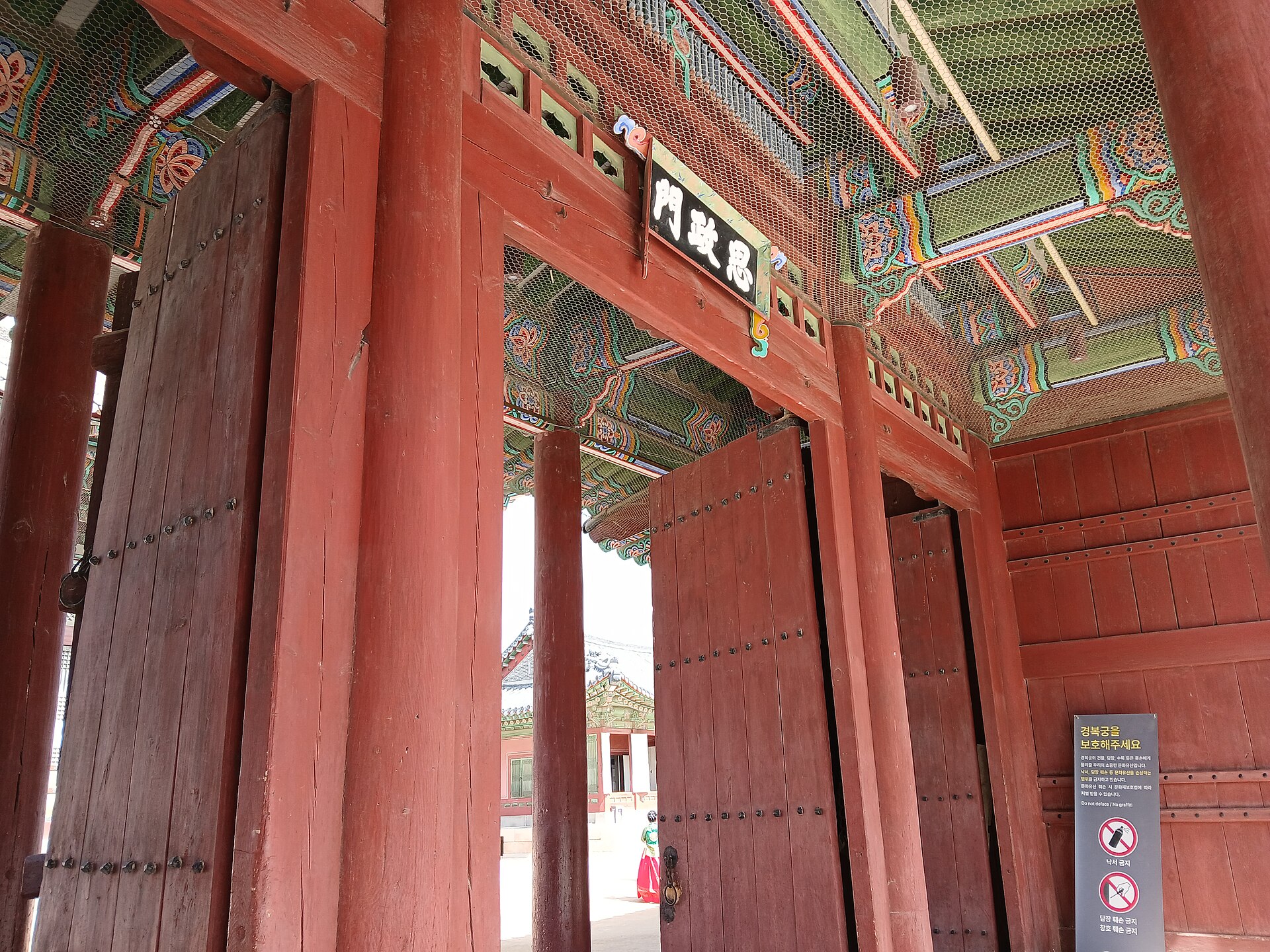
The main entrance to Gyeongbokgung is a monumental gate that opens from the great avenue before the palace into the courtyards within. This gate is one of the symbols of the palace and of Seoul itself, a grand and imposing structure that marks the threshold between the city and the royal world within the walls.
Before the gate, guardian statues and ceremonial spaces set the stage for the approach to the palace, and today the area is the setting for a colorful ceremonial changing of the guard. The gate and its surroundings form a grand ceremonial front, the face that the palace presents to the city and the point where the royal precinct begins.
The gate has shared in the turbulent history of the palace, damaged and rebuilt more than once, and its restoration has been an important part of the wider effort to return Gyeongbokgung to its former glory. Its recovery has restored to the palace its proper ceremonial entrance and to the city one of its great landmarks.
Standing before the gate, with the palace rising beyond and the mountains in the distance, a visitor senses the grandeur of the whole conception. The gate is not merely a doorway but a statement, announcing the majesty of the palace and the dynasty it served, and welcoming the visitor into a world apart from the modern city that surrounds it.
The great avenue that stretches before the gate has itself become one of the symbolic spaces of the nation, a place of ceremony and gathering. The relationship between the palace, its gate, and this broad approach was carefully conceived, so that the whole ensemble forms a grand processional route, drawing the eye and the visitor toward the majesty of the royal precinct.
Fire and Ruin
The history of Gyeongbokgung has been marked by destruction as well as splendor. Near the end of the sixteenth century, during a devastating invasion of Korea, the palace was destroyed by fire, and the great halls that had stood at the heart of the kingdom for two centuries were reduced to ruins.
The loss of the palace was a catastrophe for the dynasty and the nation. For a long period afterward, Gyeongbokgung lay abandoned, its site left desolate, while the kings ruled from other palaces in the capital. The principal seat of the Joseon dynasty had become a field of ruins, a poignant symbol of the sufferings the kingdom had endured.
For centuries the palace remained in this ruined state, its restoration delayed by the costs and difficulties of such an enormous undertaking. The empty site stood as a reminder of past glory and past disaster, and the dynasty carried on without its original and most important palace, a situation that lasted for a remarkably long time.
This long period of ruin is an essential part of the story of Gyeongbokgung. The palace that visitors admire today is not a structure that has stood unchanged for six hundred years, but one that has been destroyed and restored, a survivor of catastrophe. Understanding this history deepens the appreciation of the palace as a symbol of resilience and endurance.
The long centuries of ruin left their mark on the national memory. That the principal palace of the dynasty should lie in ashes for so long was a wound that did not easily heal, and it lent the eventual reconstruction a powerful emotional charge. When the palace finally rose again, it was not merely a building restored but a piece of the nation’s dignity reclaimed.
The Great Reconstruction
After centuries of ruin, Gyeongbokgung was at last rebuilt in the nineteenth century, in a great effort of national restoration. Under the direction of a powerful regent who governed on behalf of the young king, the palace was reconstructed on a grand scale, its halls and pavilions raised anew upon the old foundations.
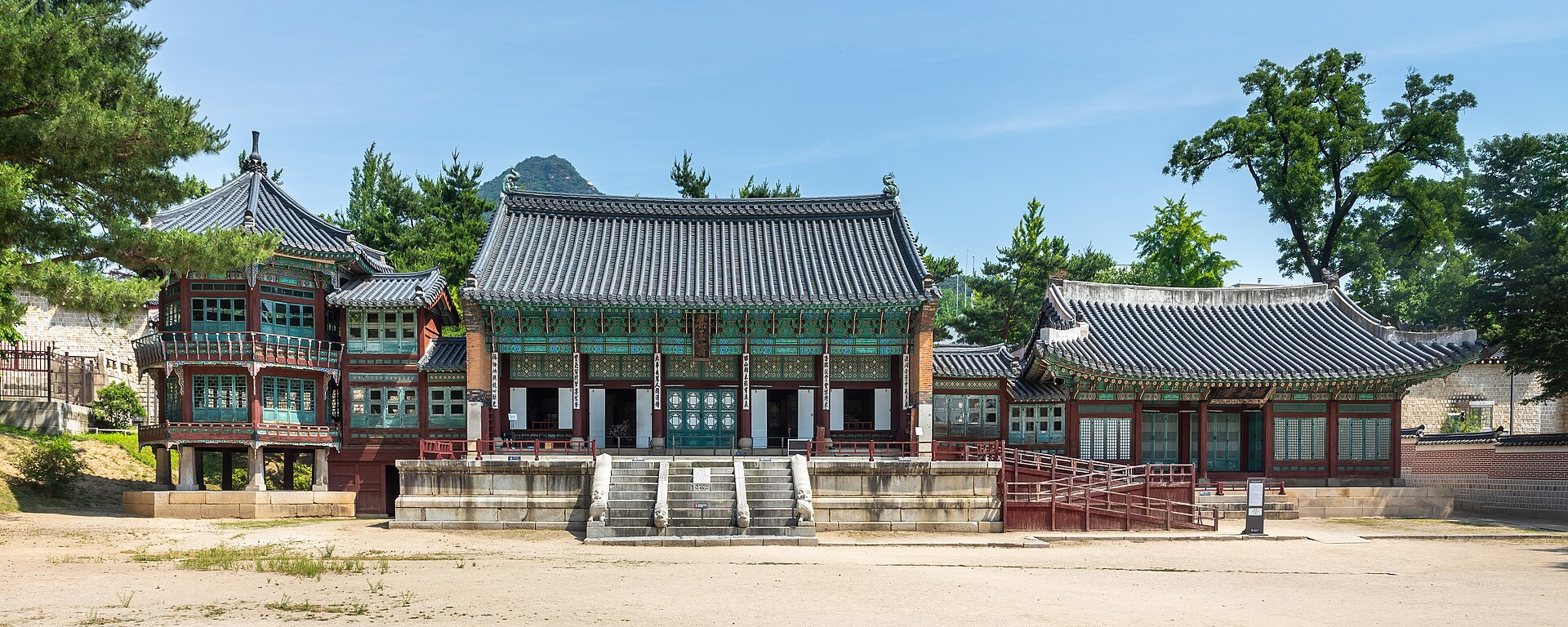
The reconstruction was an enormous undertaking, requiring vast resources and labor, and it was intended to restore not only the palace but the prestige and authority of the monarchy. By rebuilding Gyeongbokgung, the regent sought to reassert the strength of the dynasty at a time when Korea faced growing pressures from abroad.
The rebuilt palace was magnificent, a worthy successor to the original, and for a time it once again became the seat of the Korean court. The restoration returned to the nation its great symbolic center, and the halls of Gyeongbokgung again resounded with the ceremonies of state after their long silence.
Yet the timing was difficult, for the restoration came in an age of mounting danger for Korea, caught between powerful neighbors and foreign empires. The revived palace would enjoy its renewed glory for only a relatively short time before new catastrophes overtook it, but the great reconstruction remains a landmark in the history of the palace and the nation.
The regent who drove the reconstruction was a formidable and controversial figure, and the rebuilding of the palace was as much a political act as an architectural one. In restoring the ancient seat of the dynasty, he sought to project strength and continuity at a moment of crisis, using the palace as a statement that the monarchy remained the unshaken center of the Korean world.
Occupation and Recovery
In the early twentieth century, Korea fell under foreign occupation, and Gyeongbokgung suffered grievously once more. During this period, many of the palace buildings were deliberately demolished, and the site was altered and diminished, as the occupying power sought to erase the symbols of Korean sovereignty and identity.
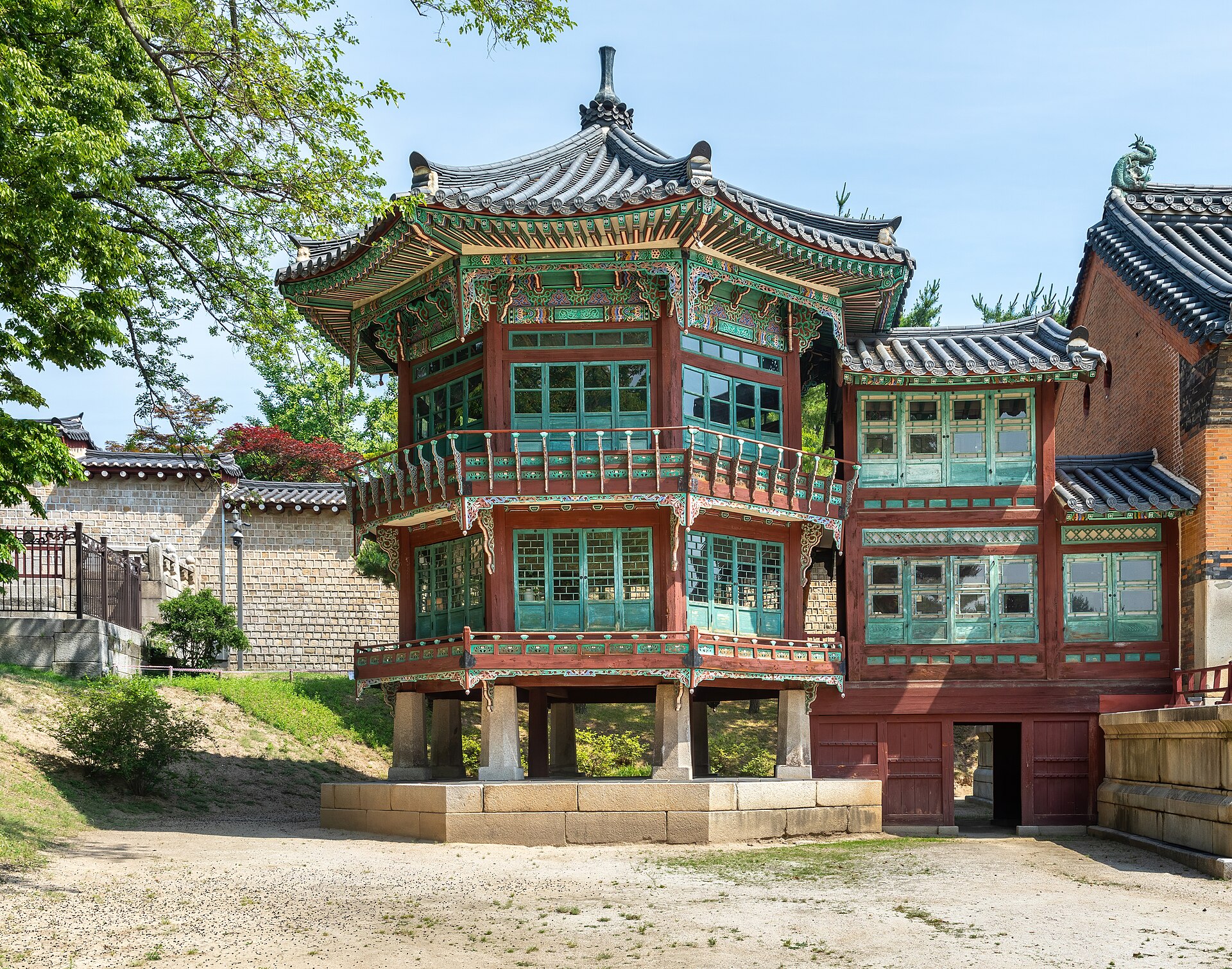
The destruction of so much of the palace was a deep wound to the Korean people, for Gyeongbokgung was a symbol of their nationhood and their history. The loss of its buildings and the alteration of its site were felt as an assault on the identity of the nation, part of a wider effort to suppress Korean culture and self-rule.
After Korea regained its independence, the restoration of Gyeongbokgung became a matter of national importance. A long and continuing project has sought to undo the damage of the occupation, to remove later intrusions, and to rebuild the lost halls and pavilions, returning the palace as closely as possible to its historic form.
This ongoing restoration is a powerful expression of Korean national identity and pride. Each rebuilt hall, each recovered courtyard, represents a reclaiming of the nation’s heritage, and the steady progress of the work has made Gyeongbokgung once more a symbol not only of the Joseon dynasty but of the endurance and revival of Korea itself.
The deliberate nature of the destruction during the occupation gave it a special bitterness. This was not the accidental damage of fire or the slow decay of time but a calculated effort to diminish a symbol of Korean identity. That is why the ongoing restoration carries such weight, for each rebuilt hall answers that act of erasure with an act of remembrance and renewal.
A Living Symbol
Today Gyeongbokgung is far more than a historical monument; it is a living symbol of Korean culture and a beloved part of the life of Seoul. Ceremonies such as the colorful changing of the royal guard are performed at the palace, recreating the pageantry of the Joseon court for visitors and citizens alike.
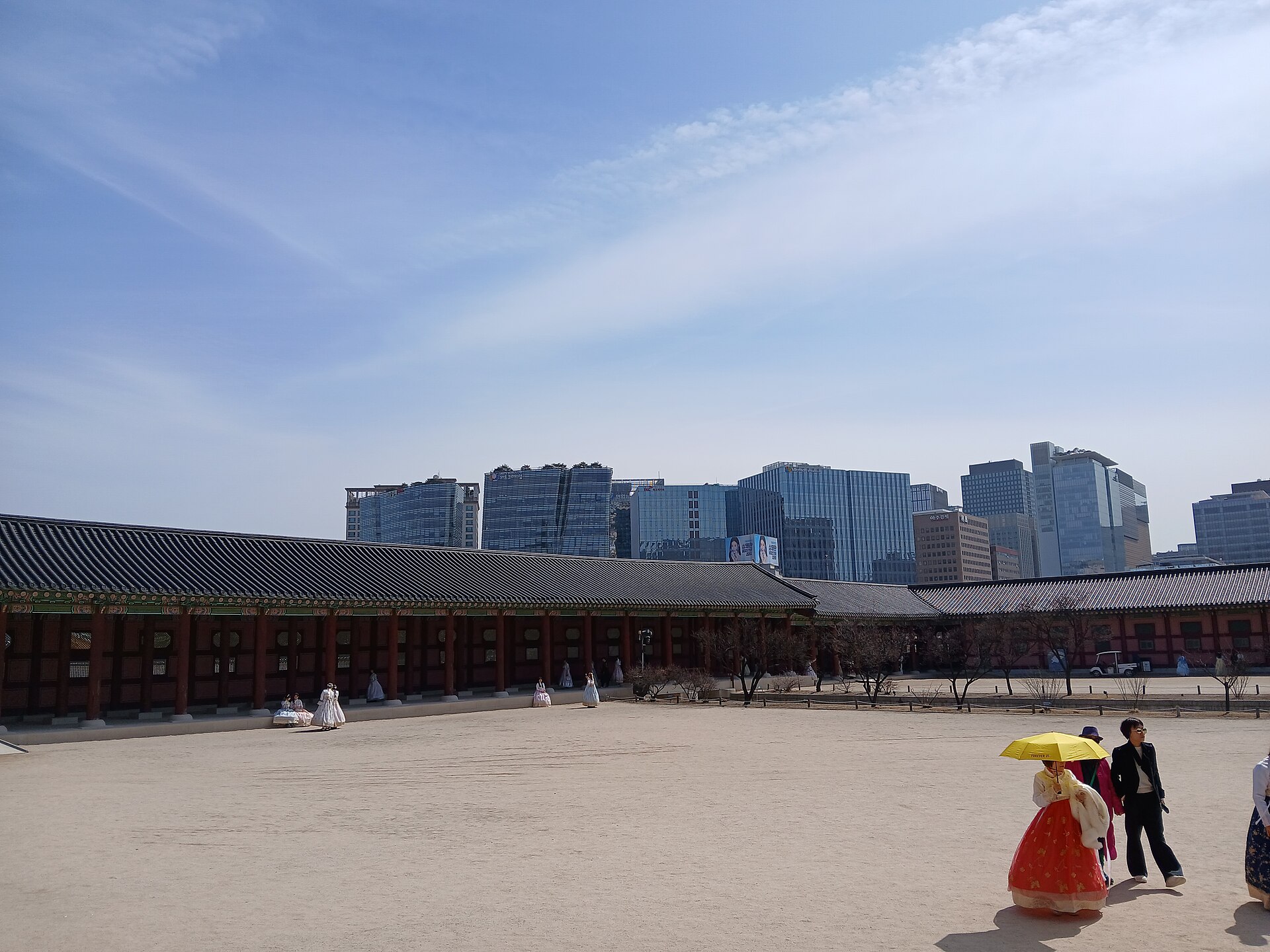
One of the most charming sights at the palace is the many visitors who come dressed in hanbok, the traditional Korean costume. Wearing hanbok grants free entry, and the sight of visitors in flowing traditional dress moving through the historic halls and courtyards brings the palace to life and connects the present to the past in a vivid and joyful way.
The palace has thus become a place where Koreans and visitors from around the world engage directly with the nation’s heritage. It is a setting for cultural events and festivals, a backdrop for countless photographs, and a place where the traditions of Korea are celebrated and kept alive in the midst of a thoroughly modern city.
This living role gives Gyeongbokgung a special vitality. It is not a fossil preserved behind glass but an active part of contemporary Korean life, a place where history is worn, performed, and enjoyed. In this blending of the historic and the living, the palace continues to fulfill its role as the symbolic heart of the nation.
There is something moving in the sight of young Koreans choosing to spend a day at the palace in the dress of their ancestors, laughing and taking photographs among the ancient halls. It shows that heritage need not be solemn to be deeply felt, and that Gyeongbokgung lives most fully not as a museum piece but as a place where the past is embraced with affection and joy.
Visiting Gyeongbokgung Today
Today Gyeongbokgung is one of the most popular attractions in Seoul, drawing visitors from around the world to explore its halls, pavilions, and gardens in the heart of the city. Easily reached and set amid other historic sites, it is the natural starting point for any exploration of Korea’s royal heritage.
View the exact location on Google Maps
A visit leads through the great gate and across the courtyards to the throne hall, past the banquet pavilion on its pond and the hexagonal pavilion in its garden, through the various halls and quarters of the palace. The scale and beauty of the complex reward unhurried exploration, and the palace also houses museums that deepen the understanding of Korean history and court life.
Visitors can also enjoy the ceremonial changing of the guard, and many choose to explore the palace dressed in hanbok, entering into the spirit of the place. The palace connects easily to the surrounding historic districts, making it part of a rich landscape of traditional architecture and culture in the center of Seoul.
Whether you come for the architecture, the history, the ceremonies, or simply the serenity of its courtyards, Gyeongbokgung offers an unforgettable window into the world of the Joseon dynasty. It is the grandest of Korea’s palaces and a beloved symbol of the nation, a place where the beauty and resilience of Korean culture are on magnificent display.
Try to visit in more than one season if you can, for the palace changes character with the year, softened by spring blossoms, shaded in summer, brilliant with autumn color, or hushed under winter snow. In every season the curving roofs and painted eaves find a new harmony with the sky and the mountains, and the palace reveals another facet of its quiet, enduring beauty.
The palace also serves as a gateway to the wider historic quarter around it, with its traditional houses, museums, and streets. A visit to Gyeongbokgung naturally leads outward into this rich landscape of Korean heritage, so that the palace becomes not an end in itself but the beginning of a deeper encounter with the culture and history of Seoul.
Palaces Nearby
Gyeongbokgung is one of the great royal palaces of East Asia. More palaces of the region will join it here soon, to trace the varied splendor of the royal courts of the East.
You May Like



One thought on “Gyeongbokgung: The Grand Joseon Palace at the Heart of Seoul”