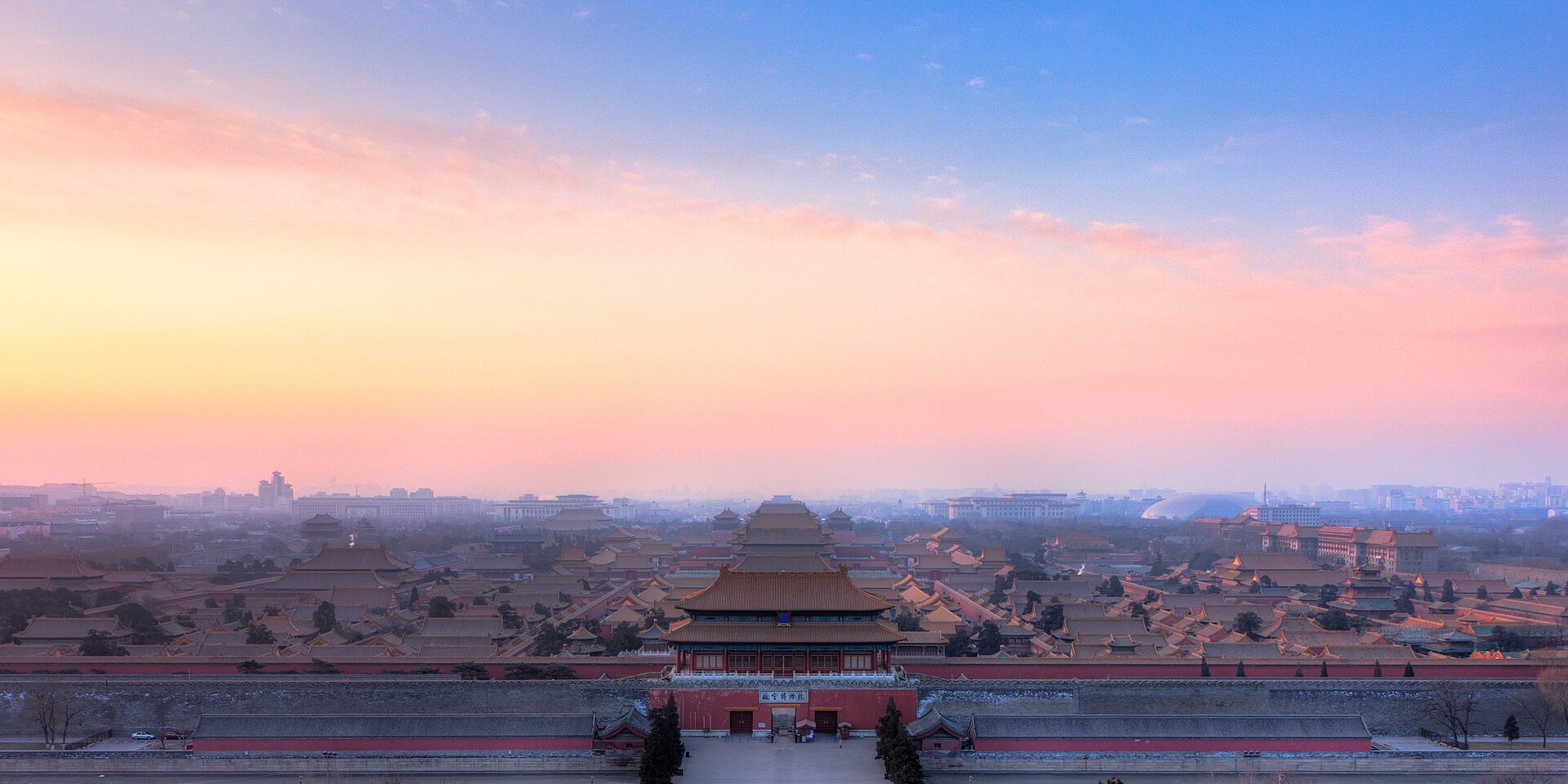
At the very center of Beijing, ringed by a wide moat and walls of deep red, lies a city within a city, a vast complex of golden-roofed halls and quiet courtyards that was for nearly five centuries the most exclusive place on earth. This is the Forbidden City, the imperial palace of the emperors of China, from which the rulers of the Ming and Qing dynasties governed the largest and most populous empire in the world. For most of its history, ordinary people could not so much as glimpse inside its walls, and to enter uninvited was to risk death.
The Forbidden City is not a single palace but an enormous walled precinct containing hundreds of buildings, laid out with breathtaking symmetry along a great central axis. Everything about it, from its orientation to the colors of its roofs to the numbers of its ornaments, was charged with meaning, expressing the Chinese vision of the emperor as the Son of Heaven, the pivot between the human world and the cosmos. To walk its central axis is to trace a path designed to embody the order of the universe itself.
For centuries this was the ceremonial and political heart of China, the stage on which the vast drama of imperial rule was performed. Here emperors held audiences of overwhelming grandeur, conducted the sacred rites that maintained cosmic harmony, and lived out their private lives amid a household of thousands, surrounded by concubines, eunuchs, and officials. The rise and fall of dynasties, the intrigues of the court, the fate of the empire, all played out within these walls.
In this article you will explore the Forbidden City from its founding by a Ming emperor to its cosmic plan, its great halls, and its hidden inner world, through the dynasties that ruled from it to its transformation into one of the world’s great museums. Along the way you will discover why this immense golden palace at the heart of Beijing remains one of the supreme achievements of human civilization and a symbol of China itself.
In This Article
- A City Within a City
- The Emperor Who Built It
- The Meaning of the Forbidden City
- A Plan Written in the Cosmos
- The Meridian Gate
- The Hall of Supreme Harmony
- The Great Halls of State
- The Inner Palace
- The Hidden World of the Court
- Yellow Roofs and Red Walls
- From Ming to Qing to the Last Emperor
- The Palace Museum
- Visiting the Forbidden City Today
A City Within a City
The Forbidden City occupies an enormous rectangular precinct at the heart of Beijing, surrounded by high walls and a broad moat. Within its walls lies a vast array of buildings, halls, gates, courtyards, and gardens, laid out with rigorous symmetry, forming what is often described as the largest palace complex in the world and one of the best preserved.

The scale is difficult to grasp. The complex contains a great many buildings and an immense number of rooms, spread across a huge area, so that a visit involves a long journey through courtyard after courtyard, hall after hall. This was not merely a residence but a self-contained world, home to the emperor, his family, and the thousands who served them.
The whole precinct is organized along a central north-south axis, on which the most important buildings are arranged in sequence, with lesser structures spreading out symmetrically on either side. This ordered plan was not arbitrary but deeply meaningful, expressing through its very geometry the Chinese conception of order, hierarchy, and the emperor’s central place in the cosmos.
For all its immensity, the Forbidden City is a place of remarkable coherence and harmony. Its buildings share a common architectural language, its spaces unfold according to a clear logic, and its colors and forms repeat and echo throughout. The result is a unified masterpiece, a single vast composition that stands as one of the great achievements of world architecture.
It rewards the visitor to slow down and feel the rhythm of the place, the way each courtyard opens into the next through a gate, building a sense of anticipation that culminates in the great halls. This deliberate sequence, of compression and release, of walls and openings, is itself part of the palace’s art, a choreography of space that has been guiding footsteps for six hundred years.
The Emperor Who Built It
The Forbidden City was built in the early fifteenth century by an ambitious Ming emperor who moved the capital of China to Beijing and set about creating a palace worthy of his imperial vision. The construction was a colossal undertaking, requiring vast resources, immense quantities of precious materials, and the labor of enormous numbers of workers and craftsmen.

The building of the palace was part of a grand statement of imperial power. By raising so magnificent a complex and establishing his capital at Beijing, the emperor proclaimed the might and legitimacy of his rule and the glory of the Ming dynasty. The Forbidden City was, from the beginning, a monument to the majesty of the Chinese throne.
The materials gathered for the construction came from across the empire, including precious timbers hauled great distances and fine stone quarried and transported at enormous cost. The scale of the effort reflected the resources that the emperor could command and his determination to create a palace of unmatched grandeur, a fitting seat for the ruler of the world under heaven.
Completed after years of labor, the Forbidden City became the seat of the emperors of China, and it would remain so for centuries, through the fall of one dynasty and the rise of another. The vision of its founding emperor endured, and the palace he built became one of the most enduring symbols of imperial China, the very image of the power and majesty of the throne.
The founding emperor’s decision to move the capital northward to Beijing was momentous and not without controversy, for it shifted the center of the empire closer to the northern frontier. Yet the choice endured, and the palace he built anchored Beijing as the capital of China for centuries to come, shaping the geography of Chinese power down to the present day.
The Meaning of the Forbidden City
The name Forbidden City captures the extraordinary exclusivity of the palace. For most of its history, access was strictly forbidden to all but the emperor, his household, and those he summoned. To enter without permission was a grave offense, and the ordinary people of China lived their entire lives without ever seeing what lay beyond its walls.
The Chinese name of the palace carries even deeper meaning, linking it to the celestial realm and to the star at the center of the heavens around which all others were thought to turn. Just as that star stood at the pivot of the sky, so the emperor, seated at the center of his palace, stood at the pivot of the earthly world, the axis around which the empire revolved.
This idea of the emperor as the center of all things governed the whole conception of the palace. The Forbidden City was designed as the earthly counterpart of the heavenly order, with the emperor at its heart as the Son of Heaven, the sacred link between the human and the divine. Its exclusivity was thus not merely practical but profoundly symbolic.
To understand the Forbidden City is to understand this vision of the emperor and his place in the cosmos. The palace was not simply a grand residence but a sacred center, a place set apart from the ordinary world, where the ruler performed his cosmic role. Its very name proclaimed that this was a realm forbidden to all but the chosen, the dwelling of the Son of Heaven himself.
There is a particular power in the idea that a whole vast palace could be built around a single person’s sacred centrality. Everything, the walls, the gates, the guards, the ceremonies, existed to set the emperor apart and to protect the mystery of his person. The exclusivity was not mere privilege but a carefully maintained aura, essential to the emperor’s role as the link between heaven and earth.
A Plan Written in the Cosmos
The layout of the Forbidden City was governed by ancient Chinese principles of design, in which architecture reflected the order of the cosmos and the hierarchy of society. The great central axis, the strict symmetry, the orientation toward the south, all expressed a vision in which the palace mirrored the structure of the universe and the emperor’s central place within it.
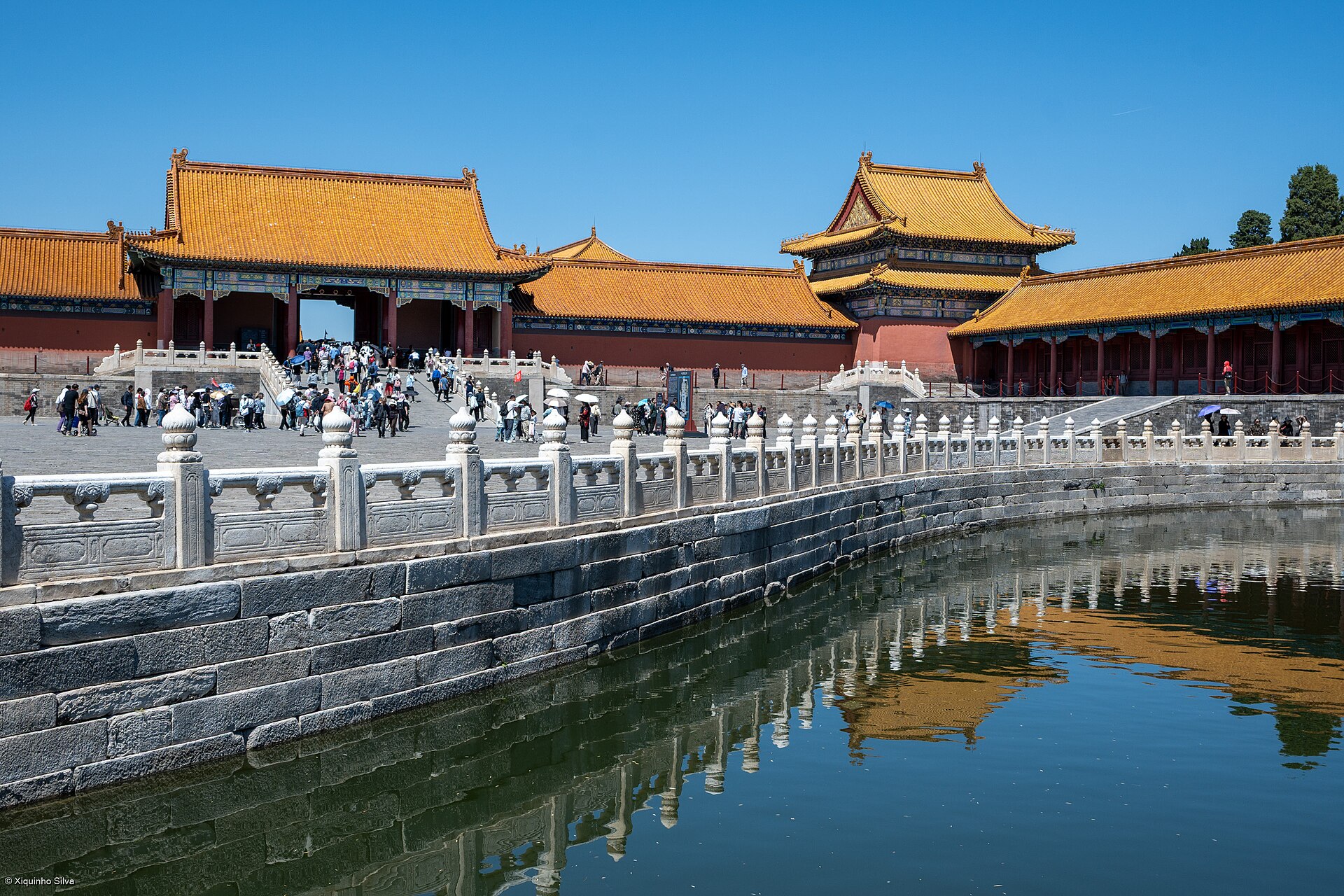
The palace faces south, in accordance with tradition, so that the emperor, seated on his throne, looked out toward the south while the cold and darkness of the north lay behind him. This orientation was rich with meaning, associating the emperor with the sun and warmth and light, and placing him in his proper relationship to the forces of the natural world.
Within this ordered plan, the placement of every building expressed hierarchy and meaning. The most important halls stood on the central axis, while lesser structures were arranged symmetrically to either side. Even the flow of water and the placement of gates followed principles designed to ensure harmony and good fortune, so that the whole palace was a carefully composed cosmic diagram.
This deep symbolism sets the Forbidden City apart from mere grandeur. It was designed not only to impress but to embody a vision of order, to make visible the harmony between heaven, earth, and the emperor. Every element had its place and meaning, and the palace as a whole was a vast expression of the Chinese understanding of the universe and the ruler’s role within it.
This union of architecture and cosmology is what lifts the Forbidden City above other great palaces. It was conceived not merely as a residence or a seat of government but as a model of the ordered universe, a place where the harmony of heaven could be made manifest on earth. To move through it thoughtfully is to read a text written in stone and timber about the Chinese vision of the world.
The Meridian Gate
The grand southern entrance to the Forbidden City is the Meridian Gate, a monumental structure that served as the ceremonial front of the palace. Massive and imposing, with towering wings and pavilions rising above the walls, it presented an overwhelming face to those who approached, a fitting threshold to the sacred precinct within.
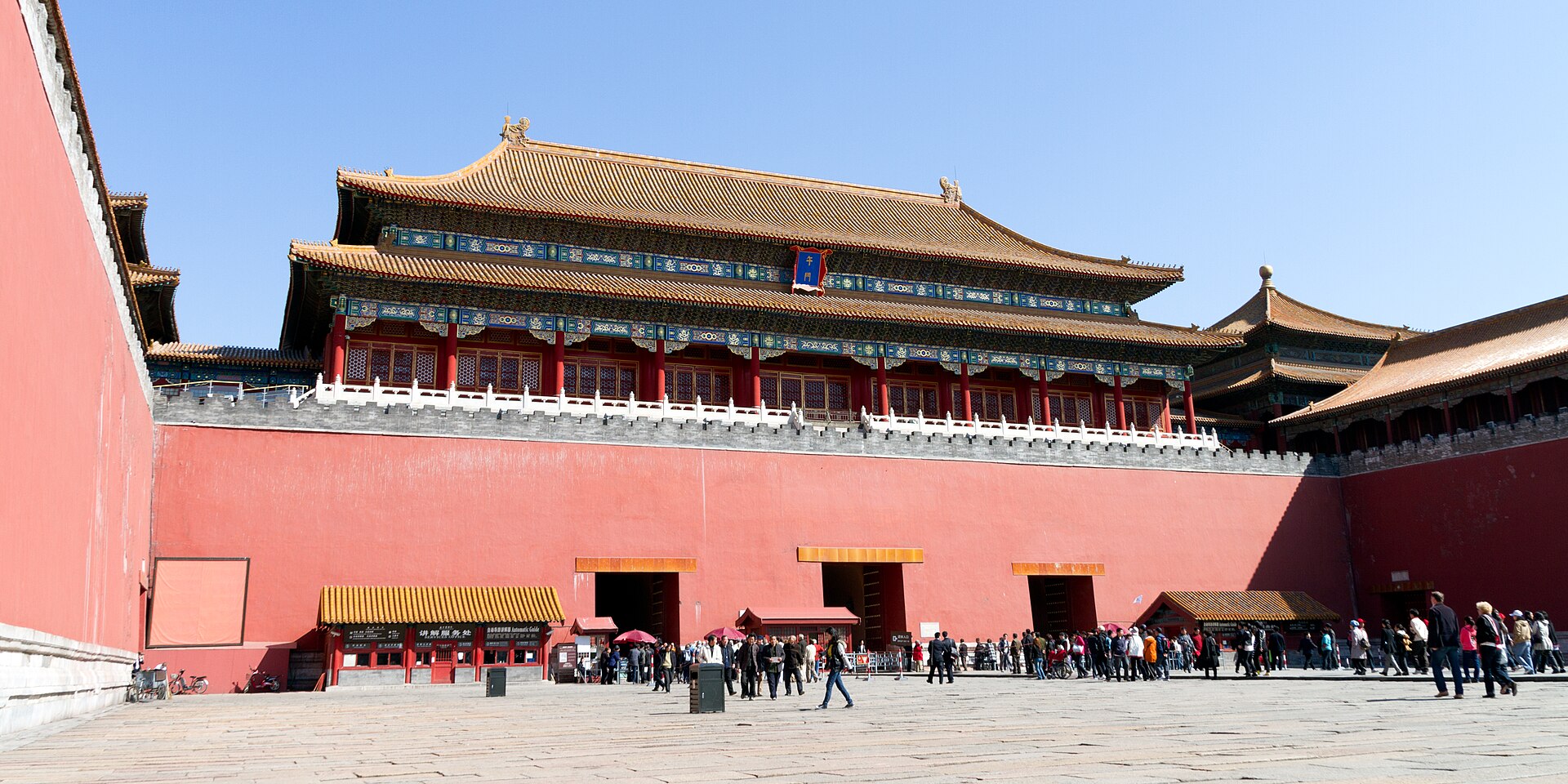
The gate was the setting for important ceremonies and proclamations, and its form was designed to inspire awe. From its heights the emperor could preside over great occasions, and its very name linked it to the meridian line and the celestial order, reinforcing the cosmic symbolism that pervaded the whole palace.
Passing through the Meridian Gate, a visitor entered a world reserved for the emperor and his court. Beyond it lay the great courtyards and halls of the outer palace, and the gate marked the decisive threshold between the ordinary world outside and the forbidden realm within, a boundary charged with meaning and majesty.
The Meridian Gate remains one of the most impressive structures in the whole complex, a grand overture to the wonders beyond. Its scale and its symbolism prepared the visitor for the splendors of the palace, and it stands today, as it stood for centuries, as the great ceremonial entrance to the heart of imperial China.
The very shape of the gate, with its projecting wings enclosing a forecourt, was designed to gather and concentrate the sense of awe. Approaching it, one felt drawn into the embrace of imperial power even before entering the palace proper. Few thresholds in the world have been designed with such deliberate psychological force, and it still impresses today.
The Hall of Supreme Harmony
Beyond the entrance courtyards, at the heart of the outer palace, rises the greatest building in the whole Forbidden City, the Hall of Supreme Harmony. Set upon a series of broad marble terraces, this vast hall was the ceremonial center of the empire, the setting for the most important occasions of the imperial court.

Here the emperor sat enthroned for the grandest ceremonies, such as his enthronement, great festivals, and other occasions of the highest importance. The hall was designed to overwhelm, its scale and richness expressing the supreme majesty of the throne, and it stood as the physical and symbolic climax of the entire palace.
The hall rises on a magnificent multi-tiered platform of white marble, approached by staircases and surrounded by balustrades, which lifts it above the surrounding courtyards and enhances its grandeur. Bronze vessels, sundials, and other symbolic objects stand upon the terraces, each with its own meaning, adding to the ceremonial power of the space.
To stand before the Hall of Supreme Harmony is to feel the full weight of imperial majesty. This was the supreme ceremonial space of the Chinese empire, the place where the emperor appeared in his greatest glory, and its scale and splendor still convey the awesome authority that the throne once commanded over the vast realm of China.
The great empty courtyard before the hall was itself an instrument of majesty. Vast and paved in stone, without shade or ornament, it forced all who crossed it to approach the enthroned emperor in the open, small and exposed beneath the towering hall. The space was designed to humble the visitor and to exalt the throne, a lesson in power taught through architecture alone.
The Great Halls of State
The Hall of Supreme Harmony is the first and greatest of three main halls that stand in sequence along the central axis of the outer palace, together forming the ceremonial core of the Forbidden City. Behind it rise two further halls, each with its own function in the elaborate ceremonial life of the court.
The second hall served as a place where the emperor could rest and prepare before great ceremonies, and where he received officials on certain occasions. The third of the halls was used for banquets and other functions, including examinations of the highest level. Together the three halls provided the setting for the most important public functions of the imperial state.
These three great halls, raised upon their shared platform of marble, dominate the outer palace and express the grandeur of the throne. Their arrangement in sequence along the central axis reflects the ordered, hierarchical vision that governed the whole complex, each hall playing its part in the ceremonial rhythm of imperial life.
The outer court, centered on these three halls, was the public face of the empire, the realm of grand ceremony and affairs of state. It was here that the emperor appeared before his officials in majesty, and here that the great rituals of the imperial system were performed, in settings of overwhelming grandeur befitting the ruler of all under heaven.
The Inner Palace
Behind the great ceremonial halls of the outer court lies the inner palace, the private realm of the emperor and his family. Here the character of the Forbidden City changes, from the vast public spaces of ceremony to the more intimate world of the imperial household, where the private life of the dynasty unfolded.

The inner palace contained the residences of the emperor, the empress, and the imperial family, along with gardens, smaller halls, and countless rooms. Though still grand, these spaces were more human in scale than the great ceremonial halls, designed for daily life rather than public display, and they formed the domestic heart of the palace.
It was in the inner palace that the real life of the court was lived, with all its intimacy and intrigue. Here the emperor retired from the ceremonies of state, here the affairs of the imperial family played out, and here, behind the public grandeur, the personal dramas of the dynasty, its loves, rivalries, and struggles for power, were enacted.
A beautiful imperial garden lies at the northern end of the inner palace, a place of rocks, pavilions, and ancient trees where the imperial family could enjoy the pleasures of nature within the walls. This garden, more relaxed and picturesque than the rigid symmetry of the ceremonial courts, offered a place of repose at the heart of the vast and formal palace.
The contrast between the outer and inner courts is one of the most telling features of the palace. Passing from the vast ceremonial spaces into the more intimate residential quarters, one moves from the public role of the emperor to his private person, from the Son of Heaven on his throne to the man who lived, ate, and slept within these more human-scaled walls.
The Hidden World of the Court
The Forbidden City was home not only to the emperor and his immediate family but to an enormous household, numbering in the thousands. Concubines, eunuchs, servants, guards, and officials filled the palace, forming a whole society hidden behind its walls, with its own rigid hierarchies, rituals, and rules.

The women of the imperial household, including the empress and the many consorts and concubines, lived within the inner palace, their lives governed by strict protocol and confined largely to the palace precincts. Their world was one of luxury and confinement, of intense competition for the emperor’s favor, and of influence exercised, when it could be, from behind the scenes.
The eunuchs formed another distinctive and powerful group within the palace. Serving the emperor and the imperial family in the intimate spaces where other men could not go, they could rise to positions of great influence, and at times they wielded considerable power in the affairs of the court and even the empire.
This hidden world, with its intrigues, its hierarchies, and its dramas, is an essential part of the story of the Forbidden City. Behind the grand public face of ceremony and majesty lay a complex and often secretive society, and the history of the palace is as much the history of this inner world as of the emperors who ruled from its halls.
The rigid protocol that governed this hidden world extended to the smallest details of daily life, dictating who could go where, who could speak to whom, and how every ceremony was to be performed. Within these rules, however, unfolded a rich and often turbulent human drama, and the history of the court is full of stories of ambition, love, and rivalry played out behind the golden roofs.
Yellow Roofs and Red Walls
The architecture of the Forbidden City is instantly recognizable, with its sweeping roofs of golden-yellow glazed tiles, its deep red walls, and its richly painted and carved detail. These colors and forms were not merely decorative but deeply symbolic, expressing the imperial character of the palace and the cosmic order it embodied.

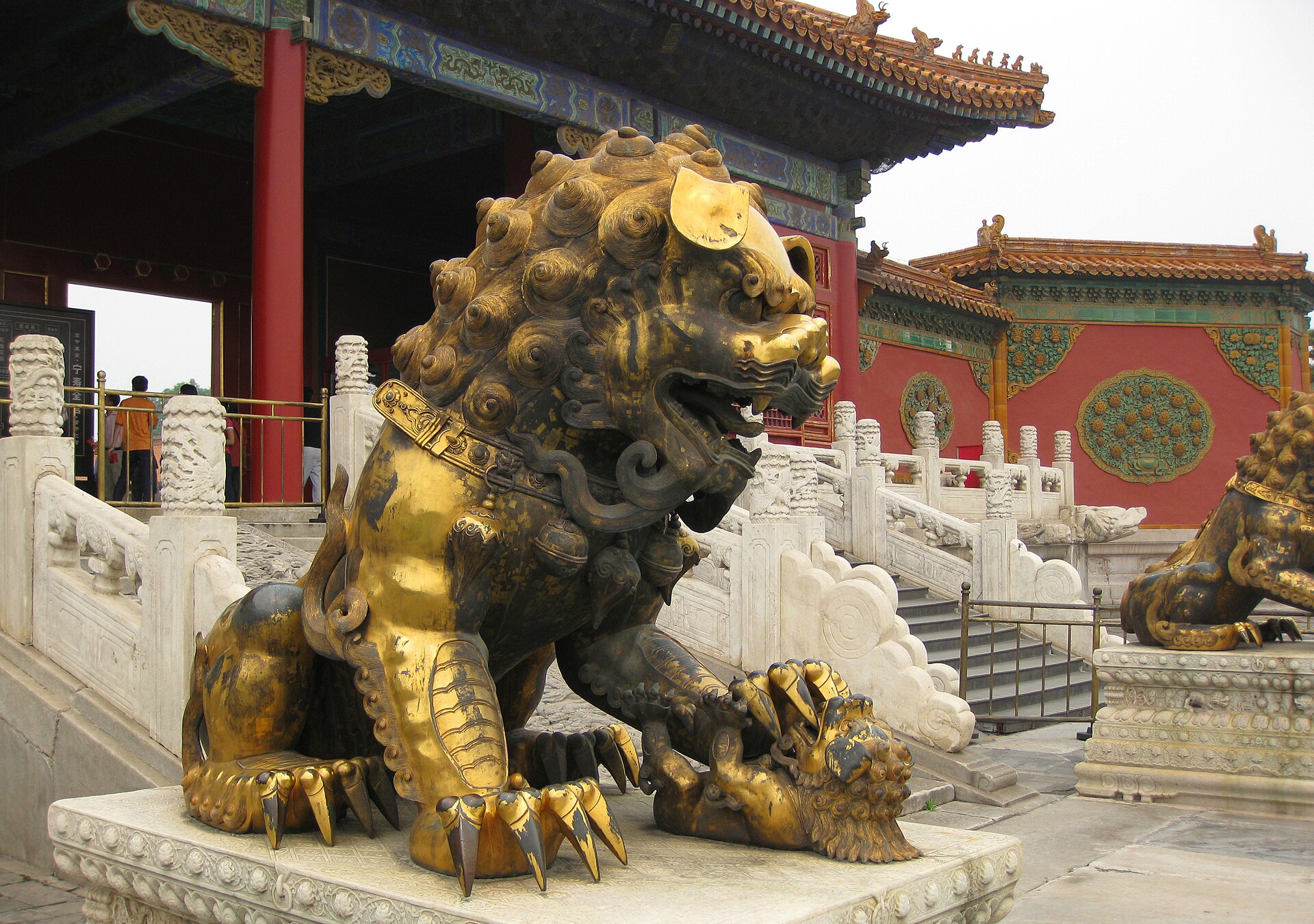
Yellow, the color of the roofs, was reserved for the emperor, symbolizing his supreme status and his association with the earth and the center. The red of the walls signified good fortune and happiness. Together these colors marked the palace as the emperor’s domain, and their consistent use throughout the complex gives it its unmistakable and majestic appearance.
Symbolism pervades every detail of the architecture. The numbers of ornaments, the figures adorning the roofs, the decorative motifs, all carried meaning, often relating to imperial power, good fortune, or the cosmic order. Dragons, the symbol of the emperor, appear everywhere, carved, painted, and molded, proclaiming the presence of the Son of Heaven throughout the palace.
The buildings themselves are masterpieces of traditional Chinese architecture, built of timber on stone platforms, with intricate bracketing supporting their great roofs. The consistency and refinement of this architecture, repeated and varied across the whole vast complex, make the Forbidden City a supreme showcase of the Chinese building tradition at its most magnificent.
The roofs themselves repay close attention, for along their ridges march small processions of figures, their numbers carefully regulated according to the importance of the building. On the most important halls the full complement appears, a detail that let those who knew how to read it grasp at a glance the rank and significance of each structure within the vast hierarchy of the palace.
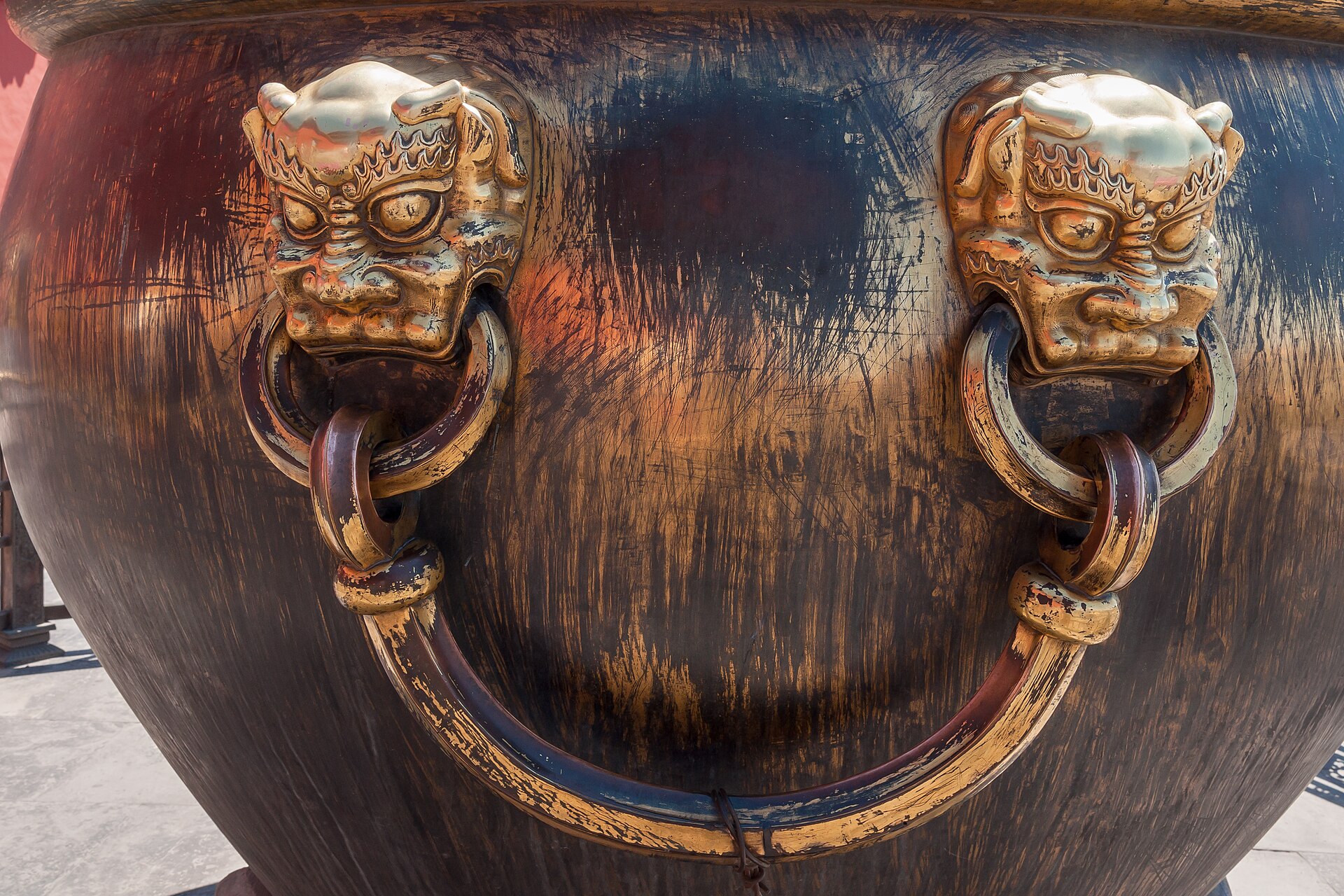
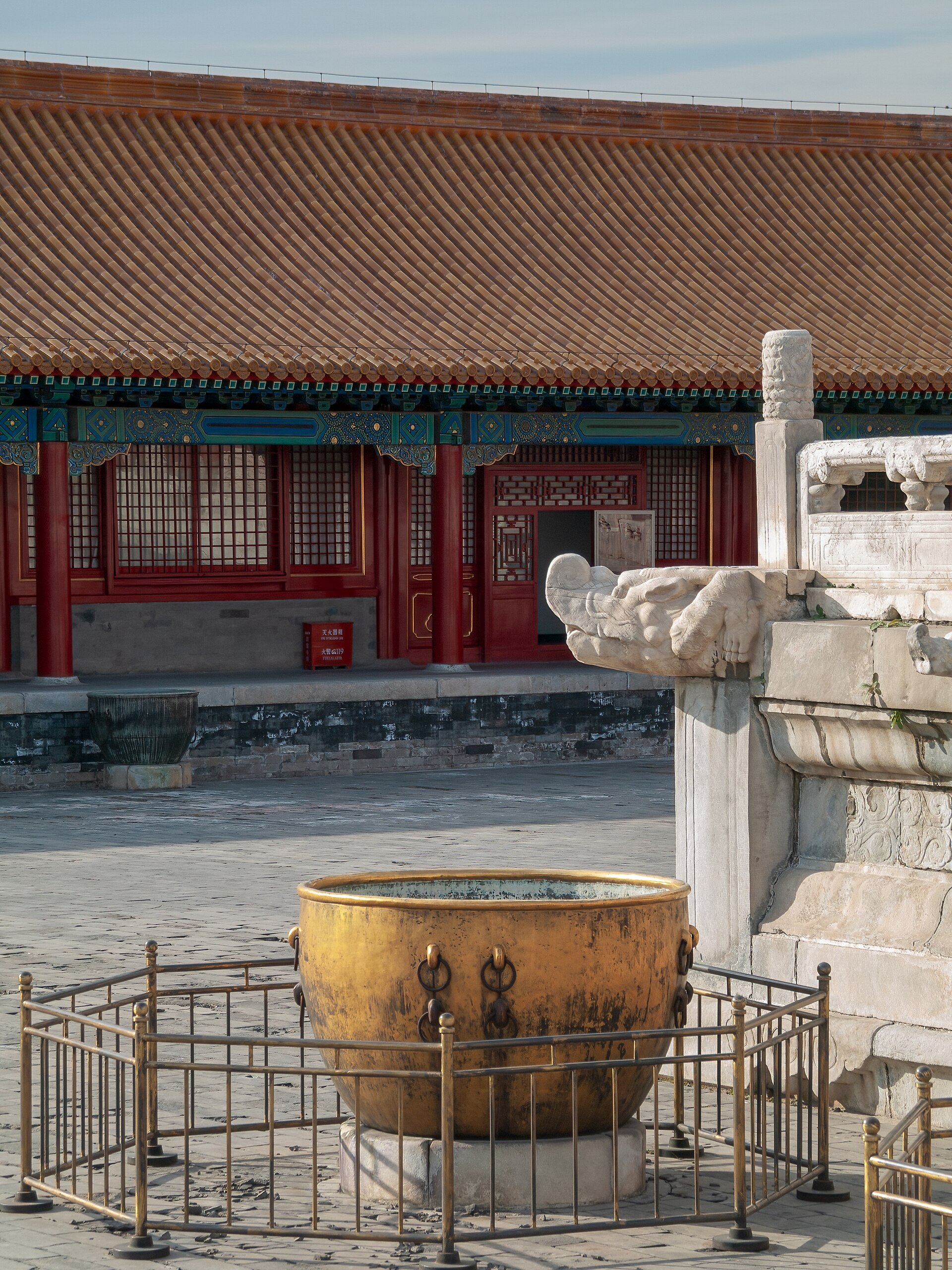
The great bronze vats that stand throughout the courtyards are another telling detail. Filled with water, they were kept as a defense against the fires that were the constant terror of a palace built of timber, and in winter fires were lit beneath them to keep the water from freezing. They are a reminder that behind all the symbolism lay the practical struggle to preserve a wooden city from the flames.
From Ming to Qing to the Last Emperor
For nearly five centuries the Forbidden City was the seat of the emperors of China, home to the rulers of two great dynasties, the Ming and the Qing. A long succession of emperors lived and ruled within its walls, and the palace witnessed the whole sweep of late imperial Chinese history, from glory to decline.

The transition from the Ming to the Qing dynasty saw new rulers take possession of the palace, but the Forbidden City continued in its role as the imperial seat, and the new dynasty maintained and embellished it. The essential character of the palace endured through this change, a continuity that speaks to its power as a symbol of imperial legitimacy.
The later centuries brought decline, as the empire faced internal troubles and mounting pressures from abroad. The palace, once the center of a confident and powerful empire, became the setting for the struggles of a dynasty in crisis, and its history in this period mirrors the wider story of imperial China’s difficult encounter with the modern world.
The imperial era finally came to an end in the early twentieth century, when the last emperor, still a child, was deposed and China became a republic. For a time the former emperor was allowed to remain within the inner palace, but eventually he too departed, and the long history of the Forbidden City as the home of the emperors came to its close.
To walk the palace with this long history in mind is to sense the weight of centuries in its courts. Here dynasties rose and fell, here decisions were made that shaped the lives of countless millions, and here, at last, the immense edifice of imperial China came to its end. The stones themselves seem to hold the memory of that vast and dramatic story.
The Palace Museum
After the fall of the empire, the Forbidden City was transformed into a museum, opening to the public the palace that had for so long been forbidden to them. The Palace Museum, as it became known, preserves not only the buildings but a vast collection of imperial treasures, and it is today one of the most visited museums in the world.
The collection includes an enormous array of paintings, ceramics, bronzes, jades, and other treasures accumulated by the imperial court over the centuries. These objects, displayed within the palace, offer a window into the artistic and cultural achievements of imperial China and the luxury of the court that once ruled from these halls.
The history of the collection has itself been dramatic, including the removal of many treasures during times of war and upheaval, some of which came to be housed elsewhere. Yet a magnificent collection remains within the Forbidden City, and together with the buildings themselves it makes the Palace Museum one of the great cultural treasures of the world.
The transformation of the Forbidden City into a public museum marked a profound change in its meaning. Once the exclusive preserve of the emperor, forbidden to ordinary people, it became a place open to all, a treasure belonging to the whole nation and to the world. In this new role it continues to fascinate and inspire the millions who now walk freely through its once forbidden halls.
The dispersal of part of the collection during the upheavals of the twentieth century is a poignant chapter in itself, as treasures were moved for safekeeping and some never returned. Yet what remains is staggering in its richness, and the reunion of the surviving buildings with their treasures makes a visit to the Palace Museum an encounter with the full depth of Chinese civilization.
Visiting the Forbidden City Today
Today the Forbidden City is one of the most popular attractions in the world, drawing enormous numbers of visitors to explore its halls, courtyards, and treasures at the heart of Beijing. It stands at the center of the city, connected to the great square before it, part of a landscape rich in history and meaning.
View the exact location on Google Maps
A visit typically follows the central axis, passing through the great gates and across the courtyards to the Hall of Supreme Harmony and the other great halls, then into the more intimate world of the inner palace and its garden. The sheer scale of the complex means that even a long visit can only take in a part of it, and its treasures reward repeated exploration.
Because of its immense size and popularity, the Forbidden City can be crowded, and visitors benefit from planning their route and allowing plenty of time. Yet even amid the crowds, the grandeur and beauty of the palace are overwhelming, and quiet corners can still be found where the atmosphere of the old imperial world lingers.
Whether you come for the architecture, the history, the treasures, or the sheer scale of the place, the Forbidden City offers an experience of rare power. It is one of the supreme achievements of human civilization, the golden heart of imperial China, and a place whose grandeur and meaning continue to astonish everyone who passes through its once forbidden gates.
A useful strategy is to step off the crowded central axis into the quieter side courts and gardens, where the press of visitors thins and the atmosphere of the old palace can be felt more keenly. In these calmer corners, with a golden roof above and an empty courtyard before you, it becomes possible to imagine the silence and mystery that once ruled this forbidden world.
However you plan your visit, allow the scale of the place to work on you. The Forbidden City cannot be fully grasped in a single day, and part of its power lies precisely in that immensity, in the sense that beyond every hall lies another, and beyond that another still. To leave it is to carry away an impression of a world without end, the golden heart of a vanished empire.
Palaces Nearby
The Forbidden City is one of the great royal palaces of East Asia. To compare the imperial traditions of the region, these nearby palaces make natural companions to a visit here.
You May Like



One thought on “The Forbidden City: Five Centuries of Emperors at the Heart of Beijing”