Step through the gates of the Grand Palace in Bangkok and you enter a world that seems to belong more to legend than to reality. Golden spires soar into the tropical sky, walls shimmer with tiny pieces of colored glass and mirror, mythical giants stand guard with painted faces, and everywhere the light catches on gilding, ceramics, and gold. This dazzling complex on the bank of the river was for a century and a half the residence of the kings of Thailand, and it remains the spiritual and ceremonial heart of the Thai nation.
The Grand Palace was founded at the end of the eighteenth century, when a new dynasty established a new capital at Bangkok and set about creating a royal residence worthy of the kingdom. Over the following generations it grew into a vast walled complex of throne halls, residences, temples, and courtyards, blending Thai traditions with influences from abroad into a style of extraordinary richness and originality found nowhere else in the world.
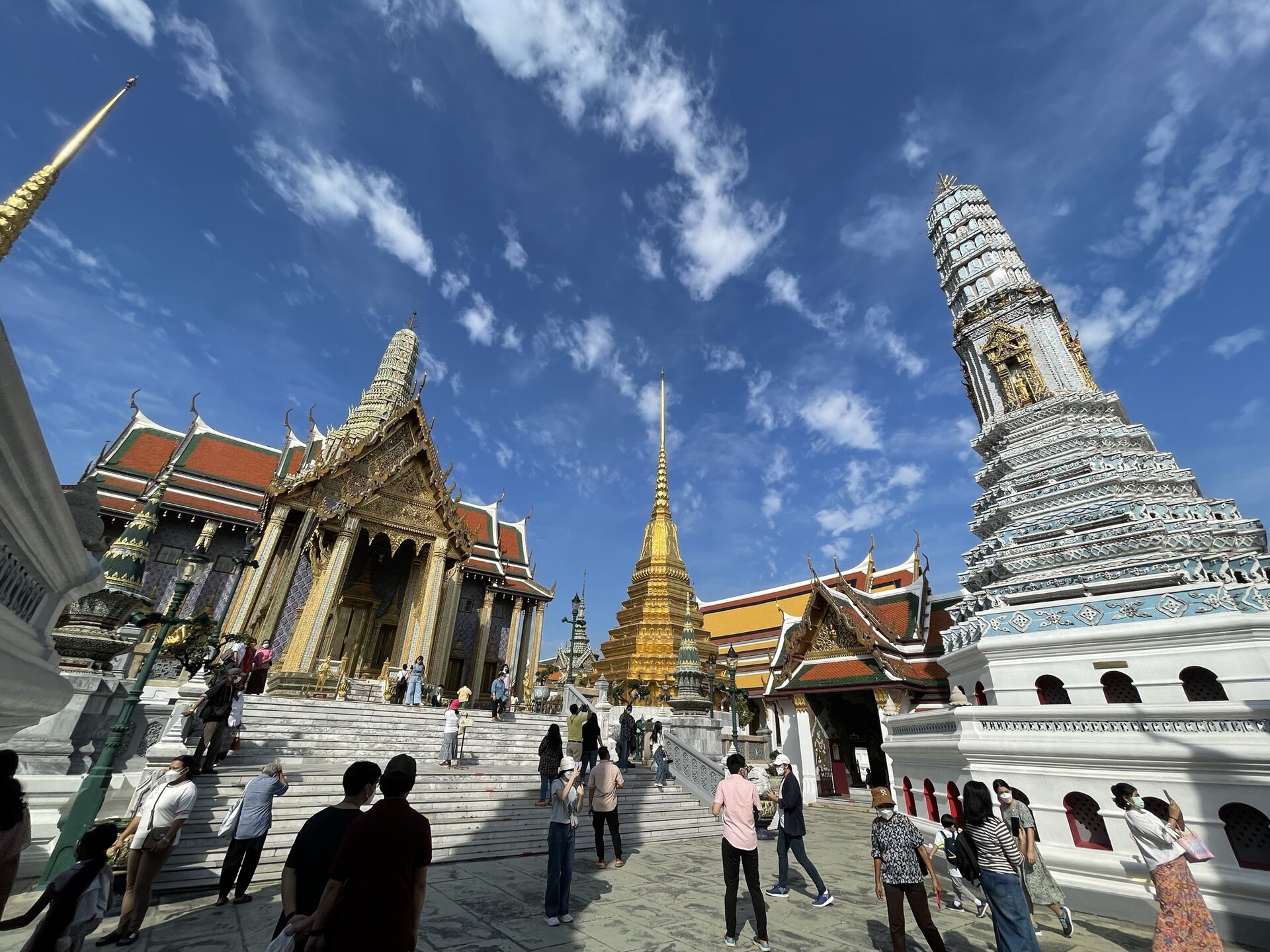
At the heart of the complex stands its most sacred treasure, the Temple of the Emerald Buddha, home to the most revered Buddha image in all of Thailand. Around it cluster gilded spires, jewel-like pavilions, and long galleries painted with scenes from a great epic, forming a dazzling ensemble that overwhelms the senses. Few places on earth pack so much color, gold, and glitter into a single enchanted precinct.
In this article you will explore the Grand Palace from its founding by the Chakri dynasty to its glittering temples and throne halls, through its unique blend of Thai and foreign architecture to its role in the life of the Thai monarchy today. Along the way you will meet the mythical guardians, the sacred Emerald Buddha, and the great mural of a beloved epic, and understand why this radiant palace on the river remains the beating heart of Thailand.
In This Article
- A Glittering Royal City
- The Founding of a New Capital
- The Chakri Dynasty
- The Plan of the Palace
- The Temple of the Emerald Buddha
- The Sacred Emerald Buddha
- The Great Throne Halls
- A Meeting of East and West
- Gold, Glass, and Glittering Spires
- The Epic on the Walls
- Giants and Mythical Guardians
- The Heart of the Monarchy
- Visiting the Grand Palace Today
A Glittering Royal City
The Grand Palace is an enormous walled complex in the heart of old Bangkok, standing beside the great river that flows through the city. Within its walls lies a dense and dazzling array of buildings, throne halls, temples, pavilions, and residences, arranged around courtyards and gardens, forming a whole royal city glittering with gold and color.

For a century and a half the complex served as the official residence of the kings of Thailand and the seat of the royal government. Though the monarch no longer lives here, the Grand Palace remains the spiritual heart of the kingdom, used for important royal ceremonies and revered as the symbolic center of the Thai nation and monarchy.
The visual impact of the complex is overwhelming. Everywhere the eye turns there is richness and detail, gilded spires, walls covered in colored glass and ceramic, mythical figures, and shimmering roofs. The sheer density of ornament and the brilliance of the colors create an atmosphere of enchantment quite unlike any other palace in the world.
The Grand Palace is best understood not as a single building but as a sacred and royal precinct, combining the functions of palace and temple. Its buildings served the living king and honored the Buddha, and together they express the deep union of monarchy and religion that lies at the heart of Thai culture, all wrapped in a dazzling display of art and craftsmanship.
Nothing quite prepares a first-time visitor for the intensity of it. Where many palaces impress through restraint and proportion, the Grand Palace overwhelms through sheer abundance, piling gold upon color upon glitter until the senses reel. It is a deliberate aesthetic, one that seeks not calm but wonder, and it succeeds in leaving almost everyone who enters slightly dazzled.
The Founding of a New Capital
The Grand Palace was founded at the end of the eighteenth century by the first king of the Chakri dynasty, who established a new capital for the kingdom at Bangkok. Choosing a site beside the river, he began the construction of a great palace that would serve as the residence of the king and the center of his new capital.
The founding of the palace was part of the founding of Bangkok itself as the seat of a revived and confident kingdom. After a period of upheaval, the new dynasty sought to restore the glory of the Thai monarchy, and the building of a magnificent palace was central to that ambition, a statement of renewal and royal power.
The king modeled aspects of his new capital and palace on the traditions of an earlier Thai royal city, seeking to link his new dynasty to the glories of the past. In this way the Grand Palace was rooted in Thai tradition even as it became the center of a new age, embodying both continuity and renewal.
From these beginnings, the Grand Palace grew over the generations as successive kings added new buildings and embellished the complex. Each reign left its mark, expanding and enriching the palace, so that the complex became a record of the dynasty’s history, a living creation shaped by many hands over many years.
The choice of a site beside the river was practical as well as symbolic, for the waterway was the lifeblood of the new capital, carrying trade and travel. Bangkok grew as a city of canals and rivers, and the Grand Palace, rising on the bank, stood at the heart of this watery world, its spires reflected in the currents that flowed past its walls.
The Chakri Dynasty
The Grand Palace is inseparable from the Chakri dynasty, the royal house that has ruled Thailand from its founding to the present day. The kings of this line made the palace their home and the center of their rule, and its history is bound up with theirs, reflecting the fortunes and achievements of the dynasty over more than two centuries.
Under the Chakri kings, Thailand navigated the challenges of the modern age, including the pressures of European empires, while maintaining its independence, a rare achievement in the region. The palace reflects this history, its buildings blending Thai tradition with influences from abroad as the kingdom engaged with the wider world.
The dynasty has produced kings of great significance in Thai history, some of whom modernized the kingdom and shaped the nation as it exists today. Their reigns are commemorated throughout the palace, and the complex stands as a monument to the dynasty and its central role in the story of modern Thailand.
To this day the Chakri dynasty reigns, and the Grand Palace remains its symbolic heart, even though the kings now reside elsewhere. The continuity of the dynasty gives the palace a living significance, and it continues to serve as the setting for the great ceremonies of the monarchy, linking the present to the long history of the royal house.
That Thailand alone among the nations of its region escaped colonization gives the palace an added significance. It is the seat of a monarchy that endured unbroken through the age of empires, and its blend of Thai and foreign elements reflects not conquest but choice, the deliberate selection by independent kings of what they wished to take from the wider world.
The Plan of the Palace
The Grand Palace was traditionally organized into distinct zones, reflecting the different functions of the complex and the hierarchy of the royal world. An outer area housed government offices and public functions, a central area contained the most important throne halls and royal residences, and an inner area was reserved for the king’s private household.
This division reflected the ordered world of the Thai court, with its careful distinctions between the public and the private, the governmental and the domestic. As at other great royal palaces, moving through the complex meant passing between these zones, each with its own character and its own rules of access.
The most sacred part of the complex is the temple that stands within the palace walls, set apart in its own precinct. Around the throne halls and temple spread courtyards, gardens, and lesser buildings, all enclosed within the great walls that separate the royal precinct from the surrounding city.
The overall arrangement combined the functions of a royal residence, a seat of government, and a great temple, all within a single walled complex. This union of palace and temple, of the royal and the sacred, is characteristic of the Thai conception of kingship, and it gives the Grand Palace its distinctive character as both a political and a spiritual center.
The strict separation of these zones once governed the movement of everyone who lived and worked within the walls, from ministers to servants to the women of the royal household. Though the palace no longer functions as a residence, the traces of this ordered world remain legible in its plan, a reminder of the elaborate social hierarchy that once animated the complex.
The Temple of the Emerald Buddha
The most sacred and celebrated part of the Grand Palace is the Temple of the Emerald Buddha, the royal chapel that stands within the palace walls. This dazzling temple complex, glittering with gold and colored glass, is the holiest Buddhist site in Thailand, and it forms the spiritual heart of both the palace and the kingdom.

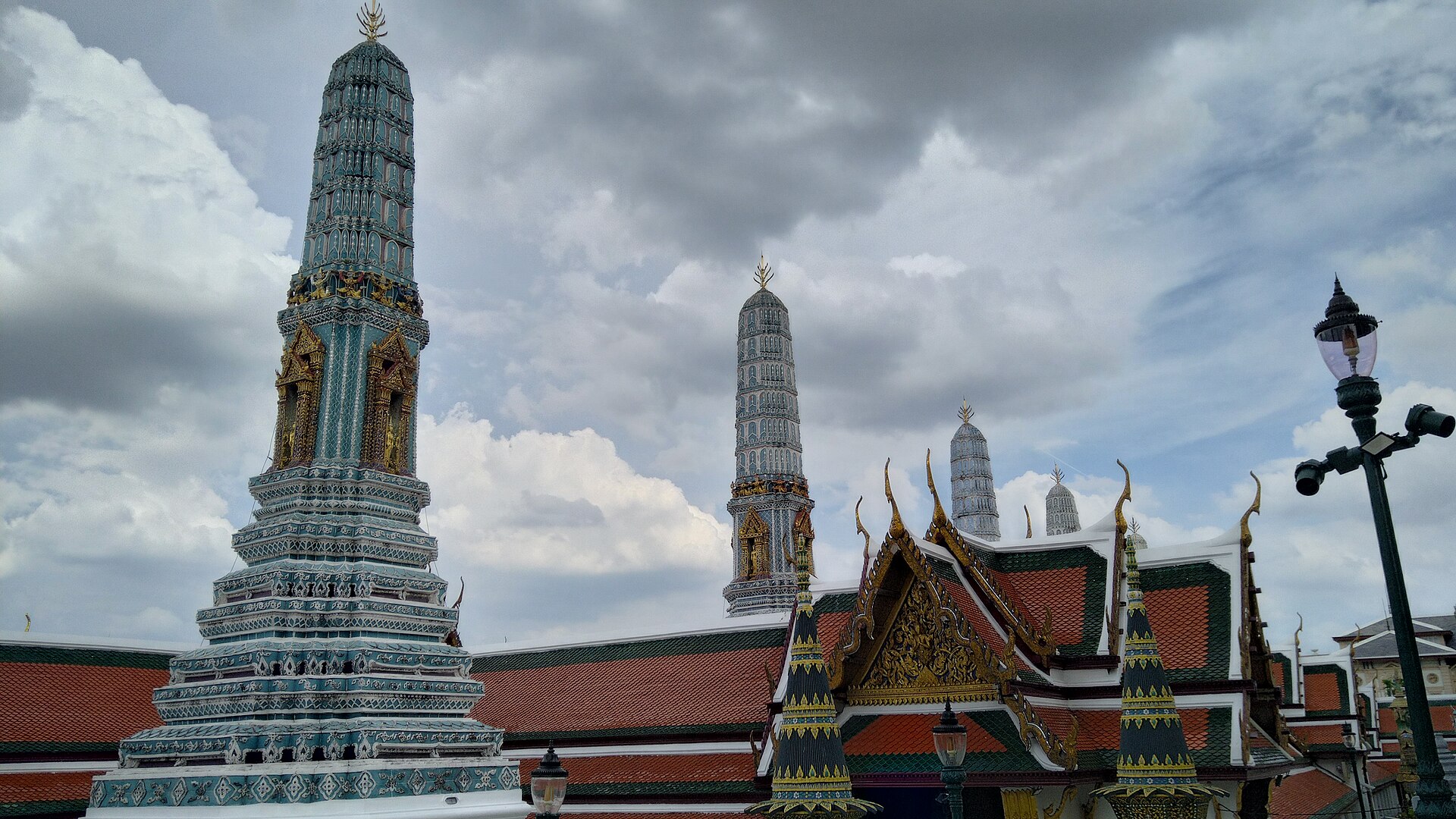
Unlike an ordinary temple, this royal chapel has no resident monks; it is a sacred space attached to the palace, used by the king for religious ceremonies. Its buildings are among the most richly decorated in the whole complex, covered in gilding, mosaic, and ornament, and crowned with soaring spires that rise above the palace.
The temple precinct is filled with wonders, including gilded spires, ornate pavilions, mythical guardian figures, and models of sacred sites. The density and brilliance of the decoration are overwhelming, and the precinct as a whole is one of the supreme achievements of Thai religious art, a place of astonishing beauty and deep sanctity.
At the center of this glittering precinct stands the main hall that houses the sacred Emerald Buddha itself. For the Thai people, this is the most revered place in the kingdom, and pilgrims and visitors alike are drawn to it, entering with reverence into a space that is at once a masterpiece of art and the spiritual heart of the nation.
The absence of resident monks sets this temple apart from the countless others across Thailand and underlines its special status as a royal chapel. It exists to serve the king and the monarchy in their sacred duties, and this exclusive royal character adds to the reverence in which it is held, marking it as a space where crown and religion meet.
The Sacred Emerald Buddha
The most precious treasure of the Grand Palace, and indeed of Thailand, is the Emerald Buddha, a revered image of the Buddha that gives its name to the temple that houses it. Despite its name, the image is carved from a single piece of green stone, and it is regarded as the most sacred Buddha image in the kingdom, a palladium of the nation.
The image is relatively small but immensely revered, set high upon an elaborate golden altar within the temple. Its history is the stuff of legend, and over the centuries it traveled through various places before finally coming to rest in the Grand Palace, where it has remained as the spiritual guardian of the Chakri dynasty and the Thai nation.
One of the most remarkable traditions surrounding the Emerald Buddha is the seasonal changing of its robes. Several times a year, in a ceremony performed by the king or his representative, the image is dressed in different golden garments appropriate to the season, a ritual believed to bring good fortune to the kingdom.
For the Thai people, the Emerald Buddha is far more than a work of art; it is a sacred object of the deepest significance, bound up with the wellbeing of the nation and the legitimacy of the monarchy. To stand before it in the glittering temple is to be at the very heart of Thai religious and national life, in the presence of the kingdom’s most sacred treasure.
The seasonal changing of the robes is among the most sacred royal duties in Thailand, and it binds the monarch personally to the wellbeing of the kingdom. In performing this ancient rite, the king reaffirms his role as protector of the faith, and the small green image, dressed anew for the season, becomes a focus for the hopes of the entire nation.
The legends surrounding the image’s long journey, passing through many cities before reaching Bangkok, have woven it deeply into the history of the region. Each place that once held the Emerald Buddha remembers it, and its final enshrinement in the Grand Palace was seen as a sign of the new dynasty’s favor and legitimacy, binding the sacred image to the fortunes of the Chakri kings.
The Great Throne Halls
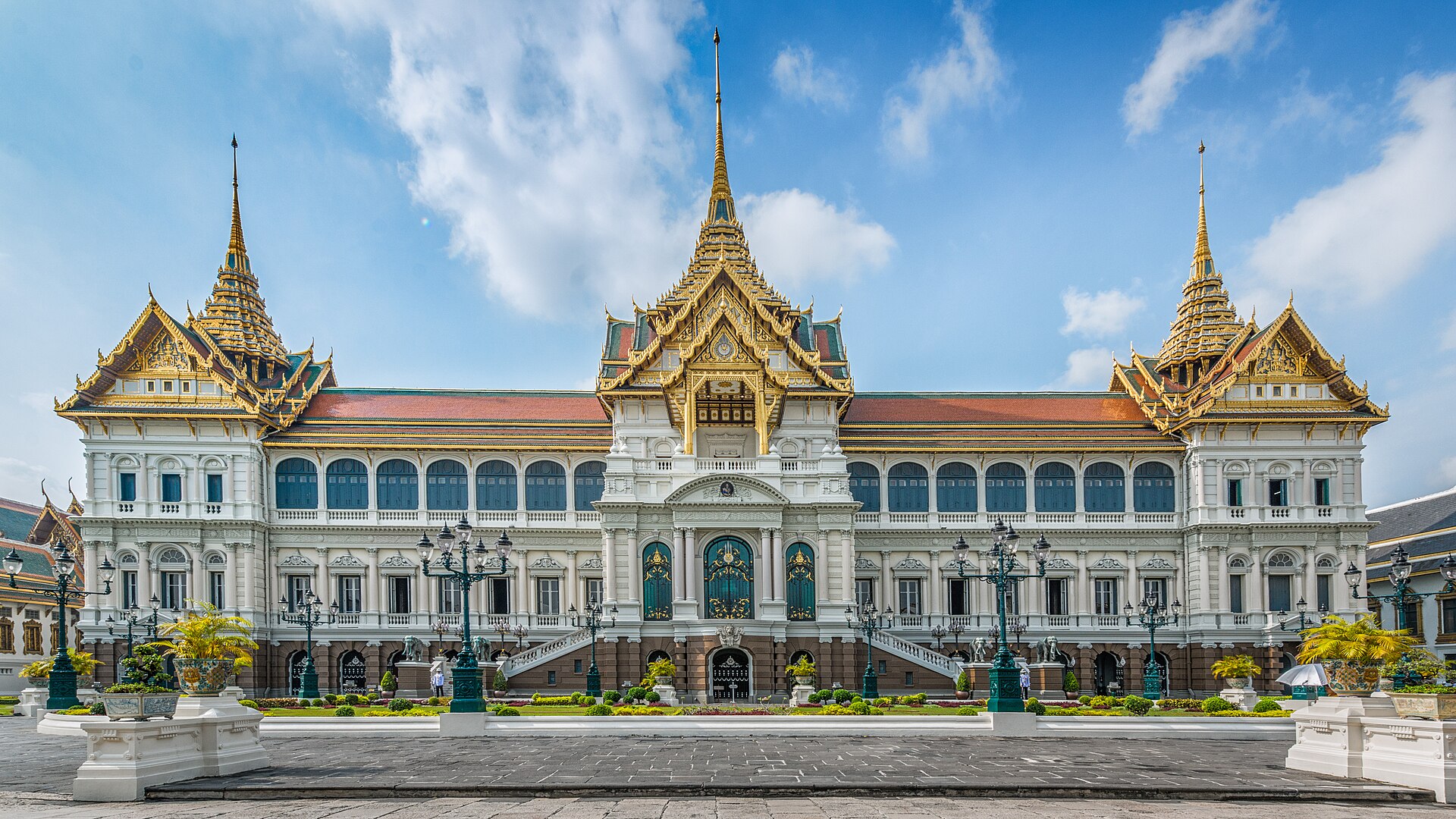
Beyond the temple, the Grand Palace contains a series of magnificent throne halls, the settings for the ceremonies of the Thai monarchy. Among the most important is a grand hall built in traditional Thai style, crowned with a soaring tiered spire, which served as a principal throne hall and has been used for the most solemn royal occasions.
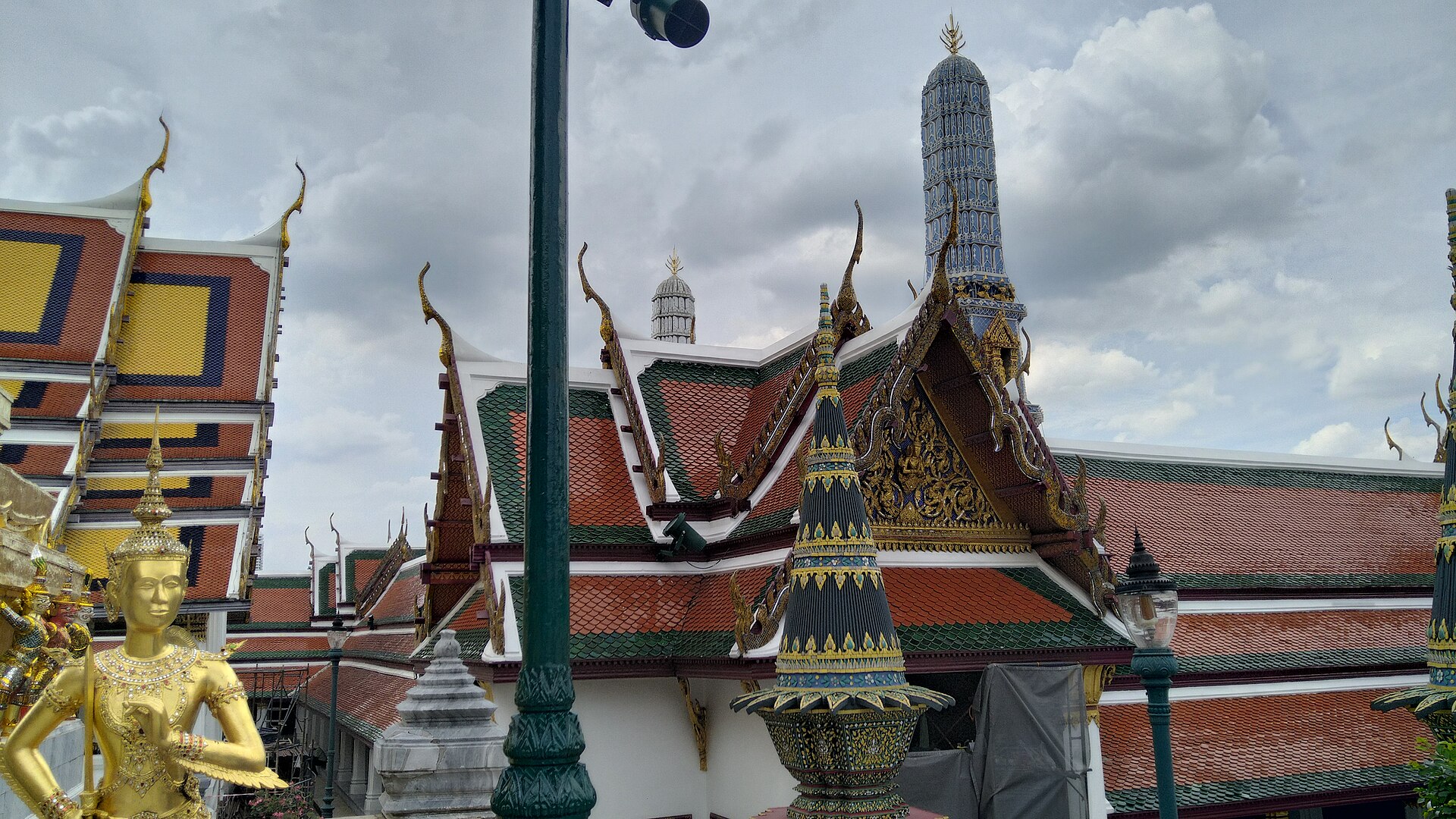
These throne halls were the settings for coronations, audiences, and the great ceremonies of state, as well as, in some cases, for royal funerals of the highest importance. Their architecture, with its multi-tiered roofs and gilded spires, expresses the majesty of the Thai throne and the sacred character of kingship in Thailand.
The interiors of the throne halls are richly decorated, with elaborate thrones, gilded ornament, and fine craftsmanship, creating settings of great splendor for the ceremonies performed within them. They embody the grandeur of the monarchy and the reverence in which the king was held, at once palaces and almost sacred spaces.
Together the throne halls form the ceremonial core of the palace, the settings where the drama of Thai kingship was enacted. Though the king no longer resides in the Grand Palace, some of these halls continue to be used for important royal ceremonies, keeping alive their ancient role at the heart of the monarchy.
The soaring tiered spires that crown the greatest of these halls are among the most sacred forms in Thai architecture, reserved for the most important royal and religious buildings. To raise such a spire was to declare a building’s supreme significance, and their presence marks the throne halls as spaces where the majesty of kingship reached its height.
A Meeting of East and West
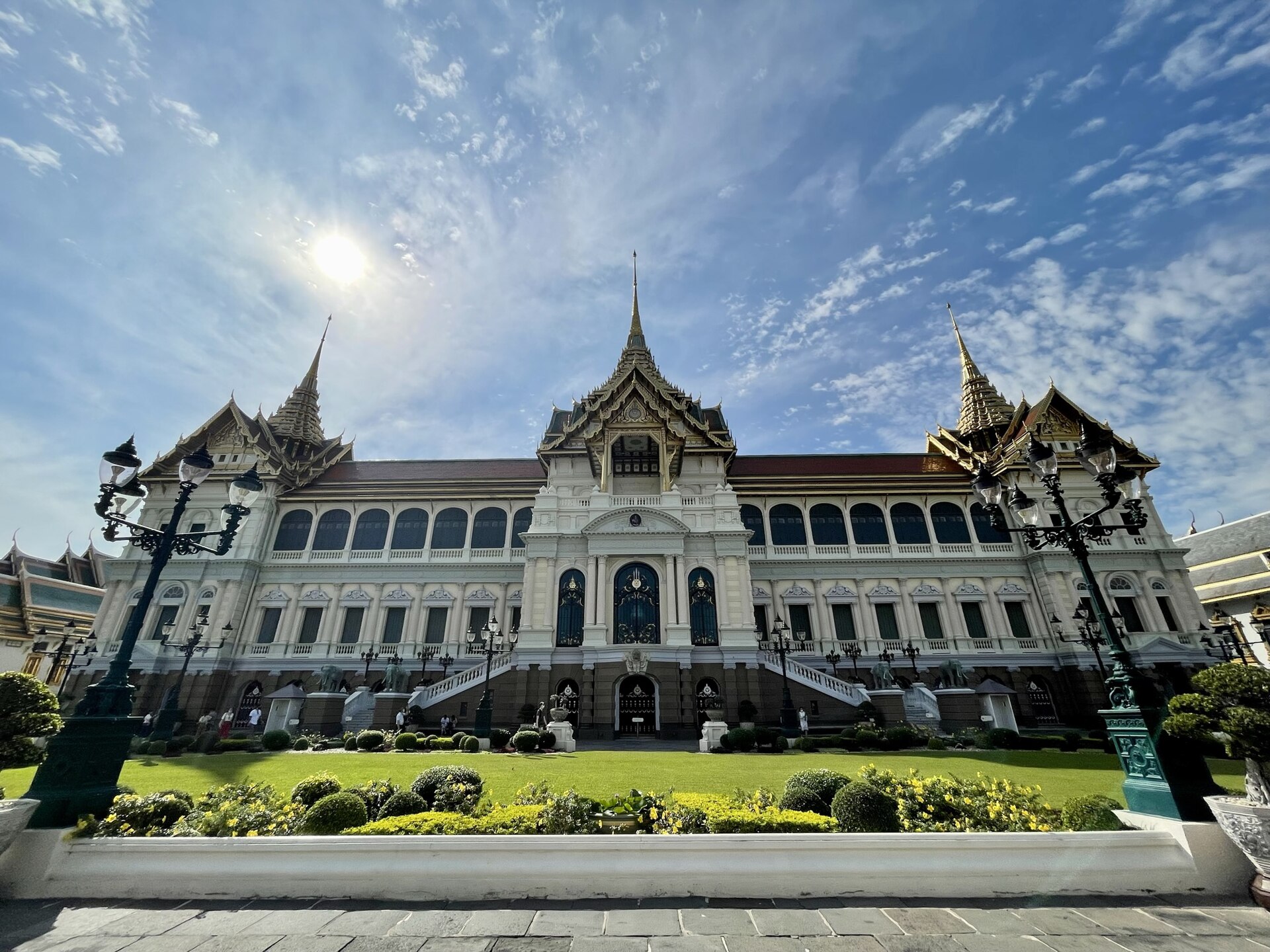
One of the most striking buildings in the Grand Palace is a great throne hall that combines a European-style body with a Thai-style roof, a remarkable fusion of two architectural traditions. Built in the later nineteenth century, it reflects the era when Thailand engaged closely with the West while maintaining its own identity.
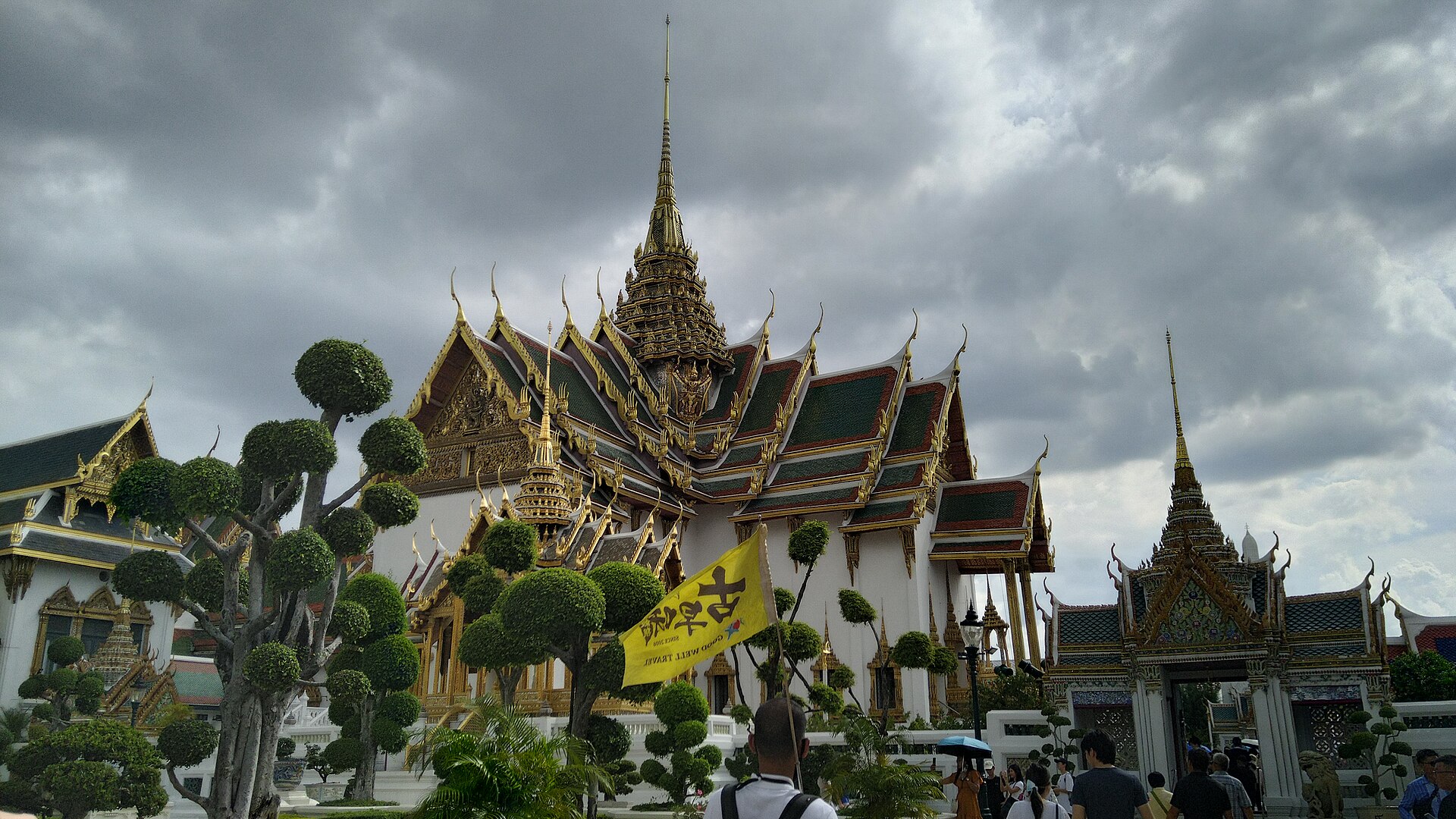
The building presents a fascinating contrast, its lower structure resembling a grand European palace of the period, while above it rise traditional Thai spires crowned with tiered roofs. This unusual combination was a deliberate expression of the kingdom’s dual engagement with modernity and tradition, symbolizing a nation that embraced the new without abandoning the old.
The hybrid design tells a story about Thailand in the age of empires. As European powers colonized much of the region, Thailand preserved its independence in part by modernizing and engaging with the West, and this building embodies that strategy, wearing a Western body beneath a Thai crown.
The result is one of the most distinctive structures in the whole palace, a building unlike any other, that captures a particular moment in Thai history. It stands as a symbol of the kingdom’s ability to absorb foreign influences while remaining true to its own traditions, a theme that runs throughout the history of the Grand Palace.
The story goes that the building was originally intended to be crowned with a Western-style dome, but that tradition prevailed and Thai spires were raised instead. Whether or not the tale is exact, it captures the spirit of the building perfectly, a structure poised between two worlds, wearing the crown of Thai tradition above a European body.
Gold, Glass, and Glittering Spires
The architecture of the Grand Palace is a supreme expression of the Thai royal style, characterized by soaring gilded spires, steeply tiered roofs, and surfaces covered in gold, colored glass, and ceramic mosaic. The effect is one of dazzling richness, as if the entire complex had been encrusted with jewels and gold.
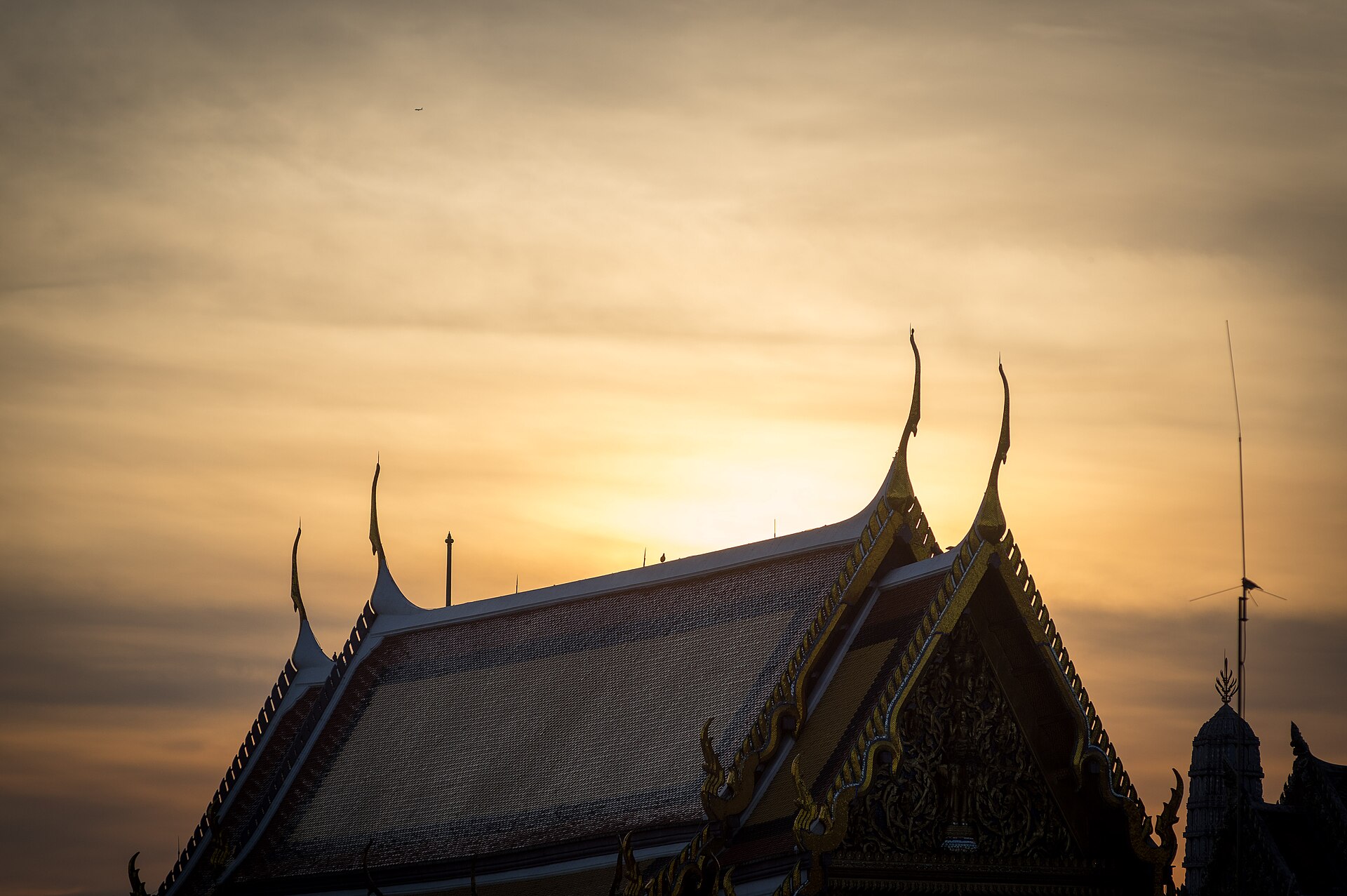
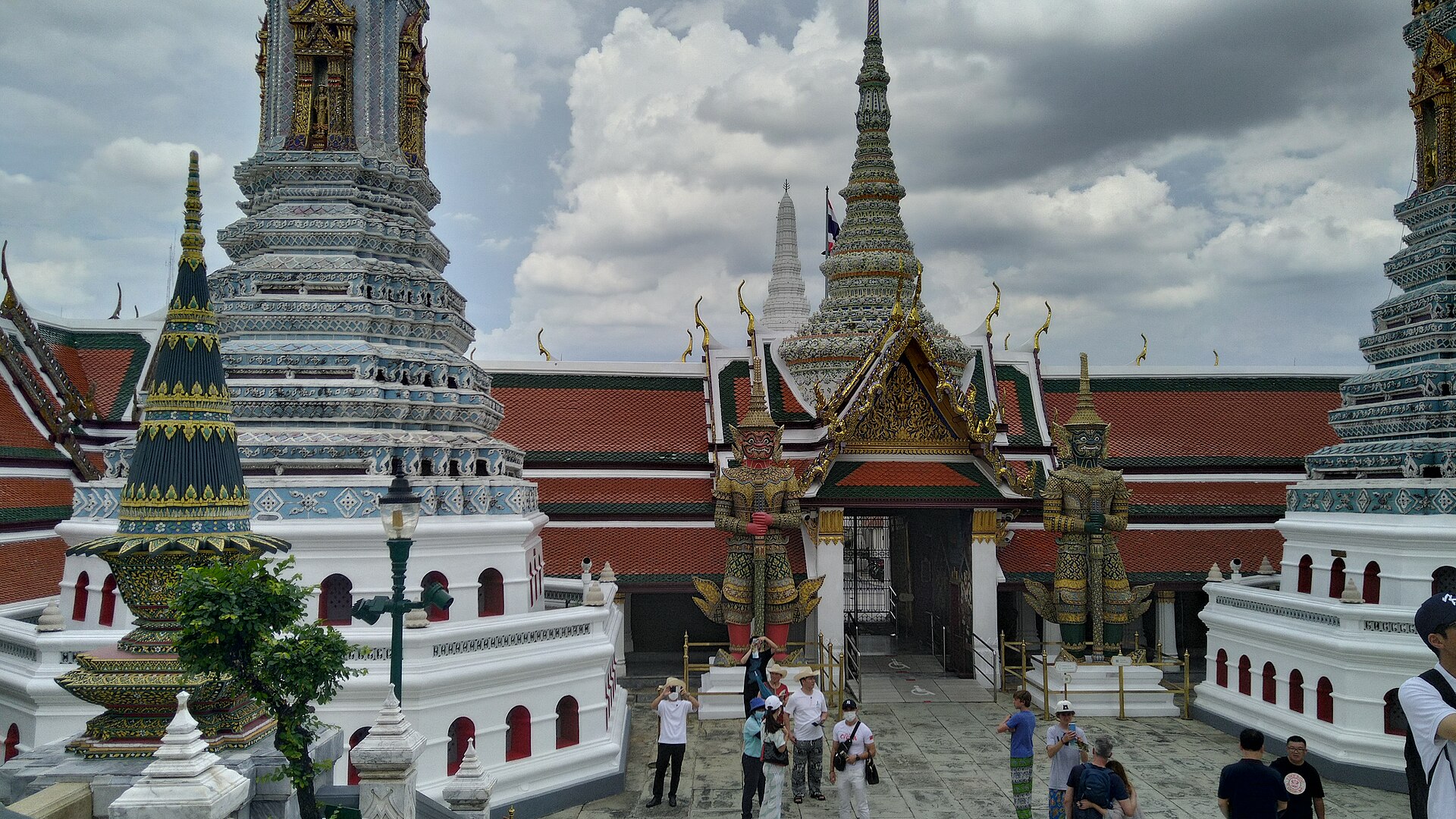
The gilded spires, rising above the temple and throne halls, are among the most distinctive features of the complex, their tapering forms reaching toward the sky. Roofs are covered in brilliantly colored tiles and edged with elaborate ornament, while walls and columns glitter with tiny pieces of mirror and colored glass that catch and scatter the light.
This love of surface, color, and glitter is characteristic of Thai royal and religious art, which sought to create an impression of otherworldly splendor. The decoration is not merely lavish but symbolic, evoking the celestial realms and the sacred nature of kingship and religion, and turning the palace into a vision of paradise on earth.
The craftsmanship required to create and maintain such decoration is extraordinary, involving the skills of many artisans in gilding, mosaic, carving, and ceramics. The result is a complex of overwhelming beauty, where every surface rewards attention, and where the cumulative effect of so much gold and color is one of pure enchantment.
Much of the glittering effect comes from a technique of covering surfaces with countless small pieces of mirrored and colored glass, which catch the fierce tropical light and throw it back in a thousand points of brilliance. Under the bright sun of Bangkok, the whole complex seems to sparkle and shift, alive with light in a way that photographs can never fully capture.
There is a symbolism to the very verticality of the complex, for the soaring spires reach upward toward the heavens, expressing the aspiration of the sacred and royal architecture toward the celestial realms. In a city built low along its rivers and canals, these golden points rising into the sky proclaimed the presence of the sacred center from far across the surrounding streets.
The Epic on the Walls
Running around the temple precinct is a long gallery whose walls are covered with a vast and continuous mural depicting a great epic, the Thai version of a famous ancient story. This mural is one of the treasures of the Grand Palace, a masterpiece of Thai painting that unfolds scene after scene around the entire precinct.

The epic tells a sweeping tale of gods, demons, heroes, and battles, and the mural brings it vividly to life in glowing color and intricate detail. Figures of kings and warriors, mythical creatures and celestial beings, fill the scenes, set against landscapes and palaces rendered with great imagination and skill.
The mural is not only a work of art but a repository of Thai culture, depicting a story that holds deep meaning in Thai tradition. Walking along the gallery, following the story from scene to scene, a visitor encounters the myths and values that have shaped the Thai imagination, painted with extraordinary richness and care.
Over time the mural has been restored and repainted to preserve it, and it remains one of the great cultural treasures of Thailand. It transforms the gallery into an immense storybook, a place where the sacred and heroic tales of the nation are displayed in dazzling color, adding yet another layer of richness to the wonders of the palace.
To follow the entire mural is to walk a considerable distance, for it wraps around the whole precinct in an unbroken band of storytelling. Few works of art anywhere attempt so much on such a scale, and the patience and skill required to create and maintain it across the generations testify to the deep importance of the tale it tells in the life of the nation.
Giants and Mythical Guardians
Throughout the Grand Palace stand extraordinary figures from Thai mythology, chief among them the great guardian giants that watch over the temple gates. Towering and fierce, with brightly painted faces and elaborate costumes, these figures grip weapons and stand guard, protecting the sacred precinct from evil spirits.

These giant guardians are among the most memorable sights in the palace, their colorful and imposing forms embodying the mythical world of Thai belief. Drawn from the same epic depicted in the murals, they connect the architecture of the palace to the stories and beliefs of Thai culture, standing as protectors of the sacred space.
Other mythical creatures appear throughout the complex as well, including graceful half-human, half-bird figures and other beings from Thai and Buddhist mythology. These figures, rendered in gold and color, populate the palace with a whole cast of celestial and legendary beings, adding to its otherworldly atmosphere.
Together these mythical guardians and creatures give the Grand Palace much of its magical character. They transform the complex into a realm inhabited by the beings of legend, where gods and demons and celestial creatures stand among the spires and pavilions, and where the visitor seems to step into the world of Thai myth made visible.
Standing before one of the great guardian giants, craning your neck to take in its towering, fierce, and brilliantly colored form, you feel the full force of the mythical world the palace inhabits. These are not mere decorations but protectors, believed to keep evil at bay, and their presence charges the sacred precinct with a sense of watchful, otherworldly power.
The Heart of the Monarchy
Although the kings of Thailand no longer live in the Grand Palace, it remains the ceremonial and symbolic heart of the monarchy. The complex continues to be used for important royal ceremonies, and it holds a place of deep reverence in the life of the nation, revered as the sacred center of the Thai kingdom.

The monarchy occupies a special place in Thai society, and the Grand Palace, with its temple and throne halls, embodies the deep connection between the king, the Buddhist religion, and the nation. Royal ceremonies performed here reinforce this connection, linking the present monarch to the long traditions of the Chakri dynasty and the Thai people.
The Emerald Buddha, housed within the palace, is closely tied to the monarchy, and the ceremonies surrounding it, including the seasonal changing of its robes, express the king’s role as protector of the faith and the nation. In this way the palace remains central to the religious and political life of the kingdom.
For the Thai people, the Grand Palace is thus far more than a historic monument; it is a living symbol of the monarchy and the nation, treated with great reverence and respect. Its continuing role in royal ceremony and its status as the home of the Emerald Buddha ensure that it remains at the very heart of Thai national and spiritual life.
Visitors quickly sense that this is a place of living reverence rather than a mere relic. Thai people move through it with evident devotion, and the atmosphere is one of active faith and respect. To visit the Grand Palace is thus to encounter not a museum of a vanished world but a sacred center still very much alive in the heart of the nation.
Visiting the Grand Palace Today
Today the Grand Palace is the most famous attraction in Bangkok, drawing enormous numbers of visitors from around the world to marvel at its glittering temples, throne halls, and courtyards. It stands in the historic heart of the city beside the river, part of a landscape rich in temples and royal monuments.

View the exact location on Google Maps
Because it remains a sacred and revered place, visitors are asked to dress respectfully, with shoulders and knees covered, and to behave with appropriate decorum, especially within the Temple of the Emerald Buddha. This dress code reflects the deep significance of the palace as a holy site, and respecting it is an essential part of any visit.
A visit leads through the dazzling temple precinct, past the mythical guardians and the gilded spires, into the presence of the Emerald Buddha, and on to the throne halls and other buildings of the complex. The sheer richness of the decoration means that the palace rewards slow and attentive exploration, with wonders at every turn.
Whether you come for the architecture, the art, the religious significance, or the sheer overwhelming spectacle, the Grand Palace offers an unforgettable experience. It is the glittering heart of Bangkok and the sacred center of Thailand, a place where the beauty of Thai art and the deep traditions of the monarchy and religion are gathered into one dazzling and enchanted precinct.
The crowds can be considerable, for the palace is one of the most visited sites in all of Asia, and arriving early in the day helps to experience it at its best. Yet even amid the throngs, the sheer splendor of the place asserts itself, and there are moments, catching the light on a golden spire, when the crowds seem to fall away before the wonder of it.
It is worth taking the time to look closely as well as broadly, for amid the overwhelming grandeur lie countless small marvels, a tiny mythical figure, a detail of mosaic, a painted face. The Grand Palace rewards both the sweeping gaze that takes in its glittering skyline and the patient eye that lingers over the endless invention of its details.
Palaces Nearby
The Grand Palace is one of the great royal palaces of East and Southeast Asia. To compare the imperial and royal traditions of the region, these nearby palaces make natural companions to a visit here.
You May Like



One thought on “The Grand Palace of Bangkok: Golden Spires and the Sacred Emerald Buddha”