In the heart of the famous Pink City of Jaipur, surrounded by the bustle of one of India’s most vibrant urban centers, stands the City Palace, a vast complex of courtyards, gardens, and buildings that has been the seat of the rulers of Jaipur for nearly three hundred years. Unlike a fortress perched on a distant hill, this palace sits at the very center of the city, woven into its life, the heart around which the whole planned town was laid out.
The City Palace of Jaipur is a masterpiece of the same visionary mind that created the city itself, a ruler who was at once warrior, statesman, scholar, and astronomer. It reflects his passion for order, symmetry, and beauty, blending the martial traditions of the Rajputs with the refined arts of the Mughal court and even ideas drawn from further afield. The result is a palace of great harmony and elegance, a fitting jewel at the center of a city designed as a work of art.
Within its walls lie some of the most beautiful spaces in all of Rajasthan, from a seven-storeyed palace that remains the home of the royal family to a courtyard whose four gates celebrate the seasons of the year in dazzling color. There are halls that hold the largest silver vessels in the world, museums rich with royal textiles, weapons, and paintings, and quiet gardens where the life of the court still faintly echoes. It is a place of endless discovery.
In this article you will explore the City Palace from the remarkable ruler who founded it to the planned city it anchors, through its famous courtyards, halls, and museums, to its life as a living royal residence. Along the way you will meet the Kachhwaha dynasty whose home this remains, and understand why this graceful complex at the center of the Pink City is one of the great treasures of princely India.
In This Article
- A Palace at the Heart of the Pink City
- The Warrior-Astronomer Who Built It
- A City Designed as a Work of Art
- Gates, Courtyards, and the Plan of the Palace
- The Mubarak Mahal
- The Chandra Mahal
- Halls of Audience and the Silver Urns
- The Courtyard of the Four Seasons
- Pavilions and Private Gardens
- The Museum and Its Treasures
- The Palace and the Stars
- A Living Royal Residence
- Visiting the City Palace Today
A Palace at the Heart of the Pink City
The City Palace occupies a large area at the very center of Jaipur, a complex of courtyards, buildings, and gardens enclosed by walls and gates. Rather than standing apart from the city, it lies at its core, the point from which the whole planned town radiates, bound up with the life of the streets and markets that surround it.
The complex is not a single building but an ensemble, made up of several palaces, halls, pavilions, and gardens built over the centuries. These are arranged around a series of courtyards, linked by ornate gates and passages, so that exploring the palace means passing through a sequence of beautiful and varied spaces, each with its own character and purpose.
The architecture blends Rajput and Mughal traditions, combining strength and delicacy, and it is marked throughout by a love of symmetry and order that reflects the mind of its founder. Pink and cream stucco, carved marble, painted decoration, and inlaid ornament enrich the buildings, creating an atmosphere of refined and harmonious beauty.
For all its grandeur, the City Palace feels intimately connected to Jaipur itself. It shares the rosy color that gives the Pink City its name, and it stands not as a remote symbol of power but as the living heart of the town. To visit the palace is to reach the center of a city that was itself conceived as a single, unified work of art.
There is a particular pleasure in reaching this palace, for you come to it not across empty ground but through the crowded, colorful streets of a living city. The markets, the traffic, the noise all press right up to the palace walls, and then you step through a gate into a world of calm and symmetry. That sudden transition, from the bustle of Jaipur to the ordered beauty within, is part of what makes the City Palace unforgettable.
The palace also rewards patience with its details. Look closely and you find that almost every surface has been considered, from the carved brackets that support a balcony to the painted borders around a doorway. This density of care, sustained across so large a complex, is what lifts the City Palace from a grand building into a true work of art, one that reveals more the longer you look.
The Warrior-Astronomer Who Built It
The City Palace, and the city of Jaipur, were the creation of Maharaja Sawai Jai Singh II, one of the most remarkable rulers of eighteenth-century India. A warrior and statesman who navigated the turbulent politics of his age, he was also a scholar of extraordinary range, deeply learned in astronomy, mathematics, and the arts, and it was he who conceived both the new capital and the palace at its heart.
Jai Singh decided to move his capital from the old hill fortress of his dynasty to a new city on the plains, a bold and unusual step. The new capital would be a planned city, laid out according to principles of order and symmetry, and the palace would stand at its center, the seat of his rule and the embodiment of his vision.
His interests shaped every aspect of the project. His love of order and geometry is visible in the layout of both city and palace, while his scientific passions led him to build great astronomical observatories, including one beside the palace itself. Few rulers have left so personal a stamp on a city, and Jaipur remains a monument to the mind of its founder.
The title Sawai, meaning one and a quarter, was a mark of distinction claimed by the ruler and his successors, signifying that they were more than ordinary kings. In the City Palace, the ambition and brilliance behind that proud title find their fullest expression, a residence worthy of a ruler who was at once soldier, scholar, and visionary builder.
Jai Singh served the Mughal emperors even as he pursued his own grand ambitions, and this double role as loyal vassal and independent visionary runs through his work. The City Palace reflects both sides of the man, honoring Mughal artistic traditions while asserting the distinct identity and brilliance of his own dynasty, a balance struck with remarkable confidence and skill.
A City Designed as a Work of Art
Jaipur is famous as one of the earliest planned cities of India, laid out according to a careful geometric scheme. Its wide streets meet at right angles, dividing the city into regular blocks, and the whole plan reflects ancient Indian principles of design as well as the founder’s own love of order. The City Palace stands at the heart of this grand composition.

The planning of the city was carried out with the help of a gifted architect and planner who worked to realize the ruler’s vision. Together they created a city of remarkable coherence, in which streets, markets, temples, and palaces were arranged according to a single unified plan, an achievement rare in its time and place.
The famous pink color that gives the city its nickname came later, when the buildings were painted in a rosy hue, traditionally associated with hospitality and with a royal welcome. This unifying color, applied across the old city, reinforces the sense of Jaipur as a single work of art, and the City Palace shares in that harmonious rosy glow.
Standing at the center of this planned city, the City Palace is inseparable from it. The palace was not an afterthought but the heart of the design, the focus toward which the whole city was oriented. To understand the palace fully is to see it as the centerpiece of one of the great achievements of Indian urban planning.
It is worth pausing on how unusual this achievement was. Most great cities grow slowly and haphazardly over centuries, but Jaipur was conceived whole, in a single mind, and built to a plan. To walk its ordered streets and arrive at the palace at their center is to experience a rare thing, a city that is also a single deliberate composition, with the palace as its keystone.
The geometry of the plan was not merely aesthetic but rooted in ancient principles that linked the ordering of a city to the ordering of the cosmos. In laying out Jaipur, its founder was in a sense building a model of a harmonious universe on the ground, with the palace at its sacred center, an ambition that gives the whole city a depth of meaning beyond its obvious beauty.
Gates, Courtyards, and the Plan of the Palace
The City Palace is organized around a series of courtyards, entered through a succession of ornate gates. From the great outer courtyard, once used for military assembly, visitors pass deeper into the complex through gateways of increasing richness, moving from the public outer areas toward the more private and ceremonial spaces within.
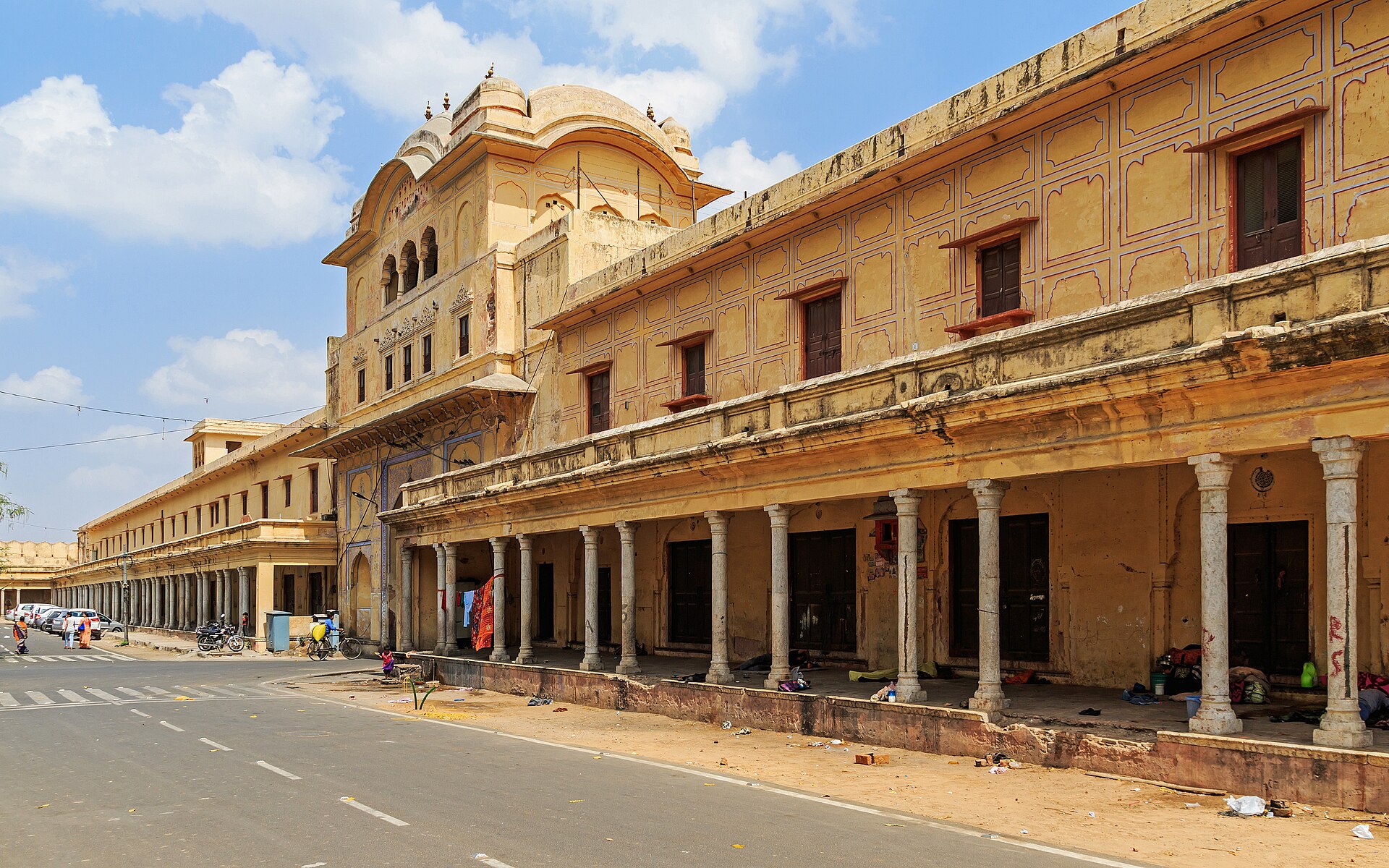
This progression through courtyards and gates gives the palace its structure, and it reflects the same love of order that shaped the city. Each courtyard serves particular functions and has its own character, and the gates that link them are often works of art in themselves, richly decorated and full of symbolic meaning.
The arrangement balances grandeur with intimacy. The outer courtyards are broad and imposing, suited to public functions and display, while the inner spaces become more delicate and refined, leading toward the halls of audience, the private palace of the rulers, and the beautiful courtyards reserved for the life of the court.
Moving through the palace, a visitor experiences this careful sequence, passing from the bustle of the entrance through ever more beautiful spaces. The plan rewards exploration, revealing its logic gradually, and it demonstrates the same command of order and symmetry that makes the whole city of Jaipur so remarkable.
The gates themselves reward close attention, for in Jaipur a doorway is never merely functional. Each is a threshold charged with meaning, decorated to mark the transition from one realm of the palace to the next, and the finest of them are celebrated works of art. To pass through them in sequence is to feel the deliberate rhythm the builders intended.
The Mubarak Mahal
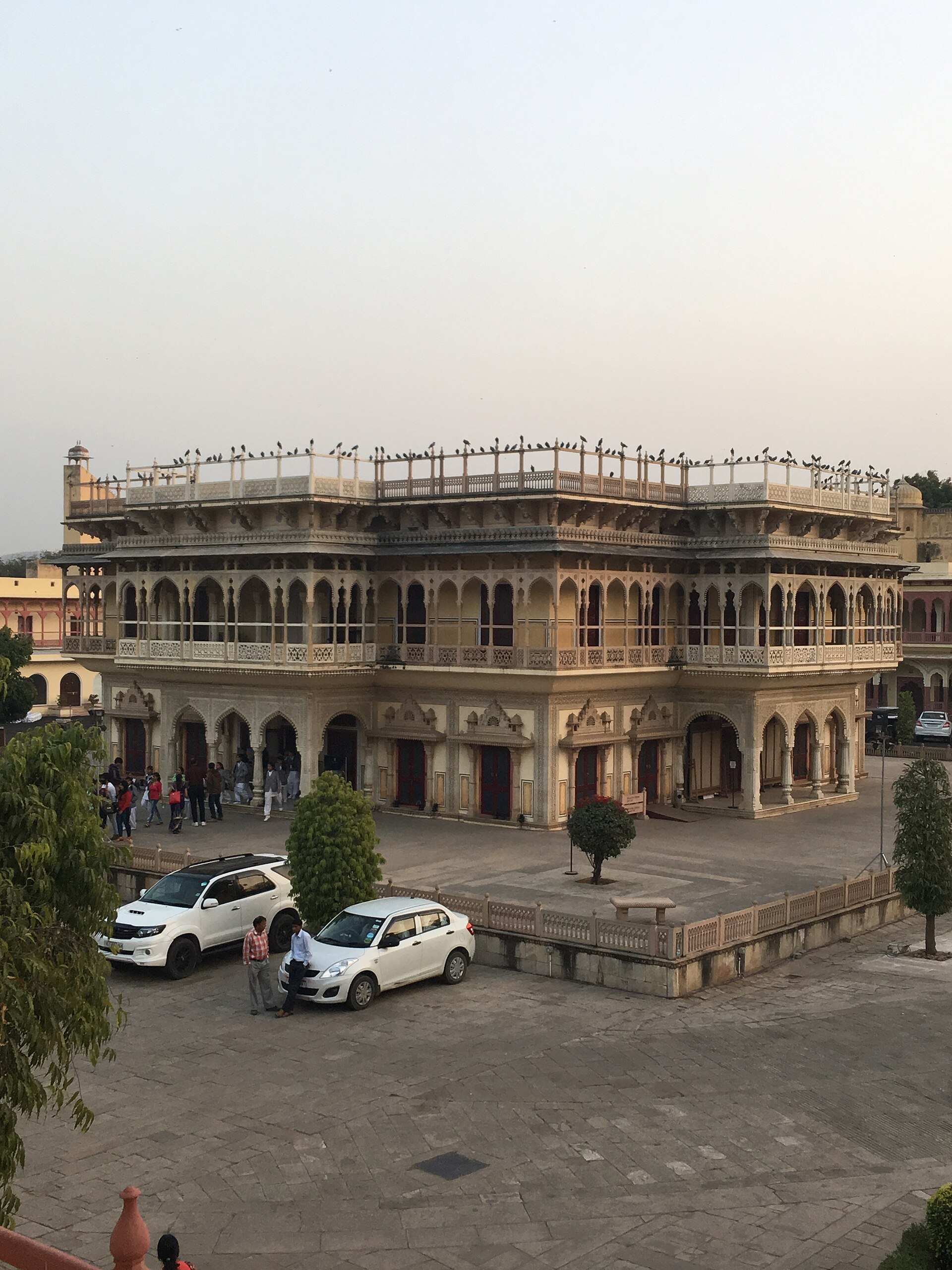
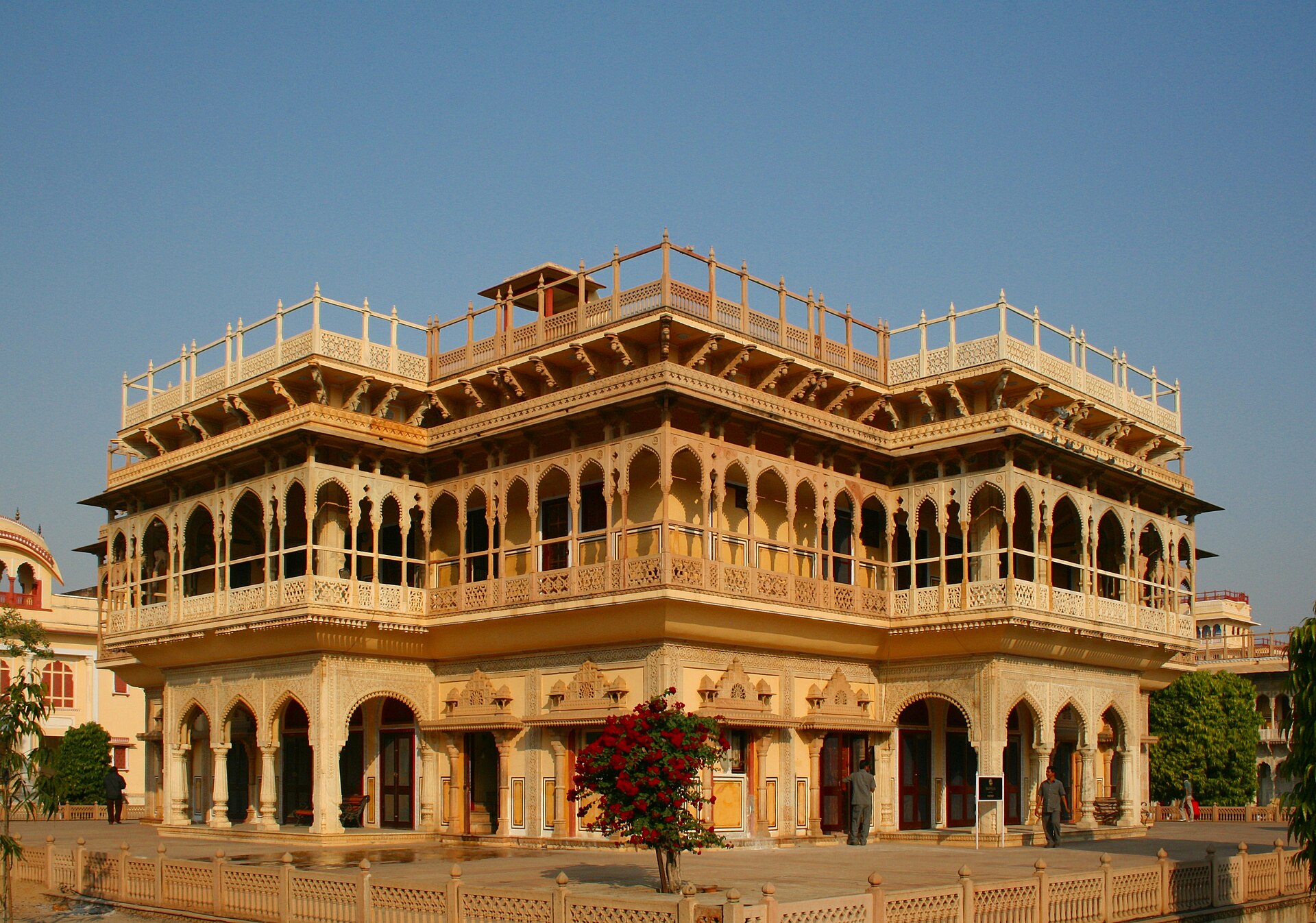
One of the most elegant buildings in the complex is the Mubarak Mahal, a graceful pavilion built as a reception hall for guests. Standing in one of the courtyards, it is a jewel of design, its facade richly carved and its proportions beautifully balanced, blending Rajput, Mughal, and other influences into a harmonious whole.

The building was constructed as a place to welcome and entertain distinguished visitors, and its refined architecture reflects that hospitable purpose. Delicate carving covers its walls, and its arches and balconies give it a lightness and elegance that make it one of the most admired structures in the palace.
Today the Mubarak Mahal houses part of the palace museum, and in particular a collection devoted to royal costumes and textiles. Within its beautiful rooms are displayed the sumptuous garments of the rulers, fine fabrics, and other treasures that illuminate the luxury and refinement of the court, a fitting use for so graceful a building.
The Mubarak Mahal exemplifies the elegance that runs through the whole City Palace. Neither a fortress nor a mere museum, it was built for pleasure and hospitality, and its beauty speaks of a court that valued art and refinement. It remains one of the highlights of any visit, a small masterpiece within the larger masterpiece of the palace.
The very name of the building, meaning auspicious or blessed, reflects the spirit of welcome it was built to embody. In its graceful arches and delicate stonework you can read the values of a court that took hospitality seriously and expressed it through beauty, greeting honored guests with architecture as refined as the entertainment that awaited them within.
The Chandra Mahal
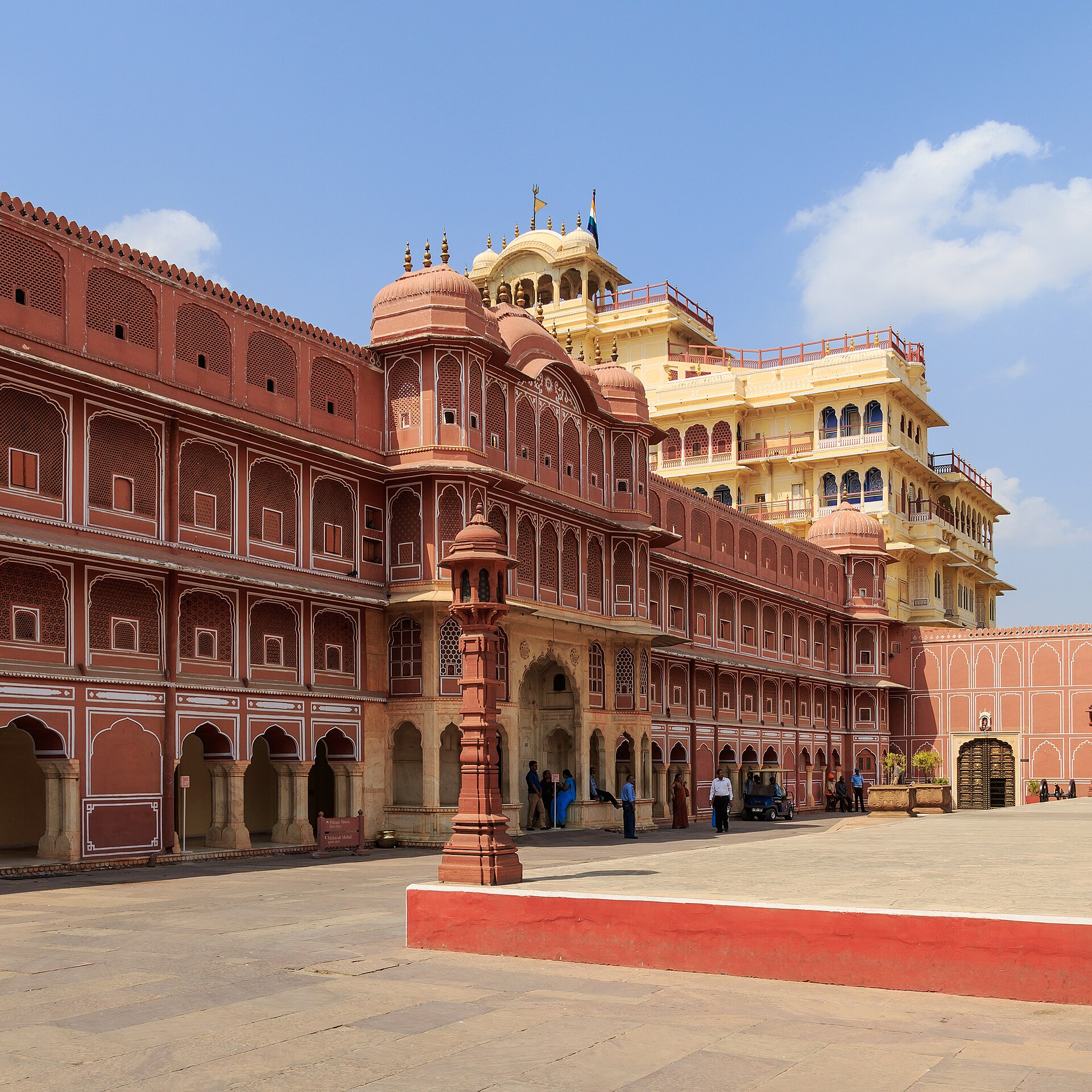
At the heart of the City Palace stands the Chandra Mahal, or Moon Palace, a tall and beautiful building that is the most important structure in the complex. Rising through several storeys, each with its own character and name, it commands the palace and offers superb views over the courtyards, the gardens, and the city beyond.
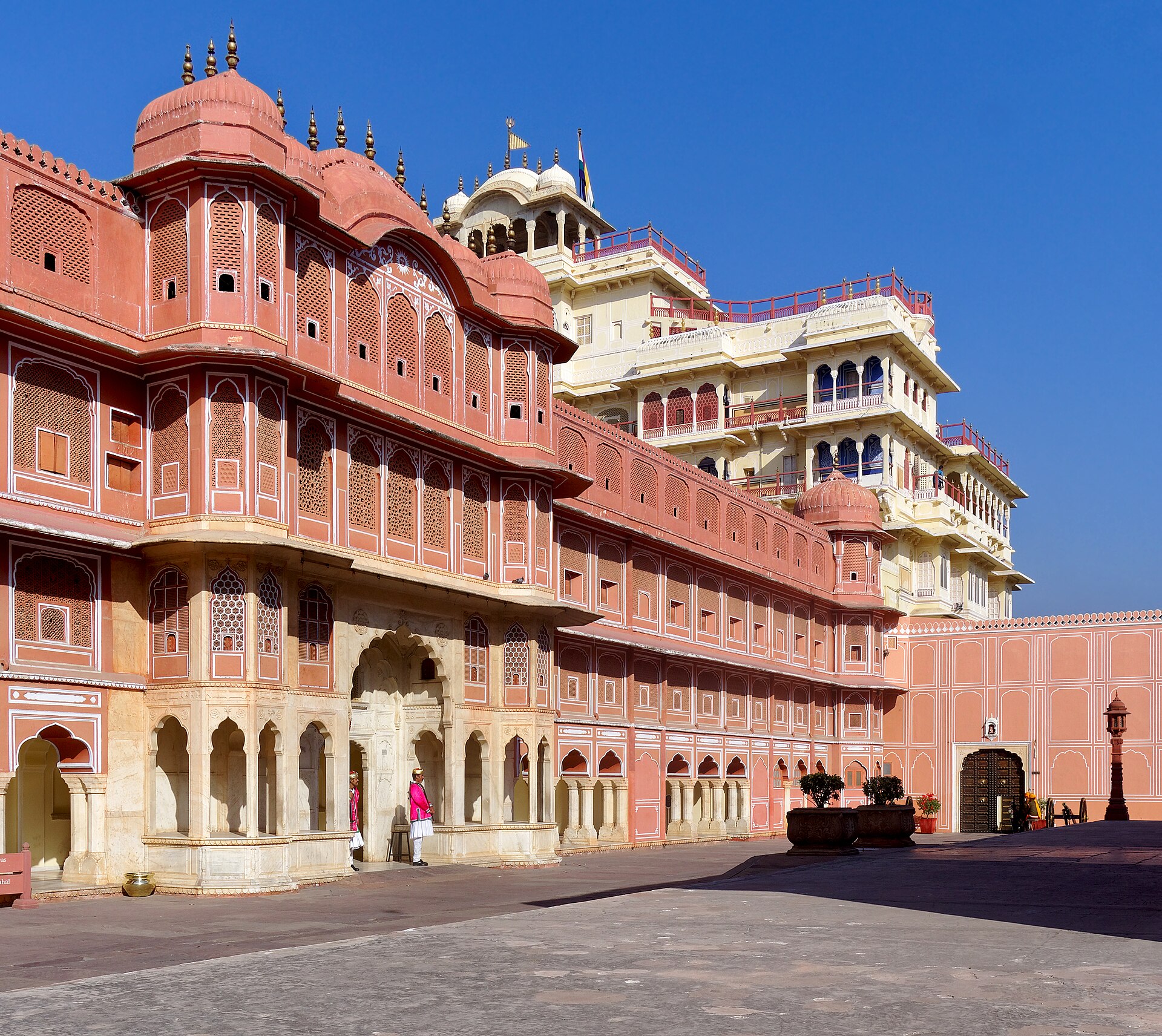
The Chandra Mahal is remarkable not only for its architecture but for its continuing role. It remains the residence of the royal family of Jaipur, and much of it is therefore a private home rather than a museum. This living function makes it one of the most special parts of the palace, a place where the history of the dynasty continues into the present.
Each level of the building was devoted to different purposes and decorated in its own style, from halls of audience to private apartments, some richly adorned with mirror-work, painting, and floral decoration. The upper levels, with their pavilions and balconies, offered cool and beautiful retreats high above the palace, catching the breezes and the views.
Crowned by a pavilion from which flies the flag of the royal house, the Chandra Mahal is the symbolic as well as physical heart of the palace. When the flag flies, it signals that the head of the family is in residence, a living link to the traditions of a dynasty that has ruled from this spot for centuries.
There is something moving about knowing that behind the public rooms lies a private home, still lived in after so many generations. The line between museum and residence runs invisibly through the Chandra Mahal, and that quiet fact changes how you see it: not a relic of a vanished world but the continuing seat of a family whose story is still being written.
Halls of Audience and the Silver Urns
Among the grandest spaces in the palace are its halls of audience, where the rulers received their subjects and conducted the ceremonies of state. The hall of public audience and the hall of private audience each played their part in the life of the court, magnificent settings for the exercise of royal power.
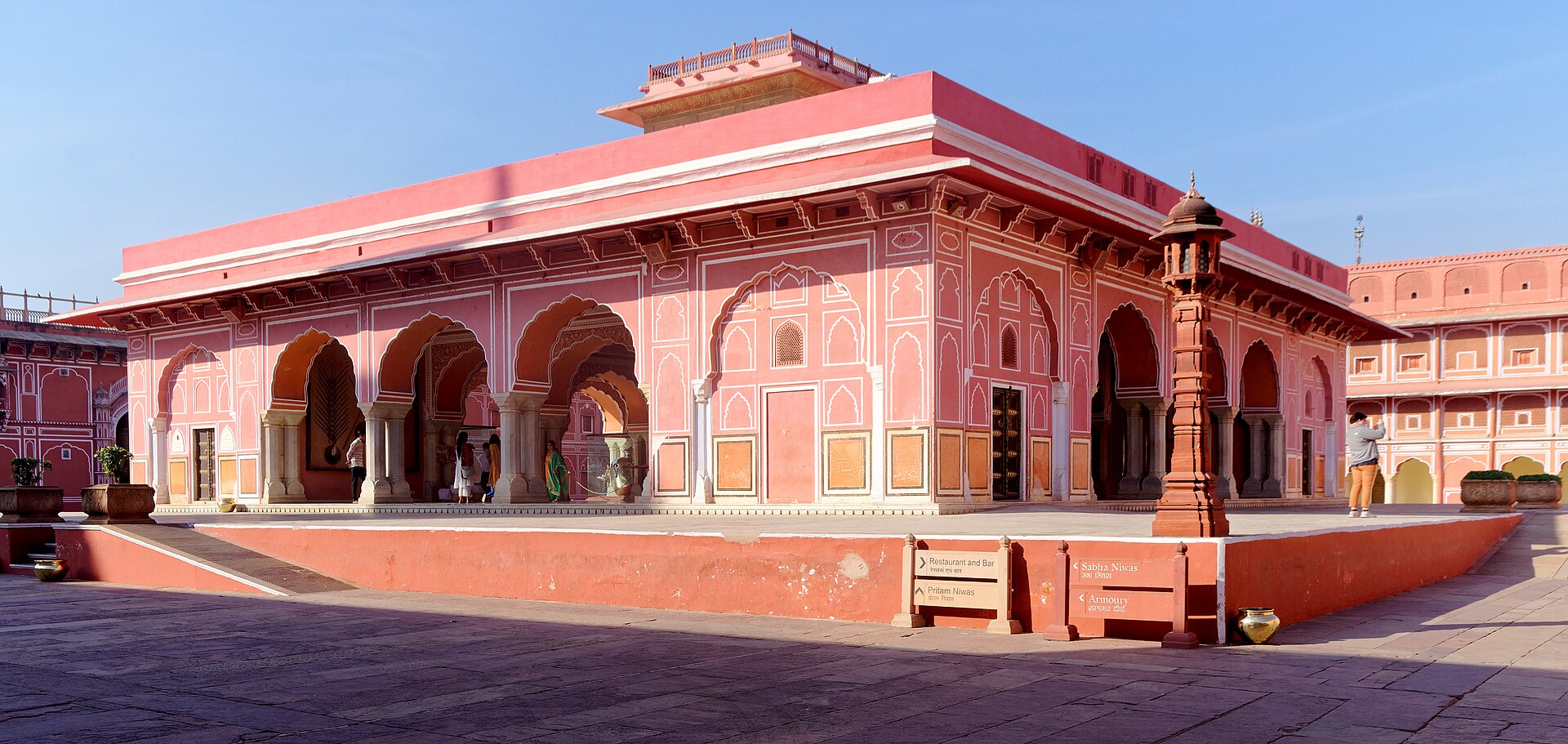
The hall of private audience is famous for holding two enormous vessels of solid silver, among the largest silver objects in the world. These great urns were made, according to tradition, to carry water from the sacred river Ganges on a long sea voyage, so that a devout ruler could maintain his religious purity while traveling abroad.
The story of the silver urns captures the blend of grandeur and devotion that marked the court of Jaipur. To create vessels of such size in pure silver was an astonishing feat, and their purpose, to carry holy water across the seas, speaks of the deep religious traditions that the modernizing rulers of Jaipur continued to honor.
The halls of audience, with their columns, their decoration, and their remarkable treasures, bring to life the ceremonial world of the Jaipur court. Here the rulers appeared before their people in splendor, and here the great affairs of the kingdom were conducted, in settings designed to embody the dignity and majesty of the throne.
Standing beside the great silver urns, it is hard not to marvel at the sheer determination they represent. To devote such quantities of precious metal to the single purpose of carrying holy water abroad speaks of a piety as grand as the court itself, a reminder that behind all the splendor of Jaipur lay deep and serious religious conviction.
The Courtyard of the Four Seasons
Perhaps the most beloved space in the entire City Palace is the courtyard known for its four magnificent gates, each representing a season of the year. Small in scale but overwhelming in beauty, this courtyard is a jewel of decorative art, and its gates are among the most photographed sights in all of Jaipur.
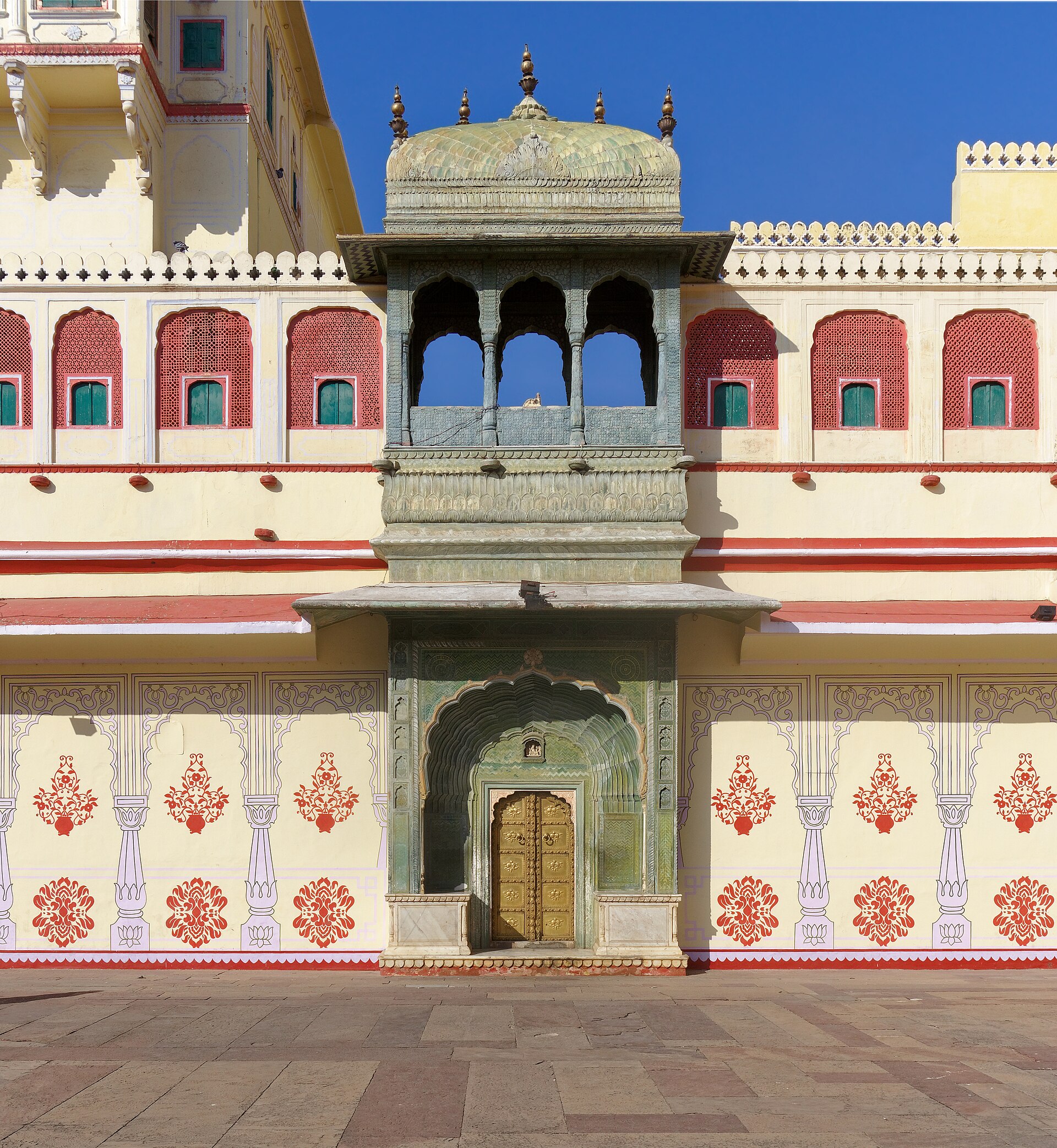
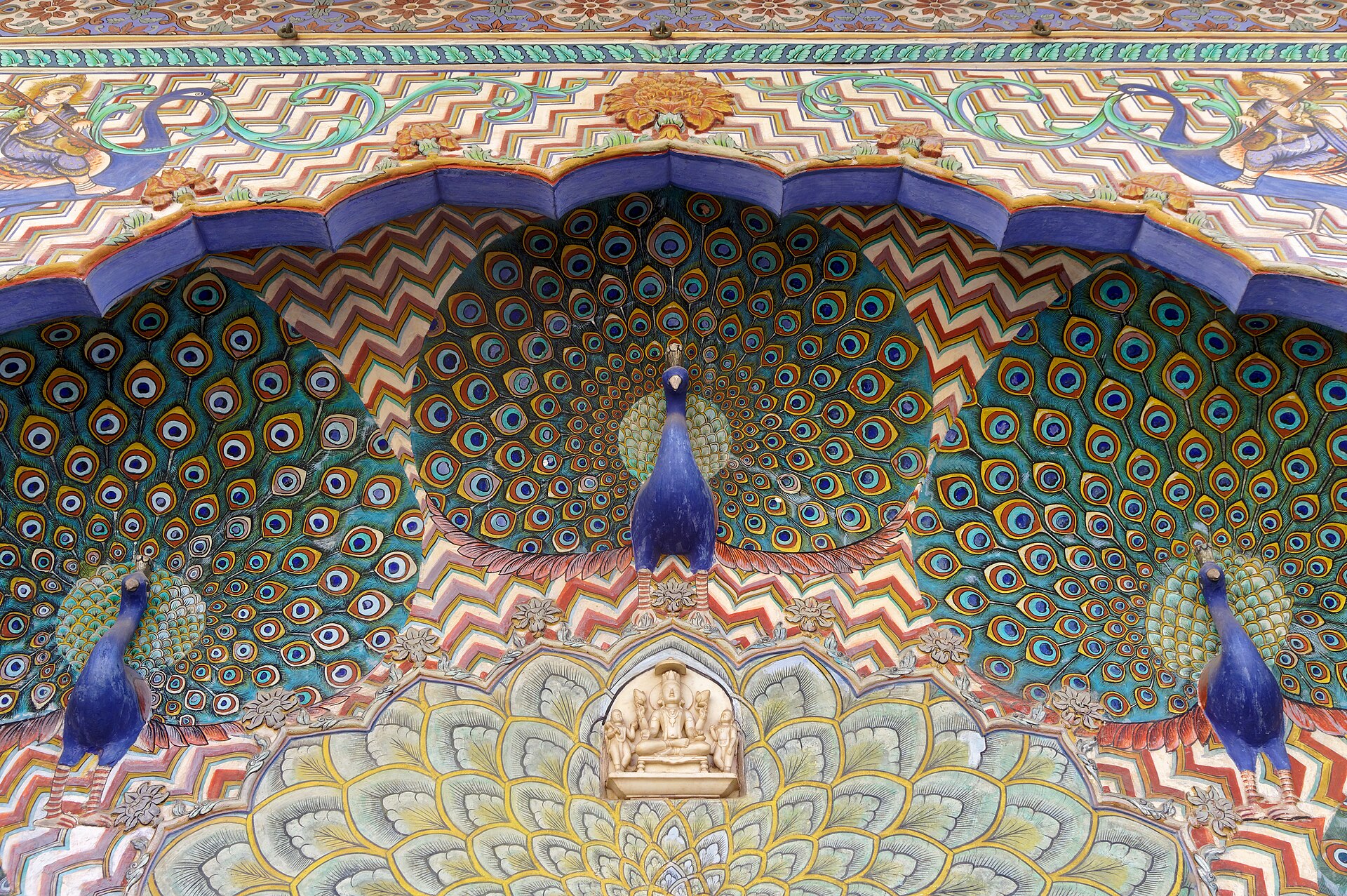
Each of the four gates is decorated in a distinctive style and dedicated to a season and to a god associated with it. One is adorned with radiant peacocks celebrating the monsoon, another with delicate flowers, and each glows with its own colors and motifs, so that the four together form a cycle of the year rendered in dazzling ornament.
The peacock gate in particular, with its sculpted birds spreading their tails in brilliant color, has become an icon of the palace and of Jaipur itself. The craftsmanship of these gates is extraordinary, and standing among them, surrounded by their color and detail, is one of the great experiences the palace offers.
This courtyard gives access to the private palace of the rulers, and its beauty served to frame the approach to the royal residence. In its combination of intimacy, symbolism, and sheer decorative splendor, it captures the artistic genius of Jaipur, and it remains, for many visitors, the most magical corner of the whole City Palace.
Part of the magic of this courtyard is the way it compresses so much meaning and beauty into so small a space. Each gate is a world of its own, and together they turn the simple passage of the seasons into a cycle of color and devotion. Visitors often find themselves circling the courtyard again and again, discovering new details in the gates with every turn.
The dedication of each gate to a deity as well as a season deepens its meaning, weaving devotion into decoration. What might otherwise be simply beautiful becomes an act of reverence, and the courtyard as a whole turns the passing year into a form of worship, a reminder that in the world of the Jaipur court, art and faith were bound together at every turn.
Pavilions and Private Gardens
Beyond its famous halls and courtyards, the City Palace contains a wealth of pavilions, gardens, and lesser buildings that complete the ensemble. Among them are elegant open pavilions used for ceremonies and gatherings, set within courtyards and designed with the same care for symmetry and beauty that marks the whole complex.
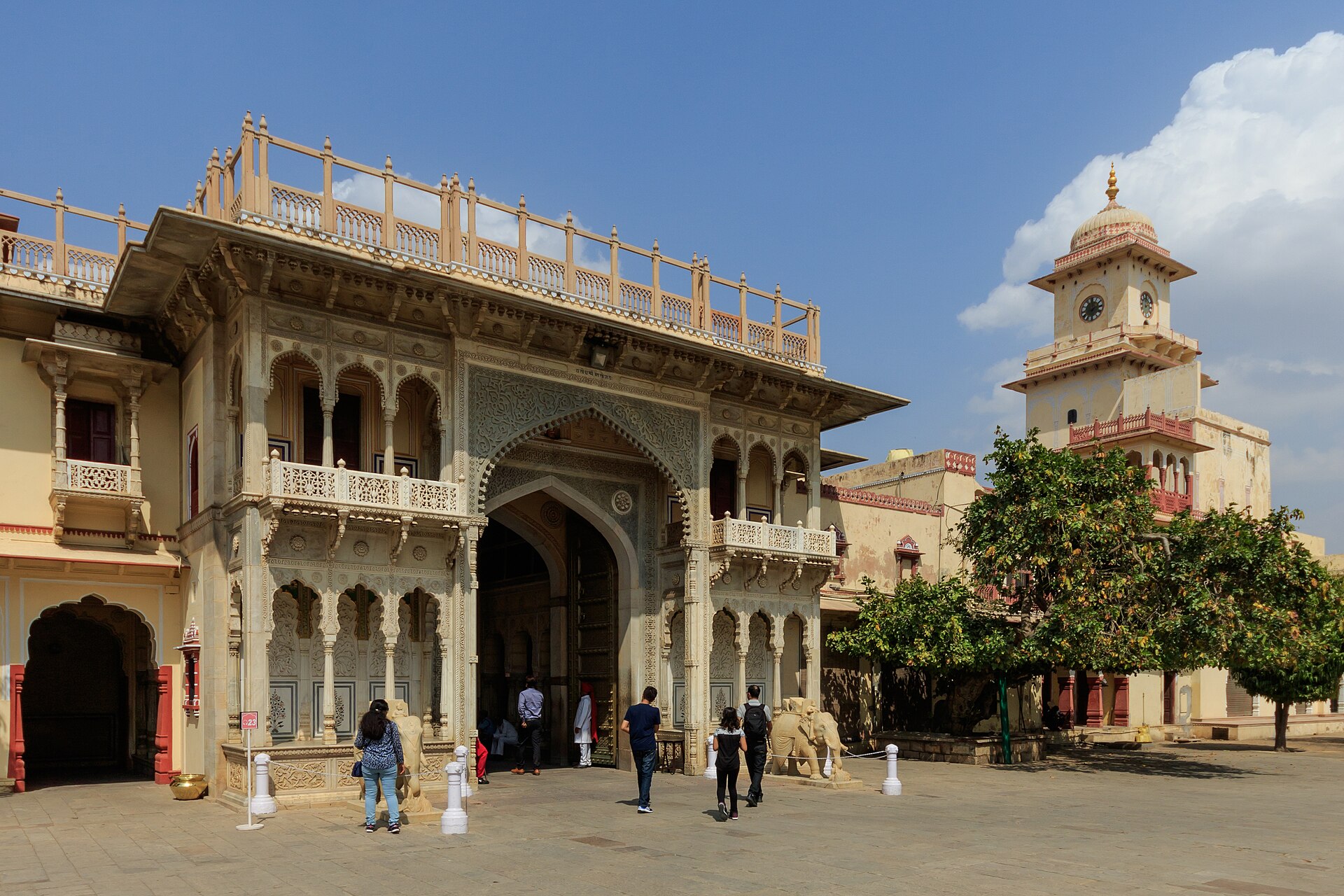
These pavilions and garden spaces provided settings for the more relaxed and pleasurable side of court life, from cultural gatherings to private enjoyment of the cool of the evening. Their open forms and graceful proportions reflect the refined tastes of the rulers, and they add variety and charm to the palace.
The gardens, laid out with the same love of order that shaped the city, offered greenery and repose within the stone complex. Symmetrical beds, water features, and shaded walks created places of calm and beauty, a welcome contrast to the grandeur of the great halls and the bustle of the surrounding city.
Together these smaller spaces enrich the experience of the palace, revealing the full range of its life, from the ceremonial to the intimate. They remind us that the City Palace was not only a seat of power but a home and a place of pleasure, designed for beauty and enjoyment as much as for the display of royal authority.
These quieter spaces are easy to hurry past in pursuit of the famous highlights, yet they hold some of the palace’s most restful beauty. A shaded pavilion or a symmetrical garden bed, encountered between the grander sights, offers a moment to pause and breathe, and to appreciate the human scale that balances the palace’s grandeur.
The Museum and Its Treasures
Much of the City Palace is now given over to a museum, one of the finest in Rajasthan, which displays the accumulated treasures of the Jaipur royal house. Spread through several of the palace buildings, the collections offer a rich picture of the history, art, and daily life of the court over the centuries.
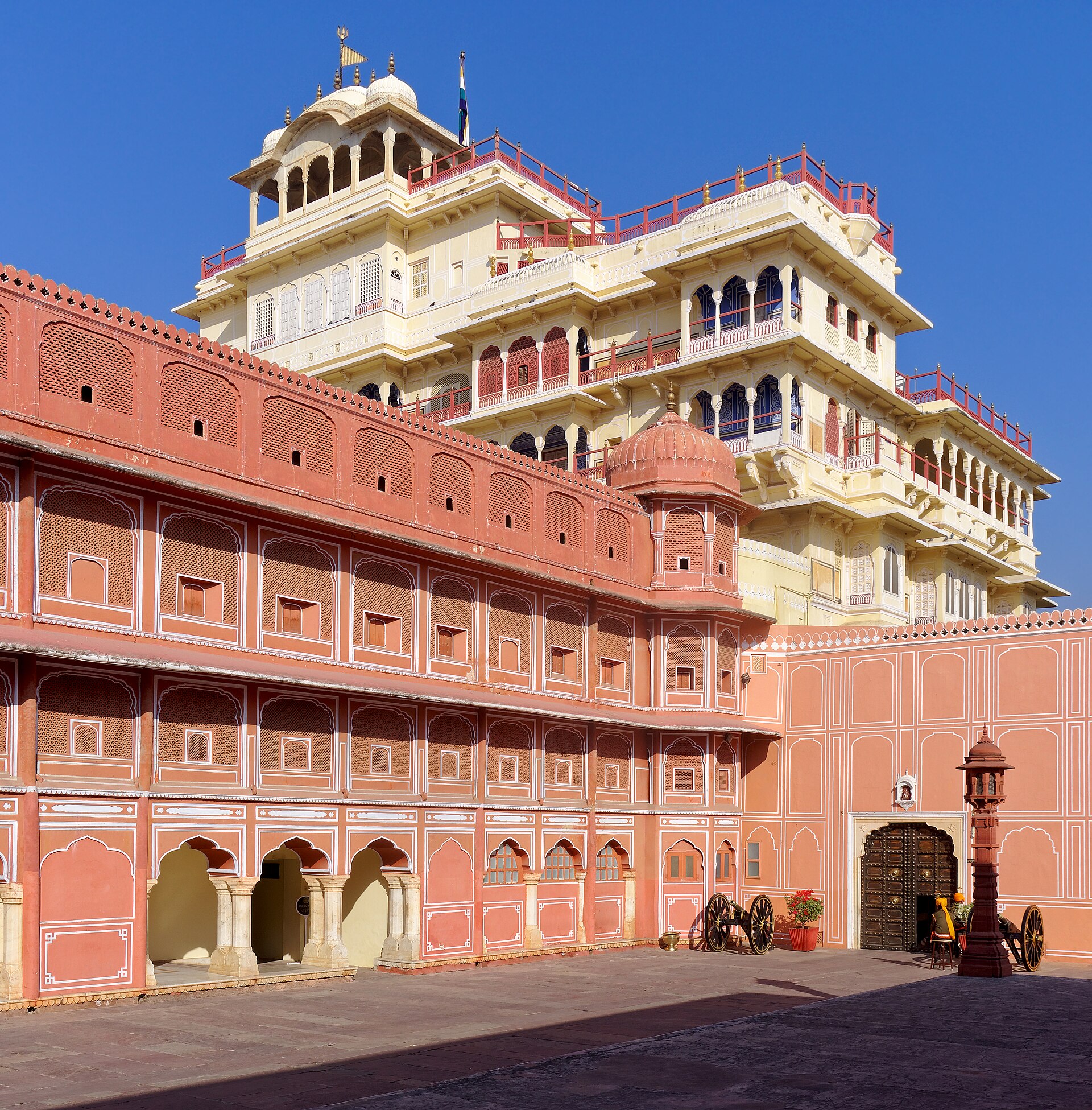
The museum is especially renowned for its collections of textiles and costumes, of arms and armor, and of paintings. The royal garments and fabrics reveal the luxury of court dress, while the armory holds a magnificent array of weapons, many of them beautifully crafted and decorated, testifying to the martial traditions of the Rajputs.
The collection of paintings includes fine examples of the miniature art for which Rajasthan is famous, depicting court scenes, religious subjects, and portraits of the rulers. These works, glowing with color and rich in detail, bring the history of the dynasty vividly to life and rank among the treasures of Indian art.
Displayed within the historic rooms of the palace, these collections gain added resonance from their setting. To see the arms, garments, and images of the Jaipur rulers within their own palace is to feel the presence of the past with unusual immediacy, and the museum makes the long and brilliant history of the dynasty tangible and alive.
The armory in particular tells a story that the elegant courtyards might let you forget: that these refined rulers were also warriors, heirs to a fierce martial tradition. Among the jeweled hilts and beautifully worked blades, you sense the other face of the Rajput court, where art and war were never far apart and a fine weapon was itself a work of art.
The Palace and the Stars
The founder of Jaipur was, among his many accomplishments, a passionate and accomplished astronomer, and his scientific interests left their mark on the city and its palace. Beside the palace he built a great astronomical observatory, filled with enormous instruments of masonry designed to measure the movements of the heavens with remarkable precision.

This observatory, one of several the ruler built across northern India, is among the most extraordinary monuments of Indian science. Its huge instruments, including a giant sundial, could track the sun, the stars, and the planets, and they reflect the founder’s determination to advance the astronomical knowledge of his age.
The presence of such an observatory beside the palace speaks volumes about the mind of the man who created Jaipur. For him, the ordering of the city, the design of the palace, and the study of the heavens were all part of a single vision, a search for harmony and order that embraced both the earthly and the celestial.
This union of palace and observatory makes Jaipur unique among the royal cities of India. The same ruler who built these halls and courtyards also reached for the stars, and the City Palace stands as the residence of a king who was also a scientist, a place where art, power, and knowledge came together in one grand design.
To move from the palace to the observatory is to feel the reach of a single extraordinary imagination. The same sense of proportion that ordered the courtyards governs the giant instruments outside, and the effect is to make the whole city feel like a machine for bringing order to the world, from the smallest carved gate to the vast dial that measures the passage of the sun.
A Living Royal Residence
Like the City Palace of Udaipur, the City Palace of Jaipur remains a living royal residence, still connected to the descendants of the Kachhwaha dynasty who built it. The royal family continues to occupy part of the complex, and the traditions of the house are still maintained, giving the palace a rare continuity with its past.
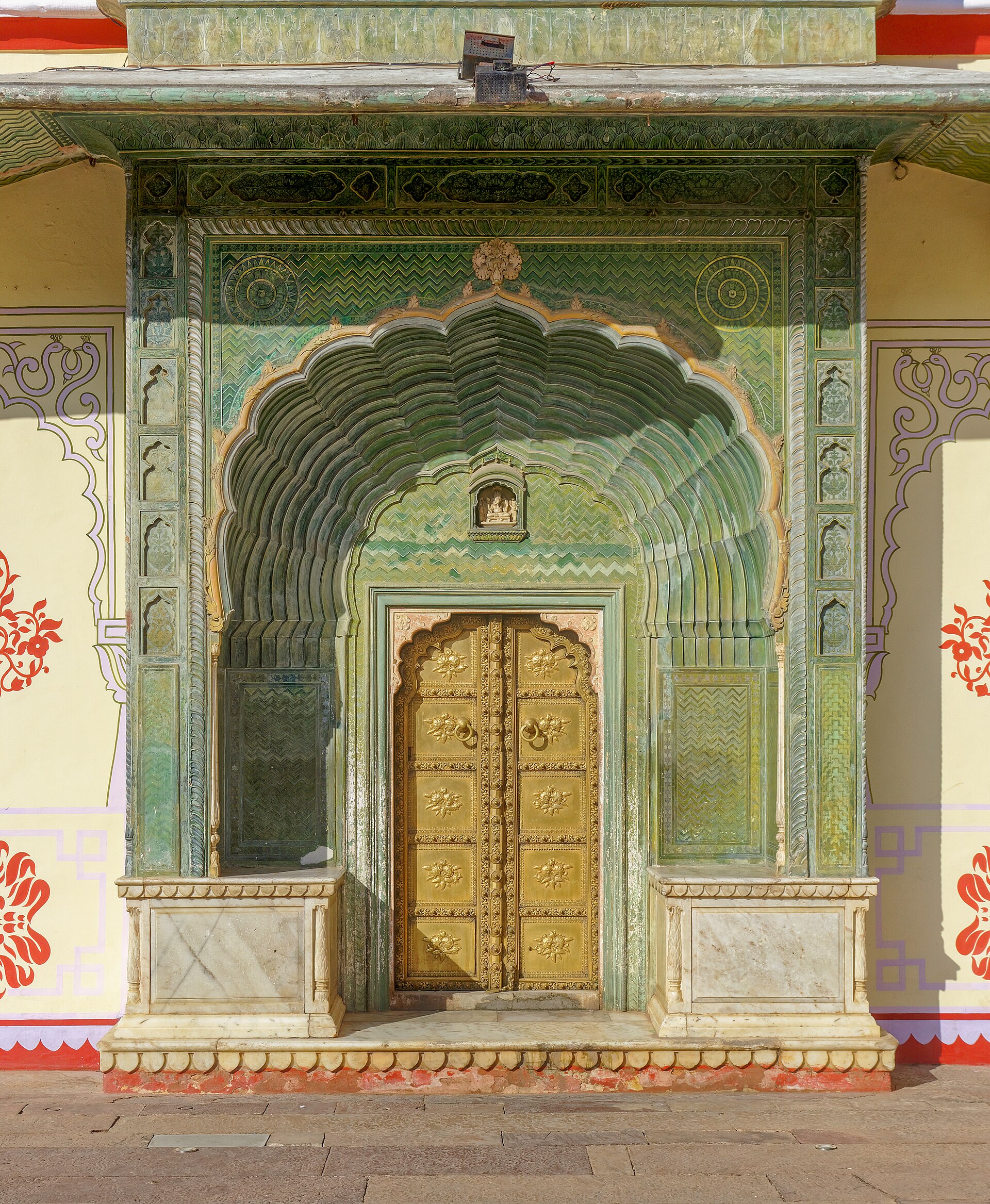
This living presence shapes the atmosphere of the palace. The flying of the royal flag from the Chandra Mahal, the continuation of ceremonies and customs, and the involvement of the family in the life of the palace all lend the complex a vitality that a mere monument could not possess. The history of Jaipur continues here in the present day.
The family has also played an active role in preserving and sharing the heritage of the palace, through the museum and other institutions that open much of the complex to the public. In this way the traditions of the dynasty are carried forward, and the treasures of the palace are made available to visitors from around the world.
This blend of the living and the historic gives the City Palace of Jaipur much of its special character. It is at once a home and a museum, a private residence and a public treasure, a monument to the past and a living institution of the present, maintaining an unbroken link between the dynasty and the palace it has occupied for centuries.
This continuity has practical value as well as sentimental appeal. A family with a living stake in the palace has every reason to care for it deeply, and much of the sensitive preservation of the complex owes something to that ongoing bond. In Jaipur, heritage is not an abstraction managed from afar but a family responsibility carried forward across the generations.
Visiting the City Palace Today
Today the City Palace is the foremost attraction of Jaipur, drawing visitors from around the world to explore its courtyards, halls, and museums at the heart of the Pink City. It lies within easy reach of the city’s other great monuments, forming part of an extraordinary concentration of art, history, and architecture.
View the exact location on Google Maps
A visit leads through the sequence of courtyards, past the elegant Mubarak Mahal, the great halls of audience with their silver urns, and the beautiful courtyard of the four seasonal gates, while the museum displays the treasures of the royal house. The living heart of the palace, the Chandra Mahal, rises above it all, still the home of the royal family.
The palace is best combined with a visit to the nearby observatory and the other monuments of Jaipur, to appreciate the full genius of the city’s founder. Together they reveal a planned city of remarkable coherence and beauty, in which palace, observatory, and city form a single grand design.
Whether you come for the architecture, the treasures, the history, or the sheer beauty of its courtyards, the City Palace of Jaipur offers an unforgettable experience. It is the shining center of one of India’s most beautiful cities, a living monument to a visionary ruler, and one of the great palaces of princely India.
Try to time part of your visit for the softer light of early morning or late afternoon, when the rosy stone of the palace glows most warmly and the crowds are thinner. In that gentle light, with the royal flag stirring above the Chandra Mahal, the City Palace reveals the full harmony that its visionary founder intended, and the visit becomes something you carry with you long afterward.
Palaces Nearby
The City Palace of Jaipur is one of the great royal residences of Rajasthan. To explore more of the splendor of princely India, these nearby palaces make natural companions to a visit here.
You May Like



One thought on “The City Palace of Jaipur: The Living Heart of the Pink City”