In the heart of Bonn, facing a broad green lawn where students relax between lectures, stands one of the longest baroque palaces in Germany. The Electoral Palace was the residence of the archbishop electors of Cologne, whose glittering court made Bonn a centre of music and culture in the eighteenth century, and where a young Ludwig van Beethoven played as a court musician.
Since 1818 the palace has been the main building of the University of Bonn, one of the most respected universities in Germany. Its long facades, corner towers and gateways frame the Hofgarten and connect the old town with the Rhine and the avenue leading to Poppelsdorf Palace.
In this article we will explore the Electoral Palace from the electors who built it to Beethoven and the court orchestra, its destruction and rebirth, and its life as a university, and we will finish with practical tips for your visit.
In This Article
- A Palace at the Heart of Bonn
- The Electors of Cologne in Bonn
- Zuccalli, de Cotte and the Building of the Palace
- Long Facades and Corner Towers
- The Gallery Wing and the Koblenz Gate
- The Palace and the City
- Beethoven and the Court Orchestra
- Towers and Wings
- Home of the University of Bonn
- The Hofgarten
- Destruction and Reconstruction
- The Electoral Palace on Video
- Visiting the Electoral Palace Today
A Palace at the Heart of Bonn
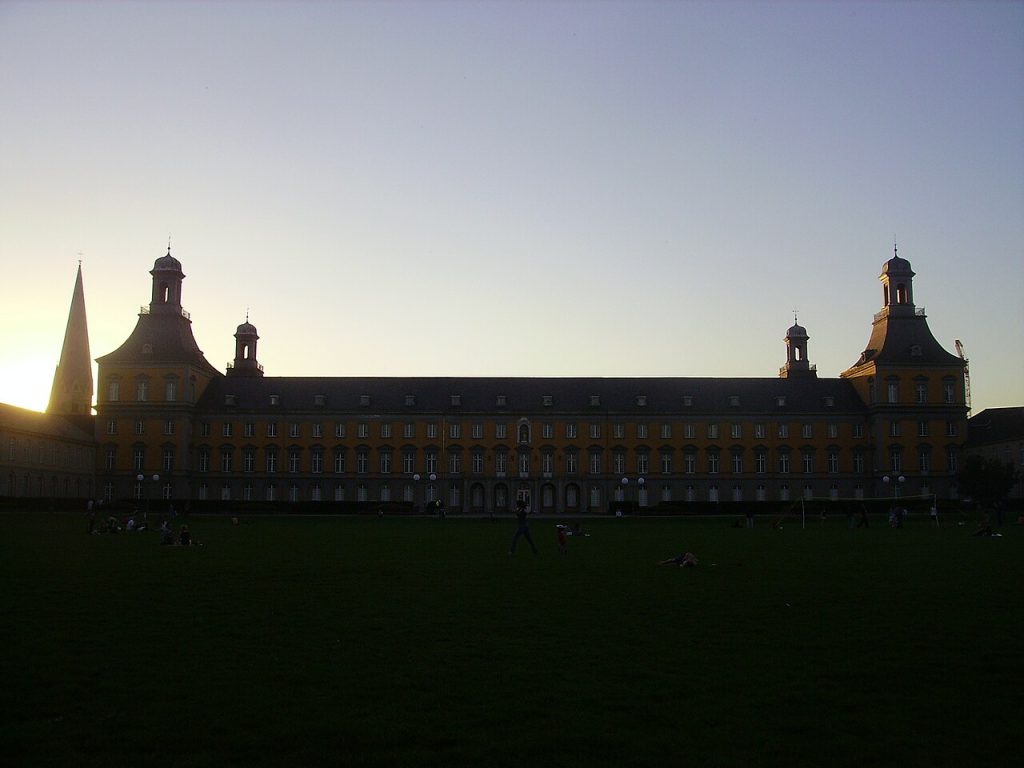
Walking from the market square of Bonn toward the Rhine, you come upon the Electoral Palace, a vast building stretching along the edge of the Hofgarten. Its pale yellow facades and grey roofs give it a dignified, almost endless appearance.
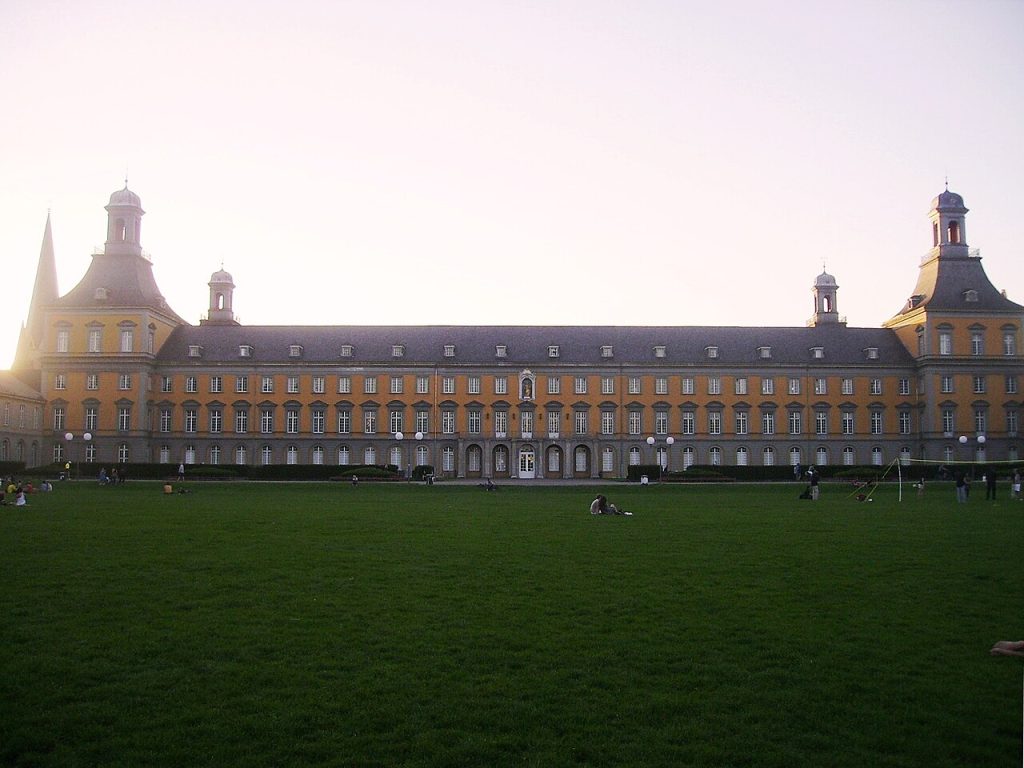
The Hofgarten, the large lawn in front of the palace, is one of the most popular places in Bonn, where students, families and visitors gather on sunny days.
Corner towers, gateways and wings break up the long facades and give the palace a varied silhouette, especially when seen from the lawn.
What makes the Electoral Palace special is its combination of baroque grandeur, its link with Beethoven and its lively present as the heart of a great university.
At night, when the facades are illuminated, the palace takes on a gentle glow that makes an evening walk across the Hofgarten particularly enjoyable.
Bonn served as the capital of West Germany from 1949 to 1990, and the palace stood at the heart of a city that played a key role in modern German history.
The Electors of Cologne in Bonn
The archbishops of Cologne were among the seven electors of the Holy Roman Empire. Because of conflicts with the citizens of Cologne, they moved their residence to Bonn in the late Middle Ages.
In the late seventeenth century, Elector Joseph Clemens of Bavaria decided to build a grand new palace in Bonn, befitting his rank and the splendour of the Wittelsbach family to which he belonged.
His successor Clemens August, one of the most extravagant builders of the eighteenth century, completed the palace and also built Augustusburg at Bruhl, Poppelsdorf Palace and Clemenswerth.
The last electors, including Max Franz, brother of Emperor Joseph II, continued to hold court in Bonn until the French occupation in 1794 brought the electorate to an end.
The electors’ Bavarian origins brought close ties with Munich and southern Germany, reflected in the artists and architects they employed.
Clemens August was famous for his love of hunting, music and festivities, and his court was one of the most splendid in the empire.
Zuccalli, de Cotte and the Building of the Palace
Construction began around 1697 to designs by Enrico Zuccalli, the court architect of Munich, who planned a grand residence with long wings and corner towers.
During the War of the Spanish Succession, Joseph Clemens went into exile in France, and on his return he commissioned Robert de Cotte, the leading French architect, to revise and complete the design.
The result was a palace that combined Italian and French influences, with long, regular facades and elegant details.
Further additions and decoration were made under Clemens August, and the palace reached its full extent in the middle of the eighteenth century.
A great fire in 1777 destroyed parts of the palace, and some sections were never fully rebuilt by the electors.
De Cotte sent plans from Paris, and local builders carried out the work, adapting French ideas to the conditions of the Rhineland.
Long Facades and Corner Towers
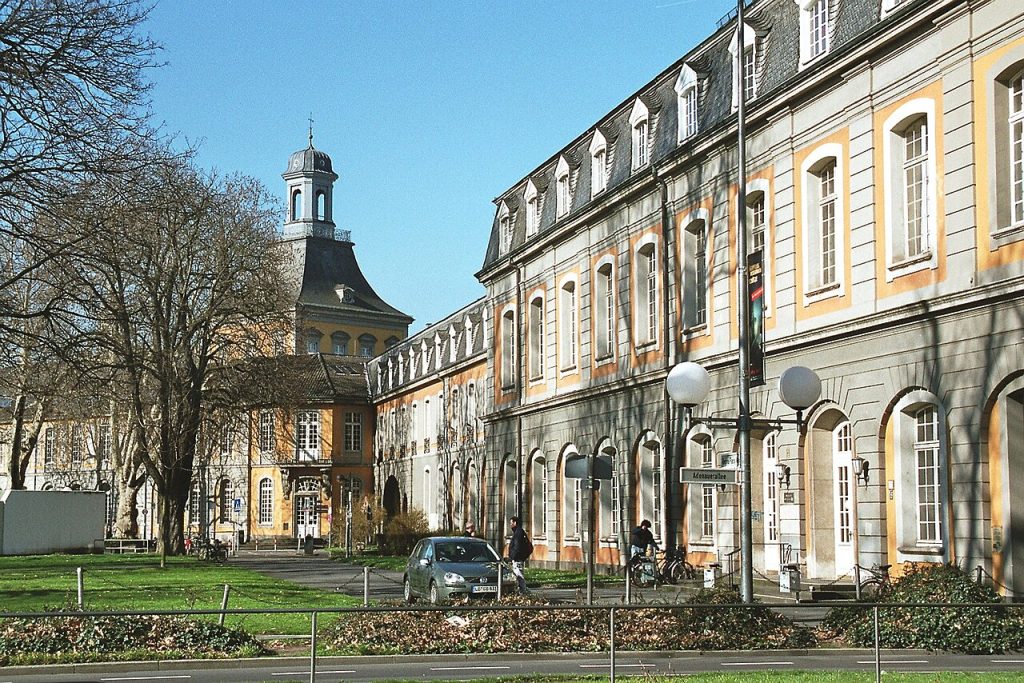
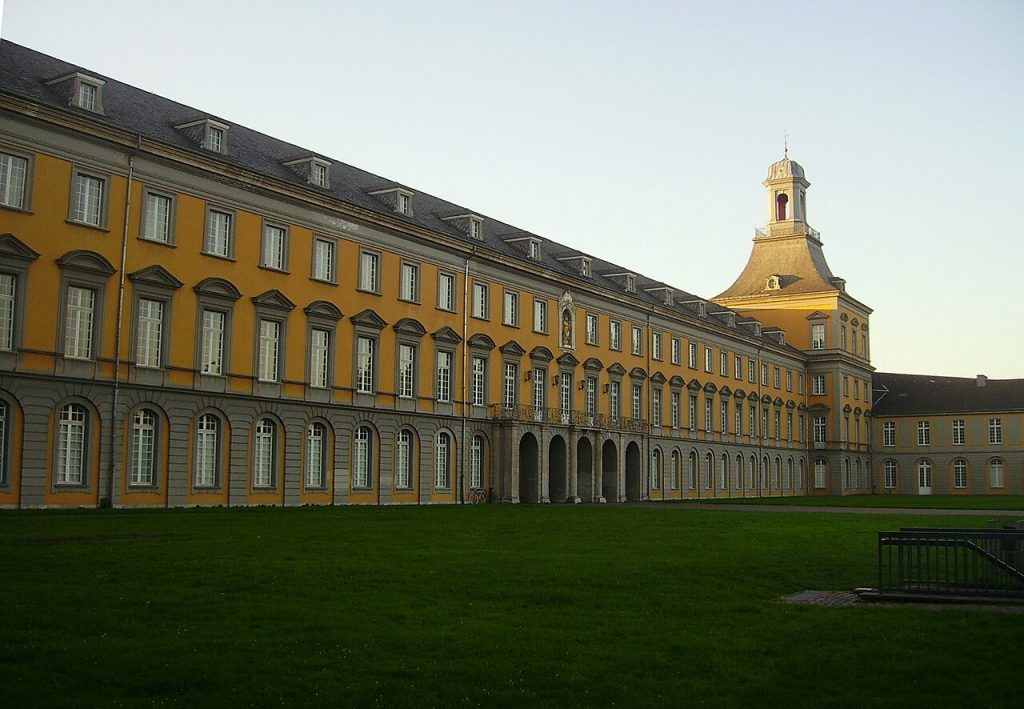
The facades of the palace stretch for hundreds of metres, making it one of the longest baroque buildings in Germany. Their regular rhythm of windows and pilasters creates a sense of order and dignity.
Corner towers mark the ends of the wings, adding vertical accents and giving the palace a distinctive outline.
The pale colour of the walls contrasts with the darker roofs, and the overall effect is restrained and elegant rather than flamboyant.
Walking along the facades, you can see the different phases of construction and restoration, each adding to the palace’s long history.
The Gallery Wing and the Koblenz Gate
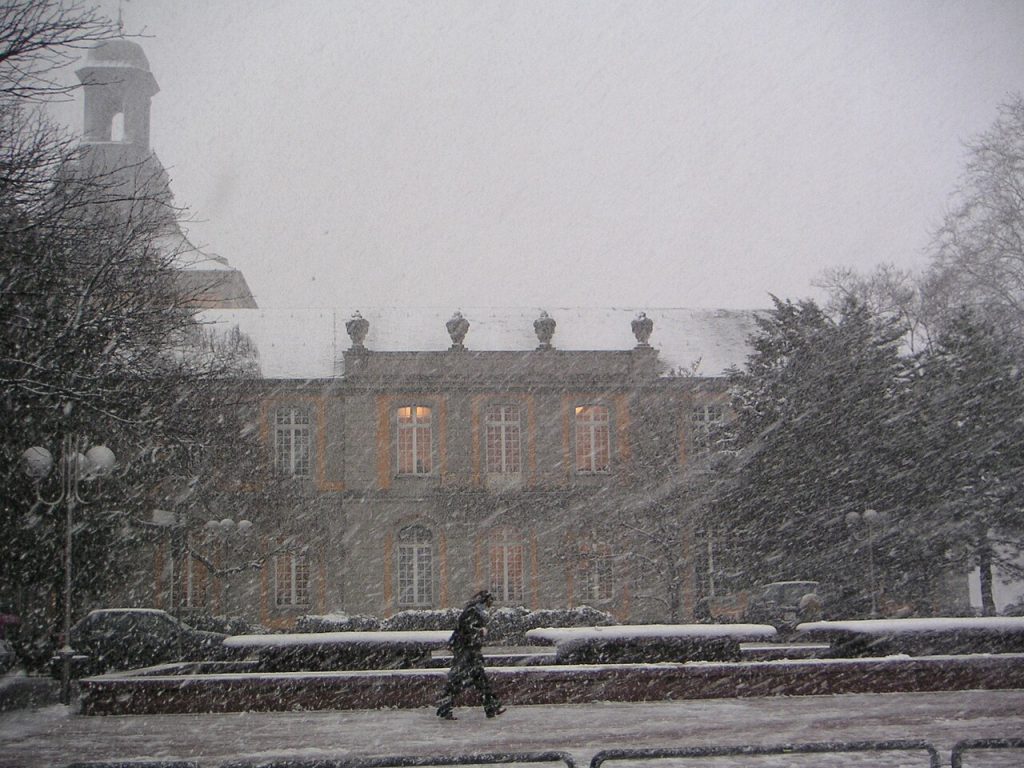
One of the most interesting parts of the palace is the gallery wing, which once linked the main building with other parts of the residence and housed collections of art.
Nearby stands the Koblenz Gate, a baroque gateway that connected the palace with the road to Koblenz and the Rhine. Its sculpture and architecture make it one of the most attractive features of the ensemble.
These structures show how the palace was integrated into the urban fabric of Bonn, linking the residence with the city and the river.
Today the gate and the gallery wing are part of the university, and students pass through them every day.
The Koblenz Gate is now home to a museum of the university’s art and archaeology collections, making it a cultural destination in its own right.
The Palace and the City
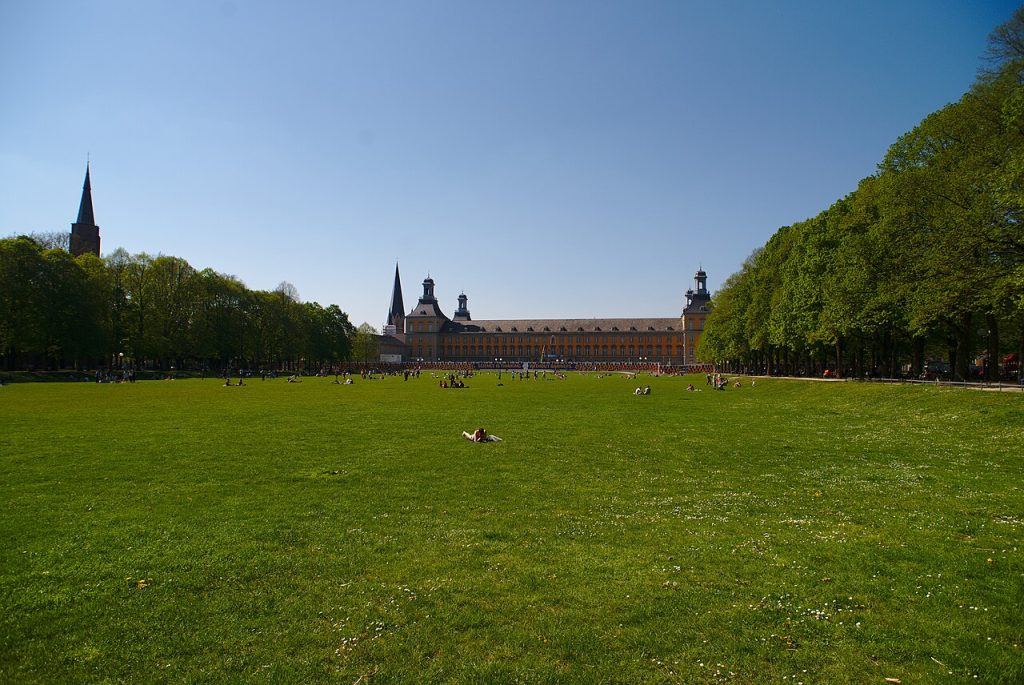
The palace forms the backdrop to several of Bonn’s most important squares, including the Kaiserplatz and the Hofgarten. From here, streets lead into the old town with its market, cathedral and shops.
The electors planned the palace as part of a larger urban design, with avenues and gardens connecting it with Poppelsdorf Palace and the Rhine.
Today the palace remains the visual centre of Bonn, a reminder of the city’s history as an electoral capital.
Walking around the palace is one of the best ways to understand the layout of the old town.
Beethoven and the Court Orchestra
Bonn is the birthplace of Ludwig van Beethoven, born in 1770, and the electoral court played a central role in his early life. His grandfather and father were musicians at the court, and the young Beethoven joined the court orchestra as a teenager.
Under Elector Max Franz, the court orchestra in Bonn was one of the finest in the Rhineland, and Beethoven played the viola and the organ, gaining valuable experience and making important contacts.
It was the elector who sent Beethoven to Vienna in 1792 to study with Joseph Haydn, a decision that changed the history of music.
Visiting the palace, you walk in the footsteps of the young composer, who performed in its halls and knew its corridors well.
Beethoven’s birthplace, now a museum, is only a short walk from the palace and makes a perfect complement to a visit.
Towers and Wings
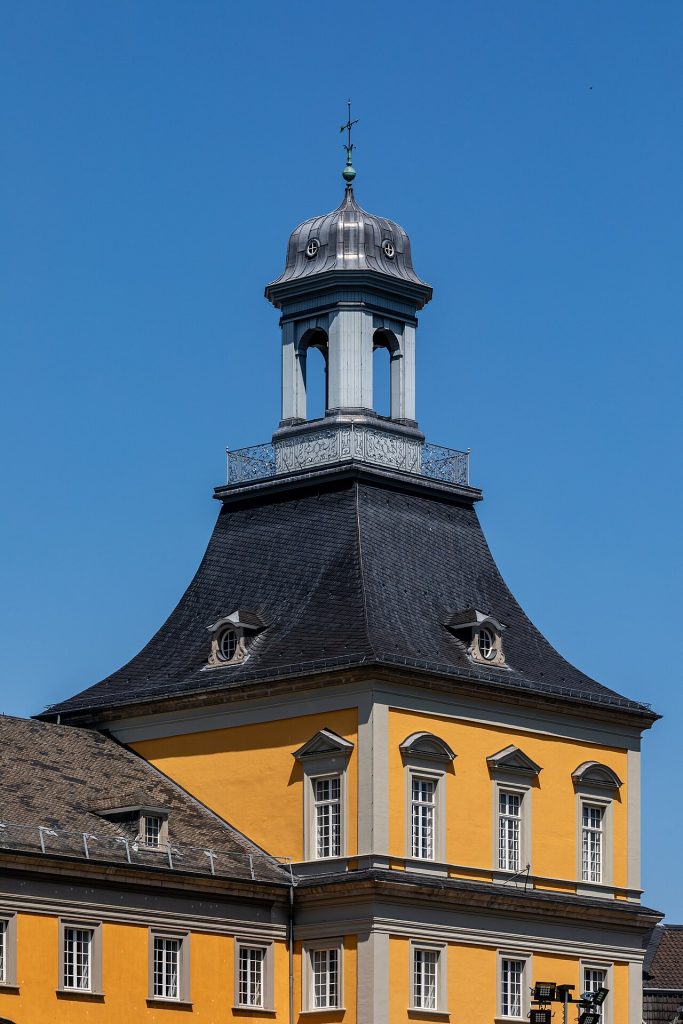
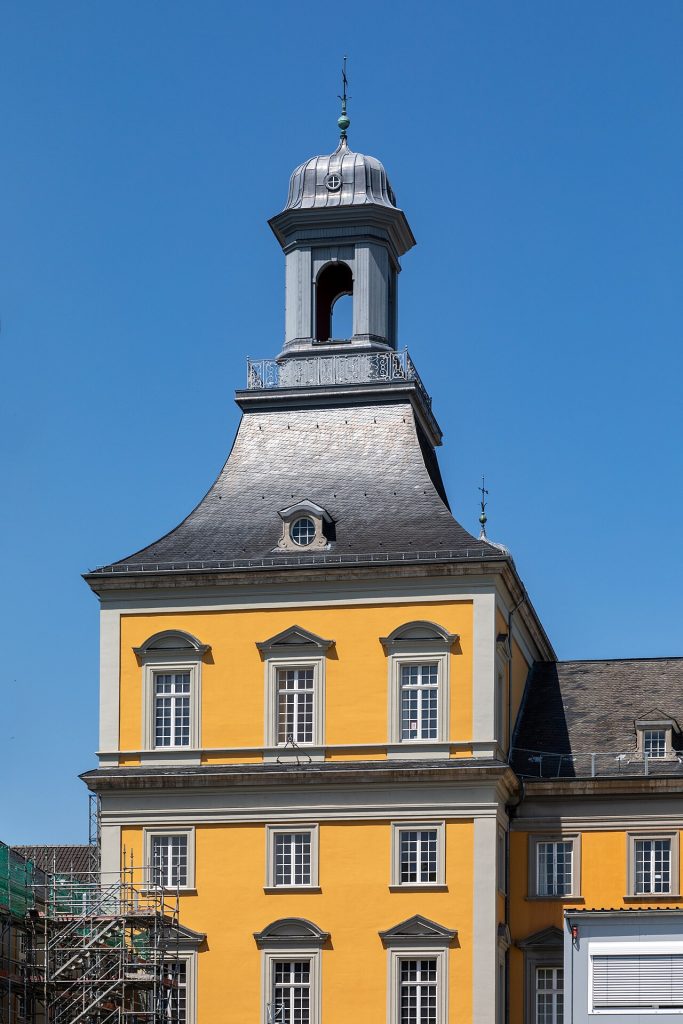
The southwest and northeast towers are among the most striking parts of the palace. Their height and solid forms give the long building a strong framework.
The wings that connect them once housed apartments, offices and service rooms for the large electoral household.
Today these spaces are lecture halls, offices and libraries, filled with the activity of university life.
Seen from the Hofgarten, the towers rise above the trees, creating one of the most recognisable views of Bonn.
Home of the University of Bonn
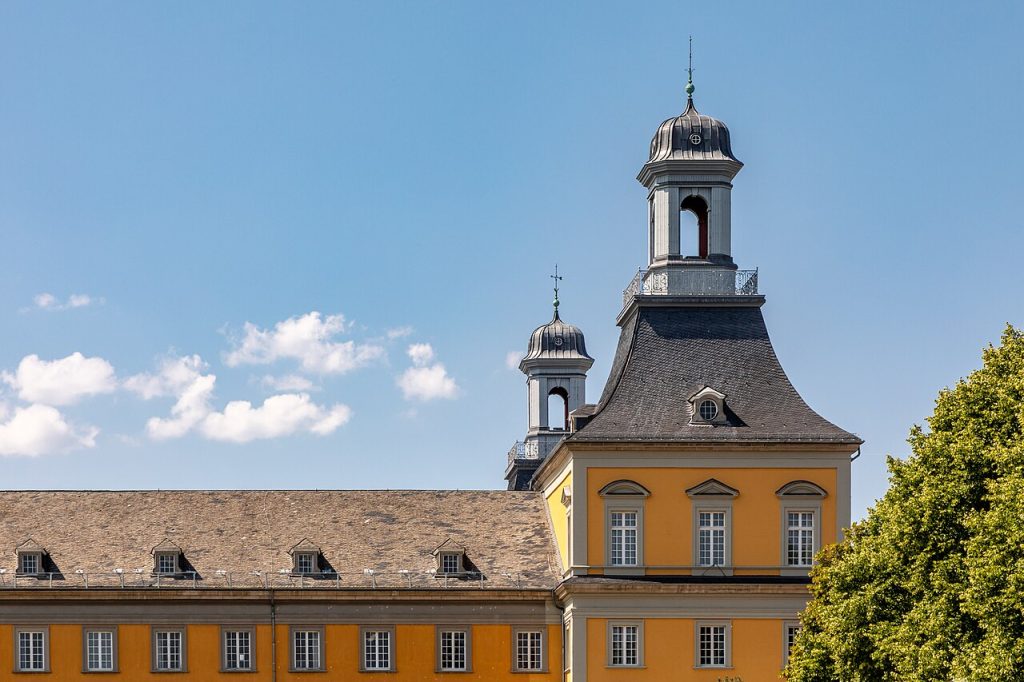
In 1818, the Prussian king Frederick William III founded the University of Bonn and gave it the former Electoral Palace as its main building. Since then, generations of students have studied here.
The university became one of the most important in Germany, attracting famous scholars and students, including Karl Marx, Heinrich Heine and Friedrich Nietzsche.
Today the palace houses faculties, administration and the university’s central lecture halls, and it is one of the most beautiful university buildings in Europe.
Walking through its corridors and courtyards, you sense the combination of history and academic life that gives Bonn its special character.
The Hofgarten
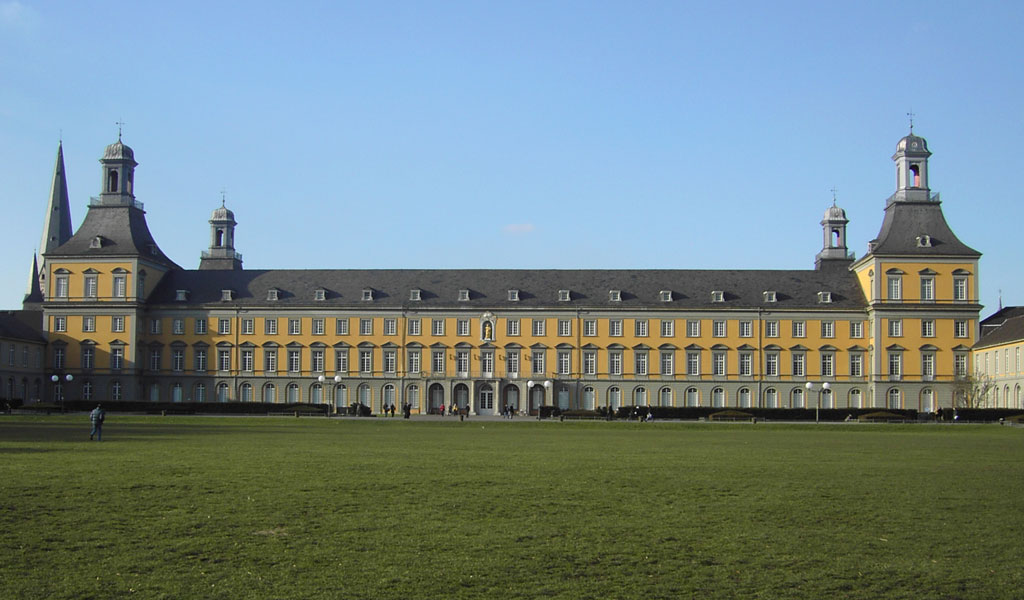
In front of the palace lies the Hofgarten, a wide lawn that was once the electors’ court garden. Today it is a public park and a favourite gathering place for students and residents.
On sunny days the lawn fills with people reading, chatting and relaxing, and in summer it hosts concerts and events.
The Hofgarten has also been the setting for historic events, including large political demonstrations in the years when Bonn was the capital of West Germany.
From the lawn, there are fine views of the palace’s long facade and its towers.
Destruction and Reconstruction
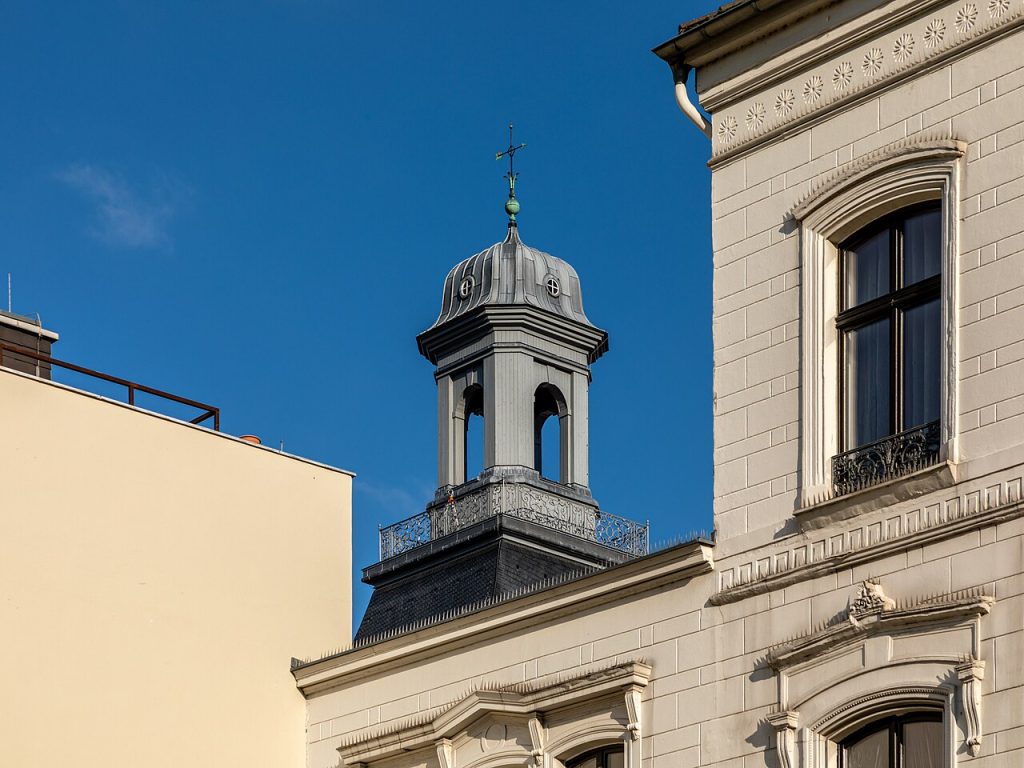
In October 1944, Bonn was heavily bombed, and the Electoral Palace was largely destroyed, leaving only parts of the outer walls standing.
After the war, the palace was rebuilt as the main building of the university, with its exterior restored and the interior adapted for teaching and research.
The reconstruction preserved the palace’s role as a symbol of Bonn and of the university’s continuity.
Today, few visitors would guess how badly the building was damaged, as it stands once again in its full baroque length.
The Electoral Palace on Video
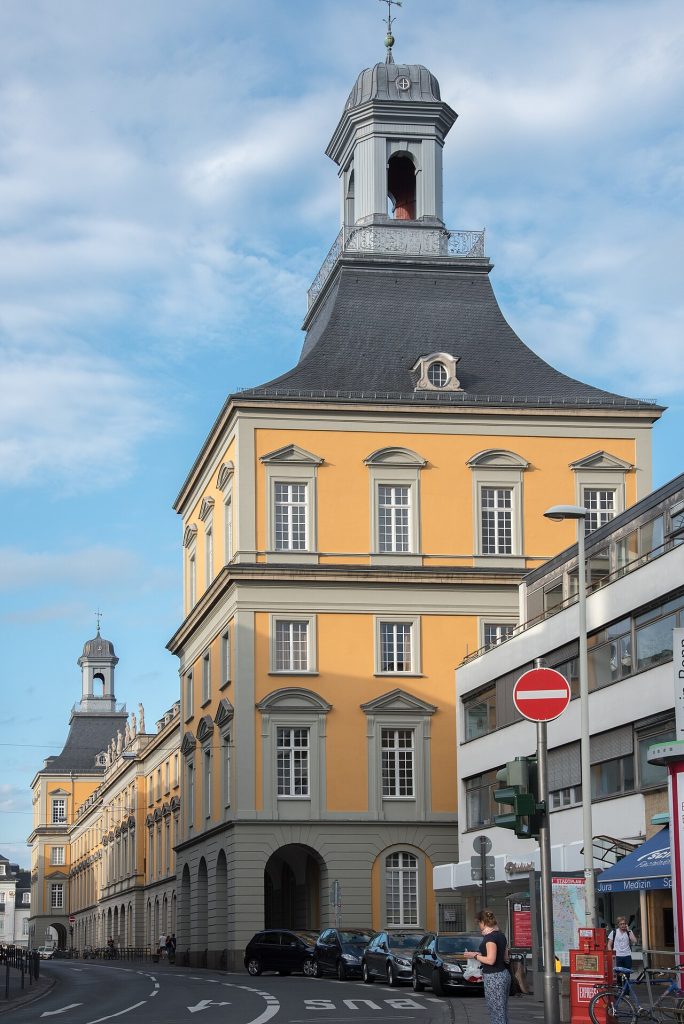
For a view of the palace from above, the video below presents the Electoral Palace in Bonn.
Watch for the long facades, the towers and the Hofgarten.
If the video inspires you, read on for practical tips.
Visiting the Electoral Palace Today
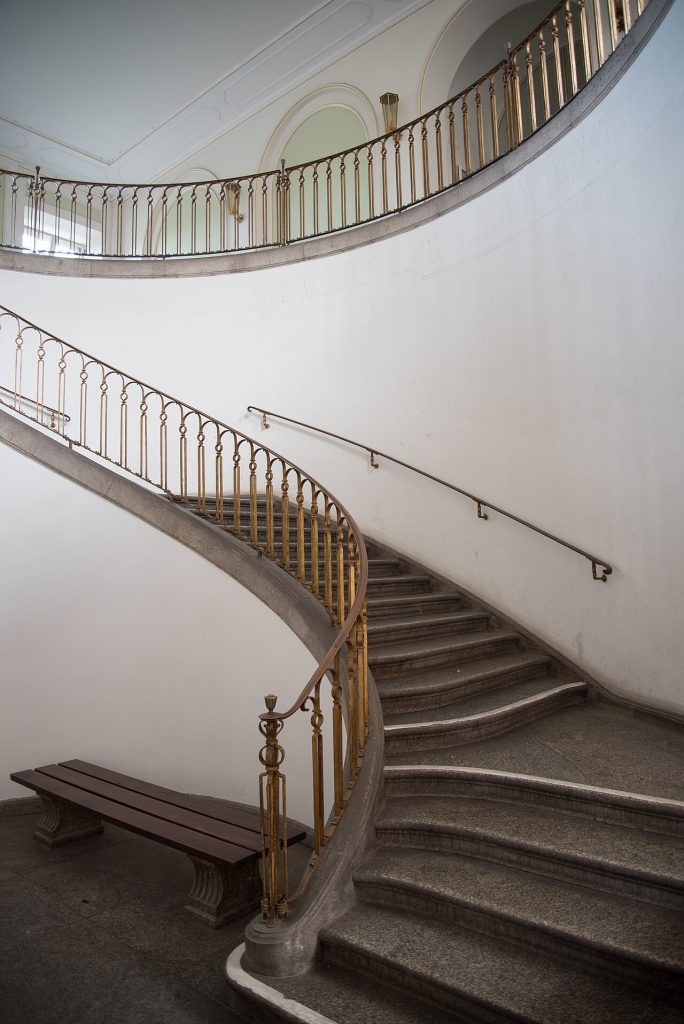
The Electoral Palace is a working university building, so the exterior, courtyards and Hofgarten are freely accessible, while some interior spaces can be seen during events and tours.
The palace lies in the centre of Bonn, a short walk from the main station, the market square and Beethoven’s birthplace.
Plan to combine your visit with a walk along the Poppelsdorfer Allee to Poppelsdorf Palace and its botanical garden, and with a stroll along the Rhine promenade.
Bonn also makes a good base for visiting Augustusburg Palace at Bruhl and the castles of the Siebengebirge across the Rhine.
View the location on Google Maps
Palaces Nearby
If you have enjoyed this palace, the Rhineland and Westphalia hold more remarkable residences. Here are two more well worth adding to your journey:
- Benrath Palace – the pink pleasure palace of Elector Carl Theodor in Dusseldorf.
- Poppelsdorf Palace – the baroque palace of the electors of Cologne in Bonn, home to a famous botanical garden.
You May Like


2 thoughts on “The Electoral Palace of Bonn and the Court Where Beethoven Played”