Now, stop in the circular entrance hall and look up at the glass dome. Light falls through coloured glass onto a marble fountain, and the stairs curve away on both sides. This is art nouveau, built in 1907, in a city of Ottoman palaces, by the ruler of Egypt.
Abbas Hilmi II, the last khedive, spent summers in Istanbul and built himself a villa on a hill at Cubuklu with a view down the Bosphorus in both directions.
It is the most European building in this series, the most modern, and the one with the best view, and it ends in a story about a man who lost his throne and his country while living here.
- The Khedives of Egypt
- Abbas Hilmi II
- An Egyptian in Istanbul
- Delfo Seminati and the Design
- The Tower and the Entrance
- The Rotunda and the Fountain
- Art Nouveau in Istanbul
- The Garden and the Grove
- Deposed in 1914
- After the Khedive
- Rescue in the 1980s
- Restaurant, Hotel, Wedding Venue
- Visiting the Khedive Palace
The Khedives of Egypt
Mehmed Ali’s descendants ruled Egypt as hereditary governors, taking the Persian title khedive from 1867, with increasing autonomy from Istanbul and increasing debt to Europe.
The Suez Canal opened in 1869. Debt led to European financial control, then to the British occupation of 1882, which left the khedive on his throne with British advisers running the country.
Egypt remained formally Ottoman until 1914, which is why its rulers kept houses in Istanbul.
Abbas Hilmi II
Abbas Hilmi II became khedive in 1892 at seventeen, educated in Vienna, and spent twenty-two years in conflict with the British agent Lord Cromer and his successors over control of Egyptian government.
He was a nationalist by inclination, supported the Egyptian national movement financially, and was regarded by the British as unreliable.
He was also wealthy, cosmopolitan and fond of Istanbul, where his family had deep roots.
An Egyptian in Istanbul
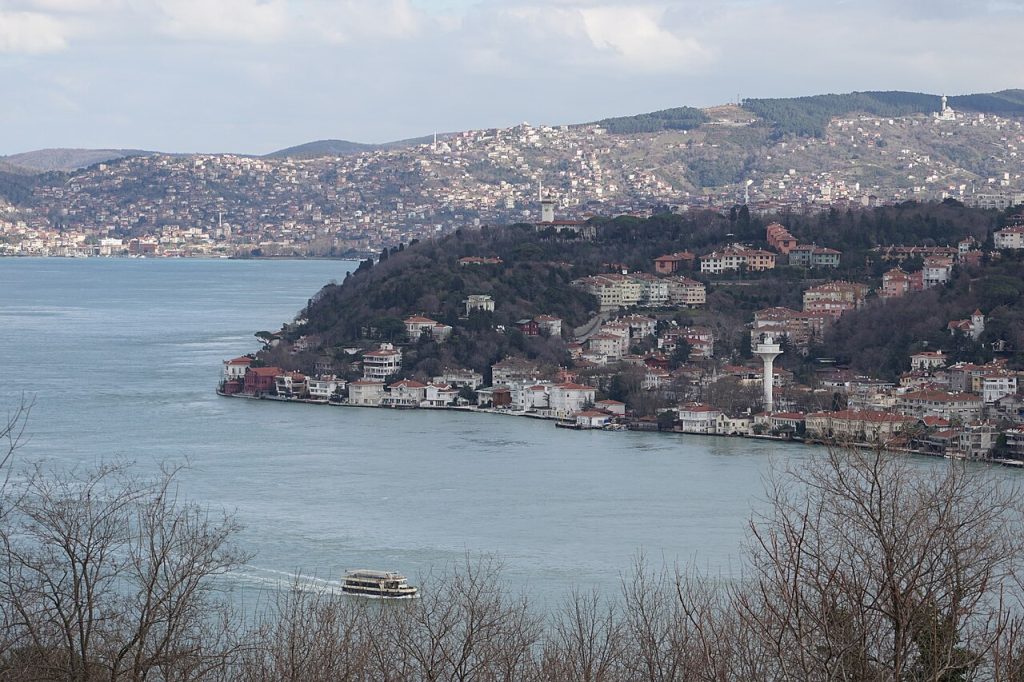
The khedivial family owned property across the city, and Abbas Hilmi bought the hill at Cubuklu, a wooded promontory on the Asian shore, in the early 1900s.
The site had been a monastery, then a vineyard, then an estate. From the top, the Bosphorus is visible in both directions.
He had the villa built between 1903 and 1907 as a summer residence.
Delfo Seminati and the Design
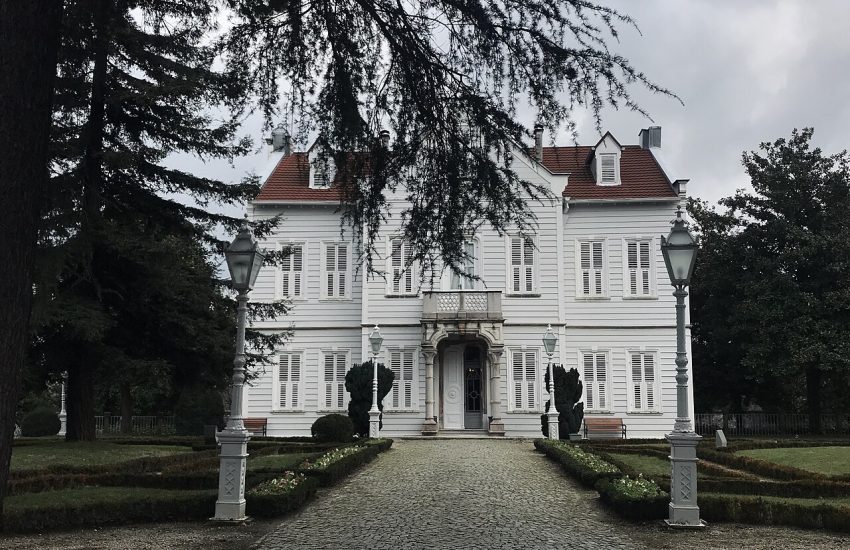
The architect was Delfo Seminati, an Italian working in Istanbul, and the result is a confident art nouveau composition: curved walls, a tower, wrought iron, coloured glass and organic ornament.
Art nouveau arrived in Istanbul around 1900 through Italian and Levantine architects, and the best examples are in Beyoglu, Sisli and along the Bosphorus.
This is the largest and best preserved of them.
The Tower and the Entrance
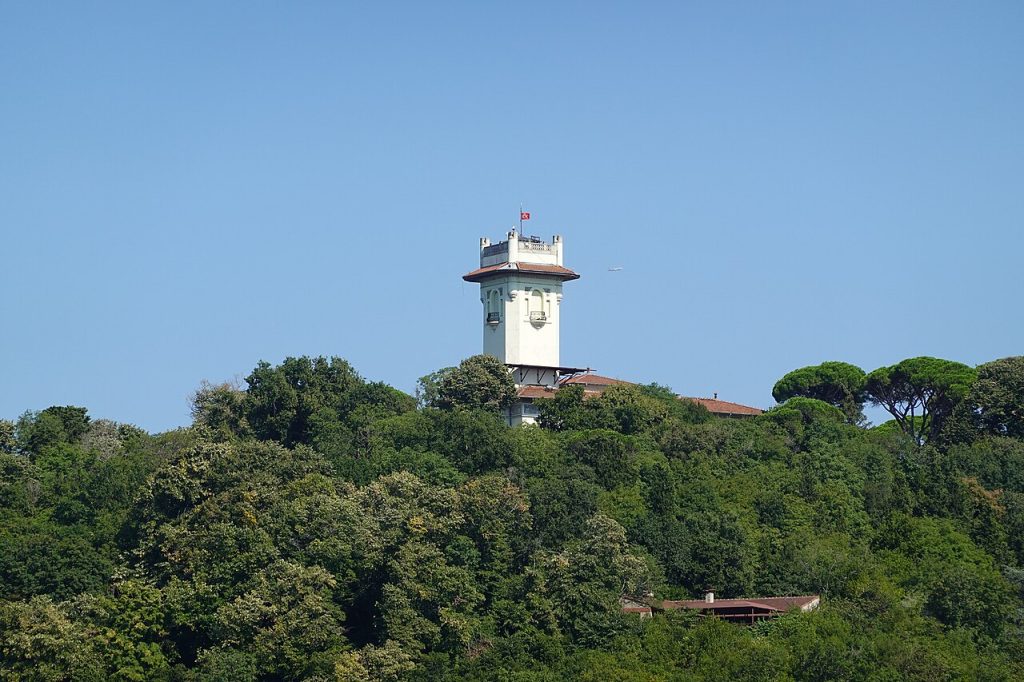
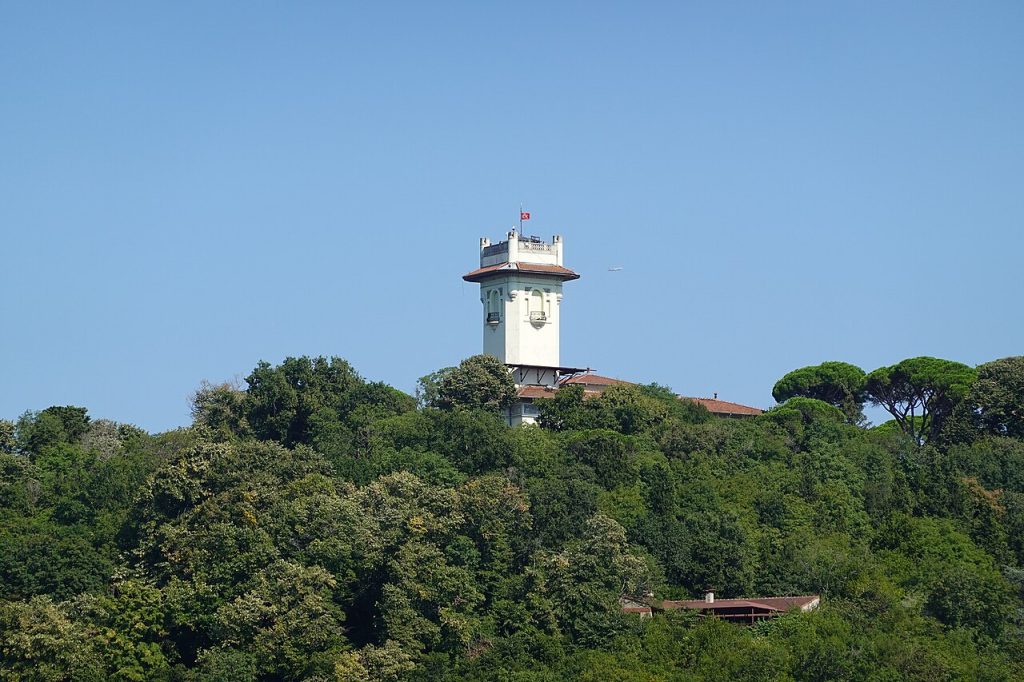
A square tower rises at one corner, originally holding a water tank and serving as a landmark visible from the water, with a clock and a viewing level.
The entrance drive curves up through the garden to a porte-cochere, designed for carriages and later for cars.
The approach was choreographed: visitors arrived through woods, emerged at the villa, and only then saw the view.
The Rotunda and the Fountain
The circular entrance hall, with its glass dome, marble fountain and curved double staircase, is the architectural centrepiece and one of the most photographed interiors in Istanbul.
Light changes through the day as the sun moves across the coloured glass, and the sound of water carries through the ground floor.
The furniture is largely modern, since the original contents were dispersed.
Art Nouveau in Istanbul
The style suited a cosmopolitan city at the turn of the century: new, European, unconnected to either Ottoman tradition or the heavy neoclassicism of the palaces.
Raimondo D’Aronco, the Italian architect working for Abdulhamid II, produced the other major art nouveau buildings in the city, including the Sheikh Zafir tomb complex at Yildiz.
Seeing D’Aronco’s work and this villa together gives a complete picture of the style’s Istanbul moment.
The Garden and the Grove
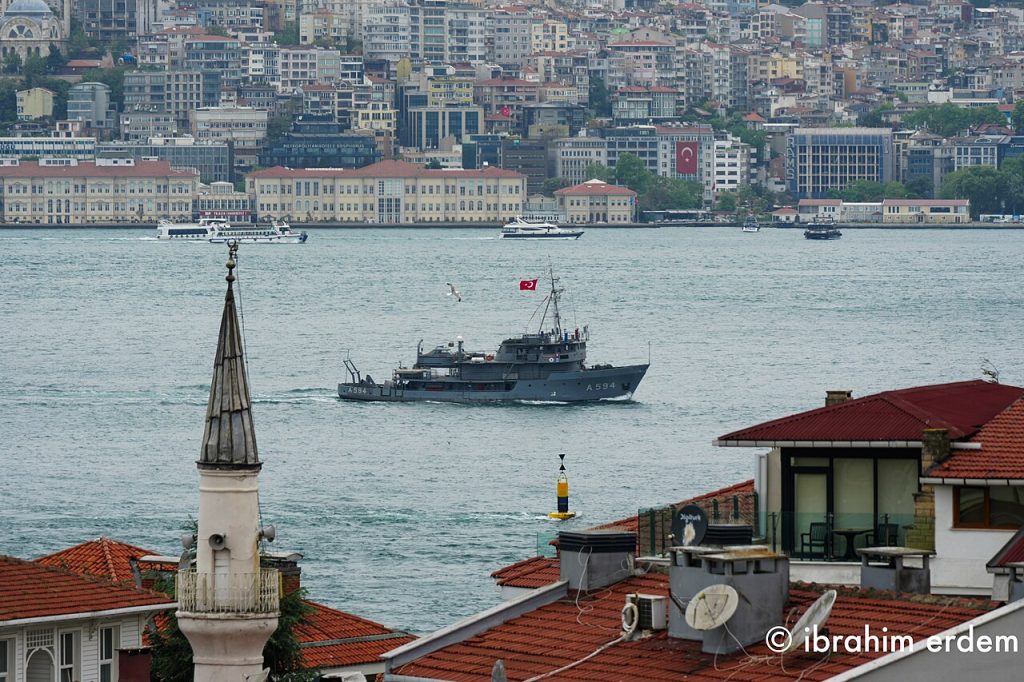
The grounds cover a large wooded hill with lawns, a rose garden, pines and planes, paths and viewpoints over the Bosphorus.
It is a public park, free to enter, and one of the best picnic spots on the Asian side, popular with families at weekends.
The view north toward the second bridge and south toward the city is the reason most people come.
Deposed in 1914
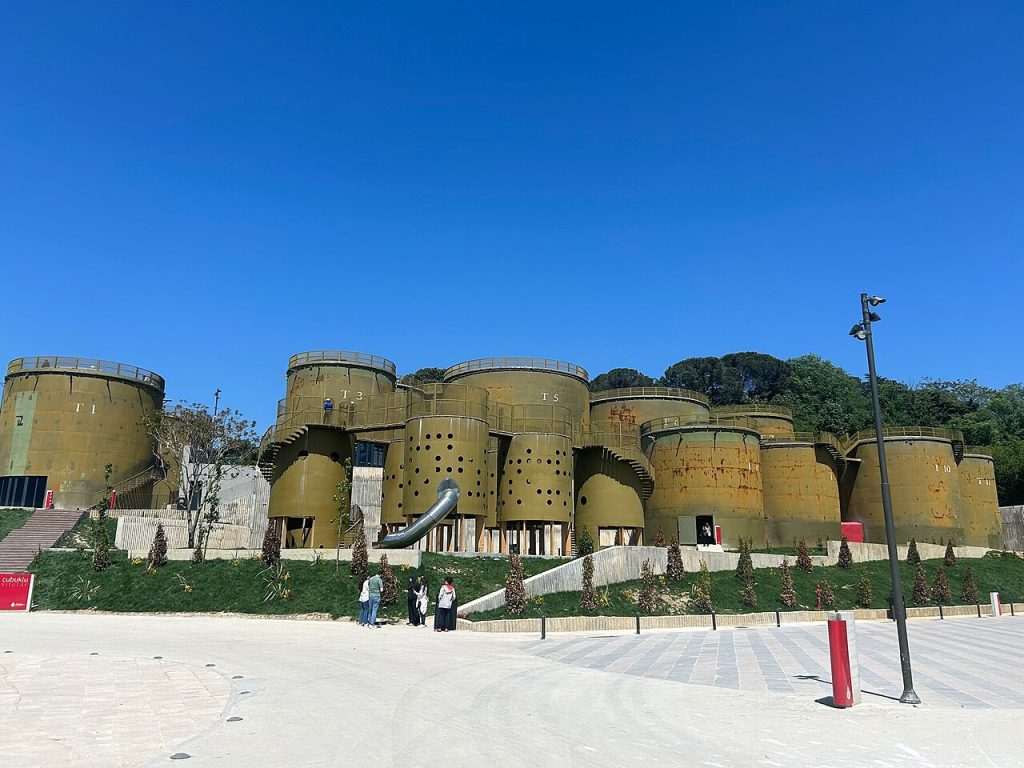
In the summer of 1914 Abbas Hilmi was in Istanbul when the First World War began. In November the Ottoman Empire entered the war on the German side; Britain declared a protectorate over Egypt and deposed him in December, installing his uncle as sultan of Egypt.
He never returned. He spent the rest of his life in Switzerland, Austria and Turkey, negotiated unsuccessfully for restoration, and died in Geneva in 1944.
The villa he had built seven years earlier became the house of a man without a country.
After the Khedive
The property passed through family hands, was sold, and was used variously through the twentieth century, falling into decay by the 1970s with the garden overgrown and the interiors stripped.
Photographs from that period show broken glass in the rotunda and trees growing against the walls.
Demolition was discussed. The hill was valuable and the building was not protected effectively.

Rescue in the 1980s
The Touring and Automobile Club of Turkey, under Celik Gulersoy, restored the building in the early 1980s as part of a programme that also rescued several other historic properties in Istanbul.
Gulersoy’s restorations are sometimes criticised for romanticising, but without them a number of significant buildings would have gone.
The villa reopened with a restaurant, a cafe and public gardens, and later passed to the municipality.
Restaurant, Hotel, Wedding Venue
Today the building operates as a restaurant and events venue with a small number of rooms, run under municipal management, and the park around it is open to all.
Weddings are held constantly in summer, and the terrace is a well-known place for breakfast with a view.
You can walk into the rotunda and see the main spaces as a customer; it is not a ticketed museum.
Visiting the Khedive Palace
Take a bus or taxi up from Cubuklu or Kanlica on the Asian shore; the climb on foot is steep but possible. Kanlica is famous for its yoghurt and worth a stop.
Go for breakfast at the weekend, or on a weekday afternoon for quiet. Autumn light on the hill is particularly good.
Combine it with Beykoz Mecidiye Pavilion to the north, since the two buildings share an Egyptian story.
Watch the Palace on Film
Visiting the Khedive Palace Today
The Khedive Palace stands on the hill above Cubuklu on the Asian shore, reachable by bus or taxi from Kanlica or Beykoz, or by ferry to Kanlica and a short uphill ride.
The grounds are a public park, open daily and free. The building operates as a restaurant and events venue, so interiors are accessible to customers; check whether a private event is booked before travelling.
Allow two hours, and combine it with Beykoz and Kanlica. Find it here: https://www.google.com/maps?q=41.1081,29.0744
Palaces Nearby
You May Like
Beykoz Mecidiye Pavilion and the Marble Gift of an Egyptian Governor