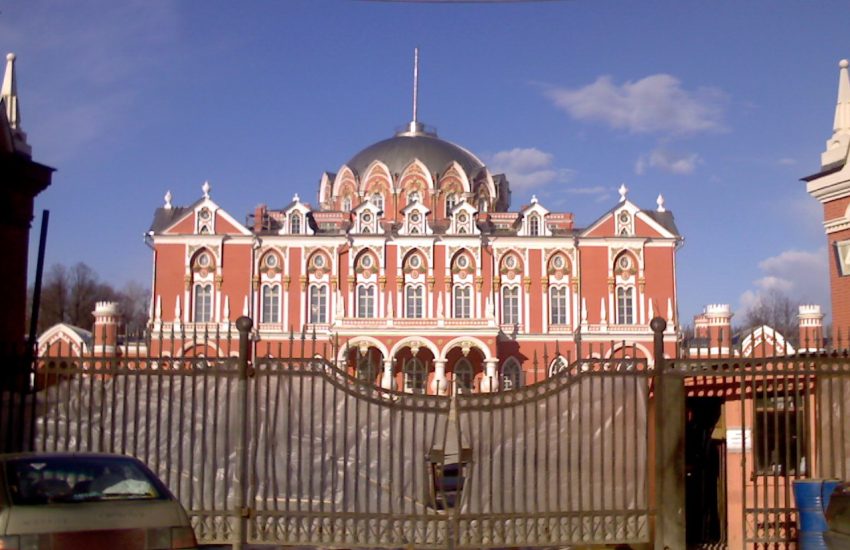
On a high green bank of the Moscow River, where the city’s towers give way to orchards and ravines, stands the estate Russians have loved longest. Kolomenskoye was the summer home of Moscow’s rulers for five centuries, and it holds two wonders at once: the white Church of the Ascension of 1532, the soaring stone tent that UNESCO lists among humanity’s treasures, and the resurrected wooden palace of Tsar Alexei Mikhailovich, a 250-room labyrinth of towers, scales, and painted gates that contemporaries called the eighth wonder of the world.
No museum in Russia offers such a compression of the national story. Here Ivan the Terrible celebrated and brooded; here the Copper Riot of 1662 ended in massacre on the palace doorstep; here young Peter the Great sheltered from rebellion and later paraded his first soldiers; and here, in the twentieth century, the pioneer preservationist Pyotr Baranovsky gathered wooden towers and cabins from across Russia into the country’s first open-air architecture museum.
This guide walks the whole hill: the ancient village and its pagan ravine, the Ascension church and its royal birth, the fairy-tale palace of the Quietest Tsar with its mechanical lions, the riots and ghosts, the gardens and honey fairs, and all the practical detail you need for one of the best unhurried days Moscow can give.
- A Village Older Than the Kremlin
- The Ascension Church and a Royal Birth
- Ivan the Terrible at Kolomenskoye
- Tsar Alexei’s Summer Capital
- Building the Eighth Wonder
- Inside the Wooden Palace
- The Copper Riot of 1662
- Young Peter on the Hill
- The Wonder Demolished
- Baranovsky’s Museum of Wood
- The Palace Reborn
- Gardens, Gates and Ravines
- Festivals and Seasons
- Watch Kolomenskoye on Film
- Visiting Kolomenskoye Today
- Palaces Nearby
A Village Older Than the Kremlin
Kolomenskoye enters written history in 1339, in the will of Ivan Kalita, Moscow’s gathering prince, which makes the village on the river bluff older in the record than most of the capital’s famous stones. Legend pushes deeper still: the settlement’s founders are said to have been refugees from Kolomna fleeing Batu Khan’s Mongol storm in 1237, carrying their town’s name to a new hill.
The site explains the princes’ long affection. The high bank commands the river road from the south, the direction of Tatar danger, so the summer residence doubled as a watchtower; below, water meadows fattened the court’s herds, and the slopes proved perfect for orchards. Apples, pears, and cherries from Kolomenskoye supplied the Kremlin’s tables for centuries, and the gardens planted under the tsars still bloom across the estate each May.
Older than any document is the Golosov Ravine that cuts the hill, a place of standing stones, springs, and stubborn legend. Folk memory made it a gate of time: tales tell of Tatar horsemen who entered its mists and emerged decades later, and of the pagan deity whose name the ravine may carry. Archaeologists find settlement traces back to the Iron Age Dyakovo culture on the neighboring spur, so people have watched this river bend for well over two thousand years.
The Ascension Church and a Royal Birth
In 1530 the Grand Prince Vasily III, after twenty years of childless marriage and a second, scandalous wedding, finally received a son, the future Ivan the Terrible. Thanksgiving took monumental form: on the bluff at Kolomenskoye rose the Church of the Ascension, consecrated in 1532, a white tower of stone shooting sixty-two meters skyward in a form Russia had never seen, the tented roof of wooden folk churches translated for the first time into masonry.
Contemporaries grasped at once that something extraordinary had happened; the chronicle marvels at a church such as had not been before in Rus for the beauty of its height and lightness. The architect was almost certainly an Italian, Petrok Maly by the documents’ name, which makes the building a strange and wonderful hybrid: Renaissance engineering serving a Russian silhouette, a prayer for an heir pinned to the sky above the Tatar road.
The church served the court as both sanctuary and watchpost, beacons on its gallery warning Moscow of riders from the south, and under its floor generations of treasure hunters have sought Ivan the Terrible’s lost library, the fabled hoard of Byzantine books his grandmother Sophia Palaiologina supposedly brought from Constantinople. Nothing has surfaced but the legend refuses to die, and the white tower, UNESCO-listed since 1994, still draws the eye from kilometers along the river.
Ivan the Terrible at Kolomenskoye
The child whose birth built the Ascension church grew into the tsar whose shadow lies longest over Russian history, and Kolomenskoye was woven through his reign. Ivan IV celebrated his name day here with feasts that summoned the whole court to the orchards; from here he set out in 1552 on the Kazan campaign that broke the khanates, and the neighboring church of St John the Baptist at Dyakovo, a clustered, brooding masterpiece, is tied by tradition to his votive building.
Kolomenskoye also watched the reign’s dark turn. In December 1564 Ivan abandoned Moscow in a slow train of sledges loaded with treasury and icons, pausing at Kolomenskoye for two weeks of indecision before vanishing to Alexandrova Sloboda, from which he dictated the terms that created the oprichnina, his state within a state of black-robed enforcers. The estate thus framed the moment Russia’s first tsar turned on his own realm.
After Ivan the hill knew the Time of Troubles at full force. The pretender False Dmitry II camped his army at Kolomenskoye in 1606; the rebel Ivan Bolotnikov fortified the village that same winter and was broken in battle below it; and the passing armies left the royal orchards cut for firewood. When the Romanovs restored order, the estate’s rebuilding became a statement that the old sacred summers had returned.
Tsar Alexei’s Summer Capital
Tsar Alexei Mikhailovich, the Quietest, loved Kolomenskoye beyond all his estates. The reign’s documents show the court migrating here each summer in a procession of hundreds of carts, the government effectively moving with it; ambassadors trekked out from Moscow to be received, and the tsar’s beloved falconry filled the meadows, governed by a ceremonial rulebook Alexei helped write himself, with its famous consolation that there is a time for work and an hour for fun.
The estate suited the tsar’s blend of piety and play. He kept the great feasts in the Ascension and Kazan churches, walked the orchards counting his apple trees, for the household books list them tree by tree, and hunted with gyrfalcons whose keepers wore gold-laced livery. The English doctor Collins, serving the court, described summers of processions, bear shows, and gardens that astonished foreign eyes.
By the 1660s the old scattered wooden mansions no longer matched the reign’s splendor or the family’s size, Alexei fathered sixteen children, and the tsar resolved on a residence that would gather the summer capital under one fantastic roof. The decision produced the most famous wooden building in Russian history.
Building the Eighth Wonder
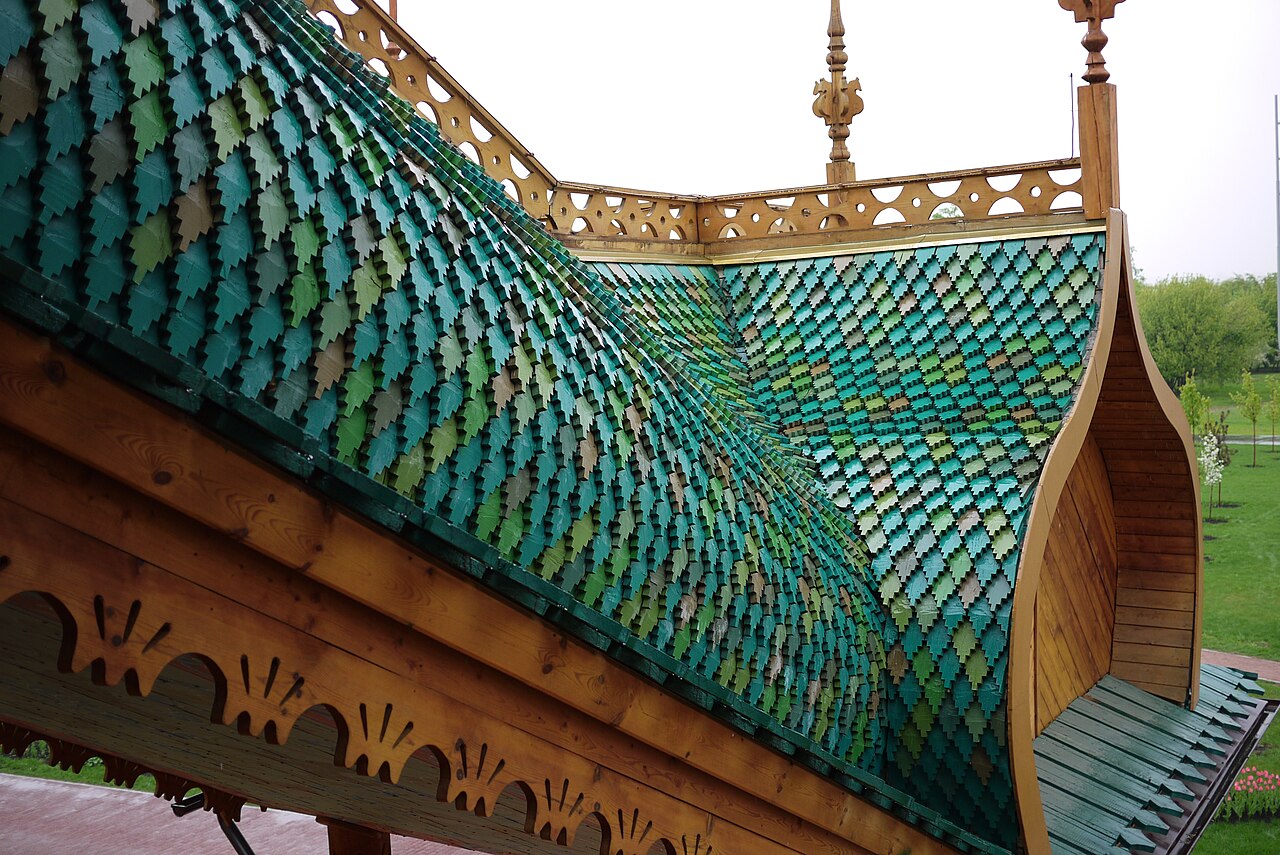
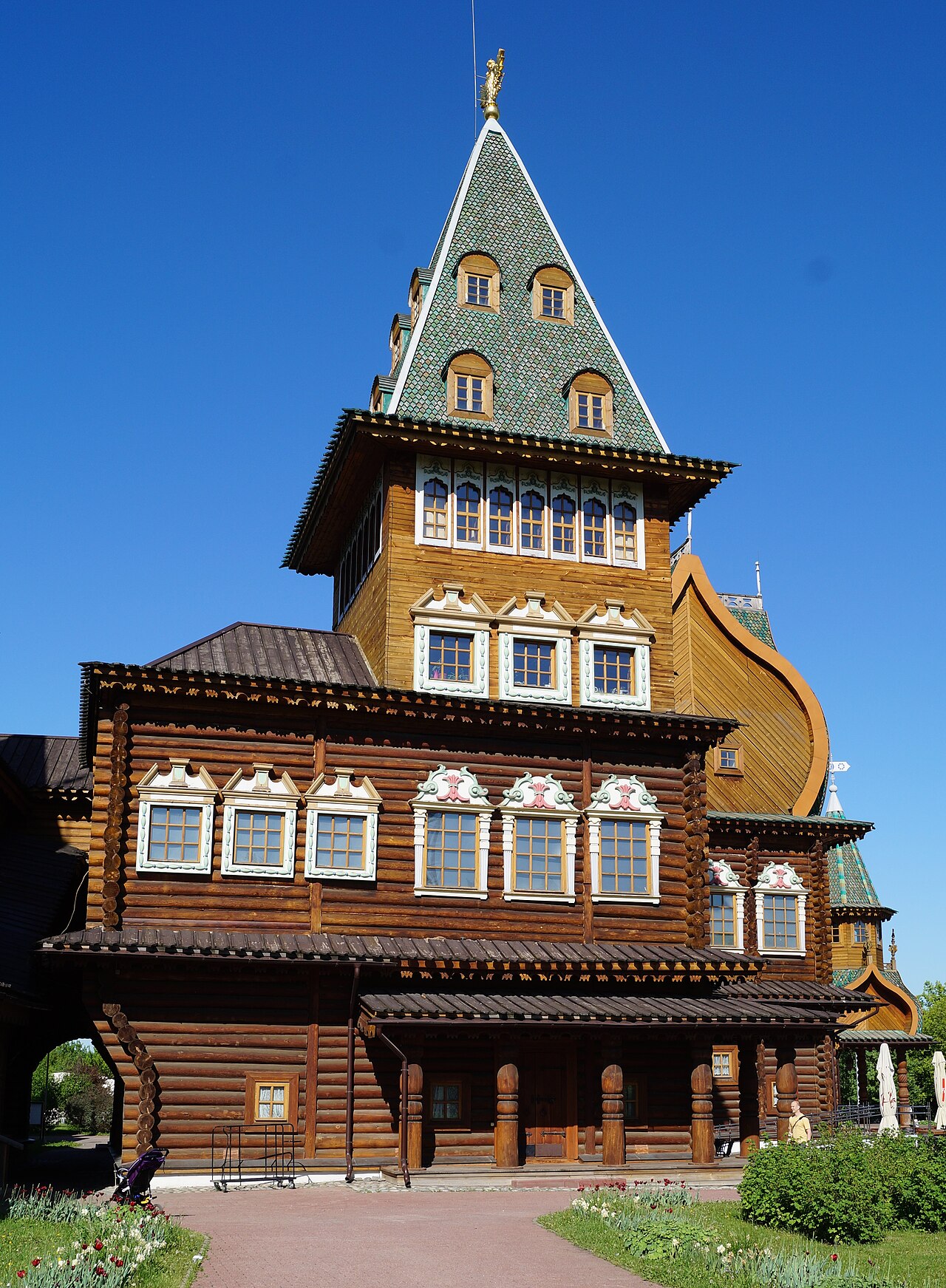
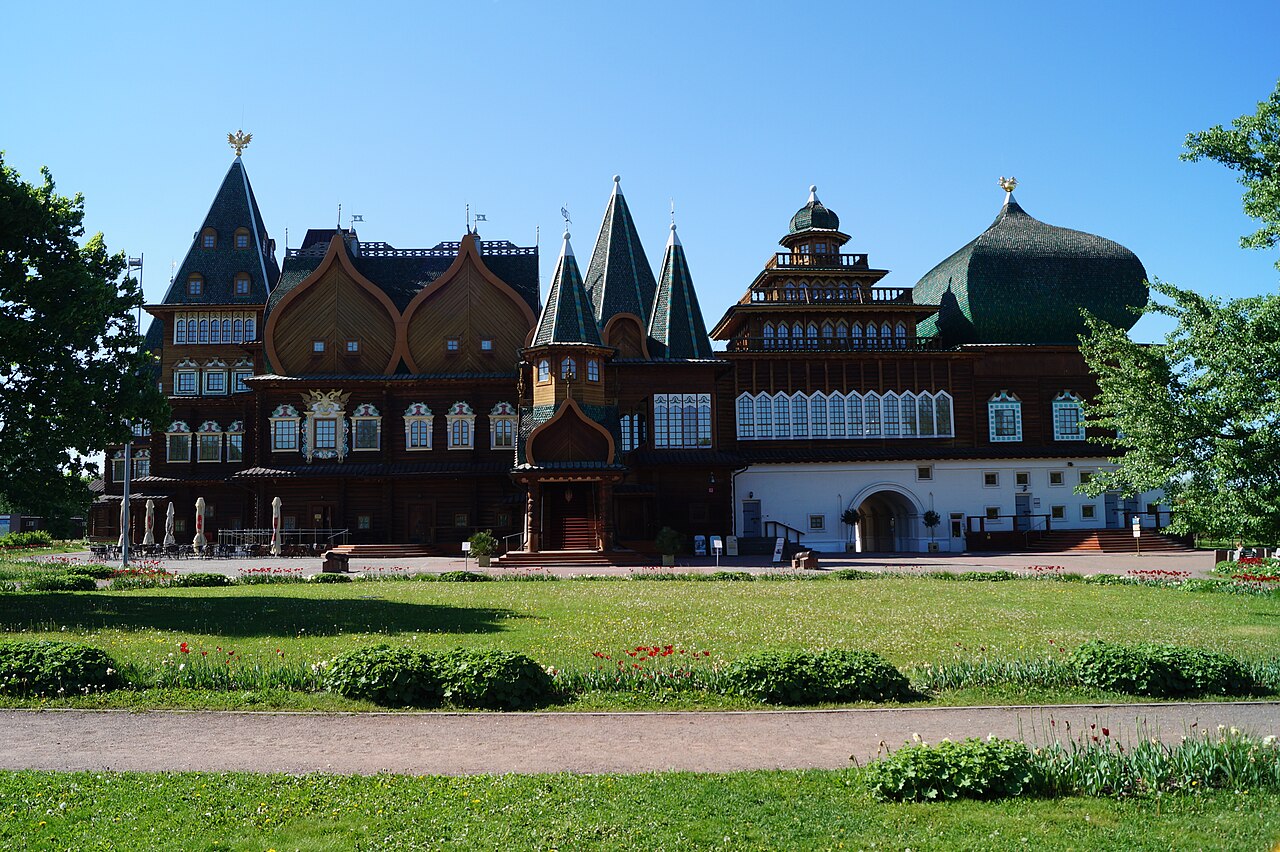
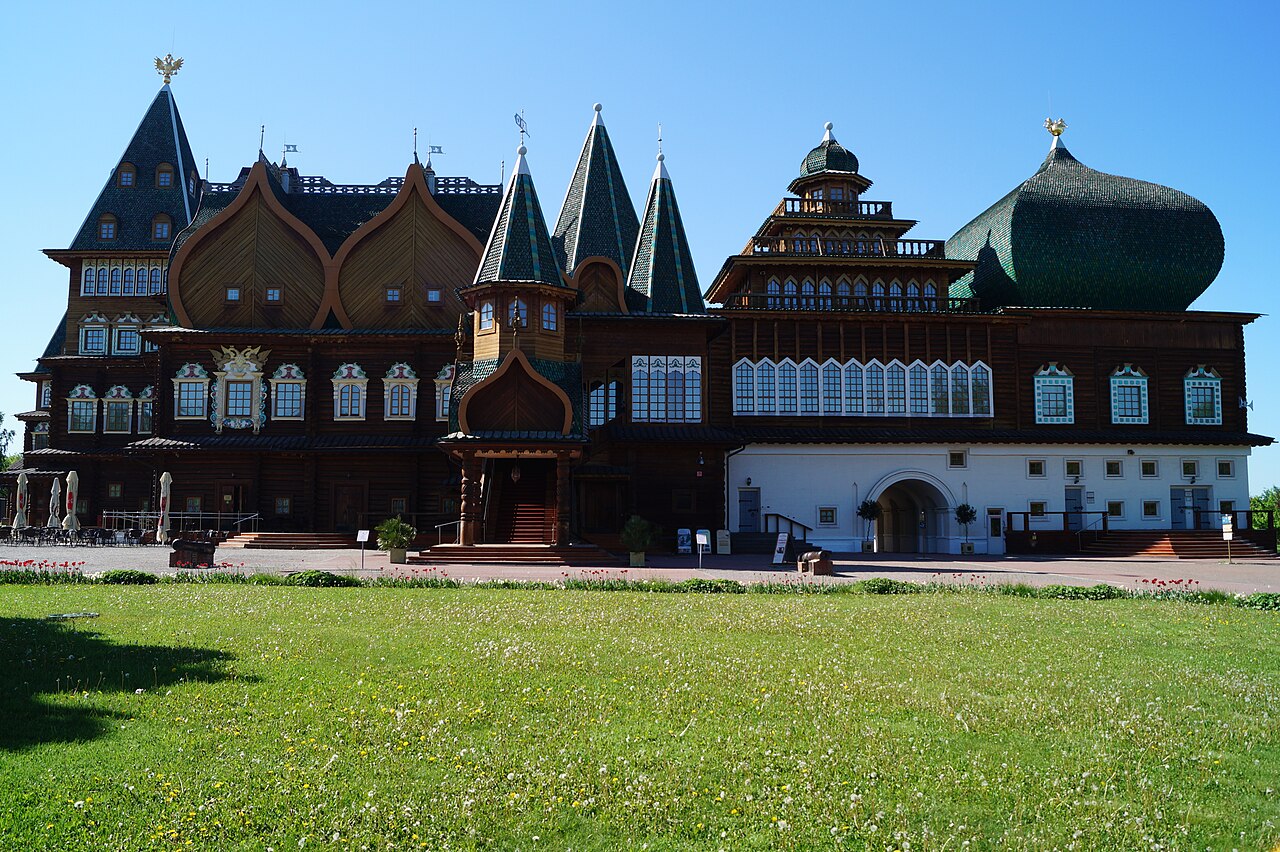
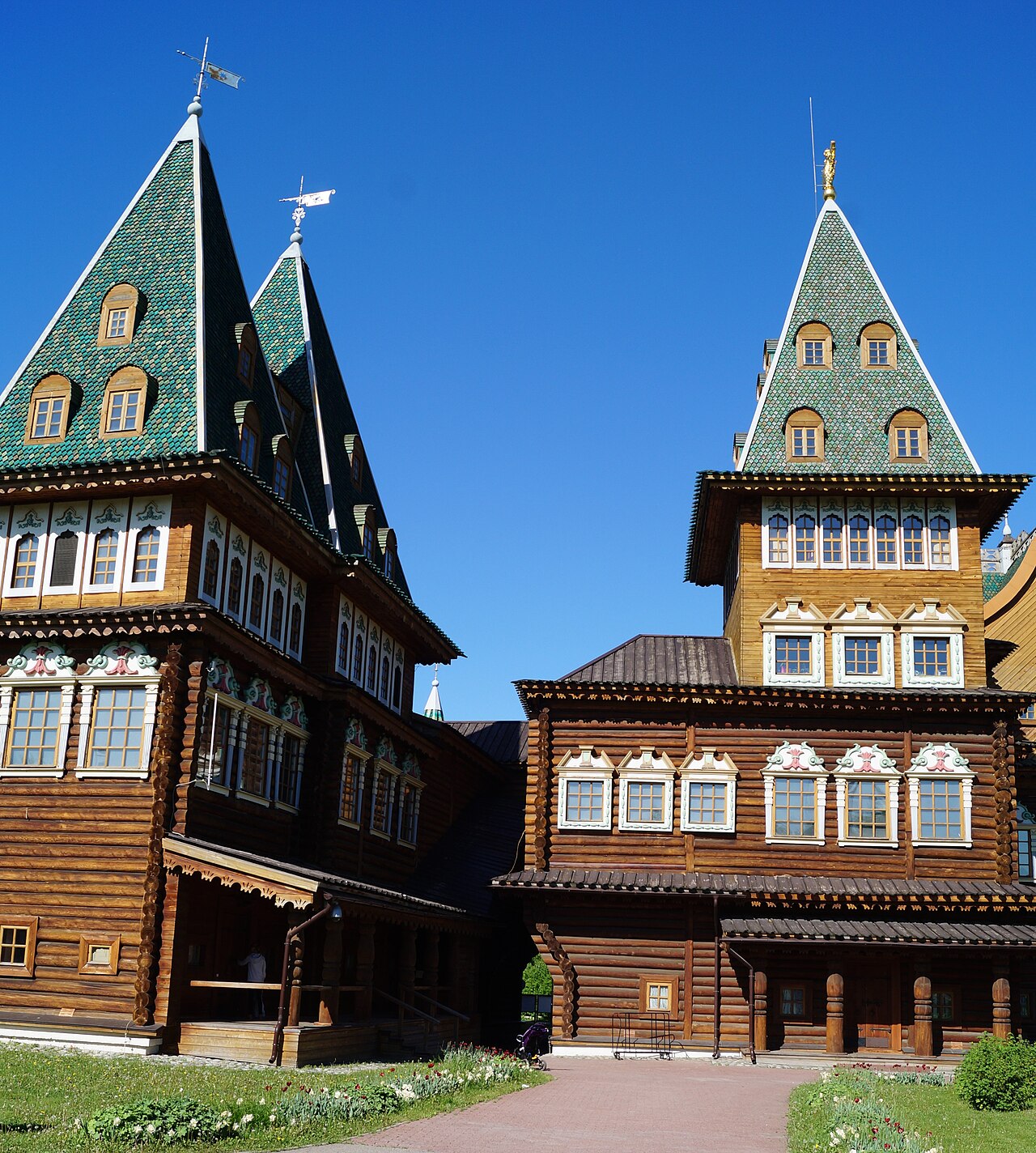
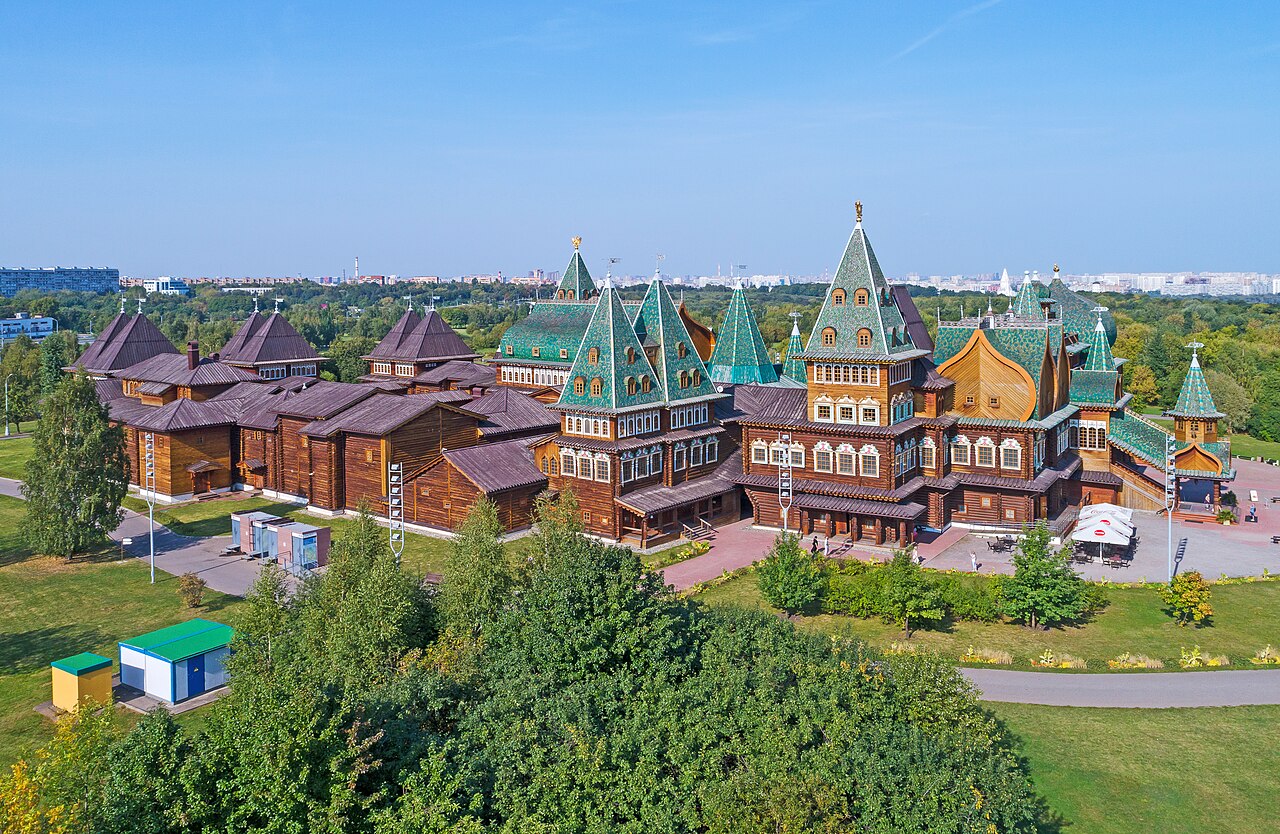
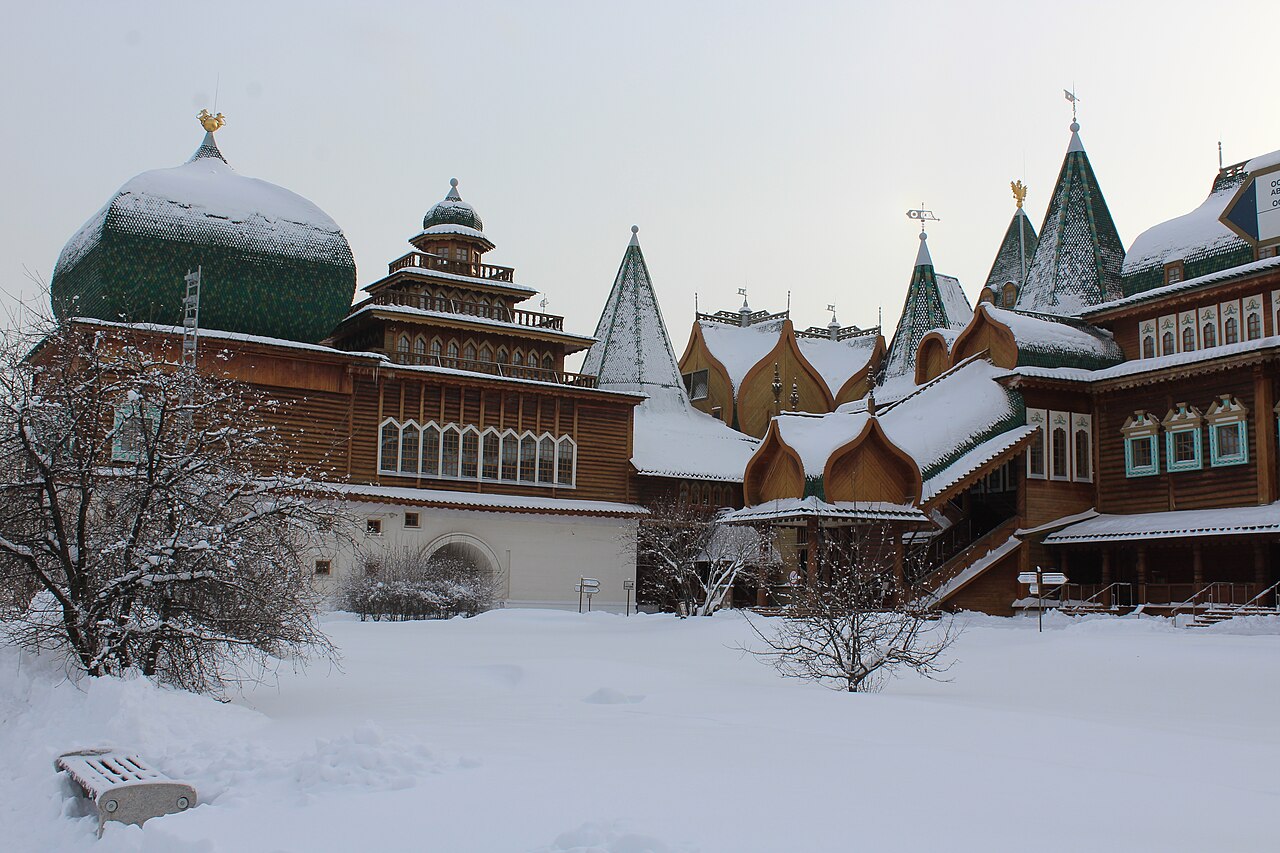
The wooden palace rose in 1667 to 1668 under two master carpenters whose names Russia remembers: the headman Semyon Petrov and the streltsy carpenter Ivan Mikhailov, joined later by the gilder-carver armies of the Kremlin workshops. They built in the old faith of the axe, log towers linked by passages, bulb domes and barrel roofs shingled in aspen scales that silvered in the light, and then painted and gilded the whole like an icon case.
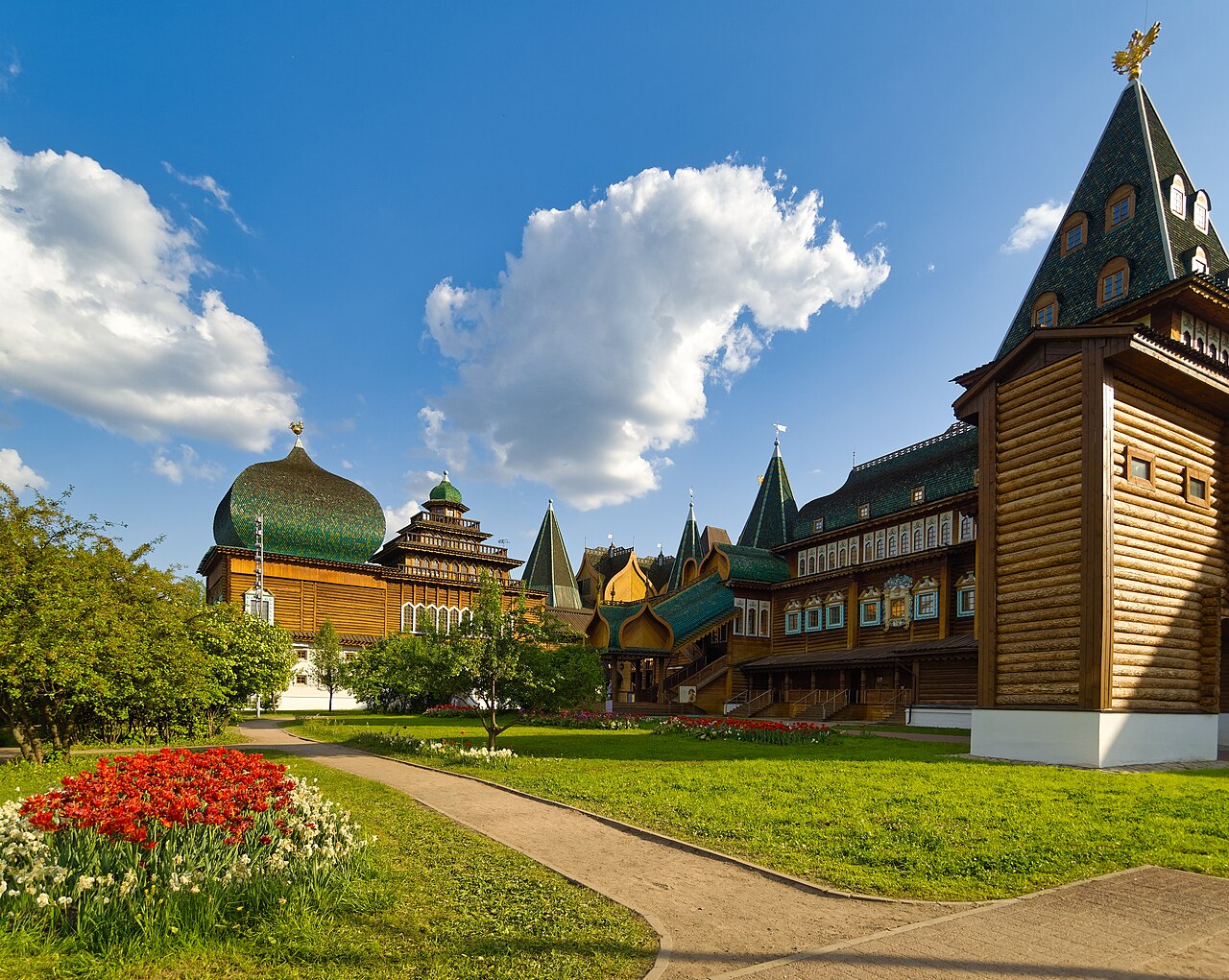
The result defied sober description. Two hundred fifty rooms behind three thousand mica windows; twenty-six towers to twelve different roof designs; carved window frames no two alike; gates guarded by copper lions with mechanisms that made them roll their eyes and roar at visitors, the work of the master Pyotr Vysotsky. The court poet Simeon Polotsky hailed it as the eighth wonder of the world, and for once court flattery stuck as plain fact.
Foreign envoys competed in astonishment: one wrote that the palace looked as if drawn from a jewel box, another that it resembled a toy freshly carved by giants. For Alexei the palace was theology in timber, the tsardom’s abundance made visible; audiences beneath its painted suns, with the mechanical lions roaring at the doors, were staged to send ambassadors home believing Muscovy’s wealth bottomless.
Inside the Wooden Palace
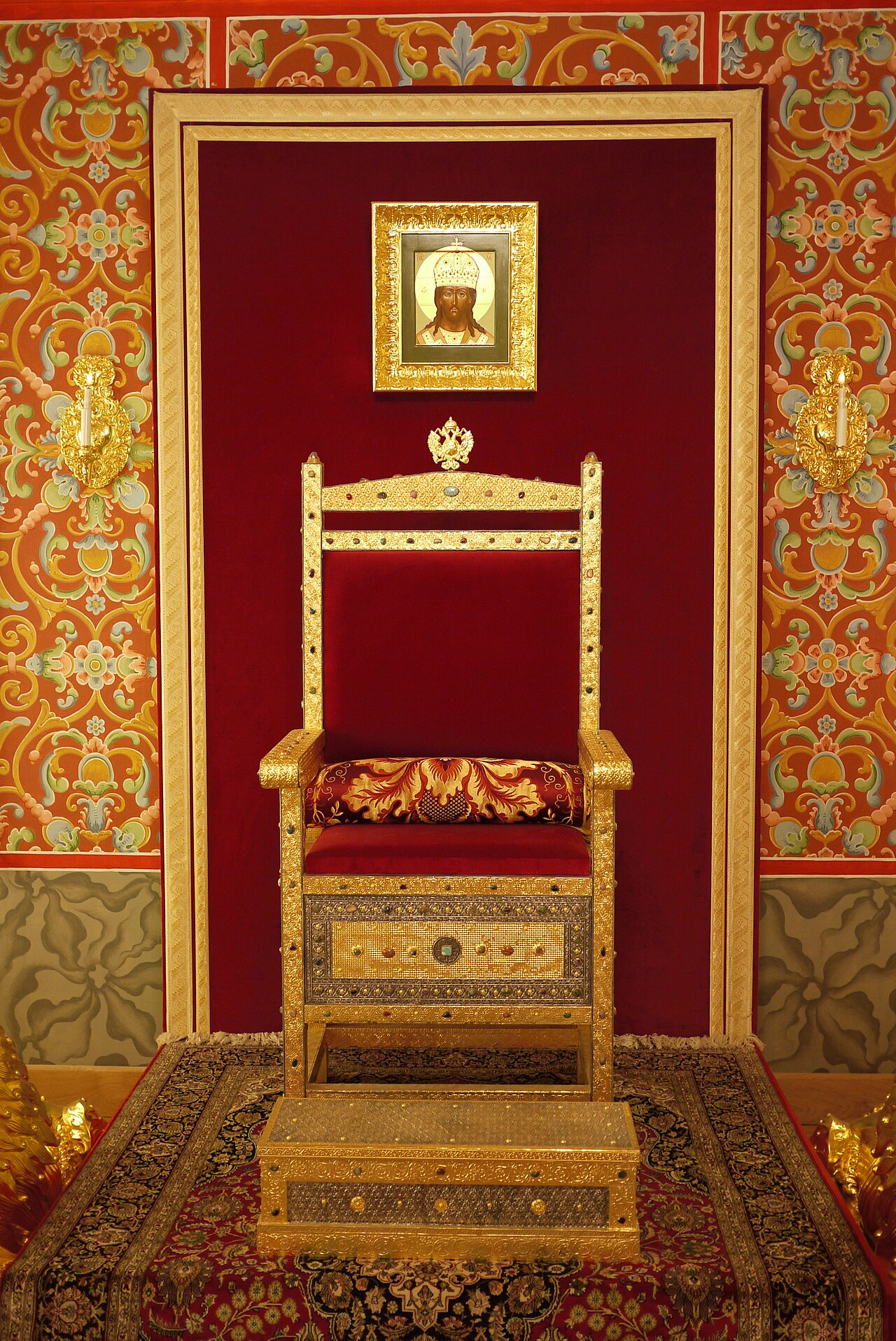
The palace divided, terem-fashion, into male and female halves joined by passages. The tsar’s suite culminated in a throne room beneath a ceiling painted with the zodiac and the seasons, where the carved lions flanked the chair; beyond lay his study, bedchamber, and a bathhouse of legendary comfort. The tsarevichs’ rooms included the schoolroom where the heirs learned letters from illuminated primers, and the tsaritsa’s half mirrored it all in gentler colors.
Decoration mixed old Muscovy with the new Western breeze. Icon painters covered vaults with parables, but among them appeared perspective scenes, allegories of the planets, and portraits, novelties imported through the court of a tsar curious about everything; the furniture ran from traditional benches to German clocks and the first mirrors many courtiers had seen. Heating came from dozens of tiled stoves, each a ceramic tower worth a boyar’s ransom.
Around the dwelling spread the working estate: kitchens and cellars, the falcon yards, stables, guard quarters for the streltsy, and the orchard walls pierced by ceremonial gates. The household books preserve the palace’s pulse, deliveries of sturgeon and honey, candles by the thousand, feed for the lions’ keepers, and they are why the twenty-first century could rebuild the wonder room by room.
The Copper Riot of 1662
Kolomenskoye’s pastoral peace broke most violently in July 1662. The state, bankrupted by wars, had debased the coinage with copper minted at silver’s face value; prices exploded, soldiers’ pay turned worthless, and on the morning of 4 August a Moscow crowd thousands strong marched to Kolomenskoye, where the tsar was at mass, demanding the guilty boyars’ heads.
What followed became the textbook scene of tsar and people face to face. Alexei came out to the crowd, spoke softly, swore to investigate, and even, the chronicle insists, let rioters hold his hand upon the promise; but when a second, angrier wave arrived and jostled the sovereign, the summoned streltsy fell on the unarmed mass. Hundreds drowned in the river or died under sabers; hundreds more were hanged or branded in the weeks after; the copper coins, nonetheless, were quietly withdrawn the next year.
The riot fixed Kolomenskoye in Russia’s political memory: the pattern of petition, royal promise, and massacre would echo for centuries, down to another Bloody Sunday before another palace. On the quiet lawn between church and gates it is hard to picture, which is perhaps the best reason to remember it there.
Young Peter on the Hill
Peter the Great’s childhood kept returning to Kolomenskoye. Born in 1672, by one cherished tradition in the wooden palace itself, he was carried here each summer of his infancy, and after the streltsy horror of 1682 the regent’s court parked the boy tsars at the safe suburban estates, Kolomenskoye among them, where Peter drilled his first play regiments of stable boys and falconers’ sons between the orchards.
Those toy soldiers grew with him into the Preobrazhensky and Semyonovsky Guards, and the estate watched the transformation: musters on the meadows, mock batteries above the river, the young giant striding the gardens his great-grandfather had planted. After Poltava in 1709, Peter paused at Kolomenskoye with his victorious army before the triumphal entry into Moscow, the old summer capital saluting the new empire’s birth.
Yet Peter’s path led away from everything the estate embodied. The wooden wonder’s upkeep belonged to a Moscow world he had abandoned for the Baltic; he ordered repairs in 1709, visited rarely, and left the palace to the care of caretakers and the climate, neither of which could preserve wood against an absent court. The hill’s great days ended with the man whose story it had helped begin.
The Wonder Demolished
The wooden palace outlived its world by half a century, decaying gracefully while the court reigned from St Petersburg. Empress Elizabeth, born at Kolomenskoye in 1709 in the afterglow of Poltava, patched her birthplace fondly; but by Catherine the Great’s arrival the structure leaned, leaked, and harbored rot beyond saving, and in 1768 she ordered it dismantled, protesting respect, with careful measured drawings taken first.
Those drawings proved the demolition’s redemption. Catherine’s architects recorded plans, elevations, and details of the fantastic roofscape, and a model survived; without that bureaucratic piety, the eighth wonder would be a poet’s phrase and nothing more. The empress built herself a modest replacement palace opposite the Ascension church, which Napoleon’s war and time removed in turn, leaving only its outline in the grass.
The nineteenth century tended the estate as a relic: Alexander I added a small palace pavilion that survives, romantic pilgrims sketched the churches, and the gates of Alexei’s era, the Front Gates with their clock tower where the mechanical lions once roared, stood on as the wooden palace’s orphaned porch. Kolomenskoye entered the twentieth century a beautiful ghost, waiting for its unlikely savior.
Baranovsky’s Museum of Wood
The savior arrived in 1923: Pyotr Baranovsky, architect-restorer of genius and stubbornness, who persuaded the young Soviet state to declare Kolomenskoye a museum with himself in charge. For a decade he restored the churches and gates, excavated foundations, and, his great innovation, began hauling doomed wooden buildings from across Russia to the estate’s groves, creating the country’s first open-air museum of architecture.
His collection reads like an anthology of the Russian axe: the gate tower of the White Sea’s St Nicholas monastery, a defensive tower from the Bratsk fort in Siberia, scorched by its transfer from a hydro-dam’s floodplain, a seventeenth-century mead brewery, and, the pearl, the small log house in which Peter the Great lived at Arkhangelsk in 1702 while awaiting his ships, moved here with its low doorways that the two-meter tsar must have cursed daily.
Baranovsky’s reward was the era’s usual: arrest in 1933 and exile, though legend credits him with helping save St Basil’s Cathedral from demolition, a story Russians tell whether or not the archives can prove it. His museum outlived the persecution, and his name is honored across the estate he rescued; preservation in Russia, as a discipline, was substantially invented on this hill.
The Palace Reborn
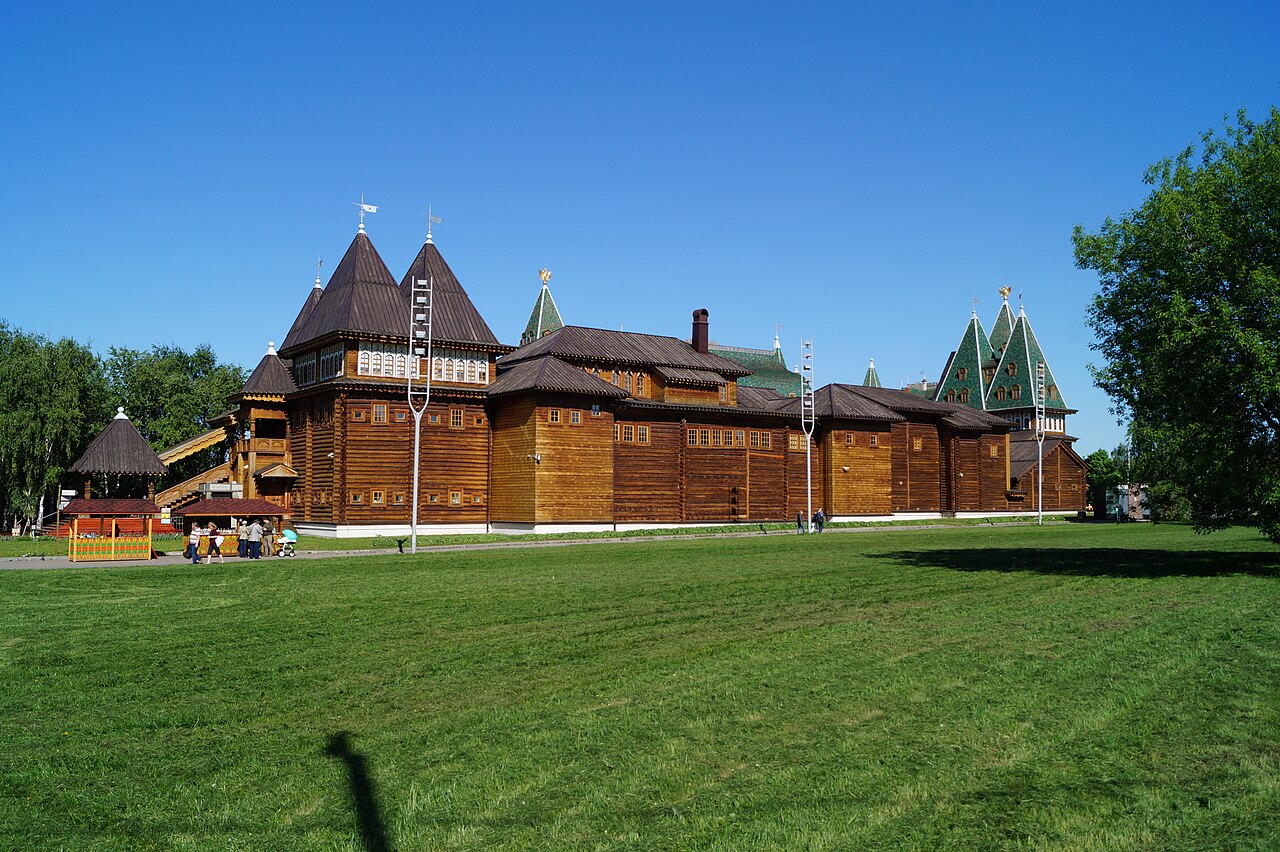
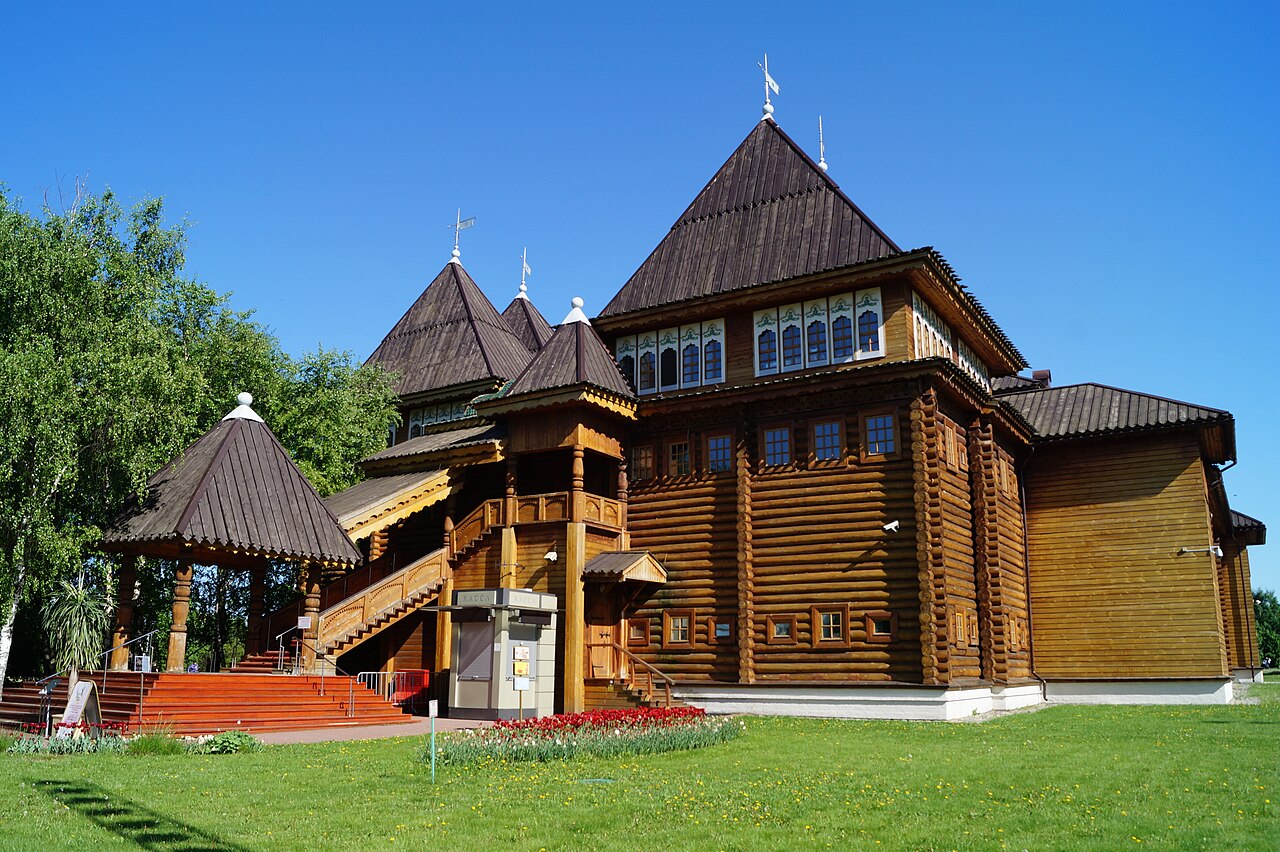
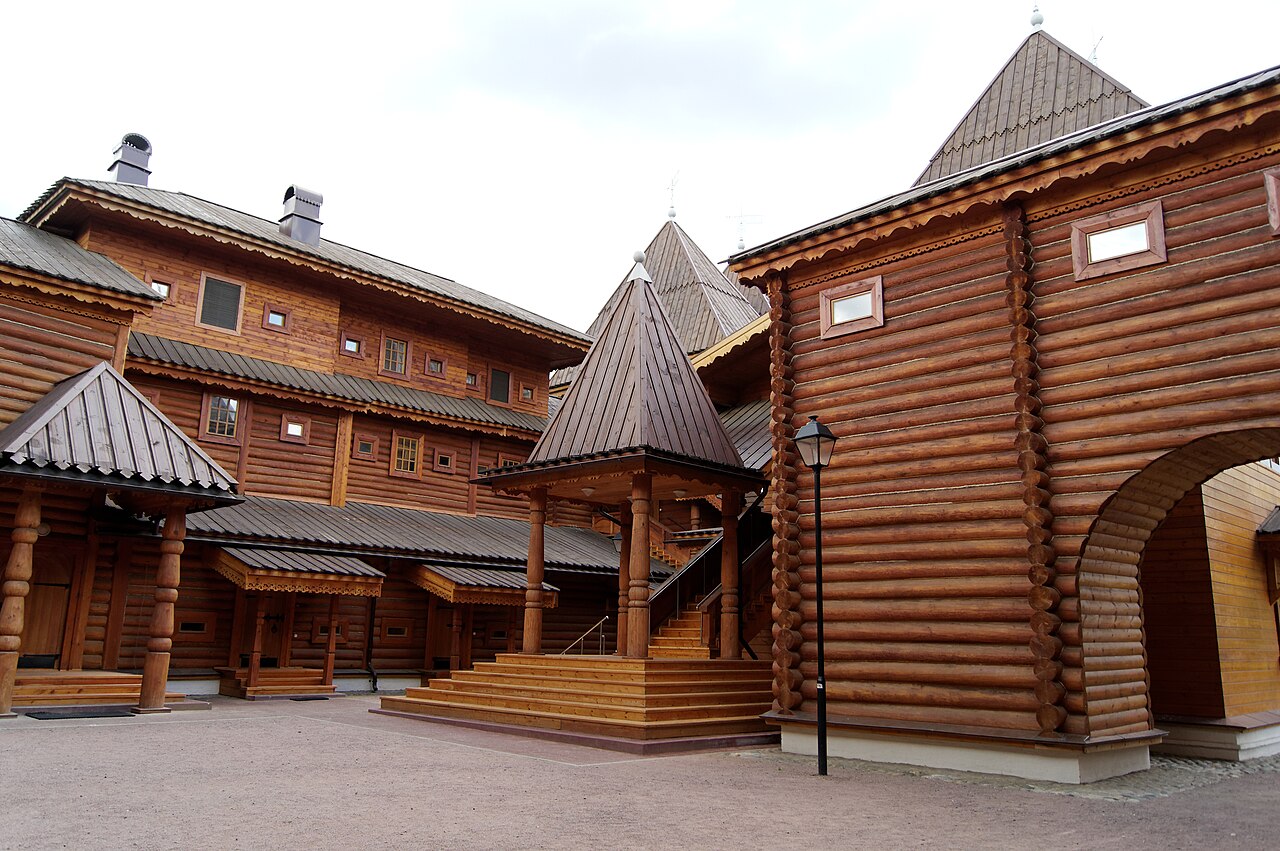
The dream of seeing Alexei’s palace again never quite died, and in the 2000s Moscow’s government decided to make it wood and plaster. Using Catherine’s demolition drawings, the surviving model, and the household archives, builders raised a full-scale replica of the twenty-six-towered wonder, opened in 2010, with its painted throne room, tiled stoves, mica windows, and roaring-lion gate effects recreated by craftsmen relearning the old trades.
Purists note, correctly, that the rebirth stands not on the original site, where the authentic foundations sleep protected under the old oaks, but a kilometer south on the estate’s edge, and that modern engineering hides beneath the logs. The visiting millions note something else: that walking the zodiac-painted halls, between stoves like ceramic towers and windows glinting with mica light, restores a lost chapter of the national imagination that drawings alone never could.
The interiors hold costumed exhibitions of the summer court, the tsar’s study and bathhouse, the tsaritsa’s chambers, and the schoolroom of the heirs, and the throne room’s lions once again roll their eyes for visitors, Vysotsky’s seventeenth-century theater revived by hidden electronics. Children, the staff observe, believe in the palace instantly; adults take a room or two longer.
Gardens, Gates and Ravines
The estate spreads nearly four hundred hectares along the river, and its fabric rewards slow walking. The ceremonial axis runs from the Savior Gates through the Front Gates’ clock tower, past the Kazan church with its sky-blue domes, still a working parish keeping a wonder-working icon, to the Ascension bluff, where the 1532 tower, the round Georgian bell tower, and the water tower make the skyline Russians know from a thousand paintings.
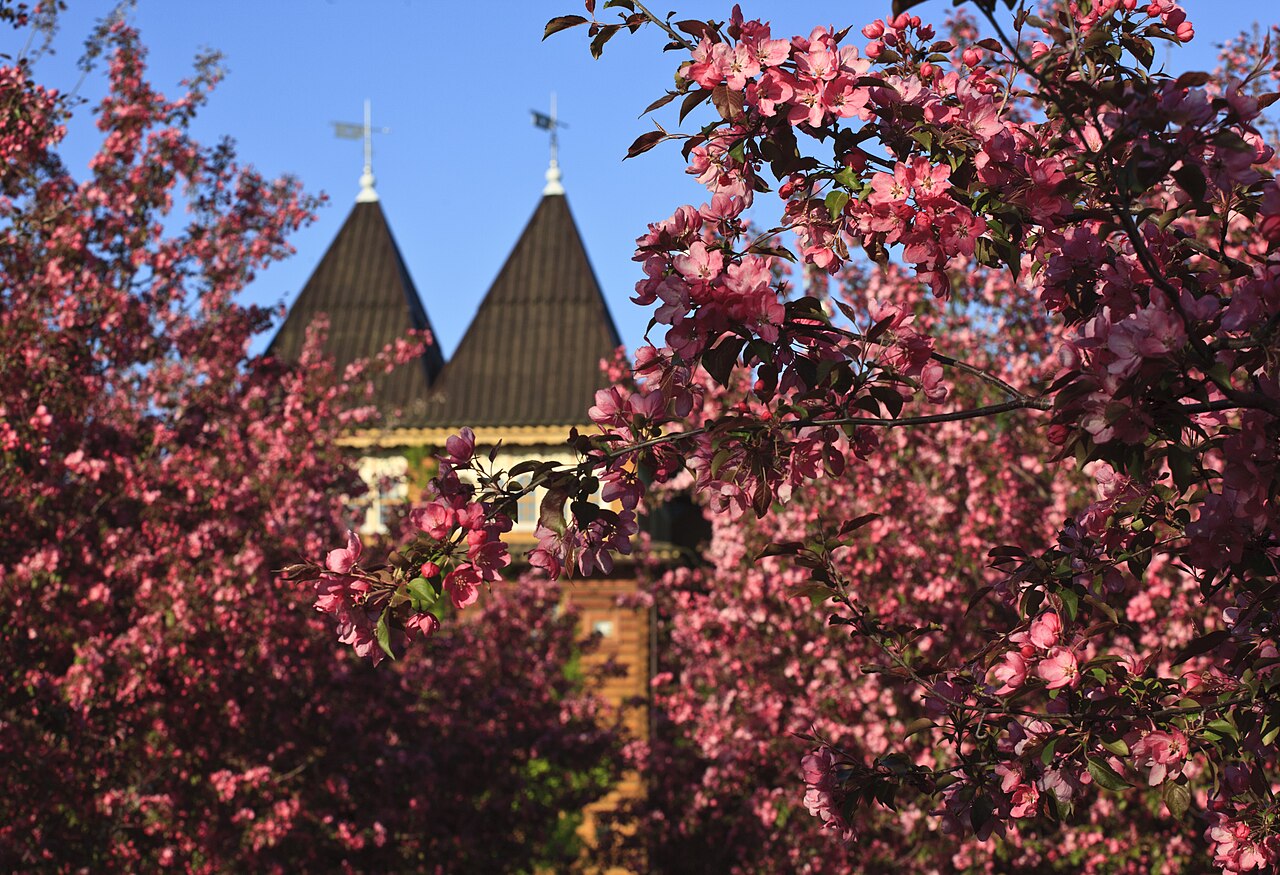
The ancient orchards, Kazan, Dyakovo, and Ascension gardens, still carry thousands of apple trees whose blossom in late May brings half of Moscow with cameras; beneath the bluff the Golosov Ravine threads between its legendary boulders, the Goose and Maiden stones, polished by centuries of wish-makers, to springs that never freeze. Across the ravine at Dyakovo rises John the Baptist church, Ivan the Terrible’s enigmatic tower, above the site of the two-thousand-year-old settlement.
Scattered through the groves stand Baranovsky’s wooden migrants and the small stone survivors: Peter’s Arkhangelsk cabin, the mead brewery, the falconry yard where hawks are flown again on festival days, and Alexander I’s pavilion. The river path below, with pleasure boats landing in season, closes the circuit the tsars’ barges once made.
Festivals and Seasons
Kolomenskoye is Moscow’s festival ground, and its calendar keeps faith with the estate’s history. The apple blossom draws May crowds, and the Apple Savior feast in August fills the orchards with fairs where, by old custom, the first fruits are blessed; winter brings Maslenitsa’s pancake bonfires and troika rides below the gates, and the honey fair installs beekeepers from across Russia in rows of sweet-smelling stalls each autumn.
The museum’s own seasons add historical theater: falconry displays revive Alexei’s beloved sport, regattas and folk-craft markets take the meadows, and the wooden palace hosts costumed embassies and children’s programs in the painted halls. On summer weekends the estate absorbs enormous crowds and still finds quiet corners, the gift of its size and ravines.
Photographers learn its hours: dawn mist on the river under the Ascension tower, blossom time in the Dyakovo garden, the first snow on the palace’s silver scales. Whatever the season, the oldest pleasure holds, the one Ivan Kalita’s will implied seven centuries ago: this is simply the finest place near Moscow to stand above the river and feel the country’s age.
Watch Kolomenskoye on Film
Visiting Kolomenskoye Today
Kolomenskoye lies in southern Moscow, ten kilometers from the Kremlin, with its own metro station, Kolomenskaya, a short walk from the north gates; the Kashirskaya station serves the rebuilt palace at the southern end, a useful trick that lets you walk the estate downhill between the two. The grounds are open daily and free; the churches, the Front Gates museum, Peter’s cabin, and the wooden palace interiors sell separate modest tickets, with the palace closed on Mondays. Allow at least half a day, wear walking shoes for the ravine paths, and check the museum site for festival dates, which transform the estate. River trams in season connect the estate’s pier with central Moscow, the prettiest possible approach. You can find the palace on the map here: Kolomenskoye on Google Maps.
Palaces Nearby
You May Like
Izmaylovo and the Island Estate Where Peter Found His Boat