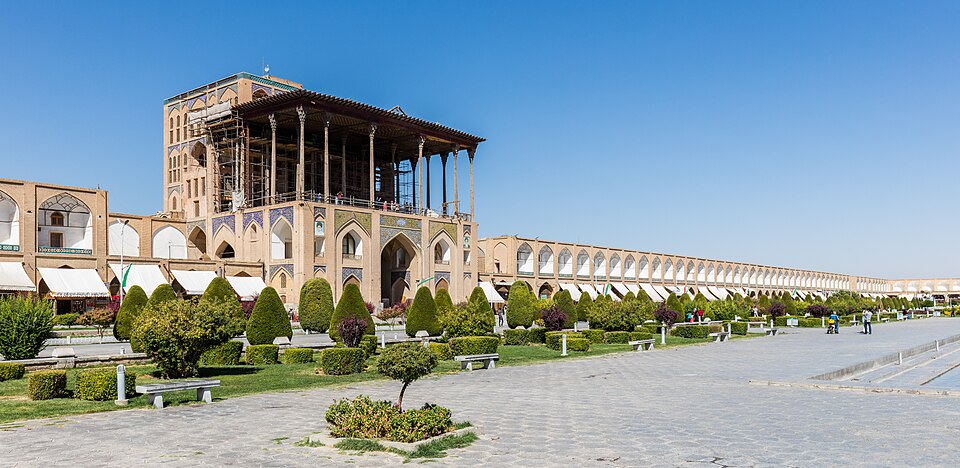
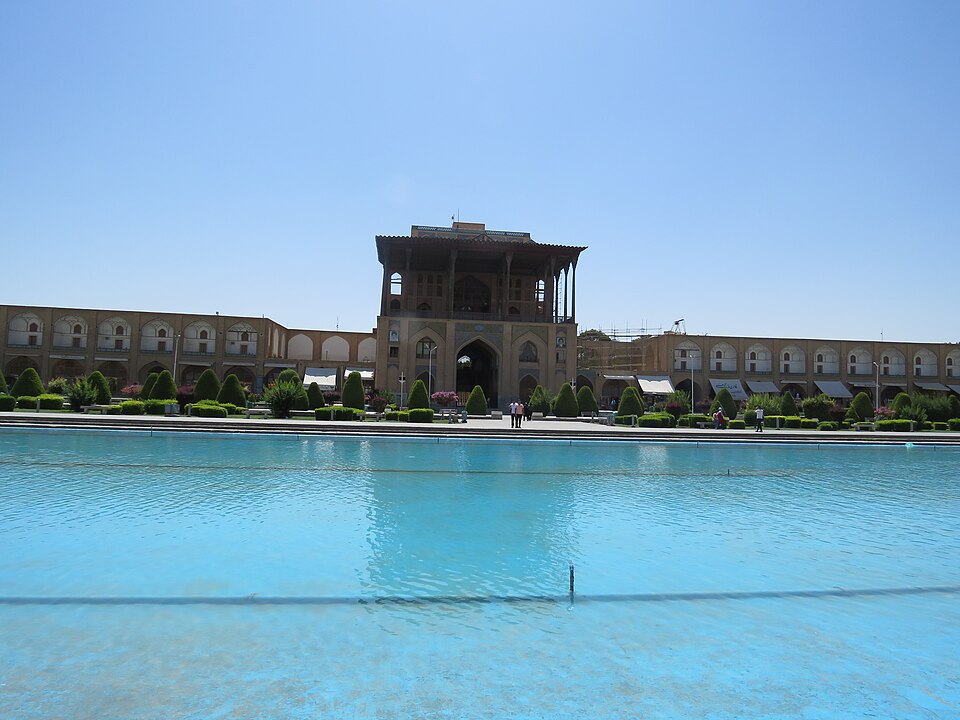
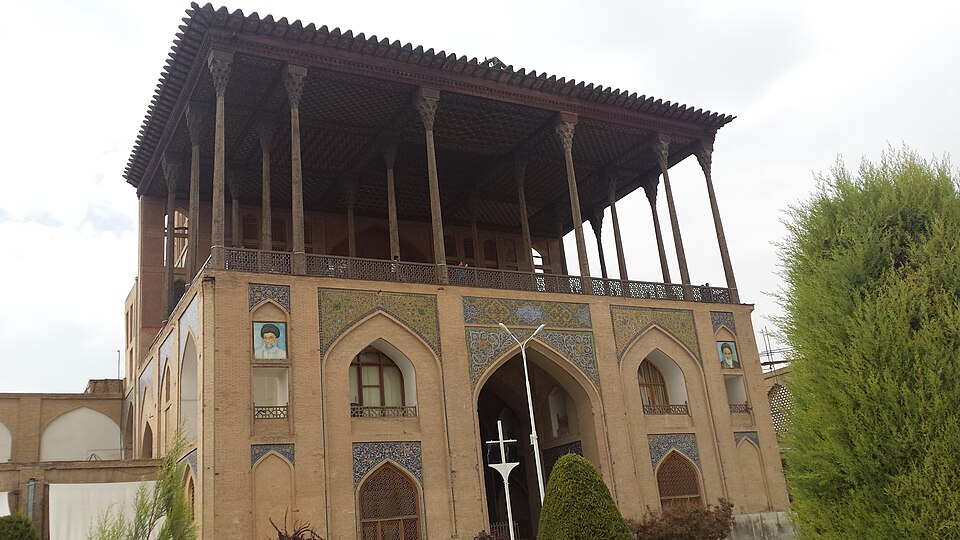
On the western side of the great royal square of Isfahan, the Naqsh-e Jahan, rises a tall gate-palace of many stories, its high terrace carried on slender columns looking out over one of the largest and most beautiful public squares in the world. The Ali Qapu, the Sublime Gate, was the palace of the Safavid shahs that served as the ceremonial gateway to the royal precinct and as a grandstand from which the court watched the spectacles of the square, the building a palace, a gate, and a viewing pavilion in one, the heart of the Safavid royal Isfahan.
The Ali Qapu rises in six stories to its famous columned terrace, the talar, from which the shah and his court looked out over the Naqsh-e Jahan square, watching the polo, the parades, the festivals, and the ceremonies that filled the great space, and within, the palace holds a sequence of halls culminating in the celebrated music room, its walls and ceiling carved with the shapes of vessels and instruments, a masterpiece of Safavid decorative art, the Ali Qapu the royal palace-gate of the city that was half the world.
This guide tells the palace and its square: the Naqsh-e Jahan and the royal Isfahan, the gate-palace and its six stories, the great terrace and the view of the square, the halls and the decoration, the famous music room, the spectacles the court watched, the decline and the preservation, and the practical details of visiting the Sublime Gate of Isfahan.
- The Royal Square of Isfahan
- The Sublime Gate
- The Six Stories
- The Great Terrace
- The View of the Square
- The Halls of the Palace
- The Music Room
- The Decoration and the Painting
- The Spectacles of the Square
- Palace, Gate, and Grandstand
- Decline and Survival
- The Ali Qapu Today
- Watch the Ali Qapu on Film
- Visiting the Ali Qapu Today
- Palaces Nearby
The Royal Square of Isfahan
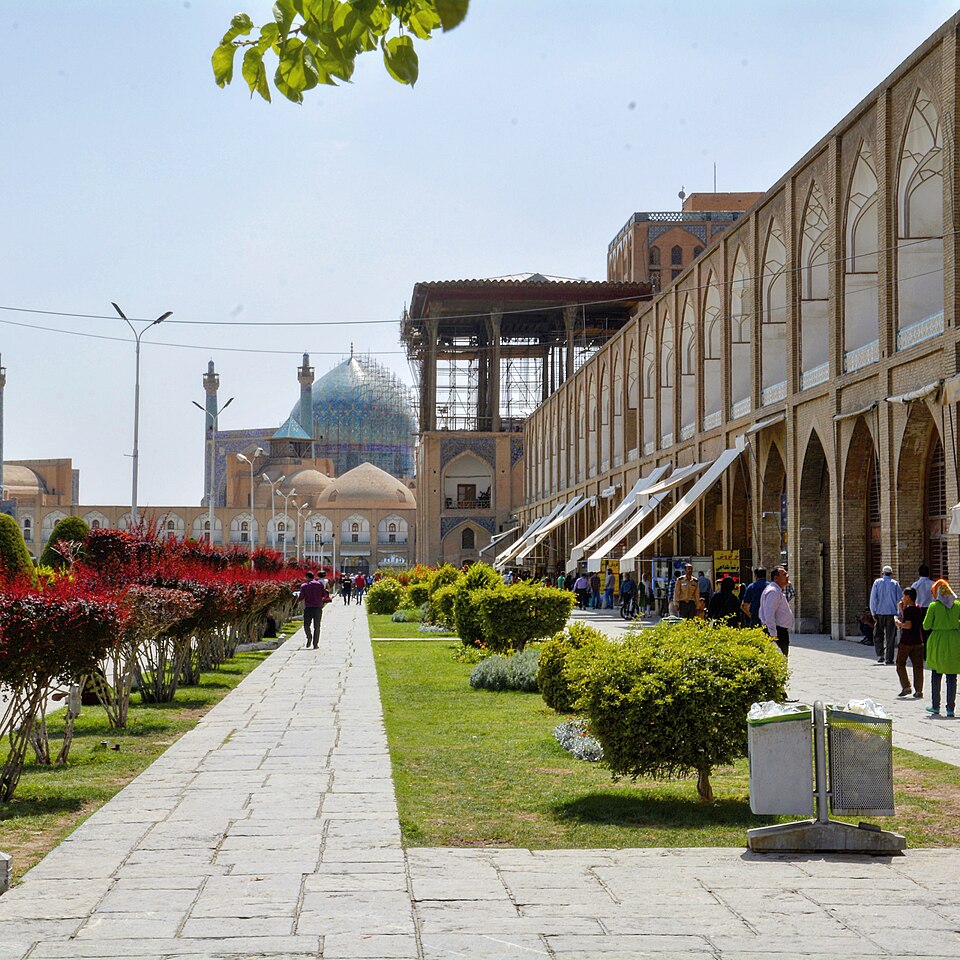
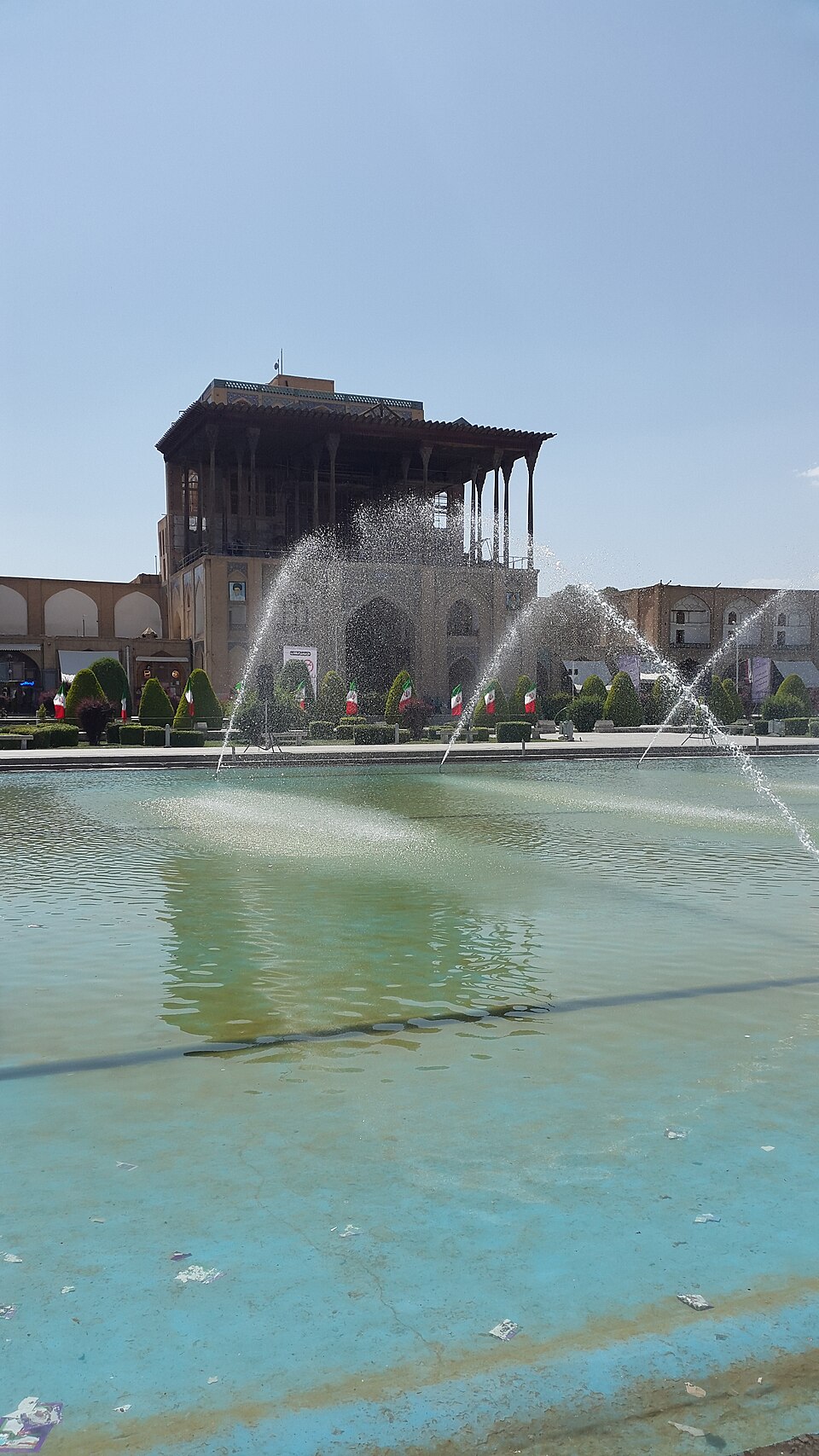
The Naqsh-e Jahan is one of the great squares of the world. The royal square of Isfahan, the Naqsh-e Jahan, the Image of the World, laid out by Shah Abbas the Great at the turn of the seventeenth century as the centerpiece of his new capital, is one of the largest public squares on earth, a vast rectangle framed by the great monuments of the Safavid Isfahan, the square the heart of the royal city, the Naqsh-e Jahan a masterpiece of urban design and the setting of the Ali Qapu.
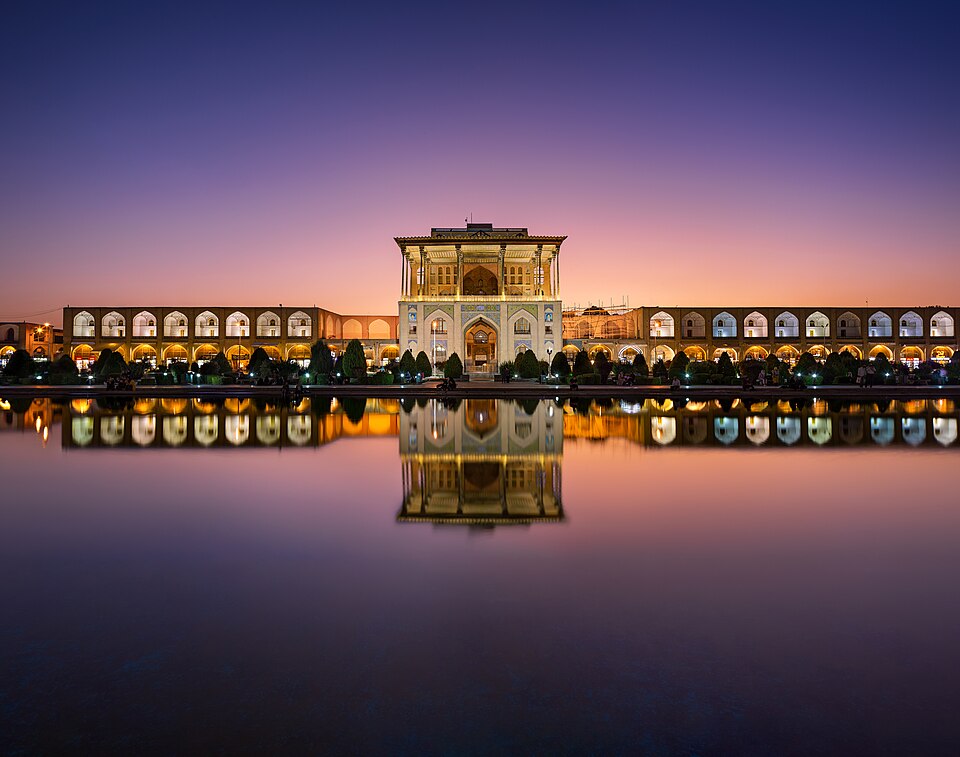
The square is framed by masterpieces: the great Shah Mosque at one end, the exquisite Sheikh Lotfollah Mosque on one side, the portal of the royal bazaar at the other end, and the Ali Qapu palace on the fourth side, the four monuments composing one of the most beautiful architectural ensembles in the world, the Naqsh-e Jahan a square of incomparable splendor, the setting that makes the Ali Qapu part of a masterpiece, the square the jewel of Safavid Isfahan and a UNESCO World Heritage site.
The square was the heart of the royal city: the Naqsh-e Jahan the center of Shah Abbas’s Isfahan, the setting of the court’s spectacles, the commerce of the bazaar, the worship of the mosques, and the ceremony of the monarchy, the square a stage for the whole life of the capital, the Ali Qapu the royal grandstand overlooking this heart, the palace the court’s window on the square that was the center of the Safavid world, the Naqsh-e Jahan the setting of the gate-palace.
The Sublime Gate
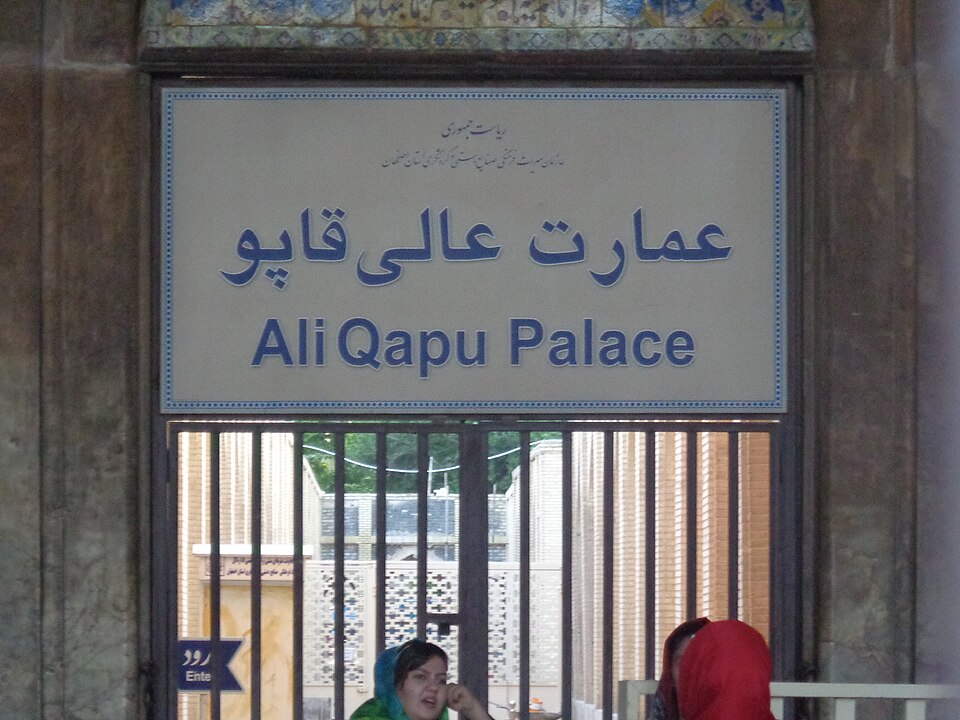
The Ali Qapu was the sublime gate to the royal precinct. The palace served as the monumental gateway between the public square and the royal gardens and palaces that lay behind it, the Ali Qapu, the name meaning the Sublime or High Gate, the ceremonial entrance to the Safavid royal quarter, the building a gate in the grandest sense, the threshold between the public world of the square and the private world of the court, the Ali Qapu the sublime portal of the Safavid monarchy.
The gate’s name and role carried meaning: the Ali Qapu, the High Gate, a name echoing the Sublime Porte of the Ottomans, the gate a symbol of the monarchy’s majesty, the threshold of the royal precinct a place of ceremony and significance, the Ali Qapu the dignified entrance to the shah’s world, the gate-palace the symbol of the passage from the public to the royal, the Sublime Gate the ceremonial threshold of the Safavid court, the building the majestic portal of the monarchy.
The gate was also a palace: the Ali Qapu not merely a gateway but a full palace of many stories, the building combining the functions of the monumental gate, the royal residence and reception rooms, and the grandstand over the square, the palace-gate a building of multiple purposes, the Ali Qapu a gate that was a palace that was a viewing pavilion, the building the versatile heart of the royal Isfahan, the Sublime Gate the many-functioned palace of the shahs.
The Six Stories
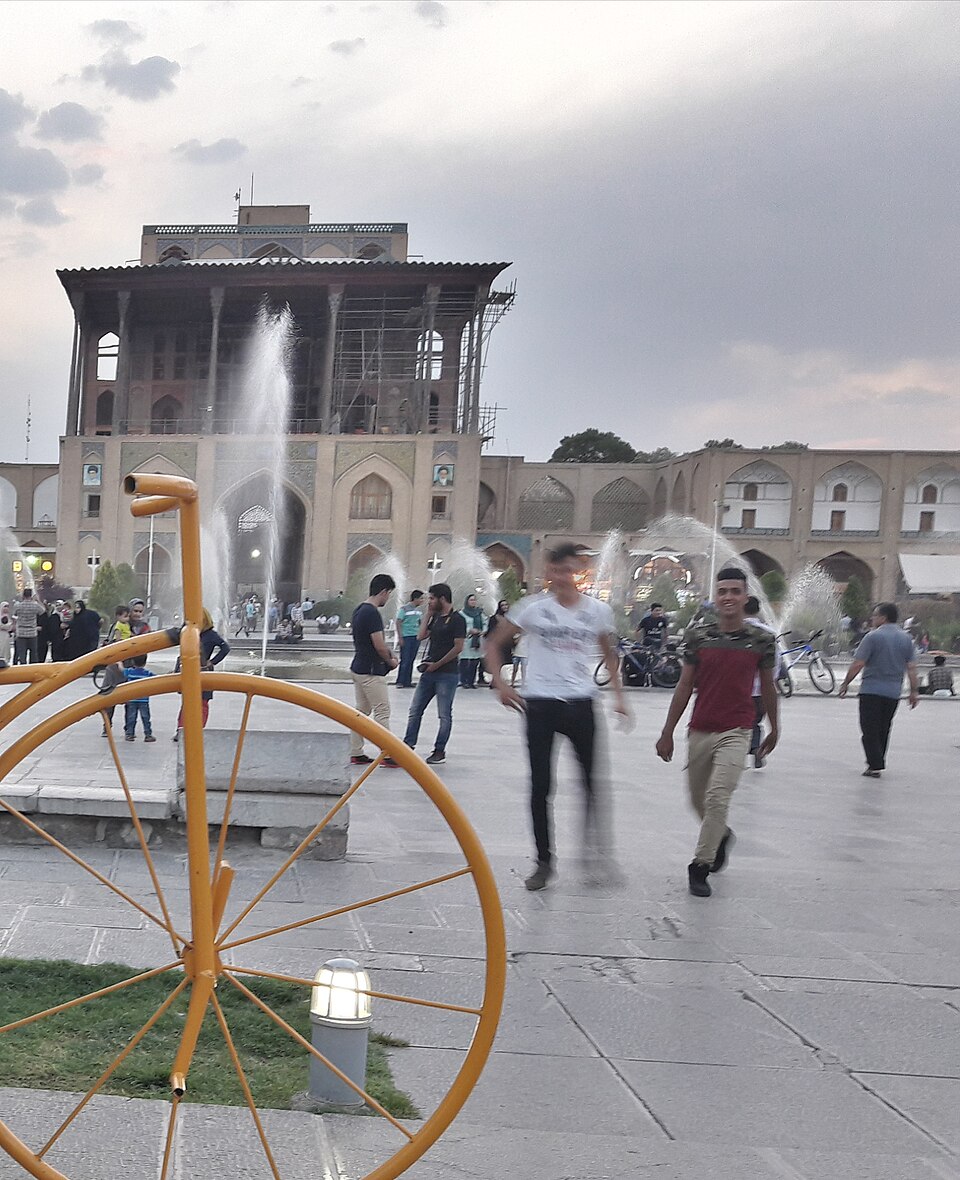
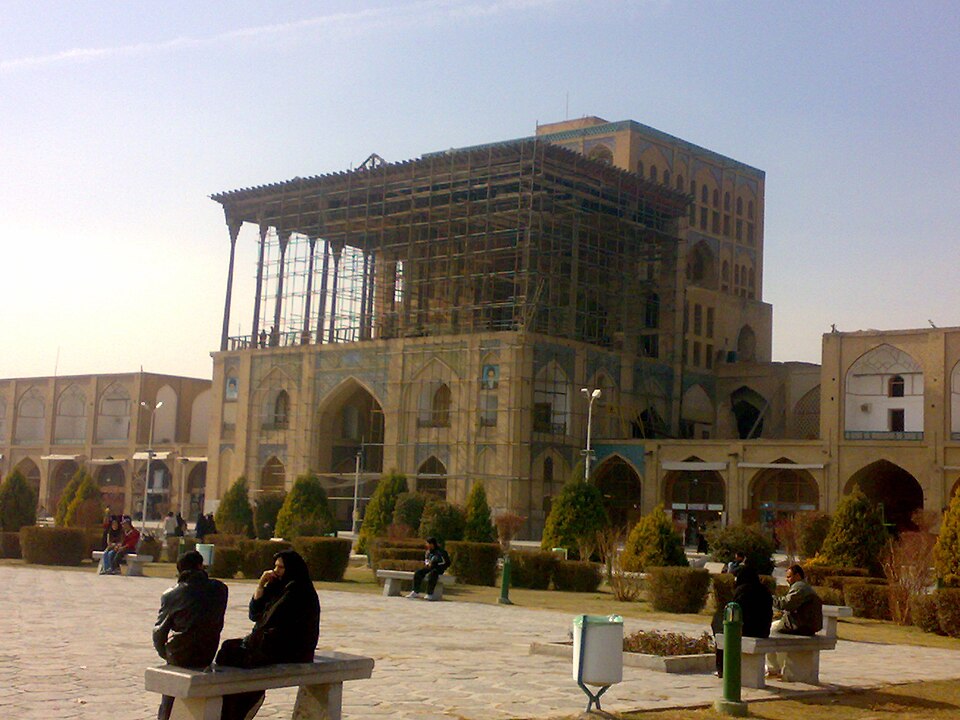
The Ali Qapu rises in six stories. The palace, tall and narrow from the square, climbs through six levels, a remarkable height for its age, the building a kind of early high-rise palace, the stories holding the sequence of halls, chambers, and stairs that lead up to the great terrace and beyond, the Ali Qapu’s height a distinctive feature, the palace rising story upon story above the square, the six levels the vertical composition of the gate-palace.
The stories held the palace’s functions: the lower levels serving the gate and the access, the middle stories holding the reception halls and the chambers, the upper levels the music room and the private rooms, the terrace projecting from the facade, the building’s functions distributed through its height, the Ali Qapu a vertical palace, the stories the levels of the court’s life rising above the square, the six floors the organization of the palace-gate.
The vertical design was ingenious: the narrow footprint rising high, the stairs connecting the levels, the building making the most of its position on the square, the Ali Qapu a sophisticated piece of architecture, the vertical palace a distinctive achievement of the Safavid builders, the six stories the clever composition that gave the court its grandstand and its gate in one tall building, the Ali Qapu the vertical palace of the royal square.
The Great Terrace
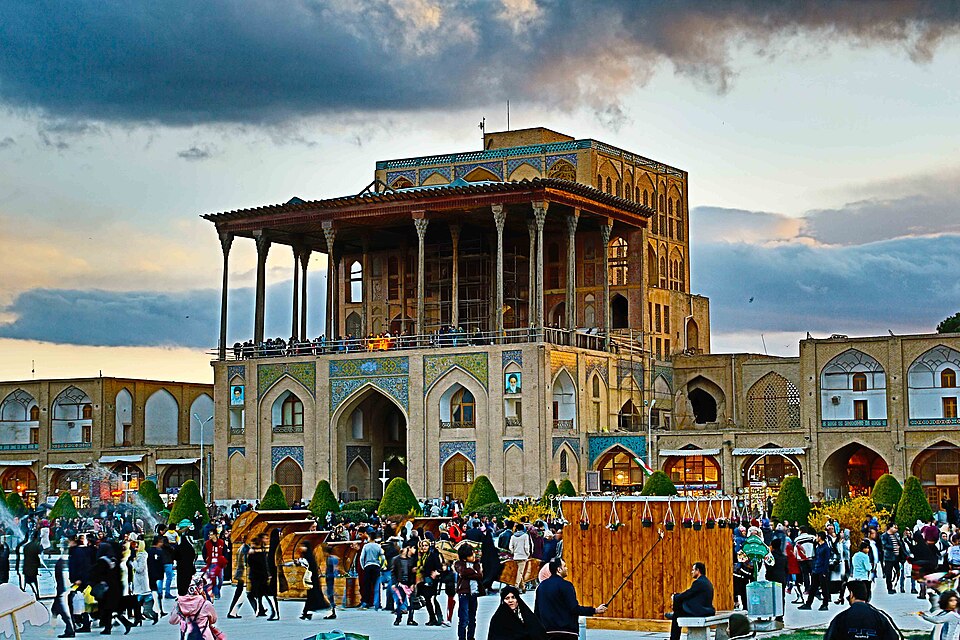
The Ali Qapu’s glory is its great terrace. The high columned terrace, the talar, projecting from the front of the palace at the level of the third story, carried on tall slender wooden columns, is the building’s signature feature, the terrace the grandstand from which the shah and the court looked out over the Naqsh-e Jahan, the talar the royal viewing platform, the great terrace the Ali Qapu’s face to the square and the court’s window on the spectacles below.
The terrace was the royal grandstand: the shah and his guests seated on the high talar, looking out over the great square, watching the polo matches, the parades, the festivals, and the ceremonies that filled the Naqsh-e Jahan, the terrace the best seat in the city, the royal platform from which the court enjoyed the spectacles, the talar the grandstand of the monarchy, the great terrace the place from which the shah presided over the life of his square.
The terrace’s columns and ceiling are a marvel: the tall wooden columns carrying the roof of the talar, the painted and decorated ceiling, the terrace a masterpiece of the Persian columned pavilion raised high above the square, the talar the architectural jewel of the Ali Qapu, the great terrace the finest expression of the Persian talar tradition, the columned platform the building’s glory, the terrace the royal grandstand and the architectural treasure of the palace-gate.
The View of the Square
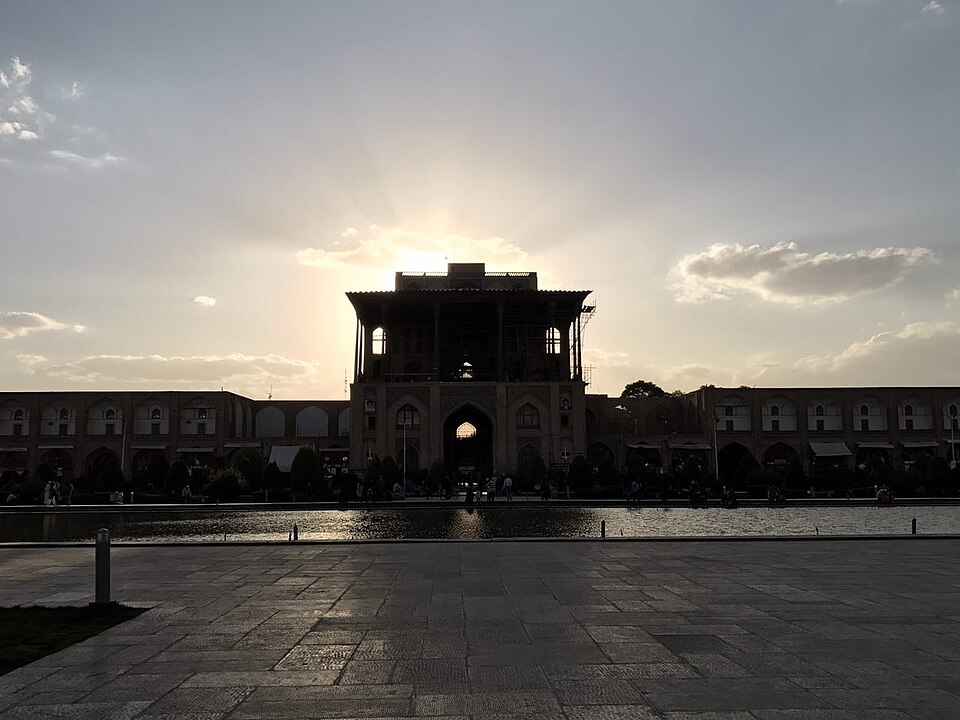
From the terrace the court commanded the square. The view from the Ali Qapu’s talar over the Naqsh-e Jahan is one of the great prospects of the world, the vast square spread below, the great mosques and the bazaar portal framing it, the life of the city and the court filling the space, the terrace the vantage from which the shah surveyed his capital’s heart, the view the reward of the great terrace, the prospect of the square the glory of the royal grandstand.
The view united the court and the city: the shah on his terrace looking out over the square where his people, his court, and his spectacles gathered, the Ali Qapu the point where the royal and the public met, the view the expression of the monarchy’s presidency over the life of the capital, the terrace the place where the shah and his city came together, the prospect of the Naqsh-e Jahan the view that symbolized the monarchy’s command of the royal city, the terrace the meeting of court and capital.
The view remains the visitor’s reward: the prospect from the Ali Qapu’s terrace over the Naqsh-e Jahan one of the highlights of a visit to Isfahan, the vast square and its monuments spread below as they were for the shahs, the view the enduring glory of the palace-gate, the terrace the vantage that every visitor seeks, the prospect of the royal square the reward of the climb through the palace, the view the Ali Qapu’s gift to the modern traveler as to the Safavid court.
The Halls of the Palace
The Ali Qapu holds a sequence of halls. Within the palace, the stories hold reception halls and chambers, the rooms where the shah received his guests and conducted the life of the court, the halls decorated with painting and ornament, the sequence of chambers rising through the building to the music room at the top, the Ali Qapu’s interior a progression of decorated halls, the rooms the setting of the court’s life within the palace-gate, the halls the chambers of the Safavid monarchy.
The halls served reception and the court’s life: the chambers where the shah received the dignitaries and the guests, the rooms of the royal life, the halls the setting of the court’s ceremony and pleasure within the palace, the Ali Qapu’s interior the private counterpart to the public terrace, the halls the rooms where the monarchy conducted its life behind the gate, the chambers the interior world of the palace-gate, the halls the setting of the Safavid court within the Ali Qapu.
The halls’ decoration is a treasure: the painting, the ornament, the fine decoration of the chambers, the halls a gallery of Safavid decorative art, the rooms rising to the celebrated music room, the decoration the glory of the interior, the halls the canvas of the Persian decorative tradition within the palace, the chambers the setting where the Safavid art adorned the court’s life, the halls the decorated interior of the Ali Qapu, the rooms the treasure of the palace-gate.
The Music Room
The Ali Qapu’s masterpiece is the music room. At the top of the palace, the celebrated music room, the music hall, has walls and ceiling carved with the shapes of vessels, bottles, and musical instruments, the plaster cut away in the forms of these objects, the carved shapes serving both as decoration and, by tradition, as acoustic devices, the music room a masterpiece of Safavid decorative art, the chamber the jewel of the Ali Qapu, the room of carved vessels the treasure of the palace.
The music room’s decoration is unique: the walls and the vaulted ceiling cut with the silhouettes of vases, flasks, and instruments, the double-layer plaster carved in these shapes, the room a chamber of extraordinary and distinctive beauty, the carved forms creating a decoration found nowhere else, the music room the most celebrated interior of the Ali Qapu, the chamber of carved vessels a masterpiece of the Persian decorative imagination, the room the artistic peak of the palace-gate.
The room’s purpose and acoustics are debated: the carved vessel-shapes held by tradition to serve the acoustics of the music performed in the chamber, the room a hall for the music of the court, the carved forms both decorative and functional, the music room the setting of the court’s musical entertainments, the chamber the place where the Safavid music filled the air amid the carved vessels, the music room the acoustic and artistic jewel of the Ali Qapu, the hall of music and carved forms.
The Decoration and the Painting
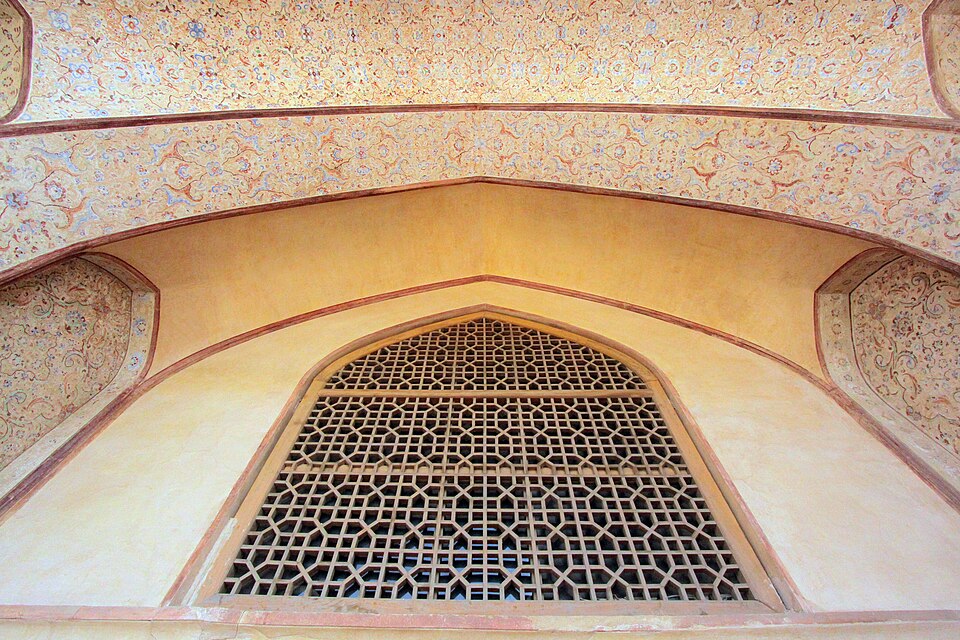
The Ali Qapu is rich in painting and ornament. The halls and the terrace of the palace were decorated with frescoes, miniature paintings, gilding, and fine ornament, the work of the Safavid court artists, the decoration a treasure of the dynasty’s art, the Ali Qapu’s painting and ornament among the finest of the Safavid golden age, the building a gallery of the court’s decorative art, the decoration the glory of the palace-gate’s interior and terrace, the Safavid art adorning the Ali Qapu.
The painting reflects the Safavid artistic flowering: the miniature and the mural traditions, the fine work of the court painters, the decoration a record of the Isfahan school of Persian painting at its height, the Ali Qapu’s art the expression of the Safavid cultural golden age, the painting the treasure of the palace, the decoration the glory of the dynasty’s art, the Ali Qapu a monument of the Safavid painting, the art the record of the court’s artistic splendor.
The decoration suffered and survived: the painting and the ornament damaged through the centuries of decline, some lost, some defaced, but much surviving and restored, the Ali Qapu’s decoration coming through the centuries as a treasure of the Safavid art, the painting preserved and conserved in the modern era, the decoration the surviving glory of the palace, the art enduring despite the damage, the Ali Qapu’s painting and ornament the preserved treasure of the Safavid golden age, the decoration the record of the court’s art.
The Spectacles of the Square
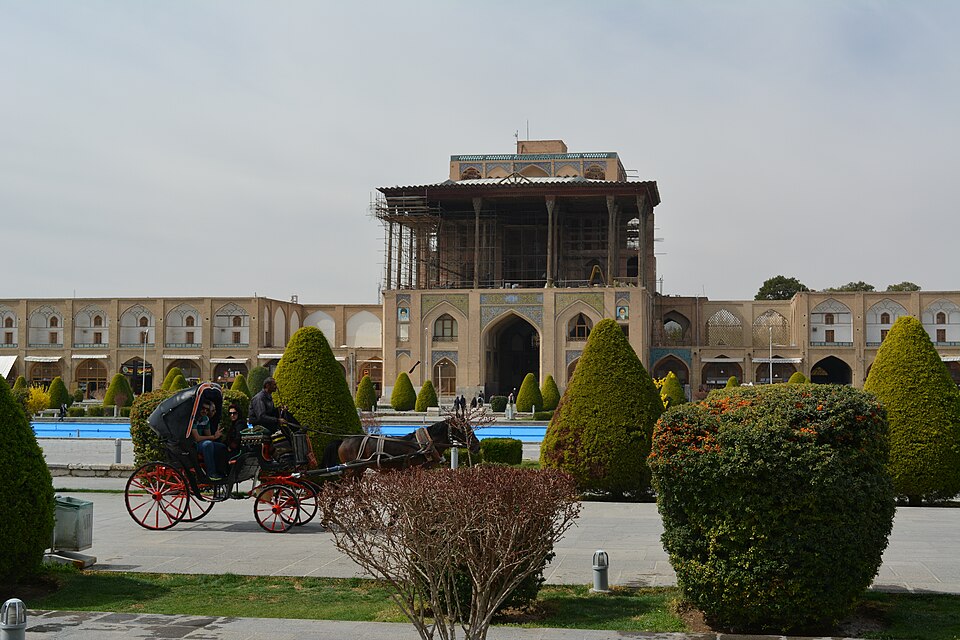
From the Ali Qapu the court watched the spectacles of the square. The Naqsh-e Jahan was the setting of the great spectacles of the Safavid Isfahan, the polo matches played on the square, the stone goalposts still standing, the parades and the military reviews, the festivals and the celebrations, the public ceremonies of the monarchy, the court watching from the Ali Qapu’s terrace, the spectacles of the square the entertainments the royal grandstand was built to enjoy, the Naqsh-e Jahan the stage and the Ali Qapu the royal box.
The polo was the square’s great sport: the royal game played on the Naqsh-e Jahan, the shah and the court watching from the terrace, the polo goalposts at the ends of the square surviving to this day, the game the characteristic spectacle of the royal square, the polo on the Naqsh-e Jahan the entertainment the Ali Qapu’s terrace commanded, the sport the spectacle that filled the square below the royal grandstand, the polo the great game of the Safavid court.
The spectacles made the square a stage: the polo, the parades, the festivals, the fireworks, the ceremonies, the whole life of the court and the capital played out on the Naqsh-e Jahan, the square a vast stage and the Ali Qapu the royal box, the spectacles the purpose of the terrace, the Naqsh-e Jahan the setting of the Safavid monarchy’s public life, the Ali Qapu the grandstand from which the court presided over the spectacles of the square, the palace-gate the royal seat at the great stage of Isfahan.
Palace, Gate, and Grandstand
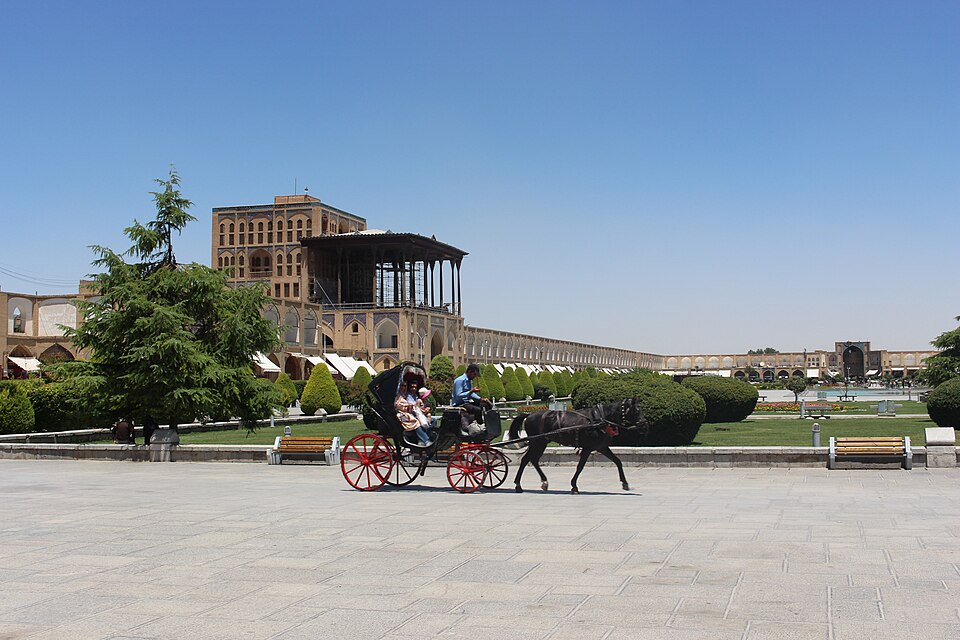
The Ali Qapu combined three functions. The building was at once the monumental gate to the royal precinct, the palace of reception and residence, and the grandstand over the square, the Ali Qapu a building of multiple purposes, the gate, the palace, and the viewing pavilion united in one tall structure, the building the versatile heart of the royal Isfahan, the Ali Qapu the palace-gate-grandstand of the Safavid monarchy, the building combining the functions in its six stories.
The combination was ingenious: the single building serving as the threshold of the royal quarter, the setting of the court’s reception and life, and the platform for watching the square, the Ali Qapu a brilliant solution to the needs of the royal square, the building concentrating the functions of gate, palace, and grandstand, the Ali Qapu the clever and versatile heart of the Naqsh-e Jahan, the palace-gate the multi-purpose masterpiece of the Safavid royal architecture.
The three functions made the Ali Qapu unique: the building unlike any other, the gate that was a palace that was a grandstand, the Ali Qapu a distinctive achievement of the Safavid Isfahan, the combination of purposes the building’s genius, the Ali Qapu the versatile royal building of the great square, the palace-gate-grandstand the unique heart of the Naqsh-e Jahan, the building the ingenious and multi-functioned masterpiece of the Safavid royal square, the Ali Qapu the building of three purposes.
Decline and Survival
The Ali Qapu survived the fall of the Safavids. The dynasty fell in the eighteenth century, Isfahan sacked and its glory ended, and the Ali Qapu suffered the neglect and the damage of the troubled centuries that followed, the palace enduring the decline of the city, the painting and the decoration suffering, the building damaged but surviving, the Ali Qapu coming through the hard times as a monument of the vanished Safavid splendor, the palace-gate the survivor of the golden age.
The decline took its toll: the painting defaced, the decoration damaged, the building neglected through the centuries after the Safavid fall, the Ali Qapu enduring the vicissitudes of the age, the palace battered but standing, the decline reducing but not destroying the monument, the Ali Qapu surviving as a damaged but enduring treasure of the Safavid Isfahan, the palace-gate the survivor of the city’s reduced fortunes, the building enduring through the hard centuries.
The survival preserved a masterpiece: the Ali Qapu coming through to the modern age as one of the great monuments of Safavid Isfahan, the palace-gate and its music room and its terrace preserved despite the damage, the building surviving as a treasure of the golden age, the Ali Qapu the enduring jewel of the Naqsh-e Jahan, the palace the survivor that preserves the splendor of the Safavid royal square, the building the monument of the dynasty’s royal architecture, the Ali Qapu the survivor of the vanished splendor.
The Ali Qapu Today
The Ali Qapu today is a jewel of Isfahan. The palace, restored and preserved on the Naqsh-e Jahan square, is one of the treasures of the city, the Sublime Gate drawing visitors to its terrace, its halls, and its famous music room, the Ali Qapu a highlight of any visit to Isfahan, the palace-gate the royal grandstand of the great square, the building the monument of the Safavid royal Isfahan, the Ali Qapu the jewel of the Naqsh-e Jahan and part of its UNESCO World Heritage listing.
The palace is part of the square’s heritage: the Ali Qapu one of the four great monuments framing the Naqsh-e Jahan, the palace with the Shah Mosque, the Sheikh Lotfollah Mosque, and the bazaar portal composing the incomparable ensemble of the royal square, the Ali Qapu a jewel of this World Heritage site, the palace-gate a part of the treasure of Isfahan, the building the royal element of the great square, the Ali Qapu the palace of the Naqsh-e Jahan.
The Ali Qapu continues the Iranian series on the royal square of Isfahan: the palace-gate and grandstand of the Safavid shahs, the building of the terrace and the music room the monument of the dynasty’s royal architecture, the palace overlooking the Naqsh-e Jahan the heart of the royal Isfahan, the Ali Qapu the jewel of the great square, the palace-gate the record of the Safavid monarchy’s presidency over the city that was half the world, the building the royal grandstand of Isfahan.
Watch the Ali Qapu on Film
Visiting the Ali Qapu Today
The Ali Qapu stands on the western side of the Naqsh-e Jahan square in the center of Isfahan, easily reached on foot in the historic heart of the city; the palace is open to visitors with an entry ticket, the climb through the stories to the great terrace and the music room the highlights, the view over the square the reward. Allow an hour or two for the palace, including the terrace and the music room, and combine it with the other monuments of the Naqsh-e Jahan, the Shah Mosque, the Sheikh Lotfollah Mosque, and the bazaar, and the nearby Chehel Sotoun and Hasht Behesht gardens; the square is the heart of Isfahan and rewards a full day or more, best in the temperate seasons. You can find the palace on the map here: Ali Qapu Palace on Google Maps.
Palaces Nearby
You May Like
Izmaylovo and the Island Estate Where Peter Found His Boat