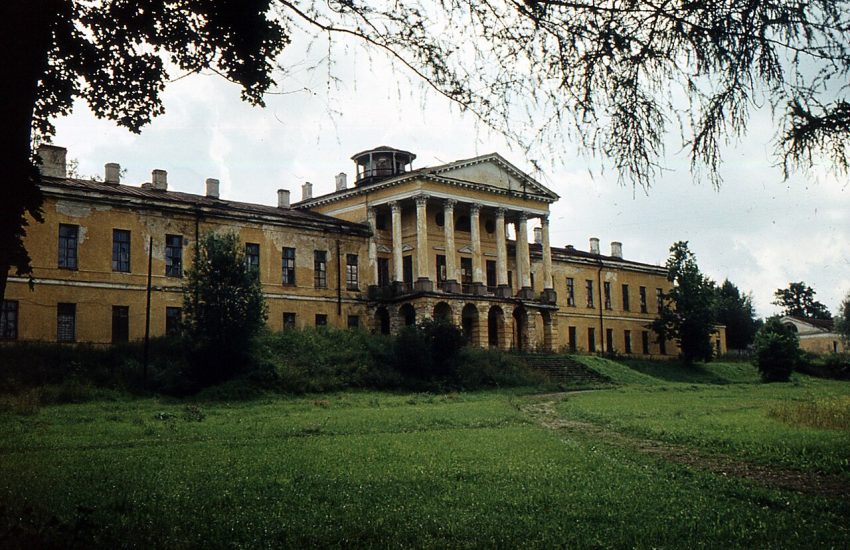
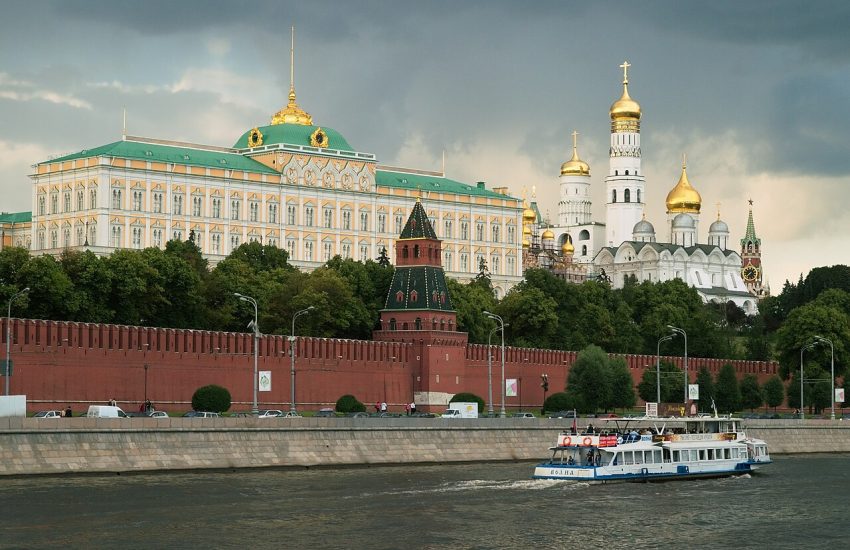
Hidden behind the long yellow facade of the Grand Kremlin Palace, invisible from any Moscow street, stands the most enchanting building in Russia. The Terem Palace rises in five diminishing tiers of red, white, and painted ornament to a golden-roofed attic chamber, looking exactly like the palace in every Russian fairy tale, because it is the palace the fairy tales remember. Here the first Romanov tsars lived, prayed, judged, and raised their children in a world of painted vaults, tiled stoves, and whispered ceremony that vanished when Peter the Great dragged Russia toward Europe.
Built in 1635 and 1636 for Tsar Mikhail Fyodorovich by a team of Russian master builders, the Terem is the finest surviving example of old Muscovite palace architecture and one of very few domestic buildings of its age left anywhere in Russia. Its name comes from the terem, the secluded upper floors where the royal household’s women lived apart from the world, a custom that shaped the palace’s whole closed, inward character.
The Terem cannot be visited casually: it stands inside the working presidential palace, and only rare pre-arranged tours pass through its painted chambers. But its story, of plague and fire, of tsars washing beggars’ feet, of brides inspected in secret and heirs schooled under golden roofs, is one of the best keys to old Russia, and this guide tells it in full, along with every practical way to glimpse the fairy tale for yourself.
- The Eldest Stones
- Tsar Mikhail Builds a Home
- The Four Master Builders
- Five Tiers Toward Heaven
- The Painted Chambers
- The Golden Throne Room
- Life in the Terem
- The World of the Tsaritsas
- Alexei the Gentlest Tsar
- Young Peter and the End of the Terem
- The Eleven Golden Domes
- Decline, Fire and Rescue
- Restorations and the Palace Today
- Watch the Terem Palace on Film
- Visiting the Terem Palace Today
- Palaces Nearby
The Eldest Stones
The Terem Palace stands on foundations far older than its fairy-tale upper floors. Its two lowest levels are the surviving palace of Ivan III’s era, built by the Italian Aleviz Fryazin at the start of the sixteenth century, and beneath them lie cellars older still. When the builders of 1635 began work, they treated these massive undercrofts as a ready-made podium, raising the new residence on the shoulders of the old, which is why the palace’s five nominal tiers actually stack nearly a century and a half of construction.
The site had been the private quarter of Moscow’s rulers since the fourteenth century, and one neighbor preserves that deepest layer: the little Church of the Nativity of the Virgin on the Senya, founded in 1393 by the widow of Dmitry Donskoy, stands joined to the Terem complex, the oldest building in the Kremlin. The princes’ wooden mansions around it burned repeatedly, chronicle fires of 1547, 1571, and 1626 each clearing the hilltop, and each rebuilding climbed a little higher in stone.
The great fire of 1626, which gutted the Kremlin in the reign of the first Romanov, was the immediate midwife of the Terem. The dynasty, still new and conscious of its fragile legitimacy after the Time of Troubles, needed a residence that proclaimed permanence. Rather than build anew elsewhere, Mikhail chose to crown the ancestral site, literally, with the most splendid domestic building Muscovy had ever attempted.
Tsar Mikhail Builds a Home
Mikhail Fyodorovich had been elected tsar in 1613 at sixteen, a gentle, sickly boy chosen partly because the exhausted factions thought him manageable. He inherited a looted Kremlin: the Polish garrison besieged there in 1612 had burned furniture and even eaten the palace’s leather upholstery in their starvation, and the young tsar’s coronation was staged amid scorched walls. For two decades the dynasty camped in patched medieval chambers while the realm slowly healed.
By the 1630s, with peace secured and the treasury recovering, Mikhail could think of magnificence. He was by then a middle-aged father whose dearest concern was his heir, the tsarevich Alexei, and the new palace was conceived around family: its upper floors held the tsar’s own rooms and, above them, the bright attic teremok built, the documents say, for the royal children, with a parapeted walk where the heir could play high above the city.
The palace rose with astonishing speed, two building seasons, 1635 and 1636, for the main structure, a sign both of the workshop’s skill and of the tsar’s impatience. Mikhail enjoyed his creation for nine years, dying in it in 1645 on his name day; his son Alexei received the boyars’ oaths in the same painted rooms within hours, and the Terem became what its builder intended, the hereditary home of the Romanov line.
The Four Master Builders
The documents preserve the names of the four Russian masters who built the Terem: Bazhen Ogurtsov, Antip Konstantinov, Trefil Sharutin, and Larion Ushakov, apparat masters of the Order of Stone Affairs, the Kremlin’s own building office. Their palace is a monument of native tradition at the very moment before Western fashion arrived: no Italian proportions here, but the logic of Russian wooden mansions, the khoromy, translated into brick and stone.
Everything about their design speaks the wooden language: the stacked, telescoping tiers like a cluster of log towers, the external staircases and open parapets, the window frames carved as thickly as peasant house trim, the checkerboard roof originally gilded and painted. Even the layout, small square rooms in file rather than grand halls, follows the domestic pattern of wooden palaces, where warmth and privacy mattered more than vistas.
Ogurtsov and Konstantinov were the age’s great names, builders of fortress towers and the Kazan church on Red Square, and their Terem became a pattern book for the style now called Russian uzorochye, the ornamented manner of the seventeenth century. When the nineteenth century sought a national style for the Grand Kremlin Palace around it, Thon’s draftsmen came here to copy window surrounds; the fairy tale, in other words, taught the empire how to look Russian.
Five Tiers Toward Heaven
The Terem’s composition is a staircase of worlds. The two lowest tiers, the old Aleviz basement floors, held service quarters: the palace workshops where court icon painters and seamstresses worked, storerooms, and the apparatus that warmed and fed the household. Above them runs a terrace, the Boyar Platform, where dignitaries once waited for admission as petitioners wait outside power in every age.
The third and fourth tiers were the palace proper. The fourth held the tsar’s own suite, a file of golden rooms described below, reached by ceremonial stairs guarded at every landing; the third housed the tsaritsa’s and children’s apartments, linked by inner passages to the women’s terem and the palace churches. Each level steps back from the one below, leaving open walks rimmed with parapets, so the building narrows skyward like a painted mountain.
At the summit sits the teremok, the golden-roofed attic chamber ringed by its watch-walk, with Moscow spread below in every direction. Built for the royal children, it also served the boyar duma on hot days, council under the roof tiles, and its little tower, the dozornaya, watched for the fires that were Moscow’s oldest enemy. No building in the city says vertical hierarchy, God, tsar, family, service, so plainly; the Terem is a social order you can climb.
The Painted Chambers
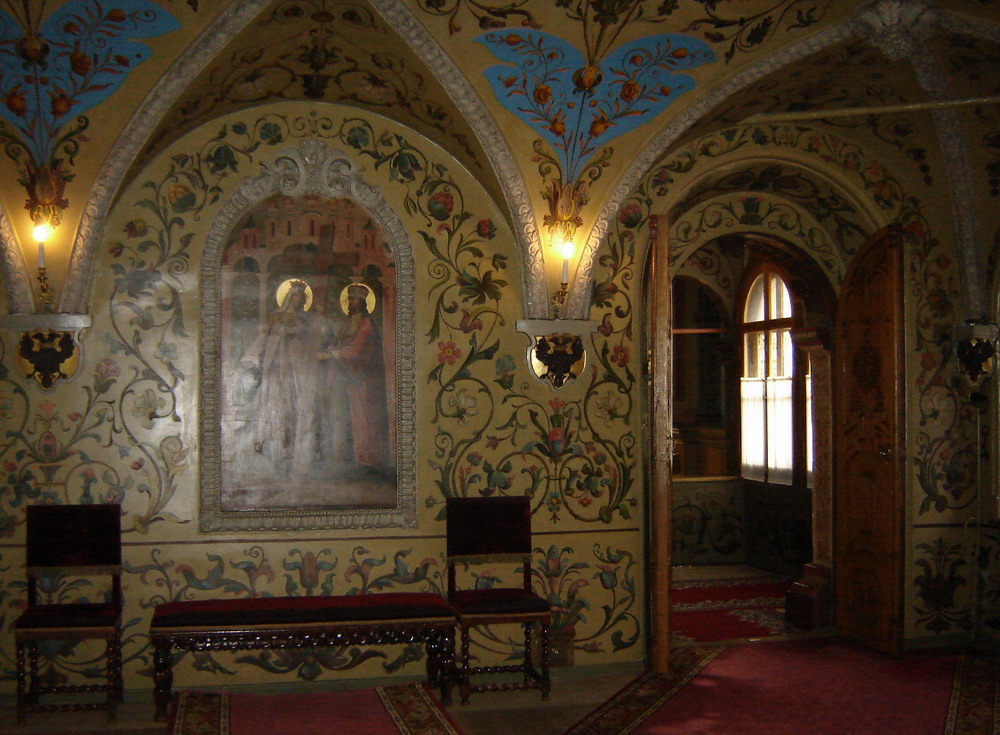
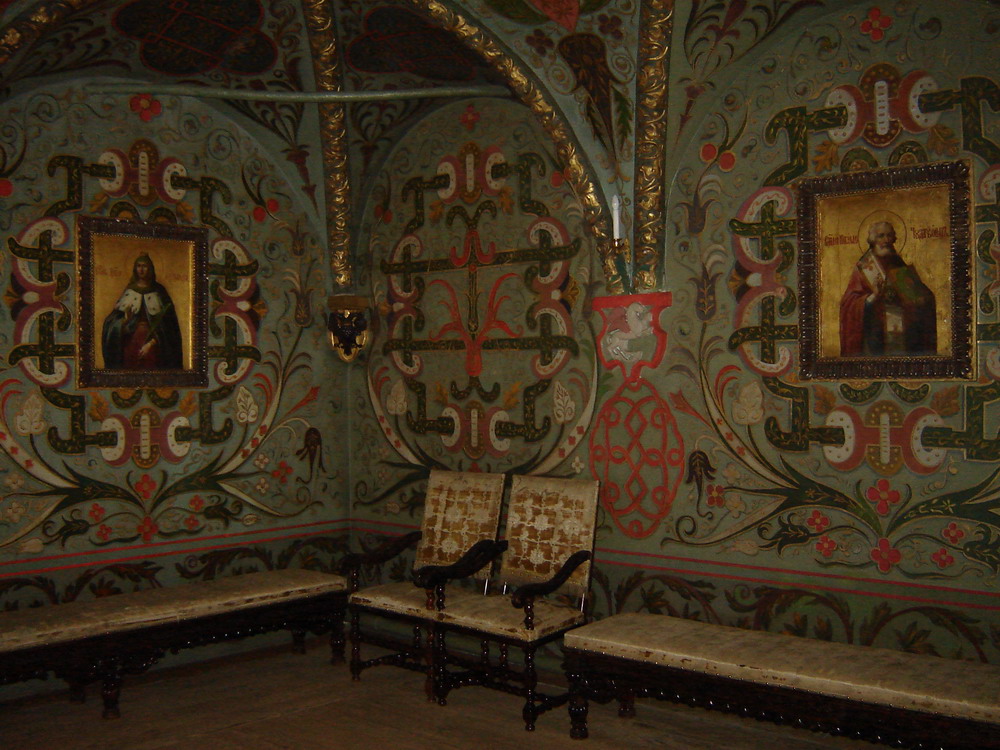
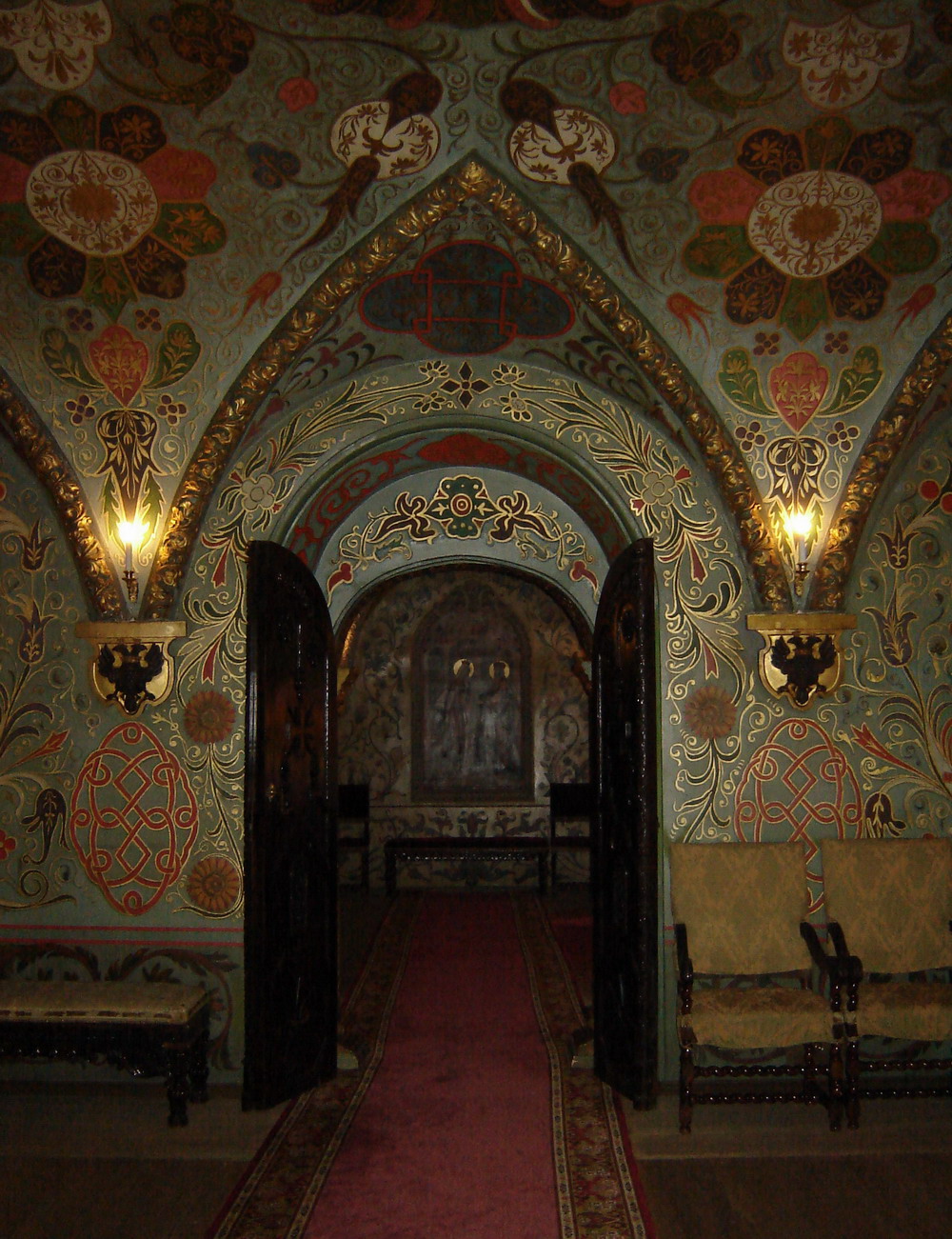
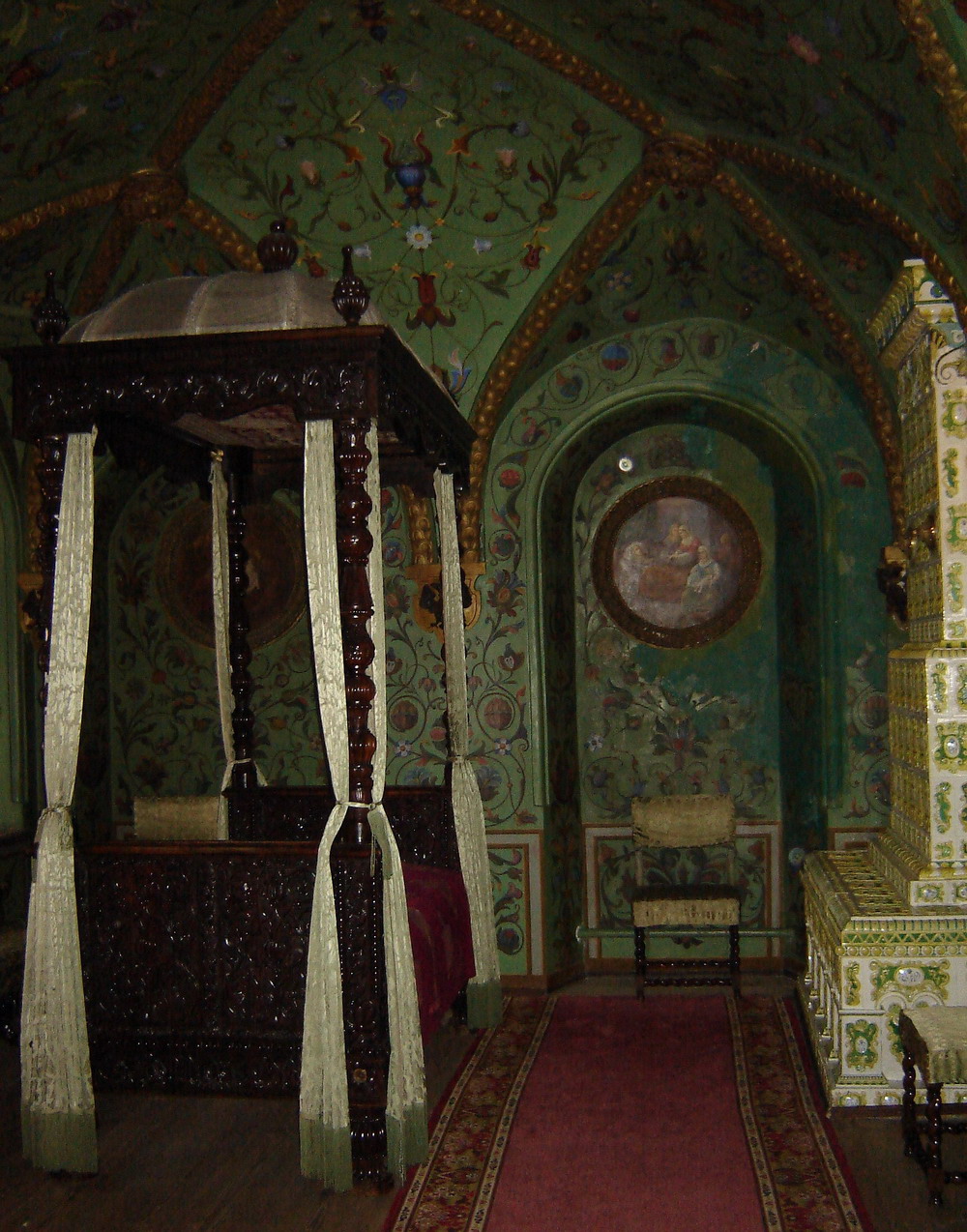
The tsar’s floor is a procession of four principal rooms, low-vaulted, dense with ornament, and each with its function fixed by ceremony. First the Anteroom, where boyars gathered at dawn, for the Muscovite court rose with the sun, waiting for the sovereign to emerge from prayer. Then the Cross or Council Chamber, where the duma deliberated and foreign envoys of middling rank were received; then the Golden Throne Room, the tsar’s study; and last the small Bedchamber with its carved oak bed, and a tiny private chapel beyond.
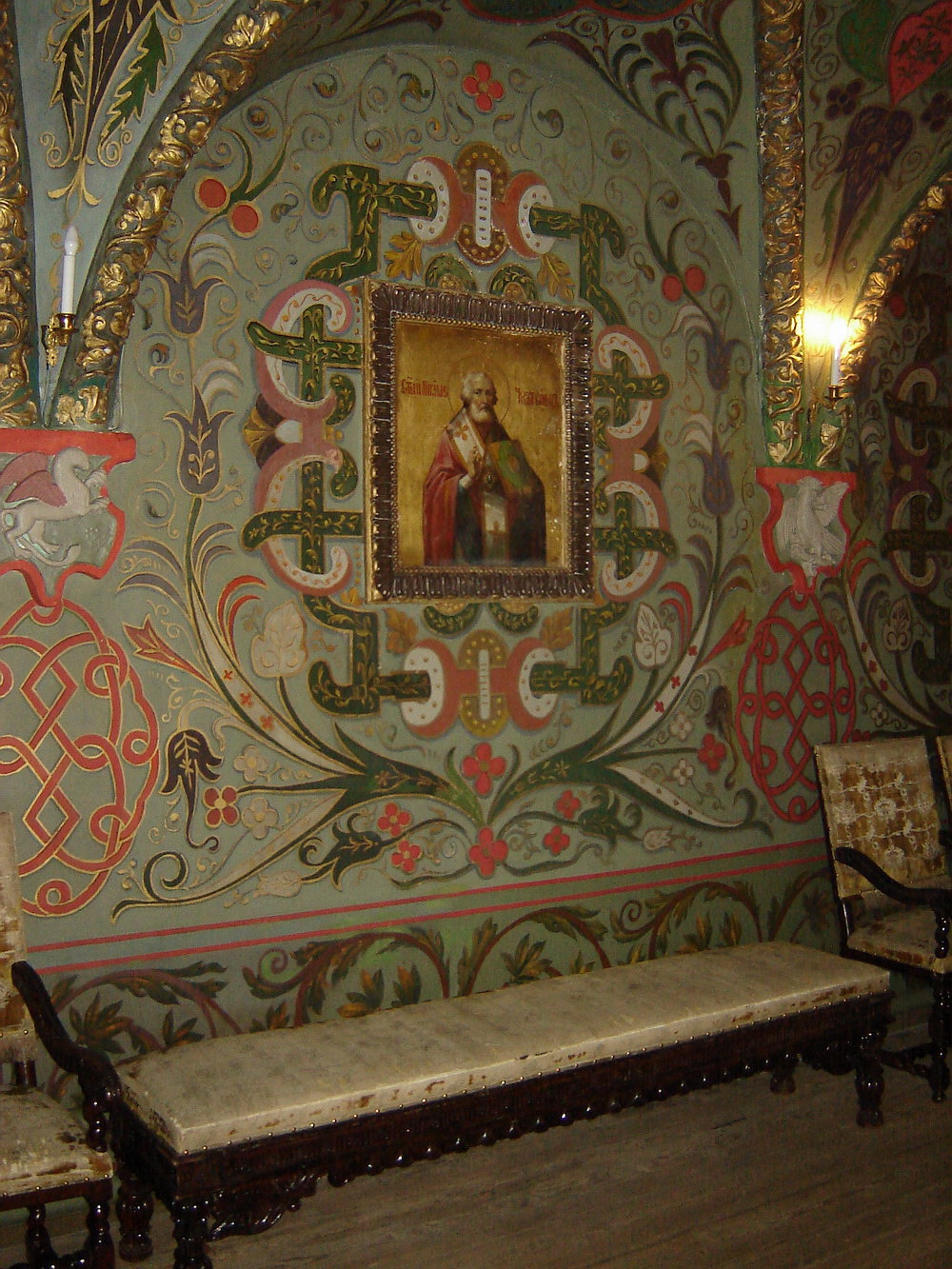
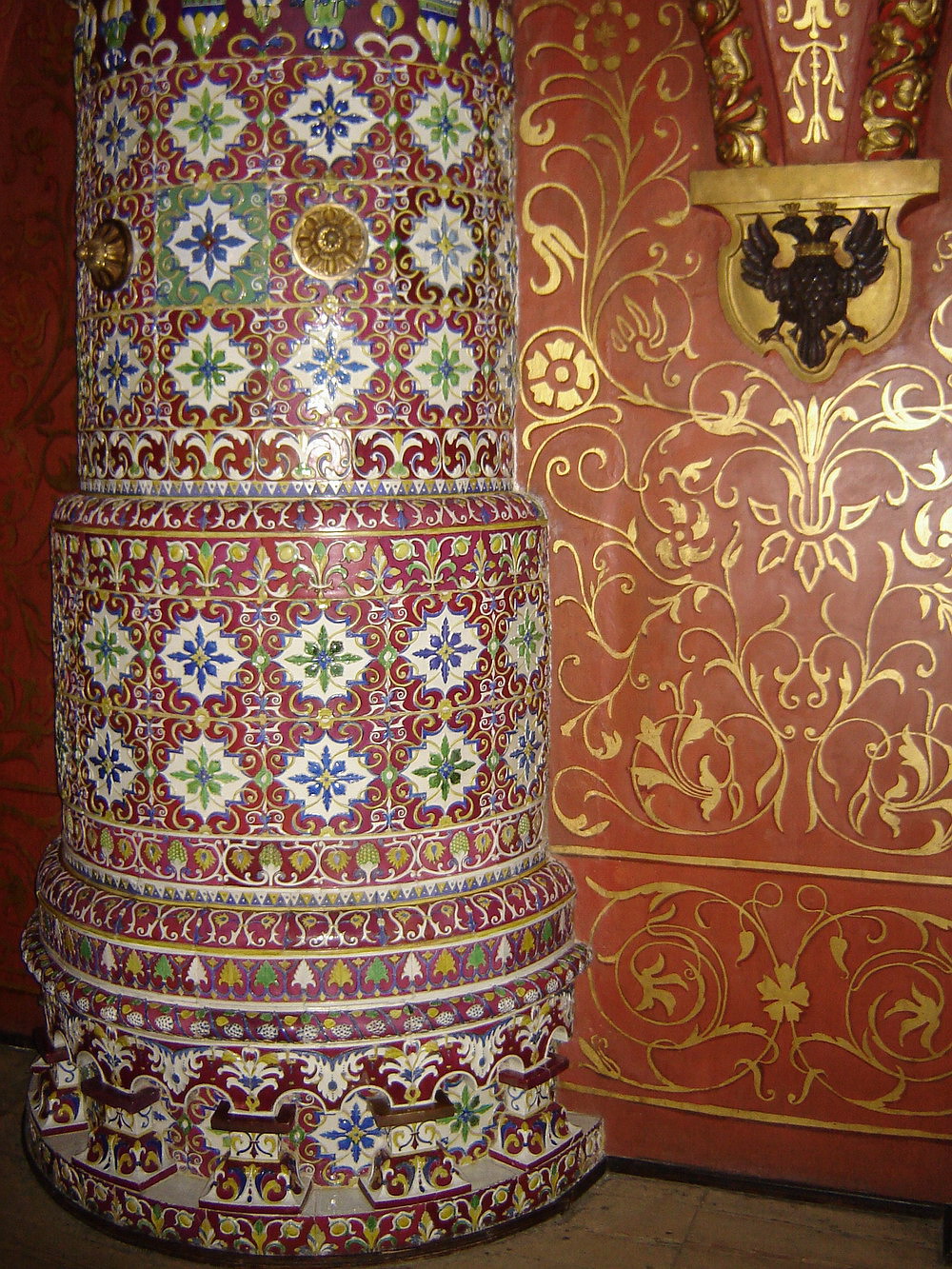
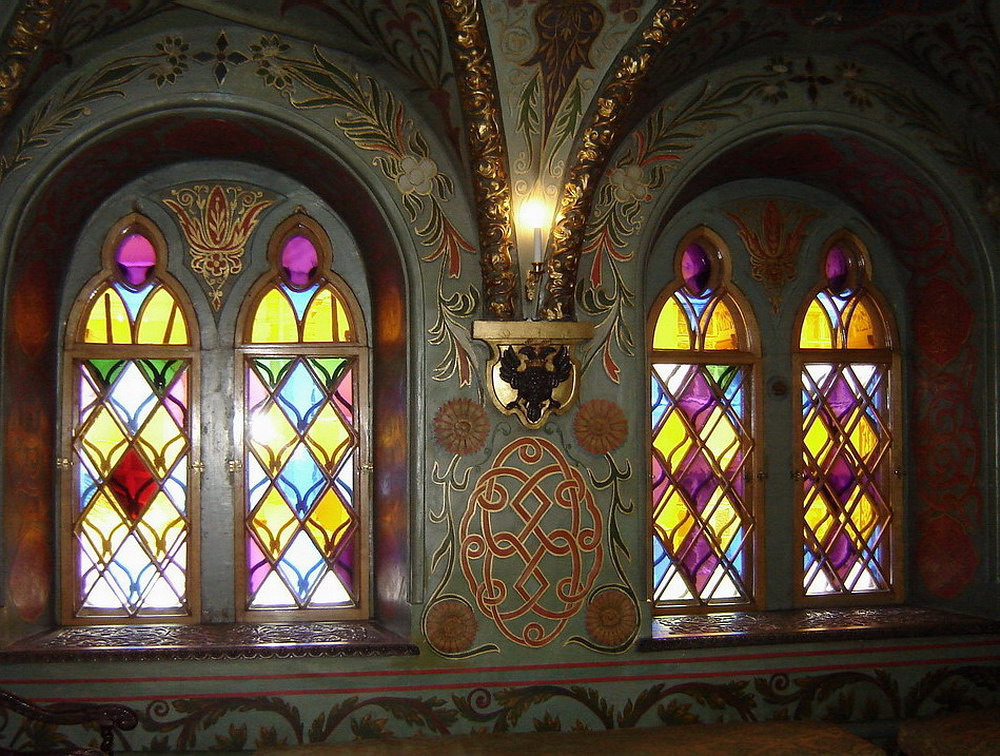
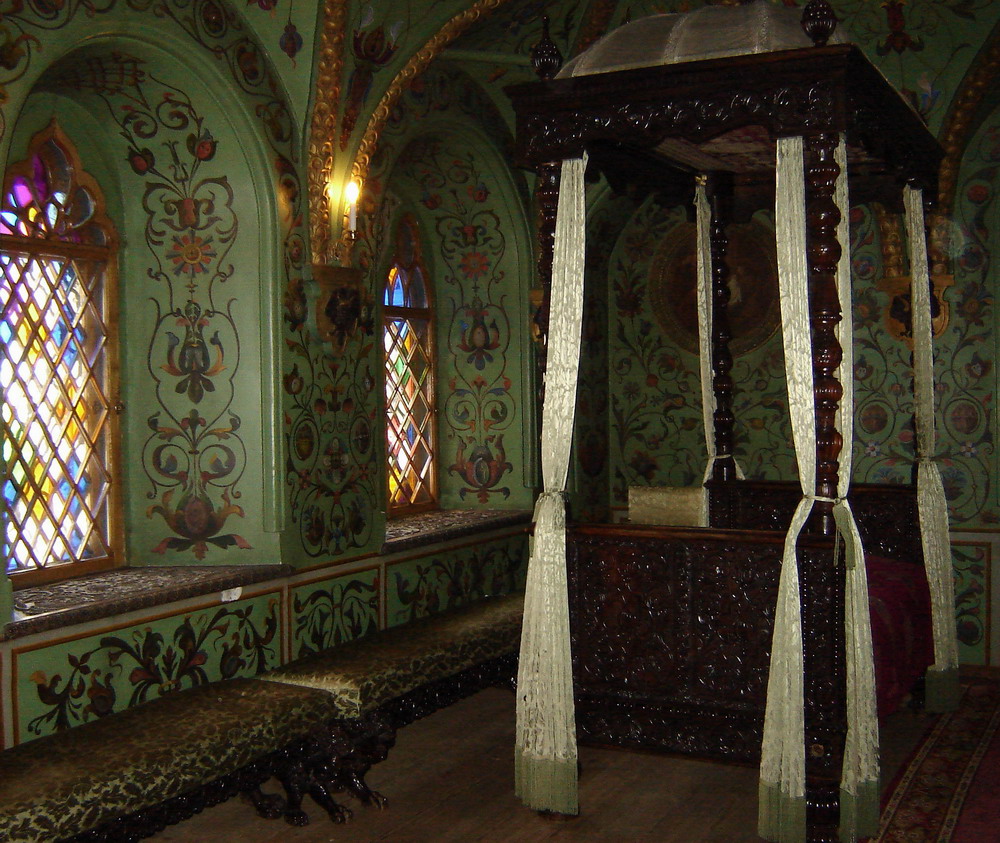
Every surface is painted. Vaults and walls carry flowering vines, heraldic beasts, saints, and parables in the saturated colors of icon painting; the stoves are towers of patterned tiles; the windows glow with colored mica and, later, stained glass. The present decoration is largely the sympathetic re-creation of 1836 to 1837 by Fyodor Solntsev, the great antiquarian of Nicholas I’s reign, who repainted the faded rooms from surviving fragments and old descriptions, a restoration now itself a historic monument.
The furniture keeps the court’s scale: benches along the walls for seated rank, chests, and the famous low doorways that obliged every entrant to bow toward the icons, and toward the tsar, whether he intended reverence or not. Architecture, here, did the work of etiquette masters, folding visitors at the waist a dozen times a day.
The Golden Throne Room
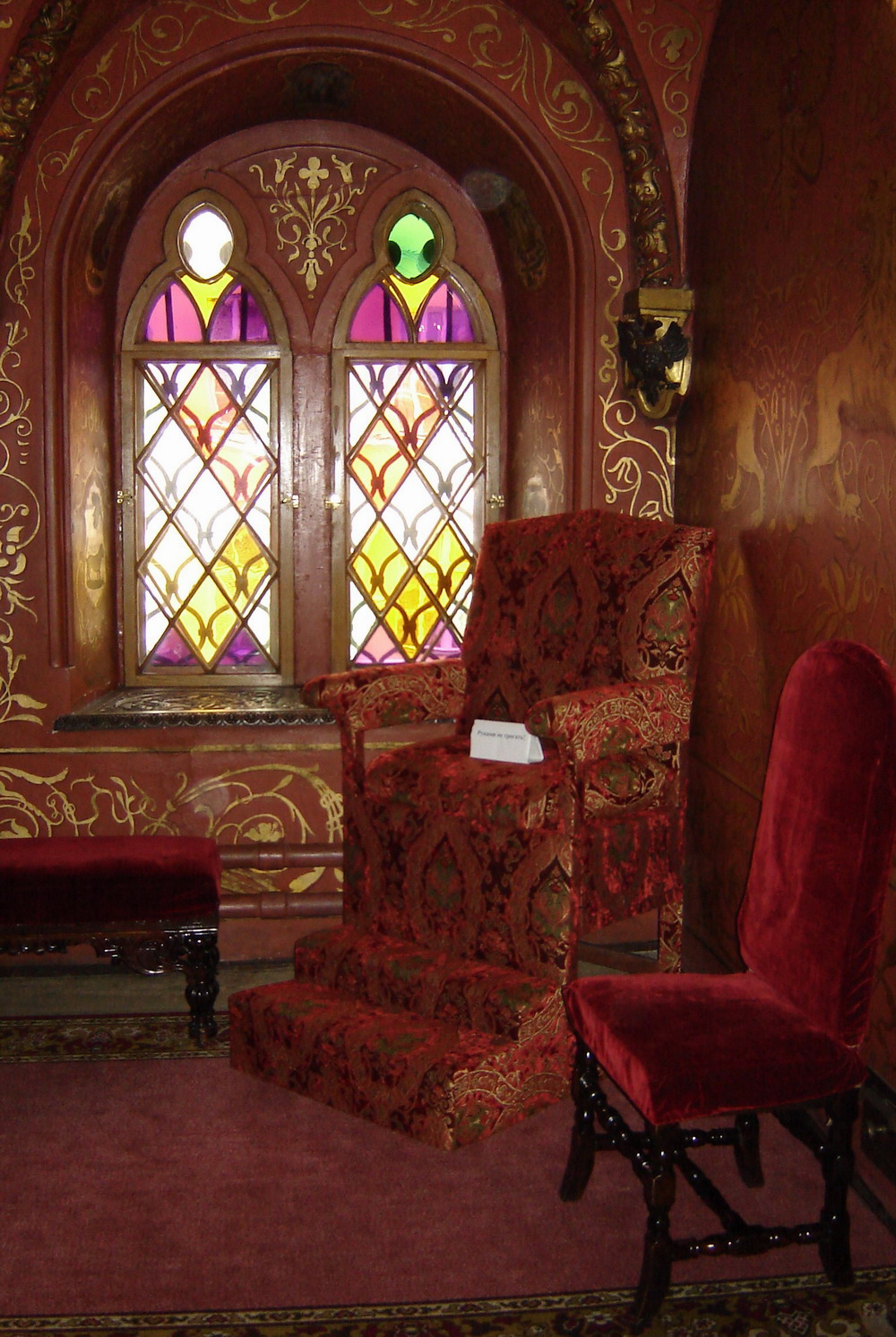
The third room of the suite, the Golden Throne Room, was the seventeenth century’s innermost sanctum of power. Here the tsar worked at a writing table beneath a vault painted with the Heavenly King among angels, a deliberate mirror of the earthly king below; here the closest boyars reported, and here, on the tsar’s name day, chosen guests received vodka from the sovereign’s own hand, an honor men recorded in family chronicles for generations.
The room’s central window held a particular legend: the petition window, from which, tradition says, a box was lowered so that any subject could place a plea directly before the tsar. The pleas piled up faster than answers, and Russians still call an endless bureaucratic wait a long box, supposedly after that very container, one of the language’s oldest jokes about its government.
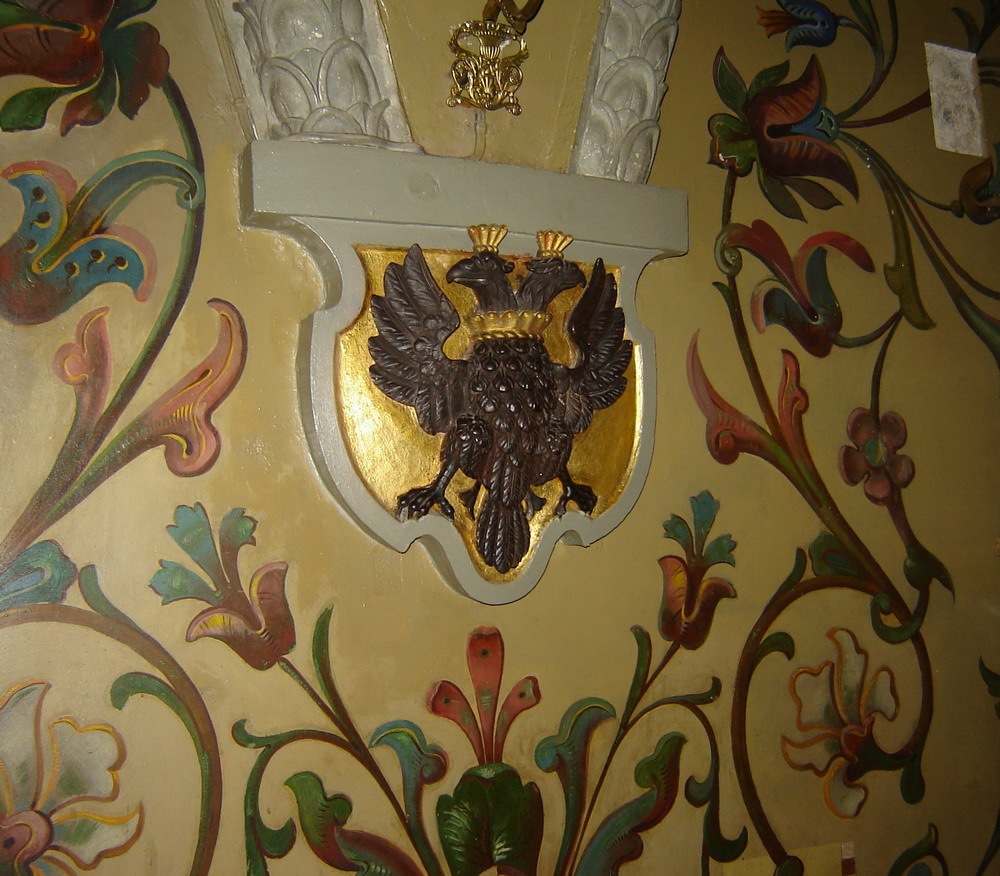
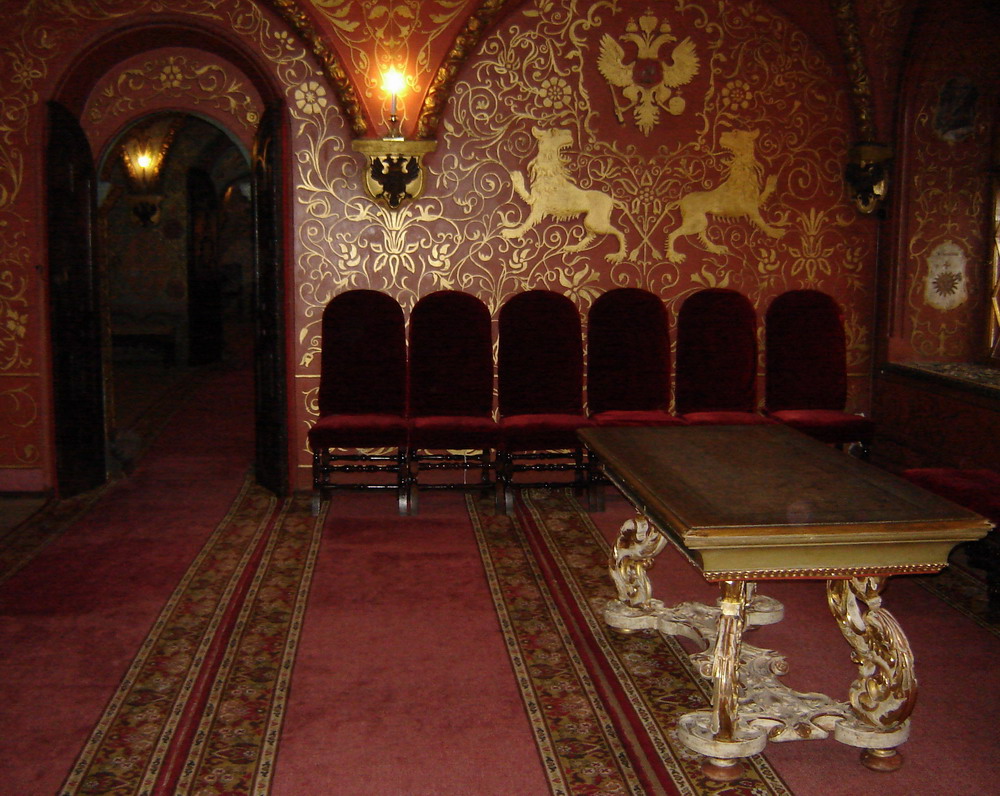
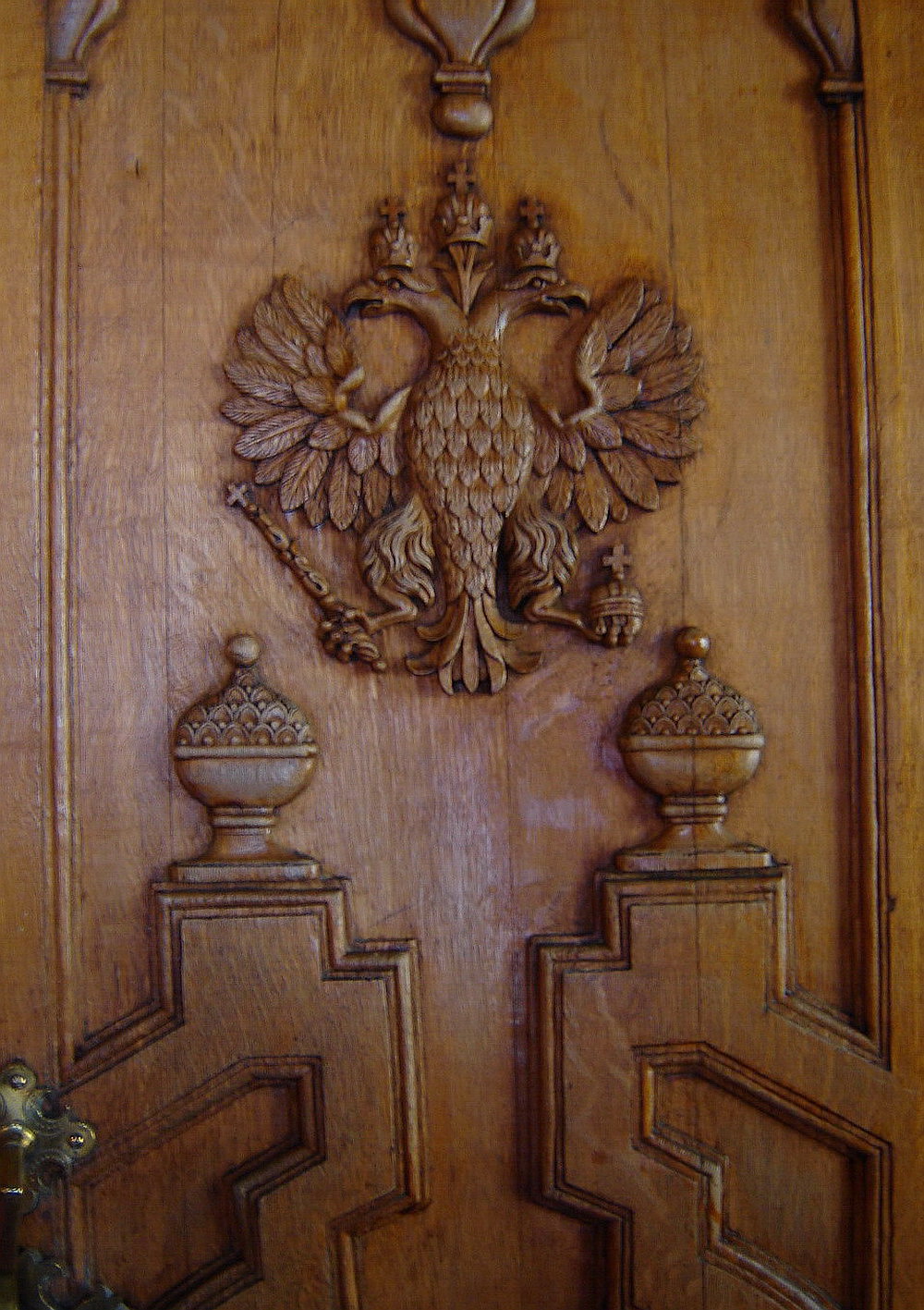
The throne room saw history’s hinges. Alexei here interrogated the leaders of Moscow’s riots; here the council debated war with Poland over Ukraine; and in 1682, during the musketeers’ revolt, rebels stormed even these golden rooms hunting the young Peter’s relatives, a trauma Peter never forgave the old palace. The chair under its canopy, the double-headed eagles, and Solntsev’s crimson walls still hold the atmosphere of that closed, candlelit government.
Life in the Terem
Court life in the Terem ran on a liturgical clock. The tsar rose before dawn, prayed in his chapel, exchanged ritual greetings with the tsaritsa, and heard matins; the morning went to the duma and petitions, dinner came at noon and could run to dozens of ceremonial dishes sent as favors to courtiers’ homes, and the afternoon brought rest, more prayer, chess, and the evening’s entertainments, storytellers, blind singers, and the fools who alone could mock the mighty.
Ceremony saturated everything. On Maundy Thursday the tsar washed the feet of twelve beggars in these rooms, and on feast days he fed the poor at his own table; pilgrimages, processions, and the great church festivals structured the year more firmly than any law. Foreigners found the Muscovite court suffocatingly pious and slow; Muscovites found it the earthly image of heaven’s order, which was exactly the point.
Yet the Terem was also simply a home, and the records humanize it: accounts for the children’s toy drums and miniature sabers, for songbirds in the window cages, for the tsar’s beloved clocks, German machines whose chiming scandalized traditionalists, and for the watermelons and roses forced in the palace’s hanging gardens on the river side, where the household strolled above the city like figures in their own frescoes.
The World of the Tsaritsas
The word terem names, above all, the women’s world. The tsaritsa and the tsar’s daughters lived in their own tiers and chambers, seen by almost no man outside the family and the clergy; they rode in closed carriages, watched ceremonies through concealed grilles, and governed meanwhile a vast household of noblewomen, nurses, dwarf jesters, and needleworkers whose embroidered vestments still fill museum cases.
The system produced one of history’s strangest marriage markets: the bride-show. When a tsar married, hundreds of noble girls from across the realm were summoned, inspected by matrons and doctors, and paraded; the sovereign chose by handing his favorite a ring and kerchief. Intrigue swarmed the custom, Mikhail’s first chosen bride, Maria Khlopova, was poisoned into fits by rivals and exiled as unfit, and the tsar mourned her for years before courtiers found him another.
For the tsar’s daughters the terem was a gilded dead end: too exalted to marry subjects, forbidden to foreign princes of the wrong faith, most lived and died in these rooms and the convent cells that followed. The exception proved the cage: Sophia, Alexei’s formidable daughter, burst out of the terem in 1682 to rule as regent for seven years, the first woman to govern Russia, until her half-brother Peter shut her in a convent, where her story, and effectively the terem’s, ended together.
Alexei the Gentlest Tsar
The Terem’s golden age belongs to Mikhail’s son Alexei Mikhailovich, called Tishaishy, the Quietest, who reigned from 1645 to 1676. Pious, curious, and hot-tempered by turns, Alexei loved the palace life his father had built: he annotated falconry manuals in the throne room, kept the first court theater in Russia at his suburban estates, and wrote his friends letters of startling warmth from these rooms, some of the earliest intimate prose in Russian.
His reign shook the realm from the Terem’s windows. The Salt Riot of 1648 brought mobs into the Kremlin demanding boyars’ heads, and the young tsar yielded favorites to the crowd’s fury; the church schism under Patriarch Nikon, whose palace rose just across the square, split Russian Orthodoxy forever; war regained Kiev and Smolensk; and the Cossack rebel Stenka Razin, whose rising burned the Volga, was brought to Moscow in chains past the palace to execution.
In the Terem Alexei buried one wife and found another. His marriage to Natalia Naryshkina in 1671, a ward raised in the Westernized household of the minister Matveyev, cracked the terem’s seclusion: Natalia rode with carriage curtains open, scandal and sensation, and the son she bore in 1672, christened Peter, would grow into the giant who tore the whole closed world down. The gentlest tsar, without knowing it, had hatched the revolution in his own painted bedchamber.
Young Peter and the End of the Terem
Peter the Great was born to the Terem world and became its destroyer. In May 1682, aged ten, he stood on the Kremlin’s Red Staircase beside his mother as the rebellious streltsy musketeers stormed the palace, threw his mother’s kinsmen onto raised pikes, and hunted relatives through these very corridors for three days. Observers dated the tsar’s lifelong facial tic, and his loathing of old Moscow, from that week.
The dual coronation that followed, boy tsars Peter and his half-brother Ivan enthroned together while their sister Sophia ruled, kept the court in the Terem for one more act. A special double throne was built, its back pierced by a hidden window through which tutors whispered answers to the boys during audiences; the throne survives in the Armoury, seclusion’s last ingenious gadget.
When Peter took real power in 1689, he abandoned the painted rooms as fast as ceremony allowed. He lived at Preobrazhenskoye and Izmaylovo among soldiers and shipwrights, shaved his boyars’ beards, dragged noblewomen out of the terem into Western assemblies, and in 1703 founded St Petersburg, moving the capital itself away from the vaulted world of his childhood terrors. The Terem Palace, home of tsars for seventy years, became in one generation a storeroom of memory.
The Eleven Golden Domes
The Terem grew its own constellation of churches, stacked as densely as the palace’s rooms. The Verkhospassky Cathedral, the Savior Upstairs, served as the tsars’ house church, its iconostasis a jewel of the age; beside and above it cluster the churches of the Resurrection, the Crucifixion, and St Catherine, the tsaritsas’ church, until eleven altars in all crowded the complex’s eastern end.
In 1681 the ensemble received its crown: the separate domes were gathered on one roof, and eleven gilded cupolas on slender drums of colored tile rose in a single golden grove, the work of master Osip Startsev. The sight, eleven domes flashing above the painted palace, became and remains one of the Kremlin’s signature pictures, best caught from Cathedral Square when low sun rakes the tiles.
The churches guarded the palace’s inner life: royal weddings were blessed, infants baptized, and the dead sung here within steps of the bedchambers. The Crucifixion church kept an iconostasis of icons embroidered in silk rather than painted, a terem art made by the royal women themselves, their needle-prayers still hanging where their secluded lives placed them.
Decline, Fire and Rescue
The capital’s departure for St Petersburg beggared the old palace. Through the eighteenth century the Terem stood mothballed, visited by the court only for coronations; Empress Elizabeth patched it, Catherine the Great’s architects measured it for demolition schemes that mercifully stayed on paper, and the great Kremlin fire of 1737 scorched its roofs. Travelers described a fairy tale asleep in dust.
The year 1812 nearly ended the story. Napoleon’s occupation filled the palace quarter with troops, and the mines his sappers fired at departure wrecked neighboring buildings; the Terem survived with burns and breakage, its treasures long since carted to safety, and stood through the 1820s in melancholy half-repair, admired by the first romantic antiquarians as a relic of lost Muscovy.
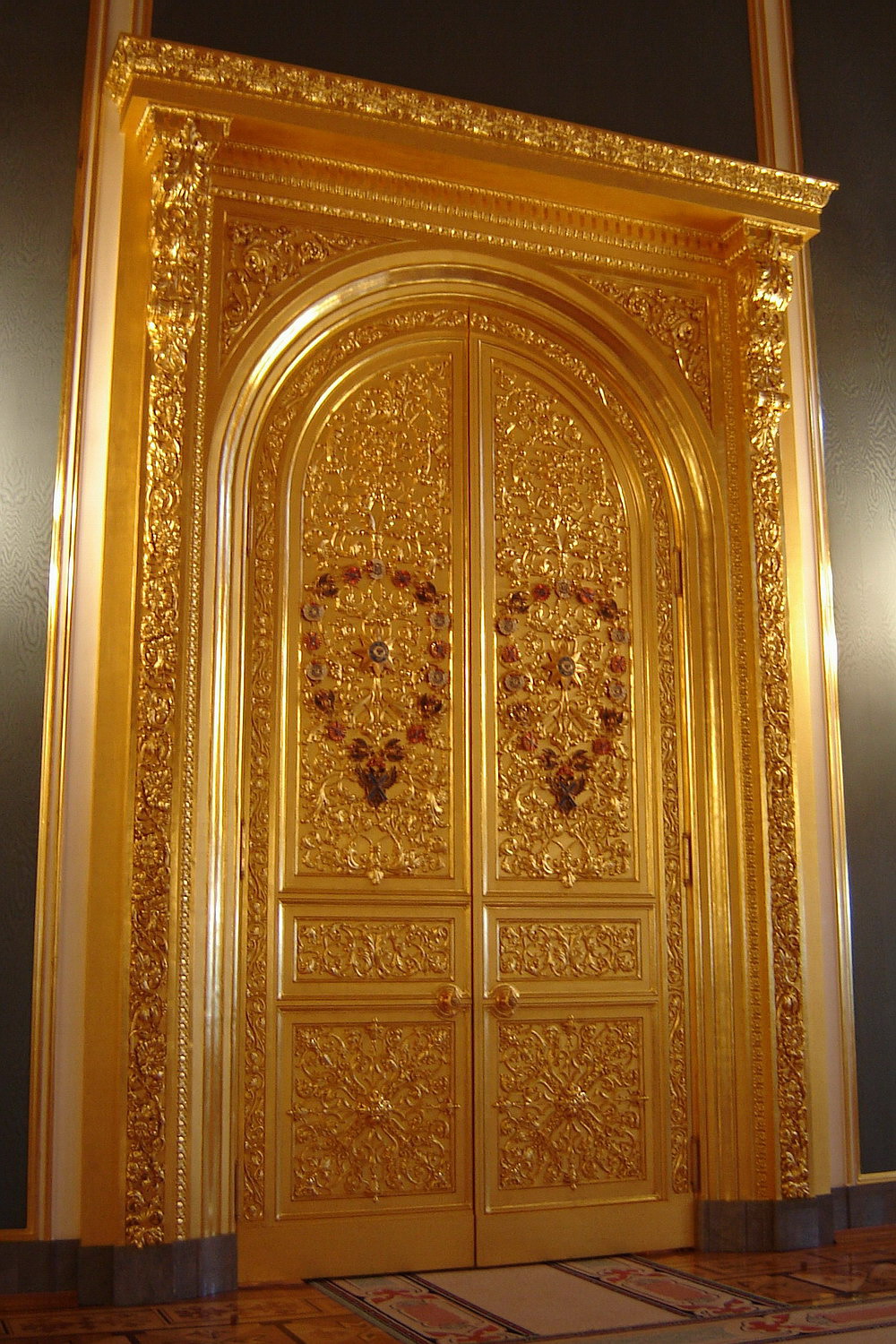
Rescue came with the national turn of Nicholas I. The emperor who demanded Russian style made the Terem his touchstone: Solntsev’s team restored the chambers in the 1830s with scholarly devotion extraordinary for the age, and Thon then wrapped the Grand Kremlin Palace around the old core, giving the fairy tale a fortress of an overcoat. Critics quarrel with Solntsev’s bright palette to this day, but without him and his emperor the building would likely be a drawing in an archive.
Restorations and the Palace Today
The twentieth century closed the Terem tighter than any tsaritsa’s grille. The Soviet government that moved into the Kremlin in 1918 sealed the palace quarter; restorations in the 1960s and 1980s conserved the fabric and uncovered seventeenth-century fragments beneath Solntsev’s layers, and scholars mapped every vault, but the public stayed outside. The Terem became the Kremlin’s best-kept open secret, photographed for albums, seen by almost no one.
Today the palace belongs to the working residence of the President of Russia, linked by the Vladimirsky Hall to the state halls where inaugurations pass. Its churches and chambers are maintained by the Kremlin museums’ restorers, and the golden domes gleam over Cathedral Square as freshly as in 1681; the most recent campaigns regilded the teremok’s roof and returned the facades’ painted ornament to full color.
Access remains the rarest in Moscow: occasional specialist excursions arranged through accredited agencies, diplomatic and official visits, and little else. Most of the world meets the Terem as this article does, through its story and its rooftops, which may be fitting: a palace built for seclusion, still keeping its distance, still golden above the fortress that grew around it.
Watch the Terem Palace on Film
Visiting the Terem Palace Today
The Terem Palace stands inside the Grand Kremlin Palace complex in the Moscow Kremlin, nearest to the Borovitskaya and Biblioteka imeni Lenina metro stations and the visitor entrance at Kutafya Tower. It is not open on standard Kremlin tickets: the interiors are seen only on pre-arranged excursions through the Grand Kremlin Palace booked via accredited agencies with advance passport submission, offered on limited dates and at premium prices, and the itinerary’s inclusion of the Terem rooms varies, so confirm before booking. Independent visitors can still enjoy the exteriors: the eleven golden domes and the upper tiers are clearly visible from Cathedral Square and the Armoury approach inside the Kremlin, both covered by ordinary grounds tickets. You can find the palace on the map here: Terem Palace on Google Maps.
Palaces Nearby
You May Like
The Grand Kremlin Palace and the Throne Rooms of Russian Power