Halfway along the coast road from St Petersburg to Peterhof, a palace stands above canals cut straight to the sea, looking exactly like what it was meant to be: the Russian Versailles. The Konstantin Palace at Strelna was Peter the Great’s first choice for his great seaside residence, a project so ambitious that his engineers talked him out of it, and the palace spent three centuries waiting for a role worthy of its position.
It found one in our own time. Rebuilt from near ruin for the tercentenary of St Petersburg in 2003, the palace became the Palace of Congresses, a state residence where presidents and summits meet beneath restored ceilings, while its halls, park, and art collections open to visitors between official events.
This guide follows Strelna’s long wait: Peter’s grand design and why the fountains went to Peterhof instead, the architects from Le Blond to Rastrelli, the grand dukes called Konstantin who gave the palace its name, the decades of ruin, and the spectacular rebirth, along with everything you need to arrange a visit to Russia’s working palace.
- Peter’s First Choice
- The Problem of Water
- Le Blond, Michetti and the Grand Design
- A Palace Above Canals
- Completion and Long Neglect
- The First Konstantin
- The Reformer’s Palace
- Last Grand Dukes and Poets
- War and Half a Century of Ruin
- The Tercentenary Rebirth
- The Palace of Congresses
- Halls and Collections
- Park, Canals and Shore
- Watch the Konstantin Palace on Film
- Visiting the Konstantin Palace Today
- Palaces Nearby
Peter’s First Choice
Travelers assume Peterhof was always the plan, but Peter the Great’s first love on this coast was Strelna. From 1715 he poured resources into the site: a wooden palace for his own stays, orchards, greenhouses, and surveys for a palace and garden complex that would, in the drawings, have dwarfed anything in Russia and rivaled Versailles itself.
The site had everything: a river, the Strelka, to feed ponds and canals, a ridge for the palace, and the sea at the garden’s foot. European architects of the first rank were engaged, and for several years Strelna, not Peterhof, was where Russia’s answer to France was expected to rise.
Peter’s wooden travel palace survives near the main ensemble, restored with its little garden and chapel, a modest witness to the years when the tsar managed the great project from its windows. What happened next turned on a question of hydraulics.
The Problem of Water
Peter wanted fountains, and fountains decided everything. His engineers, above all the hydraulics specialist Burkhard Munnich, calculated that making Strelna’s cascades play would require raising water against insufficient natural fall, with pumps, reservoirs, and expense without end, and that the scheme risked flooding the district’s low shore.
Twenty kilometers west, the terrain behind Peterhof offered what Strelna lacked: springs on high ground that could feed fountains by gravity alone, forever and for free. Around 1720 the tsar accepted the arithmetic, and the great fountain project, with its cascades and its Samson, migrated to Peterhof.
Strelna kept its palace, its canals, and a kind of magnificent incompleteness. The decision made Peterhof the fountain capital and left Strelna as the noblest might-have-been in Russian architecture, a Versailles whose waters never danced.
Le Blond, Michetti and the Grand Design
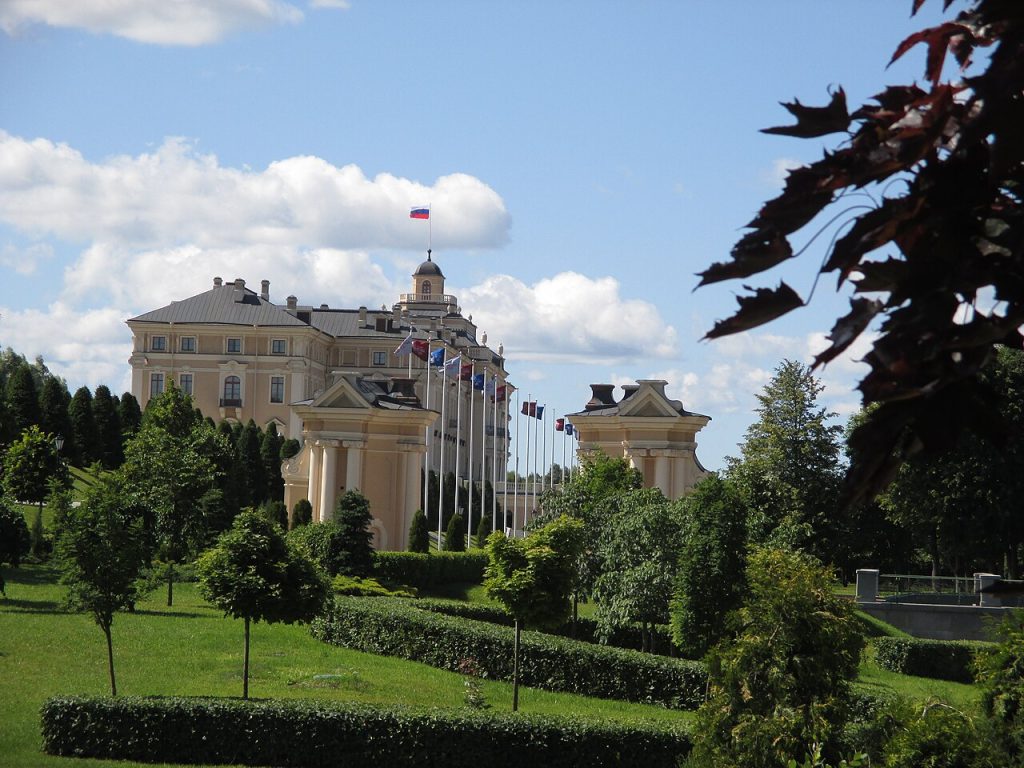
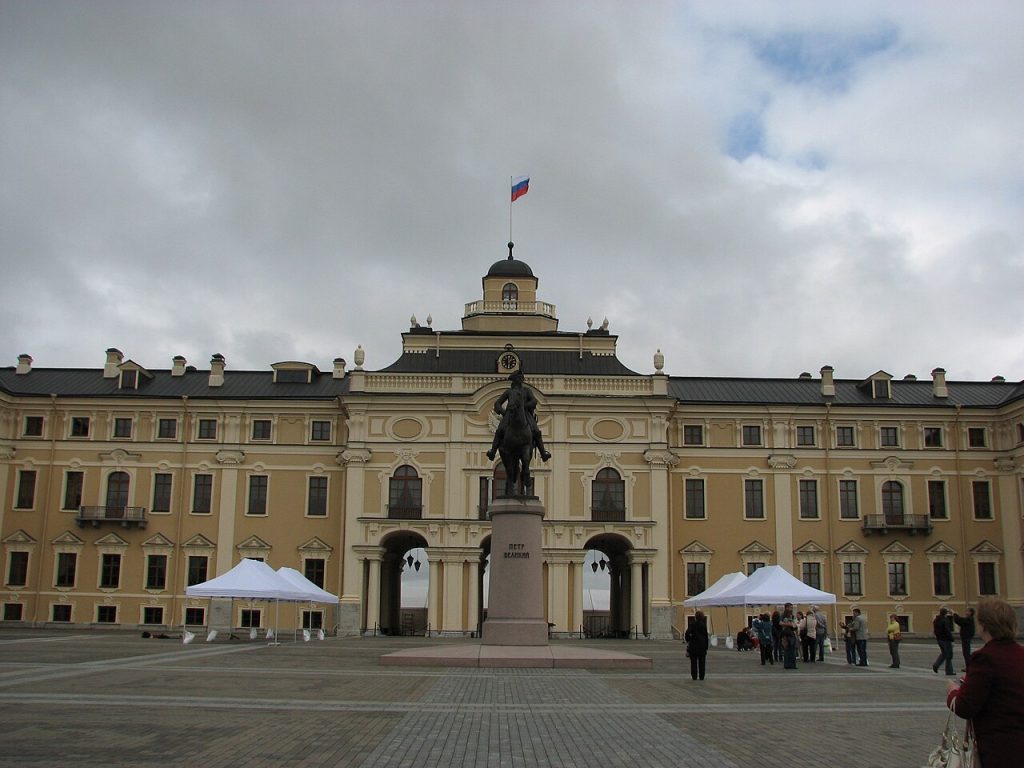
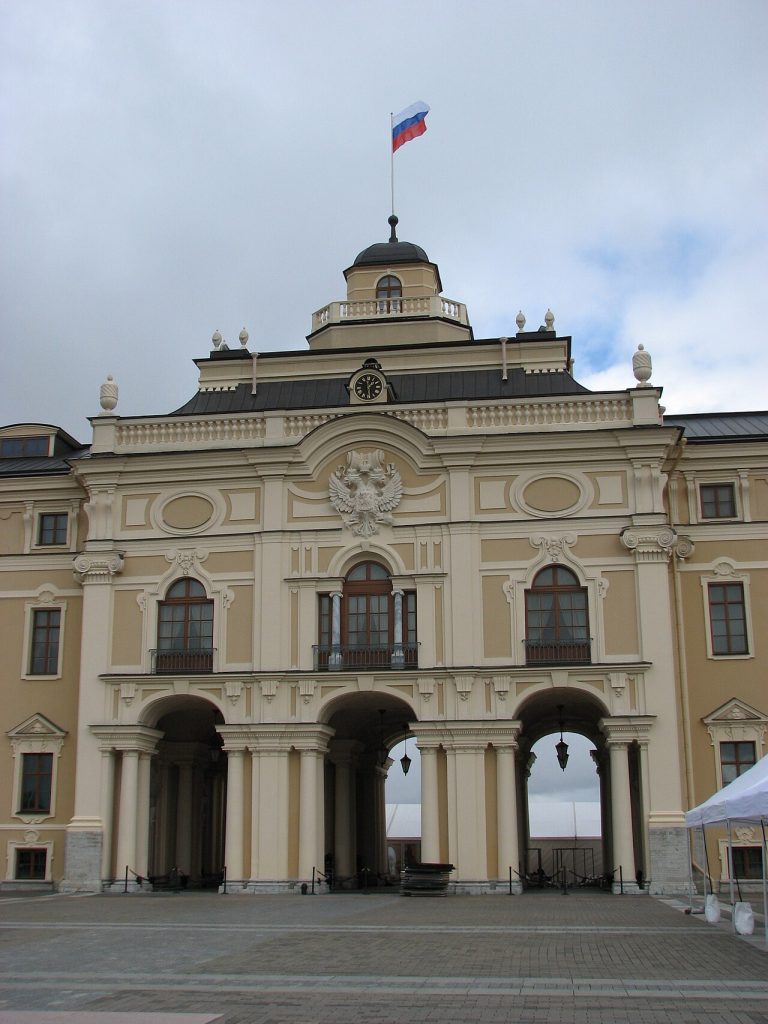
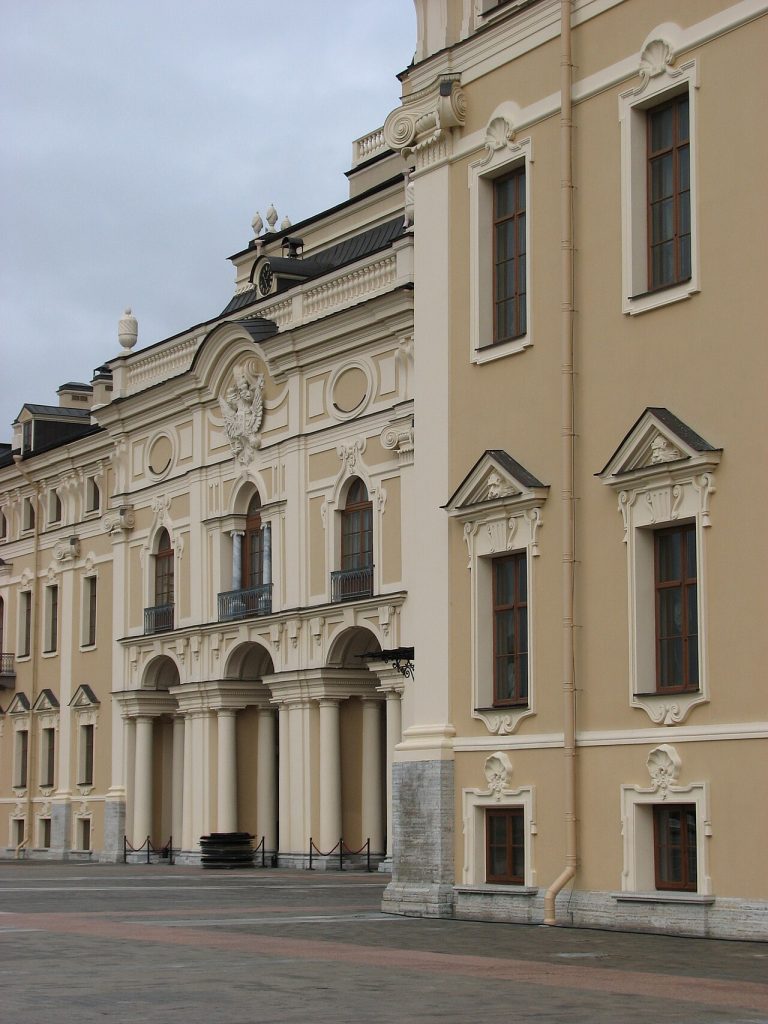
The roll of architects at Strelna reads like the profession’s honor board. Jean-Baptiste Le Blond, brought from France as Peter’s architect-general, planned palace and park; after his early death, Nicola Michetti took over in 1720 and raised the stone palace’s core: a long block on the ridge, pierced at its center by a triple arcade that frames the sea, one of the boldest gestures of the era.
Michetti’s palace stood unfinished when Peter died in 1725 and the court’s money followed the court elsewhere. Rastrelli later completed and enriched the building for Empress Elizabeth, adding his scale and rhythm to the wings, though even he left interiors for others.
The result carries four signatures and one idea: a palace designed less as a building than as a frame for water and distance, its central arches aligned on the canal below and the gulf beyond, architecture serving a view that was always the point of Strelna.
A Palace Above Canals
Strelna’s signature is its water geometry. Below the palace, the lower park is ruled into islands by straight canals, a central channel running from the palace’s arches to the sea and cross-canals framing parterres, the plan Le Blond drew and three centuries have preserved. Bridges arch the crossings, and the view down the main canal remains one of the noblest on the gulf.
The canals were practical as well as theatrical. Boats brought guests and goods from the sea directly beneath the palace, and the drainage they provided made the marshy shore buildable at all. In the rebuilt ensemble the canals again carry water taxis on occasion, and yachts moor where the tsar’s galleys once did.
No fountains, however, then or now: the lower park’s beauty is still the dry Versailles Peter accepted, geometry and reflection standing in for the cascades that moved to Peterhof. On still evenings the palace doubles itself in the central canal, which locals will tell you is better than any fountain.
Completion and Long Neglect
Finished in its shell, Strelna spent the eighteenth century as the spare palace of the coast. Empresses passed through; fires in 1803 gutted much of the interior; funds and favor always settled elsewhere, at Peterhof, Tsarskoye Selo, Gatchina. The great block above the canals acquired a reputation as splendid, damp, and unlucky.
Neglect had its uses. The palace escaped the heavy remodeling that erased early interiors elsewhere, keeping Michetti’s vaulted ground floor and its grotto-like halls. But by 1797, when the estate found its lasting role, Strelna needed a rescue as much as a resident.
That year Emperor Paul granted the estate to his second son, the Grand Duke Konstantin Pavlovich, and the palace took the name it bears today. For the next century it would be the house of the Konstantins, three generations of them, each remarkable in his own way.
The First Konstantin
Konstantin Pavlovich, Catherine the Great’s second grandson, was named for a destiny, the throne of a restored Constantinople, and lived a stormier one. Soldier at Suvorov’s side in Italy, commander of the Guards through the Napoleonic wars, he rebuilt Strelna’s fire-damaged palace with the architect Luigi Rusca and drilled his regiments in its park.
History remembers him for the crown he did not take. Heir after his childless brother Alexander I, Konstantin had renounced the succession to marry a Polish countess, but the renunciation stayed secret; when Alexander died in December 1825, Russia swore allegiance to an emperor who refused to reign, and the confusion opened the door to the Decembrist uprising.
He remained viceroy in Warsaw until the Polish rising of 1830 drove him out, dying of cholera soon after. Strelna kept his name and his military flavor, passing to a nephew who would give the palace its golden age.
The Reformer’s Palace
The second Konstantin, Konstantin Nikolaevich, son of Nicholas I, made Strelna the house of reform. Admiral and head of the navy at twenty-five, he gathered around him the liberal officials who, under his brother Alexander II, drafted the emancipation of the serfs in 1861, and much of that work was argued through in Strelna’s study and gardens.
He and his wife Alexandra rebuilt the interiors in the eclectic comfort of the mid-century and made the palace a center of music and science: the Russian Musical Society and the explorers’ Geographical Society counted him patron, and guests from Strauss, conducting summers at nearby Pavlovsk, to scientists and statesmen filled the salons.
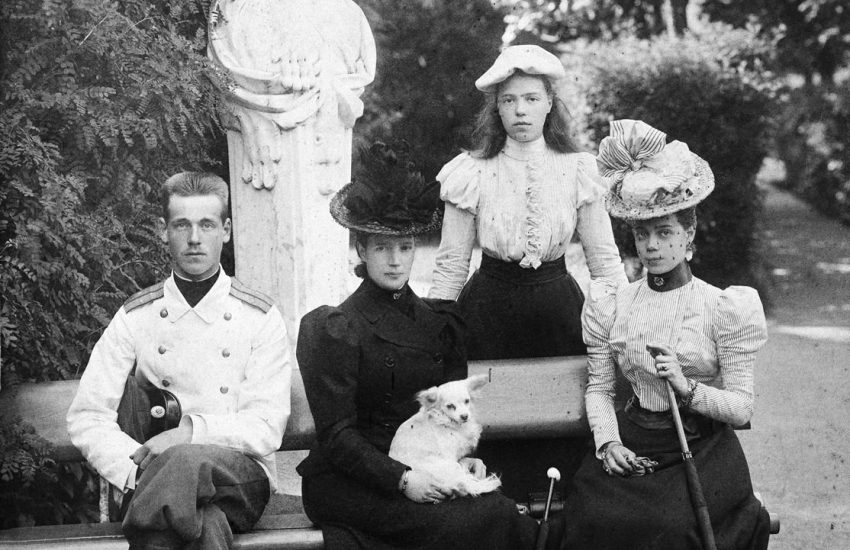
His later years darkened with court disgrace and family sorrow, and his son Konstantin Konstantinovich, the poet-grand-duke who signed his verses K.R., inherited a quieter Strelna, writing in its park and raising nine children in rooms that still kept the reformer’s library.
Last Grand Dukes and Poets
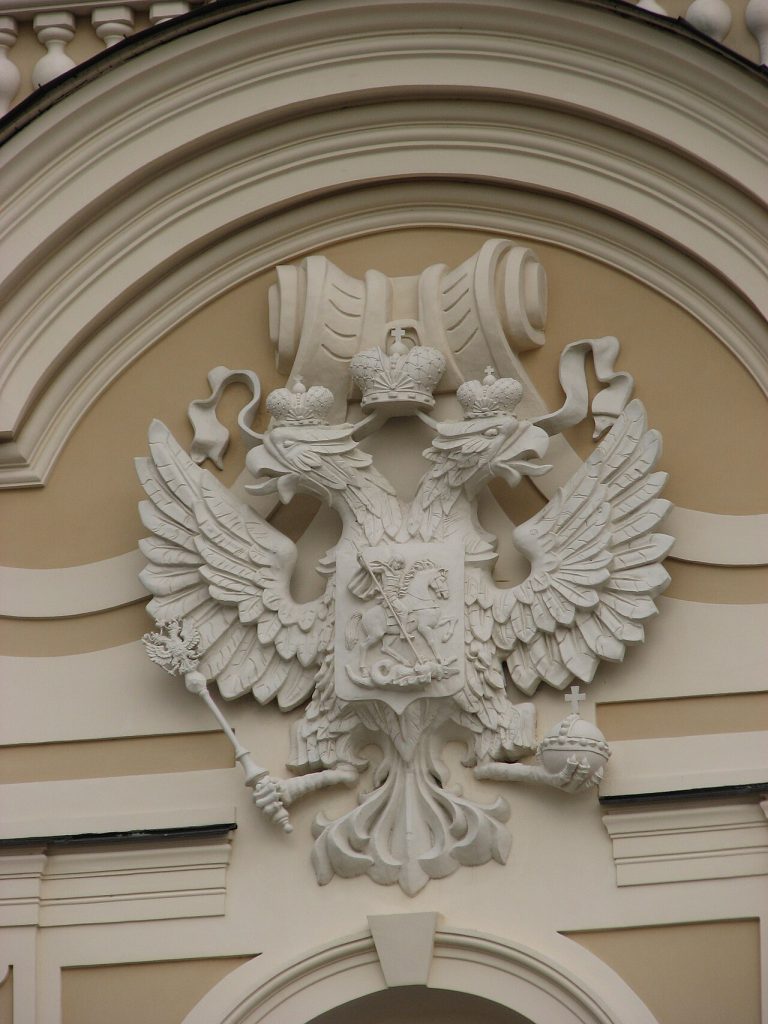
Under K.R. and his heirs, Strelna entered the twentieth century as a family seat of the dynasty’s most cultivated branch, its halls hung with marine paintings, its park open to the officers of nearby regiments and the poets the grand duke patronized. Tchaikovsky set K.R.’s verses; so, later, did Rachmaninoff; the palace’s name meant music as much as power.
The First World War turned the family’s houses into hospitals and took K.R.’s son Oleg, the only Romanov killed in action. The revolution scattered the rest: the poet’s brothers and sons met exile or the Bolsheviks’ mineshafts, and Strelna’s collections were nationalized, dispersed, or sold in the decades that followed.
The palace itself slid down the century: school, sanatorium, naval courses in its halls, war at its doorstep. By the 1990s the Russian Versailles stood roofless in places, trees growing from its cornices, the canals silted and the parterres a wilderness, the most conspicuous ruin on the imperial coast.
War and Half a Century of Ruin
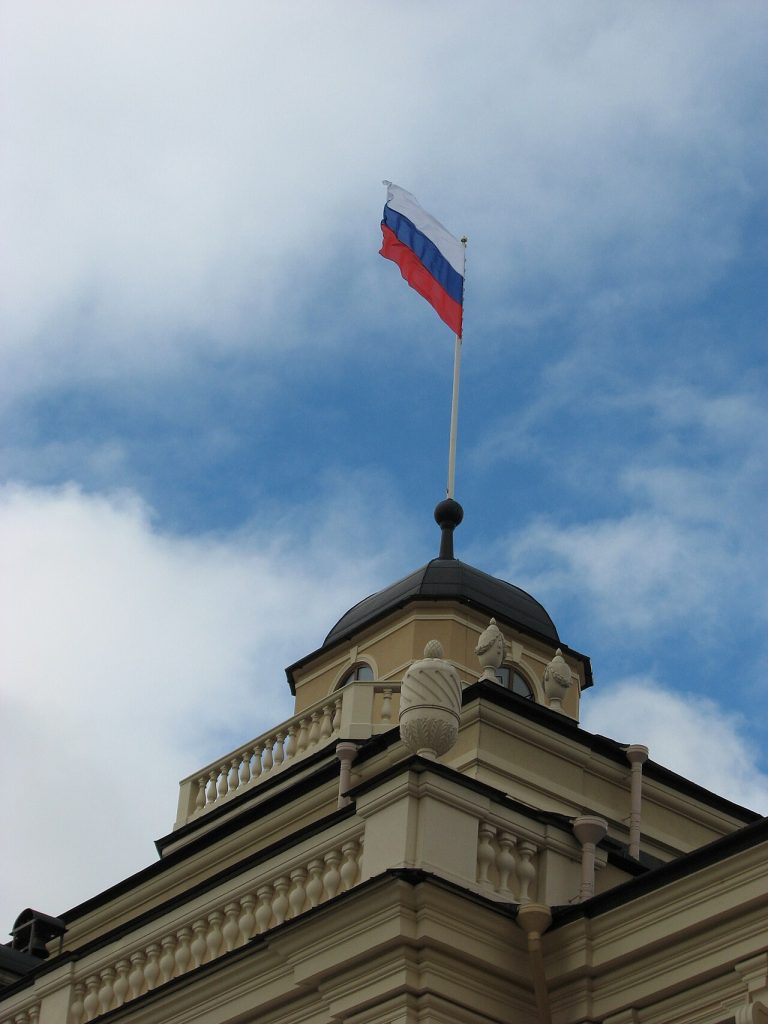
The Second World War nearly finished Strelna. The front line of the Oranienbaum bridgehead ran just west of the estate, and the palace, occupied and fought over, came out of the war a burned carcass, its interiors gone entirely. Postwar repairs made the shell usable for a naval school, but restoration in the museum sense never came.
While Peterhof’s cascades and Pushkin’s gold rose again a few kilometers away, Strelna waited. The naval arctic school that held the building kept the roof on and the worst at bay for decades, but by the time it left in the 1990s, the palace was dying: floors fallen, dampness eating the vaults, the park a forest.
Photographs from those years explain why the rescue, when it came, had to be close to total reconstruction. Of the interiors of the Konstantins nothing substantial survived; of Michetti’s and Rastrelli’s work, the walls, the arcades, and the great vaulted ground floor held on, waiting for a reason to be saved.
The Tercentenary Rebirth
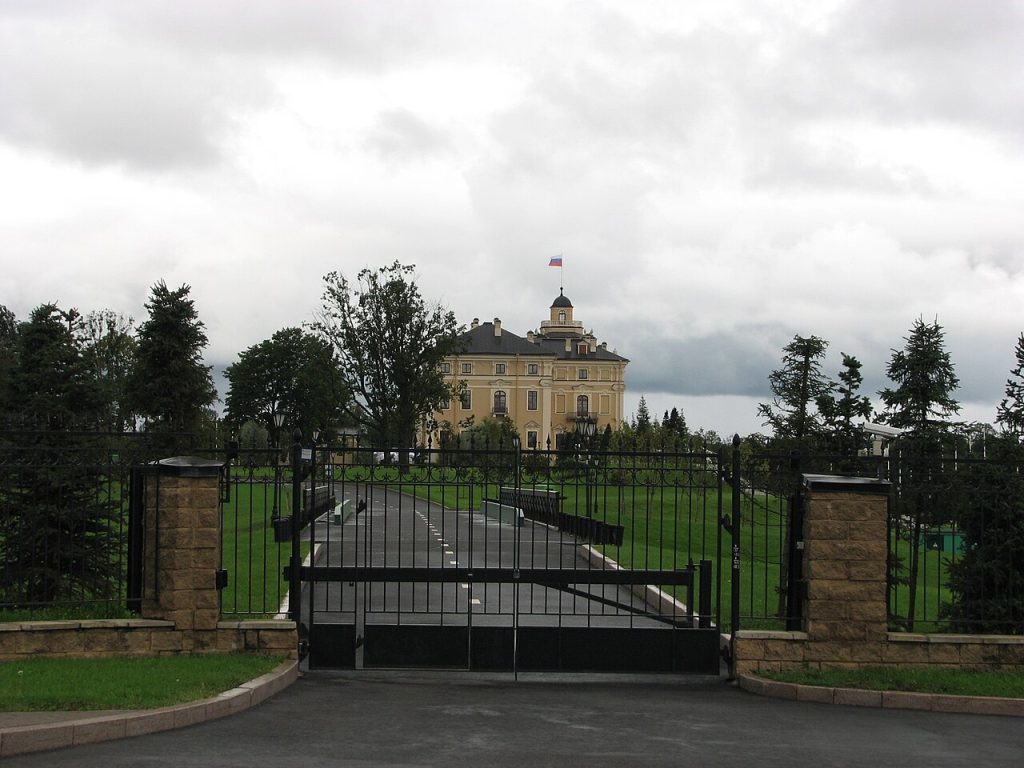
The reason arrived with a date: the three hundredth anniversary of St Petersburg in 2003. In 2000 the decision came from the top of the Russian state to rebuild Strelna as a presidential palace and summit venue, and in barely three years an army of restorers, builders, and craftsmen turned the ruin into the gleaming ensemble of today, in time to host the anniversary’s gathering of world leaders.
The campaign rebuilt the palace’s halls on their historic volumes, re-cut the canals, replanted the lower park, raised a yacht harbor at the sea gate, and added, discreetly, the infrastructure of a state residence: consular pavilions, a hotel, and security worthy of summits. Critics debated the speed and the newness; no one disputed that the alternative had been collapse.
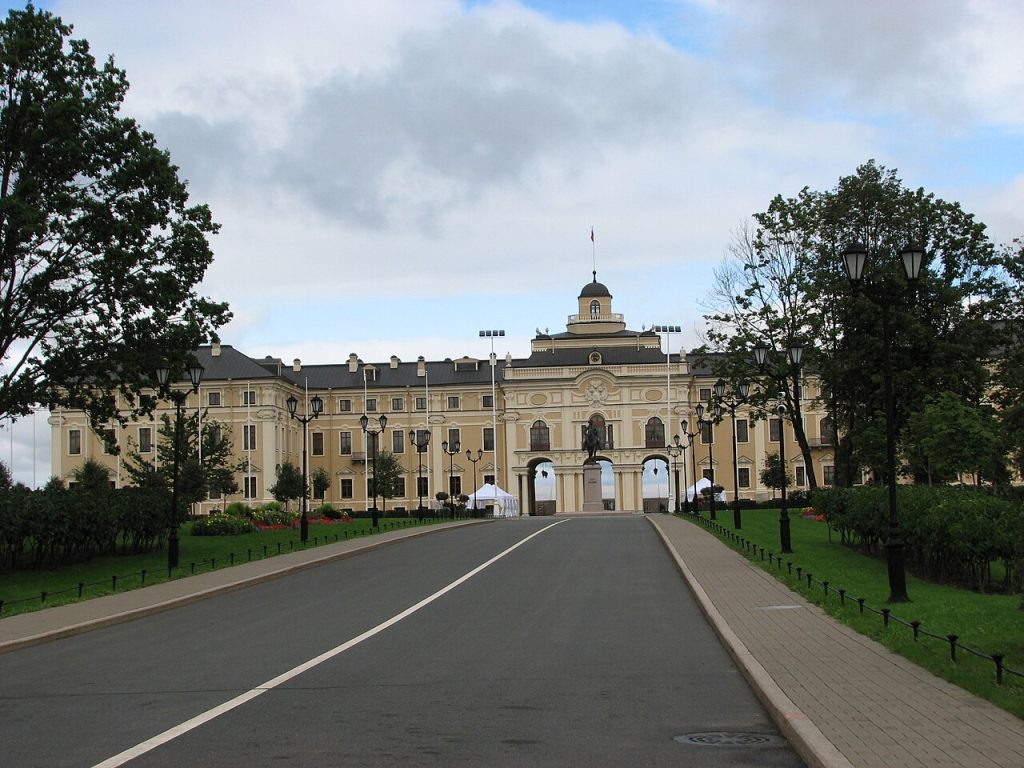
The reborn complex took the official name Palace of Congresses. Since 2003 it has hosted G8 and G20 meetings, treaty signings, and state receptions, returning Strelna, after three centuries of waiting, to exactly the role Peter sketched for it: the place where Russia receives the world beside the sea.
The Palace of Congresses
Strelna today leads a double life unique among the imperial residences. It is a working presidential venue, which means visits run as guided tours booked ahead, documents in hand, and the calendar yields to state events without appeal; and it is a museum of itself, showing halls where the photographs on the sideboards are of recent summits rather than grand dukes.
The tour’s set pieces span the building’s lives: the Marble Hall, high over the central arches, where leaders meet beneath restored splendor; the Blue Hall with its views down the canal; Peter’s vaulted ground floor, atmospheric as a crypt, housing exhibitions; and the belvedere, whose panorama of park, canals, and gulf explains the whole three-century enterprise at a glance.
Guides make the most of the working-palace frisson, from the presidents’ table settings to the consular pavilions named for Russian cities visible across the park. Children usually vote the wine cellars and the model of the never-built fountain scheme the best rooms; adults tend to choose the view.
Halls and Collections
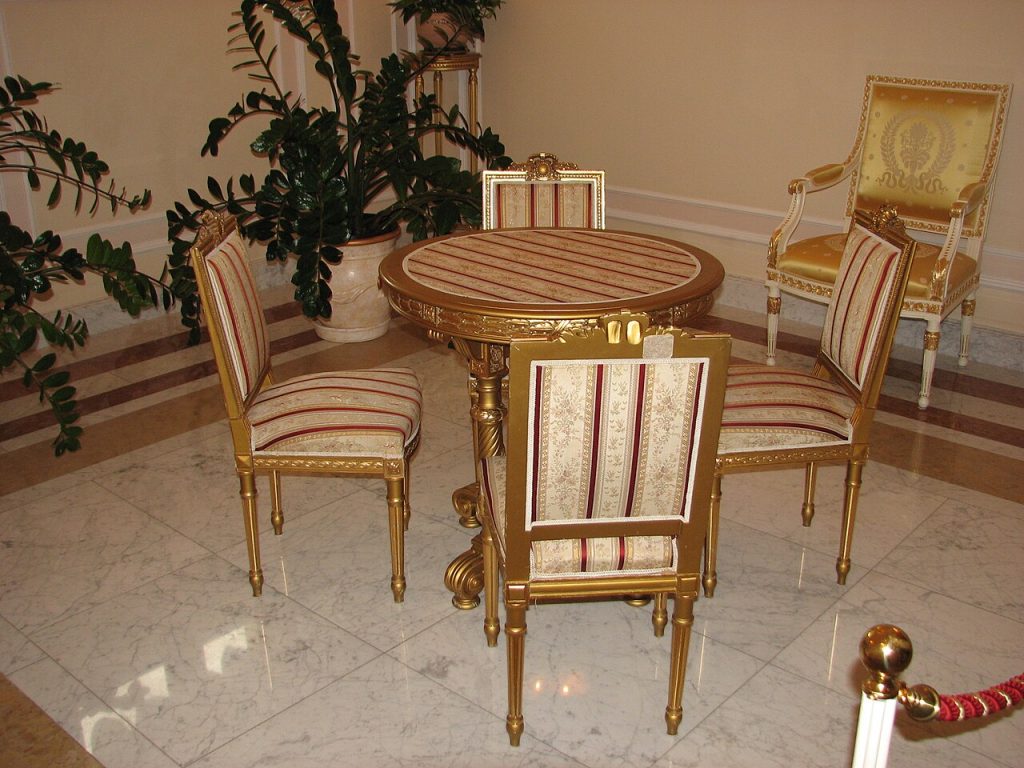
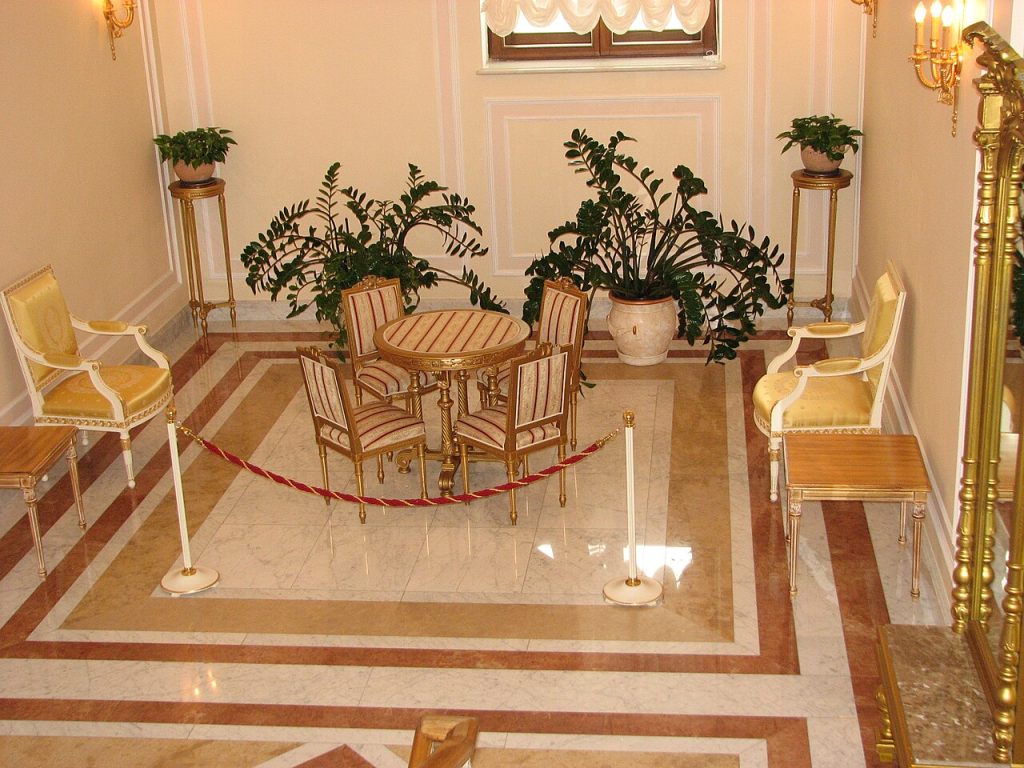
A palace rebuilt empty needed treasures, and Strelna found them in an unexpected way. In 2007 the state acquired the collection of Mstislav Rostropovich and Galina Vishnevskaya, the cellist and the soprano, saved from auction abroad: paintings, porcelain, and furniture of museum rank, which now furnish the palace’s halls and give its interiors an authenticity of objects if not of walls.
The collection’s stars, canvases by Repin and Serov among them, hang where summit guests pass, and themed exhibitions rotate through the vaulted lower floor, from naval history, honoring the palace’s century of admirals and cadets, to the story of the rebuilding itself, told without hiding the ruin photographs.
The ensemble also recovered its church and its approach: the restored Transfiguration church stands again by the gates, and Peter’s wooden travel palace, a short walk east, shows the modest beginning of it all, making Strelna a compact lesson in the full arc of imperial ambition.
Park, Canals and Shore
The grounds repay the trip even when state business closes the halls. The upper garden spreads formal parterres before the land facade; the lower park’s islands and bridges carry walks down the canals to the sea gate, where the yacht harbor and the gulf horizon open, with Kronstadt’s silhouette far out on the water and Peterhof’s woods along the shore.
West of the palace, the route to Peterhof passes the Mikhailovka and Znamenka estates, old grand-ducal satellites with parks of their own, making the coast road one of the most palatial ten kilometers in Europe. Strelna’s own village keeps a tram terminus that was once the empire’s longest line from the capital, still a pleasant way to arrive.
Sunset is Strelna’s hour. The palace’s arches catch the low light, the canal turns to bronze, and the dry Versailles that waited three hundred years looks, briefly, like the greatest of all the palaces on the gulf. Peter, one suspects, would consider the wait worthwhile.
Watch the Konstantin Palace on Film
Visiting the Konstantin Palace Today
The Konstantin Palace stands in Strelna, about twenty kilometers west of central St Petersburg on the Peterhof road. Minibuses and buses from Avtovo and Leninsky Prospekt metro stations stop by the estate, and the historic tram line 36 still runs from the city’s southwest; suburban trains to Strelna station leave a longer walk. Because the palace is a working state residence, entry is by guided tour with advance booking and a passport, and tours pause during official events, so check the Palace of Congresses site before traveling. The combination with Peterhof, ten minutes further west, fills a day handsomely. You can find the palace on the map here: Konstantin Palace on Google Maps.
Palaces Nearby
You May Like
Oranienbaum and the Palaces That Survived the War