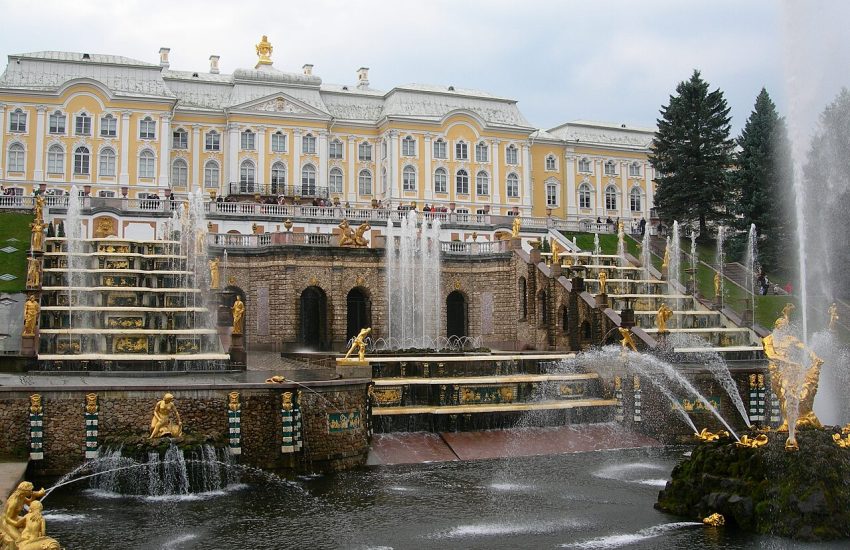
Of all the imperial residences around St Petersburg, Pavlovsk is the one connoisseurs love best. It has no Amber Room and no gravity-fed fountains; what it has instead is perfection of a quieter kind: a golden-domed palace of ideal proportions on a hill above the Slavyanka river, filled with one of the finest neoclassical interiors in Europe, and set in a landscape park so artfully natural that it reads as poetry written in trees.
The estate was Catherine the Great’s gift to her son Paul and his wife Maria Feodorovna in 1777, on the birth of their first child. Charles Cameron designed the palace, Vincenzo Brenna enriched it, and Maria Feodorovna then spent four decades turning house and park into the most personal of all Romanov residences, a widow’s labor of love that outlived her by two centuries.
This guide covers the whole story: Cameron’s villa and its famous dome, the state rooms rebuilt after the fire of 1803 and again after 1944, Maria Feodorovna’s collections, the vast park with its pavilions and endless alleys, and the practical information you need for a day at Pavlovsk.
- A Gift for an Heir’s Birth
- Cameron’s Palladian Villa
- The Grand Tour of the Owners
- Brenna and the Imperial Upgrade
- The Great Interiors
- Maria Feodorovna’s Palace
- The Fire of 1803 and Voronikhin
- Designing the Park
- Temples and Pavilions
- The Musical Station
- War and the Evacuation Miracle
- The Model Restoration
- Collections and Atmosphere
- Watch Pavlovsk Palace on Film
- Visiting Pavlovsk Palace Today
- Palaces Nearby
A Gift for an Heir’s Birth
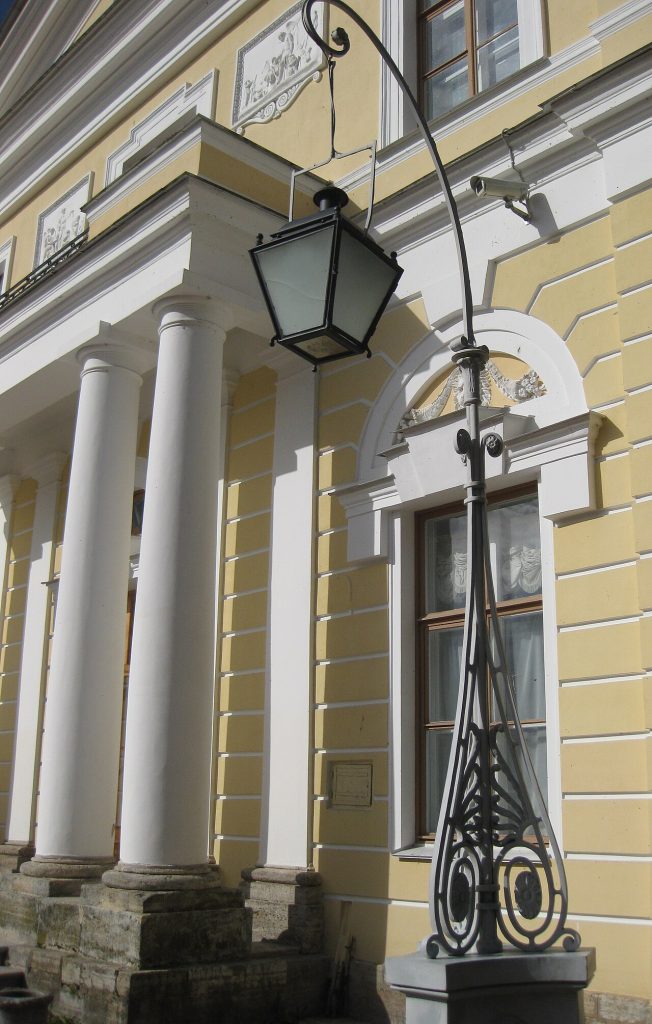
In December 1777 Grand Duchess Maria Feodorovna gave birth to a son, the future Alexander I, and Catherine the Great celebrated her first grandchild with a characteristically imperial present: a thousand acres of forest and farmland along the Slavyanka river, a few kilometers from Tsarskoye Selo, for the child’s parents to build on.
Paul and Maria Feodorovna began modestly, with two wooden country houses on the hilly banks. The land itself was the attraction: a winding river valley, groves of birch and fir, and gentle hills that a trained eye could already see as a landscape garden in the English taste then sweeping Europe.
The estate took the name Pavlovskoye after its owner, and from the beginning it belonged more truly to Maria Feodorovna than to Paul, who soon preferred the sterner pleasures of Gatchina. Pavlovsk would be shaped, furnished, and defended for forty years by one of the most artistically gifted women ever to join the Romanov dynasty.
Cameron’s Palladian Villa
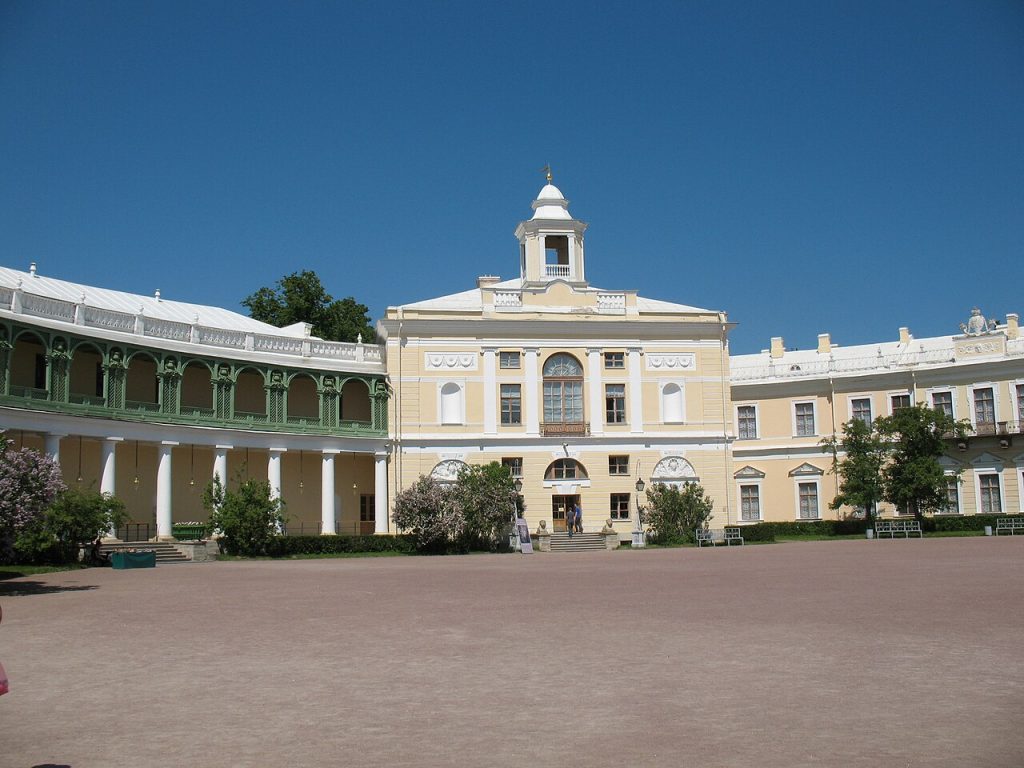
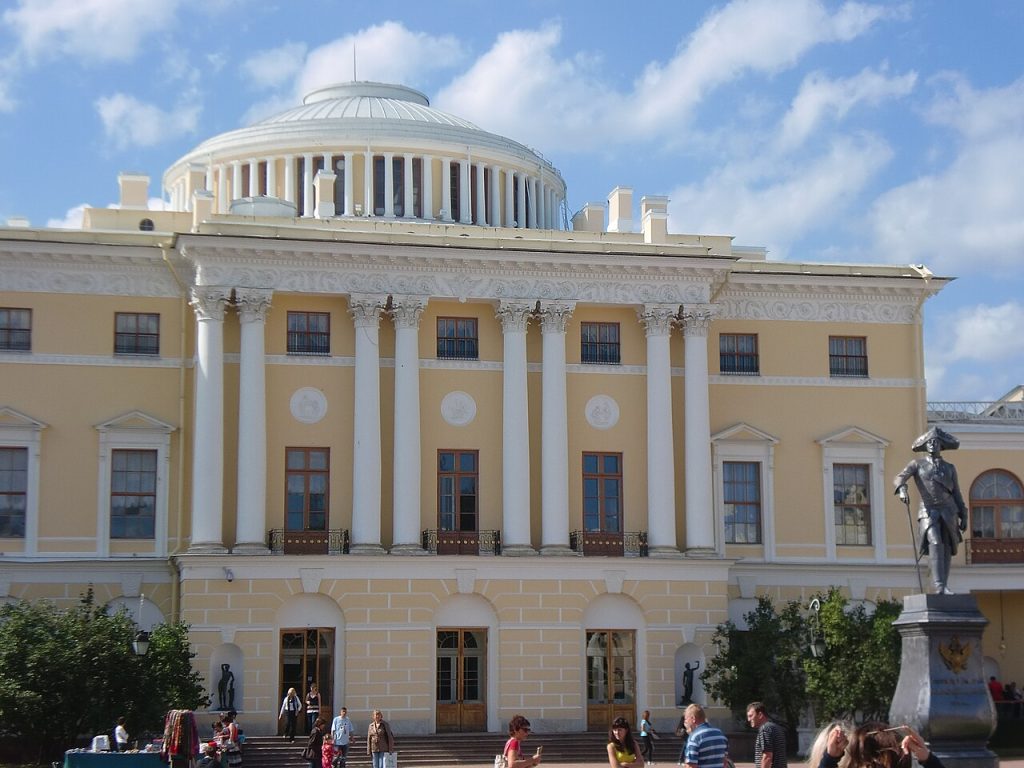
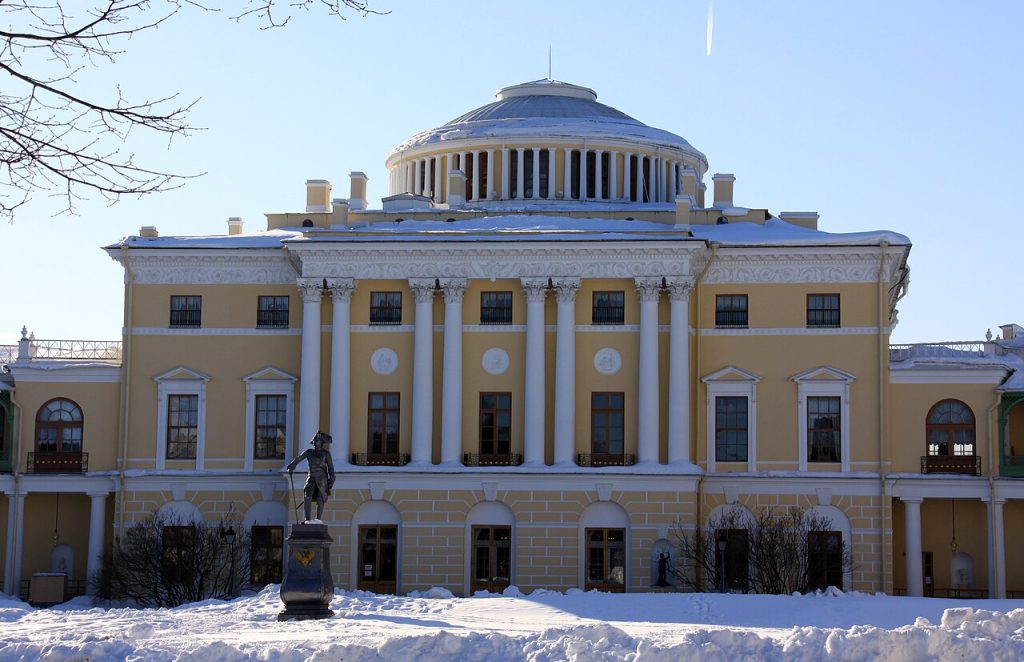
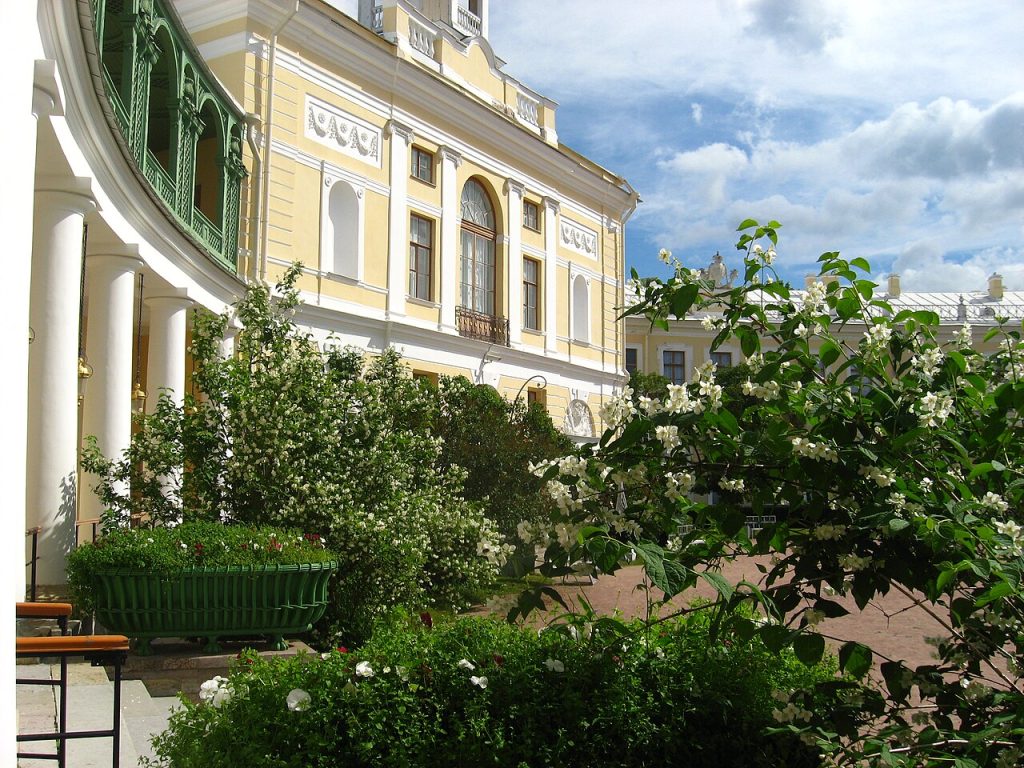
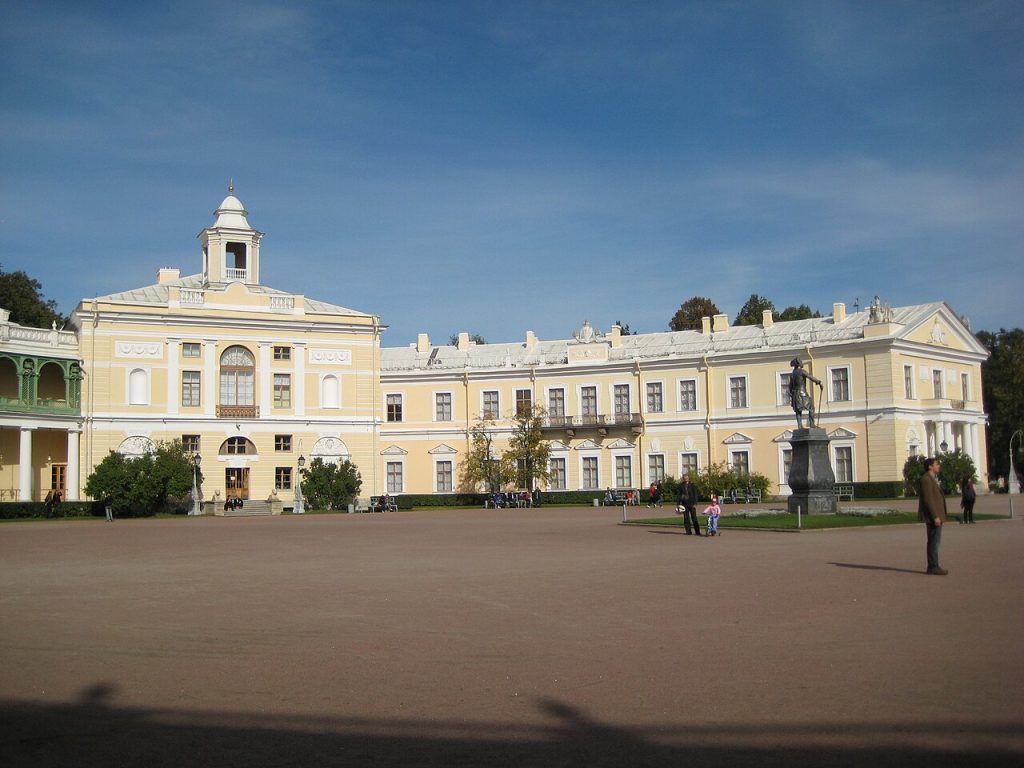
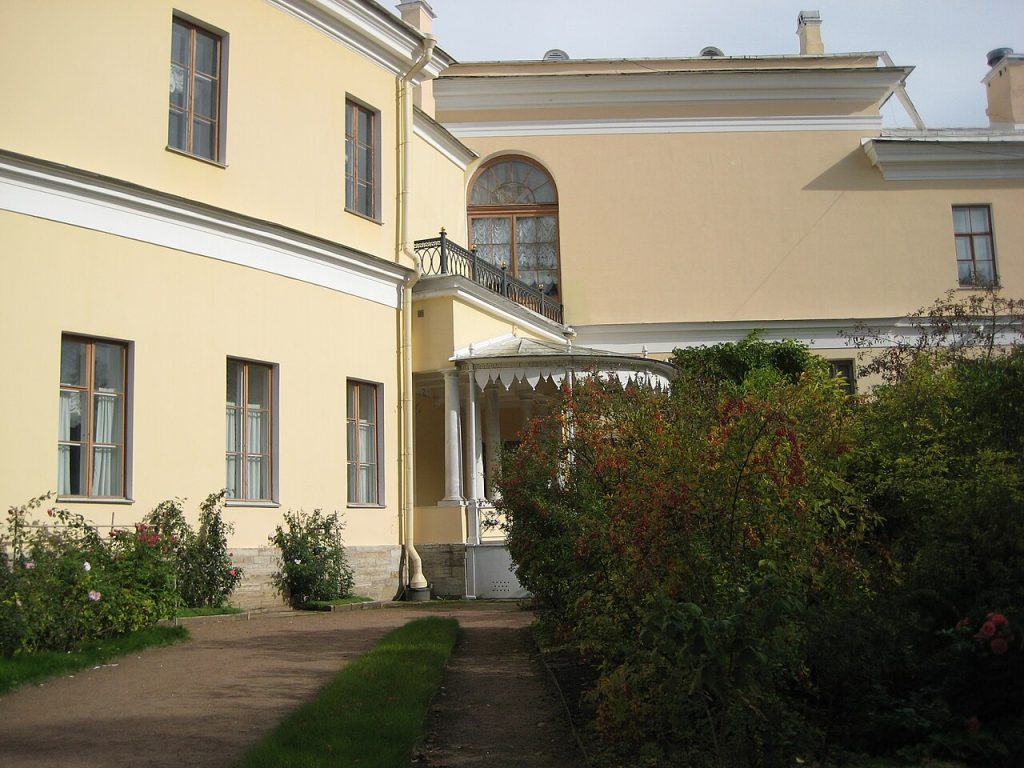
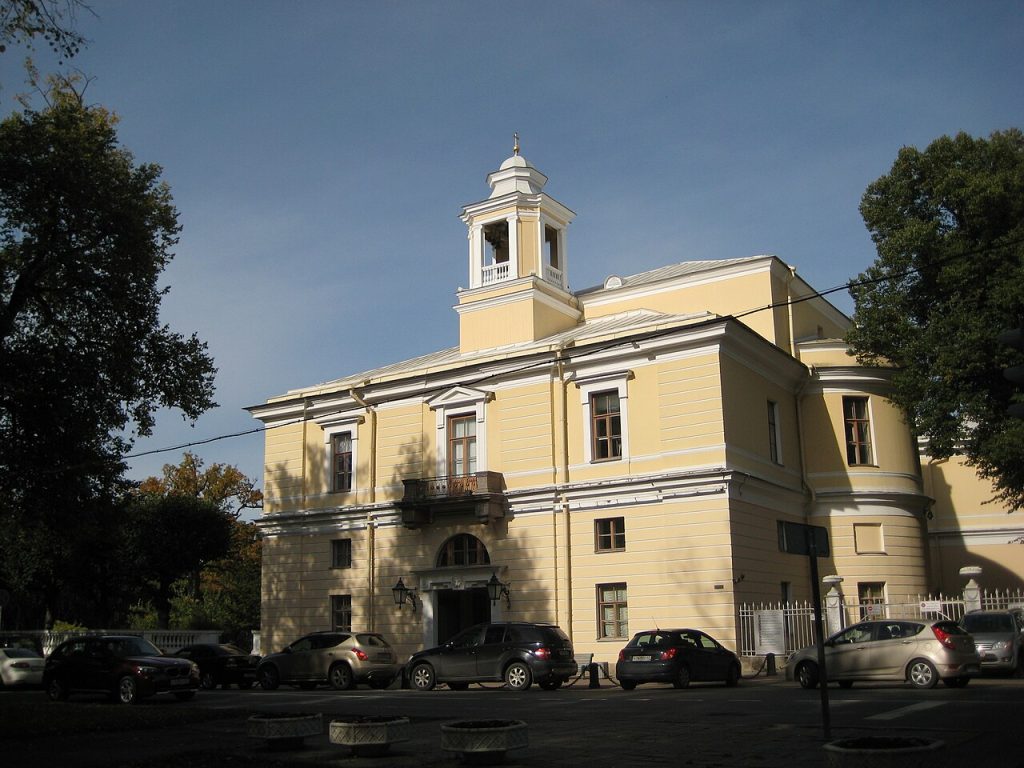
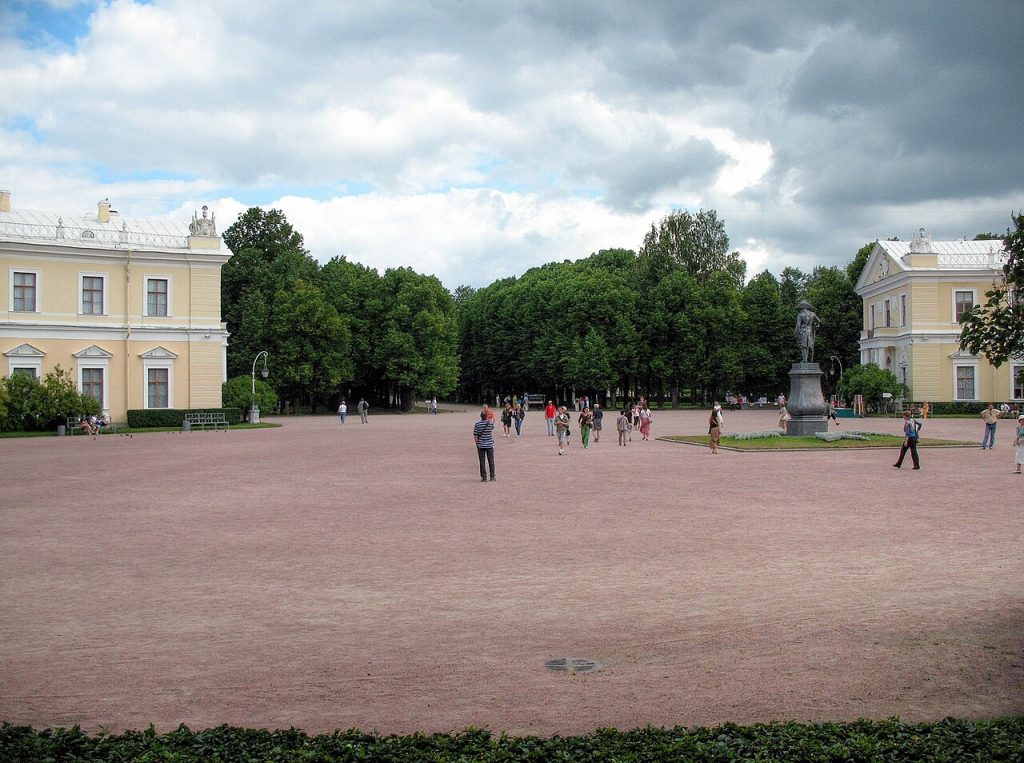
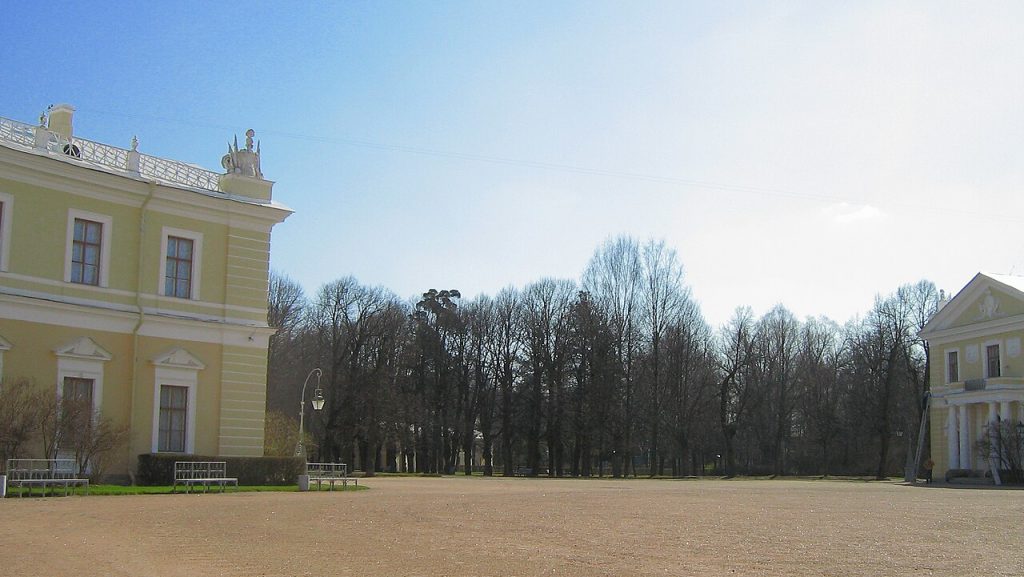
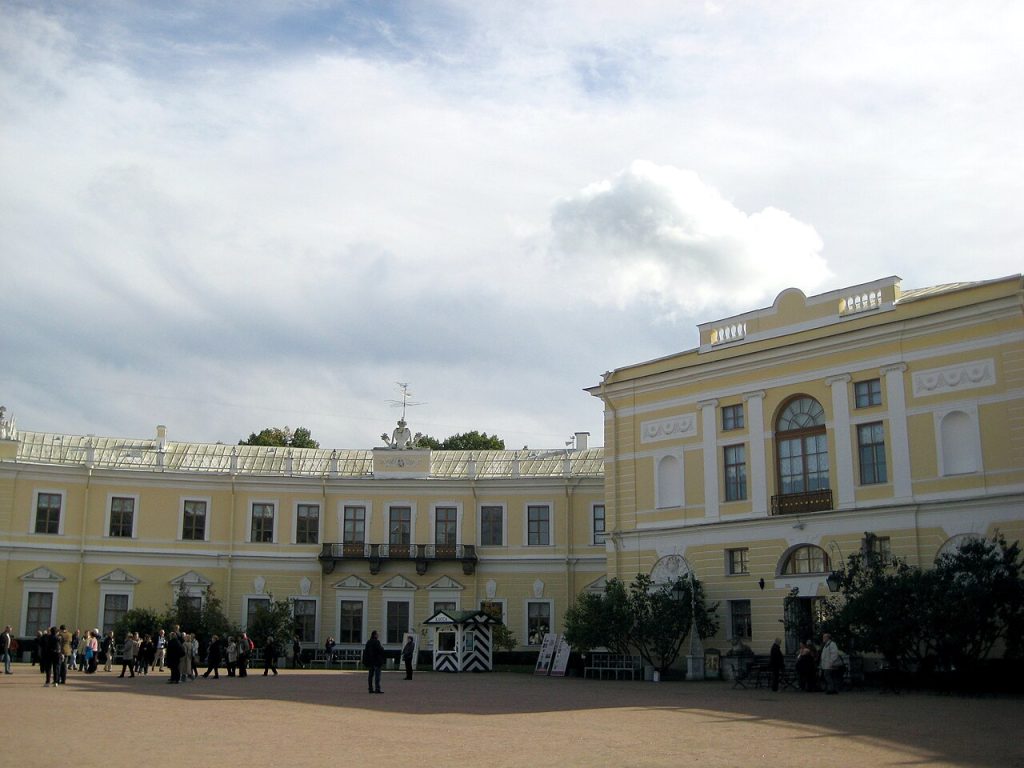
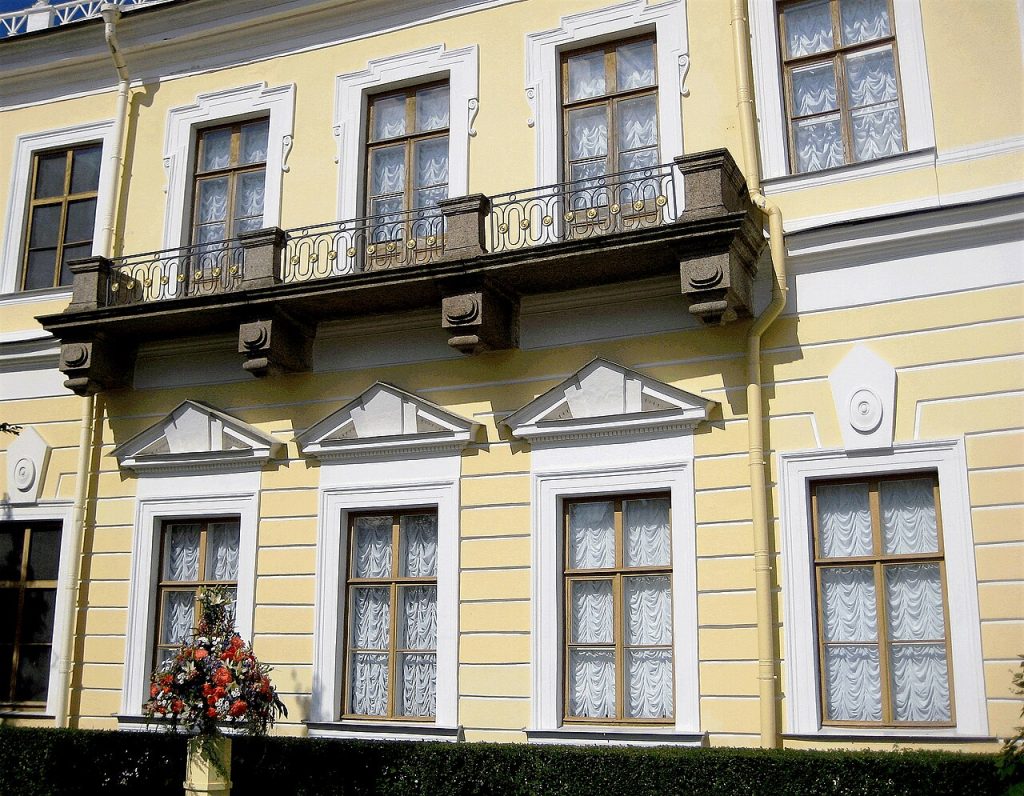
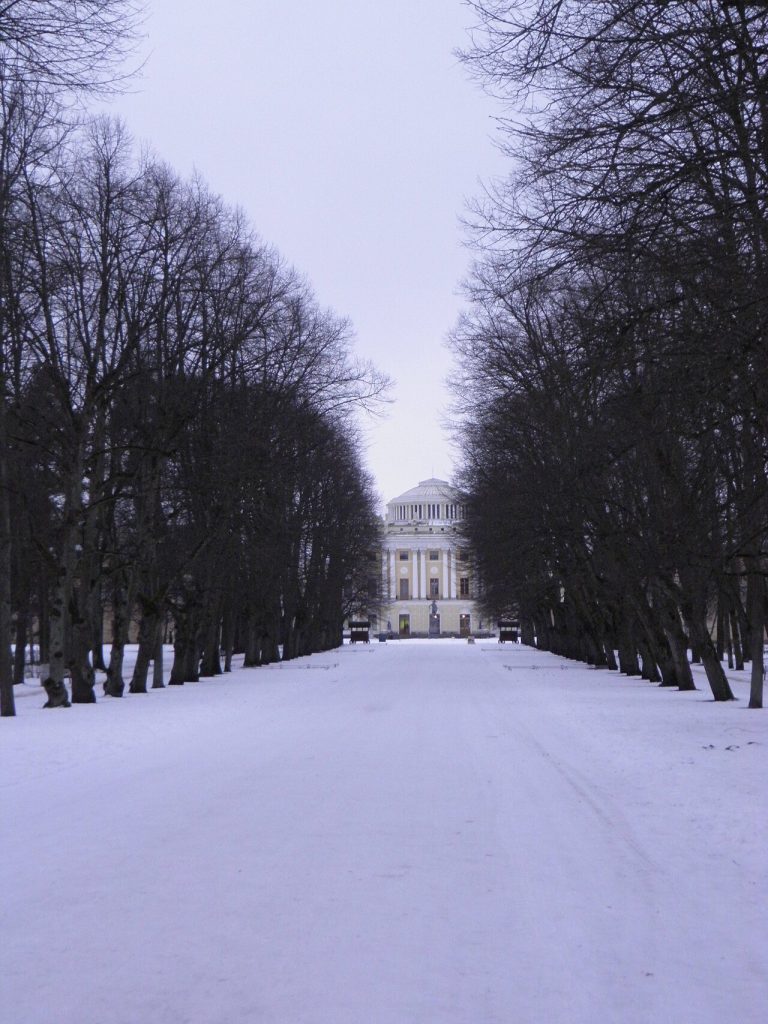
In 1780 Catherine lent the young couple her own favorite architect, the Scot Charles Cameron, and in 1782 he began the palace. His design is a Palladian villa raised to imperial scale: a central cube crowned with a low dome on a drum of sixty-four columns, linked by curving open galleries to low service wings that embrace a great circular courtyard.
Cameron placed the building exactly where the landscape wanted it, on the brow of the hill above a bend of the Slavyanka, so that the dome closes vistas from all over the park. The palace does not dominate its valley as Peterhof dominates its shore; it presides, the way a temple presides over a sacred grove.
Relations between the architect and Paul were prickly, and Cameron’s cool Greek taste sometimes clashed with his patrons’ wish for splendor, but the essential conception survived every later change. Architects added and enriched for decades; none dared touch the proportions of the cube and the dome.
The Grand Tour of the Owners
In 1781 Paul and Maria Feodorovna set out on a fourteen-month tour of Europe under the thin incognito of the Count and Countess of the North. The journey, through Austria, Italy, France, and the Netherlands, became one long shopping expedition for the house rising at Pavlovsk, and it formed the couple’s taste for the rest of their lives.
In Rome they sat for artists and bought antique sculpture; in Venice, glass; in Paris, where Marie Antoinette entertained them at Versailles, they ordered furniture from the greatest cabinetmakers, bronzes, Sevres porcelain, and silks from Lyon by the kilometer. Sixty years later, packing cases from the trip were reportedly still being opened.
The result gives Pavlovsk its special unity. The palace was furnished in a single campaign, by a single pair of eyes, with the best contemporary work of France and Italy, and much of that founding collection survives in the rooms it was bought for, a completeness almost no other European palace can claim.
Brenna and the Imperial Upgrade
When Paul became emperor in 1796, Pavlovsk was promoted overnight from a grand duke’s villa to an imperial residence, and the architect Vincenzo Brenna was ordered to make it look the part. He raised the side galleries and wings, added church and library blocks, and warmed Cameron’s Greek restraint with Roman magnificence inside.
Brenna’s state rooms along the central block turned the villa into a palace. His paired Halls of War and Peace flank the Grecian Hall; his Picture Gallery and great Throne Room filled the new southern wing. Trophies, eagles, and armor in gilded stucco announced an emperor who worshipped military order, yet the rooms kept a domestic scale unusual for a throne’s setting.
Paul’s reign lasted less than five years before his murder in 1801, and Pavlovsk passed in full to his widow. The palace thus bears three signatures in sequence, Cameron’s architecture, Brenna’s imperial decoration, and Maria Feodorovna’s taste, fused so gracefully that visitors rarely sense the seams.
The Great Interiors
The tour of the state floor is a lesson in neoclassicism at its most refined. Its centerpiece is the Grecian Hall, a chamber ringed by fluted Corinthian columns of green faux marble, with antique sculpture in niches and light falling as evenly as in a temple. Many judge it the most beautiful room in Russia.
On either side open the Italian Hall beneath the dome, lit from the lantern high above and lined with Roman antiquities, and the twin apartments of Paul and Maria Feodorovna. The empress’s suite culminates in her famous boudoir and the State Bedroom, where a ceremonial bed of gilded wood stands beneath a canopy of painted silk never meant to be slept in.
Everywhere the furnishings are the point: suites by Henri Jacob, bronzes by Thomire, Sevres toilet services, tapestries from royal French looms, and the empress’s own ivory carvings and cameos, for she was a skilled artist herself. Pavlovsk’s rooms hold the best domestic ensemble of the age of Louis XVI anywhere, including France.
Maria Feodorovna’s Palace
For a quarter century of widowhood, Maria Feodorovna made Pavlovsk the intellectual and artistic court Russia’s capital often failed to be. Writers and poets read in her salons; Krylov recited his fables under the park’s trees; scientists and painters found a patroness who understood their work and paid for it.
The dowager empress rose early, carved ivory and amber at her lathe, drew, embroidered, and managed charities that made her name beloved. Her private library, designed for her by Carlo Rossi in 1824, still curves its mahogany bookcases above the garden, one of the most elegant rooms of its kind in Europe.
She died in 1828, and the palace passed through younger branches of the dynasty, acquiring a museum character long before the revolution. Her descendants treated Pavlovsk as a shrine to her memory, keeping rooms and collections intact, a piety that unknowingly prepared the estate for its later career as a museum.
The Fire of 1803 and Voronikhin
In January 1803 a chimney fault set the central block ablaze, and in a single night the heart of the palace burned, taking Cameron’s and Brenna’s finest ceilings with it. Maria Feodorovna watched the glow from the road from St Petersburg, and contemporaries feared the loss was final.
It was not. The empress summoned Andrei Voronikhin, the architect of the Kazan Cathedral and a former serf, and he rebuilt the state rooms in three years, preserving their designs where records allowed and improving them with his own grave, inventive classicism where they did not. Much of the furniture had been saved from the flames, and the collections returned enriched.
The fire thus added a fourth master to the palace’s roll of architects, and later a fifth, when Carlo Rossi contributed the library wing. Pavlovsk became a complete anthology of Russian neoclassicism, every great name of the era represented under one green dome.
Designing the Park
Pavlovsk’s park is the largest landscape garden in Russia and among the largest in the world, some six hundred hectares of composed nature along both banks of the Slavyanka. Cameron laid its foundations in the English manner, turning the river valley into a sequence of pictures: a mill pond here, a cascade there, bridges placed exactly where a painter would want them.
After him the park passed to Brenna, who added formal passages near the palace, and then to the painter and designer Pietro Gonzaga, who worked at Pavlovsk for over thirty years. Gonzaga thought in masses of trees as a composer thinks in chords, clearing and planting whole districts, among them the famous White Birch district, into meadows and groves of calculated wildness.
The result rewards walking as almost no other park does. Vistas assemble and dissolve with every hundred steps, the dome of the palace appearing between trees across the valley and vanishing again, and even on crowded summer Sundays the outer districts offer hours of near solitude.
Temples and Pavilions
Scattered through the park stand pavilions that are masterpieces in their own right. Cameron’s circular Temple of Friendship, dedicated by the young couple to Catherine the Great, stands in a loop of the river, the first building in Russia to use the Greek Doric order. His Apollo Colonnade on the hillside gained its romantic ruin look from a storm, which the owners liked too much to repair.
Nearer the palace, the Pavilion of the Three Graces holds a marble group carved from a single block; the Rossi Pavilion, built to Rossi’s design a century after his death, honors Maria Feodorovna with a bronze statue beneath its dome. Deeper in the woods, the Mausoleum to Paul, a stern Doric temple by Thomas de Thomon, carries the widow’s grief in a grove of dark firs.
The park’s buildings never compete with the landscape; they punctuate it. Each sits at the end of an alley or the head of a valley, giving a walk its destination and the view its final line, exactly as the estate’s designers intended two centuries ago.
The Musical Station
Pavlovsk holds an odd distinction in the history of both railways and music. Russia’s first railway, opened in 1837, ran from St Petersburg through Tsarskoye Selo to Pavlovsk, and to lure the public aboard the company built a grand concert hall and pleasure pavilion at the terminus in the park, the famous Vauxhall, whose name entered Russian as the word for a railway station.
For eight decades the Pavlovsk station was the summer music capital of Russia. Johann Strauss the younger conducted whole seasons here in the 1850s and 1860s, worshipped by Petersburg audiences; later seasons brought Glazunov, Liadov, and the young Shostakovich’s generation to a hall set among the trees.
The Vauxhall burned in the Second World War and was never rebuilt, but its memory colors the park’s identity. Concerts return to the palace’s halls and the park’s lawns each summer, and Pavlovsk keeps its old reputation as the greenest address in Russian music.
War and the Evacuation Miracle
When war came in 1941, Pavlovsk’s staff achieved one of the great rescues in museum history. Under the direction of the young curator Anna Zelenova, thousands of the most precious objects were packed and shipped east or hidden in the city in the weeks before the Germans arrived; statues too heavy to move were buried in the park, their locations known only to a few.
The occupation lasted twenty-eight months, and the liberation of January 1944 revealed catastrophe: the palace burned to a shell, the park felled by the hectare for bunkers and firewood, seventy thousand trees gone. Photographs of the gutted Grecian Hall became emblems of cultural war wounds across the Soviet press.
Yet the evacuation had saved the soul of the place. The furniture, bronzes, porcelain, and paintings survived almost entire, waiting in storerooms for walls worthy of them, and the buried statues rose from the lawns unharmed. No other great palace entered restoration with so much of its authentic contents intact.
The Model Restoration
Pavlovsk was the first of the ruined palaces to be fully reborn, and its restoration set the method all the others followed. Zelenova, who ran the museum for three decades, insisted on scientific completeness: every surviving fragment catalogued, every paint layer analyzed, craftsmen trained in dead techniques, no invention where documents existed.
The park opened first, then the earliest halls in 1957, and by 1978 all the state rooms stood complete, the fastest full resurrection among the imperial residences. Because the original furnishings had been saved, the rooms could be dressed again with their own contents rather than substitutes, which is why Pavlovsk today feels inhabited rather than reconstructed.
Museum professionals still study the Pavlovsk campaign as the standard of palace restoration, and the museum honors its savior: Zelenova’s name is attached to the halls and her story told alongside the empresses’. The palace owes its life twice over to determined women.
Collections and Atmosphere
Beyond the state floor, the palace shows collections that reward unhurried attention: Greek and Roman antiquities bought in Italy, one of the world’s great gatherings of eighteenth-century French furniture and Sevres porcelain, tapestries, costume, and the private rooms of the family on the ground floor, more touching for their modest scale.
What distinguishes Pavlovsk from its grander neighbors, though, is atmosphere. The palace receives a fraction of the Catherine Palace’s crowds, the halls are often quiet, and the staff’s attachment to the place is proverbial. Visitors who come for an hour routinely stay for a day, finishing on a bench above the Slavyanka with the dome golden in the evening light.
Connoisseurs’ verdicts agree across two centuries: if you can see only one interior ensemble of the neoclassical age, see Pavlovsk. It is the imperial residence that asks to be loved rather than admired, and it repays the preference without fail.
Watch Pavlovsk Palace on Film
Visiting Pavlovsk Palace Today
Pavlovsk lies about thirty kilometers south of St Petersburg, one stop beyond Tsarskoye Selo on the suburban line from Vitebsky station, and the park gate stands a short walk from Pavlovsk station. Minibuses also run from Moskovskaya and Kupchino metro stations. The palace is open daily except Fridays, with the park charging a small admission in daytime hours. Combining Pavlovsk with the Catherine Palace in one day is possible but hurried; the park alone deserves half a day, and bicycles and rowboats can be hired in season. Winter brings cross-country skiing and sledge rides under the firs. You can find the palace on the map here: Pavlovsk Palace on Google Maps.
Palaces Nearby
You May Like
The Alexander Palace and the Last Home of the Romanovs