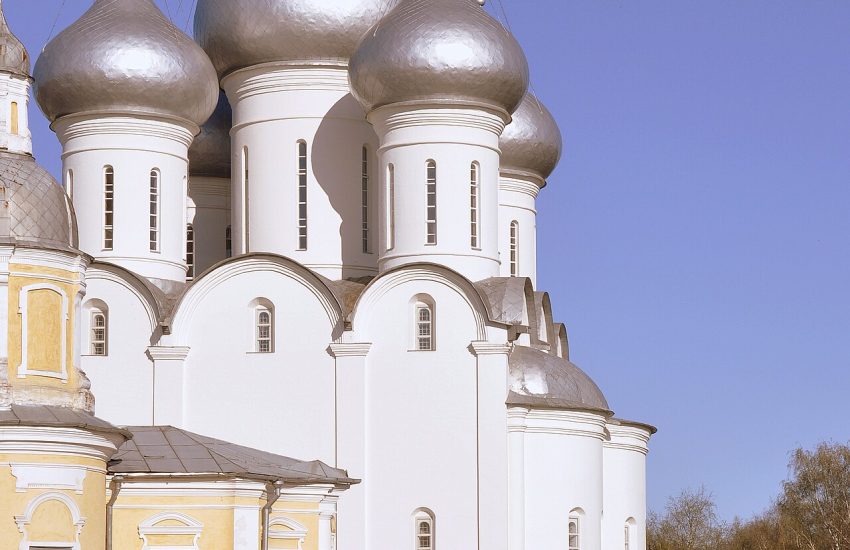
On the banks of the Volkhov river, where the water leaves Lake Ilmen for its run to the Baltic, stands the fortress of the strangest state old Russia produced. The Novgorod Kremlin, the Detinets, guarded not a prince’s court but a republic: for three and a half centuries the city of Novgorod the Great governed itself through the veche, the shouting assembly of its citizens, hiring and firing its princes like contractors, trading from the Atlantic to the Urals, and calling itself, with a merchant’s piety, Lord Novgorod the Great.
Within the Kremlin’s red walls stands Russia’s oldest building, the Cathedral of St Sophia of the 1040s, and beside it the republic’s rarest survivor: the Faceted or Vladychnaya Chamber of 1433, a Gothic brick hall built by German masters for the archbishop’s court, the only Gothic interior in Russia, where the republic’s council met, where its fate was sealed by Ivan III in 1478, and where, by the chronicle’s grim poetry, the veche bell that had called the assembly for centuries was taken down and carried to Moscow, the republic’s voice deported like Uglich’s a century before.
This guide tells the republic through its fortress: the merchant empire and its shouting democracy, Sophia’s millennium and its bronze gates taken in war, the archbishops who were the republic’s true chairmen, the Gothic chamber and the dinner at which Moscow’s tsar arrested his hosts, the fall of 1478 and the terror of 1570, the millennium monument that put the whole story in bronze, and the practical details of visiting the city where Russian history keeps its road not taken.
- Lord Novgorod the Great
- The Shouting Democracy
- The Detinets on the Volkhov
- St Sophia, Russia’s Oldest Building
- The Gates of Magdeburg and Sigtuna
- The Archbishops’ Republic
- The Faceted Chamber of 1433
- The Hansa and the Merchant World
- Alexander Nevsky’s City
- The Fall of 1478
- Ivan the Terrible’s Punishment
- The Millennium of Russia Monument
- War, Rebirth and UNESCO
- Watch the Novgorod Kremlin on Film
- Visiting the Novgorod Kremlin Today
- Palaces Nearby
Lord Novgorod the Great
Novgorod stands at Russian history’s source: the chronicle brings Rurik himself to the Ilmen country in 862, the city counting itself the dynasty’s first seat before Kiev, and by the twelfth century the vast north, from the Baltic approaches to the Urals’ fur lands, answered to the city on the Volkhov, an empire of rivers run by merchants and governed, after the rising of 1136 expelled its prince, by the city itself.
The republic’s constitution grew practical and strange: princes were invited by contract, to lead the army and share justice, forbidden to own land in the territory, and expelled when they displeased, Novgorod showing the prince the road in the chronicle’s phrase, fifty-eight times by one count; the city meanwhile elected its posadnik mayors, its tysyatsky commanders, and, uniquely, its archbishop, sovereignty worn by the whole urban commune, Lord Novgorod the Great.
The wealth beneath the constitution was fur above all, the north’s squirrel and sable flowing through Novgorod to the German sea, with wax, honey, and walrus ivory beside, and the birchbark letters archaeology lifts from the wet soil by the thousand, shopping lists, love notes, children’s homework from the 1200s, prove the merchant city’s literacy ran to its artisans and women, a commercial society documenting itself as nowhere else in medieval Europe.
The Shouting Democracy
The veche was the republic’s sovereign: the assembly of free citizens, summoned by the bell to the yard by the market or before Sophia, which made war and peace, adopted laws, invited and expelled princes, and elected the magistrates, by acclamation rather than ballot, the louder side carrying, with disputes settled, the chronicle admits, by fists on the Volkhov bridge, democracy at its most meteorological, and yet lawful enough to run an empire for three centuries.
Historians argue the assembly’s breadth, the great boyar clans steering through their street communities, the Council of Lords preparing decisions, oligarchy wearing democracy’s voice, but the constitutional fact stands: authority in Novgorod rose from the town, not the throne, charters began from all Novgorod the Great, and the bell, not the crown, was sovereignty’s symbol, which is exactly why Moscow, when it came, came for the bell first.
The veche’s memory became Russia’s political mirror: every later generation argued itself through Novgorod, Decembrists and populists raising the bell as the lost alternative, official historians dismissing a mob’s anarchy, the debate itself the republic’s longest echo, still audible wherever Russians discuss what their history might have chosen instead.
The Detinets on the Volkhov
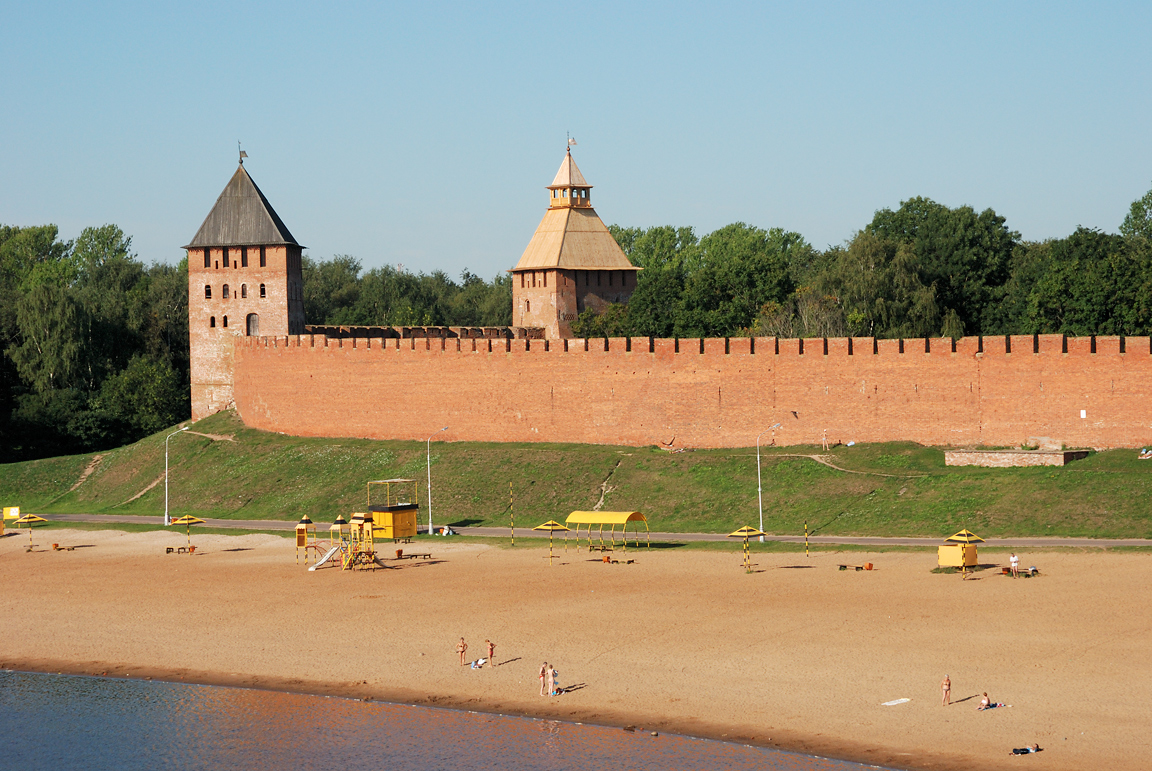
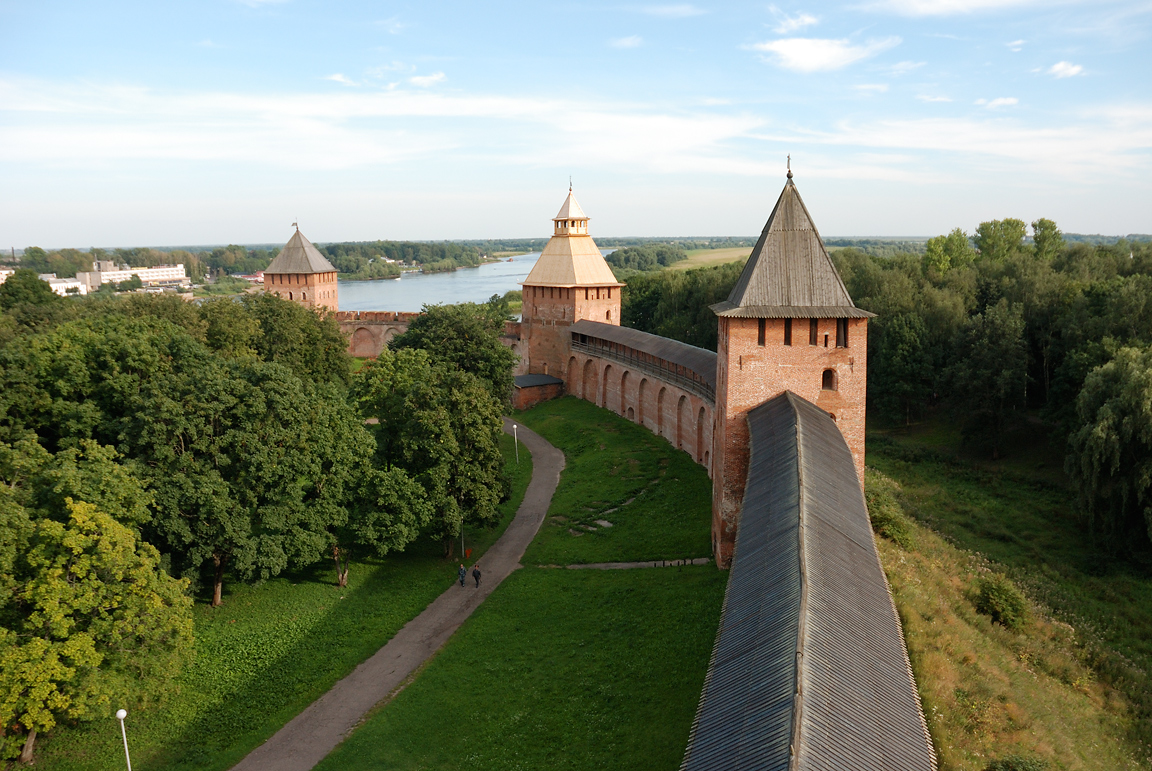
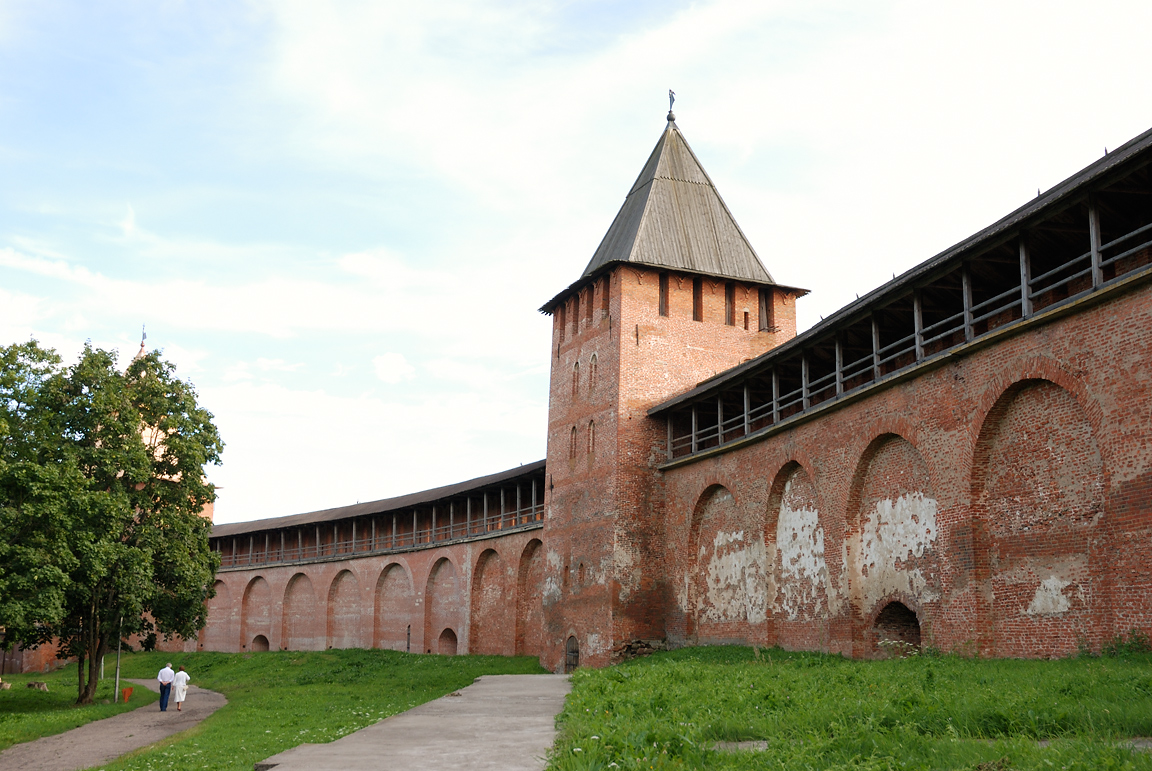
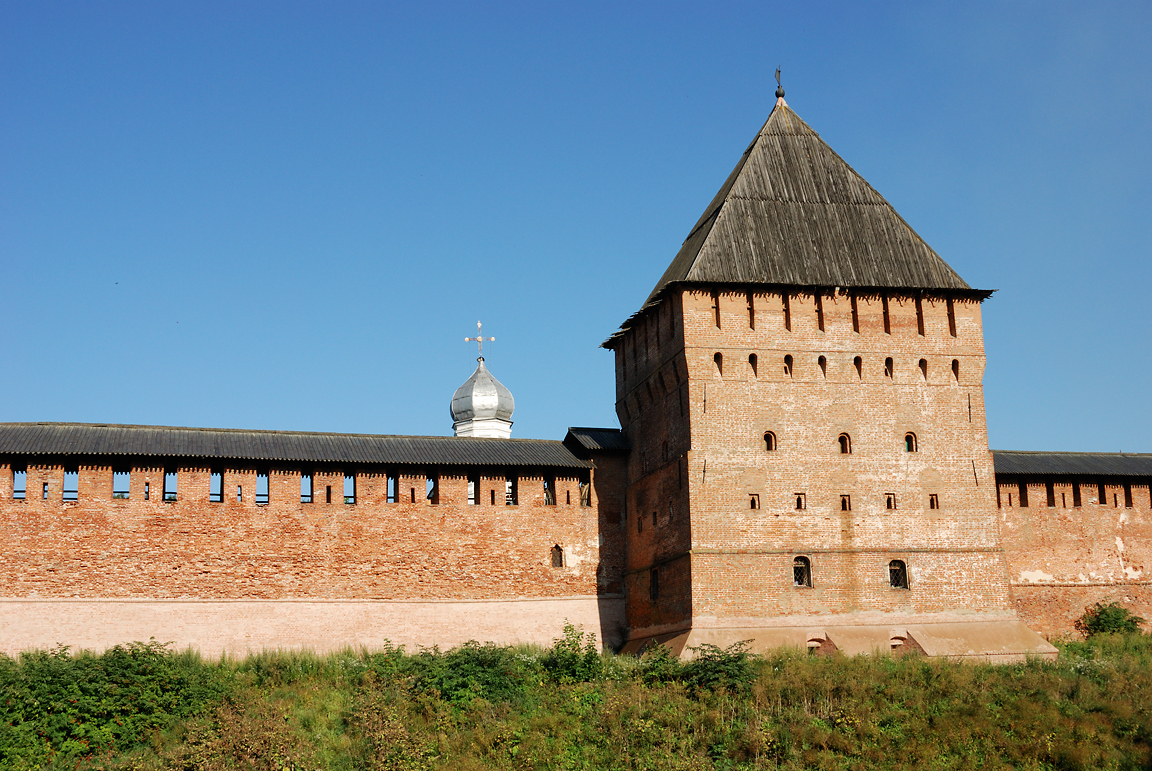
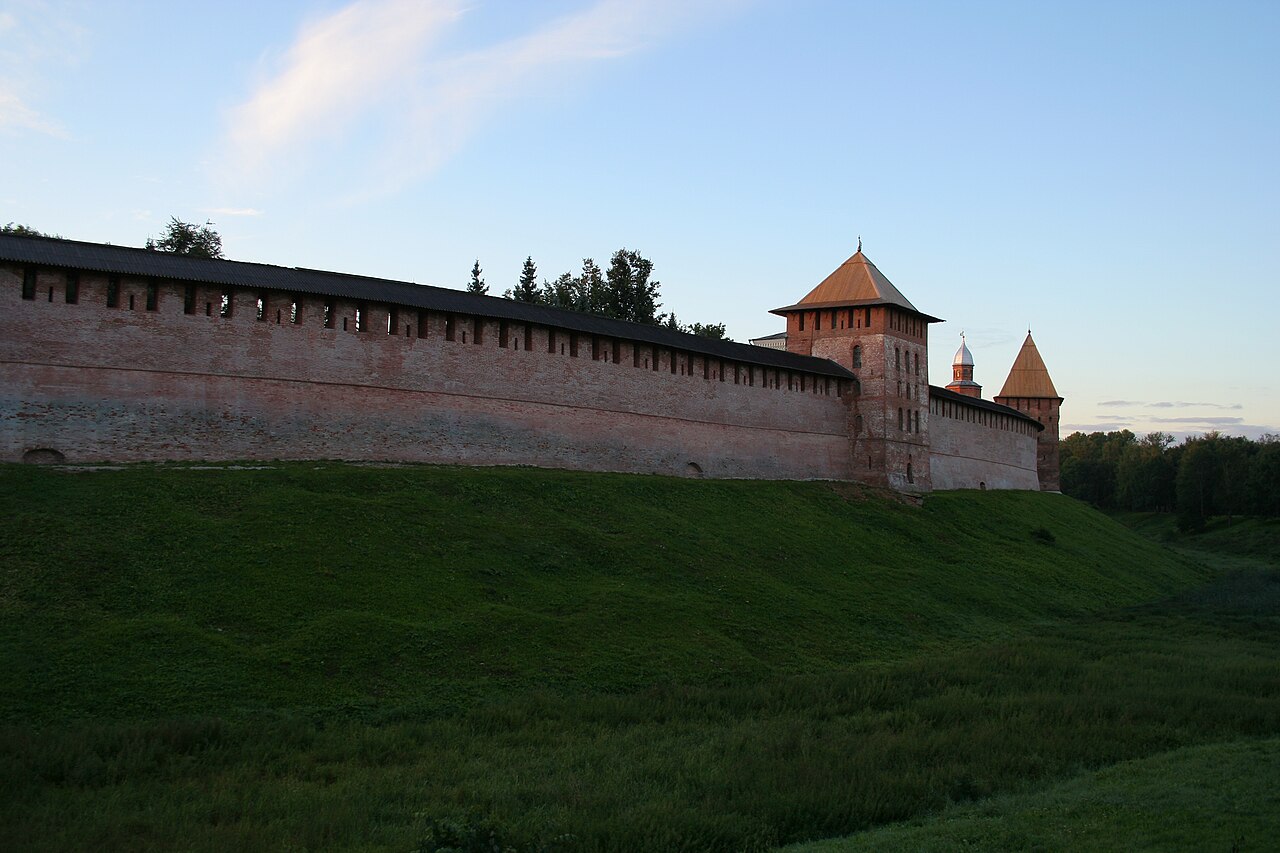
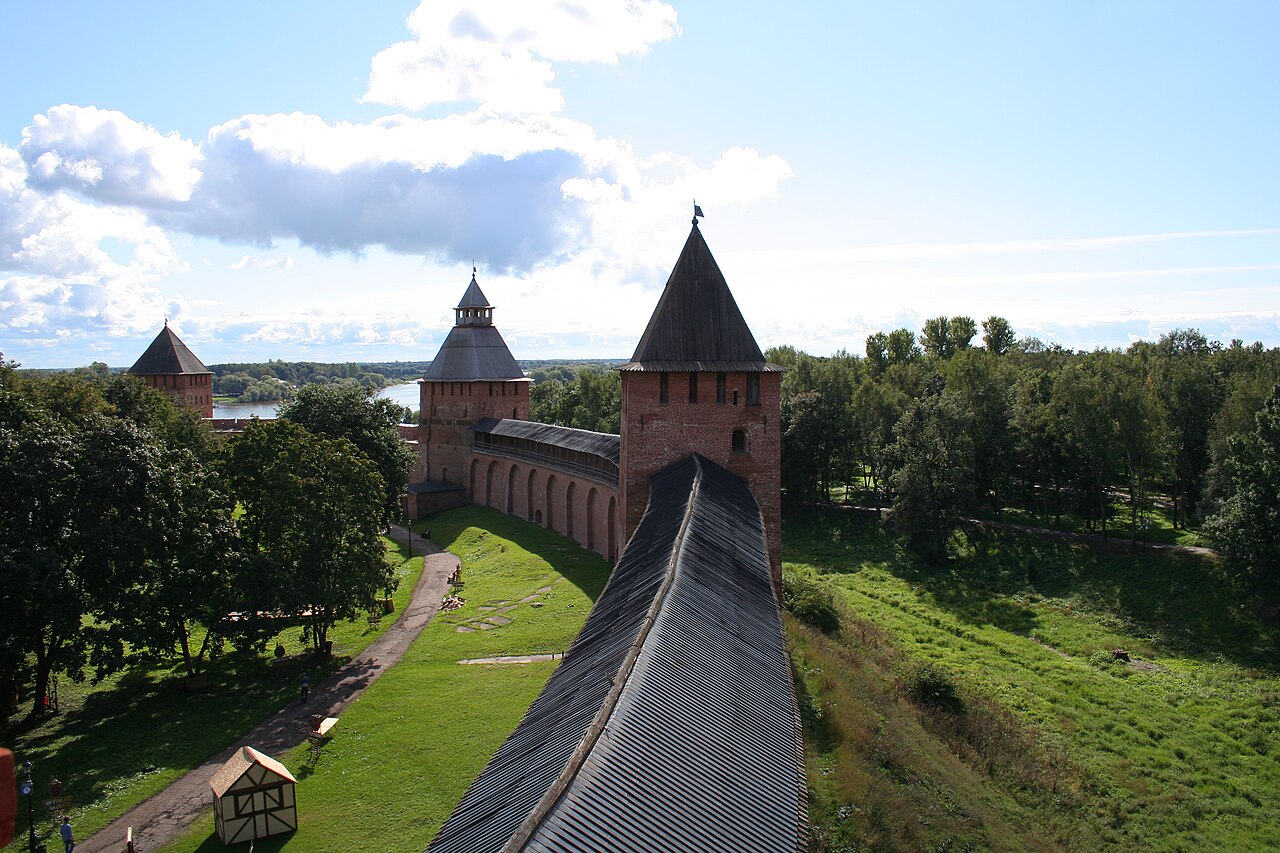
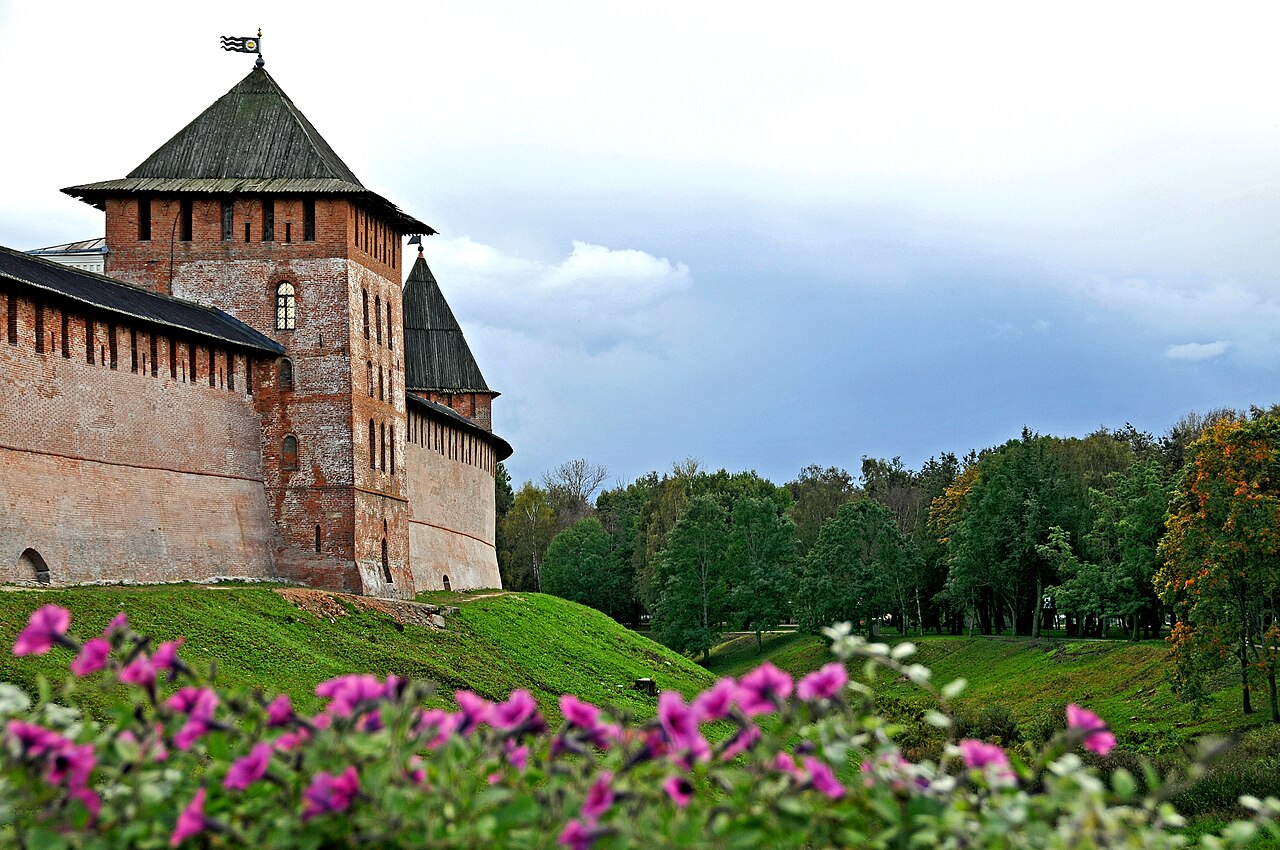
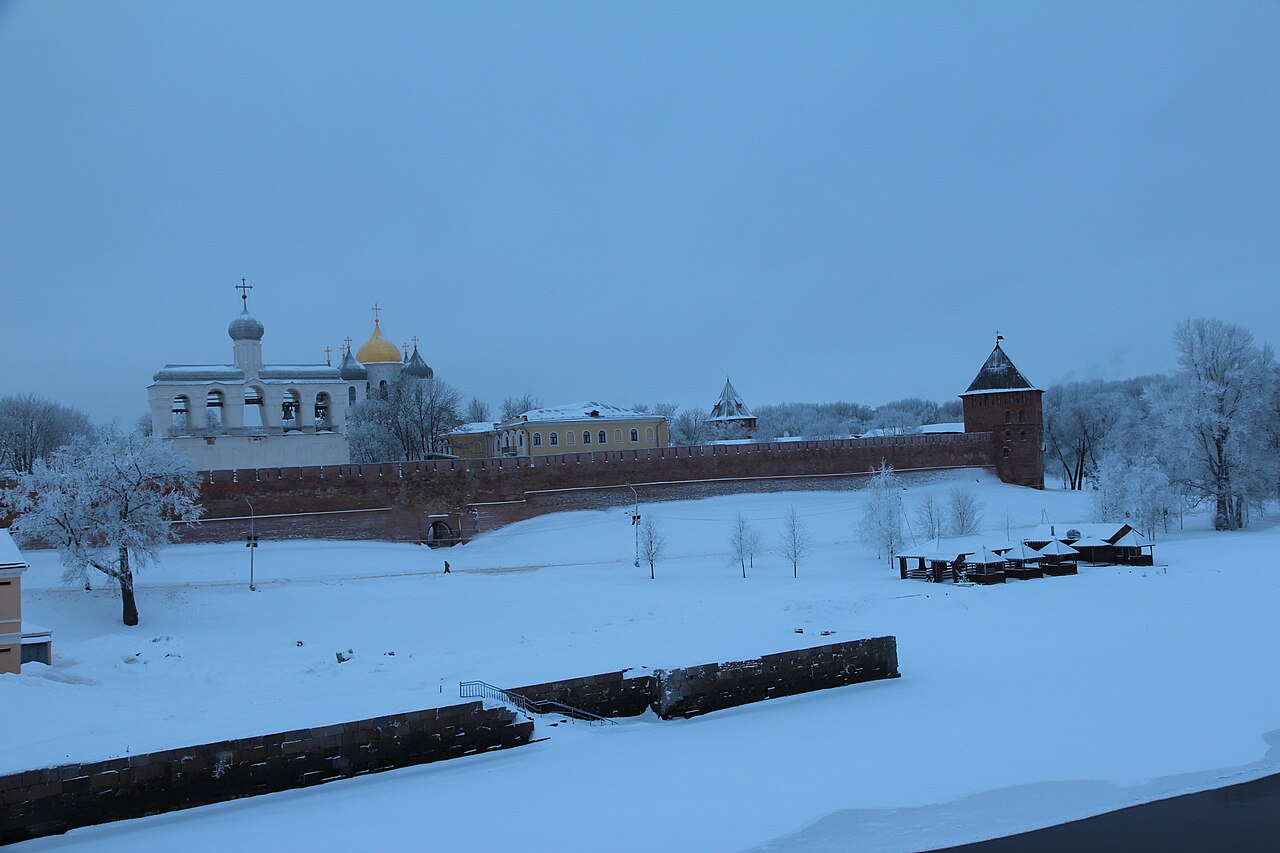
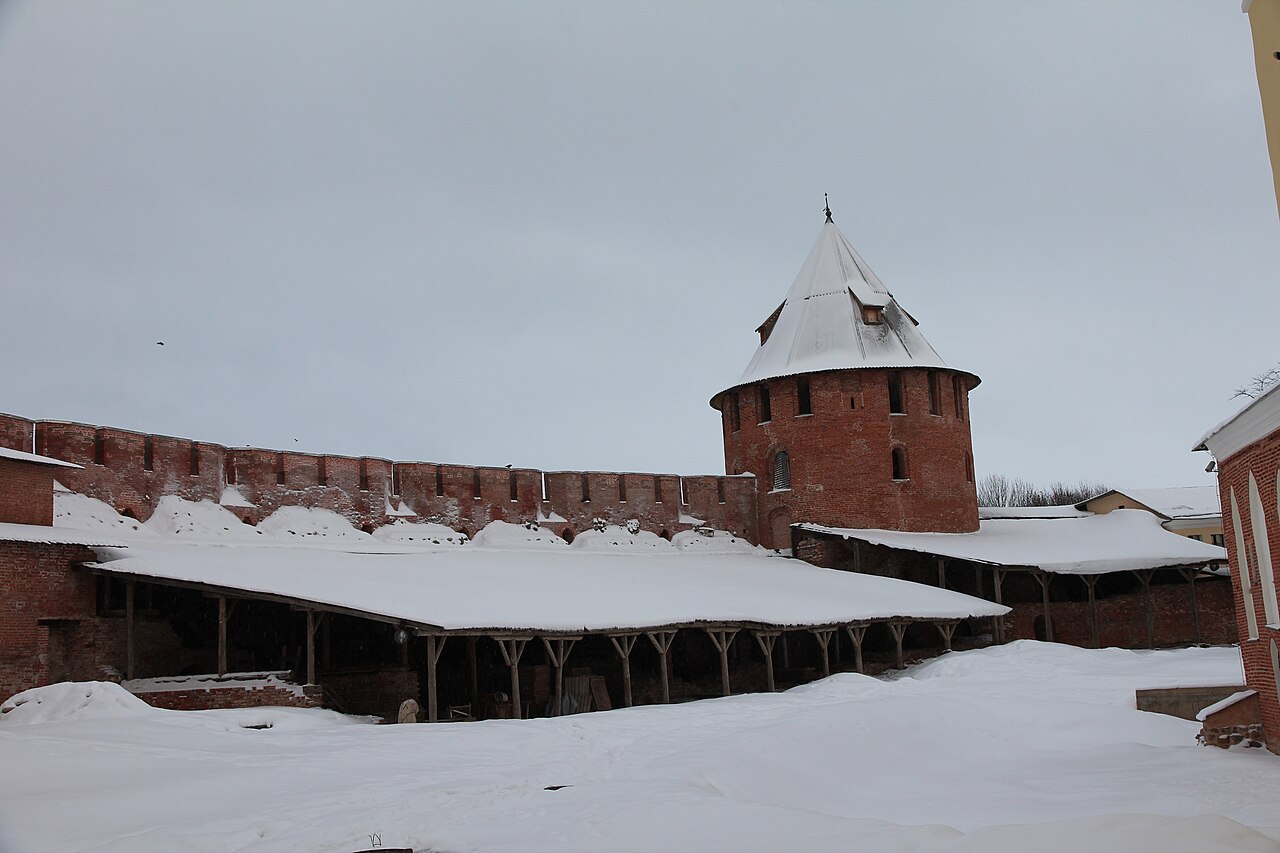
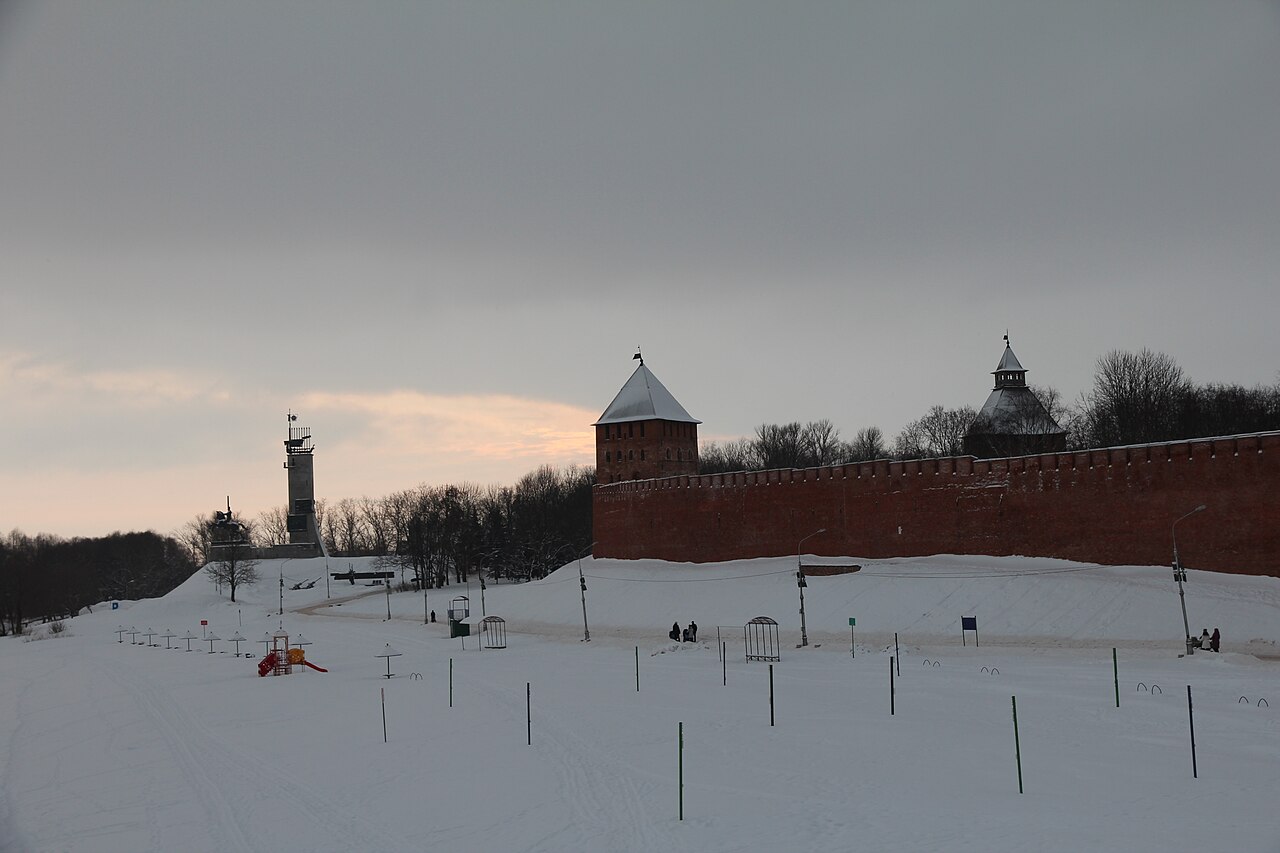
The fortress the Novgorodians call the Detinets holds the Volkhov’s left bank, the Sophia side, facing the market side across the water: founded in the mid-eleventh century under Prince Vladimir Yaroslavich, rebuilt in stone from the fourteenth, and given its present red-brick form in the 1480s under Moscow’s new management, Italian engineering updating the republic’s shell just as the republic ceased to need it, nine towers surviving of twelve, walls running a kilometer and a half around the state’s old heart.
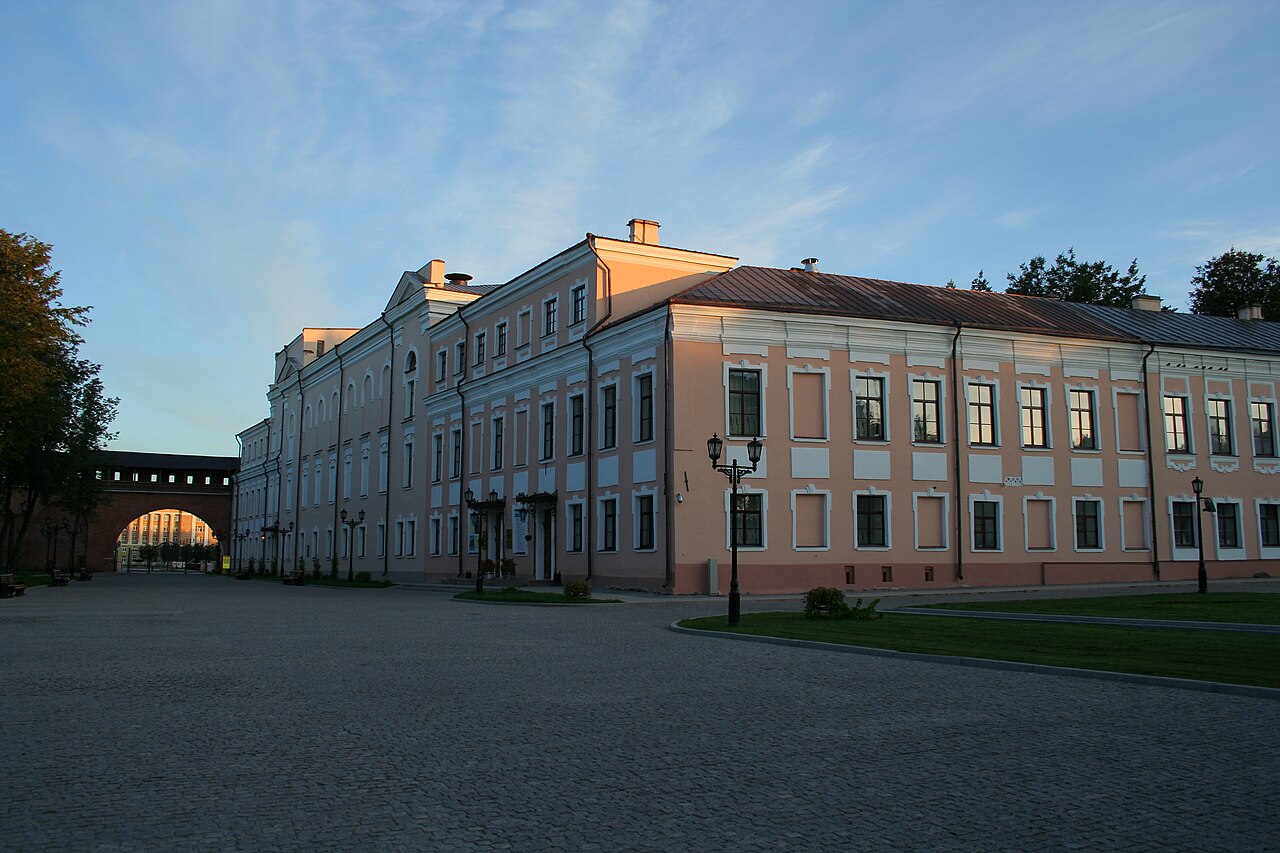
Within, the plan preserves the republic’s anatomy: Sophia and its belfry, the archbishop’s court with its chamber filling the northern half, the yard where the Sophia-side veche gathered, and the southern reaches where the museum’s successors to the chancelleries stand, the fortress less a castle than a civic acropolis, church, government, and treasury walled together above the river.
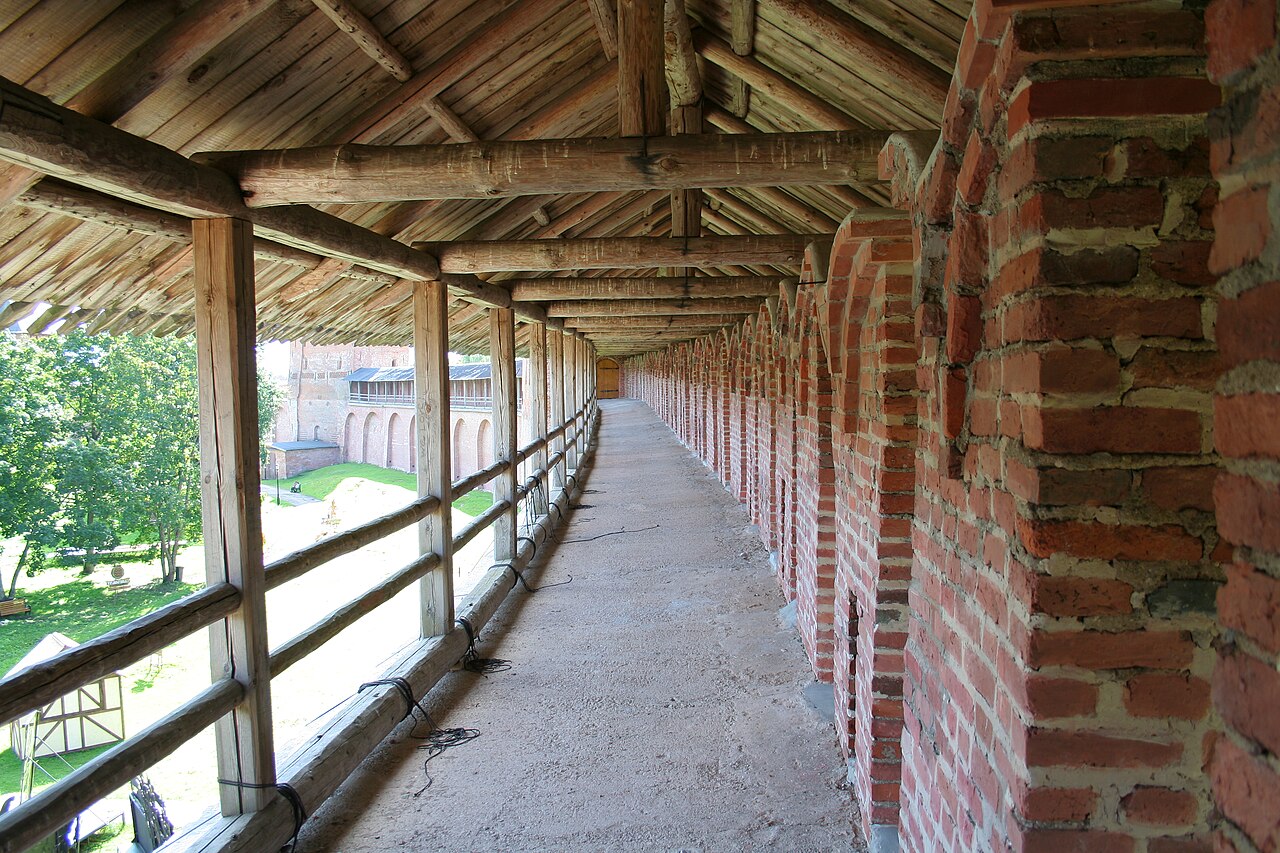
The walk along the walls and through the arched gates delivers the city’s geography in one pass: the Volkhov bridge where the factions brawled, the market side’s churches ranked along the far bank, the lake’s horizon south, and the fortress’s own red circuit, the republic’s shape still legible five centuries after the republic, which is the Detinets’ particular gift among Russian kremlins.
St Sophia, Russia’s Oldest Building
The Cathedral of St Sophia is Russia’s oldest standing building and the republic’s soul: raised 1045 to 1050 by Prince Vladimir, Yaroslav the Wise’s son, in deliberate echo of Kiev’s and Constantinople’s Sophias, five austere domes over walls of plastered stone, the central cupola gilded in the fifteenth century and carrying since, by legend, the lead dove that will fly only when Novgorod perishes, the bird thus bearing more civic responsibility than most parliaments.
Where Novgorod is Sophia, there is Novgorod, the city’s saying ran, and the cathedral served as the republic’s cathedral, archive, treasury, and reliquary at once: the state’s charters kept in its vaults, the campaigns blessed and the magistrates sworn beneath its frescoes, the city’s saints and princes, Vladimir the builder among them, buried along its walls, the building functioning as the republic’s constitution in stone.
The interior keeps its millennium visibly: fresco fragments of the eleventh and twelfth centuries, the vast later cycles, the Byzantine-era icons on the iconostases, graffiti scratched by medieval worshippers in Glagolitic and Cyrillic, prayers, names, one famous complaint about a choir, and the working cathedral’s services continuing over it all, Russia’s oldest building declining, after a Soviet museum interlude, to be only a monument.
The Gates of Magdeburg and Sigtuna
Sophia’s west entrance wears the republic’s war trophies: the Magdeburg Gates, bronze doors of the 1150s cast in German Magdeburg with forty-eight relief panels of the scriptures, bishops, and the casters themselves, seized, the prevailing account holds, in the Novgorodians’ 1187 raid on the Swedish town of Sigtuna and reassembled here by the Russian master Avram, who added his own self-portrait among the German founders, medieval appropriation with attribution.
The gates’ panels made them the republic’s public picture-book: Gospel scenes and allegories in Romanesque bronze, centaurs and sirens at the margins, studied by generations of Novgorod carvers and painters, Western European art installed as the front door of Orthodox Russia’s oldest church, the republic’s cosmopolitan trade written in its very threshold.
Opened only for the greatest feasts, the gates stand otherwise as the cathedral’s ceremonial face, the spot where the city’s history photographs itself, and their survival, through fires, the 1570 sack, and the twentieth century’s removals and returns, counts among the ensemble’s quiet miracles, eight centuries of weather on bronze that was loot before it was liturgy.
The Archbishops’ Republic
The republic’s standing chairman was its archbishop: elected, from 1156, by the city itself, latterly by lots drawn from Sophia’s altar among three candidates, the vladyka presided over the Council of Lords, kept the treasury and the measures, sealed the treaties, judged the church courts, and commanded, through his household, the republic’s diplomacy and much of its building, the merchant state finding in its bishop the one magistrate above the factions.
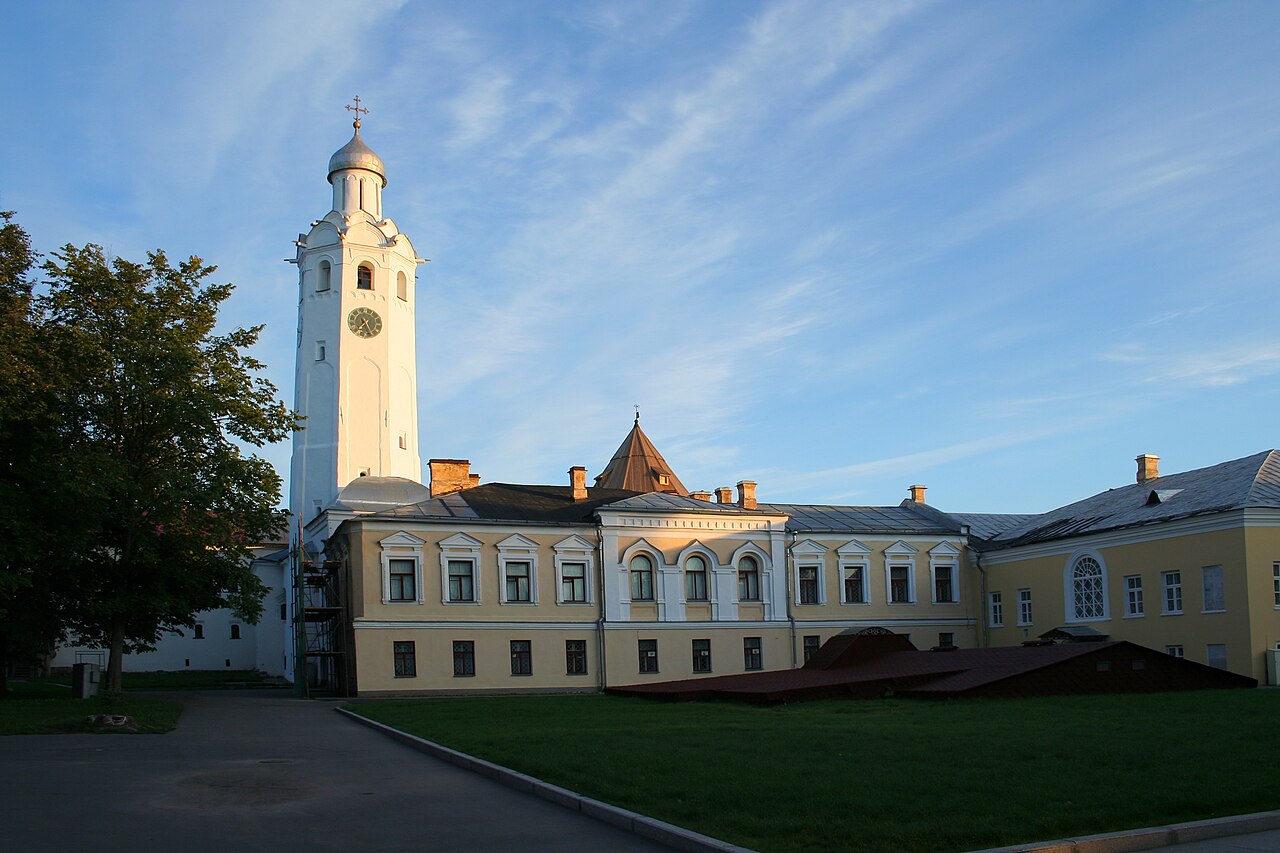
The archbishop’s court in the Detinets was accordingly the republic’s working capital: chambers, chancelleries, and the vladyka’s own regiment of clergy and clerks filling the fortress’s north, with the great builders among the hierarchs, Euthymius II above all in the fifteenth century, raising the court to European splendor, his clock tower of 1443 still standing over the yard beside the chamber his German masters built.
The office’s power made it the fall’s first target: after 1478 Moscow appointed where Novgorod had elected, archbishop Theophilus departing in chains within years, and the court’s buildings passed to the new order’s governors, yet the ensemble survives as the republic’s most complete architectural witness, the bishop’s palace outliving the bishop’s republic, with its Gothic hall as the star witness.
The Faceted Chamber of 1433
The Vladychnaya, or Faceted, Chamber is the prize: built in 1433 for archbishop Euthymius II by German masters with Novgorod ones, the chronicle records, it is a North German brick hall set down in Russia, its upper chamber’s vaults gathered onto a single central pillar in thirty-two ribbed facets, pointed arches, tracery niches, the only Gothic interior in the country, Hanseatic Europe’s architecture serving an Orthodox republic’s state occasions.
The hall was the republic’s cabinet room: the Council of Lords met here, embassies were received, the church courts sat, and history chose it for the end, in January 1478 Ivan III, having starved the city to terms, dined in this chamber as its master, and here the annexation was pronounced, the veche abolished, the bell ordered down, the republic of three centuries closed over dinner in its own Gothic hall.
Restored in the 2000s to its medieval forms, the chamber now shows the treasury’s masterpieces, the Novgorod goldsmiths’ kratirs and sions of the twelfth century among them, under the ribbed vault’s single palm of brick, the room where Russia’s republican road ended serving as the case for what its civilization made, argument and evidence in one space, the north’s answer to Moscow’s Palace of Facets and its elder by sixty years.
The Hansa and the Merchant World
Novgorod was the Hanseatic League’s easternmost pillar: the German merchants’ Peterhof compound stood across the river on the market side, church, dormitories, and warehouses under the League’s own law, one of the Hansa’s four great kontors with Bruges, London, and Bergen, the fur and wax of the Russian north exchanged here for Flemish cloth, Baltic salt, and silver for three centuries of regulated, quarrelsome, immensely profitable peace.
The trade’s regulations survive in the treaties the archbishops sealed: weights checked against the standards in Sophia’s keeping, disputes judged by mixed procedure, the Germans forbidden retail and the Russians the compound’s interior, commerce fenced by mutual suspicion and running anyway, with the birchbark letters and the kontor’s own records preserving the daily texture, orders, complaints, a German phrasebook of old Russian compiled for the clerks.
Moscow’s conquest closed the world: Ivan III shut the Peterhof in 1494, arresting its merchants, the Hansa’s eastern trade scattering to Riga and Reval, and historians mark the closure among the republic’s true endings, the city’s reason subtracted with its bell, though the market side’s ranked churches, each a merchant corporation’s clubhouse and warehouse, still map the vanished exchange for the walker along the far bank.
Alexander Nevsky’s City
The republic’s most famous contractor was Alexander Nevsky: invited prince of Novgorod through the terrible 1240s, he beat the Swedes on the Neva in 1240, earning his name, quarreled with his employers and was duly shown the road, was invited back within the year as the German knights advanced, and broke the Livonian Order on the ice of Lake Peipus in 1242, the Battle on the Ice, fought under Novgorod’s banners by the republic’s levy with the prince as hired genius.
Nevsky’s harder service was the other front: reading the Mongol storm as unsurvivable, he chose submission and census over glorious ruin, holding Novgorod, never itself sacked by the Horde, to the tribute his brothers’ lands paid in blood, policy his contemporaries cursed and his canonizers vindicated, the saint’s realism purchased at the pride the veche shouted against him.
The city keeps the prince in proportion: his name on the embankment and the bridge, his era’s swords in the museum, and the fortress’s displays giving the republic’s own levy, the mayors and the bishop’s regiment, their due beside the hired hero, Novgorod’s correction to the national cult it launched, employers’ credit where employers’ credit is due.
The Fall of 1478
Moscow’s gathering of Russia required Novgorod’s end, and Ivan III accomplished it in two acts: the 1471 campaign broke the republic’s army at the Shelon river, where the pro-Lithuanian party’s gamble on Casimir’s help failed and the mayoress Marfa Boretskaya’s sons paid first, and the winter siege of 1477 to 1478 starved the city to unconditional terms, the tsar’s chancellery dictating in the Gothic chamber while the town’s delegates exhausted the alternatives.
The sentence was constitutional surgery: the veche abolished, the posadniks retired, the bell taken down and carried to Moscow to hang, pointedly, as one alarm among others, the archbishop’s treasury carted south, and, within a decade, the deportations, thousands of boyar and merchant families resettled into Moscow’s service lands and replaced with Muscovites, the republic’s human constitution dispersed more thoroughly than its buildings.
The chronicle gave the end its indelible line, that the bell was silenced and the liberty of Novgorod the Great therewith, and Russian culture never let the image go: the exiled bell ringing through Lermontov and Herzen, Marfa the mayoress entering opera and argument, the fall of Novgorod serving ever since as the nation’s set text on the price of unification, assigned, as it happens, by the victors’ own historians.
Ivan the Terrible’s Punishment
The republic’s ghost drew one more visitation: in January 1570 Ivan the Terrible, fed denunciations of Novgorod’s treason toward Lithuania, descended with the oprichnina and subjected the already-loyal city to five weeks of judicial massacre, the archbishop deposed at his own altar, the monasteries’ treasuries stripped, and the condemned drowned through the Volkhov ice by the hundreds, the toll disputed between the tsar’s own memorial lists and the chroniclers’ tens of thousands.
The sack broke the city’s recovery for a century: plague and the Swedish occupation of 1611 to 1617 following the terror, Novgorod the Great entering the imperial age as a modest provincial town beneath its outsized monuments, the fortress garrisoned, Sophia’s treasures inventoried north to the new capital’s museums in due course, history’s weight henceforth the town’s chief export.
Memory kept its ledger: the 1570 terror stands in the national history as the autocracy’s self-portrait at its darkest, the second silencing of a city already silenced, and the Kremlin’s exhibitions treat it plainly, the fortress’s bells, recast and rehung across the centuries, ringing over a yard that has heard both the assembly’s shout and the ice’s silence, the full Russian range in one acoustic.
The Millennium of Russia Monument
At the Detinets’ center stands the empire’s own summary: the Millennium of Russia monument of 1862, unveiled for the state’s thousandth year from Rurik’s calling, a six-meter bronze bell, the choice of shape its own commentary in this of all cities, carrying one hundred and twenty-nine figures of the nation’s rulers, saints, writers, and soldiers in tiers, Rurik to Nicholas I, with Novgorod supplying the pedestal and the premise.
The casting’s politics read like a seminar: Ivan the Terrible omitted entirely, the sculptor judging the 1570 host city’s feelings, Marfa the mayoress included in defeat, the writers’ tier admitting Pushkin and Gogol while the censors argued, the monument arguing Russia’s history with itself in bronze, which made it, improbably, beloved, the empire’s family portrait with the quarrels showing.
The Nazis dismembered it in 1944 for shipment as scrap, the liberation catching the pieces crated on the rails, and its re-erection that same year, figures rewelded while the war still ran, became Novgorod’s resurrection emblem, the bell-shaped bronze ringing in the restored Kremlin as the city’s third bell, memorial where the veche’s and Sophia’s once sounded, the millennium’s survivors gathered on their pedestal above the lawn.
Watch the Novgorod Kremlin on Film
Visiting the Novgorod Kremlin Today
Veliky Novgorod lies 190 kilometers south of St Petersburg and 550 northwest of Moscow: Lastochka trains reach it from Petersburg in three hours and a night train serves Moscow, with the Kremlin a short walk from the stations across the old town. The fortress grounds open daily from morning to midnight and are free; St Sophia welcomes visitors outside services, and the museum tickets cover the Faceted Chamber’s treasury, the history exhibitions in the public offices building, the wall walk in season, and the Kokui tower’s viewpoint, combined tickets saving money. Allow a day for Kremlin and market side together, crossing the footbridge for the Yaroslav’s Court churches, and add the Yuriev monastery and the Vitoslavlitsy wooden architecture museum south of town for the full republic-to-countryside picture; the restored fortress and churches carry UNESCO listing as a single ensemble. You can find the Kremlin on the map here: Novgorod Kremlin on Google Maps.
Palaces Nearby
You May Like
The Pskov Pogankin Chambers and the Merchant Palaces of the Frontier