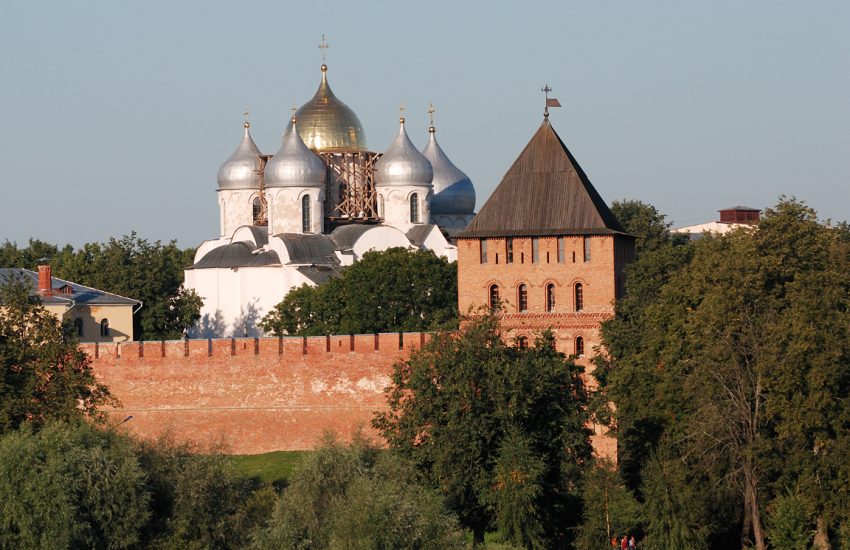
Four hundred and fifty kilometers north of Moscow, where the forests begin that run unbroken to the White Sea, the city of Vologda keeps a secret hiding in plain sight: its Kremlin quarter, with the severe white Cathedral of St Sophia towering over the river bend, was built to be a capital. In the 1560s Ivan the Terrible, at war with his own boyars and half-convinced Moscow itself was treasonous, chose Vologda as the fortress capital of his personal state, the oprichnina, ordering walls twice the Moscow Kremlin’s circuit, a cathedral to rival the Assumption, and a palace from which the north, the fur roads, and the new English sea trade could be ruled.
The project died of a falling brick, if the town’s beloved legend is to be believed: a shard of masonry, or by some tellings a piece of fired clay, dropped from Sophia’s fresh vaults onto the tsar’s head, and Ivan, reading heaven’s opinion of his new capital, abandoned city, cathedral, and plan together. The truth was duller and larger, plague, war, and the oprichnina’s own liquidation, but the result stands either way: a capital’s cathedral in a provincial town, unconsecrated for two decades, and the ghost of the Russia that might have been ruled from the north.
This guide explores the capital that never happened: Vologda’s rise on the river roads and the English discovery of the northern route, Ivan’s oprichnina and his fortress project, Sophia’s silhouette and the brick of legend, the bishops’ court that grew into the Kremlin the town shows today, the lace, butter, and exile centuries that followed, and the practical details of visiting the north’s most atmospheric cathedral quarter.
- The Town on the River Roads
- The English Route and the Muscovy Trade
- Ivan’s Oprichnina State
- A Capital in the North
- The Fortress Twice Moscow’s Size
- St Sophia of Vologda
- The Falling Brick
- The Great Abandonment
- The Bishops’ Court
- The Bell Tower’s View
- Frescoes of the Last Judgment
- Lace, Butter and Exiles
- The Kremlin Quarter Today
- Watch the Vologda Kremlin on Film
- Visiting the Vologda Kremlin Today
- Palaces Nearby
The Town on the River Roads
Vologda shares its official founding year, 1147, with Moscow, by a tradition attached to the monk Gerasim’s arrival on the wooded river, and its medieval centuries with the north’s politics: a portage town where the Volga basin’s rivers reached toward the Sukhona and the Dvina’s run to the White Sea, contested for generations between Novgorod’s river empire and Moscow’s rising one, passing finally to Moscow in the fifteenth century as the gateway of the north.
The geography made the town a warehouse of empires: furs from the Urals and the taiga, salt from the Kama works, the north’s fish and tar funneled through Vologda’s wharves toward Moscow, with the town’s merchants and monasteries, the great Spaso-Prilutsky at its edge among them, growing rich on the transit, the wooden town stretching along its river in the loose northern way that survives in its lanes still.
Moscow’s grand princes learned the town’s uses early, treasury refuge among them: Vasily the Dark, blinded in the dynastic wars of the 1440s, held Vologda as his exile seat and launched his restoration from it, the town acquiring its first taste of capital functions a century before Ivan, and its monastery-fortresses the habit of guarding sovereigns’ valuables that the tsar would remember.
The English Route and the Muscovy Trade
In 1553 the sea changed Vologda’s prospects: Richard Chancellor’s ship, hunting a northeast passage to China, blundered instead into the White Sea and the mouth of the Dvina, and the England-Muscovy trade that followed ran, perforce, through Vologda, the river-and-portage road from Kholmogory and the future Arkhangelsk striking the inland waterways here, the town becoming the route’s great trans-shipment point, English cloth and metals north-to-south, Russian wax, tallow, and cordage the other way.
The Muscovy Company planted its depot in the town, among the first English commercial footholds in Russia, and Ivan the Terrible, courting Elizabeth’s England for arms, alliance, and, by the persistent report, asylum, saw in Vologda the junction of his new diplomacy: the road to his one friendly sea began at its wharves, beyond the reach of Baltic enemies and Crimean raids alike.
The English connection seeded the tsar’s larger thought: a sovereign at war with his own aristocracy, holding a treasury he trusted nowhere, standing at the head of a route to ships that answered to no boyar, might do worse than rule from the junction itself, and in 1565, as the oprichnina split the realm, surveyors reached the river bend by the old cathedral-less town center, the capital project beginning where the trade route turned.
Ivan’s Oprichnina State
The oprichnina, declared in 1565, was Ivan’s answer to treason real and imagined: the realm split in two, the tsar’s personal domain, the oprichnina, carved from the richest lands and run by his black-clad corps with dogs’ heads and brooms at their saddles, to sniff out and sweep away treason, against the zemshchina left to the old institutions, seven years of confiscations, executions, and the terror that cultivated in Russian the very word oprichnik.
The system needed capitals of its own, the tsar quitting Moscow’s Kremlin for new seats: the Oprichny Palace across the Neglinnaya, the fortress-court at Alexandrova Sloboda where the government effectively sat, and, the plan’s northern anchor, Vologda, chosen as the oprichnina’s fortress capital and the domain’s treasury, the north’s revenues and the English road gathered under the tsar’s personal walls.
Behind the terror ran the plan’s cold logic: the oprichnina lands were disproportionately the commercial north, Vologda their natural hub, and a sovereign who distrusted the old capital’s every stone wanted his state’s heart somewhere the boyar clans had no roots, among salt merchants and monastery treasuries, with an escape route to the sea at need, statecraft and paranoia drawing the same map.
A Capital in the North
From 1565 to 1571 Vologda lived as a boomtown of the tsar’s will: Ivan resided for long stretches, the court and chancelleries following, the oprichnina treasury installed, by the English agents’ reports, in the rising fortress, foreign envoys received on the river, and the shipwrights, the Company’s men recorded, laying down river vessels for the tsar, the persistent story adding ocean barges against the day the sovereign might sail for England with his gold, the asylum correspondence with Elizabeth lending the rumor its documents.
The town’s fabric answered the court’s needs at speed: provisioning, stables, the licensed English house, and the labor levies that dug and hauled for the walls, chroniclers counting the district’s peasantry summoned by the thousand, the capital project consuming the north’s hands through six building seasons, with the tsar’s own visits marked by the devotions and the furies that followed him everywhere.
The years fixed the town in the diplomatic record: the Company’s letters date and describe, Horsey’s and Jenkinson’s accounts sketch the tsar at Vologda between audience and rage, and the project’s seriousness stands beyond the legends, a working alternative capital rising at the empire’s northern hinge, which is precisely what makes its abandonment the more instructive.
The Fortress Twice Moscow’s Size
The fortress begun in 1566 was drawn to imperial measure: the perimeter staked along the river and the ditches enclosed, by the reconstructions from survey and chronicle, roughly twice the Moscow Kremlin’s circuit, stone and brick on the river front, oak and earth closing the ring, with upward of twenty towers planned, the work advancing far enough that the river wall and towers stood when the project stopped, Vologda briefly bearing the largest fortress footprint in the land.
Within the walls rose the capital’s organs: the cathedral first, the tsar’s wooden palace by the southwest tower, the chancellery yards and the treasury vaults, the ensemble composed, scholars note, in conscious answer to Moscow, Sophia standing to the new fortress as the Assumption to the old, the tsar building not a refuge but a replacement, the oprichnina’s Moscow with a sea road.
Of all that scale the visible remainder is the quarter’s plan and the cathedral: the walls, never finished, were quarried by the town across the following century, the ditches filled, the towers’ stone migrating into churches and the later bishops’ court, so the modern visitor walks the giant’s outline unaware, the streets of the old quarter tracing the circuit, the name Kremlin surviving on a fortress of air.
St Sophia of Vologda
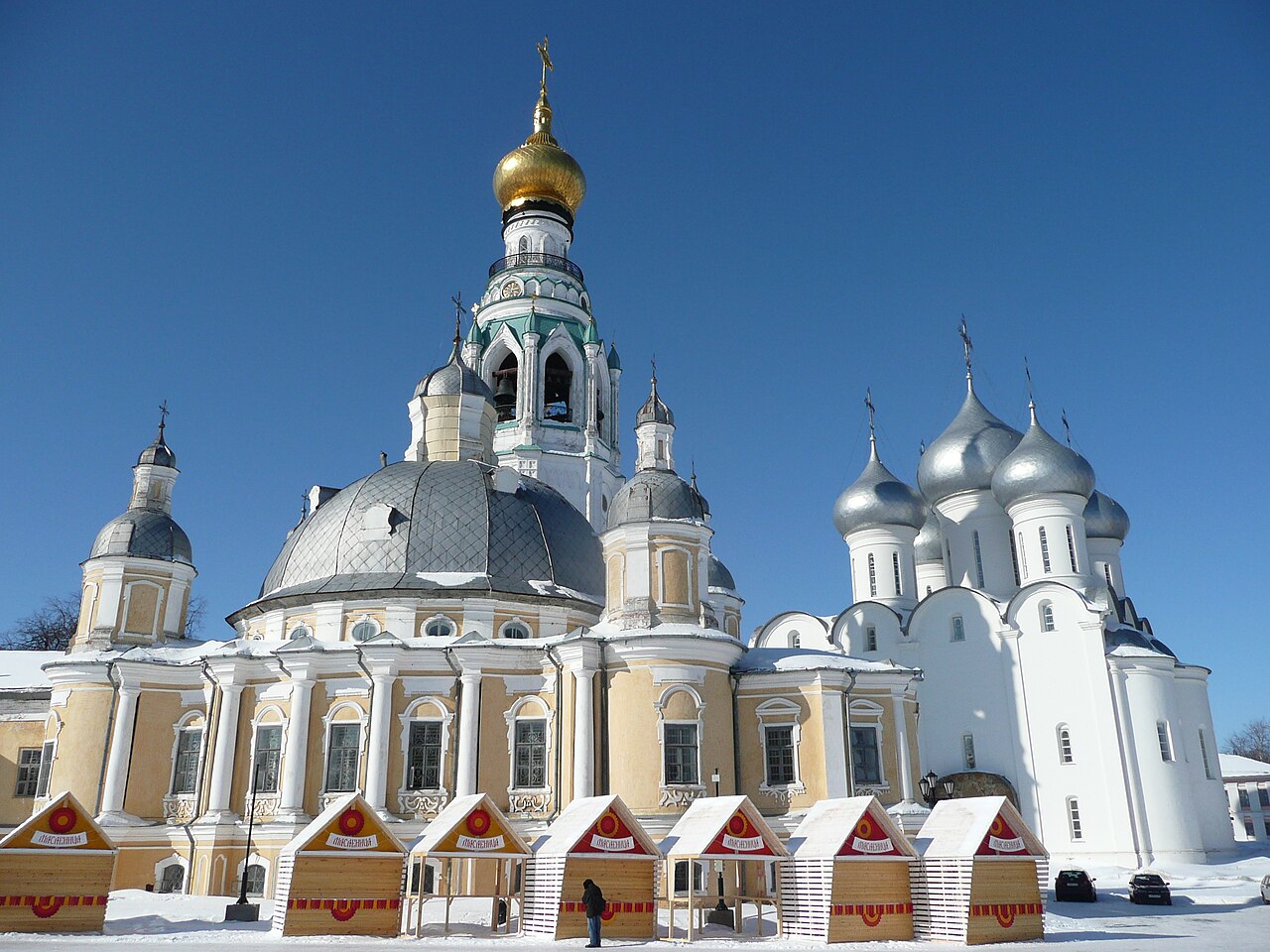
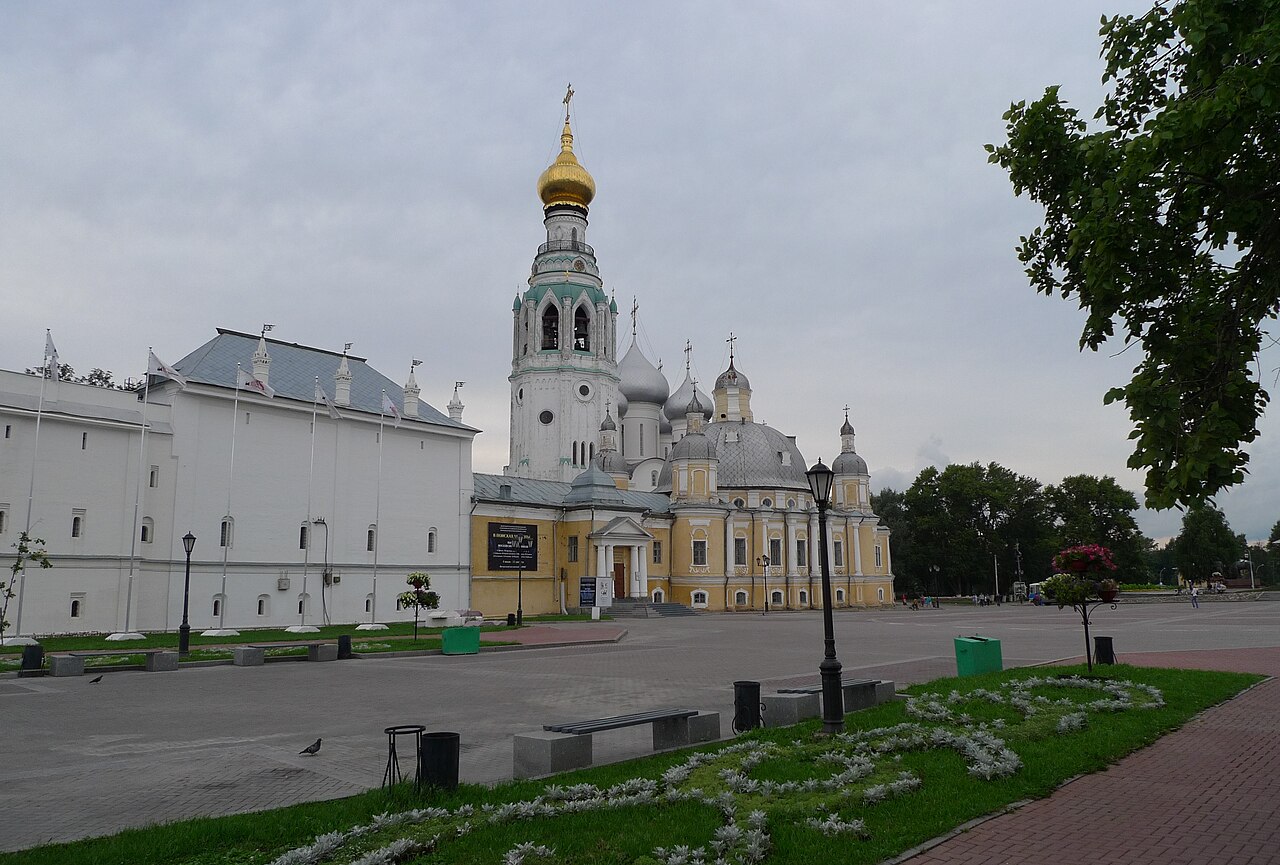
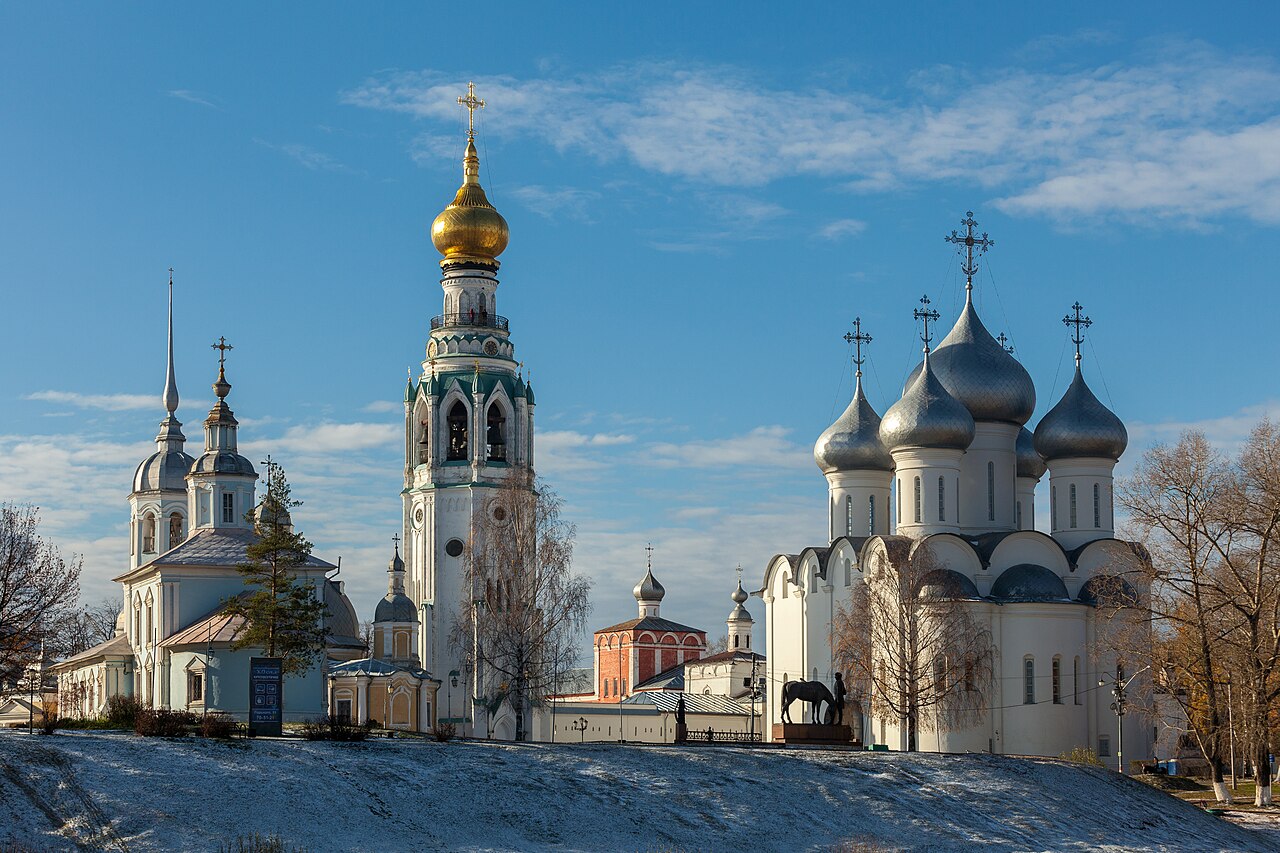
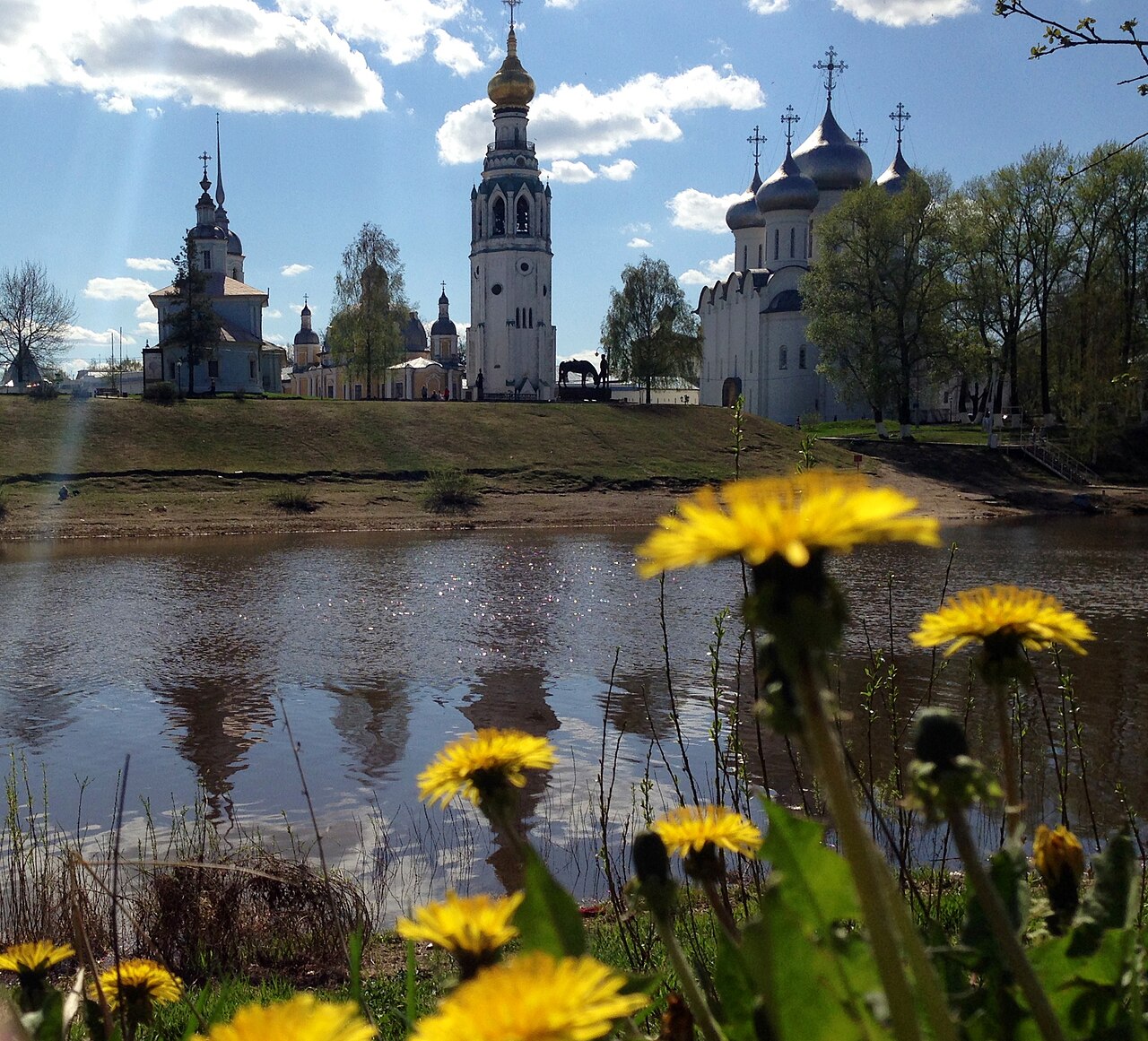
The Cathedral of St Sophia, raised 1568 to 1570, is the project’s standing witness: a severe white five-domed cube on the Assumption Cathedral’s Moscow model, by the master the records name as Razmysl Petrov, the tsar’s military engineer, built under Ivan’s personal watch, the dedication to Holy Wisdom itself a northern declaration, Novgorod’s and Kiev’s Sophias summoned to the new capital’s riverbank.
The building’s austerity is its power: no ornament the structure does not require, the walls bare to the drums, the silhouette read across the river as pure mass and intention, the north’s weather already in the architecture, and the interior one vast luminous cell awaiting the paint that would come a century late, the cathedral standing unconsecrated and unfrescoed through the abandonment, a sanctuary on hold.
Consecration arrived only in 1587 under Ivan’s son Fyodor, the quiet tsar sanctifying his father’s monument, and Sophia served thereafter as the diocese’s cathedral, its bells, its necropolis of Vologda’s bishops, and its summer services accumulating the ordinary sacred history the founder’s drama had suspended, the might-have-been capital’s church settling into the long actual life of the north.
The Falling Brick
The legend is the town’s crown jewel, polished since the seventeenth century: the tsar inspecting his nearly finished Sophia, something red falling from the fresh vault, a brick, a tile shard, plinfa in the oldest telling, striking the sovereign’s head, and Ivan, in whom piety and fury shared a throne, cursing the omen, ordering, in the tale’s fiercest variant, the cathedral’s demolition, commuted by the clergy’s pleading to mere abandonment, and quitting his capital for good, heaven’s masonry closing the argument.
The story’s genealogy is traceable and telling: the local chronicle’s late notice, the folk rhyme about the falling plinfa, the nineteenth-century historians’ affectionate skepticism, the legend doing what such legends do, compressing a political abandonment into a providential instant, giving the town a story to keep where the archives kept silence, and incidentally fitting Ivan’s documented habit of reading omens like dispatches.
Modern guides deliver the brick with the required wink and the serious footnote together: no contemporary source records the blow, the abandonment’s true causes stand in the next section, and yet the legend preserves a truth of atmosphere, the capital project did end abruptly, with the cathedral unconsecrated as if under a cloud, and the town did inherit the sense of a judgment passed, which the story merely dramatizes at skull height.
The Great Abandonment
The project’s real executioners were the year 1571’s disasters: plague sweeping the north, Vologda’s district among the stricken, the Crimean khan Devlet Giray burning Moscow to the stones that May, the oprichnina corps disgracing itself in the defense, and the tsar’s system failing its one test, within a year Ivan abolished the oprichnina outright, forbidding the very word, and the separate state whose capital Vologda was to be ceased to exist, the fortress losing its purpose before its walls met.
The Livonian war’s long ruin finished the argument: the treasury that might have faced north drained west into the failing Baltic campaign, the English alliance cooled with Elizabeth’s evasions, and the court’s center of gravity returned to Moscow and Alexandrova Sloboda, Vologda reverting to transit town, its half-walls standing down from capital to quarry, the swiftest demotion in Russian urban history.
The town took the longer profit anyway: the Arkhangelsk trade’s boom decades kept Vologda the north’s warehouse into Peter’s age, the tsar-carpenter lodging here on his White Sea journeys, his little Dutch-style house now the town’s oldest museum, and only Petersburg’s rise, rerouting the sea trade to the Baltic, retired the old route, leaving Vologda its cathedral, its legend, and its lace-quiet provincial centuries.
The Bishops’ Court
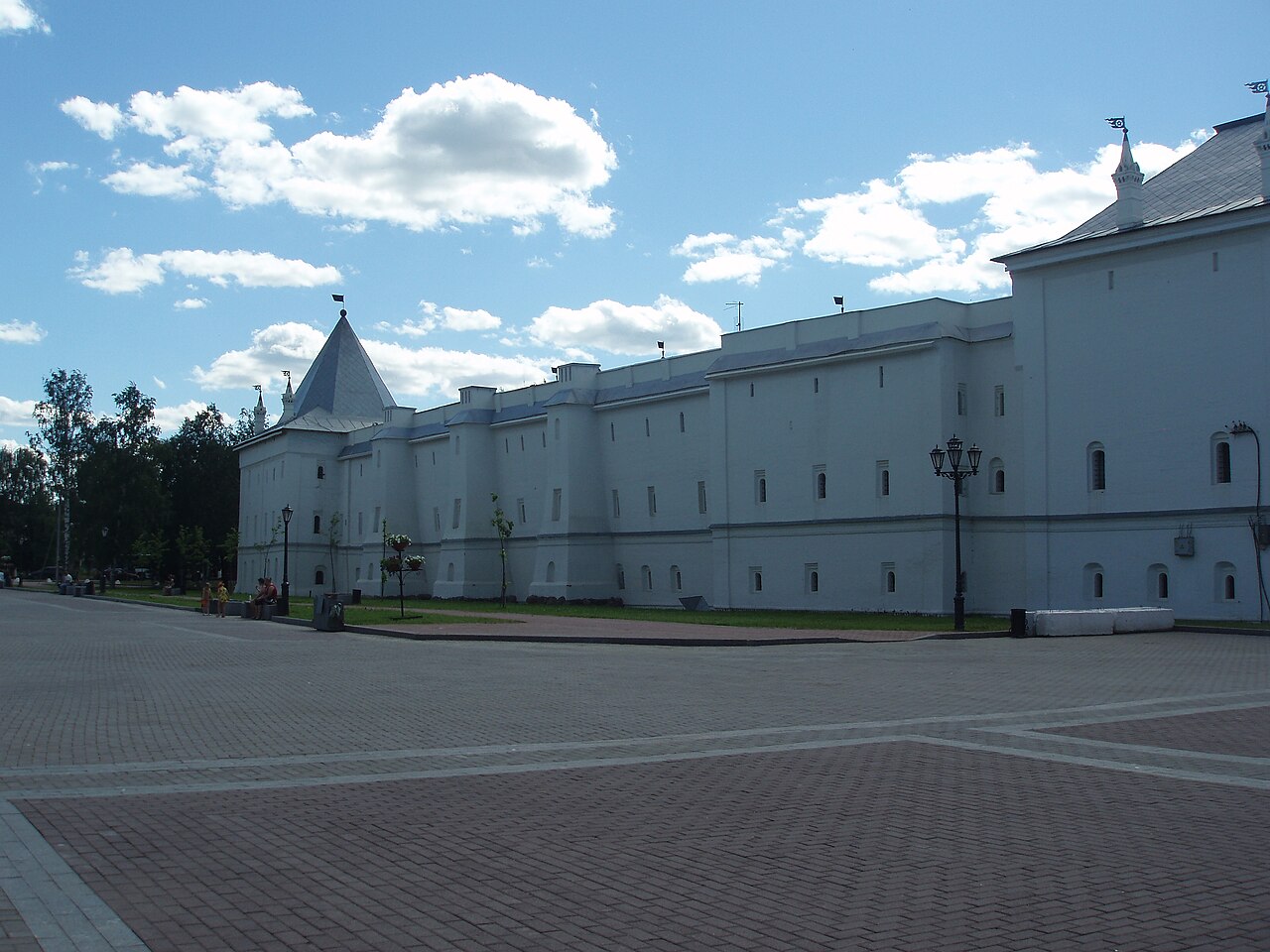
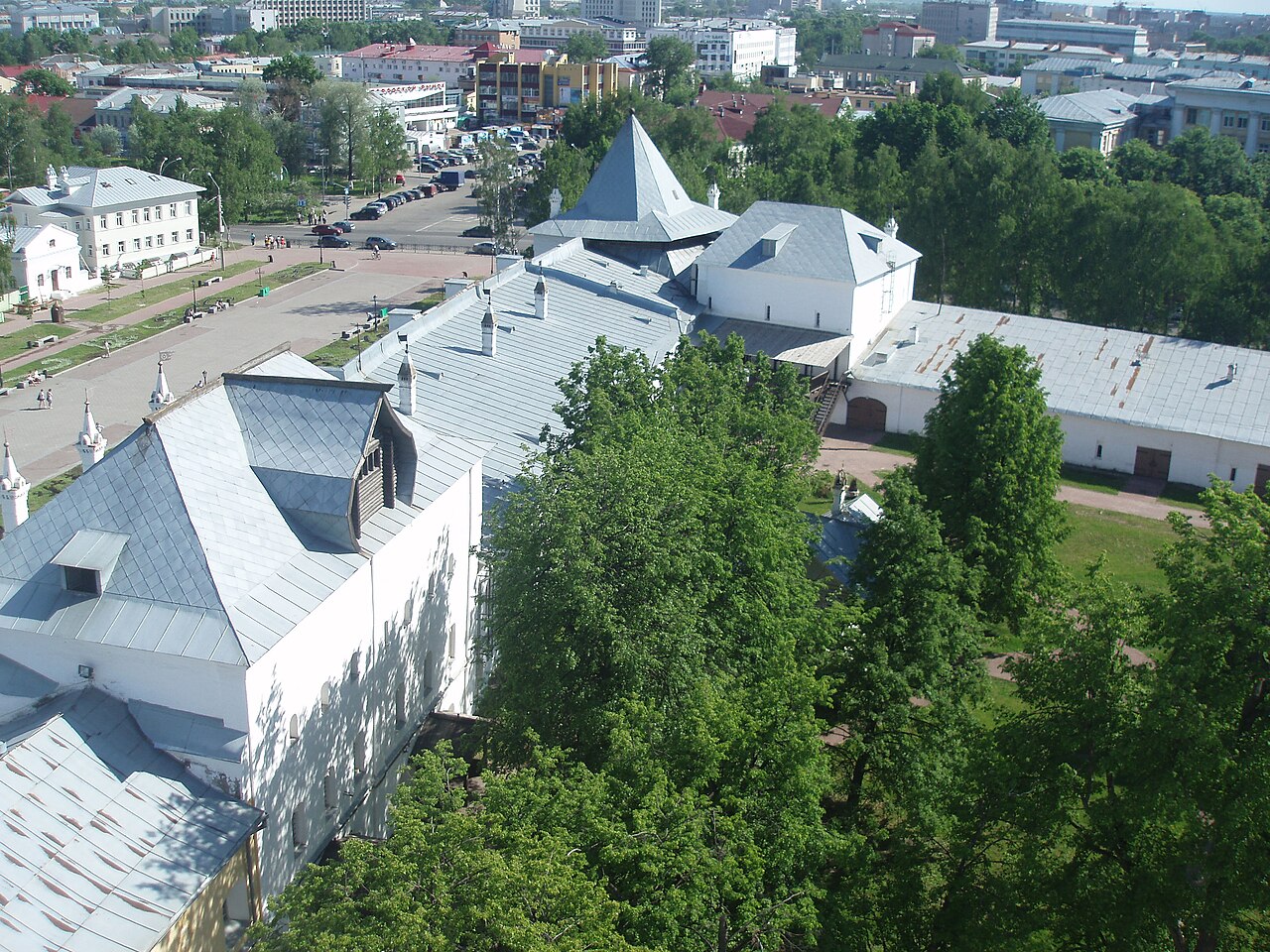
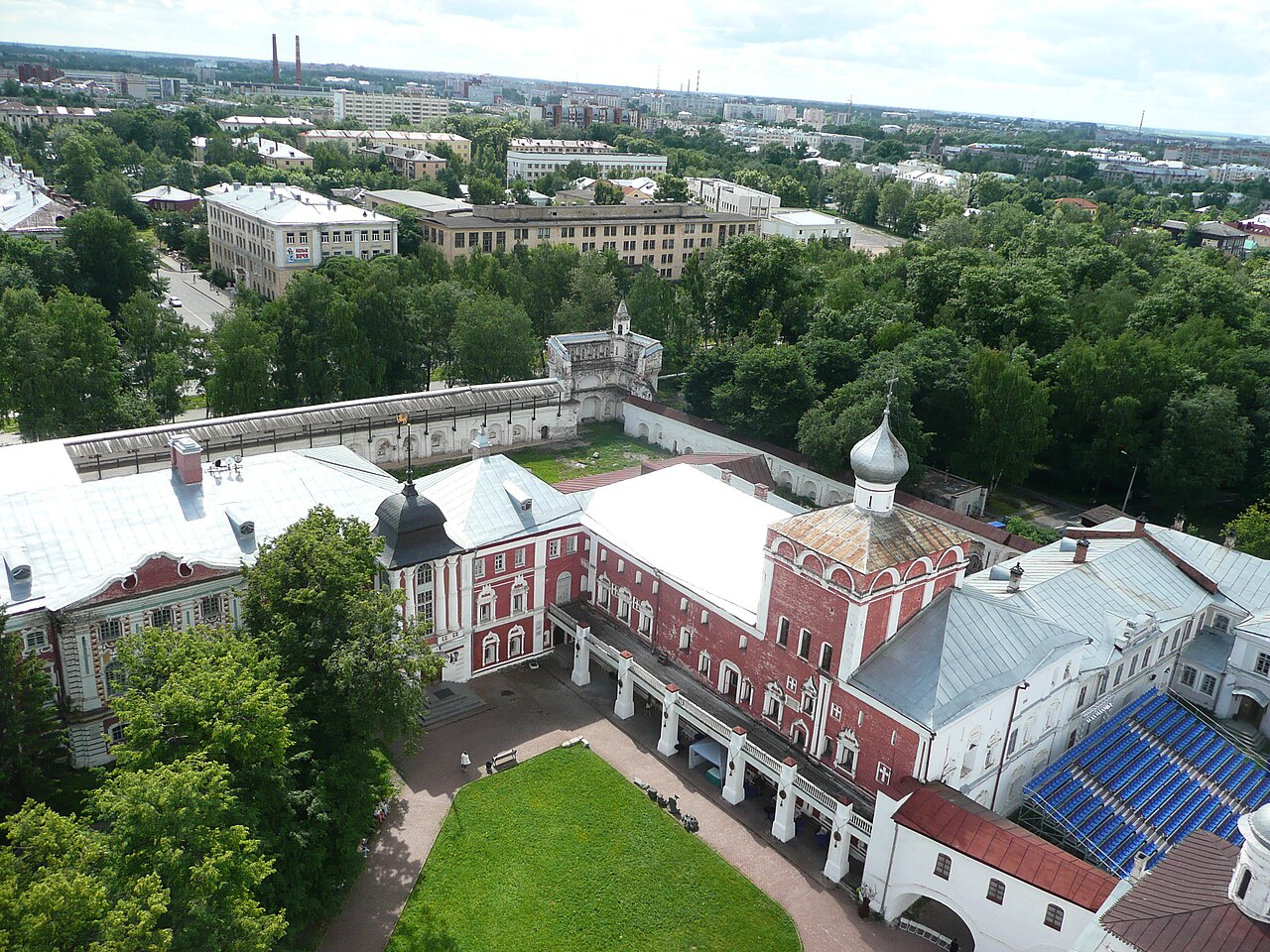
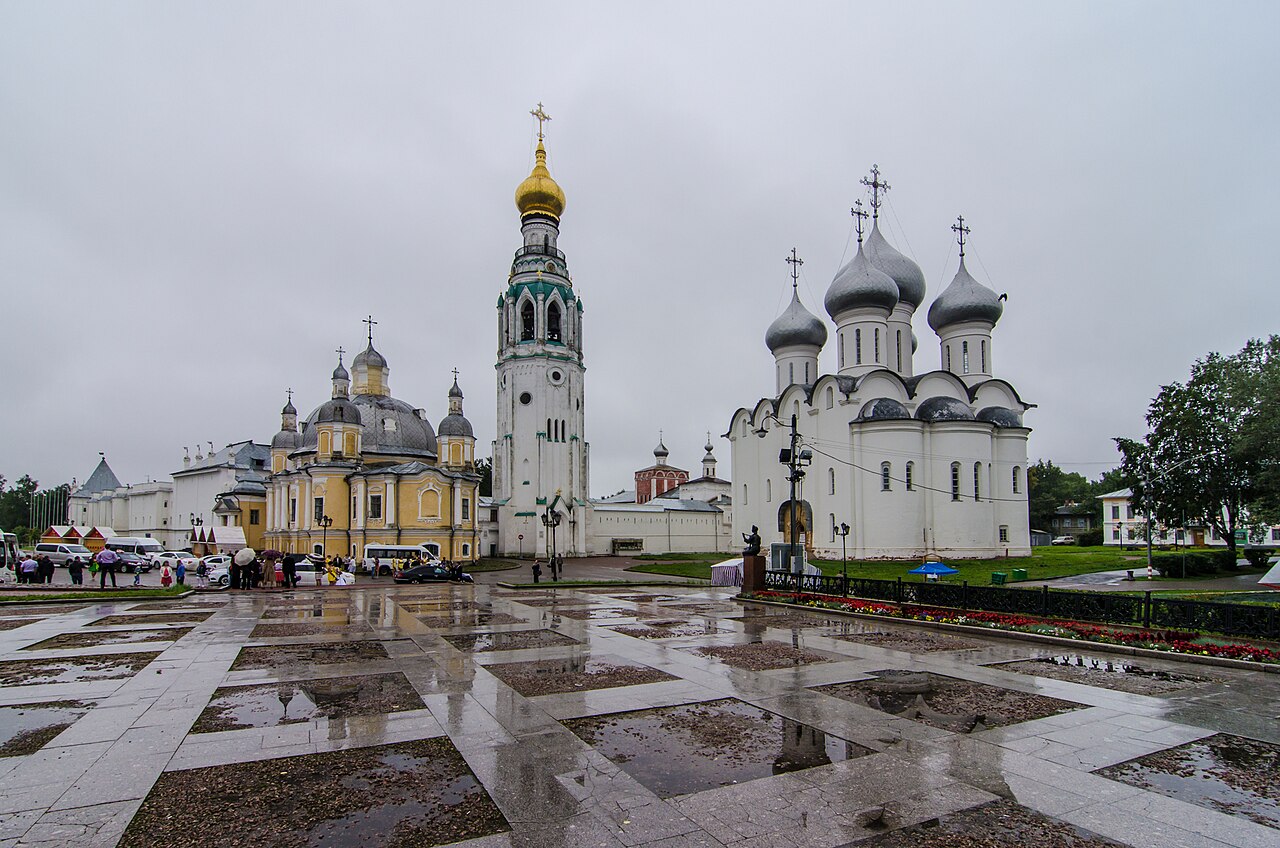
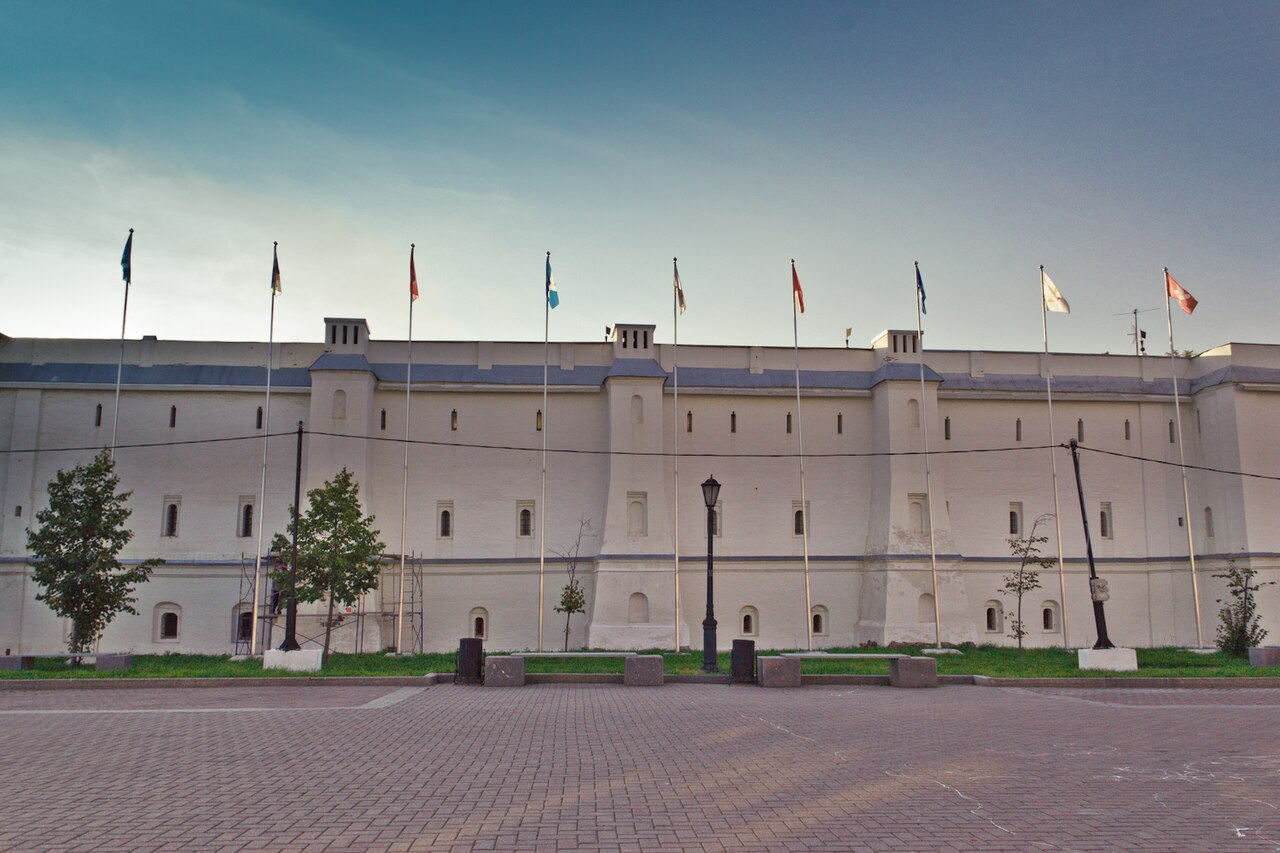
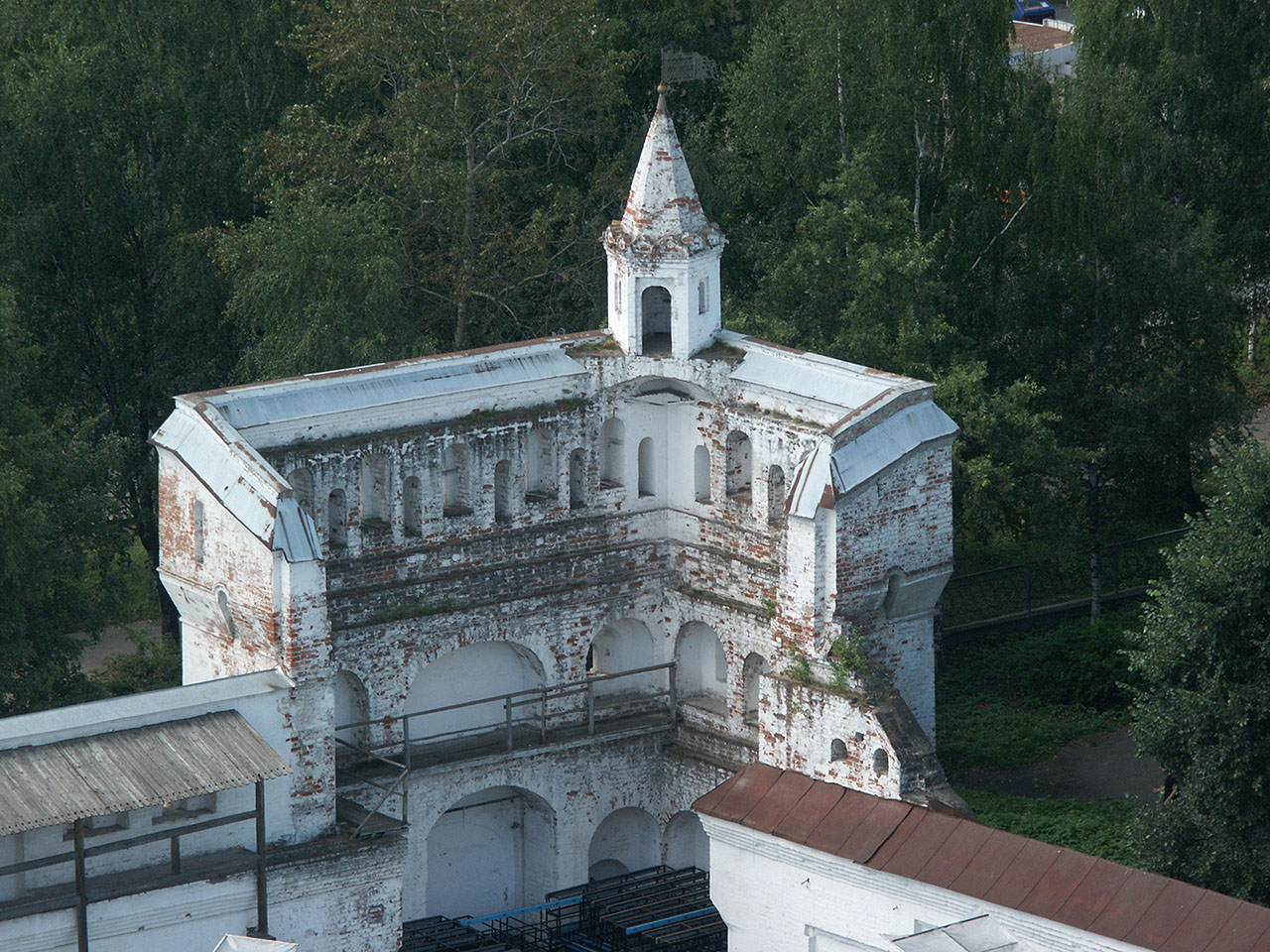
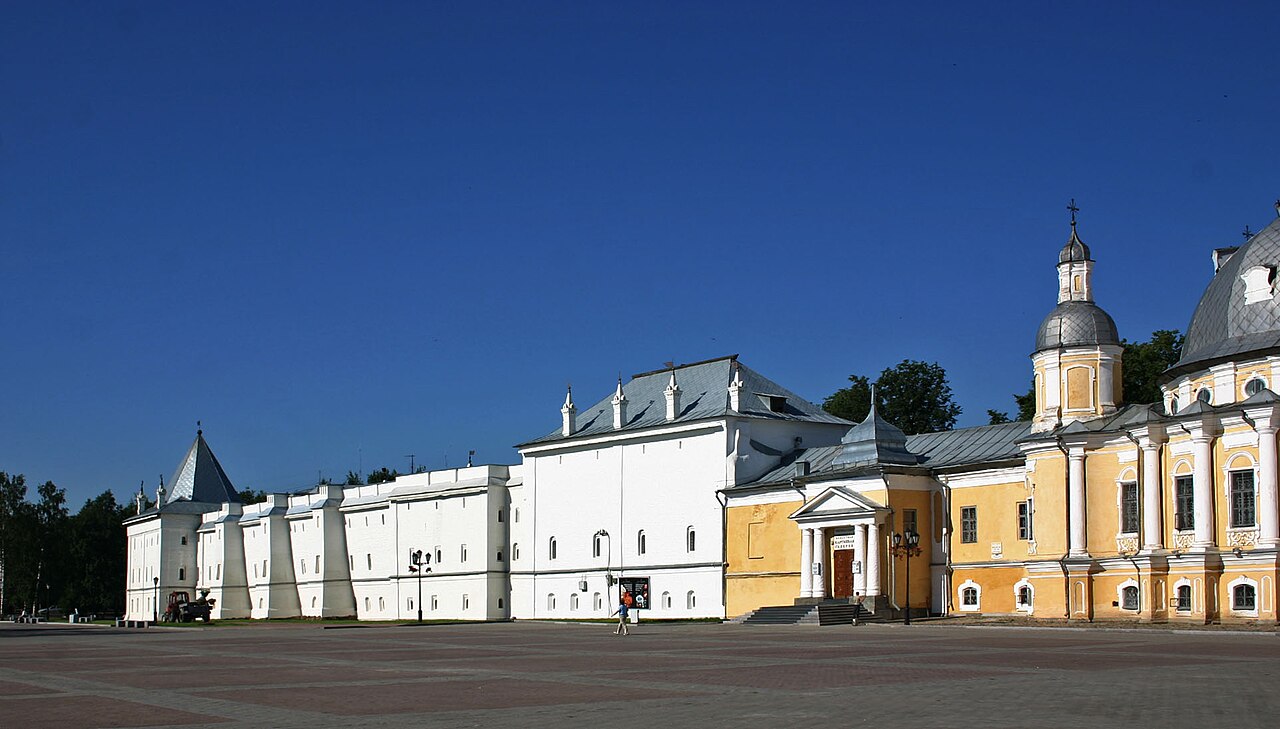
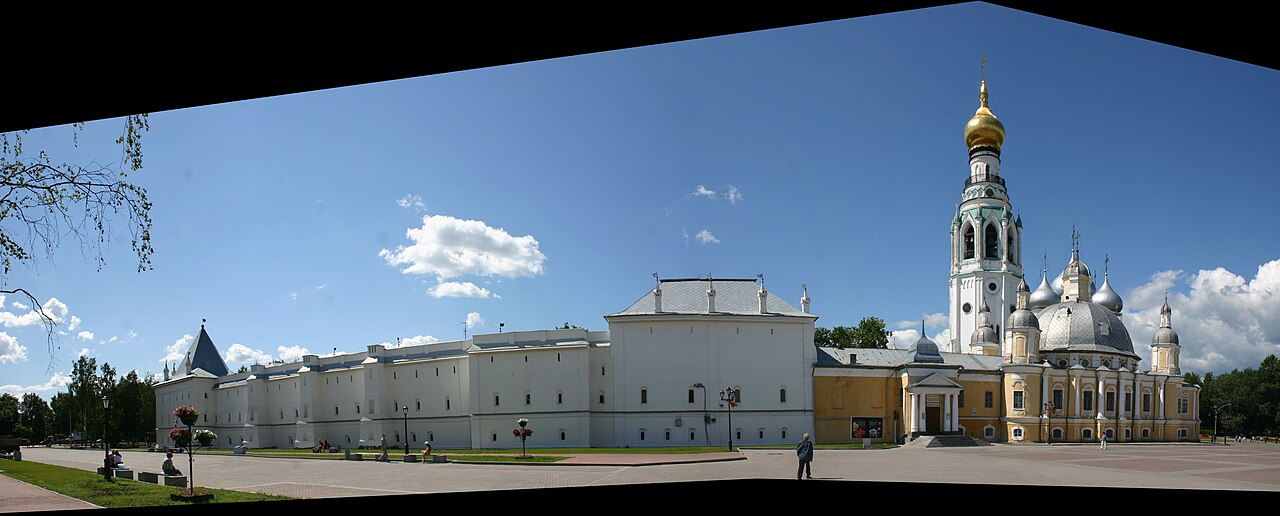
What the town calls its Kremlin today is the church’s inheritance of the tsar’s site: the bishops’ court beside Sophia, a walled quadrangle grown from the sixteenth century through the eighteenth, the archbishops of Vologda building by instalments, the Economy block’s early vaults, the Symeon block’s chambers, the gate church of the Exaltation, until Joseph the Golden, the baroque-minded bishop of the 1760s, crowned the ensemble with his three-story palace, the Iosifovsky block’s provincial rococo standing cheerful against Sophia’s severity.
The court’s walls, towers, and blocks enclose the garden quadrangle that is the quarter’s heart, and the whole now houses the Vologda State Museum-Reserve, the north’s attic: the icon halls with the Vologda school’s masterpieces, the treasury’s silver, the folk-art floors where the region’s painted sledges and spinning wheels parade, and the lace museum’s annex nearby completing the inventory of what the quiet centuries made.
The ensemble’s effect is the north distilled: white walls against weather, the warm domestic scale of the bishops’ blocks under the cathedral’s cold mass, rooks in the birches, the compound turned kindly, the fortress that was to overawe an empire ending as a cloister of museums, which the town, on the evidence of its affection, counts a promotion.
The Bell Tower’s View
Between cathedral and court rises the quarter’s exclamation mark: the great bell tower, rebuilt 1869 to 1870 on the seventeenth-century base in romantic pseudo-Gothic, seventy-eight meters of buttressed verticality carrying the diocese’s historic bells, seventeenth-century Dutch and Russian castings among them, under a gilded cupola, the north’s tallest belfry of its day and the town’s compass needle since.
The climb is the visit’s set piece: the staircases winding past the bell chamber’s bronze company to the gallery under the cupola, and the view assembling the whole argument of the place, Sophia’s domes at eye level, the bishops’ quadrangle below, the river’s bend that chose the site, the wooden quarters feathering into birch horizons, the unbuilt fortress’s ghost circuit traceable in the street plan for those who have read this far.
The bells themselves returned to voice across the modern decades, the tower’s peal rehung and rung on the feasts, so the quarter keeps its old acoustic: the sound Ivan ordered for his capital rolling over the town that outlived the order, evening ringers sending the might-have-been’s one realized ambition out over the actual north.
Frescoes of the Last Judgment
Sophia’s interior waited a century for its paint and received a masterpiece: the Yaroslavl master Dmitry Plekhanov’s artel frescoed the cathedral 1686 to 1688, five thousand square meters in the late northern manner’s full narrative flood, and on the west wall the enormous Last Judgment, counted the largest in Russia, the scales, the serpent of sins, the nations rising, filling the entrance’s whole field so that every departure walks through the reckoning.
The cycle’s preservation ranks with the north’s best: the cathedral’s museum regime since 1923 sparing the walls candle soot and repainting, restorations disclosing Plekhanov’s palette, the cold luminous blues the north’s painters favored, and the summer-only opening protecting the plaster from the climate the building was too austere to admit it feared.
Standing in the painted cube, the visitor completes the site’s ironies: the tsar who abandoned the shell never saw Russia’s greatest Judgment rise on his walls, the doom he read in a falling brick painted at scale a century on, the capital of the oprichnina receiving, in the end, exactly one imperial program, the universal audit, which the guides, pointing west, decline to editorialize.
Lace, Butter and Exiles
The capital that never was became the province that excelled: Vologda’s name attached itself across the empire to butter, the Paris-trained Vereshchagin brothers’ nutty-sweet invention of the 1870s, to the kruzhevo lace whose bobbins clicked in every district cottage, the craft’s museum by the Kremlin square displaying the webs that dressed empresses and export catalogues, and to the north’s timber and dairy steadiness, fame by excellence where destiny had declined.
The town’s other standing import was exiles, the north’s old service: Vologda’s rolls of the banished run from Ivan’s era to the twentieth century’s eve, the 1900s cohort alone including Berdyaev, Lunacharsky, Savinkov, and, for brief months, the young Stalin, the future culture-commissar and the future general secretary overlapping in the same mild provincial detention, the town’s literary salons of exiles meeting over tea within sight of Sophia’s domes.
The wooden town around the Kremlin keeps the era’s stage: the carved palisades and corner balconies of the merchant quarters, celebrated in the beloved song about the house with the carved palisade, the lanes where exiles, lacemakers, and butter factors passed the cathedral daily, provincial history’s gentle registers closing over the oprichnina’s crater, which is the Vologda effect, terror’s site healed into coziness without quite forgetting.
Watch the Vologda Kremlin on Film
Visiting the Vologda Kremlin Today
Vologda lies 450 kilometers north of Moscow: overnight trains from Moscow’s Yaroslavsky station arrive at breakfast, daytime trains and flights serve the route, and Petersburg connects by night train as well, with the Kremlin quarter fifteen minutes’ walk from the station through the old streets. The museum-reserve in the bishops’ court opens daily except Mondays, tickets by exhibition or combined; St Sophia opens in the warm season for its frescoes, the bell tower climb runs the same months and sells the view separately, and the lace museum across the square keeps its own schedule. Give the quarter a slow half day and the wooden town the rest, adding the Spaso-Prilutsky monastery’s fortress towers at the city’s edge and, with a second day, the Kirillov and Ferapontovo monasteries’ UNESCO frescoes north on the lakes. You can find the Kremlin on the map here: Vologda Kremlin on Google Maps.
Palaces Nearby
You May Like
The Pskov Pogankin Chambers and the Merchant Palaces of the Frontier