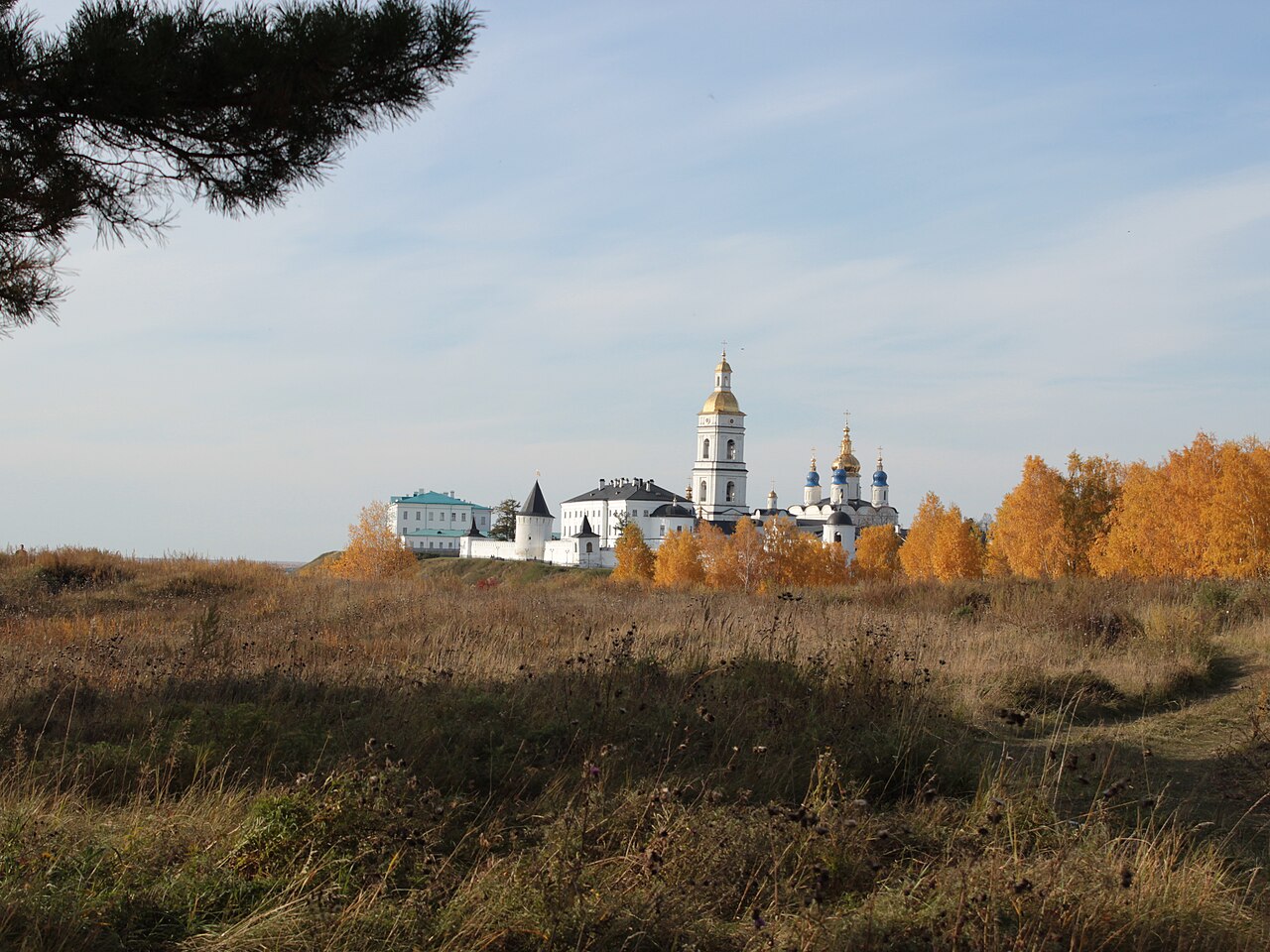
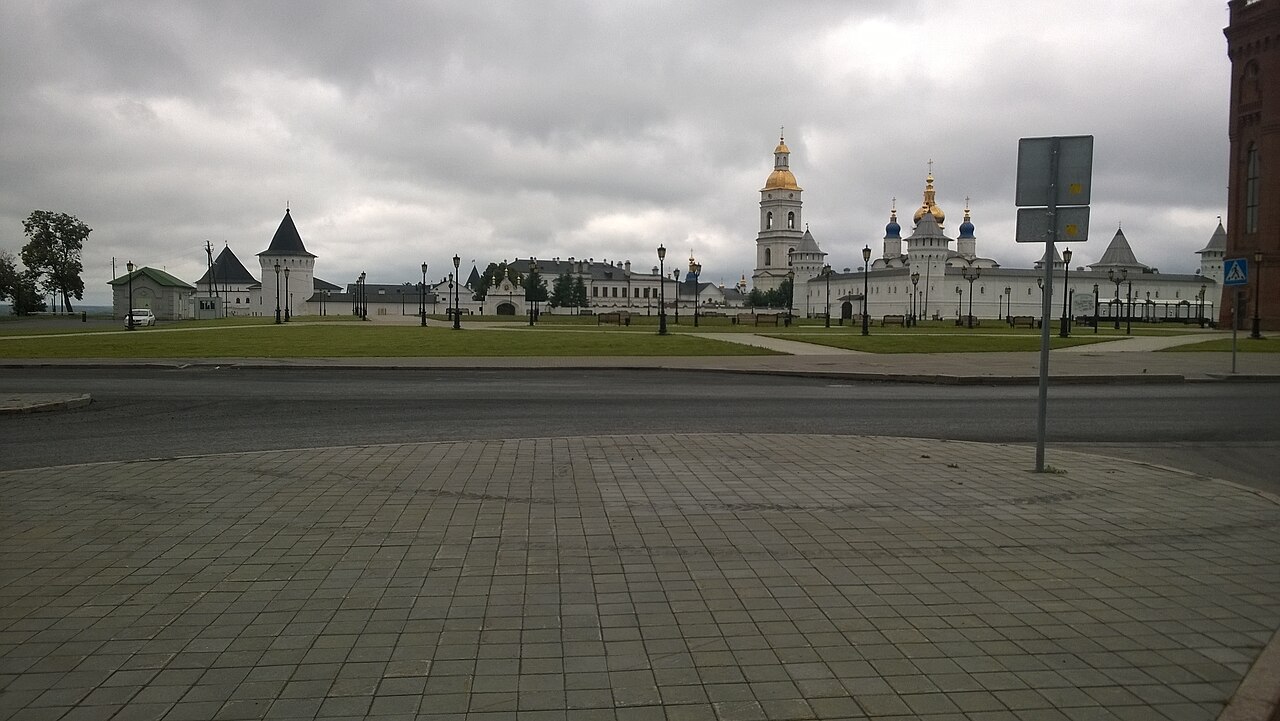
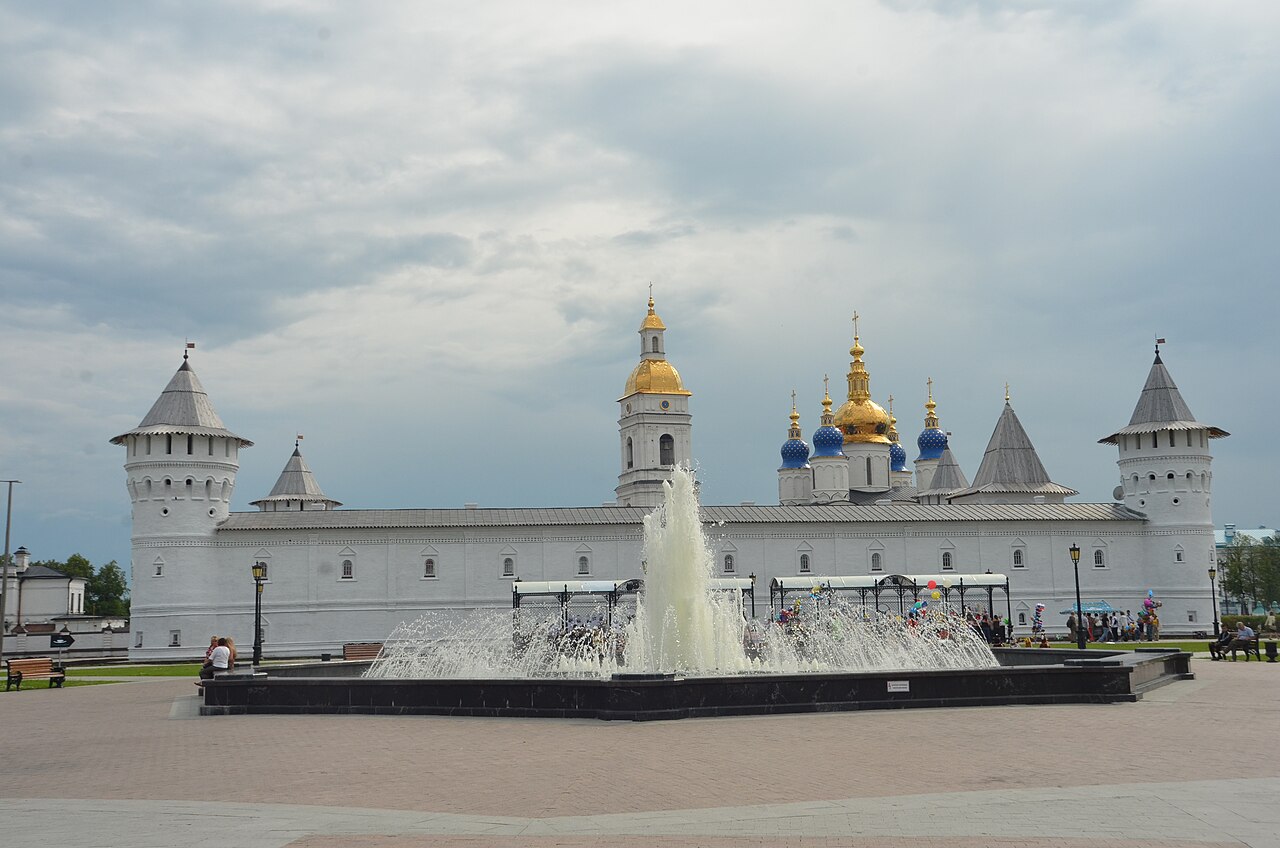
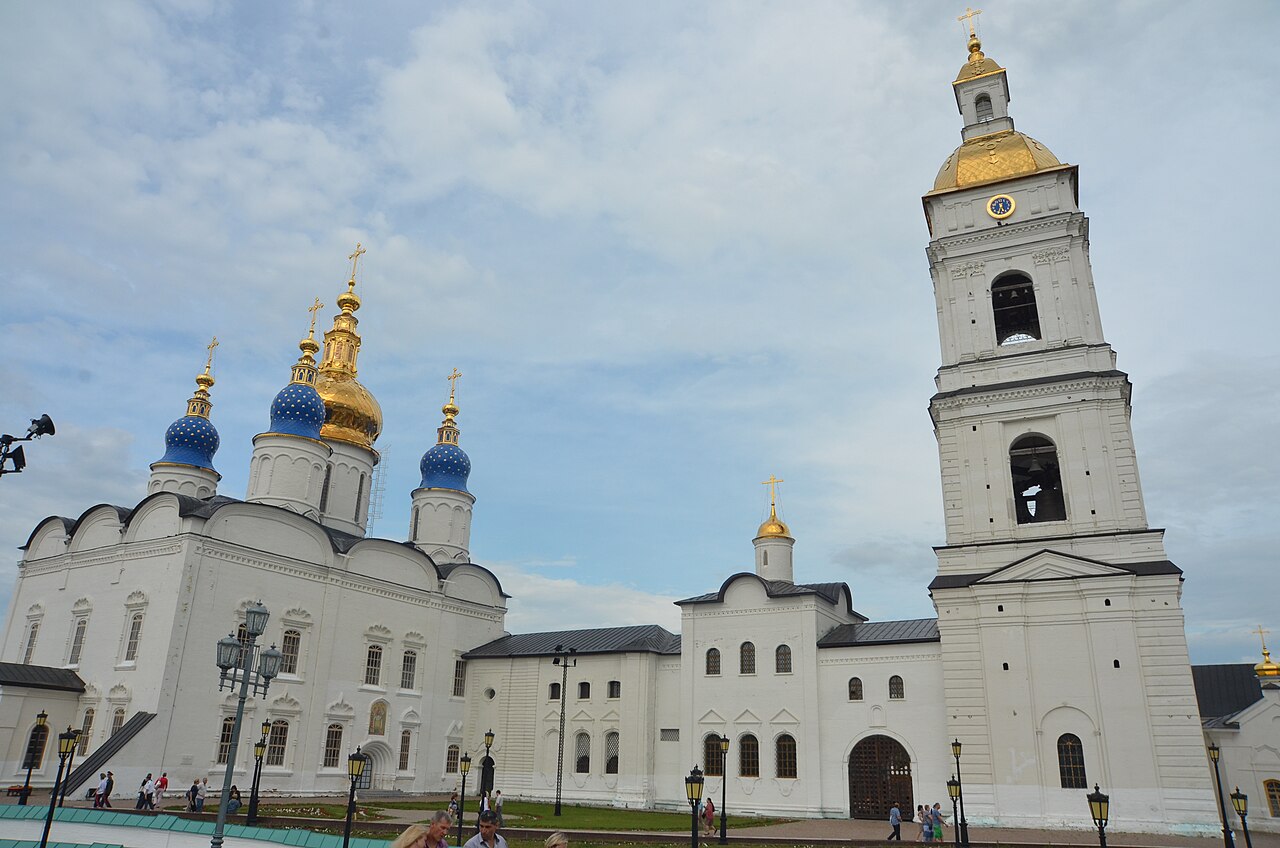
Where the Tobol river meets the mighty Irtysh, on a high cape above the endless West Siberian plain, stands a white apparition that has no business being there: a complete stone kremlin, with battlemented walls, tent-roofed towers, and a blue-domed cathedral, two thousand kilometers east of Moscow and the only fortress of its kind in all Siberia. The Tobolsk Kremlin crowns the city that was Siberia’s capital for three centuries, the seat from which a territory larger than any empire in history was governed by a handful of clerks, Cossacks, and bishops.
The kremlin’s builder was one of Russia’s most extraordinary minds: Semyon Remezov, mapmaker, historian, architect, and self-taught polymath, who drew the first atlases of Siberia and then, past fifty, designed and raised the stone citadel above his native city. Through its gates passed the tribute furs that financed the tsars, the embassies to China, and the endless columns of exiles, among them, held in the prison castle on the hill or lodged in the town below, Dostoevsky in chains, the Decembrists’ wives, and, in the story’s strangest turn, an exiled bell, the same Uglich alarm bell that served its three-century Siberian sentence here.
This guide climbs the Trinity Cape in full: the conquest of Siberia and Tobolsk’s founding by Yermak’s successors, the fur-tribute capital and its governors, Remezov’s life and his white kremlin, the Sophia cathedral and the swallowed church treasures, the exile centuries from the Uglich bell to Dostoevsky and the last tsar’s passage, the prison castle’s grim museum, and the practical details of reaching Siberia’s most unexpected architectural triumph.
- Yermak and the Conquest of Siberia
- The Founding on the Trinity Cape
- The Fur Capital of the Tsars
- Remezov the Mapmaker
- Building the Stone Kremlin
- The Sophia-Assumption Cathedral
- Walls, Towers and the Rentereya
- The Exiled Bell of Uglich
- The Exile Road
- The Prison Castle
- Decline of a Capital
- The Soviet Century
- The Revival on the Cape
- Watch the Tobolsk Kremlin on Film
- Visiting the Tobolsk Kremlin Today
- Palaces Nearby
Yermak and the Conquest of Siberia
Siberia fell to Russia through a private war: in 1581 or 1582 the Cossack ataman Yermak Timofeevich, hired by the Stroganov merchant dynasty to guard their Ural salt empire, led some eight hundred men over the mountains against the Siberian khanate of Kuchum, the last Genghisid state of the north, and broke it at the Chuvash Cape on the Irtysh, taking the khan’s capital of Isker a few kilometers from where Tobolsk now stands.
The conquest’s scale defied its means: a river-borne band with firearms toppling a khanate, the tsar ratifying the fait accompli with reinforcements and pardons, and Yermak himself drowning in the Irtysh in 1585, dragged down, legend insists, by the very mail shirt Ivan the Terrible had sent him, the conqueror of a subcontinent dead in its first river, canonized by folk memory into Russia’s steppe Hercules.
What followed Yermak was the state: fort by fort, river by river, the Cossack and streltsy parties leapfrogged east, Tyumen in 1586, Tobolsk in 1587, the Pacific within sixty years, history’s fastest land expansion, and Tobolsk, planted beside the broken khanate’s capital, became its command post, the new Siberia’s first city in rank from its first decade.
The Founding on the Trinity Cape
Tobolsk was founded in the summer of 1587 by the written order’s dry poetry, the Cossack head Danila Chulkov setting a wooden fort on the Trinity Cape above the rivers’ meeting, the site chosen as sites were on the frontier, for water, command, and defiance, directly facing the ruins of Kuchum’s Isker, the new power lodging in the old one’s doorway.
The cape gave the city its two-story destiny: the upper town on the sixty-meter bluff for the fortress, cathedral, and power, the lower town on the floodplain for the wharves, markets, and the Tatar quarter, linked by the steep Sofia descent, the ravine road that every load, exile, and embassy climbed, the city’s social geography drawn by the landscape in its first year.
Early Tobolsk burned with wooden Siberia’s regularity, six general fires in its first century, and rebuilt each time around its unbeatable site, growing into the seventeenth century’s administrative, military, and church capital of all Siberia, the voivodes’ seat, the archbishopric founded in 1620, and the trade crossroads where the Bukhara caravans met the fur canoes, Asia’s and Europe’s goods changing hands under the cape.
The Fur Capital of the Tsars
Siberia’s conquest ran on soft gold: the yasak fur tribute, sable above all, levied on the native peoples and funneled through Tobolsk’s treasury toward Moscow, the pelts financing, by serious estimates, as much as a tenth and more of the state’s revenue in the seventeenth century’s peak decades, the tsars’ wars and palaces wearing Siberian sable at the seams.
Tobolsk administered the flood: the voivodes’ chancellery registering districts from the Urals toward the Pacific, the tribute caravans assembling under the cape each winter, the Bukharan merchants licensed into their own quarter for the Asian trade, and the city’s service class, Cossacks, clerks, gunners, interpreters, forming Siberia’s first establishment, paid in grain, salt, and the chance of the frontier.
The fur capital’s business included diplomacy’s long roads: the first Russian embassies and trade caravans to China staged through Tobolsk, the Nerchinsk treaty’s couriers passed its gates, and the city’s bazaars handled tea, silk, and rhubarb against furs and leather, the cape’s customs books recording a Eurasian commerce the maps had barely learned to draw, with Remezov, in time, drawing them.
Remezov the Mapmaker
Semyon Remezov, born in Tobolsk in 1642 to a service family, was the frontier’s Leonardo in a clerk’s caftan: surveyor and tribute officer by post, he taught himself cartography, history, and architecture, compiled the Remezov Chronicle of Yermak’s conquest with his own illustrations, and drew the three great atlases, the Chorographic Sketchbook and its companions, that gave Siberia its first comprehensive maps, treasures today of world cartography.
His maps are science wearing art’s clothes: rivers splayed like veins across pages oriented south-up, towns, portages, and peoples annotated in a historian’s hand, the whole subcontinent made legible for the first time, and modern scholarship ranks him among the era’s great geographers anywhere, the autodidact of the Irtysh matching the academies.
In 1697, past fifty, Remezov received the assignment that crowned him: sent to Moscow to study stone construction, he returned commissioned to design and build Tobolsk’s kremlin in stone, the mapmaker turning architect for his own city, and the white citadel on the cape is his drawing realized at landscape scale, signed, as his maps were, with exactitude.
Building the Stone Kremlin
The stone kremlin rose from 1700 under Remezov’s direction: Moscow’s order driven by the fires and by prestige, the Siberian capital deserving masonry, with the walls and towers, the Gostiny Dvor trading court, and the great administrative buildings raised through the century’s first decades, even as Peter’s 1714 ban on stone construction everywhere but Petersburg paused the works, Tobolsk’s exemptions and resumptions tracking the capital’s favor.
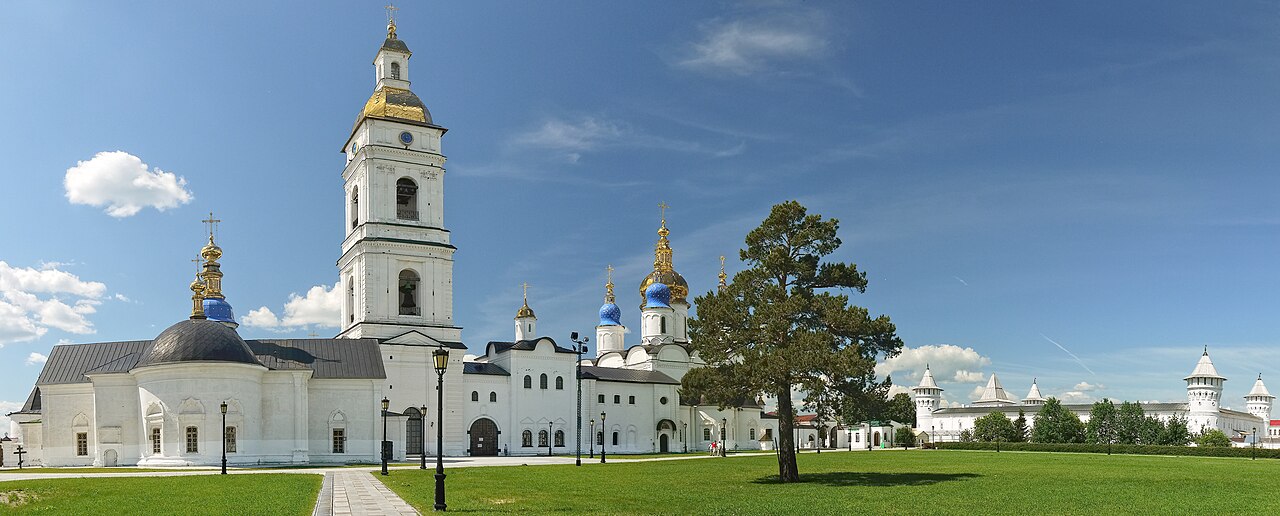
Remezov built with a planner’s eye for the cape’s theater: the walls tracing the bluff’s edge, the towers placed for the river panoramas, the Sofia descent framed by the Rentereya treasury bridge, Swedish prisoners of Poltava among its builders, so the ensemble stages itself to the lower town and the Irtysh as deliberately as any baroque capital, Siberia’s government given a skyline.
The ensemble completed across the eighteenth century with the bishops’ palace, the consistory, and the bell tower, and its materials tell the frontier’s logistics, brick burned on site, iron hauled from the new Ural works, craftsmen levied from across Siberia, the stone capital built by the territory it governed, which is the kremlin’s quiet boast: Siberia made this, for itself.
The Sophia-Assumption Cathedral
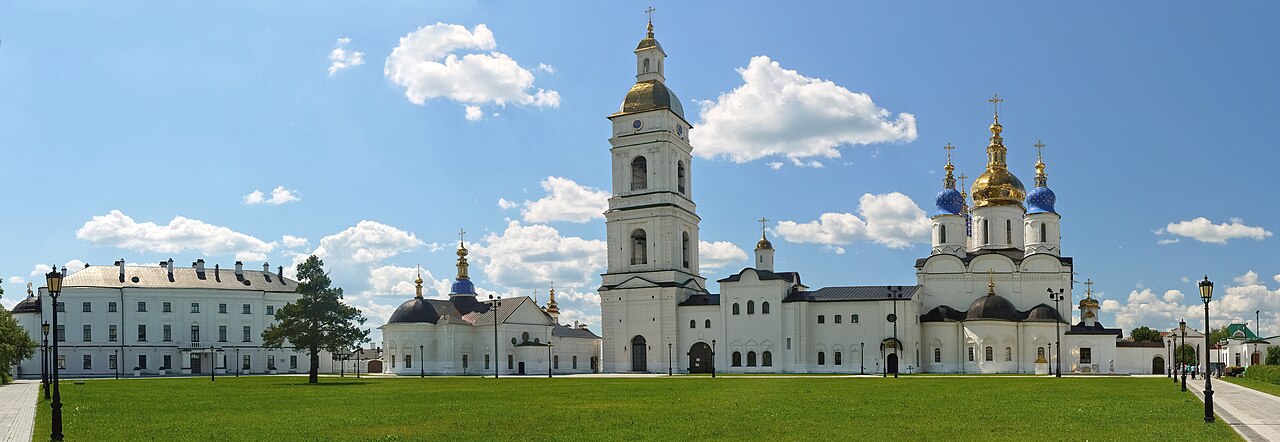
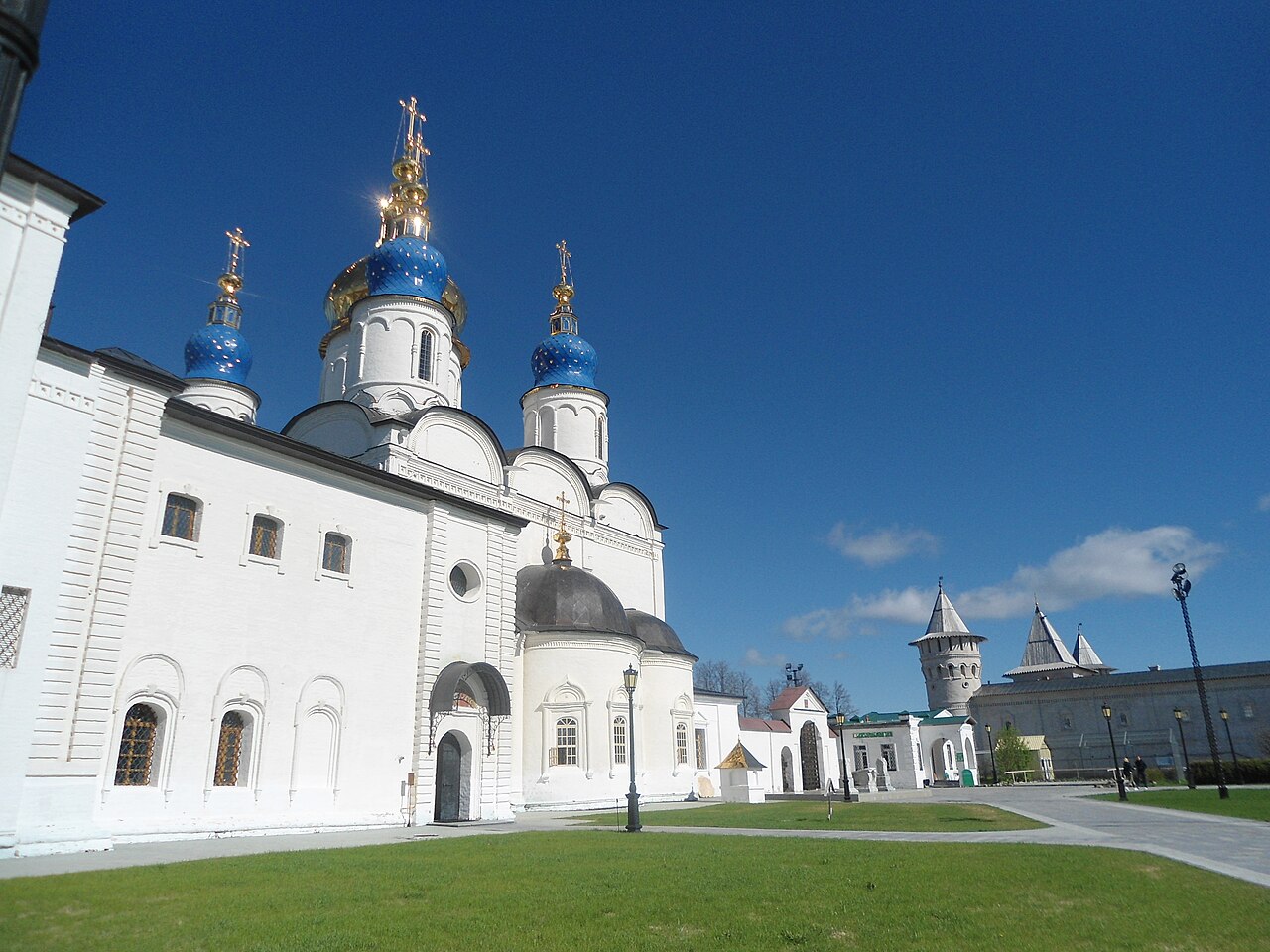
The kremlin’s elder is the Sophia-Assumption Cathedral of 1683 to 1686, Siberia’s first stone building: raised by Moscow and Ustyug masters on the metropolitan’s order in the capital’s five-domed image, its collapse mid-construction, the vaults falling in 1684, and determined completion entering the chronicle, the frontier learning masonry by masonry’s hard lessons, with the blue domes and gilded stars of later centuries now its signature against the plain’s sky.
The cathedral anchored Siberia’s church: the metropolitans of Tobolsk ruling a diocese of continental size, the saints of the frontier, John of Tobolsk above all, resting here, and the interior’s restored iconostasis and frescoes carrying the mixture, Moscow’s forms, local hands, that defines Siberian art, the mother church of everything east of the Urals still in daily service.
Its treasury’s fate added the modern chapter: the diocesan valuables evacuated and lost in the civil war, the cathedral closed and stripped in the 1930s, grain in the nave, and the 2000s restoration returning structure and splendor for the city’s anniversaries, the first stone building of Siberia entering its fourth century consecrated, crowned, and crowded on feast days.
Walls, Towers and the Rentereya
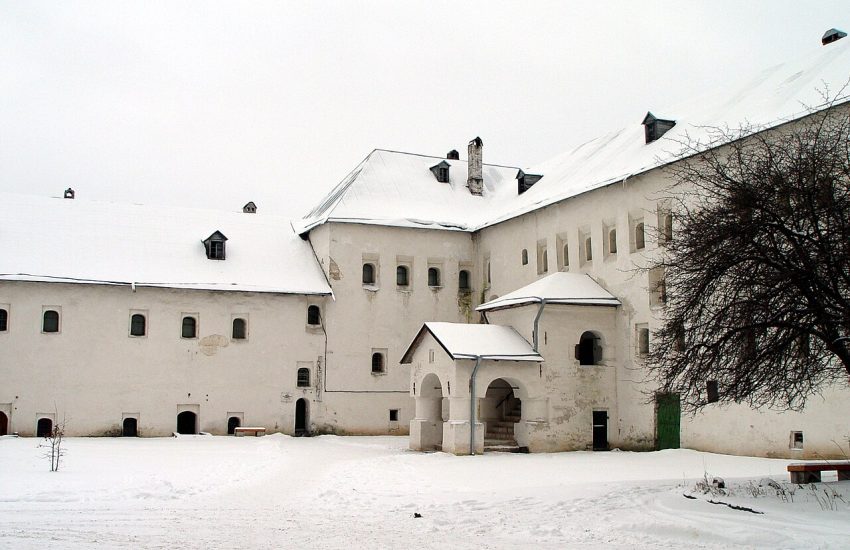
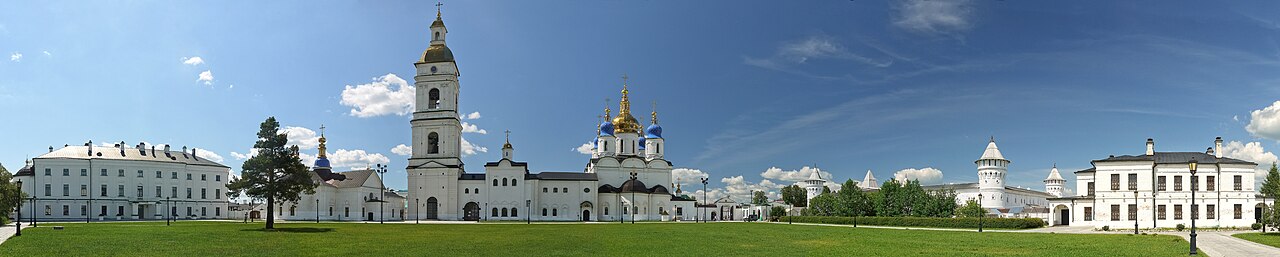
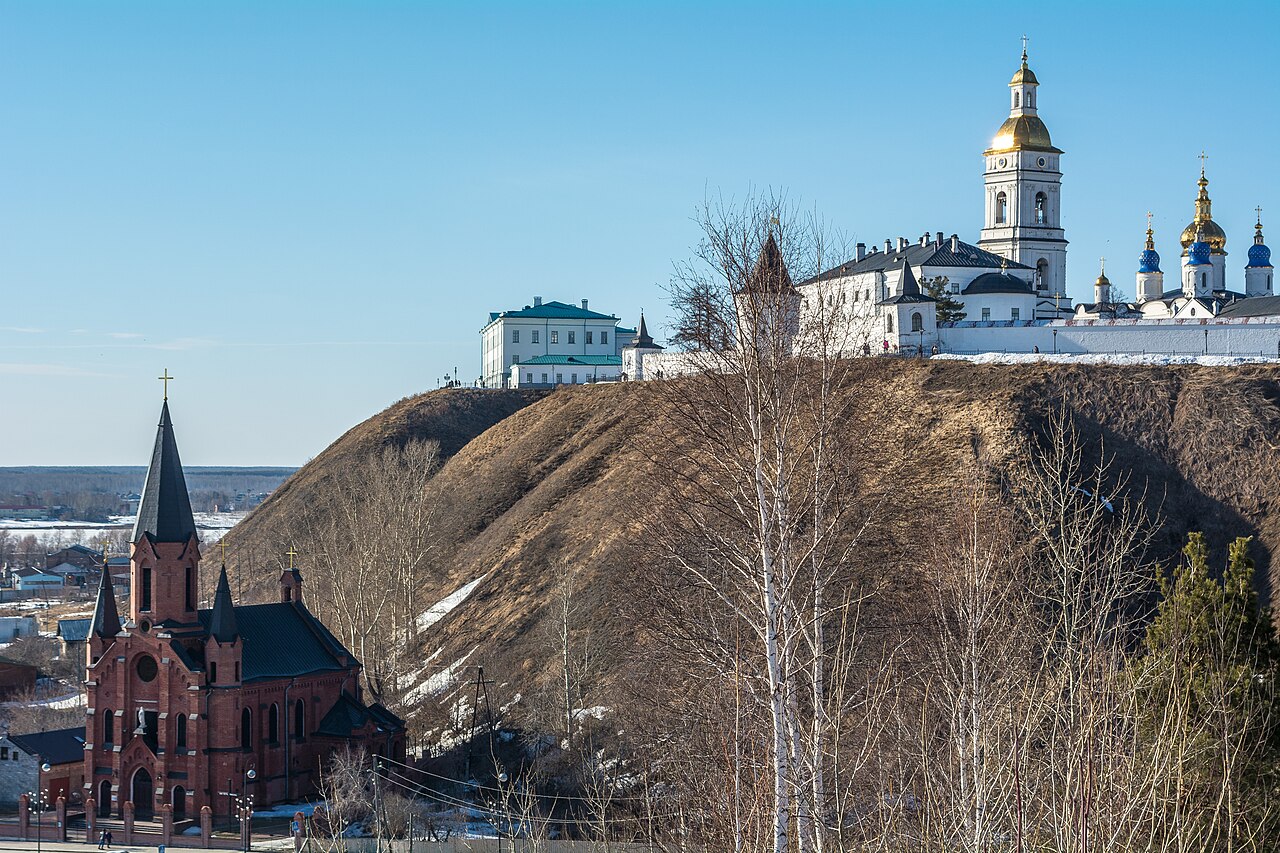
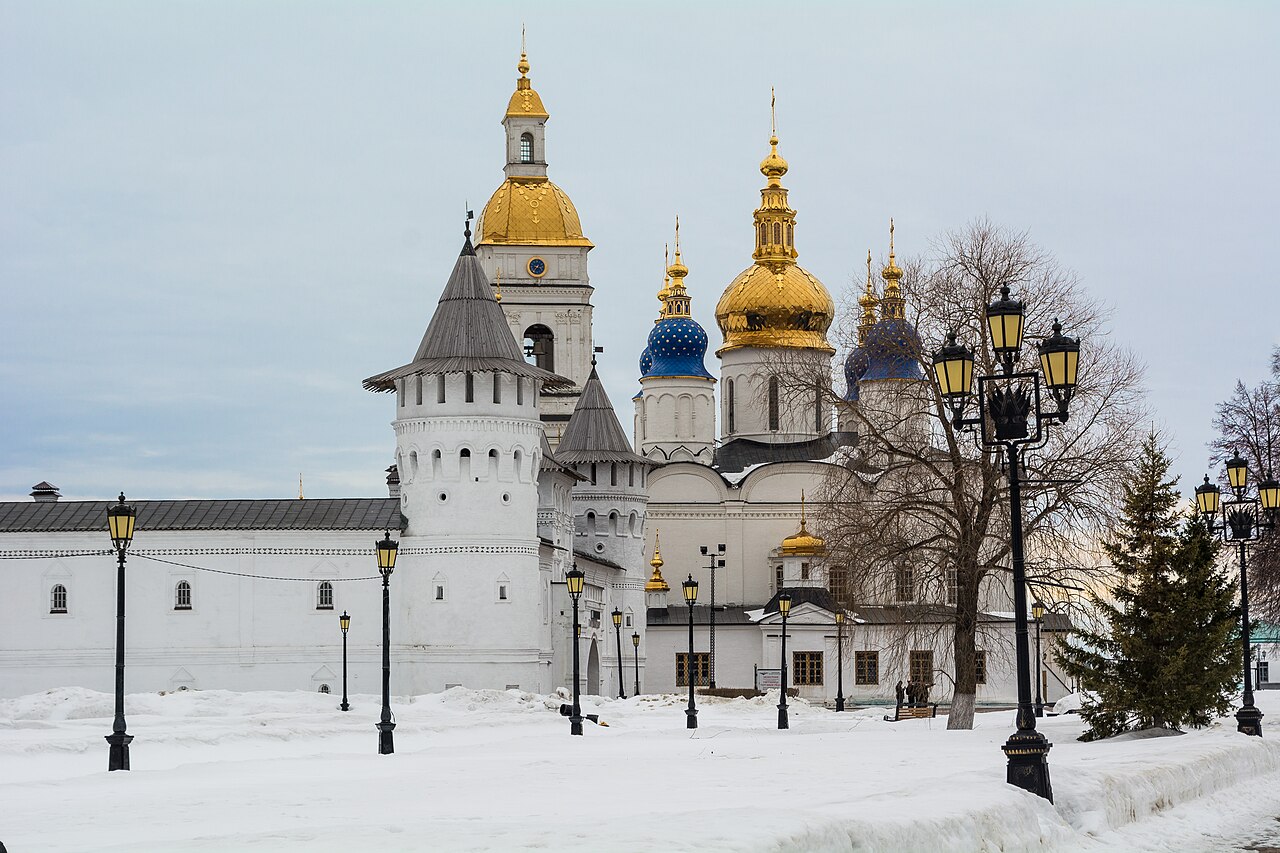
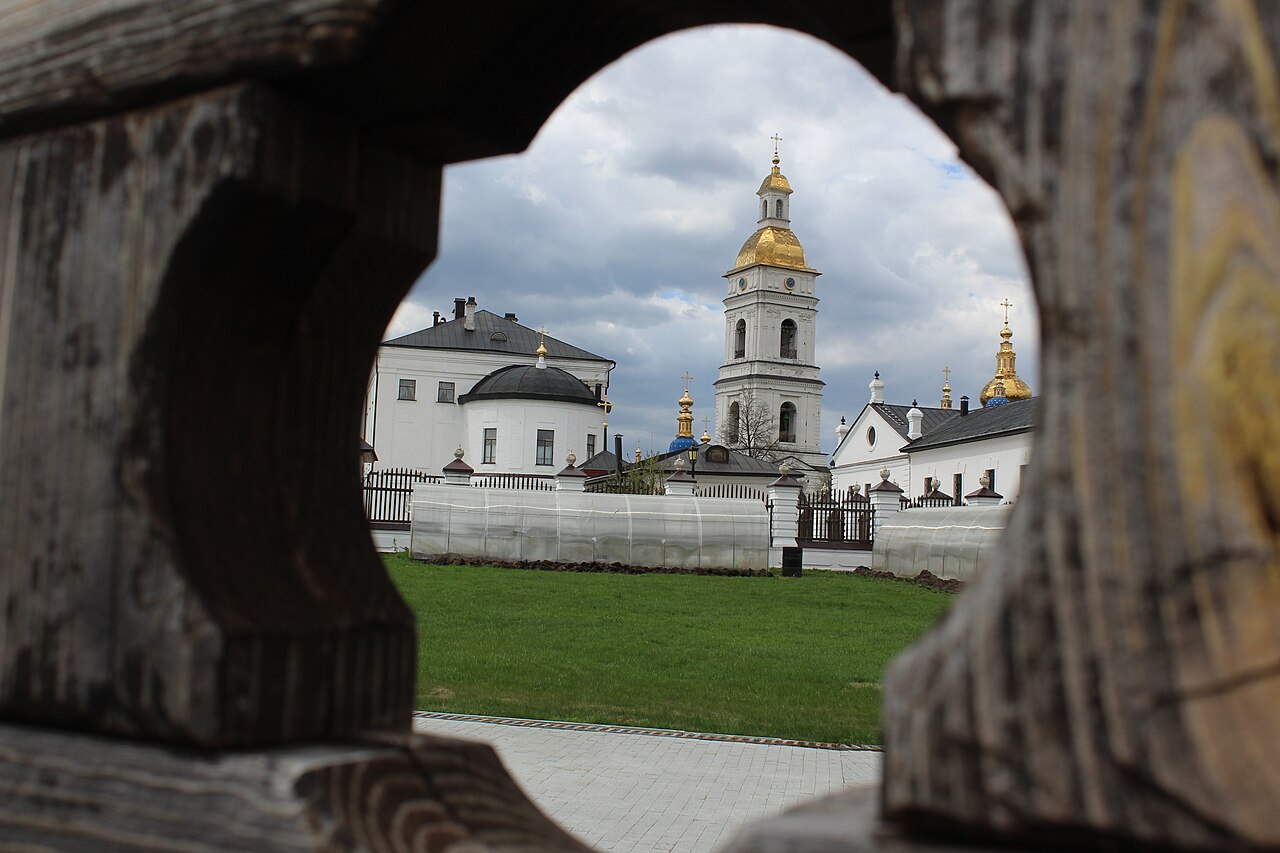
The kremlin’s circuit reads as Remezov’s catalog: the white walls with their arcaded inner galleries, the round and square towers’ tent roofs, the Holy Gates under the Spasskaya tower, and the showpieces ranged within, the vast Gostiny Dvor caravanserai of 1703 to 1706, two-storied around its court, built for the Bukhara trade and restored now as museum and crafts hall, and the Rentereya of 1714 to 1717, the treasury vault bridging the ravine like a fortified aqueduct, Siberia’s furs once locked above the roadway’s heads.
The administrative palace completes the square: the Governor’s, later Viceroy’s, palace of the 1780s housing today the Museum of Siberian Administration, throne portraits to telegraph forms, the apparatus of ruling a subcontinent displayed where it worked, with the bishops’ house holding the ecclesiastical half and the whole ensemble functioning as the Tobolsk museum-reserve, Siberia’s oldest museum lineage, founded 1870.
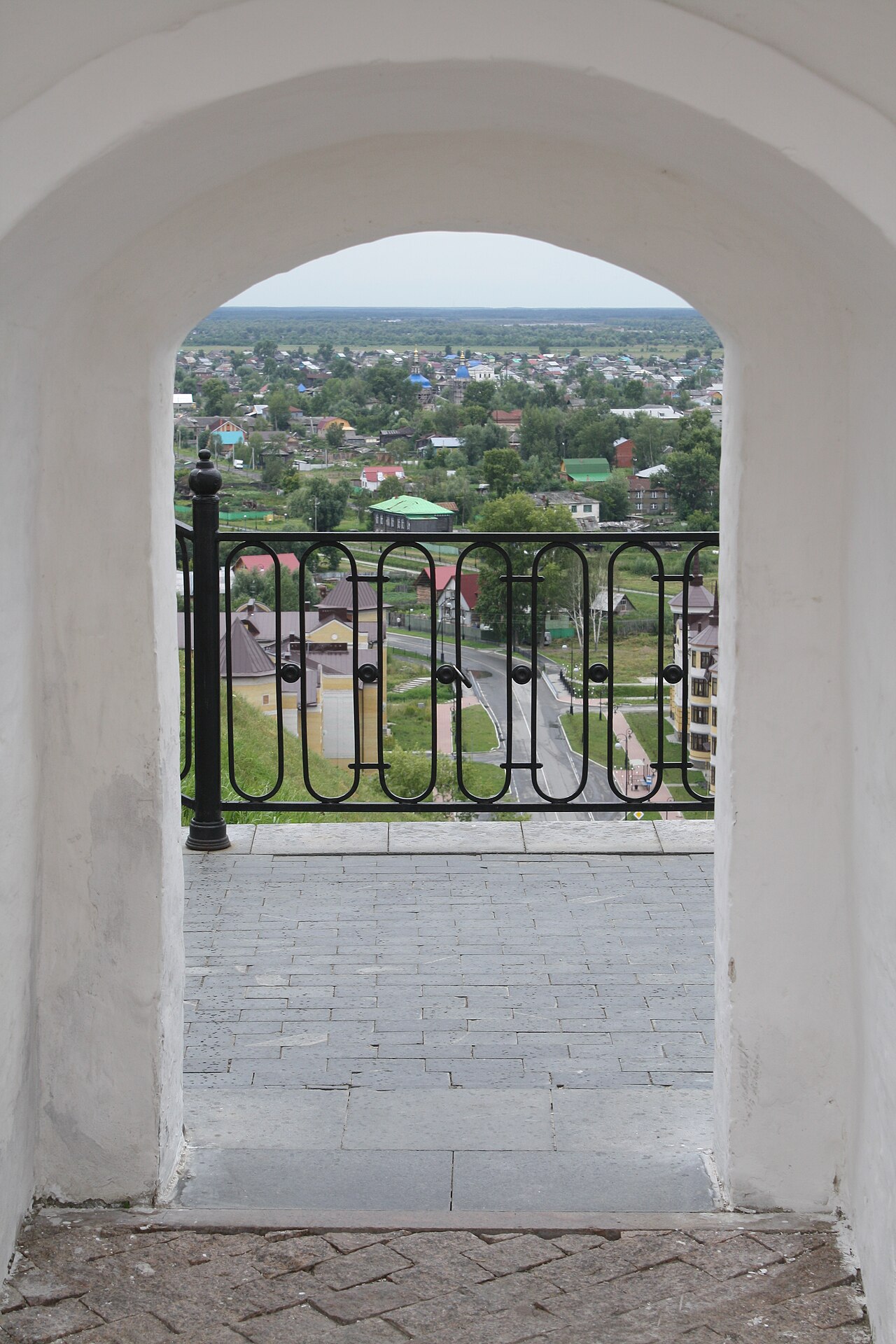
The walk along the walls delivers the point of everything: the Irtysh’s silver sweep, the lower town’s churches and wooden lanes, the plain running to the horizon’s haze, the view from which Siberia was imagined governable, and which, on the cape’s evening light, still argues the mapmaker’s case, order drawn on vastness.
The Exiled Bell of Uglich
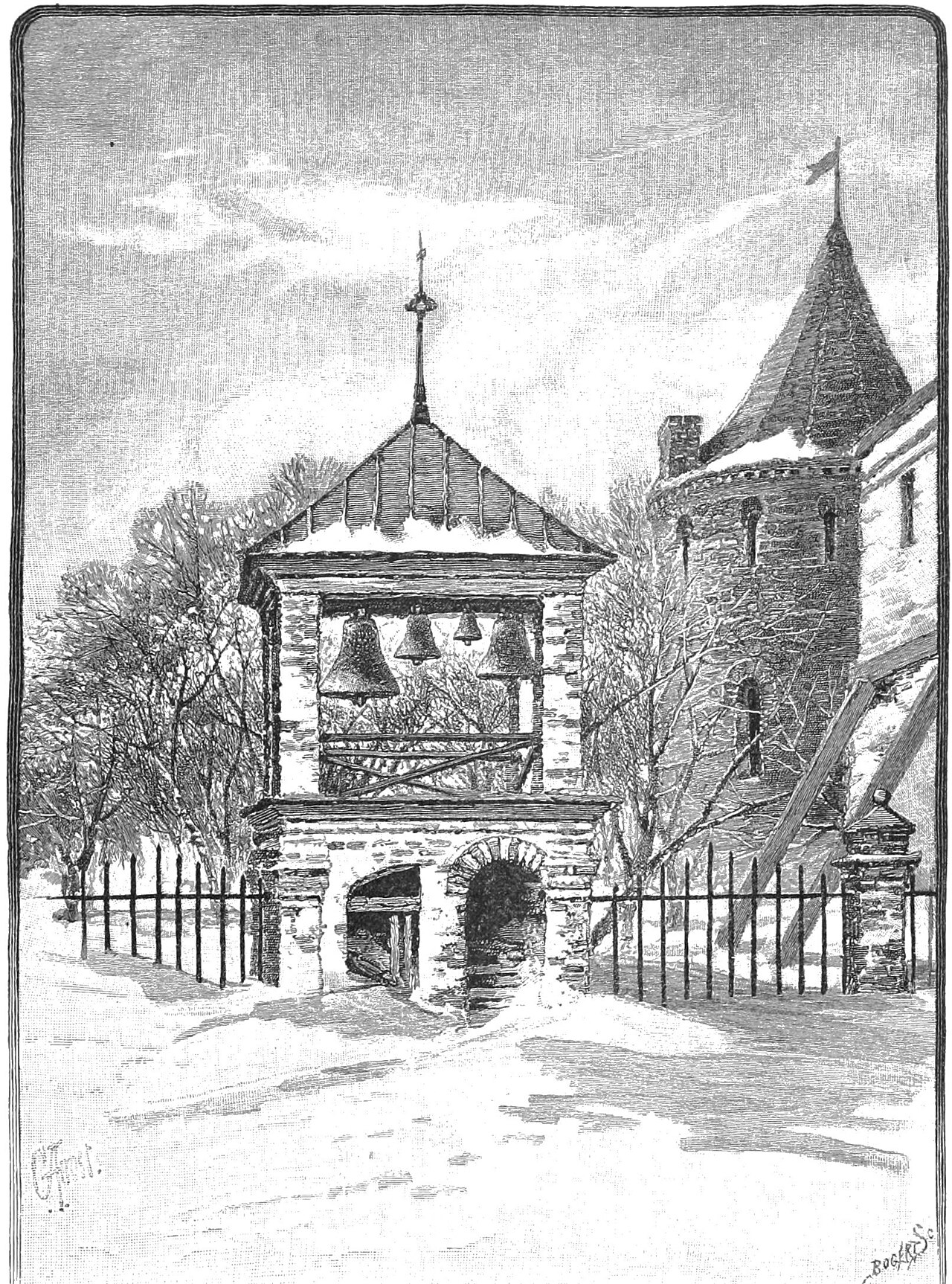
Among Tobolsk’s exiles the strangest arrived in 1593: the Uglich alarm bell, convicted of sedition for ringing the riot after Tsarevich Dmitry’s death, flogged, de-tongued, and marched to Siberia with the deported townsmen, the first exile of the Siberian road by the registers’ own humor, hung at Tobolsk, the inventory noting it as the first inanimate exile, and serving the city’s churches, time-keeping and alarms for a convict’s three centuries.
The bell became Tobolsk’s talisman and talking point: travelers from Radishchev to the century’s journalists sought it out, the city hung it finally in a purpose-built frame by the cathedral, and Uglich’s petitions for its pardon supplied the empire a running debate on whether bronze can serve a sentence, bureaucracy’s files on the question, preserved, reading like Gogol unedited.
The pardon of 1892 returned the veteran home up the rivers, Tobolsk keeping, with grief the newspapers recorded, an exact copy, which hangs in the kremlin today beside the story’s telling, the two cities sharing, across three thousand kilometers, one bell’s biography, Russian history’s finest parable of punishment told in a single instrument, struck softly for visitors at both ends.
The Exile Road
Tobolsk was the exile system’s gateway and ledger: the Siberian road’s columns processed through its forwarding prison, the Decembrists of 1826 passing in irons toward the mines with their wives, Maria Volkonskaya’s and her companions’ passage through the city entering the national legend, several of the exiled, Kuchelbecker the poet’s grave in the town cemetery among them, remaining in Tobolsk’s soil.
The road’s register is Russian literature’s dark syllabus: Avvakum the archpriest eastbound in the 1650s, Radishchev pausing en route and writing the city into his journals, Dostoevsky in the forwarding prison in 1850, where the Decembrists’ wives pressed on the convicted writer the Gospel he kept through katorga and credited with his rebirth, the scene, Tobolsk’s holiest literary property, marked today at the prison museum.
The system’s scale made the city a capital of sorrow as much as furs: hundreds of thousands walking the Vladimirka’s Siberian continuation past the cape, the clink of the parties audible, memoirists wrote, in the upper town’s evenings, and Tobolsk’s museums carry the inheritance without flinching, the exile road mapped, named, and given its faces, the capital auditing its own foundation.
The Prison Castle
The kremlin’s grimmest wing is the Prison Castle of 1849 to 1855, the central forwarding prison built into the ensemble’s flank: white walls and watchtowers holding the transit cells, the churches, and the administration of the exile flood, among its wards across the decades Dostoevsky in transit, Chernyshevsky, and the long anonymous thousands, the castle working as prison, with Soviet continuity, into 1989 within living memory.
The museum that now fills it spares little: the cells and punishment boxes as they stood, the registers’ statistics, the escape attempts’ hardware, and the twentieth century’s additions, the 1921 rising’s and the 1930s’ executions documented on site, Tobolsk’s castle serving as West Siberia’s memorial to the repression era, a hostel in one wing offering, for the unshakeable, a night in a cell.
The castle’s placement beside cathedral and palace makes the cape’s honesty complete: faith, administration, commerce, and coercion, the four engines of the Siberian enterprise, walled together on one hill, the ensemble teaching, better than any text, what a colonial capital was, which is why historians rank Tobolsk’s kremlin among the most legible places in Russia.
Decline of a Capital
The nineteenth century retired the capital: the governing institutions migrating to Omsk through the 1820s to 1839 as the steppe corridor and army center gravitated power south, and the Trans-Siberian railway of the 1890s delivering the quietus, its line passing through Tyumen far to the south, Tobolsk left on a river branch, the first city of Siberia becoming its loveliest backwater within one lifetime.
The backwater kept its compensations: the fish and fur fairs, the merchant houses’ late flowering, the first Siberian newspapers’ and museums’ civic energy, and the cape’s ensemble preserved by poverty from improvement, Tobolsk entering the twentieth century as the empire’s best-conserved seventeenth-to-eighteenth-century city east of the Volga, a capital in amber.
History returned once, catastrophically, in 1917: the last tsar’s family, exiled by Kerensky’s government, lived eight months in the former Governor’s House in the lower town, the Romanovs’ Tobolsk interlude, church across the lane, letters and diaries dating the plain house’s every week, before the Bolsheviks moved them to Yekaterinburg and the end, the backwater hosting the empire’s final domestic scene, told fully at the house’s museum and in this series’ companion article.
The Soviet Century
The Soviet decades treated the cape by the standard sequence: the diocese closed and the cathedral stripped, the kremlin’s buildings turned to grain, offices, and the prison’s continuing trade, the city’s remoteness its shield, until the 1960s restoration school, Tobolsk’s ensemble among its first Siberian causes, began the long return, scaffolding on the Sophia domes by the anniversary decades.
Late-century oil rewrote the region: the West Siberian fields’ boom building the petrochemical new town across the ravines, Tobolsk’s population and funds multiplying, and the historic cape inheriting, for once, prosperity’s attention, the restorations of the 1990s and 2000s returning walls, cathedral, Gostiny Dvor, and palace in sequence, with the 2010s pilgrim and tourist infrastructure completing the conversion of capital-in-amber to destination.
The century’s audit left the city its double identity, industry on the plain, history on the cape, and the kremlin’s museums narrate both without blinking, Remezov’s maps beside the exile registers, the oil decade’s photographs beside the fur books, Siberia’s whole account kept where it was always kept, on the Trinity Cape’s high ledge.
Watch the Tobolsk Kremlin on Film
The kremlin’s place in Siberian identity runs deeper than tourism. For the peoples of the Russian east, Tobolsk’s white walls are the frontier’s founding monument, the point from which the whole vast enterprise of Siberia, conquest and exile, fur and faith, mapping and governing, radiated across a sixth of the earth, and the cape’s ensemble, uniquely complete, lets a visitor grasp that enterprise whole, in stone, where it was conceived and run. No other single site in Siberia holds so much of the region’s meaning, which is why the restoration of recent decades has been less a tourist project than an act of regional self-recovery, the east reclaiming the capital that made it.
Visiting the Tobolsk Kremlin Today
Tobolsk lies 250 kilometers northeast of Tyumen, the nearest big rail and air hub: trains and buses cover the run in about four hours, Tobolsk’s own station and airport add direct options, and the kremlin crowns the upper town ten minutes by taxi from either. The ensemble’s grounds are open daily and free; the museum-reserve tickets cover the Governor’s palace, Gostiny Dvor, the Rentereya, the bell and Remezov displays, and the Prison Castle’s separate, sobering admission, with the Sophia cathedral open for services and visits. Give the cape a full day, descend the Sofia slope to the lower town’s Governor’s House museum and wooden quarters, and stay for the evening light on the white walls, the Irtysh’s best hour; summer river trips and the Isker site complete a second day. You can find the kremlin on the map here: Tobolsk Kremlin on Google Maps.
Palaces Nearby
You May Like
Edirne Palace and the Capital That Was Lost