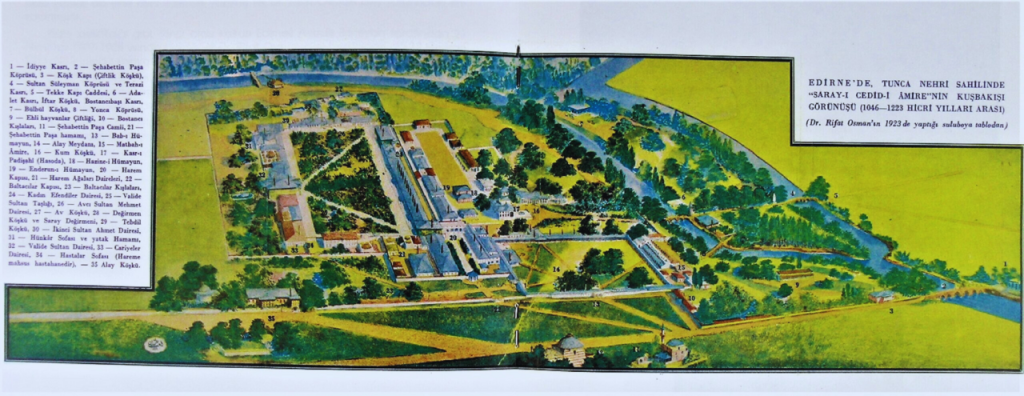
Now, stop among the foundations and try to imagine the scale. Where you are standing was a palace complex of well over a hundred buildings: courtyards, kitchens, baths, mosques, towers, gardens and hunting grounds, spread across an island in the Tunca river.
For two centuries the Ottoman court spent as much time here as in Istanbul. Sultans were born here, campaigns were launched from here, and ambassadors were received here.
Almost none of it survives, and the reason is one of the most self-defeating decisions in Ottoman military history.
- Edirne Before the Palace
- The Second Capital
- Murad II Builds on the Island
- A Complex of a Hundred Buildings
- The Cihannuma Tower
- Baths, Kitchens and Gardens
- Mehmed IV and the Hunting Court
- Why the Court Left
- The Explosion of 1878
- Excavation and Reconstruction
- Selimiye and the City
- Rivers, Bridges and Oil Wrestling
- Visiting Edirne
Edirne Before the Palace
The city was Roman Hadrianopolis, founded by Hadrian on an older Thracian settlement at the junction of three rivers, and it was a major Byzantine fortress before the Ottomans took it in the 1360s.
Its position controls the road from Europe to the Bosphorus, which is why armies have fought over it repeatedly for two thousand years.
It is now a quiet provincial city on the Greek and Bulgarian borders with an extraordinary architectural legacy.
The Second Capital
Edirne served as the Ottoman capital from the 1360s until 1453, and then as the second capital, with a full court apparatus, for another two centuries.
Sultans preferred it for its hunting, its climate and its position closer to the European frontier, where most campaigning took place.
In practice the empire had two capitals, and the court moved between them.
Murad II Builds on the Island
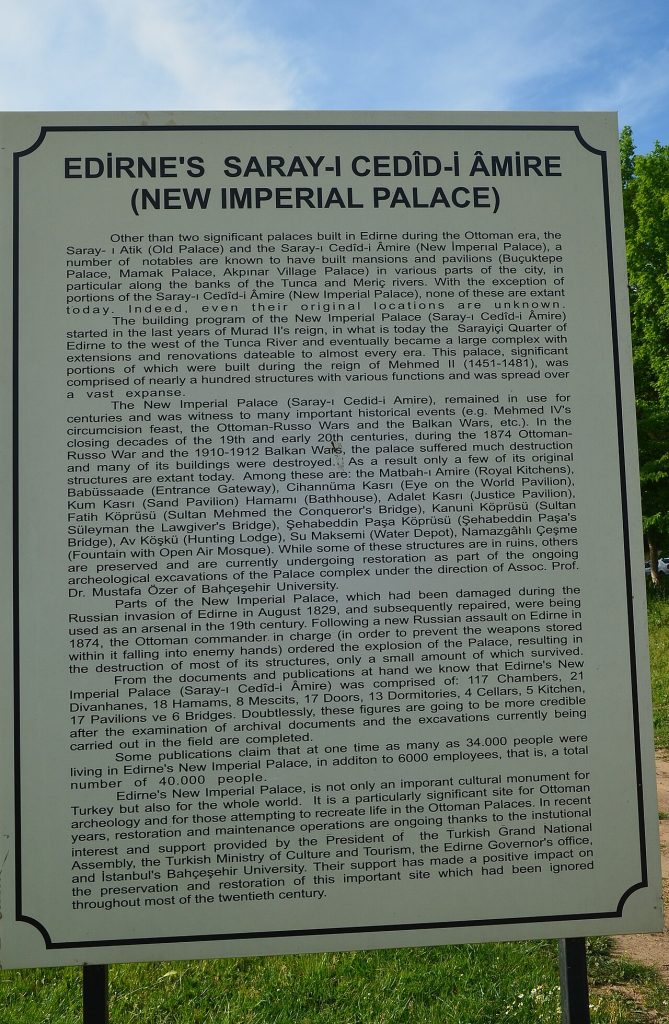
Murad II began the new palace, the Saray-i Cedid, in the 1440s on an island in the Tunca, outside the city, and his son Mehmed II, the conqueror of Constantinople, completed much of it.
Mehmed was born in Edirne and spent his youth here. The palace he finished was the model for Topkapi, built a decade later.
Successive sultans added to it for two hundred years.
A Complex of a Hundred Buildings
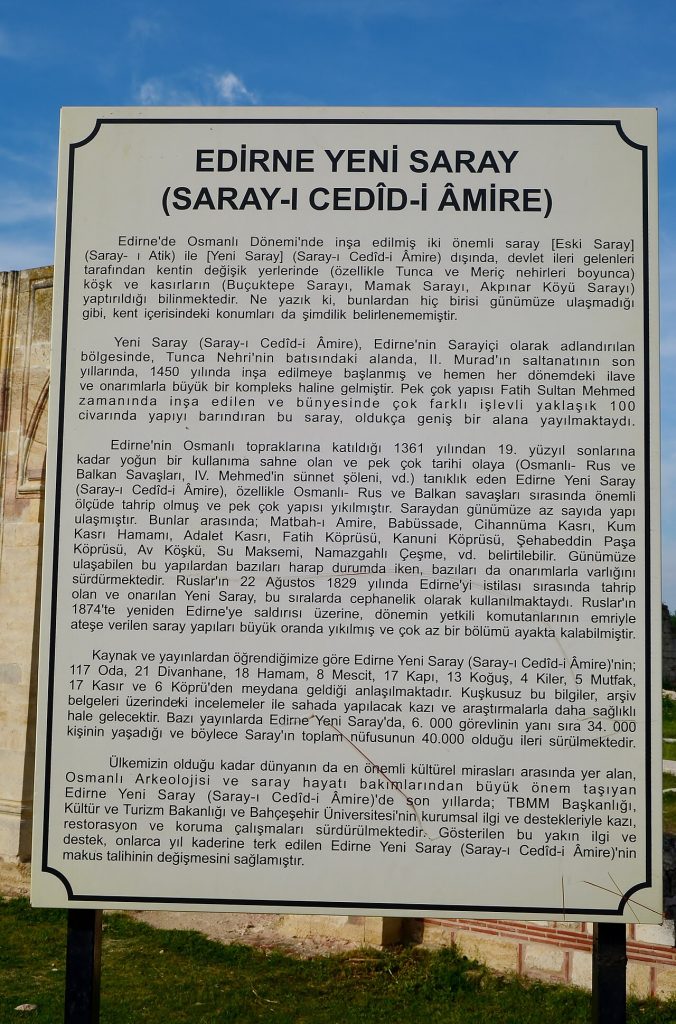
Records describe more than a hundred and twenty structures: halls, pavilions, mosques, baths, bakeries, stables, barracks for the palace guard, storehouses, gardens and pools, spread over a large area.
Thousands lived and worked there. It functioned, like Topkapi, as a city within walls.
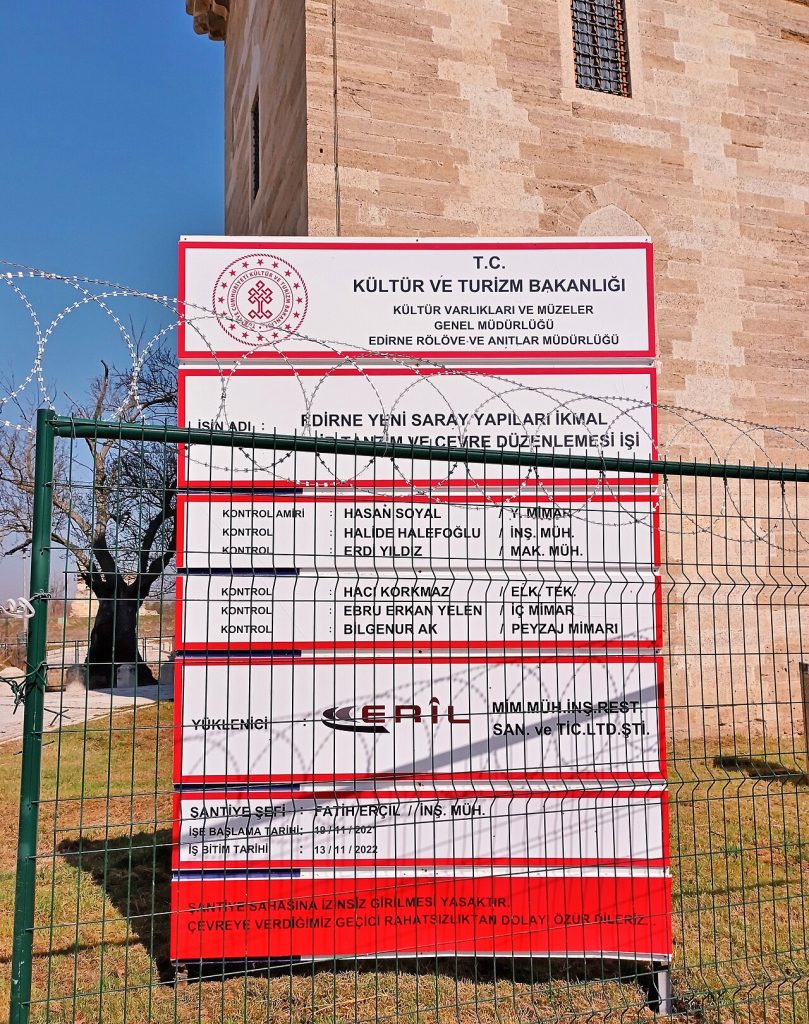
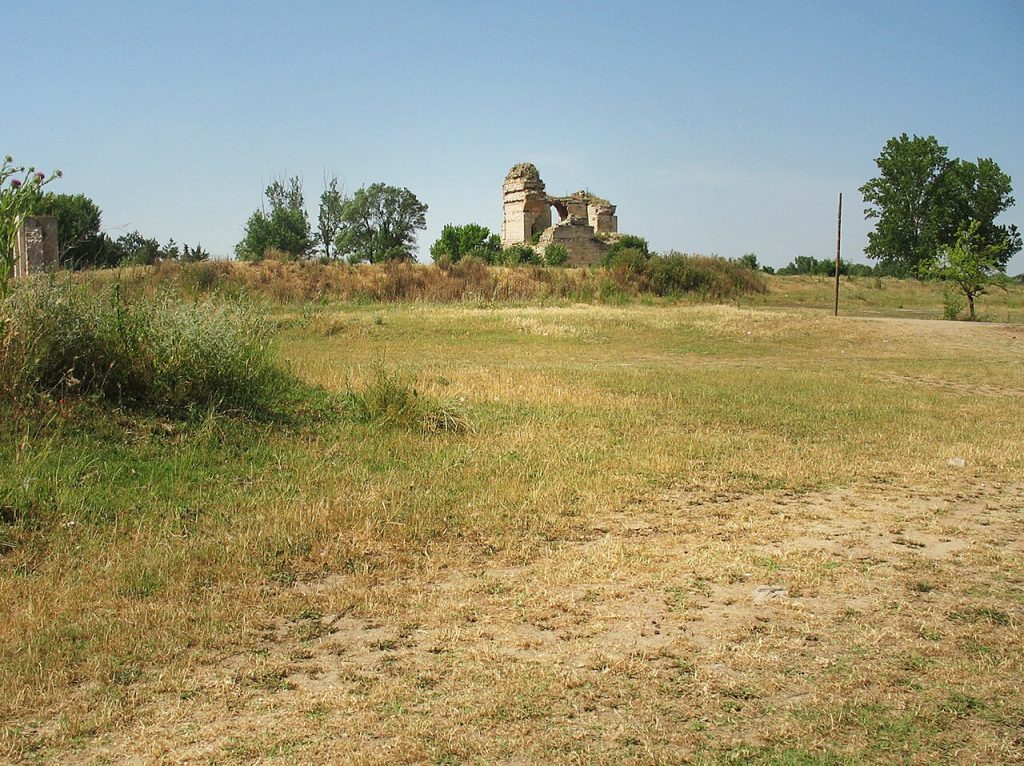
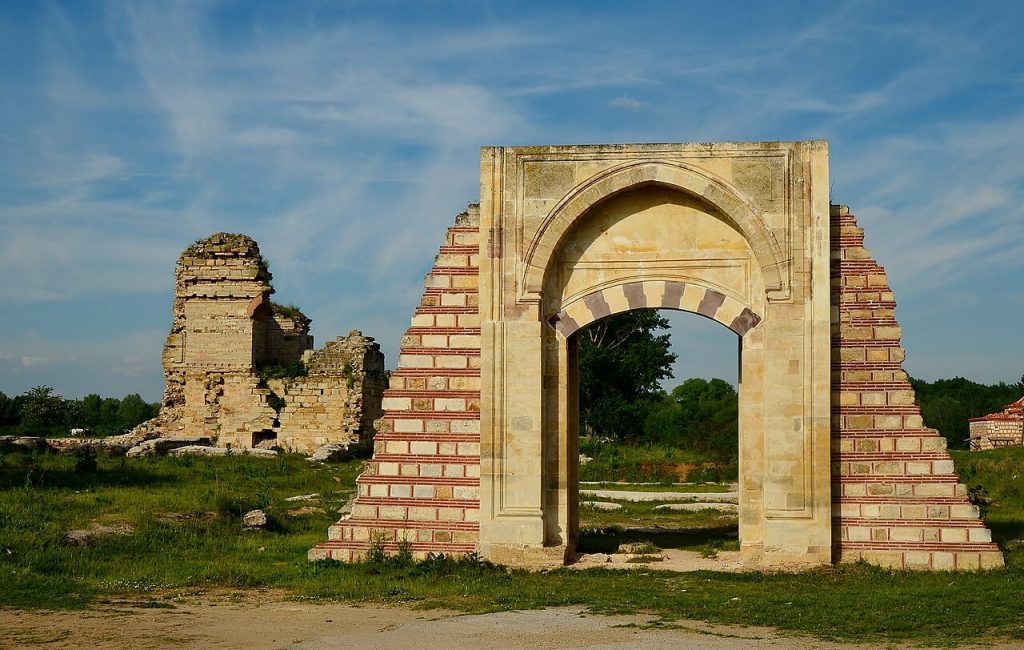
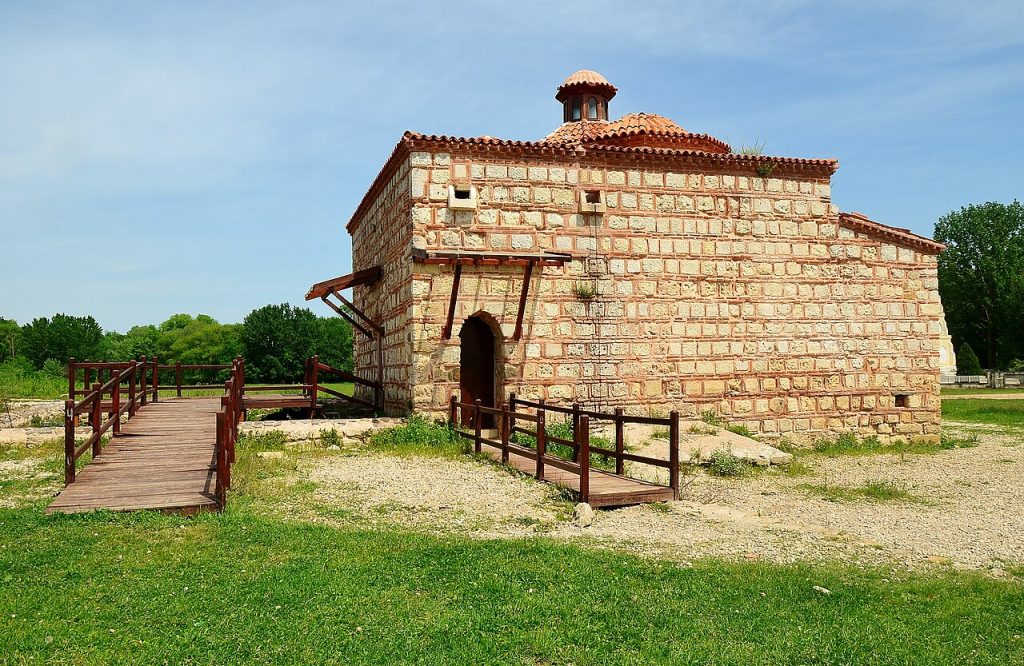
Today the site is open ground with excavated foundations, a few rebuilt structures and informational panels.
The Cihannuma Tower
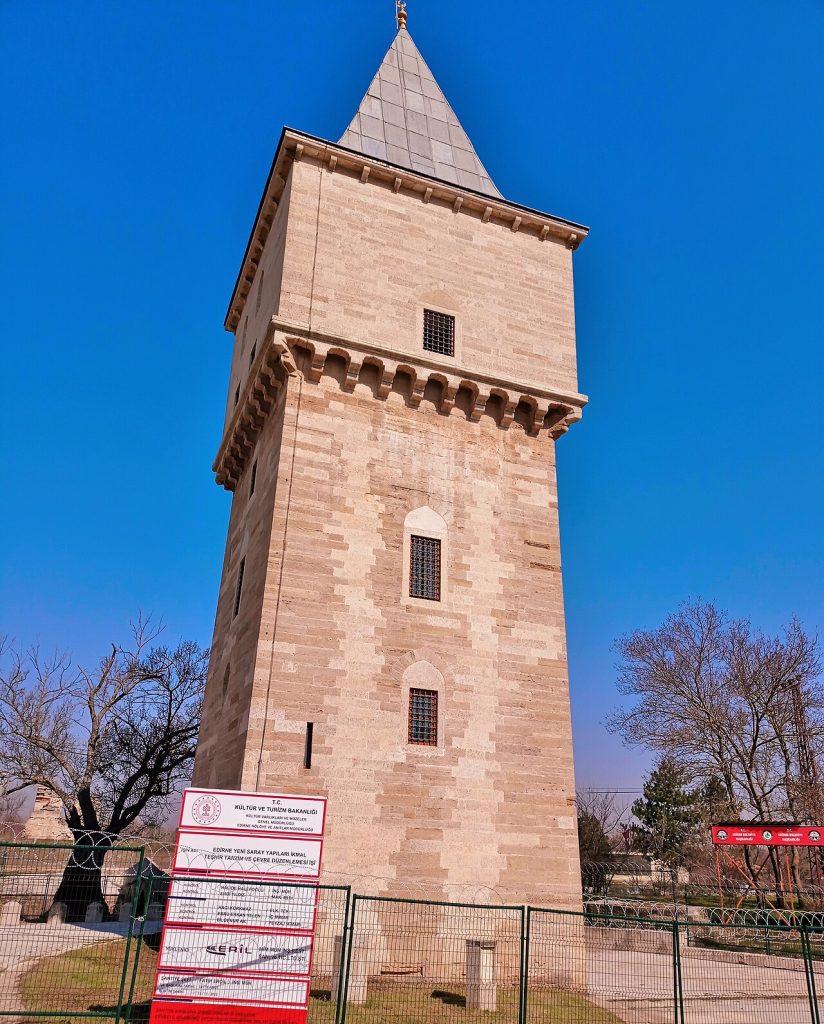
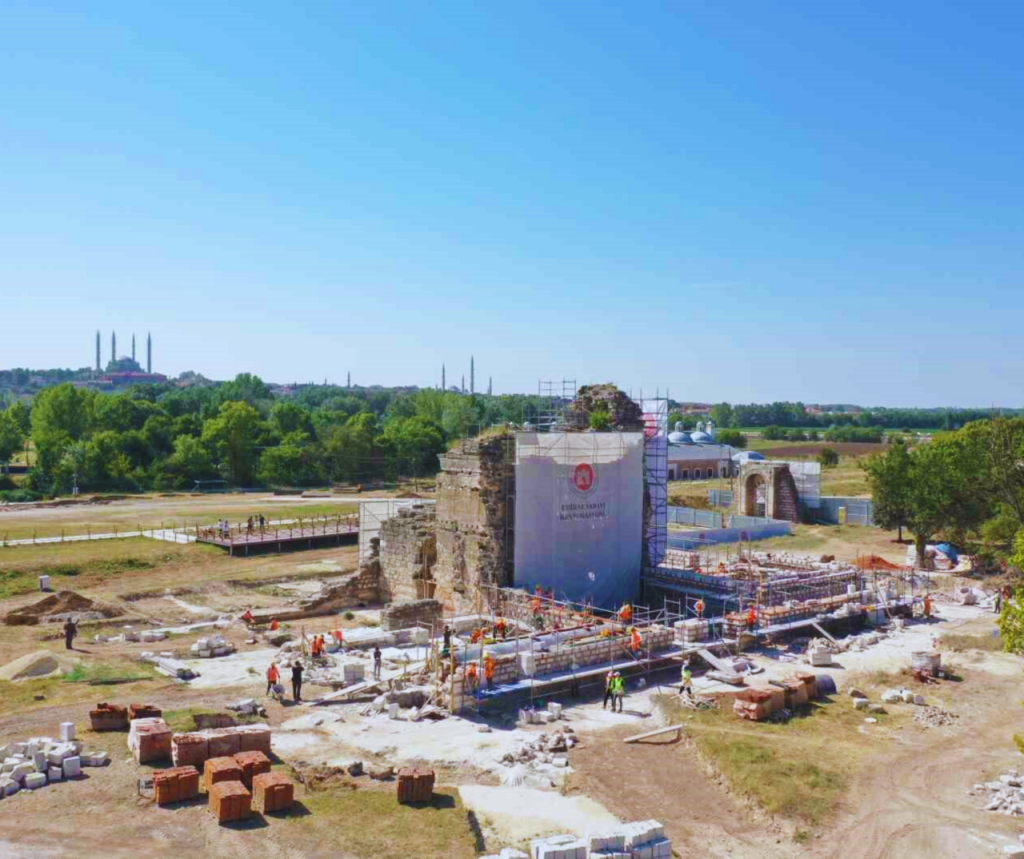
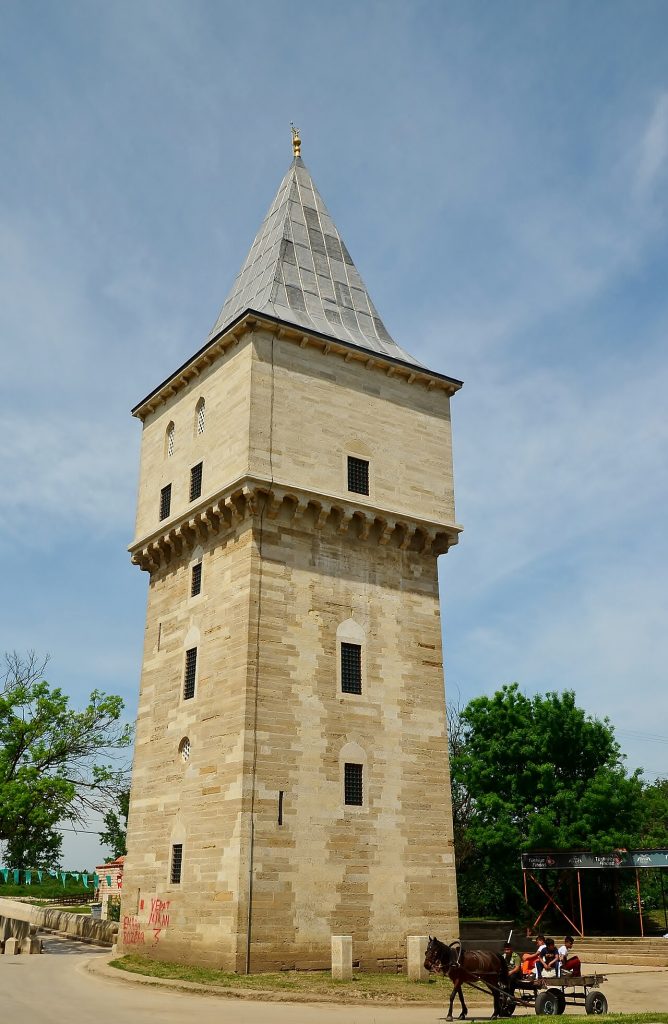
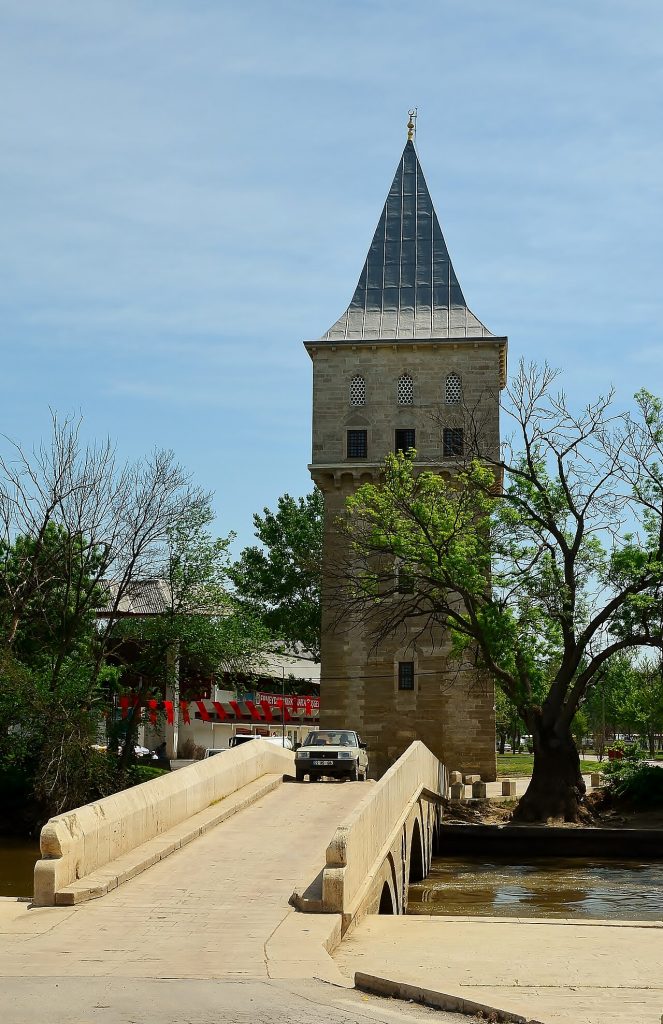
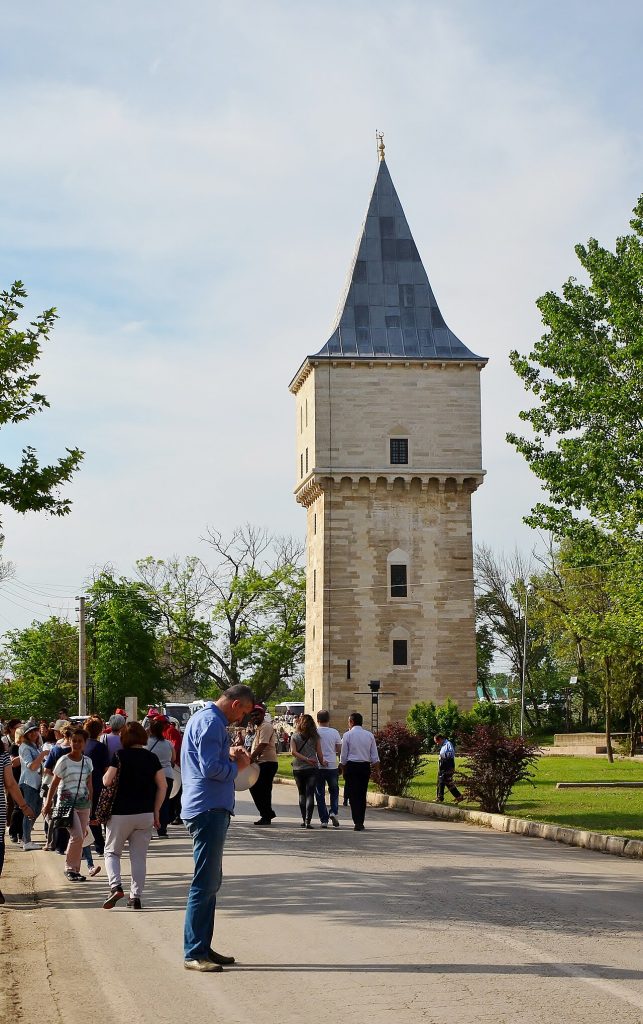
The tallest building was the Cihannuma Kasri, the world-viewing pavilion, a tower of seven storeys with the sultan’s private apartments at the top and a view across the plain.
Its lower walls survive, and reconstruction work has raised part of the structure.
A seven-storey tower in the fifteenth century was an extraordinary thing, and visitors described it with amazement.
Baths, Kitchens and Gardens
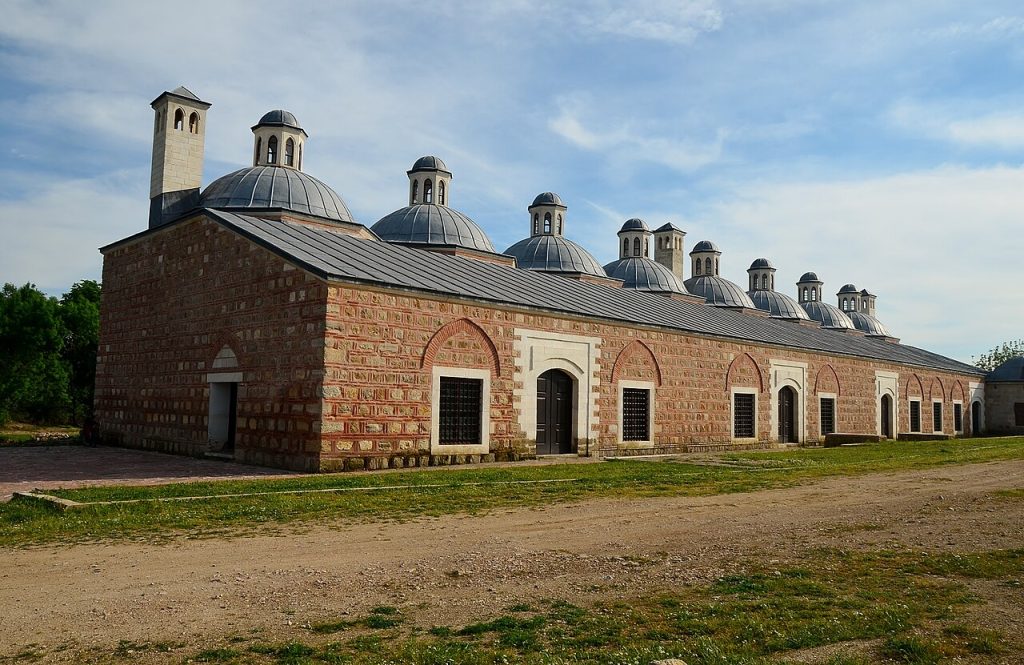
The Kum Kasri bath, the palace kitchens and the justice pavilion are among the structures identified by excavation, some partly restored.
The gardens included fruit orchards, flower beds and irrigation channels drawn from the river, and the island setting meant water was everywhere.
Walking the site, the river is the clearest surviving element of the original design.
Mehmed IV and the Hunting Court
Mehmed IV, who reigned from 1648 to 1687, spent most of his life at Edirne, hunting on a scale that drew complaints from his own administration about the cost and the neglect of government.
He is known as Avci Mehmed, Mehmed the Hunter, and his court at Edirne is described in detail by the chronicler and traveller Evliya Celebi.
His reign ended with deposition after the failure at Vienna in 1683, and the court’s long Edirne period ended with him.
Why the Court Left
After 1703, when the janissaries deposed Mustafa II in an uprising that began in Istanbul and ended at Edirne, the sultans returned permanently to Istanbul.
The palace was maintained for a time, used occasionally for campaigns and ceremonies, and then neglected. Earthquakes and fires took their toll through the eighteenth and nineteenth centuries.
By the 1870s much of it was already ruinous.
The Explosion of 1878
During the Russo-Turkish war of 1877 and 1878, Russian forces advanced on Edirne. The Ottoman command had stored ammunition in the palace buildings.
Rather than let it fall into Russian hands, the garrison blew it up. The explosion and the fire that followed destroyed most of what remained of the complex.
It is a bleak story: the palace that survived four hundred years of neglect was destroyed in an afternoon by its own army.
Excavation and Reconstruction
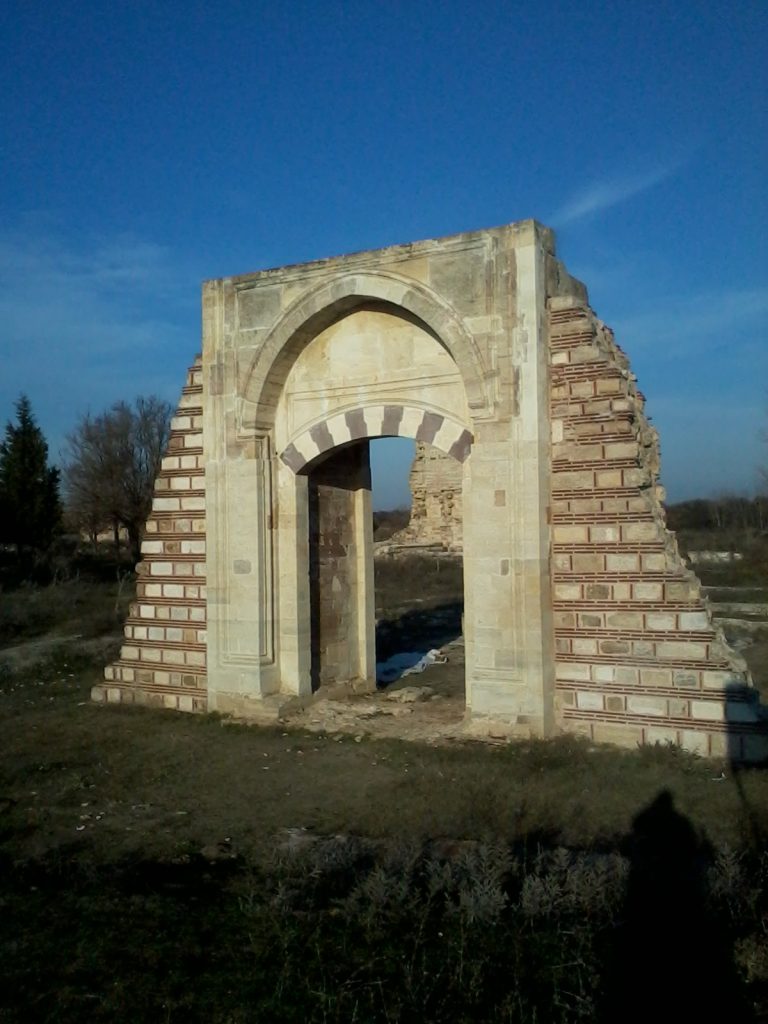
Archaeological work began in the twentieth century and has continued since, exposing foundations, identifying buildings and partly reconstructing several structures including the bath and parts of the tower.
Reconstruction here is contested, as everywhere: there is little surviving evidence above foundation level, and much of what rises is interpretation.
The site is open, free in parts, and best understood with the museum plan in hand.
Selimiye and the City
Edirne’s real glory is the Selimiye mosque, Sinan’s masterpiece, completed in 1575 when the architect was in his eighties, with a dome wider than Hagia Sophia’s and four of the tallest minarets ever built.
It is a UNESCO World Heritage site and, by consensus among architectural historians, the finest Ottoman building ever constructed.
Anyone travelling to see the palace ruins should budget most of the day for the mosque, the old mosque, the bedesten and the covered market.
Rivers, Bridges and Oil Wrestling
Three rivers meet at Edirne, crossed by Ottoman stone bridges that are still in use, and the meadows between them host the Kirkpinar oil wrestling festival every summer, held since the fourteenth century.
Kirkpinar is one of the oldest continuously held sporting events in the world and is on the UNESCO intangible heritage list.
If you are in Turkey in late June or early July, go.
Visiting Edirne
Edirne is about two and a half hours from Istanbul by bus or car, and it makes a comfortable day trip or an easy overnight.
The palace site lies outside the centre across the Tunca; take a taxi or walk from the Selimiye in about half an hour.
Go for the mosque, stay for the ruins, and eat the fried liver, which is what the city is known for domestically.
Watch the Palace on Film
Visiting Edirne Palace Today
The palace site lies on the western side of Edirne across the Tunca river, about two and a half hours from Istanbul by bus or car and half an hour on foot from the Selimiye mosque.
The archaeological site is open with limited facilities; excavation and reconstruction work continues, so access to some areas varies. Information panels explain the layout.
Allow two hours at the site and a full day for Edirne as a whole. Find it here: https://www.google.com/maps?q=41.6856,26.5444
Palaces Nearby
You May Like
The Irkutsk White House and the Merchant Princes of the East


One thought on “Edirne Palace and the Capital That Was Lost”