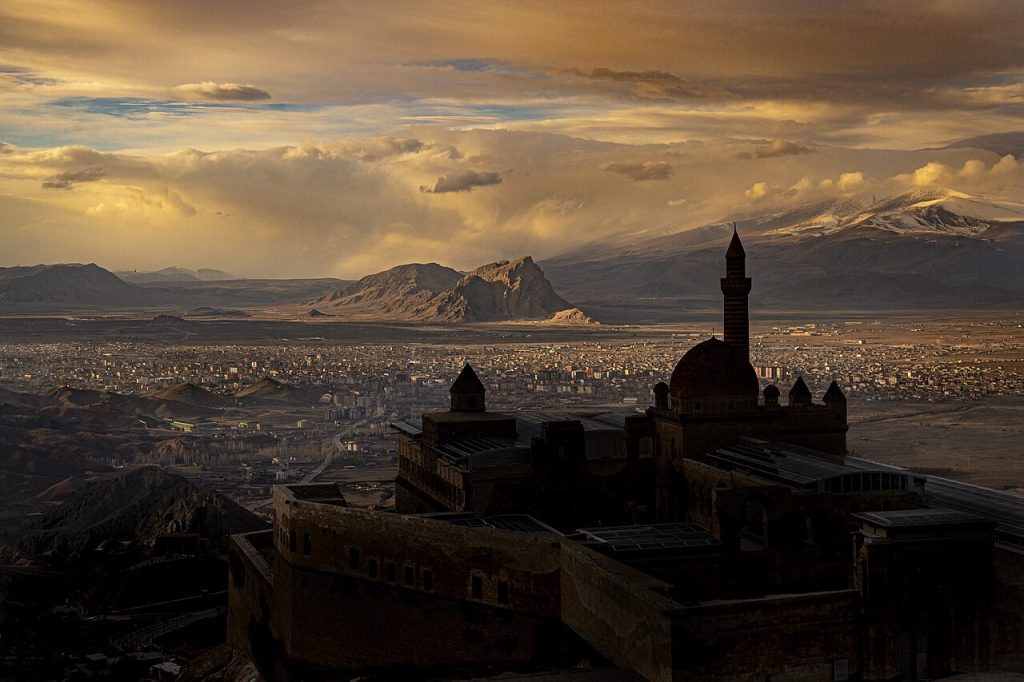
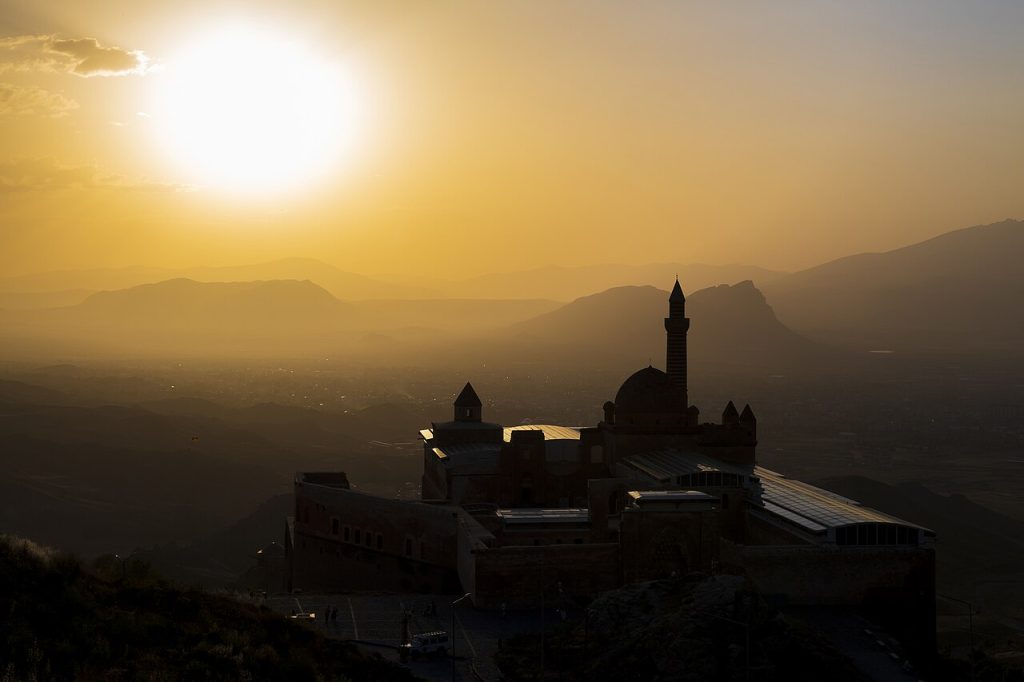
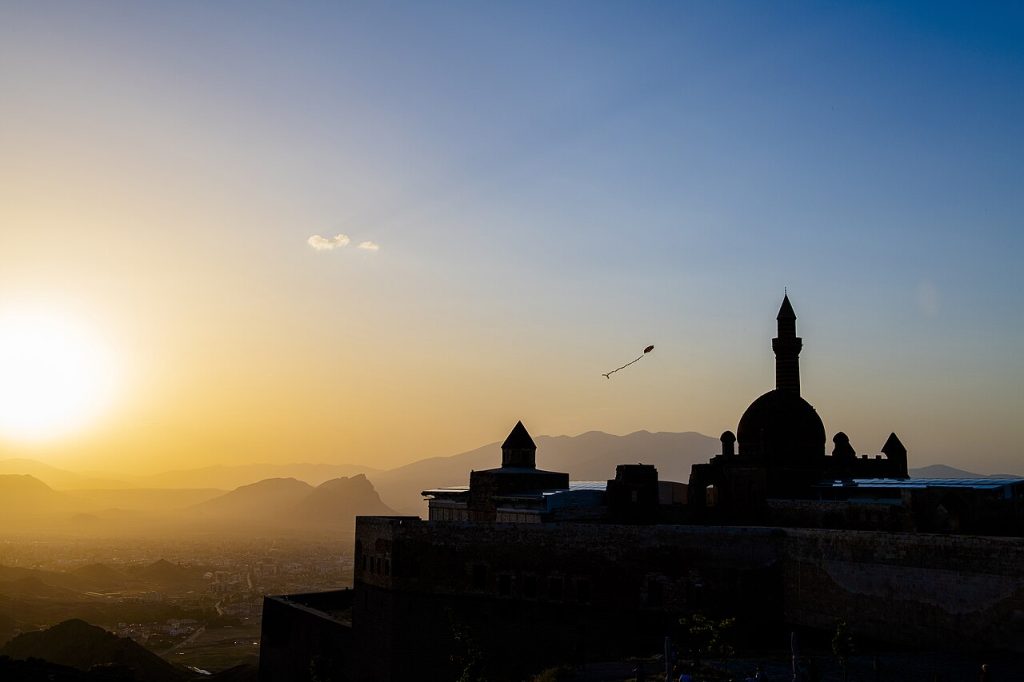
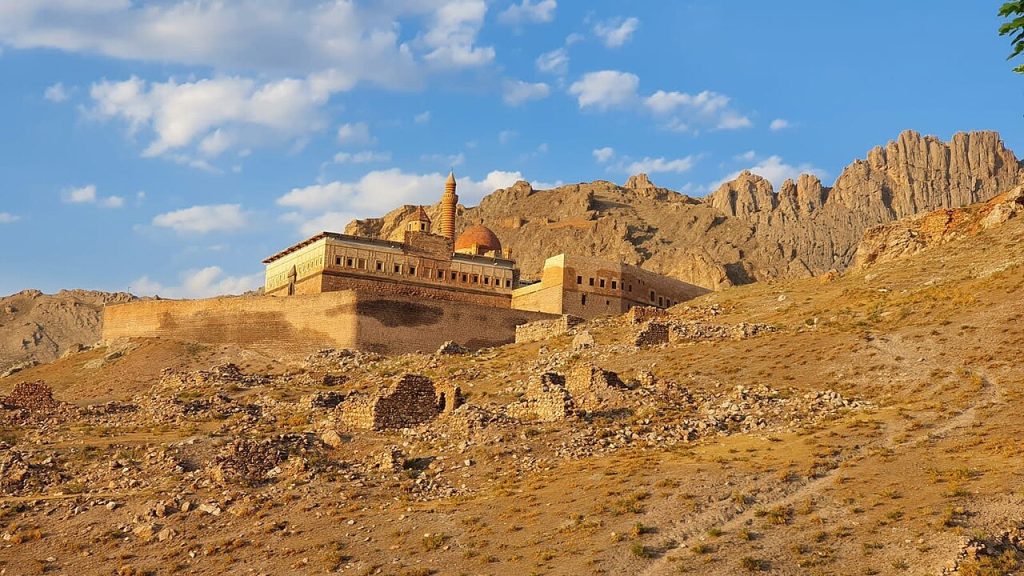
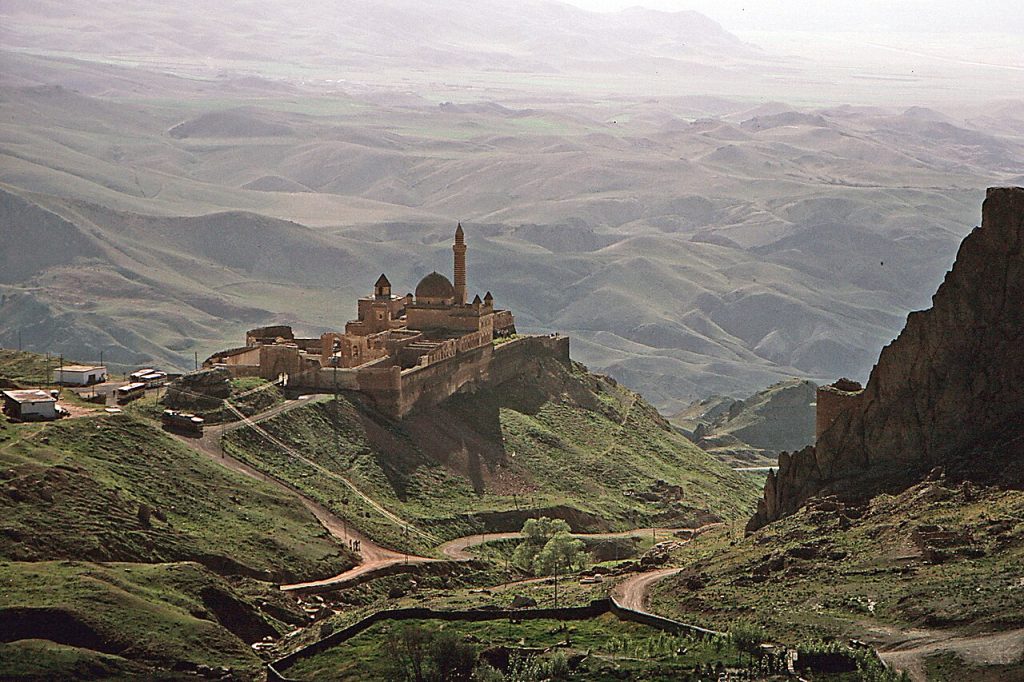
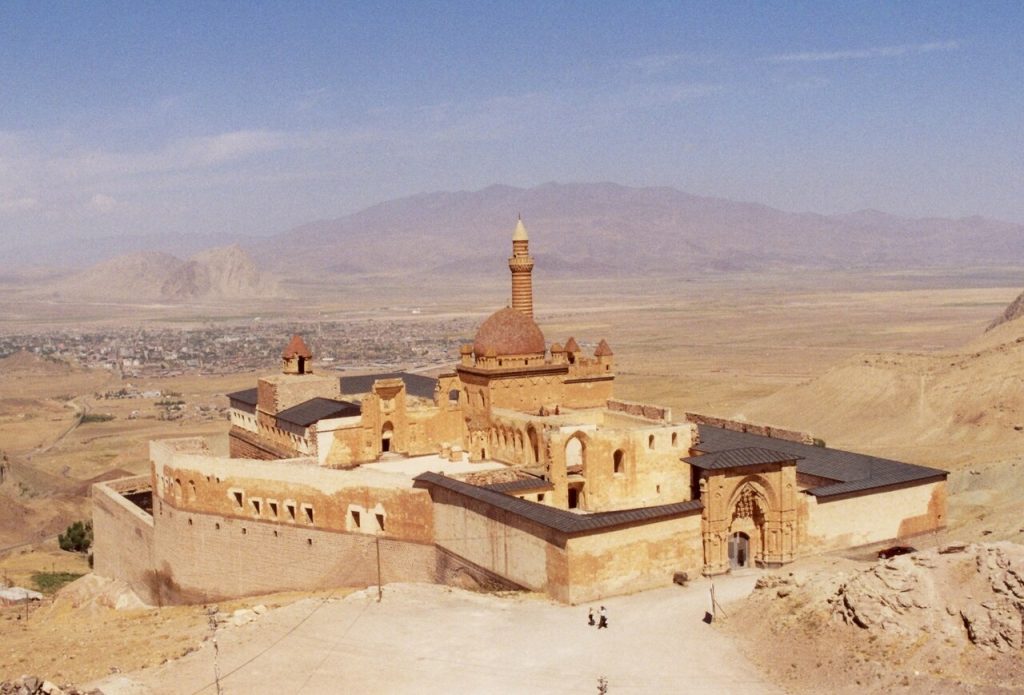
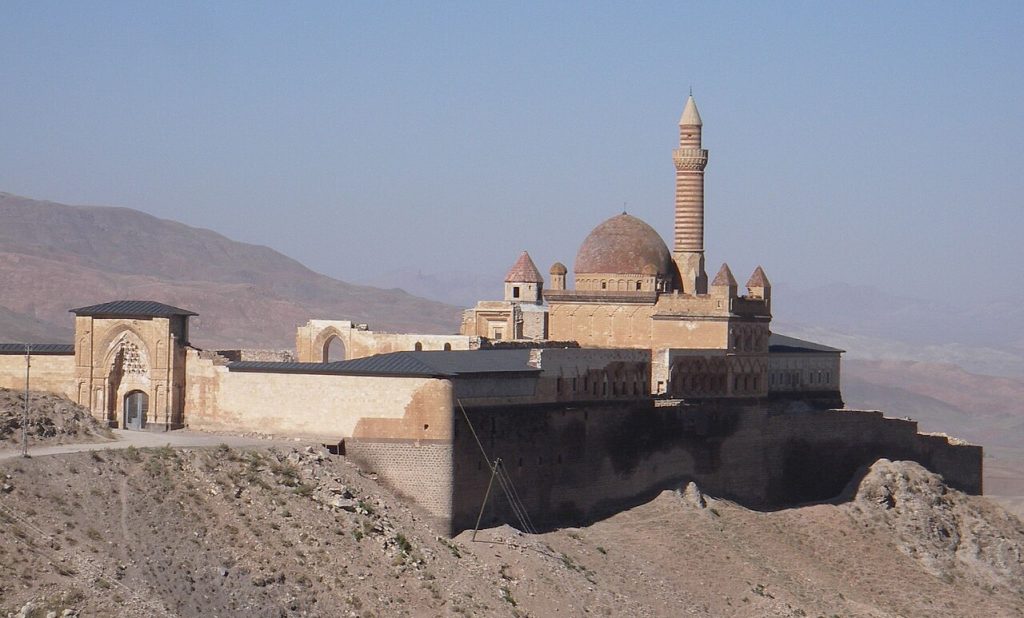
Now, stop on the road below and look up. A palace of honey-coloured stone stands on a rock shelf at nineteen hundred metres, with cliffs behind it, a plain in front, and, on a clear morning, Mount Ararat filling the horizon to the north.
Ishak Pasha Palace is the most spectacularly sited building in Turkey and the least like anything else in this series. It was built by a provincial Kurdish dynasty on the caravan road to Iran, in a mixture of every architectural tradition that passed through the region.
It is also eleven hundred kilometres from Istanbul, which is why almost nobody from the Bosphorus palaces ever saw it.
- A Frontier on the Silk Road
- The Cildiroglu Dynasty
- Building the Palace
- Five Traditions in One Building
- The Gate and the Carving
- Two Courtyards
- The Mosque and the Tomb
- Central Heating in 1784
- The Harem Block
- Russians, Removals and Decline
- The Controversial Roof
- Ararat and the Region
- Visiting Ishak Pasha
A Frontier on the Silk Road
This is the eastern edge of Anatolia, where the Ottoman Empire met Safavid and later Qajar Iran, and the caravan route from Tabriz to Erzurum and on to the Black Sea passed directly below.
Control of the route meant customs revenue, and customs revenue meant a local family could become rich enough to build like a sovereign.
The frontier shifted repeatedly, and the region’s population was Kurdish, Armenian, Turkish and Azeri in varying proportions.
The Cildiroglu Dynasty
The builders were the Cildiroglu family, a Kurdish dynasty who governed the Bayezid district as Ottoman appointees but with substantial autonomy, as frontier governors generally had.
Colak Abdi Pasha began the palace in 1685; his son Ishak Pasha completed it in 1784, and it carries his name.
A hundred years of construction by one family, at the far edge of an empire, produced something no central authority would have commissioned.
Building the Palace
The complex covers over seven thousand square metres and includes a first and second courtyard, a mosque, a tomb, a harem, a selamlik, a dungeon, kitchens, baths, a bakery and a library.
The stone is local, cut and carved by craftsmen whose traditions came from several directions at once.
It is small enough to walk through in an hour and rich enough to repeat the circuit twice.
Five Traditions in One Building
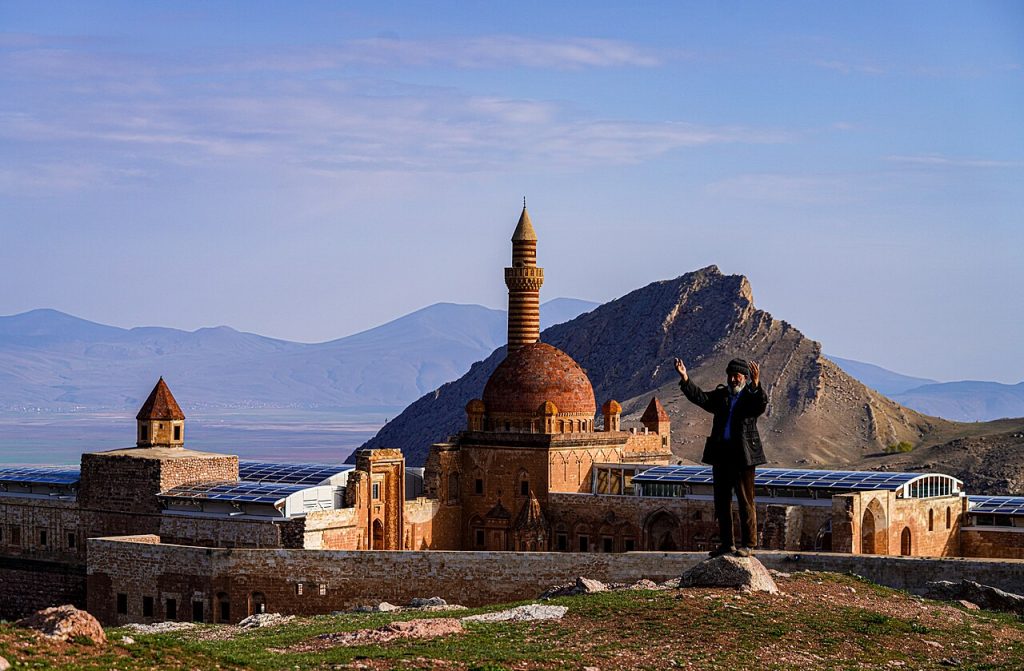
Art historians identify Seljuk, Ottoman, Persian, Armenian and Georgian elements in the structure: Seljuk portal carving, Ottoman domes, Persian iwan forms, Armenian stonework and Georgian decorative motifs.
That mixture is not confusion. It reflects a region where all those traditions coexisted and where craftsmen moved between them.
It is the best single argument in Turkish architecture against treating styles as national property.
The Gate and the Carving
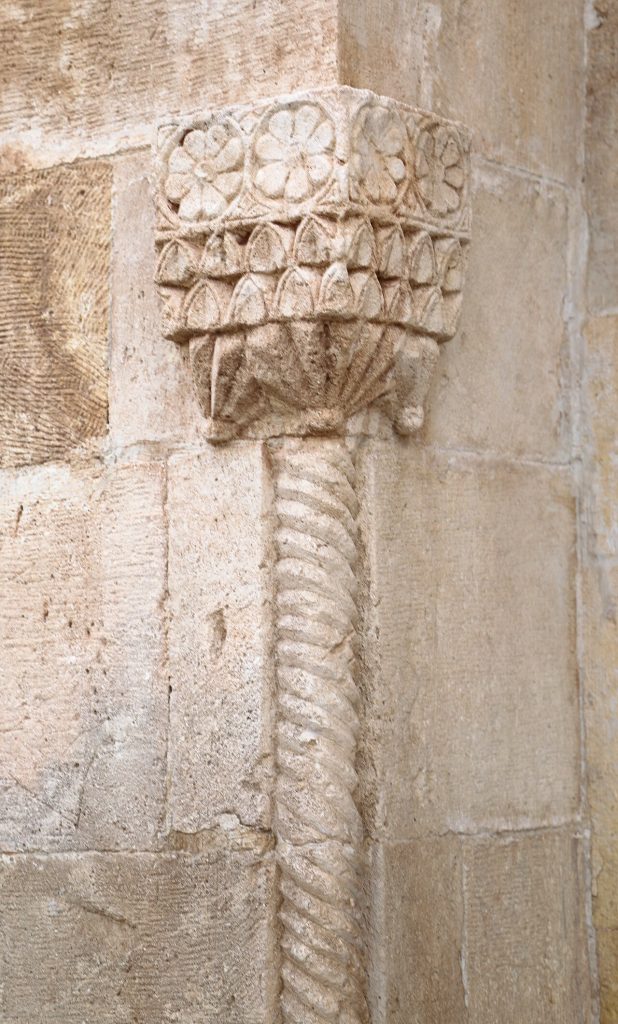
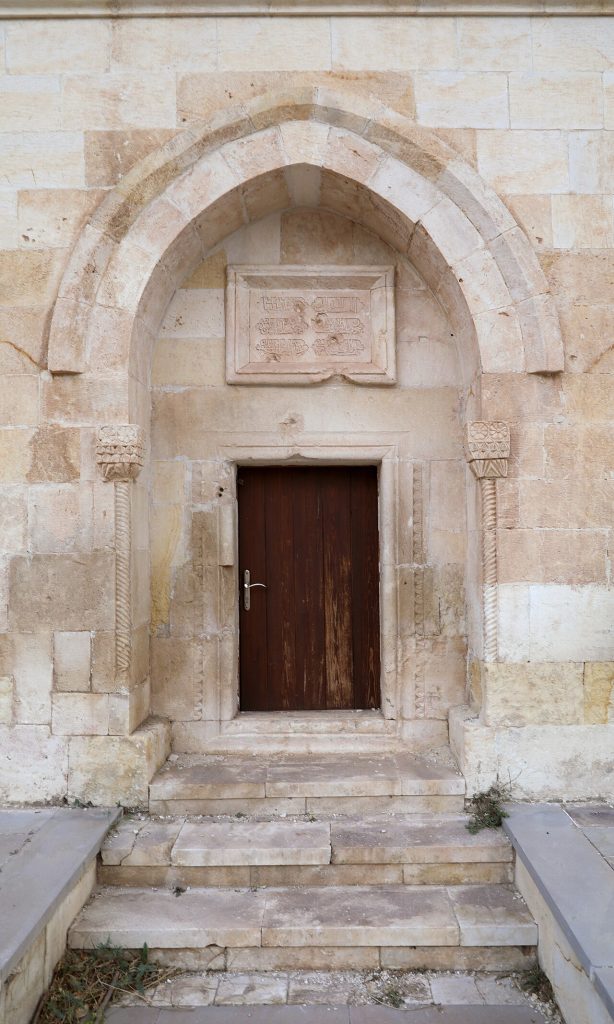
The main portal is deeply carved with geometric and floral ornament, muqarnas vaulting and inscriptions, and it is the most photographed element of the palace.
A pair of carved lions and the remains of a decorated fountain stand within the first courtyard.
The gilded doors were removed to Russia in the early twentieth century and are reportedly in the Hermitage.
Two Courtyards
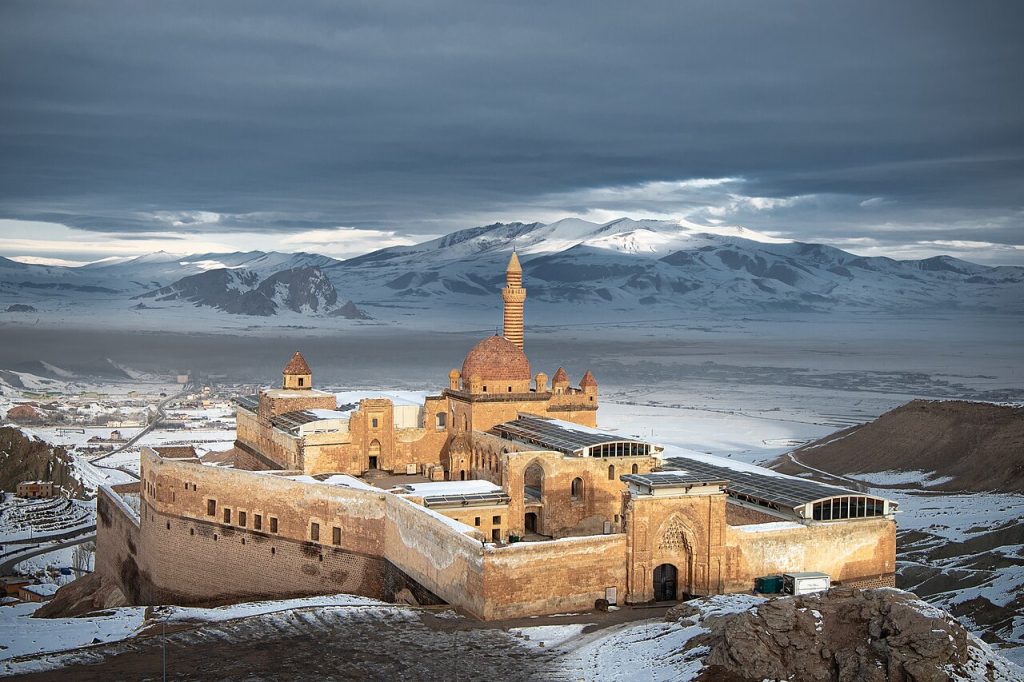
The first courtyard was public and administrative, holding stables, guard rooms and service buildings. The second, through an inner gate, held the private and ceremonial quarters.
The arrangement mirrors the Ottoman palace sequence in miniature, which tells you that the builders knew exactly what a sultan’s palace looked like and were making a claim.
The views from the second courtyard are the best on the site.
The Mosque and the Tomb
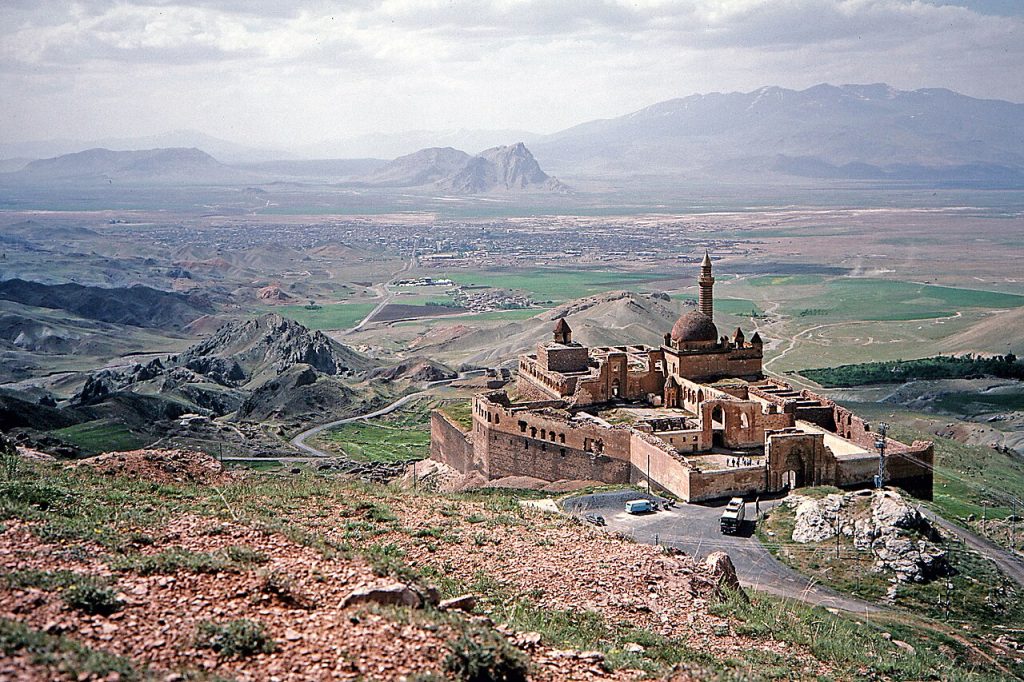
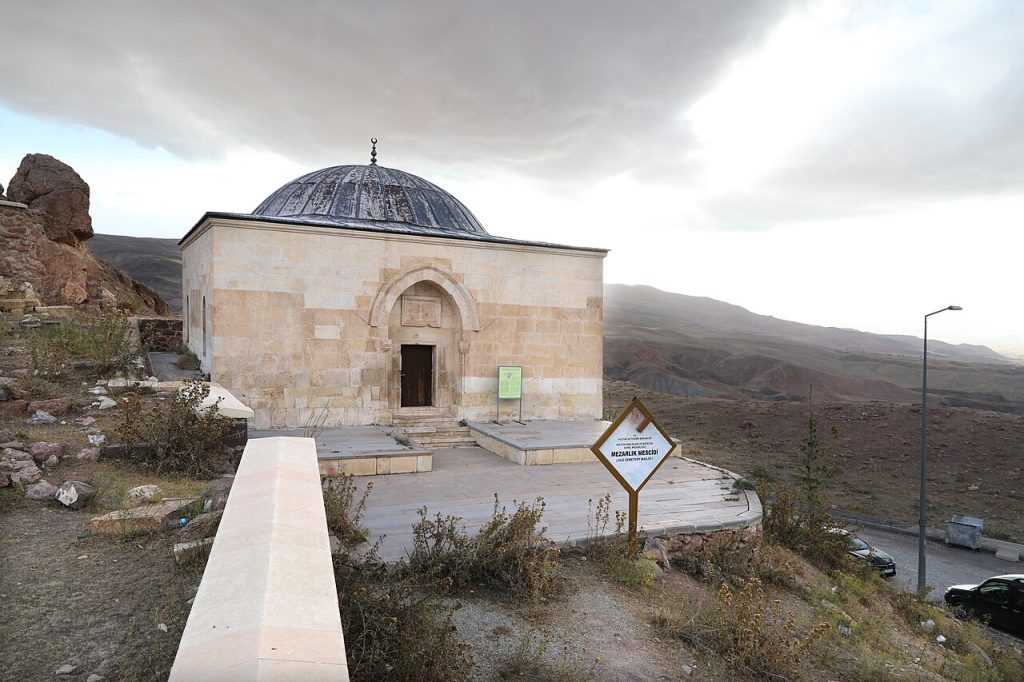
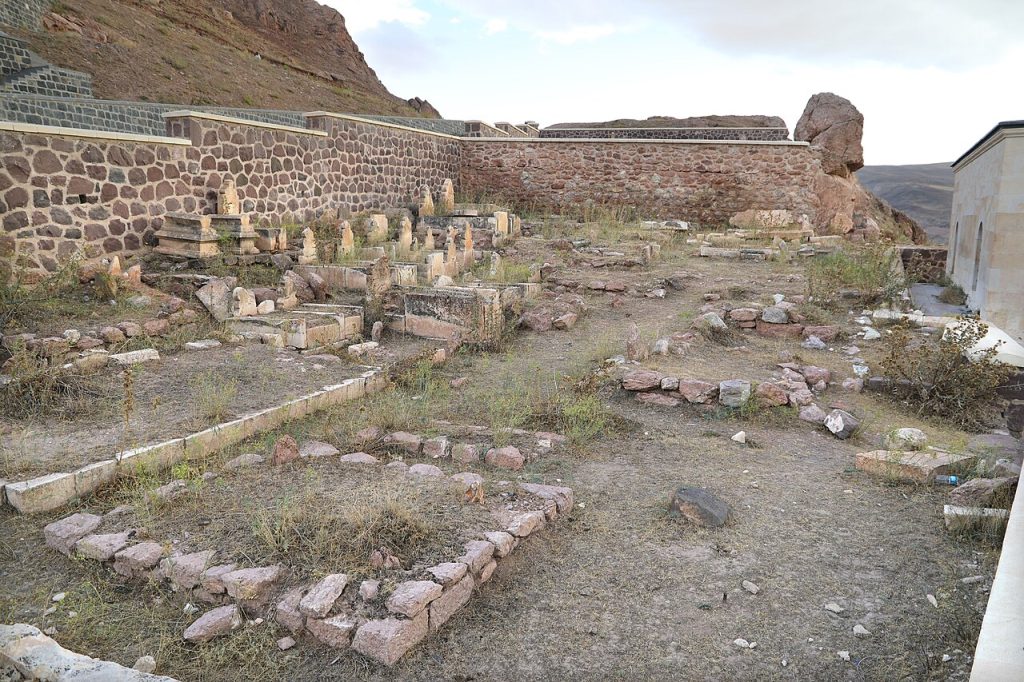
The palace mosque has a decorated dome and a carved mihrab, and beside it stands the family tomb, an octagonal domed structure holding members of the dynasty.
Having a mosque, a tomb and a palace in one complex is the standard formula for a ruling family claiming legitimacy, from the Ottomans down to provincial governors.
The mosque is still used occasionally for Friday prayers.
Central Heating in 1784
The palace had a central heating system with hot air circulated through channels in the walls and floors, drawing on Roman and Islamic bath technology, and running water throughout.
At nineteen hundred metres in eastern Anatolia, where winter temperatures fall far below zero, that was not a luxury but a requirement.
Parts of the system are visible, and it is one of the features guides most enjoy explaining.
The Harem Block
The harem section has around twenty rooms arranged around a courtyard, each with a fireplace, together with the family’s private hammam.
The rooms are small and the ceilings low, which in this climate is sensible. Grandeur here is concentrated in the public spaces and the carving.
From the windows the plain stretches away for forty kilometres.
Russians, Removals and Decline
Russian forces occupied the region several times in the nineteenth century and again in the First World War, and the palace was used militarily, damaged and stripped of removable decoration.
The gilded gate doors went to Russia. Other elements were lost or scattered.
The surrounding town of Bayezid was destroyed and rebuilt lower down as Dogubayazit, leaving the palace isolated above an abandoned site.
The Controversial Roof
In the 2000s a steel and glass roof was installed over parts of the palace to protect the stonework from snow and rain, and it provoked a long argument.
Critics say it destroys the appearance of the ruin and traps moisture; defenders say that without it the carving would be gone within decades.
Whatever you conclude, the debate is the same one we saw at Tsaritsyno and Tekfur, and it is the central question in Turkish heritage practice.
Ararat and the Region
Mount Ararat, at over five thousand metres, stands twenty-five kilometres north and dominates every view. Below it lie the meteor crater, the Ishak Pasha springs, and the alleged Noah’s Ark site at Durupinar, which draws a particular kind of visitor.
The region is also one of the poorest in Turkey, with a Kurdish majority population and a complicated recent history.
Travel here is straightforward but requires more planning than western Turkey.
Visiting Ishak Pasha
Fly to Agri or Igdir, or take a long bus from Erzurum or Van. Dogubayazit is the base, and the palace is six kilometres up a mountain road with taxis and minibuses running.
Go in the morning for the light on the facade and the clearest view of Ararat, which clouds over by midday in summer.
And stand once at the edge of the terrace, with the cliffs behind and the plain below, and consider that a provincial governor built this at the end of the world and made it better than most of what the capital produced.
Watch the Palace on Film
Visiting Ishak Pasha Palace Today
The palace stands six kilometres southeast of Dogubayazit in Agri province, eastern Turkey, reachable by taxi or minibus from the town, with flights to Agri and Igdir and long-distance buses from Erzurum and Van.
It opens daily with ticketed entry; winter access can be affected by snow, and the road is steep. There are few facilities on site, so bring water.
Allow two hours, go early for Ararat views, and plan a night in Dogubayazit. Find it here: https://www.google.com/maps?q=39.5219,44.1289
Palaces Nearby
You May Like
The Tobolsk Kremlin and the Stone Capital of Siberia