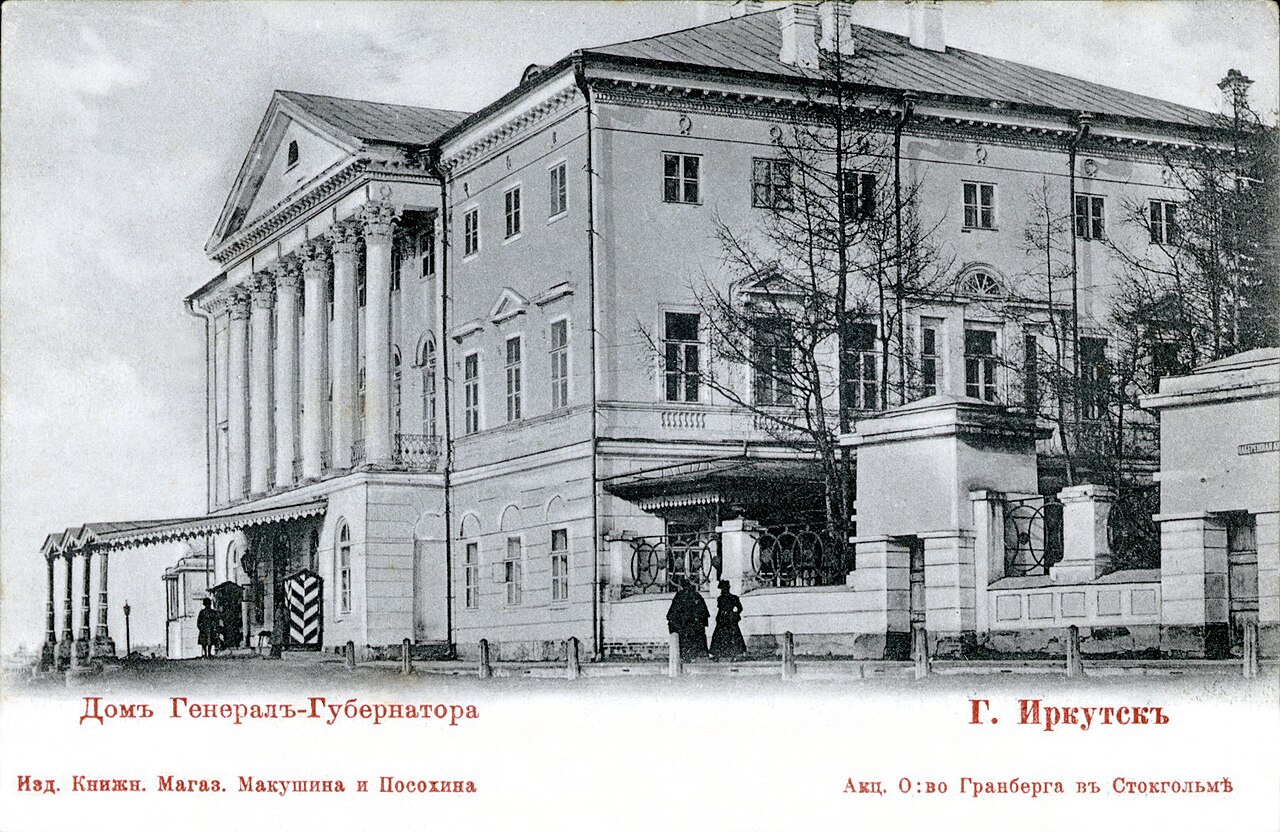
Five thousand kilometers east of Moscow, where the Angara river pours out of Lake Baikal clear and unfreezing, the city of Irkutsk earned a nickname no other Siberian town dared claim: the Paris of Siberia. Its boulevards were lit when Moscow’s suburbs were dark, its theaters sang Italian opera to goldminers, and its merchant dynasties, the Sibiryakovs, Trapeznikovs, and Bazanovs, commanded fortunes that dictated prices from the Lena goldfields to the Canton tea exchanges. On the Angara’s high embankment, one building gathered all of it: the White House, the Sibiryakov palace, the finest classical mansion east of the Urals and later the throne room of the governors-general who ruled eastern Siberia to the Pacific.
The palace’s biography is eastern Russia’s in miniature: built around 1800 by Siberia’s richest merchant family to designs attributed to the great Giacomo Quarenghi’s circle, requisitioned by the state as the governors-general’s residence, host to the explorers, exiled Decembrists, and tea barons of the golden decades, then in 1917 and 1918 a literal fortress, besieged and shot through in the civil war’s fiercest urban battle east of the Volga, and finally the scientific library of Irkutsk’s university, scars, legends, and all.
This guide tells the White House and its city together: the Sibiryakov fortune and the mansion it raised, Quarenghi’s designs on the Angara, the governors-general from Muravyov-Amursky who signed a continent’s border, the Decembrists’ salon decades, the gold and tea aristocracy around the palace, the December battle of 1917 that pocked its columns, and the practical details of visiting the merchant capital of eastern Siberia today.
- Irkutsk, Gateway to the East
- The Sibiryakov Fortune
- A Quarenghi Palace on the Angara
- The Mansion’s Golden Years
- The State Takes the House
- Muravyov-Amursky’s Decade
- The Decembrists’ City
- Gold, Tea and the Merchant Princes
- The Great Fire of 1879
- The Battle for the White House
- The Kolchak Winter
- The Scientists’ Palace
- Merchant Irkutsk Today
- Watch the White House on Film
- Visiting the White House Today
- Palaces Nearby
Irkutsk, Gateway to the East
Irkutsk began in 1661 as a Cossack blockhouse at the Irkut’s meeting with the Angara and grew on geography’s gifts: the portage routes to Baikal and the Lena, the caravan road south through Kyakhta to China, and the administrative gravity that made it, by the 1760s, the seat governing everything from the Yenisei to the Pacific, Alaska included, the Russian-American Company’s directors drawing beaver accounts in Irkutsk offices while their ships worked the Aleutians.
The town’s society formed accordingly cosmopolitan for a frontier: exiled Swedes and Poles, Bukharan and Chinese traders, navy officers bound for the Pacific surveys, and the merchantry whose wealth, fur first, then tea and gold, built the stone churches whose baroque, the Siberian baroque of swirling gables, still marks the skyline, provincial Russia’s most unexpected architectural school.
By 1800 Irkutsk stood as the east’s unquestioned capital: the governor’s chancellery, the customs, the mission school for Asian languages, and a merchant first guild whose houses entertained, the travelers’ accounts agree, on a footing that embarrassed European Russia’s assumptions about Siberia, with one family above all setting the standard the White House would embody.
The Sibiryakov Fortune
The Sibiryakovs were Siberia’s name made literal: a dynasty tracing to seventeenth-century Yakutsk service, risen through fur contracts, the state’s salt and transport farms, and Pacific ventures, Mikhail Sibiryakov holding the hereditary title of first-standing citizen of Irkutsk, the family’s ships, caravans, and credit lines working from the Urals to Canton by the century’s turn, the east’s first fortune in both senses.
Their civic ledger matched the commercial: churches, almshouses, the town’s first schools and library endowed across generations, and in the family’s later, nineteenth-century branches the pattern culminated famously, Alexander Sibiryakov financing Arctic navigation, the Nordenskiold expedition that first ran the Northeast Passage sailed partly on his money, and Innokenty funding science and the university cause, merchant wealth graduating into exploration’s patronage.
Around 1800 the dynasty resolved to build to its standing: a palace on the Angara’s best frontage, in the capital manner, no Siberian timber mansion but stone classicism of Petersburg rank, the commission that produced the White House and announced, in white columns visible from the river, that the east had arrived at architecture’s high table.
A Quarenghi Palace on the Angara
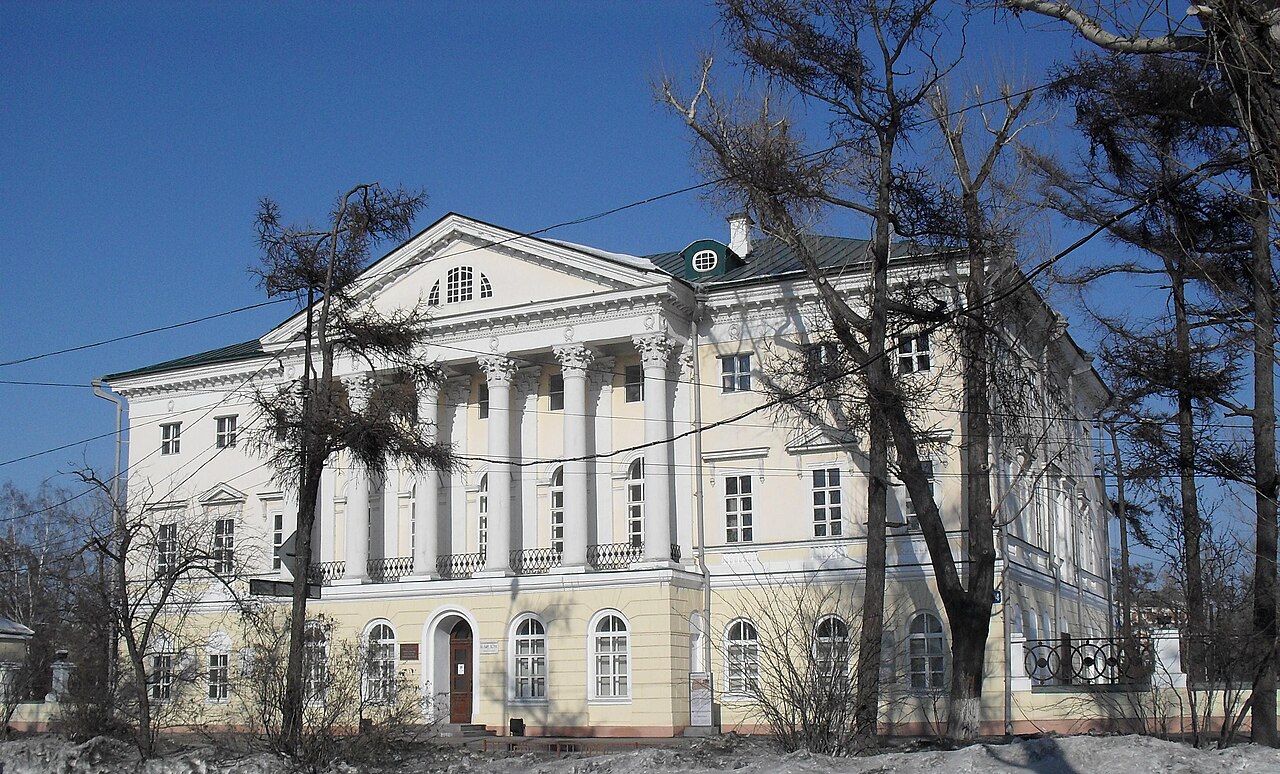
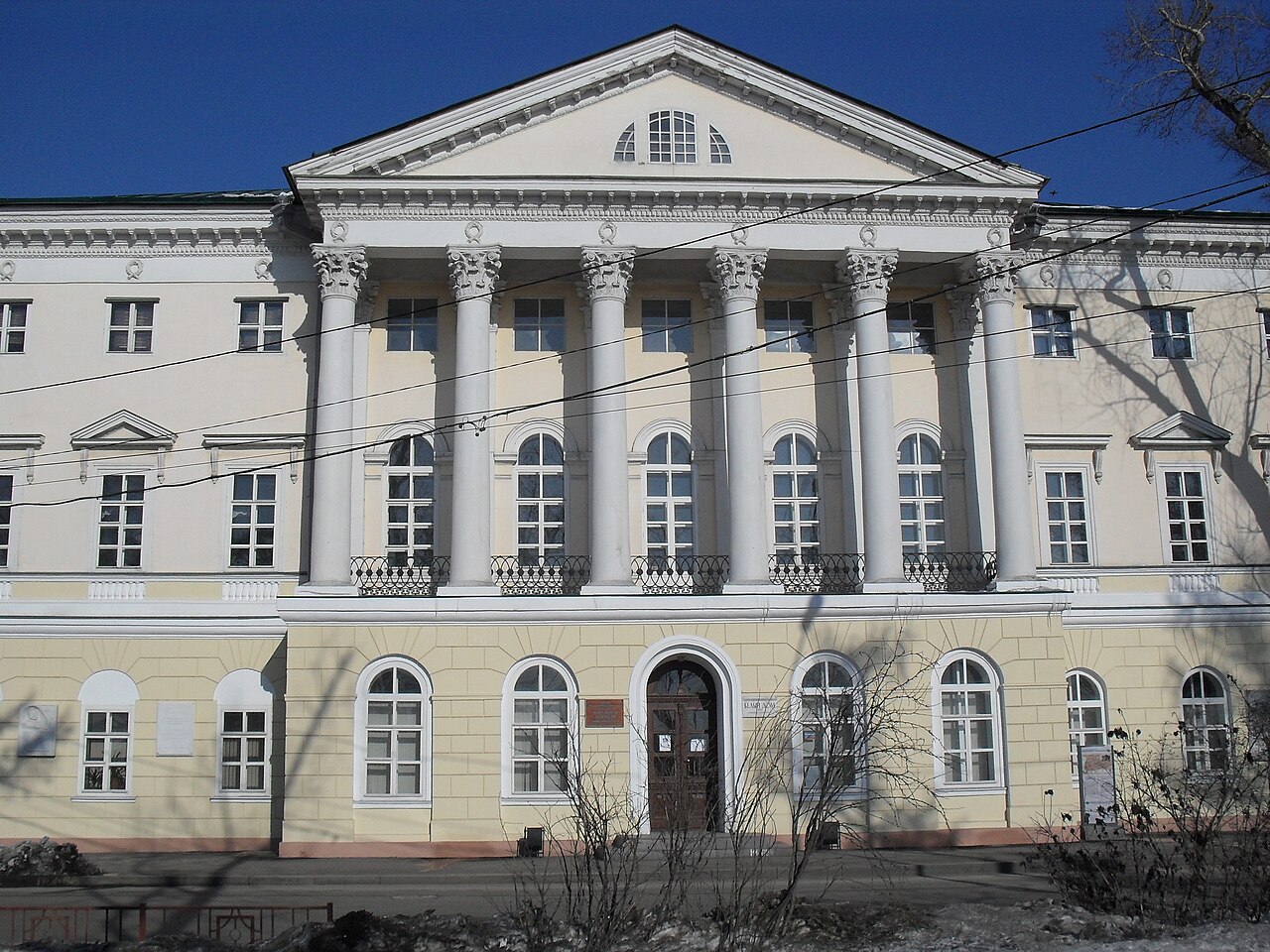
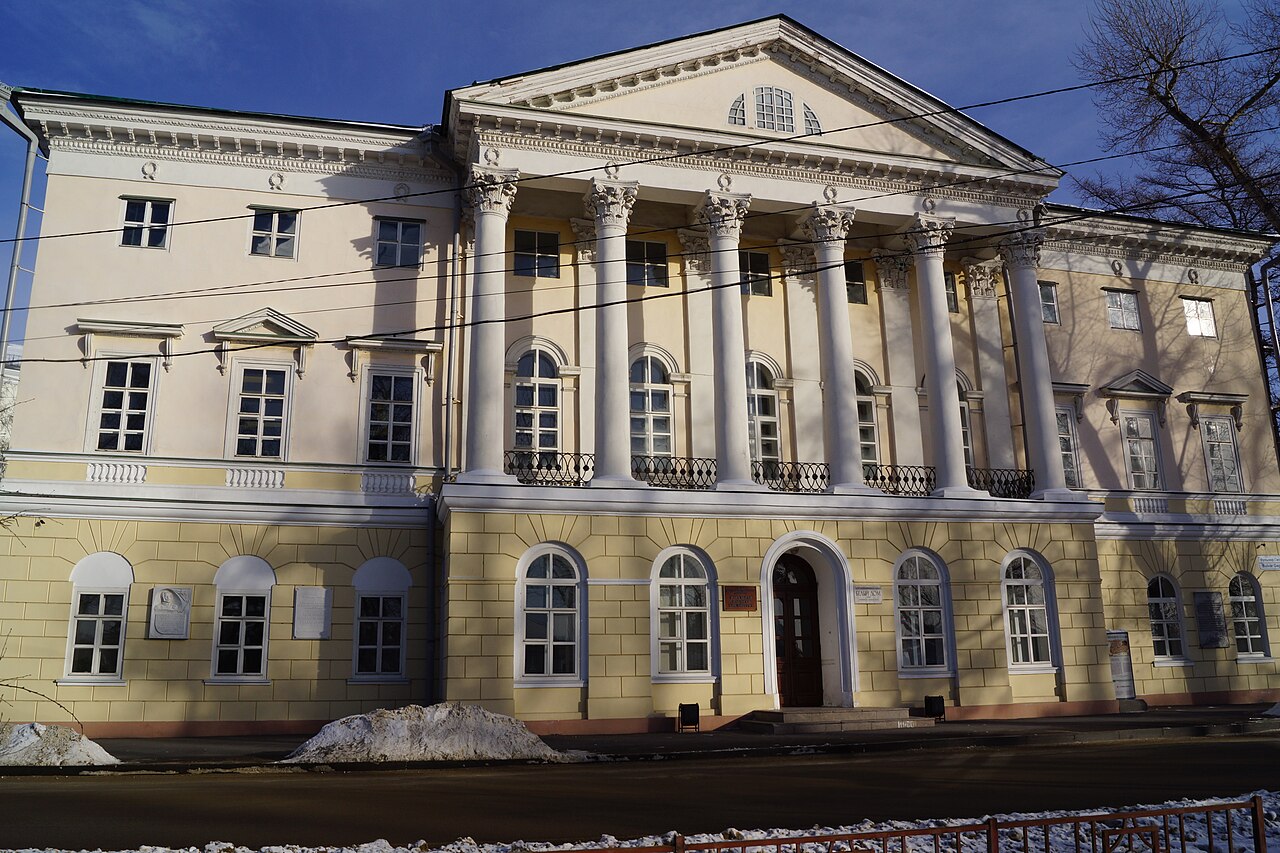
The White House rose between 1800 and 1804, and its design’s attribution is Irkutsk’s favorite architectural detective story: the drawings arrived from the capital in the manner and quality of Giacomo Quarenghi’s studio, the great Italian then at his Russian zenith, and scholarship assigns the project to his circle or his own hand at a distance, executed by local masters, the Siberian builders translating metropolitan classicism five thousand kilometers from its author.
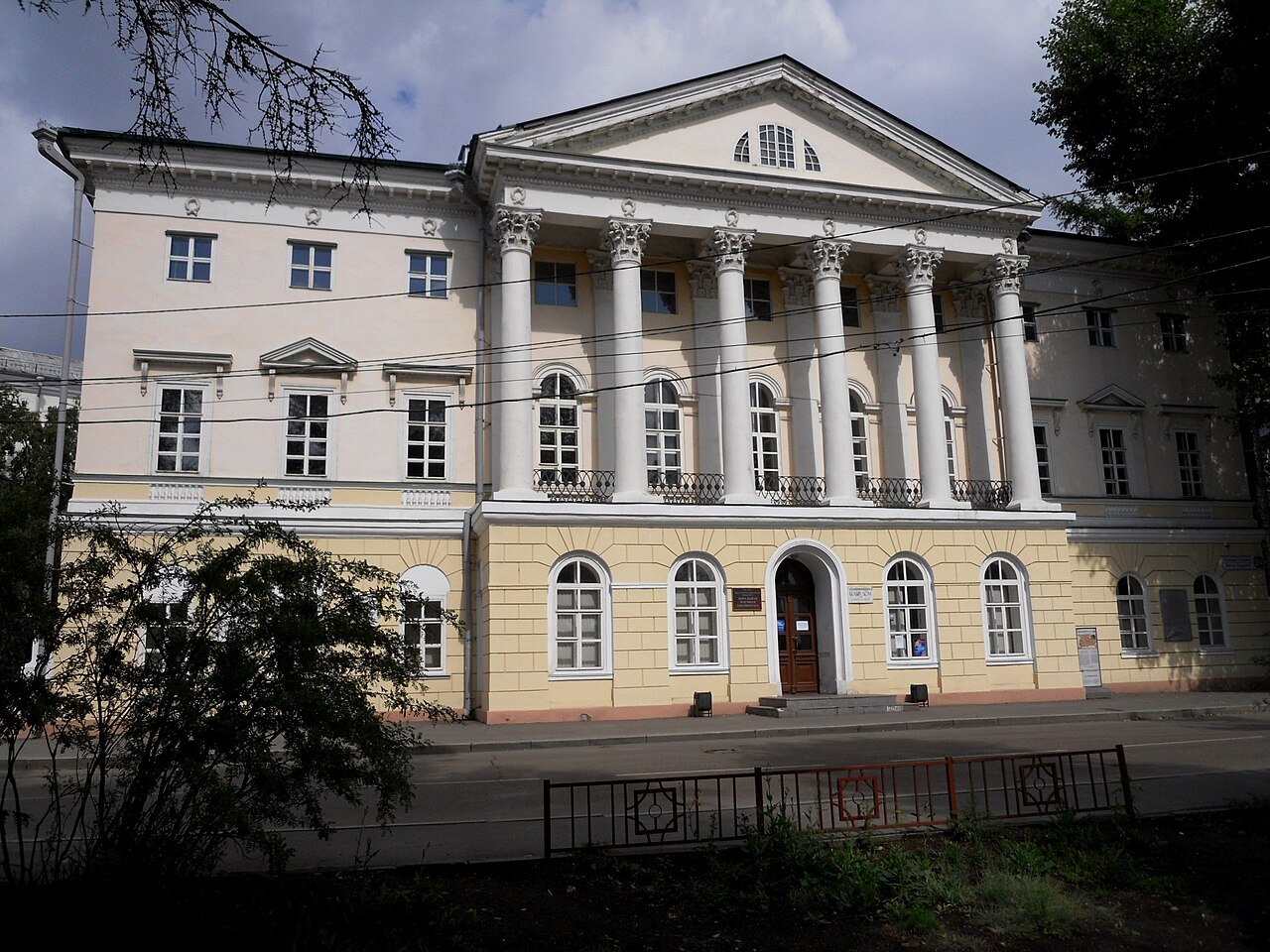
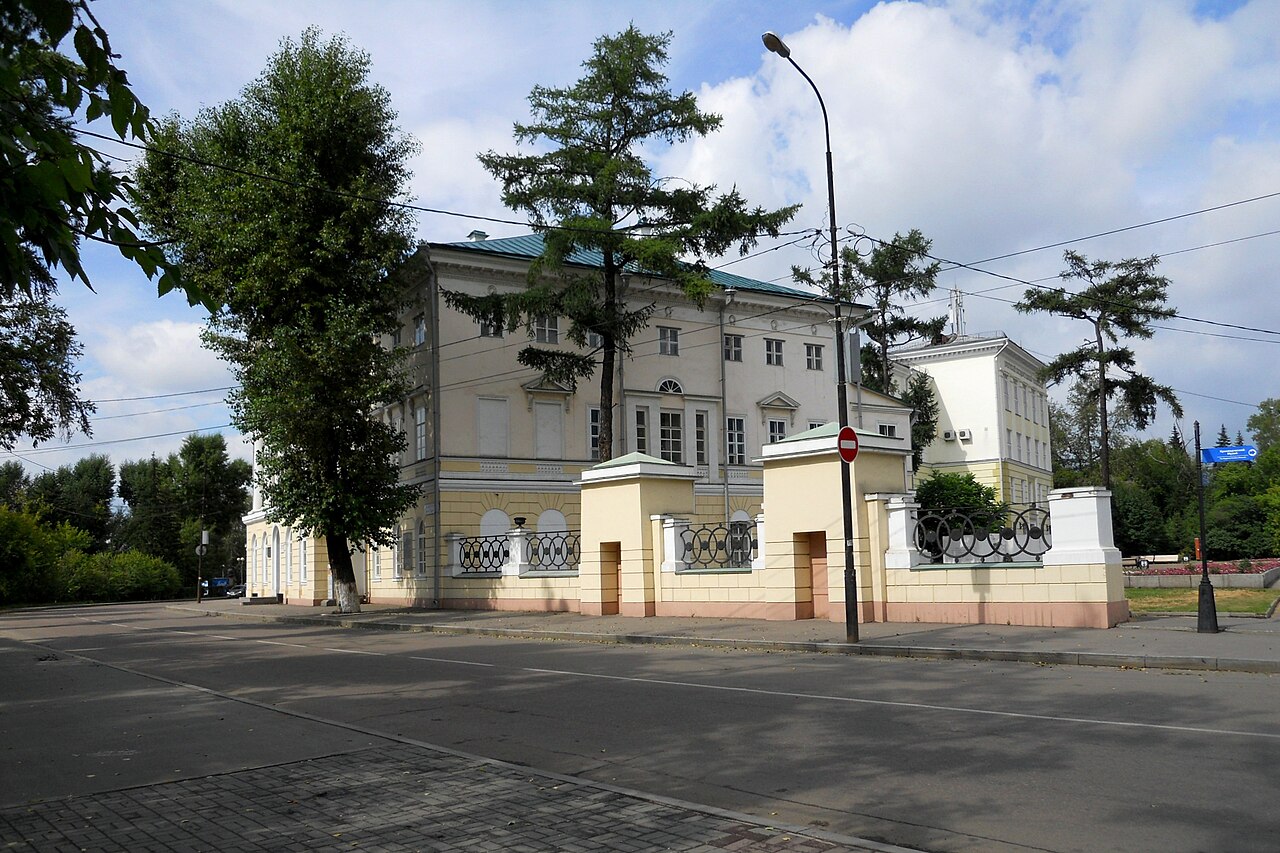
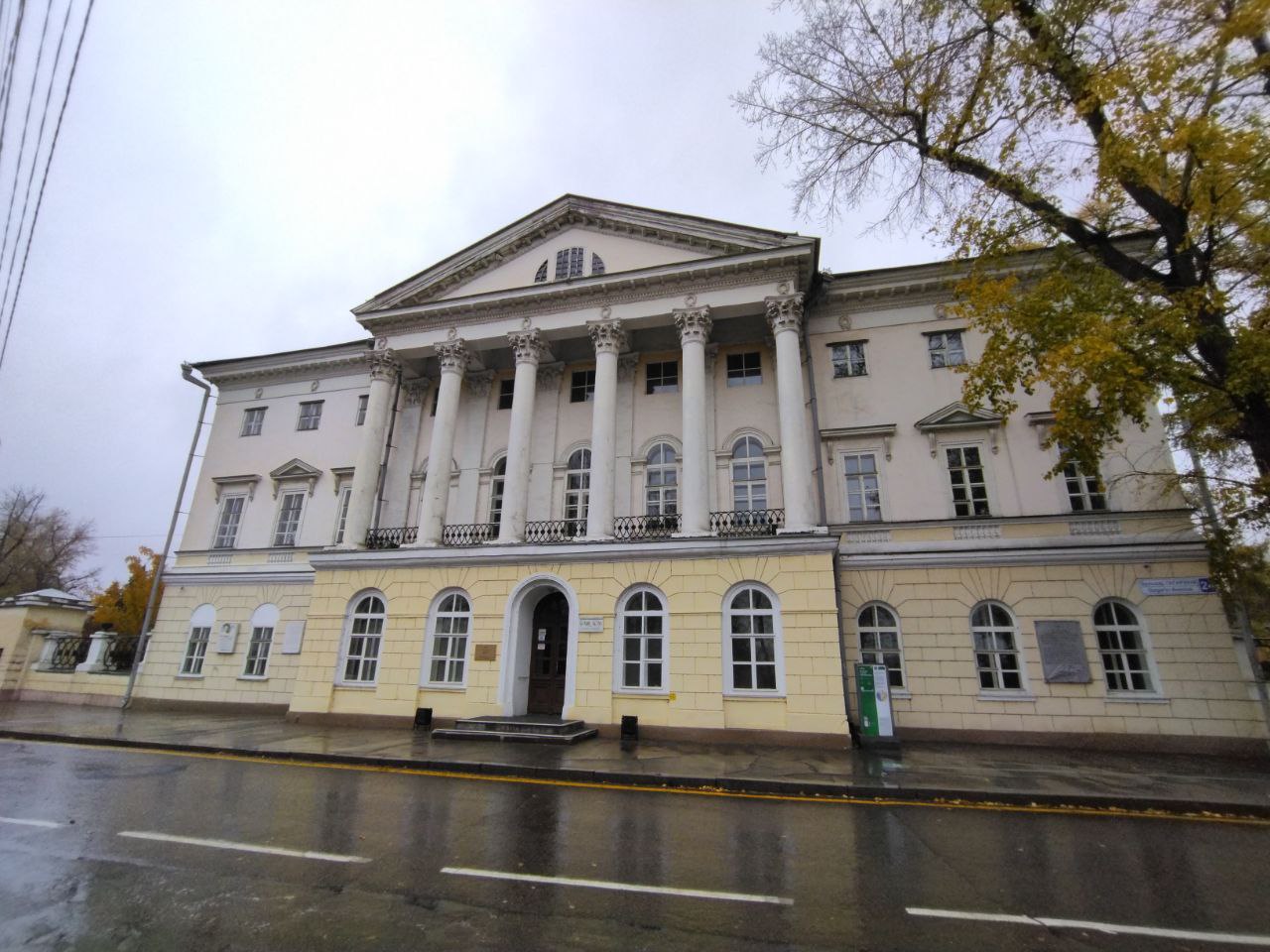
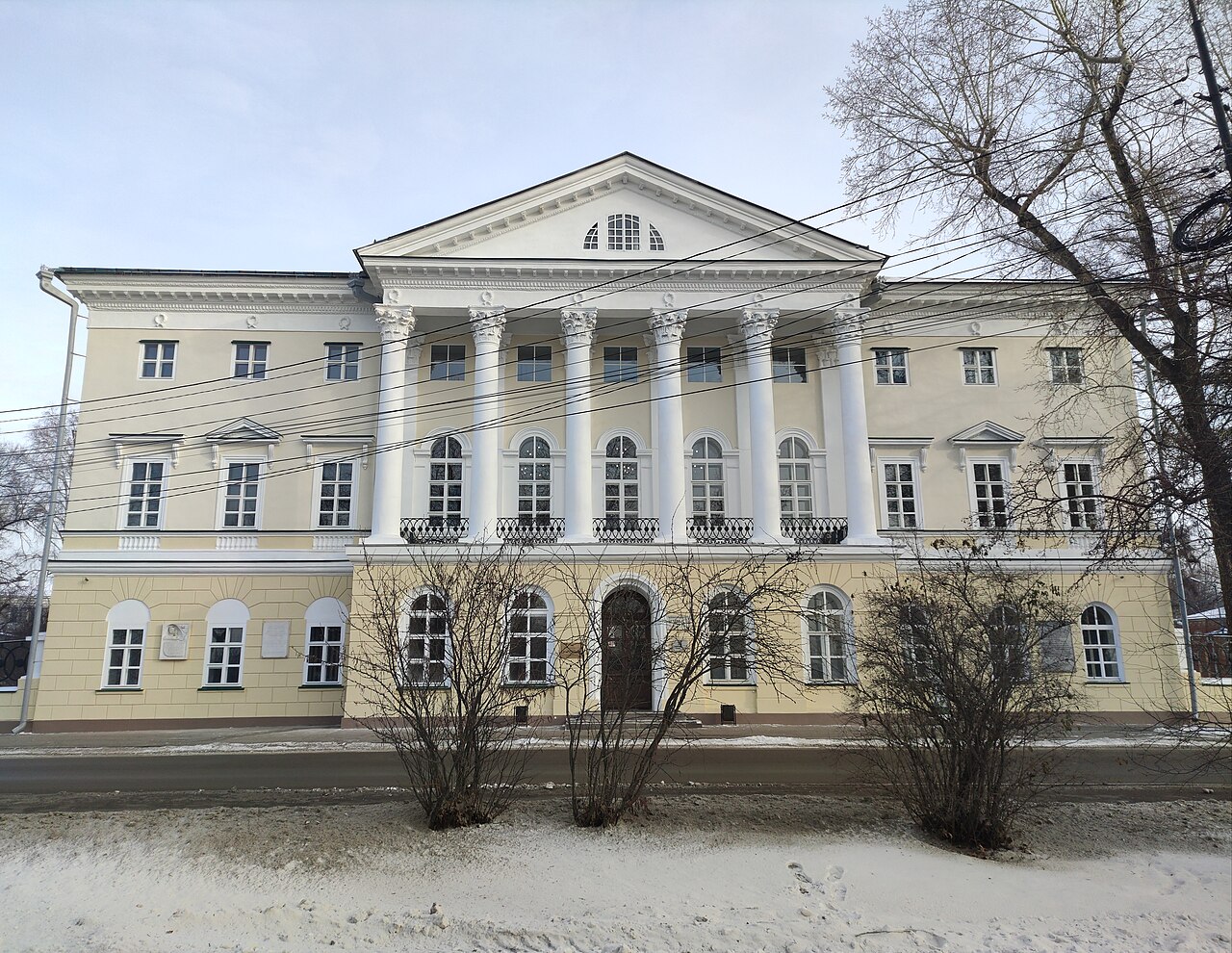
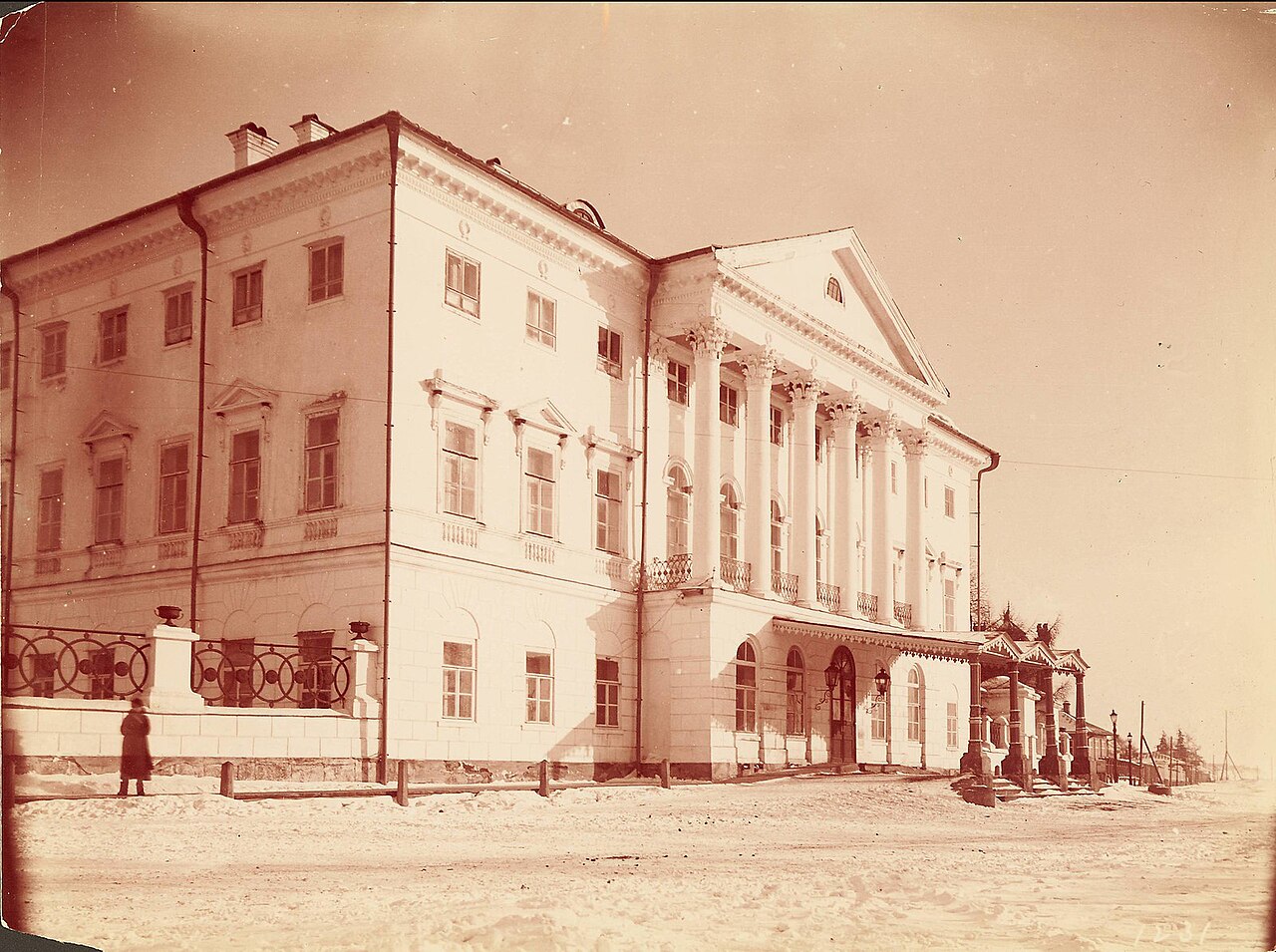
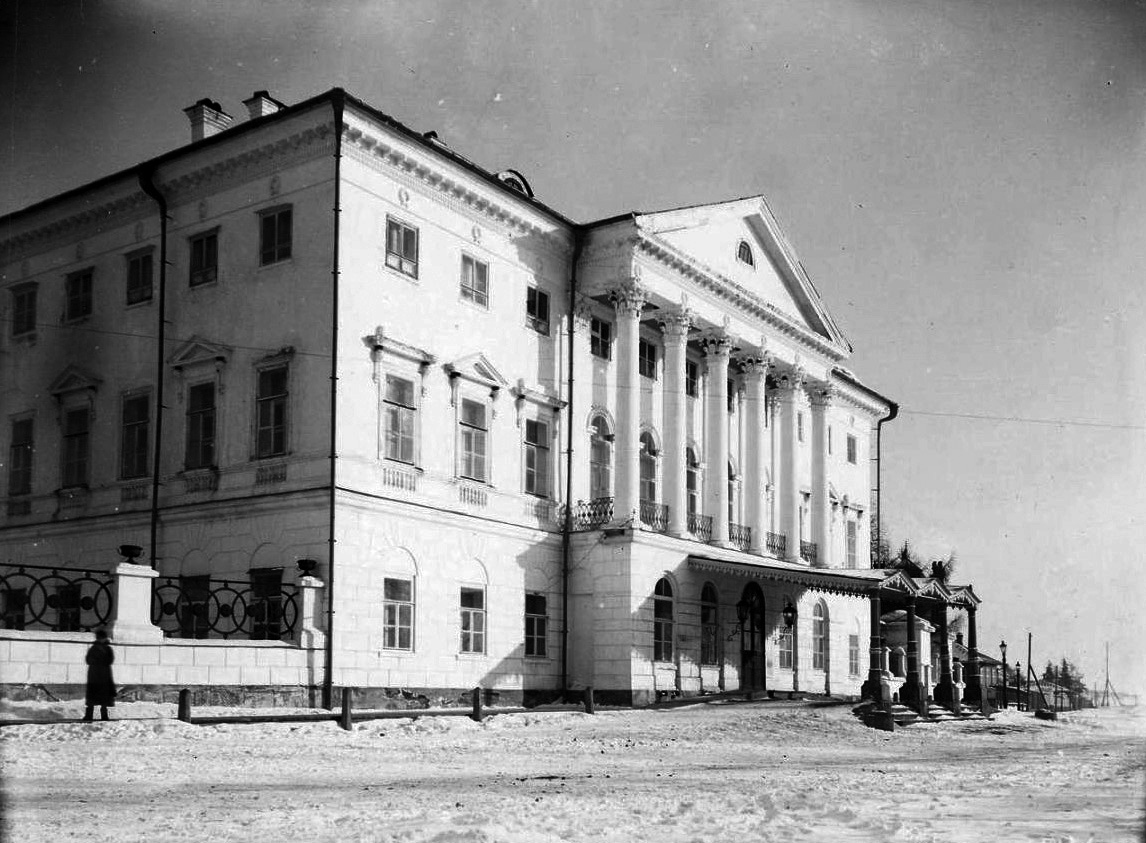
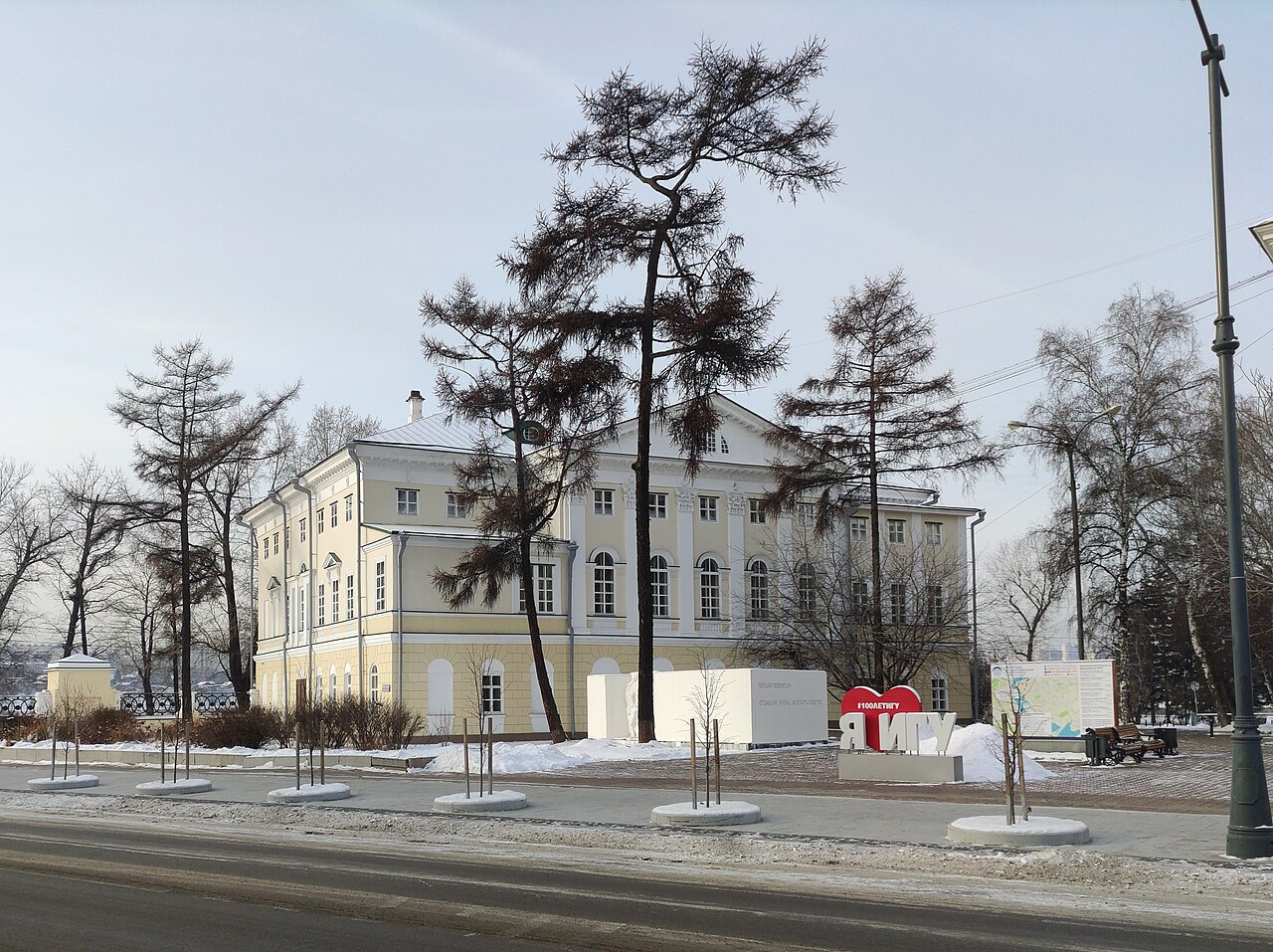
The building justifies the pedigree: a three-story block under a dome-lit stair hall, the river front carrying a six-column Corinthian portico over a rusticated base, proportions of textbook serenity, and the whole executed in brick and white stucco that gave the house its immediate and permanent name, Bely Dom, the White House, Siberia’s first palace by any exacting definition.
Within, the plan ran the classical suite: vestibule and grand stair, the columned hall for balls across the river front, drawing rooms and the family’s floors above, service in the wings, appointments, the inventories record, of mahogany, bronze, and Petersburg silk hauled by winter road, the freight bills themselves a monument to what display cost at the empire’s far end.
The Mansion’s Golden Years
For three decades the palace reigned as the east’s first address: the Sibiryakovs’ balls opening the winter season, the Russian-American Company’s captains and the China caravans’ magnates at the tables, visiting dignitaries lodged as a matter of course, the house functioning, contemporaries noted, as the unofficial residence of Siberia itself, government renting splendor from commerce when occasion demanded.
The family’s fortunes turned with the fur trade’s ebb and the generations’ luck: by the 1830s the line’s Irkutsk elders faced the classic merchant dynasty’s arithmetic, capital dispersed among heirs and ventures, the palace’s upkeep outrunning its uses, and in 1837 the house passed by purchase to the crown, the east’s finest private building becoming its official one, the governors-general of Eastern Siberia taking residence.
The transfer preserved what it ended: the state kept the White House in state, the ballroom becoming the throne room for imperial levees, the mansion’s society decades shading into the residence’s administrative ones without a season’s gap, and the building beginning its second career as the room where eastern Russia’s decisions were signed, a career with one towering tenant ahead.
Muravyov-Amursky’s Decade
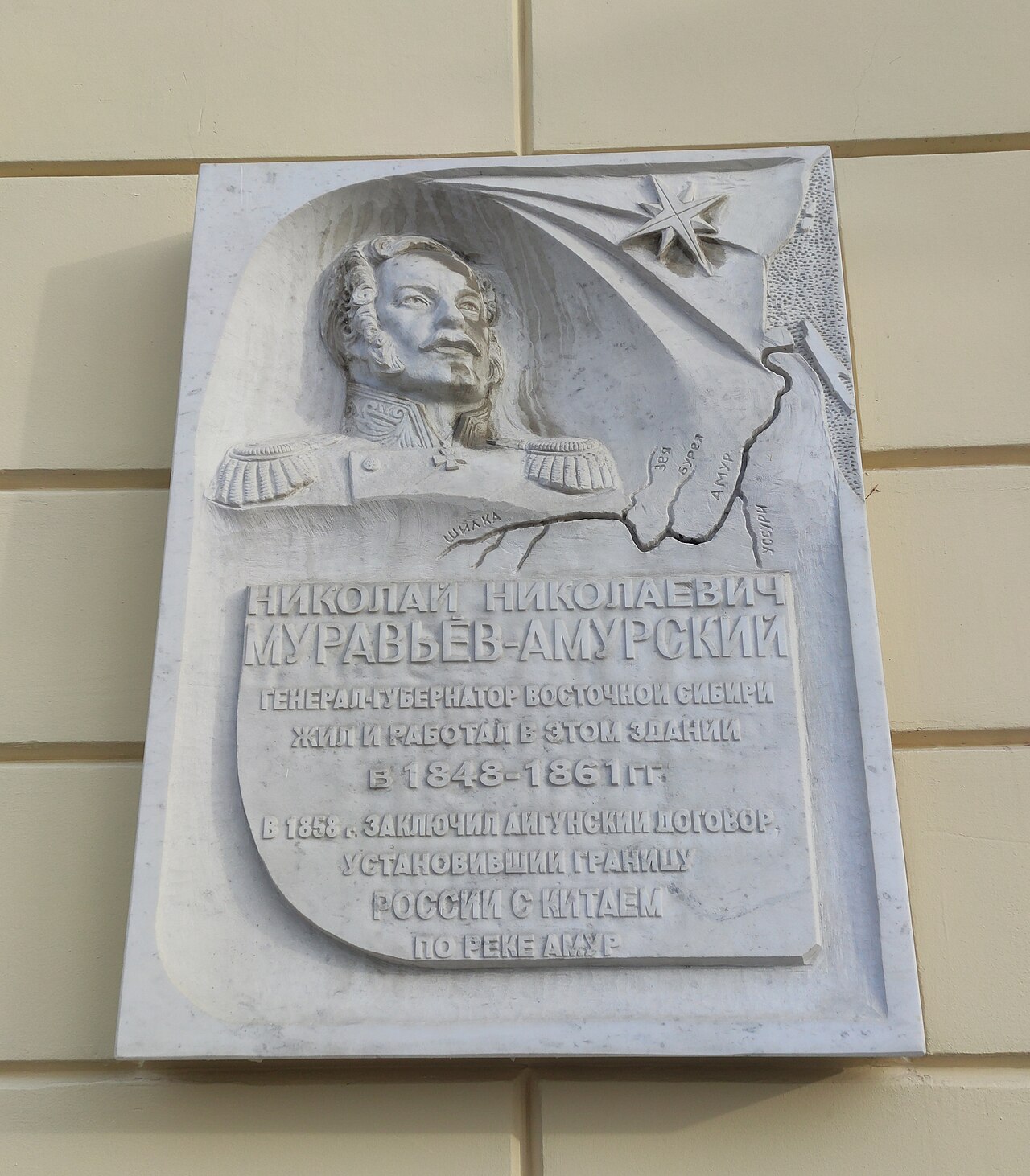
Nikolai Muravyov, governor-general from 1847, made the White House the headquarters of an expansion that redrew Asia: against ministries’ caution he pushed Russia back to the Amur, organized the river flotillas and Cossack settlements, and in 1858 signed with China the Treaty of Aigun that carried the border to the Amur’s line, returning to Irkutsk and its palace with the title history fixed on him, Muravyov-Amursky, the count of the river.
The decade filled the house with the Pacific’s planners: the circumnavigators and surveyors, Nevelskoy of the Amur estuary, the founders of Blagoveshchensk and Vladivostok’s forerunners, the young officers, Kropotkin among them later, for whom the White House’s map rooms were the frontier’s brain, eastern Siberia governed and extended from the Sibiryakovs’ ballroom floor.
Muravyov’s Irkutsk legacies outlived his office quarrels: the Amur acquisitions stood, the city’s embankment and institutions grew on his initiatives, and his statue returned to the Angara front in the 1990s, gazing downriver from beside the palace he worked, the house and the count sharing the embankment’s history as they shared its best address.
The Decembrists’ City
Irkutsk’s soul was schooled by its exiles: the Decembrists of 1825, serving out Siberian sentences, settled in and around the city from the 1830s and 1840s, the Volkonsky and Trubetskoy households becoming salons where the governors’ society met the conspirators’ cultivation, music, schools for local children, scientific collecting, the exiles civilizing their captivity’s capital, by the city’s own grateful account.
The White House’s registers show the strange intimacy: princesses who had followed husbands to the mines received at the governor-general’s balls, Volkonsky’s agronomy and Trubetskoy’s daughters’ weddings threading the official city’s calendar, autocracy’s prisoners and its administrators negotiating, in Irkutsk’s drawing rooms, the era’s most civilized truce.
The exiles’ wooden mansions survive as the city’s beloved museums, the Volkonsky and Trubetskoy houses furnishing the epoch at domestic scale, and their lane’s name, the Decembrist events’ anniversaries, and the annual December concerts keep the inheritance current, Irkutsk counting the conspirators, with the merchants and the governors, among its founding estates.
Gold, Tea and the Merchant Princes
The mid-century poured new fortunes past the palace: the Lena and Yenisei goldfields’ licenses concentrating in Irkutsk companies, the Kyakhta tea trade’s monopoly decades running its caravans and credits through the city’s exchanges, and the second merchant generation, Bazanovs, Trapeznikovs, Sukachev, building the theaters, hospitals, orphanages, and galleries that gave the Paris of Siberia its substance, Sukachev’s picture collection founding the regional art museum that thrives yet.
The society around the White House acquired its legends: gold magnates’ sledge races on the frozen Angara, the opera seasons that lured Italian companies across two continents, champagne by the sleigh-load at the winter balls, the memoirists’ Irkutsk of silk and sable that the guidebooks still quote, frontier money performing civilization with a new city’s appetite.
The city fathers’ ambitions ran institutional as well: the geographical society’s east Siberian branch, hosted in its own museum palace by the White House, mounting the expeditions, Przhevalsky’s and Potanin’s Asia among them, that made Irkutsk the base camp of Russian exploration, the embankment’s two buildings, governors’ palace and scientists’ castle, dividing empire’s work between them.
The Great Fire of 1879
Catastrophe tested the wooden city in June 1879: fire, spread by summer wind through the central timber quarters, burned for two days and took the heart of Irkutsk, some three-quarters of the center, hundreds of houses, churches, the public library, and the geographical society’s collections among the losses, the Paris of Siberia reduced, the newspapers mourned, to chimneys and ash in seventy-two hours.
The White House, stone on its embankment, stood through the flames as such buildings did, its survival underscoring the lesson the fire taught the merchant city: stone, and the rebuilding that followed turned central Irkutsk substantially to brick and stucco, the surviving timber mansions treasured the more for having beaten the odds, the city’s regulations and its fortunes together raising a new, fire-wary center within a decade.
The disaster’s reconstruction gave Irkutsk much of its present face: the brick commercial and civic architecture of the 1880s and 1890s, the geographical society’s rebuilt museum castle, the restored churches, the stone city the Trans-Siberian would reach in 1898 finding a capital already remade, prosperity’s resilience the fire’s unintended monument.
The Battle for the White House
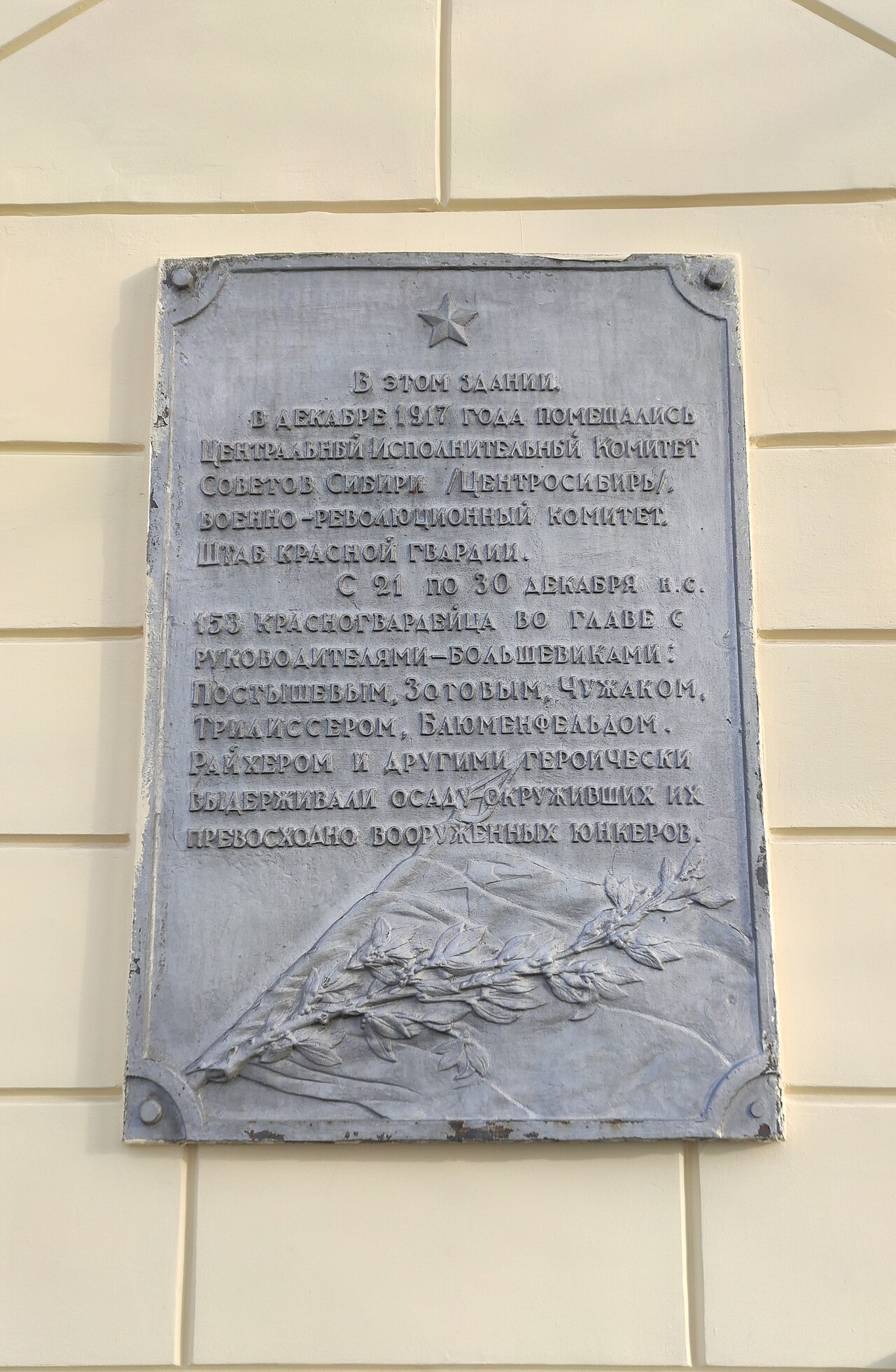
The palace’s hardest days were political: in December 1917 Irkutsk became a battlefield as Bolshevik forces and the officers and cadets of the anti-Bolshevik command fought for the city, and the White House, held by the revolutionary side, stood at the fighting’s center, besieged and stormed across nine days of street war, artillery and rifle fire scarring the embankment front, the classical columns taking the marks that the building, restored, still shows.
The December battle was among the civil war’s first and fiercest urban actions east of the Volga, hundreds killed in the center’s blocks, the truce that ended it leaving the city uneasily Bolshevik, and the White House, pocked and smoke-stained, a literal fortress in the record, its ballroom floors crossed by stretcher parties, the palace of the governors become the prize of the revolution’s Siberian opening.
The scars entered the building’s identity: later restorations chose to preserve the bullet-marked stonework on the river facade as a monument, the White House wearing its civil war like a veteran, the serene Quarenghi front and the 1917 pockmarks held in one view, the east’s architecture and its violence legible together.
The Kolchak Winter
Irkutsk wrote the civil war’s eastern climax: Admiral Kolchak, the White supreme ruler whose Omsk government had claimed all Russia, retreated east along the Trans-Siberian through 1919 as his front collapsed, and reached Irkutsk in January 1920 to find the city risen against him under a left coalition, his own Czech and Allied escorts standing aside, the admiral handed to the revolutionary authorities in the city whose capital he had meant to make his base.
The end came fast and by the Angara: Kolchak was held, interrogated, and, as sympathetic forces neared, shot on the night of 7 February 1920 by local order, his body, legend and most accounts agree, pushed beneath the river’s ice near the Ushakovka’s mouth, the supreme ruler of White Russia ending in the Irkutsk current, the city that had been the east’s capital of commerce becoming its capital of endings.
The episode’s sites cluster near the palace: the prison, the execution spot now marked by a controversial cross and statue, the river that took the admiral, all within the old center’s compass, and the White House standing through it as it had stood through the fire and the battle, the embankment’s constant while the regimes it housed changed hands at gunpoint.
The Scientists’ Palace
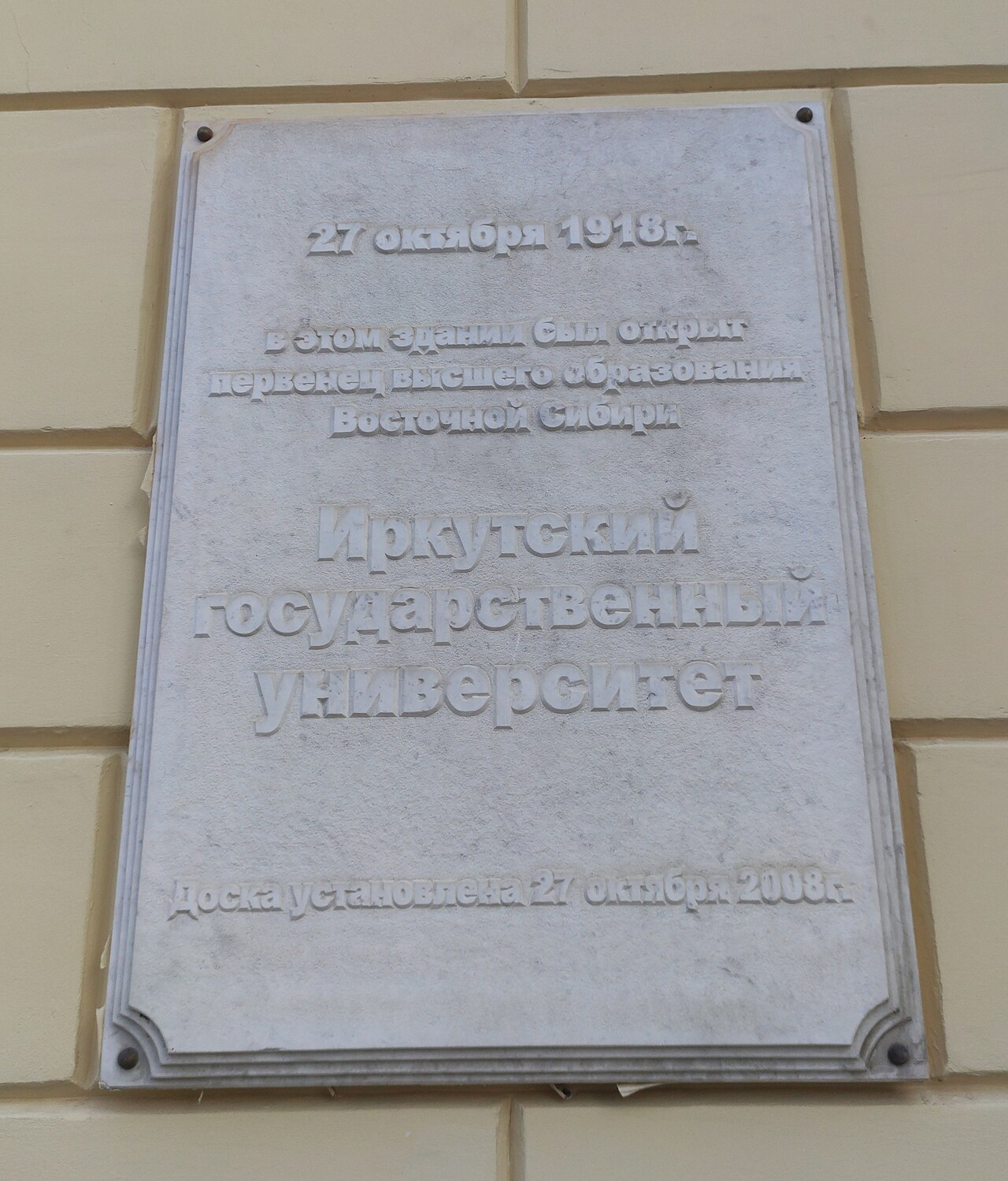
Peace gave the palace to learning: with Irkutsk State University founded in 1918, the White House became its scientific library, and the Quarenghi halls that had held balls, treaties, and sieges filled with reading desks and stacks, the ballroom’s floor underfoot for generations of Siberian students, the mansion’s third career the longest and gentlest, books where the throne portraits hung.
The library stewardship preserved the building through the Soviet century: maintained, studied, its history researched and its scars conserved, the White House entering the heritage lists as eastern Siberia’s premier classical monument, and the university’s custody giving it, unusually among palaces, continuous educated use, the fabric kept alive by daily scholarship rather than museum stasis.
The twenty-first century has begun the next turn: restoration campaigns renewing the facades and the interiors, the embankment’s reinstatement as the city’s front, Muravyov-Amursky’s statue returned nearby, and proposals to open more of the palace to the public gaining ground, the White House moving, carefully, from working library toward shared monument, its four careers, mansion, residence, fortress, library, legible to the visitor who knows where to look.
Merchant Irkutsk Today
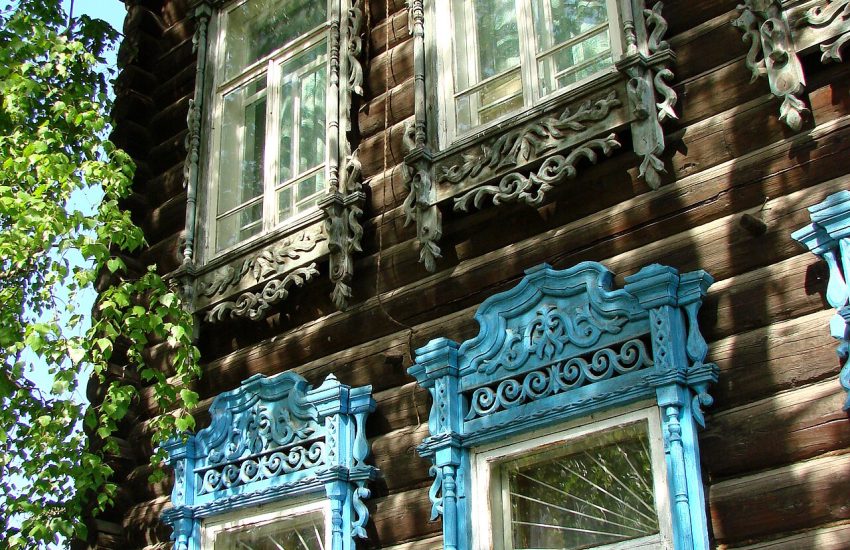
The city keeps its merchant inheritance visibly: the restored 130th Quarter, the Irkutsk Sloboda, gathering the timber mansions into a lively historic district, the Decembrist house museums, the Sukachev gallery’s paintings, the Siberian-baroque churches, and the wooden-lace streets that survived fire and Soviet redevelopment, Irkutsk ranking among Russia’s richest surviving ensembles of nineteenth-century urban wood and brick.
The White House anchors the embankment’s walk: Muravyov-Amursky downriver, the geographical society’s museum castle, the churches and the Angara’s clear rush toward the Yenisei, the Trans-Siberian’s stone station across the water, the city’s whole layered story, Cossack fort to tea capital to civil war crucible, readable along one riverfront kilometer.
Beyond the center the region’s magnet waits: Baikal, an hour east, the deepest lake on earth and the reason many travelers reach Irkutsk at all, the city serving as the great lake’s gateway as it once served the Pacific’s, the merchant capital’s old vocation, the door to the farther east, unchanged under new traffic. The White House’s columns, scarred and serene on the Angara, remain the best single image of what that vocation built.
Watch the White House on Film
The White House’s four lives, merchant palace, governors’ residence, civil-war fortress, and scholars’ library, make it a uniquely complete witness to eastern Siberia’s history, and that completeness is the deeper reason to seek it out. Where most monuments preserve a single era, the Sibiryakov palace carries the whole arc of the Russian east, the merchant wealth that built it, the imperial administration that ruled from it, the revolution that scarred it, and the learning that saved it, legible in one building on one embankment. The bullet marks on the Quarenghi columns and the reading desks in the ballroom tell, between them, the entire story of how Siberia passed from fur frontier to Soviet republic, and the visitor who reads the walls reads the east.
Visiting the White House Today
Irkutsk lies on the Trans-Siberian main line, four days by rail from Moscow or under six hours by air, with Lake Baikal an hour east by road or the Circum-Baikal branch; the White House stands on Karl Marx street at the Gagarin boulevard embankment, central and walkable. As the university’s scientific library the building’s interior access is partial and subject to the institution’s schedule, with the restored river facade, bullet scars and all, freely viewable and the embankment walk open always; check locally for library tours and exhibition openings, which have grown more frequent with recent restoration. Give central Irkutsk a full day for the embankment, the Decembrist museums, the 130th Quarter, and the Siberian-baroque churches, and reserve a second for Baikal; summer and the snow-clear winter both suit the riverfront. You can find the palace on the map here: White House of Irkutsk on Google Maps.
Palaces Nearby
You May Like
The Tomsk Mansions and the Wooden Palaces of Siberia