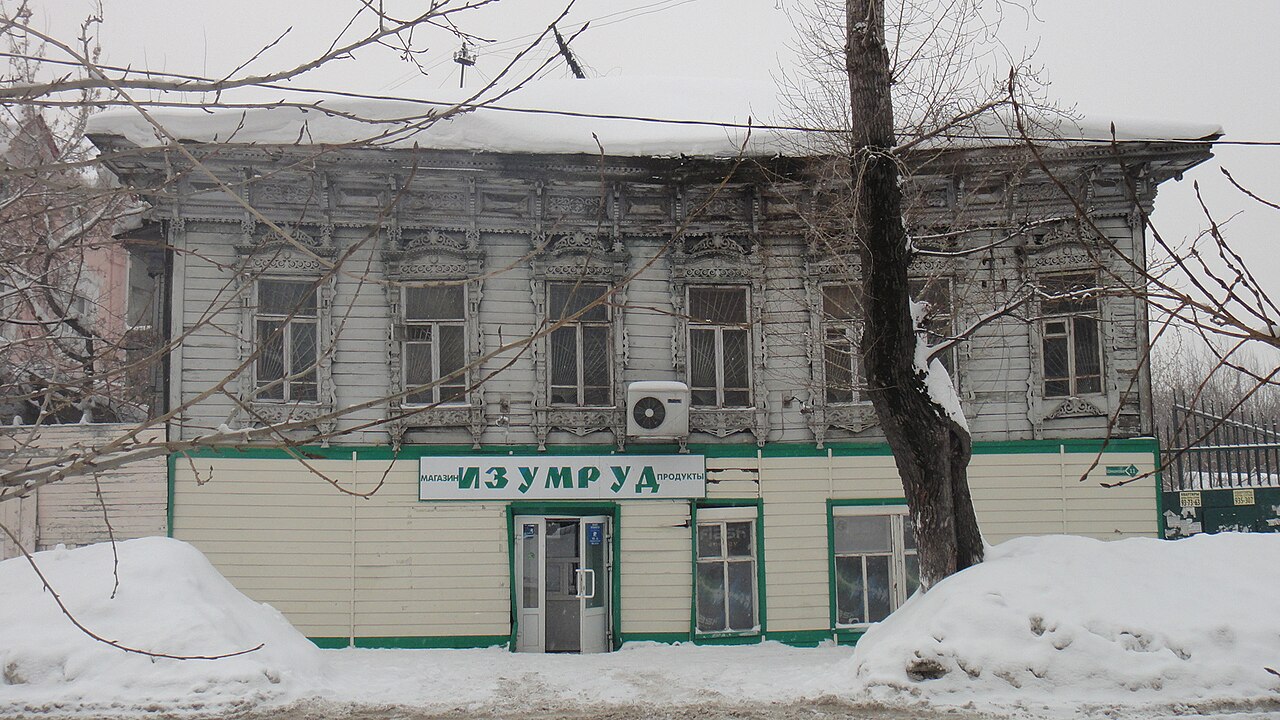
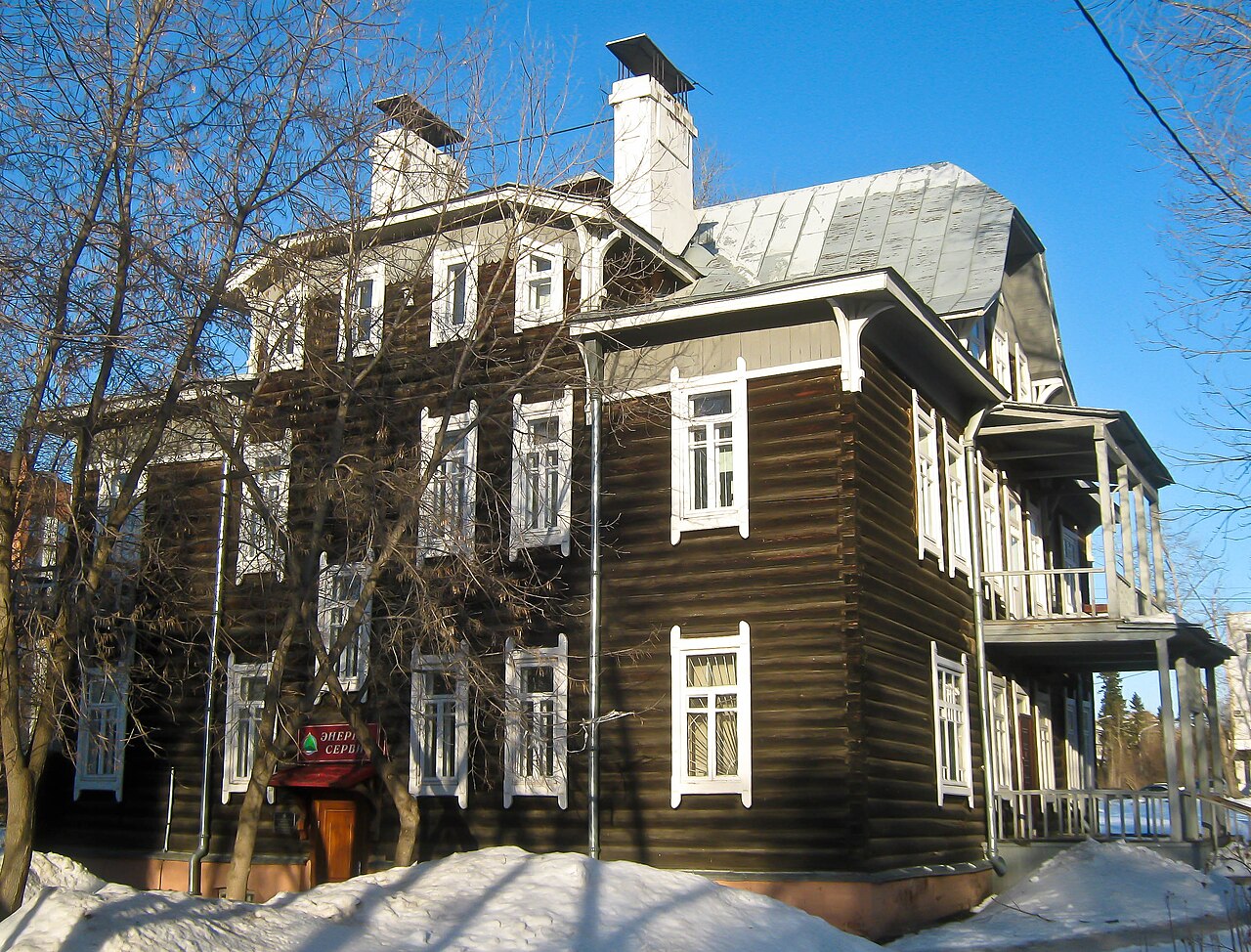
In the university city of Tomsk, on the Tom river in the Siberian taiga, stands something no photograph quite prepares you for: whole streets of wooden palaces. Not cottages or cabins, but three-story mansions of carved timber, their windows framed in fretwork lace, their gables crowned with wooden dragons, peacocks, and sunbursts, their towers and turrets rising above the pavement like fairy-tale castles rendered in pine. Tomsk preserves the greatest surviving ensemble of ornamental wooden architecture in Russia, and arguably in the world, the domestic masterpiece of a Siberian school of carpenters who turned the forest’s own material into a civilization’s showpiece.
The wooden palaces are the monument of a particular Tomsk: the city that the Trans-Siberian railway bypassed and that the gold trade and, above all, the university enriched, a town of merchants and professors with money, taste, and the finest carpenters in Siberia to spend it on. Where stone cities built in brick, Tomsk built in wood and built magnificently, the architects of the 1890s and 1900s designing in timber what they might elsewhere have raised in stucco, and the craftsmen answering with an exuberance of carving that has made certain houses, the Dragon House, the Peacock House, the Russian-Firebird mansion, into pilgrimage sites for lovers of wood.
This guide walks the wooden city: Tomsk’s founding and its golden age, the university that made it Siberia’s Athens, the carpenters’ craft and its sources in peasant tradition and Art Nouveau fashion, the great individual mansions and their builders, the Soviet decades that nearly lost the ensemble and the campaigns that saved it, and the practical details of visiting the wooden palaces of Siberia.
- Tomsk on the Tom
- The Railway That Passed By
- Siberia’s First University
- The Athens of Siberia
- The Carpenters’ Craft
- Wood Meets Art Nouveau
- The Dragon House
- The Russian Firebird Mansion
- The Peacock House and Others
- The Merchants Who Built Them
- The Soviet Decades
- The Rescue of the Wooden City
- The Wooden City Today
- Watch the Tomsk Mansions on Film
- Visiting the Tomsk Mansions Today
- Palaces Nearby
Tomsk on the Tom
Tomsk was founded in 1604 by order of Boris Godunov, a Cossack fort on the Tom river’s bank raised at the request, the chronicles say, of a local Tatar prince seeking the tsar’s protection, one of the chain of forts by which Russia stitched its hold on the Ob basin, the town growing as a garrison, a customs post on the routes east, and a center of the fur tribute that financed the Siberian enterprise.
Through the eighteenth century Tomsk thrived on the Siberian trakt, the great post road that was, before the railway, the single artery binding European Russia to its east, the town a major station on the road where goods, officials, and exiles passed and where merchant fortunes accumulated on the transit trade, the gold rushes of the nineteenth-century Siberian fields adding a second source of wealth that would, in time, carve itself into the city’s timber.
By the mid-nineteenth century Tomsk stood among the largest and richest towns of Siberia, the provincial capital of a vast gold-bearing region, its merchant class established, its churches and first stone buildings raised, the stage set for the golden age that two developments, one lost, one won, would shape: the railway that passed it by, and the university it fought to win.
The Railway That Passed By
The Trans-Siberian railway’s route in the 1890s delivered Tomsk a blow and, in disguise, a gift. The main line, seeking the easier grades and the Ob crossing, ran some eighty kilometers south of the city, leaving Tomsk on a branch, and the settlement that grew at the main-line crossing, Novonikolaevsk, the future Novosibirsk, boomed past the old capital within a generation, the garrison village overtaking the historic city as Siberia’s commercial giant.
Tomsk’s merchants fought the routing bitterly and lost, and the city’s relative commercial decline from the 1900s is real, but the loss preserved what growth would have destroyed: where Novosibirsk became a modern industrial metropolis that swept away its timber, Tomsk, its boom checked, kept its wooden city, the railway’s snub freezing the ornamental town at its moment of fullest flower, poverty preserving beauty as it had at Tobolsk.
The timing was exact: the wooden palaces were rising precisely in the 1890s and 1900s as the railway question was decided, the gold money and the professional wealth building in timber just as the commercial future moved south, so the ensemble the visitor walks today is the portrait of a city at its last and richest moment as Siberia’s first, caught before the giant to the south eclipsed it.
Siberia’s First University
Tomsk’s compensation was learning. After decades of lobbying by Siberian reformers and the city’s own merchants, the Imperial Tomsk University opened in 1888, the first university in all of Siberia and Asian Russia, its founding a landmark in the east’s cultural history, funded substantially by Siberian merchant philanthropy, the gold-trade fortunes endowing the chairs and the libraries that gave the frontier its first higher learning.
The university’s single faculty of medicine grew into a full institution, drawing students and scholars from across the east, and the Technological Institute followed in 1900, making Tomsk a genuine academic center, its professors and their families a new estate in the merchant city, educated, cultivated, and prosperous, patrons of exactly the architecture, comfortable, individual, artistic, that the wooden palaces embody.
The learned city shaped the timber one: the professors’ and the enlightened merchants’ houses commissioned for domestic life rather than display alone, the libraries and the botanical garden the university raised, the intellectual atmosphere that made Tomsk, for all its remoteness, a place where an architect might design a wooden mansion as a serious work of art for a serious client, the Athens of Siberia building its villas in the forest’s material.
The Athens of Siberia
The nickname was earned and worn proudly: Tomsk by 1900 had the university and the institute, the learned societies, the libraries, the first Siberian scientific journals, a theater and a concert life, and a professional class that gave the town an intellectual density unmatched east of the Urals, the Athens of Siberia a boast the city could substantiate, its culture books and laboratories where Omsk’s was regiments and Irkutsk’s was gold.
The learned society showed in the stone city too, the university’s classical buildings, the public library, the churches and the merchant-funded institutions, but its distinctive expression was domestic and wooden, the mansions where the professors lived and the cultivated merchants entertained, the ornamental house as the Athens of Siberia’s signature, taste made visible in carved pine for a city that valued cultivation.
The intellectual city’s later history kept the thread: Tomsk remained through the Soviet century and beyond a major university town, its several universities and institutes giving it, per capita, one of the highest student populations in Russia, the Athens of Siberia a living identity, and the preservation of the wooden city owing much to the educated citizenry who understood, before the authorities did, what the ornamental mansions were worth.
The Carpenters’ Craft
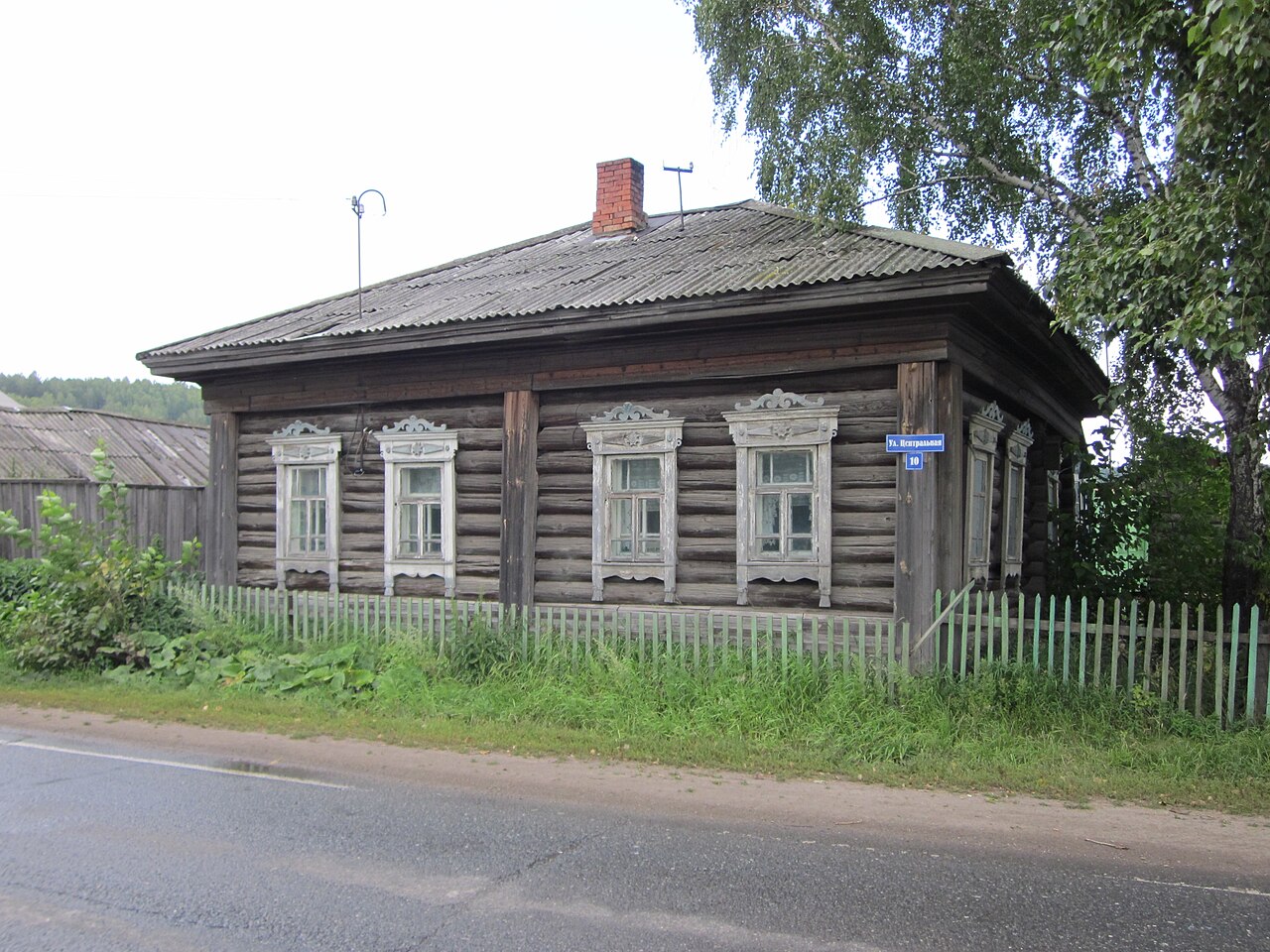
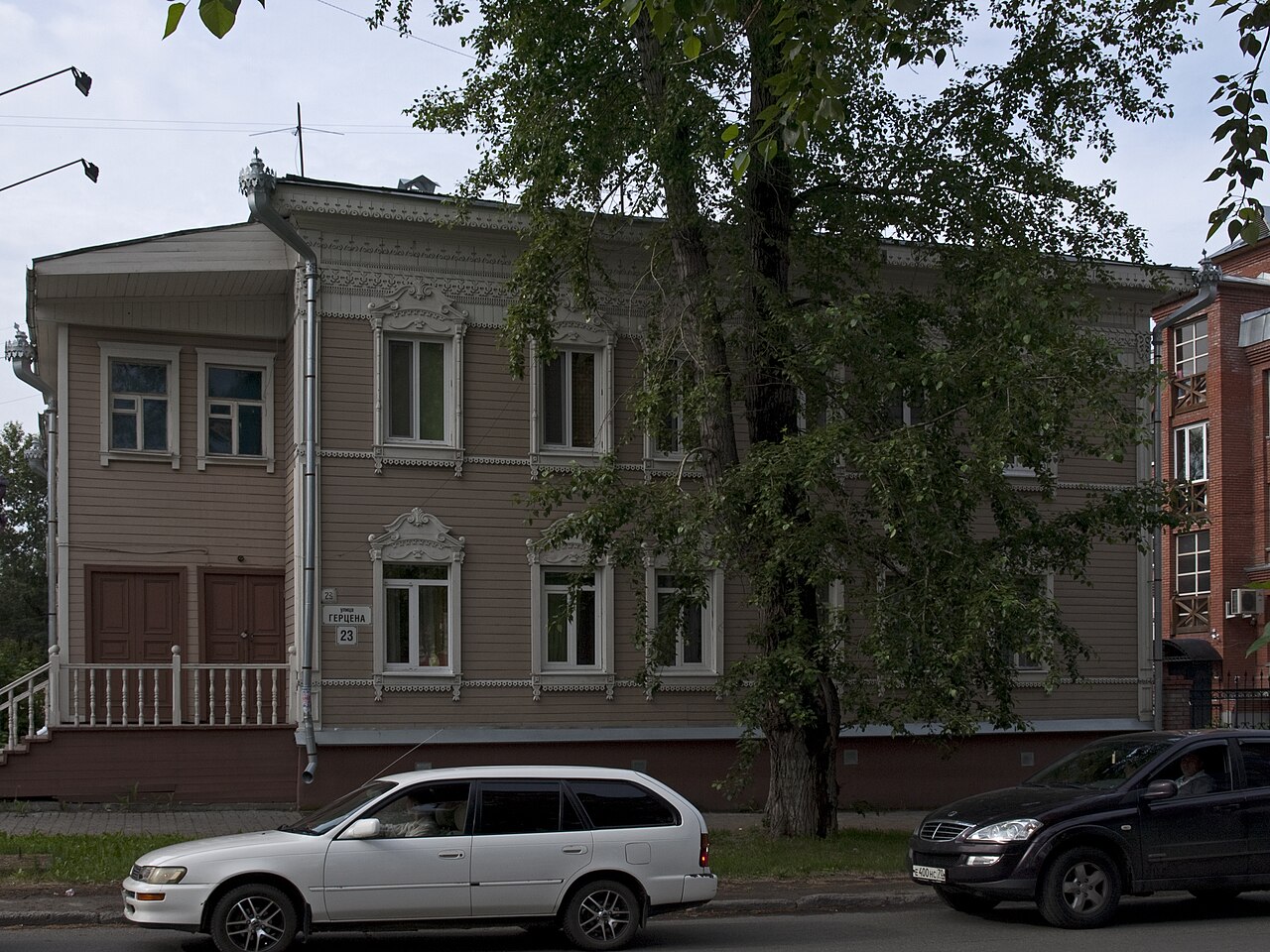
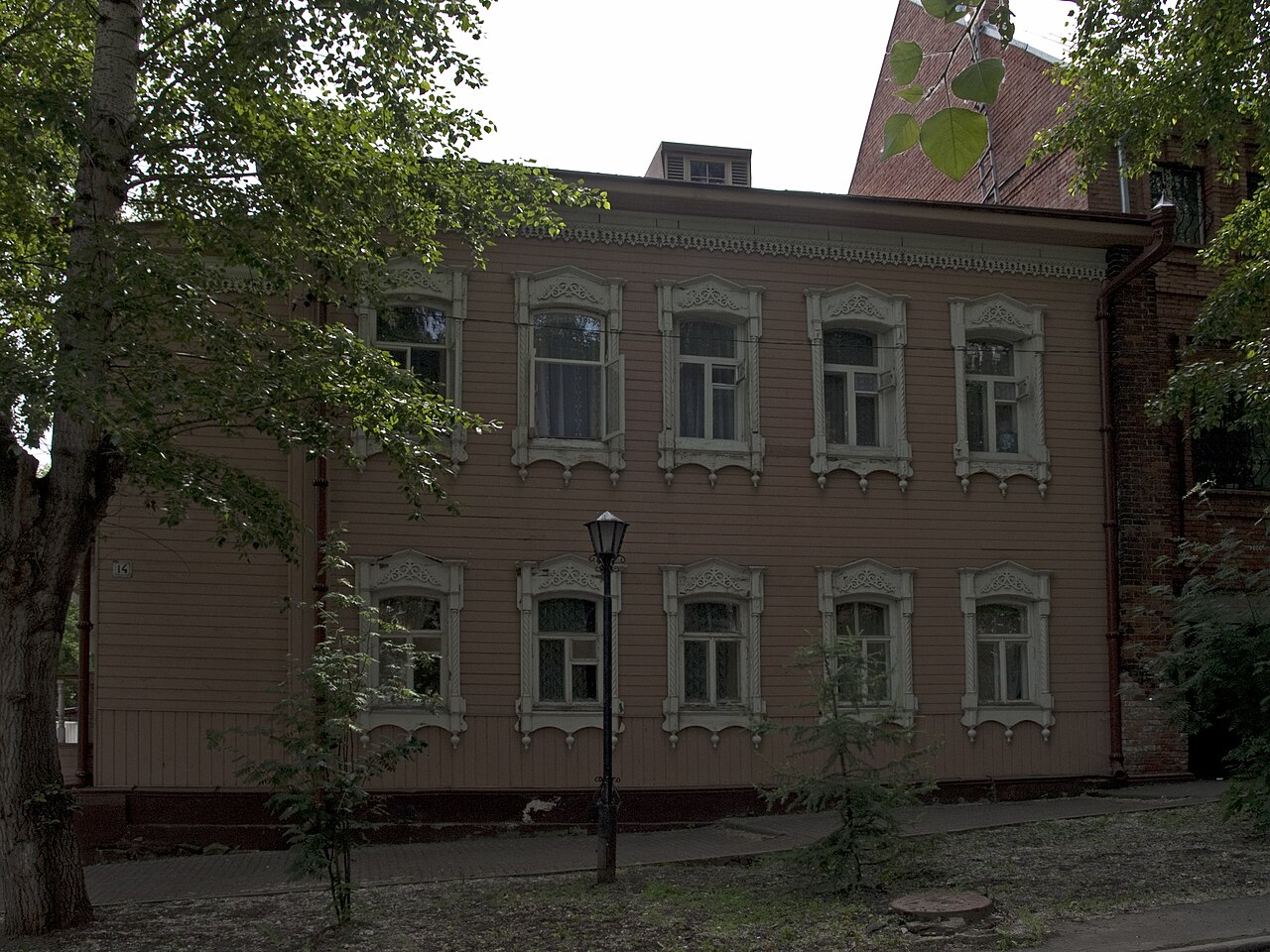
The wooden palaces rest on a deep craft tradition. Siberian carpentry descended from the peasant North’s, the Russian woodworking culture that built churches without nails and cottages with carved window frames, carried east by the settlers, and in Tomsk this folk tradition met money, professional architects, and the fashions of the capital, the village carver’s vocabulary scaled up and refined into an urban art, the propilnaya rezba, the fretwork carving cut with the newly available scroll saws, lacing the facades.
The technique’s range is the ensemble’s wonder: the flat fretwork lace of the window surrounds and the gable fringes, cut in pine boards and applied like embroidery; the fuller relief carving of the brackets and the finials; the structural woodwork of the towers, galleries, and porches, the whole a catalog of what skilled hands could do with the forest’s softwood, the carpenters, many anonymous, some named, working from pattern books, the architects’ drawings, and their own invention.
The craft’s organization sustained the quality: the Tomsk carpenters’ artels, the workshops, the pattern traditions passed master to apprentice, a genuine building culture at full maturity in the 1890s and 1900s, capable of executing an architect’s most ambitious timber fantasy, the human infrastructure, as much as the forest, that made the wooden city possible, and whose loss in the Soviet decades made its restoration so hard.
Wood Meets Art Nouveau
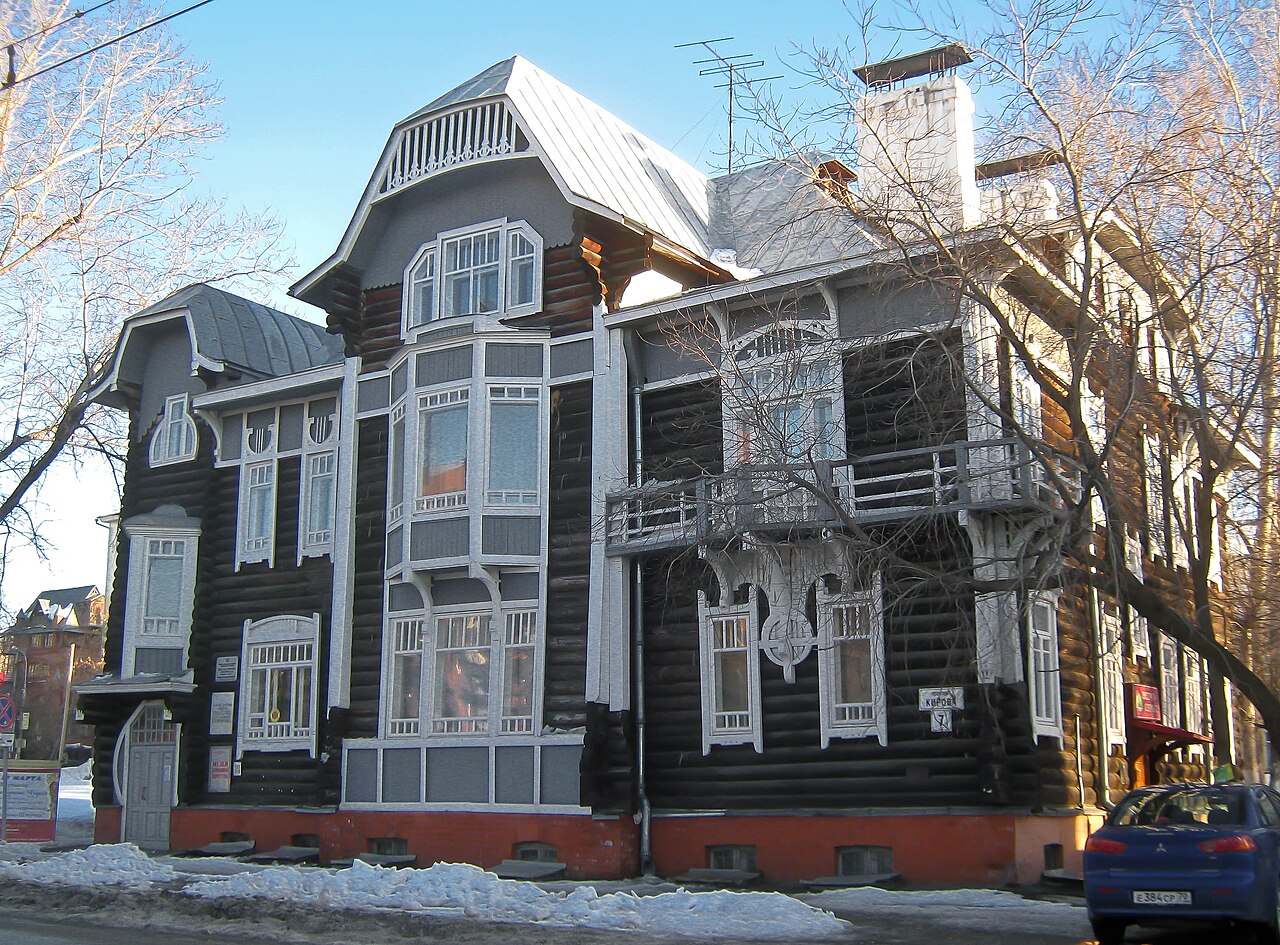
The wooden palaces’ golden moment came when the folk carving tradition met the international Art Nouveau, the style moderne that swept Russia around 1900, and Tomsk’s architects, trained in the capitals and working in timber, fused the two into something unique: Art Nouveau mansions executed in carved wood, the sinuous lines and nature motifs of the European fashion rendered in the Siberian carpenters’ pine, a hybrid found nowhere else at such quality or scale.
The fusion produced the famous houses: the flowing forms and the fantastical ornament of the style moderne, the dragons, firebirds, peacocks, and plant motifs drawn from both Russian folklore and Art Nouveau’s symbolist vocabulary, carved into facades, towers, and porches, the architects, Khomich and his contemporaries among the named, treating the wooden mansion as a total work of art, the Gesamtkunstwerk of the timber city.
The result dignifies the ensemble beyond folk charm: these are sophisticated works of their international moment, the equal in design ambition of the brick and stucco Art Nouveau of the capitals, executed in a material and a craft tradition that make them singular, the wooden palaces of Tomsk a chapter of world architecture’s style moderne written in the taiga’s pine, as scholars and UNESCO assessors have increasingly recognized.
The Dragon House
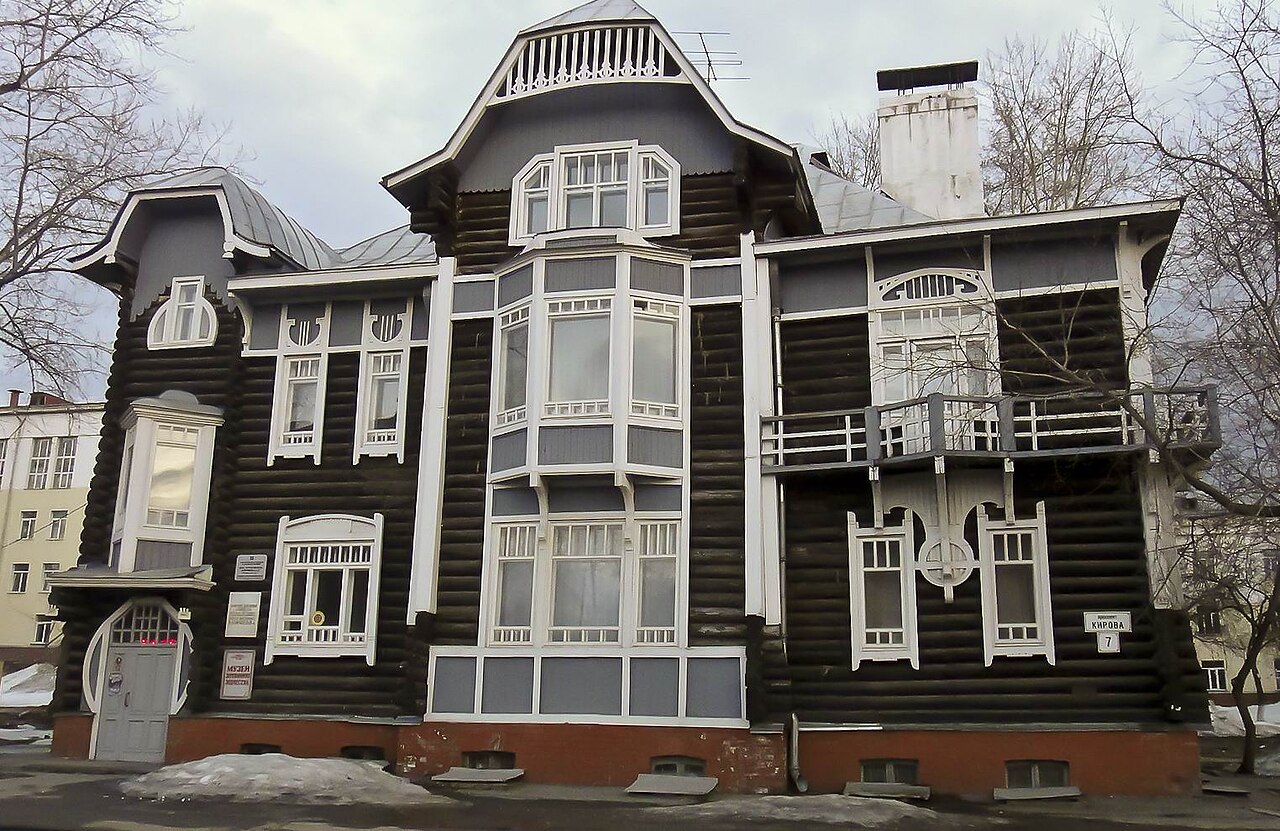
The most famous of all is the Dragon House, the mansion on Krasnoarmeyskaya street whose roofline and gables bristle with carved wooden dragons, their heads thrust out over the street, the building an Art Nouveau fantasy of around 1917 whose serpentine ornament and tower have made it the single most photographed wooden house in Russia, the emblem of the whole ensemble, the taiga carpenter’s craft at its most theatrical.
The house, built for a merchant and designed in the full style moderne, carries the dragons as a symbolist flourish, the mythical beasts guarding the eaves, the whole facade a composition of flowing lines, elaborate windows, and the tower that lifts the fantasy skyward, the Dragon House demonstrating what the wooden medium could achieve in the hands of an ambitious architect and the city’s best carvers, a fairy tale made habitable.
Restored and maintained as a showpiece, the Dragon House anchors the tourist route through the wooden city, and its image sells Tomsk to the world, the dragons’ silhouette on the postcards and the guidebooks, the house’s survival through the twentieth century’s neglect a small miracle that the city now guards jealously, the emblem whose loss would have symbolized the ensemble’s, and whose care signals its rescue.
The Russian Firebird Mansion
If the Dragon House is the most famous, the mansion often called the Russian Firebird or the house with the firebirds is the most beautiful: a mansion whose carving reaches a refinement and a density that make the facade read as a single woven textile of wood, the folk motifs of the firebird and the sun and the plant world worked into an ornament so complete that the structure beneath seems to dissolve into pattern, the Siberian carpenter’s art at its apex.
The house embodies the ensemble’s deepest achievement, the point where the craft transcends decoration and becomes a total aesthetic environment, the window surrounds, the cornices, the porch, the gable all speaking one ornamental language at the highest pitch, the mansion a demonstration that wooden architecture could achieve, in its own medium, the integration of structure and ornament that the great styles aspire to, a masterpiece by any standard its material is judged.
These signature mansions, individually named and locally cherished, give the wooden city its landmarks, but their deeper value is as the peaks of a continuous range, the hundreds of lesser but still remarkable carved houses that fill the historic districts, the ensemble’s greatness residing as much in its density, street after street of ornamental timber, as in its masterpieces, the whole a surviving wooden townscape of a kind the world has almost entirely lost.
The Peacock House and Others
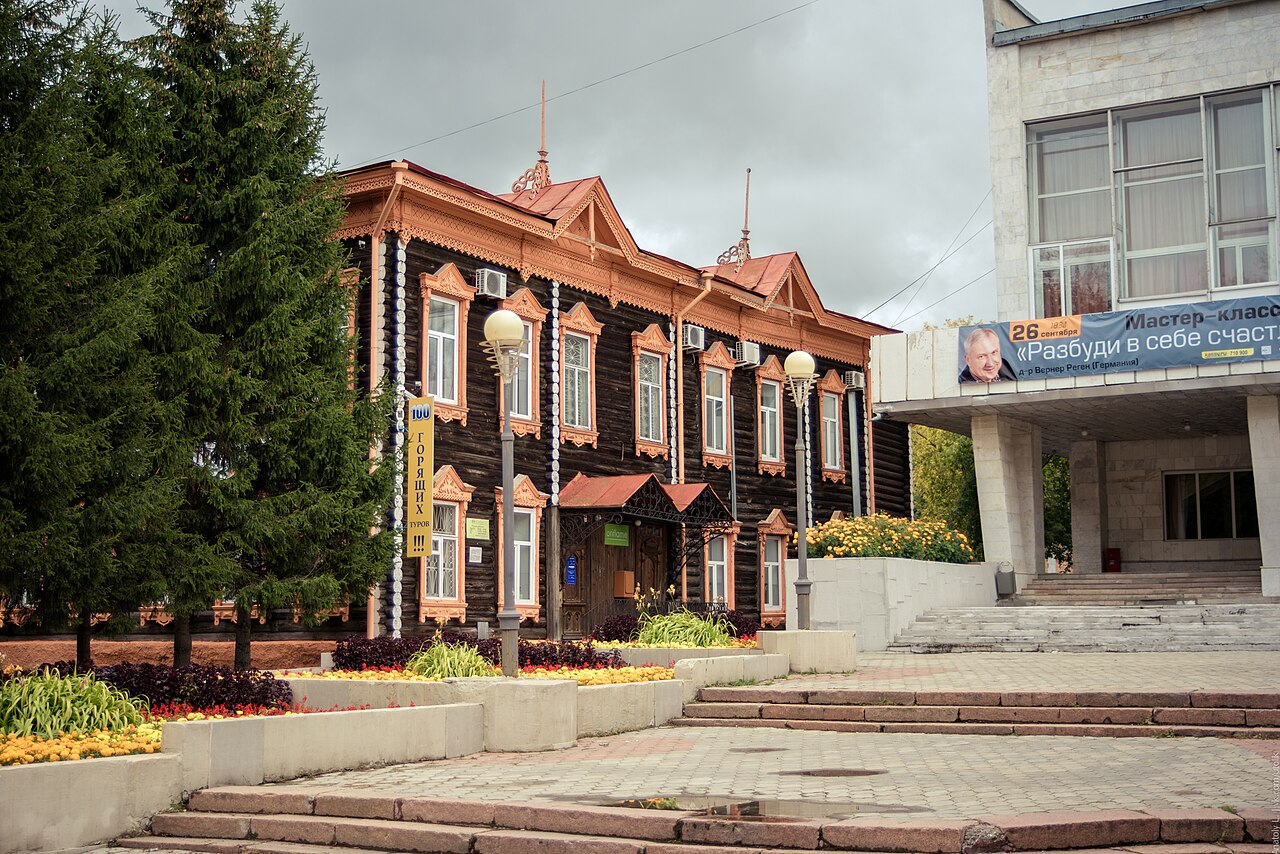
The named houses multiply through the districts: the Peacock House with its fanned-tail motifs, the German House and the houses of the merchant Golovanov and the architect Khomich’s own designs, the mansion that serves as the Russian-German house, the former merchant and professorial homes now serving as museums, offices, and the wooden architecture museum itself, each carrying its carving and its story, the ensemble a gallery of individual achievements.
The wooden architecture museum, housed in one of the finest mansions, interprets the whole: the craft, the styles, the builders, the restoration, giving the visitor the key to reading the facades, the vocabulary of fretwork and relief, folk motif and style moderne, that the streets then display at full scale, the museum the sensible first stop before the walking that the wooden city demands and rewards.
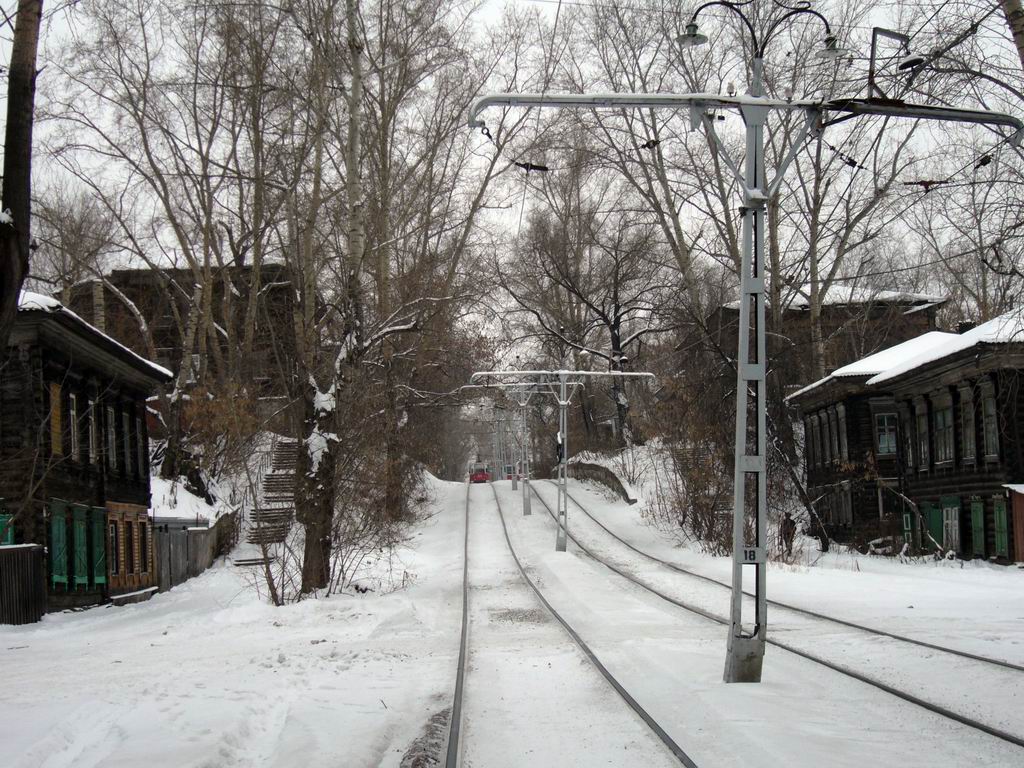
The districts to walk are known and signed: the Tatar Sloboda by the river with its mosque and its timber, the Elanskaya and Krasnoarmeyskaya streets with the signature mansions, the preserved quarters where the density survives, the wooden city not a single site but a living townscape, inhabited, aging, and carved, the visitor moving through a working neighborhood that happens to be a masterpiece of world architecture.
The Merchants Who Built Them
The patrons were the city’s golden-age elite: the gold-trade and transit merchants, the manufacturers, the professors and officials, the prosperous citizens who, in a city where wood was the natural and affordable grand material, commissioned their homes from the best architects and carvers, the wooden palace the Tomsk equivalent of the stone mansion elsewhere, status and taste expressed in the medium the forest and the craft made supreme.
Their motives mixed the universal and the local: display, certainly, the carved facade announcing wealth and cultivation to the street, but also comfort and individuality, the mansions designed for the domestic life of educated families, warm against the Siberian winter, spacious, light, and personal, the ornament an expression of the owner’s and the architect’s sensibility as much as a badge of rank.
The builders’ names survive partly, the architects Khomich, Lyalin, and their contemporaries, some of the merchant patrons, many of the carpenters anonymous, and the city’s historians have reconstructed the ensemble’s social world, the gold money and the professional wealth, the craft economy and the architectural ambition, that produced, in one Siberian city in two decades, the world’s greatest surviving concentration of ornamental wooden architecture.
The Soviet Decades
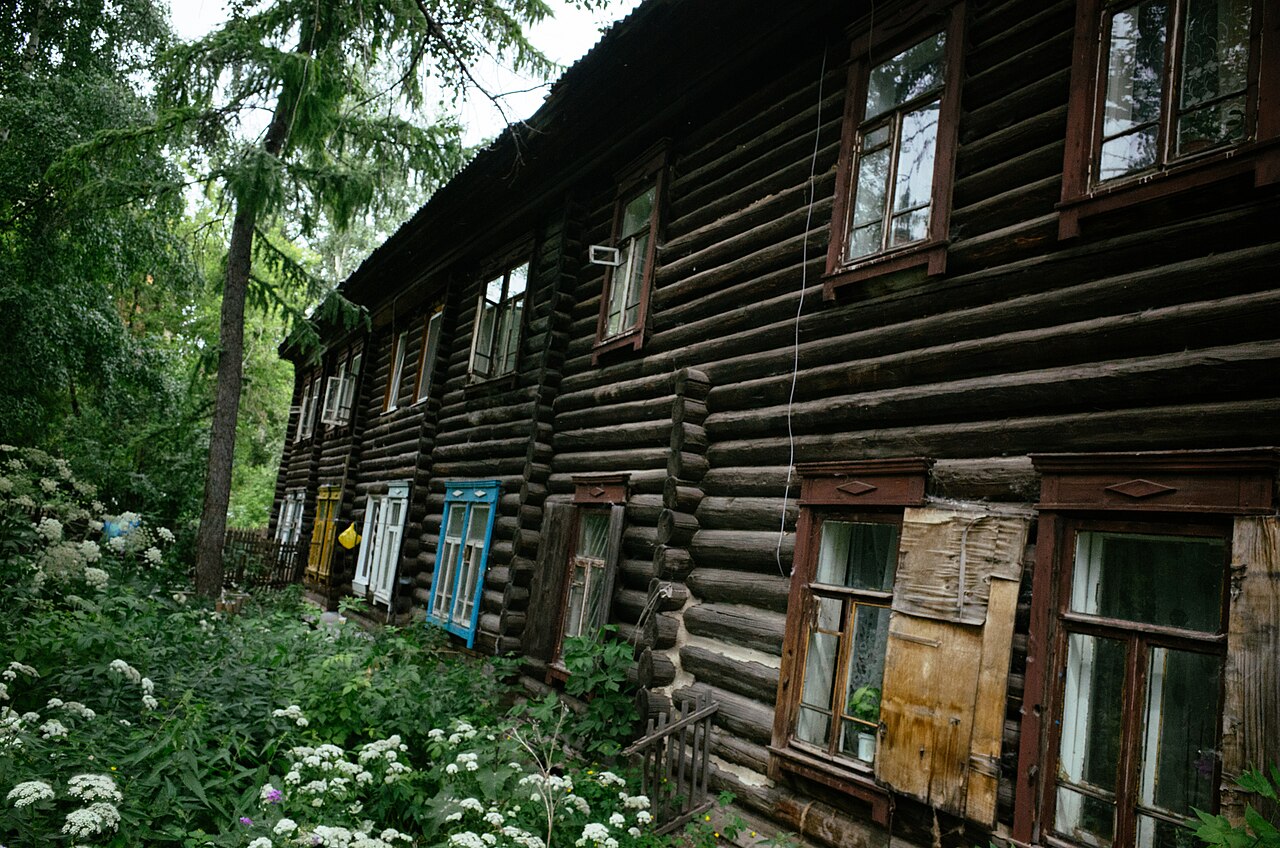
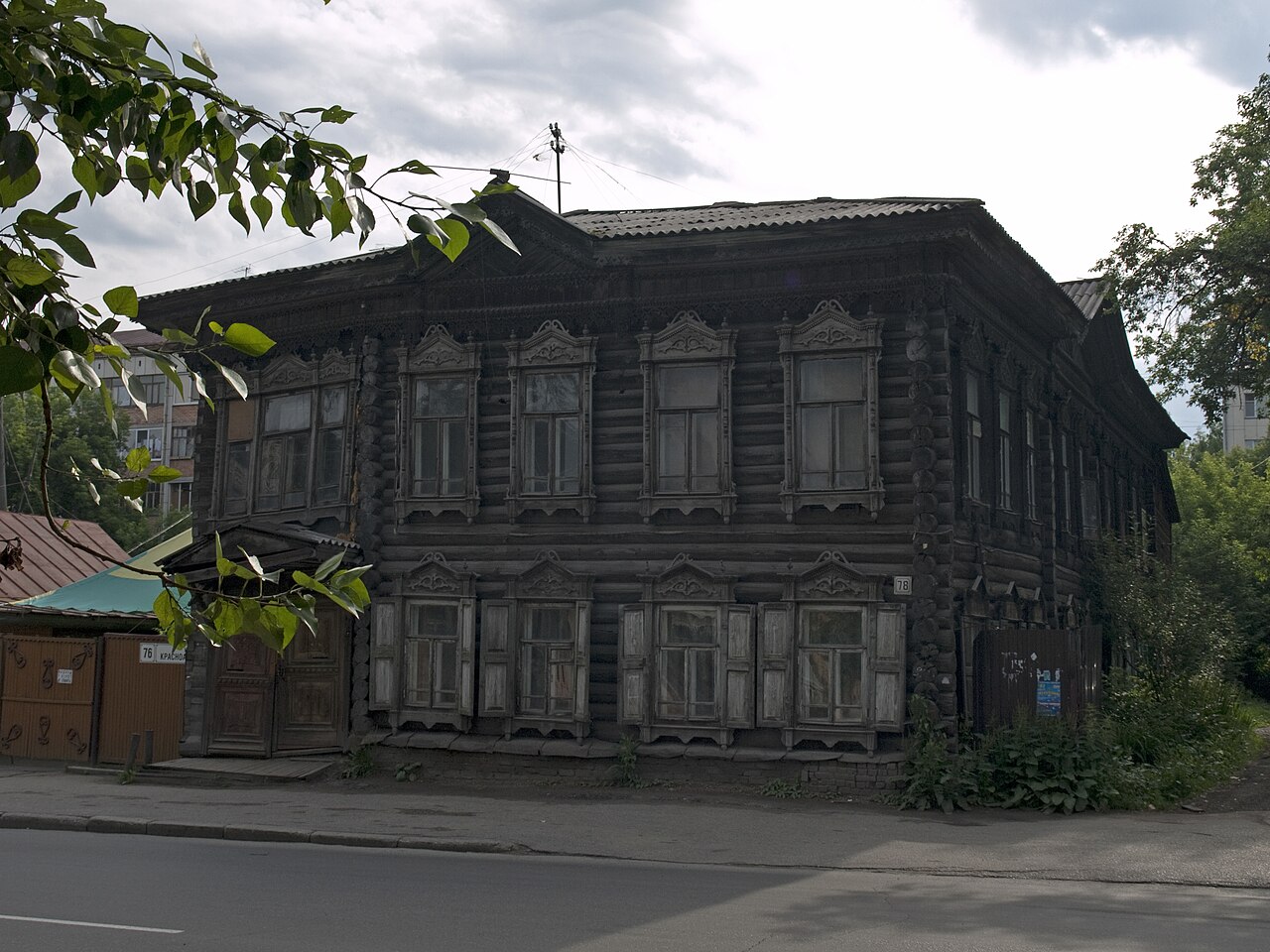
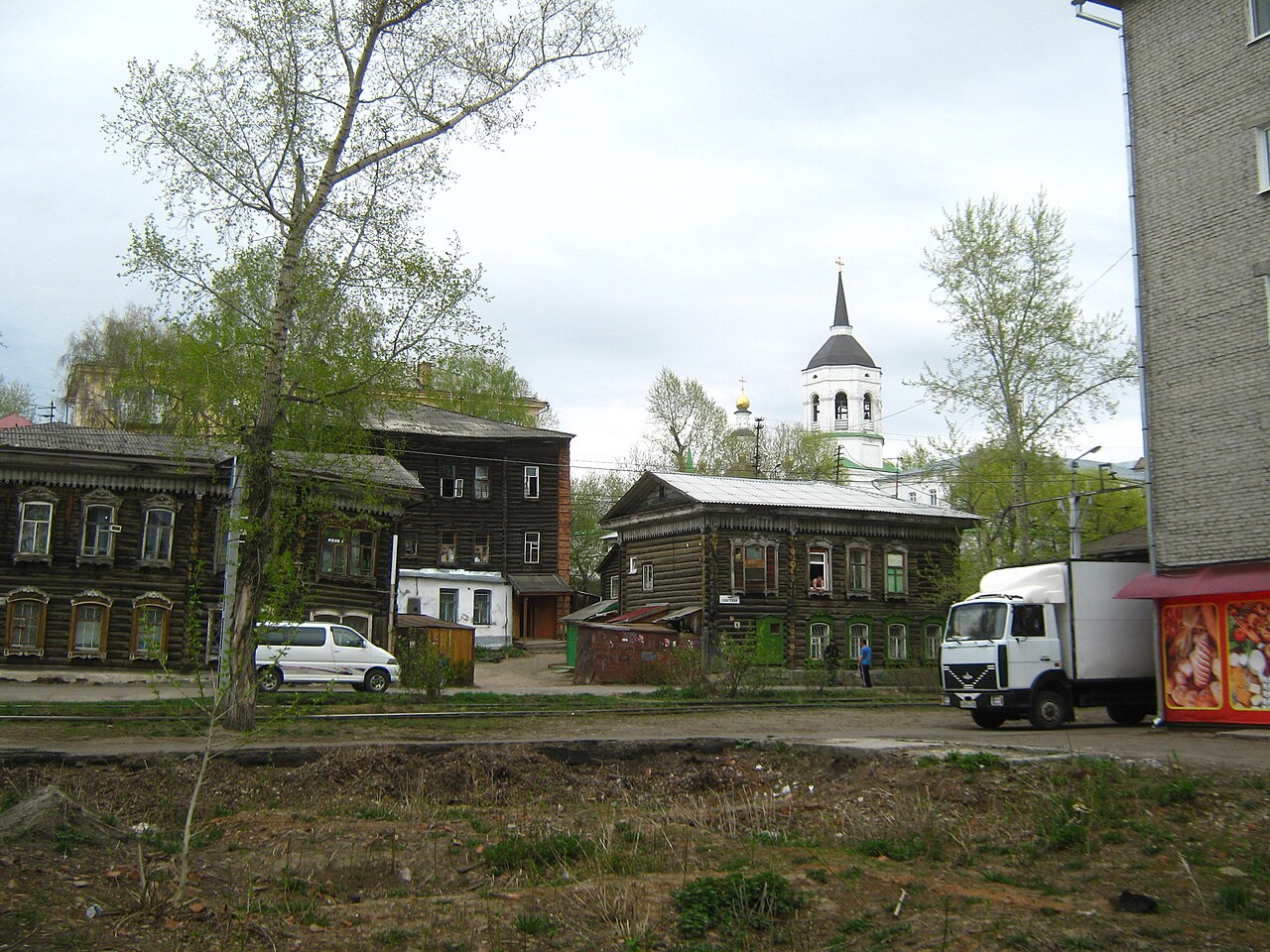
The twentieth century nearly destroyed the ensemble by neglect. Nationalized, subdivided into communal apartments, starved of maintenance, and regarded as obsolete firetraps rather than monuments, the wooden mansions decayed through the Soviet decades, many lost to fire, demolition, and rot, the ornamental city shrinking as the authorities built in concrete and let the timber go, the fate that erased the wooden quarters of nearly every other Siberian city.
Tomsk’s ensemble survived better than most for reasons of circumstance and conscience: the city’s relative economic quiet spared it the redevelopment pressure of the booming centers, and its educated citizenry, the Athens of Siberia’s professors and intelligentsia, valued the wooden heritage and fought, through the late Soviet decades, for its recognition and protection, the preservation cause a local movement before it was an official policy.
The losses were nonetheless severe, and the survival partial, the ensemble that remains a fraction of the wooden city of 1910, but a large and coherent fraction, enough that Tomsk entered the post-Soviet era holding the best such townscape in Russia, damaged but rescuable, the base from which the serious preservation campaigns of recent decades could work, the wooden city saved by a margin.
The Rescue of the Wooden City
The post-Soviet decades mounted the rescue. Tomsk developed, from the 2000s, one of Russia’s most serious programs for wooden heritage: the listing and legal protection of the key mansions, the restoration campaigns, the revival of the carving crafts needed to repair them, and the models, public funding, investor restoration in exchange for use, careful relocation, that other Russian cities with wooden heritage have studied, Tomsk the recognized leader in the field.
The work is painstaking and contested: wooden restoration is costly and skilled, the balance between preservation and the residents’ modern needs is delicate, and losses continue even as saves accumulate, but the direction is clear and the showpiece mansions, the Dragon House and its peers, stand restored, the historic districts increasingly protected, the wooden city’s survival, no longer in doubt as it was in 1990, a genuine achievement of Russian preservation.
The ensemble’s international recognition has grown with the rescue: scholars and heritage bodies increasingly rank Tomsk’s wooden architecture among the world’s significant endangered-and-saved urban heritage, the city’s candidacy for fuller international status advancing, the Athens of Siberia’s wooden palaces moving from local treasure toward world monument, the carpenters’ art of the taiga claiming its due place.
Watch the Tomsk Mansions on Film
Visiting the Tomsk Mansions Today
Tomsk lies on a branch of the Trans-Siberian, reached by train or by road from Novosibirsk in around four to five hours, or by direct flights to its airport from Moscow and the Siberian cities; the wooden mansions are spread through the central historic districts, best explored on foot. There is no single ticket, the wooden city being a living townscape, but the Museum of Wooden Architecture in one of the finest mansions interprets the ensemble and is the sensible starting point, with guided walking tours available and the Dragon House, the Russian-German house, and the signature mansions on the standard routes. Give the city at least a full day for the wooden districts, the university quarter, and the Tom embankment; late spring through early autumn suits the walking, and fresh snow gives the carved facades their most magical frame. You can find the wooden city on the map here: Tomsk wooden mansions on Google Maps.
Palaces Nearby
You May Like
The Walking Mansion of Yalova and the Tree That Was Spared